Category Archives: Books

Bowie, Burroughs and the stage production of Ziggy Stardust

In December 1973, Rolling Stone journalist Craig Copetas brought together David Bowie and William S Burroughs in London for an interview. The piece was published in February 1974, around the time Burroughs returned to America, having finally had enough of the English climate and licensing laws. A wonderful photograph by Terry O’Neill captures the two icons together.

The interview itself isn’t quite as captivating. Bowie had only read one of Burroughs’ books (Nova Express), while Burroughs had only listened to two of Bowie’s songs (“Five Years” and “Starman”). This is my favourite exchange:

Burroughs: What is your inspiration for writing, is it literary?

Bowie: I don’t think so.

Burroughs: Well, I read this “Eight Line Poem” of yours and it is very reminiscent of TS Eliot.

Bowie: Never read him.

During the two-hour conversation in Bowie’s home, Bowie did most of the talking. At one point he discusses in length his plans for a theatrical or television production of Ziggy Stardust, which had been released two years before (and in June 2012 celebrates its 40th anniversary).

It’s worth repeating this section in full, as it is one of the fullest explanations of the story behind the Ziggy concept.

Bowie: Nova Express really reminded me of Ziggy Stardust, which I am going to be putting into a theatrical performance. Forty scenes are in it and it would be nice if the characters and actors learned the scenes and we all shuffled them around in a hat the afternoon of the performance and just performed it as the scenes come out. I got this all from you Bill… so it would change every night.

Burroughs: That’s a very good idea, visual cut-up in a different sequence…. Could you explain this Ziggy Stardust image of yours? From what I can see it has to do with the world being on the eve of destruction within five years.

Bowie: The time is five years to go before the end of the earth. It has been announced that the world will end because of lack of natural resources. Ziggy is in a position where all the kids have access to things that they thought they wanted. The older people have lost all touch with reality and the kids are left on their own to plunder anything. Ziggy was in a rock-and-roll band and the kids no longer want rock-and-roll. There’s no electricity to play it. Ziggy’s adviser tells him to collect news and sing it, ’cause there is no news. So Ziggy does this and there is terrible news. “All The Young Dudes” is a song about this news. It is no hymn to the youth as people thought. It is completely the opposite.

Burroughs: Where did this Ziggy idea come from, and this five-year idea? Of course, exhaustion of natural resources will not develop the end of the world. It will result in the collapse of civilization. And it will cut down the population by about three-quarters.

Bowie: Exactly. This does not cause the end of the world for Ziggy. The end comes when the infinites arrive. They really are a black hole, but I’ve made them people because it would be very hard to explain a black hole on stage.

Burroughs: Yes, a black hole on stage would be an incredible expense. And it would be a continuing performance, first eating up Shaftesbury Avenue.

Bowie: Ziggy is advised in a dream by the infinites to write the coming of a starman, so he writes “Starman”, which is the first news of hope that the people have heard. So they latch on to it immediately. The starmen that he is talking about are called the infinites, and they are black-hole jumpers. Ziggy has been talking about this amazing spaceman who will be coming down to save the earth. They arrive somewhere in Greenwich Village. They don’t have a care in the world and are of no possible use to us. They just happened to stumble into our universe by black-hole jumping. Their whole life is travelling from universe to universe. In the stage show, one of them resembles Brando, another one is a Black New Yorker. I even have one called Queenie the Infinite Fox.

Now Ziggy starts to believe in all this himself and thinks himself a prophet of the future starman. He takes himself up to incredible spiritual heights and is kept alive by his disciples. When the infinites arrive, they take bits of Ziggy to make themselves real because in their original state they are anti-matter and cannot exist in our world. And they tear him to pieces on stage during the song “Rock ‘n’ Roll Suicide”. As soon as Ziggy dies on stage the infinites take his elements and make themselves visible. It is a science fiction fantasy of today and this is what literally blew my head off when I read Nova Express, which was written in 1961. Maybe we are the Rodgers and Hammerstein of the seventies, Bill!

Burroughs: Yes, I can believe that. The parallels are definitely there, and it sounds good.

The Rodgers and Hammerstein of the 1970s never collaborated, unfortunately. You can read a full transcript of the Bowie-Burroughs interview – including discussions of German porn, Lou Reed, Andy Warhol, science fiction and Mick Jagger (‘Jagger is most certainly a mother figure. He’s not a cockadoodledoo; he’s much more like a brothel-keeper or a madame,’ says Bowie) – here.

Forgotten Londoners: Frank Harris, editor, prisoner and pornographer

Frank Harris was an objectionable little man. He was sallow as a gypsy. He had bat ears, dark hair with a crinkle in it that grew low on the forehead, and a truculent mustache. People remarked on the richness of his bass voice. His charm was great, particularly for the opposite sex. He had the gift of gab to a sublime degree and a streak of deep scoundrelism that was the ruin of him.

John Dos Passos, 1963

Frank Harris wrote My Life And Loves in 1922 when he was 68. It was partly about his career as an editor of the Evening News and Saturday Review in London, where he had championed critics like Oscar Wilde and George Bernard Shaw, but it was mainly about sex.

Harris was a rumbustious character with a voice so deep that one of his many mistresses claimed ‘it made her sex open and shut’ when she heard it. His memoir was scandalously candid, and featured several photographs of naked women, to emphasise the point.

It was these – ‘too much for the English’, Harris later observed – as much as Harris’s candid discussion of sex (he was particularly keen on cunnilingus) that saw the New York Supreme Court rule the book ‘unquestionably obscure, lewd,
lascivious and indecent’ and it was banned in several countries and pretty much did for Harris as a serious writer and journalist thereafter.

It had been a turbulent career. Harris was born in Ireland, educated in Wales and after a series of adventures in America, settled in London in 1882, where he talked his way into newspapers. His greatest triumphs were at the Saturday Review, the London paper he edited in the 1890s, publishing criticism by HG Wells, Shaw and Wilde and gaining a reputation for being unreliably unspoken and outrageously opinionated for a man of his position. He later wrote a biography of Wilde, who surely would have agreed with Harris’s insistence that ‘Modesty is a figleaf for mediocrity’.

As George Bernard Shaw said, ‘He blazed through London like a comet, leaving a trail of deeply annoyed persons behind him.’ Harris was briefly adopted as a Conservative candidate for South Hackney, resigning after he defended Charles Parnell during an adultery scandal. He also defended Wilde during his trial, and suggested he flee the country while out on bail, and took the side of the Boers during the Boer War. 

Years later, Harris looked back on his time as editor with satisfaction. He believed in positive criticism, not handing out brickbats and instructed his critics to celebrate, rather than denigrate. “When I was editor of the Saturday Review,’ he said ‘with the greatest assembly of literary men in history, I had a policy and I believed in sticking to it. There was Shaw and Wells and Rowe and oh, everybody else. I called a dinner and I said: “Gentlemen, it has come to my attention that people have started to call it the Saturday Reviler. Well, this sort of thing doesn’t get us any place. Hereafter the Saturday Review is going to try to find stars, and if it can’t find stars, it won’t merely hurl bricks. What good does it do? Insults, raps, knocks! Mainly lies. Nobody’ll remember them in fifty years. If we can’t do something constructive,” I said, “we won’t do anything.” Well, it worked.’

By 1913, Harris was editing a magazine called Modern Society and was charged with prejudicing a trial after publishing an ongoing divorce case.  ‘It seems to me you have a certain disdain for this court,’ noted the judge during his trial. ‘Oh, if I could only express all the disdain I have,’ replied Harris.

That did it. Harris refused to apologise publicly and was sent to Brixton Prison for contempt. The cartoonist Max Beerbohm visited Harris in Brixton and drew a cartoon, ‘To the best talker in London – from one of his best listeners’. Prints were made and posted all over London in a bid to raise public awareness with the message: ‘This is the man that was sent to prison.’

Harris was released after three months, complaining afterwards that ‘what I suffered most from in prison was lack of books’. Shortly after his release he left London and never lived there again. He died in Nice in 1931.

Max Beerbohm's cartoon of Frank Harris

For more on Harris, visit this excellent Odd Books website.

Now that’s what I call a bus trip, baby

Psychedelic Routemaster, from The Day-Glo Designer’s Guide, 1969.

London’s football gangs: 1972

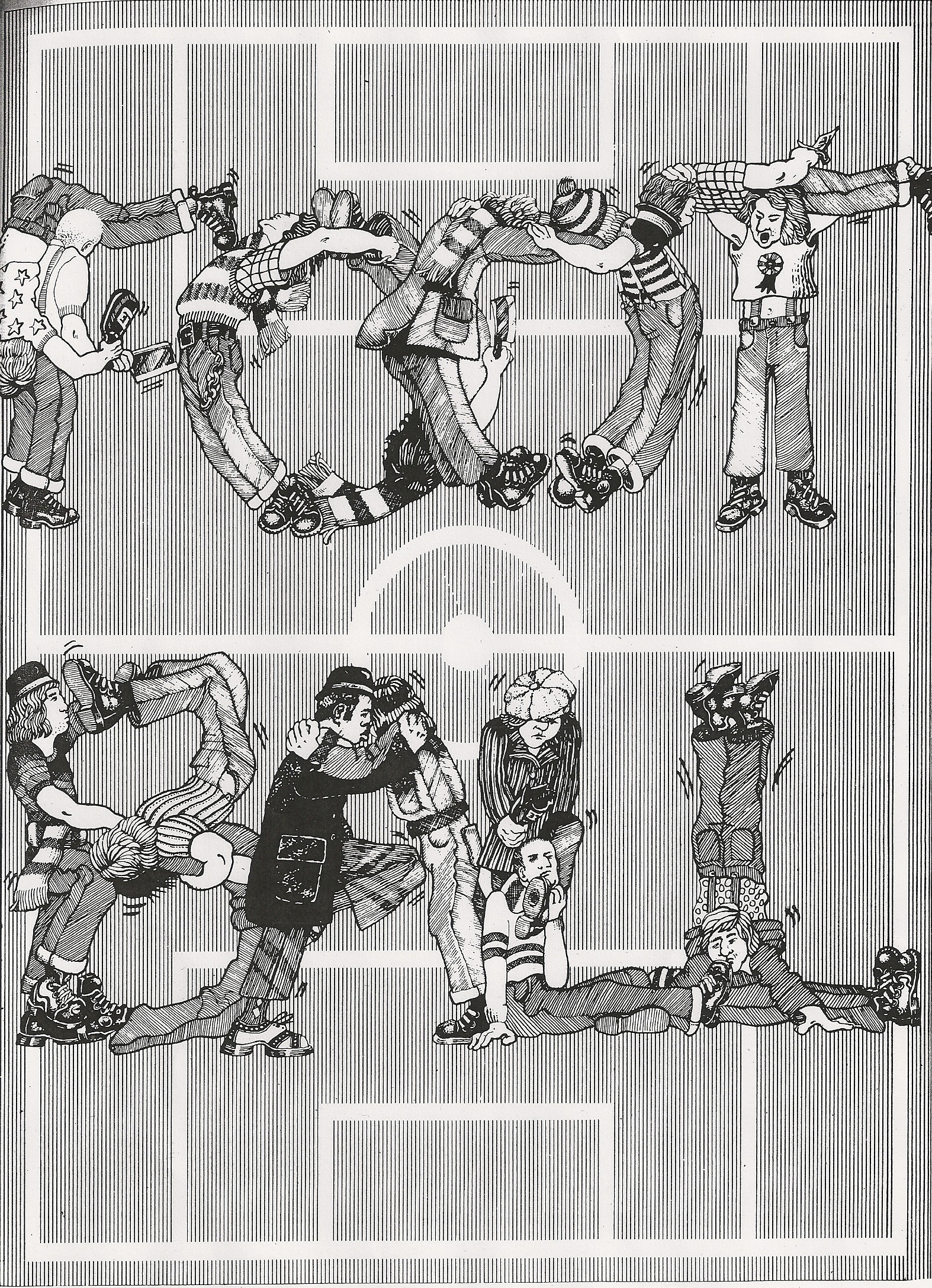
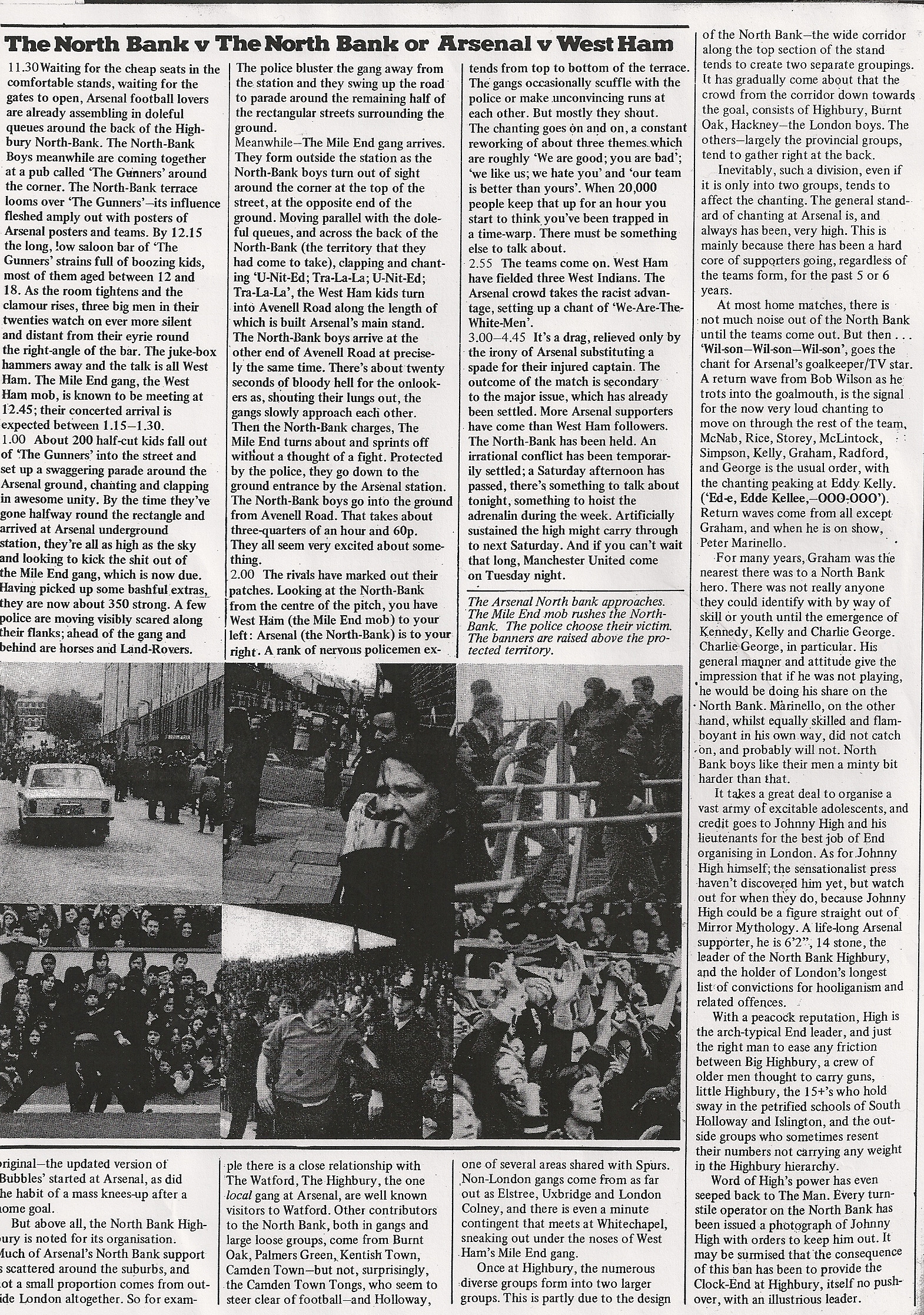
 I’ve mentioned Chris Lightbown’s article on London football gangs a couple of times before, but the piece itself hasn’t been available since it was first published in Time Out in 1972. The section on West Ham was reprinted in the excellent 2008 anthology London Calling, but the full article has been confined to libraries and private collections. Until now.

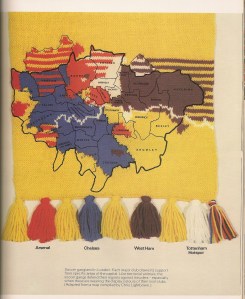
It is a fascinating read. This is the first time football fan culture had ever been seriously discussed by the press, and it offers a remarkable view of life on the terraces from the terraces, free of any moralism or finger-wagging. It is a thorough and very funny piece of writing, and is probably the first time terrace legends such as Mick Greenaway and Johnny Hoy (although he is called ‘High’ here) ever saw their names in print. It’s analysis of where the different clubs draw on their support is particularly great. 

The writing is very much of its time and place – complete with mention of ‘heads’ and ‘coons’ – and also paints the picture of a time when London terrace culture was very different: the Shed was as loud as the Kop, Arsenal had the most aggressive fans in London and Spurs were just a joke, on and off the pitch. Only West Ham’s identity appears to have remained more or less the same, although older Hammers would doubtless question that.

It is a cracking piece of work. Enjoy.

Secret London: photos of lost rivers and abandoned London

Lovers of London urban landscape, lost rivers, photography and, for want of a better word, psychogeography, should be aware of a forthcoming exhibition, From The Westbourne To The Wandle at Maggs Bros gallery.

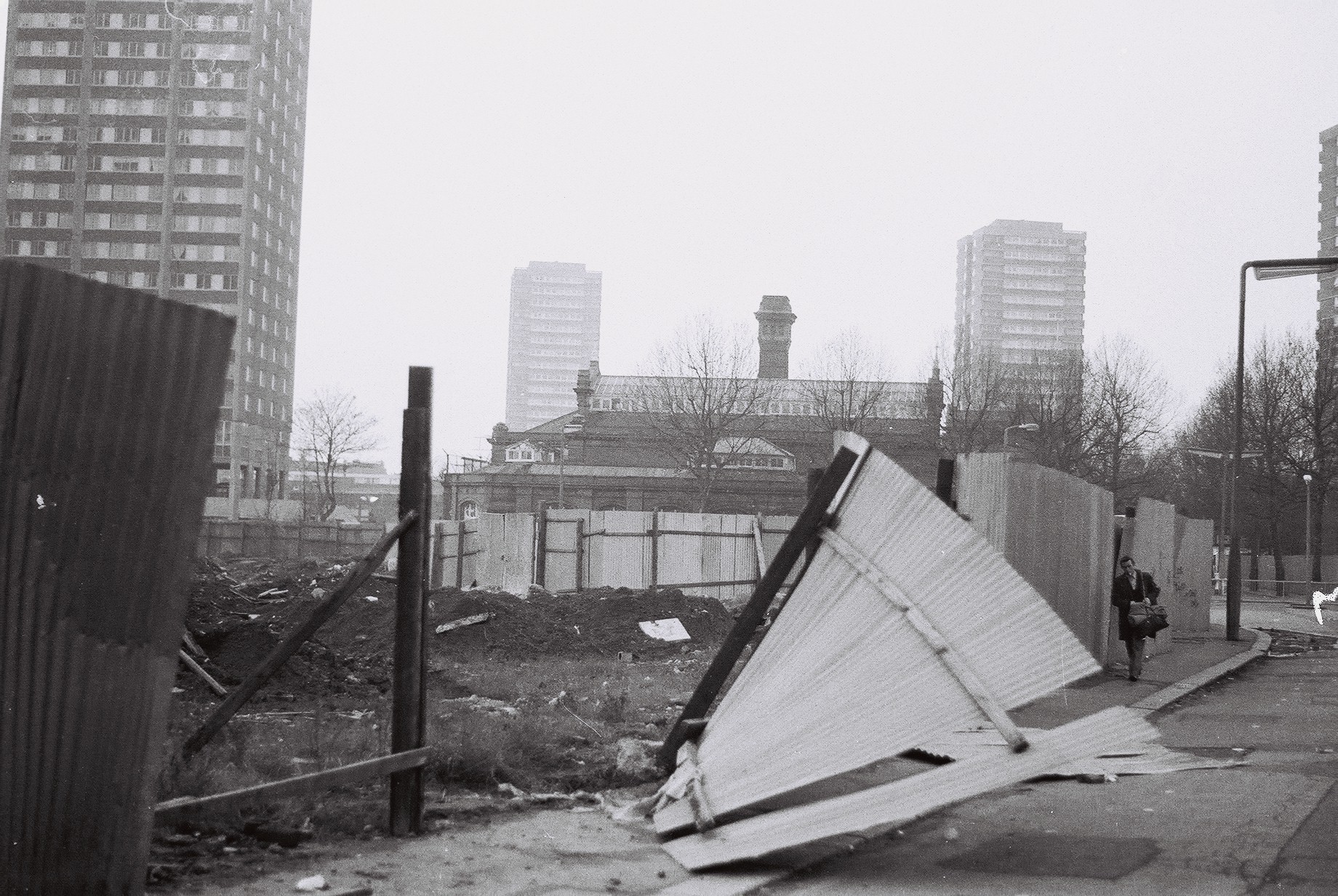
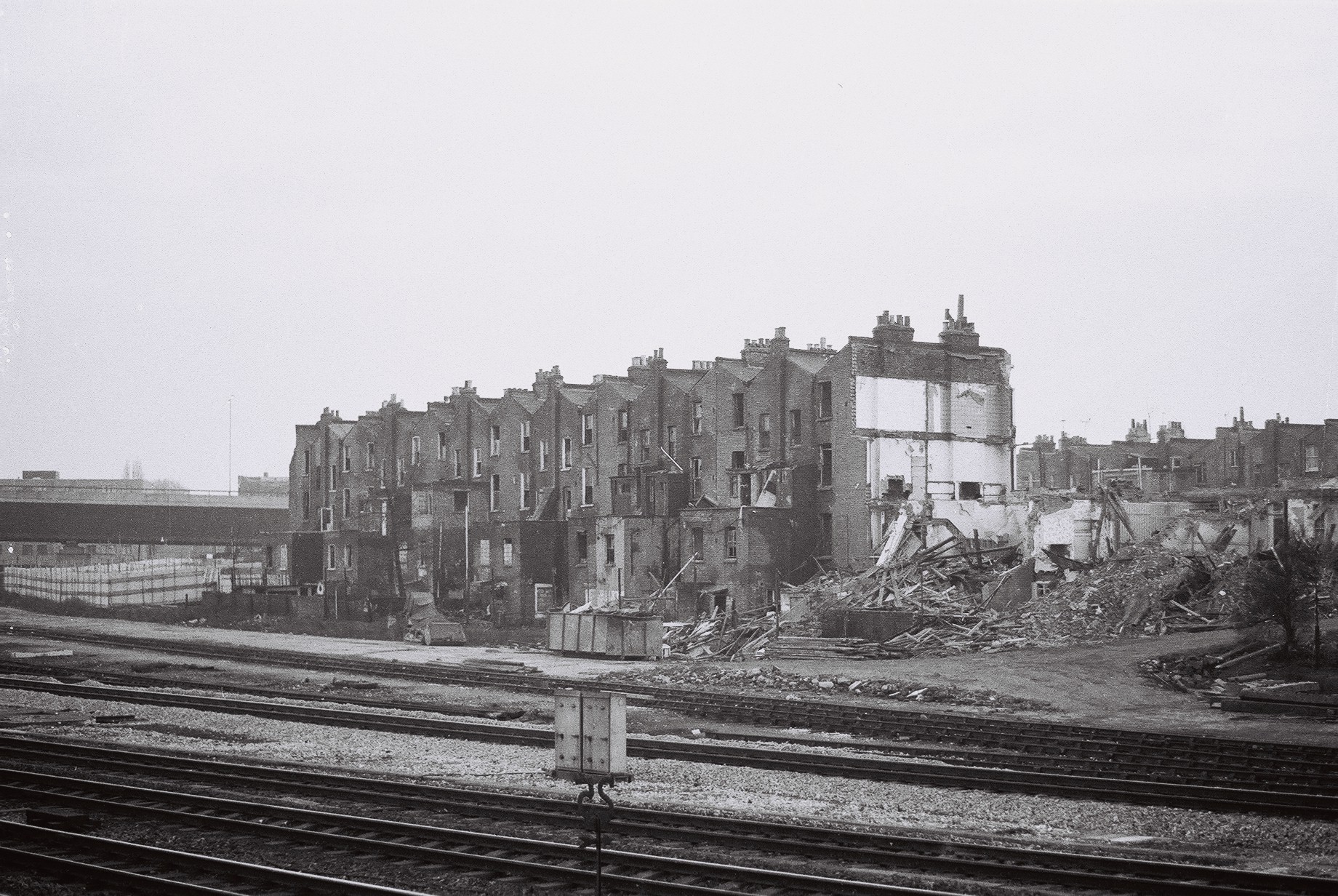
Curated by counterculture bookdealer Carl Williams, this brings together the work of two London photographers and writers, Jon Savage and SF Said. Savage is best known as a music writer, but in 1977, inspired by JG Ballard, he set out to photograph the urban wastelands of West London, taking a sequence of stunning black and white pictures of the lost land beneath the Westway.

He has written, ‘In its emptiness, austerity and gloom, it is an interzone waiting for something to happen, for the beasts to be unleashed. This was how London felt at the time: coming, coming, coming down – like a speed hangover merging into an apocalypse. But in there was also a sense of possibility that new ways of thinking might grow from this emptiness – like the scented buddleia on the bombsites.’

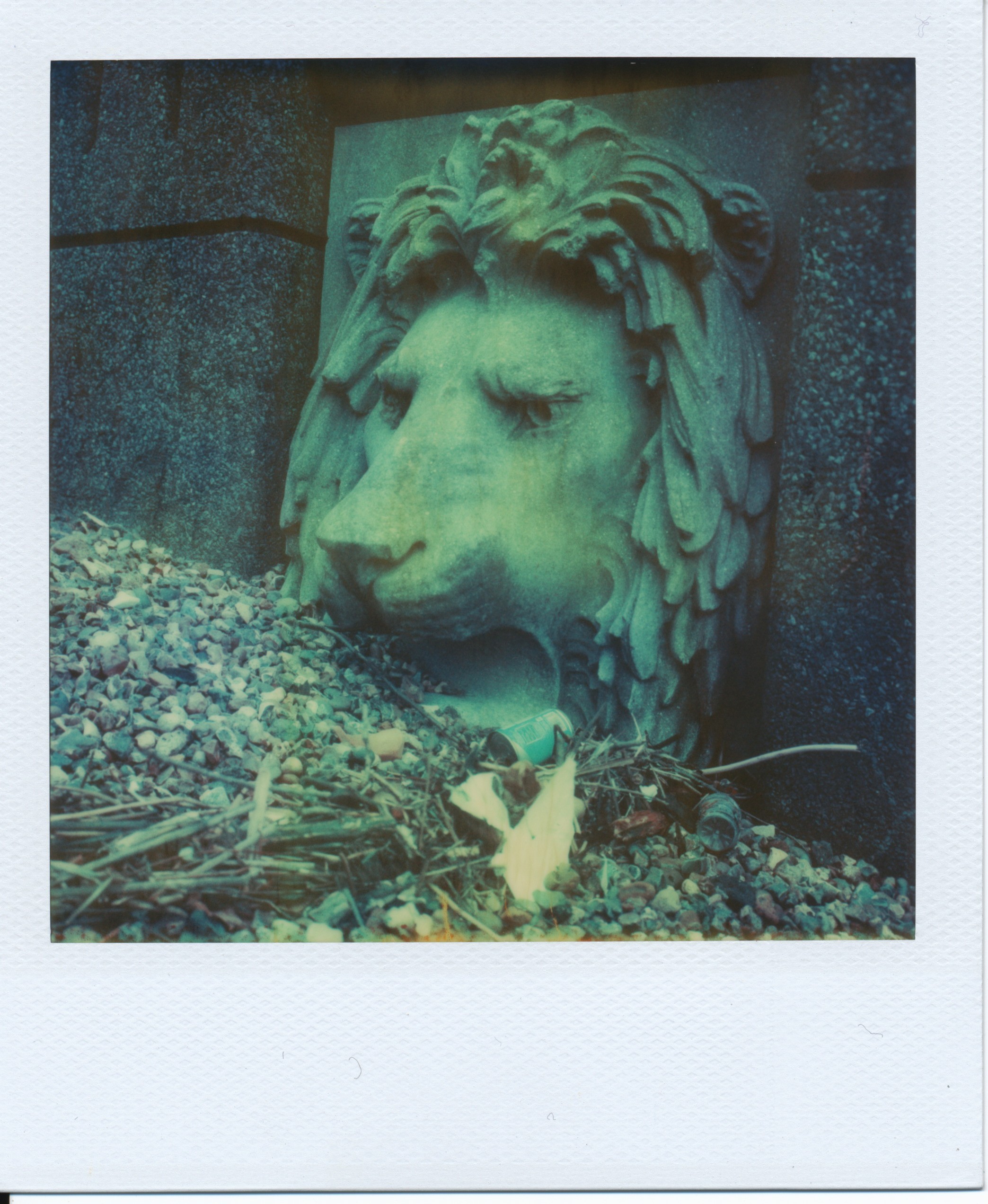
SF Said’s picture were taken for last year’s excellent Lost London Rivers book. Said shoots on Polaroid, which he describes as like a ‘photographic time machine’ and says he wants to ‘capture the dreams that a place might have of itself, or the memories that it stores under layers of time’.

He uses expired film, which can create strange, mesmeric effects and explains ‘as their chemical layers decay, they start to produce strange flame-like swirls and flickering light leaks that go even further into dreamlike realms.  These hallucinatory effects are unpredictable and random; sometimes they ruin a picture.  But when you’re lucky and it all comes together, I think they give you something magical that you could never get any other way.’

The exhibition is at the gallery at Maggs Bros, 50 Hays Mews, W1J 5QJ from March 22 to April 19.

My Fair Lady: the pun that nobody noticed

It has come to my attention that a substantial number of people do not realise that the title of My Fair Lady is a pun. It’s a play on the way a Lisson Grove-raised flower girl like Eliza Doolittle might pronounce Mayfair, if she wasn’t really a cockney at all but merely a Hollywood actor pretending to be one. Mayfair/Myfair – the drooping, elongated ‘y’ is a classic, if exaggerated,  symptom of the cockney mode of speaking,

Say it yourself in your best, daftest, Eliza Doolittle accent – Mwyyyy Fair. Sounds a bit like Mayfair, doesn’t it? If you don’t believe me, here’s Alan Franks saying the same thing, eventually.

So there you are. Here’s a scene from the film with Audrey showing off her accent at its very worst.

Dickens And London at the Museum of London


This review was published in the Independent last week but has not surfaced online.

It’s going to be hard to avoid Charles Dickens in the next few months. The writer will be everywhere, as publishers, programmers and producers commemorate the 200th anniversary of his birth on February 7, 2012. The best celebration of Dickens’s legacy could be this illuminating exhibition at the Museum of London. It’s an imaginative look at a familiar subject, and represents the best of what a museum can do.

This is no staid trawl through Dickens’s back catalogue but a vivid evocation of Victorian life based around themes from his books, from poverty to innovation. Sure, the big objects like Dickens’s writing desk or his manuscript for Great Expectations are there to grab the attention, but this drama is complemented by Victorian minutiae, the fascinating bric-a-brac of everyday life, everything from rent arrears books and mourning wands (wooden sticks carried by footmen ahead of funeral processions) to clay pipes, Punch and Judy puppets, model trains and Dickens’s soup ladle.

The exhibition is more than objects. There are mournful photographs of Victorian buildings that Dickens wrote about but have since disappeared, and a short film by William Raban that meanders around modern London while an actor recites Night Walks, Dickens’s essay about the sleeping city, drawing subtle parallels between his time and our own. The film is a rare chance to wallow in Dickens’s own voice, but neither this nor the manuscripts are quite as impressive as Dickens’s reading copy of Oliver Twist. This is the book he used on reading tours towards the end of his life; words and sentences are underlined for emphasis, and melodramatic stage directions (‘Action’, ‘mystery’, ‘terror to the end’) are scrawled in the margins.

Most rewarding of all, though, is the art. There’s classically sentimental Victoriana, such as William MacDuff’s Shaftesbury, which shows two urchins looking in a shop window like something by Norman Rockwell. There’s the fascinating documentary sketches of George Scharf’s, who drew the people he saw on streets acting as human advertisements, in colourful costume and carrying eye-catching signs for shows and products. And there are many detailed depictions of Victorian street life, which owe a clear debt to Hogarth. Phoebus Levin’s ‘Covent Garden Market’, Caleb Robert Stanley’s ‘The Strand, Looking Eastwards From Exeter Change’ and especially Edmund John Niemann’s ‘Buckingham Street’ portray a city of energetic bustle, cobbled streets and vicious contrasts of wealth that are the visual embodiment of what we still call Dickensian London.

Museum of London, 150 London Wall, EC2Y 5HN (020 7001 9844). Until June 10, 2012. Admission £8 (£7 advance booking); concs £6 (£5 advance booking).

Drugs and dead babies at the Queen’s bookshop

Maggs Bros is a posh antiquarian bookseller on Berkeley Square that has a Royal Warrant and is supposed to occupy the site of the most haunted house in Britain, but it is also home to a small contemporary art gallery, located out the back and accessed via 50 Hays Mews.

The latest show is being curated by New Artists and features photographs by Richie Culver taken of London crackhouses. These are loosely based on Gustave Dore’s engravings of Victorian opium dens.

Opium Smoking

The exhibition also features Polaroids by Shorvon & Hunter that explore the demise of the Polaroid and newspapers as forms of media. It’s definitely worth a look if you are in the area before it closes on Monday, December 5.

If you do, you should also pop upstairs to see a selection of some items that Maggs’s counterculture expert Carl Williams is currently selling. These include photographs of William Burroughs taken by Brion Gysin in Paris and an extraordinary mural taken from an American street gang club house. You could also pick up a copy of Carl’s latest catalogue to see if he has anything you fancy, whether it be items to do with Crowley, punk or the Weathermen. Last time I visited, he showed me some pictures he’d just acquired of dead Victorian babies, but don’t let that put you off.

Secret London: LSD experiments at the World Psychedelic Centre

Michael Hollingshead has been described as ‘an English trickster and con man of the first order’ by one commentator, but he described himself as ‘The Man Who Turned on The World‘.

Hollingshead was the British man who introduced LSD to Tim Leary in December 1961 on the recommendation of Aldous Huxley. Hollingshead was working in New York when he came upon a quantity of LSD. Huxley suggested he send it to Leary, who was already experimenting with administering psilocybin to patients during his psychological research at Harvard. Leary loved it. The LSD revolution began.

After working in America with Leary – he even lived in his house – Hollingshead was sent to London in September 1965 with enough Czechoslovakian lysergic acid to produce 5,000 trips, thirteen boxes of psychedelic literature – The Psychedelic Experience, The Psychedelic Review and The Psychedelic Reader – and plans for ‘a psychedelic jamboree’ at the Royal Albert Hall featuring the Stones, the Beatles and Leary himself. Although this is sometimes presented as Hollingshead playing the role of John The Baptist to Leary’s Psychedelic Christ, Barry Miles’s ‘London Calling’ suggests that Leary was just trying to get rid of the increasingly drug-addled Hollingshead and is said to have remarked upon his departure, ‘Well, that writes off the psychedelic revolution in England for at least ten years.’

Hollingshead promptly set up his base at his flat in Belgravia’s Pont Street, which he renamed the World Psychedelic Centre, and redecorated with the key elements needed for a good trip: bowls of fruit, handwoven cloth, open fire,  bread, cheese, wine, candles, incense and goldfish. A chill out space, basically.

This was one of only two reliable sources for LSD in London at the time, so visitors were plentiful and Hollingshead began welcoming key figures from the scene – including Roman Polanski, Alex Trocchi, William Burroughs, Paul McCartney, Eric Clapton, Donovan and the Rolling Stones.

Guests were invited to take part in LSD sessions designed to make the most of the experience, with ‘lots of cushions, some excellent tapes and hi-fi equipment, a slide projector, and several chillums’. The LSD was dispensed after midnight inside grapes impregnated with 300 micrograms of the drug. The atmosphere was key. Hollingshead writes:

Shortly after dropping the acid, I played a tape of Buddhist Cakra music, followed by Concert Percussion by the American composer, John Cage. Next I played some music by Ravi Shankar and some bossanova. Interval of fifteen minutes. Then some music by Scriabin and part of a Bach cello suite. Interval. Some Debussy, and Indian flute music by Ghosh. Interval. Bach organ music and some John Cage ‘space’ music. Interval. The Ali Brothers and Japanese flute music. We also looked at slides projected on to the ceiling Tantric yantras, Vedic Gods, the Buddha, Tibetan mandalas.

There were also regular readings from Leary’s work

While Hollingshead dispensed LSD to his visitors in these carefully controlled conditions, he was soon self-medicating with cannabis, speed and heroin to control the fierce highs he experienced from taking strong doses of acid at least three times a week. The tabloids soon got wind of these experiments with the ‘killer drug’  and after hosting a party of 80 hippies at which two undercover police officers were dosed with acid after sampling the spiked punch, Hollingshead was busted. Naturally, he attended his trial while tripping and was sentenced to 21 months at Wormwood Scrubs. There he met spy George Blake, who promptly took a trip on some of the acid Hollingshead smuggled in to the prison, before escaping and going into exile in the Soviet Union.

Hollingshead didn’t make it quite that far himself, ending up in Cumbrae, a Scottish island, where he settled with a group of believers who treated LSD as a holy sacrament in quasi-religious services. He then went on his world travels.

Hollingshead was undoubtedly a key player in the scene. However, it’s notable that when a copy of his book, The MAn Who Turned on the World was sent to Timothy Leary in prison in the 1970s, Leary underlined only a single sentence – ‘…my taking of methedrine…’ Leary’s acquaintances believe that not everything Hollingshead said about his role in the psychedelic revolution could be trusted because of his addiction to opiates.

Hippy-dilly: squatting and the London Street Commune at 144 Piccadilly

Tonight, Radio 4 will broadcast a show on squatting, called ‘From Frestonia To Belgravia‘.

Squatting as a 20th-century phenomena originated in the wake of the acute housing shortage after the Second World War. Homeless families began to occupy empty mansion blocks and hotels, including Duchess of Bedford House in Kensington.

Some of the squatters of the 1960s took this as their inspiration. Among the most political were the London Street Commune, a group of self-declared space cadets from the streets who were turned into a minor political weapon by a Spart called Phil Cohen, aka Dr John, who had previously been involved with the British Situationist International group, King Mob. The LSC became loosely involved in the counterculture scene and even at one point managed to occupy the offices of the underground newspaper, International Times, believing it was ‘bourgeois’ and needed to be ‘liberated’. They gave up after a few days when they realised they didn’t really understand how to put a newspaper together.

The London Street Commune’s most conspicuous act came when they squatted a vast Park Lane mansion, 144 Piccadilly, at Hyde Park Corner in September 1969. This gained them massive media attention, and the building quickly came to be dubbed ‘Hippy-Dilly’ and attracted vast crowds of largely hostile onlookers. The LSC responded by barricading the front door and creating a ‘drawbridge’ out of wood from one of the ground-floor windows, and asking the Hell’s Angels to protect them.

Around 100 people were said to be living in the building, among them the odd journalist who infiltrated the squat so they could produce salacious copy about the drug-taking ne’er-do-wells. After surviving an attempt by skinheads to ‘take’ the mansion – the LSC threw carpet bowls and balloons filled with ink at the approaching skins – the police decided to take action.

The police moved in on September 21, leading to in the words of the Daily Mirror, ‘The Fall of the Hippy Castle‘. This took place the day after a free festival at Hyde Park, which many of the LSC had attended. The squat was now filled with numerous disparate groups, including Hell’s Angels and French veterans of May 1968, alongside the original Dilly drop-outs, but they were quickly moved out by police, who arrested around 70 of the squatters.

While John Lennon went on TV to offer the displaced squatters a home in the shape of an island off Scotland, the high-profile eviction was greeted with delight by the media. The Times demanded the squatting be made illegal and that hippies be arrested under the vagrancy act. This remarkable Pathe newsreel – with talk of ‘scroungers and drop-outs… snubbing the conventions of decent society… doing the real homeless a disservice’ – demonstrates the prevailing attitude. It is difficult to conceive of broadcast media speaking in such terms today.

In 1972, American film director Sam Fuller wrote a pulp novel about 144 Piccadilly, but the building itself was not to last much longer. It was knocked down in the 1970s and replaced by the ghastly Intercontinental Hotel.