Sir John Tenniel’s Alice In Wonderland chessboard

Earlier this year I was approached by bookseller Jake Fior, who told me he’d recently discovered a chessboard, never previously known about, that he believed had been handpainted by Victorian Alice In Wonderland illustrator Sir John Tenniel.

Tenniel’s illustrations are absolutely central to how we perceive the character of Alice in the two worlds she visits, inside the rabbit hole and through the looking glass, meaning this was clearly a pretty significant discovery, especially as Through The Looking Glass is plotted to resemble a game of chess.

My piece on the find eventually appeared in yesterday’s The TimesSadly, this is  hidden behind a paywall, but thankfully The Telegraph reprinted pretty much the whole thing word-for-word later the same day. Fans of Alice should keep their eyes peeled on Cecil Court, where an Alice-themed boutique – complete with live white rabbit in the front window – will soon appear.

I think that calls for a song…


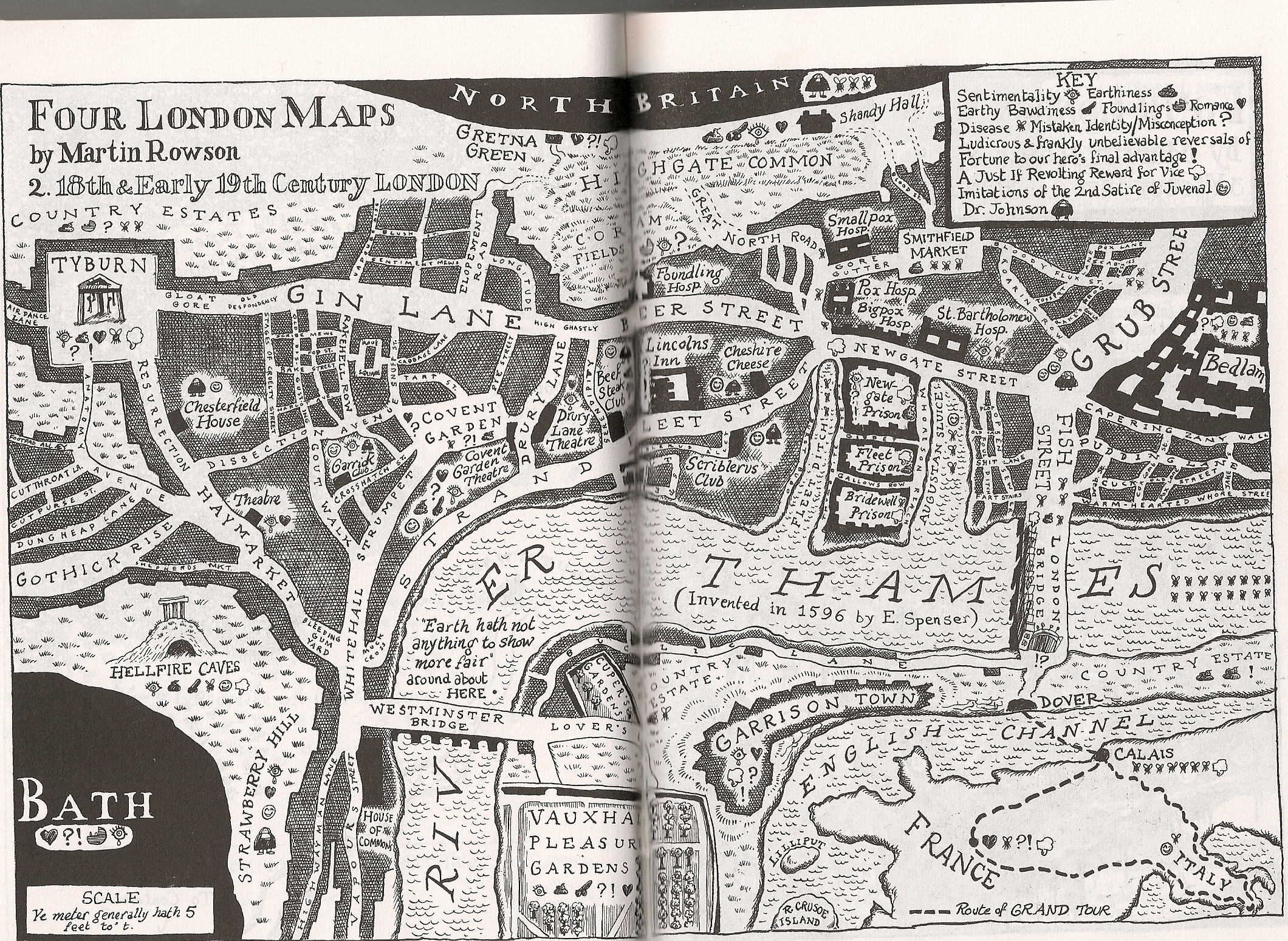
Four literary London maps

These four maps of literary London were drawn by Martin Rowson for the rather wonderful 1999 London issue of Granta magazine.

Chaucer’s London

Georgian London

Victorian London

Modern London

Bus stops and Brockwell Park: exhibition in Herne Hill

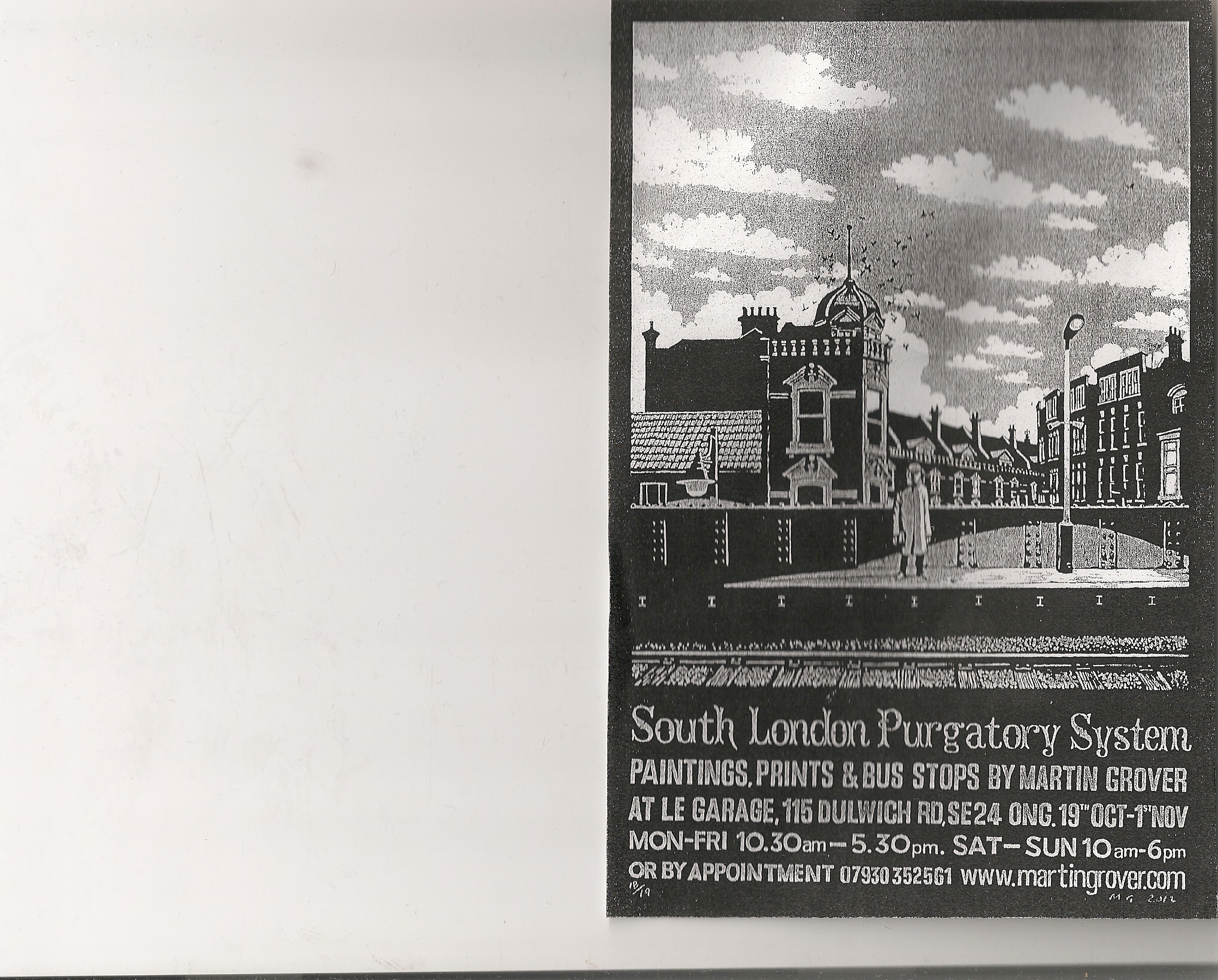
Martin Grover, an artist based in South London, has an exhibition at Le Garage in Herne Hill until Thursday November 1. His paintings are mainly of Brockwell Park, old record covers and bus stops, making him the ideal visual companion to my life.

His bus stop art has now extended from 2D prints into 3D sculptures/installation – in other words, he makes actual bus stops and writes strange slogans on them.

His Brockwell Park paintings are lovely. They are painted from sketches and photographs, although he confesses he makes a lot of it up in the studio, which is why Batman or James Brown might occasionally turn up in one.

Then there are the record sleeves, perfect reproductions of old 45s: often Stax and Motown but also plenty of country and Dylan.

South London Purgatory System at Le Garage until Nov 1, 2012. Mon-Fri, 10.30am-5.30pm; Sat, Sun, 10am-6pm. 

Peter Hitchens on drugs and the moral, opium-eating, Victorians

Peter Hitchens is a very clever man. I’m sure he’s also sincere – I can’t believe British newspapers would employ somebody to say stupid and provocative things just to get attention, after all – but judging by the interviews he’s conducted for his new book about drugs, The War We Never Fought, he’s a little bit daft.

Hitchens theory is that there has never been a war on drugs. ‘Drug-taking was, in effect, decriminalised by the Misuse of Drugs Act 1971,’ is how Decca Aitkenhead paraphrases. Instead, he harks back to the golden age of the Victorians, when there was ‘increasing self-imposed moral conduct’ (Hitchens’ words.)

Where to begin with this nonsense? Well, let’s just stick to the last bit, those morally virtuous Victorians. In a sense, he’s right: the Victorians didn’t take illegal drugs. That’s because they were too busy snaffling down the legal ones – things like opium, cocaine and cannabis – which were available to just about anybody who needed them until 1868, and then over the counter from chemists until 1926. This was the golden age of drug-taking in Britain, with opium being consumed on a scale we could scarcely now believe.

Victorian London was awash with opium, not in semi-mythologised Chinese opium-smoking dens in Limehouse (of which there were very few), but in pubs, chemists, general stores and markets, where it was sold in bottles, powders, pills, lozenges, on plasters, in sweets and much else besides. The centre of trade was in Mincing Lane, London, where 90 per cent of transactions occurred. It was most commonly taken as laudanum, a tincture of opium and red wine, with saffron and cinnamon.

This was not thrill seeking. In the days before aspirin, opium was one of the few reliable painkillers available to Victorians, especially especially fever and diarrhoea, but also malaria, smallpox, syphilis and TB. And it was effective as well. As anybody who has taken codeine or morphine will confirm, opiates have a tendency to block you right up – something that was particularly helpful when the next cholera or dysentery epidemic was just around the corner.

However, opium was also used on children, particularly when teething, in specially formulated sweet concoctions like Godfrey’s Cordial and Mrs Winslow’s Soothing Syrup, and thus surely led to the deaths of many by overdose. It also, believes the drug’s historian Martin Booth in Opium: A History, ‘provided an escape from the misery and vicissitudes of working-class life.’ This was especially the case in the Fens, where ‘many never take their beer without dropping a piece of opium into it.’

Because of these two factors, opium was belatedly seen as a physical and spiritual danger, and Victorian abstinence advocates put it right up there with alcohol and tobacco as serious threats to British life. What’s interesting, though, is the way – anecdotally at least – users were able to effectively and relatively painlessly self-medicate, living normal decent lives despite their addiction, without resorting to crime. This is true for the working classes, it’s true of the famous opium-eating writers like Coleridge, Shelly, Keats, Collins and De Quincey, and it’s also true of the many great statesmen – the sort of people who shaped the British Empire so beloved by Peter Hitchens – who took the drug. You see, because opium was the only halfway reliable painkiller around, everybody took it – including people like William Wilberforce, the great Christian abolitionist, and William Gladstone, who popped some in his coffee before speaking in Parliament to improve his rhetorical powers – even if not all of them became addicted.

In later years, opium – and especially its stronger derivatives morphine and heroin – began to be used by those simply seeking a pathway to an altered consciousness, a shortcut perhaps to the sort of transcendent mystical experience some people get from religion. In doing so, they were merely following pattern taken by mankind in all civilisations since the dawn of time, however much Hitchens may wish that weren’t the case.

As restrictions were introduced – for opium, not alcohol and tobacco – drug-use declined massively and by 1960 there were less than 100 registered heroin addicts in the UK. They received their drugs from doctors, cheap and undiluted, and were largely able to enjoy a normal existence (at least in comparison with their criminalised counterparts in America). However, as drug use increased in the 1960s, restrictions were imposed, culminating with Hitchens hated Misuse of Drugs Acts in 1971, after which drug supply passed almost completely into the hands of the criminal and use immediately rocketed. A far cry indeed from those morally virtuous days of the 1850s, when Britain’s great and good could simply pick up a bottle of premium laudanum from their nearest general store and retreat into blissful opium dreams.

Death at the museum

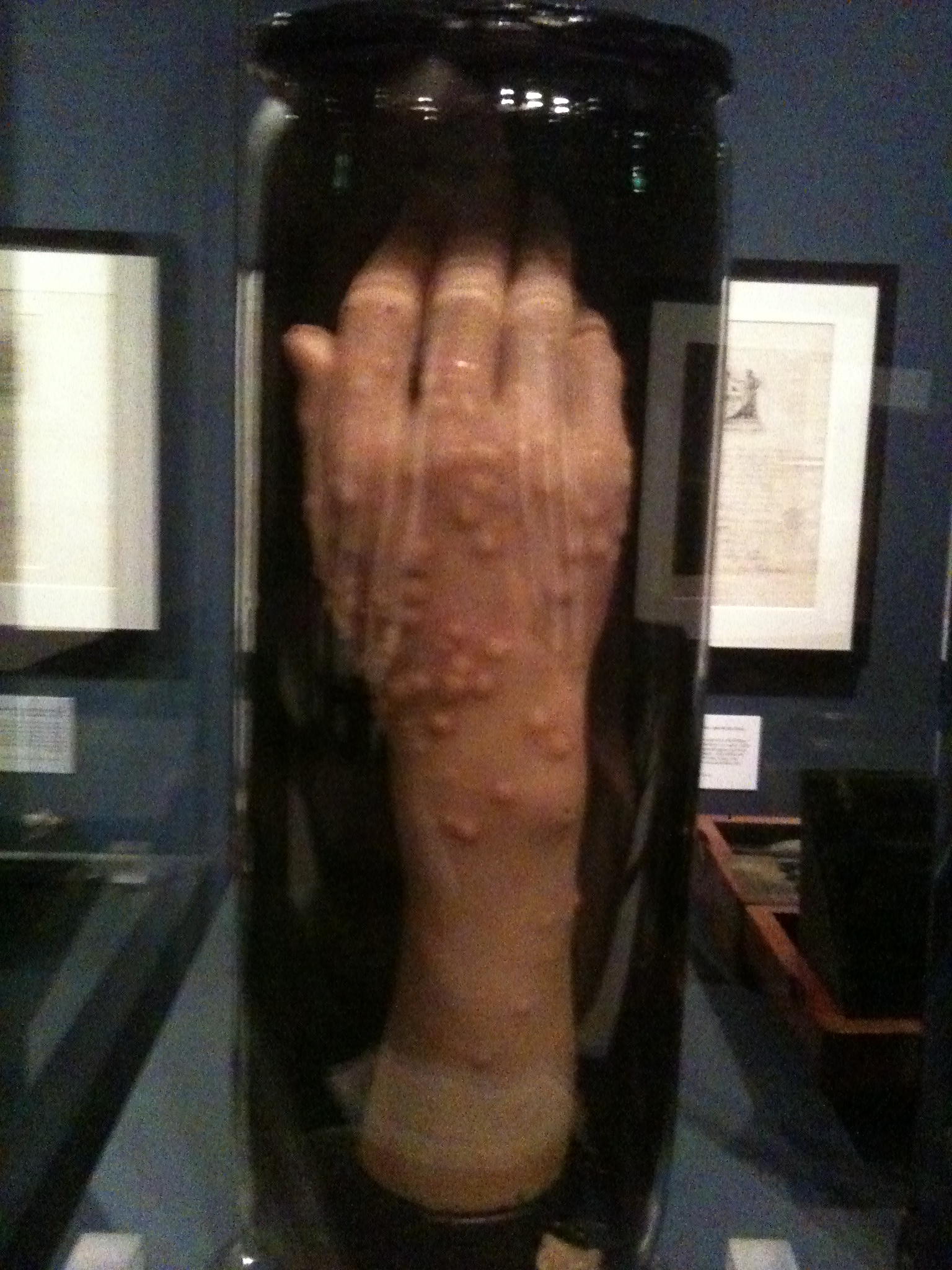
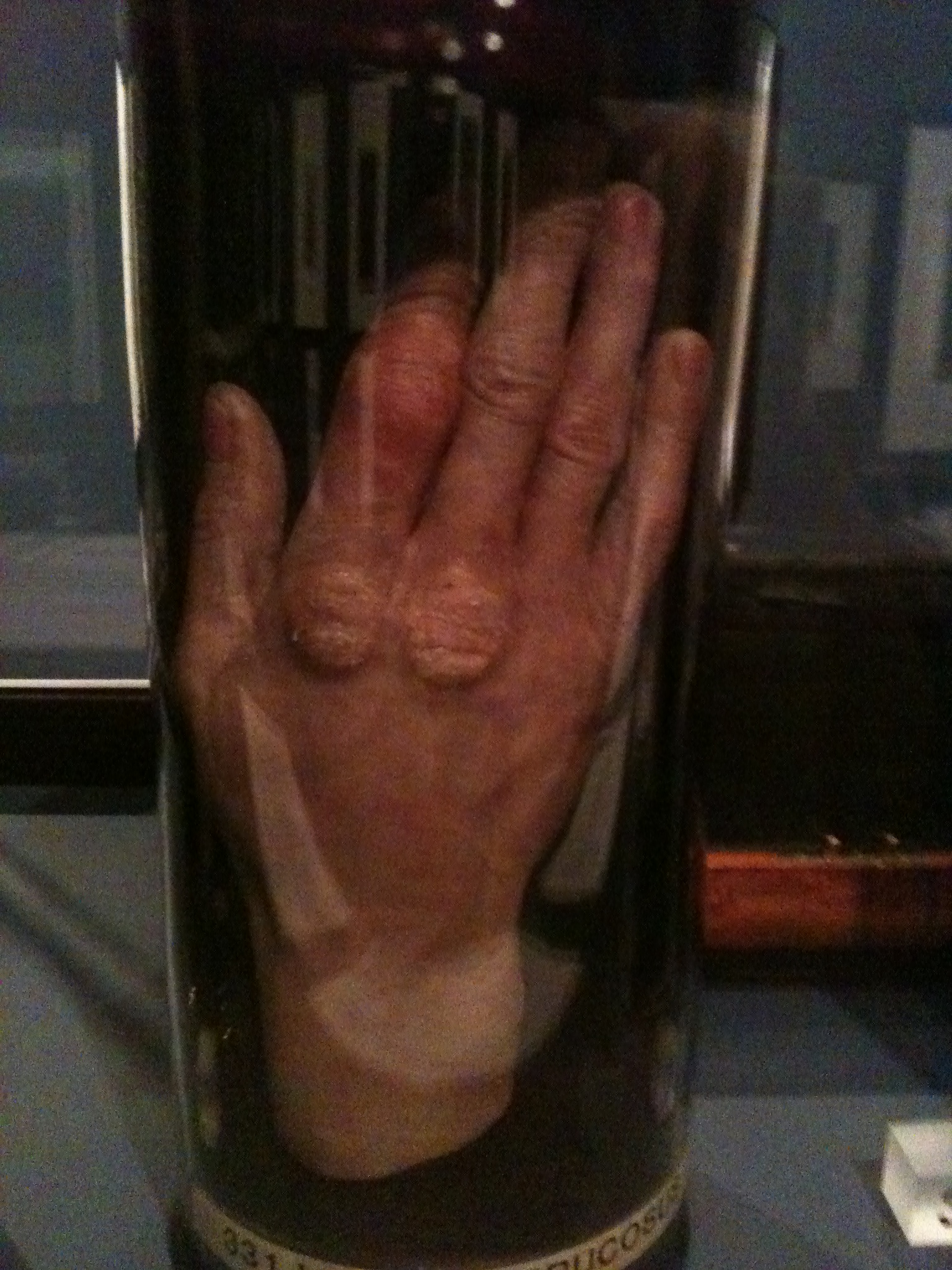
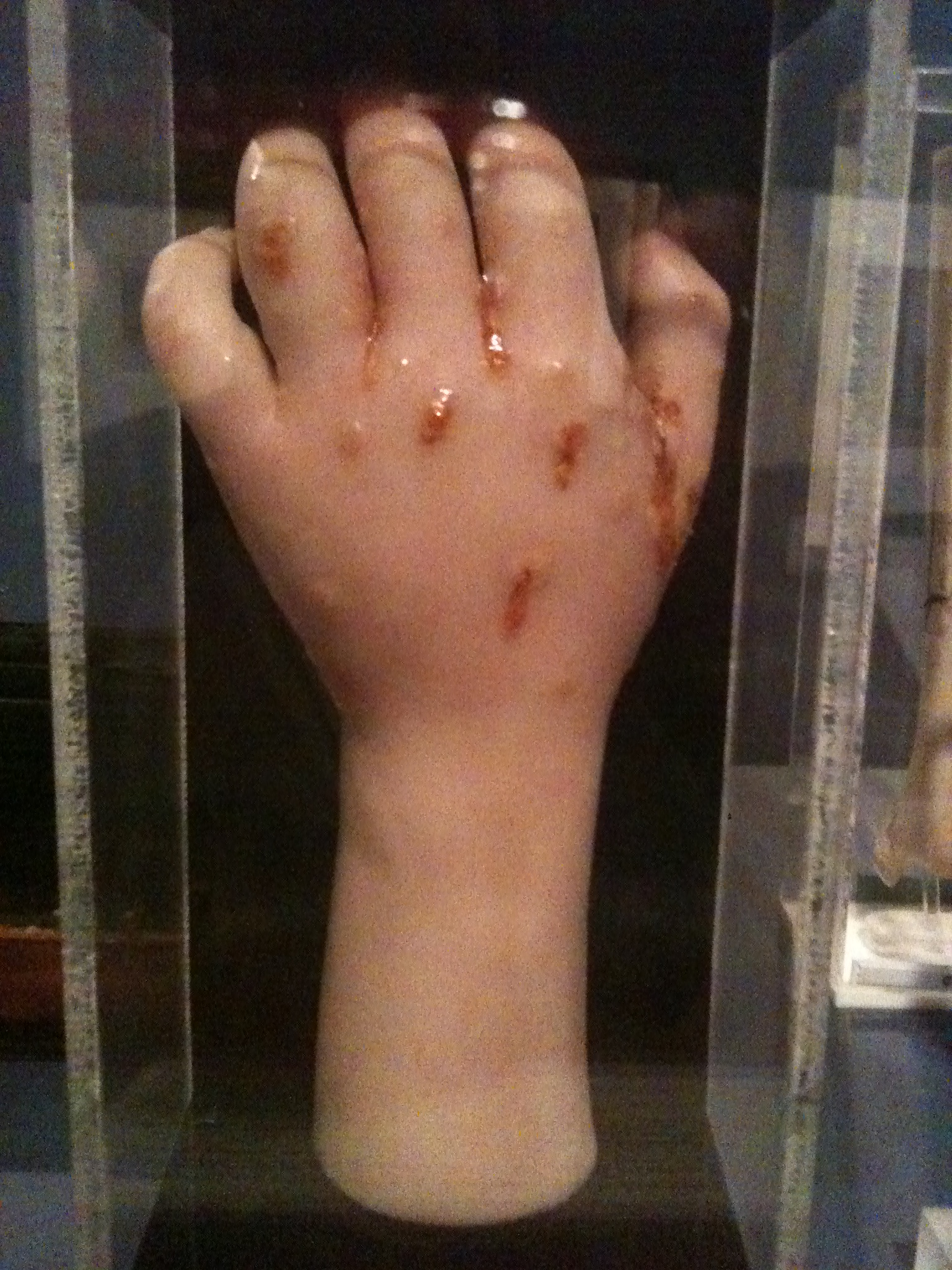
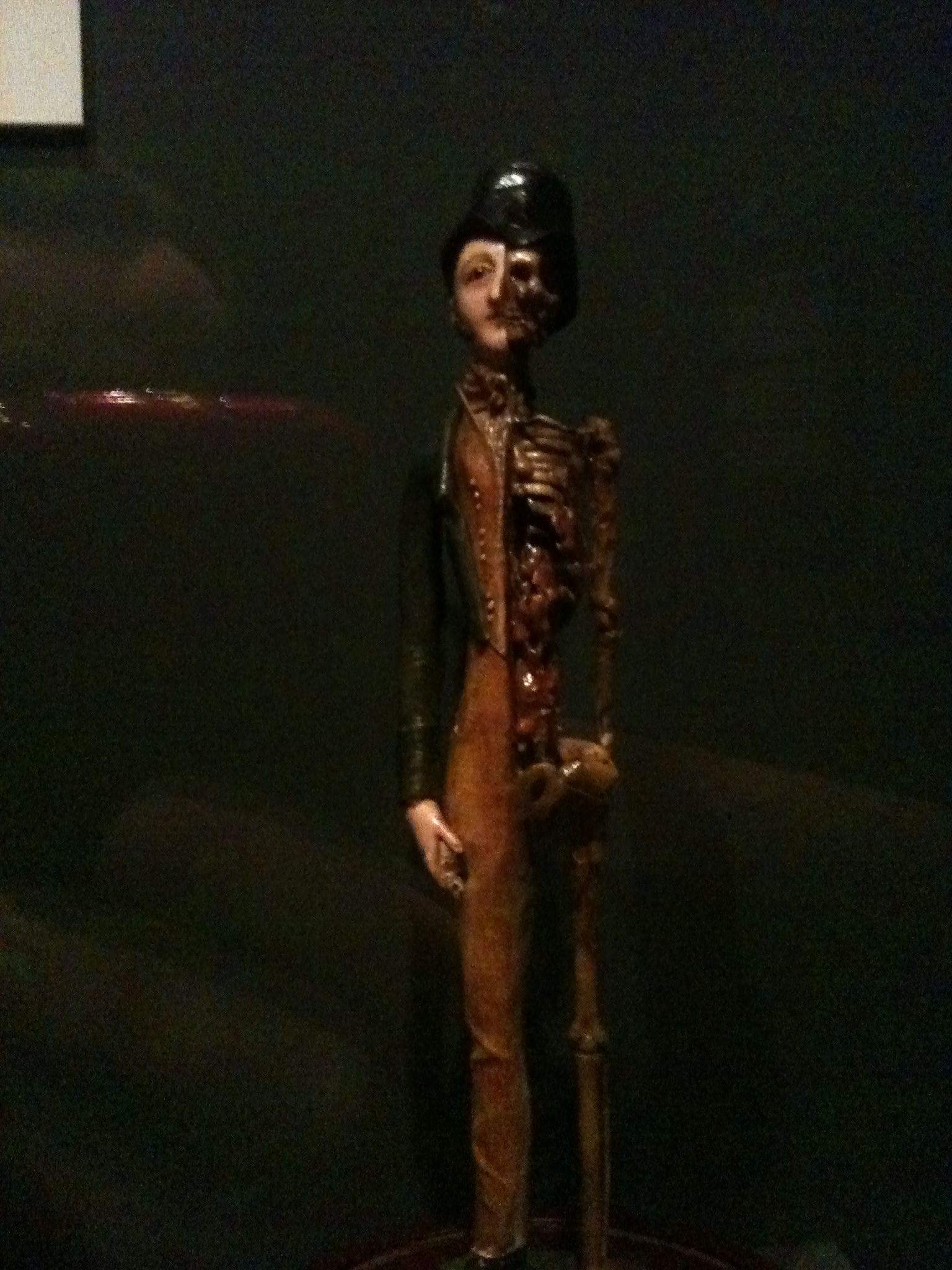
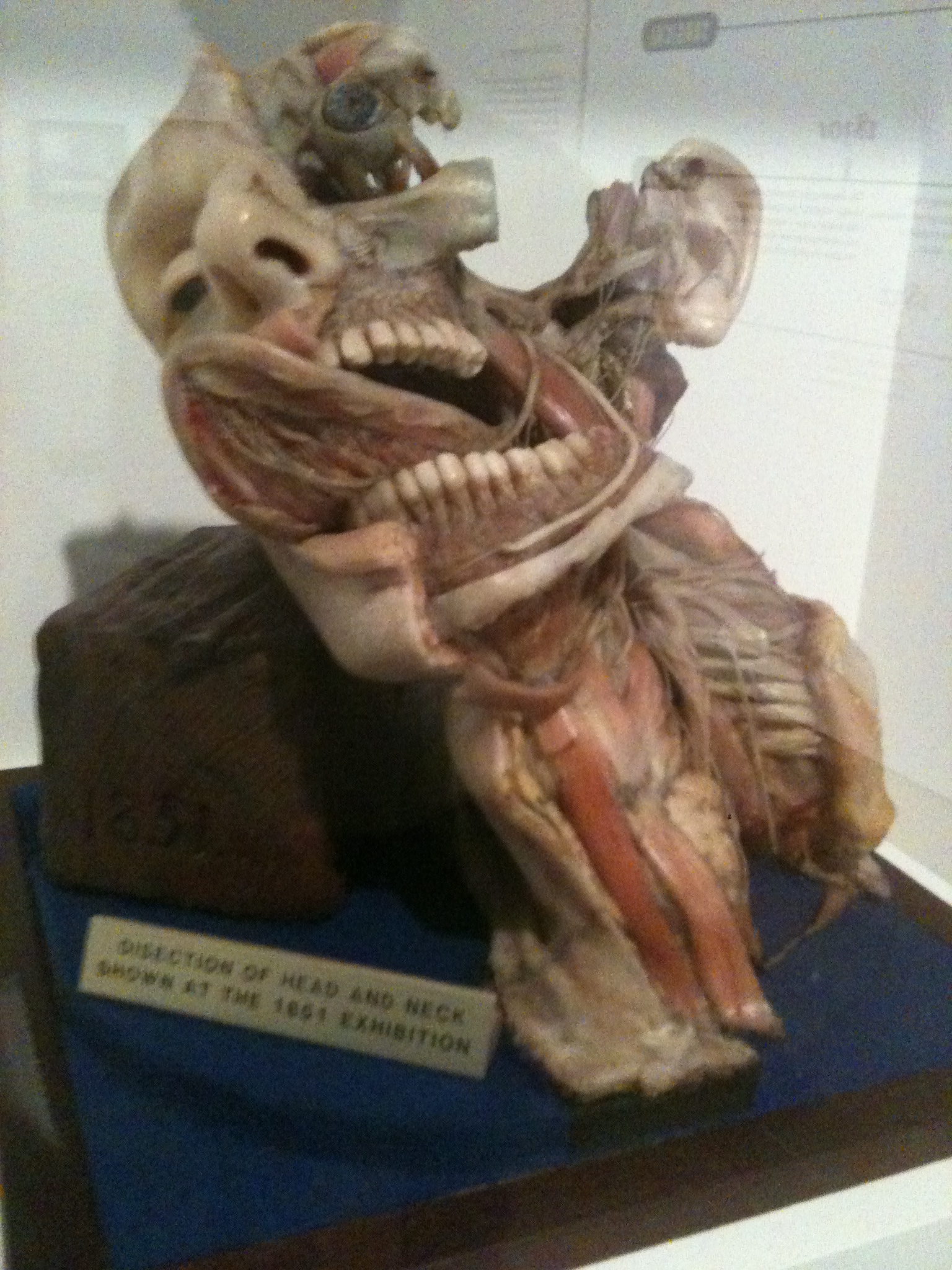
Somewhere in the grounds of Guy’s Hospital near London Bridge, is the most peculiar museum you’ve never seen. The Gordon Museum occupies two wood-panelled rectangular rooms, which connect at the ground floor something like a figure of eight. It has two galleries lined with shelves like an elegant library. But these shelves do not contain books; they are occupied by glass jars, inside each of which is some diseased limb or organ – an atrophied brain; a liver with cirrhosis; a pox-ridden arm. At times there may be an entire foetus. There are at least 8,000 of these specimens in the museum. Ground level is given over to Joseph Towne‘s remarkable anatomical models, striking waxworks of human figures,  often diseased, forever stricken with peculiar and fascinating illnesses.

The Gordon Museum is effectively a museum of pathology, a library of illness, and it is not open to the public. I visited a few years with a view to writing about this fascinating establishment, and while the curator granted me a long tour he was very clear that he did not want any publicity as he didn’t want people snooping around his specimens. It was a serious place for medical folk, not rubberneckers, a distinction it shares with the infamous Black Museum run by the Met Police.

Those intrigued by the Gordon Museum can get some sense of its contents when you visit the Museum of London’s gleefully gruesome new exhibition, Doctors, Directors and Resurrection Men, where some Gordon Museum objects are on display. Prompted by the archeological excavation of a hospital graveyard which contained numerous early 19th-century skeletons, the exhibition explores the entwined topics of dissection, death, medicine and graverobbers with entertaining relish.

It is interesting to note the ways museums confront the subject of death. While the Gordon Museum keeps the public away, the Wellcome Collection is prospering with exhibitions that frequently consider and confront mortality with few qualms – indeed their next big exhibition is titled Death: A Self-Portrait.  The issue of representing dead humans in a museum remains a contentious one, with many museums choosing to present models and casts of human skeletons rather than the real thing (as if that really makes any kind of a difference). The Museum of London – perhaps emboldened by the Wellcome’s brilliant and sympathetic use of the MoL’s skeletons in 2008 – take a necessarily but still admirably grown-up approach to the human remains on display in this exhibition. There are plenty of bones, and they are thoughtfully treated.

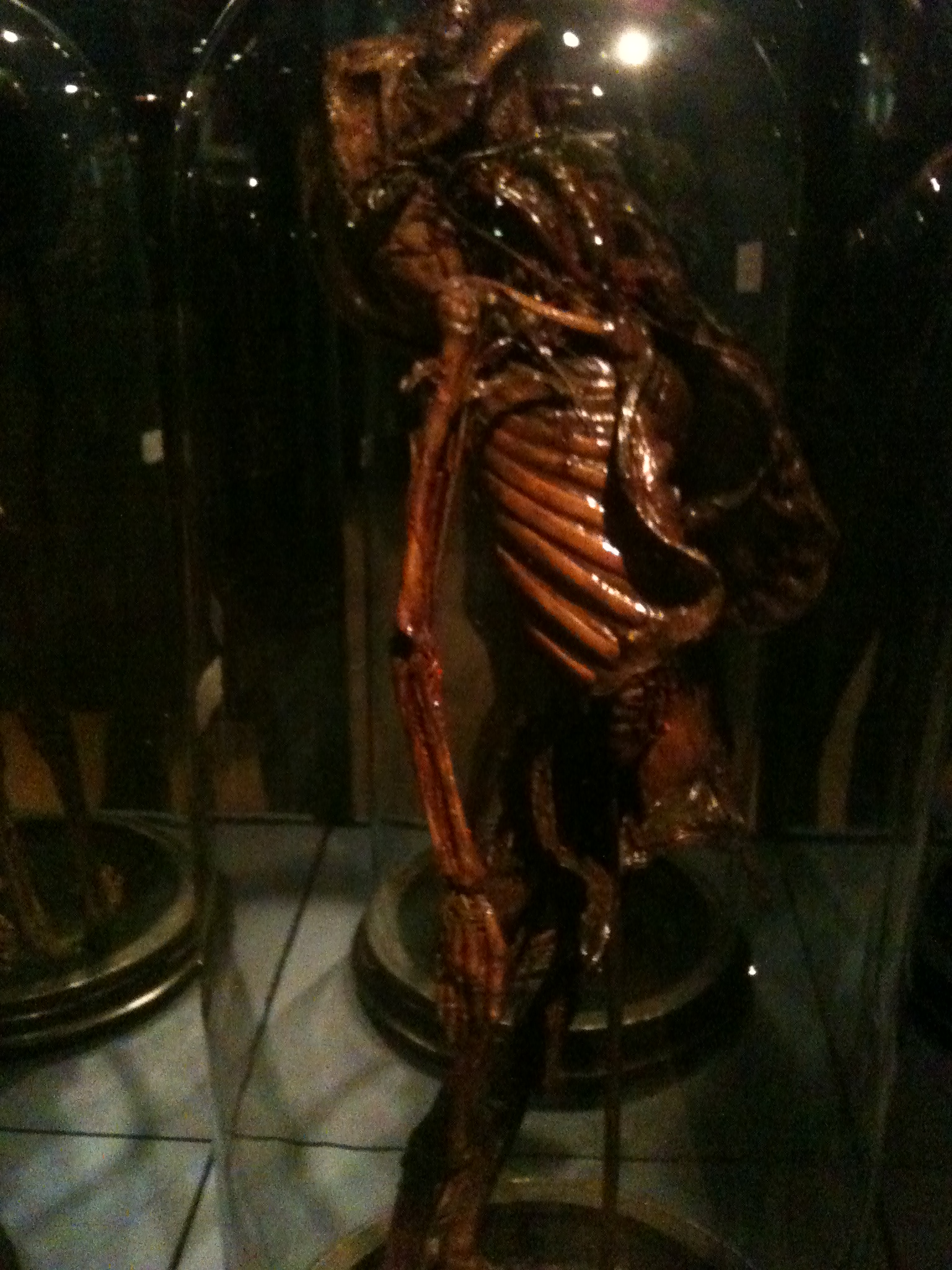
Ironically, then, the most dramatic exhibits tend to be models. The best of these is probably a loan from the Royal Academy of James Legg, a criminal who was flayed and posed on a cross to settle an artistic debate. Legg’s mutilated body was preserved in plaster. There are also a number of Townes’s models, including the stunning human skeleton he sculpted from wood at the age of 16, something he did despite never having seen one in real life and which earned him his job for life at Guy’s Hospital as their in-house model maker.

The most striking ‘real’ skeleton is hidden away in the corner, the remains of a small boy preserved in shellac and looking for all the world like something from Alien. Even this inescapably gruesome spectacle is a far cry from the horrors of previous centuries, when museums had a much less cautious approach to human remains, perhaps due to centuries of seeing saints relics – bits of skin, teeth and bones – on display in holy places. We at least, though, have come a long way from the indignities suffered post-life by Angelo Soliman, an African who moved in high circles in 18th-century Europe but, upon death, was nonetheless stuffed, dressed in ‘African’ clothes and put on display in a cabinet of curiosities among some animals and assorted wildlife. This grotesque display was thankfully destroyed by fire in 1848.

Doctors, Dissection and Resurrection Men is at the Museum of London until April. 

Wellcome to London: how Henry Wellcome ‘hoovered up the world’ and left it on the Euston Road

Wisconsin, 1858. A five-year-old boy is playing near his frontier home when a strange stone catches his eye. He takes it to his father, who examines the flint carefully before deciding that it was a prehistoric tool made thousands of years before to cut meat. It probably meant as much to its creator as the railway did to modern humans. ‘That excited my imagination and never was forgotten,’ wrote Henry Wellcome years later, after he had grown up, moved to London and accumulated one of the largest collections of scientific paraphernalia that has ever been gathered by a single individual.

Henry Wellcome

Wellcome established his pharmaceutical company, Wellcome-Burroughs, in 1880, making a mint selling pills to an English public that had previously taken medicine in the form of powder or syrup. This fortune sits in the Wellcome Trust, which was established 76 years ago and is now worth £14 billion, making it one of the world’s largest charitable foundations. Next door to the Wellcome Trust HQ on Euston Road, a short walk from St Pancras, sits the Wellcome Collection, a museum that houses some of the million or so objects collected by Wellcome in his lifetime. Here is Napoleon Bonaparte’s toothbrush, ancient sex aids, Chinese torture chairs lined with blades, boxes of false eyes, human skeletons and paintings by Van Gogh. It is one of the most extraordinary collections in the world, a throwback to a time when wealthy individuals would hoover up the weird and wonderful of the world for their personal collections, but executed on a scale few could compete with.

Ken Arnold is the Wellcome’s Head of Public Programmes. ‘This is the last great non-connoisseurs collection,’ he says. ‘Our usual concept of a collector is somebody who carefully decides whether something is authentic and then forks out a huge amount of money for it. Wellcome had an “other-end-of-the-telescope” approach. He saw everything through medical-tinted spectacles and wanted to own anything that would illuminate that fascination.’

Wellcome collected everything: paintings, engravings, photographs, models, sculptures, manuscripts, books, periodicals, pamphlets, letters, prescriptions, diplomas, medical instruments, archaeological finds, skeletons, skin, hospital equipment, advertisements, drugs, remedies, food, plants, microscope slides, charms, amulets, ceremonial paraphernalia, costumes, medals, coins and furniture. He bought entire shops, contents, fixtures and fittings, acquiring enough to recreate an entire street. He bought others collections, picked up human skulls from African battlefields and returned from one typical trip abroad with 44 packing cases of material. If something wasn’t available, he had an artist make a reproduction. Teams of buyers were finding him items right up until his death in 1936. His reach was broad and their brief was wide.

‘Wellcome had deep pockets and no bureaucrats telling him what he could bring home so he had none of our moral, financial or logistical concerns,’ says Arnold. ‘He hoovered up the world, and left us with this extraordinarily unwieldy and undisciplined collection.’ Although Wellcome amassed an immense collection, he was frugal with his money. ‘He was very wealthy, but he would send employees to auctions dressed down so they didn’t look too rich, and would set up fake companies so people wouldn’t know it was his money,’ says Ross MacFarlane, research officer at the Wellcome Library.

A chippy self-made American, Wellcome could never become part of the British establishment – although he was awarded both a knighthood and the French Legion d’honneur – and a desire to be taken seriously may have prompted his determination to create a museum of ‘the art and science and healing’. This opened in 1913 in South Kensington, before it moved to Wigmore Street and closing in 1932. When Wellcome died, the collection was put into storage or dispersed.

‘The British Museum has 40,000 objects, the Science Museum has more than 100,000, the Pitt-Rivers in Oxford has 30,000 items and there are bits in almost every museum in the UK,’ says Arnold. The Wellcome Trust has since taken a similarly philanthropic approach, funding wings in numerous UK museums, galleries and academic institutions.

In 2007, the Wellcome Collection opened. It is a modern, classy space, with a cafe and bookshop, as well as a gallery that hosts thought-provoking exhibitions that use art and science to explore topics such as Skin, Sleep and Brains. Their next exhibition, Death, promises to be particularly fascinating and challenging.

The Wellcome dares to be different: while most museums take an unfamiliar topic and wring all the knowledge out of it like a damp dishcloth, the Wellcome looks at something familiar and turns it inside out, using contemporary art and scientific research to make visitors question what they think they already implicitly understand. Their ability to do this can be traced back to Henry Wellcome himself.
‘We feel free to interpret the material Wellcome collected,’ says MacFarlane. ‘Because although we know when something was bought and what it cost, we don’t always know how it got to the auction.’ Arnold expands on this: ‘He didn’t talk about his philosophy. There’s enough to get an idea of why he was collecting, but there’s not so much that we feel we have to conform to his beliefs. He once said ‘Never tell anybody what you are planning to do until you have done it.’ That sounds like a good idea to me…’

So the Wellcome eschews blockbuster shows – which Arnold describes as ‘a depressingly greedy way to conduct exhibitions’ – and takes pride in imaginative live events. ‘We never try to be definitive,’ says Arnold. ‘There’s always more to discover. And we don’t want to be po-faced. Science is either deadly serious or fun with pink fluffy letters – and between these two unpalatable positions is a yawning chasm that can be filled with smart and sophisticated entertainment.’

Of course, the Wellcome is helped by having a lot of money in its coffers. ‘We are much more privileged that most other organisations. We are wealthy and we don’t have to satisfy civil servants, corporate sponsors or shareholders. But that attitude comes from the Wellcome Trust itself: science is a risk-taking business and there is a sense we are allowed to be experimental.’

MacFarlane finishes that thought, ‘When we take the directors an idea, they’ll often want to give it a go, and that’s a bit like how Wellcome collected. It’s a great position to be in.’

Wellcome Collection, 183 Euston Road, NW1 2BE. Admission free. The Wellcome’s next exhibition is Death, from November 15. 

Brixton Bugle: the future of local newspapers?

Even in these days of live blogs, hyperlocal websites and social media, it can be easy to miss news stories. While national attention focuses disproportionately on a handful of big stories – whether that be tweeting footballers or dead paedophiles – smaller bits of news, especially local news, can fall through the gaps of newspapers that often seem to be more interested in filling their pages with the contrived comments of tedious columnists so snobbish, banal and privileged they could be auditioning for a lead role in the next Ian McEwan novel. And the time spent registering a new profile so you can leave an angry comment about their latest inanities makes it difficult for the average person to find those precious seconds when they can check out and absorb the content of a website devoted to your local area.

This is where the traditional local newspaper used to step in, but, er, well let’s not talk about that. But in Brixton, there is a solution. The Brixton Bugle is a monthly free newspaper (affiliated to the Brixon Blog) that rounds up all the most important news in Brixton, Herne Hill, Tulse Hill and Loughborough Junction. Around 7,000 copies are published and handed out for free outside the tube once a month or given to local shops. And it’s really rather good, occasionally breaking news that the bigger but less focused South London Press can easily miss. Visually it can still be a bit shonky, but the content is good and it is easily the best way of keeping locals abreast of the changes, both large and small, taking place in Brixton (such as the plans to knock down the local Rec Centre), especially since the council’s own free paper was scrapped.

This sort of grassroots, hyperlocal newspaper, with low distribution costs, small staff, funded by local advertising and with close and committed connections to the area in which it operates has real potential, which is presumably why the Lebedevs’ Journalism Foundation has given the Bugle a grant and mentoring support.

There are plenty of London areas – the south-east for instance, or Barnet – that do not receive the attention they deserve from the existing print media, but which have strong blogging communities. Their work is impressive and they often get lots of attention when they break big stories, but there is still nothing quite like print for keeping an entire community – not just political nerds and news junkies – involved and aware of local developments that do not have headline-grabbing power. Will they heed Brixton’s trumpet call? Here’s hoping.

My interview with Brixton Bugle co-editor Tim Dickens for Completely London

Punk at the Hayward: curate and destroy

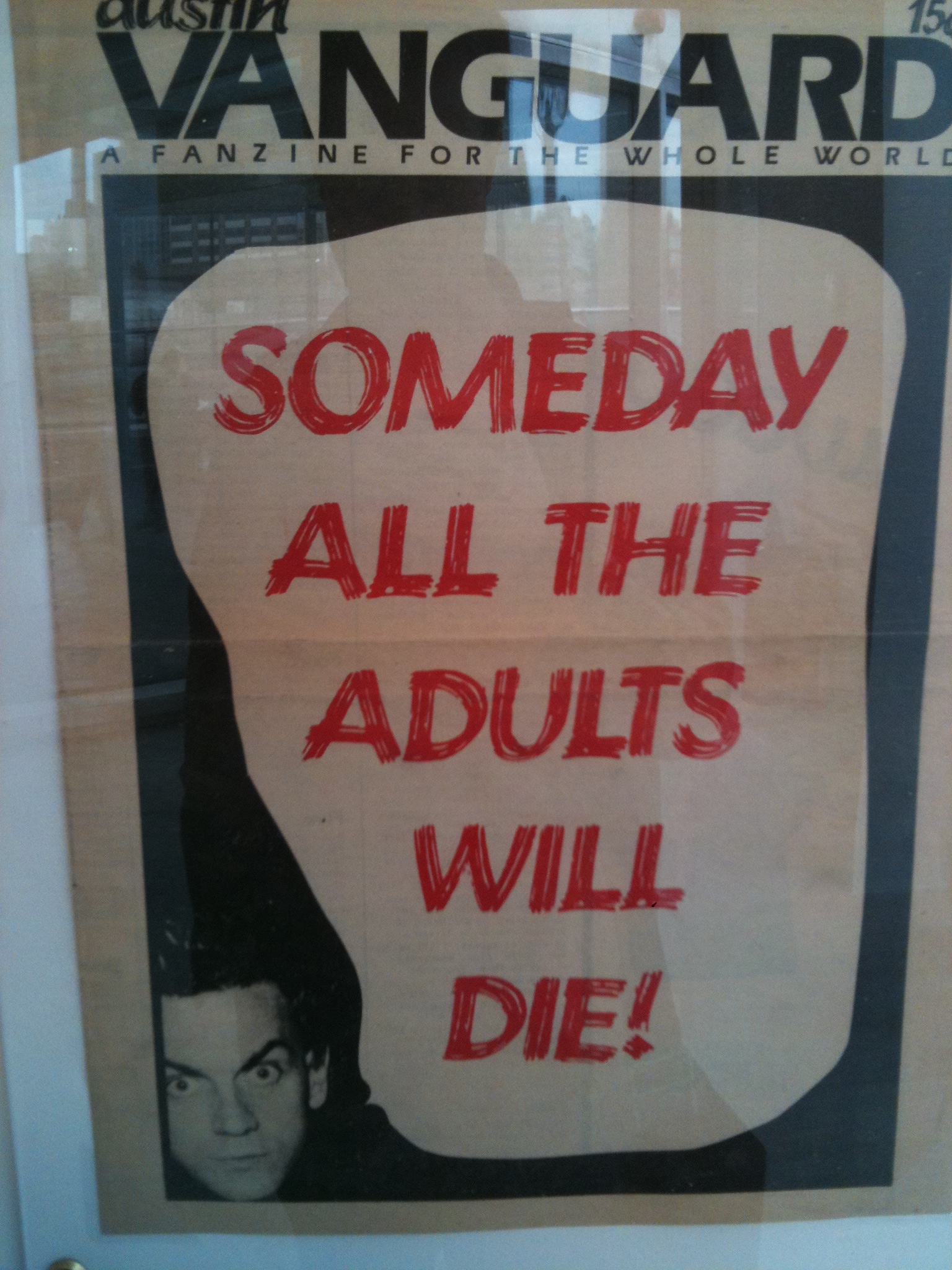
Does any music form have as curatorial approach to its own history as punk? In many ways that is understandable, as the graphic art that came out of the punk movement is as interesting as most of the music, while many of the scene’s key movers always saw themselves as part of a cultural avant-garde that went back to the Symbolists and still wish to emphasise that. One of the most prominent of these voices is Jon Savage, and he has co-curated an exhibition at the Hayward Gallery on punk called Someday All The Adults Will Die.

Despite punk now being nearly 40 years old and having been curated like a dead horse for several decades, it still has a visceral and visual appeal to many – and not necessarily the people you may expect. When I visited the gallery, most of my fellow visitors appeared to be in their 20s: this was clearly not simply an excuse for a nostalgic wander back through adolescence by men suffering a mid-life crisis. The kids dug it.

It’s a wide-ranging exhibition, with sections devoted to seven-inches, cassettes, posters, flyers and fanzines, including Savage’s own London’s Outrage.

My favourite stuff tended to be the less predictable such as pre-punk items involving the Diggers, who co-existed awkwardly with the hippies in San Francisco in 1966 and 1967, as these mimeographs demonstrate.

There was also items reflecting Savage’s fascination with Situationism, including this King Mob poster. Malcolm McLaren was loosely affiliated to King Mob.

I also liked the items relating to Suburban Press, the witty and brilliant pre-punk/Situationist publishing house created by Jamie Reid.

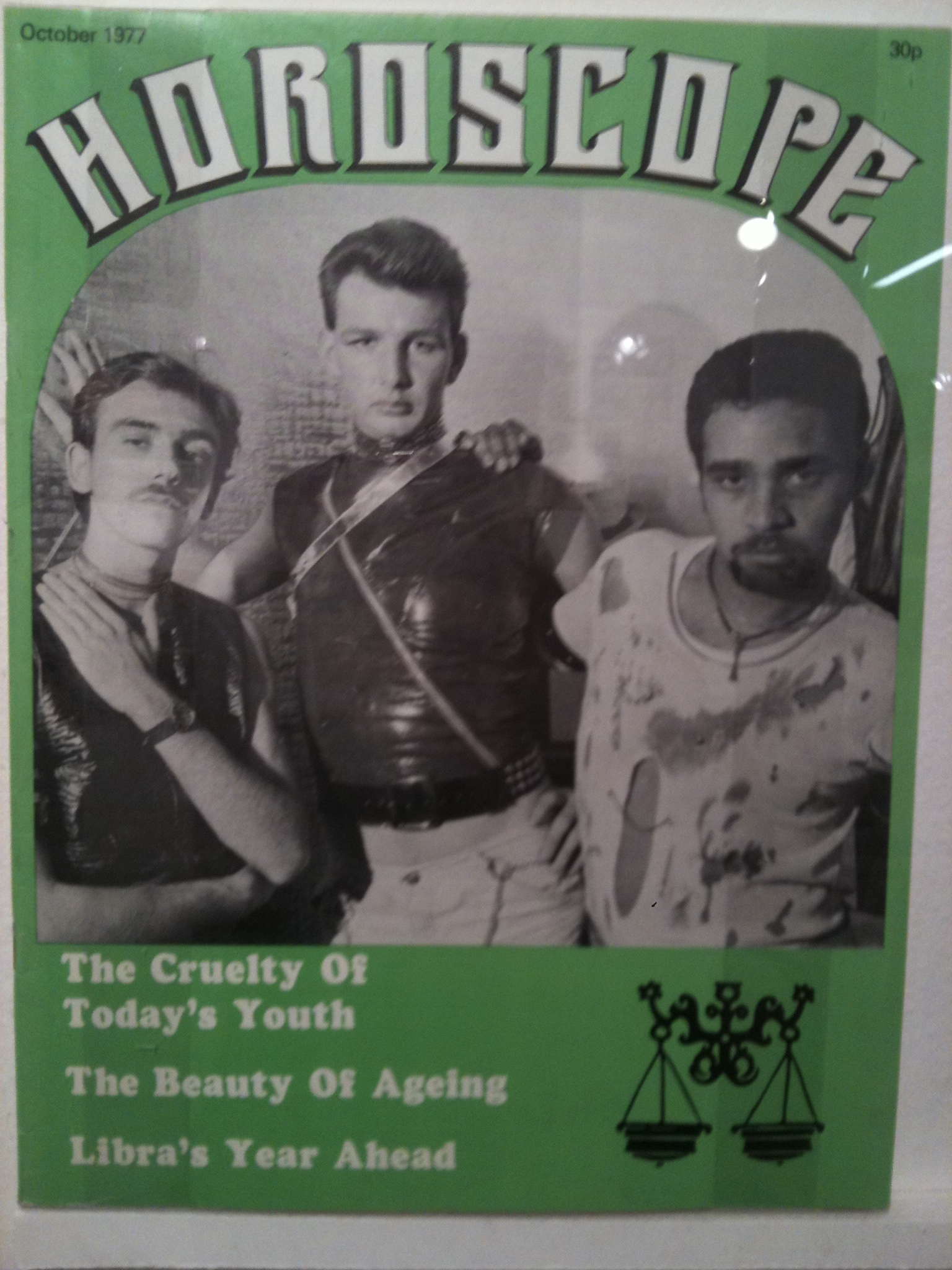
And, finally, I loved the handful of contemporary examples demonstrating how the mainstream tried to cash-in on punk with things like a punk-themed horoscope magazine and punk pulp fiction. Such money-grabbing tactics, it must be noted, have since been refined somewhat…

Someday All The Adults Will Die is at the Hayward until November 4.

Time Out and listings

Time Out went free this week. It wasn’t really a shock, the notion had been knocking around when I worked there, particularly when thelondonpaper and London Lite were stinking up the streets. The success of the free Evening Standard probably sealed the deal. The economics are unarguable: drop the cover price and circulation rises, allowing you to charge more for advertising. If you can simultaneously reduce costs – which they have been doing through regular redundancies – you may have a viable magazine once again. The danger, though, is that once the decision to go free has been made, there’s no going back…

What has it meant for Time Out? Well, the new magazine has less pages but still has plenty of previews, lists, bitty features and clunky ads, with just a couple of longer reads thrown in for us old-fashioned types. What it doesn’t have – along with book reviews –  is listings (at least in any meaningful sense), which was the reason Time Out was invented in 1968. (There’s also no letters page, which is a mistake if they still want to establish that vital personal link with readers, and one I think they will quickly rectify.)

This isn’t really a surprise. Successive TO editors have always struggled with the listings part of their brief: listings are ugly, boring and largely resistant to any sexing up, despite the best attempts of periodic and largely futile ‘redesigns’ (has a redesign of any magazine or newspaper EVER raised circulation?). They are also beyond the control of the editor, who has to leave them to section heads. Even editors who came from within the magazine, and therefore understood the centrality of listings to what Time Out did, didn’t actually appear to like them all that much. They take up valuable space from the exciting things an editor likes to do at the front of the mag and telling a section editor you are cutting their pages is a draaaag.

To make matters worse, listings do not do well when it comes to ‘page views’ or ‘unique users’, the trite and often completely useless method by which the value of anything in print is these days judged. And because people don’t click on listings on the website (for reasons that are so obvious I won’t even bother to explain), the logic goes, they don’t read them in print.

Hmmmmmm.

A number of people have noted that without decent browsable printed listings, Time Out has potentially rendered itself useless, but I don’t want to comment on that. What does interest me is that effect a lack of listings will have London’s smaller venues. The joy of TO‘s listings was that it gave the smallest museum or club as much prominence as the biggest and most well-funded, allowing readers to decide which to visit entirely on the merit of their programming. It’s this that made Time Out absolutely central to the rise of fringe theatre, avant-garde art, clubbing, burlesque and alternative comedy – each scene was created by individuals, but a free listing in Time Out coupled with enthusiastic support from in-the-know section editors took things to another level. Even larger venues have told me they noticed the difference in footfall when they were omitted from listings (by accident or for reasons of space).

Time Out obviously doesn’t have the circulation, and therefore the pull,  it once did and there are other specialist resources for those interested in the esoteric fringes of London’s cultural life, but the loss of listings will surely still be felt by venues that aren’t internet savvy or lack a large marketing department. The solution for many will be a prominent place in the preview part of the existing sections. Time Out‘s section heads will never have been in such demand… And PRs can be a dangerously homogenising bunch.

For more on the new Time Out, here’s Diamond Geezer (positive), Christopher Fowler (not) and Londonist (neutral). 

Inside the FA Disciplinary Committee

A couple of years ago, I spoke to the FA about writing a piece on their disciplinary system for 4-4-2, which would involve me following a case from start to close.  It never happened, but I did receive this useful briefing document from the panel explaining the basic role they hope to fulfil. 

How do you decide what cases go before a hearing?

All cases, across our entire range (on-field, doping, agents, etc are assessed to see if there is sufficient evidence for a charge to be appropriate. This test is whether or not there is a ‘realistic prospect’ that the case will be found proved. This is consistent with other professional regulatory bodies (and the law!) and ensures that cases are not brought on flimsy evidence. It’s very important to have this objective assessment in football, where there are so many partisan views as to what took place in any given incident.

How do you prepare the case legally?

The detail of preparation obviously varies depending on the case, but broadly, all relevant evidence is gathered, then the charge is issued, and then the hearing is prepared for in light of what the person charged says in their response to the charge. The necessary preparation varies tremendously depending on the nature and length of the case eg, it may be a punch on-field that is on video, and so simple to prepare, or a doping control case involving expert witnesses giving evidence on the effect of certain chemicals on the body, how long they remain in the system for etc.

Do players, clubs and managers have legal representation?

Often yes, but this tends to vary with the level (and wealth) of the club.

Is it like a court case, with witnesses, cross examinations etc?

Yes, as with any professional regulation tribunal, it’s very much like a magistrates’ court.

Do you all sit in a room watching replays of the same incident from different angles?

Yes, all relevant evidence is considered, and so if it is an incident caught on video, then all available angles will be looked at.

What sort of evidence is permitted?

The overriding test is always whether the evidence is relevant. The law of the land is also followed. Within those two limits, all types of evidence may be used.

What have been the most difficult cases?

That’s a very difficult one to answer, as cases vary tremendously. Some can be technically difficult (doping, agents cases involving complex transactions) and long. Sometimes you have to ensure that any high profile personalities (or issues where a case has been all over the media) involved do not overshadow the actual issues that need to be focused on, but probably the most difficult are when a person is not legally represented, as then you have a dual role to present the case for the FA but also to assist the other party a great deal to ensure fairness.

Are bigger clubs tougher to deal with than smaller clubs?

Not as a general rule. Dealing with people with no legal representation can sometimes be very difficult and that will often be smaller clubs. Whilst big clubs may use lawyers, this does not necessarily make it tougher – it can help to take the emotion out of it (which is often a big factor) narrow the issues and streamline the case. Many lawyers we deal with approach the cases reasonably. But of course it all depends on how sensible any particular lawyer is.

What are the benefits of the system?

We apply consistent tests to all cases, which aim to ensure that cases are only brought where it is appropriate. We have a small pool of professional (lawyers etc) people dealing with them, which helps consistency.

What are the drawbacks of the system and how could it be improved?

We need to always be aware that we are dealing with a sport, and one that excites tremendous public interest, and so we are always looking to deal with cases quickly in a way that everybody understands. However, the trick is getting the balance right; for simple on-field misbehaviour (eg, a punch caught on video), speed and simplicity is easy, and you can keep legal challenges to a minimum. However, some cases can be quite technical and lead to very involved legal issues. We are always trying to improve our system so all cases are dealt with as appropriately as possible.

Do players and managers bear a grudge?

Probably! One player n his autobiography mentioned wanting to put the lawyer who presented the doping case against him “through the wall”. Thankfully, that’s never happened, but it would be naïve to think some players and managers don’t have similar thoughts – they’re unlikely to be overjoyed with a three match suspension! That said, certainly at the time of the hearings, the vast majority are absolute gents, perfectly polite and take it all very professionally. After all, it is all part of the job…