Category Archives: Exhibitions

Syd, psychedelia, If…. and the Olympics: an interview with Kevin Whitney

I have a piece in the current issue of Uncut about Psychedelia,  a film made in 1969 and featuring Syd Barrett. The film has been sitting underneath Kevin Whitney’s bed for 40 years, but will be shown in June 2014 at the ICA ahead of its sale. Whitney was on the fringes of the psychedelic movement in the late-1960s and later became the first official artist of the Olympic movement. ‘In my work there are still hints of psychedelic imagery,’ he tells me. ‘But using beautiful athletes instead of mad freaks.’ 

Psychedelia can be seen at Room&Book: ICA Art Book Fair, ICA, 6-8 June. 

——-

‘I was at art school until 1970 and during I was making the film. I was inspired by psychedelic light shows, which I’d screen on the front of Chelsea Art School  at underground pop shows at the Roundhouse. Chelsea Art School was a modern building off the Kings Road. It was the only building built in the 20th century to be used as an art school. It’s now a hotel. It was very anarchic. Art is now geared towards corporate success and Saatchi but then that sort of thing was frowned upon, you weren’t supposed to make any money out of it. You did conceptual things, it was against the system. Now it’s the opposite and has no balls. We were very privileged to be around then. We took art into the streets.

Chelsea Art School on Manresa Road, built in 1963

Previously, I’d been at art school in Ipswich with Brian Eno. We smoked our first joint together at Christchurch Park in Ipswich. We did a thing where about 12 of us would get on a bus and we’d have these sheets of Perspex the size of a newspaper. We cut out the title of the paper and glued it to the Perspex and then sit next to people on the bus pretending to read the stories from this empty sheet of Perspex. Everybody thought we were bonkers.

UFO Club flyer

I never did light shows at the UFO Club. I went there but they had some Americans, Joe’s Lights, who got the contract and nobody else could do it. I knew them and admit I was influenced by their ideas but I also showed them some of my tricks. One was fabulous. You’d get two pieces of Perspex and put in some olive or vegetable oil, then drop some vegetable dye – bright blue, red or yellow – and then close the Perspex together. You’d put that in the projector, which had a very powerful light and would heat up the dye and send it shooting to the edges of the Perspex. It was like going through a timewarp. Joe’s Lights liked this and used it at the Roundhouse for the big Jefferson Airplane/Door show in 1968. [Editor note: I think that while Joe’s Lights did the Roundhouse gig, the Boyle Family did projections at UFO.]

In 1968, I began making my film, Psychedelia. Syd was part of the scenario. Well, he was the scenario. Anybody that would agree I got to appear in the film, which was done at this basement on Old Church Street in Chelsea in a house owned by Antonia Chetwynd [regular visitors included Donald Cammell, David Bowie, Marc Bolan and Anita Pallenberg]. One day I went to Wetherby Mansions to pick up Syd. I was going to take him to the art school to this red and green painted studio I had in the annexe where I was making the film.
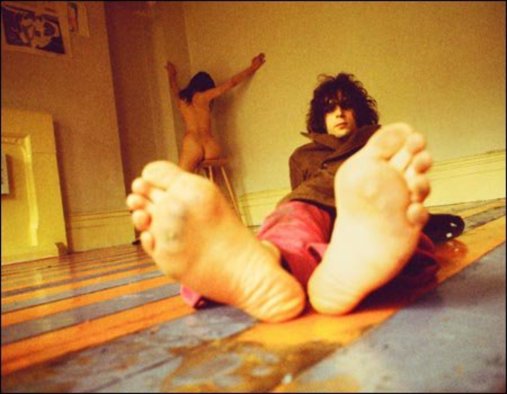
Syd Barrett in Wetherby Mansions

On the way, Syd offered me half a Mandrax. It’s like a sleeping pill that makes you very randy. We took half each. Then we got to the art school and I realised my camera didn’t have a cassette in it and all the shops were closed. So I said we’d do it tomorrow in Old Church Street. In the evening I called Duggie Fields [Syd’s flatmate, still resident at Wetherby Mansions] to check Syd had got back okay and Duggie told me he’d gone to Ibiza. He had a passport with him and he’d just gone to the airport and taken a flight to Ibiza.

When he got back we went to the basement and did the filming. I just had the camera with this psychedelic lighting. It was very amateur and everyone was very stoned. I’d sit people down and tell them to do whatever they wanted. Some took their tops off, some stared at the camera, talked, had a cup of tea… and I just filmed it because they were fabulous people. I filmed so many. In the scene I shot with Syd was Geoffrey Cleghorn, who was a friend of the Who and the Stones. I’d met him at art school in Ipswich and he’d followed when I moved to London and got involved in the whole scene. He’s an amazing guy. There was another chap called David Crowland. There’s a chap called Rupert [Webster], who was the very pretty boy in “If….”.


I screened it while playing Velvet Underground’s Sister Ray. I also use them on the other film I made Red And Green, when they are actually on the soundtrack, the Syd film was silent though I would have been playing Velvet Underground in the basement when making it. I was obsessed with them. It was all very Warholesque.
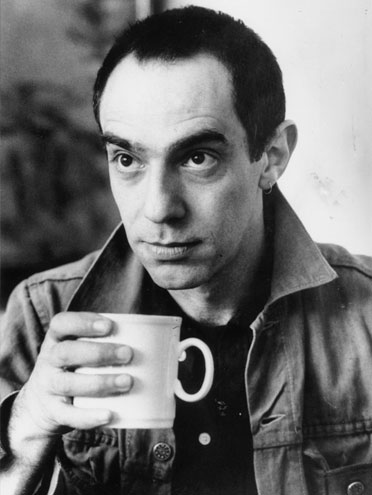
 

I gave my camera to Derek Jarman, I was living with the artist Luciana Martinez and she said, ‘You’ve finished with films and Derek’s a lousy painter, so why not give him your camera.’ He’d just finished making The Devils with Ken Russell, doing the sets. I did that and the rest is history. I then got totally into paining, film was an art student fling. In 1982 I got involved with the Olympis and been there ever since.

“Female gymnast”, 1984

I knew Syd as well as anybody could know Syd. He definitely wasn’t on this planet but he was lovely, very charming, and he seemed to like my paintings. He liked to paint himself and because I was pretty good he warmed to me. Also, I don’t hold him in awe, I was the same with Bowie, they were friends and I’d talk to them like that. I’d ask to draw them but treat them as I would anybody. People can treat pop stars in a different way and they can get very isolated. Most people were too much in awe of Syd to ask to film him and I think that comes across in the film. He was a very troubled mind and this wasn’t a great time. He’d been eased out of the Floyd and Dave Gilmour had taken over. But people who knew him said he looks so happy.’

 

The Clash in Soho

The Clash have opened a, wait for it, pop-up shop in Soho to promote the release of their new box set. It’s only open for a couple of weeks, and I happened to be in the West End yesterday so paid a quick visit, joining a crowd made up entirely, and unsurprisingly, of middle-aged men.

I wasn’t actually expecting a great deal, but was pleasantly surprised by what I found. While the upstairs is essentially a Clash mini-mart, flogging copies of the band’s albums as well as the Sound System box, the downstairs is more like a mini-museum of Clash memorabilia, featuring the iconic alongside pleasing ephemera.

So while the biggest draw was the buggered bass guitar that Paul Simonon is seen smashing on the cover of London Calling

IMG_1934

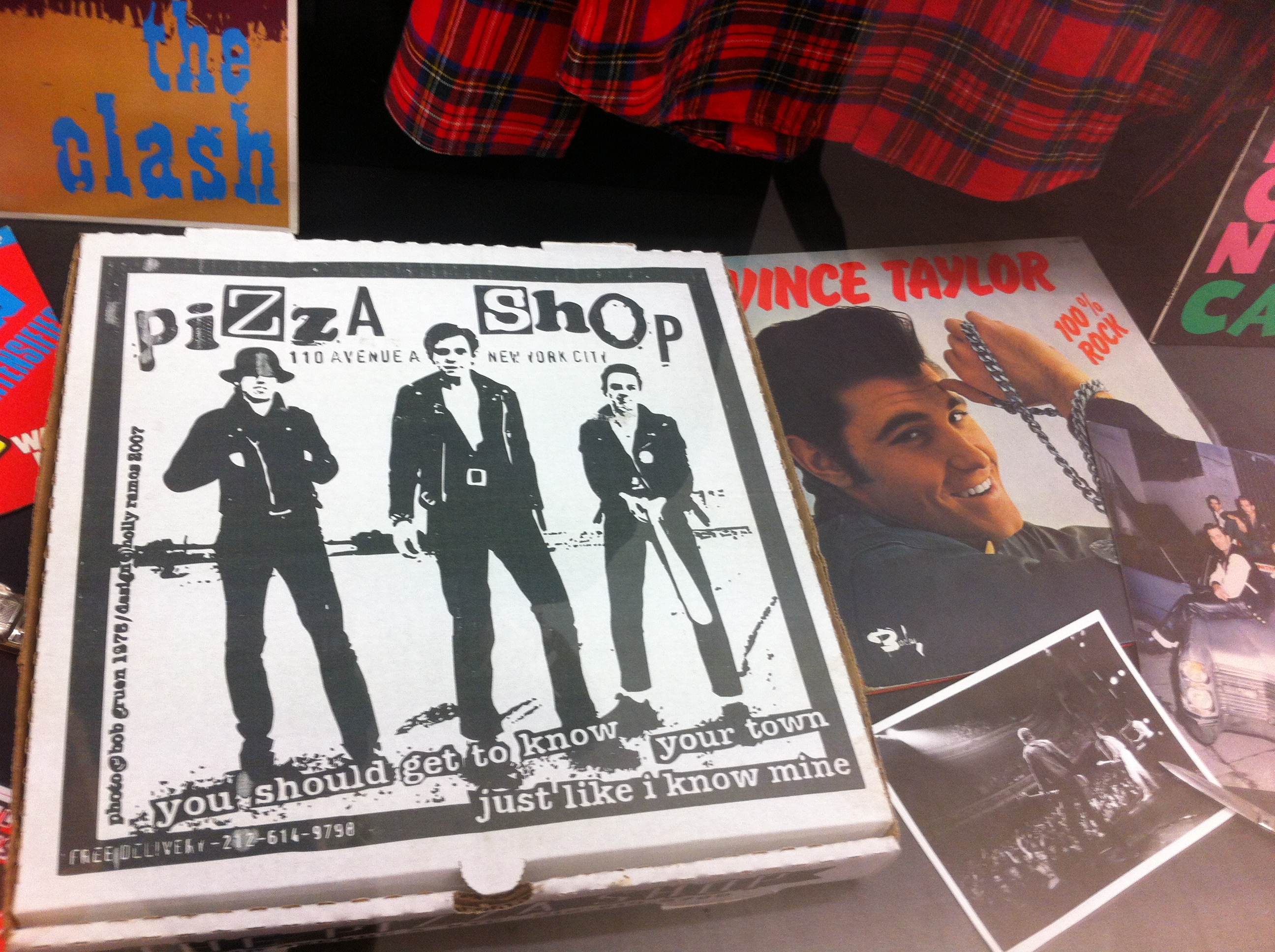
… I rather preferred witty juxtapositions like this, which places a punk-referencing pizza box alongside a Vince Taylor LP.

IMG_1930

A long cabinet acts like a timeline of the band’s history, crammed with ephemera relating to the band personally and politically, but also to the musical and literary influences they were absorbing along the way. So the section around the time of, say, Sandinista!, is full of South American political paraphernalia, lyric sheets and cassettes of the music they were discovering, while further along, at the time of Combat Rock, it’s all about cowboys and indians, and the US military. It was a bit like the Bowie V&A show in miniature with a better developed sense of humour, and ably demonstrated that the three-dimensional, technicolor world of rock and roll offers huge potential for entertaining and informative exhibitions when handled with the right blend of respect and irreverence. One day, one hopes, somebody will do a Beatles exhibition that works along similar lines.

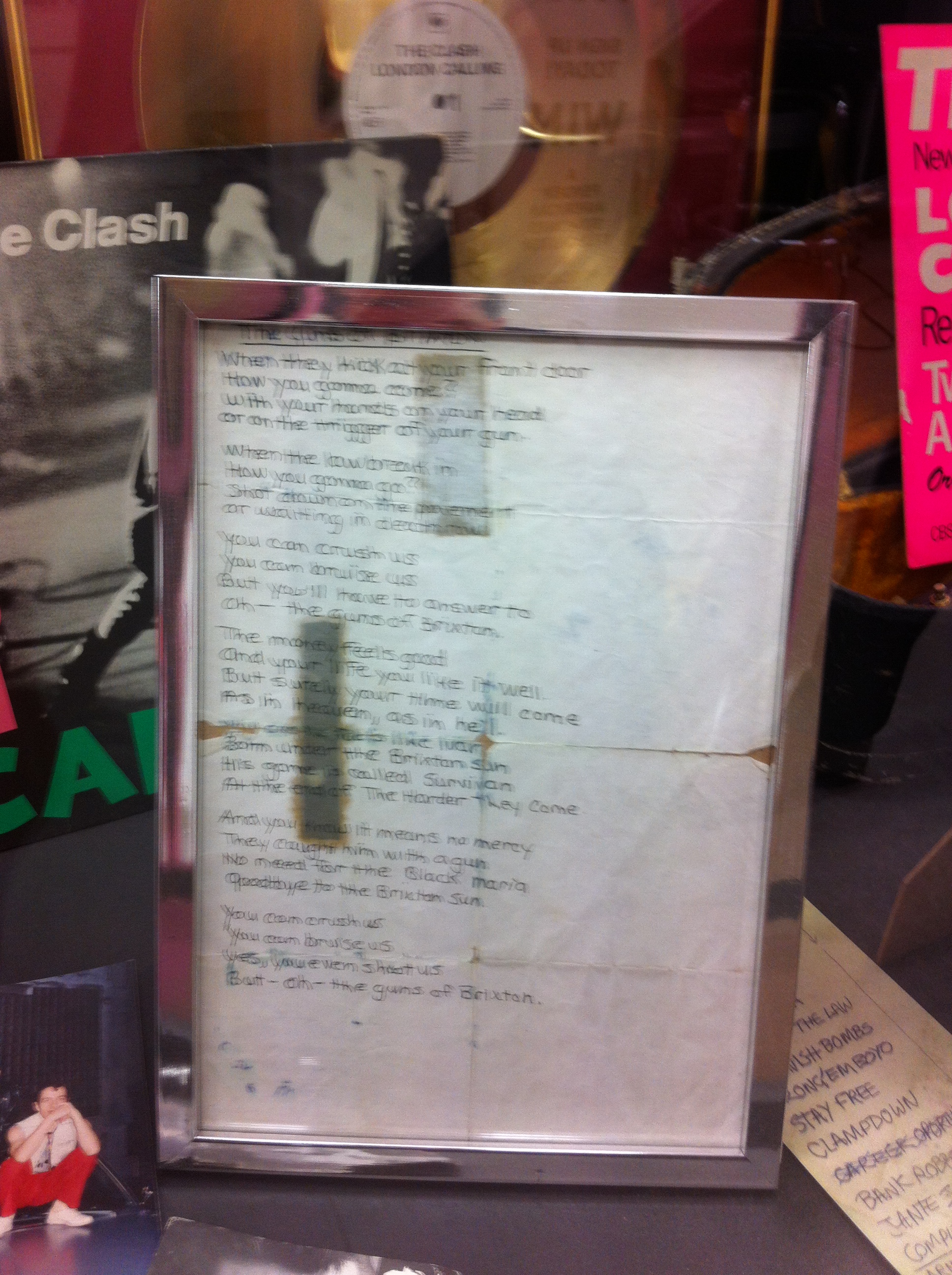
Other items of interest included the Clash’s map of the world, Paul Simonon’s certificate of appreciation from the Guardian Angels, the hand-written lyrics to “Guns Of Brixton” and an old beat box, with rather touching home-made cassettes. Everything is offered entirely without explanation, which is part of the fun. Check it out.

IMG_1933

IMG_1932

IMG_1931

IMG_1935

Black Market Clash, 75 Berwick Street, W1. Open until September 22.

Banking on Sherlock

When Abbey National opened their grand Art Deco headquarters at Nos 219-229 Baker Street in 1932, they didn’t quite know what they were getting into. Because it sat in the spot where 221b should be, the new building almost immediately began receiving letters addressed to Sherlock Holmes. When Arthur Conan Doyle chose an address for Holmes, he deliberately picked 221b because the Baker Street numbering did not go that high. But after renumbering, and with the arrival of Abbey House, Holmes’s address suddenly came into solid existence.

While many banks might have ignored this accident of geography, Abbey embraced it. Over the years, they really threw themselves into the business of celebrating the fictive biography of the world’s greatest detective. They installed a plaque (now lost), they published books and, after a while, they employed a letter writer, somebody whose job was to respond to all the letters addressed to Sherlock, acting more or less as his personal secretary.

In 1989, the New York Times interviewed Nikki Caparn, who then had that responsibility, and she described how she had received letters asking Sherlock to solve Watergate, or locate some missing homework. ‘Many people don’t ask for anything in particular,’ she said. ‘They just want to know what Mr Holmes is doing now or where he is and they hope he is well. And many people know he’s not real and write tongue in cheek. But some people haven’t worked it out. Mr Holmes would be 136 years old now, so it’s unlikely that he’d still be living here.’

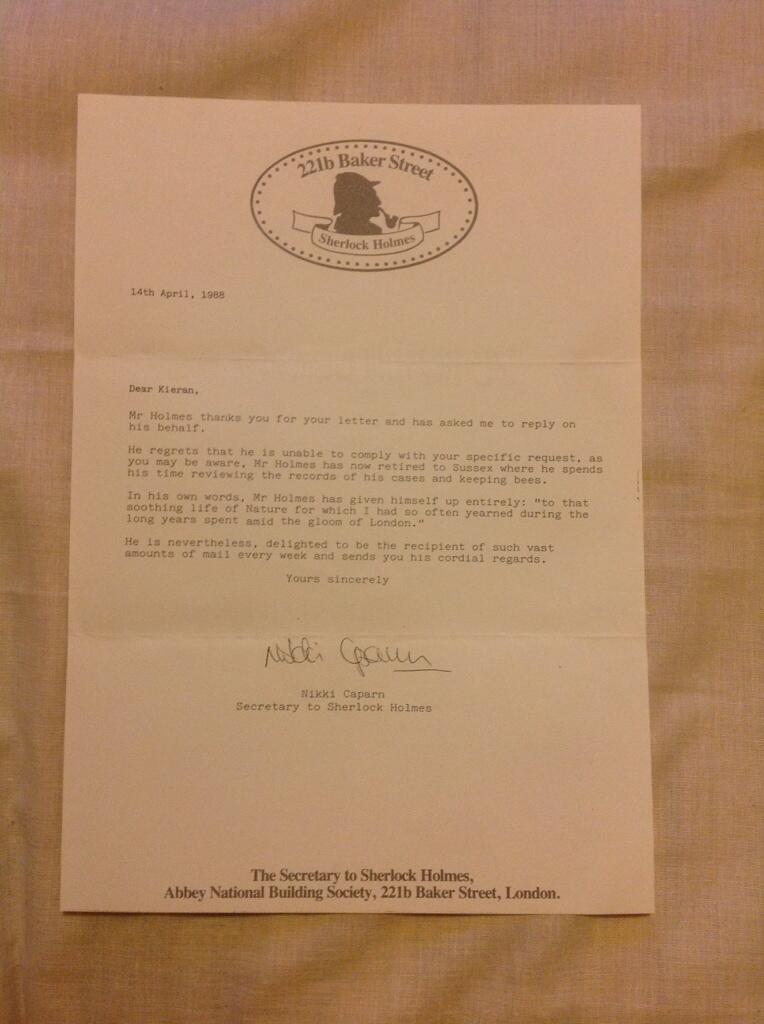
Here is one such response from around exactly that time, sent to Kieran (@hail_tothechimp on Twitter), who had written to Sherlock to ask him about his most difficult case. Ms Caparn clearly does not feel equipped to respond to such a difficult and controversial query, so plays a straight bat with her standard response.

BOb2ZThCcAAIQBZ

Abbey have since moved from Baker Street and are owned by Spanish giants Santander, and I don’t know what has happened to their vast archive of letters. However, Abbey also created something for Sherlock Holmes fans that is definitely still standing. In 1951, the bank put together a Sherlock Holmes exhibition for the Festival of Britain at Abbey House. The Spectator said the Festival ‘was unlikely to show anything nearer perfection in its way than the reconstruction by the Marylebone Public Libraries Committee of Sherlock Holmes’s room in Baker Street.’

The review continues that ‘everything is here for the student of Holmes—violin, hypodermic syringe, revolvers, handcuffs’ and provides not just ‘a shrine for the connoisseurs of Holmes but a deep pleasure for the student of the late Victorian period’. The Spectator concluded that ‘when the Festival has subsided, this charming reconstruction is preserved for the enjoyment of posterity.’

Which it was. In 1957, the brewer Whitbread purchased the entire exhibition and put it on display in a pub, the Northumberland Arms, which it renamed the Sherlock Holmes and opened as what was surely one of London’s first theme pubs. The pub is located in Charing Cross, a key location in many Holmes stories, and the exhibition is still standing exactly as it was installed, preserving to this day behind glass in an upstairs room a slice of 1950s Britain in the shape of a fictional Victorian living room.

Guns and strippers: in the crypt at Kensal Green Cemetery

Photographer Sean Smith has an exhibition in the crypt of the Dissenters Chapel in Kensal Green. It’s an evocative location, with Smith’s dramatic, very beautiful but often gruesome or unsettling photographs blown up large, brightly lit and placed at the end of dark, dank corridors like profane altarpieces.

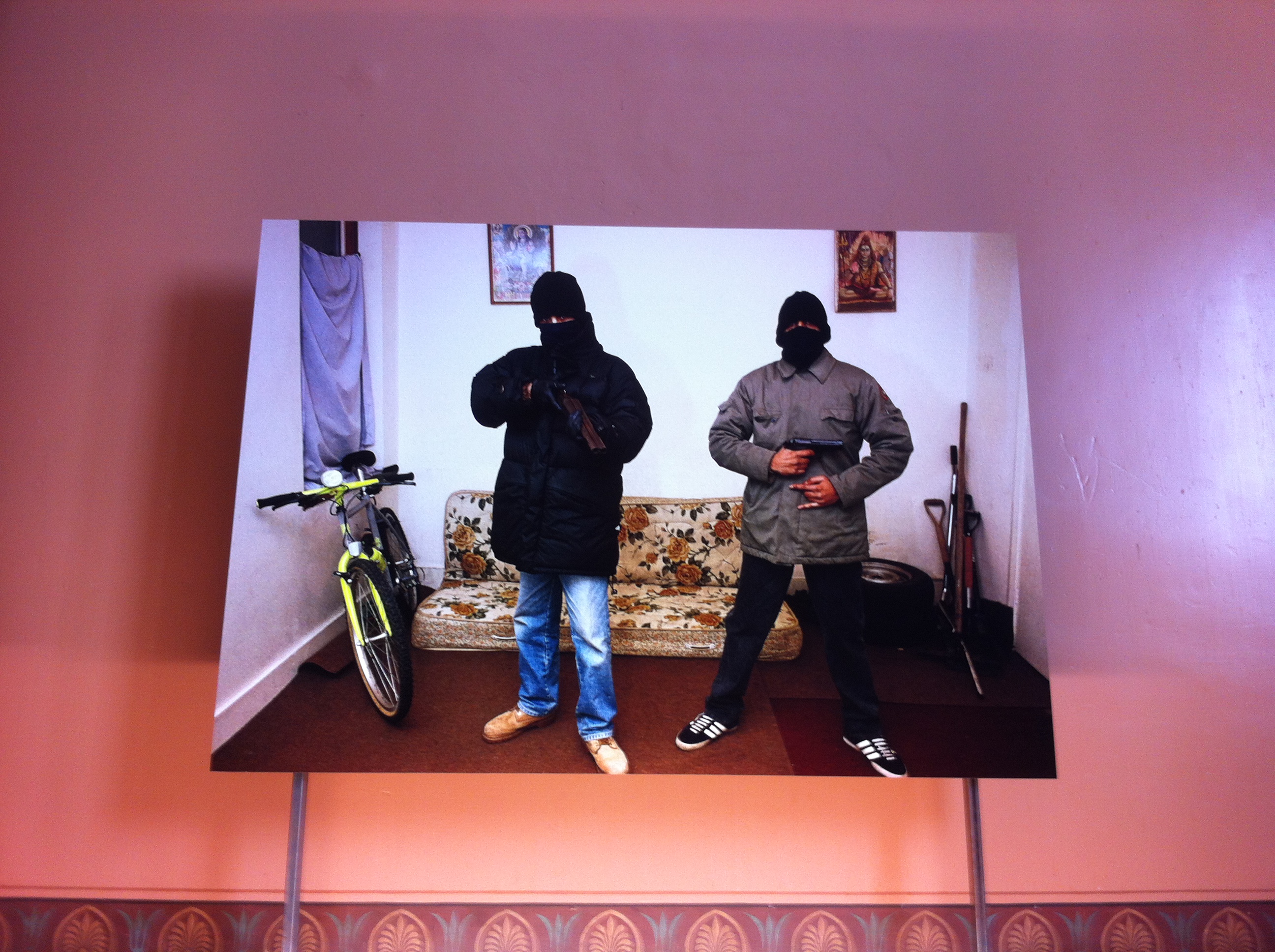
His photographs come from all over the world – one of the earliest and most compelling shows a bloodied miner in South Yorkshire from the 1984 strike lying on the floor next to a police riot shield – and there are also pictures from Beirut, Virginia, Albania and Southampton as well as three from London, reproduced below. Take the chance to check them out for yourself – and to have nose around the crypt – before the exhibition closes on June 26.

Raymond Revuebar, Soho, 1989

Raymond Revuebar, Soho, 1989

Boys with guns, Southall, late 1980s

Boys with guns, Southall, late 1980s

Ruby Venezuela, Madam JoJo's, Soho, 1989

Ruby Venezuela, Madam JoJo’s, Soho, 1989

Opium pipes in London

brochure; pamphlet - Opium Smoking Parlour

In 1899, Earl’s Court offered interested Londoners the chance to pay 6d to see a Hong Kong ‘opium smoking parlour’, filled with ‘living Chinaman’ and ‘true to every detail’. This reflected an ongoing fascination for the Chinese habit of smoking opium – a habit that had been partly encouraged by the British East India Company and then condemned by British missionaries – and merrily ignored the fact the British themselves had been consuming opium for decades.

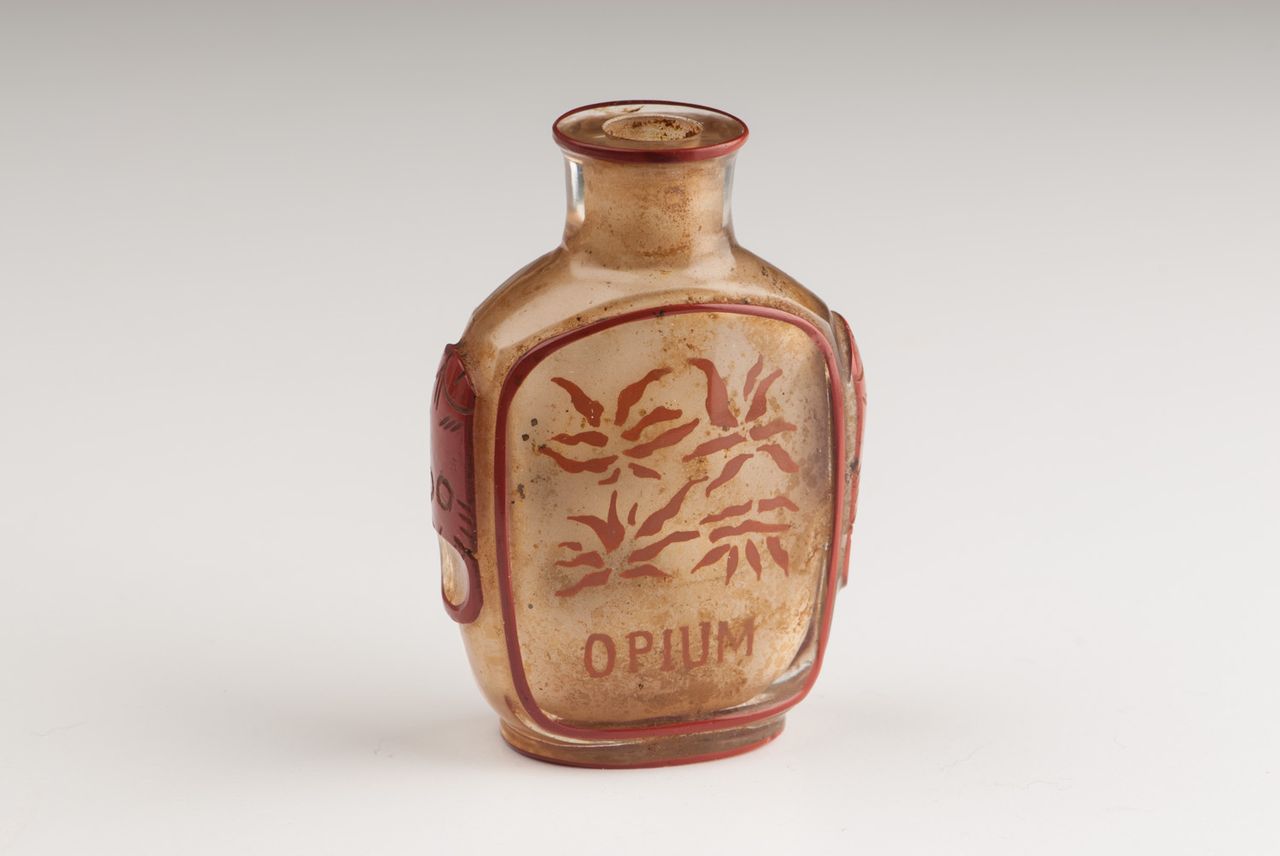
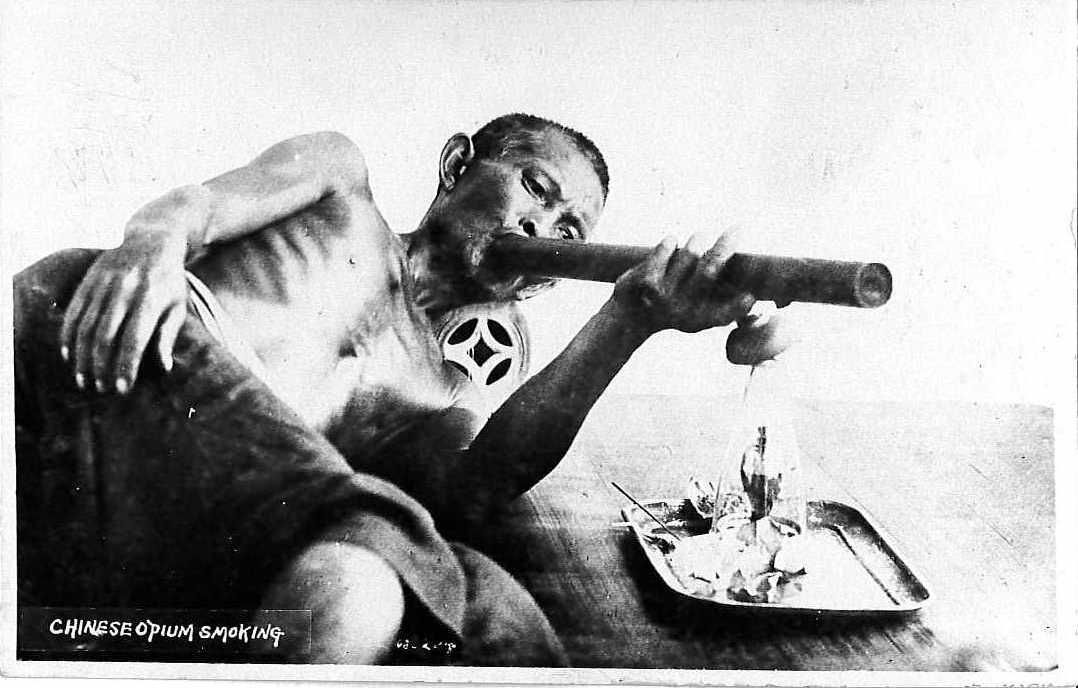
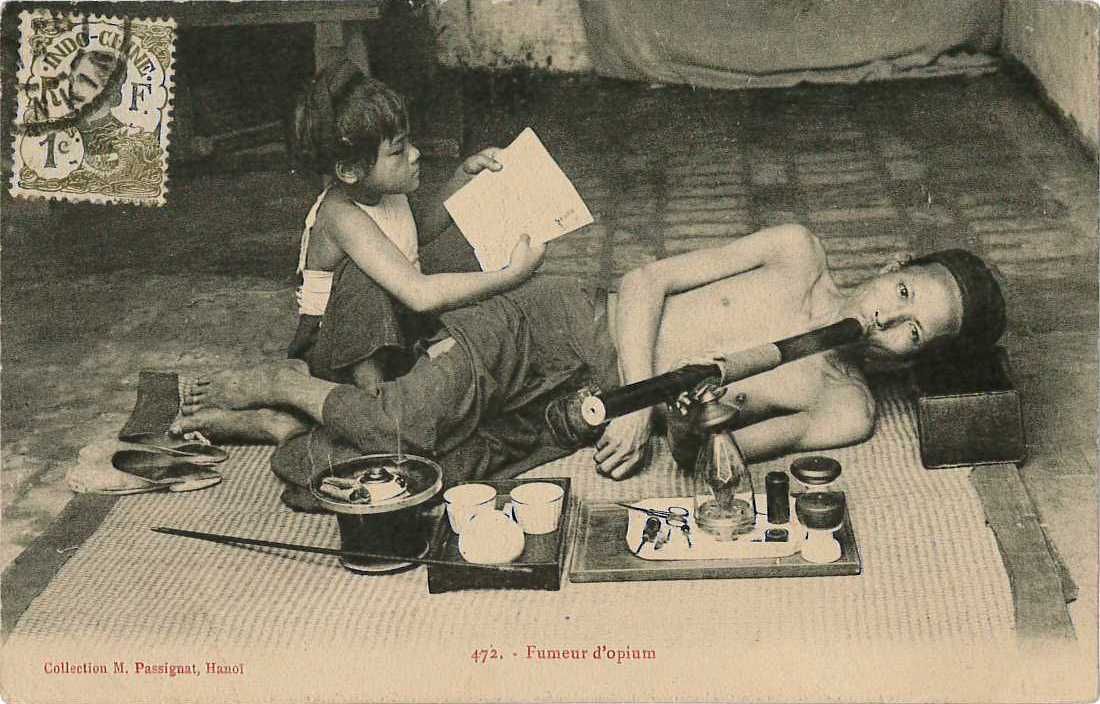
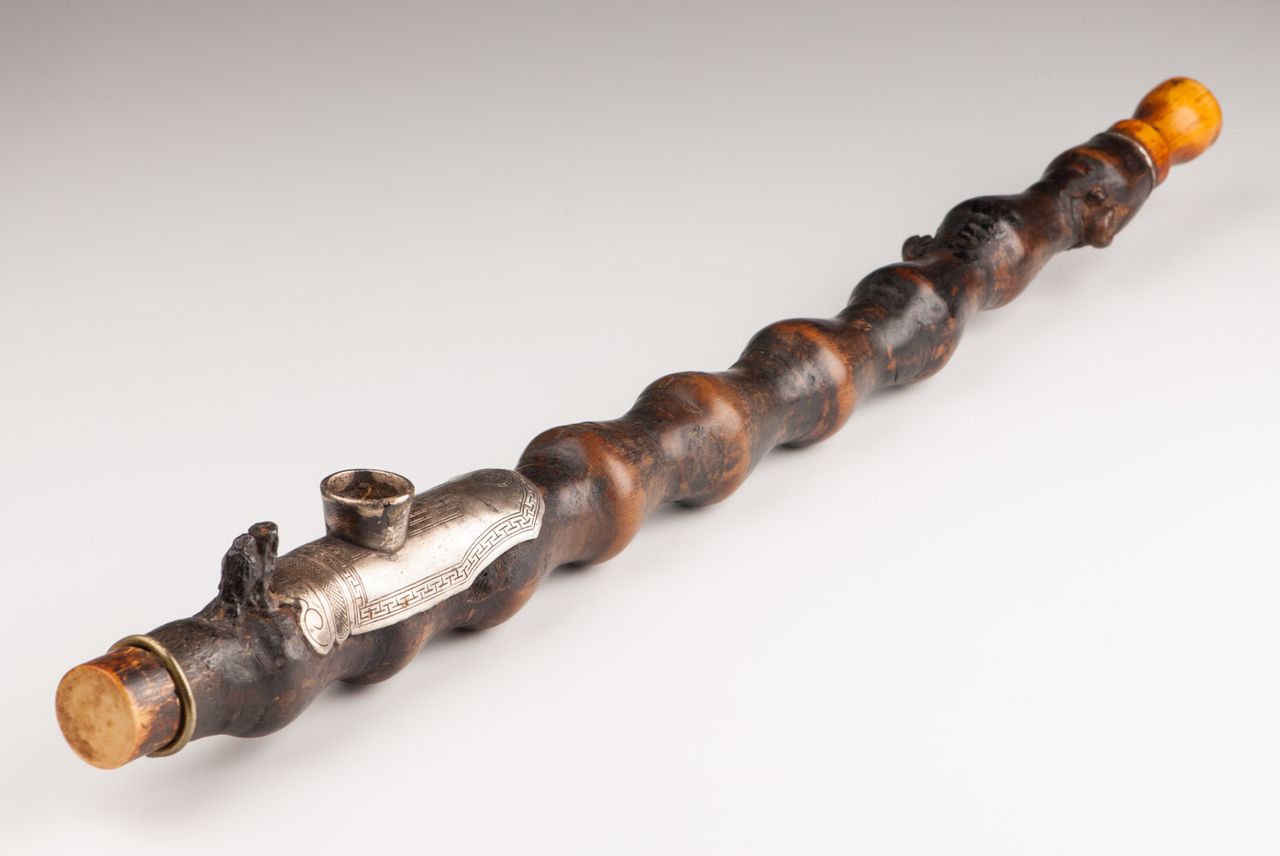
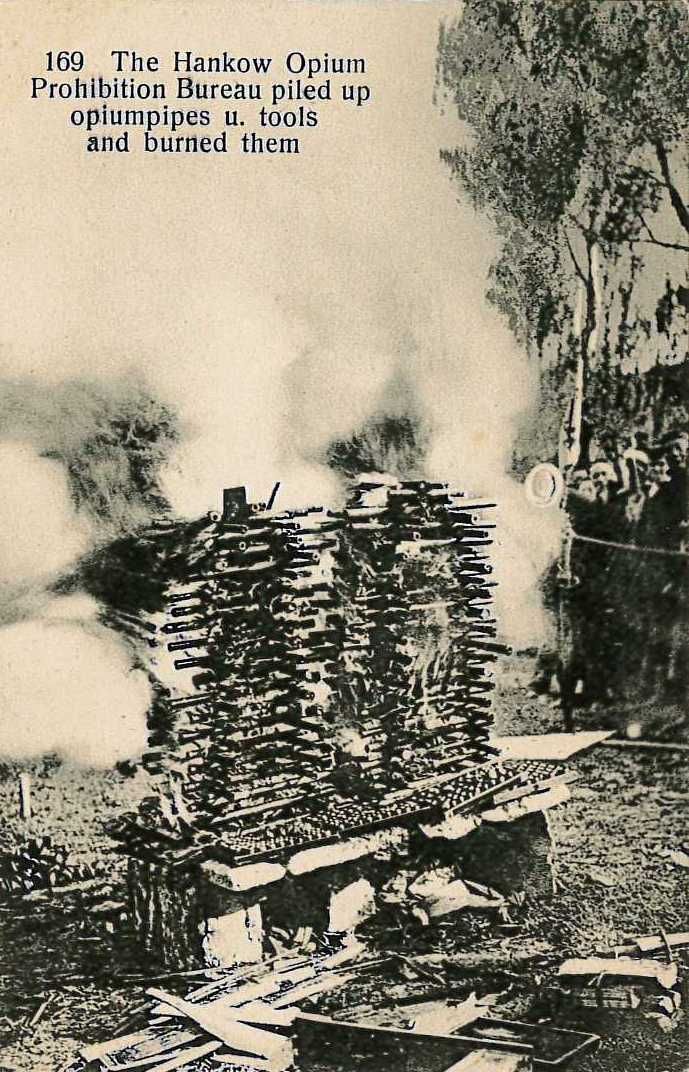
The Chinese tradition of smoking looked and felt very different though, and that’s partly because it was so deeply ingrained into society, a ritual to be enjoyed alongside tea and nicotine with a rich material culture, lavish paraphernalia and its own customs, traditions and symbolic meaning. This is explored in an extraordinary exhibition of Chinese opium pipes at Maggs Bros bookshop in Berkeley Square, which I have written about for the Independent on Sunday.

It features a unique collection of 19th-century Chinese pipes and related material that demonstrate the full complexity of the Chinese relationship with opium, as can be seen in some of the following images – and these barely scratch the surface of the incredible collection that can be seen at Berkeley Square from June 5 to the end of July.

Field of opium poppies

Field of opium poppies

Jar for storing opium

Jar for storing opium

Chinese opium smoker

Chinese opium smoker

Postcard of opium smoker from Vietnam

Postcard of opium smoker from Vietnam

Bowl for smoking opium

Bowl for smoking opium

Opium pipe

Opium pipe

Smoker with pipe and tools Smoker with pipe and tools

Opium pipe

Opium pipe

Opium pipe

Opium pipe

Bowl for opium pipe

Bowl for opium pipe

aAKf2D-cSXQqOe6Mm8b4FjMt6hP1ZcWPJbFN8-TNflk

Pipes being burnt by anti-opium reformers

Bowl for opium pipe

Bowl for opium pipe

Lamp used for preparing and smoking opium

Lamp used for preparing and smoking opium

Tray for carrying opium tools

Tray for carrying opium tools

Pink pills for pale people - opium cure

Pink pills for pale people – opium cure

Box for storing opium with erotic carving - opium was seen as an aphrodisiac and was originally smoked in brothels

Box for storing opium with erotic carving – opium was seen as an aphrodisiac and was originally smoked in brothels

Bowl for smoking opium

Bowl for smoking opium

Opium pipe

Opium pipe

Preparing a pipe

Preparing a pipe

Tools for preparing opium

Tools for preparing opium

Opium pipe

Opium pipe


Opium smoker with cat - pets often became addicted to the opium fumes

Opium smoker with cat – pets often became addicted to the opium fumes

Gilbert & George and David Bowie at the Marquee, 1968/9

Should you be fortunate enough to attend the superb David Bowie exhibition at the V&A this spring, one of the first thing you will see is a video of the artists Gilbert & George performing their ‘Singing Sculpture‘. The intention, I think, is to draw a connection between Bowie and conceptual art, but there is another facet of the relationship between David Bowie and Gilbert & George that goes unmentioned: they both played gigs at the Marquee.

I have an article in the current issue of Uncut about the Marquee club. It mainly focuses on The Who, and while asking around about people who may have seen Townshend and Co perform at the Marquee I received an intriguing email from the writer Jonathon Green, who recalled a show at the Marquee in 1968. ‘They were holding auditions and some pals of mine who had a band tried their luck. Unsuccessfully. Naturally we friends tipped up to cheer. But the weird moment of the evening was when this pair of blokes appeared and, saying nothing, sat for some minutes on either side of a table that they placed centre stage. The two blokes, it transpired, though I must admit I can longer recall when I made this discovery, were Gilbert and George.’

Astonishingly, it seems London artists Gilbert & George did play the Marquee at least once – as they mention here – and possibly even twice. Because as well as the evening Green recalls they also played a show there in early 1969, when they were supported by Audience (who later played on the soundtrack to cult suedehead film Bronco Bullfrog).

I asked two members of Audience about their show with Gilbert & George. Sadly, G&G themselves did not respond to repeated queries about their Marquee days.

Trevor Williams: ‘It was an audition night for us, but I’m not sure what they were doing there unless it was to audition an act they were planning to perform later at the Marquee. It was our first live gig but their act basically consisted of them sitting at a table on two chairs facing each other. They were in suits and their faces were painted gold or silver and one told the other stories while the other said nothing. These were very macabre little stories one of which involved a dwarf committing suicide in the bath and the water getting pinker and pinker but never got red because there’s not enough blood in a dwarf.

They were really nice, pleasant, social guys. I don’t remember how they were received but it was an era when anything went and people enjoyed anything off the wall. I’ve no idea how many people were there although somebody once told me that Germaine Greer was in the audience that night.’

Howard Werth: We first encountered Gilbert & George at the back of the Marquee when these two tweed besuited gentlemen with metallic gold heads and hands, in the style of shop window dummies of a gentlemen outfitters, poked their heads into our van politely asking where the entrance to the Marquee was. We were getting ready to audition as were they. Their act consisted of them both seated with one of them (Gilbert I believe) relating a rather strange tale involving dwarves whilst the other one (George) listened intently, chin on fist. I remember Germaine Greer backstage who was trying to get members of another audition band to retrieve some of their equipment they’d left at her flat in the Pheasantry in the Kings road. We shortly after did a gig at the Lyceum with Gilbert & George, I believe they were about to leave Central St Martins art school around that time.’

So there we have it. In an alternative universe perhaps Gilbert & George gave up art and continued their life in music, while David Bowie, fed up of playing bottom of the bill at the Marquee, jacked in the pop trade and threw himself wholeheartedly into the curious world of conceptual art.

Death and collecting

The Wellcome Collection is currently showing a typically absorbing exhibition titled Death, but it’s not really about that at all. It features work from a private collection, that of Richard Harris, and largely consists of skulls and skeletons, many of which are actually rather lifelike.

In fact, despite its arresting title, this is in many senses a rather squeamish, clean exhibition. There’s no dying, no decomposition, no pain, little mourning or God. There are no worms eating dead bodies, no cancer destroying live ones. It’s not even particularly morbid. It’s more about one man’s obsession with the human skeleton, stripped of flesh and cleansed of blood, sinew and memory, as portrayed by a number of very beautiful works of art over the centuries. If you want a more gruesome, more real, idea of death, try the Museum of London’s Doctors, Dissection and Medicine Men.

Collection owner Richard Harris stands in front of a work my Mexican artist Marcos Raya called Family Portrait : Wedding  at the 'Death: A Self-portrait' exhibition at the Wellcome Collection on November 14, 2012 in London, England. The exhibition showcases 300 works from a unique collection by Richard Harris, a former antique print dealer from Chicago, devoted to the iconography of death. The display highlights art works, historical artifacts, anatomical illustrations and ephemera from around the world and opens on November 15, 2012 until February 24, 2013.

It is tempting to speculate why Harris is so fascinated with his particular idea of death – why so clinical? Why so safe? – but it’s also ultimately rather pointless. In his excellent essay on collecting, Unpacking My Library, Walter Benjamin noted that ‘‘Collectors, like artists, operate out of unconscious motives, and so we cannot be known to ourselves.’ A collection can be about anything, and may reflect a personal interest or a psychological flaw, but the reasons behind their creation are rarely as interesting as you may hope.

What is intriguing about Harris’s love for skulls is that collections are often built as a defence against death itself, a way for the collector to claim mortality for himself in the form of something that will exist after he no longer does so (even if most collections end up being broken by families who lack the passion or obsession to keep them intact). Collections are also about memory, a way for the collector to freeze a moment in time. Every item represents a second, an hour, a week, a month – however long it took to locate and acquire – in the collector’s life that he can look at and recollect for years to come.

A collection is also about surrounding yourself with cool things that you like, although whether this ever makes the serious collector happy is a moot point. In his study of the collecting impulse, To Have And To Hold, Phillip Blom astutely notes that ‘For every collector, the most important object is the next one’, an acknowledgement that the collector will never be satisfied by what they have, as their next acquisition could be the big one, the one that completes the collection, or sends it off in an exciting new direction. This will never happen, of course, locking the collector in a spiral of anticipation and disappointment.

All of this is true whatever is being collected, whether it’s sick bags from aeroplanes, James Bond first editions or things that might be haunted. And just about anything can be collected, if you have the right kind of imagination. My friend Carl Williams, who deals in the counterculture, talks about his idea of collecting around ‘the sullen gaze’, that look of cruel insolence and careless superiority perfected by William Burroughs but which can be traced to many others, putting arresting flesh on Harris’s ambivalent skull.

Beats in London

When Ned Polsky wrote Hustlers, Beats And Others his pioneering sociological study of the Beat subculture as it was in 1960, he was scathing of their literary value. ‘Most beat literature is poor when it is not godawful,’ he opined. ‘And this is certainly true of its best-publicised examples, which have been surpassed by even the minor Victorians: James Thomson’s poetic howl of urban despair, The City of Dreadful Night, is greater by far than anything Ginsberg offers, and in on-the-road literature the genuine gusto of George Borrow is preferable to the faked-up fervour of Kerouac.’

Stinging stuff – and that faked-up charge must have hurt – but times change, and while the Beats are still an acquired taste, one can’t image George Borrow being the subject of a special exhibition at the British Library, as is currently the case with Jack Kerouac.

On The Road: Jack Kerouac’s Manuscript Scroll is a small but welcome look at the basics of Beatery, offering an overview of the main protagonists – Kerouac, Burroughs, Ginsberg, Corso (the only one Polsky rates) – and trying to explain where they fitted within the American literary tradition. The exhibition is illustrated by photographs, many of the American landscape as explored in On The Road, but also of the writers themselves. I particularly liked this shot of William Burroughs, dressed like a fugitive Nazi, hand shielding eyes from the sun as he stares back with clinical impassivity. Burroughs is possibly the most photogenic writer there has ever been.

The main exhibit, though, is the extraordinary scroll on which Kerouac wrote a key draft for On The Road. You do not have to like the book – and I don’t, particularly – to appreciate the sheer thrilling insanity of this object, 120 feet of closely typed pages, filled with ‘spontaneous prose’ and occasional pencil marks. I have never seen a manuscript like it.

Kerouac’s second novel has been described as the book that ‘started
a whole new youth culture of which drugs were an accepted part’, so sodden is it in dope and speed. It was based on a series of road trips Kerouac took with
Neal Cassady (the pair are reinvented as Sal Paradise and Dean Moriarty respectively) between 1947 and 1950, and most of the characters are based on Kerouac’s friends. Mythology states that it was written in a three-week
splurge fuelled by coffee and Benzedrine, but Kerouac actually began it as early as 1948, when he also came up with the title. He spent a while searching for a voice, but eventually settled upon a stream-of-consciousness, jazzy, impressionistic style. This was inspired by a 40,000-word letter written to him Cassady, a charismatic sociopath described by his biographer as ‘a slim hipped hedonist who could throw a football seventy yards, do fifty chin-ups at a clip and masturbate six times a day’. Cassady was trouble; he was also said to have ‘one of the greatest minds I’ve ever known’, by a friend of writer Ken Kesey.

Kerouac sat down to write his famous ‘scroll’ draft on 2 April 1951 on a 120-feet sheet of paper that had belonged to Bill Cannastra, a wild-living friend who had been decapitated after sticking his head out of a New York train window.
Kerouac spent many years rewriting the manuscript as he tried to find a publisher, and it was eventually brought out by Viking in September 1957 – Kerouac belatedly considered renaming it Rock and Roll Road
to catch the spirit of the time – and immediately received an ecstatic review in the New York Times, which claimed it was ‘the most important utterance yet made by the generation Kerouac himself named years ago as Beat’.

On The Road is one of the most important books of the post-War era, but it’s questionable how much it influenced English culture given that it is such a specifically American book on such an American topic written in the American vernacular. London was more taken by Burroughs and Ginsberg, both of whom would spend extensive time in the city while Kerouac only visited for a few days in the 1940s when serving in the Navy. By 1959, Barry Miles, Jeff Nuttall, Michael Horovitz and the rest of the British counterculture scene were soon discussing, publishing, imitating and eulogising the Beat poets. 

Being more of a philistine, though, I prefer the exploitation stuff. Tony Hancock frequently mocked Beatnik culture, notably in The Poetry Society.

Hancock: You see, Sidney, we are a collection of kindred spirits who are all revolting against the Establishment.

Bill: How long have you been at it?

Hancock: Three days.

I also like Colin Wilson’s often sardonic but hugely charismatic novel, Adrift In Soho, which has that time-honoured plot of a young ingenue coming to London and getting drawn into a curious sub-culture, in this case the Beats. It is apparently currently being made into a film.

But the pull of the Beats, that desire to be different, was probably best expressed by Hancock again, in the opening scenes to his film, The Rebel. ‘Where are we going?’ It’s what Kerouac was asking, and it’s what Hancock wanted to know as well. Well, where?

Sir John Tenniel’s Alice In Wonderland chessboard

Earlier this year I was approached by bookseller Jake Fior, who told me he’d recently discovered a chessboard, never previously known about, that he believed had been handpainted by Victorian Alice In Wonderland illustrator Sir John Tenniel.

Tenniel’s illustrations are absolutely central to how we perceive the character of Alice in the two worlds she visits, inside the rabbit hole and through the looking glass, meaning this was clearly a pretty significant discovery, especially as Through The Looking Glass is plotted to resemble a game of chess.

My piece on the find eventually appeared in yesterday’s The TimesSadly, this is  hidden behind a paywall, but thankfully The Telegraph reprinted pretty much the whole thing word-for-word later the same day. Fans of Alice should keep their eyes peeled on Cecil Court, where an Alice-themed boutique – complete with live white rabbit in the front window – will soon appear.

I think that calls for a song…


Bus stops and Brockwell Park: exhibition in Herne Hill

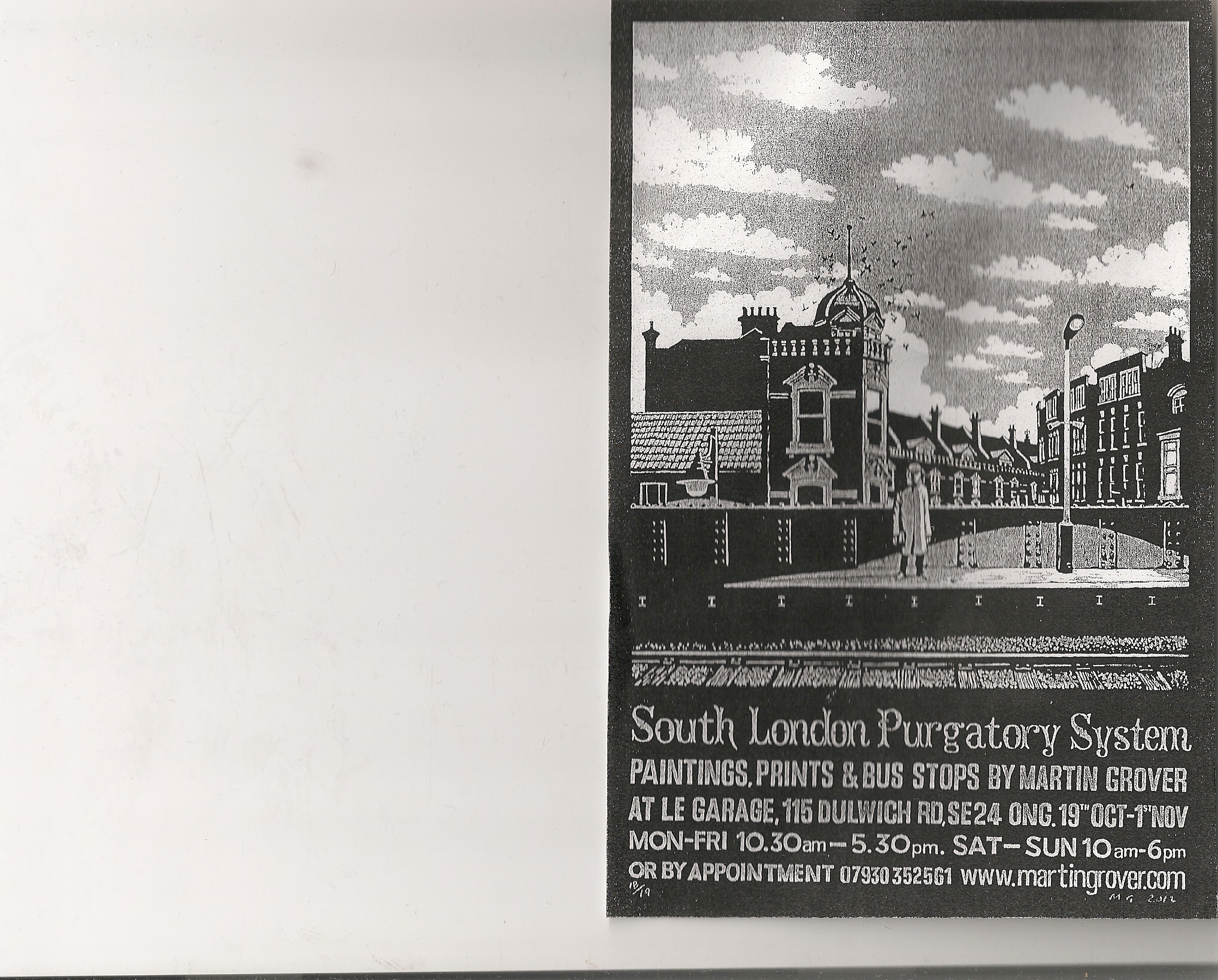
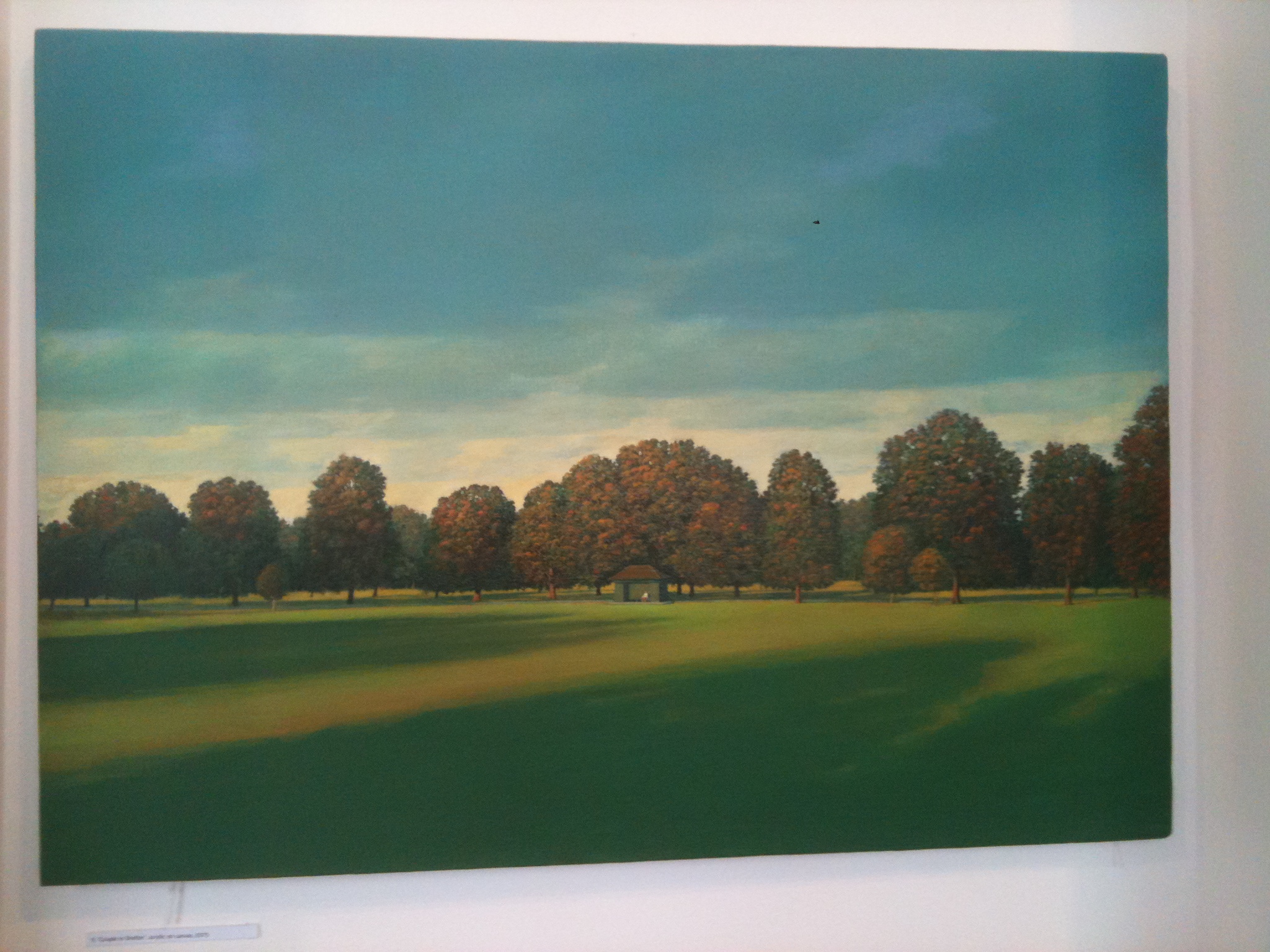
Martin Grover, an artist based in South London, has an exhibition at Le Garage in Herne Hill until Thursday November 1. His paintings are mainly of Brockwell Park, old record covers and bus stops, making him the ideal visual companion to my life.

His bus stop art has now extended from 2D prints into 3D sculptures/installation – in other words, he makes actual bus stops and writes strange slogans on them.

His Brockwell Park paintings are lovely. They are painted from sketches and photographs, although he confesses he makes a lot of it up in the studio, which is why Batman or James Brown might occasionally turn up in one.

Then there are the record sleeves, perfect reproductions of old 45s: often Stax and Motown but also plenty of country and Dylan.

South London Purgatory System at Le Garage until Nov 1, 2012. Mon-Fri, 10.30am-5.30pm; Sat, Sun, 10am-6pm.