Category Archives: My London Library

The nature of London: Clay by Melissa Harrison

‘It wasn’t much of a park, really, more a strip of land between the noisy high road and the flats… Despite its size and situation the strip of grass was beautiful – if you had the eyes to see. The Victorians had bequeathed it an imaginative collection of trees; not just the ubiquitous planes and sycamores, and not the easy-care lollipops of cherries either, but hornbeams, service trees, acacias and Turkey oaks with bristly acorn caps like little sea anemones. It was alive with squirrels, jays and wood mice, while in spring thrushes let off football rattles from the treetops, and every few summers stag beetles emerged to rear and fence and mate, and begin another perilous generation among the logs that were left to decay here and there by government decree.’

‘Clay’ by Melissa Harrison

Next to my computer is a small round stone my daughter brought to me from the garden. If I was to pick it up and throw it at the bookshelf, I could hit any of a dozen novels set in London,  all of which carefully detail the grimy, grey, green-free streets of the post-industrial capital. They could be set in Soho (‘Adrift in Soho’ by Colin Wilson) or Kennington (‘London Belongs To Me’ by Norman Collins), Bloomsbury (‘Scamp’ by Roland Camberton) or Bethnal Geen (‘King Dido’ by Alexander Baron). I love some of these books dearly (all of the above) while others I find unforgivably bad (er, ‘Saturday’ by Ian McEwan) but they all inhabit essentially the same milieu – a London of narrow streets and Victorian houses that block out the sky, paved streets, traffic, pubs, smoke and people. This is the written London, or at least the London most experienced by writers in London which they then transfer to the page at the exclusion of almost anything else.

dfgdf 002

None of them, then, do what Melissa Harrison has done with ‘Clay’, which is write a novel about nature in London. The plot, a slight but melancholic meditation on freedom, is really just a MacGuffin for this, Harrison’s real heroine. There are a number of non-fiction books enthusing at the way trees, weeds, flowers, foxes and immigrant parakeets coexist alongside largely uninterested Londoners – try ‘The Unofficial Countryside’ by Richard Mabey or ‘Scrap’ by Nick Papadimitriou – but by placing nature so firmly in the foreground of her novel – and the book is rich with descriptions on each page of everything from pine cones and owl pellets poo  [Harrison tells me that owl pellets aren’t poo] to rain clouds and long grass –  Harrison has managed to achieve what every London fiction writer surely dreams of: she makes you look at the city around you with freshly opened eyes.

I am perhaps a little biased – and not just because I know Harrison through Twitter (where she introduced herself to me by announcing she’d varnished a duck). The book is set in a part of London that I know already, a park based on Rush  Common, a strange, thin, scraggy strip of parkland that follows Brixton Hill from St Matthew’s church down towards the prison. I’ve always thought it a scrawny, rather pointless piece of grass but through her characters – a small boy called TC, a Polish farmer called Jozef and a grandmother Sophia – Harrison shows how much life can be concealed a short walk from a traffic-clogged A road. It gives an unexpectedly life-affirming twist to an otherwise sad but beautiful book, that resonates far louder than its slim size would suggest. Is it a new London genre? It’s certainly a welcome change from the norm, though I doubt whether many other writers would have the knowledge, passion and skill to recreate it so impressively.

Beats in London

When Ned Polsky wrote Hustlers, Beats And Others his pioneering sociological study of the Beat subculture as it was in 1960, he was scathing of their literary value. ‘Most beat literature is poor when it is not godawful,’ he opined. ‘And this is certainly true of its best-publicised examples, which have been surpassed by even the minor Victorians: James Thomson’s poetic howl of urban despair, The City of Dreadful Night, is greater by far than anything Ginsberg offers, and in on-the-road literature the genuine gusto of George Borrow is preferable to the faked-up fervour of Kerouac.’

Stinging stuff – and that faked-up charge must have hurt – but times change, and while the Beats are still an acquired taste, one can’t image George Borrow being the subject of a special exhibition at the British Library, as is currently the case with Jack Kerouac.

On The Road: Jack Kerouac’s Manuscript Scroll is a small but welcome look at the basics of Beatery, offering an overview of the main protagonists – Kerouac, Burroughs, Ginsberg, Corso (the only one Polsky rates) – and trying to explain where they fitted within the American literary tradition. The exhibition is illustrated by photographs, many of the American landscape as explored in On The Road, but also of the writers themselves. I particularly liked this shot of William Burroughs, dressed like a fugitive Nazi, hand shielding eyes from the sun as he stares back with clinical impassivity. Burroughs is possibly the most photogenic writer there has ever been.
The main exhibit, though, is the extraordinary scroll on which Kerouac wrote a key draft for On The Road. You do not have to like the book – and I don’t, particularly – to appreciate the sheer thrilling insanity of this object, 120 feet of closely typed pages, filled with ‘spontaneous prose’ and occasional pencil marks. I have never seen a manuscript like it.

Kerouac’s second novel has been described as the book that ‘started
a whole new youth culture of which drugs were an accepted part’, so sodden is it in dope and speed. It was based on a series of road trips Kerouac took with
Neal Cassady (the pair are reinvented as Sal Paradise and Dean Moriarty respectively) between 1947 and 1950, and most of the characters are based on Kerouac’s friends. Mythology states that it was written in a three-week
splurge fuelled by coffee and Benzedrine, but Kerouac actually began it as early as 1948, when he also came up with the title. He spent a while searching for a voice, but eventually settled upon a stream-of-consciousness, jazzy, impressionistic style. This was inspired by a 40,000-word letter written to him Cassady, a charismatic sociopath described by his biographer as ‘a slim hipped hedonist who could throw a football seventy yards, do fifty chin-ups at a clip and masturbate six times a day’. Cassady was trouble; he was also said to have ‘one of the greatest minds I’ve ever known’, by a friend of writer Ken Kesey.

Kerouac sat down to write his famous ‘scroll’ draft on 2 April 1951 on a 120-feet sheet of paper that had belonged to Bill Cannastra, a wild-living friend who had been decapitated after sticking his head out of a New York train window.
Kerouac spent many years rewriting the manuscript as he tried to find a publisher, and it was eventually brought out by Viking in September 1957 – Kerouac belatedly considered renaming it Rock and Roll Road
to catch the spirit of the time – and immediately received an ecstatic review in the New York Times, which claimed it was ‘the most important utterance yet made by the generation Kerouac himself named years ago as Beat’.

On The Road is one of the most important books of the post-War era, but it’s questionable how much it influenced English culture given that it is such a specifically American book on such an American topic written in the American vernacular. London was more taken by Burroughs and Ginsberg, both of whom would spend extensive time in the city while Kerouac only visited for a few days in the 1940s when serving in the Navy. By 1959, Barry Miles, Jeff Nuttall, Michael Horovitz and the rest of the British counterculture scene were soon discussing, publishing, imitating and eulogising the Beat poets. 

Being more of a philistine, though, I prefer the exploitation stuff. Tony Hancock frequently mocked Beatnik culture, notably in The Poetry Society.

Hancock: You see, Sidney, we are a collection of kindred spirits who are all revolting against the Establishment.

Bill: How long have you been at it?

Hancock: Three days.

I also like Colin Wilson’s often sardonic but hugely charismatic novel, Adrift In Soho, which has that time-honoured plot of a young ingenue coming to London and getting drawn into a curious sub-culture, in this case the Beats. It is apparently currently being made into a film.

But the pull of the Beats, that desire to be different, was probably best expressed by Hancock again, in the opening scenes to his film, The Rebel. ‘Where are we going?’ It’s what Kerouac was asking, and it’s what Hancock wanted to know as well. Well, where?

Four literary London maps

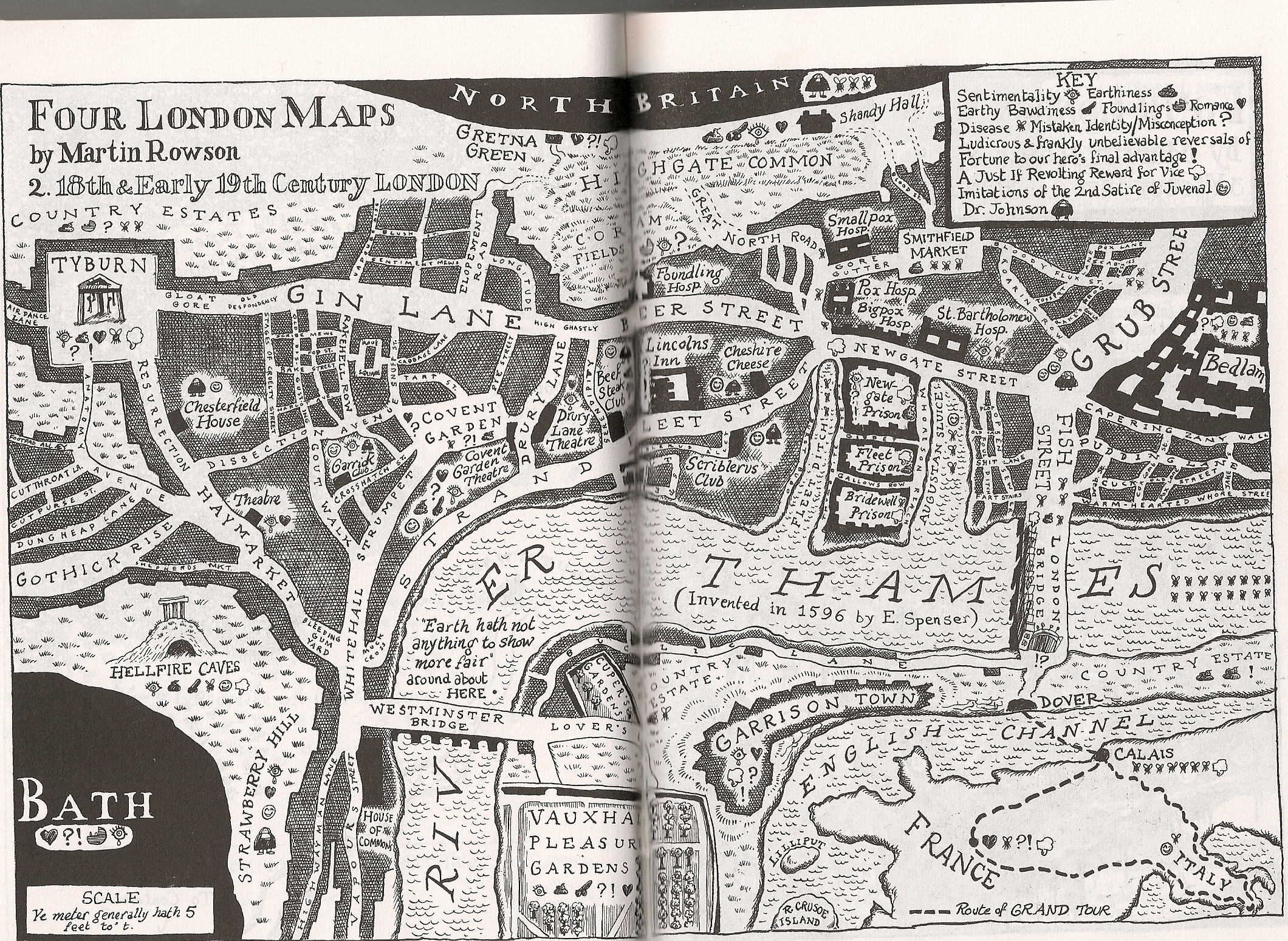
These four maps of literary London were drawn by Martin Rowson for the rather wonderful 1999 London issue of Granta magazine.

Chaucer’s London

Georgian London

Victorian London

Modern London

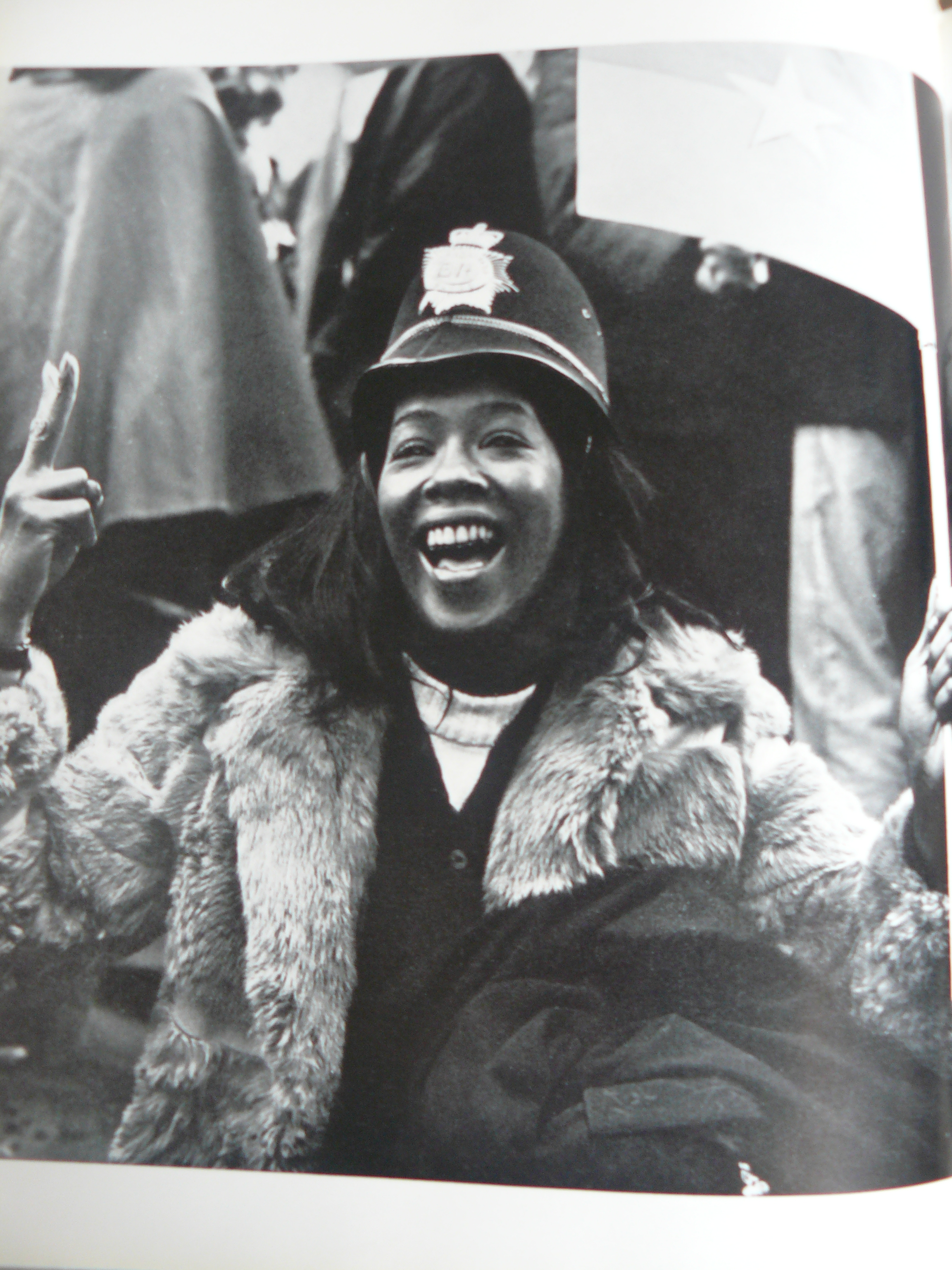
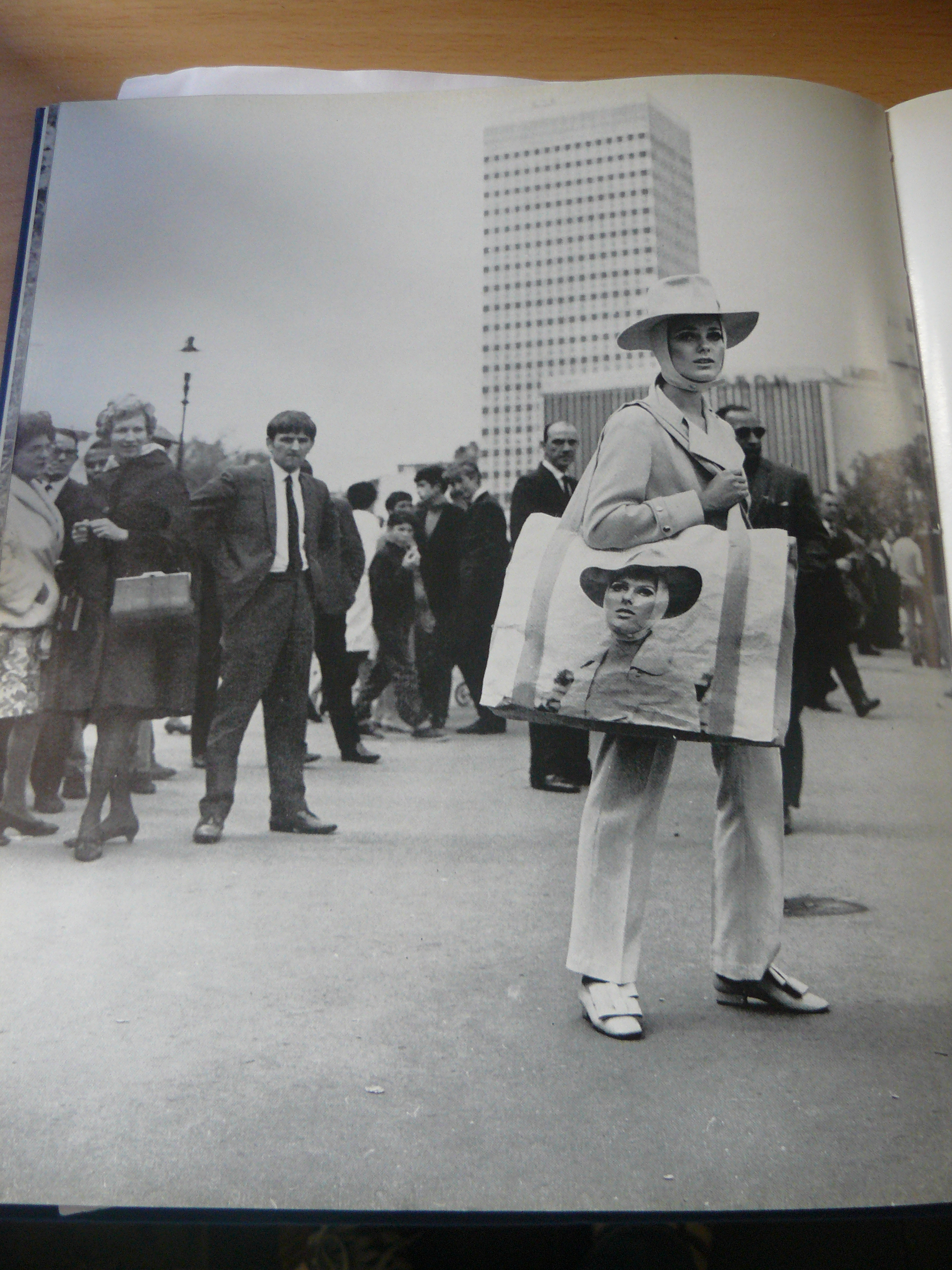
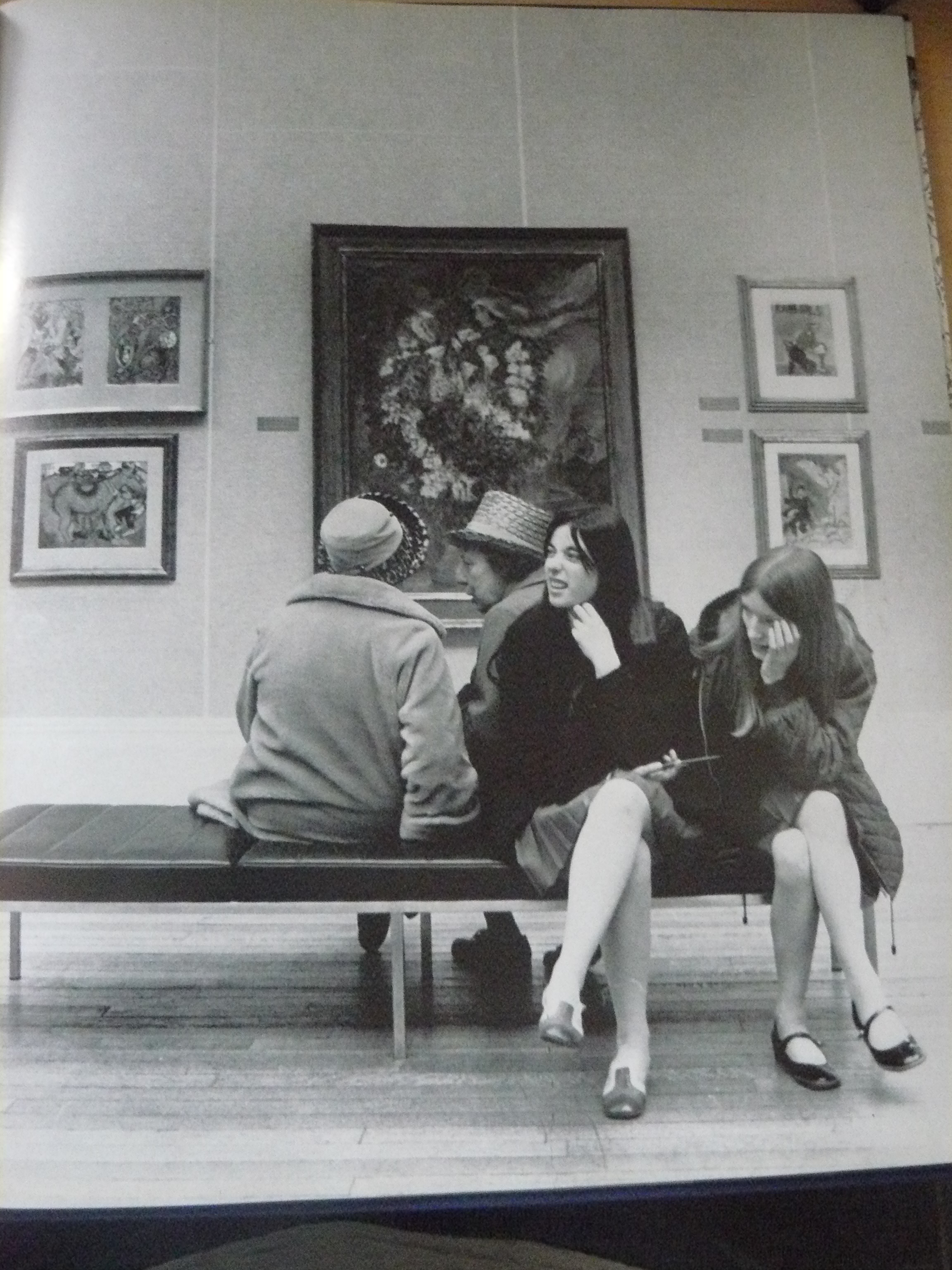
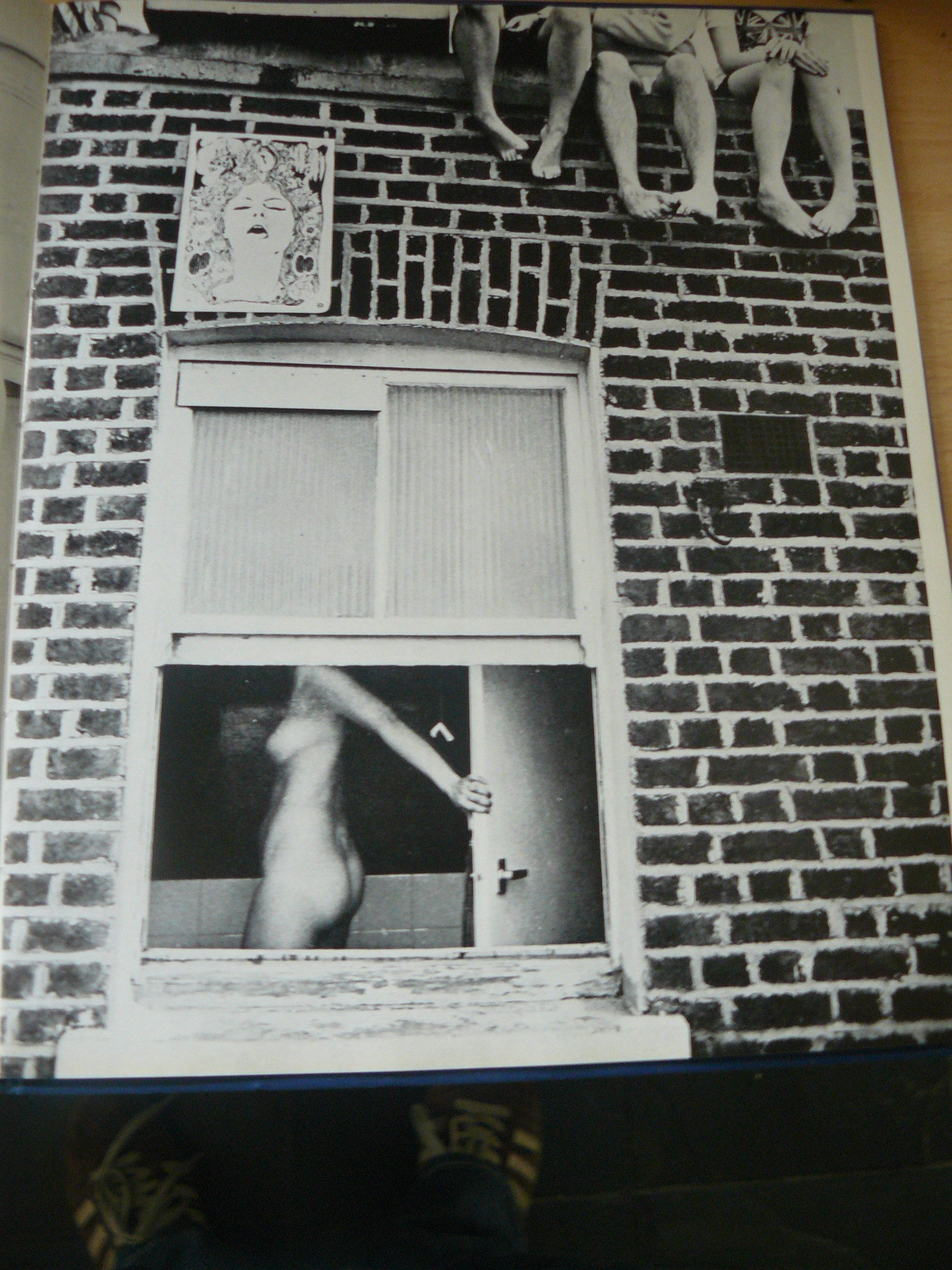
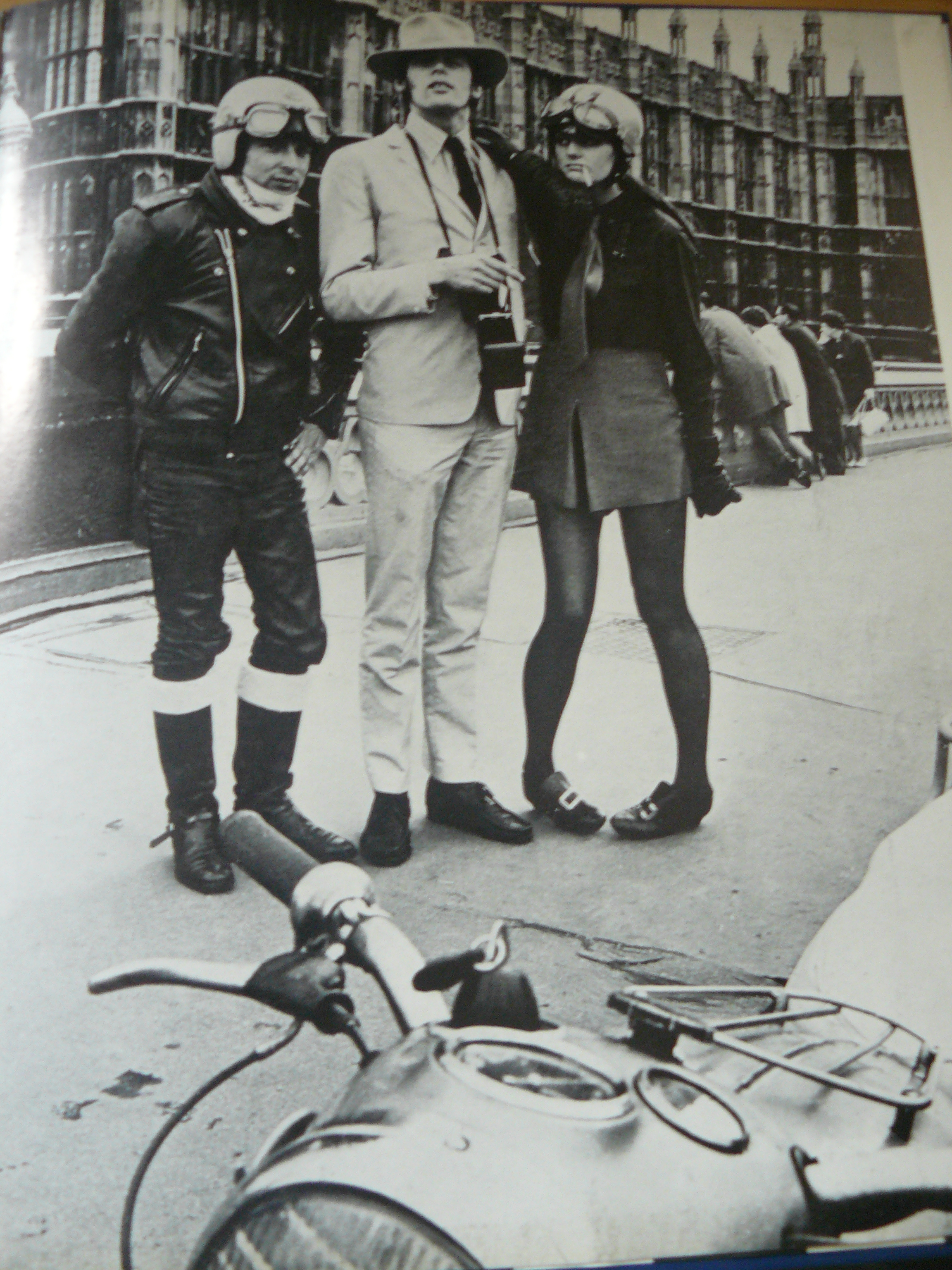
Photos: Young London, Permissive Paradise, 1969

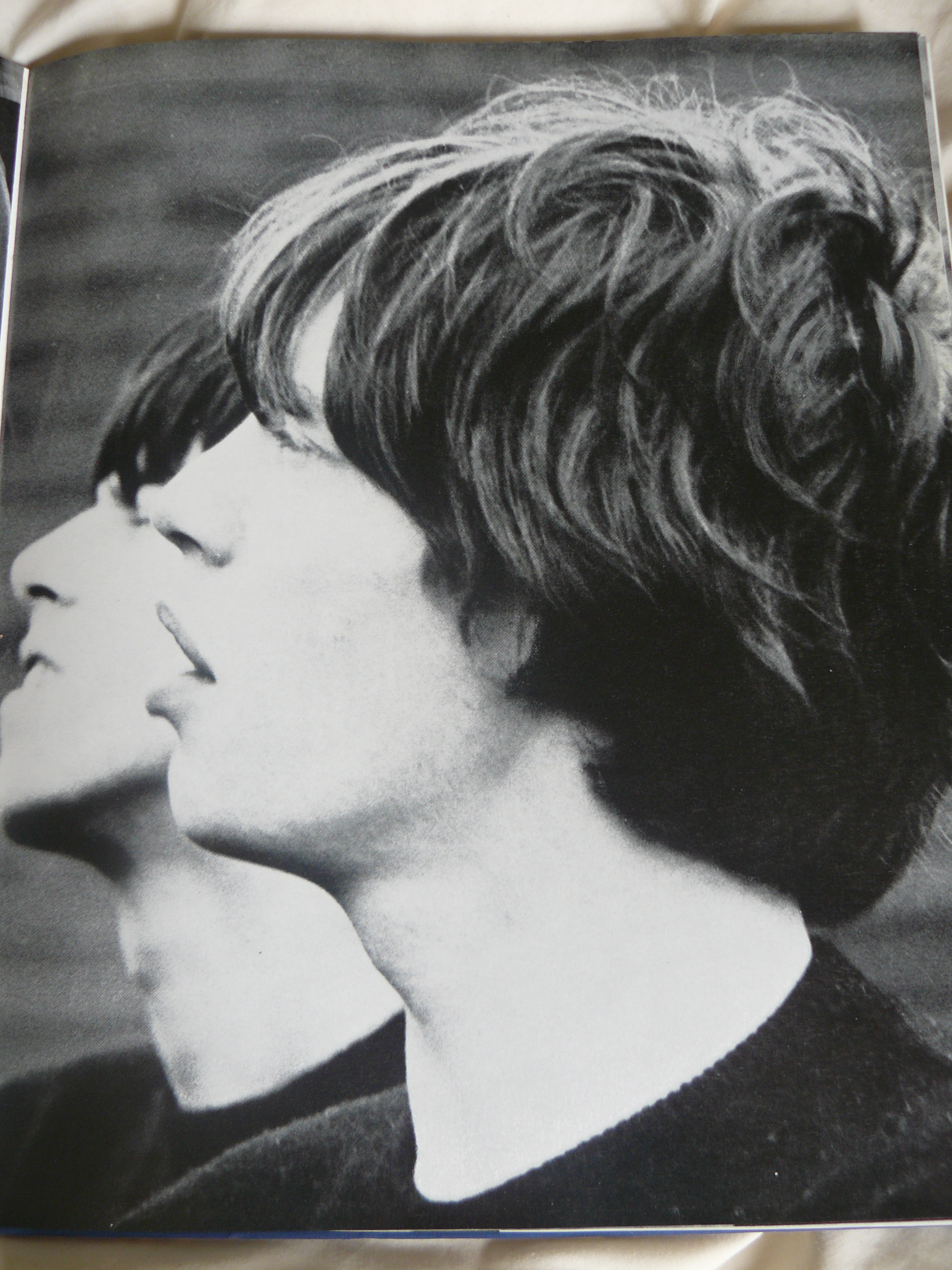
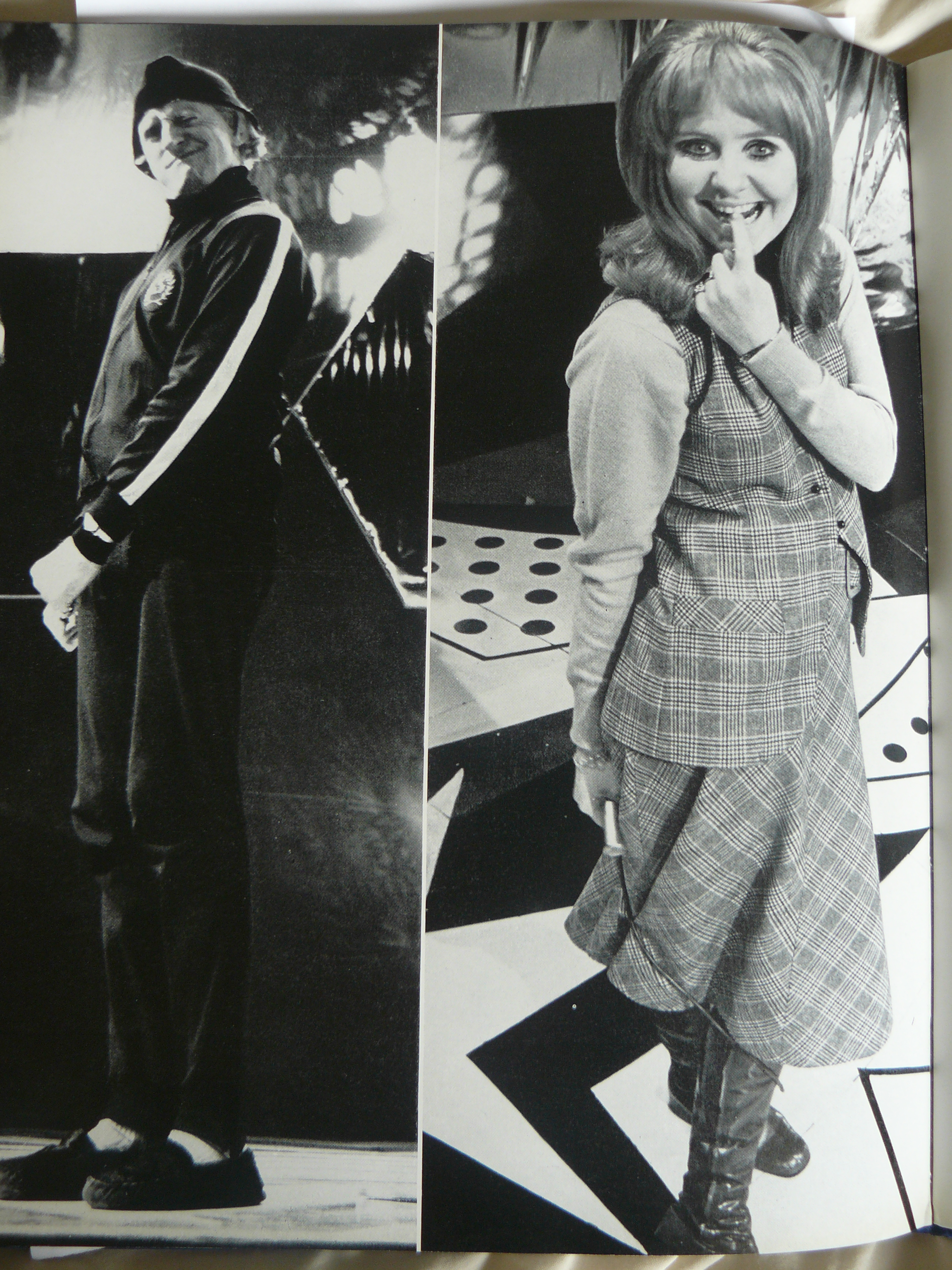
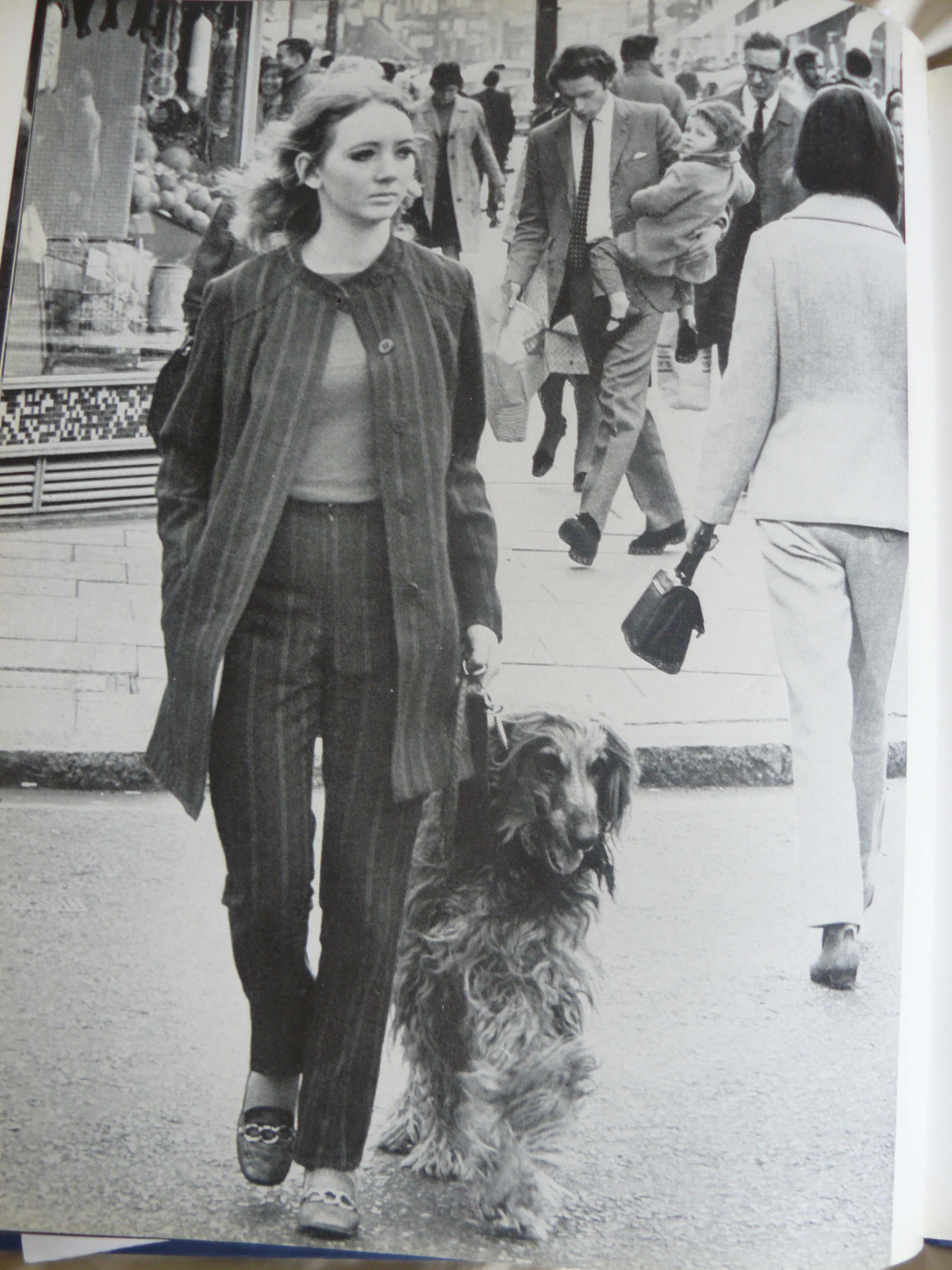
These photographs of London in the late 1960s are a wonderful commentary on the scene of the time. Frank Habicht, who also took some great images of the Rolling Stones, is particularly adept at drawing out the contrasts between the carefree young and the more traditional side of the city. Enjoy.

All photographs are from Frank Habicht’s Young London, Permissive Paradise (1969)

Secret London: the London Grill

I was recently asked to answer a few questions about Secret London by the blogging cabbies at Radio Taxis.

If you are interested in my favourite London building, London landmark and favourite London film and book, head here, where you will be rewarded with a mildly disturbing image of my face. 

Cockney Visions: Writing Britain at the British Library

The British Library’s new exhibition Writing Britain, which runs until 25 September 2012, has big ambitions. It aims to study place and landscape in British literature, looking at how writers and poets have been informed by the land around them, and how their writing has transformed the way we view these spaces.

Phew!

The exhibition is divided into different thematic sections, and includes one on Cockney Visions about London writing, and another on the suburbs, which also has considerable London content.

It’s a remarkably bold concept, but the BL does not shy from a challenge – its exhibition on Liberty a few years ago was one of the most intellectually intense I have ever seen, while the one on Language was similarly involved.

This time, it doesn’t quite pull it off. The problem is the same that blighted last year’s science fiction exhibition – too many books. Entering a BL exhibition is like visiting a first rate antiquarian bookshop, but one were you can’t touch the books and none of them are for sale. It’s great to see these rare and beautiful books, but it’s also incredibly frustrating that you can’t pick them up, feel the pages, smell the history.

Paradoxically perhaps, books are also an insufficient way of examining landscape in the way the exhibition intends. If we can’t actually sit there and read Wuthering Heights, immersing ourself in this extraordinary place the writer has created, we need other ways to make the journey. The most evocative part of the exhibition is the one on the Lake District and Highlands, purely because there are some wonderful paintings on display, which help crystallise our vision of what Wordsworth, Keats and Scott were describing. Conversely, the London section takes in the usual suspects on that well-trod wander from Blake and De Quincey to Alan Moore, Neil Gaiman, Will Self and Iain Sinclair  (and includes a wonderful copy of the London Psychogeographic Society newsletter from the early 90s), but fails to really plunge us into the city of our imagination.

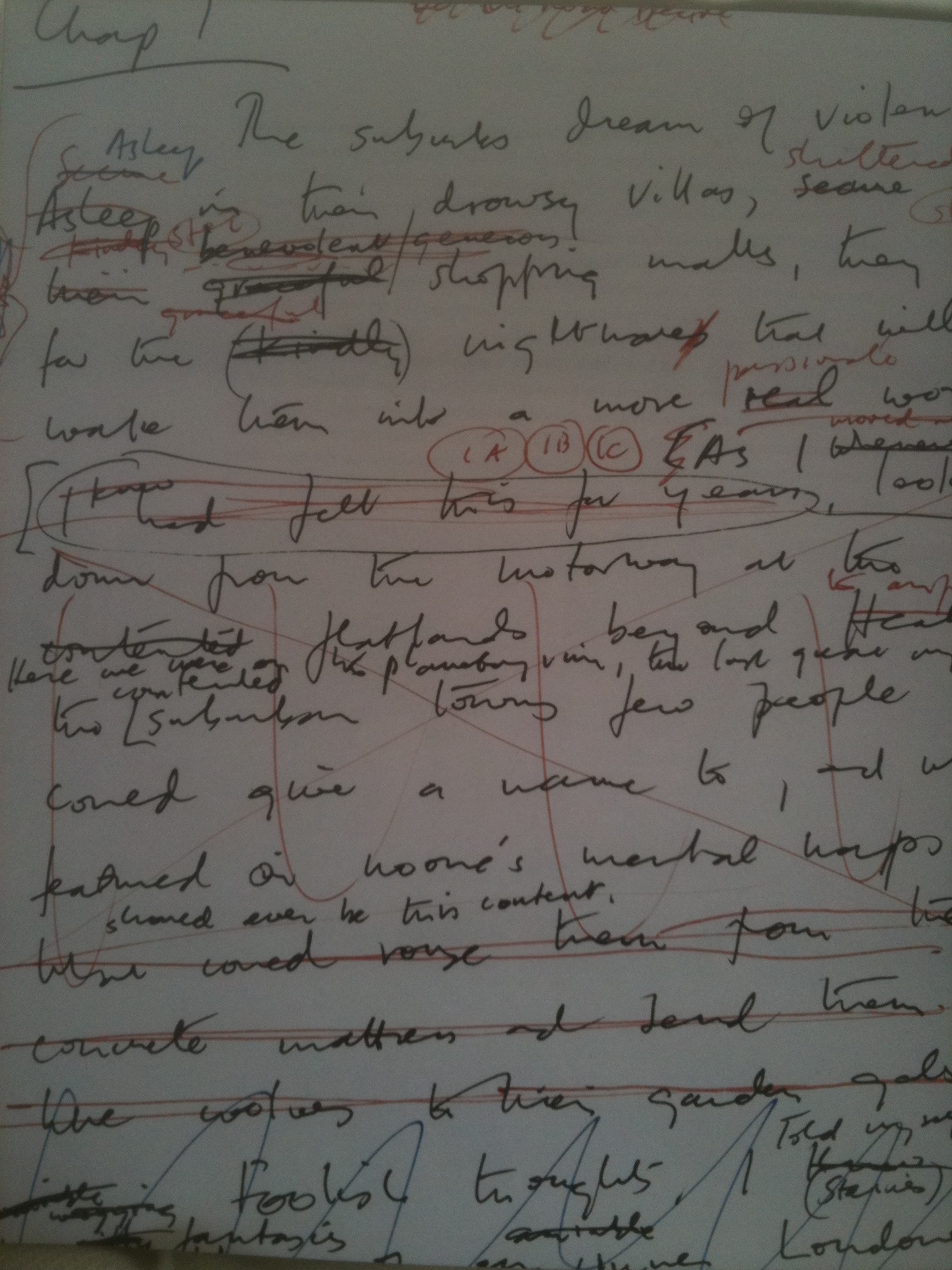
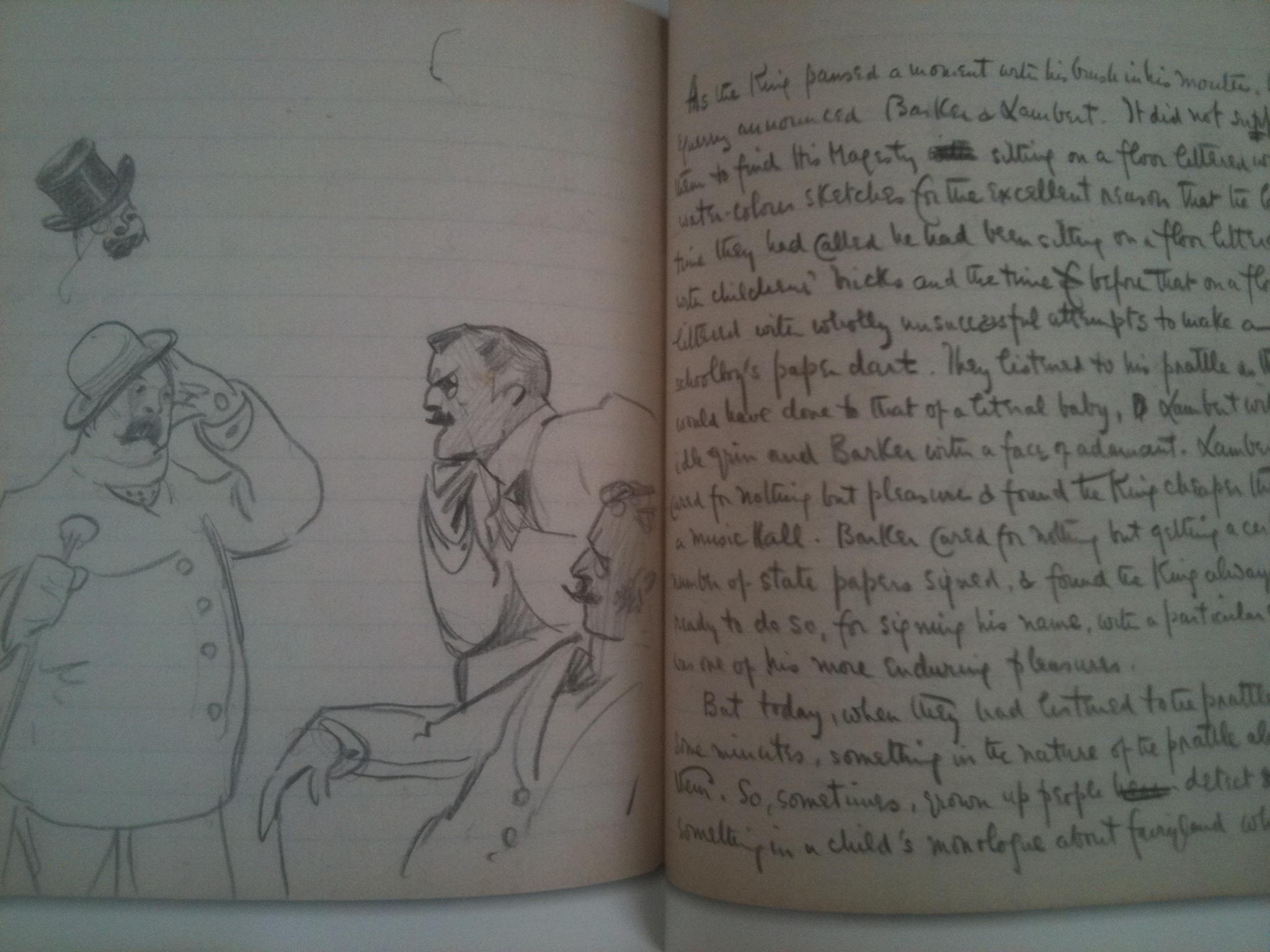
Where the exhibition – and the BL itself – really does excel is when it can produce original manuscripts, diaries and photographs. These messy, scrappy, lovingly flawed items show the writing process in a way a beautifully bound finished book never can. And some of the best of these are to be found in the sections of the exhibition related to London. There’s a sketch by John Betjeman of Dalston Station; an unpublished poem by Evelyn Waugh about the Crystal Palace (complete with Waugh’s drawing of the building); a couple of pages from JG Ballard’s collection, including the heavily amended opening pages to Kingdom Come and Crash; and a lovely drawing by GK Chesterton to accompany his notes for The Napoleon of Notting Hill.

Dalston Station by John Betjeman.

Kingdom Come manuscript

Notes for The Napoleon of Notting Hill by GK Chesterton

I loved also a letter by Conan Doyle sent to his mother from South Norwood, in which he carefully sketched the floorplan of a suburban house he was thinking of buying, and a copy of Pygmalion, which Shaw had phonetically annotated to show how he felt the cockney phrases should be pronounced.

a personal favourite was a draft of Albert Angelo by BS Johnson, showing how Johnson wished a section of one page to be cut out so it would reveal a sentence from later in the book, a brilliant way to create a  flash-forward or pre-cognition.

Best of all, though, was this photograph, which shows JM Barrie, GK Chesterton and George Bernard Shaw dressed as cowboys in 1914. For the full story, read this excellent blog post. It has very little to do with Writing Britain, but it’s bloody marvellous all the same.

Dickens And London at the Museum of London

This review was published in the Independent last week but has not surfaced online.

It’s going to be hard to avoid Charles Dickens in the next few months. The writer will be everywhere, as publishers, programmers and producers commemorate the 200th anniversary of his birth on February 7, 2012. The best celebration of Dickens’s legacy could be this illuminating exhibition at the Museum of London. It’s an imaginative look at a familiar subject, and represents the best of what a museum can do.

This is no staid trawl through Dickens’s back catalogue but a vivid evocation of Victorian life based around themes from his books, from poverty to innovation. Sure, the big objects like Dickens’s writing desk or his manuscript for Great Expectations are there to grab the attention, but this drama is complemented by Victorian minutiae, the fascinating bric-a-brac of everyday life, everything from rent arrears books and mourning wands (wooden sticks carried by footmen ahead of funeral processions) to clay pipes, Punch and Judy puppets, model trains and Dickens’s soup ladle.

The exhibition is more than objects. There are mournful photographs of Victorian buildings that Dickens wrote about but have since disappeared, and a short film by William Raban that meanders around modern London while an actor recites Night Walks, Dickens’s essay about the sleeping city, drawing subtle parallels between his time and our own. The film is a rare chance to wallow in Dickens’s own voice, but neither this nor the manuscripts are quite as impressive as Dickens’s reading copy of Oliver Twist. This is the book he used on reading tours towards the end of his life; words and sentences are underlined for emphasis, and melodramatic stage directions (‘Action’, ‘mystery’, ‘terror to the end’) are scrawled in the margins.

The Strand, Looking Eastwards from Exeter Change, London

Most rewarding of all, though, is the art. There’s classically sentimental Victoriana, such as William MacDuff’s Shaftesbury, which shows two urchins looking in a shop window like something by Norman Rockwell. There’s the fascinating documentary sketches of George Scharf’s, who drew the people he saw on streets acting as human advertisements, in colourful costume and carrying eye-catching signs for shows and products. And there are many detailed depictions of Victorian street life, which owe a clear debt to Hogarth. Phoebus Levin’s ‘Covent Garden Market’, Caleb Robert Stanley’s ‘The Strand, Looking Eastwards From Exeter Change’ and especially Edmund John Niemann’s ‘Buckingham Street’ portray a city of energetic bustle, cobbled streets and vicious contrasts of wealth that are the visual embodiment of what we still call Dickensian London.

Museum of London, 150 London Wall, EC2Y 5HN (020 7001 9844). Until June 10, 2012. Admission £8 (£7 advance booking); concs £6 (£5 advance booking).

Buckingham Street, Strand, London

London bricks

‘The bricks – laid Flemish bond, headers and stretchers alternating – were all old London stock bricks, but of many kinds and colours: rust red, beige, grey, brown, nearly black. Here and there were yellow ones – malm bricks made with an admixture of clay and chalk. The cumulative effect was pleasing – the variety gave texture, interest and warmth to the surface of the wall. The eye approved the range of colour, the uneven look, the way in which each brick differed from its neighbour and yet was in subtle harmony. But, more that that, to look at it was to see the way in which this wall arose from the ashes of many buildings. Studying it, Matthew saw in his mind’s eye warehouses and churches, factories and shops, terrace houses like this one, blasted to the ground perhaps on some furnace night of 1940. He thought of how the city lifts again and again from its own decay, thrusting up from its own detritus, from the sediment of brick dust, rubble, wood splinters, rusted iron, potsherds, coins and bones. He thought of himself, living briefly on top of this pile, inheriting its physical variety and, above all, the clamour of its references. The thought sustained him, in some curious way, as he sat at his desk in the flat which was not yet a home, or as he moved through days and through the city, from Finsbury to Docklands to Covent Garden to Lincoln’s Inn.

Penelope Lively in ‘City Of The Mind’ (1991, Andre Deutsch).

More London books

Continuing a bookish theme, a couple of current and forthcoming releases have caught my eye.

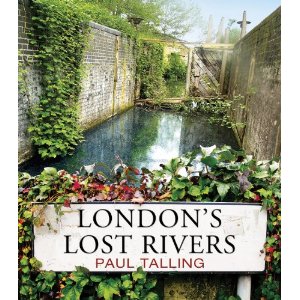
First is ‘London’s Lost Rivers’ by Paul Talling and published by Random House. This is the first serious update of Nicholas Barton’s classic 1950s underground river book and it will be interesting to see what new information about the Fleet, Effra, Westbourne et al that he has uncovered.

Jamrach's Menagerie

The second has been catching my eye in the window of Herne Hill Books every time I walk past it. ‘Jamrach’s Menagerie’ is a novel by Carol Birch published by Canongate.  This is a novelised account of the famous occasion a bengal tiger escaped from London petshop Jamrach’s. It was from this shop that the animal-loving artist Gabriel Dante Rossetti probably purchased the pet wombat, whose death left him so bereft.

Incidentally, if any publishers are reading this and fancy sending me London-themed books to add to my collection, my conscience would have no hesitation in happily accepting them.

Best books about London

Although I’m late to the party as ever, I see via Chris Fowler that Londonist editor M@ has come up with his personal list of the 15 best non-fiction books about London. It’s a good list, as you would expect, and has prompted me to come up with my own favourite 15.

1 ‘The London Encyclopaedia’ by Ben Weinreb and Christopher Hibbert

The definitive A-Z of London history, fascinating and accessible. I much prefer this to narrative histories like Roy Porter and Peter Ackroyd.

2 ‘In Search of London’ by HV Morton

My single favourite piece of narrative London writing, featuring Morton wandering around the bomb-battered city in 1951, describing what he finds and remembering what it once looked like.

3 ‘Shaping London’ by Terry Farrell

A fascinating look at the tangible forces that have shaped the infrastructure of London, and a welcome antidote to the airy tediousness of so much contemporary psychogeography.

4 ‘The History of London In Maps’ by Felix Barker and Peter Jackson

Excellent and accessible cartographical guide from 1993, divided into sensible sections and well illustrated.

5 ‘Curiosities of London’ by John Timbs

Hefty Victorian guidebook that is an intriguing contemporary reference source.

6 ‘London: The Unique City’ by Steen Eiler Rasmussen

A Danish architect analysis in 1937 why London looks like it does.

7 ‘Subterranean Railway’ by Christian Woolmar

Definitive and readable recent history of the London tube.

8 ‘The Lost Rivers of London’ by Nicholas Barton

The classic guide to the old rivers of London, first published in the 1960s and flawed, but still the best.

9 ‘Violent London’ by Clive Bloom

Superb study of the London Mob through history, recently updated.

10 ‘In Camden Town’ by David Thomson

Gloriously whimsical half-finished diary by a BBC producer from the 1980s, which captures Camden on the brink of gentrification. (See also Jonathan Raban’s ‘Soft City’.)

11 ‘London Under London’ by Richard Trench

To be honest, it’s on a par with the many other subterranean London books, but makes my list because it was written by a bloke called Trench.

12 ‘People Of the abyss’ by Jack London

Wonderful late-Victorian journalism from the destitute East End. I should also include Henry Mayhew’s ‘London Labour And The London Poor’ but shamefully I’ve only ever dipped into it. 

13 ‘Night Haunts’ by Sukhdev Sandhu

Following in HV Morton’s footsteps, Sandhu explores the nocturnal economy of 21st century London.

14 ‘London peculiars’ by Peter Ashley

One of many ‘Secret London’-style books I own, but probably the best looking. See also the fine recent ‘Secret London: An Unusual Guide’,  ‘Eccentric London’ by Tom Quinn and ‘Curious London’ by Robin Cross.

15 ‘The Likes Of Us’ by Michael Collins

A biography of working-class South London.