Category Archives: History

Banking on Sherlock

When Abbey National opened their grand Art Deco headquarters at Nos 219-229 Baker Street in 1932, they didn’t quite know what they were getting into. Because it sat in the spot where 221b should be, the new building almost immediately began receiving letters addressed to Sherlock Holmes. When Arthur Conan Doyle chose an address for Holmes, he deliberately picked 221b because the Baker Street numbering did not go that high. But after renumbering, and with the arrival of Abbey House, Holmes’s address suddenly came into solid existence.

While many banks might have ignored this accident of geography, Abbey embraced it. Over the years, they really threw themselves into the business of celebrating the fictive biography of the world’s greatest detective. They installed a plaque (now lost), they published books and, after a while, they employed a letter writer, somebody whose job was to respond to all the letters addressed to Sherlock, acting more or less as his personal secretary.

In 1989, the New York Times interviewed Nikki Caparn, who then had that responsibility, and she described how she had received letters asking Sherlock to solve Watergate, or locate some missing homework. ‘Many people don’t ask for anything in particular,’ she said. ‘They just want to know what Mr Holmes is doing now or where he is and they hope he is well. And many people know he’s not real and write tongue in cheek. But some people haven’t worked it out. Mr Holmes would be 136 years old now, so it’s unlikely that he’d still be living here.’

Here is one such response from around exactly that time, sent to Kieran (@hail_tothechimp on Twitter), who had written to Sherlock to ask him about his most difficult case. Ms Caparn clearly does not feel equipped to respond to such a difficult and controversial query, so plays a straight bat with her standard response.
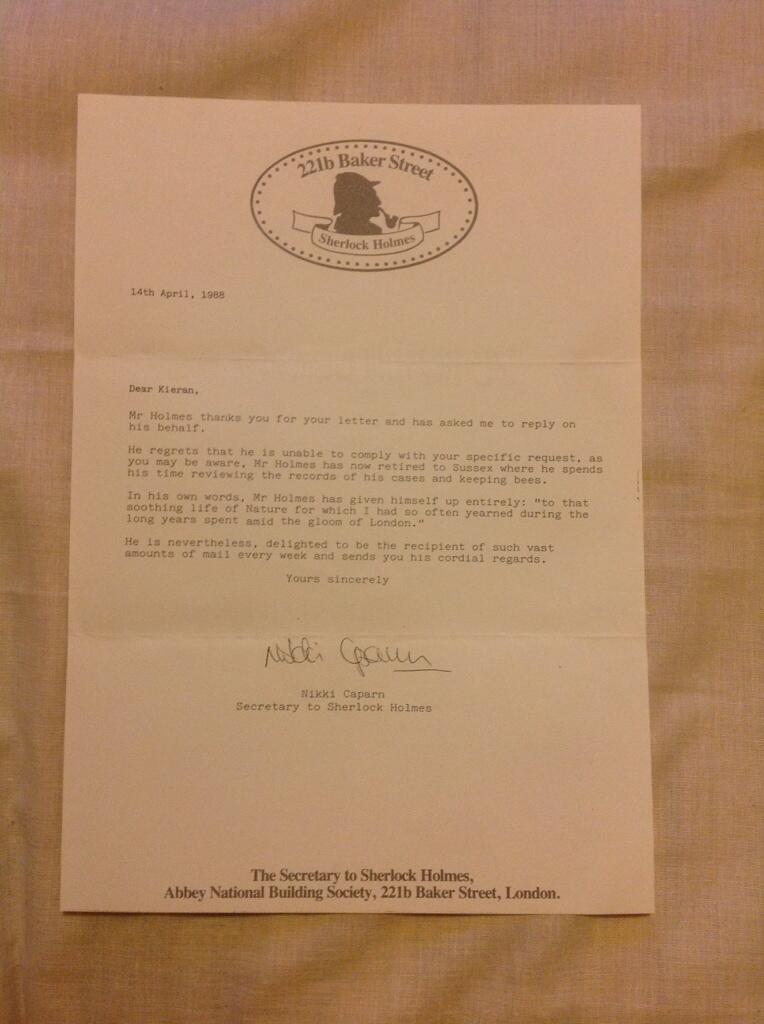
BOb2ZThCcAAIQBZ

Abbey have since moved from Baker Street and are owned by Spanish giants Santander, and I don’t know what has happened to their vast archive of letters. However, Abbey also created something for Sherlock Holmes fans that is definitely still standing. In 1951, the bank put together a Sherlock Holmes exhibition for the Festival of Britain at Abbey House. The Spectator said the Festival ‘was unlikely to show anything nearer perfection in its way than the reconstruction by the Marylebone Public Libraries Committee of Sherlock Holmes’s room in Baker Street.’

The review continues that ‘everything is here for the student of Holmes—violin, hypodermic syringe, revolvers, handcuffs’ and provides not just ‘a shrine for the connoisseurs of Holmes but a deep pleasure for the student of the late Victorian period’. The Spectator concluded that ‘when the Festival has subsided, this charming reconstruction is preserved for the enjoyment of posterity.’

Which it was. In 1957, the brewer Whitbread purchased the entire exhibition and put it on display in a pub, the Northumberland Arms, which it renamed the Sherlock Holmes and opened as what was surely one of London’s first theme pubs. The pub is located in Charing Cross, a key location in many Holmes stories, and the exhibition is still standing exactly as it was installed, preserving to this day behind glass in an upstairs room a slice of 1950s Britain in the shape of a fictional Victorian living room.

At the Poll Tax Riot

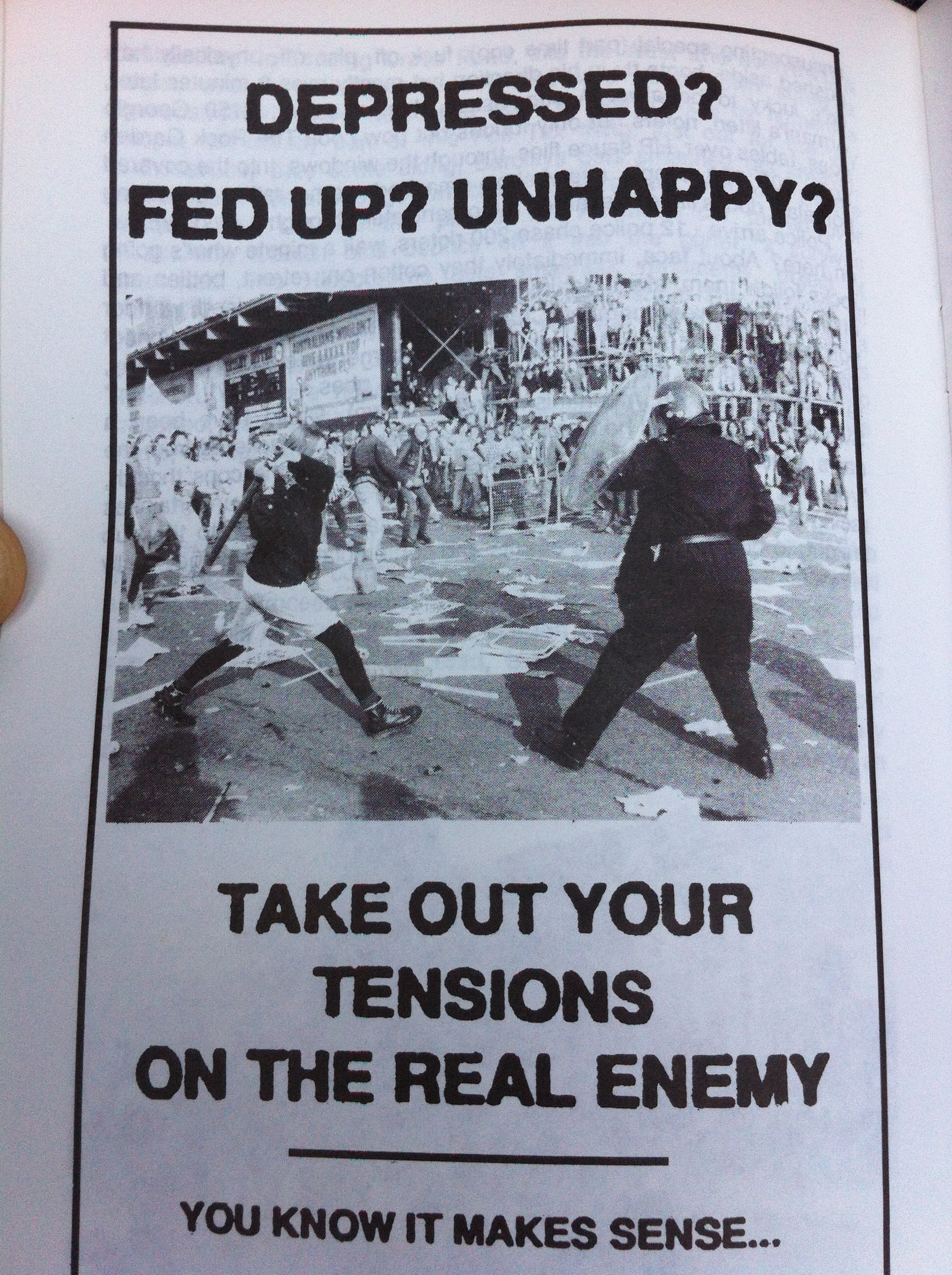
I attended the Poll Tax Riot by accident. I was at the theatre with my family on Charing Cross Road when the lights came up at the end of the performance and the house manager told us there had been a little disturbance outside so we would have to remain in our seats for a short period. As we did so, this was taking place on the street above.

IMG_1644

We’d seen the coaches parked up as we drove into London, but I had little interest in politics. I knew who the Prime Minister and  leader of the opposition were, but that’s about as far as it went. I would have recognised other names – I watched and enjoyed Spitting Image – but none of it really meant very much to me. Perhaps that’s as it should be when you are 14. Questions of policy were largely irrelevant so the anger towards the Poll Tax Riot had passed me – and my Daily Mail-reading parents – almost completely by. And, boy, were people angry.

IMG_1650

When the house manager gave us the all clear, we climbed the stairs – the theatre  was in a little basement – and emerged on to a devastated Charing Cross Road. What I most remember is the stench from all the overturned bins, debris spilling on to the streets, and the complete absence of traffic, people and noise. It was spooky. That smell I can still recall, a horrible, fatty, sweet stink of rot and decay. London then was a dirty city, but this was something else.

My father – surely in a state of some fear – ushered us through back streets towards the car park in Soho but I remember little of this journey, which surely would have taken us past smashed shops, mobs of protesters and riot police desperately trying to get their shit together. Once we reached the car, my father visibly relaxed but one junction, he had to hit the accelerator while we waited at a red light. He later said he’d seen we were about to be sandwiched between a bunch of rioters and some police and decided this was not a time to obey the laws of the road. Once again, I’d missed this sight.

IMG_1646

I thought about all this again while reading a pamphlet I picked up recently for £2 in a local bookshop. Produced by ACAB Press (an acronym for All Coppers Are Bastards) and ‘dedicated to all working-class heroes’, Poll Tax Riot: 10 Hours That Shook Trafalgar Square contains 12 eyewitness accounts of the riot. The interviewees all appear to be anarchists, and are as equally contemptuous of the traditional Left – Militant are particularly despised, and there are amusingly barbed references to George Galloway and Tommy Sheridan – as they are the police. Most of them seem to have had a great old time, chucking stuff at coppers, smashing windows and setting fire to South Africa House. This is about revenge.

‘Off we go intent upon destruction, up Charing Cross Road, into the West End, everything a target, everything subject to our rage and deep down surely a demonstration of how hated this world is.’

Cars are turned on their roofs, shops looted, the Hippodrome smashed and the police attacked whenever they are seen. There are no dissenting voices to the general feeling the Met finally got what they had deserved for a decade. One protester who ended up in a cell even claims that his fellow cellmate was a prison officer who joined in the fun because he ‘fucking hates the cops’.

IMG_1647

The pamphlet is so gleefully celebratory of the riot that it has to distance itself from the Trafalgar Square Defendants’ Campaign, set up to help those that had been arrested, even as it promises it will give them all proceeds from its sale. It also announces that ‘this pamphlet is anti-copyright and can be freely reproduced by any revolutionary group. But copyright protects it from being used by journalists, rich bastards, etc.’ I hope they don’t sue.

IMG_1649

The Post Office Tower: now you see it…

BNhoD0GCcAAHYli

Now you don’t…

BNhoW08CIAIxidz

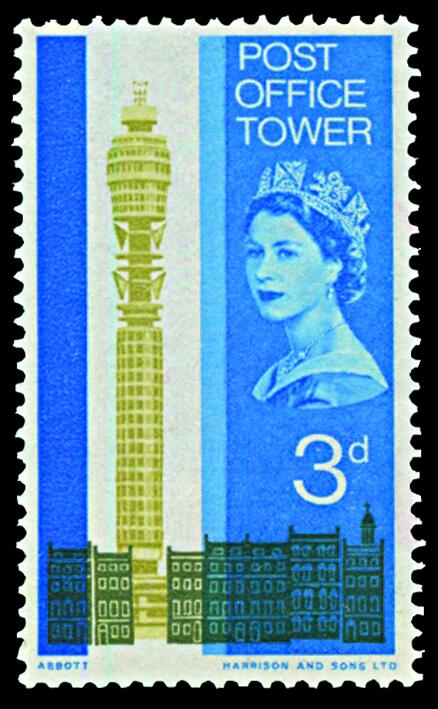
This stamp of the Post Office Tower from 1965 is superb, even if it misses out the Post Office Tower itself due to a printing error (thanks to @stampmagazine for the image).

In fact, that seems kind of appropriate as the Post Office Tower was deliberately left off Ordnance Survey maps for decades because it was deemed to be an official secret and therefore of such great military importance nobody was allowed to know where it was even though it had become one of the most recognisable buildings in Britain pretty much as soon as it was opened by Tony Benn (who narrates this brief history of the tower).

It even appeared in an episode of Dr Who in 1966.

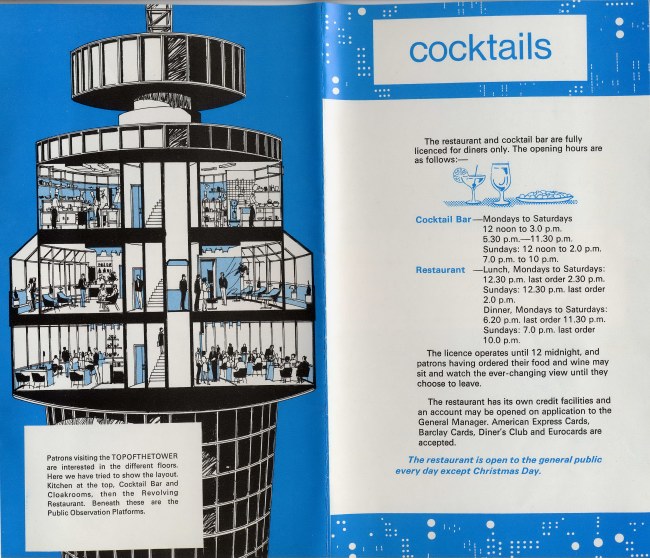
And in 1966, its revolving restaurant featured in one of Look At Life‘s fabulous films. Here are two pages from the menu, taken from the excellent Butlins Memories website.

12ae8a2e0

12b08a250

The Post Office Tower was bombed in 1971 (often attributed to Irish nationalists but more likely the work of the Angry Brigade) and even survived an attack by a giant kitten in the 1970s.

It’s still very popular. Here’s a film by somebody who collects memorabilia about the tower.

Rob Webb has scanned some pages from the original souvenir brochure on his website and James Ward has a nice selection of postcards featuring the Post Office Tower on his blog. I like this one.

post-office-tower_0013

Opium pipes in London

brochure; pamphlet - Opium Smoking Parlour

In 1899, Earl’s Court offered interested Londoners the chance to pay 6d to see a Hong Kong ‘opium smoking parlour’, filled with ‘living Chinaman’ and ‘true to every detail’. This reflected an ongoing fascination for the Chinese habit of smoking opium – a habit that had been partly encouraged by the British East India Company and then condemned by British missionaries – and merrily ignored the fact the British themselves had been consuming opium for decades.

The Chinese tradition of smoking looked and felt very different though, and that’s partly because it was so deeply ingrained into society, a ritual to be enjoyed alongside tea and nicotine with a rich material culture, lavish paraphernalia and its own customs, traditions and symbolic meaning. This is explored in an extraordinary exhibition of Chinese opium pipes at Maggs Bros bookshop in Berkeley Square, which I have written about for the Independent on Sunday.

It features a unique collection of 19th-century Chinese pipes and related material that demonstrate the full complexity of the Chinese relationship with opium, as can be seen in some of the following images – and these barely scratch the surface of the incredible collection that can be seen at Berkeley Square from June 5 to the end of July.

Field of opium poppies

Field of opium poppies

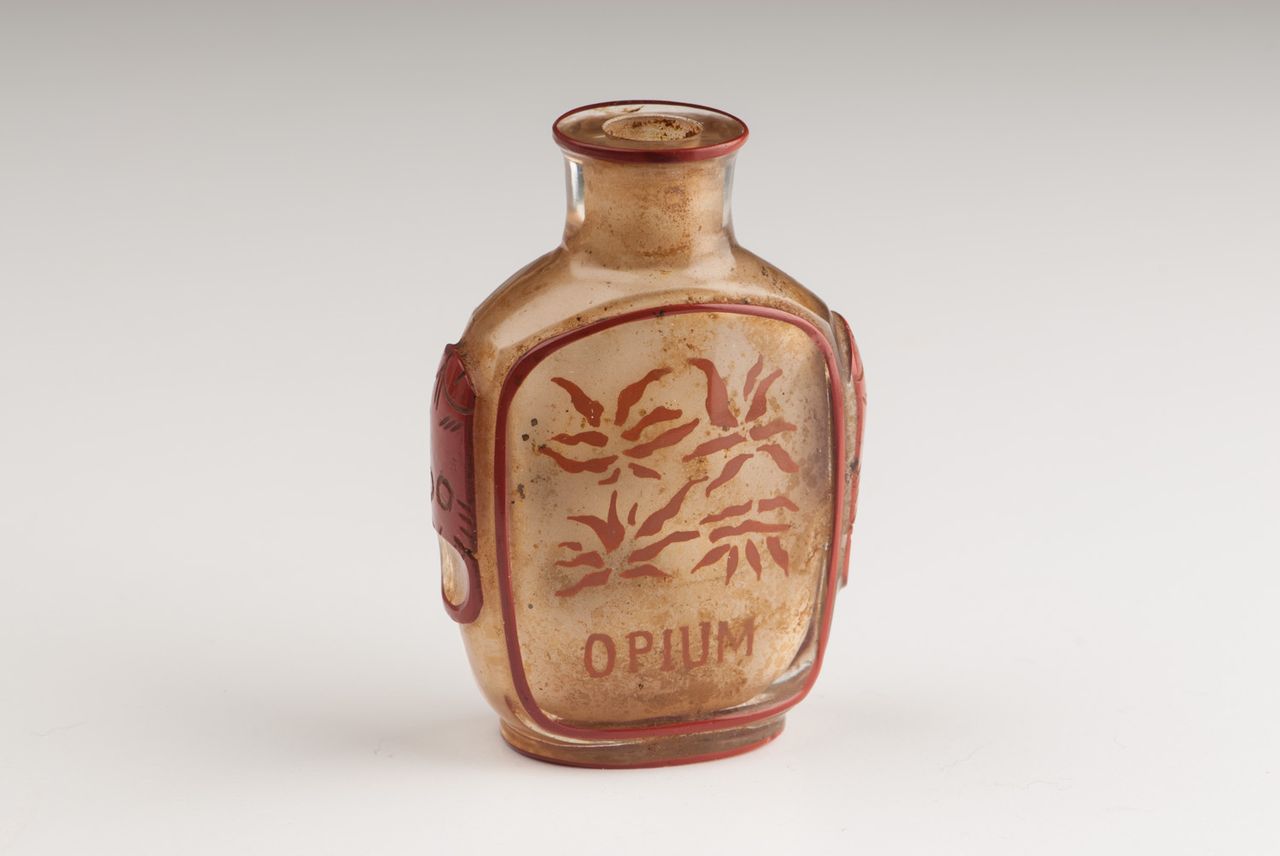
Jar for storing opium

Jar for storing opium

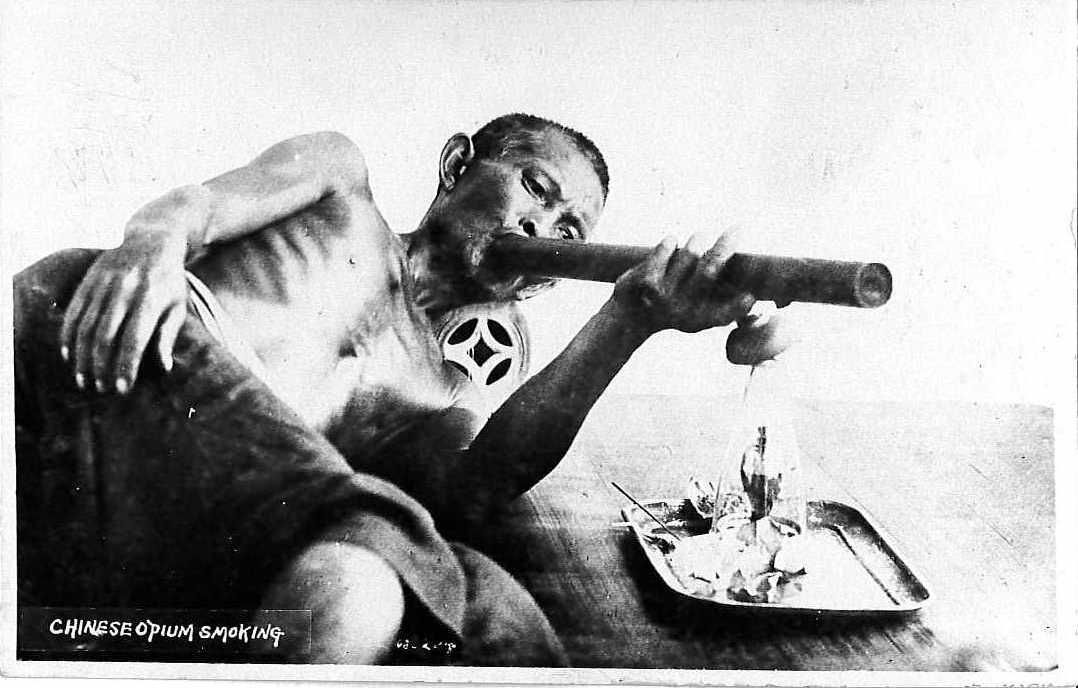
Chinese opium smoker

Chinese opium smoker

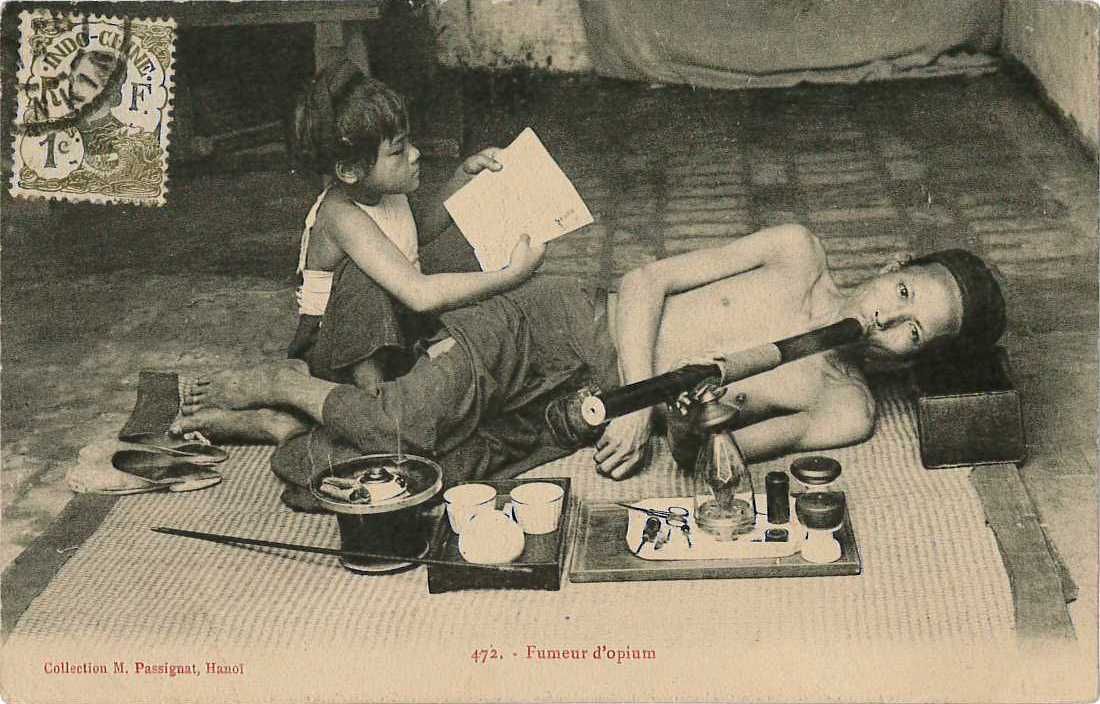
Postcard of opium smoker from Vietnam

Postcard of opium smoker from Vietnam

Bowl for smoking opium

Bowl for smoking opium

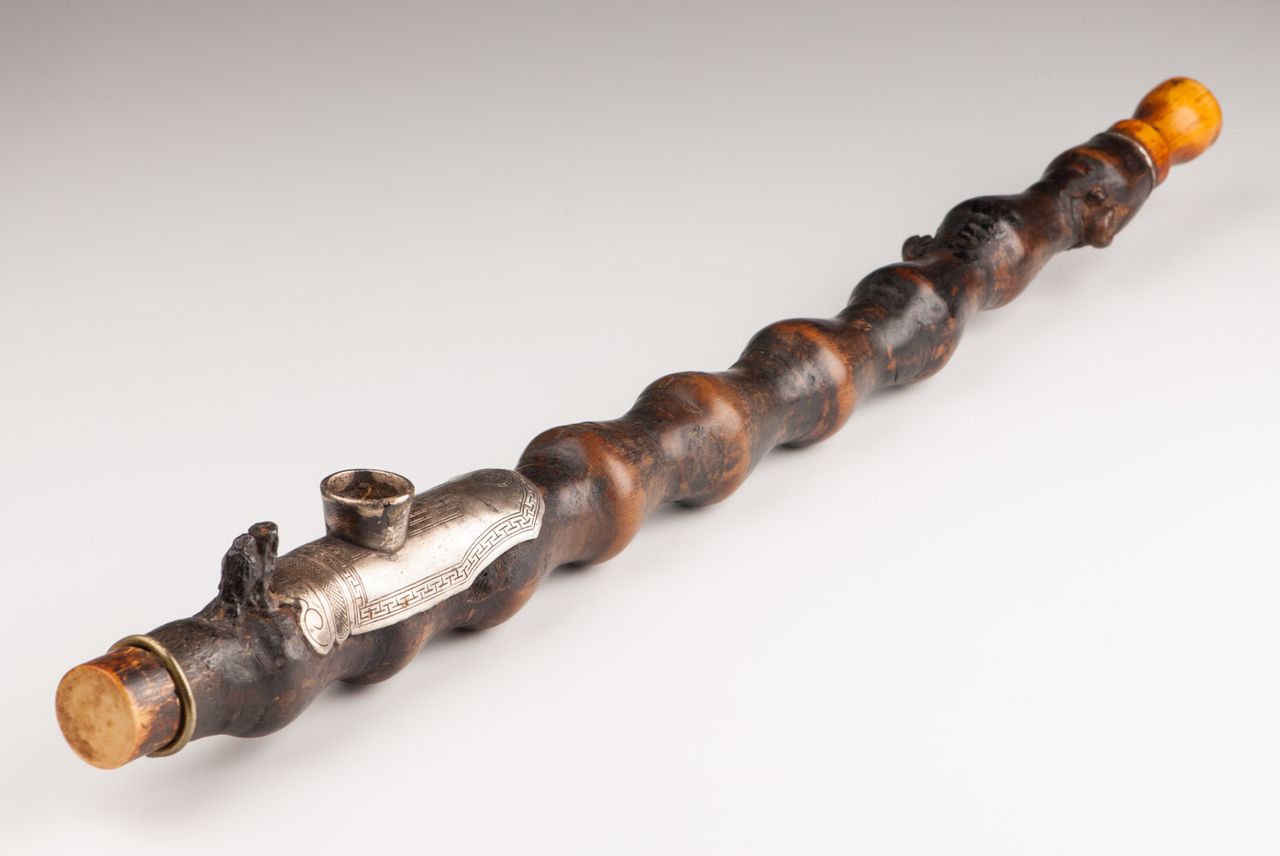
Opium pipe

Opium pipe

Smoker with pipe and tools Smoker with pipe and tools

Opium pipe

Opium pipe

Opium pipe

Opium pipe

Bowl for opium pipe

Bowl for opium pipe

aAKf2D-cSXQqOe6Mm8b4FjMt6hP1ZcWPJbFN8-TNflk

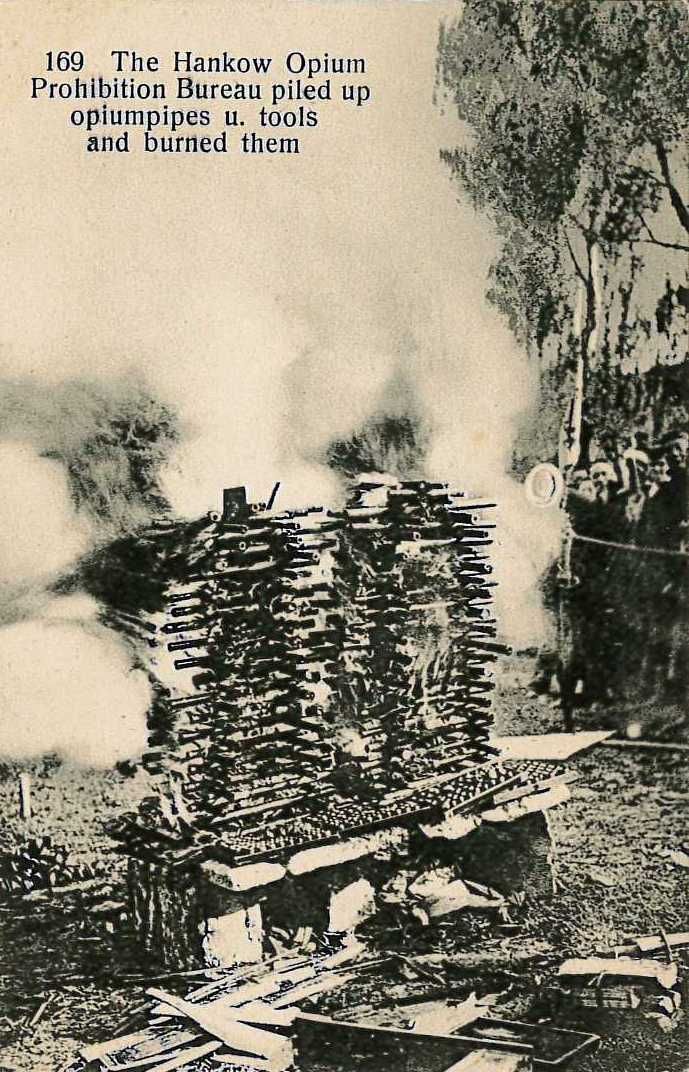
Pipes being burnt by anti-opium reformers

Bowl for opium pipe

Bowl for opium pipe

Lamp used for preparing and smoking opium

Lamp used for preparing and smoking opium

Tray for carrying opium tools

Tray for carrying opium tools

Pink pills for pale people - opium cure

Pink pills for pale people – opium cure

Box for storing opium with erotic carving - opium was seen as an aphrodisiac and was originally smoked in brothels

Box for storing opium with erotic carving – opium was seen as an aphrodisiac and was originally smoked in brothels

Bowl for smoking opium

Bowl for smoking opium

Opium pipe

Opium pipe

Preparing a pipe

Preparing a pipe

Tools for preparing opium

Tools for preparing opium

Opium pipe

Opium pipe


Opium smoker with cat - pets often became addicted to the opium fumes

Opium smoker with cat – pets often became addicted to the opium fumes

Secret London: inside Wapping’s abandoned Tobacco Dock

014

It seemed like a good idea at the time. It was the mid-1980s, the economy was booming and Docklands was on the up. Tobacco Dock, an old Grade I-listed warehouse off East Smithfield in Wapping, seemed ripe for redevelopment. Rupert Murdoch had just moved New International next door from Fleet Street, and other companies were sure to follow. What better place to build the new Covent Garden, a lively hub of shops, bars and restaurants, where City fatcats and Wapping yuppies could mingle and spend?

010

Terry Farrell did the architecture and Tobacco Dock opened in 1989, an elegant conversion that featured two arcades of shops on two floors inside a skilfully modernised structure that retained its Victorian industrial integrity. A canal provided a classy terrace for restaurants and bars, while the shops were the best of the era: Saab City, Next, Body Shop, Cobra and Monsoon as well as Justfacts, a shop selling accessories for your Filofax, and Uneasy, a shop that sold designer chairs. Think Broadgate Circus. Think Leadenhall Market. Think Hay’s Galleria. Here was the future. What could possibly go wrong?

016

Even before Tobacco Dock opened, the UK economy was in recession and one-by-one, the new shops started to disappear. No new companies followed News International, and with poor transport links and a tanking economy, the yuppie money from Wapping’s riverside apartments could not keep the shops alive. By 1995, Tobacco Dock was already a shell, with just two trading outlets, a restaurant called Henry’s and a sandwich bar, both kept afloat by Murdoch’s minions, of which I was one.

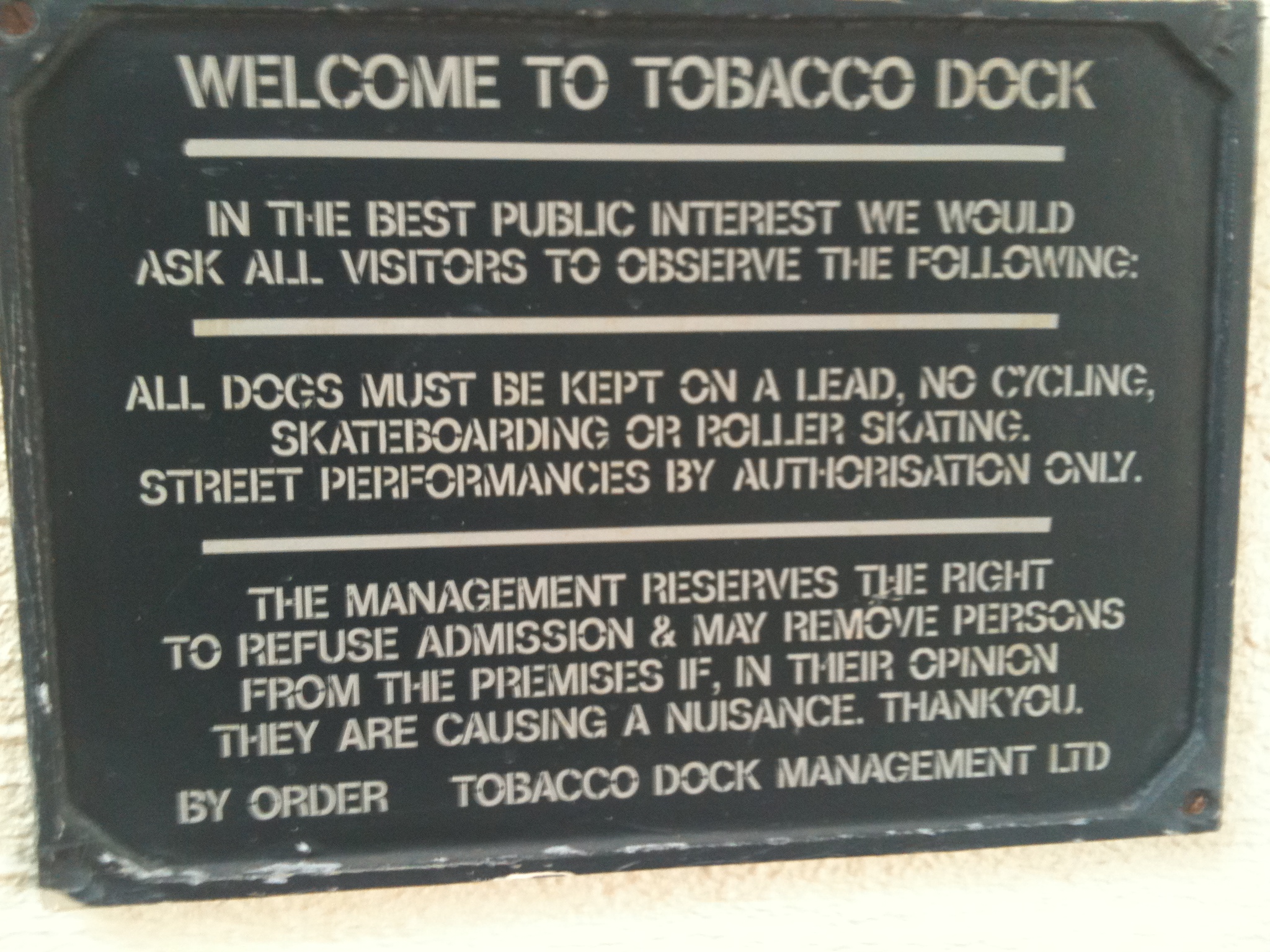
Ten years later, just the sandwich bar remained; now that too is gone. Tobacco Dock is completely empty, a ghost shopping centre forever frozen in 1989, when the world was at its feet. Come here, and you can smell the late-80s ambition and the disappointment and failure when it all started to unwind. It’s like the backdrop to a George Romero zombie film, or a metaphor for rampant commercialism wrapped in the setting of a failed shopping centre.

012

Bizarrely, the empty centre remains impeccably maintained and open to the public. I spent happy hours in Henry’s when I worked at The Sunday Times in the 1990s and remember even then how strange it felt to march through the vacant complex, serenaded by mood music piped through the PA. When I returned a couple of years ago in search of nostalgia, there was only silence, broken by the sound of my footsteps echoing round the empty chamber, but the floors were still as clean and the fixtures and fittings as freshly painted as when it first opened.

Rows of disused shops lined the central avenue like glass coffins, some still bearing the names of the shops that once operated here. Frank And Stein’s, the sandwich shop that held out longest like a Japanese soldier still fighting the Second World War twenty years after it ended, kept its sign and counter but the door was shackled by a heavy chain. The eviction notice posted in the window a public sign of private tragedy.

011

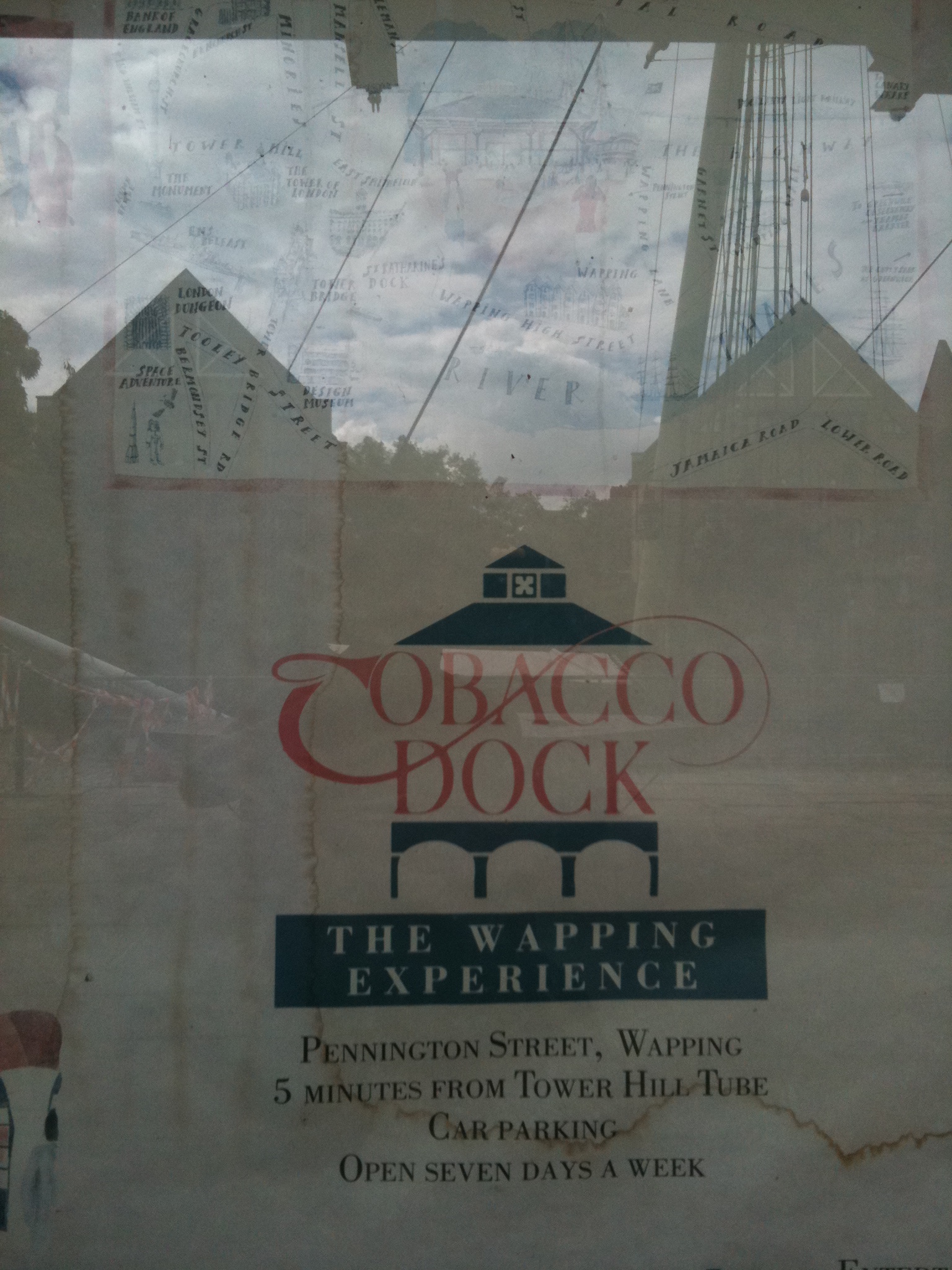
At the back of Tobacco Dock is a pretty canal, featuring a couple of tall ships that were intended for kids to clamber on while their parents ate at nearby restaurants. One such restaurant, an American diner called Peppermint Park, looked recently abandoned but had been empty for years. The week’s specials were still chalked up on the blackboard, but the interior was barren, holes in the wall indicating that these surfaces were once covered by a mass of Americana memorabilia which now probably line the walls of the nearest branch of TGI Fridays. Here too were three faded posters, celebrating ‘Tobacco Dock – The New Heart Of London’, instantly evoking the lost mood of optimism. One of the posters was illustrated by a map, which in a cartographical display of wishful thinking, placed Tobacco Dock squarely in the centre of a buzzing quarter surrounded by the Design Museum, St Katharines Dock, Petticoat Lane and just off-scene, suggested by a tantalising arrow, the myriad delights of Greenwich. Along the bottom of each poster runs a legend, a promise of what lay within: ‘Unique quality shops – Pirate ships – Restaurants – Bars – Entertainments – History’. Well, it’s certainly history. One out of six ain’t bad.
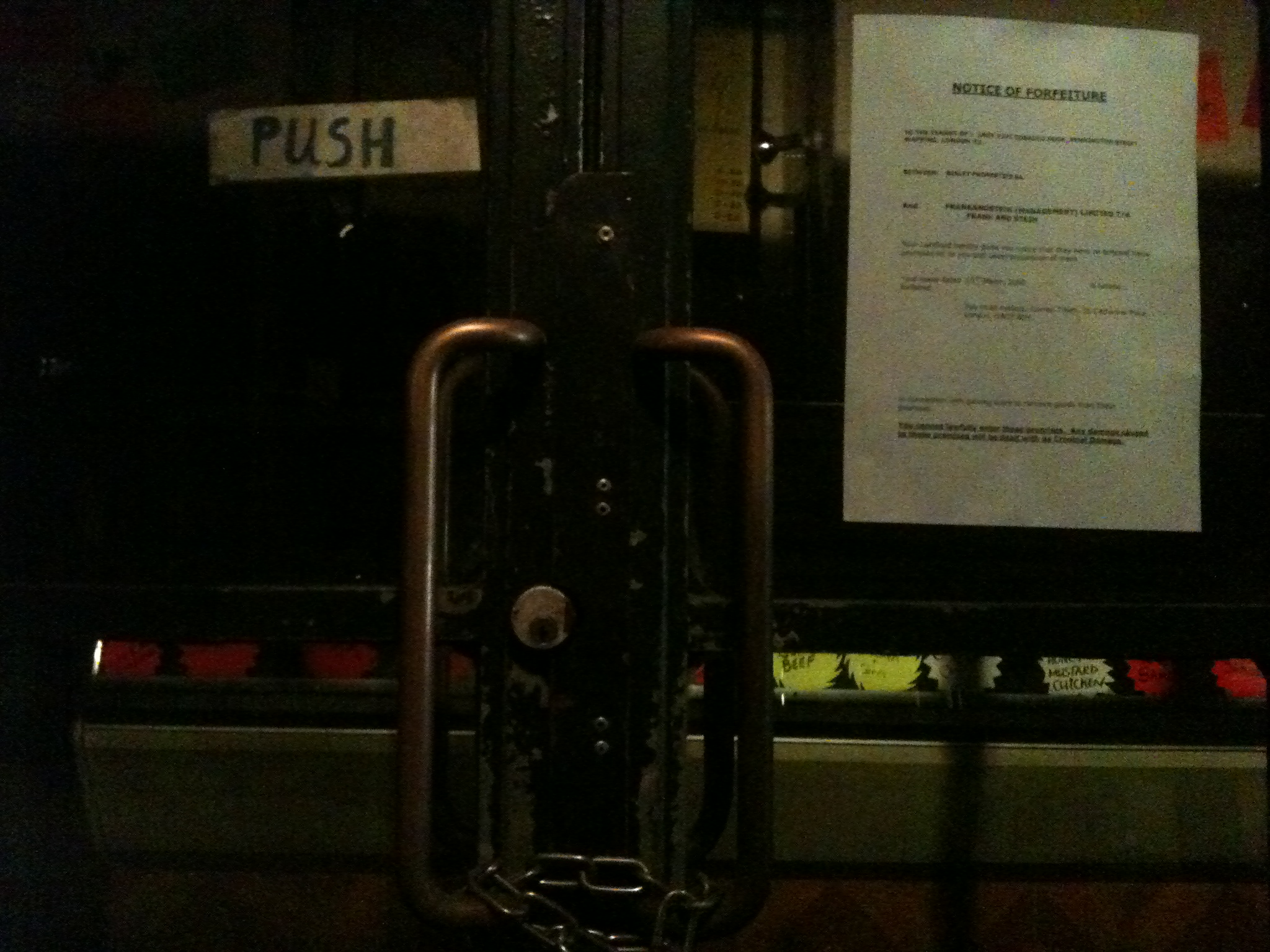
013

Footnote: I wrote this piece in 2010, since which time Tobacco Dock has started to open for occasional private events. 


Selling ‘psychedelic marmite’ in Ladbroke Grove with the rock ‘n’ roll doctor


Before he met Gram Parsons and became country and western singer Hank Wangford, Sam Hutt was an avowed member of the sixties counterculture as well as a qualified doctor. Like many on the scene, he managed to combine his two lives for a brief period when he and two other doctors ran a practice prescribing marijuana to junkies. Hutt, incidentally, was one of the signatories of Steve Abrams pro-pot advert in The Times.  I spoke to him recently, and he explained how it all came about:

‘I qualified as a doctor and didn’t know what the fuck to do. I didn’t like doctors, I didn’t like medical students, I didn’t like working in hospitals and I didn’t want to do general practice. Then I heard this guy, Ian Dunbar, had a place in Ladbroke Grove. I found this out from Bernie Greenwood, who was the only doctor I really liked and was also a musician, playing saxophone and keyboards.


So we both joined in. Ian had this practice on the crest of the hill in Ladbroke Grove. There’s a church and right opposite is the church building and we had the top floor. Ian’s big thing was to help people who were on heroin. He’d discovered that doctors could still prescribe cannabis, ironically in tincture form, which means in alcoholic solution. Ian prescribed it to people who were coming off smack, not because it replaces the heroin – it doesn’t – but as a way of getting high. That’s counter to the usual treatment of heroin, which is to use methadone. The rationalisation for methadone, which can kill you if you overdose on it, is that you don’t get high. It doesn’t make you feel good, whereas heroin makes you feel good.

It seemed to me this was a Presbyterian attitude – if you like something, it must be bad for you. So they switch you on to something you don’t like. Ian went counter to that, offering them something that let them get out of it, just in a different way to heroin. People often switch between heroin and alcohol as alcohol is much closer to heroin than cannabis is. Cannabis doesn’t achieve wipe out, it doesn’t achieve oblivion, which both heroin and alcohol do.

So me, Ian and Bernie set up this hippie practice and as a political act, we prescribed cannabis. In the 60s, smoking a joint was a political act, it was you saying you were a freak, a part of an alternative society, not a straight. And you didn’t touch alcohol because it would kill you. Our ethos was that we wouldn’t prescribe speed: uppers or downers. If that’s what you wanted you had to go to the straight doctors in pin-stripe suits in Harley Street. They’ll give you bucketloads. So I’m not a grocer, but I will prescribe you cannabis. They closed that law down in 1973. We were seeing all sorts of people but when we got our first cheque from the National Health it was for £11. That’s for three doctors after six months work. Even then, £11 wasn’t much. So we had to support ourselves by making it a private prescription charging a couple of quid a time.

We got the cannabis from William Ransom & Son. They were the company in Hertfordshire that had a government license to extract cannabis from the plant. They made it into this sticky thick stuff, like a psychedelic marmite. That would then be dissolved in alcohol to make a tincture. The extract was much stronger than the tincture, you could get very, very stoned.

That practice was eventually closed by the police, because they didn’t like junkies being treated like you and me, they wanted to lock them up. I continued being a rock and roll doctor. I went on tour with Family and I shared a house with Jenny Fabian and Roger Chapman before, through Keith Richards, I met Gram Parsons and discovered country music.’


Gilbert & George and David Bowie at the Marquee, 1968/9

Should you be fortunate enough to attend the superb David Bowie exhibition at the V&A this spring, one of the first thing you will see is a video of the artists Gilbert & George performing their ‘Singing Sculpture‘. The intention, I think, is to draw a connection between Bowie and conceptual art, but there is another facet of the relationship between David Bowie and Gilbert & George that goes unmentioned: they both played gigs at the Marquee.

I have an article in the current issue of Uncut about the Marquee club. It mainly focuses on The Who, and while asking around about people who may have seen Townshend and Co perform at the Marquee I received an intriguing email from the writer Jonathon Green, who recalled a show at the Marquee in 1968. ‘They were holding auditions and some pals of mine who had a band tried their luck. Unsuccessfully. Naturally we friends tipped up to cheer. But the weird moment of the evening was when this pair of blokes appeared and, saying nothing, sat for some minutes on either side of a table that they placed centre stage. The two blokes, it transpired, though I must admit I can longer recall when I made this discovery, were Gilbert and George.’

Astonishingly, it seems London artists Gilbert & George did play the Marquee at least once – as they mention here – and possibly even twice. Because as well as the evening Green recalls they also played a show there in early 1969, when they were supported by Audience (who later played on the soundtrack to cult suedehead film Bronco Bullfrog).

I asked two members of Audience about their show with Gilbert & George. Sadly, G&G themselves did not respond to repeated queries about their Marquee days.

Trevor Williams: ‘It was an audition night for us, but I’m not sure what they were doing there unless it was to audition an act they were planning to perform later at the Marquee. It was our first live gig but their act basically consisted of them sitting at a table on two chairs facing each other. They were in suits and their faces were painted gold or silver and one told the other stories while the other said nothing. These were very macabre little stories one of which involved a dwarf committing suicide in the bath and the water getting pinker and pinker but never got red because there’s not enough blood in a dwarf.

They were really nice, pleasant, social guys. I don’t remember how they were received but it was an era when anything went and people enjoyed anything off the wall. I’ve no idea how many people were there although somebody once told me that Germaine Greer was in the audience that night.’

Howard Werth: We first encountered Gilbert & George at the back of the Marquee when these two tweed besuited gentlemen with metallic gold heads and hands, in the style of shop window dummies of a gentlemen outfitters, poked their heads into our van politely asking where the entrance to the Marquee was. We were getting ready to audition as were they. Their act consisted of them both seated with one of them (Gilbert I believe) relating a rather strange tale involving dwarves whilst the other one (George) listened intently, chin on fist. I remember Germaine Greer backstage who was trying to get members of another audition band to retrieve some of their equipment they’d left at her flat in the Pheasantry in the Kings road. We shortly after did a gig at the Lyceum with Gilbert & George, I believe they were about to leave Central St Martins art school around that time.’

So there we have it. In an alternative universe perhaps Gilbert & George gave up art and continued their life in music, while David Bowie, fed up of playing bottom of the bill at the Marquee, jacked in the pop trade and threw himself wholeheartedly into the curious world of conceptual art.

Jimmy Page, Aleister Crowley and the curse of Eddie And The Hot Rods


For the full story of the curse of “Do Anything You Wanna Do”, see my interview with the band in this month’s issue of Uncut magazine. 

It’s easy to turn your nose up at any mention of Aleister Crowley, especially if you have little interest in the occult and esoteric world in which he thrived. But to do so means ignoring the man’s often brilliant writing – his Diary of A Drug Fiend is a superior pulp classic, for instance – and also missing out on some of the greatest anecdotes of the 20th century.

For the uninitiated, Crowley (1875–1947) was a British writer who used sex, drugs and magic –often simultaneously – to try to attain altered states of mind and who achieved such a level of notoriety for his activities that he was brandished the ‘wickedest man in the world’. If not wicked, he was certainly a character. As well as signing his letters ‘666’ and conducting numerous affairs with lovers of both sexes, he climbed mountains, wrote pornographic poetry, fraternised with novelists, artists and spies and attempted to write a new American national anthem.

To give a flavour of Crowley’s often bizarre intersections with normal society, in the early days of the Second World War he was tapped up by British intelligence officer Ian Fleming, who asked him to take part in an ‘occult disinformation plot’ against Adolf Hitler’s deputy Rudolf Hess, a fervent believer in astrology and the occult. Crowley was keen, but the plot was ultimately shelved; Fleming, however, later used Crowley as the model for villain Le Chiffre in his first James Bond novel, Casino Royale, in 1953. Another fan of Crowley was Scientology founder L Ron Hubbard. It is claimed Hubbard took part in ‘sexual magick’ (magick was a term favoured by Crowley) with a couple called Jack and Betty Parsons in an attempting to create a magical child, thus fulfilling a prophecy from Crowley’s The Book Of The Law. Crowley was not impressed, writing in one of his typically entertaining letters: ‘Apparently Parsons or Hubbard or somebody is producing a Moonchild. I get fairly frantic when I contemplate the idiocy of these louts.’

Crowley was bisexual and a heavy drug user, eventually becoming addicted to heroin. He also enjoyed peyote, handing it out at parties. On one occasion in New York he gave some to the novelist Theodore Dreiser, who became uncomfortable and asked if there was a doctor in the area. ‘I don’t know about a doctor,’ said Crowley, ‘But there’s a first-class undertaker on the corner of 33rd and 6th.’

This freeness with sex and drugs saw Crowley embraced by the rock and roll generation, particularly after he appeared on the cover of Sgt Pepper. But the story behind another of Crowley’s cover appearances is not so well known. In 1977, Essex rockers Eddie And The Hot Rod wrote a song that was partly inspired by Crowley’s famous motto: ‘Do what thou wilt is the whole of the law’. The band rewrote this as “Do Anything You Wanna Do”, a spirited ode to self-empowerment, and attached the lyrics to a perky pop tune that quickly reached the Top Ten. It was engineered by a young Steve Lillwhite, who recorded it at Island’s studio in Notting Hill.

In recognition of his contribution to the song’s genesis, the band decided to put Crowley on the cover of the single. But they also felt his glowering visage was not really in the spirit of the band, so manager Ed Hollis (brother of Talk Talk’s Mark) attached a slightly comical pair of Mickey Mouse ears to Crowley’s head.

EDDIE_AND_THE_HOT_RODS_DO+ANYTHING+YOU+WANNA+DO+-+PS-447606

Great cover, big mistake. According to rumour, this image soon came to the attention of Jimmy Page, a Crowley apostle who lived in the Crowley’s old house, had a vast collection of Crowley paraphernalia and was fascinated by the occult. Page had orchestrated the Crowley-influenced occult symbolism that adored Led Zeppelin’s fourth album, which incidentally was also record at Island Studios.

The band were told that Page placed a curse upon Eddie And The Hot Rods for their disrespectful treatment of the Great Beast. From that moment, the band were plagued by problems. They were dropped by their label, their manager became hooked on heroin and they never bothered the higher reaches of the chart again. From behind his Mickey Mouse ears and with the help of satanic rock royalty, Crowley had got his revenge. As bassist Paul Gray told me, ‘Weird shit happened after that. A lot of people said we shouldn’t have fucked about with Crowley.’

The last bus to London Bridge

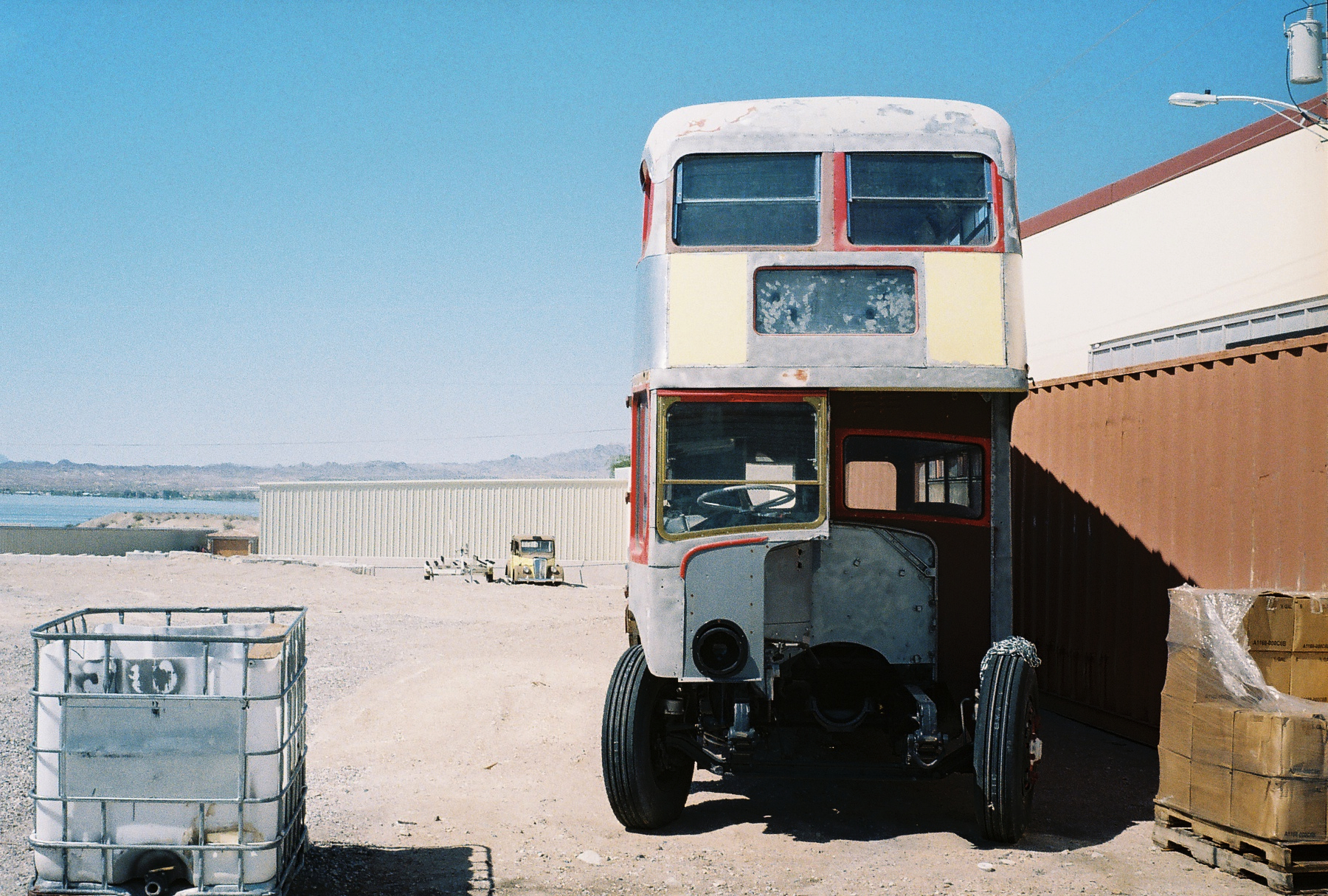
In the previous post, I linked to The Special London Bridge Special from 1972, which features Tom Jones travelling on a No 13 bus to Lake Havasu City, Arizona, where London Bridge had just been sold. Incredibly, that bus is still in Arizona but it isn’t in quite the same condition as the bridge.

BUS-CABINDISTANCE-COLOUR

Thanks to Travis Elborough for the picture. Travis – who has just published London Bridge In America: The Tall Story of A Translantic Crossing – also pointed me in the direction of this marvellous song by Cilla Black, lamenting love and the loss of London Bridge.

The Special London Bridge Special

This sensational slice of ham and song was made in 1972 to celebrate the purchase of London Bridge by an American theme park. It features a bizarre cast that includes Tom Jones, Rudolf Nureyev, The Carpenters, Kirk Douglas, Charlton Heston and Terry-Thomas and is basically the film the Olympic opening ceremony could have been.

It’s all here, but watch the intro especially, featuring Tom Jones singing his way round various London landmarks before engaging in a small slice of double entendre on a No 13 bus.