Category Archives: Politics

At the Poll Tax Riot

I attended the Poll Tax Riot by accident. I was at the theatre with my family on Charing Cross Road when the lights came up at the end of the performance and the house manager told us there had been a little disturbance outside so we would have to remain in our seats for a short period. As we did so, this was taking place on the street above.

IMG_1644

We’d seen the coaches parked up as we drove into London, but I had little interest in politics. I knew who the Prime Minister and  leader of the opposition were, but that’s about as far as it went. I would have recognised other names – I watched and enjoyed Spitting Image – but none of it really meant very much to me. Perhaps that’s as it should be when you are 14. Questions of policy were largely irrelevant so the anger towards the Poll Tax Riot had passed me – and my Daily Mail-reading parents – almost completely by. And, boy, were people angry.

IMG_1650

When the house manager gave us the all clear, we climbed the stairs – the theatre  was in a little basement – and emerged on to a devastated Charing Cross Road. What I most remember is the stench from all the overturned bins, debris spilling on to the streets, and the complete absence of traffic, people and noise. It was spooky. That smell I can still recall, a horrible, fatty, sweet stink of rot and decay. London then was a dirty city, but this was something else.

My father – surely in a state of some fear – ushered us through back streets towards the car park in Soho but I remember little of this journey, which surely would have taken us past smashed shops, mobs of protesters and riot police desperately trying to get their shit together. Once we reached the car, my father visibly relaxed but one junction, he had to hit the accelerator while we waited at a red light. He later said he’d seen we were about to be sandwiched between a bunch of rioters and some police and decided this was not a time to obey the laws of the road. Once again, I’d missed this sight.

IMG_1646

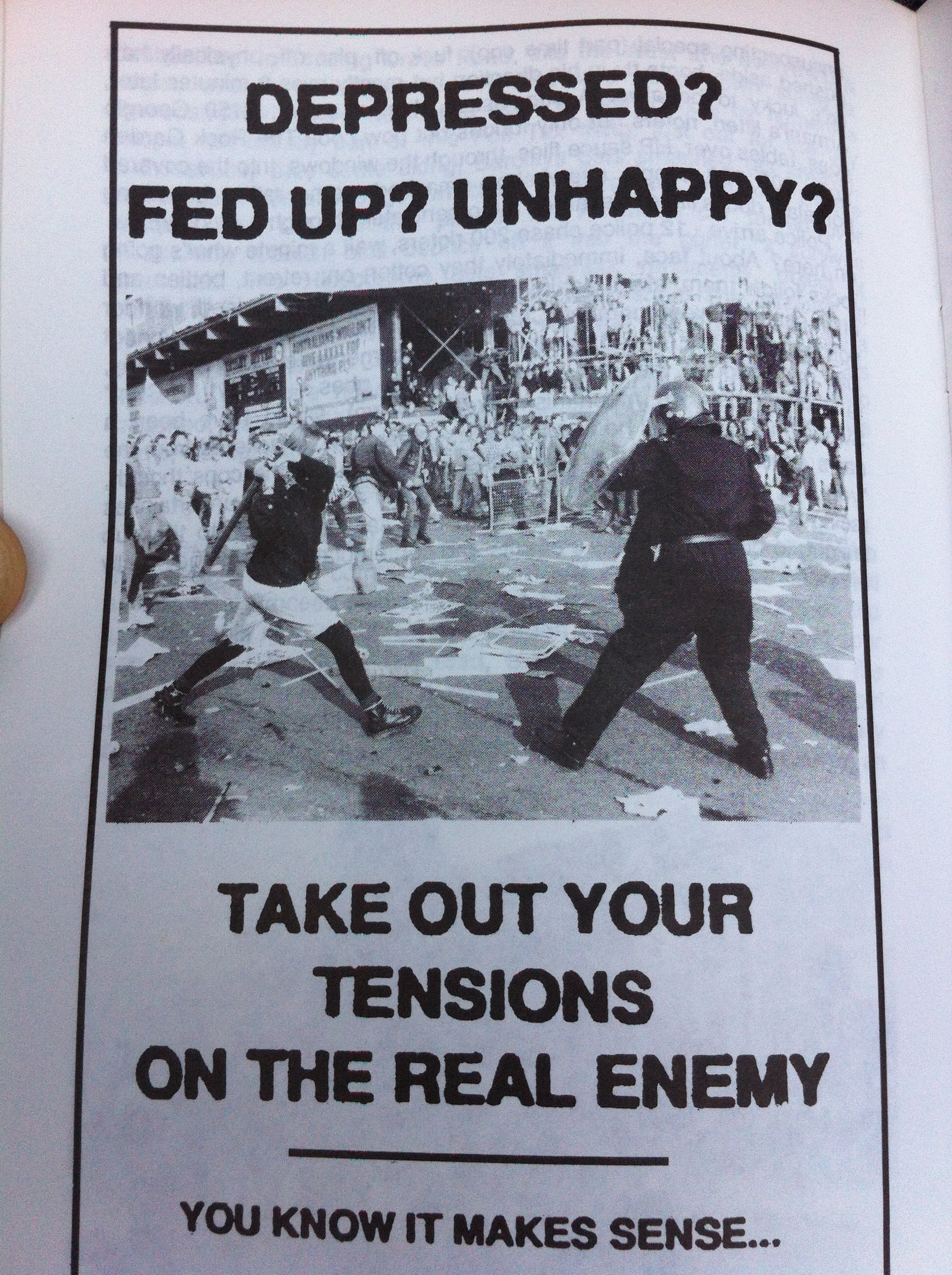
I thought about all this again while reading a pamphlet I picked up recently for £2 in a local bookshop. Produced by ACAB Press (an acronym for All Coppers Are Bastards) and ‘dedicated to all working-class heroes’, Poll Tax Riot: 10 Hours That Shook Trafalgar Square contains 12 eyewitness accounts of the riot. The interviewees all appear to be anarchists, and are as equally contemptuous of the traditional Left – Militant are particularly despised, and there are amusingly barbed references to George Galloway and Tommy Sheridan – as they are the police. Most of them seem to have had a great old time, chucking stuff at coppers, smashing windows and setting fire to South Africa House. This is about revenge.

‘Off we go intent upon destruction, up Charing Cross Road, into the West End, everything a target, everything subject to our rage and deep down surely a demonstration of how hated this world is.’

Cars are turned on their roofs, shops looted, the Hippodrome smashed and the police attacked whenever they are seen. There are no dissenting voices to the general feeling the Met finally got what they had deserved for a decade. One protester who ended up in a cell even claims that his fellow cellmate was a prison officer who joined in the fun because he ‘fucking hates the cops’.

IMG_1647

The pamphlet is so gleefully celebratory of the riot that it has to distance itself from the Trafalgar Square Defendants’ Campaign, set up to help those that had been arrested, even as it promises it will give them all proceeds from its sale. It also announces that ‘this pamphlet is anti-copyright and can be freely reproduced by any revolutionary group. But copyright protects it from being used by journalists, rich bastards, etc.’ I hope they don’t sue.

IMG_1649

Guns and strippers: in the crypt at Kensal Green Cemetery

Photographer Sean Smith has an exhibition in the crypt of the Dissenters Chapel in Kensal Green. It’s an evocative location, with Smith’s dramatic, very beautiful but often gruesome or unsettling photographs blown up large, brightly lit and placed at the end of dark, dank corridors like profane altarpieces.

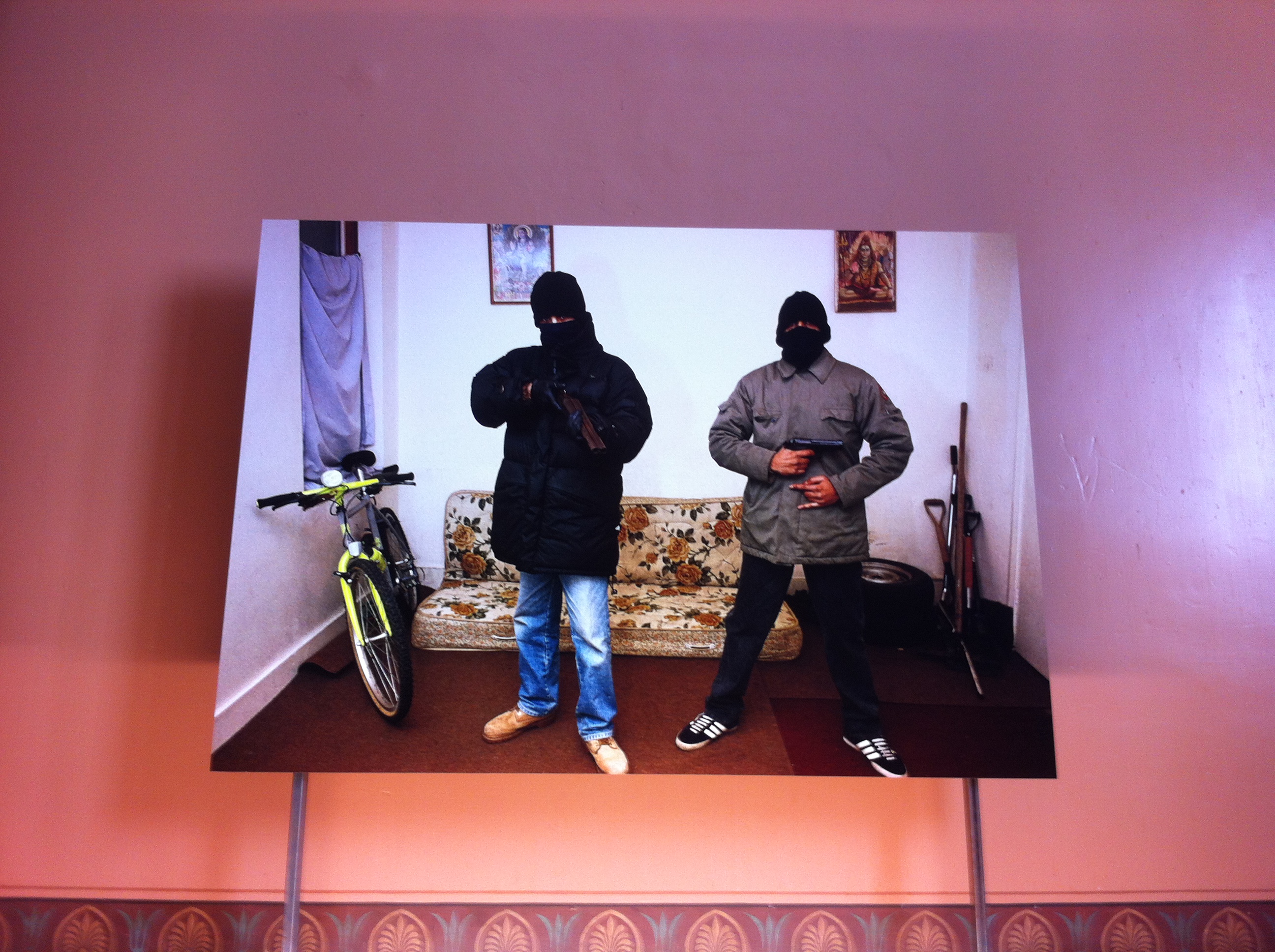
His photographs come from all over the world – one of the earliest and most compelling shows a bloodied miner in South Yorkshire from the 1984 strike lying on the floor next to a police riot shield – and there are also pictures from Beirut, Virginia, Albania and Southampton as well as three from London, reproduced below. Take the chance to check them out for yourself – and to have nose around the crypt – before the exhibition closes on June 26.

Raymond Revuebar, Soho, 1989

Raymond Revuebar, Soho, 1989

Boys with guns, Southall, late 1980s

Boys with guns, Southall, late 1980s

Ruby Venezuela, Madam JoJo's, Soho, 1989

Ruby Venezuela, Madam JoJo’s, Soho, 1989

Opium pipes in London

brochure; pamphlet - Opium Smoking Parlour

In 1899, Earl’s Court offered interested Londoners the chance to pay 6d to see a Hong Kong ‘opium smoking parlour’, filled with ‘living Chinaman’ and ‘true to every detail’. This reflected an ongoing fascination for the Chinese habit of smoking opium – a habit that had been partly encouraged by the British East India Company and then condemned by British missionaries – and merrily ignored the fact the British themselves had been consuming opium for decades.

The Chinese tradition of smoking looked and felt very different though, and that’s partly because it was so deeply ingrained into society, a ritual to be enjoyed alongside tea and nicotine with a rich material culture, lavish paraphernalia and its own customs, traditions and symbolic meaning. This is explored in an extraordinary exhibition of Chinese opium pipes at Maggs Bros bookshop in Berkeley Square, which I have written about for the Independent on Sunday.

It features a unique collection of 19th-century Chinese pipes and related material that demonstrate the full complexity of the Chinese relationship with opium, as can be seen in some of the following images – and these barely scratch the surface of the incredible collection that can be seen at Berkeley Square from June 5 to the end of July.

Field of opium poppies

Field of opium poppies

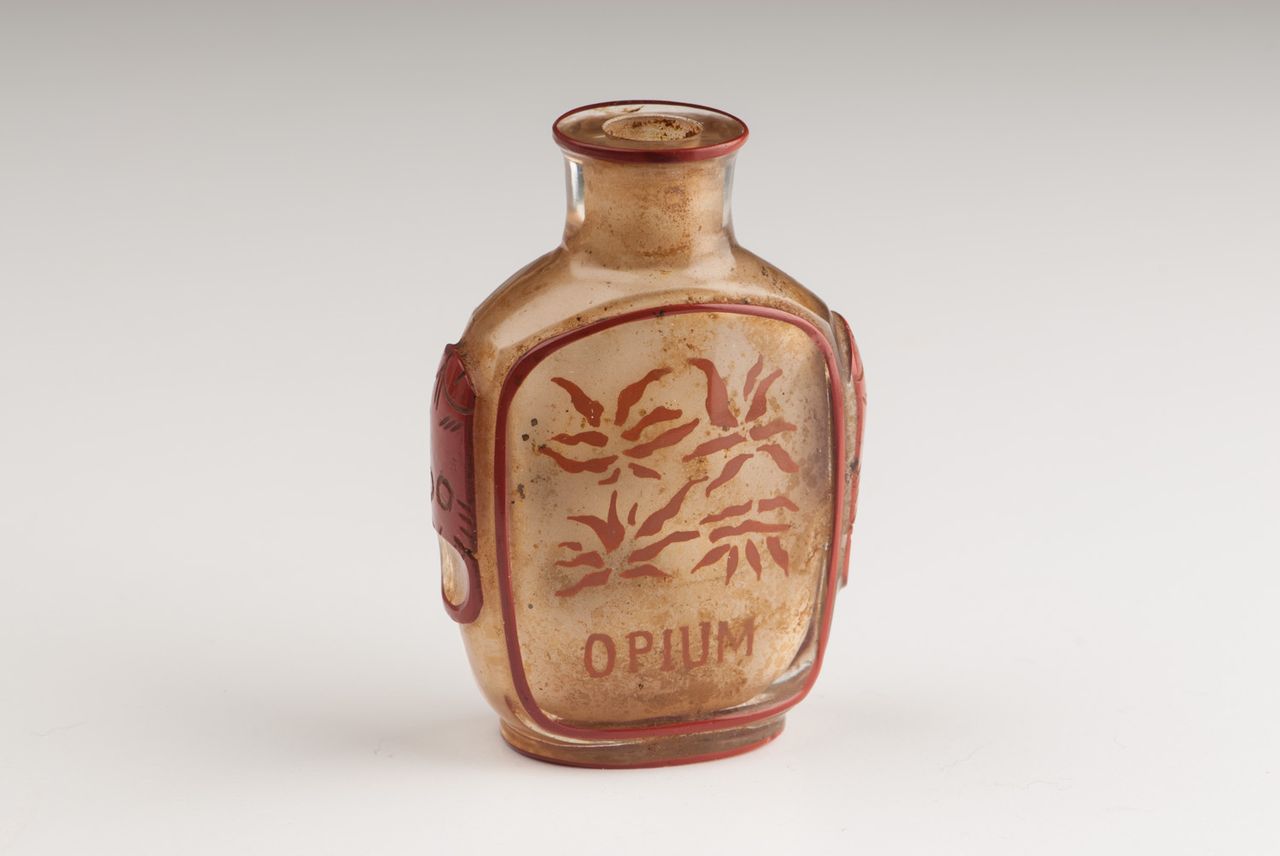
Jar for storing opium

Jar for storing opium

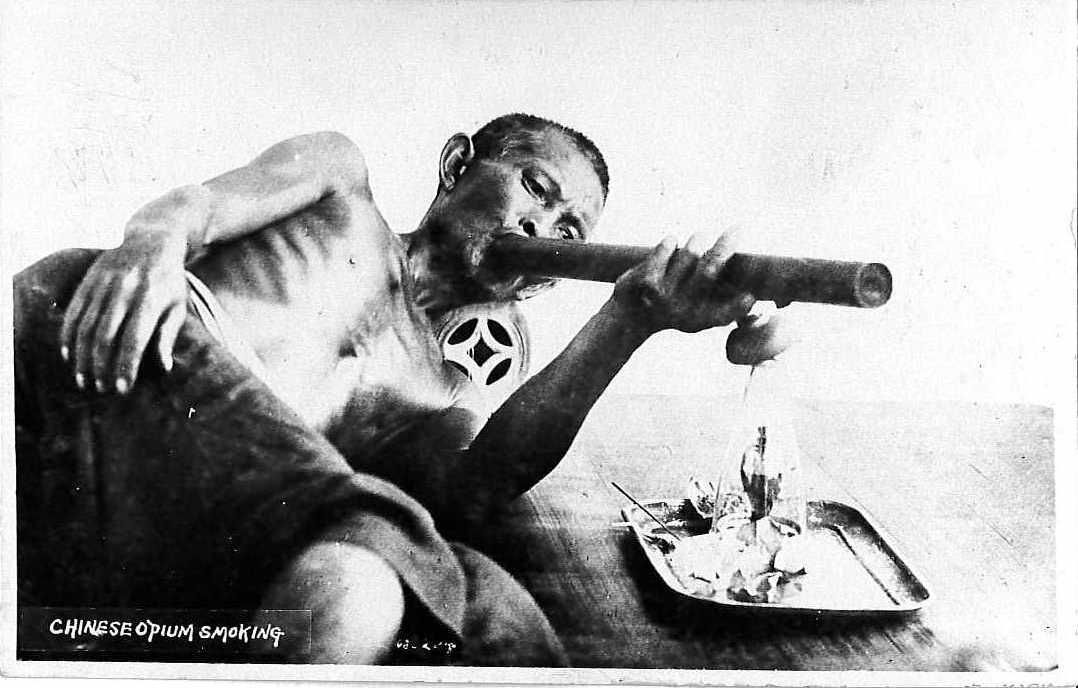
Chinese opium smoker

Chinese opium smoker

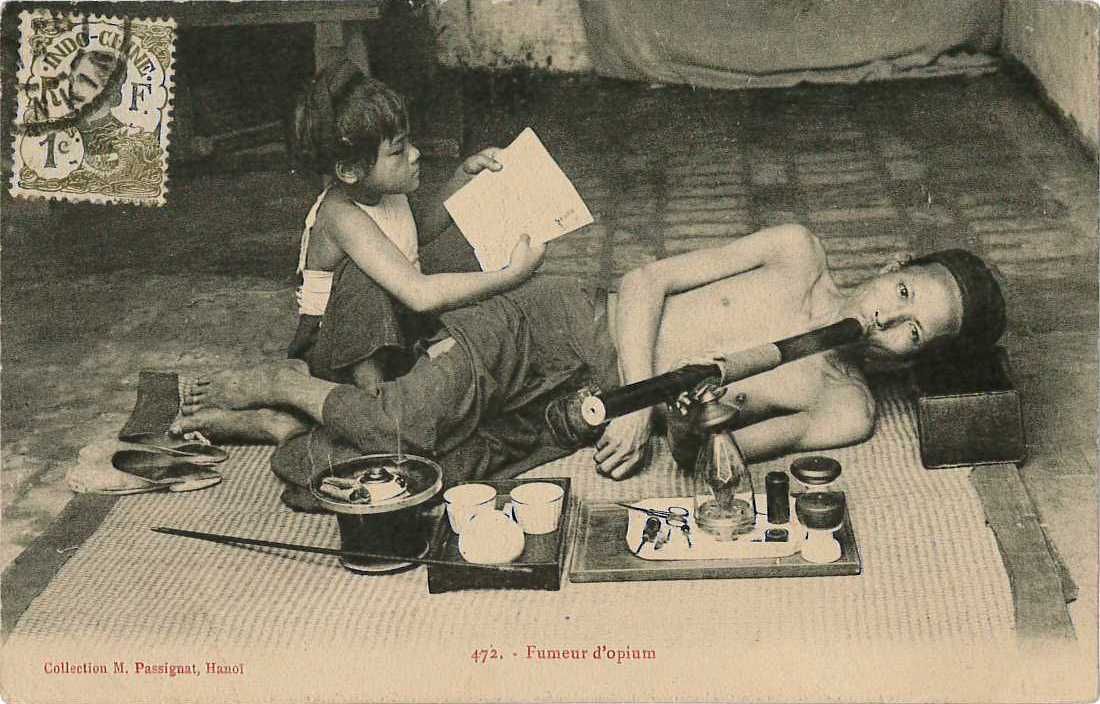
Postcard of opium smoker from Vietnam

Postcard of opium smoker from Vietnam

Bowl for smoking opium

Bowl for smoking opium

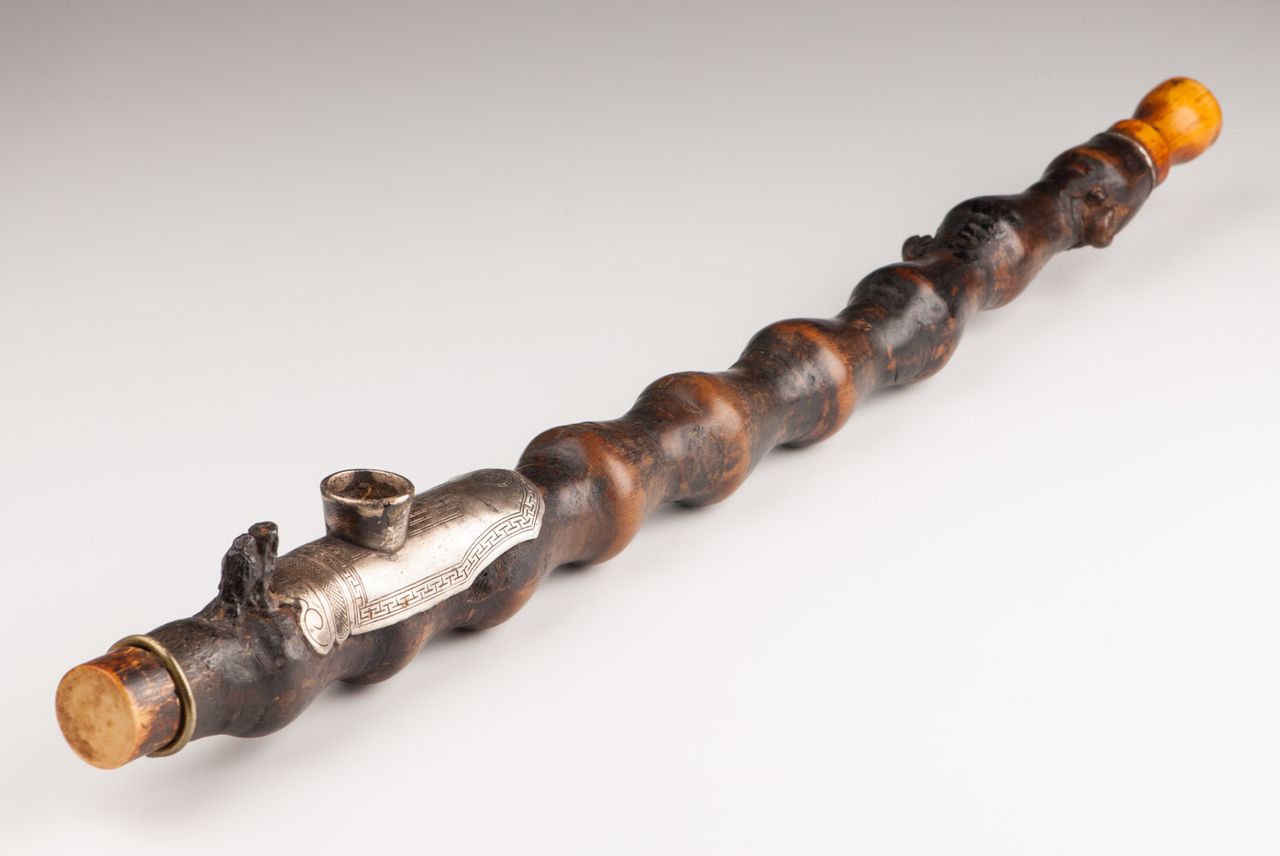
Opium pipe

Opium pipe

Smoker with pipe and tools Smoker with pipe and tools

Opium pipe

Opium pipe

Opium pipe

Opium pipe

Bowl for opium pipe

Bowl for opium pipe

aAKf2D-cSXQqOe6Mm8b4FjMt6hP1ZcWPJbFN8-TNflk

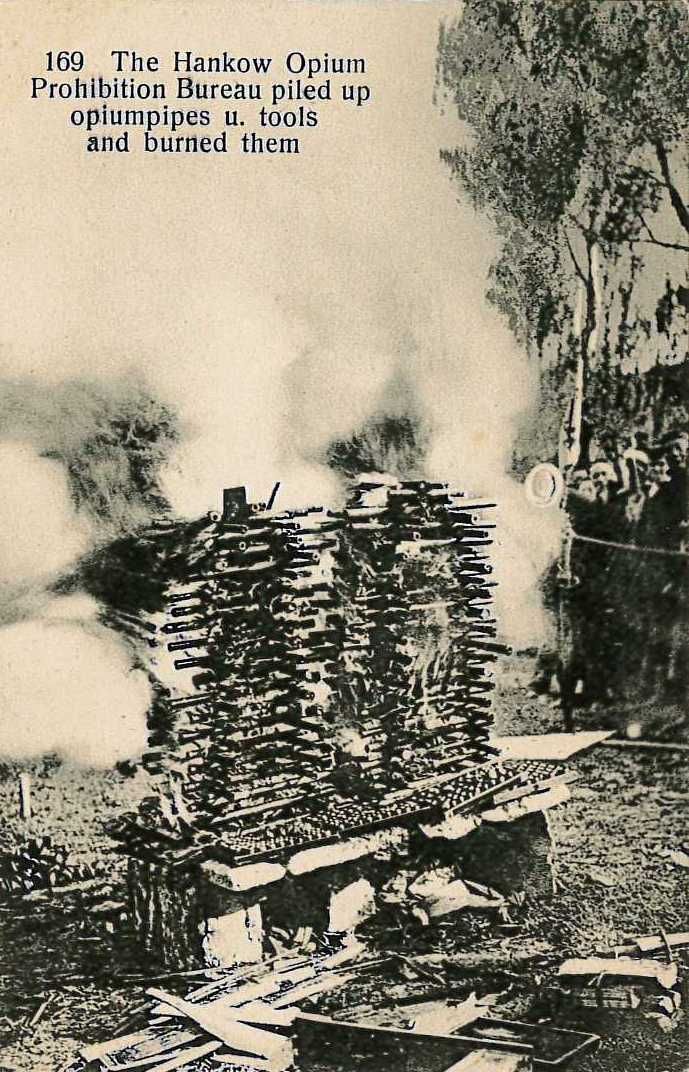
Pipes being burnt by anti-opium reformers

Bowl for opium pipe

Bowl for opium pipe

Lamp used for preparing and smoking opium

Lamp used for preparing and smoking opium

Tray for carrying opium tools

Tray for carrying opium tools

Pink pills for pale people - opium cure

Pink pills for pale people – opium cure

Box for storing opium with erotic carving - opium was seen as an aphrodisiac and was originally smoked in brothels

Box for storing opium with erotic carving – opium was seen as an aphrodisiac and was originally smoked in brothels

Bowl for smoking opium

Bowl for smoking opium

Opium pipe

Opium pipe

Preparing a pipe

Preparing a pipe

Tools for preparing opium

Tools for preparing opium

Opium pipe

Opium pipe


Opium smoker with cat - pets often became addicted to the opium fumes

Opium smoker with cat – pets often became addicted to the opium fumes

Selling ‘psychedelic marmite’ in Ladbroke Grove with the rock ‘n’ roll doctor


Before he met Gram Parsons and became country and western singer Hank Wangford, Sam Hutt was an avowed member of the sixties counterculture as well as a qualified doctor. Like many on the scene, he managed to combine his two lives for a brief period when he and two other doctors ran a practice prescribing marijuana to junkies. Hutt, incidentally, was one of the signatories of Steve Abrams pro-pot advert in The Times.  I spoke to him recently, and he explained how it all came about:

‘I qualified as a doctor and didn’t know what the fuck to do. I didn’t like doctors, I didn’t like medical students, I didn’t like working in hospitals and I didn’t want to do general practice. Then I heard this guy, Ian Dunbar, had a place in Ladbroke Grove. I found this out from Bernie Greenwood, who was the only doctor I really liked and was also a musician, playing saxophone and keyboards.


So we both joined in. Ian had this practice on the crest of the hill in Ladbroke Grove. There’s a church and right opposite is the church building and we had the top floor. Ian’s big thing was to help people who were on heroin. He’d discovered that doctors could still prescribe cannabis, ironically in tincture form, which means in alcoholic solution. Ian prescribed it to people who were coming off smack, not because it replaces the heroin – it doesn’t – but as a way of getting high. That’s counter to the usual treatment of heroin, which is to use methadone. The rationalisation for methadone, which can kill you if you overdose on it, is that you don’t get high. It doesn’t make you feel good, whereas heroin makes you feel good.

It seemed to me this was a Presbyterian attitude – if you like something, it must be bad for you. So they switch you on to something you don’t like. Ian went counter to that, offering them something that let them get out of it, just in a different way to heroin. People often switch between heroin and alcohol as alcohol is much closer to heroin than cannabis is. Cannabis doesn’t achieve wipe out, it doesn’t achieve oblivion, which both heroin and alcohol do.

So me, Ian and Bernie set up this hippie practice and as a political act, we prescribed cannabis. In the 60s, smoking a joint was a political act, it was you saying you were a freak, a part of an alternative society, not a straight. And you didn’t touch alcohol because it would kill you. Our ethos was that we wouldn’t prescribe speed: uppers or downers. If that’s what you wanted you had to go to the straight doctors in pin-stripe suits in Harley Street. They’ll give you bucketloads. So I’m not a grocer, but I will prescribe you cannabis. They closed that law down in 1973. We were seeing all sorts of people but when we got our first cheque from the National Health it was for £11. That’s for three doctors after six months work. Even then, £11 wasn’t much. So we had to support ourselves by making it a private prescription charging a couple of quid a time.

We got the cannabis from William Ransom & Son. They were the company in Hertfordshire that had a government license to extract cannabis from the plant. They made it into this sticky thick stuff, like a psychedelic marmite. That would then be dissolved in alcohol to make a tincture. The extract was much stronger than the tincture, you could get very, very stoned.

That practice was eventually closed by the police, because they didn’t like junkies being treated like you and me, they wanted to lock them up. I continued being a rock and roll doctor. I went on tour with Family and I shared a house with Jenny Fabian and Roger Chapman before, through Keith Richards, I met Gram Parsons and discovered country music.’


Secret London: the Science Museum’s palace of pills

© Science Museum/SSPL

Time Out recently asked me to contribute to a piece on London’s 10 weirdest museum exhibits (something I’ve blogged about previously). My favourite previously overlooked discovery was the above ‘Palace Of Pills’ at the Science Museum.

This extraordinary sculpture, constructed from old pills, medicine bottles and syringes, was made for a campaign run by the East London Health Project between 1978 and 1980. The ELHP was a coalition of health worker unions and local Trades Councils who were campaigning against cuts to the NHS as well as highlighting other healthcare issues facing Londoners in the late-70s. This was the first time the NHS had really come under sustained attack from any political party since it was formed in the aftermath of the Second World War.

The Palace of Pills was created by artists Peter Dunn and Loraine Leeson, who built the sculpture in their studio using old pill bottles that they acquired from the ELHP’s partners working in the health service. They then photographed it for a poster that was displayed in waiting rooms and doctor surgeries.

‘We did eight posters,’ Leeson told me. ‘The Palace of Pills was made for a poster that talked about how the drug companies were dominating what was happening in health, and for reasons of profit not health.’ The model was too big for the studio and already starting to deteriorate when the Science Museum asked if they could have it. ‘They saw it as a curiosity but I’m delighted it still exists,’ she says. Leeson and Dunn took the experience into creating posters for further pioneering campaigns against the redevelopment of Docklands.

Inside London’s super-prime houses

I wrote this article in 2011 for Gulf Life about London’s super-prime property market.

They call it super-prime. That’s the end of the London property market that starts at £15 million and goes as high as £150 million. It’s a market that operates in isolation from the rest of London and it’s one that is dominated by an international clientele, with buyers jetting in from the booming economies of the Far East, Russia and the Middle East. So what do they get for their bucks?

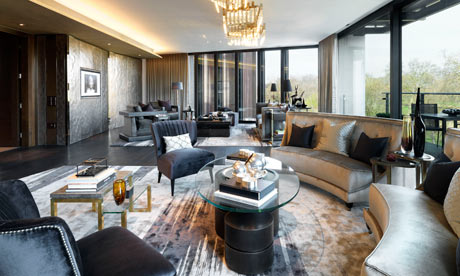
‘Buyers at this end of the market all have five demands,’ says Giles Hannah, who oversees the European operation of Christie’s Great Estates, the property branch of the venerable auction house, ‘security, space, parking, location and luxury features.’ Christie’s is currently selling a mansion on Cornwall Terrace, a dramatic John Nash-designed sweeping terrace overlooking Regent’s Park. It boasts six bedrooms, a home cinema, gym, steam room, study, state-of-the-art kitchen, mews house for staff, garage with blast-proof doors and majestic views of a royal park. Floors are covered by Italian marble, dark oak or silk carpet, there’s a chill room for furs and the walls are covered with paintings by Picasso and Damien Hirst on loan from the auction house. It’s yours for around £30 million.

‘This property was bought and developed in 2008,’ explains Hannah. ‘There are eight on the terrace and they are being released house by house into the market. London remains a key place to buy and although it’s been a difficult market since 2008, there are enough international buyers around. There are 1,100 billionaires in the world, all capable of purchasing a £30m house in any climate.’

The address they all want is Knightsbridge, which partly explains the prices fetched at One Hyde Park, a development by Christian and Nick Candy. One Hyde Park is a gleaming Richard Rogers-designed tower of luxury that sits almost above Knightsbridge tube, with Hyde Park on one side and Harvey Nichols on the other. A penthouse is said to have sold for more than £100 million and, according to Savills, the selling agent, 60 per cent of the 86 apartments have been snapped up.

A five-bedroom apartment costs upwards of £50m and takes up an entire floor – around 10,000 square feet. The hallway stretches the length of the flat from master bedroom to reception room, one end overlooking the park, the other Knightsbridge. To give an idea of the scale, a baby grand piano in the corner of the living room looks like a coffee table. Off the corridor are a further four bedrooms, two reception rooms, a TV room, study, dining room and two kitchens (one for staff). The building contains a squash court, 22-metre pool, games room, party room and meeting room.

‘You don’t need to leave the development,’ says Ned Baring, Associate Director of Savills. ‘You can live, work and play here. What makes this different to other complexes is that we have 50 dedicated staff at the Mandarin Hotel next door who can provide any service you need, from setting up a dinner party to doing your dry-cleaning. It’s like living in the best hotel in the world, but with your own private residences.’

The Candy brothers have invested a fortune in One Hyde Park – how much, nobody will say– banking on continued high demand for super-prime London property. ‘In the morning you can speak to Asia and in the afternoon you can speak to New York,’ says Baring. ‘There aren’t many cities where you can do that. You might not be here 365 days, but you need to be here.’

Hannah says much the same, ‘Your average Christie’s client will be ultra-high worth and may use this property just a couple of times a year. They’ll also have a place in the south of France, one in New York and a chalet in Courchevel.’

If the ostentation of One Hyde Park doesn’t appeal, a short stroll away – but crucially, still in Knightsbridge – you’ll find the discreet charm of Ovington Square, a classic London garden square located between South Kensington, and Chelsea. ‘This part of Knightsbridge is very popular with Middle Eastern buyers, especially from Qatar, Lebanon, Syria and the UAE,’ says Noel De Keyzer of Savills. ‘They like traditional houses, and will come in the summer to avoid the heat at home.’

The house, refurbished in 2008, was recently rented by a Lebanese family (another renter was Bill Gates), but is now on the market for just under £20 million. The selling point is the vast two-floor pre-war extension taking up the entire back garden, itself the size of a normal house. This holds the reception room and master bedroom. The five-bedroom house also has a sub-basement beneath the lower-ground-floor kitchen, containing a gym and steam room.

‘This end of the market stayed very strong in 2008,’ says De Keyzer. ‘But in 2009, it was dead. People weren’t buying. It picked up again in March 2010, helped by weak sterling.’ The problem now is one of supply. ‘There will be an acute shortage of properties in 2011,’ says De Keyzer. ‘A lot of vendors don’t think they’ll realise their expectation because the super-prime market is still 10 per cent below its peak in 2008. You are dealing with very affluent people who have no need to sell in an uncertain market, and if they’re selling to buy somewhere else, they have nowhere to go.’

There are, according to Hannah, only three developments ready for the super-prime market: Cornwall Terrace, One Hyde Park and The Lancasters. The latter is a fascinating project on the north side of Hyde Park in Bayswater. A regal Victorian terrace has been transformed. The old building behind the gorgeous Grade II-listed facade has been knocked down and replaced by an impressive new complex of 77 apartments, retaining the original front with its huge windows and exceptional views of Hyde Park.

‘These buildings were built in the same style and grandeur as Belgravia,’ says Mark Cherry of Minerva, joint developers with Northacre. ‘It was a high-profile wealthy area and is now going through a revival. Some people will only buy Mayfair and Knightsbridge, but others will want better lifestyle and better buildings, so they will come here. We’re offering a high-level of service for people that expect high service, with three concierges on site at all time. I spoke to somebody who was moving from a mansion block and they said they want to be in a building where the pipes don’t rattle and they don’t have to rely on a single elderly grumpy porter. People want classic British houses with American-style service.’

The surprising thing about all four properties is how similar they are. All are decorated in dark masculine colours. All have Gaggenau kitchens and Crestron systems to control sound, security and lighting. None have gardens. All have flat-screen TVs in the walls of every room. The houses have lifts – ‘Middle Eastern clients don’t like using the stairs,’ says Hannah – while the apartments encourage ‘lateral’ living. There are separate bedrooms and entrances for staff–at The Lancasters and One Hyde Park, some clients also purchase a separate apartment for staff. All have serious security, and all have space. Lots of space. The most breathtaking is One Hyde Park, the best views are from The Lancasters and Cornwall Terrace and the most charming is Ovington Square.

The properties can even be sold fully furnished. ‘The keyword is “turnkey”,’ says De Keyzer. ‘International clients are busy and want to move in straightaway with their suitcases.’ That’s not to say they’ll rush to make the purchase. ‘They’ll look at everything available,’ says Hannah. ‘They like to have choice. This isn’t a financial purchase, it’s a personal one.’

The super-prime market is very lucrative for estate agents. ‘It’s competitive, but in the £10 million-plus range Savills and Knight Frank have more than 50 % of the market between us,’ says De Keyzer. ‘That’s because we are international companies with very good contacts. Our fees are 2.5% for sole agency and 3% joint agency but it’s negotiable. We can afford low fees because our values are higher and we have a large turnover of properties. In London the average house is sold every five years, but on the continent people hold on to property for generations.’

That could be about to change. ‘Over the last few years, the lack of property has become apparent,’ says Hannah. ‘The best properties have been bought by international clients and they won’t be traded for many years. People who purchase a premier address will keep it as an asset for a while.’

Because of this, Hannah anticipates good times lie ahead. ‘London is London, arguably the centre of the world and a major financial hub,’ he says. ‘Clients need to be here, they want to be here, they understand the tax implications and they have good accountants. We’re expecting 30% growth over the next three years.’

Cherry agrees. ‘The market at this level is strengthening. Because people want certain key locations, the market can never be saturated, there are listings, conservation areas, it takes ages to get planning permissions and there are strict limits on tall buildings – it’s a very good market to be in.’ If you can afford it, obviously.

Time Out – logo-agogo

As has been reported elsewhere, the big glowing Time Out sign came down this week from the front of the TO office in Tottenham Court Road where it has lived since around 1993. It has gone into storage, ahead of a proposed office move and will at some point, we are promised, be restored to wherever the magazine ends up next. I hope it does. This is, after all, one of London’s few bursts of neon and probably the only one that is halfway decent to look at.

That’s because the logo is a design classic, the work of Pearce Marchbank, an art school student who drifted into the more agitated end of the counterculture after the Grosvenor Square anti-Vietnam demo. ‘The impact on me,’ he said, ‘Was blowing away all that love and peace shit which I thought was bollocks and complete pretence.’

After working on Friends, Marchbank was asked by Time Out founder Tony Elliott to redesign his shambolic magazine. ‘I hated the unadventurous way it looked,’ said Marchbank. The entire magazine was redesigned, with the logo being created at the last minute on a Sunday afternoon in November 1970. ‘It was supposed to look like an out-of-focus neon light,’ Marchbank explained. ‘It was Letraset Franklin Gothic, shot out of focus so it had a glowing fuzziness to it. I put a negative over the positive and the gap between the two made the glowing neon outline, which I shot in line then again out of focus. It was deliberately transparent, so the cover images could read through it, as if it were on the glass of a window.’

This distinctive, blurry effect was intended to be a short-term solution, but Elliott refused to change it. It was a wise decision although not everybody liked the new look. One reader wrote in asking if the magazine could include a pair of glasses with each issue as the typeface was now too small to read.

TOAllNight

Marchbank continued to work for the magazine on-and-off throughout the 1970s creating some of the best covers in the history of publishing. He was back there in 1981 when it imploded in a series of strikes, stand-offs and occupations between staff and management over wages and the historic equal-pay system. As Elliott attempted to regain control he learnt that the logo – which was now being branded all over London and which the strikers were hoping to claim as their own – actually belonged to Marchbank.

Elliott called Marchbank, saying ‘I want you to write me a letter saying you’re giving the logo to me.’ Marchbank figured it was probably worth as much as £100,000 but, strapped for cash and short of time, asked Elliott for a mere £2,000.

‘What? £2,000! How can you do this to me after all the things I’ve done for you?’

The conversation ended. Shortly afterwards, however, Marchbank was offered a job with Richard Branson’s new London magazine, Event. As his parting gift, he presented all rights to the logo to Elliott. To turn into a real piece of neon was both a no-brainer and a stroke of genius. I hope one day the sign will be back above the door in some London street – if not, I’m sure it’ll fetch more than £2,000 on eBay.

A brief history of Covent Garden

There are many reasons to cherish Covent Garden, not least of which is that it exists at all. The area nearly didn’t make it past 1973, when it was scheduled for ‘redevelopment’ after the fruit and veg market moved out. The GLC drew up enthusiastic plans to replace 96 historic acres with a conference centre and lots of roads. The plan was defeated by locals who believed Covent Garden could have a different sort of future, one that didn’t involve hundreds of buildings being demolished and everything getting covered in asphalt. They were eventually proved right, although nobody anticipated that Covent Garden would turn into the upmarket open-air shopping mall it has since become.

Inigo Jones might have approved of its current status, though. It was he who built an elegant Piazza on an old abbey garden in 1630, transplanting a piece of Italy to the centre of London and unwittingly creating that definitively London piece of architecture, the residential square. The area grew in significance after the Great Fire destroyed much of the City, but then decline set it. We may now see Covent Garden as the place where Eliza Doolittle met Henry Higgins, a halfway house between the posh Englishness of Mayfair and louche Frenchness of Soho, but the place got pretty debauched in the 18th century, a hive of taverns, theatres and coffee shops, all haunts for prostitutes like Peg The Seaman’s Wife, Long-Haired Mrs Spencer of Spitalfields and the delightful Fair Rosamund Sugarcunt.

The area’s drift in tone came as the market expanded and the gentry who occupied the Piazza decamped to the newer squares of Berkeley, Grosvenor and St James’s. At around the same time, Charles II reintroduced theatre to the UK, and companies gradually moved from the nearby Inns of Court into Covent Garden by way of Drury Lane. Theatres brought rowdy audiences and actresses who doubled as bawds, and were a magnet for lowlife figures. In 1722, there were 22 gambling dens, countless brothels (one pimp published an annual guide to London’s prostitutes called Harris’s List of Covent Garden Ladies) and street brawls were commonplace. In 1951, HV Morton argued that Covent Garden provided ‘the most accessible glimpse that remains to us of Hogarth’s London’, but post-war Britain offered nothing quite as depraved as the third plate from Hogarth’s Rake’s Progress, set in Covent Garden’s infamous Rose Tavern. Hogarth depicted the Rose as a den of sin, full of drunks, thieves and whores. The tavern specialised in women who engaged in flagellation, both giving and receiving. Pepys was a regular, although he only seems to mention the food, for which it was also famous.

Given such carnage, it is little surprise that in 1754 Henry Fielding would organise the Bow Street Runners, the progenitors of the Met, from Covent Garden, and the area slowly improved from a hotbed of crime into a straightforward slum. Throughout, the market remained central – Charles Fowler’s fine market building was erected in the 1830s and the Flower Market arrived in 1870 – so it was easy to believe that when that moved to Nine Elms, Covent Garden would wither and die.

Amazingly, though, Covent Garden survived. That is largely due to its fringe attractions, which expanded to fill the vacuum left by the market. Theatre was key – opera was now a decidedly upmarket pursuit – but by the 1980s the area also boasted decent restaurants and, on Neal Street, trendy shops like Red Or Dead and Duffer Of St George. Credit must go to Nicholas Saunders, who opened a wholefood shop in Neal’s Yard in 1976. His alternative empire slowly spread to other buildings, creating a colourful corner of the counterculture in the heart of Covent Garden even as anti-hippie punks gathered round the corner, in the Roxy on Neal Street. Neal’s Yard still has an idiosyncratic flavour – the blue plaque to ‘film-maker’ Monty Python seems well placed (Palin and co had offices here).

What Neal’s Yard illustrates is the way that amid the ubiquitous stage doors, posh shops and cobbled streets, the different parts of Covent Garden retain an individual imprint, from the bookshops of Charing Cross Road to the boutiques of Floral Street, where Paul Smith still has a rickety presence. Seven Dials is one of London’s more interesting shopping areas, while the Piazza has been transformed from a ragged craft market into a chi-chi mall. The idea is to attract Londoners as well as tourists, and the Piazza has certainly smartened up, with the central market a mecca for shoppers, serenaded by opera singers and overlooked by a fancy Apple store in one corner and refurbished London Transport Museum in another.


Covent Garden is a patchwork then, more diverse than superficially similar areas like Soho and Spitalfields and still boasting enough fascinating nooks and crannies to keep even the most experienced Londoner busy for hours, even if Hogarth and Fair Rosamund Sugarcunt might no longer recognise the streets they once adored. 


150 years of the London Underground

To mark the 150th anniversary of the London Underground, here is a piece I wrote for Time Out in 2007.

It was, on the face of it, a stupid idea. Running trains, and steam trains at that, in tunnels underneath the London streets. In 1862, the Times described it as an ‘insult to common sense’ and it was probably right. But the London Underground turned out to be one of the great engineering feats of modern times, the world’s only steam-driven underground railway and the first electrified underground railway. A socially egalitarian and liberating phenomenon, it helped drive London’s rapid expansion and got people to work on time, while providing the city with a bold new identity through impeccable branding that incorporated iconic typography, cartography and architecture.

And yet… And yet…

It’s fair to say that the Underground remains unloved by Londoners, and it would take a more dishonest contrarian than I to defend the grime, the delays, the heat, the way it’s so busy and unreliable and the fact that, year after year, we are asked to pay more for a service that doesn’t seem to be getting any better, cleaner, quicker or cooler. But that’s a fault of management and decades of underinvestment, not of a system that remains something Londoners should treasure as remarkable, groundbreaking and emphatically ours.

The story began with Charles Pearson, the first in a succession of underground visionaries. It was he who first proposed the notion of ‘trains in drains’ in 1845, when the railway was a relatively new invention (the first steam passenger service only opened in 1830). Pearson, instrumental in the removal of the anti-Catholic inscription on the foot of the Monument, was a progressive and a pioneer – his persistence helped persuade the House of Commons to approve a bill in 1853 to build a subterranean railway between Paddington and Farringdon.

The reason such a hare-brained, experimental scheme received approval was one of necessity. London roads were suffering from terrible overcrowding and the mainline railways all stopped on the fringes of the West End and City thanks to a Royal Commission of 1846 that declared central London a no-go area for railway companies. A method of linking the mainline stations of Paddington, Euston and King’s Cross was needed, and Pearson’s plan fitted the bill. He helped raise the finance from private investors and the City of London, and excavation began in 1860, with a shallow trench dug beneath Euston Road and then covered over. Thousands of poor residents were displaced in the process.

The Metropolitan Line opened for business on January 10 1863, clocking 30,000 passengers on the first day. A celebratory banquet had been held the previous day at Farringdon. Pearson was not among the guests, having passed away the previous year. Another absentee was Prime Minister Lord Palmerston, who was approaching his 80th birthday, and said he wanted to spend as much time above ground as he possibly could (he died two years later).

The Metropolitan was a success, with 11.8 million passengers (the population of London was about 3.2 million) braving the foul, smoke-filled conditions in its first year. The Metropolitan’s owners claimed the ‘invigorating’ atmosphere ‘provided a sort of health resort for people who suffered from asthma’, but they also allowed drivers to grow beards in a futile bid to filter out the worst of the fumes. A civil servant who had spent time in Sudan said the smell reminded him of a ‘crocodile’s breath’. One attempt to improve conditions saw smoking banned, until an MP objected and insisted that all railways provided a smoking carriage. Smoking was not banned again on the trains until 1985, and at stations until after the King’s Cross fire of 1987, itself the culmination of 30 years of neglect.

Among those to benefit most from the new railway were the lowest-paid workers, who were entitled to use a special, cheap pre-6am train. Social journalist Henry Mayhew interviewed some such passengers in 1865, first explaining that ‘this subterranean method of locomotion had always struck us as being the most thoroughly Cockney element of all within the wide range of Cocaigne’. The labourers he spoke to all voiced their enthusiasm for a service that allowed poorer Londoners to live further out, sparing them a six-mile walk to work and allowing their families to live in two rooms rather than one. As the Metropolitan expanded westwards, it opened up new areas for Londoners to move to, and the overcrowded city d slowly started to expand – one of the reasons that London still has such a relatively low population density. When Hammersmith received its first station in 1864 it was still a village ‘best known for spinach and strawberries’, writes Christian Wolmar in his definitive ‘The Subterranean Railway’ (2004), but it soon became a major interchange. This pattern was repeated throughout the Underground’s history. When the Northern Line hit Morden in 1926, it was a village of 1,000 inhabitants; five years later, its population was 12,600.

The success of the Metropolitan led to the building of the District Line along the Victoria Embankment, and then the creation of a Circle Line to link the two. Unfortunately, the two east-west lines were run by rivals, James Forbes and Edward Watkin, whose perpetual bickering meant the Circle took twenty years to complete. When it was finished in 1884, Watkins’ Met operated trains that ran clockwise, while Forbes’ District controlled those in the other direction; such was the antagonism between the two, the companies refused to sell tickets for their rival line, meaning a passenger might end up paying for 20 stops rather than seven. When the Circle was finally electrified in 1905 the companies used different systems which proved incompatible, resulting in a further three-month delay. Because the Underground was built haphazardly by private investment and with no central planning, there were many such inconsistencies. Some destinations had more than one station, built by competing interests, which explains why there is such a poor interchange at Hammersmith between the Hammersmith & City and District Lines, and why Oxford Circus has two different surface stations on either side of Argyll Street. This is also why there are so many ghost stations on the network – about 40 – built without adequate knowledge of whether they were actually needed.

The completion of the Circle Line marked the last of the sub-surface lines, built by the simple, cut-and-cover method. Advances in tunnelling and the use of electrified rails now allowed for the building of deep-level lines that gave birth to the phrase ‘tube’ and allowed London’s network to really connect the dots beneath the capital. The first was the cramped City & South London line from City to the Elephant & Castle, later incorporated into the Northern Line, which was opened in 1890 by the future king Edward VII. This was followed by the Waterloo & City, Central, Bakerloo, Piccadilly and Charing Cross, Euston and Hampstead (now the Charing Cross branch of the Northern), all before 1907.

This splurge of lines occurred within a narrow window of opportunity after the invention of suitable tunnelling technology and before the appearance of the motorised bus. It was aided by gullible investors (who never quite received the returns they were promised), public demand and London’s favourable geological conditions – the capital’s clay being an ideal substance through which to tunnel.

Several of these lines were built by American financier Charles Tyson Yerkes, who also controlled the District and was the first person to attempt to realise a unified vision of London’s chaotic underground network. A property speculator with a questionable reputation (he served time in prison in Philadelphia for embezzlement) Yerkes put together numerous complex financial schemes to get his lines built, often using capital from the States, but never got the chance to cash in on his success, dying in 1905.

Yerkes left an extraordinary legacy. While lines such as City & South London never proved popular with the public – something that had much to do with the fact that the trains, or ‘padded cells’, were built without windows because the manufacturers figured there was nothing to see down there – his Central Line was a hit. This was largely because, like the Metropolitan half a century before, it served major transport routes, relieving strain on crowded streets above. There were drawbacks – the line followed the road pattern because the tunnellers didn’t want to pay compensation to surface landowners, so there were unnecessary kinks – but the Central Line was a groundbreaking service, attracting 100,000 passengers daily. For a start, it only had one class of travel, and one price, hence the nickname the d d Twopenny Tube. It also had some innovative engineering aspects (each station was built atop a slight incline, meaning trains naturally slowed when entering stations and sped up when leaving, while the flat face of the train pushing air in front of it provided much-need ventilation) and carriages were considerably plusher than on the City & South London. Yerkes’ desire for a unified service also led to the introduction of what can be seen as the first attempt at branding on the tube – the Leslie Green-designed distinctive dried-blood-coloured tiles of the surface stations – something pursued by the man who followed.

Frank Pick began working for Yerkes’ Underground Electric Railway Limited (UERL), which owned all the underground lines other than the Metropolitan and the Waterloo & City, in 1906. Over the next 30 years, in partnership with Lord Ashfield, general manager of UERL and future chairman of London Transport, he helped make the tube the ‘most famous and respected transport system in the world’. Historian Nikolaus Pevsner believes Pick’s accomplishments to be greater still: in 1942 he described him as ‘the greatest patron of the arts whom this century has so far produced in England and indeed the ideal patron of our age’. He is certainly one of the few transport gurus to have met Stalin, Hitler and Churchill.

Pick’s reputation was based on his eye for design. He introduced the roundel, borrowed from the London General Omnibus Company, but made famous by the tube; he asked calligrapher Edward Johnston to design the tube’s unique font; commissioned beautiful posters by Man Ray, Graham Sutherland and Edward Nash; introduced each line’s distinctive patterned seat-covers or moquettes; appointed architect Charles Holden to design modernist stations, most famously at Arnos Grove; and in 1931 he paid Harry Beck five guineas to come up with a new kind of map that would simplify the most complicated transport system in the world. All the while, the tube continued to spread east, west, north and even – occasionally – south, and was by 1934 carrying 410 million passengers a year. Pick can be said to be as responsible for the image London projects around the world as Christopher Wren, George Gilbert Scott or Norman Foster. Even today, Transport for London is well aware of the value of the brand, and jealously guards icons such as the roundel and Beck’s map from even the most loving of imitators.

Pick’s definition of the tube did not end there. In tandem with Lord Ashfield, he also arranged the integration of London’s various transport systems in 1933 under the umbrella London Transport, ensuring that an underground network that had hitherto been privately funded and unprofitable became publicly supported, thanks in part to Leader of London County Council (and Peter Mandelson’s grandfather) Herbert Morrison.

Finance has always been the failing of the tube, largely because, as Wolmar astutely points out, the early railwaymen ‘were building a fantastic resource for Londoners whose value could never be adequately reflected through the fare box which was their only source of income’. This was as true in the days of private entrepreneur and public ownership as it is with today’s uncomfortable mish-mash, the great experiment of the Public Private Partnership. All too briefly London Transport papered over this failing through a combination of Ashfield and Pick’s acumen and the fact that, following the depression, there was greater confidence in public ownership, and more skill in the manner with which it was executed. But this was soon diluted with World War II (in which the tube played its own valuable role), after which, rebuilding the country took precedence.

Which, more or less, is where we are today. The tube has acquired only two new lines since Yerkes’ frenzy: the Victoria, which took 20 years from planning to opening in 1968, and the Jubilee, hewn in part from the Bakerloo Line and extended magnificently in 2000. Years of under-investment have taken their toll, and the system looks haggard and worn. Recent years have seen some improvement, but the cost to users has soared. Even the ongoing improvements leave the system, temporarily at least, worse off – with stations closed for months and entire lines closed weekend after weekend, reinforcing the public’s lack of sympathy for this ancient marvel.

So it’s no wonder that we look upon the city’s mighty works and despair. But perhaps we should, every now and then at least, reflect on what the city would be like if the tube had never existed, be thankful for the visionaries of the past, and hopeful that their legacy will once more receive the attention and adulation it deserves.

North and south: the enduring hatred of Chelsea and Leeds

chelsealeeds

It was the draw every older Chelsea fan wanted. The plastic flash of the Champions League may excite shallow newcomers, but a League Cup quarter–final at Leeds is what gets the blood pumping. This is proper football, one of the juiciest rivalries in British football, a celebration of regional differences with mutual bad memories stretching back to the mid-1960s.

That’s about how long Leeds have been singing this little ditty about shooting Chelsea scum.

In the late 1970s, Chelsea fans would reciprocate by asking their Yorkshire foes, ‘Did the Ripper get your mum?’ And they’ll always have this.

The fixture will probably have the sort of ‘toxic’ atmosphere that hysterical commentators love to condemn, but it’s also the very reason people pay to watch football in numbers that dwarf that of any other sport. It’s a game that feels more important than it really is, one steeped in tribalism, history and cultural dislike, offering momentary respite from the sterility that defines the modern football-watching experience. For many fans, this is personal, this is pride.

And Chelsea-Leeds has always been huge. The TV audience for the 1970 FA Cup final replay remains the second largest for any sporting event (after the 1966 World Cup final) and it has the sixth largest TV audience of all time – more than any Champions League or European Cup final involving the self-important Establishment clubs of English football. That’s because Chelsea and Leeds had captured a hold on the national imagination since the mid-60s, when two young, stylish, streetwise sides stormed out of the Second Division within a season of each other.

So much in common but so little alike, Chelsea and Leeds set about each other with a passion in a series of increasingly ill-tempered league and cup encounters. By the time a ferocious 1967 FA Cup semi-final was settled by an awful refereeing decision – a last-minute Leeds equaliser from a rocket-like Lorimer free kick was disallowed because the Chelsea wall had moved too early – the foundations were firmly in place. Chelsea and Leeds, they didn’t get on.

‘Hate. We hated them and they hated us,’ is how Chelsea’s Ian Hutchinson once described it, and footballers are rarely so forthcoming about such things. It was a hatred mired in misconception as much as anything else, an embodiment of all of the north and south’s prejudices about each other. This was Yorkshire v London epitomised.

Chelsea considered themselves the club a la mode, King’s Road stylists, swinging London dandies who knew as much about fashion as they did football. On the pitch, they strutted and posed, playing with flair and panache – but only when they could be bothered. Off the pitch, they dressed up, grew their sideburns, hung out with  filmstars and were photographed by celebrity photographers with famous fans. No wonder George Best said Chelsea was the only other club he’d ever consider playing for.

Raquel Welch, not in a Leeds shirt

Leeds were more hardworking, more focussed, with a Yorkshire work ethic and attention to detail. They were also masters of professionalism in all its forms. Uncompromising, indomitable, they’d only turn to showboating when the opposition were already on the canvas. To make it worse, neither respected the other’s approach: Leeds thought Chelsea were flash failures; Chelsea thought Leeds were boring and nasty.

These stereotypes weren’t entirely fair – Leeds had beautiful footballers like Gray and Lorimer, Chelsea had roughnecks like Harris and Dempsey, and both teams could be said to have underachieved – but they contained more than a grain of truth. When the teams met at the 1970 FA Cup final, fireworks ensued. It must be the most enthrallingly violent games ever seen in this country. Played today, both teams would count on at least three red cards. This tackle (unpunished) is typical. I’d love to see a You Tube compilation just showing the fouls. Paul Hayward would wet himself.

As they rose together, they sank together. From the mid-70s and through much of the 1980s, both clubs endured financial turmoil, relegation, racism and hooliganism. The rivalry remained intense. At a Second Division fixture in 1984, which Chelsea won 5-0 to secure the title, Leeds fans responded by destroying Chelsea’s new scoreboard with a scaffolding pole. This was the scene at another 1980s game at Stamford Bridge, when the fixture still attracted one of the largest crowds of the day.

For a while, things calmed down. When Chelsea won the Second Division title in 1989, the fact they were playing Leeds was almost irrelevant as both sets of supporters maintained an impeccable minute’s silence the week after Hillsborough. When Leeds won the league in 1992, Chelsea fans barely flinched.

The rivalry only really picked up in 1996, when Brian Deane’s vicious ankle-stamp on Mark Hughes signalled the rebirth of Chelsea-Leeds hostilities. For the next few years, Frank Leboeuf, Lee Bowyer, Dennis Wise, Graeme Le Saux, Alan Smith and Jonathan Woodgate produced moments of quite stunning spontaneous cruelty. This was epitomised by George Graham’s side, who arrived at the Bridge in the winter of 1997 with no intention other than to kick Chelsea to pieces. It worked. Leeds had two players sent off before half time, but secured a valuable 0-0 draw. Ruud Gullit’s beautiful but fragile side were never the same.

As Chelsea rebuilt upon experienced foreign lines and David O’Leary went with native youth, the ideology again differed. This time Chelsea came out on top, picking up cups while Leeds imploded (Chelsea even scored, above, one of their greatest ever goals against Leeds). The two sides haven’t faced each other since Leeds were relegated in 2004, in which time Chelsea escaped their own financial reckoning, instead becoming one of the biggest clubs in the world. Leeds, meanwhile, have been scraping along in the lower divisions, the pain exacerbated by the fact they are now owned by much-despised former Chelsea chairman Ken Bates.

So to Elland Road, and while the two clubs have probably never experienced such a vast divergence in fortunes, the fans have been looking forward to this one for weeks. It might be epic, it might be a damp squib, but it will matter, and if we’re really lucky, it’ll be just that little bit toxic.