Category Archives: History

The man who saved the Midland Grand Hotel

With the Midland Grand Hotel at St Pancras about to reopen as the St Pancras Renaissance, I thought it worth posting a piece I wrote about the renovation last year for Metropolitan.

Of the six major London stations, strung out like new gates to the old city along the Euston Road, there is none quite like St Pancras, where all Eurostar journeys begin and end. Much is made of the station’s emblematic steel-and-glass roof, but that delight will soon be upstaged by the refurbished wonder that lies outside the station walls. The Midland Grand Hotel – even when sheathed in scaffolding and protective hoardings – is a breathtaking sight. ‘It’s a fantastic building,’ says a besotted Harry Handelsman, the property developer. ‘It’s amazing, such a legacy, such an important structure.’

A vast red-brick neo-Gothic vision of spires, arched windows, clock towers and weathervanes, the Midland Grand looms over the Euston Road more like a Transylvanian castle than a hotel. But guests have not been welcomed since 1935, when the hotel was converted to offices, desecrated internally and left to rot. Renaissance has been a long time coming, but will be confirmed when the hotel reopens after 76 years of neglect and near destruction.

Handelsman is a German-born London-based property developer whose Manhattan Loft Corporation pioneered loft-living in London. ‘In 1997 I was asked if I would be interested in converting 20-odd rooms in St Pancras into flats. That was it, the extent of our involvement. For me the chance to have a small share in such a fantastic building was very exciting.’ Thirteen years later he finds himself financing and organising a project that now includes 68 apartments and a bar, restaurant and health club in the original building, as well as a newly built 250-bed five-star hotel next door. ‘Have I kept an apartment for myself?’ he muses. ‘No, I kept the hotel.’

The Midland Grand Hotel opened on May 5, 1873. It was designed by George Gilbert Scott, the architect who also built the Albert Memorial. In ‘St Pancras Station’, Simon Bradley describes the hotel as ‘the grandest single monument of the Gothic Revival in Britain’ and upon completion, Scott believed the Midland Grand was perhaps ‘too good’ for its intended purpose.

The hotel cost £437,335, making it one of the most expensive buildings in London and one of the most modern hotels in Europe. It had a revolving entrance door, only the second in London and also some of the capital’s first ‘ascending rooms’, or lifts. The central feature was the breathtaking main staircase, which rose grandly from ground floor to fifth. Although the hotel was at the cutting-edge of Victorian technology, it was not an exclusive venue. Victorian hotels were built for everybody, with rooms getting smaller and cheaper the higher you got, so the aristocracy had suites on the first floor and the travelling salesman attic rooms at the top. This floor-by-floor ranking was reflected in the furniture: oak and walnut on the first floor; teak on the second floor; mahogany on the third floor; ash on the fourth floor; softwood on the fifth floor.

Striking, modern and open to all, at first the hotel prospered, but slowly decline set in. The reasons for the hotel’s demise were built into the fabric of its creation: there were around 400 rooms, 250 of them bedrooms, but no central heating and only nine bathrooms.

‘The toilet was invented six years after it was finished, so this place was redundant almost overnight,’ says Geoff Mann, principal director of RHWL, the project architect. As newer hotels with en-suite bathrooms were built, the Midland Grand began to look outdated. And it was a problem that could not be solved. While a hotel like the Savoy could turn balconies into bathrooms, there was no way the Midland could modernise as the fire-proof floors proved resistant to inserting pipes. Further difficulties came with maintaining the exterior of such an elaborate building and the sheer cost of running it – the census of 1881 recorded 115 resident staff to 91 guests. Even the bloke who chalked up the score in the billiard room was on ten shillings a week.

‘It never lost money, but it wasn’t making as much as they’d have wanted it to,’ explains the building’s unofficial historian Royden Stock. ‘So in 1930, they did the group accounts and found this one had made a profit of £2,700 whereas the Midland in Manchester had made £51,000. This was the flagship and today people would have kept it open as a loss-leader, but back then it was about straight profit. It closed five years later.’

Now began the dark days of the hotel’s life. Railway staff moved in and set about trying to turn an ornate Victorian hotel into utilitarian offices. ‘They had no respect for the building whatsoever,’ says Handelsman. ‘It was awful, awful, awful, awful. The destruction. It was almost like they said, “oh, there’s an amazing feature let’s stick a hammer through it”, and they did this with pedestrian efficiency.’ Cheap false ceilings were installed, walls were knocked through and beautiful features painted over in an orgy of philistinism.

It got worse. In 1966, a plot was hatched to demolish St Pancras hotel and station, a fate that had already befallen nearby Euston. Led by Sir John Betjeman, the Poet Laureate, conservationists managed to secure Grade I listed status for St Pancras in November 1967, ensuring it could never be demolished. The hotel was renamed St Pancras Chambers and limped on as offices until it was abandoned completely in 1988. But the chance of a second life came with the proposal of a Paris-London railway in the mid-1990s. Mann explains, ‘With the high speed rail scheme [HS1] came an act of Parliament saying the hotel would be returned to its original purpose. This was an important point – it became a legal requirement of the consortium bidding for HS1 to find somebody who could take on this project. That wasn’t easy. RHWL, the Manhattan Loft Corporation and Whitbread, who owned the Marriott franchise, won the contract.’

Now began more fun and games. RHWL quickly ascertained that there was not enough space in the original building to open a modern, viable five-star hotel. Originally, 20 apartments were intended to underwrite the cost of refurbishing the hotel, but this was upped to 68 apartments, and a new 250-room hotel was built behind St Pancras Chambers, alongside the station, the design of which was vigorously contested by English Heritage and the architects. Then Whitbread pulled out. ‘We had two choices,’ says Handelsman. ‘We could pull out or we could ask Marriott to do a direct deal with us, which they did. So from doing 20 rooms, I suddenly inherited the whole project. The cost went through the roof, but by the same token I became much more personally involved because I saw this was an opportunity to create something. With Eurostar coming here I saw that the only way I could recoup my expenditure was by turning this into a five-star luxury hotel. My ambition is that somebody who is coming to London will want to stay at the Dorchester, Savoy or St Pancras – that’s where I want to be with.”

Renovation has been difficult – ‘It was a monster, there’s not one room the same in the whole building and we’ve discovered rooms we didn’t even know existed,’ says Mann’ – but is now complete. All work has been done under the close supervision of English Heritage, who insisted that six rooms were put back as they were original designed. As Mann points out, ‘this was quite a difficult thing to do as the hotel was in use for sixty years and kept being renovated. We’d scrape off a layer of paint and find six more underneath – so which one counted as original?’

But now it is over. Eurostar passengers arriving at St Pancras will soon be able to step straight off the platform and into the hotel to check in. They’ll be able to eat in a Michelin-starred restaurant, work out in a top-of-the-range health club, drink in a gorgeous Victorian station-bar or network in a state-of-the-art conference room. Or they’ll simply be able to wander around one of the most beautiful buildings in London and rejoice that it has not only survived, but it has prospered.
London Street Photography at Museum of London

My review of the Museum of London’s excellent London Street Photography exhibition appears in the Independent today.

Street photography – the snatched and unposed glimpse of everyday life – is a fascinating genre even if it is never quite as authentic as it appears. Many of the strongest images in the exhibition reminded me of those Victorian journalists who investigated the slums of working-class London life in the 1880s and 1890s, reporting back in horror on what they found to their middle-class readers.

Thanks to these pioneeers, we now have evocative visual records of London life. My favourite were probably the images Roger Mayne took in the late 1950s to record the streets in West London that were scheduled to be demolished and replaced by Trellick Tower. A book of Mayne’s photographs has just been republished and can be purchased at the Museum of London bookshop, along with the excellent accompanying book for the exhibition.

Pete Townshend and the London counterculture

For my recent piece in Uncut on the London underground press, I contacted Pete Townshend to ask if he had any memories of the era. His reply was long and illuminating, and is worth reproducing in full.

ME: Pete was a regular at UFO. Was it unusual for somebody so well-known and from a Mod background to go to a hippie club?

PT: I was taken hostage in a sense. My partner Karen Astley (whose pretty face was used for a few UFO posters) was working with her old friends from the Ealing Fashion School – Angela Brown and Annie Dupée. They had a company called Hem & Fringe. They made clothes for various boutiques, but in particular were designing for an adventurous new King’s Road store in the manner of Granny Takes a Trip. It was to be called Gandalf’s Garden. It was a joint effort by Barbara Allen and Michael Rainey I think.

Michael McInnerney was doing the window design, with – I believe – another artist called Dudley Edwards (who had decorated Lennon’s big Rolls Royce in psychedelic style). I had met Mike and Dudley after the Who had played Monterey Pop Festival with Jimi Hendrix in 1967, and I was interested in Meher Baba who they both followed.

The Who then went off on a very long tour supporting Herman’s Hermits, and while we were away there was a widely reported hippy wedding in Hyde Park, Michael McInnerney married Katie, and Karen was there, and in many of the photos. There is also newsreel film of Karen dancing with Barbara Allen and Hoppy. Mike McInnerney worked with Hoppy and Miles on IT. Karen was right in the centre of the hippy scene, and knew a lot of the leading faces of the time. Through her I met Joe Boyd, the producer of The Incredible String Band and Fairport Convention, and Barry Miles and his wife Sue (who was a terrific restaurateur), and Hoppy. I also got to know John Dunbar [Marianne Faithfull’s first husband] and met the other founders of the Indica Bookshop in Southampton Row at a party with the Beatles, but I never went to the shop. The way I remember it is that Paul McCartney was the chief patron of Indica from the Beatles and the pop scene at large. He was passionate about legalising marijuana, and came close to being arrested for some of the things he said. As far as I could see, marijuana and LSD were what the politics of the times revolved around. There may have been more, deeper things, but I never saw much sign of it at the time. Vietnam was big news of course, but sadly not to me. More of my myopic tendencies later.

Michael English was an old friend from Ealing Art College, and his partner was Angela Brown. When I wasn’t performing we hung out together. Michael was developing his air-brushing techniques, but also making silk-screened posters for hippy events with his colleague Nigel Weymouth. Michael and I were extremely close for about a year in 1967, and I became very fond of him. My friendship with Mike McInnerney lasted much longer, and although we don’t see much of each other today, his work on the Tommy artwork went much further than just coming up with cover art. I flew every single Tommy song past him before I played it to Kit Lambert my mentor and Who producer and manager.

I loved the UFO club. Hoppy was always on the door, smiling, welcoming, never spoke about politics although we knew he was involved in trying to get marijuana legalised. On the stairs I often found Mike McInnerney, who would never stop drawing and painting, and sometimes took his work out with him. One night Gustav Metzger who had lectured at Ealing Art College did the acid-based-light-projections for The Soft Machine. In those days Soft Machine were really very jazzy, and I seem to remember they played a few pieces by John Coltrane. I’ve always been a huge fan of Robert Wyatt, and he married one of my friends Alfreda Benge who edited The Lone Ranger, the first film for which I ever made a soundtrack. Pink Floyd were regulars, and I thought they were wonderful, and not just Syd. I’d met Syd at a few parties, and he was already pretty mad, too many trips we all thought. One Pink Floyd night at the UFO a bunch of Mod boys circled me and ridiculed my hippy coat that Karen had made me, and from then on I think I started wearing boiler suits and Doc Martens, attempting to disown both fashions. We had a lot of fun, I had about five LSD trips, one good one, the rest pretty scary. The UFO was a very friendly place, unless you happened to run into Roger Waters. I’m joking, he was friendly enough, but though handsome he was extremely scary looking, and was rather too keen on Karen for my liking, but then a lot of men were.

I am simply name-dropping here, over and over again, because I was not really a part of this scene at all. I just met all these extraordinarily glamorous and friendly people through Karen, then jumped back in the shitty old Who tour bus and went off to play in fucking Morecambe.

Was Pete’s comfort with the counterculture a result of his art school background?

I was not comfortable with it. This is where I confess my myopic nature. I never ever managed to find a sense of place in it. I think when we played Woodstock a year later, and my famous argument happened on stage with Abbie Hoffman, I suddenly realised I simply hadn’t understood how divided society had become by then. This divide was not just between young and old, but between those younger people who saw themselves as political agitators and those who simply wanted to conform, get a job and have a quiet life.

As an artist I operated within the Who as a kind of mirror or commentator, always looking at the local neighbourhood rather than the international scene, trying to give a voice to that part of our audience that seemed most disaffected, but I lost touch completely during the hippy years. Tommy was possibly only accepted from the Who because in hindsight some aspects of the hippy movement had been seen to be counterfeit and bogus. But the spiritual yearning that grew out of the LSD revolution was carried in Tommy, and made a connection somehow.

My art school work had been hugely inspiring, especially with respect to the possibilities of future technology and the way it would affect art. I have always felt I juggled art, technology and spiritual matters fairly well. But those three issues really needed from me an awareness of politics to produce balanced artistic work. That never happened for me. My mostly apolitical protests were rather sullen and sometimes resentful.

Did interviews with International Times allow musicians to reach different audiences or talk about different subjects than was possible with the mainstream press?

Oh yes. But I don’t remember my talk with Miles, I just remember Miles himself, and I adored him. Around that time (1967) I began to specialise in thought-stream interviews, just rapping really. I spoke creatively, sometimes absurdly, often moving into territory I knew little about. Occasionally this system did produce the most wonderful ideas. At other times, looking back, I just sounded out of my depth.

Why did rock stars like Pete and Paul McCartney get involved with IT, UFO and the counterculture scene? What did Pete personally do to help?

It wouldn’t surprise me to hear that Macca got taken hostage as I did, but in his case by his partner Jane Asher. I know that her brother Peter was involved in some way with John Dunbar. We were all part of what we thought would be a new London intelligentsia. In the end it was just a group of young pop stars with extremely pretty girl friends. I can remember one gathering – I think it was at an art opening for Simon and Maryka – where George Harrison was talking about Krishna, Macca about legalising marijuana and Eric Clapton and I were with the artist and lyricist Martin Sharp talking about the Oz Trial. I don’t think I helped at all, but Macca did. He gave money when Hoppy was arrested, and later for the Oz trial I believe.

Did Pete attend or have anything to do with International Times happenings at the Roundhouse or Alexandra Palace?

Yes I went to both events. Michael English and I took LSD and walked all the way to the Roundhouse from his house in Portland Road. A long, wonderful trip, one of the good ones. At the Ally Pally Rave I ‘discovered’ Arthur Brown and started recording him. Kit Lambert got thrown out of the Alexander Palace event. God knows what he did. He was rather posh, maybe he was thought to be too straight, but I got Hoppy to get him back in. The Who actually performed at one of the last IT Roundhouse events, with Elton John’s new band. By that time IT and Hoppy had lost control of the London hippy scene and it was being taken over by the old guard of promoters.

Footballers: the new aristocracy

A few years ago, on a train coming back from Wales, I fell into conversation with the chap sitting next to me. He was a former professional footballer who now worked in the strange world of ‘player services’, which meant he was employed by a large London club to hold the hands of footballers. He helped them find a house, pay their utility bills, run the car, deal with cleaners and nannies, liaise with solicitors, represent them in court after unfortunate incidents with air rifles – basically all these annoying bits of life that most of us have to deal with but would probably rather we didn’t.

He told me a story about an African player who moved from London to a smaller club outside the capital. They who did not employ anybody in ‘player services’ but the footballer managed to get himself a new house easily enough. However, some months later he was astonished to discover his electricity and gas had been cut off.

It turned out that he hadn’t paid any of his bills. He thought that once you forked out for a house that was it, everything else – the lighting, heating, phone line etc – was taken care of. He’d stuck all his utilities bills unopened in a drawer and forgotten about them.

I recalled this splendid story recently when reading about the adventures of Jessica Mitford. Jessica was the Communist Mitford, an aristocrat who moved to Rotherhithe in the 1930s so she could live among the proles. Mitford seemed happy, even if she noted that ‘the locals were a shorter and paler race of people than the inhabitants of the West End. In appearance, dress and speech they form so radical a contrast as to give the impression of a different ethnic group.’

Mitford looked forward to a life of May Day parades and pie and mash among ‘the rough children of Rotherhithe’, but sadly it didn’t work out that way. Her daughter died of pneumonia, and the disconsolate parents fled to Corsica for three months.

When they returned, the problems continued to mount. Mitford and her equally posh husband, Esmond Romilly, a nephew of Winston Churchill, had never been told they needed to pay for utilities, and so ‘lights, electric heaters and stoves blazed away day and night’ in their house overlooking the river.

A gargantuan gas bill built up. Soon the gasman began to pay regular visits to try to get it settled, so Romilly took to wearing a false moustache as a disguise. Eventually, though, it all got too tiresome for words, and the couple fled back across the river to the sanctity of Marble Arch, where people were so much more understanding about the foibles of landed gentry.

Strippers, beatniks, bikers and mods: celebrating BFI Flipside

I have a small piece in the Independent celebrating BFI Flipside, the BFI’s DVD label for forgotten, weird British films from the 1960s and 1970s.

The key Flipside films for any self-respecting London nerd are ‘London In The Raw’ and ‘Primitive London’, two endlessly fascinating exploitation documentaries that ‘lay bare’ the London of the mid-60s, with much emphasis on the weird and the shocking.

These are dayglo Soho-obsessed precursors to the rightly cherished London classic ‘The London Nobody Knows’, but possibly more entertaining for their utter shamelessness: here you’ll find strippers, wife-swapping, prostitution, Jack The Ripper re-enactments – anything that may titillate and tantalise.

It’s pretty tame stuff now of course, which is partly what makes it so intriguing. This is a key point of London history – as the hairy freaks massed their forces in preparation for the myriad cultural explosions of the late-60s – and these films capture some of that sense of a city teetering on the brink of… something. Check them out, you won’t be disappointed.

London’s underground press: IT and OZ and the psychedelic left

‘IT came out of the Beats – poetry, jazz and art with a bit of lefty politics,’ says Mick Farren. ‘I told them this was fucked up, they weren’t talking about the weird changes going on with The Who, or where The Beatles were coming from. I’d say that with all respect to John Coltrane there’s this black geezer in the Bag O’ Nails who has long hair and plays guitar with his teeth, what are we going to do about that? So they asked me to be music editor.’

The current issue of Uncut magazine contains my feature on the London underground press of the 1960s and 1970s. It includes a number of stupendous quotes like the above from Mick Farren, one of the most colourful figures from the British psychedelic left.

The piece covers the founding of International Times in 1966, the relationship between the underground press and pop stars, the difficulty of publishing, happenings at the Roundhouse and Alexandra Palace, the creation of the UFO Club and the gradual demise of the movement after the dehibilitating OZ trial of 1971. Interviewees included Pete Townshend, Mick Farren, Marianne Faithfull, Robert Wyatt and Jonathon Green. Townshend was particularly reflective on his troubled relationship with the counterculture, and I’ll post the whole thing up here shortly.

There is some great stuff on the internet about both these publications, which in different ways served the needs of London’s young and switched-on population who were not being sufficiently satisfied by either the mainstream newspapers or the pop press. (And does that sound familiar or what?) They covered pot, pop and politics, were revolutionary in their use of colour, design and language and paved the way for later influential print movements like the punk and football fanzines of the 1970s and 1980s.

The entire International Times archive is online, a hugely valuable resource for hippy-watchers. Discover it here. Some of the old IT heads are also collaborating on a blog called The Fanatic.

For those interested in the OZ trial, I recommend the following two-part news clip made for Australian TV at the time of the trial in 1971. It’s a fascinating watch.

London in maps

This was a piece I wrote for the January 2011 issue of Metropolitan magazine.

In July, the Mayor of London introduced a scheme that allowed the public to rent bicycles from 300 docking stations in different London. Within days, maps could be found all over the internet showing exactly where each docking stations could be found and which were the most popular. These maps were largely unofficial and all free, created by tech geeks for fun and copied to internet forums for the use of cyclists, tourists and map lovers. It proved once again that Londoners will map anything. There are maps for free wi-fi hotspots, maps that chart where the most Twitter activity comes from and maps that find the nearest toilet. One of my favourite maps is this 1970s version of the knitted football tribes of London.


This love of maps is engrained in London’s psyche, the result of living in a chaotic and unplanned metropolis. Two of the city’s favourite icons are maps: the A-Z, that portable atlas which even seasoned Londoners carry in case they get lost; and the Tube map, a design classic that has been copied by transport networks all over the world and is regularly ‘mashed-up’ by artists, replacing stations with footballers, philosophers, films, authors and anagrams.

In 2006, the British Library organised a ‘London: Life In Maps’ exhibition, curated by Peter Barber, the library’s Head of Maps, who thinks London’s love of maps is far stronger than anything you might find in Paris. ‘The French have a very cool attitude towards maps,’ he says. ‘They don’t, on the whole, use them and there is no comparable market in old maps to the one we have in London. You have to give away old maps of France. Maps in France are associated with authority – they were tools of administration and control. Whereas in England maps were commissioned privately and so are not perceived as being so menacing.’

Barber names the key maps of London’s past –the Copperplate map of the 1550s, the Morgan map of 1682, the John Rocque map of 1746 and the Horwood map of 1829. Barber makes a distinction between two kinds of maps. There are functional maps for getting you from A to B (or A to Z) and there are maps that work thematically or artistically to present information or ideas over a cartographical plan. The thematic map has been popular in London for centuries – the most famous is Charles Booth’s Poverty Map of 1889, which colour-coded streets according to income. Another is ‘The Modern Plague’ of 1886, produced by the National Temperance League, which showed pubs in central London. These maps are designed to transmit an idea, not aid mobility, and are fascinating to study. One of the first was John Snow’s map, tracking cholera outbreaks in Soho.

Such maps are now getting easier to compile. ‘It’s said that 80 per cent of all knowledge is spatial, and you can geo-reference any phenomenon and plot it on a map,’ says Barber. ‘With digital mapping, the techniques to do this are within the range of everyone. Digital mapping isn’t new, what is new is the ease with which it can be done and the extent of the information that can be plotted.’

Simon Foxall summarised this in his book ‘Mapping London’, writing: ‘Maps have been made to do things they were never expected to tackle and, in doing so, have exposed patterns, connections and ideas that were as interesting as they were unexpected. ‘

Straddling these two types of map is Bill Visick, a former manager at IBM, who has developed the London Time Travel Explorer (TTX) app for the iPhone. This features four maps of London dating from 1746 to 1862 and a contemporary map of the city. Using GPS technology, the user can fade between old and new maps to see how the street on which they stand has changed. It’s virtual time travel.

Visick had been collecting maps of his Kensington home for years, but smart phones allowed him to take this to another level. ‘What sparked it for me was realising that the street I lived on contained the first buildings ever built in Kensington,’ says Visick. ’I was standing outside my door and thinking, “blimey, that was a hedge and that was a field”. So the first thing I did was put this old map on my phone and walk around looking at it – that became the prototype and that’s where the idea of TTX came from. It happened almost as soon as I realised the technology would allow it.’

The novelist and poet Blake Morrison has spoken about ‘our craving for interactivity’, and that is something the artist Stephen Walter is also exploring through maps. In 2008, he created The Island, a vast, exquisitely detailed map of London, crammed with cultural and political references and in-jokes. ‘People have been suggesting I do an app,’ says Walter. ‘The British Library did a brilliant browsing tool for the map and people have suggested I do something for a phone or tablet computer. I’m interested to see if there’s a way people can leave their own tabs on the map, personally configure it with their own information.’

The Island is modern in its outlook, but Walter was following a long tradition. ‘There’s a huge, strong history of map-making in London and we do like to beat our chests about it,’ says Walter. ‘It’s a bragging thing, a celebration of history and size. The Island was a spoof of a medieval map. The twist was that a lot of it was very personal and also a contemporary reaction to the city, whereas at first glance it looks like a pretty conservative world map.’

It has long been understood that the map is subjective, reflecting the views of the maker, although rarely as blatantly as in The Island. In ‘Mapping London’, Foxall writes, ‘The map, as a scaled replica of the entire city, presents a choice to its maker: not what to include, but rather, what to exclude. The mapmaker, like a sculptor, must chip away at the raw block of material that is the city to reveal the shape and representation hidden inside.’

Barber expands this point. ‘Different maps show different things and your judgment of a map depends entirely on what you want from it. In some cases you could draw a direct contrast between the map the man in the street wants and the map the expert says is best. The A-Z is a complete travesty of mapping because the streets are grotesquely enlarged and the open spaces much reduced.’

The irony of the growth of digital mapping is that it comes at the expense of the old-fashioned kind. People no longer need A-Zs, because they can use GPS or SatNav. ‘I spoke to somebody the other day, a businessman in his 60s, who no longer takes directions,’ says Visick, with one example that stands for thousands. ‘He knows he can get anywhere on his phone.’

And into this breach step the digital mappers, who offer information in a manner that all of us can understand. London can be a daunting city to comprehend, so a thematic map that breaks the city down into easily absorbed chunks of information located spatially is very helpful. As Walter muses, ‘It seems the more complicated life gets and the easier it gets to traverse the landscape, the more maps become all about ourselves.’

Moonlighting

I am going to be blogging current affairs type stuff over at Snipe, in the illustrious company of Adam and Darryl.  

My first post about the Old London Underground Company can be read here.

You can also read more of my stuff over at the Time Travel Explorer blog, which is devoted to maps and history. My latest piece is about the constancy of one London burial ground.

More London books

Continuing a bookish theme, a couple of current and forthcoming releases have caught my eye.

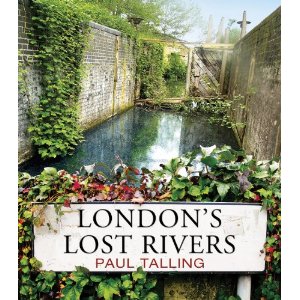
First is ‘London’s Lost Rivers’ by Paul Talling and published by Random House. This is the first serious update of Nicholas Barton’s classic 1950s underground river book and it will be interesting to see what new information about the Fleet, Effra, Westbourne et al that he has uncovered.

Jamrach's Menagerie

The second has been catching my eye in the window of Herne Hill Books every time I walk past it. ‘Jamrach’s Menagerie’ is a novel by Carol Birch published by Canongate.  This is a novelised account of the famous occasion a bengal tiger escaped from London petshop Jamrach’s. It was from this shop that the animal-loving artist Gabriel Dante Rossetti probably purchased the pet wombat, whose death left him so bereft.

Incidentally, if any publishers are reading this and fancy sending me London-themed books to add to my collection, my conscience would have no hesitation in happily accepting them.

How a shoe can teach the Holocaust

It starts with a shoe. An old shoe, scuffed, brown and small. It’s old and battered, and has been carefully re-stitched at the back where the seam has come apart. A classroom of Year Nine schoolchildren are asked what they can tell from the shoe just by looking at it. They agree it once belonged to a boy and that it’s been repaired a few times – perhaps by a family too poor to buy a replacement – but at some point was lost or thrown away.

Then the teacher tells them where the shoe was found, in Poland, outside a village called Oswiecim, and that it probably belonged to a boy from Hungary, who would have arrived there on a train with his parents nearly 60 years ago. After getting off the train, he would have been told to remove his shoes while he went to take a shower from which he would never re-emerge. Oswiecim is the place that we now call Auschwitz.

The Holocaust is a daunting topic for schools. Pupils can be overwhelmed by the sheer scale of the genocide, and troubled by the complex emotions it can raise. For their part, teachers can struggle to define the Holocaust correctly, or explain why it happened and what made it so uniquely horrific.

Which is where the shoe comes in. ‘There are lots of issues when teaching emotional subjects like the Holocaust,’ says Paul Salmons, who created the Holocaust Education Development Programme (HEDP), a course prepared by the Institute of Education to help secondary school teachers. ’It has the potential to raise profound questions and move children very emotionally. This course tries to balance an emotional engagement with a cognitive reflective approach.’

The story of the shoe, explains Salmons, ‘isn’t just intended to get an emotional reaction, it is to raise questions in response to the children’s emotional encounter.’ So after the children are told about the shoe, they are encouraged to ask questions. What happened to the boy’s parents? Why did they allow him to die? Why was he killed at all? From here, a discussion about the Holocaust and its repercussions can begin, with teachers using material taken from the HEDP website. It is a fascinating and intuitive way to introduce the subject, immediately bringing something huge and monstrous down to a level that a child can comprehend.

The course was developed in response to research conducted by the IOE in 2006. This showed that while the Holocaust was widely taught in schools – it has been on the National Curriculum since 1991 – there were many areas where knowledge was lacking. The research also revealed that 77.5 per cent of teachers wanted professional guidance, finding it difficult to convey the enormity of the genocide without inundating children with brutal images.

‘It is important children learn about the Holocaust because of its significance in world history, but it’s equally important not to traumatise them,’ says Salmons. ‘We have a history of human atrocity that’s also a history of forgetting and until the Second World War, nobody tried to analyse man’s capacity for self-annihilation. So we see the Holocaust as pivotal in understanding certain things about human nature and important for children’s social and political education and historical literacy.’

This is done without using images of heaped corpses or film of mass executions. On the first day of the course at London’s Jewish Museum, tutor Kay Andrew tells the 15 teachers that this is ‘not about threatening or graphic images. Traumatic images can be seen as leading material.’

Peter Sullivan, a history teacher at Forest Gate Community School in East London, concurs. ‘These images can actually lead to arguments about holocaust denial – kids will say that they were staged or are of prisoners-of-war who died of natural causes – so we try to use more specific material to avoid pointless arguments.’

Is Holocaust denial really a problem in secondary schools? ‘You do get some of the Muslim kids, not so much in denial, but arguing that they deserved it because of the way they treated Palestinians. A percentage cannot differentiate between Jewish and Israeli and don’t have the life experience to put it into the proper context. It’s not just the Muslim kids, just up the road is Barking and Dagenham where the BNP are active, and when Nick Griffin says “I can’t deny the holocaust because it is illegal to do so” you know exactly what he’s saying. We have to combat that.’

Salmons says ‘The issue is more Holocaust diminishing or trivialisation,’ he says. ‘The way it can be used to suit different agendas or to promote a cause.’ He cites the example of the invasion of Iraq, when ‘there was a tendency to equate Saddam Hussein with Hitler in a fairly unreflective way perhaps designed to mobilise people behind a policy, which should have been argued on the merits of whether it was right or not, not by appropriating something powerful from the past. If young people are aware of what really happened, then they are better equipped to make that judgment for themselves.’

The course puts the Holocaust into context. On the first of two days, Andrews covers a number of different topics that have little to do with genocide itself. Teachers look at the diversity of pre-war Jewish life to ensure teachers don’t present the 6 million as a faceless monolith, and are asked to consider different forms of resistance and resilience to escape notions of the Jews as passive victims. The story of Leon Greenman, a British-born Jewish man who lived in Holland and whose family was killed in Auschwitz, runs throughout the course. ‘Leon was taking about his experiences from the very beginning,’ says Andrews. ‘We have archive of him talking to the BBC in 1945. He remained active in anti-fascist politics and received an OBE from the Queen, so you can explore the influence of the Holocaust through the life of this one man.’

The course does not neglect the other Nazi crimes, including the persecution of Jehovah Witnesses, Communists, homosexuals, the disabled and the Roma. Salmons explains, ‘We take an academic definition of what the Holocaust was – that it was the genocide of European Jewry by the Nazis and their collaborators – but you have to look at other victims. They are part of the broader context and a lot of these crimes overlapped, but if you lump them together and call them the ‘Holocaust’ it ceases to have much meaning, because the differences are as important as the similarities. With the genocide of the Roma-Sinti, there is a parallel to the Holocaust but one that has its own name – the Porajmos – and it needs to be studied with its own significance.’

The course is part-funded by the Pears Foundation, a philanthropic venture who have recently invested £1.5 million in the UK’s first Institute for the Study of Antisemitism at Birkbeck and donated funds to London’s Wiener Library, the world’s oldest Holocaust library.

Improved understanding of the Holocaust in schools could help combat increasing anti-Semitism, but Salmons says it isn’t as simple as that. ‘We don’t cover contemporary anti-Semitism, but do try to understand the historical and ideological anti-Semitism of the leading Nazis. But we also explore how you didn’t have to be anti-Semitic to be complicit in genocide, you just had to benefit from it. Many Germans bought the goods of Jewish neighbours in auction, which means they give tacit approval. We hope that young people aren’t racist, but they can still be unwittingly complicit in all sorts of injustices without having any personal or ideological prejudices.’