Category Archives: Exhibitions

Wellcome to London: how Henry Wellcome ‘hoovered up the world’ and left it on the Euston Road

Wisconsin, 1858. A five-year-old boy is playing near his frontier home when a strange stone catches his eye. He takes it to his father, who examines the flint carefully before deciding that it was a prehistoric tool made thousands of years before to cut meat. It probably meant as much to its creator as the railway did to modern humans. ‘That excited my imagination and never was forgotten,’ wrote Henry Wellcome years later, after he had grown up, moved to London and accumulated one of the largest collections of scientific paraphernalia that has ever been gathered by a single individual.

Henry Wellcome

Wellcome established his pharmaceutical company, Wellcome-Burroughs, in 1880, making a mint selling pills to an English public that had previously taken medicine in the form of powder or syrup. This fortune sits in the Wellcome Trust, which was established 76 years ago and is now worth £14 billion, making it one of the world’s largest charitable foundations. Next door to the Wellcome Trust HQ on Euston Road, a short walk from St Pancras, sits the Wellcome Collection, a museum that houses some of the million or so objects collected by Wellcome in his lifetime. Here is Napoleon Bonaparte’s toothbrush, ancient sex aids, Chinese torture chairs lined with blades, boxes of false eyes, human skeletons and paintings by Van Gogh. It is one of the most extraordinary collections in the world, a throwback to a time when wealthy individuals would hoover up the weird and wonderful of the world for their personal collections, but executed on a scale few could compete with.

Ken Arnold is the Wellcome’s Head of Public Programmes. ‘This is the last great non-connoisseurs collection,’ he says. ‘Our usual concept of a collector is somebody who carefully decides whether something is authentic and then forks out a huge amount of money for it. Wellcome had an “other-end-of-the-telescope” approach. He saw everything through medical-tinted spectacles and wanted to own anything that would illuminate that fascination.’

Wellcome collected everything: paintings, engravings, photographs, models, sculptures, manuscripts, books, periodicals, pamphlets, letters, prescriptions, diplomas, medical instruments, archaeological finds, skeletons, skin, hospital equipment, advertisements, drugs, remedies, food, plants, microscope slides, charms, amulets, ceremonial paraphernalia, costumes, medals, coins and furniture. He bought entire shops, contents, fixtures and fittings, acquiring enough to recreate an entire street. He bought others collections, picked up human skulls from African battlefields and returned from one typical trip abroad with 44 packing cases of material. If something wasn’t available, he had an artist make a reproduction. Teams of buyers were finding him items right up until his death in 1936. His reach was broad and their brief was wide.

‘Wellcome had deep pockets and no bureaucrats telling him what he could bring home so he had none of our moral, financial or logistical concerns,’ says Arnold. ‘He hoovered up the world, and left us with this extraordinarily unwieldy and undisciplined collection.’ Although Wellcome amassed an immense collection, he was frugal with his money. ‘He was very wealthy, but he would send employees to auctions dressed down so they didn’t look too rich, and would set up fake companies so people wouldn’t know it was his money,’ says Ross MacFarlane, research officer at the Wellcome Library.

A chippy self-made American, Wellcome could never become part of the British establishment – although he was awarded both a knighthood and the French Legion d’honneur – and a desire to be taken seriously may have prompted his determination to create a museum of ‘the art and science and healing’. This opened in 1913 in South Kensington, before it moved to Wigmore Street and closing in 1932. When Wellcome died, the collection was put into storage or dispersed.

‘The British Museum has 40,000 objects, the Science Museum has more than 100,000, the Pitt-Rivers in Oxford has 30,000 items and there are bits in almost every museum in the UK,’ says Arnold. The Wellcome Trust has since taken a similarly philanthropic approach, funding wings in numerous UK museums, galleries and academic institutions.

In 2007, the Wellcome Collection opened. It is a modern, classy space, with a cafe and bookshop, as well as a gallery that hosts thought-provoking exhibitions that use art and science to explore topics such as Skin, Sleep and Brains. Their next exhibition, Death, promises to be particularly fascinating and challenging.

The Wellcome dares to be different: while most museums take an unfamiliar topic and wring all the knowledge out of it like a damp dishcloth, the Wellcome looks at something familiar and turns it inside out, using contemporary art and scientific research to make visitors question what they think they already implicitly understand. Their ability to do this can be traced back to Henry Wellcome himself.

‘We feel free to interpret the material Wellcome collected,’ says MacFarlane. ‘Because although we know when something was bought and what it cost, we don’t always know how it got to the auction.’ Arnold expands on this: ‘He didn’t talk about his philosophy. There’s enough to get an idea of why he was collecting, but there’s not so much that we feel we have to conform to his beliefs. He once said ‘Never tell anybody what you are planning to do until you have done it.’ That sounds like a good idea to me…’

So the Wellcome eschews blockbuster shows – which Arnold describes as ‘a depressingly greedy way to conduct exhibitions’ – and takes pride in imaginative live events. ‘We never try to be definitive,’ says Arnold. ‘There’s always more to discover. And we don’t want to be po-faced. Science is either deadly serious or fun with pink fluffy letters – and between these two unpalatable positions is a yawning chasm that can be filled with smart and sophisticated entertainment.’

Of course, the Wellcome is helped by having a lot of money in its coffers. ‘We are much more privileged that most other organisations. We are wealthy and we don’t have to satisfy civil servants, corporate sponsors or shareholders. But that attitude comes from the Wellcome Trust itself: science is a risk-taking business and there is a sense we are allowed to be experimental.’

MacFarlane finishes that thought, ‘When we take the directors an idea, they’ll often want to give it a go, and that’s a bit like how Wellcome collected. It’s a great position to be in.’

Wellcome Collection, 183 Euston Road, NW1 2BE. Admission free. The Wellcome’s next exhibition is Death, from November 15. 

Punk at the Hayward: curate and destroy

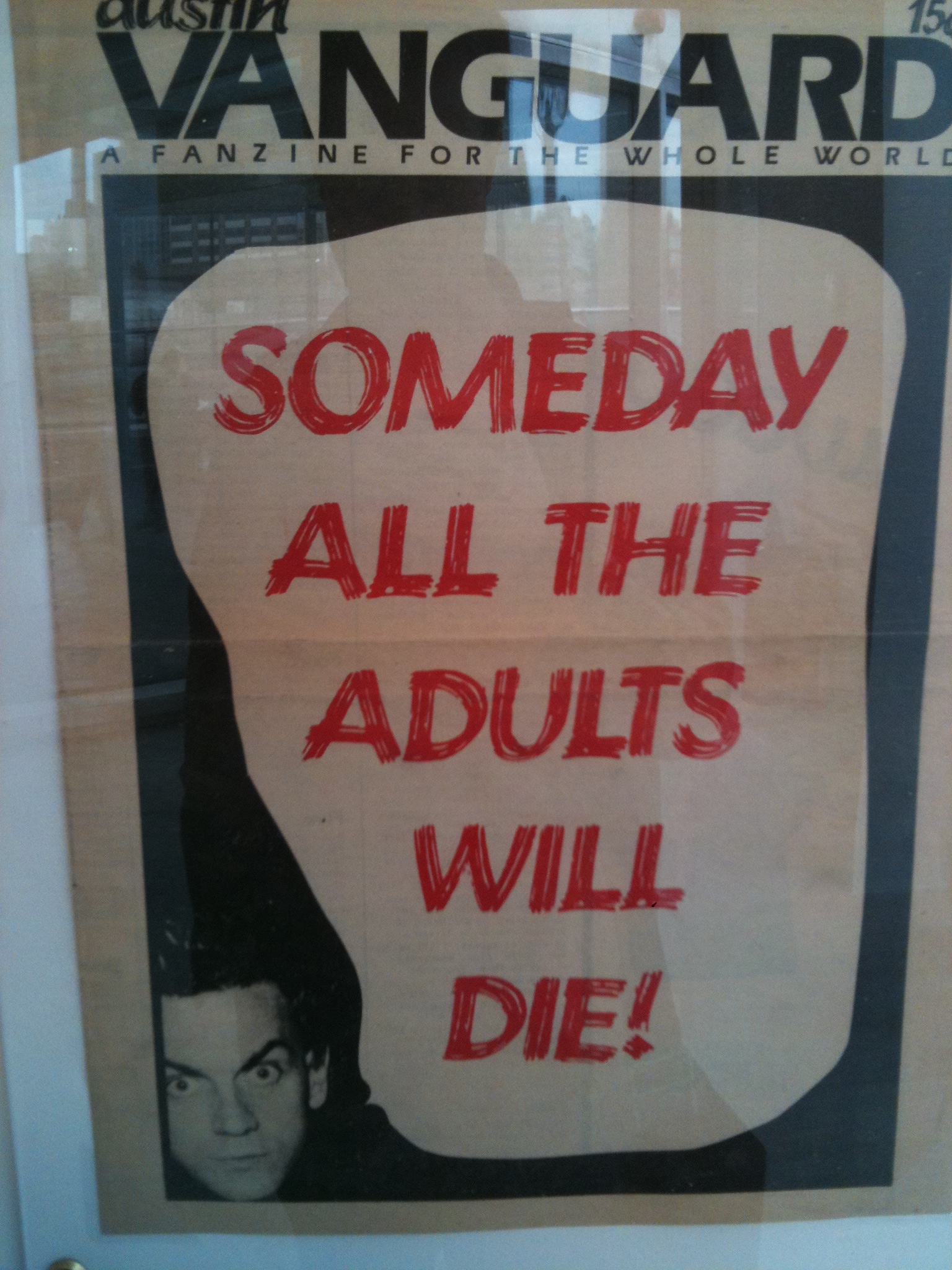
Does any music form have as curatorial approach to its own history as punk? In many ways that is understandable, as the graphic art that came out of the punk movement is as interesting as most of the music, while many of the scene’s key movers always saw themselves as part of a cultural avant-garde that went back to the Symbolists and still wish to emphasise that. One of the most prominent of these voices is Jon Savage, and he has co-curated an exhibition at the Hayward Gallery on punk called Someday All The Adults Will Die.

Despite punk now being nearly 40 years old and having been curated like a dead horse for several decades, it still has a visceral and visual appeal to many – and not necessarily the people you may expect. When I visited the gallery, most of my fellow visitors appeared to be in their 20s: this was clearly not simply an excuse for a nostalgic wander back through adolescence by men suffering a mid-life crisis. The kids dug it.

It’s a wide-ranging exhibition, with sections devoted to seven-inches, cassettes, posters, flyers and fanzines, including Savage’s own London’s Outrage.

My favourite stuff tended to be the less predictable such as pre-punk items involving the Diggers, who co-existed awkwardly with the hippies in San Francisco in 1966 and 1967, as these mimeographs demonstrate.

There was also items reflecting Savage’s fascination with Situationism, including this King Mob poster. Malcolm McLaren was loosely affiliated to King Mob.

I also liked the items relating to Suburban Press, the witty and brilliant pre-punk/Situationist publishing house created by Jamie Reid.

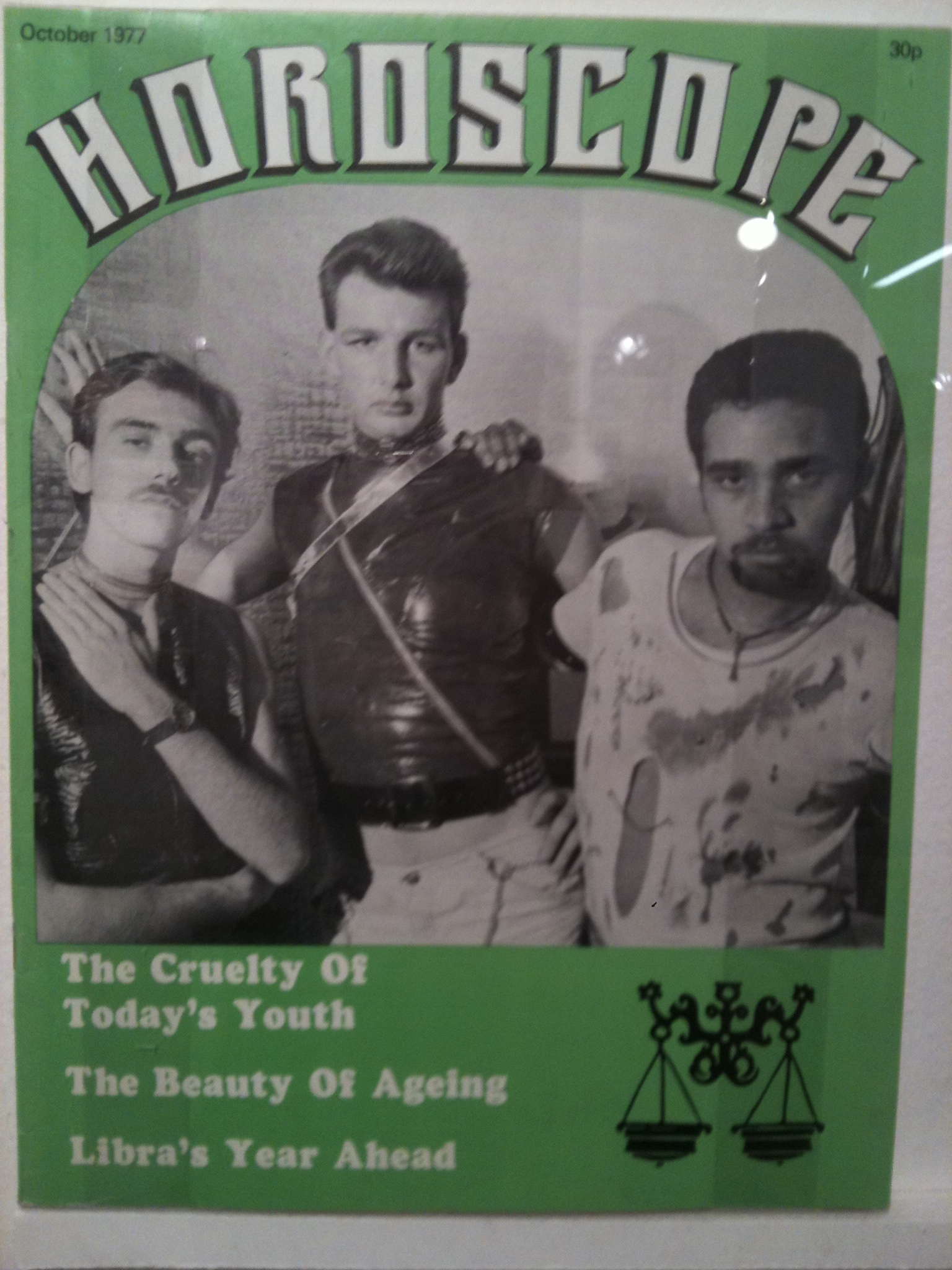
And, finally, I loved the handful of contemporary examples demonstrating how the mainstream tried to cash-in on punk with things like a punk-themed horoscope magazine and punk pulp fiction. Such money-grabbing tactics, it must be noted, have since been refined somewhat…

Someday All The Adults Will Die is at the Hayward until November 4.

Time Out and listings

Time Out went free this week. It wasn’t really a shock, the notion had been knocking around when I worked there, particularly when thelondonpaper and London Lite were stinking up the streets. The success of the free Evening Standard probably sealed the deal. The economics are unarguable: drop the cover price and circulation rises, allowing you to charge more for advertising. If you can simultaneously reduce costs – which they have been doing through regular redundancies – you may have a viable magazine once again. The danger, though, is that once the decision to go free has been made, there’s no going back…

What has it meant for Time Out? Well, the new magazine has less pages but still has plenty of previews, lists, bitty features and clunky ads, with just a couple of longer reads thrown in for us old-fashioned types. What it doesn’t have – along with book reviews –  is listings (at least in any meaningful sense), which was the reason Time Out was invented in 1968. (There’s also no letters page, which is a mistake if they still want to establish that vital personal link with readers, and one I think they will quickly rectify.)

This isn’t really a surprise. Successive TO editors have always struggled with the listings part of their brief: listings are ugly, boring and largely resistant to any sexing up, despite the best attempts of periodic and largely futile ‘redesigns’ (has a redesign of any magazine or newspaper EVER raised circulation?). They are also beyond the control of the editor, who has to leave them to section heads. Even editors who came from within the magazine, and therefore understood the centrality of listings to what Time Out did, didn’t actually appear to like them all that much. They take up valuable space from the exciting things an editor likes to do at the front of the mag and telling a section editor you are cutting their pages is a draaaag.

To make matters worse, listings do not do well when it comes to ‘page views’ or ‘unique users’, the trite and often completely useless method by which the value of anything in print is these days judged. And because people don’t click on listings on the website (for reasons that are so obvious I won’t even bother to explain), the logic goes, they don’t read them in print.

Hmmmmmm.

A number of people have noted that without decent browsable printed listings, Time Out has potentially rendered itself useless, but I don’t want to comment on that. What does interest me is that effect a lack of listings will have London’s smaller venues. The joy of TO‘s listings was that it gave the smallest museum or club as much prominence as the biggest and most well-funded, allowing readers to decide which to visit entirely on the merit of their programming. It’s this that made Time Out absolutely central to the rise of fringe theatre, avant-garde art, clubbing, burlesque and alternative comedy – each scene was created by individuals, but a free listing in Time Out coupled with enthusiastic support from in-the-know section editors took things to another level. Even larger venues have told me they noticed the difference in footfall when they were omitted from listings (by accident or for reasons of space).

Time Out obviously doesn’t have the circulation, and therefore the pull,  it once did and there are other specialist resources for those interested in the esoteric fringes of London’s cultural life, but the loss of listings will surely still be felt by venues that aren’t internet savvy or lack a large marketing department. The solution for many will be a prominent place in the preview part of the existing sections. Time Out‘s section heads will never have been in such demand… And PRs can be a dangerously homogenising bunch.

For more on the new Time Out, here’s Diamond Geezer (positive), Christopher Fowler (not) and Londonist (neutral). 

The Pre-Raphaelite Brotherhood in London

Tate Britain’s rather brilliant exhibition on the Pre-Raphaelite Brotherhood opens this week. It cover much the same ground as the recent and slightly more brilliant Cult of Beauty at the V&A, but with  – naturally – greater emphasis on the visual arts over the decorative.

One interesting thread running through the exhibition is the use of London as a landscape. The PRB were all connected to London and liked to paint outdoors so the city naturally appeared in a number of their paintings, often uncredited. This painting by William Holman Hunt – Rienzi, Vowing To Obtain Justice – was painted outdoors in Lambeth and Hampstead Heath, while famous images like Ophelia by John Everett Millais used the countryside of now suburban Ewell as the backdrop.

Another of the most famous PRB paintings is The Death of Chatterton by Henry Wallis, a tragic tableaux in which London’s skyline can be glimpsed through the open window. The vividness of Chatterton’s hair, incidentally, really has to be seen in person if possible.

More obvious London images were to follow. This is Charles Allston Collins’ bucolic take on May, In The Regent’s Park, from his home in Hanover Terrace. Collins was not an official member of the PRB, but his style was sympathetic and this was considered ‘absurd’ when first exhibited, though presumably not because of the sheep seen frolicking in the park in the background.

Also closely affiliated with the PRB was Ford Madox Brown, and his wonderful view of Hampstead from his bedroom window – An English Autumn Afternoon. Again, this was considered ugly by contemporary critics. Kenwood House can be seen top left, but London remains a distant – if rapidly advancing – presence.

Brown offered a very different and more recognisable take on Hampstead in perhaps his greatest painting, Work, which depicted navvies digging up a Hampstead road to lay water pipes. It’s a marvellous evocation of a London street and I’m pretty sure those navvies are still laying water pipes in London to this day. See them all at Tate Britain from Wednesday 12 Sept, 2012.

Nazi Olympics at the Wiener Library

This article first appeared in a recent issue of Time Out London.

The 1936 Berlin Olympics are often presented as a disaster for Nazism thanks to Jesse Owens, who won four golds and shattered Hitler’s fantasies about Aryan superiority. But the truth is a little more complex. Germany actually won the games: they had the most medals and also won more golds, more silvers and more bronzes than anybody else. They were praised for the way the tournament was held, there were no boycotts, innovations like the Olympic village and the torch relay were adopted by the Olympic organisation and the event even turned a profit. So was it really an unqualified sporting, diplomatic, economic and propaganda success for Hitler?

Toby Simpson is curator of The Nazi Games: Politics, The Media And The Body, an exhibition at the Wiener Library, London’s Holocaust library (the oldest in the world). He says, ‘The games were actually received very positively and Hitler’s standing improved as a result. On the whole it was positive for the Nazis and they were pleased with the results.’

This was much as Hitler had hoped when the Nazis inherited the games in 1933. ‘The German organisers were worried he would scrap the games because he wasn’t internationalist in the slightest,’ says Simpson. ‘But he realised that this was a huge propaganda opportunity and began putting pressure on the organisers to shape the games around Nazi interests.’

The results are displayed in a small, compelling exhibition. There are dramatic stills by Leni Riefenstahl, who also filmed the monumental Olympia using new techniques such as slow-motion and tracking shots. Much of the imagery presented the German team as perfect Aryan specimens, evoking Spartan concepts of athleticism, while a neo-Roman bombast was visible in everything from the architecture to the opening ceremony. Hitler wanted to exclude Jews from the team, but under pressure allowed one, Helene Mayer, to take part. ‘Mayer won gold in fencing for Germany in 1928,’ says Simpson. ‘Under Hitler, she had to go to the US to continue her career, but came back to Berlin to compete in the German team.’ A photograph shows Mayer on the podium giving a Nazi salute. All successful athletes were presented with an oak sapling – until 2007, one won by Harold Whitlock, a long-distance walker, grew in the grounds of a school in Hendon.

US team – including Owens with their oak saplings

Mayer’s presence was a sop to a small but persistent anti-Nazi campaign. ‘This was the first Olympics with a boycott movement,’ says Simpson. ‘America was criticised for participating because it was believed they could influence the International Olympics Committee to withdraw the games from Berlin.’

The exhibition features an American pamphlet called Preserve the Olympic Ideal, which made the case against American participation. There’s also an extraordinary camouflaged pamphlet produced by resistance movements in Germany. It looks like an Olympic souvenir but ‘inside talks about soldiers bleeding to death on the fields of Spain. Germany was not yet involved in the Spanish Civil War, but this was being distributed to inform people about what was going on.’

The exhibition has a range of bona fide souvenirs produced to cash in on the games, often incorporating Nazi imagery, and there’s also material produced by travel agents like Thomas Cook, hoping to persuade reluctant tourists to make the journey. ‘Ticket sales were slow at first,’ says Simpson. ‘The Nazis had come to power on a wave of mass unemployment and people worried the country was unstable. Companies offered huge reductions in an unprecedented advertising campaign.’

BERLIN OLYMPICS 1936 (GERMAN ORIGINAL PHOTO BOOK)

The public had fewer concerns politically. ‘The Nuremberg Laws had turned Jews into second-class citizens, but public consciousness was slow to catch up with reality,’ says Simpson. During the games, the Nazis removed anti-Semitic signs in a ‘conscious attempt to cover up the truth.’ At the same time they put 800 Sinti and Roma into camps. The Wiener Library has a game on permanent display in which stereotypically Jewish-looking characters are chased around a board – it was made in 1936. ‘Even as the Olympics were taking place, this game was being produced and people were being put in concentration camps because of their race,’ says Simpson.


The exhibition ends on a positive note. ‘We highlight the story of Dr Guttman, a German-Jewish refugee who came to Britain in 1939 and set up a spinal unit at Stoke Mandeville hospital for veterans. There he introduced a sporting contest that eventually became the Paralympics.’ Some of Guttman’s documents are on display, including call-up papers from the First World War. ‘He volunteered in 1914 to serve in a medical capacity. Like many Jewish Germans he was incredibly patriotic but still exiled.’ It was an exile from which the Olympic movement would eventually profit.

The Nazi Games: Politics, The Media And The Body at the Wiener Library until October 3. Free. 

Turing at the Science Museum

There’s a rather fine exhibition at the Science Museum at the moment about Alan Turing, the pioneering computer scientist and philosopher who was born 100 years ago. What particularly appeals is that while there is only a limited number of objects, all of them matter.

This is hefty stuff, invaluable weighty objects that demand attention – so it’s blockbuster, but not in the usual way of throwing everything at a room in an attempt to wow the audience into submission at the sheer scale of things. Instead, the museum has cherry picked a dozen important objects that most reflect Turing’s life – the life of one of the most important figures of the 20th century – and let them tell the story. As the curator David Rooney told me, ‘A lot of what Turing did was very abstract. We wanted to show it had a real impact on the world.’

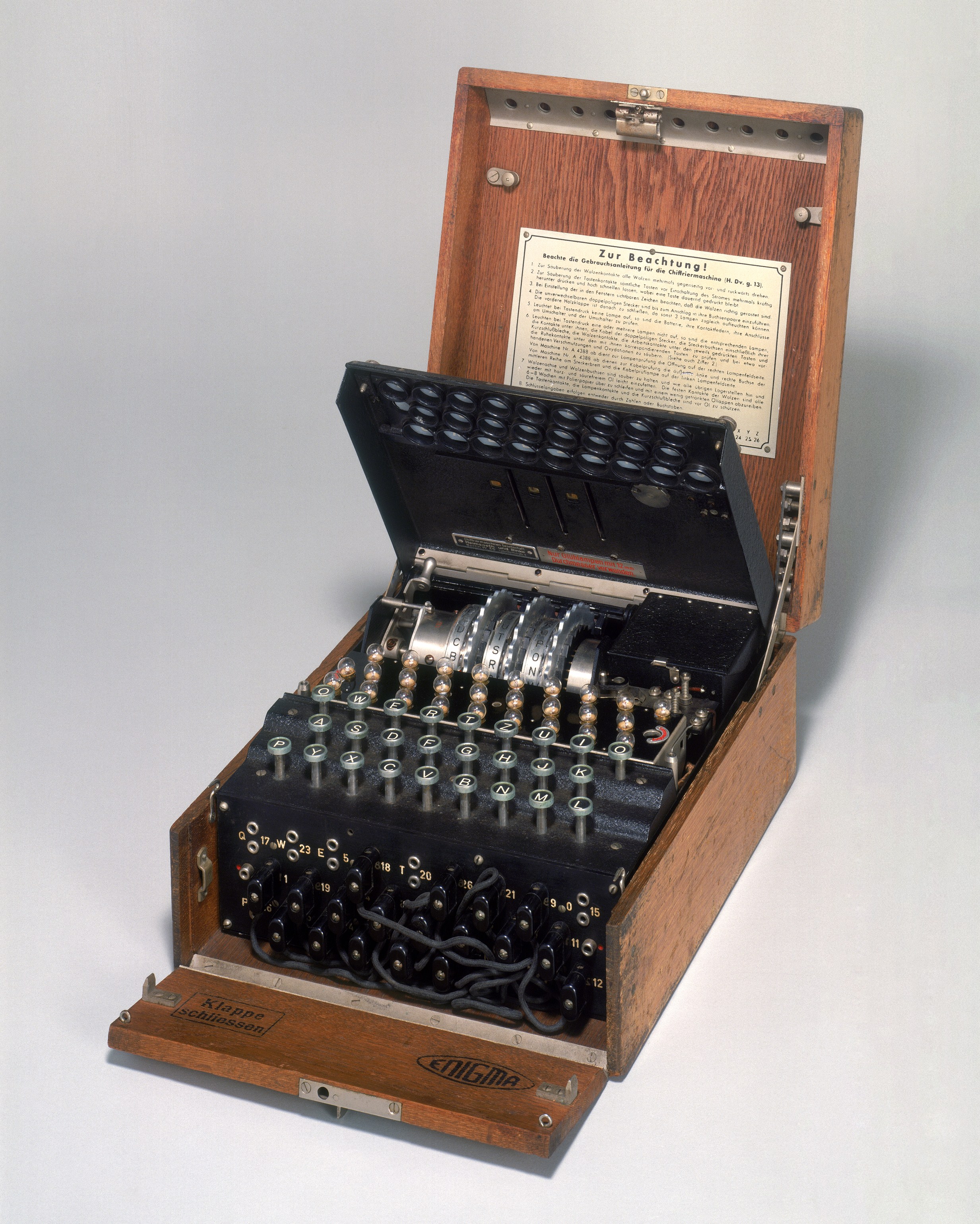
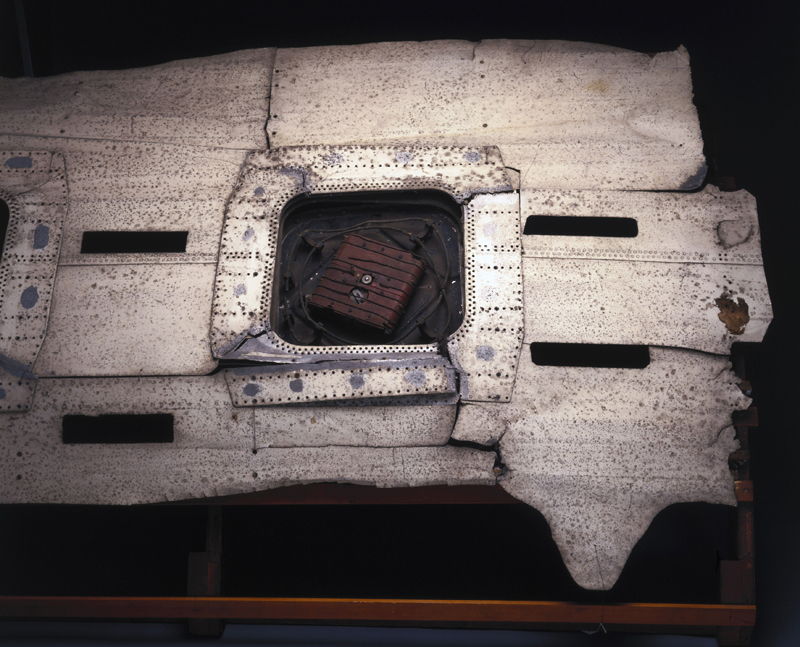
Featured items include an Enigma machine on loan from the secret staff-only museum at GCHQ, the Pilot ACE (one of the world’s first computers), a cybernetic tortoise, a 1930s differential machine made out of Meccano, Turing’s pathology report (which shows he drank a large amount of cyanide, more than you could consume by accident or put in an apple) and a section of a crashed Comet jet, which the Pilot ACE was used to analyse to see why it exploded in mid-air.

Enigma machine

Crashed Comet G-ALYP, 1954.

Pilot ACE

Meccano differential analyser

Here’s a film of the tortoise in action.

Mind The Map at the London Transport Museum

Ever since the British Library’s London map exhibition in 2007, London museums have learnt to love cartography. The Museum of London’s Hand-Drawn London was a highlight of 2011, and now the London Transport Museum has joined the cool kids with a brilliant new Mind The Map exhibition.

This traces the relationship between transport and maps over the past 150 years or so and offers a brilliantly edited selection of material from the archives. The exhibition space at the museum isn’t vast, but the way it has been used here is superb. The twin focus is on the work of McDonald Gill and Harry Beck. Gill created the Wonderland map, a gorgeous, highly detailed map of London aimed at transport users. Here’s one of his, for Hyde Park.

The exhibition features a number of maps created by Gill – the brother of sculptor Eric Gill – and also this fascinating unfinished map of Temple, showing his working method. He begins with a serious flat plan of the city, before building up layers of impeccably detailed architectural illustration. Then on top of that go the speech bubbles, puns and references that make his maps so fascinating. Please excuse my poor photography.

In this section there are other decorative maps that were used by LT to promote different areas of London. Here is one featuring Cheam, where I grew up.

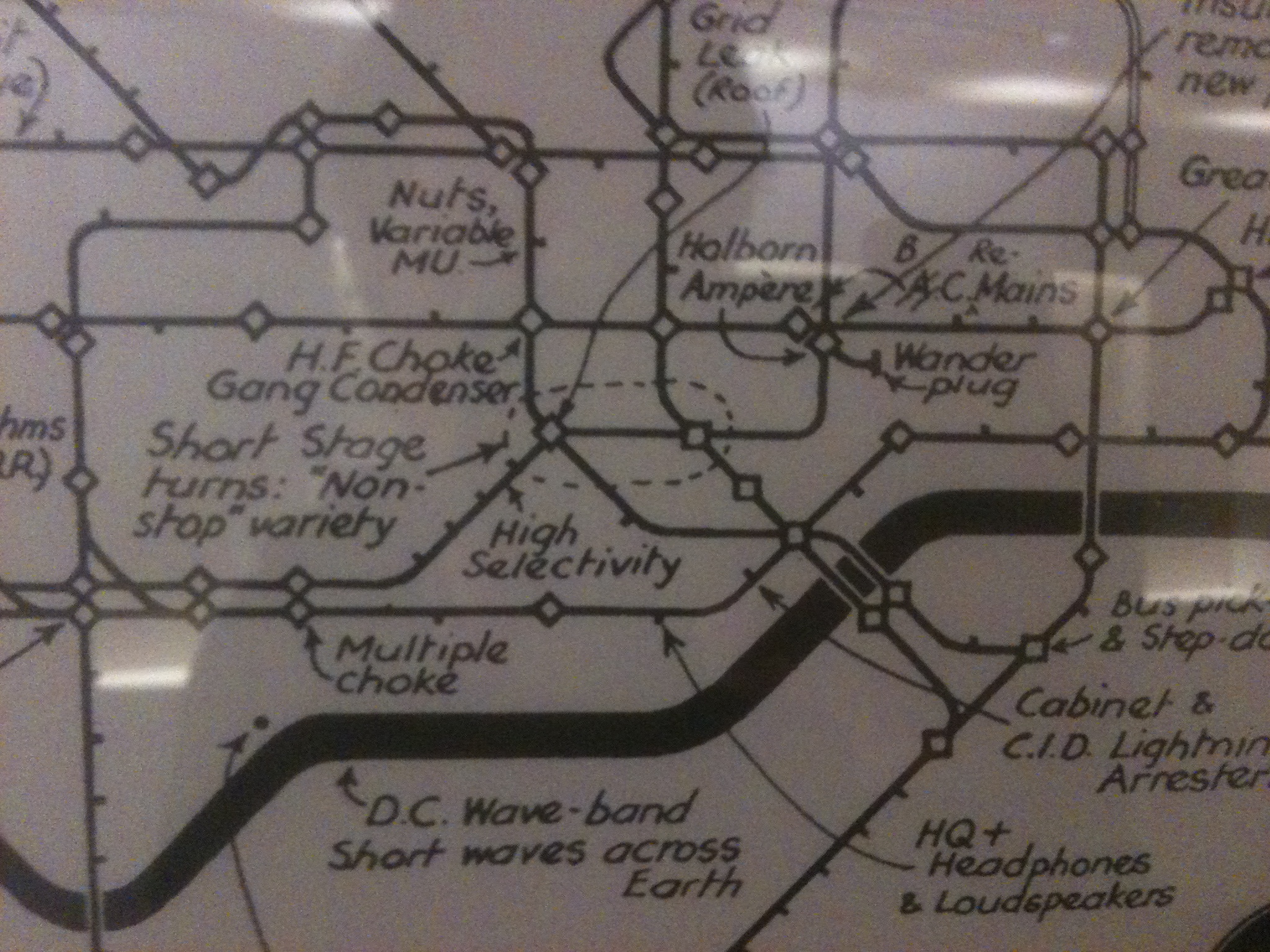
The Beck part of the exhibition is also brilliantly done given how much has already been done on the man who created the modern tube map. A personal highlight was this sketch from the London Transport staff newspaper in 1933, in which Beck gently mocks the popular notion that he got the idea for his diagrammatic map from a circuit board. He has redrawn his tube map as the interior of a transistor radio, thus creating the first mash-up/spoof of his iconic design and pre-dating The Great Bear by several decades.

Speaking of which, the LT Museum have commissioned six new pieces of art for the exhibition, and they are all great, which is quite unusual for these things. Simon Patterson has updated The Great Bear as Saptarishi, Jeremy Wood has created a new ghost map, tracing his movements through GPS and there’s a marvellous ‘Proustian’ map of London by Agnes Poitevin-Navarra.

My Ghost

Most exciting of all is Stephen (The Island) Walter’s new epic undertaking, London Subterranea, a stunningly detailed map of the London beneath our feet, executed in stark black and white and crammed with information and folklore.

When I talked to Walter a few years ago, he expressed a keenness to put The Island behind him despite some interesting related projects that had been suggested to him. I’m delighted that he has since decided to return to London mapping, as he is a master at it. I’m told he’s now working on an A-Z, which will incorporate The Island and London Subterranea.

Other highlights include a copy of the infamous 2009 tube map that omitted the Thames, a gorgeous 1932 enamel map from a station wall and a copy of Finchley Central by The New Vaudeville Band. There’s also a brilliant book by curator Claire Dobbin that accompanies the exhibition. Go see it!

Mind The Map opens 18 May until 28 October 2012. 

Cockney Visions: Writing Britain at the British Library

The British Library’s new exhibition Writing Britain, which runs until 25 September 2012, has big ambitions. It aims to study place and landscape in British literature, looking at how writers and poets have been informed by the land around them, and how their writing has transformed the way we view these spaces.

Phew!

The exhibition is divided into different thematic sections, and includes one on Cockney Visions about London writing, and another on the suburbs, which also has considerable London content.

It’s a remarkably bold concept, but the BL does not shy from a challenge – its exhibition on Liberty a few years ago was one of the most intellectually intense I have ever seen, while the one on Language was similarly involved.

This time, it doesn’t quite pull it off. The problem is the same that blighted last year’s science fiction exhibition – too many books. Entering a BL exhibition is like visiting a first rate antiquarian bookshop, but one were you can’t touch the books and none of them are for sale. It’s great to see these rare and beautiful books, but it’s also incredibly frustrating that you can’t pick them up, feel the pages, smell the history.

Paradoxically perhaps, books are also an insufficient way of examining landscape in the way the exhibition intends. If we can’t actually sit there and read Wuthering Heights, immersing ourself in this extraordinary place the writer has created, we need other ways to make the journey. The most evocative part of the exhibition is the one on the Lake District and Highlands, purely because there are some wonderful paintings on display, which help crystallise our vision of what Wordsworth, Keats and Scott were describing. Conversely, the London section takes in the usual suspects on that well-trod wander from Blake and De Quincey to Alan Moore, Neil Gaiman, Will Self and Iain Sinclair  (and includes a wonderful copy of the London Psychogeographic Society newsletter from the early 90s), but fails to really plunge us into the city of our imagination.

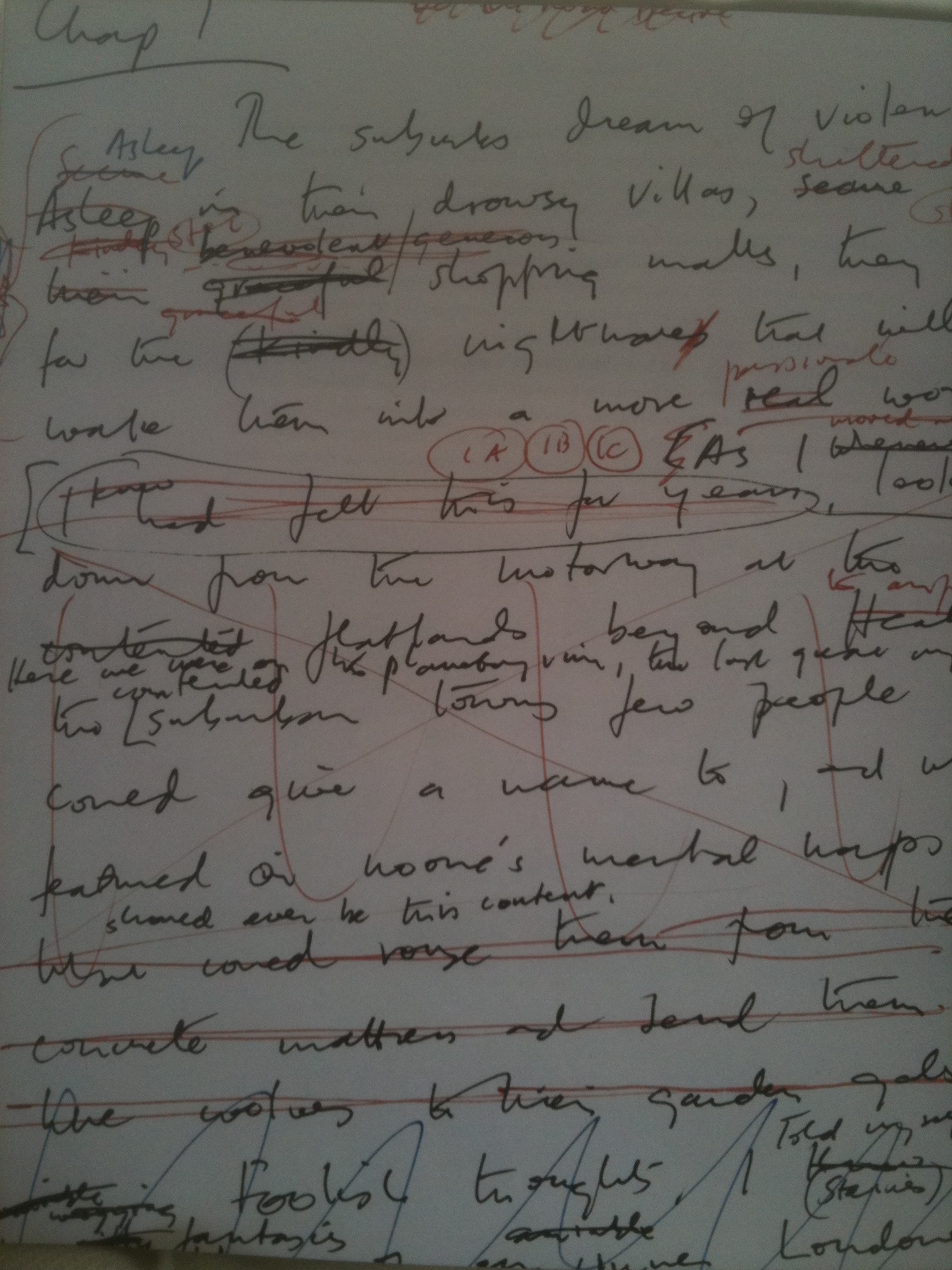
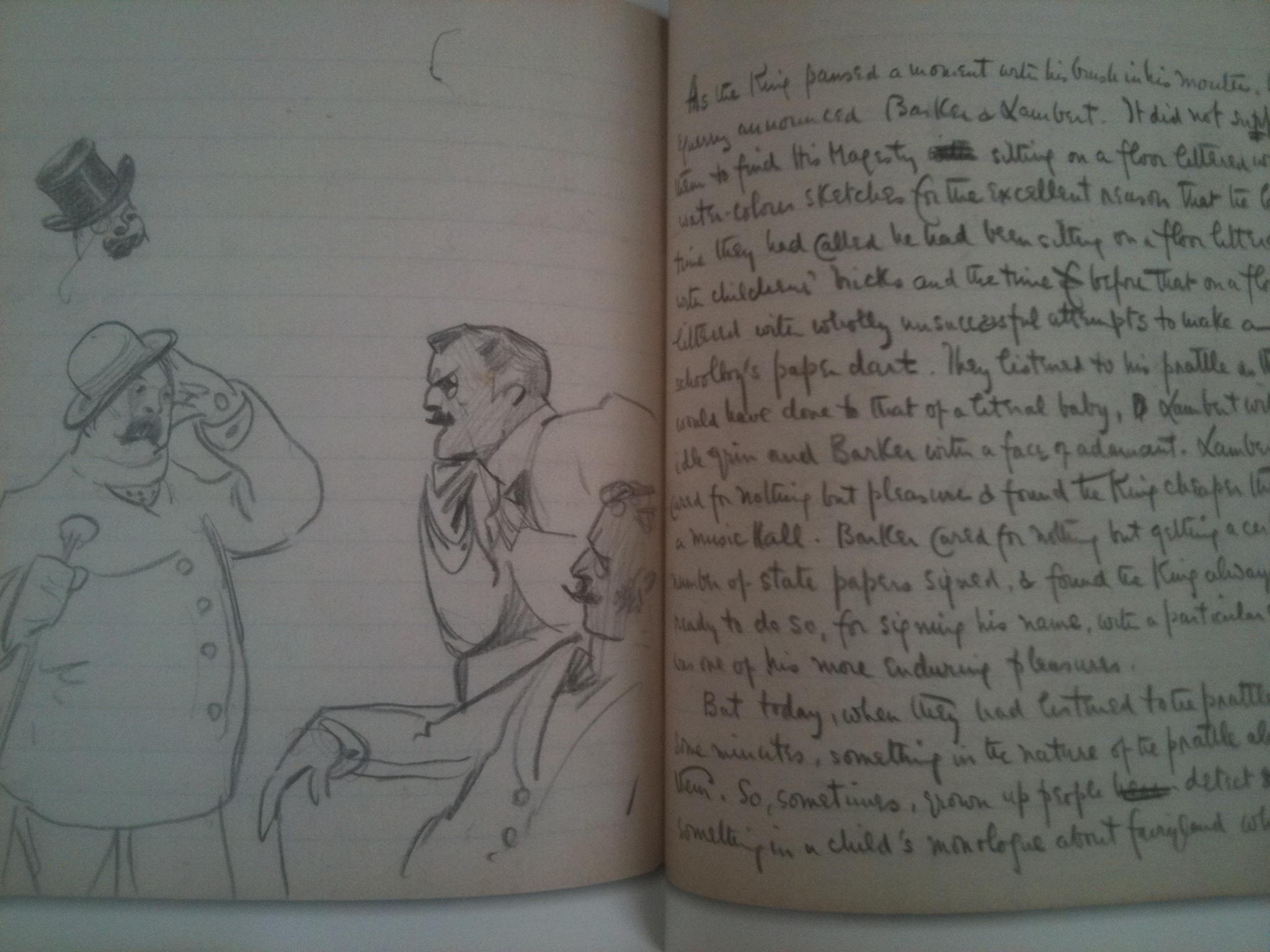
Where the exhibition – and the BL itself – really does excel is when it can produce original manuscripts, diaries and photographs. These messy, scrappy, lovingly flawed items show the writing process in a way a beautifully bound finished book never can. And some of the best of these are to be found in the sections of the exhibition related to London. There’s a sketch by John Betjeman of Dalston Station; an unpublished poem by Evelyn Waugh about the Crystal Palace (complete with Waugh’s drawing of the building); a couple of pages from JG Ballard’s collection, including the heavily amended opening pages to Kingdom Come and Crash; and a lovely drawing by GK Chesterton to accompany his notes for The Napoleon of Notting Hill.

Dalston Station by John Betjeman.

Kingdom Come manuscript

Notes for The Napoleon of Notting Hill by GK Chesterton

I loved also a letter by Conan Doyle sent to his mother from South Norwood, in which he carefully sketched the floorplan of a suburban house he was thinking of buying, and a copy of Pygmalion, which Shaw had phonetically annotated to show how he felt the cockney phrases should be pronounced.

a personal favourite was a draft of Albert Angelo by BS Johnson, showing how Johnson wished a section of one page to be cut out so it would reveal a sentence from later in the book, a brilliant way to create a  flash-forward or pre-cognition.

Best of all, though, was this photograph, which shows JM Barrie, GK Chesterton and George Bernard Shaw dressed as cowboys in 1914. For the full story, read this excellent blog post. It has very little to do with Writing Britain, but it’s bloody marvellous all the same.

Secret London: dealing with the counterculture at Maggs

This article originally appeared in Dazed And Confused magazine in February 2012.

Maggs Bros Ltd rare bookshop is an unlikely place to encounter the counterculture. For a start, it’s located on one of London’s poshest squares in Mayfair, the heart of the establishment, and even boasts a Royal warrant just inside the front door. Inside No 50 Berkeley Square – an imposing Georgian terrace once described as ‘the most haunted house in London’ – earnest young men in expensive suits sit at desks covered in large old brown books, which they flog to largely millionaire collectors that occasionally step through the front door.

But round the back, a different world awaits. Carl Williams works in an office converted from the stable block, in a room that is full of wonders. Come here at the right time and you will find boxes full of punk fanzines sitting on chairs draped with Republican flags from Spanish Civil War. Ask Williams nicely and he may show you brooches made by junkie poet Alexander Trocchi from used heroin needles, a complete set of ‘Anti-Monopoly’ board games or a pamphlet drawn by Latvian anarchist Peter the Painter, the shadowy figure behind the Sidney Street Siege of 1911. This recent catalogue will give you an idea of the material. 

Aleister Crowley

Williams, a fast-talking Yorkshireman , is one of the few booksellers who deals in items related to the counterculture, a nebulous term which covers politics, the occult, avant-garde art, film and literature, drug culture, rock and roll and alternative lifestyles. The interesting stuff, in other words. ‘There’s no guide to the counterculture,’ says Williams. ‘It’s not doctrinal. It’s whether something has the right feel, the way it looks, where it came from. It’s folk art, it’s the Watts Towers, it’s Austin Osman Spare, it’s Aleister Crowley. It’s not like Marxism where everybody knows the key texts. There are things in the counterculture that are still being discovered. There are things lost in libraries that will take it in a completely new direction.’ And it isn’t just books: Williams deals in paintings, posters, games, clothes and records. The only requirements are that Williams can locate it somewhere within his own concept of the counterculture, and that he can sell it. He also puts on occasional shows in the gallery beneath his office, such as the recent Lost Rivers exhibition.

Williams was born in 1967 – ‘the autumn of love’ – in Scarborough. Despite failing his O-Levels, he went to the LSE to read sociology, where he discovered the library and ‘read indiscriminately’. In 1997, after a decade of odd jobs and working in book shops, Williams returned to the LSE to do a Masters just as the library was selling off its old stock during a refurbishment. Almost by accident, Williams became a ‘runner’, a pejorative term that describes something which, in essence, all book dealers do. ‘Running is a pre-internet term, now it’s much more transparent, but it means taking a book quickly from one dealer or auction house, to another dealer or collector and selling it for more money than you paid,’ says Williams. ‘The idea is that you get it from A to B without B finding out how much you paid A.’

RED FESTIVAL 77 POSTER

With the LSE library at his disposal, Williams was blessed with early success. ‘I was able to sell all these political economy and philosophy books,’ he says. ‘But although I knew the books I didn’t really know what they were worth. I realised this when I took one dealer the first Western European edition of the Koran, and walked out with £500 when it must have been worth thousands.’

As the stock from the LSE ran out, Williams began frequenting other dealers and auction houses to find sellable books. In February 1999, he wandered into Bloomsbury Book Auctions, where he picked up a book from 1864 called The Pure Logic Of Quality by William Stanley Jevons. ‘Jevons thought this book would revolutionise how we understood logic, but he only sold six copies,’ says Williams. ‘I’d never seen one outside a library. I took it to a dealer, Pickering and Chatto, and a man called Jolyon Hudson asked if he could keep it for a day or two.’

Hudson recognised the book had been stolen from the London Library. The police were notified and Williams’s discovery unravelled what the Guardian described as ‘the most systematic plundering of Britain’s great libraries ever carried out by an individual’. William Simon Jacques, a dealer, had stolen books worth more than £1 million. He was eventually sentenced to four years in prison. (Jay Rayner covered the story here.)

‘I was devastated,’ says Williams, ‘because I thought I’d tried to sell a stolen book, but it turned out to be a blessing because Hudson told the Guardian that I had behaved impeccably and that gave me an entry into the higher levels of the trade.’

Williams began working at Maggs Bros, selling books on the internet and looking after the catalogue. ‘I got to know the customers. There was one guy who had been coming in for 20 years. He’d usually walk out with a travel book, but one day they asked this guy what he actually wanted and he said he wanted books on drugs.’

The man was Julio Mario Santo Domingo, a Colombian billionaire, and Williams sold him a painting made by a Mexican artist after he had been injected in the neck with LSD. Santo Domingo was in the process of putting together one of the great private collections of drug books and paraphernalia, a stunning selection of material that ranges from ancient books about Chinese opium smoking to a bicycle that belonged to Syd Barrett. ‘I worked for Julio [who died in 2009] for three years,’ says Williams. ‘His collection is one of the great untold stories of the 21st century. It’s not just drugs, it’s sex, rock and roll, the occult, erotica and art. And it’s not just books. It’s everything.’

Santo Domingo had a remarkably open concept of what to collect, not just concentrating on the old and valuable but hovering up anything with drug connections. ‘Somewhere in it is a McDonalds coffee stirrer from the 1970s,’ says Williams. ‘It looked like a coke spoon, just in plastic rather than silver. There were press rumours that it was the hillbilly coke spoon and so McDonalds discontinued the range, but I found an original. What do you do with that? Sotheby’s don’t want it, Christie’s don’t want it. But it’s gold. So that’s what I do.’

McDonald's coffee stirrer

Williams operates in a rarefied world, selling unusual and arcane items to billionaires and academic institutions. Some are interested in the subject, others are professional collectors, and still more are collectors who collect other people’s collections, as investments and for the pleasure of ownership. ‘It’s a very small world of dealers and a very large world of buyers, who work on the basis that they should buy now when it is relatively cheap and is all still out there,’ says Williams. ‘And some of it is cheap. The 1960s stuff isn’t because it is more mainstream and the top Beat stuff is far too expensive, although I’ll still buy manuscripts.’

New items are acquired from auctions and the internet, book fares, private sellers and other dealers. A recent haul brought in the first issue of Heat Wave, a British Situationist International magazine written in 1966, which nobody has seen outside the British Library for decades. There’s a file full of items William Burroughs collected during his short-lived immersion in the Church of Scientology. There are four skeletal marionettes that used to live in an amusement arcade in Hastings. There are posters of Black Panther Bobby Seale, complete collections of short-lived No Wave fanzines, cloth bags designed by Yoko Ono and the programme from Michael Clark and The Fall’s collaboration on the ballet ‘I Am Curious Orange’, which took place at Sadler’s Wells in 1988. And there are books, loads of them, by Richard Neville and BS Johnson and Gregory Corso and Timothy Leary. Some of this stuff is hard to sell, partly because it’s difficult to know how much it is worth – ‘there simply isn’t a precedent for some of these things, so you’ve nothing to compare it with.’


Williams found his niche with a little help from Edward Maggs, the man who inherited the family firm. ‘There might have been something brewing in Ed’s mind that we needed to cover this demographic,’ says Williams. ‘It really began when I started cataloguing all this proto-counterculture American Beat stuff from the 50s and it did really well, I sold about 80% of it. I designed a catalogue based on Ginsberg’s Howl, the same size and typeface. It did well, people liked it and I realised I had the right skills for the subject.’

And what are those skills? Williams pauses. ‘It’s judo,’ he says. ‘I have one real ability. I can pick up a book, look at the front, open it, look at the back and I can usually understand what that book is about, condense it, understand where it came from and put a price on it before I’ve put it down. That’s not a talent many people have. It’s like judo, you’re fighting an opponent who is much bigger than you but you don’t need take on the whole thing at one time if you are going to defeat it. It’s an intellectual work-out every day. I have to explain each item, do the research, understand its value, and then I try and sell it.’

Unstable at Maggs Bros Gallery is on until June 8, 2012.

Hawksmoor at the Royal Academy: bunkum and brilliance

As the adverts all over the tube let us know, there’s currently a big David Hockney exhibition at the Royal Academy. Less well advertised, but far more compelling from a London point of view, is the same gallery’s fine show on the fascinating architecture of Nicholas Hawskmoor.

This takes place in the Architecture Space – a nice name for a small corridor near the restaurant – and features a short introduction to the architect, alongside photographs and paintings (photographed, not originals) of key works that feature or reference Hawksmoor’s work.

Leon Kossoff's Christchurch, Spitalfields

Hawksmoor, who specialised in hefty Baroque churches, is not an architect to everybody’s taste. In 1734, James Ralph argued that Christchurch was ‘beyond question, one of the most absurd piles in Europe’.  His reputation was resuscitated by Kerry Downes in 1959, who insisted of his churches that ‘they will repel us or fascinate us, but we cannot escape from their strange, haunting power’. This has been a mantra repeated by writers in the following years.

I actually find it quite easy to escape their powers, strange, haunting or otherwise, but this supposed mysterious attraction of Hawksmoor churches is now almost impossible to ignore or deny. It has been repeated so many times, it’s become fact, as Hawksmoor became the anointed architect for a certain type of London writer, the Peter Cook to Sir Christopher Wren’s Dudley Moore. I admire Hawksmoor’s churches, but don’t see them as particularly profound or unsettling.

Charles Hardaker's Hawksmoor Baroque, St Mary Woolnoth, London

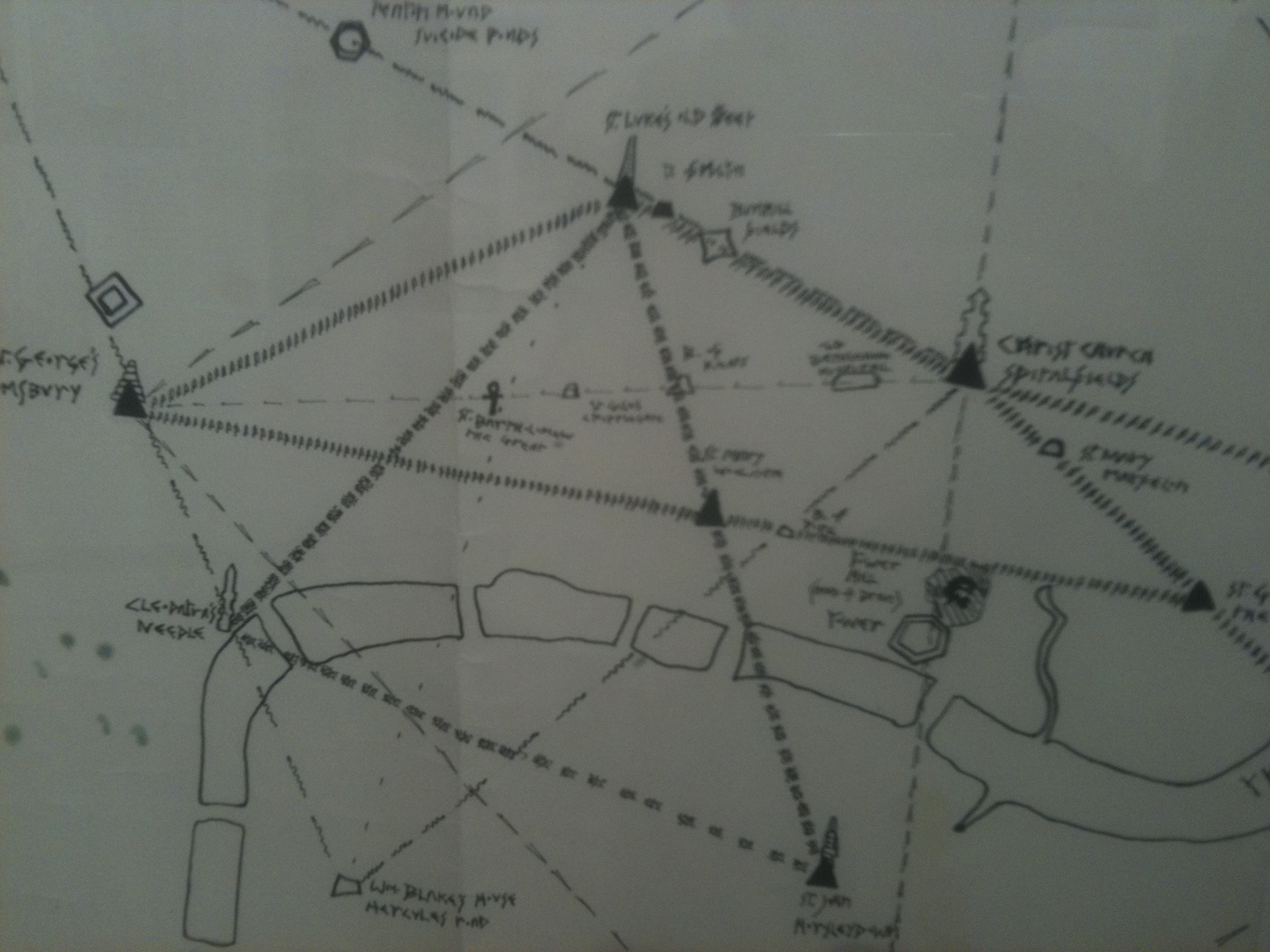
Among the first to take up this theme was Iain Sinclair who wrote about Hawksmoor in King Lud (1975). A quote from the book is reproduced on the wall, and it offers a perfect illustration of what I dislike about the psychogeographic way of seeing London: ‘From what is known of Hawksmoor it is possible to imagine he did work a code into the buildings, knowingly or unknowingly, templates of meaning, bands of continuous ritual.’

‘From what is known’; ‘possible to imagine’; ‘knowing or unknowing’. Make it up as you go along, in other words. There’s nothing wrong with this, of course, but I do resent the way it is elevated above all other forms of London writing.

Sinclair has made a career out it, and he does it so well you could almost believe he takes it seriously. A fascinating map drawn by him features in the exhibition, showing his hand-drawn connections between London buildings, and there’s also a great film in which he talks eloquently about his relationship with Hawksmoor, which began when he was a gardener employed by Tower Hamlets to mow the churchyard grass at St Anne, Limehouse. Sinclair is a wonderful speaker, and spins a fine yarn here.

Sinclair's map for King Lud

After Sinclair came Ackroyd and Alan Moore, both of whom woves tales of occultish imagination around this indefinable mystery of Hawksmoor churches. Nonsense clearly, but at least it gave us the majestic From Hell, which features prominently in the exhibition.

From Hell featuring Christchurch, Spitalfields

All this bunkum gets space in the exhibition, but I found much else to entertain besides. There are wonderful photographs and prints of Hawksmoor buildings in many different styles and from varied eras, and also a passionate film by Ptolmy Dean, explaining – quite successfully – the attractions of the easily overlooked St Mary Woolnoth near the Bank of England.

The most interesting element, however, were the photos that drew attention to the parallels between Hawksmoor’s work and more recent buildings. We see a comparison of St Mary Woolnoth and Poultry in the City, and another between St Anne, Limehouse and the National Theatre. It might not be as sexy as psychogeography, but there’s nothing wrong with a bit of straightforward architectural history every now and then.

paul_0133fw.jpg

Celia Paul's St George, Bloomsbury