Category Archives: Architecture

James Watt’s workshop at the Science Museum

This piece was originally published in World of Interiors in December 2011.

James Watt was not a tidy man. Inside the Scottish engineer’s eighteenth-century workshop, shelves are thick with dust and overlapping objects of marvellous obscurity. It’s chaotic, but it is the past, a life perfectly preserved. Almost 100 years ago, this attic room was moved from Birmingham and reconstructed at the Science Museum, but the public have only recently been readmitted. It’s a delightful and very human sight. Unlike the modern scientist’s sterile laboratory, items are stuck to wall and floor, or piled harum-scarum on shelves, desks, tables, lathes and huge wooden machines of curious design. There are 8,434 objects all told, each lovingly listed on an exterior wall. Pincers, mallets, drawer knobs, hacksaws, charcoal, ladles, a frying pan, washers, broken thermometers, bent wire, drills, bradawls (six without handles), packages of chemicals wrapped in yellow paper and tied with brittle string, lumps of metal, fossils, half-finished statues, cogs, pieces of wood, barrels full of plaster of Paris and a clock key. There’s even, or so it says, a sea horse tooth. Nothing thrown away. This is the testimony of a life in science, and it looks exactly as Watt left it almost 200 years ago.

Watt was born in Greenock, Scotland in 1736. For several years, he quietly sold scientific instruments, musical instruments and toys from a shop in Glasgow but he had a curious mind and was an inveterate tinkerer. In 1776, he completed a steam engine that used a fifth of the coal of the existing engine. Factories and mines all over the country were soon powered by Watt engines as Britain surged into the steam-driven Industrial Revolution. Watt became a hero, as crucial to the national identity as Wellington and Nelson. On his death in 1819, he was the first engineer to have a statue in Westminster Abbey, although it was later removed as it was grotesquely large. His legend was international. In Japan, the state dispensed prints of Watt to promote the British values of industry, resilience and ingenuity that he embodied.

Watt began work on the steam engine in 1764 and moved to Birmingham ten years later taking with him the tools, fixtures and fittings he had accumulated in Glasgow. In 1790, he settled in Handsworth where he had his final workshop, a garret room where he could work undisturbed. In this dark space, Watt drilled, sawed and chiselled, experimented with chemicals, and developed a variety of extraordinary devices, including a perspective drawing machine, a letter-copying press and a sculpture-copying machine. He often had to make for himself the tools he needed for his inventions, including what Science Museum curators think is the oldest circular saw they’ve ever seen. The impression gained is of somebody who loved using his hands, and was always looking for ways to improve production, to make more things, and faster. He was a solitary soul. To ensure he could work without interference, Watt built a shelf outside the door on which the maid could leave his dinner. When he was ready, he would bring it inside and warm it on the stove. There’s a hint of sadness too. In one corner lies a chest full of things that belonged to his son Gregory, who died of tuberculosis in 1804. It seems Watt kept it here, close by, for 15 years until his own death.

At which point, the door was closed and the room left untouched. Even as the house was occupied by new families, the workshop was kept as Watt had left it for more than a century, with drawers full of half-made thermometers wrapped in wax paper and surfaces strewn with rusty hinges. It became a shrine. One visitor commented, ‘the dust lay so thick it was like walking in soft snow’. One pilgrim was Bennet Woodcroft, who ran the Patent Office Museum, part of the South Kensington Museum. Woodcroft was acquiring key artefacts from the Industrial Revolution and in the 1860s registered an interest in the room. However, it was not transferred until 1924, by which time Woodcroft was dead and the Patent Office Museum had become the Science Museum.

They took everything– not just the furniture and contents but the floorboards, door, window frames, fireplace, stove and flue – and reconstructed them on the ground floor of the museum. Workman even asked if they should remove the dust. The public would peer through a window above Watt’s workbench and observe a scene almost identical to the one painted by visiting artists in 1864 and 1889. But by the 1970s, it had become a museum relic. The room was moved to the mezzanine, where it was ignored for another couple of decades before being ignominiously boarded up. Staff could still reach it if they took the wrong door out of the admin office, but the public would never know it was there.
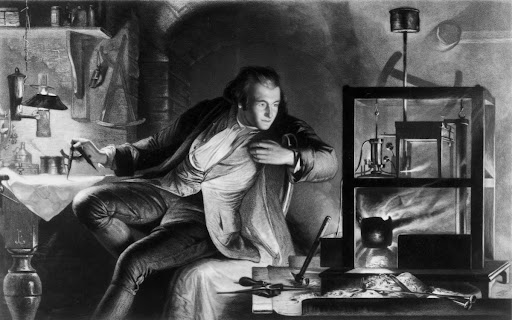
So it remained until earlier this year, when the room was returned to the ground floor and made the centrepiece of an exhibition that examined Watt’s life in the context of the Industrial Revolution. In an act of domestic archaeology, objects were removed from drawers where they had been invisible for centuries as curators resolved to explore every nook and cranny. These were then replaced exactly where Watt had left them.

The exhibition shows that Watt was a scientist but also a workman, constructing by hand the very machines that made mass production possible. Years later, William Morris would reject the industrialised world that Watt had created, but the two had something in common in their love of forming things by hand. However, Watt’s inventions meant things no longer had to be created at such labour and expense, and people could choose for themselves the design and furnishing of their home rather than rely on what was passed on to them by their forefathers. It was the start of the consumer age, making Watt was partly responsible for many of the decorative items that can be studied at length next door at the V&A Museum. When Woodcroft visited Watt’s workshop, this relationship between industry and design would have been more apparent. The South Kensington Museum was essentially the Science Museum and the V&A combined, and had been created partly to inspire the working class with technique as well as design, showing not just beautiful objects but also how they were made. Now cause and effect, science and art, are divided by the bustle of Exhibition Road. But enter Watt’s workshop, and just for a moment the two become one.

Secret London: the Temple of Mithras goes back where it came from

The Temple of Mithras is one of London’s most easily viewed and best known Roman sites, but it is also one of its crappest. The temple has been in the wrong place pretty much ever since it was discovered 50 years ago and now sits unimpressively in a bed of a concrete in front of a banal office building in the City (image below from Knowledge Of London).

The Temple of Mithras: ‘crap’

All that is about to change. Next week, Museum of London Archaeology will begin a three year project that will put the Temple back where it belongs, and restore it to something closer to its original form. They will also do a little digging, to see what else they can discover.

The Temple – a shrine to an Iranian god who was said to have killed a mythical bull – was found by archaeologist WF Grimes  in 1952 on Walbrook. The cult was adopted by the Romans in 1 AD and the temple – probably built in around 250 AD – would originally have been a subterranean space where bulls were sacrificed. Archeologists had suspected there was Mithran temple in London since 1889, after the discovery in Walbrook of a relief depicting the god killing a bull but it was only uncovered after the Second World War, when the area suffered heavy bomb damage and became ripe for development.

A statue of Mithras were found buried beneath the temple, and it may well have later been used by followers of Bacchus, as Mithraism went into decline. Mithraism is sometimes seen as a precursor to Christianity, although I don’t know enough about that to possibly comment.

The temple was dismantled shortly after it was discovered so the construction of Bucklersbury House could continue. The material was put into storage and many of the statues loaned to the Museum of London. In 1962, the temple was reconstructed on Queen Victoria Street, 90 metres from its original site at ground level, embedded in the courtyard of a City office block. It was a particularly dismal and unsympathetic treatment of a genuine archaeological curiosity. Most people had no idea what it was, and even if they did, it was very hard to care.

The site is now owned by Bloomberg, and they are about to start dismantling the temple by removing it from the cement that currently encases it, and then reconstructing it on its original site in what they call ‘a purpose-built and publicly accessible interpretation space within their new building’. This will take three years, but many will rejoice that it is happening at all.

Secret London: stink pipes

There is one of these just around the corner from where I live.

Herne Hill stink pipe

It’s long, thin, green and old and thrusts straight into the air like a giant’s, er, finger. It’s not a telegraph pole – there are no wires coming off it – and it’s too tall to be a broken street lamp.

It is, in fact, a stink pipe, one of four such items of street furniture that can be found within a half-mile radius of Brixton Water Lane. These stink pipe were built around the same time as London’s Victorian sewer network in the 1860s and are basically just huge hollow pipes that allow potentially lethal gas to escape into the atmosphere, far above the rooftops.  They often seem to located near the locations of culverted rivers – these ones are found more or less on the route of the Effra or its tributaries – suggesting that when these rivers were incorporated into the sewer system, they required some sort of additional safety valve (the buried Fleet famously exploded at King’s Cross after just such a build-up of gas in 1846).

Some stinkpipes are rather elaborate, but the ones I’ve seen around Herne Hill and Brixton are pretty basic and utilitarian. If you want to find some finer examples, like the fine crowned stench pipes of Kennington Cross, you should check out the excellent London Stench Pipes blog, which is devoted to these marvellous oddities leftover from Victorian London.

Secret London: Brixton’s Windmill

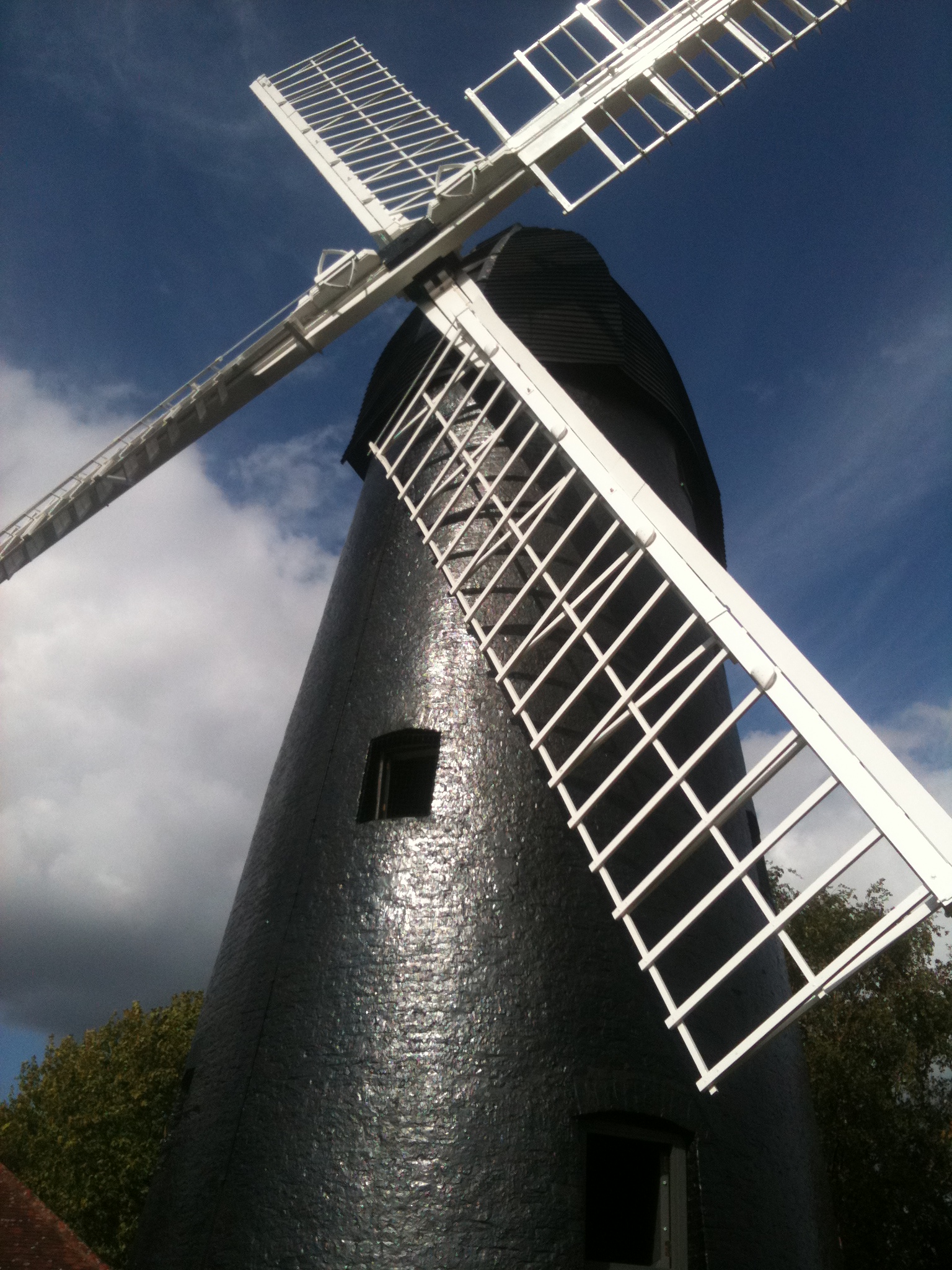
I finally got round to visiting Brixton Windmill during Open House Weekend. I first heard about the windmill ten years or so again, when I would go to gigs at the Windmill pub and pop out between acts to try to catch a glimpse of this extraordinary building in the nearby park, lost and derelict like an abandoned spaceship.

The windmill was built in 1816 and run by John Ashby of Brixton Hall. It was originally on a hill in fields, surrounded by outbuildings like a mill cottage and bake house, where bread was baked with the mill’s stone-ground wholemeal flour and sold to locals.

By the 1850s, Brixton was starting to grow and new housing blocked the wind, hampering performance. In 1862, the Ashby’s took their milling business to the Mitcham watermills along the Wandle, but the Brixton Windmill somehow remained, used for storage. The sails, though, were removed and sold for firewood.

In 1902, the windmill was returned to use, albeit as a location for a steam-powered provender mill. The mill was finally closed in 1934 and left empty until the LCC purchased it in 1957, after at least one attempt had been made to demolish it and cover the site with flats. Despite the sails being restored in 1983, the windmill, now owned by Lambeth, was allowed to run almost to ruin, which is how it appeared when I first saw it.

Since then, a major restoration project has taken place and the windmill is now open again to the public around once a month. The Friends of Windmill Gardens, a local residents association, also hope to start grinding flour again, using the provender mill that still survives on the first floor.

In celebration, here are the Fuck Buttons playing at the Brixton Windmill pub.

London bricks

‘The bricks – laid Flemish bond, headers and stretchers alternating – were all old London stock bricks, but of many kinds and colours: rust red, beige, grey, brown, nearly black. Here and there were yellow ones – malm bricks made with an admixture of clay and chalk. The cumulative effect was pleasing – the variety gave texture, interest and warmth to the surface of the wall. The eye approved the range of colour, the uneven look, the way in which each brick differed from its neighbour and yet was in subtle harmony. But, more that that, to look at it was to see the way in which this wall arose from the ashes of many buildings. Studying it, Matthew saw in his mind’s eye warehouses and churches, factories and shops, terrace houses like this one, blasted to the ground perhaps on some furnace night of 1940. He thought of how the city lifts again and again from its own decay, thrusting up from its own detritus, from the sediment of brick dust, rubble, wood splinters, rusted iron, potsherds, coins and bones. He thought of himself, living briefly on top of this pile, inheriting its physical variety and, above all, the clamour of its references. The thought sustained him, in some curious way, as he sat at his desk in the flat which was not yet a home, or as he moved through days and through the city, from Finsbury to Docklands to Covent Garden to Lincoln’s Inn.

Penelope Lively in ‘City Of The Mind’ (1991, Andre Deutsch).

Secret London: swastikas

One of the great London rumours is that somewhere inside the Royal Society’s building on Carlton House Terrace sits a giant swastika.  This is not because these esteemed scientists and thinkers are secretly Hitler-worshipping fascists, but because their home at Nos 6-9 was the location of the German Embassy (at Nos 8-9) during the pre-war Nazi era.

Carlton House Terrace was designed by John Nash between 1827-1832 to occupy a site previously taken by Carlton House. No 9 almost immediately became the seat of the Prussian Legation, which slowly evolved into the German Embassy. In the spirit of the time, it soon expanded to occupy the house next door at No 8.

In 1936, Joachim von Ribbentrop moved in, replacing the late Ambassador Leopold von Hoesch (whose dog’s gravestone can be seen under a tree near the Duke of York steps). Von Ribbentrop demanded a complete renovation of the property, and the Nazi’s top architect, Albert Speer, was called in to do the job. Exactly what he did remains something of a mystery, but the German Embassy website claims:

‘Only the fact that the Nash Terrace was a listed building saved the facades from being included in Ribbentrop’s plan to establish a model of the Third Reich architecture in the centre of the British capital. The renovation was exhaustive, money was no object.’

It is hard to discern exactly what alterations Speer made, but one diplomat wrote that the showy renovation of No 8 and 9 Carlton House Terrace had produced a style and furniture less suitable for an embassy and more comparable to that of German luxury liners of the time like the “Bremen”.  A contemporary set of photographs are lodged at the Library of Congress. The only one currently viewable is of the very modern-looking kitchen.

This decent phot0-set shows the building now, including Speer’s striking staircase, said to be constructed by marble supplied by Mussolini.

Albert Speer designed this

Among Speer’s embellishments was said to be the inclusion of a swastika mosaic on the floor of one of the public rooms. After the war, rather than remove the offending article, the swastika was said to have been simply covered with a carpet. (And this website claims there are still visible ‘border designs of swastikas on the floor of one public room’, which seems unlikely.)

Is it true?

Well, I’ve never seen a photo to substantiate the claim and people I know who have been inside the Royal Society are also none the wiser. However, I did once receive an email at Time Out from a builder who claimed to have renovated the building in the 1990s and seen a huge swastika under one carpet. Where, presumably, it still remains. Von Ribbentrop also had a house built for him in Pinner, which was said to have swastikas carved into the staircase.

If you do have a hankering to see a swastika in London, you should head for India House, where this plaque can be seen on the wall.

It represents the swastika when it was still an intriguing sign from the east, before it was appropriated by Hitler. In the first two decades of the 20th century, the swastika was a popular symbol in the west, often used as a good luck charm and adopted by groups as varied as the Boy Scouts and the Druids. My copy of Rudyard Kipling’s Just-So Stories still has a prominent swastika featured in one illustration and the British Museum is full of the things.

Indeed, so popular was the swastika, it was even used to liven up the decor at Hounslow Bus Garage. Click on that last link and zoom in and you’ll see the border of pretty little swastikas that featured in the staff canteen. These swiftly disappeared as the truth about Hitler became impossible to ignore.


Thomas Paine’s London bridge

Thomas Paine was many things. A writer, revolutionary and political philosopher, Paine was also an inventor and engineer, who made the world’s first smokeless candle. He was also an occasional Londoner, most notably when he stayed at the Angel Inn, Islington, around the time he began writing Rights Of Man in 1791. This monument celebrates that fact.

Considerably more interesting than this, though, is the rarely discussed fact that Tom Paine built bridges. Iron bridges. And he built one of them in London.

Paine was fascinated by bridges, admiring them for their architecture as much as their metaphorical meaning. John Keane, Paine’s biographer, writes that he ‘was stuck by their double meaning. Bridges were for him combinations of architectural beauty and practicality, works of genius that could be breathtaking in their simplicity… the rising spirit of an epoch translated into space.’

Paine first tried to raise the funds to build an iron bridge over the Harlem River in New York in 1785 and then another over the Seine in Paris in 1786, but without success. Bridges of this era were still largely constructed in stone and wood, making Paine’s ideas rather unusual. Plus, he had no real background in engineering or architecture.

But he persevered. In 1788-89, he attempted to build an iron bridge over the River Don in South Yorkshire and although the project was never completed it did secure him a patent for his bridge-building scheme. Paine now decided that he needed to build his prototype bridge in London, where potential investors could see for themselves the sort of brilliant bridge he was going  to make. He told Thomas Jefferson – who himself had many ideas about how the bridge should be built – that a London bridge would soon pay for itself in tolls. Jefferson was impressed, writing to a friend: ‘Mr Paine, the author of Common Sense, has invented an iron bridge, which promises to be cheaper by a great deal than stone, and to admit of a much greater arch. He supposes it may be ventured for an arch of five hundred feet. He has obtained a patent for it in England, and is now executing the first experiment with an arch of between ninety and one hundred feet.’

Paine had originally hoped to build this experimental bridge to nowhere in Soho Square, but when he wrote to George Washington on May 1, 1790 describing his single-arch bridge of 110 feet, he still hadn’t found an appropriate location. By the end of May he could tell the no doubt anxious Washington that a site had been found – a field next to a famous tavern called the Yorkshire Stingo, on the Marylebone Road near what is now Lisson Grove. This was at least partly appropriate, given that the bridge was being constructed by a Rotherham-based ironworker called Thomas Walker.

Paine moved into the Yorkshire Stingo and began erecting his 110-foot bridge on the neighbouring bowling green. By September it was finished. Jefferson wrote to him a very nice letter saying: ‘I congratulate you sincerely on the success of your bridge. I was sure of it before from theory: yet one likes to be assured from practice also.’

However, although there were many interested visitors, none of them were impressed enough to offer to invest in Paine’s scheme to build a bridge over the Thames. By October 1791, Paine’s bridge had been started to rust and Paine had lost interest, so it was dismantled and the iron returned to Yorkshire, where some was used in a bridge built over the River Wear in Sunderland in 1796, which at the time was the longest iron bridge at the world at 240 feet.

Secret London: Toulouse-Lautrec in Catford

Say what you like about South London, but it clearly has something about it. Why else would a trinity of the world’s greatest 19th-century artists have come here?

You probably know about Vincent Van Gogh’s time in Brixton because of the play from a few years ago. Van Gogh lodged in Hackford Road, Brixton in 1873 and regularly walked from there to Covent Garden where he worked as an art dealer.

This is the only surviving picture he sketched during this period It’s of the Georgian houses on Hackford Road itself.

Van Gogh also lived in Isleworth in 1876, at 160 Twickenham Road, when he later returned to London as a teacher. Hackford Road now has an English Heritage blue plaque for Van Gogh, and there used to be a Van Gogh Cafe on Brixton Road, but it’s closed down.

Camille Pissarro painted around a dozen pictures of Sydenham and Dulwich during his time in South London in 1870. I particularly like this one, of Lordship Lane Station.

As Michael Glover writes in the Independent: ‘The painting shows us a new kind of modernity. Here is London being mightily transformed by the growth of housing and the ever onward thrust of the railways in the second half of the 19th century.’ Pissarro lived at No 77 Westow Hill and then on Palace Road, and married at Croydon Registry Office. He returned to London a number of times. Lordship Lane station was demolished in 1954. A non-English Heritage blue plaque adorns the site of his house on Westow Hill and a restaurant called Pissarro is in Chiswick, but I’m pretty sure that’s named after his son Lucien.

Best of all, though, is the fact that Henri de Toulouse-Lautrec did time in Catford in 1896. The diminutive brothel-loving soak was a huge fan of cycling and in 1896 was asked by a company called Simpson to work on a poster for their new bike, which used a new type of chain. This, according to Wiki, ‘was composed of linked triangles forming two levels. The inner level was driven by the chainring and the outer drove the rear cog. Instead of teeth, the chainring and cog had grooves into which the rollers of the chain engaged.’

I’m not sure what that means, and probably neither did Lautrec, so he came to the newly built Catford Velodrome to watch the bike in action during special races, set up by Simpson to advertise their product. Lautrec produced a couple of images during his visit. The poster was one of the last he designed before his death in 1901.

The velodrome was knocked down in the 1990s and there is no trace of it left (it’s location was approximately around Sportsbank Road), but there is at least a brasserie in Kennington called Toulouse-Lautrec.

But perhaps Toulouse-Lautrec had more influence on Catford than we may have thought?

Consider this, a famous poster advertising one of Lautrec’s favourite clubs by one of his contemporaries and very much in Lautrec’s style.

And this.

If you do not wish to go all the way to Catford to pay homage, an exhibition of Lautrec’s work goes on display later in June at the Courtauld Gallery at Somerset House, where you can also see Pissarro’s lovely picture of Lordship Lane Station.

Mudlarking

Last winter, I went mudlarking on the Thames shore. This is an edited version of the article I subsequently wrote for Eurostar (image below from Knowledge Of London).

You’ll see them at low tide, wandering alone with bent necks along the damp and desolate mudflats of the Thames. These are the mudlarks: amateur archaeologists, beachcombers and scavengers who delight in rediscovering lost detritus from London’s past. Although they are wearing waders and carrying metal detectors, they look much like giant birds, storks or herons, as they walk with heads bowed and eyes fixed on the floor, scrutinising the mud and pebbles for hidden treasure. They’ll occasionally scratch at the surface with an extended toe if they see something they fancy. And then they’ll pounce, darting down to peck something from the ooze, before deciding whether to add it to the day’s hoard.

The tidal Thames has been described as ‘London’s largest and richest archaeology site’ and it’s certainly the longest in the country, stretching from the Thames Barrier to Teddington Lock. For centuries, the river in central London was used by boats bringing cargo from all over the world. Thousands of people worked in these docks and warehouses, and items that have fallen from boats or pockets or been casually discarded by Tudor dockers are still lodged in the London mud, waiting to be revealed whenever the tidal river withdraws.

Mudlarks have been prowling here for centuries. In Georgian and Victorian times, they were the desperately poor searching for things to eat or sell. By the 1960s, the term referred to unofficial archaeologists who formed the Society Of Thames Mudlarks in 1980. A few years later the Port of London Authority (PLA) – the body in charge of the river – offered the mudlarks licences to dig on the foreshore in return for having their finds officially recorded by the Museum of London. The mudlarks have thus helped build an unparalleled record of everyday life on a medieval river.

Ian Smith is one of them. His patch is the north bank of the Thames between London and Southwark Bridges, outside Customs House, where pre-Victorian cargo ships would have been checked for contraband. This was once the Pool of London, the main unloading point for boats that could not fit between the pillars of old London Bridge, and a place rich in treasures. ‘I started in 1973 as a schoolboy,’ says Smith on a bracing winter morning. ‘I grew up in Battersea and saw a TV show about a man who found these old clay pipes in the Bristol Channel. So I came down to see what I could find. I spent about a year working down the river bit-by-bit until I got to Blackfriars where I saw this group of people, a little cluster of them, and I went over with my collection of pipes. And where they’d been poking about there were pipes everywhere, loads of them, they were just ignoring them and looking for other stuff. So I started chatting and that’s how I got started.’

The thick black mud of the Thames conceals rich treats, everything from prehistoric flints to Victorian toys. The mud is anaerobic – without oxygen – so preserves just about anything. Kate Sumnall works for the Museum of London and the Portable Antiquities Scheme as a Finds Liaison Officer; it is her job to manage the licence scheme and register everything the mudlarks find. She says, ‘London is different to most places in terms of the preservation and the proportion. You wouldn’t get iron daggers in a field, it would be eroded, but Thames mud is anaerobic so things don’t decay. And you also don’t have aggressive chemicals and ploughs, which damage items in the ground. You can still find medieval leather in the Thames.’

Smith believes the Thames has three other benefits. ‘London is almost unique,’ says Smith. ‘Most rivers aren’t tidal, so that’s one thing, but you’ve also got the river going through the centre of town rather than round the outside. And the third thing is that in the Victorian era all the docks got moved over to the Isle of Dogs, so that means the early stuff has been left in the ground rather than dredged away centuries ago.’

This is what makes the Thames such a popular and lucrative haunt for the mudlarks. There are around 50 with official permits, granted by the PLA after an individual has spent at least two years on the foreshore getting experience and demonstrating a history of recording their finds. ‘The mudlarks have huge value,’ says Sumnall. ‘They have sold us entire collections in the past and these have gone on to form a crucial part of the museum. But they are also immensely helpful in recording where things are discovered over time, which helps build up a bigger picture of London history.’

When Sumnall is contacted by somebody who wants to be a mudlark, she’ll often put them in touch with Smith, who has an unrivalled knowledge of the river and its secrets, knowing where to look and when. At low tide, he clambers down the steps on to the foreshore carrying the tools of his trade – a bucket and spade and a battered metal detector wrapped in waterproof plastic – to begin his hunt. After just a few minutes he returns with a 13th-century arrowhead, 16th century pipes, medieval buttons and a shard of Tudor pottery. But this is bric-a-brac to an experienced mudlark. Smith, an antiques dealer by trade, specialises in medieval pewter pilgrims badges which were sold at points of pilgrimage, but has found all sorts of things. ‘I found a hoard of forged coins from 1470,’ he says. ‘People would clip a bit of silver off the edges of coins and these forgers must have been chased so they flung the bag of coins into the river to get rid of it and I found it centuries later.’

London’s history as a world port dates back to the Roman era, which can make for interesting finds. Sumnall tells the story of a bone harpoon that they originally thought came from the Stone Age, but after carbon dating turned out to be from around 1650. ‘That really threw us, but we realised it came from a part of the foreshore where the whaling docks were located and it’s possible it came from an Arctic civilisation and arrived in London on a whaling ship. But obviously we can’t be sure.’

Another recent discovery was a 400-year-old lead toy coach, found by a London decorator, Albert Johanessen, who says his most important equipment is not a metal detector but ‘his eyes and a stout pair of wellies’. Smith possesses these, but after 40 years of mudlarking is realistic about what he’s going to find. ‘You’re never going to find treasure like the Staffordshire Hoard because nobody is going to bury gold in a river, but you find ordinary everyday stuff that people chuck away: tools, rings, badges, glass and pottery.’

You certainly find a lot of clay pipes. These carpet the foreshore in London, thousands of them dating back to the sixteenth century when tobacco was first introduced to the capital. The pipes were sold pre-filled and although they were reusable were often discarded, thrown into the river by those who worked in the docks. These 400-year-old fragments are fascinating to newcomers but to the trained eye are more like Tudor cigarette ends and rarely get taken to the museum to be registered.

But there is one Londoner who is interested. Jane Parker is a designer who last year began to collect pipes to make into necklaces and bracelets. She currently sells them on her website but hopes to get a stall at a London market soon. ‘I went to the Museum of London Docklands (in Canary Wharf) and afterwards walked to the river,’ explains Parker. ‘The tide was out so I went down on to the beach. I saw these clay pipe stems and decided I’d make something from them and started making them for friends who had left London as a momento.’

Parker doesn’t have a PLA licence, which means she can’t dig but is allowed to collect anything from the surface. With pipes that’s all she needs. At the right spot, Parker reckons she can pick up 400-500 usable pipe stems in an hour. ‘I want stems that have been pummelled by the tide, and are soft and worn at the ends. The smaller and finer, the newer they are. Some of them have a line down the middle that show they’ve been cast in a mould, while the bigger, chunkier ones are hand-made, the holes aren’t centred and they aren’t smooth.’

You can also see the fruits of the foreshore in a special display at the Museum of London devoted to items found in the river, covering everything from prehistoric axes to medieval skulls. The museum takes in around 1,000 items a year from the mudlarks and despite Smith’s belief that ‘the best times are over, so much has already been found’, Sumnell thinks there’s still plenty to discover. ‘We’re definitely finding different things,’ she says. ‘They heyday of the pilgrim badges may have passed but we’re seeing more Roman stuff than I can keep up with, especially in areas of heavy erosion. There’s still a lot of interest in mudlarks, and we’re always getting new ones.’ A new generation itching to uncover the secrets of the Thames.

Small is beautiful: maps and models in London exhibitions

I’ve written before about my dislike of blockbuster exhibitions so was interested to read this piece by Stephen Moss the other day about how the age of the blockbuster may be coming to an end.  It may be wishful thinking, but support for his view comes from some surprising places.

Ken Arnold, the creative force behind the Wellcome Collection, recently told me that ‘Blockbusters are a depressingly greedy way to view exhibitions’. Arnold criticised the idea that any institution would want to cover a subject so definitively it left no avenues for others to explore, and also bemoaned the very experience of a blockbuster, which is often so unfulfilling for the spectator, who is shunted in and out on a timed ticket, having only seconds to view key works of art from behind a throng of tourists and daytrippers.

Small exhibitions might not get the column inches and posters on the tube, but they are often far more thoughtful, unusual and creatively curated. There are two crackers on display in London at the moment, and I’ve reviewed both of them. The Petrified Music of Architecture at the Sir John Soane Museum is a wonderful collection of tiny Victorian models of European cathedrals – I wrote about it for the New Statesman.

The Hand-Drawn London exhibition at the Museum of London is even better. Curated by the Londonist website, it features 11 idiosyncratic maps of London drawn by locals, and is one of the best exhibitions I’ve seen for a while. I reviewed it for the Independent.

Go and see them both.