Category Archives: Architecture

Secret London: the London Grill

I was recently asked to answer a few questions about Secret London by the blogging cabbies at Radio Taxis.

If you are interested in my favourite London building, London landmark and favourite London film and book, head here, where you will be rewarded with a mildly disturbing image of my face. 

Mind The Map at the London Transport Museum

Ever since the British Library’s London map exhibition in 2007, London museums have learnt to love cartography. The Museum of London’s Hand-Drawn London was a highlight of 2011, and now the London Transport Museum has joined the cool kids with a brilliant new Mind The Map exhibition.

This traces the relationship between transport and maps over the past 150 years or so and offers a brilliantly edited selection of material from the archives. The exhibition space at the museum isn’t vast, but the way it has been used here is superb. The twin focus is on the work of McDonald Gill and Harry Beck. Gill created the Wonderland map, a gorgeous, highly detailed map of London aimed at transport users. Here’s one of his, for Hyde Park.

The exhibition features a number of maps created by Gill – the brother of sculptor Eric Gill – and also this fascinating unfinished map of Temple, showing his working method. He begins with a serious flat plan of the city, before building up layers of impeccably detailed architectural illustration. Then on top of that go the speech bubbles, puns and references that make his maps so fascinating. Please excuse my poor photography.

In this section there are other decorative maps that were used by LT to promote different areas of London. Here is one featuring Cheam, where I grew up.

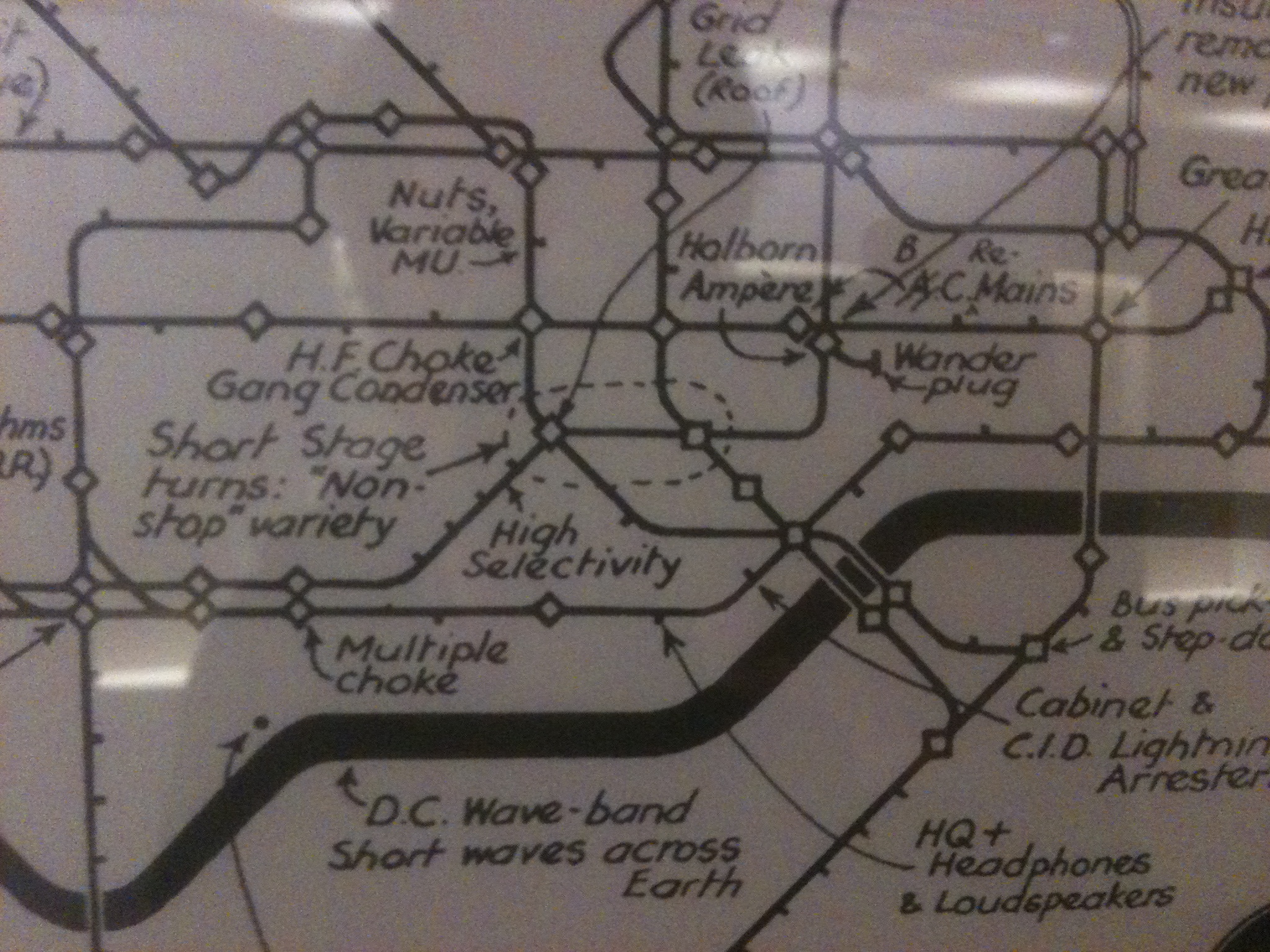
The Beck part of the exhibition is also brilliantly done given how much has already been done on the man who created the modern tube map. A personal highlight was this sketch from the London Transport staff newspaper in 1933, in which Beck gently mocks the popular notion that he got the idea for his diagrammatic map from a circuit board. He has redrawn his tube map as the interior of a transistor radio, thus creating the first mash-up/spoof of his iconic design and pre-dating The Great Bear by several decades.

Speaking of which, the LT Museum have commissioned six new pieces of art for the exhibition, and they are all great, which is quite unusual for these things. Simon Patterson has updated The Great Bear as Saptarishi, Jeremy Wood has created a new ghost map, tracing his movements through GPS and there’s a marvellous ‘Proustian’ map of London by Agnes Poitevin-Navarra.

My Ghost

Most exciting of all is Stephen (The Island) Walter’s new epic undertaking, London Subterranea, a stunningly detailed map of the London beneath our feet, executed in stark black and white and crammed with information and folklore.

When I talked to Walter a few years ago, he expressed a keenness to put The Island behind him despite some interesting related projects that had been suggested to him. I’m delighted that he has since decided to return to London mapping, as he is a master at it. I’m told he’s now working on an A-Z, which will incorporate The Island and London Subterranea.

Other highlights include a copy of the infamous 2009 tube map that omitted the Thames, a gorgeous 1932 enamel map from a station wall and a copy of Finchley Central by The New Vaudeville Band. There’s also a brilliant book by curator Claire Dobbin that accompanies the exhibition. Go see it!

Mind The Map opens 18 May until 28 October 2012. 

The Shard: ‘There hasn’t been a building like this in living memory’

View from the top floor of the Shard in September 2011

Throughout 2011 and 2012, the Shard has risen on the London horizon, a totem pole wrapped in glass that gets taller by the day and is now impossible to ignore. Not yet finished, it’s been the tallest building in the UK since December 2010 and when completed later this year will be the tallest in Europe, topping out at 310m (1,017 feet). The Shard stretches 72-storeys (although the mast on top takes it to the equivalent of 87 storeys) and will offer 1.2 million square feet of floor space. They say that on a clear day you will be able to see all the way to France from the top of Renzo Piano’s elegant skyscraper, and while that may be rather fanciful, the impact it will have on London is certainly far-reaching.

London is a city with plenty of tall buildings but the Shard is something else. Few buildings have so divided public opinion. ‘It is grotesquely out of scale with other London landmarks,’ says Jonathan Jones, the Guardian’s art critic, while Sir Terry Farrell, the architect, says, ‘It’s got style and it is a phenomenon. If we come back in ten years, people will feel affectionate towards it.’ The Shard’s developer, a straight-talking cockney called Irvine Sellar, cuts to the chase. ‘There hasn’t been a building like this in living memory,’ he says.

It all began in the late 90s, when Sellar purchased an unlovely office block near London Bridge station. After the government indicated they would support high-density buildings that were built near transport hubs, he decided to ‘maximise the potential’ of the one acre site by building a skyscraper. ‘We decided that if we wanted planning permission we had to get an international architect,’ recalls Sellar. ‘We met Renzo Piano in March 2000 in Berlin. He saw the beauty of the river and the railways and the way their energy blended and began to sketch in green felt pen on a napkin what he saw as a giant sail or an iceberg. The Shard emerged from that piece of paper.’

It took another nine years for construction to begin after English Heritage, St Paul’s and the Tower of London objected to the impact the Shard would have on London’s skyline. A spokesperson from English Heritage offers a view shared by many: ‘We have never denied the Shard as a piece of architecture with merit. Our problem is that it is in the wrong place – it is overwhelming and dominating –and in the backdrop of government protected views of St Paul’s Cathedral.’ Critics cite the fact the Shard looms over the dome of St Paul’s when viewed from Parliament Hill.

Sir Terry Farrell has built plenty of tall buildings and has also worked with English Heritage. He offers an interesting insight on London’s protected views. ‘We have created these visual roads in the sky,’ he says. ‘These rather ludicrous and arbitrary imaginary sky corridors around St Paul’s. I spoke to a Parisian who told me “You British really do puzzle me. In Paris, Haussmann arranged all the roads in long boulevards so you have these long vistas, but you Londoners have Haussmannised the sky even though it is a mess on the ground.” I mean, what’s wrong with seeing the Shard from Parliament Hill? If you really don’t like it, walk 20 yards to one side and the view will be different.’

The development went to a public enquiry, which Sellar won. ‘There is a case to protect certain sightlines,’ he admits. ‘But we’re not living in a museum. We didn’t want a public enquiry but it did make us think a little bit harder and as a result we’ve ended up with a better building.’

The Shard is unusual among London skyscrapers in that it will contain offices, restaurants, a hotel, public viewing gallery and apartments. Sellar says he always wanted a mixed-use building because he didn’t want to rely on any one sector for income, but it was Piano who pushed for what could be the most important aspect of the building –the public galleries right at the top. ‘Renzo thought it was vital the building was open to the public. That didn’t bother me at first, but it does now because we’ve built a building that Londoners feel they own –they can eat there, sleep there and view there.’ Farrell believes that this factor could make it London’s answer to the Empire State Building.

One positive part of the development that English Heritage does acknowledge is the regenerating effect it will have on London Bridge. ‘We have created a new quarter for London,’ says Sellar. Next to the Shard, Sellar is constructing a 17-storey office and retail building called the Place and the company is also assisting Network Rail in refurbishing London Bridge station. ‘That’s what tall buildings do,’ says Farrell. ‘They create a massive amount of demand and that brings in revenues and taxes that allow the council to sort out the immediate area.’

The overall effect on the neighbourhood will be immense and John Corey, chairman of the Bermondsey Forum, says local reaction is positive to the Goliath on their doorstep. ‘We feel it will put the area on the map. The area between London Bridge and Waterloo will become the third biggest economic region in London.’ A new outpost of the White Cube art gallery has opened on Bermondsey Street, and other developments will surely follow the money. Locals, though, are keen to strike a balance between existing independent shopping destinations like Borough Market and Bermondsey Street, and the new businesses that are soon to arrive.

Shane Clarke, Deputy CEO for Team London Bridge, the area’s Business Improvement District, says ‘There are some dissenting voices on the aesthetics, but there’s a feeling it’s going to be a huge driver for regeneration. But some local shops don’t want the big brands coming in on the back of regeneration, and we agree. We have the riverfront which is corporate and touristy and then we have Bermondsey Street which is more bohemian – both those areas complement each other very nicely and we want to create a gradual transition from the corporate shiny stuff to the independent shops on Bermondsey Street.’

The upshot is a striking building that will dominate the London skyline for generations, as well as transform a neighbourhood, one way or another. ‘It’s an amazing feeling to create this sort of building,’ says Sellar. ‘The Shard will be instantly recognisable around the globe like the Taj Mahal or the Sydney Opera House. We may not always be the tallest building in Europe, but we will be the most beautiful.’

This article first appeared in bthere, the magazine for Brussels Airlines magazine.

Played In London: sport in the city

A series of lectures called Played In London  will take place every Thursday in May on the theme of the history of sport and play in the capital. These will be at The Gallery on Cowcross Street, Smithfield, and promise to take in everything from Tudor tennis to pub darts. They are hosted by the great Simon Inglis, author of the legendary Football Grounds of Great Britain, a candidate for the title of best book ever written.

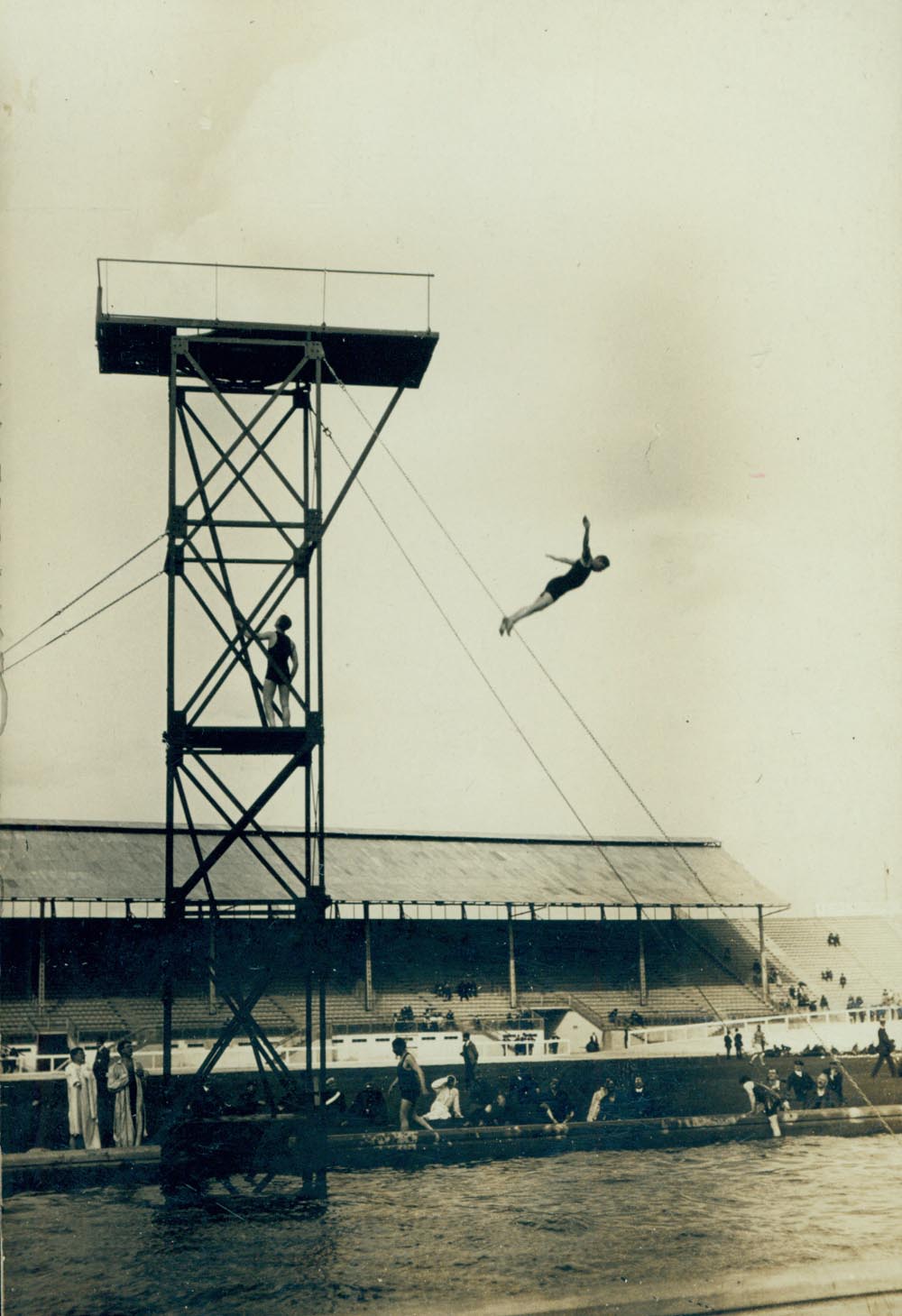
In November, English Heritage will publish a book (Played In London – Charting The Heritage Of A City At Play) on the topic, including lots of brilliant pictures like the one above, featuring the Furnivall Sculling Club, the first rowing club for women on the Thames, or these ones featuring the British swimming team in 1908 and the diving board at White City from that same year.


Secret London: the mystery of London’s World War II railings

I recently received this email:

‘Stumbled across your blog recently and wondered if you’d be interested in doing a bit of digging to find out what happened to London’s railings.

During WWII there was a national scrap drive especially active in London where a lot of railings were grubbed up and sent off to be scrapped. I have never been able to find out what really happened with this pre-emptive move to destroy London before the Luftwaffe but it seems that program was more of a public relations exercise rather than of any practical use and the railings were dumped.
I have heard tell of them being dumped in the Thames and being used as ballast for ships leaving the Port of London. It is said that seaport buildings in Guyana and Nigeria still sport rather nice Georgian railings.’
And that was it. In truth, I know little about London railings (image below from Knowledge Of London). I’d also heard the story that were used for scrap metal in the war, and was also aware that in Harleyford Street, SE11, some ARP stretchers used during the war to ferry casualties away from bombsites had been turned into railings (you can see a glimpse of them in Patrick Keiller’s London and they also feature in Peter Ashley’s excellent More London Peculiars).
So I turned to my dog-eared copy of London Street Furniture, which wasn’t much help. ‘Doubtless, railings have their devotees,’ I read. ‘The authors may be nerds, but this is one items of street furniture that even they cannot get excited about.’
Oh.
The section continues: ‘When we were children we heard all about the drive to uproot railings to produce scrap iron to assist the war effort in the early 1940s. We suspect that railings were seized and removed more keenly from working-class districts than from the fronts of the houses of people who had wealth and social and political clout.
Removing railings in WW2 (Imperial War Museum)
I’m not sure this is true, as I have read that railings were removed from many garden squares, making them suddenly accessible to the public (indeed, that is what is happening in the image above).
That the railings were removed is beyond doubt. Here is a typical quote from somebody who had their railings removed during the war, taken from the BBC’s People’s War site.
They took away our railings. Men came and cut the ornamental railing from the copings on the little walls outside of the houses, along the whole length of the road, they were taken away to be melted down to make weapons.
But did they really get melted down? A quick scour of the internet produces this interesting nugget from a WWII forum. It is a letter from 1984 to the Evening Standard and says in full:
I was interested in your item about the railings which are to be replaced in Ennismore Gardens. The tragedy is that so many of London’s railings were pulled down in order to support Britain’s war effort, bearing in mind that they never became the guns and tanks they were intended for.
In fact I believe that many hundreds of tons of scrap iron and ornamental railings were sent to the bottom in the Thames Estuary because Britain was unable to process this ironwork into weapons of war.
Christopher Long Earl’s Court Square, Earl’s Court,
London SW5.
The forum correspondent goes on to add: ‘This information came from dockers in Canning Town in 1978 who had worked during the war on ‘lighters’ that were towed down the Thames estuary to dump vast quantities of scrap metal and decorative ironwork. They claimed that so much was dumped at certain spots in the estuary that ships passing the area needed pilots to guide them because their compasses were so strongly affected by the quantity of iron on the sea-bed.’
A great story, but is it true? If anybody can say for sure, please do let us know.
UPDATE: The fine Johnny L, a noted nerd and jazz lover, points us towards this documentary by Jonathan Meades about Victorian houses.

Meades begins talking about railings after 4min 40secs. At 5min 30 secs he reports:

There aren’t many railings left now in London. This is because in 1940 there were ripped up as part of the war effort. It may have been a morale booster, but it was impractical – the stuff was never melted down and was thrown into the Thames rather unceremoniously off Sheerness on the Isle of Sheppey. The stuff’s still there.’

Pole to pole: more forgotten London street furniture

Some months ago, Russell Miller noticed that London was filled with metal posts that are left embedded in the ground long after the signs they once supported are taken away. So he began to photograph them for his website, taking particular interested in the way people walk past these rusting remnants without even noticing. And then he told me about it.

I think they are great. Here are a few examples, but for more check out Russell’s website – We Do This Because We Forget.


Hawksmoor at the Royal Academy: bunkum and brilliance

As the adverts all over the tube let us know, there’s currently a big David Hockney exhibition at the Royal Academy. Less well advertised, but far more compelling from a London point of view, is the same gallery’s fine show on the fascinating architecture of Nicholas Hawskmoor.

This takes place in the Architecture Space – a nice name for a small corridor near the restaurant – and features a short introduction to the architect, alongside photographs and paintings (photographed, not originals) of key works that feature or reference Hawksmoor’s work.

Hawksmoor, who specialised in hefty Baroque churches, is not an architect to everybody’s taste. In 1734, James Ralph argued that Christchurch was ‘beyond question, one of the most absurd piles in Europe’.  His reputation was resuscitated by Kerry Downes in 1959, who insisted of his churches that ‘they will repel us or fascinate us, but we cannot escape from their strange, haunting power’. This has been a mantra repeated by writers in the following years.

I actually find it quite easy to escape their powers, strange, haunting or otherwise, but this supposed mysterious attraction of Hawksmoor churches is now almost impossible to ignore or deny. It has been repeated so many times, it’s become fact, as Hawksmoor became the anointed architect for a certain type of London writer, the Peter Cook to Sir Christopher Wren’s Dudley Moore. I admire Hawksmoor’s churches, but don’t see them as particularly profound or unsettling.

Among the first to take up this theme was Iain Sinclair who wrote about Hawksmoor in King Lud (1975). A quote from the book is reproduced on the wall, and it offers a perfect illustration of what I dislike about the psychogeographic way of seeing London: ‘From what is known of Hawksmoor it is possible to imagine he did work a code into the buildings, knowingly or unknowingly, templates of meaning, bands of continuous ritual.’

‘From what is known’; ‘possible to imagine’; ‘knowing or unknowing’. Make it up as you go along, in other words. There’s nothing wrong with this, of course, but I do resent the way it is elevated above all other forms of London writing.

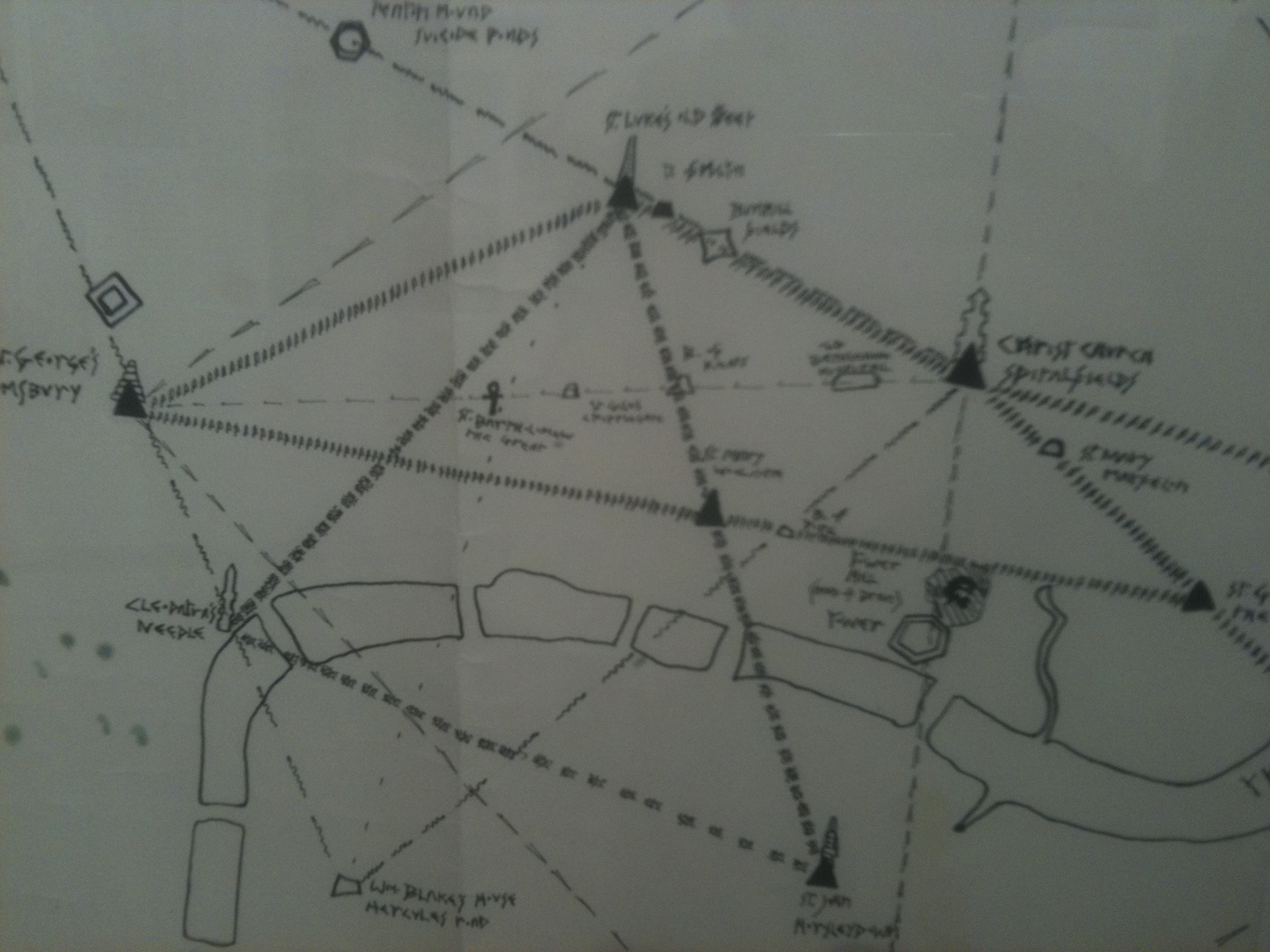
Sinclair has made a career out it, and he does it so well you could almost believe he takes it seriously. A fascinating map drawn by him features in the exhibition, showing his hand-drawn connections between London buildings, and there’s also a great film in which he talks eloquently about his relationship with Hawksmoor, which began when he was a gardener employed by Tower Hamlets to mow the churchyard grass at St Anne, Limehouse. Sinclair is a wonderful speaker, and spins a fine yarn here.

Sinclair’s map for King Lud

After Sinclair came Ackroyd and Alan Moore, both of whom woves tales of occultish imagination around this indefinable mystery of Hawksmoor churches. Nonsense clearly, but at least it gave us the majestic From Hell, which features prominently in the exhibition.

From Hell featuring Christchurch, Spitalfields

All this bunkum gets space in the exhibition, but I found much else to entertain besides. There are wonderful photographs and prints of Hawksmoor buildings in many different styles and from varied eras, and also a passionate film by Ptolmy Dean, explaining – quite successfully – the attractions of the easily overlooked St Mary Woolnoth near the Bank of England.

The most interesting element, however, were the photos that drew attention to the parallels between Hawksmoor’s work and more recent buildings. We see a comparison of St Mary Woolnoth and Poultry in the City, and another between St Anne, Limehouse and the National Theatre. It might not be as sexy as psychogeography, but there’s nothing wrong with a bit of straightforward architectural history every now and then.

Secret London: photos of lost rivers and abandoned London

Lovers of London urban landscape, lost rivers, photography and, for want of a better word, psychogeography, should be aware of a forthcoming exhibition, From The Westbourne To The Wandle at Maggs Bros gallery.

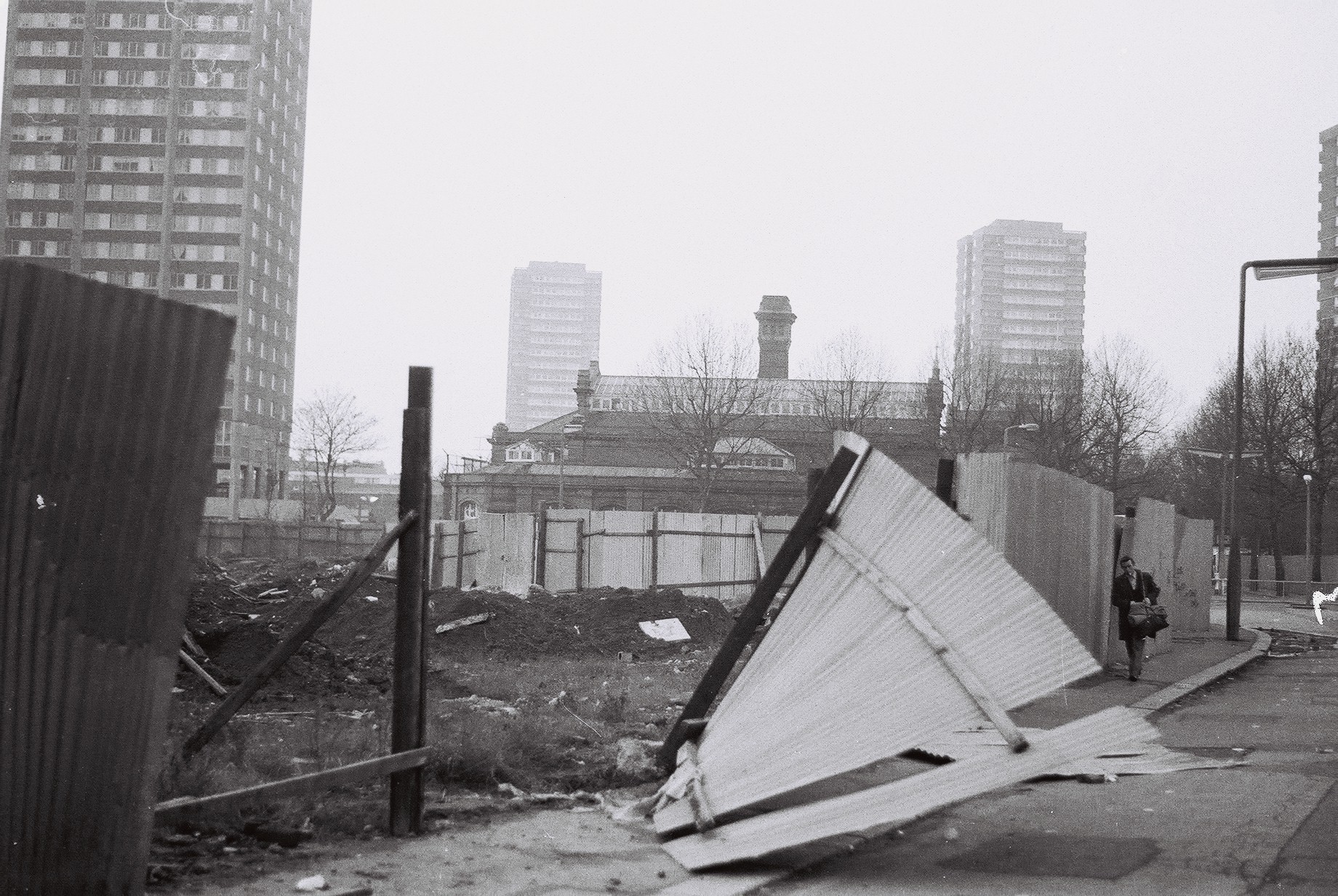
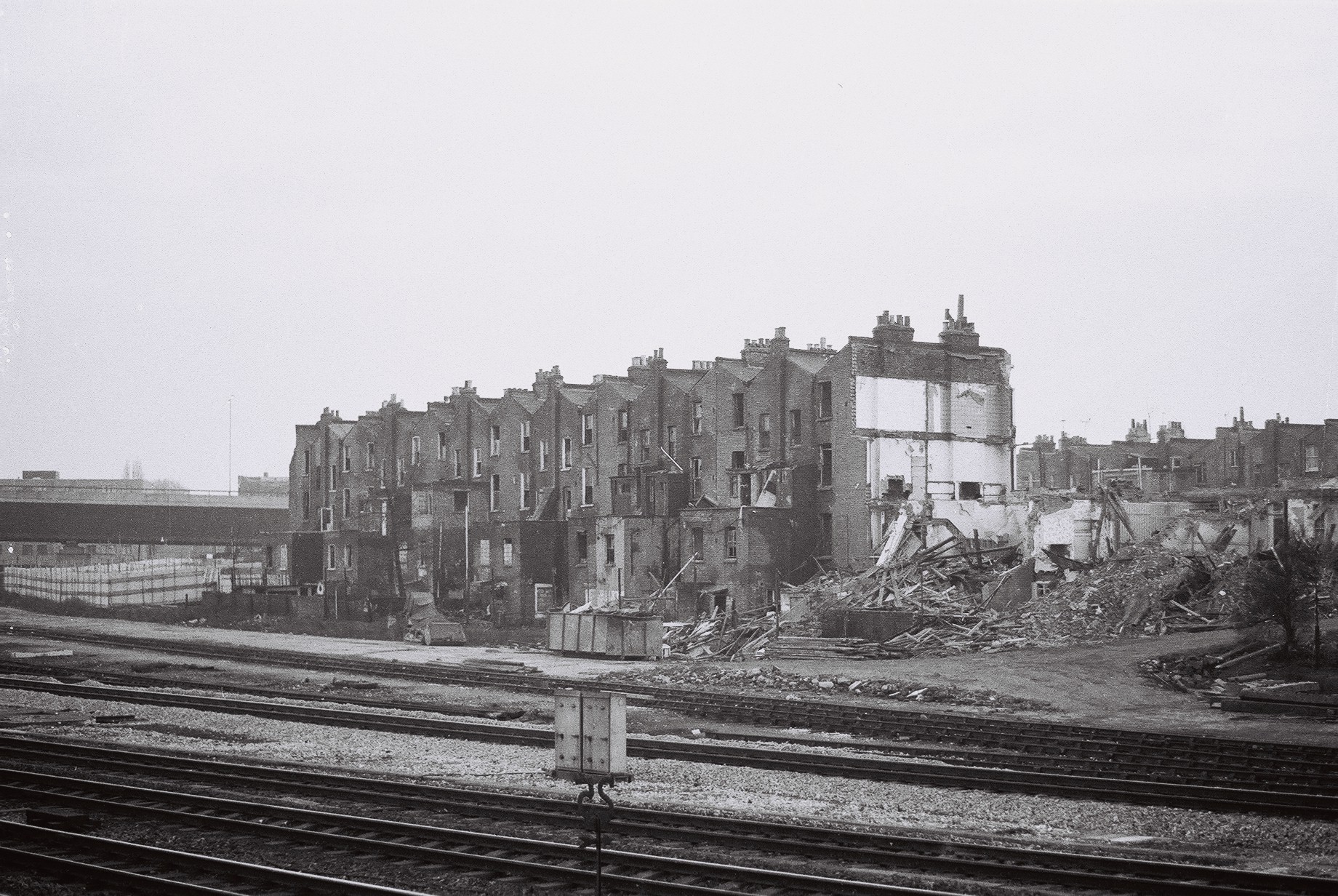
Curated by counterculture bookdealer Carl Williams, this brings together the work of two London photographers and writers, Jon Savage and SF Said. Savage is best known as a music writer, but in 1977, inspired by JG Ballard, he set out to photograph the urban wastelands of West London, taking a sequence of stunning black and white pictures of the lost land beneath the Westway.

He has written, ‘In its emptiness, austerity and gloom, it is an interzone waiting for something to happen, for the beasts to be unleashed. This was how London felt at the time: coming, coming, coming down – like a speed hangover merging into an apocalypse. But in there was also a sense of possibility that new ways of thinking might grow from this emptiness – like the scented buddleia on the bombsites.’

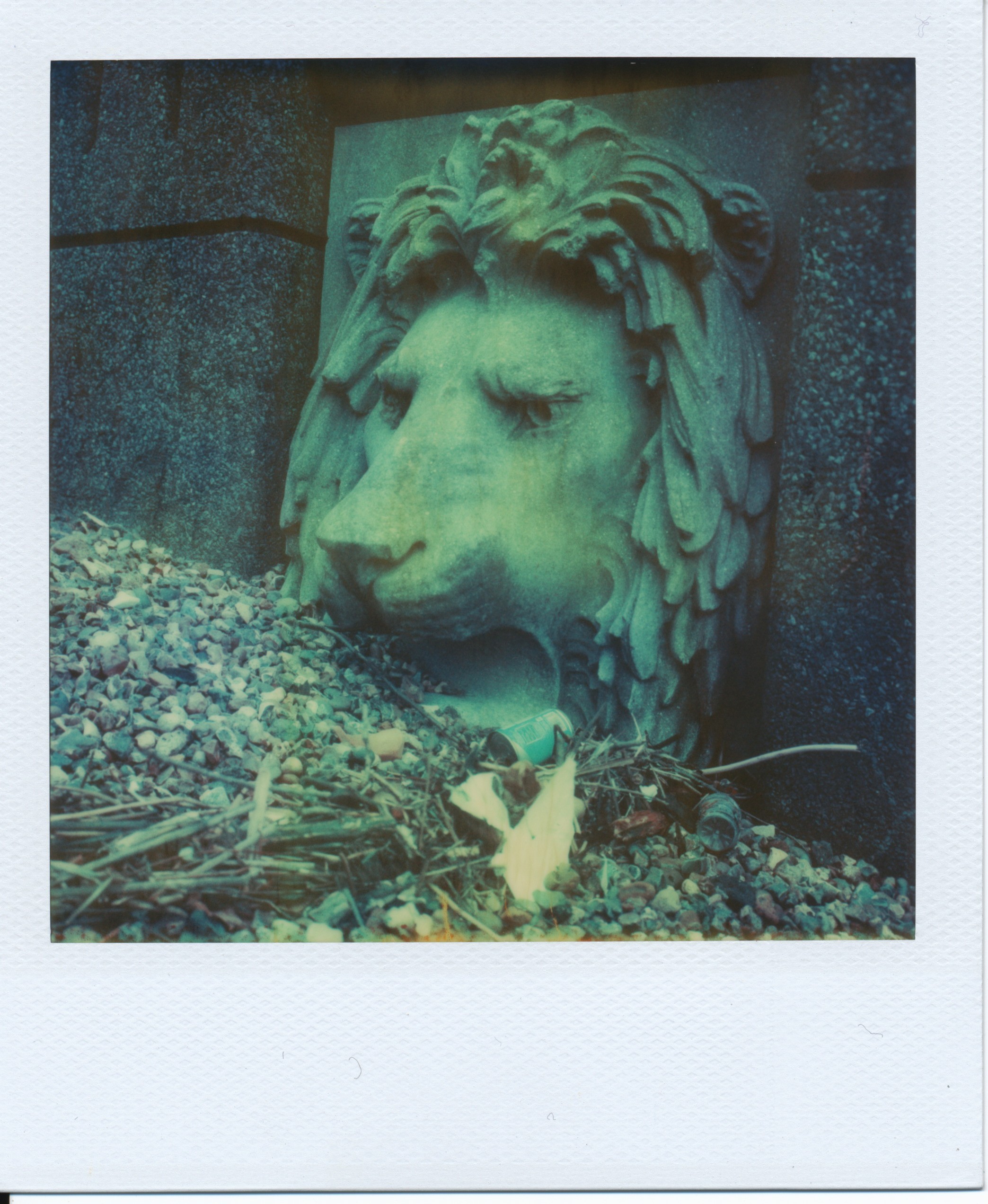
SF Said’s picture were taken for last year’s excellent Lost London Rivers book. Said shoots on Polaroid, which he describes as like a ‘photographic time machine’ and says he wants to ‘capture the dreams that a place might have of itself, or the memories that it stores under layers of time’.

He uses expired film, which can create strange, mesmeric effects and explains ‘as their chemical layers decay, they start to produce strange flame-like swirls and flickering light leaks that go even further into dreamlike realms.  These hallucinatory effects are unpredictable and random; sometimes they ruin a picture.  But when you’re lucky and it all comes together, I think they give you something magical that you could never get any other way.’

The exhibition is at the gallery at Maggs Bros, 50 Hays Mews, W1J 5QJ from March 22 to April 19.

James Watt’s workshop at the Science Museum

This piece was originally published in World of Interiors in December 2011.

James Watt was not a tidy man. Inside the Scottish engineer’s eighteenth-century workshop, shelves are thick with dust and overlapping objects of marvellous obscurity. It’s chaotic, but it is the past, a life perfectly preserved. Almost 100 years ago, this attic room was moved from Birmingham and reconstructed at the Science Museum, but the public have only recently been readmitted. It’s a delightful and very human sight. Unlike the modern scientist’s sterile laboratory, items are stuck to wall and floor, or piled harum-scarum on shelves, desks, tables, lathes and huge wooden machines of curious design. There are 8,434 objects all told, each lovingly listed on an exterior wall. Pincers, mallets, drawer knobs, hacksaws, charcoal, ladles, a frying pan, washers, broken thermometers, bent wire, drills, bradawls (six without handles), packages of chemicals wrapped in yellow paper and tied with brittle string, lumps of metal, fossils, half-finished statues, cogs, pieces of wood, barrels full of plaster of Paris and a clock key. There’s even, or so it says, a sea horse tooth. Nothing thrown away. This is the testimony of a life in science, and it looks exactly as Watt left it almost 200 years ago.


Watt was born in Greenock, Scotland in 1736. For several years, he quietly sold scientific instruments, musical instruments and toys from a shop in Glasgow but he had a curious mind and was an inveterate tinkerer. In 1776, he completed a steam engine that used a fifth of the coal of the existing engine. Factories and mines all over the country were soon powered by Watt engines as Britain surged into the steam-driven Industrial Revolution. Watt became a hero, as crucial to the national identity as Wellington and Nelson. On his death in 1819, he was the first engineer to have a statue in Westminster Abbey, although it was later removed as it was grotesquely large. His legend was international. In Japan, the state dispensed prints of Watt to promote the British values of industry, resilience and ingenuity that he embodied.

Watt began work on the steam engine in 1764 and moved to Birmingham ten years later taking with him the tools, fixtures and fittings he had accumulated in Glasgow. In 1790, he settled in Handsworth where he had his final workshop, a garret room where he could work undisturbed. In this dark space, Watt drilled, sawed and chiselled, experimented with chemicals, and developed a variety of extraordinary devices, including a perspective drawing machine, a letter-copying press and a sculpture-copying machine. He often had to make for himself the tools he needed for his inventions, including what Science Museum curators think is the oldest circular saw they’ve ever seen. The impression gained is of somebody who loved using his hands, and was always looking for ways to improve production, to make more things, and faster. He was a solitary soul. To ensure he could work without interference, Watt built a shelf outside the door on which the maid could leave his dinner. When he was ready, he would bring it inside and warm it on the stove. There’s a hint of sadness too. In one corner lies a chest full of things that belonged to his son Gregory, who died of tuberculosis in 1804. It seems Watt kept it here, close by, for 15 years until his own death.

At which point, the door was closed and the room left untouched. Even as the house was occupied by new families, the workshop was kept as Watt had left it for more than a century, with drawers full of half-made thermometers wrapped in wax paper and surfaces strewn with rusty hinges. It became a shrine. One visitor commented, ‘the dust lay so thick it was like walking in soft snow’. One pilgrim was Bennet Woodcroft, who ran the Patent Office Museum, part of the South Kensington Museum. Woodcroft was acquiring key artefacts from the Industrial Revolution and in the 1860s registered an interest in the room. However, it was not transferred until 1924, by which time Woodcroft was dead and the Patent Office Museum had become the Science Museum.

They took everything– not just the furniture and contents but the floorboards, door, window frames, fireplace, stove and flue – and reconstructed them on the ground floor of the museum. Workman even asked if they should remove the dust. The public would peer through a window above Watt’s workbench and observe a scene almost identical to the one painted by visiting artists in 1864 and 1889. But by the 1970s, it had become a museum relic. The room was moved to the mezzanine, where it was ignored for another couple of decades before being ignominiously boarded up. Staff could still reach it if they took the wrong door out of the admin office, but the public would never know it was there.
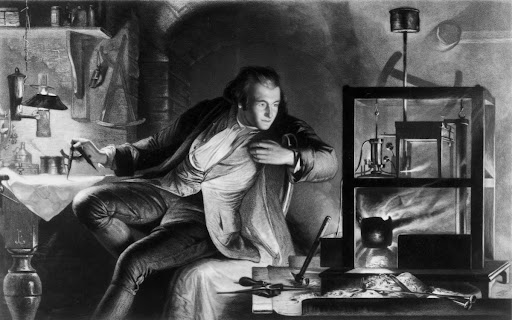
So it remained until earlier this year, when the room was returned to the ground floor and made the centrepiece of an exhibition that examined Watt’s life in the context of the Industrial Revolution. In an act of domestic archaeology, objects were removed from drawers where they had been invisible for centuries as curators resolved to explore every nook and cranny. These were then replaced exactly where Watt had left them.

The exhibition shows that Watt was a scientist but also a workman, constructing by hand the very machines that made mass production possible. Years later, William Morris would reject the industrialised world that Watt had created, but the two had something in common in their love of forming things by hand. However, Watt’s inventions meant things no longer had to be created at such labour and expense, and people could choose for themselves the design and furnishing of their home rather than rely on what was passed on to them by their forefathers. It was the start of the consumer age, making Watt was partly responsible for many of the decorative items that can be studied at length next door at the V&A Museum. When Woodcroft visited Watt’s workshop, this relationship between industry and design would have been more apparent. The South Kensington Museum was essentially the Science Museum and the V&A combined, and had been created partly to inspire the working class with technique as well as design, showing not just beautiful objects but also how they were made. Now cause and effect, science and art, are divided by the bustle of Exhibition Road. But enter Watt’s workshop, and just for a moment the two become one.

Secret London: the Temple of Mithras goes back where it came from

The Temple of Mithras is one of London’s most easily viewed and best known Roman sites, but it is also one of its crappest. The temple has been in the wrong place pretty much ever since it was discovered 50 years ago and now sits unimpressively in a bed of a concrete in front of a banal office building in the City (image below from Knowledge Of London).

The Temple of Mithras: ‘crap’

All that is about to change. Next week, Museum of London Archaeology will begin a three year project that will put the Temple back where it belongs, and restore it to something closer to its original form. They will also do a little digging, to see what else they can discover.

The Temple – a shrine to an Iranian god who was said to have killed a mythical bull – was found by archaeologist WF Grimes  in 1952 on Walbrook. The cult was adopted by the Romans in 1 AD and the temple – probably built in around 250 AD – would originally have been a subterranean space where bulls were sacrificed. Archeologists had suspected there was Mithran temple in London since 1889, after the discovery in Walbrook of a relief depicting the god killing a bull but it was only uncovered after the Second World War, when the area suffered heavy bomb damage and became ripe for development.

A statue of Mithras were found buried beneath the temple, and it may well have later been used by followers of Bacchus, as Mithraism went into decline. Mithraism is sometimes seen as a precursor to Christianity, although I don’t know enough about that to possibly comment.

The temple was dismantled shortly after it was discovered so the construction of Bucklersbury House could continue. The material was put into storage and many of the statues loaned to the Museum of London. In 1962, the temple was reconstructed on Queen Victoria Street, 90 metres from its original site at ground level, embedded in the courtyard of a City office block. It was a particularly dismal and unsympathetic treatment of a genuine archaeological curiosity. Most people had no idea what it was, and even if they did, it was very hard to care.

The site is now owned by Bloomberg, and they are about to start dismantling the temple by removing it from the cement that currently encases it, and then reconstructing it on its original site in what they call ‘a purpose-built and publicly accessible interpretation space within their new building’. This will take three years, but many will rejoice that it is happening at all.