I wrote about Suede for the current issue of Uncut. This was something of a revelation for me, as I was able to remind myself how excited I was when I first heard Suede – I remember playing “Animal Nitrate” over and over again in my bedroom, thinking that I’d finally discovered a band I loved as much as The Smiths. Before interviewing the band, I went to see them play at the Roundhouse and all of that old energy was still there, and I was just as thrilled as I had been at 16.
One angle covered in wide-ranging interviews with Brett Anderson, Mat Osman and Neil Codling was the importance of London to the Suede aesthetic – this was a band that even renamed themselves The London Suede, albeit under duress, for their American releases.
When the band were formed, Osman and Anderson shared a flat on Hilever Road in White City “on the border with Notting Hill – bohemia one way, estates the other,” Osman said, and Suede’s music came to occupy this very same sort of space, the sort of London written about by Patrick Hamilton, Dylan Thomas, Gerald Kersh and Roger Westerby in those novels about outsiders arriving in London and being instantly swallowed by vice and excitement. Doing something similar around this time was the TV version of Hanif Kureishi’s Buddha Of Suburbia, with a soundtrack by David Bowie – the combination of Suede and Kureishi is what led me to Bowie.
“London was a place where you can be what you want,” says Codling. “You can disappear, you can embrace any subculture, you can reinvent yourself and glamour is a possibility inherent in that.”
Anderson didn’t deny any of this. “I romanticised what London was,” he said. “I lived in a bit of a film fantasy. I loved the brutality of it, the loneliness and the hardness of it all. I really responded to that. But this is what we were living. I was part of this world I was writing about. I’ve always tried to find the romance in any situation I’ve been in and that happened to be the situation I was in. I’ve always loved art that deals with the prosaic. The Smiths aesthetic, I found that very powerful, ‘the riches of the poor’. There’s beauty in the brutality.”
Anderson told me he’s still inspired by London, often cycling the towpath from his home to West London to Camden, even if it doesn’t directly appear on the band’s new album. The excellent Night Thoughts is instead preoccupied by those unnerving concerns about children and fatherhood that keep Anderson – and myself – awake at night.
“I refute the tortured artist clichés, it’s bullshit, a lazy misunderstanding of what creativity is,” he said. “It’s not expected of authors and film-makers, Michael Haneke always seems very balance and his films are genius of discomfort. For me, a writer is finding those moments of friction, and those can occur in any existence, in any relationship, no matter how stable or content. There are always misunderstandings and moments of friction and this is what I write about.”
I’ve written the cover story for the latest issue of Uncut about a couple of days I spent in San Francisco with Paul Weller in October.
I enjoyed the incongruous location – Weller was staying in the Japanese district and played a country music festival at Golden Gate Park and a show at hippie landmark Fillmore West – as well as the chance to spend time backstage with Weller and his band unaccompanied by any label management or press officer.
Weller discussed his forthcoming projects, including an avant-garde film soundtrack he’s composed, and also reminisced about early tours of America with The Jam. On one occasion, he said, the band were asked to celebrate their London credentials by posing outside an English pub in Santa Monica with a double decker bus.
I also got the chance to explore San Francisco – where I discovered ghost signs, parrots, a punk-themed restaurant called The Brixton, coyote warnings and a complete absence of cranes, billboards, pneumatic drills and the general intensive building work that blights daily life for so many Londoners.
It feels these days as if every time I venture into the West End I will pass a raft of unfamiliar shiny expensive shops and restaurants and then stumble upon one last holdout from the London that I grew up with. “How on earth has it survived,” I’ll think. And then a week later, I’ll find out on Twitter that it hasn’t.
So it is with Soho’s Stockpot, the cheap and cheerful bistro on Old Compton Street that was more than a cafe but wasn’t quite a restaurant. This closes on Sunday after decades of serving starving Soho dilettantes.
I started coming here in my early 20s. It was the first time I felt like a proper grown-up because I wasn’t simply eating at Burger King. It was utterly, ineffably London, as if they had distilled the very essence of the city and mixed it into the gravy that they poured liberally over the liver and bacon.
The Stockpot was somewhere you could come at any time, though I was usually there around 6pm before a night out, lining my stomach with cheap carbs before a gig or evening in the local pubs. It was one of the few places where you could order something like gammon and chips, and could be sure of getting a hot main course for under a fiver, which even then was something of a bargain.
I often ate there alone, with a book and tumbler of cheap red, feeling mildly bohemian, imagining that I was parking my posterior on wooden benches that had once seated some of Soho’s finest writers, artists, poets, wits and wasters. It felt that a torch was being carried. There was a sense of continuum, of being a tiny part of a magnificent city where progress and tradition could go hand in hand.
I loved so much about the Stockpot. I loved the simplicity of its frontage. I loved the way people sat close together, knee to knee, as the waiting staff stuffed another customer into every available space. I loved the menus, handwritten daily but always the same. I loved the ancient brass till that looked like a Victorian musical instrument. I loved the theatrical paraphernalia and overheard conversations of people that seemed like actors and artists but were probably receptionists in a nearby film production company as they gossiped about friends. I really loved the prices. I even loved the food, which was tasty, hearty and filling, precisely what was required before a night exploring Soho’s familiar haunts.
Once you’d eaten at The Stockpot, you felt ready for anything, and that the intoxicating adventure that was a young man’s night out in London was already underway.
I wrote this in 2008, for Time Out’s excellent 40th anniversary compendium, London Calling.
It’s 1991, and after queuing for an hour to get in, and then waiting another hour for the match to begin, I’m starting to wonder if it was the effort and £8 entrance fee; Chelsea are losing 2-1 to Wimbledon at Plough Lane, the latter’s cramped, tumbledown stadium near Wimbledon dog track. The view from the away terrace is terrible, you can barely make out the top of the crossbar in the goalmouth beneath you, but as Chelsea’s Gordon Durie turns and scores, the surge from the celebrating fans pushes me down the terrace and twirls me back to front. My leg catches on the vertical support of a crush barrier and twists round, creating a huge purple bruise that I proudly show at school on Monday.
Abruptly, the celebrations end. The linesman’s flag is raised. He has disallowed the goal and there’s no big screen action replay to show why. The Wimbledon fans jeer, Chelsea lose, I nurse my wound. Chelsea finish the season 11th; Wimbledon come 6th. Nearly breaking my leg celebrating a disallowed goal is one of the few memorable moments from a dismal season that included a 7-0 defeat at Nottingham Forest.
If you told that story to a 15-year-old supporter from 1968 or one from 2008, it is difficult to guess who would be more surprised. Football has undergone extraordinary changes over the past 40 years, transformations encapsulated by the oscillating fortunes of Chelsea and Wimbledon. In 1968, Chelsea were the most fashionable team in the land: young, vibrant, popular, stylish and successful. Conversely, few knew of Wimbledon, an amateur outfit stuck in the Southern League. Forty years later, and after plenty of ups and downs and a period when Wimbledon habitually outperformed their neighbours, Chelsea are once again one of the biggest clubs in the country. But terraces have gone, Plough Lane has gone – hell, even Wimbledon have gone, a stellar rise through the leagues ending in ignominy when they were split in two, with one ersatz version playing league football in Milton Keynes and the other back in non-league, playing in front of 3,000 in Kingston.
————————————————————
The only way to really grasp these changes is to look at them chronologically. In 1968, football was riding the crest of the postwar wave and attracting huge crowds. However, two trends were emerging that would distinguish 1960s football from its forebears. The first was the transformation of footballers into celebrities, a result of the abolition of the minimum wage in 1961 and the introduction of regular televised matches. Manchester United’s George Best was the poster boy for football as the new cool, but it was also a role manfully shouldered by King’s Road carouser such as Peter Osgood, Charlie Cooke, David Webb and Tommy Baldwin.
The other factor was the appearance of a distinctive youth culture in the later 1950s; teenagers had the freedom and cash to go to games at home and, crucially, away, where bonds were formed and rivalries cemented. In ‘Football Gangs’, a landmark piece published in Time Out in 1972, Chris Lightbown explained what this meant, as kids claimed the terrace behind each goal as ‘The End’ to be protected from invaders at all costs, vocally and physically.
But football hooliganism was not seen as a major threat: drinking was still allowed on terraces and there was no segregation. But things worsened as the 70s progressed and the fortunes of the four major London clubs – Arsenal, Chelsea, Spurs and West Ham – plummeted from 1971, when Arsenal won the Double, Chelsea won the European Cup Winners Cup and Tottenham won the League Cup. Arsenal went missing for much of the decade; Chelsea were relegated, promoted and relegated again as they stumbled towards insolvency; Spurs went down and up; West Ham beat Fulham in the 1975 FA Cup final, then went down and stayed down. In 1975, Queens Park Rangers were London’s highest-placed club; they came 11th. The decline from the high points of the 1960s was manifest.
The backdrop was uglier. Hooliganism, especially – but by no means exclusively – at Chelsea, West Ham and Millwall was destroying the game from the inside, driving away crowds and investment, turning stadiums into barbed wire police states. Hooliganism effected every club, including Arsenal and Spurs, particularly in any London derby or when a big northern club – Manchester United especially – came to London. On the pitch, England failed to qualify for two successive World Cups as the game faced a talent drain despite an extraordinary run in the European Cup that saw English clubs win the trophy seven times in eight seasons between 1976 and 1984, no thanks to London.
The result was an increasingly unpopular national sport. Chelsea’s crowd drained from 40,342 at the start of the decade to 24,782 at the end; the First Division average went from 32,074 to 27,428 in the same period and continued declining into the early 90s. In 1974, Time Out‘s Sports Editor Peter Ball thought he’d spotted the problem: ‘In the last 20 years, football has been taken away from its natural community, commercialised and given the worst trappings of Hollywood by the media. Is it any wonder that the kids, whose dads used to live next door to the local players, feel alienated?’
The upside of this was that it levelled the playing field and allowed smaller clubs to move into the vacuum. Wimbledon joined the football league in 1977 and began a staggering rampage up the tables that saw them in the First Division within a decade. Crystal Palace were dubbed the Team Of The 80s as they briefly topped the First Division in 1980; Watford’s tag team of manager Graham Taylor and chairman Elton John powered into the First Division and reached the FA Cup final in 1984; even Leyton Orient reached the FA Cup semi-finals in 1979.
But part of the climate that allowed them to prosper was the stunning primitiveness of the English game. Excluding Liverpool, who ruled the era with Stalinist ruthlessness but considerably more efficiency, English football was tactically and technically sterile. Most teams were built on the model of ten grafters and a crafter – Hoddle at Spurs, Brady at Arsenal, Brooking at West Ham, Wilkins at Chelsea. Peter Ball dissected England’s failure in the 1980 European Championships and came up with some familiar problems: ‘The English game… does not enhance the development of techniques, nor of flair players, who tend to be regarded with suspicion. The history of the English game is littered with names whose vision and skills have failed to tell over the long haul of English seasons, and have, in the end, lapsed into a sullen and possibly embittered disenchantment.”
One way to get round this was to recruit foreign players, which Tottenham did in 1978 when they signed the Argentines Ossie Ardiles and Ricky Villa, a policy that resulted in a couple of FA Cups and introduced the concept that London might be an appealing home for overseas footballers. But for the most part the English league was suffocatingly insular. And often it was plain racist. All the London clubs suffered problems with bigots, but Chelsea, West Ham and Millwall had the worst of them, with the National Front recruiting on the terraces. Whereas West Ham first fielded black players in the 1960s and Millwall in the 1970s, Chelsea did not take the plunge until 1982, and when Paul Cannoville made his debut, a significant proportion of Chelsea fans walked out. It was only under chairman Ken Bates, who had bought the bankrupt club for £1, that a battle to reclaim the club from the racists was staged.
Chelsea weren’t the only club to suffer financial problems, as property developers began eyeing up the valuable tracts of London occupied by half-empty and decaying stadiums. By 1985, Charlton’s average attendance had dropped to 5,000 and the club could no longer afford to stay in its home ground, the Valley, so moved in with Crystal Palace. Two years later, Fulham and QPR fought a sustained battle against David Bulstrode, a developer who wanted to merge the clubs into Fulham Park Rangers and turn Craven Cottage into flats. Stamford Bridge was threatened by Cabra Estates until Bates secured the freehold against the backdrop of a property crash.
The turbulence had a positive effect on supporters, who suddenly began to take a more constructive approach. A fanzine movement sprang up, allowing supporters, previously cast as goose-stepping, baby-eating Neanderthals, to show they had wit, intelligence and creativity, and were prepared to challenge their clubs rather than blindly support them. Fans of clubs like Millwall, who rarely had a good word printed about them in the national press, were suddenly able to counter their tabloid image. By the late 1980s every club had at least one fanzine and most had several, ranging from tatty sheets of photocopied, hand-stapled A4, to epic, glossy tomes that rivaled official programmes in expense and were considerably better value. Sportspages, a bookshop on the Charing Cross Road with hundreds of fanzines strewn across the floor in giddy piles, became a rallying point for supporters in London.
The early days of the fanzine movement even engendered a brief flowering of camaraderie among rival supporters who faced similar issues of over-zealous policing and scheming owners – Arsenal and West Ham fans, for instance would unite to battle ‘bonds’, a sort of long-term season ticket – at least until antagonistic, insular publications such as Manchester United’s Red Issue turned up to revel in their own divisive nastiness, hastening the demise of supporter solidarity and heralding the tedious partisan commentary of many of today’s football bloggers. Nick Brown, editor of the Chelsea Independent, recalls: ‘The early Chelsea Independents, like all fanzines, brought fans back to football and allowed supporters to air their views where otherwise they would have been ignored. The Independent could challenge the club on the serious issues of racism, policing, pricing and ticket arrangements.” At some clubs, enfranchised supporters went a step further. In 1990, Charlton fans formed the Valley Party and secured 11 per cent of the vote in local elections on a platform of getting the club back to their old home. Charlton returned to the Valley two years later.
The 1980s had been a terrible decade, but the fun was returning to football. With hooliganism in decline and crowds returning, this was a good time to be a football supporter. Huge terraces meant cheap tickets and few games were televised, meaning the 3pm Saturday kick-off still dominated. Grounds were vast, so matches rarely sold out, allowing the promiscuous supporter to pick and choose fixtures on a Saturday morning. In London, you could decide that morning whether you fancied the rough-and-tumble of Leyton Orient, the lower league faded grandeur of Fulham, a vocal work-out at West Ham, or even go and watch some of the best players in the country at Arsenal or Spurs.
The cost of this improved environment had been great. Wooden stands were phased out after an inferno at Bradford killed 56 in 1985; that same year, a riot involving Liverpool fans in the Heysel Stadium, Brussels, caused the deaths of 39 Italians and led to improved policing and serious sentences for hooligans. Perimeter fences came down after 96 caged Liverpool fans were crushed to death at Sheffield Wednesday’s Hillsborough stadium in 1989. Hooligans had not gone away but cameras in grounds and the threat of long prison sentences forced them on to the streets, where the anarchic gangs of the 1970s became quasi-military groups, adopting names like the Bushwhackers and Headhunters as they engaged in pre-arranged meetings away from most normal supporters.
On the pitch, the football was tough, fast and tactically primitive, but it could also be unpredictable and exciting. Wimbledon’s ragtag bunch of hodcarriers and hoofers rough-and-tumbled their way into the First Division, where they terrified the elite and won the FA Cup against Liverpool in 1988 – a formidable achievement for a club with crowds of barely 10,000. Arsenal, scarcely more sophisticated, secured an astonishing league title on goal difference a year later (their first since 1971), when they beat Liverpool 2-0 at Anfield, with the crucial second goal coming in the last minute of the last game of the season. Stately Spurs enjoyed some success with a team that included the world class talents of Gary Lineker and Paul Gascoigne, while inconsistent Chelsea and West Ham continued to switch between the top divisions. Smaller London clubs were also prospering – Millwall, Charlton, QPR and Crystal Palace all playing in the First Division.
As the visible threat of hooliganism receded, attendances rose, boosted by England’s unexpectedly successful World Cup campaign of 1990, headed by Gascoigne and Lineker. Which made Nick Horby’s timing all the more fortuitous. Fever Pitch, his solipsistic account of the trauma of supporting one of the most successful clubs in the country, was an astonishing success, launching football into the arena of the middle classes. Published in 1992, it told the story of Hornby’s life, measured out in Arsenal fixtures, and its acceptance by serious critics marked the first significant step in football’s long march towards gentrification.
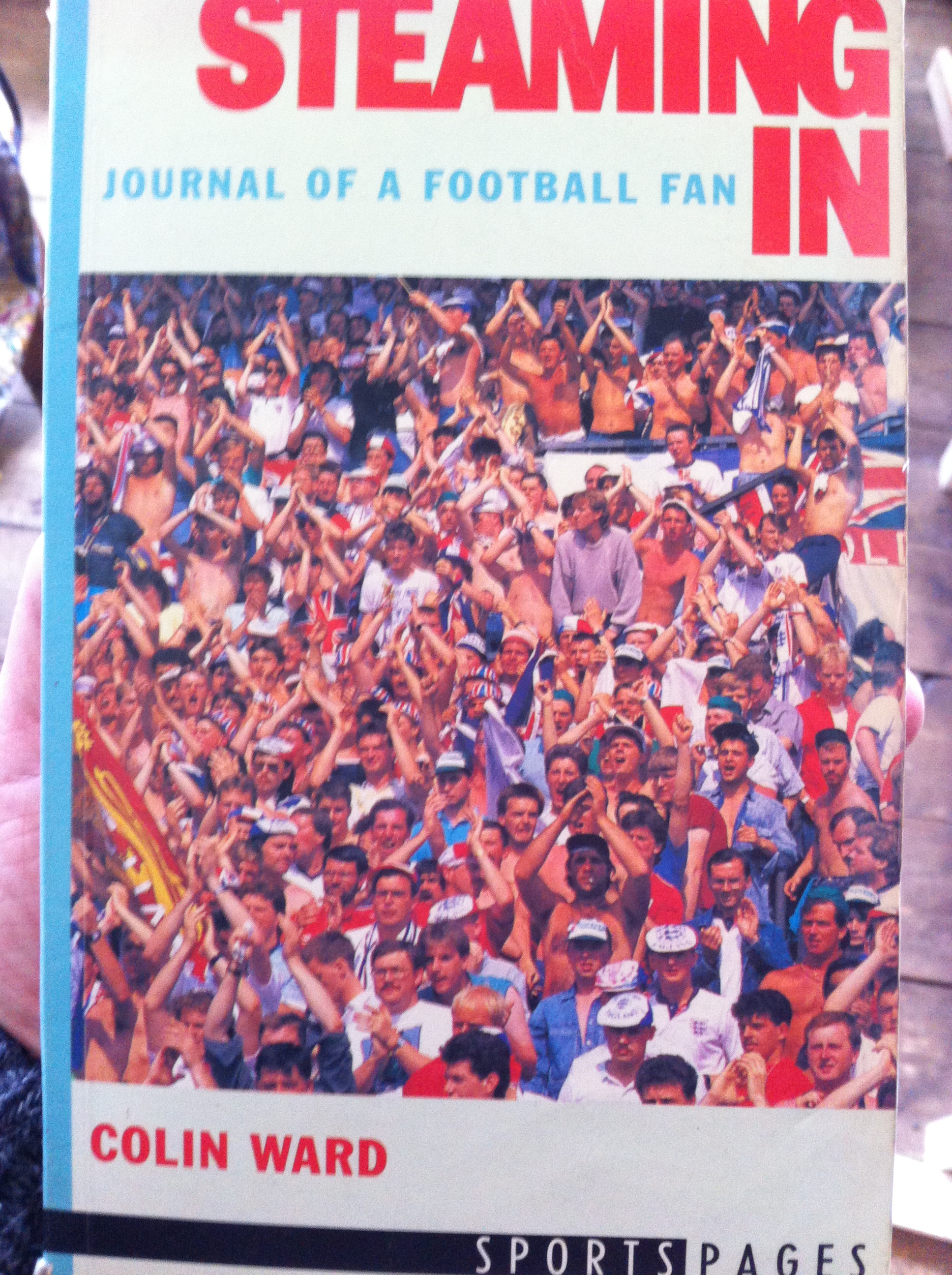
The same critics didn’t have much time for another Arsenal fan, Colin Ward, who, equally significantly and just as unwittingly, had written a eulogy for the old guard three years previously with Steaming In, a fan’s eye view of terrace culture since the early 1970s. My copy was passed around the playground with wonder, like a holy bible of terrace lore, containing numerous alarming and hilarious anecdotes about football fans from this scorned era. Tough and self-confident where Fever Pitch was reserved and self-analytical, Steaming In was the first book written by a former hooligan and remains the only one worth reading. But Ward was already a dinosaur. The Taylor Report, commissioned after the Hillsborough disaster, called for all-seater stadiums, and the great terraced Ends up and down the country were broken up and sold, piece by piece, back to the fans via the club shop. With this, an entire culture was dismantled; an act of social vandalism that changed football’s character forever. Some clubs, like Millwall, took the chance to sell valuable land and move elsewhere. Others, like Wimbledon, couldn’t afford to pay the builders; Wimbledon said farewell to ramshackle Plough Lane and moved in with Crystal Palace.
Football was fashionable. Next came greed. The richest English clubs had long agitated for a ‘super league’, which would essentially see their income ringfenced from the rest of the football league, and in 1992 they got their wish: the Premier League was financed by an astonishing £190m broadcasting deal with Rupert Murdoch’s Sky that saw an unprecedented 60 fixtures screened live each season. Games would be live on Monday evenings as well as Sundays and several hours would be devoted to each televised fixture. Pundits would even talk about alien concepts like tactics and formations. Inside the ground, fans were treated to entertainment in the form of giant inflatable sumo wrestling and the occasional pop band. Pundits were flabbergasted. Andrew Shields, Time Out‘s Sports Editor, predicted disaster, arguing that an elite league would ‘last two seasons, three at most’ and that fans would refuse to pay ever-increasing ticket prices.
That’s not quite how it worked out.
In fairness, few people anticipated the explosion of interest and wealth that came with the Premier League, as more games were televised each season and clubs’ revenue increased accordingly. Demand began to exceed supply: clubs had to reduce capacity when they converted terracing into seats, but as attendances were rising were able to charge more for entry. With TV revenue also rising, clubs were suddenly rich and could compete with the Italian and Spanish leagues for the best, most exciting players, increasing demand, feeding the whale. The smaller clubs struggled to compete, while others spent rashly to keep up with the giants, now led by Manchester United, a commercial juggernaut masquerading as a football club.
The football-going experience was much changed as ticket prices forced out young and poorer supporters, diluting the atmosphere and deadening the camaraderie. In 1972, Chris Lightbown had said that Chelsea’s Shed ‘sounded like London’s answer to the Kop’, but by 2002 Stamford Bridge was more regularly likened to the nearby cemetery. The same was happening in every Premier League ground but as ever the changes seemed more dramatic at Chelsea. Under Ken Bates, the club charged the highest prices in the country, but the new money paid for superstars such as Marcel Desailly, Ruud Gullit and Gianfranco Zola, who brought unexpected success to the club making them fashionable once more. At Chelsea, as elsewhere, it was hard to get a seat. Tickets were even more expensive on the black market as tourists to London flocked to Chelsea, Spurs and Arsenal to experience the famous English atmosphere they had heard and read so much about, but which had now all but vanished.
Arsenal, London’s traditional powerhouse, were also in the ascendancy. French manager Arsene Wenger transformed the culture of this previously most English of clubs, embracing a cosmopolitan recruiting policy and producing teams of mesmeric beauty. That allowed Arsenal, who had attracted barely 18,000 for a game at the start of the 90s, to build a stadium for 60,000 a decade later. The smaller London clubs could not compete. QPR had been runners-up in the First Division in 1976, Watford came second in 1983 and Crystal Palace third in 1991, but those days were over, as the behemoths of English football began to flex their financial muscle.
Wimbledon suffered most of all when the Football League shamefully allowed their owners to move the club wholesale to Milton Keynes. Wimbledon supporters, rightfully outraged and emboldened, promptly formed their own club, AFC Wimbledon, with a policy of fan ownership and an adherence to what were seen as pre-Premier League proposals.
Modern football’s alternative model to AFC Wimbledon began close by in London. Fulham had started the trend of rich benefactors bankrolling astonishing success when Mohamed Al Fayed bought Fourth Division Fulham in 1997 and had them in the Premier League by 2001. The ante was upped by neighbours Chelsea in 2003, when Russian oligarch Roman Abramovich pounced on a club that had overspent their way to becoming one of the success stories of the Premier League and were in dire need of refinancing. Over five years, Abramovich, said to be worth £11.7b, invested £500m on players, wages and facilities, and Chelsea joined the European elite. If Peter Ball’s ‘kids’ were alienated from players in 1974, they were living on a different planet in 2008, as ticket prices nudge £50, the amount some players earn in five minutes.
Few think such levels of expenditure are healthy and many question whether they are sustainable, as football threatens to become the game that ate itself. Football has faced bigger crises over the past four decades and survived, but the time may come when individuals have to decide what they want for the future of their sport – supporter-owned clubs like AFC Wimbledon, or oligarch-owned ones like what wits now call Chelski FC.
Lee Jackson loves filth. His new book, Dirty Old London, is full of the stuff, as he explores Victorian London’s attempts to cleanse a city that is swilling in muck. I’ve often wondered what Victorian London would have smelled like, and Jackson’s book comes close to capturing what must have been a frightful stink. I knew about the horse shit and the smoke, but had never considered the mud, blood, unwashed bodies, corpses and human excrement that, collectively, would have made the Victorian city one of the foulest places on earth. It’s astonishing anybody wanted to live there.
Jackson shows how Victorians began to push against the tide of muck, which grew worse as London’s population swelled. Victorians did not consider dirt in itself to be a carrier of disease, but they believed the smell could be lethal as well as deeply unpleasant, so eventually set about doing something about it. They built pavements, sewers, public baths and indoor lavatories, improved housing, dug cemeteries and generally tried to do something about “that combined odour of stale fruit and vegetables, rotten eggs, foul tobacco, spilt beer, rank cart-grease, dried soot, smoke, triturated road-dust and damp straw’. They weren’t always successful – some of those aromatic problems lingered long into the 20th century when they were eventually dealt with, or in the case of horse manure, replaced by something even worse such as exhaust fumes.
In explaining how this happened, Jackson is far more entertaining than anybody has the right to be on such a subject. Rather than focus on the well-trod tales of John Snow and Joseph Bazalgette – both of whom barely feature, thankfully – Jackson resuscitates the lives of less well known figures in this lengthy campaign against dirt, characters like reformer Edwin Chadwick who laid much of the groundwork for what was to follow. In the process, he shows how Victorian London functioned – the haphazard, individual-driven nature that saw things get done, or not, as the case might be.
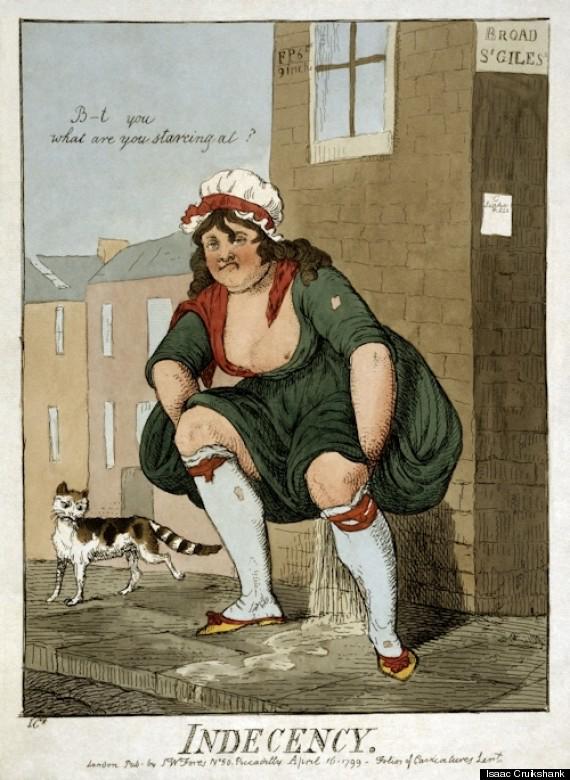
Indecency by Isaac Cruikshank
This is a history with potentially narrow focus, but Jackson – a general historian of the unstuffy, non-academic variety – is removed enough from the subject to be able to show its wider importance and long-term effects. One theme of the book is the way sanitisation – in the form of sewage, rubbish and housing – was the hinge on which London’s social contract turned. For much of the 19th-century, the bewildering array of local authorities that ran London saw their role as, essentially, to keep out the way. They did as little as necessary, thus keeping rates low and relying on private enterprise to fill the gap. But as London grew, getting bigger and smellier every year, this system began to creak. A good example is with the dustmen. Collecting and recycling London’s rubbish was a lucrative job for some entrepreneurs, but not so much for the dustmen themselves, who had to rely on tips to make a living. And given that tips were much more likely to be acquired in rich areas, the poorer streets were increasingly neglected, allowing rubbish to pile higher and higher. Local authorities had to step in to fix this, and it gradually became the accepted role of local authorities in the UK until Thatcherite councils like Wandsworth in the 1980s began to perceive different, pre-Victorian, way of running things.
Jackson also touches on a related angle: the increasing movement of public buildings into private hands. In this case, it’s centred round the Victorian public lavatories, which were only built after ferocious lobbying from some notable figures who recognised the desperate need on the streets for London loos. The story of how those toilets were eventually built is fascinating in itself, but Jackson also notes the fact that so many have recently been closed, flogged, refurbished and then sold back to us as coffee shops, galleries and an “award winning urban spa”. Perhaps this is the fault of the Victorians, for making things so well and so adaptable, but you can’t help feeling that, now as then, it stinks.
I have a smallish piece in the current issue of Uncut about the changes about to strike Denmark Street, known to Londoners as Tin Pan Alley and historically one of the most important streets in London for the music industry. It began as a place where sheet music was sold and soon attracted other aspects of the industry: publishers, managers, songwriters, shops selling instruments, studios. Its importance was such that both NME and Melody Maker started here, while in the 70s it was home to Hipgnosis, the design studio responsible for many of Pink Floyd and Led Zeppelin’s album covers.
The street’s heyday was the 1960s however, when musicians would shop for guitars in between visiting managers and publishers or recording in one of the studios, Regent Sound or Central Sound. The Rolling Stones and The Kinks came here, so did Donovan and Jimmy Page, Eric Clapton and Elton John, Jimi Hendrix and Jeff Beck. A popular dive was La Giocondo, a cafe/bar in which most members of the nascent R&B revolution visited at some point or other – David Bowie was said to practically live there.
In later years, the street declined in importance – although when Malcolm McLaren was looking for a rehearsal space for the Sex Pistols he was delighted to find room in Denmark Street, installing his upstarts in the heart of the traditional music industry like Greek soldiers inside the Trojan Horse. It was a pretty squalid space, but handy for Soho. Graffiti from their stay was recently rediscovered inside a cupboard.
The street continues to have a music association, mainly in the form of its many instrument shops but also through the 12 Bar Club. How long it can retain that heritage in the face of the rapacious demands of the London property market combined with the way we play and consume music, remains to be seen.
Denmark Street is located in St Giles, one of the last untameable parts of central London. This was the location of Hogarth’s splenetic Gin Lane and would later be one of Victorian London’s biggest rookeries. It remained a troubled place throughout the 20th century, a centre of homelessness through which you would regularly see zombie armies of smackheads marching in bedraggled fashion in search of a score. To some, like Owen Hatherley or Robert Elms, its shabbiness is appealing, and I certainly enjoy its timewarp feel.
But that is over. The accursed Centre Point, one of the most soulless pieces of architecture in London, is being developed into luxury flats, while nearby is Renzo Piano’s lurid Central St Giles development – that’s those blocks painted in hideous Balamory primary colours. The driver here is the new Crossrail station at Tottenham Court Road, which has released a flood of development money into the area, washing clean the grime of history. London is now getting too big, too rich, to allow anomalies like St Giles to continue to exist.
The important scheme in terms of Tin Pan Alley is by Consolidated Development. They are building a mixed-use block on St Giles High Street with the slightly bizarre title of the OuterNet. It promises, among other things, to revolutionise the way we shop. This development will back on to Denmark Place – the alley just north of Denmark Street – resulting in the destruction of some buildings there, as well as one building on the north side of Denmark Street itself. This is to create pedestrian access for the huge flows of people expected to use the new Crossrail station.
At the same time, and starting later this year, properties along the south side of Denmark Street will be refurbished following those on the north. That includes the 12 Bar, which is, I was told, close to collapse. Campaigners fear this will spell the end of Denmark Street as we know it, with rents rising and traditional retailers – the ones selling drums and guitars – forced out. To stop this happening, they want to make Denmark Street a conservation area, limiting use for any incoming shops in the same way Hatton Garden is for jewellery.
When I spoke to Lawrence Kirschel, the owner of Consolidated Development, he was desperate to assure me that he wants Denmark Street to retain its link to the music industry – indeed, he wants to enhance it by building a new venue, installing a rock hall of fame in the form of statues of Tin Pan Alley-associated musicans along Denmark Place, and offering any vacant shops to ‘music-related’ enterprises. He sees the music heritage as the key selling point for the whole enterprise, a way to drive tourists to the OuterNet’s shops and bars.
Kirschel seems genuine, but developers often do. He points out, reasonably, that he has owned Denmark Street for 20 years, and could have kicked out the instrument shops at any point in the past few decades if he was so inclined. The refurbishment, he said, is something he had put off for years but was now necessary as many of the buildings were in a poor state of repair, something reflected by the rents they currently pay.
Although Kirschel wants to retain Tin Pan Alley, he was less keen on the idea of a conservation area being imposed (what landlord would?) arguing that “any restriction on use is the dilution of creativity”. However, he also admitted that “developments usually mean sterility”. Somehow, he has to straddle this narrow line, and create something new that doesn’t kill the spirit of the old.
It’s a challenge, and one that is rarely met successfully however well-intentioned the developers may be – and assuming they are not just paying lip service to the notion of tradition or have a very different interpretation of it. Kirschel’s line is that he wants to bring the music industry itself back to Denmark Street so Tin Pan Alley is more than just instrument shops. Part of his scheme features short-stay apartments, which will be aimed at touring musicians.
He knows getting the industry to co-operate will be difficult. Kirschel is a previous owner of the Marquee Club on Wardour Street, now a Conran restaurant. He says he tried to keep it going but got no support from the music industry. If the industry wants to keep something alive, he says, they need to back him. Whether the music industry has any will to do so is another matter.
Part of the problem is that the music industry is now so fragmented. Independent labels can’t afford to function in central London – many can’t afford to be in London at all – while the major labels brood out west, thinking up new ways to flog back catalogues to deep-pocketed ageing musos. With Crossrail causing the demolition of the Astoria, there are few venues left in Soho – Kirschel says his will be the first to open there since the war – and much of what the industry used to offer – everything from recording an album to releasing one – can now be done at home via the net
So what would really keep Denmark Street? A musician friend who occasionally shops on Denmark Street thinks the instrument shops need to become more specialised, more discerning – when he was trying to purchase a pedal steel recently, there was only one for sale on the entire street. Maybe more people would visit Denmark Street if they know their more obscure requirements will be serviced. He also suggested the installment of cheap rehearsal space as a way of drawing genuine musicians to the area – although I’m not sure whether a bunch of sweaty indie kids is the clientele Kirschel is hoping to attract. As it is, if the plan requires the help of the music industry for it to work, I’m not optimistic.
Photographer Sean Smith has an exhibition in the crypt of the Dissenters Chapel in Kensal Green. It’s an evocative location, with Smith’s dramatic, very beautiful but often gruesome or unsettling photographs blown up large, brightly lit and placed at the end of dark, dank corridors like profane altarpieces.
His photographs come from all over the world – one of the earliest and most compelling shows a bloodied miner in South Yorkshire from the 1984 strike lying on the floor next to a police riot shield – and there are also pictures from Beirut, Virginia, Albania and Southampton as well as three from London, reproduced below. Take the chance to check them out for yourself – and to have nose around the crypt – before the exhibition closes on June 26.
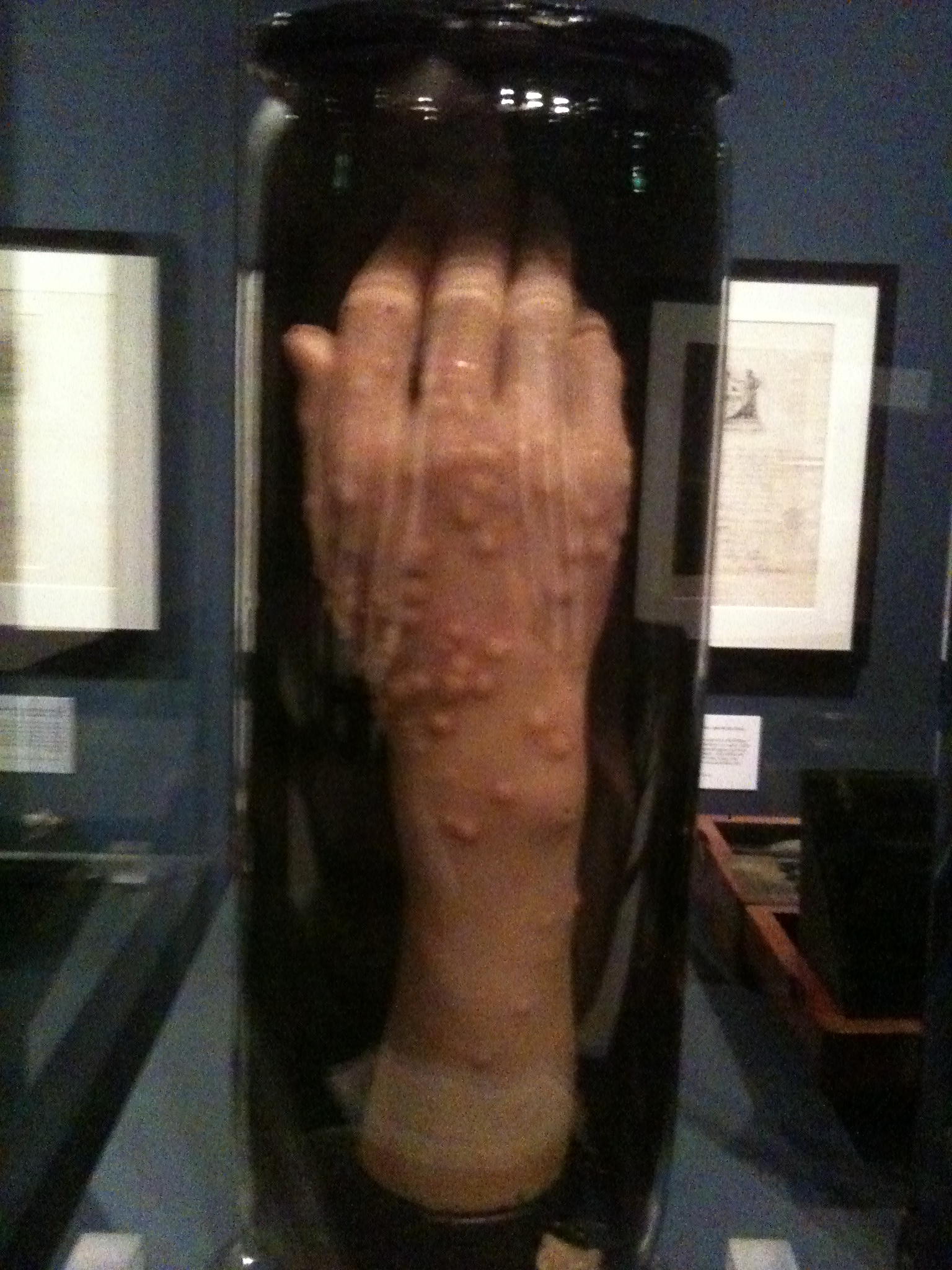
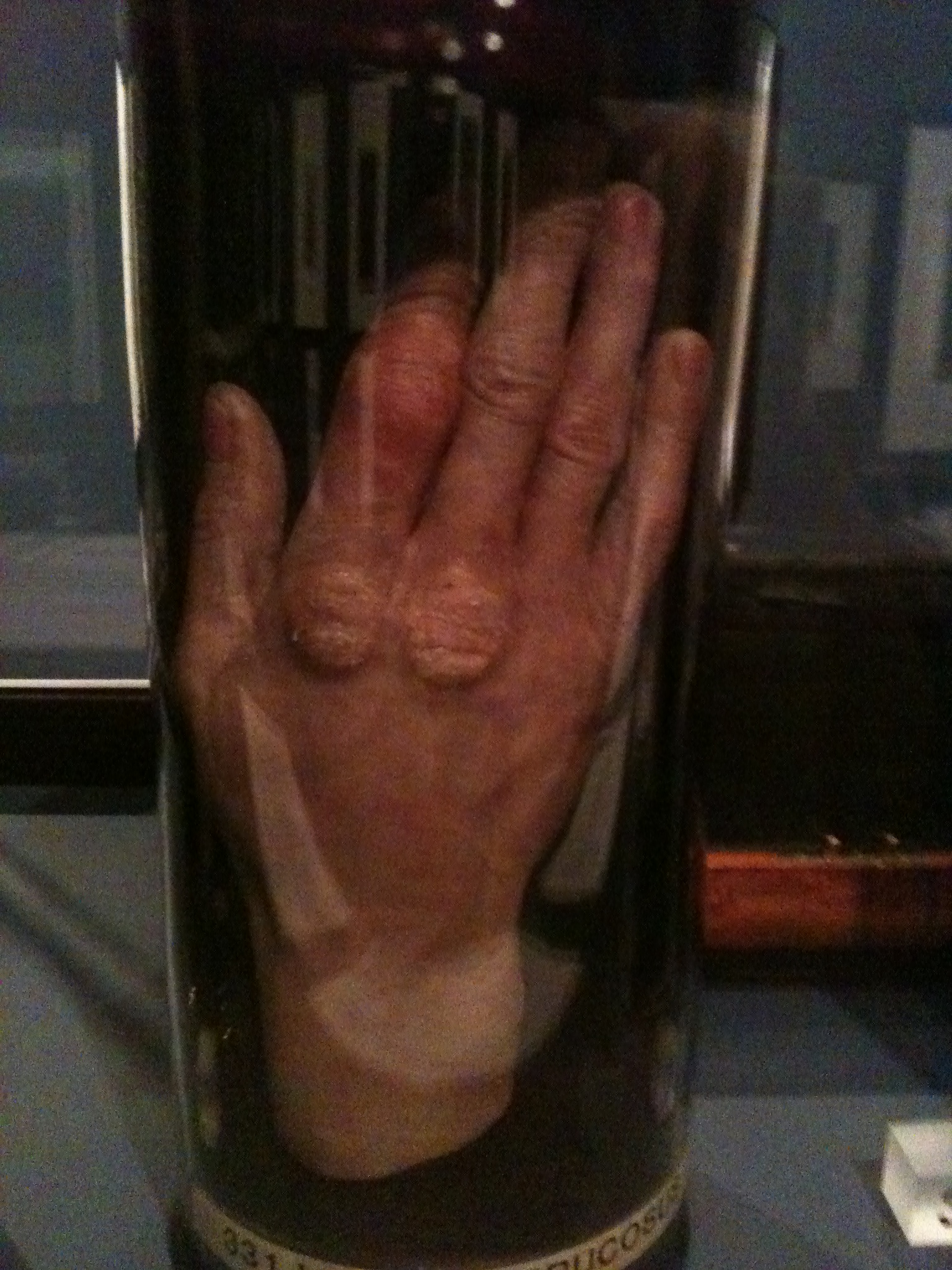
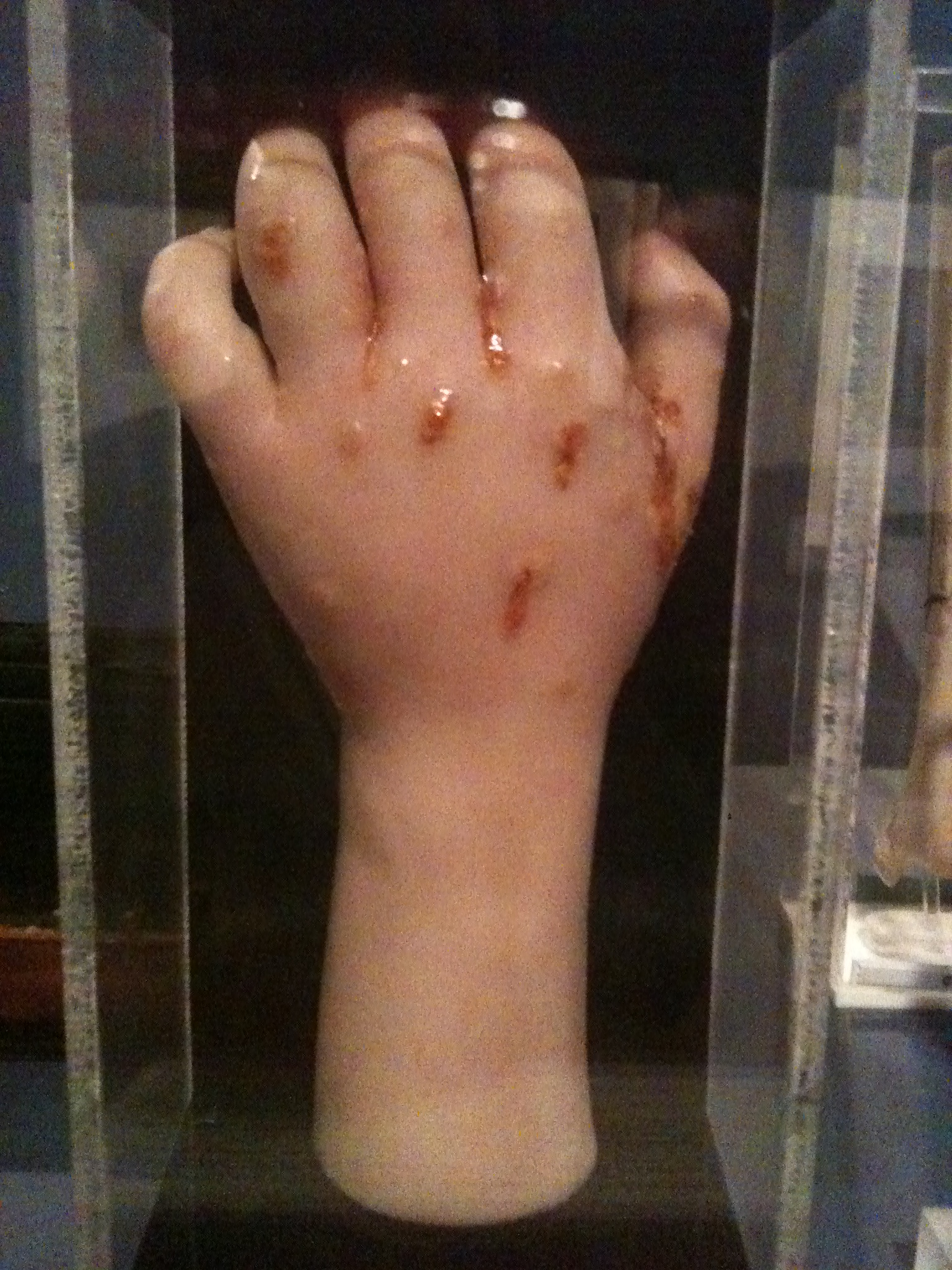
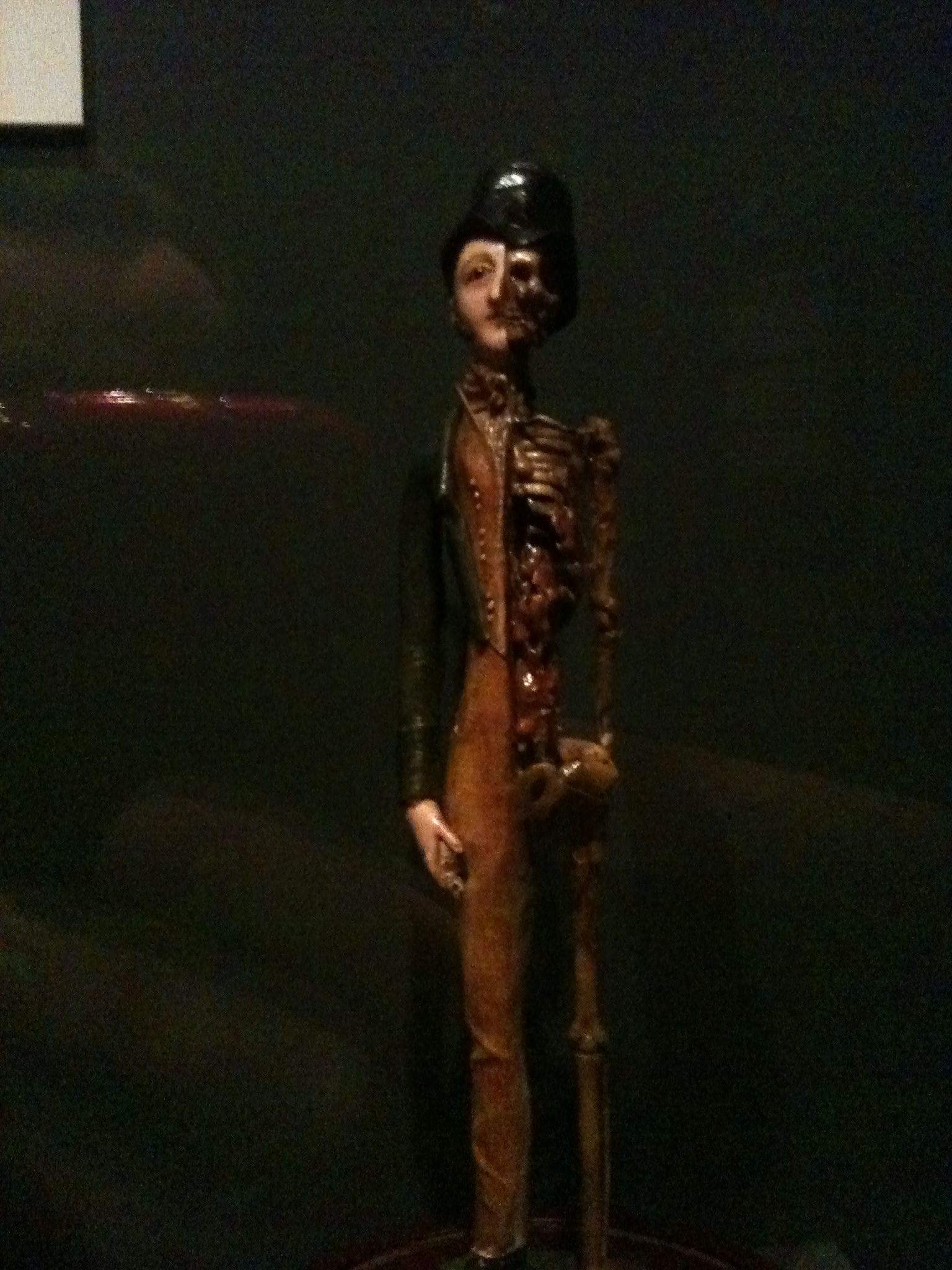
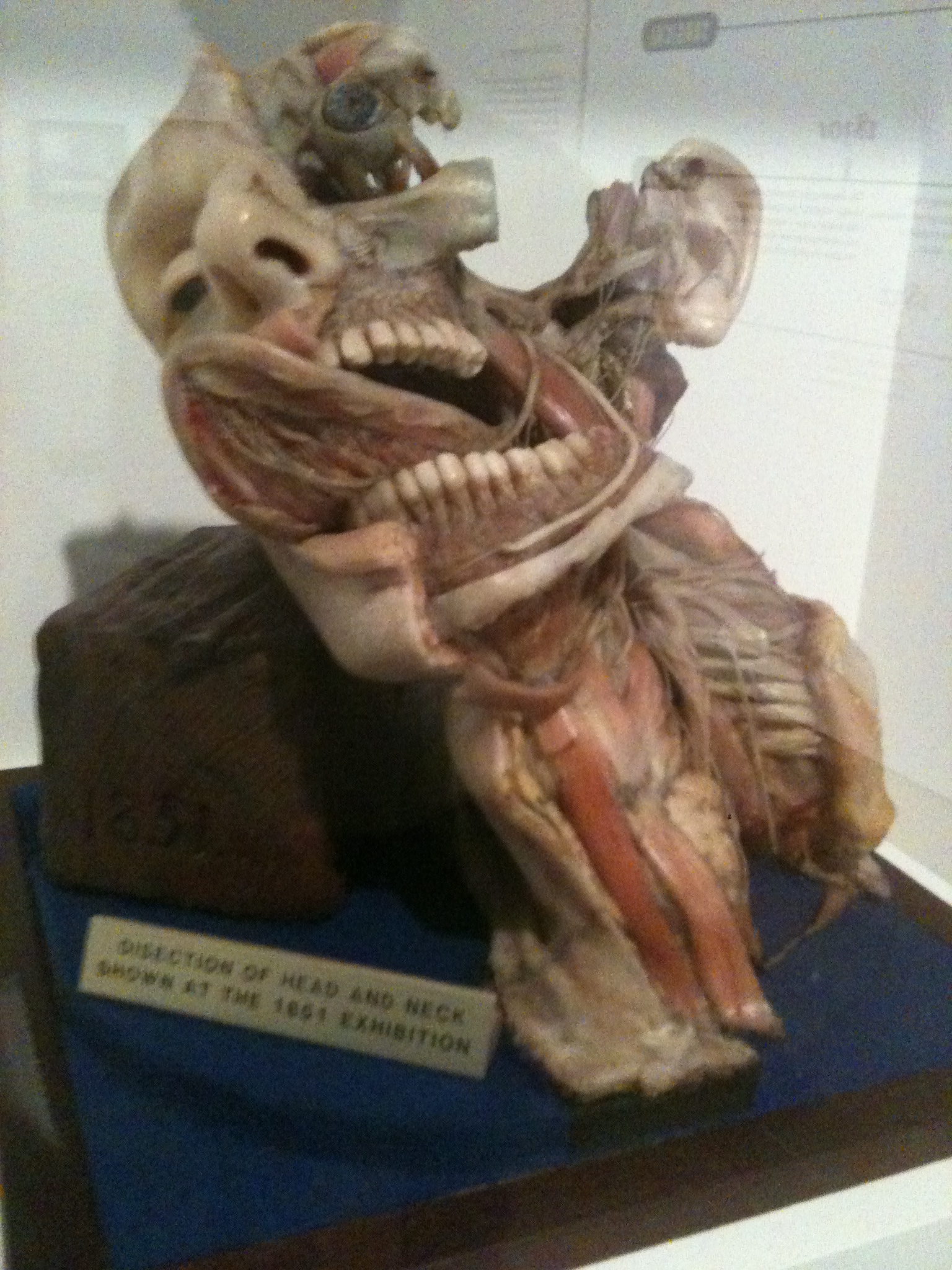
Somewhere in the grounds of Guy’s Hospital near London Bridge, is the most peculiar museum you’ve never seen. The Gordon Museum occupies two wood-panelled rectangular rooms, which connect at the ground floor something like a figure of eight. It has two galleries lined with shelves like an elegant library. But these shelves do not contain books; they are occupied by glass jars, inside each of which is some diseased limb or organ – an atrophied brain; a liver with cirrhosis; a pox-ridden arm. At times there may be an entire foetus. There are at least 8,000 of these specimens in the museum. Ground level is given over to Joseph Towne‘s remarkable anatomical models, striking waxworks of human figures, often diseased, forever stricken with peculiar and fascinating illnesses.
The Gordon Museum is effectively a museum of pathology, a library of illness, and it is not open to the public. I visited a few years with a view to writing about this fascinating establishment, and while the curator granted me a long tour he was very clear that he did not want any publicity as he didn’t want people snooping around his specimens. It was a serious place for medical folk, not rubberneckers, a distinction it shares with the infamous Black Museum run by the Met Police.
Those intrigued by the Gordon Museum can get some sense of its contents when you visit the Museum of London’s gleefully gruesome new exhibition, Doctors, Directors and Resurrection Men, where some Gordon Museum objects are on display. Prompted by the archeological excavation of a hospital graveyard which contained numerous early 19th-century skeletons, the exhibition explores the entwined topics of dissection, death, medicine and graverobbers with entertaining relish.
It is interesting to note the ways museums confront the subject of death. While the Gordon Museum keeps the public away, the Wellcome Collection is prospering with exhibitions that frequently consider and confront mortality with few qualms – indeed their next big exhibition is titled Death: A Self-Portrait. The issue of representing dead humans in a museum remains a contentious one, with many museums choosing to present models and casts of human skeletons rather than the real thing (as if that really makes any kind of a difference). The Museum of London – perhaps emboldened by the Wellcome’s brilliant and sympathetic use of the MoL’s skeletons in 2008 – take a necessarily but still admirably grown-up approach to the human remains on display in this exhibition. There are plenty of bones, and they are thoughtfully treated.
Ironically, then, the most dramatic exhibits tend to be models. The best of these is probably a loan from the Royal Academy of James Legg, a criminal who was flayed and posed on a cross to settle an artistic debate. Legg’s mutilated body was preserved in plaster. There are also a number of Townes’s models, including the stunning human skeleton he sculpted from wood at the age of 16, something he did despite never having seen one in real life and which earned him his job for life at Guy’s Hospital as their in-house model maker.
The most striking ‘real’ skeleton is hidden away in the corner, the remains of a small boy preserved in shellac and looking for all the world like something from Alien. Even this inescapably gruesome spectacle is a far cry from the horrors of previous centuries, when museums had a much less cautious approach to human remains, perhaps due to centuries of seeing saints relics – bits of skin, teeth and bones – on display in holy places. We at least, though, have come a long way from the indignities suffered post-life by Angelo Soliman, an African who moved in high circles in 18th-century Europe but, upon death, was nonetheless stuffed, dressed in ‘African’ clothes and put on display in a cabinet of curiosities among some animals and assorted wildlife. This grotesque display was thankfully destroyed by fire in 1848.
Lovers of London urban landscape, lost rivers, photography and, for want of a better word, psychogeography, should be aware of a forthcoming exhibition, From The Westbourne To The Wandle at Maggs Bros gallery.
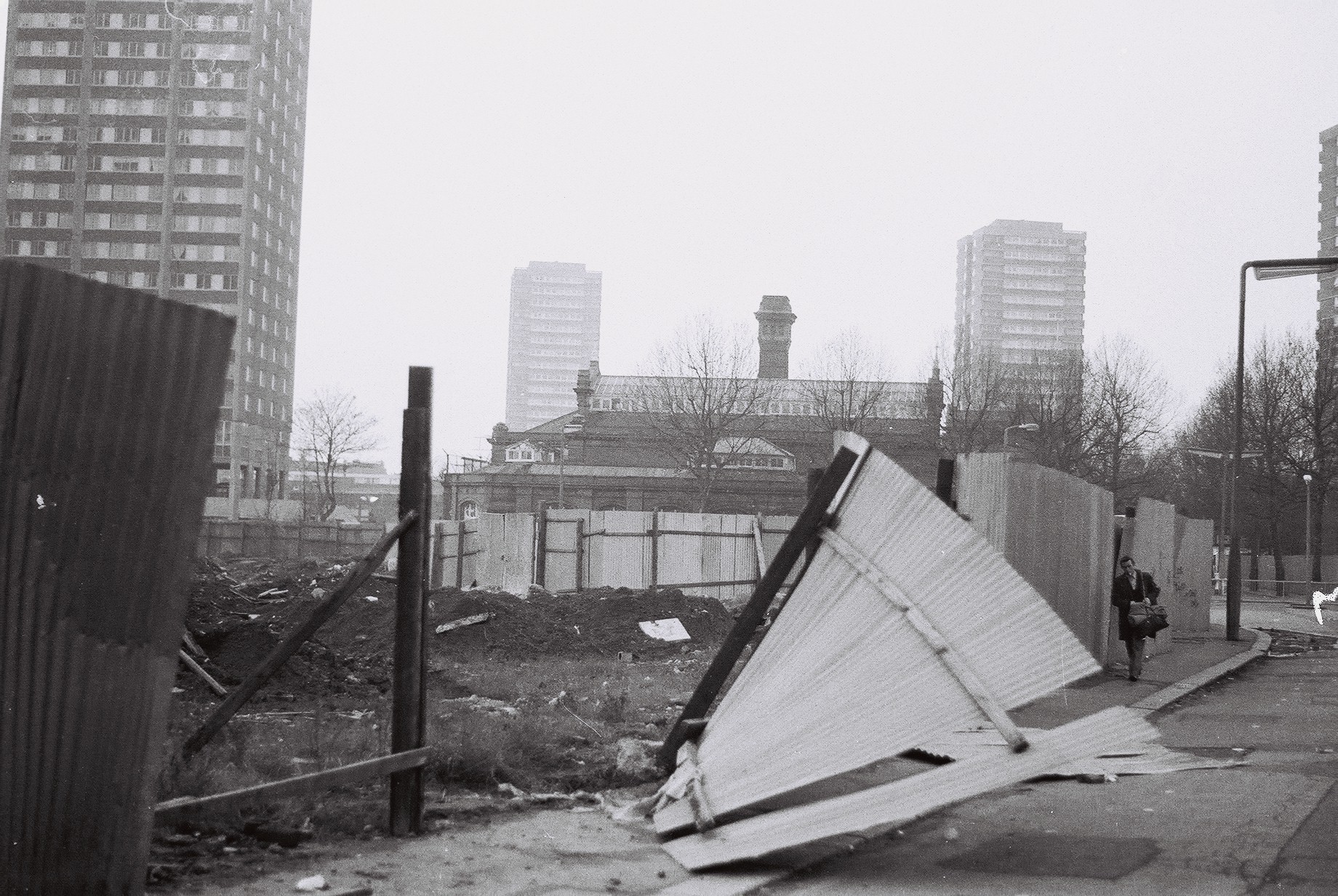
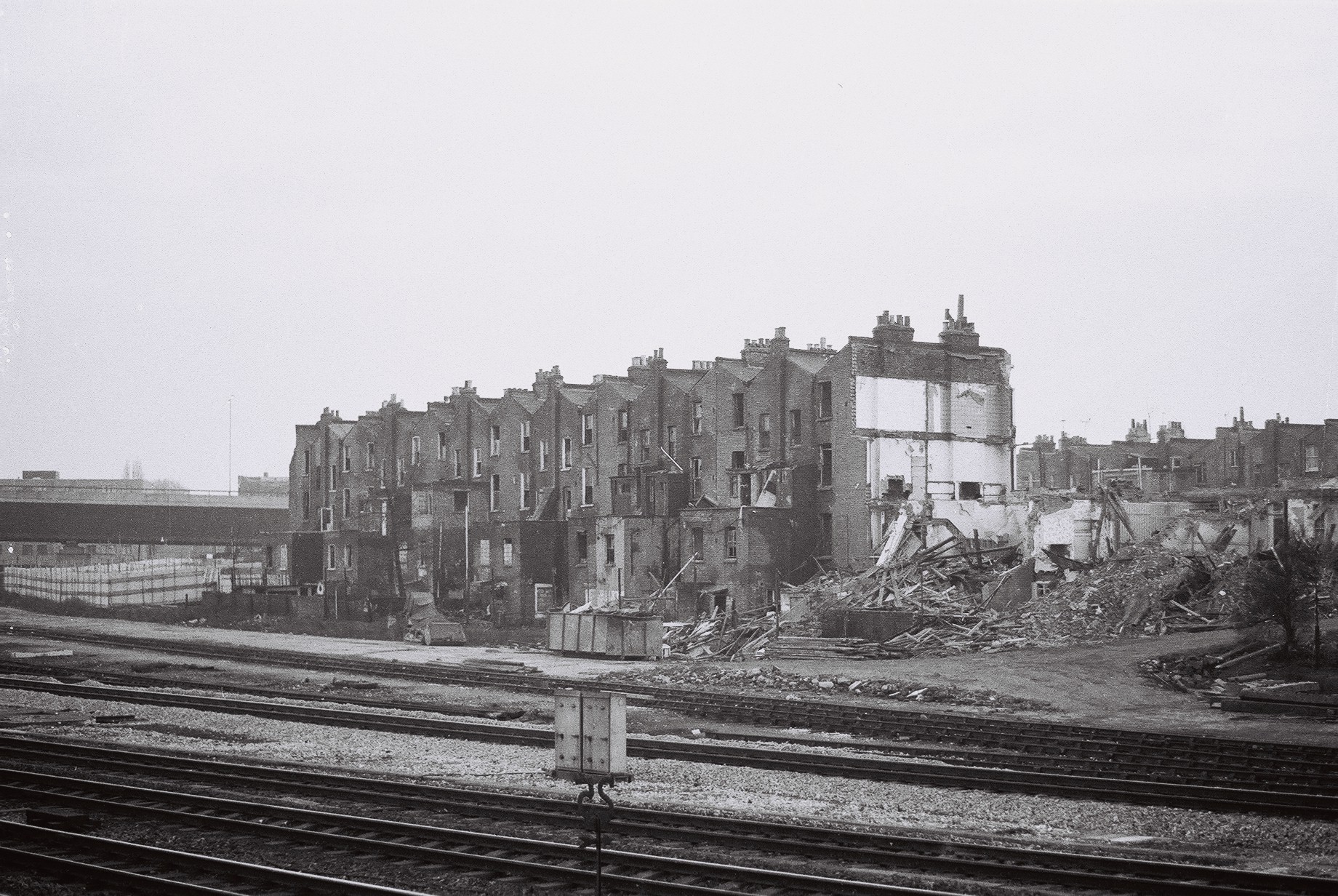
Curated by counterculture bookdealer Carl Williams, this brings together the work of two London photographers and writers, Jon Savage and SF Said. Savage is best known as a music writer, but in 1977, inspired by JG Ballard, he set out to photograph the urban wastelands of West London, taking a sequence of stunning black and white pictures of the lost land beneath the Westway.
He has written, ‘In its emptiness, austerity and gloom, it is an interzone waiting for something to happen, for the beasts to be unleashed. This was how London felt at the time: coming, coming, coming down – like a speed hangover merging into an apocalypse. But in there was also a sense of possibility that new ways of thinking might grow from this emptiness – like the scented buddleia on the bombsites.’
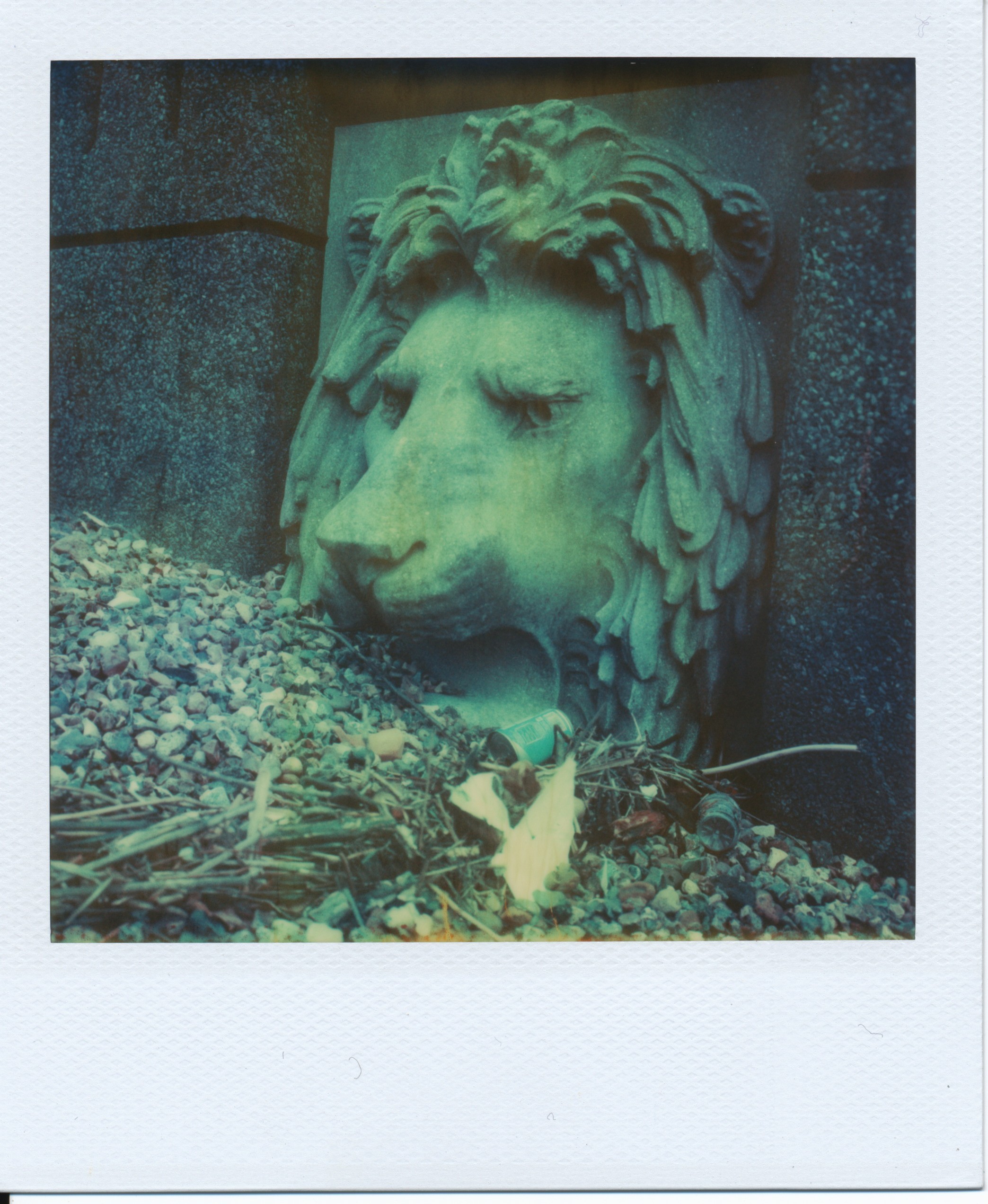
SF Said’s picture were taken for last year’s excellent Lost London Rivers book. Said shoots on Polaroid, which he describes as like a ‘photographic time machine’ and says he wants to ‘capture the dreams that a place might have of itself, or the memories that it stores under layers of time’.
He uses expired film, which can create strange, mesmeric effects and explains ‘as their chemical layers decay, they start to produce strange flame-like swirls and flickering light leaks that go even further into dreamlike realms. These hallucinatory effects are unpredictable and random; sometimes they ruin a picture. But when you’re lucky and it all comes together, I think they give you something magical that you could never get any other way.’
‘What a bounteous banquet of costly viands is spread before an ardent-minded, grateful-spirited Perambulator!’ Old Humphrey’s Walks In London
‘One must perambulate early and late in all weathers, to know a little about London’. The London Perambulator
London is a gift for those who wander. Sometimes you can pick a new area and just stroll wherever the whim strikes you; sometimes you can take a different route between two familiar destinations. Either way, you’ll find your appreciation of the city is inordinately increased.
There is a healthy industry in London walking – M@ recently compiled a list of his ten favourite for the Guardian – but if you need something cheaper and more challenging, you can always take a self-guided walk over a longer distance. I once walked the Thames from St Paul’s to Hampton Court on a Sunday afternoon, criss-crossing bridges and sticking as close to the river as possible. It was particularly satisfying to see how easy it is to walk on the river bank – the only place I had to take a significant detour was around the ever-weird Chelsea Harbour.
In a similar vein, a couple of books have recently come out on the theme of London walking. Walk The Lines is about Mark Mason‘s decision to walk every tube line in London, above ground, an overall distance of 403 miles that takes him everywhere from Amersham in the north-west and Epping in the far east to Morden in the deep south.
Mason enjoys discovering new parts of the city and peppers his book with brilliant London trivia but is at his best when writing about the pleasure walking can provide. As he writes, ‘Once you’ve caught the bug, you feel an urge to plan your walks, be it thematically, geographically or by some other means. There must be a raison d’être for your ramble.’ This, he thinks, taps into a similar mentality to that of a collector: ‘It’s not about studying, about observing or noting. It’s about collecting. About claiming the city’s greatness, or at least some small part of it, for yourself.’
Mason’s book is a fun read, but you couldn’t very well use it to walk the tube lines yourself, even if you were lunatic enough to want to do so. Tom Bolton’s London’s Lost Rivers, however, bills itself as ‘A Walker’s Guide’ and is a terrific mix of history, topography and practicality. It maps – astonishingly diligently – the courses of eight of London’s buried rivers, so walkers can follow them for themselves, pointing out items of interest they can see along the way while also offering some historical context about the subterranean rivers.
Along with Nicholas Barton’s The Lost Rivers of London, it’s essential for any fan of buried rivers (Diamond Geezer says much the same here). The atmospheric Polaroid photographs by SF Said are a nice touch, as is the introduction by the great Londonphile Chris Fowler. Highly recommended.


![[Image: 6lX5dFI.jpg]](https://i0.wp.com/i.imgur.com/6lX5dFI.jpg)

















 The Great Wen