Category Archives: Secret London

Lying about London

This appeared as part of an article that was published in the January 2012 edition of The Sunday Times Travel Magazine about London walks. Chris Roberts also runs the  wonderful One Eye Grey magazine and he will shortly issue a volume of stories from the magazine on Kindle.  In March 2012, Chris will be hosting some special related one-off walking tours

Deep in Chelsea’s prim back streets on a drizzly winter evening, half-a-dozen people wearing blindfolds are groping their way down a quiet Georgian square past James Bond’s house, leaning on each other for guidance, and giggling like schoolchildren. This is what happens when you go on Chris Roberts’s Liars London tour, a walk that offers fact, fiction and forfeits in the fancy surroundings of Sloane Square.

Roberts, a librarian, London historian and author, came up with the Liars London idea four years ago when he was asked to curate a tour for the local council. It’s a simple idea. Roberts and Silvana Maimone lead the walk and at each stop they both tell a story about the area: one story will be true and the other false. The audience are asked to guess who is lying and the person who is right most often receives a small prize at the end. Get it wrong, and you may have to pay a location-related forfeit, such as walk around in a blindfold, write a poem, or have a duel with waterpistols. Roberts and Maimone are a great double act, garrulous and witty, happily interrupting each other’s story-telling with exaggerated scoffing. Under their spell the 20-or-so walkers soon start to relax.

We are strangers when we meet among the evening commuters and blinking fairy lights at Sloane Square, but have already bonded by the time we reach the Saatchi Gallery at the affluent end of the King’s Road, where London’s wealthy still promenade in ostentatious fashion. Roberts is spinning an improbable yarn about British fascist Oswald Mosley, when an eavesdropping passer-by indignantly mutters in plumy tones, quite correctly as it happens, ‘What a load of rubbish!’ much to our amusement.

Because the walks require two hosts and require around 20 people attendees – people are happier to participate as part of a larger group, Roberts believes – they must be booked in advance. The Chelsea tour goes from busy Sloane Square down through quiet residential back streets, where every house is impeccably maintained and fragrantly festooned with hanging baskets, before finishing at Cheyne Walk, an 18th-century parade of grand houses nestling on the banks of the Thames, whose surface gleams inkily in the moonlight.

Over 90 fascinating minutes, we take in unusual landmarks such as James Bond’s fictional house on Royal Avenue and the riverside home of wombat-obsessed Romantic poet Dante Gabriel Rossetti. When it comes to the stories, the truth is often just as entertaining and unlikely-sounding as the fiction. Outside the rich brick walls of Chelsea Physic Garden, a seventeenth-century botanical garden, we are asked to choose between Maimone’s story about how a strange plant here became the inspiration for the fiendish foliage in John Wyndham’s sci-fi classic Day Of The Triffids, and Roberts’s (correct) claim that cotton seeds taken from Chelsea ended up being picked by slaves in the southern state of the United States, ultimately leading to the American Civil War.

Tall tales or otherwise, this sort of London knowledge is a personal obsession for Roberts, who has written a book, ‘Cross River Traffic’, about London’s bridges, and edits One Eye Grey, a magazine devoted to capital folklore. As such, he can’t help himself but pepper each conversation with a few extra facts and arcane titbits, making the walk a treasure trove for those who like trivia, albeit trivia that’s sometimes indistinguishable from entertaining falsehood.
Harry Redknapp lends a hand

Possibly the only interesting sentence that has ever been written about Harry Redknapp appeared 40 years ago, when Redknapp was playing West Ham. It goes:

‘It is said that when West Ham were fighting Coventry at Coventry station last year, Billy Bonds and the inevitable Harry Redknapp came along to lend a hand.’

This appears almost as an aside in Chris Lightbown’s seminal article Football Gangs in Time Out in April 1972, which looked at the mobs that followed the four big London clubs: Arsenal, Chelsea, Tottenham and West Ham.

Did Redknapp really join in a ruck in 1971? This should surely be the first question put to him if he ends up getting the England job.

Secret London: photos of lost rivers and abandoned London

Lovers of London urban landscape, lost rivers, photography and, for want of a better word, psychogeography, should be aware of a forthcoming exhibition, From The Westbourne To The Wandle at Maggs Bros gallery.

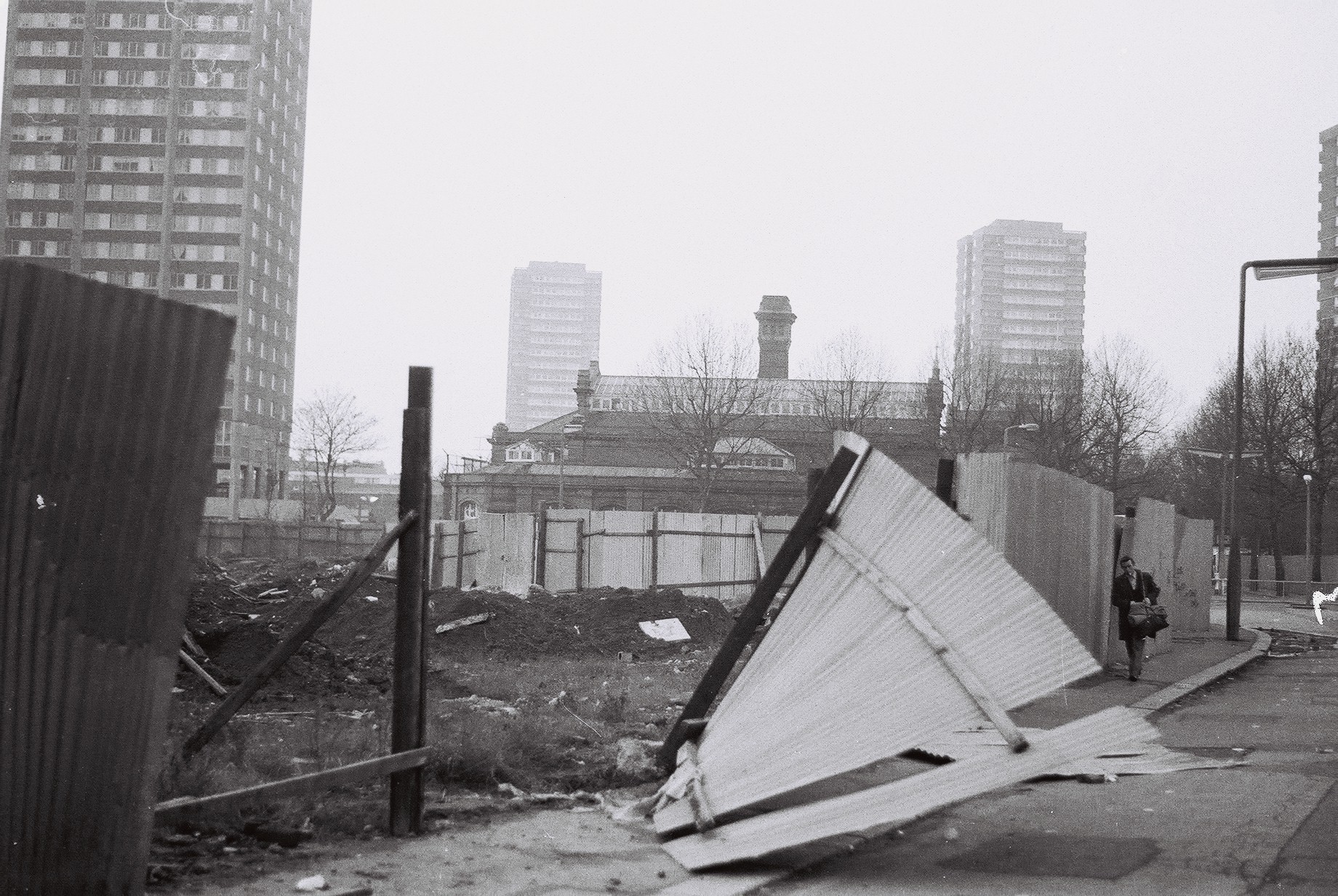
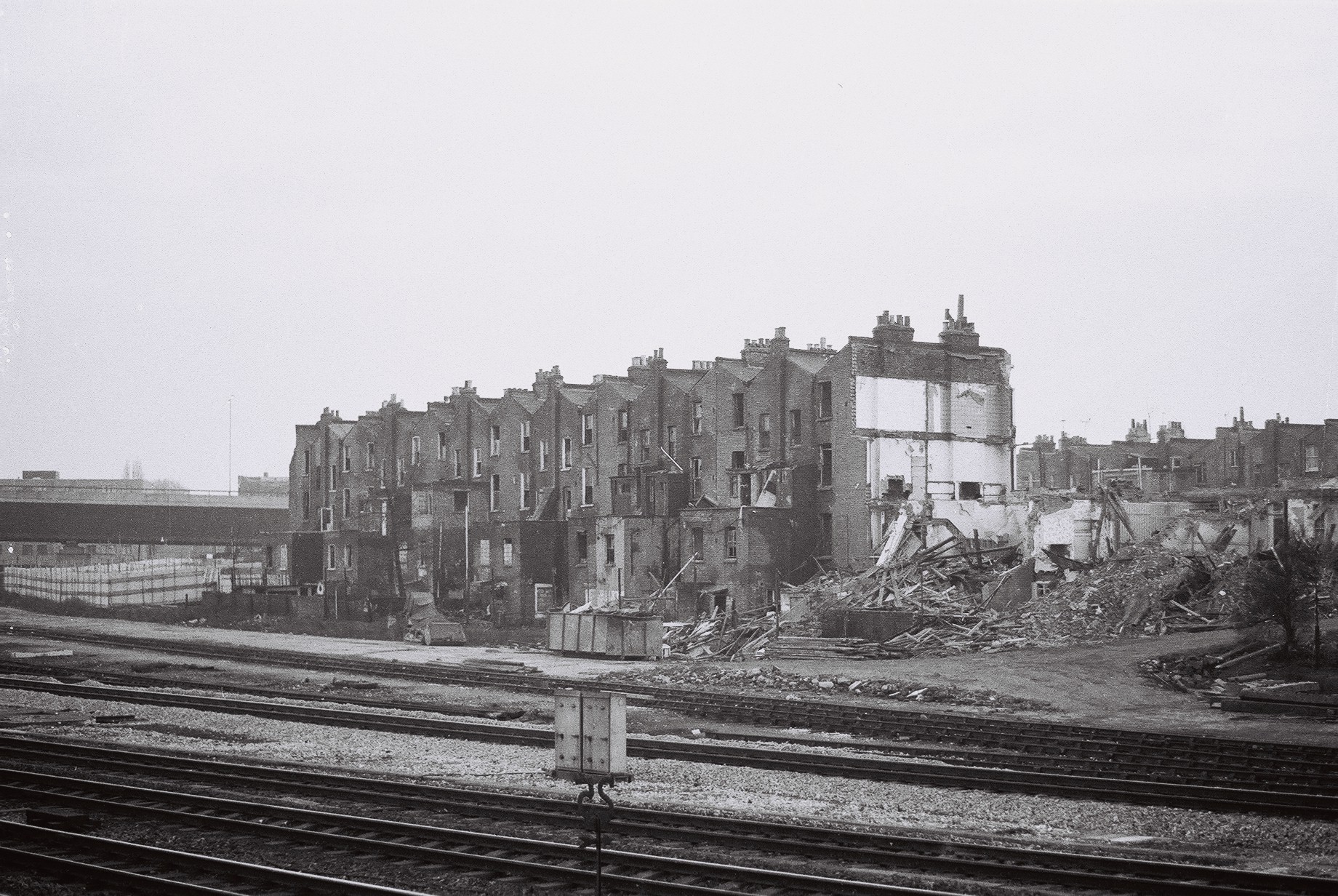
Curated by counterculture bookdealer Carl Williams, this brings together the work of two London photographers and writers, Jon Savage and SF Said. Savage is best known as a music writer, but in 1977, inspired by JG Ballard, he set out to photograph the urban wastelands of West London, taking a sequence of stunning black and white pictures of the lost land beneath the Westway.

He has written, ‘In its emptiness, austerity and gloom, it is an interzone waiting for something to happen, for the beasts to be unleashed. This was how London felt at the time: coming, coming, coming down – like a speed hangover merging into an apocalypse. But in there was also a sense of possibility that new ways of thinking might grow from this emptiness – like the scented buddleia on the bombsites.’

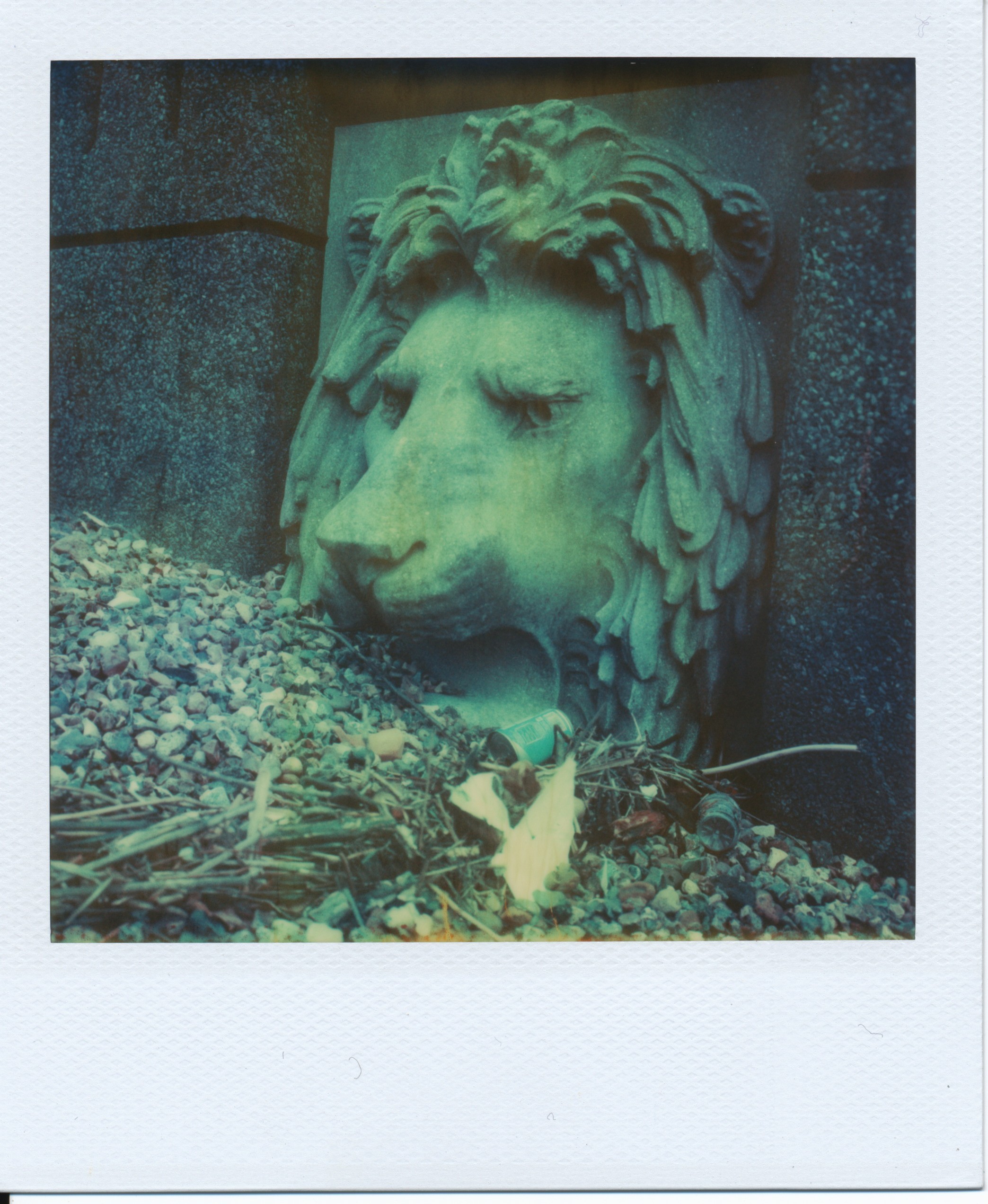
SF Said’s picture were taken for last year’s excellent Lost London Rivers book. Said shoots on Polaroid, which he describes as like a ‘photographic time machine’ and says he wants to ‘capture the dreams that a place might have of itself, or the memories that it stores under layers of time’.

He uses expired film, which can create strange, mesmeric effects and explains ‘as their chemical layers decay, they start to produce strange flame-like swirls and flickering light leaks that go even further into dreamlike realms.  These hallucinatory effects are unpredictable and random; sometimes they ruin a picture.  But when you’re lucky and it all comes together, I think they give you something magical that you could never get any other way.’

The exhibition is at the gallery at Maggs Bros, 50 Hays Mews, W1J 5QJ from March 22 to April 19.

Muhammad Ali in Tulse Hill, 1974

In 1974, this picture was taken of Muhammad Ali at Tulse Hill Comprehensive, sparring with a schoolboy.

But how did the world heavyweight champion – and one of the most famous men in the world – end up in a South London state school shortly after the Rumble In The Jungle with George Foreman in Zaire?

Well, he was invited by civil rights campaigner Paul Stephenson, who was on the school’s board of governors and thought it would be a good idea to ambush Ali in the lobby of the Hyde Park Hilton and suggest he come to the school assembly.

We continued to chat and he wanted to know how much I’d pay him. I looked him straight in the eye and said: ‘Muhammad, I haven’t got a dollar.’ He responded ‘Not even a dime? You have more nerve than Frazier.’

The full story is here, and it’s a cracker.

Secret London: LSD experiments at the World Psychedelic Centre

Michael Hollingshead has been described as ‘an English trickster and con man of the first order’ by one commentator, but he described himself as ‘The Man Who Turned on The World‘.

Hollingshead was the British man who introduced LSD to Tim Leary in December 1961 on the recommendation of Aldous Huxley. Hollingshead was working in New York when he came upon a quantity of LSD. Huxley suggested he send it to Leary, who was already experimenting with administering psilocybin to patients during his psychological research at Harvard. Leary loved it. The LSD revolution began.

After working in America with Leary – he even lived in his house – Hollingshead was sent to London in September 1965 with enough Czechoslovakian lysergic acid to produce 5,000 trips, thirteen boxes of psychedelic literature – The Psychedelic Experience, The Psychedelic Review and The Psychedelic Reader – and plans for ‘a psychedelic jamboree’ at the Royal Albert Hall featuring the Stones, the Beatles and Leary himself. Although this is sometimes presented as Hollingshead playing the role of John The Baptist to Leary’s Psychedelic Christ, Barry Miles’s ‘London Calling’ suggests that Leary was just trying to get rid of the increasingly drug-addled Hollingshead and is said to have remarked upon his departure, ‘Well, that writes off the psychedelic revolution in England for at least ten years.’

Hollingshead promptly set up his base at his flat in Belgravia’s Pont Street, which he renamed the World Psychedelic Centre, and redecorated with the key elements needed for a good trip: bowls of fruit, handwoven cloth, open fire,  bread, cheese, wine, candles, incense and goldfish. A chill out space, basically.

This was one of only two reliable sources for LSD in London at the time, so visitors were plentiful and Hollingshead began welcoming key figures from the scene – including Roman Polanski, Alex Trocchi, William Burroughs, Paul McCartney, Eric Clapton, Donovan and the Rolling Stones.

Guests were invited to take part in LSD sessions designed to make the most of the experience, with ‘lots of cushions, some excellent tapes and hi-fi equipment, a slide projector, and several chillums’. The LSD was dispensed after midnight inside grapes impregnated with 300 micrograms of the drug. The atmosphere was key. Hollingshead writes:

Shortly after dropping the acid, I played a tape of Buddhist Cakra music, followed by Concert Percussion by the American composer, John Cage. Next I played some music by Ravi Shankar and some bossanova. Interval of fifteen minutes. Then some music by Scriabin and part of a Bach cello suite. Interval. Some Debussy, and Indian flute music by Ghosh. Interval. Bach organ music and some John Cage ‘space’ music. Interval. The Ali Brothers and Japanese flute music. We also looked at slides projected on to the ceiling Tantric yantras, Vedic Gods, the Buddha, Tibetan mandalas.

There were also regular readings from Leary’s work

While Hollingshead dispensed LSD to his visitors in these carefully controlled conditions, he was soon self-medicating with cannabis, speed and heroin to control the fierce highs he experienced from taking strong doses of acid at least three times a week. The tabloids soon got wind of these experiments with the ‘killer drug’  and after hosting a party of 80 hippies at which two undercover police officers were dosed with acid after sampling the spiked punch, Hollingshead was busted. Naturally, he attended his trial while tripping and was sentenced to 21 months at Wormwood Scrubs. There he met spy George Blake, who promptly took a trip on some of the acid Hollingshead smuggled in to the prison, before escaping and going into exile in the Soviet Union.

Hollingshead didn’t make it quite that far himself, ending up in Cumbrae, a Scottish island, where he settled with a group of believers who treated LSD as a holy sacrament in quasi-religious services. He then went on his world travels.

Hollingshead was undoubtedly a key player in the scene. However, it’s notable that when a copy of his book, The MAn Who Turned on the World was sent to Timothy Leary in prison in the 1970s, Leary underlined only a single sentence – ‘…my taking of methedrine…’ Leary’s acquaintances believe that not everything Hollingshead said about his role in the psychedelic revolution could be trusted because of his addiction to opiates.

William Burroughs and the strange demise of London’s first espresso bar

In 1953, a momentous event occurred in Soho. London’s first proper coffee shop – one equipped with a Gaggia coffee machine – opened at 29 Frith Street. This was a place where teenagers too young for pubs could come and gather, and it is said by some that the introduction of this coffee bar prompted the youth culture explosion that soon changed social life in Britain forever.

Inside the Moka Bar

The Moka was an instant success, selling over a thousand cups of coffee a day. The author John Sutherland recalls, ‘the Gaggia machine, a great burbling, wheezing, spluttering monster, would grudgingly excrete some bitter caffeinated essence.  It would be swamped with steamed-milk foam and dusted with chocolate to form its ‘cappuccino’ hood… Glass cups and brown sugar (lots of it) were de rigueur.  Frankly, 50s espresso was no taste thrill.  But it felt smart as hell.’

By 1972, coffee bars where everywhere and the teenage revolution was firmly established. At this time, the author of ‘Naked Lunch’, former junkie and all-round Beat legend William S Burroughs was living in London, quietly going about his business in St James’s. He lived in Dalmeny Court, Duke Street, and loved the plush gentlemen’s shops of the area, not to mention the ‘Dilly Boys‘, young make prostitutes who hustled for clients outside the Regent Palace Hotel.

Although Burroughs was fond of the finer things in life – he got his shoes from John Lobb, hat from Locke’s and bought most of his food in Fortnum and Mason’s – he did at some point stumble into the Moka Bar, and was not impressed by what he found.

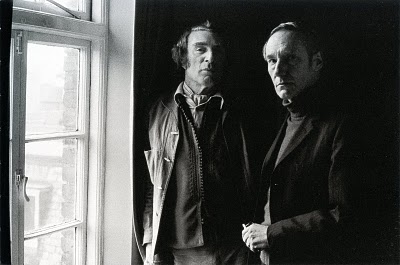
Burroughs and friend Brion Gysin in London

Burroughs at this time was getting sick of London – sick of the licensing laws, sick of the crap food and small drinks, sick of the weather, the terrible service and sexual hypocrisy. He was also sick of the Moka, which he believed responsible for an ‘outrageous and unprovoked discourtesy and poisonous cheesecake’.

The Church of Scientology, Fitzroy Street

Burroughs decided to mount a sound-and-image attack. He had previously launched one of these against the Church of Scientology, of which he had been a member, turning up at their headquarters at 37 Fitzroy Street every day, taking photographs and making sound recordings. He believed that ‘as soon as you start recording a situation and playing them back on the street, you are creating a new reality’ and that repeated exposure to such an attack would lead to ‘accidents, fires and removals’. After a few weeks, the Scientologists did indeed move, round the corner to 68 Tottenham Court Road.

Photo taken by Burroughs during the operation

On August 3, 1972, Burroughs turned his attention to the Moka. He would stand outside every day taking photos and making recordings by tape, and then return the next day to play the previous days recordings. Burroughs was convinced he was winning. ‘They are seething in there,’ he said. ‘I have them and they know it.’

On October 30, 1972, the Moka Bar closed.

This Charming Man: Edward Lovett at the Wellcome Collection

I have a small piece in the Independent about the fascinating  Edward Lovett, whose collection of lucky charms, collated around 100 years ago, has just gone on display at the Wellcome Collection.

Lovett, who lived in Croydon, was a banker and self-taught folklorist who was interested in those items that everyday Londoners kept about their person in aid of good fortune or to ward off bad luck. He would travel to the East End and docks to purchase samples of these lucky charms, which could be anything from a dead mole in a bag to a copy of the Lord’s Prayer written in careful handwriting in a spiral on a tiny scrap of paper dated 1872.

Many of the owners would claim not be superstitious, but then explain in hushed tones how a certain coin or nut or shoe had saved them from disaster; numerous items were from soldiers who had taken them to the Western Front in the First World War.

It is an extraordinary and humble collection, but one that grew so vast that Lovett’s wife eventually left him in despair in 1925. At around this time he wrote a marvellous book – Magic In Modern Love – in which he chronicled some of the items from his collection, but in a delightfully haphazard way, rarely bothering to say exactly where he bought them or when or from whom.

Felicity Powell, the artist who is curating the exhibition for the Wellcome, says, ‘He was not the most diligent of reporters. The labelling is often non-existent, which gives the items real mystery. Sometimes you can’t even be sure what they were for so you have this open space in which to speculate.’

Because Lovett was mainly collecting from the docks around east London, the collection gives a real perspective on London as a trading city that used the river to connect with the wider world. ‘There are objects from all over the world,’ says Powell, ‘There’s even an Inuit paddle.  It all came through London and into the hands of dockers and hawkers. We don’t know if these originally belonged to immigrants or natives. We don’t even know if he was collecting authentic objects. Did the people selling them see him coming?’

Lovett died in 1933 and much of his curious collection was absorbed by the Wellcome and the Pitt-Rivers Museum. It is rarely seen by the public. The exhibition at the Wellcome Collection runs until February 26, 2012.

Secret London: stink pipes

There is one of these just around the corner from where I live.

Herne Hill stink pipe

It’s long, thin, green and old and thrusts straight into the air like a giant’s, er, finger. It’s not a telegraph pole – there are no wires coming off it – and it’s too tall to be a broken street lamp.

It is, in fact, a stink pipe, one of four such items of street furniture that can be found within a half-mile radius of Brixton Water Lane. These stink pipe were built around the same time as London’s Victorian sewer network in the 1860s and are basically just huge hollow pipes that allow potentially lethal gas to escape into the atmosphere, far above the rooftops.  They often seem to located near the locations of culverted rivers – these ones are found more or less on the route of the Effra or its tributaries – suggesting that when these rivers were incorporated into the sewer system, they required some sort of additional safety valve (the buried Fleet famously exploded at King’s Cross after just such a build-up of gas in 1846).

Some stinkpipes are rather elaborate, but the ones I’ve seen around Herne Hill and Brixton are pretty basic and utilitarian. If you want to find some finer examples, like the fine crowned stench pipes of Kennington Cross, you should check out the excellent London Stench Pipes blog, which is devoted to these marvellous oddities leftover from Victorian London.

Secret London: Brixton’s Windmill

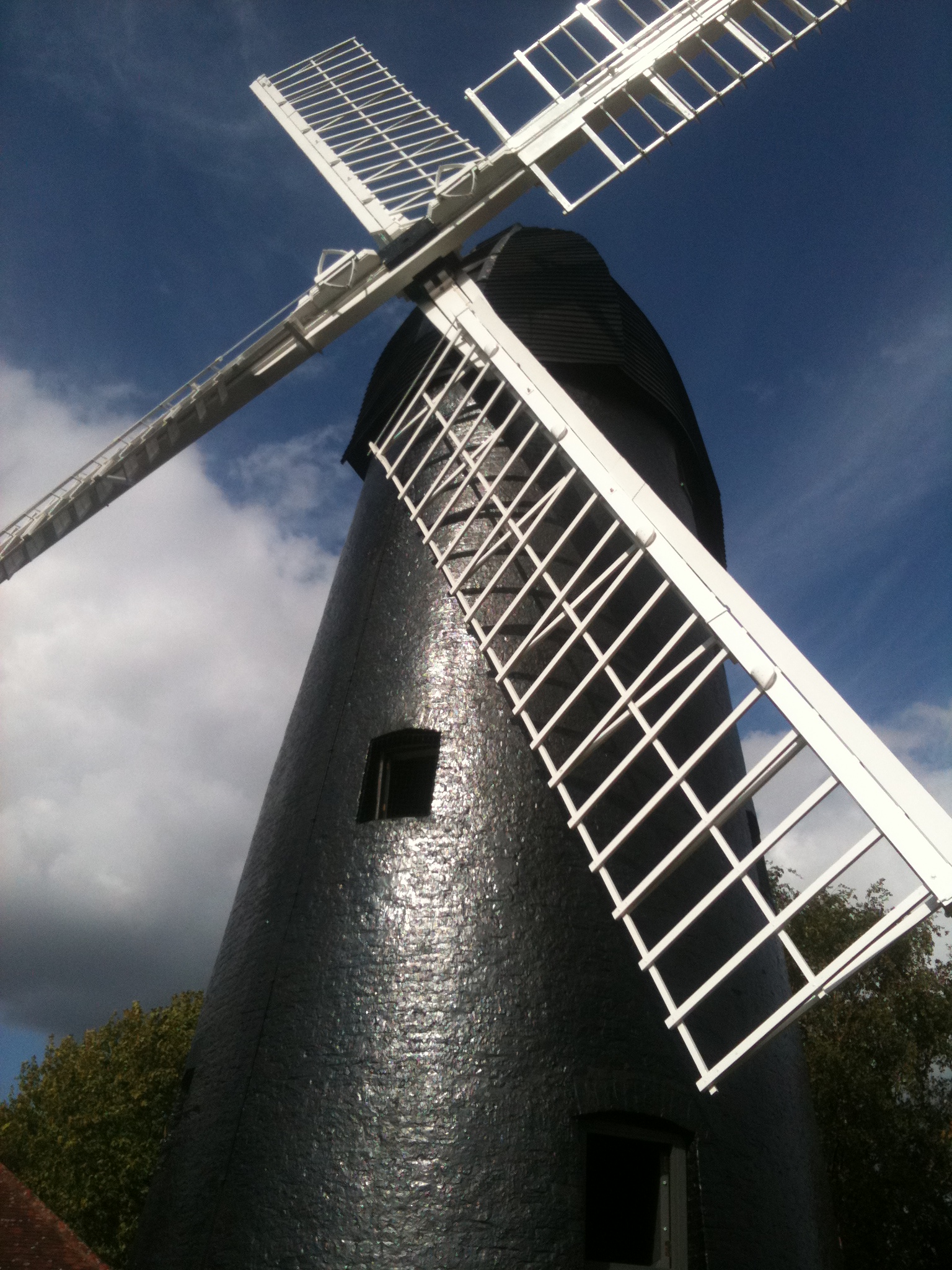
I finally got round to visiting Brixton Windmill during Open House Weekend. I first heard about the windmill ten years or so again, when I would go to gigs at the Windmill pub and pop out between acts to try to catch a glimpse of this extraordinary building in the nearby park, lost and derelict like an abandoned spaceship.

The windmill was built in 1816 and run by John Ashby of Brixton Hall. It was originally on a hill in fields, surrounded by outbuildings like a mill cottage and bake house, where bread was baked with the mill’s stone-ground wholemeal flour and sold to locals.

By the 1850s, Brixton was starting to grow and new housing blocked the wind, hampering performance. In 1862, the Ashby’s took their milling business to the Mitcham watermills along the Wandle, but the Brixton Windmill somehow remained, used for storage. The sails, though, were removed and sold for firewood.

In 1902, the windmill was returned to use, albeit as a location for a steam-powered provender mill. The mill was finally closed in 1934 and left empty until the LCC purchased it in 1957, after at least one attempt had been made to demolish it and cover the site with flats. Despite the sails being restored in 1983, the windmill, now owned by Lambeth, was allowed to run almost to ruin, which is how it appeared when I first saw it.

Since then, a major restoration project has taken place and the windmill is now open again to the public around once a month. The Friends of Windmill Gardens, a local residents association, also hope to start grinding flour again, using the provender mill that still survives on the first floor.

In celebration, here are the Fuck Buttons playing at the Brixton Windmill pub.

Secret London: swastikas

One of the great London rumours is that somewhere inside the Royal Society’s building on Carlton House Terrace sits a giant swastika.  This is not because these esteemed scientists and thinkers are secretly Hitler-worshipping fascists, but because their home at Nos 6-9 was the location of the German Embassy (at Nos 8-9) during the pre-war Nazi era.

Carlton House Terrace was designed by John Nash between 1827-1832 to occupy a site previously taken by Carlton House. No 9 almost immediately became the seat of the Prussian Legation, which slowly evolved into the German Embassy. In the spirit of the time, it soon expanded to occupy the house next door at No 8.

In 1936, Joachim von Ribbentrop moved in, replacing the late Ambassador Leopold von Hoesch (whose dog’s gravestone can be seen under a tree near the Duke of York steps). Von Ribbentrop demanded a complete renovation of the property, and the Nazi’s top architect, Albert Speer, was called in to do the job. Exactly what he did remains something of a mystery, but the German Embassy website claims:

‘Only the fact that the Nash Terrace was a listed building saved the facades from being included in Ribbentrop’s plan to establish a model of the Third Reich architecture in the centre of the British capital. The renovation was exhaustive, money was no object.’

It is hard to discern exactly what alterations Speer made, but one diplomat wrote that the showy renovation of No 8 and 9 Carlton House Terrace had produced a style and furniture less suitable for an embassy and more comparable to that of German luxury liners of the time like the “Bremen”.  A contemporary set of photographs are lodged at the Library of Congress. The only one currently viewable is of the very modern-looking kitchen.

This decent phot0-set shows the building now, including Speer’s striking staircase, said to be constructed by marble supplied by Mussolini.

Albert Speer designed this

Among Speer’s embellishments was said to be the inclusion of a swastika mosaic on the floor of one of the public rooms. After the war, rather than remove the offending article, the swastika was said to have been simply covered with a carpet. (And this website claims there are still visible ‘border designs of swastikas on the floor of one public room’, which seems unlikely.)

Is it true?

Well, I’ve never seen a photo to substantiate the claim and people I know who have been inside the Royal Society are also none the wiser. However, I did once receive an email at Time Out from a builder who claimed to have renovated the building in the 1990s and seen a huge swastika under one carpet. Where, presumably, it still remains. Von Ribbentrop also had a house built for him in Pinner, which was said to have swastikas carved into the staircase.

If you do have a hankering to see a swastika in London, you should head for India House, where this plaque can be seen on the wall.

It represents the swastika when it was still an intriguing sign from the east, before it was appropriated by Hitler. In the first two decades of the 20th century, the swastika was a popular symbol in the west, often used as a good luck charm and adopted by groups as varied as the Boy Scouts and the Druids. My copy of Rudyard Kipling’s Just-So Stories still has a prominent swastika featured in one illustration and the British Museum is full of the things.

Indeed, so popular was the swastika, it was even used to liven up the decor at Hounslow Bus Garage. Click on that last link and zoom in and you’ll see the border of pretty little swastikas that featured in the staff canteen. These swiftly disappeared as the truth about Hitler became impossible to ignore.