Category Archives: London

Three new London books: then, now, forever

I’ve been immersed in a trio of complementary London books in recent weeks, each of which adds further depth to any understanding of the city’s built environment.

London: Architecture Building And Social Change is a very useful, glossy overview looking at how London’s architecture has developed – or not – with the city’s needs. Sometimes the architecture has led to social change; sometimes social change has led to new architecture. Author Paul Knox focuses on 27 districts – largely central, which is understandable but slightly annoying – exploring how landowners and developers combined to give them their character, before looking at a dozen key buildings in closer detail. There’s rich detail here, as well as nice pictures and helpful maps. I was particularly grateful for being introduced to the word “super-gentrification” to describe London’s current toxic situation. Knox is particularly good at emphasising the city’s sense of scale – how it has repeatedly rejected density in favour of a more humanising style of urban living in the form of terraces or mansion blocks – and showing how this is once more under attack. The overall feel is a little like seeing London through a microscope: first the overview, then closing in on a specific area, then seeing how all this maps on to a single building. It’s also a terrific reference book.

If Knox’s angle is how we got from ‘then’ to ‘now’, Tom Bolton is more interested in what ‘now’ obscures of ‘then’. Vanished City: London’s Lost Neighborhoods hunts the streets for traces of London districts that have been eradicated by time, developers, fire and bombs. Bolton embraces the history, delving into archives to restore to life forgotten quarters such as Ratcliff, Cripplegate, Wellclose, Clare Market and, particularly fascinating, the strange lost towns of Old St Pancras. There’s much incidental overlap with Knox, but Bolton fills in some of the gaps, bringing us the stories of the people who lived in these lost towns rather than simply telling us who owned the land and what was built on it. Brilliantly researched and breezily written, the only drawback is a lack of maps, which would have really helped the reader pin the past on to the present. Instead, as with Bolton’s previous book with Strange Attractor, SF Said adds suitably spooky imagery.

Finally, the reprint of Ian Nairn’s Nairn’s London is a must for any Londonphile. Filling a space between Bolton’s largely historic musings and Knox’s contemporary report, Nairn looked at London at a very specific point in time, the mid 1960s, as the post-war redevelopment of the city was really getting underway. In this way, it makes a nice companion to HV Morton’s In Search of London, roving, individualistic, romantic and revealing. Nairn conceived it as “record of what has moved me, between Uxbridge and Dagenham”, and his idiosyncratic eye meant he was able to celebrate vernacular masterpieces like the Granada in Tooting (“Miss the Tower of London if you have to, but don’t miss this”) while waspishly dismissing some of Wren’s lesser works. Vivid and memorable, it’s like a three-dimensional A-Z. If you don’t already own it, snap one up.

A Saturday in London in the early 1990s

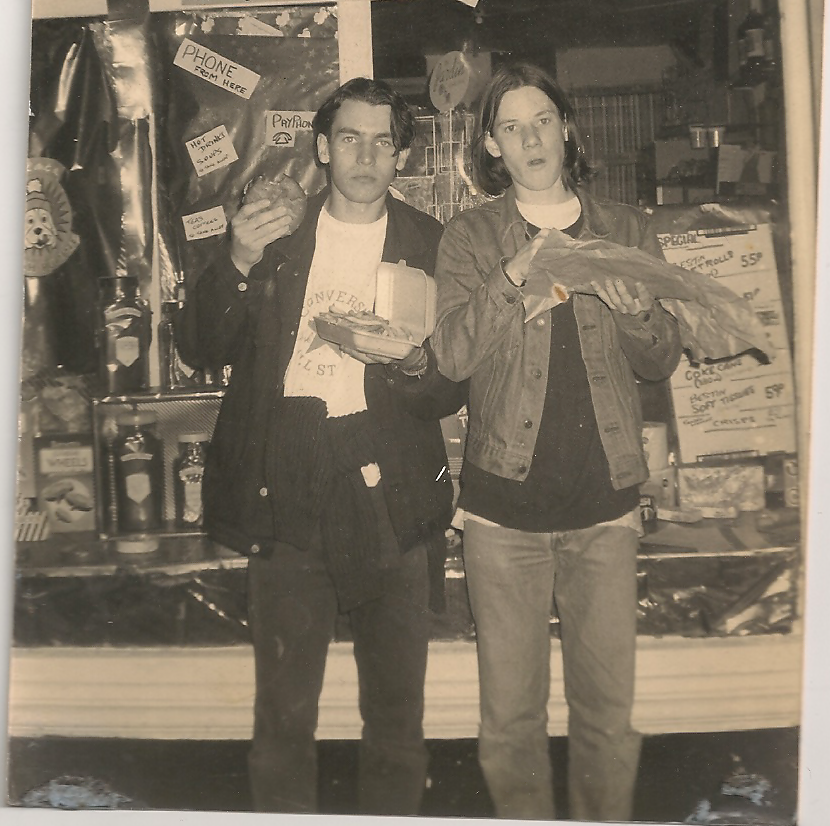
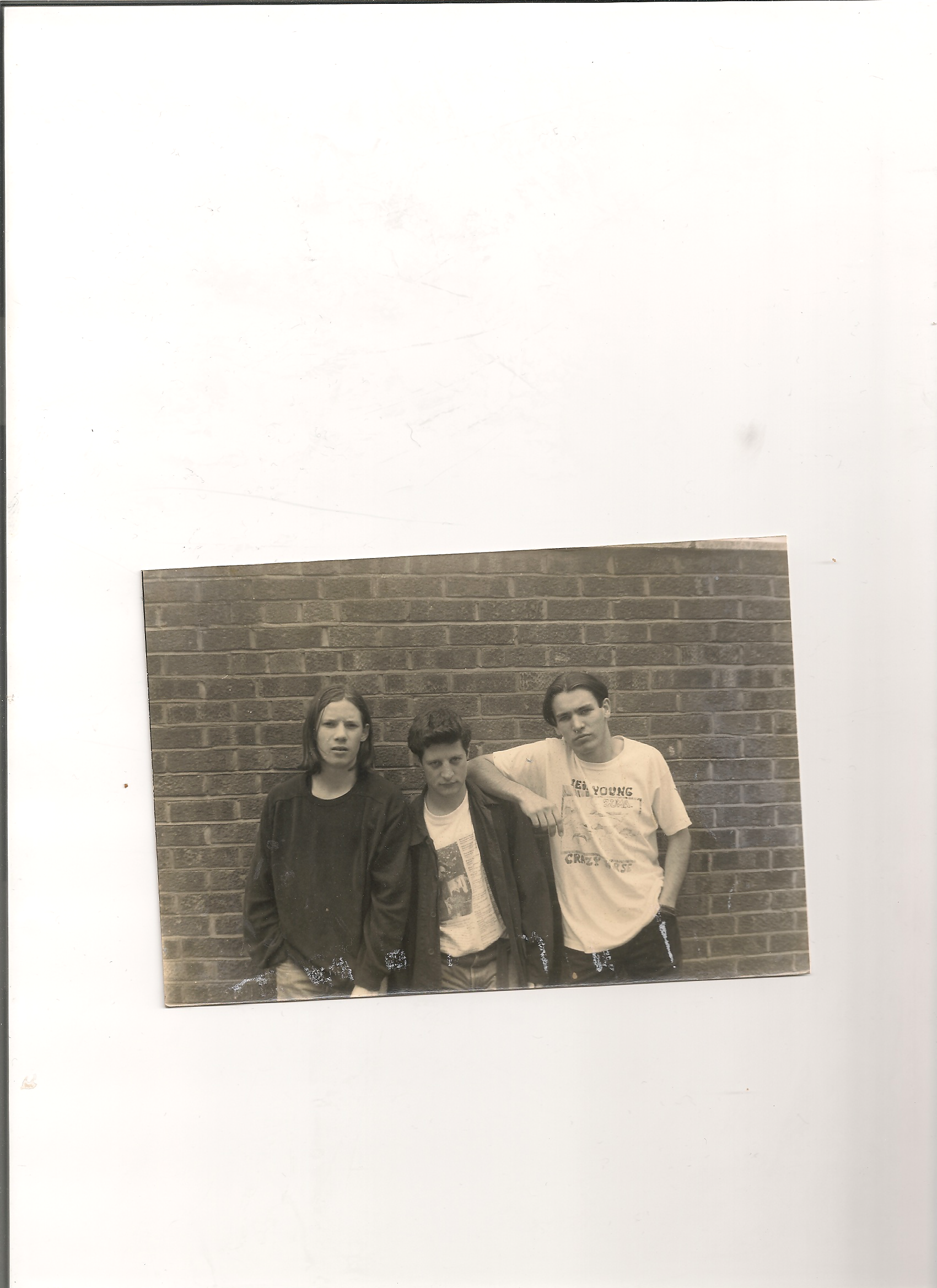
Here are me, Scott and Mike trying to be the Ramones.

Triumvirate

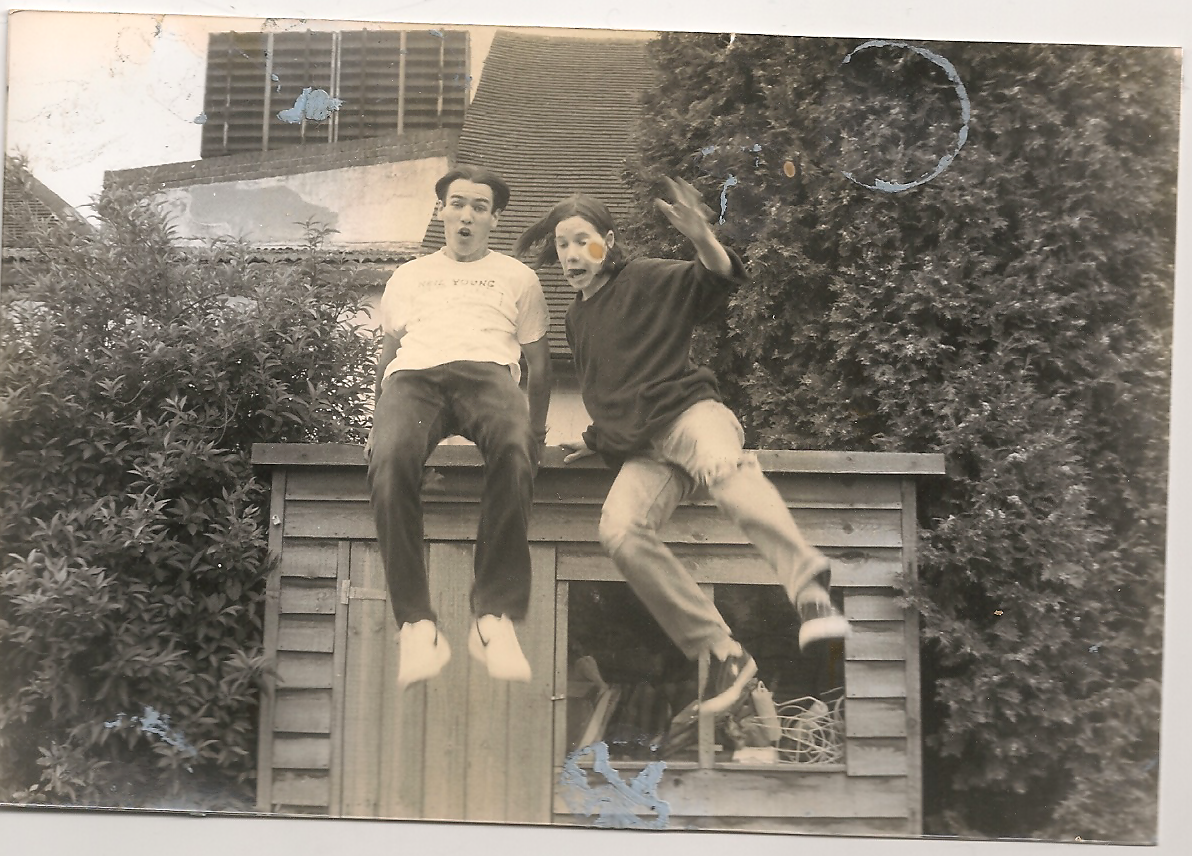
We called ourselves the triumvirate and were inseparable. We were also insufferable poseurs.

Triumvirate2

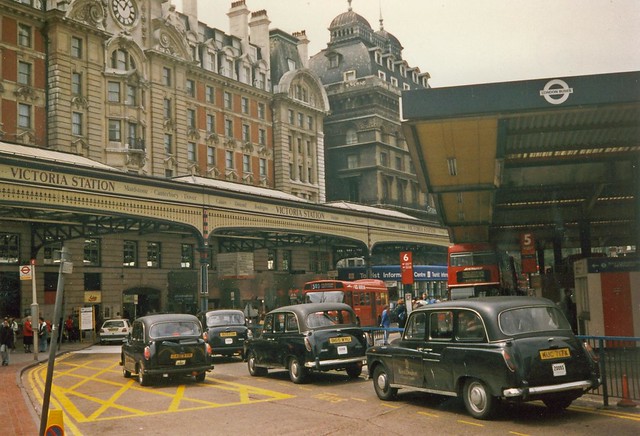
We spent most Saturdays going up to London. The day usually started here.

Image result for sutton surrey station

The highlight of the train journey came after we passed Clapham Junction and trundled past the hulking mass of Battersea Power Station, which was apparently being turned into a theme park. This classic view of the power station from the railway line is soon to disappear as the building is surrounded by steel and glass boxes for the very rich.

Image result for battersea power station from railway

Crossing the Thames, you could usually make out the floodlights of Craven Cottage and Stamford Bridge if you were quick. There are fewer finer sights in life then the glimpse of far-off floodlight. If all went to plan, we might be getting a closer view before the day was done.

From Victoria, we headed for Covent Garden. Mike was a dresser. He could carry anything off. He still can. Mike had a dapper big brother, Pete, who read The Face and I-D, and so Mike always seemed to know where to go. His keen sense of style didn’t always go down well in the suburbs; when he wore a pair of Adidas shell tops to school, kids in Nike Air and Adidas Torsion laughed at his protestations that he was the trendy one. Still, I was convinced enough to buy a pair of suede Kickers on his say so, and nobody took the piss that much.

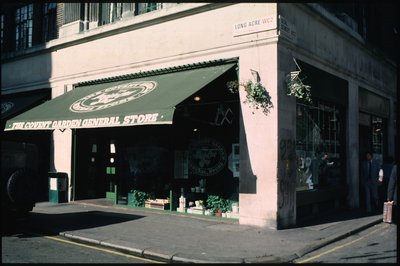
We usually went to a few shops on Floral Street and then  Neal Street, maybe first visiting the Covent Garden General Store, which was full of entertaining tat.

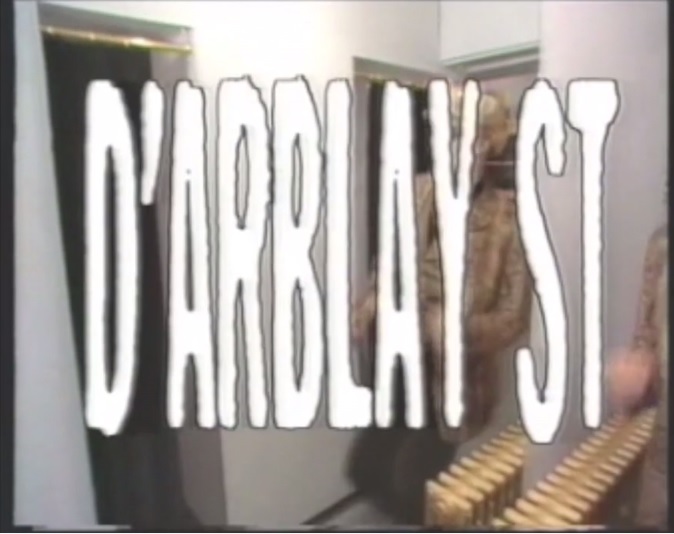
We spent much of this part of the day traipsing after Michael into shops where saleswoman would assure him he looked the ‘dog’s bollocks’ as he pulled on another pair of check flares. If I was feeling bold I’d try on something in Red Or Dead or Duffer of St George on D’Arblay Street. On one treasured occasion, Mike’s brother Pete was so impressed by my red Riot + Lagos t-shirt from Duffer that he borrowed it for a party. This was probably the high point of my life as a style icon.

duffer

https://vimeo.com/110877169

duffer

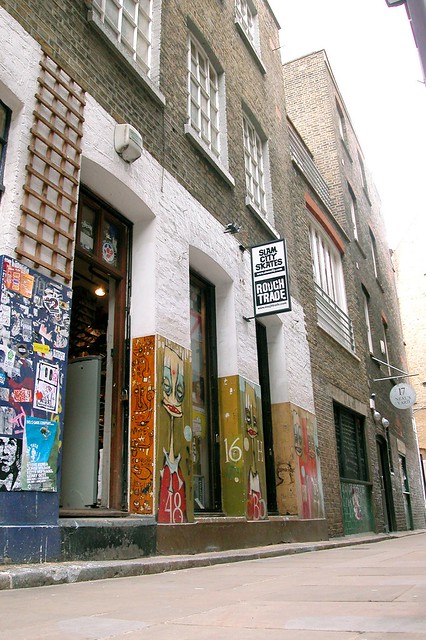
After watching Michael try on clothes, we’d go to Neal’s Yard, where we breezed past the weirdos in the skate shop on our way to the basement.

This was the Covent Garden branch of Rough Trade, a pokey den arranged around a metal spiral staircase, with walls covered in graffiti from bands that had played there. We loved it here. Music was one shared passion. Mike had got us into Sonic Youth, Pavement and Teenage Fanclub; Scott’s dad had a great selection of Van Morrison, Leonard Cohen, Jackson Browne and Neil Young. We all read the NME and Melody Maker and Select. This stuff mattered.

After a quick nose, we’d slip on to Shaftesbury Avenue and round to Cambridge Circus. There was a shop south of here on Litchfield Street that sold trendy Brazilian football shirts which we looked at but could never afford. Usually we headed north up Charing Cross Road to Sportspages.

imgresSportspages sold sports books, but we were only interested in the fanzines, which were scattered over the floor in untidy piles. Football was our other passion. I’d try and pick up the hard-to-find Cockney Rebel, a one-man Chelsea fanzine that combined football with an idiosyncratic take on pop and film culture. I went to Sportspages for years but never actually bought a book there.

After that, it was lunchtime.

Image result for bacon double cheeseburger

We lived for bacon double cheeseburgers.

Then we’d head down Hanway Street, past the Blue Posts on the corner, to visit Vinyl Experience, a huge place over a couple of floors which was covered by this fine Beatles mural.

Photo by Ronald Hackston

Photo by Ronald Hackston

At some point earlier, it had this fine sign.

vinylexperience

There were a couple of other record shops here – JBs was a decent one – and we’d often pop into Virgin on Oxford Street to check out the t-shirts.

From there, we strolled down across Oxford Street and cut through Soho down to Berwick Street, where three more record shops awaited – Selectadisc, Sister Ray and Reckless. Selectadisc was my favourite; although the staff were contemptuous, they were marginally friendlier than in Sister Ray and the choice was wider.

Reckless Records Berwick Street

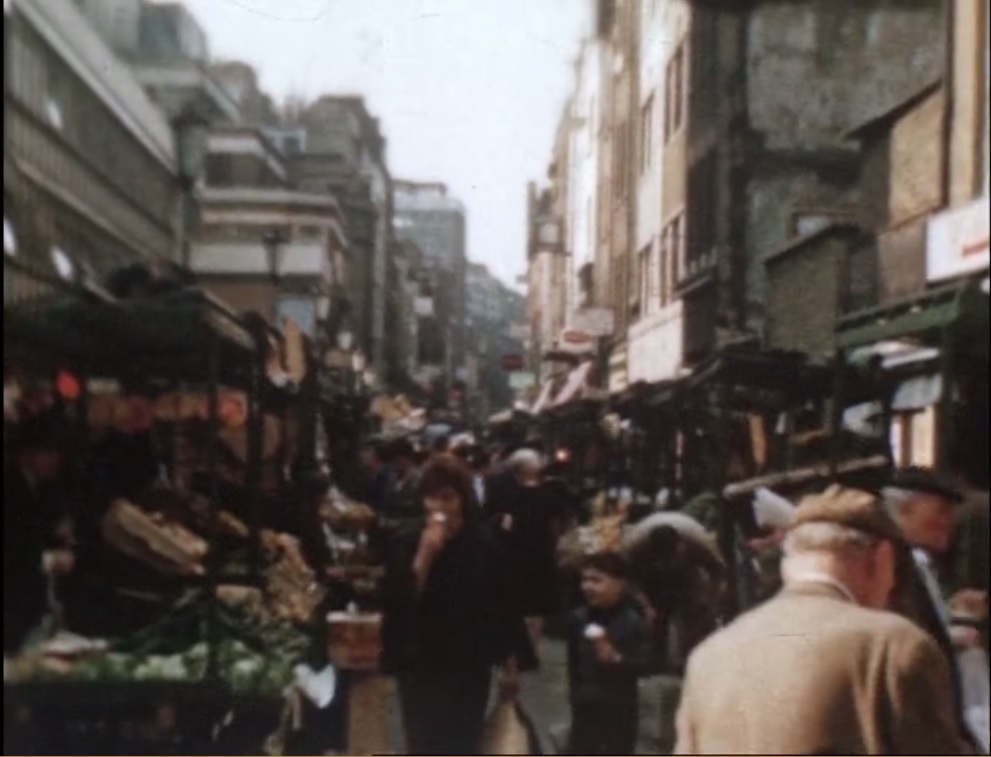
Sometimes we’d see our schoolfriend Martin, who worked the odd Saturday on a fruit and veg stall in Berwick Street market for his uncle. I was always slightly jealous of this; it seemed an impossibly cool, proper London job for suburbanites like us to have.

Football was next. Despite having visited so many shops, we spent more time browsing then buying so rarely had many bags. Most of our serious record shopping was done in Croydon at Beanos.

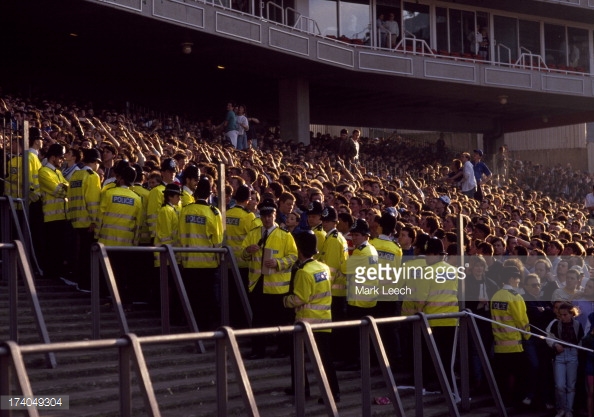
What game we went to depended on who was playing, how much money we had and whether I could persuade Scott (Wimbledon) and Mike (Celtic) to fork out to watch Chelsea. It usually boiled down to Arsenal in the Clock End, where we could still pay the kids fee, or Chelsea in the Shed. Occasionally we’d duck into the ground at half time, when the exit gates had opened.

If we didn’t fancy Chelsea or Arsenal, or they were away, we’d head over to QPR, Charlton, Millwall and Fulham. Nobody ever sold out.

Chelsea at Arsenal, 1990

Chelsea at Arsenal, 1990

After football, dinner.

dinner

If we had time, we’d pop into the sweet shop in the Trocedero.

And then maybe a gig: at the Marquee or Astoria.

Or more likely home via Victoria, and then out to the Ship or the Firkin in Croydon.

A week or so later, we’d do it all over again.

shed

Many of these places no longer exist, and I’m not even that old. Or at least, I didn’t think I was.

Park football

I recently played my first football match for about a decade, so thought it would be a good time to revisit this article, which originally appeared in the Independent On Sunday in around 2003. This is an edited version.

“Can we join your game?”

It’s an action stopper every time. The match shudders to a halt as everybody sizes up the newcomers, two lads in Italy shirts with heavily accented English working their way round Regent’s Park like free transfers looking for a kickabout.

“Can we join your game?”

Well, it’s not as simple as that lads. This might look like two dog-eared teams in mismatched shirts puffily chasing a flaccid ball over a softball pitch, but it’s actually an evenly tied humdinger, a finely poised 4-4. Pick the wrong Italian, and that satisfyingly tight and edgy tie could turn into a 10-4 romp. And who wants that?

Welcome to the world of park football, when London’s green spaces become a mass of under-athletic over-enthusiasm. Just after 7pm, gangs of kids and grown-ups who should know better mob up at tube stations – Regent’s Park, Hyde Park Corner, Marble Arch, Clapham Common – and descend upon the nearby park to seek their pitch. Bags become goalposts, talents are weighted and teams carefully picked, and, after token warm-up, the game is on.

And what a game. Pitches are warped, with non-existent boundaries so that the keenest players will go haring off after the ball into the far distance; fouls are rare, with every physical challenge followed by an apology; headers are met with open mouths and closed eyes; teams are mixed in race, sex, size, language and ability. The only unifying factor is that everybody is playing for the hell of it. It’s fun.

This can change when you find yourselves a couple of players short for a decent game among yourselves. You need at least four-a-side for a proper match, so if only seven of you have turned up there are two options. Rope in a pair of eager passing Italians to make up the numbers, or – more thrillingly – challenge another group short on numbers playing elsewhere in the park.

Possible match-up are scrutinised and whispered conferences abound: what about them, they look crap. Don’t ask that lot, they’re wearing shinpads. Check them out, they’re all in Tottenham shirts – they must be rubbish. Eventually the challenge is thrown down, considered, debated, accepted, and the teams line up. At first it is tentative, nervy, almost polite, as you test each other out, softly sparring like virgin boxers. Then your opponents realise how crap you are, and thrash you 9-0.

In these circumstances, there are only two ways to lose: to some awesomely gifted foreign language students who score countless goals of great beauty and raise your spirits with their relentless exuberance; or to some ultra-competitive English accountants who celebrate each methodical goal with high fives and crush your spirit with their relentless commitment.

Indeed, it is almost terrifying how many cultural stereotypes are encountered on these pitches; stocky, tricky southern Americans who want to beat half-a-dozen players before scoring; willing but limited Scots; talented but retiring east Europeans; willing but limited English; pass-heavy Spaniards; clueless Australians playing rugby. All are represented on this uneven playing field.

Here young and old, black and white, join together to bond in unexpected teams. And, most tellingly, here are the Asian footballers that we are told do not exist, playing huge, joyful, eager games and raising the question why no player from the subcontinent has yet broken through to play top level professional football in this country. Well, they’re out there, in London parks, having fun with us and wondering why their role models all play cricket.

Nostalgia corner: Zola, bitumen, Paolozzi and the great ‘is London shit?’ debate

Because of a frantic start to 2015, I’ve neglected Great Wen recently. Hopefully, I’ll find something to stick up soon but in the meantime here are a few interesting bits and bobs.

First, here’s me, writing for the Canal & River Trust, about the experience of taking a narrowboat into drydock, where you whack it with mallets, coat it in tar and get pleasingly sozzled with strange Irishmen.

Second, I really enjoyed this piece by Callum West on the great Chelsea team of the 1990s, and the extraordinary revival of fortunes that preceded the salad days of Roman Abramovich. This isn’t the side I grew up with, or the one that won the most trophies, but it’s the one that gave me the greatest pleasure to watch.

Finally, the great London debate – is it turning shit or isn’t it? – is gathering pace. The constant stream of negative stories, the latest being Eva Wiseman’s pretty dismal contribution at the weekend, has finally been met by counter-argument in Brockley Central.  Is Nick’s point fatally wounded by the use of Giles Coren as a defense witness? Or is he simply missing the point, which is that the death of fun by over-development in central London is a prevailing trend that is already starting to infect areas far from the West End, and we sit and sneer at those uncomfortable at the increasing inequality, inaccessibility, unaffordability and general dreary Dubainess of it all at our peril? Both, probably.

Professional contrarians like Coren will get in bed with anyone if it gets them attention, but I’m not sure many other Londoners should be siding with the developers and speculators.

By illustration, the latest landmark to get the chop are the great Paolozzi murals at Tottenham Court Road. Still, that’s the price of progress! Yay to cultural vandalism!

“In winter, we hibernated”: Christmas on a London canal

I wrote this piece for the Canals & River Trust about winter when I used to live on a canal boat in London.

Everybody has a dream. For London cabbies, it’s ‘riding the green wave’ – that is, to hit only green lights when driving along the Euston Road, surfing the inner city highway entirely unhindered by reds and ambers. For boat dwellers, the dream was a little different: we wanted to ride the red arc, to light a fire at the start of winter that would keep burning until spring, a constant five-month blaze that required no further feeding from firelighters or matches.

I’m not sure anybody managed it. There were rumours about the more calloused boaters, the ones who could measure out their boat life by the decade and bled pure diesel. I know I didn’t. Far from it. For the first few years I lived on my narrowboat at Lisson Grove, I could barely keep a fire alight for a single night. I blame it on my stove, a gargantuan pot-bellied top-loader that was far too big for my tiny boat and practically impossible to control no matter how diligently I layered firelighters, kindling, newspaper and coal, or fiddled with the grate, trying by fractions of an inch to get the perfect draft. Instead, it would burn ferociously hot, so much so that if I wished to sleep amid the inferno I would have to fling open the back and front doors no matter what the weather outside. Invariably, I’d wake icily at 3am to find the fire burnt out, and bury myself in blankets until dawn. A cold boat was not a pleasant place to spend the morning; often I’d have to break the ice that formed in the sink overnight.

Later, I acquired a more controllable stove and would pride myself on keeping it burning for weeks at a time. This allowed me to appreciate the smothering splendour of boat life in winter. For half the year, living on the canal was an outdoors and sociable affair. This was partly a matter of comfort. Boats are largely made of glass and metal, so get very hot very quickly. It’s like living in a car. To combat this, doors were always open and much time was spent on deck, gossiping with neighbours. This easy familiarity would lead to impromptu barbeques that became boozy weekends, with individuals dropping in and out as the mood struck but the essential body of the party remaining intact from Friday evening to Sunday night.

Then in winter, we hibernated. Returning in the evening gloom, even before you reached the canal, you’d catch the homely smell of smoking coal. The towpath would be still, and on every boat, doors and curtains would be closed against the cold, chimneys puffing cheerily away. While summer was a buzz of conversation, hailed hellos and clinking bottles, the sound of winter was the stolid rattle of a coal scuttle being filled. We still visited each other, enjoying wine and warmth and admiring our neighbours’ stove-lighting technique, perhaps exchanging views on the best type of coal to use. But this was an altogether more internal time, drowsy days spent deep within the boat, and, as winter peaked, in contemplation of the view outside. Almost every year the slow-moving canal would freeze grey-white, startling, beautiful, and so close at hand it felt as if your boat had moved overnight to another planet. This virgin layer of ice would gradually get more battle-scarred as the kids from the local estate attempted to smash the surface with increasingly oversized objects, graduating from stones to bricks, until with inevitable surrealism, you’d wake to find a shopping trolley embedded in the ice.

Although our winters were essentially insular they were not entirely so. Many boaters spent Christmas Day on the canal, staggering sociably from boat to boat, admiring each tiny decorated fir and fairy lights slung along gunwales. And, for the Millennium, we held a party every bit as spectacular as any summer barbeque, watching the Thames fireworks from Primrose Hill and spending four solid days carousing, before, one by one, we slipped away, to see out the rest of winter from the cosy comfort of our floating dens.

Ghost street

IMG_3187

I walk past this corner at least twice every day but only recently noticed the ghost sign painted above the newer enamel one. I assume it was previously covered up, otherwise I’m sure I’d have spotted it at some point in the past five years. Perhaps the jutting pipe points to recent usage.

Much as I like a painted street sign, this one is particularly interesting as it dates back to a time when the street – a short stub of road – had a different name entirely. According to Steve Chambers, who knows about such things, this was one of three name changes in the area – including the eradication of the similar Hamilton Terrace on Shakespeare Road – brought about to tidy up postal addresses.

https://twitter.com/respros/status/544505070256418818

https://twitter.com/respros/status/544505963492171778

The ghost sign for the ghost street sits opposite a ghost pub. Hamilton Supermarket occupies the site of the Hamilton Arms, a cosy corner pub opened in 1878 that was captured magnificently in these old photos. It closed in 2004.

hamilton-arms-brixton-6

hamilton supermarket

Snapshots of a lost London from home movies

Chiswick swimming pool, via BFI National Archives.

Chiswick swimming pool, via BFI National Archives.

I have been doing some work for Film London’s London Screen Archives which involved watching hundreds old home movies, news reels and promotional films made in and about London. Many of these have been donated by families to local archives, others were made by councils or boroughs, or were newsreels acquired by the BFI, such as the above of Chiswick pool in the 1920s. Collectively, they give a glimpse of the past, showing how people lived, what they wore and ate, how they decorated their homes – even how they chose to behave in front of the camera.

Some of these films will be screened in Film London‘s new Kinovan, a mobile cinema that is travelling to different boroughs showing old footage of life in the area. Home movies are a fascinating and often neglected treasure trove of historical footage, inadvertently revealing so much about the past. I’ve collected some stills from home movies I’ve been watching to post below – and if you have any home movies you wish to donate to the collection, you can do so via The Bigger Picture project.

Berwick Street market, 1960s.

Berwick Street market, 1960s.

The Golden Egg, 1960s.

The Golden Egg, 1960s.

Docker tea break, 1960s.

Docker tea break, 1960s.

Londoners, 1960s.

Londoners, 1960s.

Cowboy demonstration, company fete, Dagenham, 1950s.

Cowboy demonstration, company fete, Dagenham, 1950s.

Lord Mayor's Show, 1967.

Lord Mayor’s Show, 1967.

Embankment, 1964.

Embankment, 1964.

Odeon Leicester Square, 1960s.

Odeon Leicester Square, 1960s.

New car, Haringey, 1960s.

New car, Haringey, 1960s.

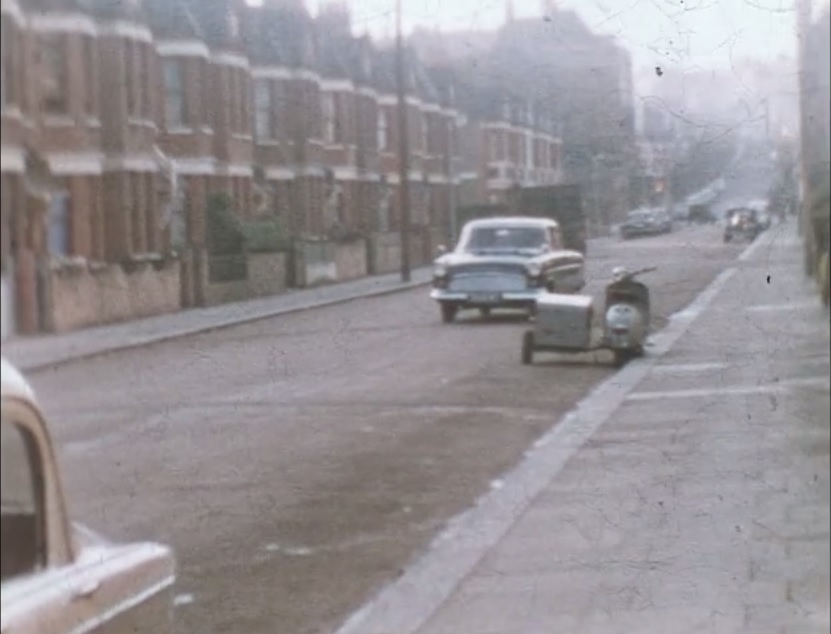
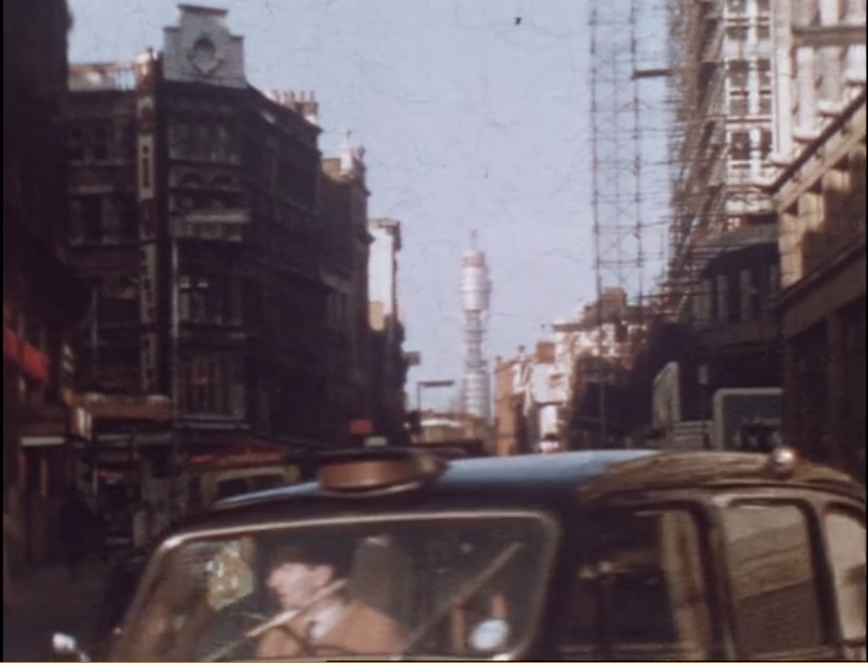
London street, Haringey, 1960s.

London street, Haringey, 1960s.

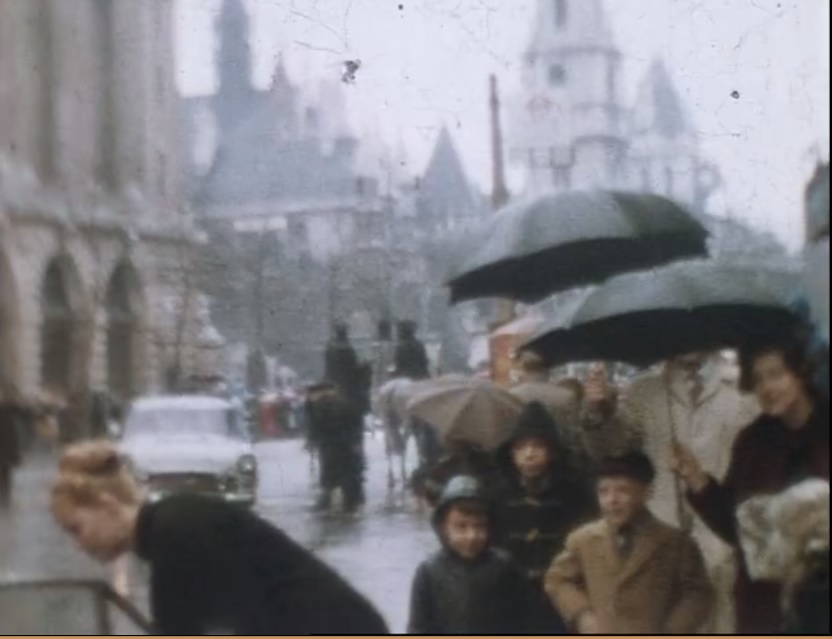
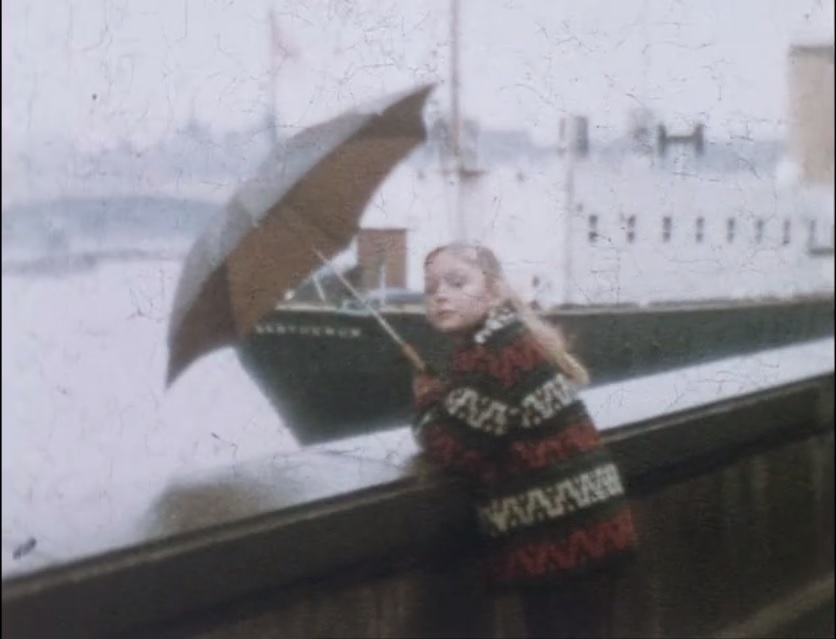
London in the rain, 1960s.

London in the rain, 1960s.

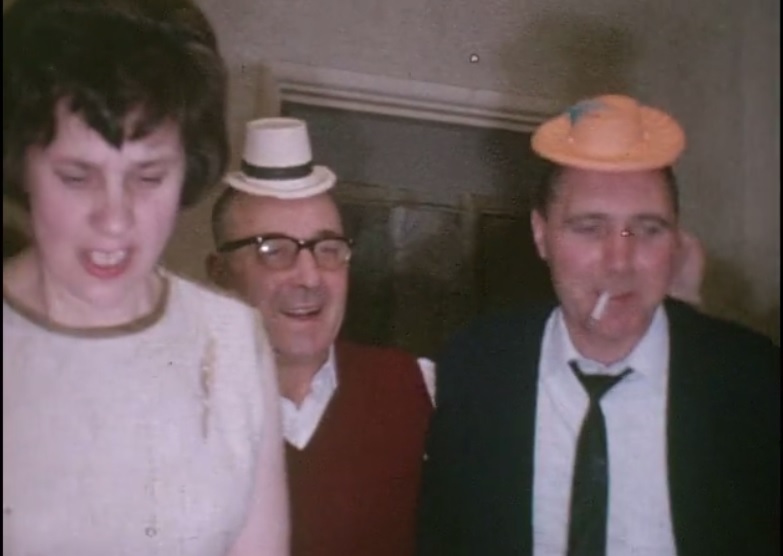
Christmas party, Becontree, 1960s.

Christmas party, Becontree, 1960s.

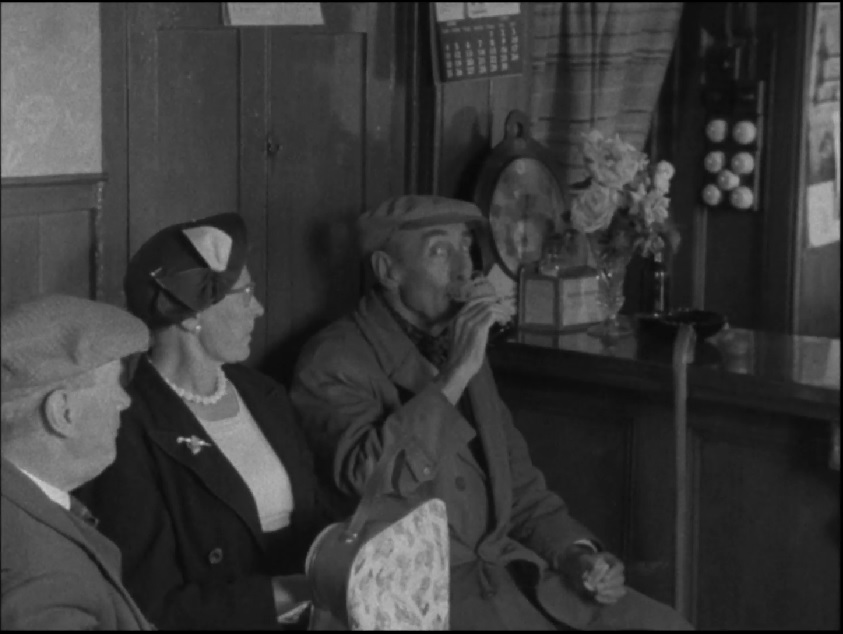
Pint, 1961.

Pint, 1961.

potower

PO Tower, 1965.

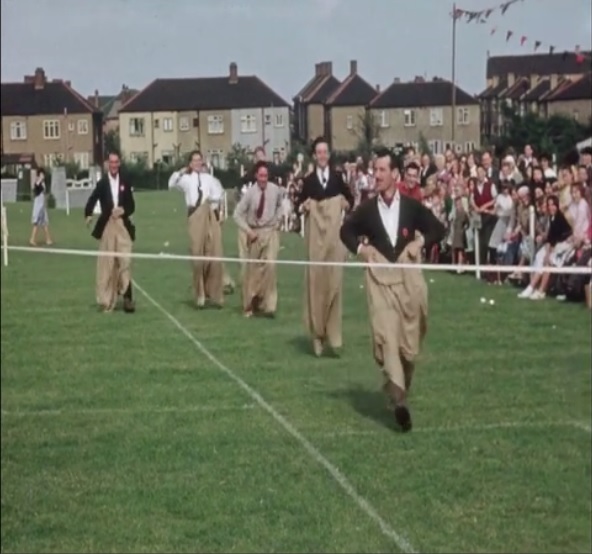
Company sack race, Dagenham, 1950s.

Company sack race, Dagenham, 1950s.

Green Lanes, 1960s.

Green Lanes, 1960s.

Operating machinery, Dagenham

Operating machinery, Dagenham

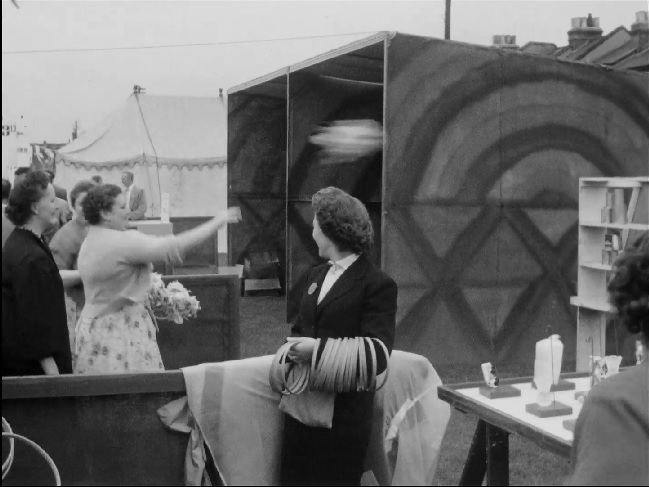
Company fete, Dagenham, 1950s

Company fete, Dagenham, 1950s

Earls Court and the death of fun in London

“In London, it seems everything that’s not a shop, offices or luxury apartments is being demolished,” sighed artist Duggie Fields when I interviewed him last month for a piece in Uncut about the imminent demolition of Earls Court Exhibition Centre. It’s a quote that, in a nutshell, seems to encapsulate all that is going wrong with London right now.

“There is so much damaged being done to London all over, Earl’s Court is just part of it,” says Fields. “London is losing a scale of living that has been very special for a long time. Now we have this mini high rises that could be from anywhere, they are characterless and there are so many of them.”

Earls Court will be pulled down early next year and replaced by houses, ending the area’s 120-year history as a place of fun. This history is well known to London nerds, but is worth repeating. The former cabbage field of Earls Court was transformed into a funzone by Yorkhire entrepreneur John Whitely at the end of the 1880s, when he brought Buffalo Bill’s Wild West Show to the newly transformed exhibition site, hemmed in between railway lines. It featured a miniature Rocky Mountains, Native American village, corrals and a cowboy bunkhouse. “The show was a revelation,” write Felix Barker and Peter Jackson in Pleasures Of London. A few years later, the site attracted London’s first big wheel – a 300ft monster called the Gigantic Wheel.

When that lost its thrill, new entertainments were sought – including plans for a mechanical racecourse. Numerous exhibitions were also held there – including Captain Boynton’s Water Show in 1893, the Greater Britain Exhibition, in 1899 and Shakespeare’s England in 1912. Then in 1937 the Exhibition Centre was built. It opened with a Chocolate and Confectionery Exhibition and went on hold swimming galas, motor shows, the Royal Tournament and events for the 1948 and 2012 Olympics.  It’s a decent looking building, too, well worth saving for its lovely Art Deco curve and revolutionary concrete engineering. So many magnificent buildings from this era are being lost.

Less, pleasantly, in 1939 it hosted a gargantuan meeting of Oswald Mosley’s fascist blackshirts.

From the 1970s, Earls Court also began to host pop shows. David Bowie was first to play there, although Noddy Holder of Slade claims they were the first to book it and then managed to improve the sound after Bowie flopped. Concerts by Bob Dylan, Led Zeppelin, Queen, Rolling Stones and Pink Floyd followed. I saw Oasis there, unfortunately, and also the BRIT awards in 2000, when I threw a champagne cork at Christine Hamilton.

Slade fans at Earls Court

And now it’s to come down, replaced by 8,000 houses and some shops.

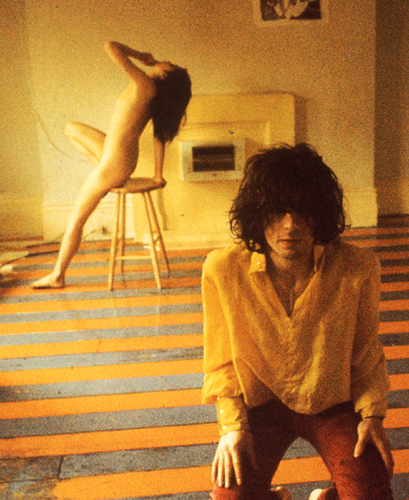
Duggie Fields has lived in Earls Court since the 1960s. You may recognise his flat – and former flatmate.

He points out that the removal of the Exhibition Centre will, at a stroke, remove any point or purpose to the Earls Court area. “It has nothing for people to come to,” he says. “Just boring anonymous shops and lots of traffic. All we’ll get is more chainstores because there’s no neighbourhood, there’s no locals. You can’t create villages, they grow over a long period of time.” He also fears for the pubs and restaurants that rely on the Exhibition Centre, which has still been functioning almost round the clock despite impending doom, for their custom.

He’s right. Earls Court is, even with the Exhibition Centre, one of the most boring areas of London. Without it, it’s pretty much irrelevant. But there’s a problem here too. London needs housing, desperately. Surely these 8,000 or so units will help?

It seems unlikely. The new apartments will – like those in the big new developments and Nine Elms – be aimed at the pockets of investors and speculators, people with deep pockets who have taken advantage of stagnant interest rates to buy up property and then charge eye-watering rents for them. It’s hard to blame them, as economic policy seems designed purely to over inflate London’s property market, but the damage is considerable. Because not only are they building identikit apartments in areas nobody that actually needs housing can afford, they are in the process annihilating anything that could be seen as fun – pubmusic venues, sports grounds as well as historic structures like Earls Court. It’s a depressing, dismal outcome that offers the worst of all possible worlds.

It’s also entirely typical of the current state of London: could you possibly imagine a scheme as imaginative and as exciting and beneficial for the public as the conversion of Tate Modern happening today? Not a chance. It would be flattened and replaced by luxury glass apartments. What do we get instead? A bloody Garden Bridge, stupid cable car and shopping centres. Thank god at least the Olympic site has been safeguarded – for now.

“There’s nothing to build on the heritage they’re throwing away,” says Fields of Earls Court. “It’s been an exhibition site for over 100 years. London is tossing that out with as many other things as it can toss out under this current administration.”

London filth

Lee Jackson loves filth. His new book, Dirty Old London, is full of the stuff, as he explores Victorian London’s attempts to cleanse a city that is swilling in muck. I’ve often wondered what Victorian London would have smelled like, and Jackson’s book comes close to capturing what must have been a frightful stink. I knew about the horse shit and the smoke, but had never considered the mud, blood, unwashed bodies, corpses and human excrement that, collectively, would have made the Victorian city one of the foulest places on earth. It’s astonishing anybody wanted to live there.

Jackson shows how Victorians began to push against the tide of muck, which grew worse as London’s population swelled. Victorians did not consider dirt in itself to be a carrier of disease, but they believed the smell could be lethal as well as deeply unpleasant, so eventually set about doing something about it. They built pavements, sewers, public baths and indoor lavatories, improved housing, dug cemeteries and generally tried to do something about “that combined odour of stale fruit and vegetables, rotten eggs, foul tobacco, spilt beer, rank cart-grease, dried soot, smoke, triturated road-dust and damp straw’. They weren’t always successful – some of those aromatic problems lingered long into the 20th century when they were eventually dealt with, or in the case of horse manure, replaced by something even worse such as exhaust fumes.

In explaining how this happened, Jackson is far more entertaining than anybody has the right to be on such a subject. Rather than focus on the well-trod tales of John Snow and Joseph Bazalgette – both of whom barely feature, thankfully – Jackson resuscitates the lives of less well known figures in this lengthy campaign against dirt, characters like reformer Edwin Chadwick who laid much of the groundwork for what was to follow. In the process, he shows how Victorian London functioned – the haphazard, individual-driven nature that saw things get done, or not, as the case might be.

Embedded image permalink

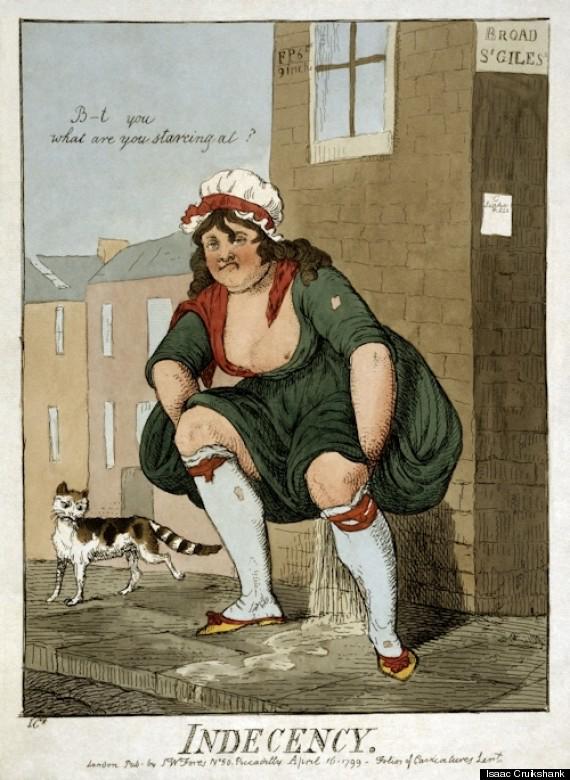
Indecency by Isaac Cruikshank

This is a history with potentially narrow focus, but Jackson – a general historian of the unstuffy, non-academic variety – is removed enough from the subject to be able to show its wider importance and long-term effects. One theme of the book is the way sanitisation – in the form of sewage, rubbish and housing – was the hinge on which London’s social contract turned. For much of the 19th-century, the bewildering array of local authorities that ran London saw their role as, essentially, to keep out the way. They did as little as necessary, thus keeping rates low and relying on private enterprise to fill the gap. But as London grew, getting bigger and smellier every year, this system began to creak. A good example is with the dustmen. Collecting and recycling London’s rubbish was a lucrative job for some entrepreneurs, but not so much for the dustmen themselves, who had to rely on tips to make a living. And given that tips were much more likely to be acquired in rich areas, the poorer streets were increasingly neglected, allowing rubbish to pile higher and higher. Local authorities had to step in to fix this, and it gradually became the accepted role of local authorities in the UK until Thatcherite councils like Wandsworth in the 1980s began to perceive different, pre-Victorian, way of running things.

Jackson also touches on a related angle: the increasing movement of public buildings into private hands. In this case, it’s centred round the Victorian public lavatories, which were only built after ferocious lobbying from some notable figures who recognised the desperate need on the streets for London loos.  The story of how those toilets were eventually built is fascinating in itself, but Jackson also notes the fact that so many have recently been closed, flogged, refurbished and then sold back to us as coffee shops, galleries and an “award winning urban spa”. Perhaps this is the fault of the Victorians, for making things so well and so adaptable, but you can’t help feeling that, now as then, it stinks.

Survivors in Wapping, 1976

Survivors was a TV series made by the BBC in the mid-1970s that explored Britain’s post-apocalyptic near future. With most of the world’s population killed by plague, the survivors were ‘reduced to trudging across the countryside in their parkas’ (Dominic Sandbrook in Seasons In The Sun) in search of food and shelter. The creator, Terry Nation, went on to make Blake’s 7. The series featured numerous guest stars – Brian Blessed, Patrick Troughton – as well as faces that would become better known in the 1980s like Dot from Eastenders, Peter Duncan from Blue Peter and Trigger from Only Fool’s And Horses.

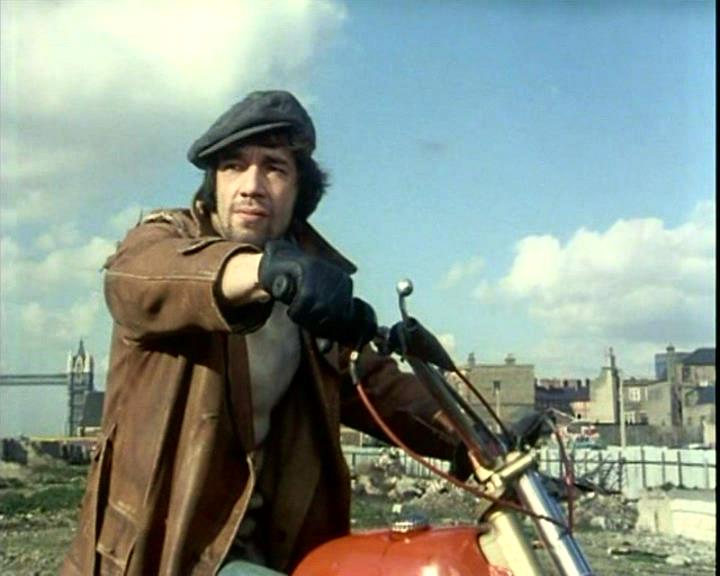
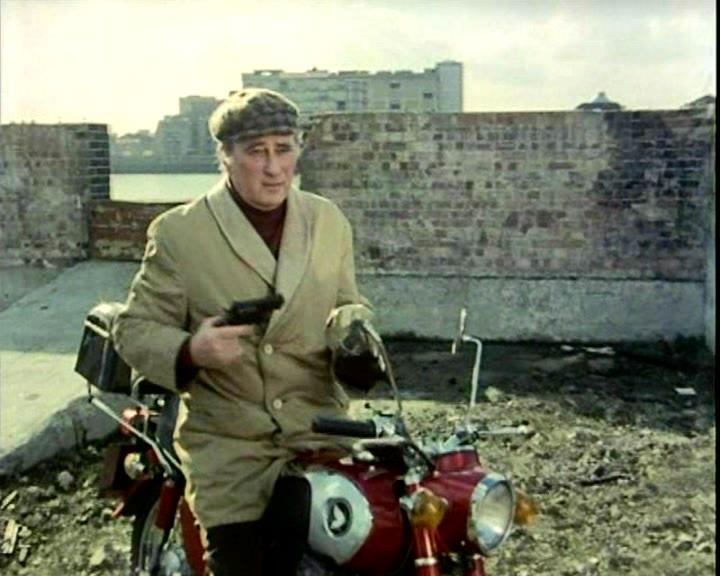
It’s Trigger, aka Roger Lloyd-Pack, who you may recognise in the pictures below. They come from an episode shot on  a bleak wasteland in Wapping in 1976.

In the absence of an actual post-apocalyptic landscape on which to film, the decimated docks of Wapping made a handy substitute. The main location is the site of the current Hermitage Riverside Memorial Gardens – then a bombsite but now the location for London’s only memorial to the civilian dead of the Blitz – but there are several interesting looking buildings in the background. Reader Steve, who sent me the pictures, wants to know if any of these buildings remain. (Other than Tower Bridge, obviously.)

If you know, please tell us in the comments below.

steves032

steves033

steves034

steves035

steves036

steves037

steves038