Category Archives: History

The legacy of the Blitz

I wrote a piece for the Guardian about the way modern London is still shaped by the bomb damage of the Blitz. This was a subject I immersed myself for several weeks and the first draft of my article is very different to the version that was published. I thought it might be interesting to reproduce the original article on The Great Wen. 

————————–

When travel writer HV Morton surveyed London in 1951’s In Search of London, it was still scarred by war. The Blitz had started on 7 September 1940 and more than a decade later, London was a “city of jagged ruins, of hob grates perched in the sunlight in shattered walls, of cellars draped with willow-herb and Canadian fleabane.” As Morton wandered sadly round Cripplegate – an area now covered by the Barbican – he looked “across an area of devastation so final and complete that the memory of it will always rise in my mind whenever I hear the word Blitz. Thousands of buildings have been burnt and blasted to the cellars. Here and there the side of a building rises gauntly from the rubble, a detached gateway stands by itself in the undergrowth, the towers of a few churches, or a spire, lift themselves mournfully, like tombstones in a forgotten cemetery…. How can anyone reconstruct a town from its cellars?”

The scale of this destruction can be gleaned from the bombsight.org website, which uses information from the National Archives to pinpoint every individual bomb strike, and The Bomb Damage Maps 1939-1945, created by the London County Council and now published as a book, which show colour-coded bomb damage on a building-by-building basis. The maps were originally created for financial reasons, but post-war planning was always an issue. “The heart of it was insurance and compensation,” says Laurence Ward, the book’s editor and senior archivist at the London Metropolitan Archive. “But they had one eye on post-war reconstruction and the maps were essential tools for rebuilding London. They give a bird’s eye view of the damage and use a colour scheme that makes it easy to see areas that needed to be cleared.”

By cross-referencing Bomb Damage Maps with the A-Z and www.bombsight.org, London’s post-war evolution can be explored, with modern parks, offices and housing estates replacing black blocks of destruction. As Ward explains, “The maps help areas make sense, they show why the streets look like they do.” We look at six examples that show some of the ways the Blitz shaped contemporary London, and how that process is still continuing today.

Mayday Gardens, SE3

Alan Lee Williams was 10 when his home in Mayday Gardens, near Blackheath, was hit by a parachute mine. “It was meant for the Thames, but damaged 27 houses and took our roof off,” he recalls, now 84 and reflecting on a life that included a period as Labour MP for Hornchurch. Williams’ house was repaired but several houses – marked black for “total destruction” on the bomb maps – remained derelict throughout the war. “They became places for children to play,” says Williams. “They built a big water tank on them for the fire engines, and sometimes we’d swim in it.”

Visit Mayday Gardens now and you’d have no idea anything had happened here. Unlike other streets, where former bomb sites can be identified by the post-war housing blocks that interrupt Victorian terraces, the destroyed houses in Mayday Gardens were rebuilt exactly as before. “They look as if they have been there all the time and I’m sure most people living there have no idea what happened,” says Williams. Indeed, when a local resident – who declined to be named – was asked if they knew of the street’s history, they admitted it came as news to them. “There was no consistency with the reconstruction,” says Ward. “These have pretty good plots and they probably decided it would be easier to rebuild a couple of houses then build a low-rise block.” One issue would have been the material available, with bricks remaining in short supply until the 1950s despite the LCC’s ability to salvage 140 million from damaged houses. The reconstruction of these middle-class homes, though, comes as stark contrast to the way many working-class districts were treated.

IMG_1342

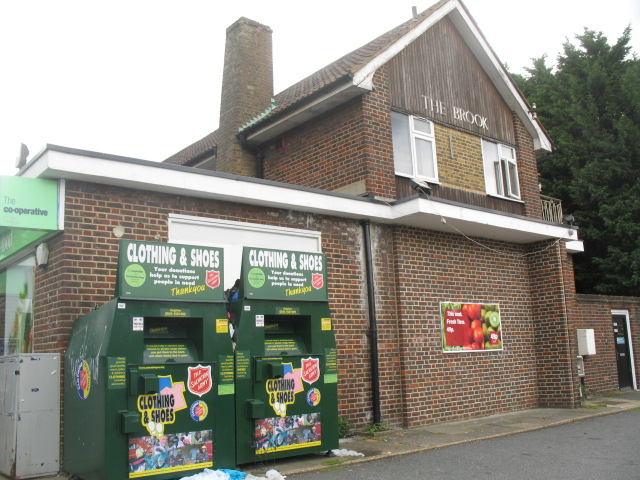
Co-Op, Brook House, Shooters Hill, SE18

A short walk from Mayday Gardens on the corner of Shooters Hill and Corelli Road is an ugly squat building housing a supermarket. This was the site of the Brook Hotel pub, which was hit by a V2 rocket in November 1944.

Alan Williams, then 14, was one of the first on the scene. “I was on a tram on Shooters Hill, when I heard an explosion and ran down the road just in time to see a No 89 bus explode,” he says. “The pub had been hit by the missile and the bus was passing and caught fire.”

Williams was pressed into service. “The fire officer called for silence so we could listen for people calling for help and we heard somebody,” he says. “The firemen were too big to go down, so they lowered me. I found a body still breathing and helped them pull it back up. We got to the top and the gas blew up beneath us – I never got out of a bombsite so quickly.”

He’d rescued a girl who had been playing with the publican’s daughter. “She lived in the same road as me, and her father was a high-ranking policeman,” says Williams. “He came to see us – my mother thought I’d been in trouble again!” In the carnage, 29 died but the pub was rebuilt immediately. “The pub was a lovely old building,” says Williams. “It was close to where soldiers were billeted so they rebuilt it before the end of the war.” Williams passes such bombsites frequently. “I still live in the area and I bow my head as I go past,” he says. “I can still see that 89 bus exploding. I always thought it was strange that there was never an explanation of what happened to these places. I thought they should have put up plaques. It’s always a puzzle why it didn’t happen, maybe they just wanted to forget.”
IMG_1340

Christ Church, Newgate

There are some memorials, if you know what to look for. Churches played an important role before and after the Blitz. Bombed churches were used as propaganda – a famous wartime photograph shows St Paul’s sheathed in smoke – and London’s churches took a pounding: 624 of 701 churches were damaged, of which 91 were destroyed. Many City churches were damaged by the fire bombs of 29 December 1940, which levelled entire streets.

Almost immediately, a debate began about what to be done with the most badly damaged churches. Architect Sir Edwin Lutyen argued in 1941 that “where there is no congregation I would leave the spaces occupied by destroyed churches as open”, partly as a memorial. In 1944, a letter in The Times presciently articulated this principle: “The time will come – much sooner than most of us to-day can visualize – when no trace of death from the air will be left in the streets of rebuilt London. At such a time the story of the Blitz may begin to seem unreal not only to visiting tourists but to a new generation of Londoners. It is the purpose of war memorials to remind posterity of the reality of the sacrifices upon which its apparent security has been built. These church ruins, we suggest, would do this with realism and gravity”.

The creation of these memorial-ruins was rooted in realism – with attendances in decline, churches simply weren’t always needed. The medieval church of Christ Church, Newgate had been rebuilt by Sir Christopher Wren in 1687 after the Great Fire and then razed again in the inferno of December 1940. It has been left in its ruined state in memory of the Blitz, but in bastardised form.

In 1981, neo-Georgian offices were added in imitation of the 1760 vestry – these currently house a dentist. Two walls to the east were removed in 1974 in a road-widening scheme, while the tower – with a steeple that Ian Nairn considered one of Wren’s finest – was transformed into a 12-storey private home in 2006. Merrill Lynch’s office squeezes against the wall of the church and the fact these gardens act as a memorial to the Blitz probably goes unnoticed by local workers – it’s all far too tidy for one thing. A short-lived campaign was launched in 2013 to turn this into a more thoughtful memorial to the sacrifice of Londoners, of which there are few. Christ Church at least fared better than another memorial-ruin: St Mary Aldermanbury was sold to Westminster College in Fulton, Missouri to act as a memorial to Winston Churchill. London still awaits a fitting tribute.

Old Market Square, Columbia Road, E2

A complex network of priorities faced London’s post-war rebuilders, many of whom had been agitating to reconstruct London since before the war. This bore curious fruit in Columbia Road in Bethnal Green, now the location of a flower market and genteel Victorian terraces but then considered a slum. On the first day of the Blitz, a bomb hit a shelter beneath Columbia Market, killing 38. “Columbia Market was a 19th century development founded by Angela Burdett-Coutts to regenerate the area and improve quality of life,” explains Ward.” The buildings were damaged during the war and subsequently demolished – but, it seems, they could have been repaired – the map notes that the main blocks suffered only general blast damage.”

Burdett-Coutts was a philanthropist and friend of Charles Dickens, and Columbia Market was a combination of market and social housing constructed in a dramatic neo-Gothic style that marked one of the first flowerings of Victorian social housing. The ambitious scheme was deemed a “splendid failure” by The Times in 1936 and after the war was being used for storage. Although salvageable and unquestionably important, it was demolished in 1960 and replaced by Ravenscourt Park and a modern tower block, named Old Market Square in a half-hearted nod to what was lost. This new estate is typical of the buildings that were thrown up after the war to solve the problem of slum housing. A campaign is ongoing to get a plaque erected in memory of those that died.

IMG_1352

In the haste to rebuild London, many important buildings were demolished, inadvertently spawning the modern heritage industry. “The idea of heritage and listing buildings only really started after the war, when things were demolished so rapidly we don’t know exactly what was demolished and what was valuable,” says Peter Larkham, professor of planning at Birmingham School of the Built Environment, who has written on post-war reconstruction. “It was launched as a problematic and ad hoc system that allowed councils to designate conservation areas. After development stopped with the 1970s oil crisis, conservation almost took over and we now have 10,000 conservation areas and half a million listed buildings. Some think we conserve too much.” The only remaining trace of Columbia Market is a section of railing outside a nursery. “It’s a fascinating building that most have cost a fortune and completely dominated the road,” says Ward. “Now you’d never know it existed.”

Palestra, Blackfriars Bridge Road, SE1

This 1990s office block sits atop a site with a fascinating jumbled history. In 1783, the Surrey Chapel was built amid fields by Georgian preacher Rowland Hill, who chose a circular – or octagonal – form as this meant there were no corners where the devil could hide. By 1910, it was being used as a warehouse when boxer Dick Burge decided to turn it into a boxing venue. The Ring was a success but was hit by a bomb on 25th October 1940 and then again in March 1941. According to the Bomb Damage Maps the spot was also later hit by a V1 flying bomb. Damage from one of these strikes can still be seen a few yards away under a railway bridge.

Like many bombsites, The Ring wasn’t replaced until the 1960s. “Some materials required for building were rationed until 1954,” says Larkham. “Every bomb-damaged city was arguing with the government for their allocation of steel and you might have a site and a plan but you might not be able to do anything with it. Britain was selling steel to Australia because the economy was more important than rebuilding.” Eventually Richard Seifert’s gaunt Orbit House was raised on the site. Seifert, one of the UK’s most prolific post-war architects, loved to give his buildings space-age names, and this one also had a circular nod to The Ring. It housed records for the India Office.

But Orbit House’s time was fleeting. In the 1990s it was replaced by Will Alsop’s gargantuan glass Palestra, which is used by TfL. Peter Rees, the City’s former head of planning, once told me that modern office buildings have a life of around 30 years – something that has more to do with the changing requirements of office life than architectural trends – and that’s how long Orbit House lasted. But with his new building, Alsop paid reference to both of Palestra’s forefathers: like Orbit House, it is raised above the road on a pedestal, while its name comes from the Greek word for a wrestling ring. What’s interesting, though, is that as with much of London’s post-war offices – include huge swathes of the City – this site is already on its second generation of development. Larkham questions if that is sustainable. “One of the worst products in terms of sustainability is concrete,” he says. “The fact we can put these building up and then pull them back – is that really the best solution? We need to design for more flexible longer-term planning.”

Elephant Park, SE17

You won’t find Sayer Street on a map but you can hunt it down in photographs. One on the IWM website shows a family sitting at a dinner table outside the Blitzed shell of Sayer Street School eating egg and bacon supplied by American aid.

Another shows Sayer Street before the Blitz, when it consisted of five-storey tenements in one of London’s poorest areas around Elephant & Castle. Elephant was badly hit by bombs, and Sayer Street is riddled with damage on the Bomb Damage Maps. Before the war, the street contained a fishmongers, cat meat dealer, grocer, saddler, bookbinder; after the war, it was the location of a car park, one of the most popular post-war uses for bombsites. The NPC car park empire began with the purchase of a £200 bomb site on Red Lion Square.

In his memoir The Likes Of Us, Michael Collins writes how in the 1960s he explored Elephant’s remaining bombsites, “on which relics of former homes hovered, exposed broken fireplaces and floral or barley corn wallpaper that had witness births, deaths, Christmases, parties, tears, arguments, laughter and sex.” Sayer Street survived this half-life into the 1960s, when it was chewed up by the Heygate Estate. The Heygate was originally conceived as one of three gigantic housing estates that would stretch from Elephant to Peckham, linked by walkways and ramps for two miles. “It was said the planners decided which streets would be erased in the back of a taxi as they were driven around the neighbourhood,” writes Collins, who was forced from his childhood home. One of those to disappear was Sayer Street.

As Larkham explains, “some of the plans were incredibly radical, sweeping away neighbourhoods irrespective of damage and replacing them with high-rise towers nobody wanted to live in.” These were fuelled by idealism, but as early as 1945, the planner CB Purdom had warned of the dangers in How Shall We Rebuild London?, explicitly rejecting Le Corbusier and “the megalomaniac proposals of those who regard the metropolis as a hive of near termites speeding their existence upon escalators or in tubes.” Such pleas were ignored and towers went up on bomb sites all over London. Some were successful like the Barbican, but most were bleak, poorly built and badly maintained.

The Heygate was rarely popular but it housed many of London’s poorest and now it too is gone, having lasted 37 meagre years. Southwark sold it to Land Lease, a private developer and demolition began in 2011. Former residents have been shipped miles from London, displaced even more brutally than those who once lived on Sayer Street. In its place will come Elephant Park, a residential village of towers and plazas, where a three-bed apartment costs £2.5m. “It says a lot about where London is heading, how it is become more like Paris with those areas of social housing being pushed further out,” says Ward. The ripples from London’s post-war redevelopment continue to be felt, and from Blitzed streets and lost bombsites, another London arises. How long will this one last?
Summer on the canal

I wrote a piece for Waterfront about the serene and occasionally hedonistic pleasures of living on a narrowboat in the summer. You can read it here.

I also took part in a podcast talking about canals for Waterfront, which you can listen to here.

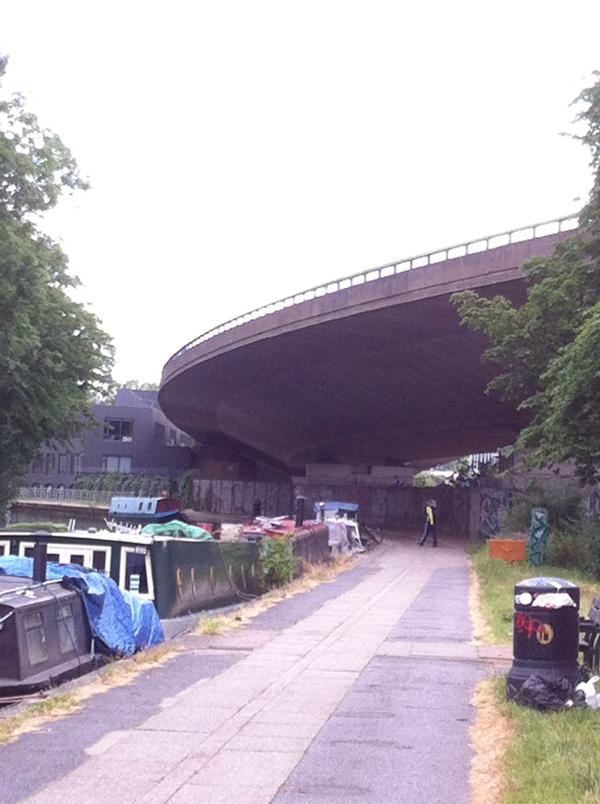
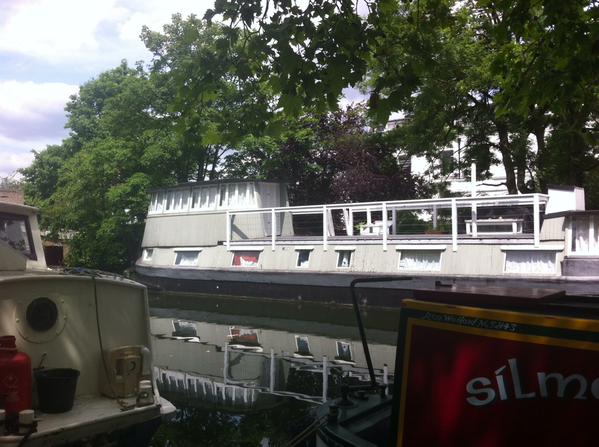
I recently walked one of my favourite sections of the canal, from Kensal Green to Little Venice, for the first time in years. This is what I saw on the way.

CIQ7NgsWcAACvVq

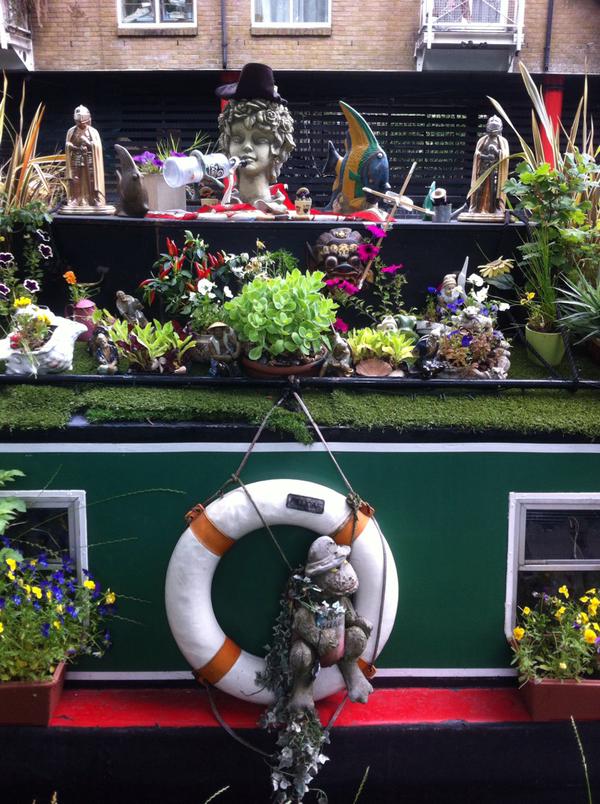
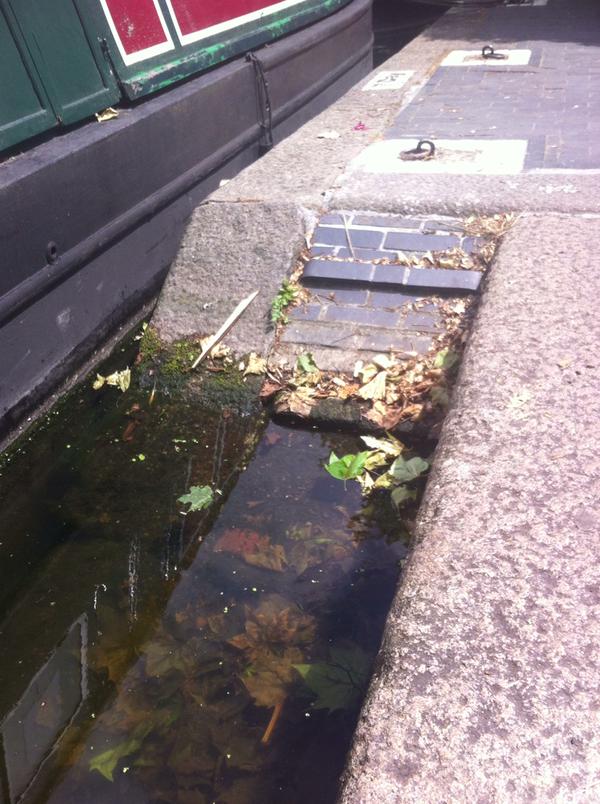
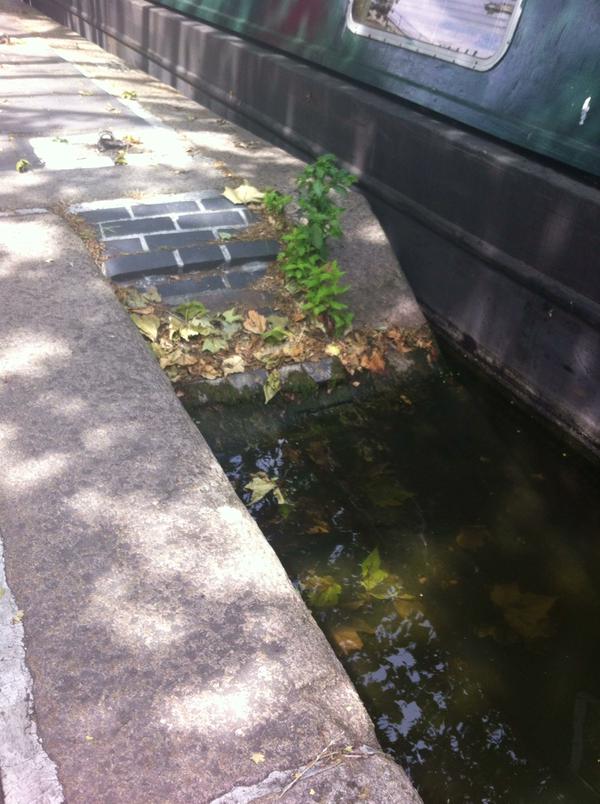
Slopes for horses that slipped into the canal.

Slopes for horses that slipped into the canal.

CIQ1UpdWoAAn0WQCIQ1U1jWIAATP3XCIQ1U0aWsAArhzS

CIQ2_LtWwAAVgOs

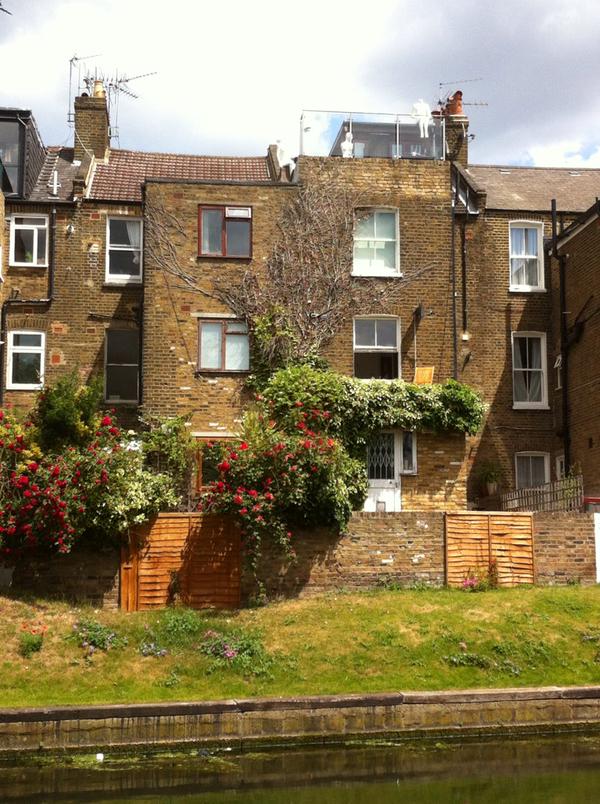
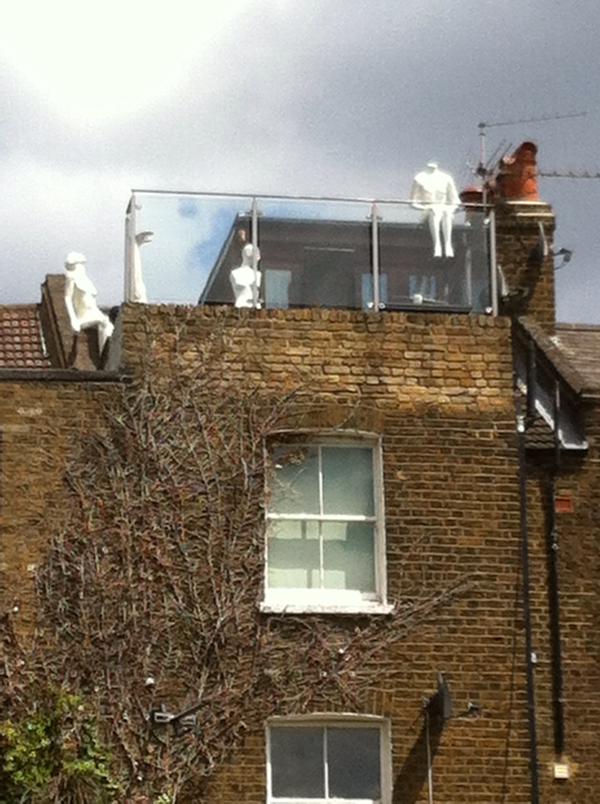
This statue garden once took up the space outside a single house – now it’s the entire terrace.

CIQ2MpeWcAAOTHmCIQ2MoLWoAA60LF

CIQ2pC7W8AA6iM1

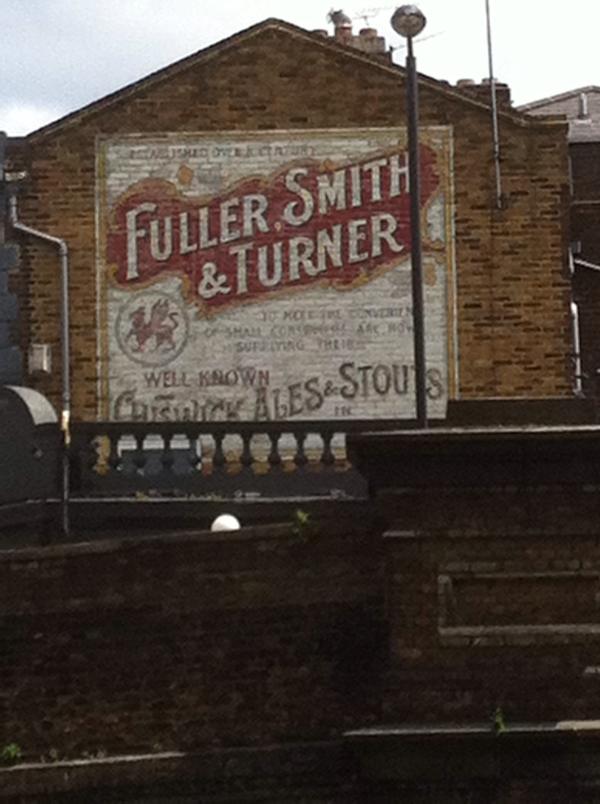
Ghost sign, of recent vintage.

CIQ3nxkWsAALHp5

Psychogeography centre, between Trellick Tower and the Westway.

CIQ3mjDWIAATm90

CIQ7gwjXAAAShWv

The most important building in London – where boaters get their toilets emptied.

CIQ6lpdWEAAOzLC

Towpath rumour said this boat once belonged to Richard Branson.

In the depot

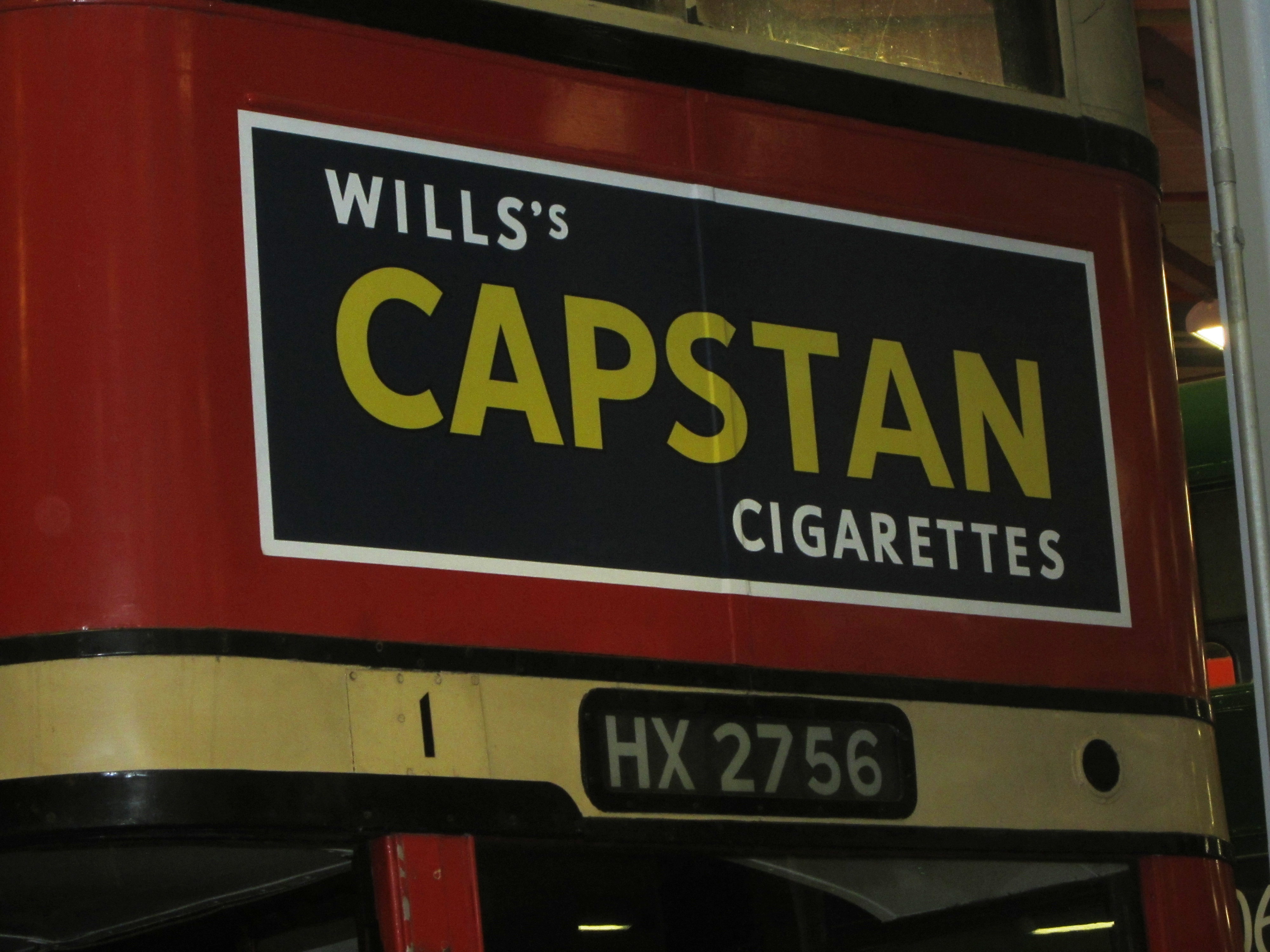
I finally made it to one of the London Transport Museum’s twice-early weekend openings at their Acton depot. where they store the buses, trams and train carriages they can’t exhibit in Covent Garden.

It was brilliant. If you like that kind of thing.

(I wouldn’t like to say the event attracts a certain type, but these were the longest queues for the gents I’ve ever seen outside a football ground.)

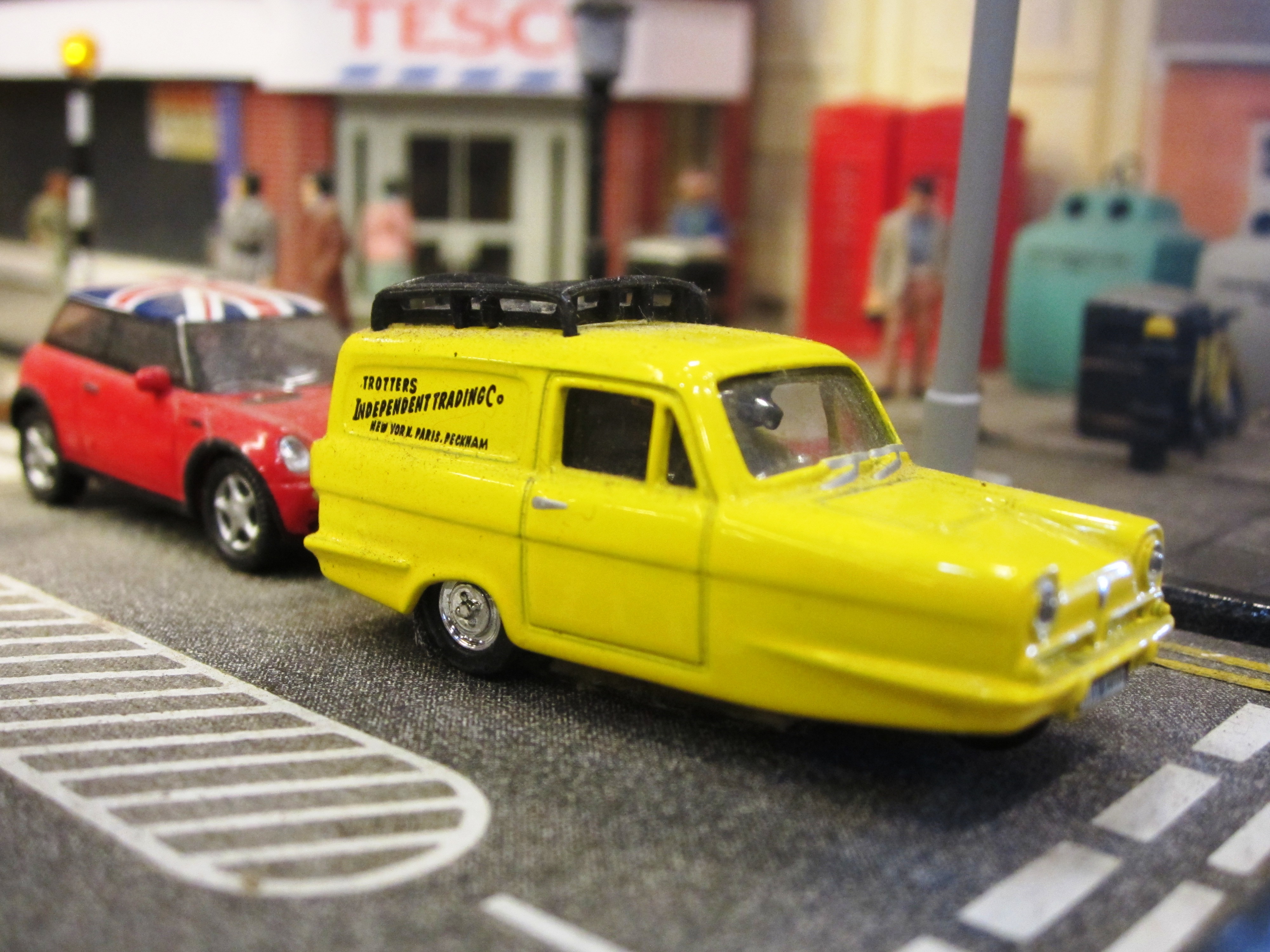
I could have spent hours browsing the specialist books for sale, while the kids loved the model railways.

The following pictures are via @callyorange. And go to the next one in September.

IMG_4269IMG_4267


IMG_4263

IMG_4275

IMG_4278

IMG_4261


IMG_4257

IMG_4242

IMG_4247


IMG_4249

IMG_4283


IMG_4255

IMG_4235

IMG_4289


Photographing London in the 1970s

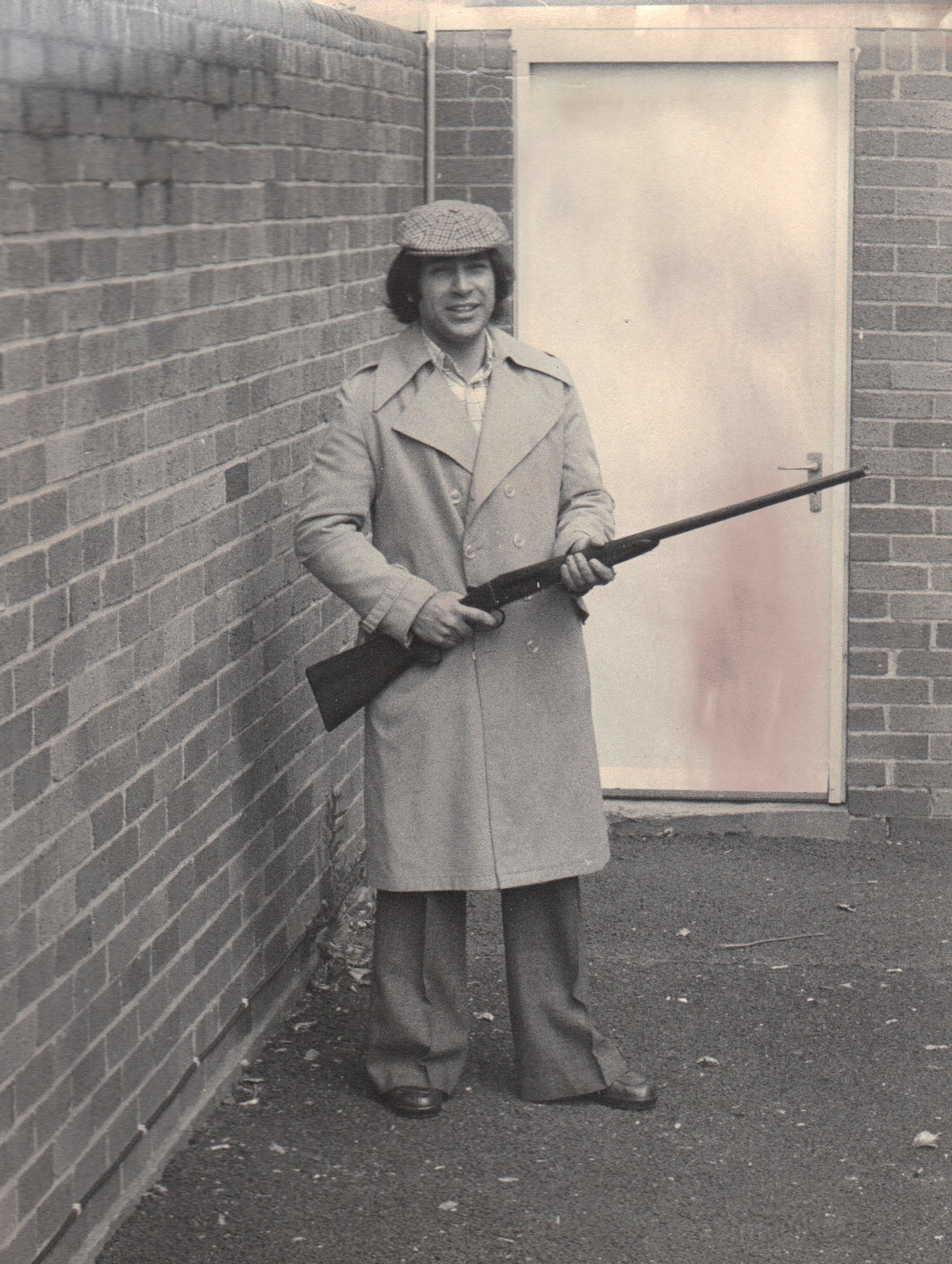
This is my mum’s brother, Wilfred Camenzuli. Born in Alexandria, Egypt and raised in Tooting, south London.

Back then, everybody in south London carried a shooter.

09-04-2015 21;27;52

Wilf was always taking pictures. Here’s one of my mum and dad, looking unbearably glamorous.

09-04-2015 21;27;526

He once made me and my sister watch a horror film so he could get a photograph of us cowering.

09-04-2015 22;02;103

And here’s another of me and my sister, this time feeding pigeons in Trafalgar Square. I wonder how many thousands of similar photographs exist in photo albums around the world?

09-04-2015 22;08;432

Wilf also took dozens of photographs of London in the 1970s and early 1980s. I always thought he had a great eye. Here are some of the best.

Battersea Power Station, 1975.

Battersea Power Station, 1975.

Gamblers/businessman, back office, Old Kent Road.

Gamblers/businessman, back office, Old Kent Road.

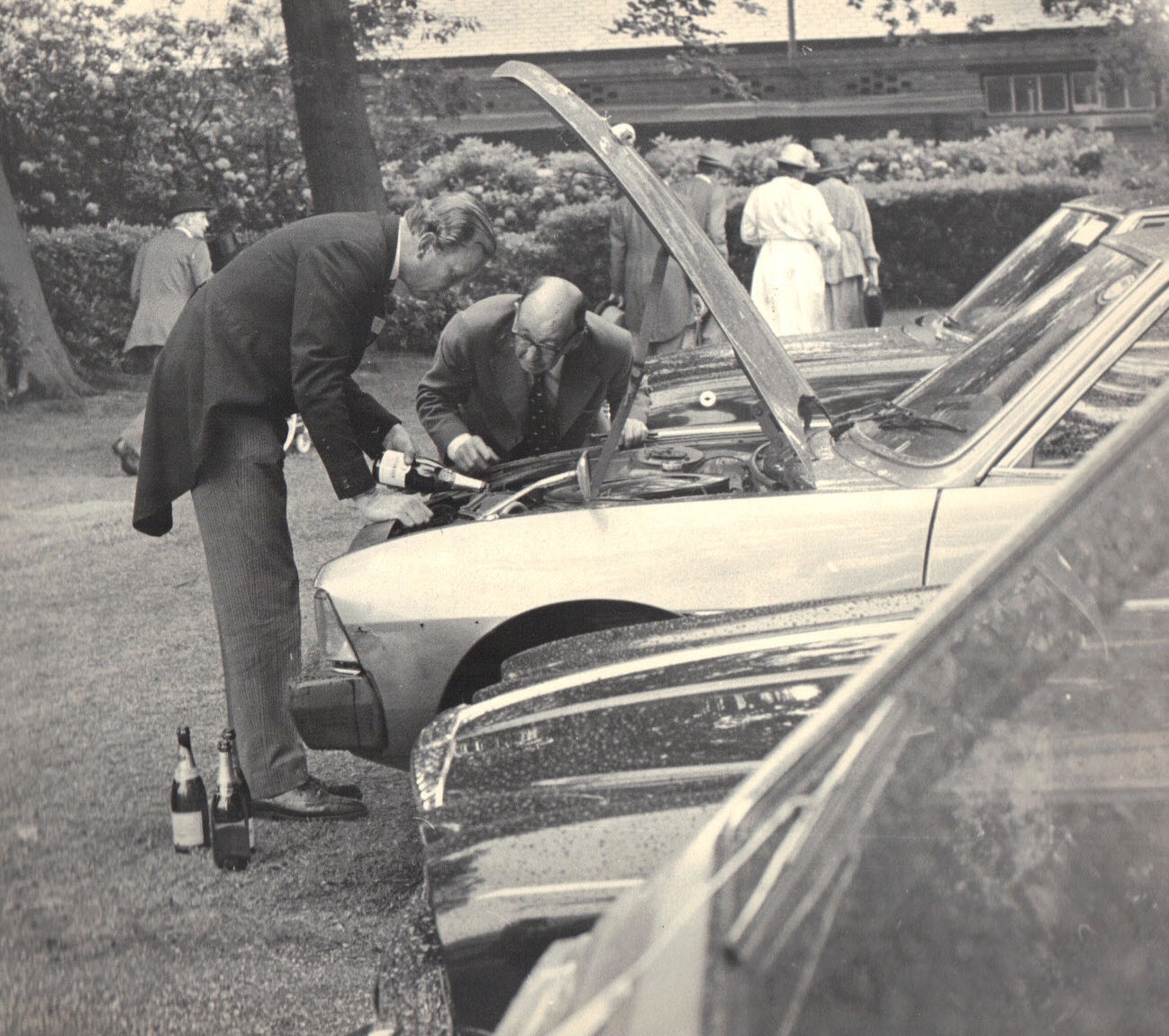
Fixing a car with champagne, Royal Ascot.

Fixing a car with champagne, Royal Ascot.

The finishing line, Epsom Derby.

The finishing line, Epsom Derby.

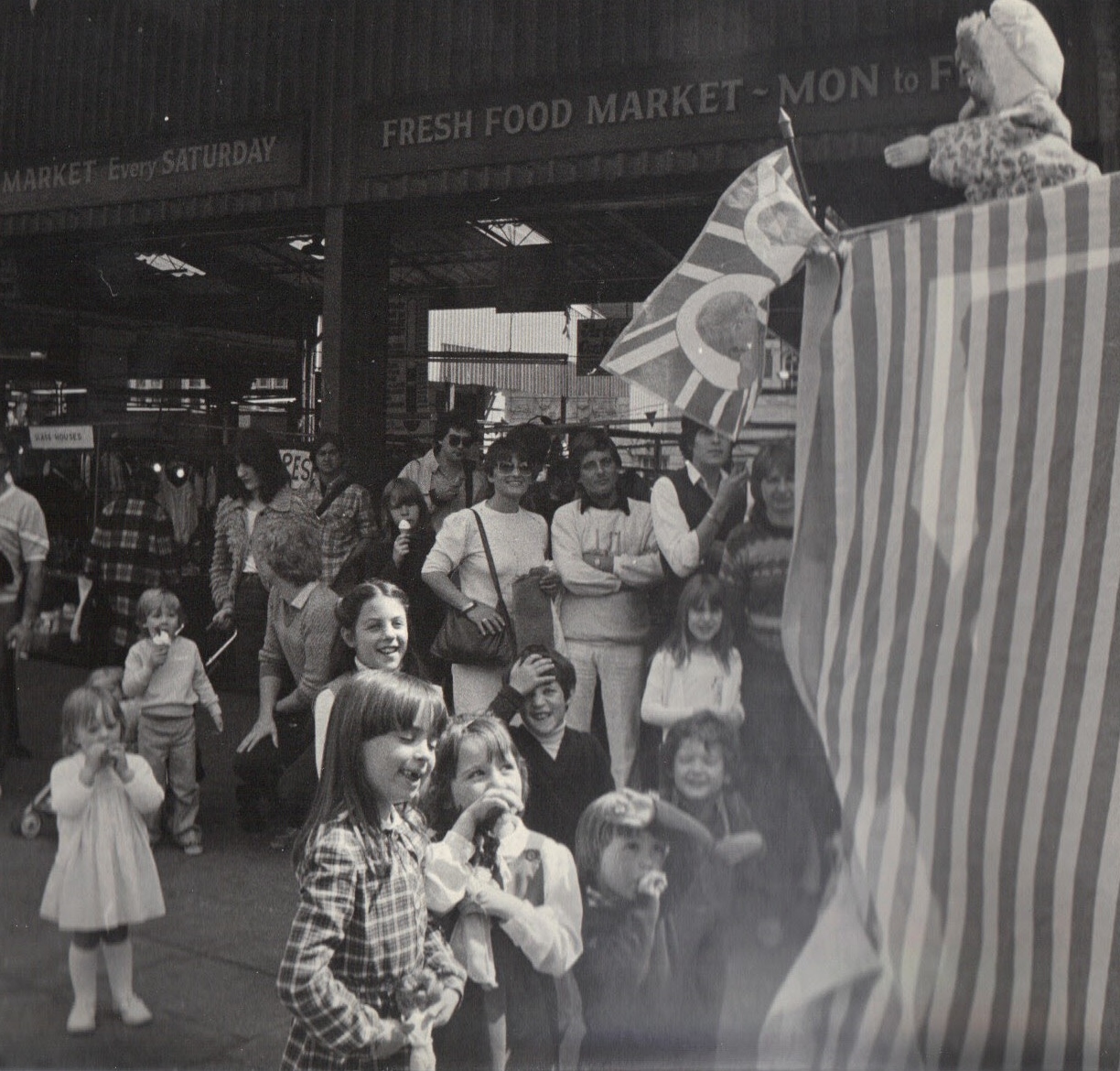
Punch & Judy, Covent Garden.

Punch & Judy, Covent Garden.

Street performers, Covent Garden.

Street performers, Covent Garden.

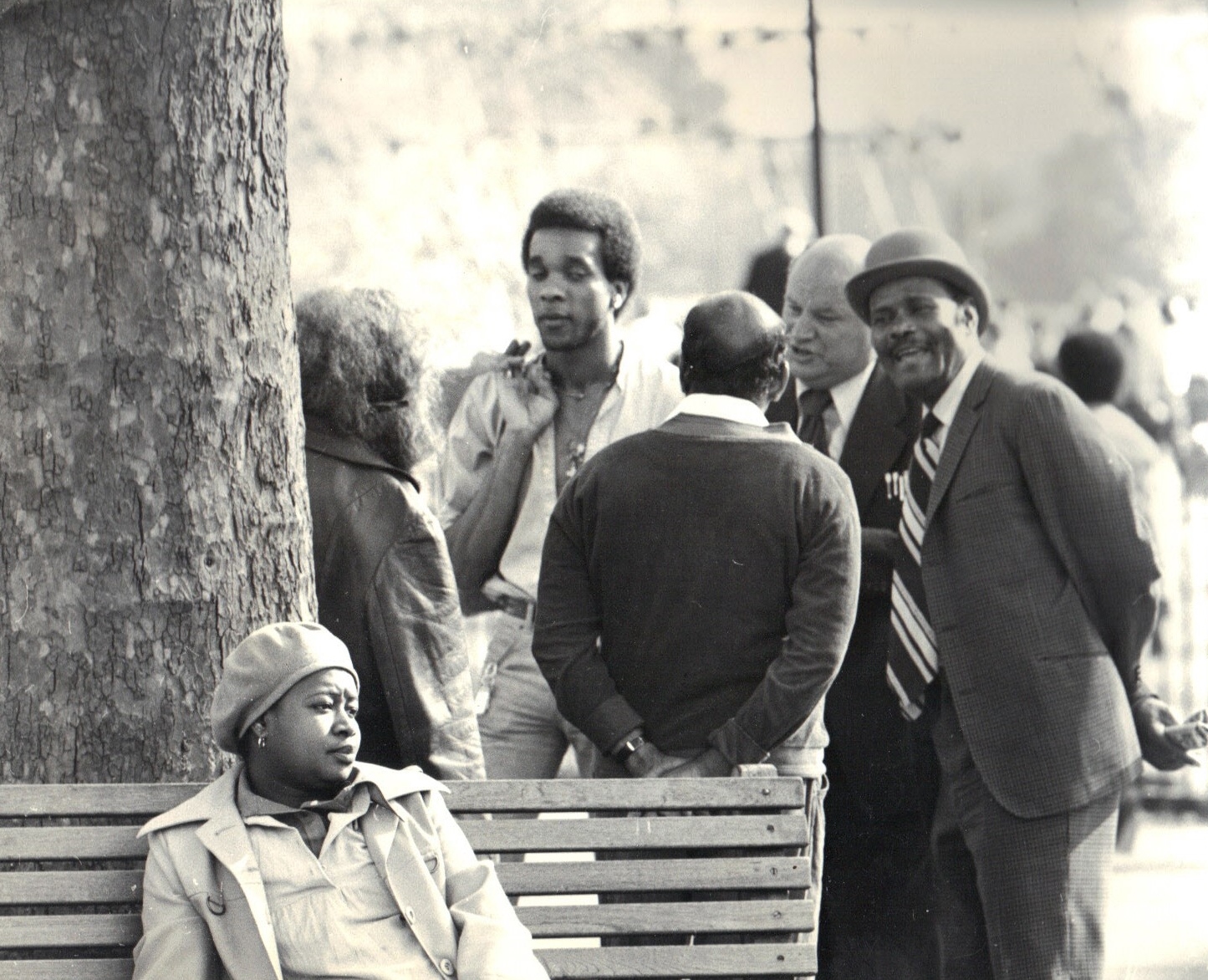
Street people, Covent Garden.

Street people, Covent Garden.

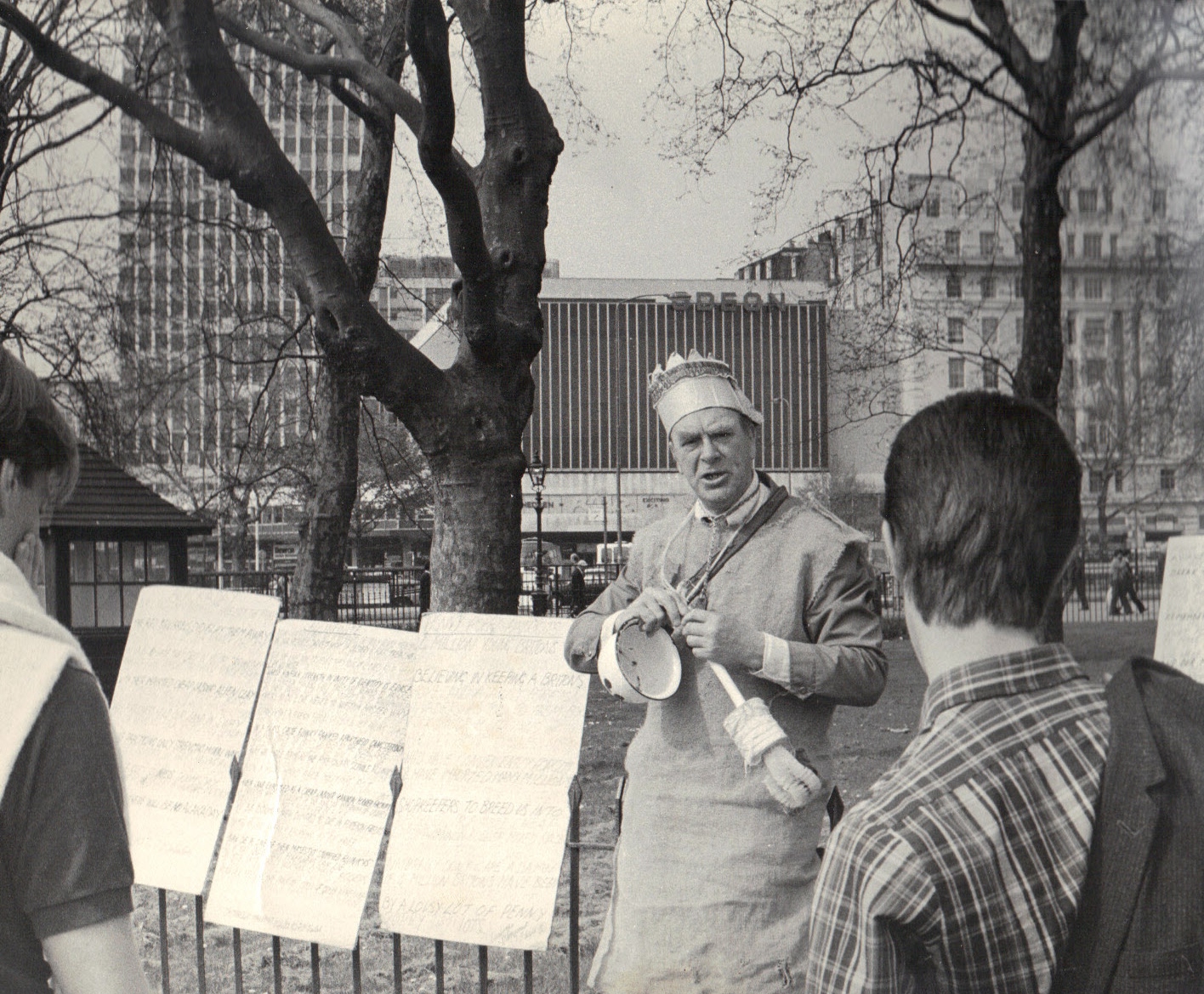
Speakers Corner.

Speakers Corner.

Speakers Corner.

Speakers Corner.

Speakers Corner.

Speakers Corner.

Speakers Corner,

Speakers Corner.

Speakers Corner.

Speakers Corner.

Speakers Corner.

Speakers Corner.

Anthony Quinn and Jacqueline Bisset filming The Greek Tycoon, Leicester Square.

Anthony Quinn and Jacqueline Bisset filming The Greek Tycoon, Leicester Square.

Cutty Sark.

Golden Hinde.

Cutty Sark.

Cutty Sark.

Big Ben.

Big Ben.

Strawberry picking, Epsom.

Strawberry picking, Epsom.

Tooting with dad.

Tooting with dad.

Disappearing London: Food For Thought

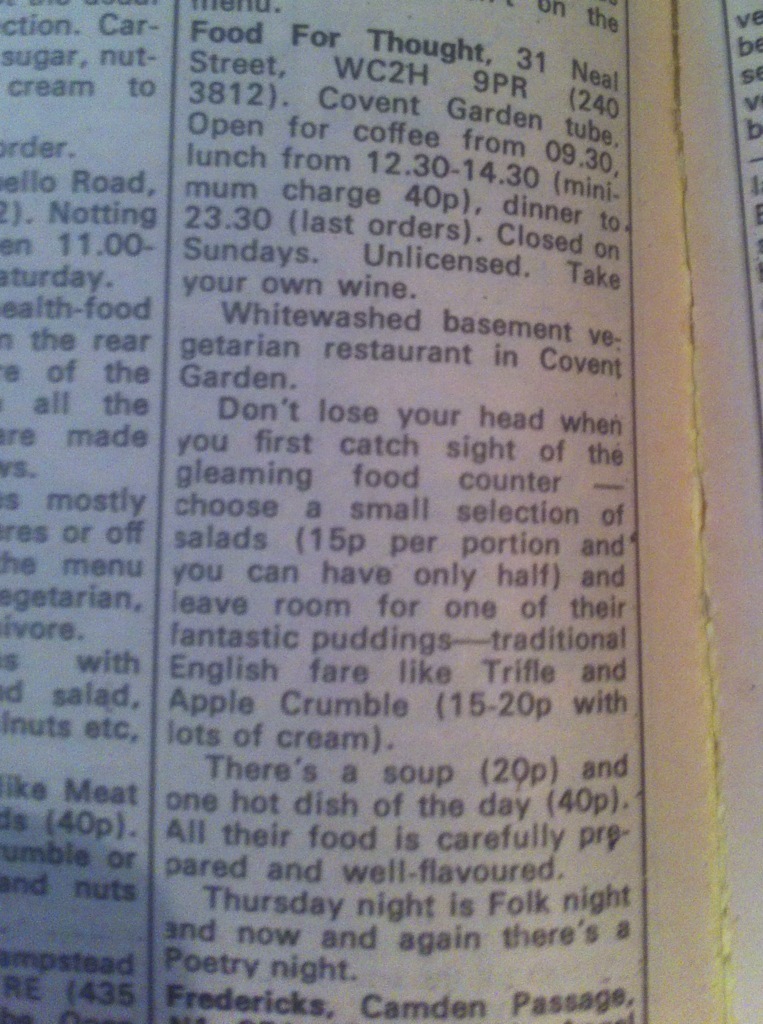
I have a piece in the Guardian about the closure of Food For Thought, one of London’s most charismatic and seemingly nuclear-proof (and I’m not just talking about the consistency of the scones) restaurants. It closes on June 21, rising costs – basically rents and wages to cover staff’s rents – forcing the owner Vanessa Garrett, to shut a business that has been successfully operating since 1971.

Food For Thought is one of those places that’s always been there. It was there when I prowled Neal Street on amateur shopping trips in the early 1990s. I knew, instinctively, that it was some sort of hippie joint, so went elsewhere, a teenage boy in thrall to the twin thrills of the Sex Pistols and bacon double cheeseburgers.

Years later, grown up somewhat, I began to eat there regularly, usually nabbing a takeaway from the ground floor during lunch breaks at Time Out. It always felt more than just a lunch venue. Without wanting to get too Sinclair about it, waiting in line at Food For Thought felt like a visit to polydimensional London, somewhere that had been quietly doing the same thing, for the same people, in the same place, for generations. Close your eyes, and you could be in 1970s London or even London in 2015. For secular souls, there are few areas that carry this atmosphere in quite such an effortless way, not so much a timewarp as timeless. It wasn’t dated, retro or old-fashioned, it just was.

I didn’t realise then quite how entwined Food For Thought was with the counterculture that spawned Time Out. When I tweeted about the closure of Food For Thought, the writer Richard King responded thoughtfully that: “FFT felt like one of the final remaining traces of the original Tony Elliott vision of London for Time Out.”

It was an astute observation. Food For Thought was born in the same spirit as Time Out, a desire to make London new, fresh, exciting, modern and funky, but also to make it, for want of a better word, good: cheap, utilitarian, healthy, an experience to expand the mind and reward the soul. London can still do this, but not in such a distinctive and understated political manner.

It went deeper. One of Food For Thought’s first chefs was Sue Miles, the wife of Barry Miles, founder of International Times, the underground newspaper from which Time Out hatched in 1968. Sue had learnt her trade at the Arts Lab, a counterculture take on the ICA that operated from Drury Street, and she later worked at Time Out, writing its first pair of London guides, which included enthusiastic reviews of Food For Thought.

IMG_3542IMG_3541

What’s particularly depressing about the closure of Food For Thought is that it wasn’t doing anything wrong. It was popular, it was serving good food at reasonable prices. They could have expanded, sought outside investment and gone into the franchise business, but they felt that would dilute the experience. Why should they change when they were doing what they wanted and doing it well?

And it was this commitment to offering value for money – that deeply held desire to not rip off the consumer – that led to its demise. That was at the heart of what Food For Thought represented, and it is precisely the sort of thinking that doesn’t wash in rentier London, where even success is punished and landlords feel duty bound to wring more profit out of something they have done nothing to create, like Mafia bosses demanding their cut. People revolt when a government behaves this way, so why is it acceptable for landlords?

What a city we have created.

Charlie Cooke: Chelsea wing wizard

I recently dug up an old PC, and found this interview I conducted with former Chelsea and Scotland footballer Charlie Cooke in 2007 for Time Out.

It has become common currency for fans and players of other clubs to decry Chelsea’s lack of history, a revealing attitude that mistakes ‘history’ for ‘success’ and ‘wit’ for ‘arrogance’. Chelsea, of course, have a rich history, albeit one of spectacular underachievement and remarkable foot-shooting, of which the legendary – and much-romanticised – 1960s side is the best example. One of the geniuses of that team was Charlie Cooke, the brilliant Scottish midfielder who replaced Terry Venables in the heart of the Chelsea side and rivalled Peter Osgood for the affections of The Shed. Cooke was a combination of Pat Nevin and Joe Cole – phenomenally gifted, an extraordinary dribbler and visionary passer, but one with a prodigious work ethic. He was Chelsea’s player of the year three times – a record shared with a certain diminutive Sardinian – but only won two major trophies in his two spells at Stamford Bridge.

‘We were underachievers, and that was our own fault,’ says Cooke, on the phone from the United States where he coaches children’s soccer (‘I have to call it that’). ‘We underachieved on the big occasions – we were dreadful in the FA Cup final against Spurs in 1967, and we lost to Stoke in the League Cup final in 1972. We were out of control, wild and crazy, we egged each other on with the drinking culture. I have regrets. From this perspective, it was a lot of nonsense. At the time, you’re having fun, or you think you are, but I’m not one to say that if I had it all to live over I’d do it exactly the same. I’d be a bit smarter, more self-controlled, not so willing.’

It’s telling that Cooke’s autobiography The Bonnie Prince, lacks the drinking stories common to memoirs written by footballers from this period – that’s because Cooke, who doesn’t quite admit he was an alcoholic, can’t remember many of them (although he gets some off-page prompting from his drinking partner, Tommy Baldwin, nicknamed ‘The Sponge’ for his ability to soak up booze). Instead, Cooke gives a thoughtful account of a playing career that took him from Greenock High School to California Surf, via Aberdeen, Dundee, Chelsea and Crystal Palace.

‘I took it as an opportunity to retrace a lot of my life and find out things I’d forgotten,’ he says. ‘One of the strange things was that my sister had been doing some genealogy and the interesting thing to me – although it may be of no interest to anybody else – is that we, the Cookes, came from a long line of circus people. My umpteen great grandfather was the first person to take a big top to America. Another Cooke would ride round the ring on a horse taking off costumes of different Shakespearean characters. I come from a long line of hairy-chested women, Romanian jugglers and fat men. Entertainers, sure, but I’m not sure it’s a rich lineage – maybe a tacky one.’

Cooke also writes about his own failings as a player, showing self-reflection that’s unusual in books of this type. You rarely see footage of Cooke in action – ‘sometimes you’ll see a tiny clip of yourself and think, “that wasn’t me was it? Ach, I thought I was a better player than that!” – and rarer still a Cooke goal: he scored barely 20 in nearly 300 league games for Chelsea. Cooke’s explanation of this is interesting – ‘I allowed the headlines about my being the team schemer and midfield general to get into my head, with the result that I ignored finishing’ – showing that even positive press can have results journalists might not expect, causing players to subconsciously neglect those parts of their game that do not receive the most publicity or overdoing their strengths in the belief that this is what the public demands.

Cooke lives in America (‘I always wanted to be in the States, I married an American girl and I loved Westerns and American detective series and the blue skies of America always seems to be a place I wanted to try’), but returns to Abramovich’s Stamford Bridge more regularly now than he did under the previous regime. ‘One of the wonderful things about the takeover at Chelsea is that they invite all the old farts back, he says. ‘It had been thrown out the door before. I have no gripe about Ken Bates, that’s what he wanted, but it’s wonderful that they invite us back now, it’s lovely for me and all the guys really appreciate it. You feel the love fans still have for you and it’s fantastic.’

The Bonnie Prince (Mainstream; £7.99).

Three new London books: then, now, forever

I’ve been immersed in a trio of complementary London books in recent weeks, each of which adds further depth to any understanding of the city’s built environment.

London: Architecture Building And Social Change is a very useful, glossy overview looking at how London’s architecture has developed – or not – with the city’s needs. Sometimes the architecture has led to social change; sometimes social change has led to new architecture. Author Paul Knox focuses on 27 districts – largely central, which is understandable but slightly annoying – exploring how landowners and developers combined to give them their character, before looking at a dozen key buildings in closer detail. There’s rich detail here, as well as nice pictures and helpful maps. I was particularly grateful for being introduced to the word “super-gentrification” to describe London’s current toxic situation. Knox is particularly good at emphasising the city’s sense of scale – how it has repeatedly rejected density in favour of a more humanising style of urban living in the form of terraces or mansion blocks – and showing how this is once more under attack. The overall feel is a little like seeing London through a microscope: first the overview, then closing in on a specific area, then seeing how all this maps on to a single building. It’s also a terrific reference book.

If Knox’s angle is how we got from ‘then’ to ‘now’, Tom Bolton is more interested in what ‘now’ obscures of ‘then’. Vanished City: London’s Lost Neighborhoods hunts the streets for traces of London districts that have been eradicated by time, developers, fire and bombs. Bolton embraces the history, delving into archives to restore to life forgotten quarters such as Ratcliff, Cripplegate, Wellclose, Clare Market and, particularly fascinating, the strange lost towns of Old St Pancras. There’s much incidental overlap with Knox, but Bolton fills in some of the gaps, bringing us the stories of the people who lived in these lost towns rather than simply telling us who owned the land and what was built on it. Brilliantly researched and breezily written, the only drawback is a lack of maps, which would have really helped the reader pin the past on to the present. Instead, as with Bolton’s previous book with Strange Attractor, SF Said adds suitably spooky imagery.

Finally, the reprint of Ian Nairn’s Nairn’s London is a must for any Londonphile. Filling a space between Bolton’s largely historic musings and Knox’s contemporary report, Nairn looked at London at a very specific point in time, the mid 1960s, as the post-war redevelopment of the city was really getting underway. In this way, it makes a nice companion to HV Morton’s In Search of London, roving, individualistic, romantic and revealing. Nairn conceived it as “record of what has moved me, between Uxbridge and Dagenham”, and his idiosyncratic eye meant he was able to celebrate vernacular masterpieces like the Granada in Tooting (“Miss the Tower of London if you have to, but don’t miss this”) while waspishly dismissing some of Wren’s lesser works. Vivid and memorable, it’s like a three-dimensional A-Z. If you don’t already own it, snap one up.

A Saturday in London in the early 1990s

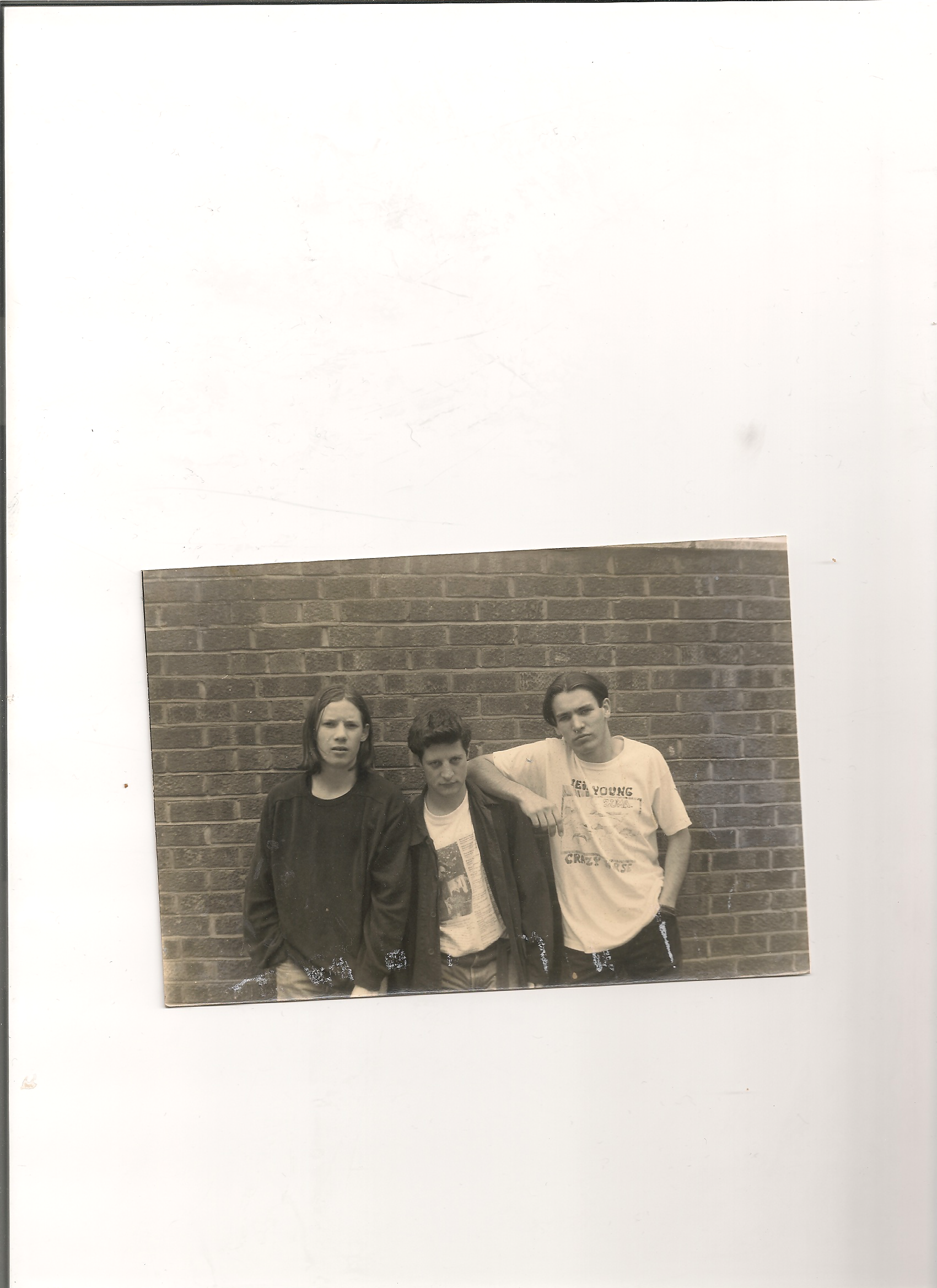
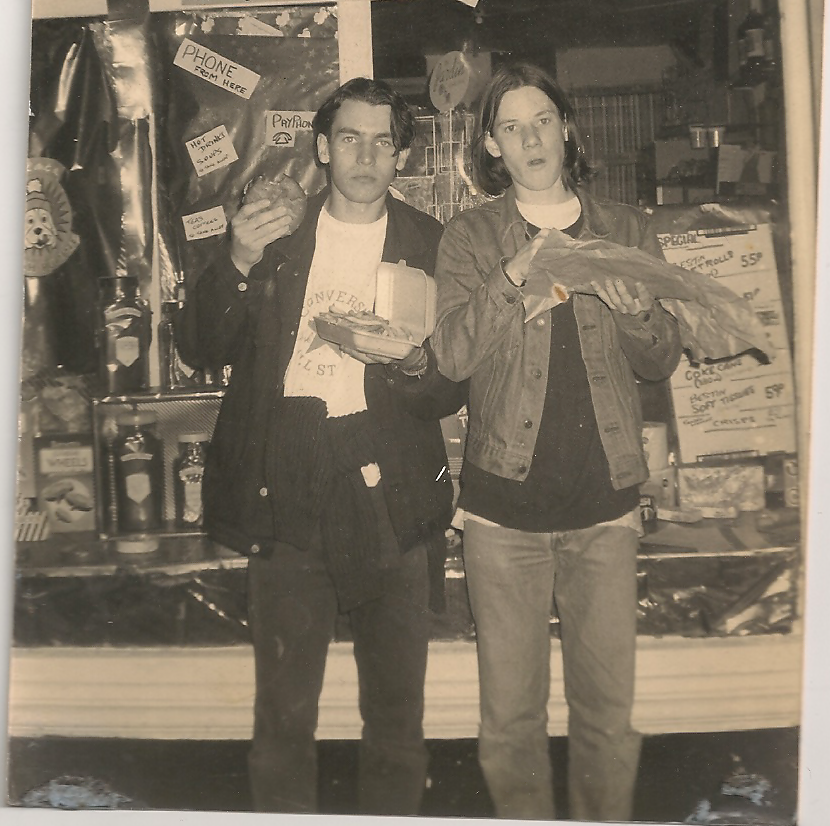
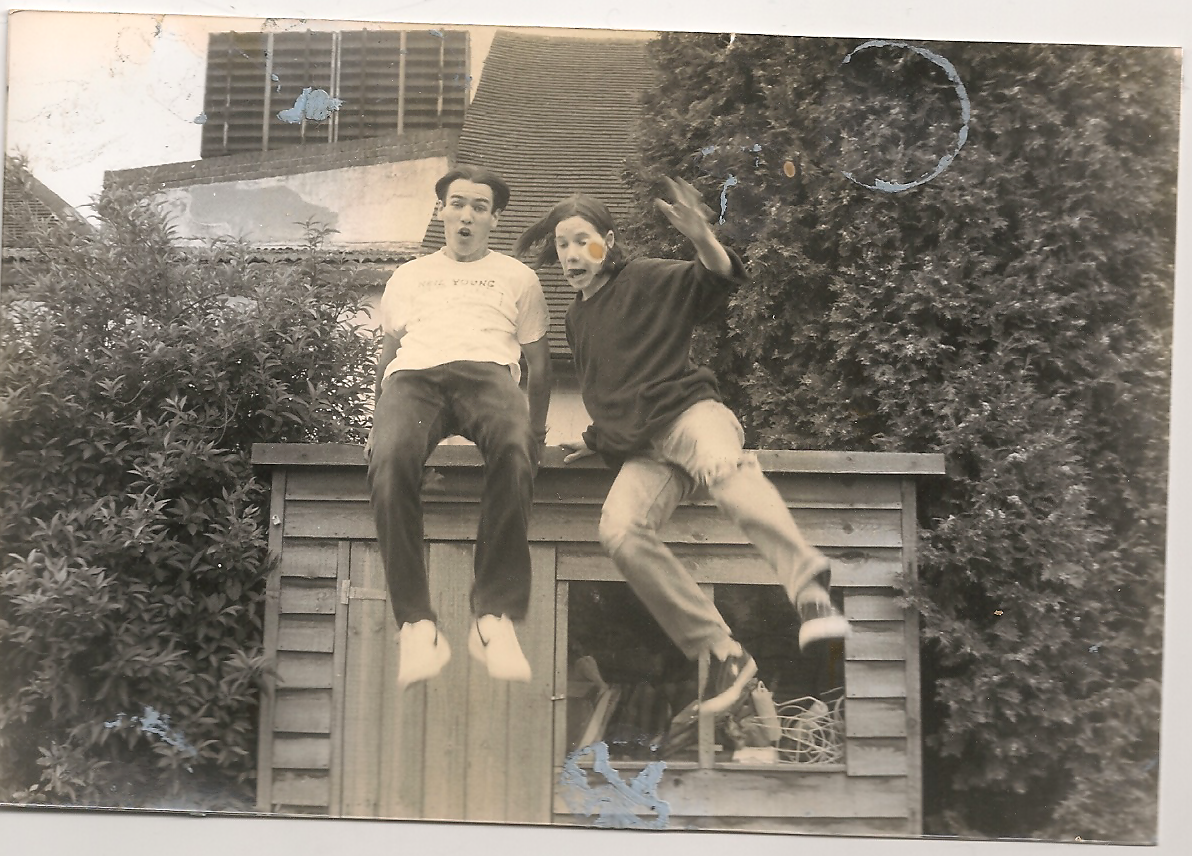
Here are me, Scott and Mike trying to be the Ramones.

Triumvirate

We called ourselves the triumvirate and were inseparable. We were also insufferable poseurs.

Triumvirate2

We spent most Saturdays going up to London. The day usually started here.

Image result for sutton surrey station

The highlight of the train journey came after we passed Clapham Junction and trundled past the hulking mass of Battersea Power Station, which was apparently being turned into a theme park. This classic view of the power station from the railway line is soon to disappear as the building is surrounded by steel and glass boxes for the very rich.

Image result for battersea power station from railway

Crossing the Thames, you could usually make out the floodlights of Craven Cottage and Stamford Bridge if you were quick. There are fewer finer sights in life then the glimpse of far-off floodlight. If all went to plan, we might be getting a closer view before the day was done.

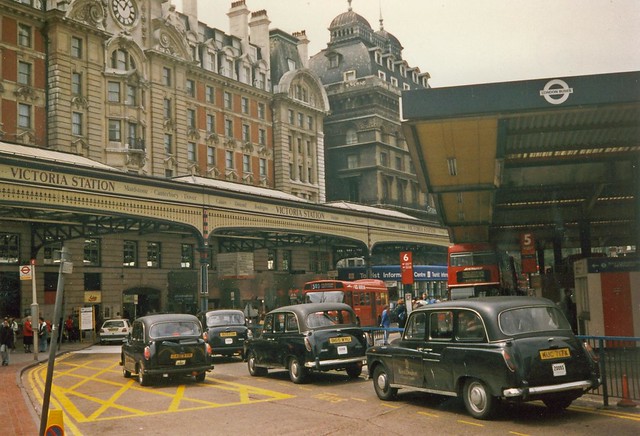
From Victoria, we headed for Covent Garden. Mike was a dresser. He could carry anything off. He still can. Mike had a dapper big brother, Pete, who read The Face and I-D, and so Mike always seemed to know where to go. His keen sense of style didn’t always go down well in the suburbs; when he wore a pair of Adidas shell tops to school, kids in Nike Air and Adidas Torsion laughed at his protestations that he was the trendy one. Still, I was convinced enough to buy a pair of suede Kickers on his say so, and nobody took the piss that much.

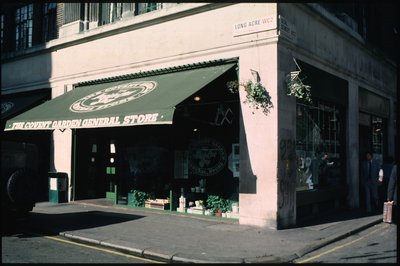
We usually went to a few shops on Floral Street and then  Neal Street, maybe first visiting the Covent Garden General Store, which was full of entertaining tat.

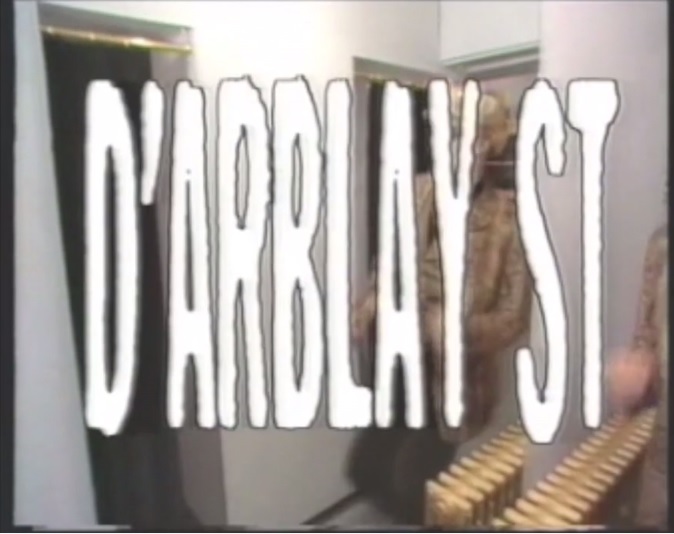
We spent much of this part of the day traipsing after Michael into shops where saleswoman would assure him he looked the ‘dog’s bollocks’ as he pulled on another pair of check flares. If I was feeling bold I’d try on something in Red Or Dead or Duffer of St George on D’Arblay Street. On one treasured occasion, Mike’s brother Pete was so impressed by my red Riot + Lagos t-shirt from Duffer that he borrowed it for a party. This was probably the high point of my life as a style icon.

duffer

https://vimeo.com/110877169

duffer

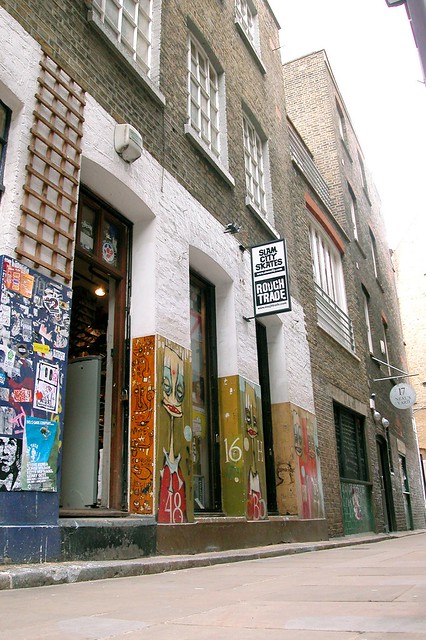
After watching Michael try on clothes, we’d go to Neal’s Yard, where we breezed past the weirdos in the skate shop on our way to the basement.

This was the Covent Garden branch of Rough Trade, a pokey den arranged around a metal spiral staircase, with walls covered in graffiti from bands that had played there. We loved it here. Music was one shared passion. Mike had got us into Sonic Youth, Pavement and Teenage Fanclub; Scott’s dad had a great selection of Van Morrison, Leonard Cohen, Jackson Browne and Neil Young. We all read the NME and Melody Maker and Select. This stuff mattered.

After a quick nose, we’d slip on to Shaftesbury Avenue and round to Cambridge Circus. There was a shop south of here on Litchfield Street that sold trendy Brazilian football shirts which we looked at but could never afford. Usually we headed north up Charing Cross Road to Sportspages.

imgresSportspages sold sports books, but we were only interested in the fanzines, which were scattered over the floor in untidy piles. Football was our other passion. I’d try and pick up the hard-to-find Cockney Rebel, a one-man Chelsea fanzine that combined football with an idiosyncratic take on pop and film culture. I went to Sportspages for years but never actually bought a book there.

After that, it was lunchtime.

Image result for bacon double cheeseburger

We lived for bacon double cheeseburgers.

Then we’d head down Hanway Street, past the Blue Posts on the corner, to visit Vinyl Experience, a huge place over a couple of floors which was covered by this fine Beatles mural.

Photo by Ronald Hackston

Photo by Ronald Hackston

At some point earlier, it had this fine sign.

vinylexperience

There were a couple of other record shops here – JBs was a decent one – and we’d often pop into Virgin on Oxford Street to check out the t-shirts.

From there, we strolled down across Oxford Street and cut through Soho down to Berwick Street, where three more record shops awaited – Selectadisc, Sister Ray and Reckless. Selectadisc was my favourite; although the staff were contemptuous, they were marginally friendlier than in Sister Ray and the choice was wider.

Reckless Records Berwick Street

Sometimes we’d see our schoolfriend Martin, who worked the odd Saturday on a fruit and veg stall in Berwick Street market for his uncle. I was always slightly jealous of this; it seemed an impossibly cool, proper London job for suburbanites like us to have.

Football was next. Despite having visited so many shops, we spent more time browsing then buying so rarely had many bags. Most of our serious record shopping was done in Croydon at Beanos.

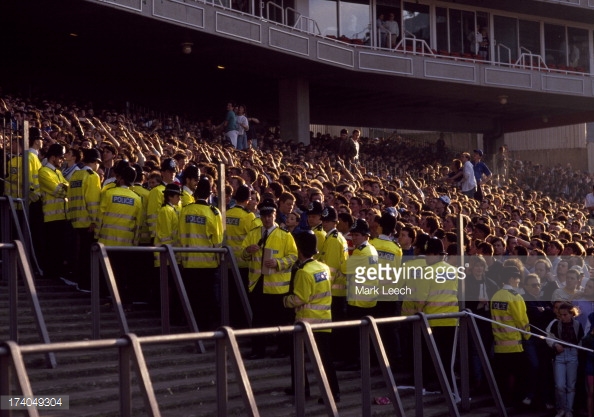
What game we went to depended on who was playing, how much money we had and whether I could persuade Scott (Wimbledon) and Mike (Celtic) to fork out to watch Chelsea. It usually boiled down to Arsenal in the Clock End, where we could still pay the kids fee, or Chelsea in the Shed. Occasionally we’d duck into the ground at half time, when the exit gates had opened.

If we didn’t fancy Chelsea or Arsenal, or they were away, we’d head over to QPR, Charlton, Millwall and Fulham. Nobody ever sold out.

Chelsea at Arsenal, 1990

Chelsea at Arsenal, 1990

After football, dinner.

dinner

If we had time, we’d pop into the sweet shop in the Trocedero.

And then maybe a gig: at the Marquee or Astoria.

Or more likely home via Victoria, and then out to the Ship or the Firkin in Croydon.

A week or so later, we’d do it all over again.

shed

Many of these places no longer exist, and I’m not even that old. Or at least, I didn’t think I was.

Ghost street

IMG_3187

I walk past this corner at least twice every day but only recently noticed the ghost sign painted above the newer enamel one. I assume it was previously covered up, otherwise I’m sure I’d have spotted it at some point in the past five years. Perhaps the jutting pipe points to recent usage.

Much as I like a painted street sign, this one is particularly interesting as it dates back to a time when the street – a short stub of road – had a different name entirely. According to Steve Chambers, who knows about such things, this was one of three name changes in the area – including the eradication of the similar Hamilton Terrace on Shakespeare Road – brought about to tidy up postal addresses.

https://twitter.com/respros/status/544505070256418818

https://twitter.com/respros/status/544505963492171778

The ghost sign for the ghost street sits opposite a ghost pub. Hamilton Supermarket occupies the site of the Hamilton Arms, a cosy corner pub opened in 1878 that was captured magnificently in these old photos. It closed in 2004.

hamilton-arms-brixton-6

hamilton supermarket

Snapshots of a lost London from home movies

Chiswick swimming pool, via BFI National Archives.

Chiswick swimming pool, via BFI National Archives.

I have been doing some work for Film London’s London Screen Archives which involved watching hundreds old home movies, news reels and promotional films made in and about London. Many of these have been donated by families to local archives, others were made by councils or boroughs, or were newsreels acquired by the BFI, such as the above of Chiswick pool in the 1920s. Collectively, they give a glimpse of the past, showing how people lived, what they wore and ate, how they decorated their homes – even how they chose to behave in front of the camera.

Some of these films will be screened in Film London‘s new Kinovan, a mobile cinema that is travelling to different boroughs showing old footage of life in the area. Home movies are a fascinating and often neglected treasure trove of historical footage, inadvertently revealing so much about the past. I’ve collected some stills from home movies I’ve been watching to post below – and if you have any home movies you wish to donate to the collection, you can do so via The Bigger Picture project.

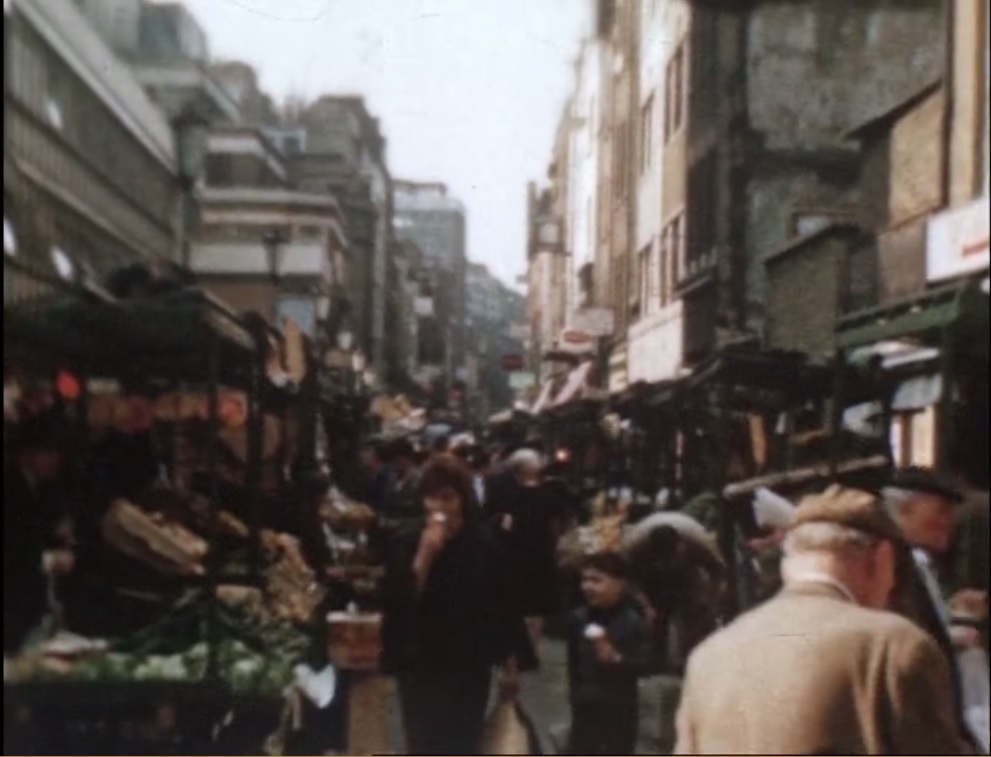
Berwick Street market, 1960s.

Berwick Street market, 1960s.

The Golden Egg, 1960s.

The Golden Egg, 1960s.

Docker tea break, 1960s.

Docker tea break, 1960s.

Londoners, 1960s.

Londoners, 1960s.

Cowboy demonstration, company fete, Dagenham, 1950s.

Cowboy demonstration, company fete, Dagenham, 1950s.

Lord Mayor's Show, 1967.

Lord Mayor’s Show, 1967.

Embankment, 1964.

Embankment, 1964.

Odeon Leicester Square, 1960s.

Odeon Leicester Square, 1960s.

New car, Haringey, 1960s.

New car, Haringey, 1960s.

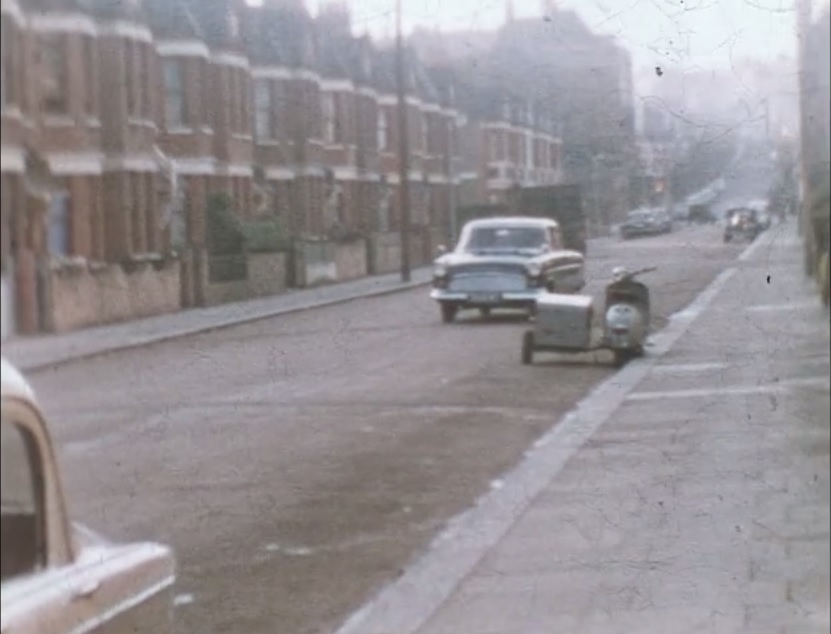
London street, Haringey, 1960s.

London street, Haringey, 1960s.

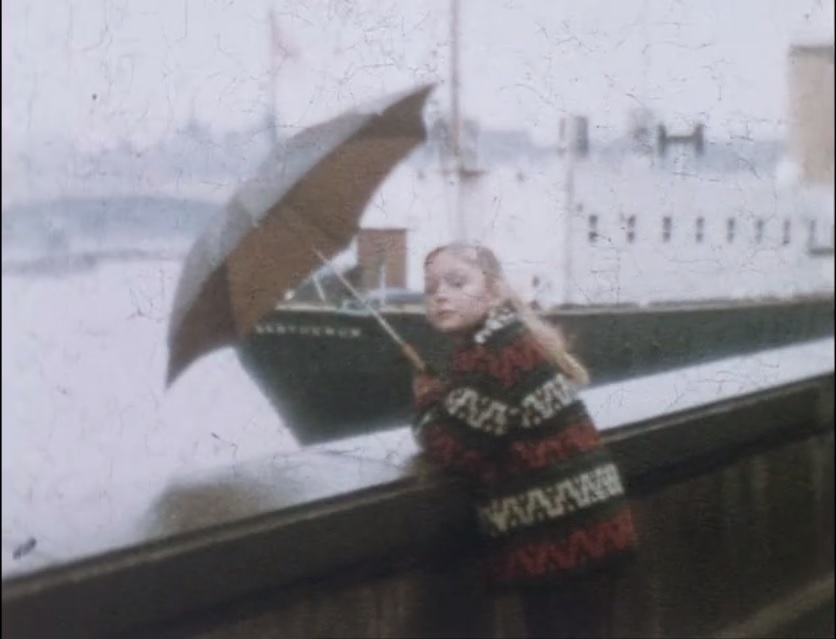
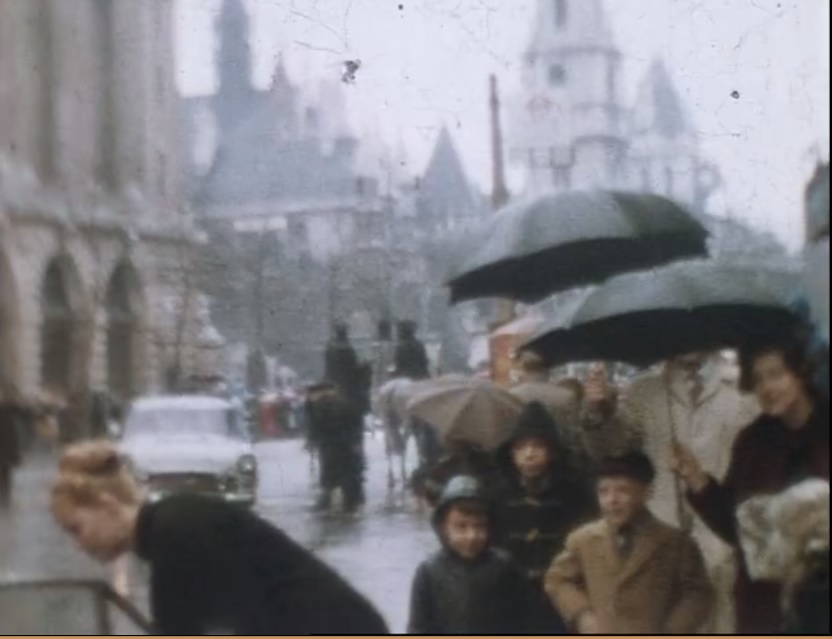
London in the rain, 1960s.

London in the rain, 1960s.

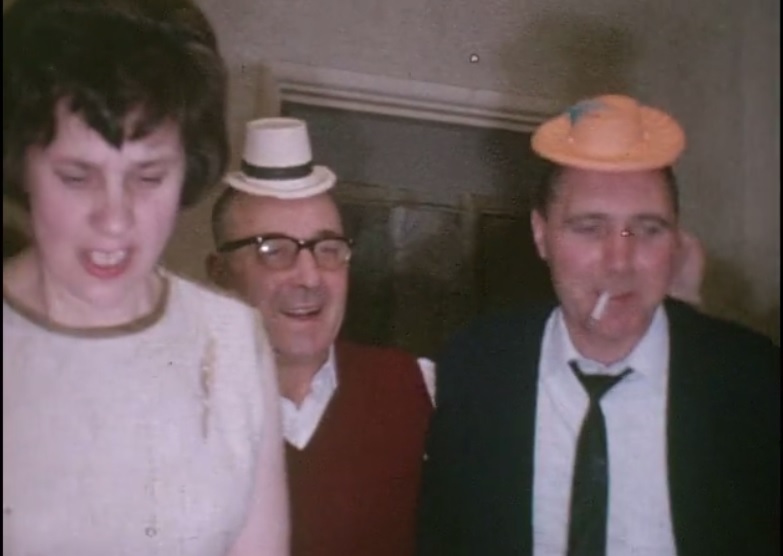
Christmas party, Becontree, 1960s.

Christmas party, Becontree, 1960s.

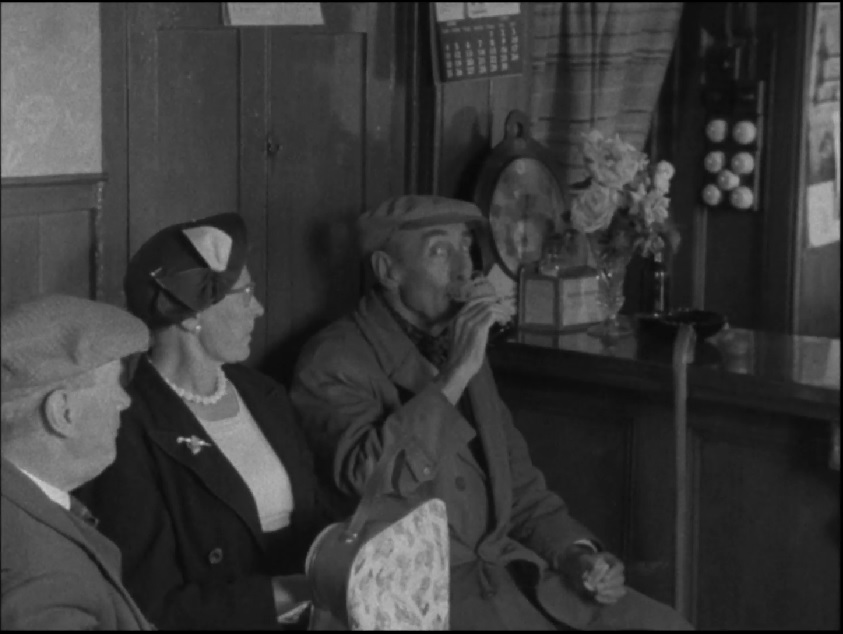
Pint, 1961.

Pint, 1961.

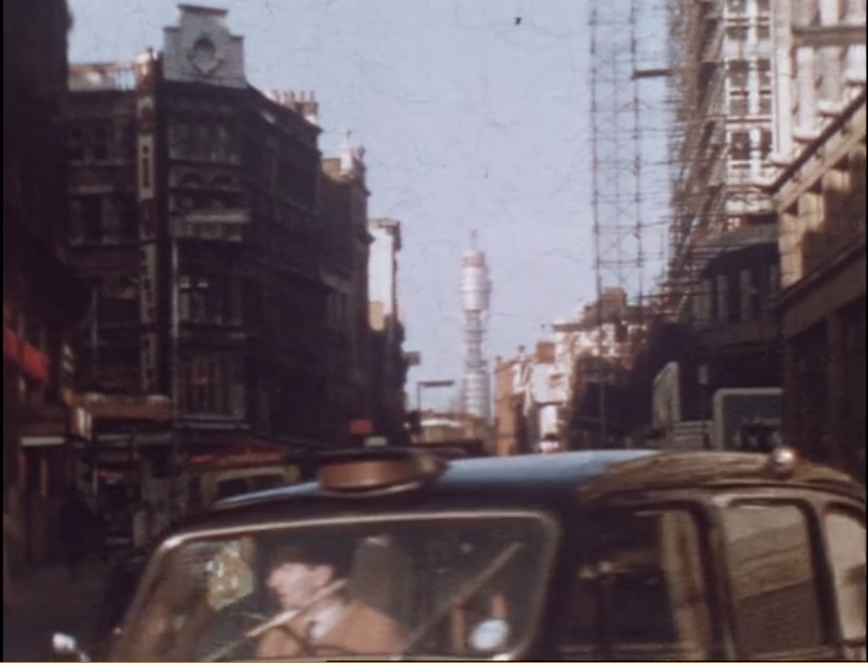
potower

PO Tower, 1965.

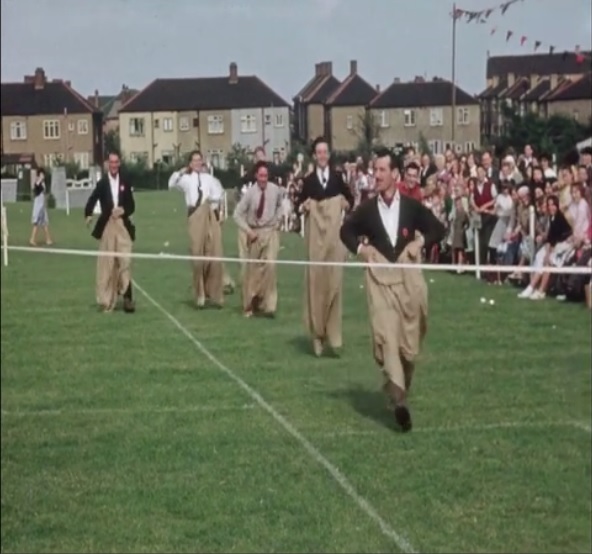
Company sack race, Dagenham, 1950s.

Company sack race, Dagenham, 1950s.

Green Lanes, 1960s.

Green Lanes, 1960s.

Operating machinery, Dagenham

Operating machinery, Dagenham

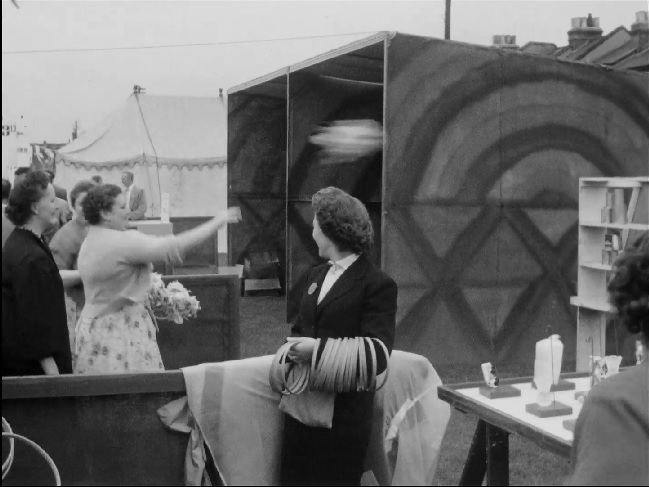
Company fete, Dagenham, 1950s

Company fete, Dagenham, 1950s