Category Archives: Exhibitions

Navvies, landlords and protest

I’ve written three pieces elsewhere recently.

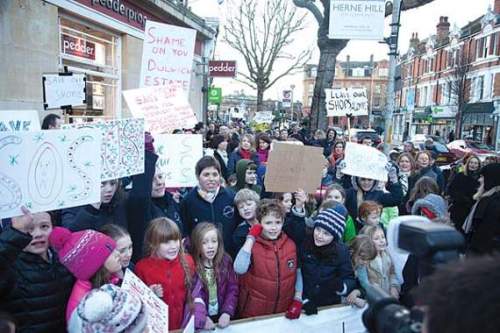
For Londonist, I wrote about the battle in Herne Hill between independent shops and the local landowner, Dulwich Estates, who some feel are taking more away from the community than they put in. A protest last week saw several hundred Herne Hillians march from the station to the local toy ship, which was forced out by a huge increase in rent. Several other tenants told me they feared they’d also be forced to move in the next year.

m5746


For Apollo, I wrote about a new exhibition of posters from Berkeley in 1970, when students protested about the ongoing Vietnam War and also the deaths of four student protesters on a campus in Kent State.


And for Waterfront, I wrote about the life of the navvies in London. I was intrigued by the urban legend that the four pubs in Camden with castle in the title – the Edinboro, Windsor, Dublin and Pembroke – were built for the navvies, to ensure separate nationalities drank apart and didn’t scrap. It quickly became apparent that the story wasn’t true, but as I researched the life of the navvies, I began to understand how the myth was raised and also learnt a lot about this tough breed of migrant worker.

The Black Museum at the Museum Of London

The Museum of London’s new exhibition is undoubtedly something of a coup. Crime Museum Uncovered features around 600 items from the Met Police’s private museum, once known as the Black Museum but now renamed the Crime Museum. I visited the Crime Museum at Room 101 in Scotland Yard several years ago and wrote about the experience here.

What’s fascinating is the differences between the way a public museum like the MoL treats the same objects as the police museum. The shelf above is from Scotland Yard. It is located in an ante room before the museum proper and contains a selection of weapons seized on the streets of London, and above that a dozen or so death masks taken of the heads of executed prisoners. This is pretty much the first thing visitors to the museum will see and the ensemble is like a whack on the head with a cosh. It says London is full of criminals, this is how they will try to kill you and this is what we will do to them when they are caught.

At the MoL, the same material is treated much more sensitively. Only six or so weapons are exhibited, and these are placed neatly in a clean glass box rather than scattered higgledy-piggledy over an old table. The heads are also on exhibition, but some distance removed from the weapons, creating a disconnection between crime and punishment.

That is, perhaps, the only way the MoL could present this exhibition. I’ve said before that the Crime Museum as curated by the police is entirely inappropriate for the public and I’m not entirely sure it’s appropriate for the police as it is deliberately created to cultivate an air of suspicion bordering on the paranoid, a repeated insistence that the streets are not safe for policeman, that anybody could be out to kill you, using anything from an umbrellas to a telephone. It’s an attitude that goes some way towards explaining the deaths of numerous Londoners at the hands of the police.

The MoL also has to fill in some of the blanks at Scotland Yard. The Crime Museum is ostensibly a teaching museum  – it shows coppers the history of crimes and how they have been solved. But the cases at Scotland Yard contain little explanatory detail – that is provided orally by the curator. At the MoL, by contrast, there is a fairly thorough, detached but instructive look at a selection of important crimes, showing what they have revealed about forensics, police procedures, detective work and criminality (many of the cases, too many, concern crimes against women). They also touch on several of the most significant crimes of the era, including the Krays, the Richardson, Derek Bentley, Dr Crippen, Christie and the Acid Bath Murderers. It’s all very carefully selected and brilliantly explained, with items well chosen to both inform and occasionally horrify. This is easily the best part of the exhibition.

Gloves worn by John Haigh to dissolve the body of Mrs Olive Durand-Deacon, 1949 © Museum of London

Gloves worn by John Haigh to dissolve the body of Mrs Olive Durand-Deacon, 1949 © Museum of London

The MoL then breaks away from these individual crimes to look at broader themes, such as concealed weapons, drugs, forgery, armed robbery and espionage. While the focus on individual crimes does not include anything from after 1975 to avoid distress to victims’ relatives – which means the infamous Dennis Nilsen cooking pot isn’t on show thankfully – the exhibits on broader themes go right up to the present day. That is largely so they can show items related to the July 2005 bombings in the form of reconstructions of the homemade rucksack bombs, something I found particularly unnecessary as these weren’t even from the crime scenes, which is a core part of the Crime Museum’s relevance. Authenticity is absolutely vital here – it is the raison d’etre of the entire collection – and if the items are not original, you leave yourself open to accusations of Chamber of Horrors style ghoulishness.

It’s a rare misstep from an otherwise sensitive exhibition, that ends with an excellent film in which policeman, curators, crime victims and professors discuss crime, the museum and its role in police life.

the first criminals to be convicted in Great Britain for murder based on fingerprint evidence, 1905 © David Gill/Museum of London

the first criminals to be convicted in Great Britain for murder based on fingerprint evidence, 1905 © David Gill/Museum of London

So that’s all good, but I still came out of the Museum of London exhibition with mixed feelings.

It goes right back to the start. The exhibition begins with a “reconstruction” of the original Victorian museum. But this is a reconstruction in the very loosest sense – basically, it means the items are old but they are being presented in a very modern way. That is far removed not only from the Victorian museum but also from the contemporary Scotland Yard museum, which does not look, feel or smell modern at all. The Crime Museum is old-fashioned, cluttered, chaotic and deeply depressing, and a genuine piece-by-piece reconstruction, or even a photograph of the current Scotland Yard museum, would have been a real benefit, as otherwise it’s impossible to discern the peculiar atmosphere of the place. Without it, the MoL are sanitising not just the nature of crime – which is excusable – but also the nature of policing, which is not. That after all goes to the heart of what the Crime Museum is about, who it is for and what that means to Londoners, and it’s something that is entirely absent from this exhibition – the one hint comes from the only item relating to the long history of riots in London, which is a police shield from Broadwater Farm that’s been burnt by a petrol bomb. What does that tell you about the way the police regard these inner city riots?

The Museum of London have produced a fascinating, thoughtful and thought-provoking reimagining of the Crime Museum’s contents that explores the nature of crime and law enforcement in London, but it does not tell the full story of the Crime Museum. I imagine Scotland Yard will be very pleased about that indeed.

Pirate radio in London: The Clash, Keith Allen and biscuits

There’s currently a small exhibition at the ICA looking at the history of London’s pirate radio. The Guardian recently ran a great photogallery on the subject.

pirate

Not coincidentally, I’ve been reading a new book on pirate radio, London’s Pirate Pioneers by Stephen Hebditch, who formerly edited a magazine dedicated to pirate radio. It’s a great book, crammed with detail and utterly absorbing.

My knowledge of pirate radio was restricted to the 1960s offshore stations, and then the 1980s dance stations. I knew about the latter because I sometimes stumbled upon them while retuning from Capital Gold to LBC in search of football results. There would be a javelin of static, a man shouting, booming bass and a general feeling of chaos. I also diligently watched Lenny Henry, so knew all about the illegal broadcasting activities of Delbert Wilkins, who ran the a pirate radio show in Brixton.

Hebditch’s book mentions Henry, who was a supporter of probably London’s most famous pirate, Kiss FM, which like many others broadcast using transmitters stuck above shops on Westow Hill in Crystal Palace. But he also talks in detail about aspects of pirate radio that are much less well known. The book looks at developments in the pirate scene year-by-year from the 1960s, starting with a general overview taking in major shifts in technology, approach, licensing laws and law enforcement, followed by a longer look at a couple of  the year’s most important stations, and then a round-up of all the other stations that broadcast that year – some of them only surviving a week.

The detail is astonishing and what really fascinated me was the range of stations that existed. Many were playing jazz, dub, soul, funk and reggae – and the story of the way Black Londoners embraced pirate radio in the 1980s is an important one. Hundreds were later playing dance music, but there was also stations for heavy metal, classic rock, pop, and rock and roll as well as for local community groups: Poles, Greeks and South Indians all had stations. There was even said to be a far-right station, Radio Enoch, broadcasting in the Midlands, which was shut down after members from one London rock station went to pay a visit.

From these stations came numerous DJs we know today – Tim Westwood, Gilles Peterson, Annie Nightingale, Pete Tong, Judge Jules and Steve Lamacq – but also a hint of the variety of music and programming that the radiowaves could support. Many paid their costs by charging advertisers; some even charged the DJs for the right to present.

A station like Phoenix (1981-1985) would play early indie – Ellery Bop, Nightingales, Inflatable Boy Clams – mixed with “dub, jazz, industrial and African”, with guest presenters like Robert Wyatt and The Monochrome Set. Similar was Network 21, that played alternative rock and dance, while also covering news, cinema listings, concerts, plays and exhibitions.

concord

Then there’s Radio Concord, which grew out of the west London squatting scene between 1972 and 1976, sometimes broadcasting from the house in Maida Vale where Joe Strummer lived with the 101ers. This was a politicised counterculture station, and would comment on issues like Northern Ireland and housing rights. “They have even been critical of the Queen,” the Daily Mail reported. One time, they were busted while broadcasting so stuck  a mike through the letterbox to try and interview the law live on air.

Then there was Radio Amanda, that lasted from 1982-1984 playing a pre-Resonance diet of space rock and electronic music. At roughly the same time, there was Our Radio, a station started by anarchists that had shows devoted to feminists, gay groups and Brixton-based anarchists. It had few listeners but the police hated it: in one court case it was described as an “anarchist, terrorist, homosexual” radio station.

Radio Wapping broadcasting briefly in 1986 to support the printworkers striking after News International’s move to Wapping. And in 1983, comedian Keith Allen launched Breakfast Pirate Radio, which was broadcast “using helium-filled balloons over Notting Hill” (ahem) and featured “comic-characters, malicious celebrity gossip, radio outtakes and the names of supposedly bent coppers.” Robbie Coltrane also featured and you can listen to it here.

Best of all, though, was a station called The Home Of Good Baking which broadcast for a few weeks in 1989 using a jingle from United Biscuit Network, the 1970s in-house radio station at United Biscuits in Hayes.

In the depot

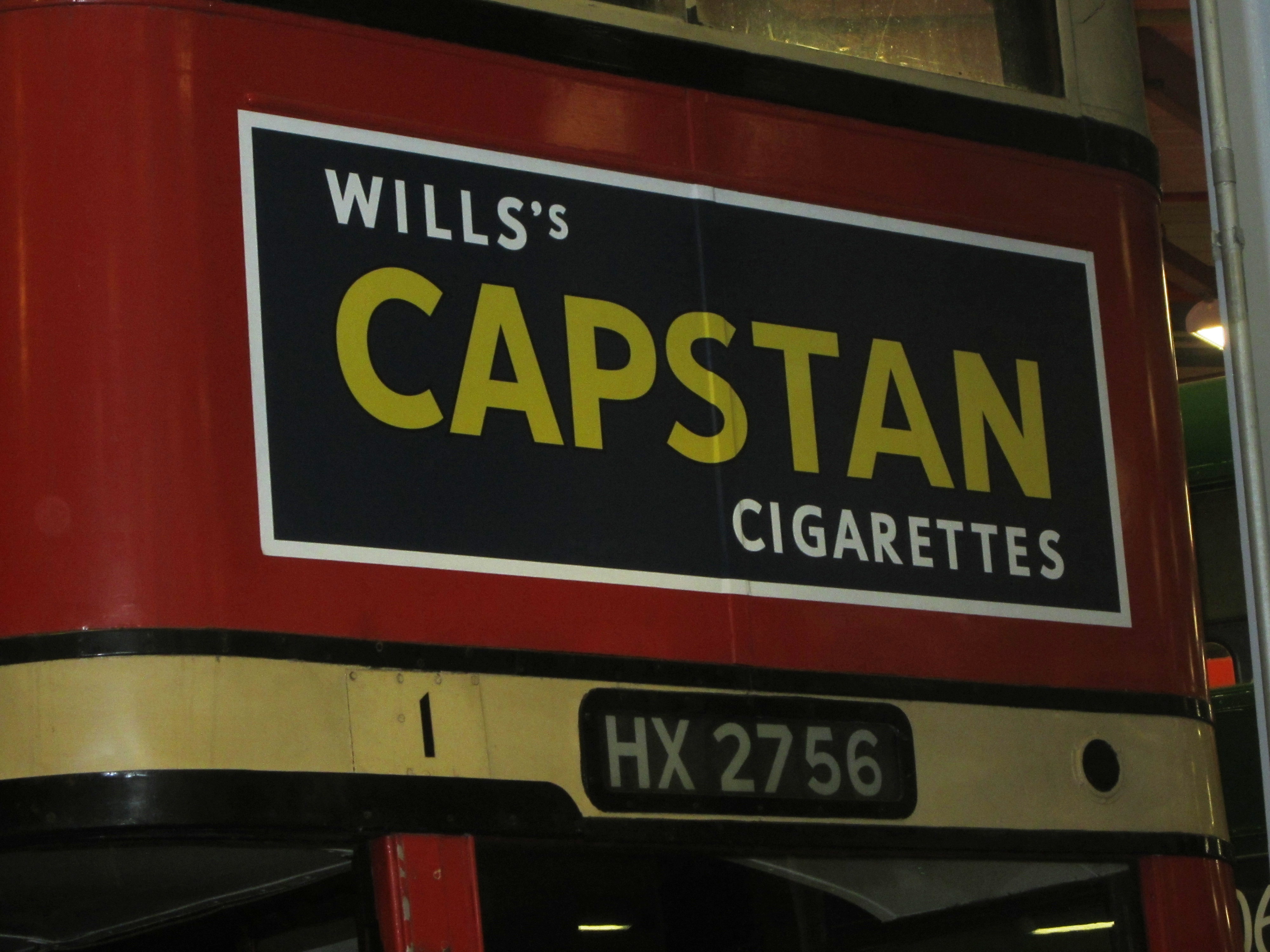
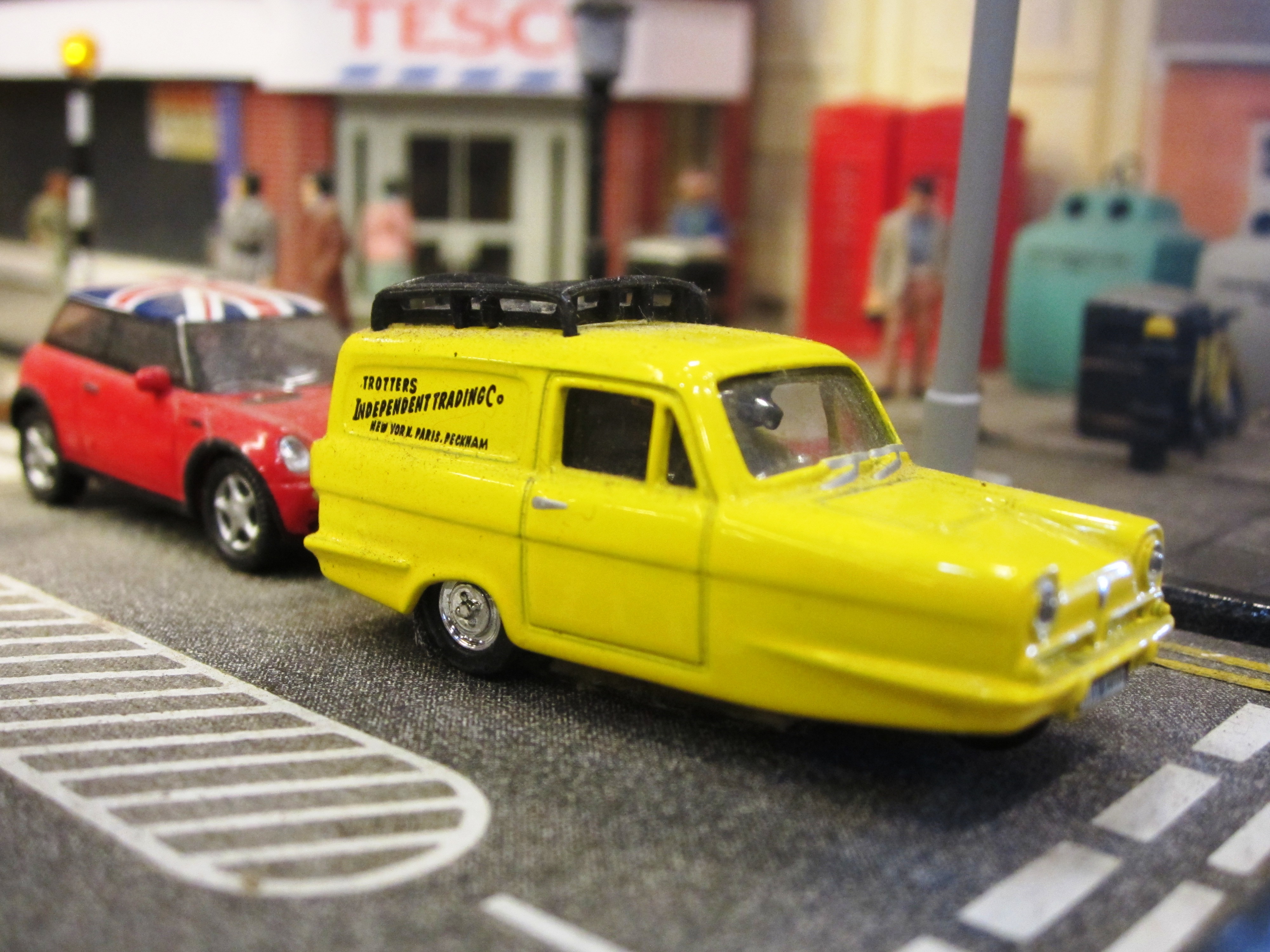
I finally made it to one of the London Transport Museum’s twice-early weekend openings at their Acton depot. where they store the buses, trams and train carriages they can’t exhibit in Covent Garden.

It was brilliant. If you like that kind of thing.

(I wouldn’t like to say the event attracts a certain type, but these were the longest queues for the gents I’ve ever seen outside a football ground.)

I could have spent hours browsing the specialist books for sale, while the kids loved the model railways.

The following pictures are via @callyorange. And go to the next one in September.

IMG_4269IMG_4267


IMG_4263

IMG_4275

IMG_4278

IMG_4261


IMG_4257

IMG_4242

IMG_4247


IMG_4249

IMG_4283


IMG_4255

IMG_4235

IMG_4289


Robert Fraser: the butterfly, Performance and the Rolling Stones

I’ve often thought that when William Rees-Mogg wrote his famous editorial in the wake of the Redlands court case, the butterfly was not so much Mick Jagger or Keith Richards but the third party in that sorry affair. Art dealer Robert Fraser was convicted alongside the Rolling Stones for possession, but while Richards and Jagger were spared prison partly thanks to the Times editorial, Fraser pleaded guilt and was sent to Wormwood Scrubs. It’s difficult now to think of Richards and Jagger as butterflies; Fraser was the one that got left behind to get broken.

Some of letters and telegrams Fraser received and sent while during his four months at the Scrubs feature in the Pace Gallery’s superb exhibition, A Strong Sweet Smell Of Incense, which runs until 28th March. The title comes from Richard Hamilton’s collage, created as a response to the Redlands bust.

It is displayed alongside one of Hamilton’s other famous creations in his Swingeing London series, which shows Fraser and Jagger being led away from court.

Hamilton was one of several artists that Fraser promoted at his Duke Street gallery in the 1960s, and many of them feature in the show. Here there are works by Andy Warhol, Jim Dine, Eduardo Paolozzi, Claes Oldenberg, Clive Barker, Gerhard Richter, Bridget Riley and Peter Blake, as well as later pieces by Francis Bacon, Keith Haring and Jean-Michel Basquiat.

_DSC2753-Edit-Edit

Copyright Pace London

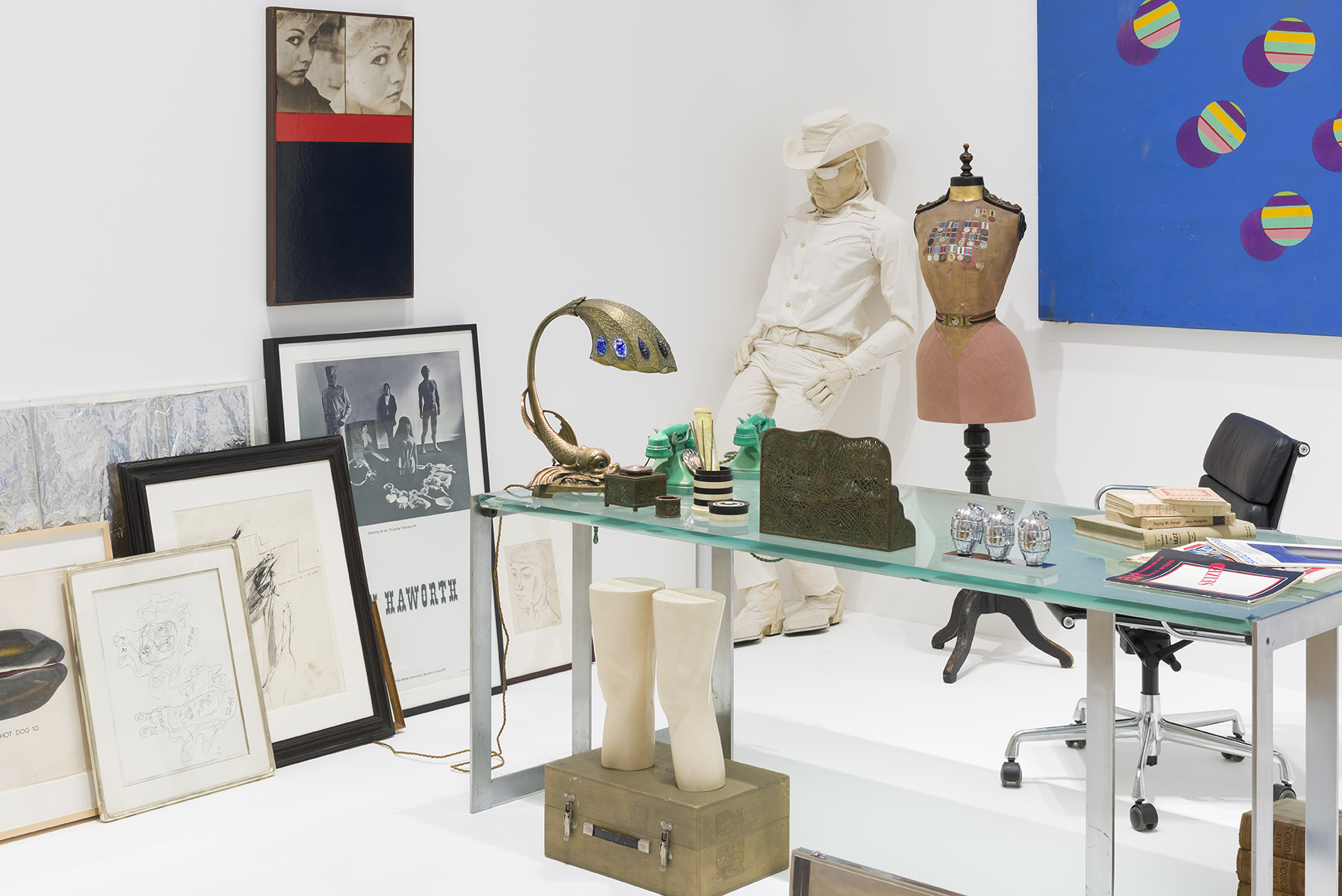
There’s also a nice mock up of Fraser’s office.

_DSC2713

Copyright Pace London

Fraser had a great eye and a sense of daring, and that helped attract the stars. Fraser’s gallery became a centre for the cool kids of the counterculture, attracting pop stars, actors and film directors as well as perennially lurking scene figures like Keith Anger. Paul McCartney described Fraser as “one of the most influential people in the London sixties scenes” and The Beatles feature in the exhibition, most wonderfully in the shape of the drumskin from Sgt Pepper’s Lonely Hearts Club Band, which Peter Blake created under Fraser’s direction. Fraser was the catalyst for much that happened in this mid-60s meeting of art and pop.

Copyright Pace London

Copyright Pace London

Fraser was nicknamed Groovy Bob and a sense of the fluid interchange of ideas that resulted from these encounters can be seen in a long display cabinet, arranged with artful haphazardness and crammed with personal letters, memos, books, flyers and photographs. There’s no caption for this wonderful ephemera, but rich pickings for those who take the time to drink it in.

_DSC2801

Copyright Pace London

I was fascinated by a 1968 letter Fraser wrote to Richard Lock at Simon & Schuster proposing a biography of the Rolling Stones, which “would be satirical and totally fictional”. It was seen as a suitably Stonesy response to Hunter Davies’s recently published and “totally humourless” Beatles biography. Sadly, this came to nothing.

I also liked a letter written by the producer of Performance, confirming that Anita Pallenberg would be renting Fraser’s flat in Mount Street for the eight-week duration of the shoot, at £30 a week. This was presented alongside a page of the script from Performance. Fraser’s spirit is essential to the milieu and mystery around Performance. He had known Pallenberg since 1961, and his interest in art, drugs and bohemia was infectious.  Pallenberg later recalled that around Fraser gathered “a fascinating group of people who were on the cutting edge of what was happening in high society, great cultural evenings, wonderful intellectual talk, plenty of hash and marijuana and speed and LSD.” Marianne Faithfull’s recollection is a more withering English take on the same deal: “Desultory intellectual chit chat, drugs, hip aristocrats, languid dilettantes and high naughtiness.”

The weeks that Pallenberg, with boyfriend Keith Richards, stayed at Fraser’s flat, would be pivotal to the unfolding psychosexual drama surrounding the Stones. Fraser was using heroin (his opium pipe is on display), and soon turned on Keith, who was otherwise writing Let It Bleed and brooding about the shenanigans Pallenberg and Jagger were getting up to while making the film.  The ensuing atmosphere of jealousy, betrayal spiced by heavy drug use would hang round the Stones for decades. As Richards spiteful autobiography shows, they still haven’t entirely gone away.

performance

Cecil Beaton photograph from Performance set.

Also floating around the scene was another arch mischief-maker, Kenneth Anger, and a couple of his missives to Fraser can be found in the cabinet. Best of these is probably the telegram requesting £60 which concludes “GROOVING ON MAGIC CURRENT ONE TRILLION VOLTS AFTER AUSPICIOUS LUCIFER HOUSE BOAT LOVE IS THE LAW”. Indeed.

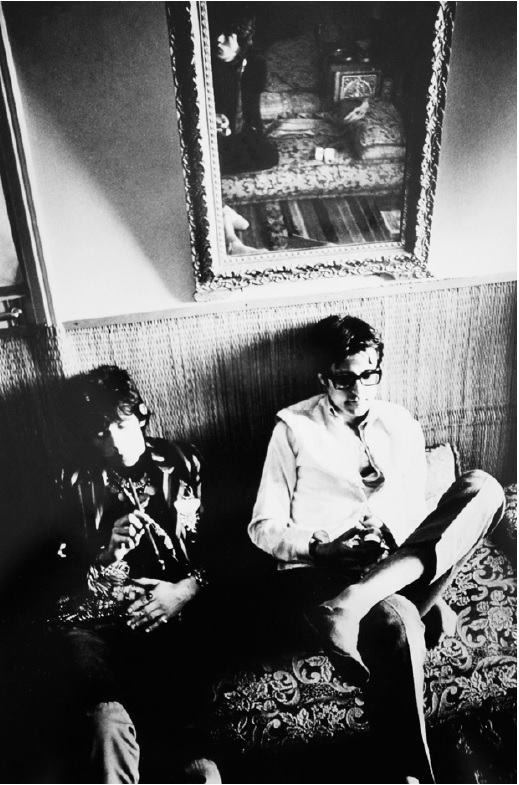
But it’s the Stones with whom Fraser became most closely associated, for better or for worse. No matter how it ended, I’ve always loved a pair of photographs Michael Cooper took of the Stones with Fraser in 1966 and 1967 in Morocco, a location that is almost as emblematic of the 1960s as London itself, lingering even in the set design of that orgiastic lightning rod Performance. Here is the calm before the storm, before the butterfly is broken.

fraser1

fraser2

A Strong Sweet Smell Of Incense at Pace London, 6 Burlington Gardens, W1S 3ET.

Earls Court and the death of fun in London

“In London, it seems everything that’s not a shop, offices or luxury apartments is being demolished,” sighed artist Duggie Fields when I interviewed him last month for a piece in Uncut about the imminent demolition of Earls Court Exhibition Centre. It’s a quote that, in a nutshell, seems to encapsulate all that is going wrong with London right now.

“There is so much damaged being done to London all over, Earl’s Court is just part of it,” says Fields. “London is losing a scale of living that has been very special for a long time. Now we have this mini high rises that could be from anywhere, they are characterless and there are so many of them.”

Earls Court will be pulled down early next year and replaced by houses, ending the area’s 120-year history as a place of fun. This history is well known to London nerds, but is worth repeating. The former cabbage field of Earls Court was transformed into a funzone by Yorkhire entrepreneur John Whitely at the end of the 1880s, when he brought Buffalo Bill’s Wild West Show to the newly transformed exhibition site, hemmed in between railway lines. It featured a miniature Rocky Mountains, Native American village, corrals and a cowboy bunkhouse. “The show was a revelation,” write Felix Barker and Peter Jackson in Pleasures Of London. A few years later, the site attracted London’s first big wheel – a 300ft monster called the Gigantic Wheel.

When that lost its thrill, new entertainments were sought – including plans for a mechanical racecourse. Numerous exhibitions were also held there – including Captain Boynton’s Water Show in 1893, the Greater Britain Exhibition, in 1899 and Shakespeare’s England in 1912. Then in 1937 the Exhibition Centre was built. It opened with a Chocolate and Confectionery Exhibition and went on hold swimming galas, motor shows, the Royal Tournament and events for the 1948 and 2012 Olympics.  It’s a decent looking building, too, well worth saving for its lovely Art Deco curve and revolutionary concrete engineering. So many magnificent buildings from this era are being lost.

Less, pleasantly, in 1939 it hosted a gargantuan meeting of Oswald Mosley’s fascist blackshirts.

From the 1970s, Earls Court also began to host pop shows. David Bowie was first to play there, although Noddy Holder of Slade claims they were the first to book it and then managed to improve the sound after Bowie flopped. Concerts by Bob Dylan, Led Zeppelin, Queen, Rolling Stones and Pink Floyd followed. I saw Oasis there, unfortunately, and also the BRIT awards in 2000, when I threw a champagne cork at Christine Hamilton.

Slade fans at Earls Court

And now it’s to come down, replaced by 8,000 houses and some shops.

Duggie Fields has lived in Earls Court since the 1960s. You may recognise his flat – and former flatmate.

He points out that the removal of the Exhibition Centre will, at a stroke, remove any point or purpose to the Earls Court area. “It has nothing for people to come to,” he says. “Just boring anonymous shops and lots of traffic. All we’ll get is more chainstores because there’s no neighbourhood, there’s no locals. You can’t create villages, they grow over a long period of time.” He also fears for the pubs and restaurants that rely on the Exhibition Centre, which has still been functioning almost round the clock despite impending doom, for their custom.

He’s right. Earls Court is, even with the Exhibition Centre, one of the most boring areas of London. Without it, it’s pretty much irrelevant. But there’s a problem here too. London needs housing, desperately. Surely these 8,000 or so units will help?

It seems unlikely. The new apartments will – like those in the big new developments and Nine Elms – be aimed at the pockets of investors and speculators, people with deep pockets who have taken advantage of stagnant interest rates to buy up property and then charge eye-watering rents for them. It’s hard to blame them, as economic policy seems designed purely to over inflate London’s property market, but the damage is considerable. Because not only are they building identikit apartments in areas nobody that actually needs housing can afford, they are in the process annihilating anything that could be seen as fun – pubmusic venues, sports grounds as well as historic structures like Earls Court. It’s a depressing, dismal outcome that offers the worst of all possible worlds.

It’s also entirely typical of the current state of London: could you possibly imagine a scheme as imaginative and as exciting and beneficial for the public as the conversion of Tate Modern happening today? Not a chance. It would be flattened and replaced by luxury glass apartments. What do we get instead? A bloody Garden Bridge, stupid cable car and shopping centres. Thank god at least the Olympic site has been safeguarded – for now.

“There’s nothing to build on the heritage they’re throwing away,” says Fields of Earls Court. “It’s been an exhibition site for over 100 years. London is tossing that out with as many other things as it can toss out under this current administration.”

London curiosities, from Don Saltero to Viktor Wynd

This weekend, the grandly titled Viktor Wynd Museum of Curiosities, Fine Art & Natural History opens at 11 Mare Street, Hackney. You may already know of Wynd’s whims. An intriguing dandy, Wynd is the founder of the Last Tuesday Society – a body that promotes the esoteric in lectures, salons and workshops – which included Wynd’s own huge collection of oddities and curiosities, acquired over a lifetime of inquisitive travelling and impulsive purchasing. Originally, these items were meant to be sold – Wynd is still a dealer in the weird, a middleman in this strange underworld of people that buy and sell the corpses of giant spider crabs and Javanese hen’s teeth –  but he found “it didn’t work as a shop and it isn’t fun selling stuff. I had to keep buying and you can never be sure what will sell, it’s an endless cycle. So I thought it would be more fun to make it into a museum.”

These curiosities are now going on display as the new museum. And curious they certainly are. On the shelves are two-headed lambs, tribal skulls, dodo bones, plastic toys, lion skeletons, radioactive scallops, Victorian dolls, surrealist art, an artificial foreskin, a cassette of a John Major speech on the subject of red tape, a Victorian mermaid, convict Charles Bronson’s sketches, feathers from extinct birds, a giant hairball from a cow’s stomach and jars of celebrity poo [“How did you persuade Kylie Minogue to poo in a jar for you?” I asked, when interviewing him for Eurostar; “I asked her very nicely,” he replied.]

Impeccably arranged cabinets contain delight after horror after delight, some labelled, others entirely mysterious, but all put together in a way that implies the art of the display, the way these things look on the shelves, is every bit as important as the items themselves.

poo

London has always appreciated the chance to gawp at a gruesome gallery like this. Wynd’s endeavor harks beck to the very first public museum to open in London at Don Saltero coffee shop in Cheyne Walk in 1695. Saltero, a barber, had previously been known as James Salter and worked for Hans Sloane, the collector who started what became the British Museum. Sloane reputedly gave some of his cast-offs to Saltero, who used them to attract custom to his coffee shop. In 1713, his catalogue boasted in terrible rhyme: “Monsters of all sorts here are seen, Strange things in nature, as they grew so; some  relics of the Sheba Queen, and fragments of the famed Bob Crusoe.”


Saltero’s collection included such marvels as  a giant’s tooth, a necklace made of Job’s tears and Pontius Pilate’s wife’s chambermaid’s sister’s hat, which had been made in Bedford. It was, nonetheless, hugely popular and by 1760 the collection includes priceless artefacts like the Pope’s candle; a piece of the true Cross; the Four Evangelists’ heads cut on a cherry-stone; the King of Morocco’s tobacco-pipe; Mary Queen of Scots’ pincushion; Queen Elizabeth’s prayer-book; a pair of Nun’s stockings; Job’s ears, which grew on a tree and  a frog in a tobacco-stopper. Moreover, it had inspired other entrepreneurs, eager to educate the public in the wider mysteries of the world, to follow likewise. Among those following in Saltero’s wake was Mr Adams of the Royal Swan in Kingsland Road, not far from Wynd’s palace of the strange. In 1756 Mr Adams was exhibiting”the heart of the famous Bess Adams, that was hanged at Tyburn; Sir Walter Raleigh’s tobacco-pipe; Vicar of Bray’s clogs; teeth that grew in a fish’s belly; the very comb that Abraham combed his son Isaac and Jacob’s head with; Wat Tyler’s spurs and the key of the door of the Garden of Eden.”

Well then!

Wynd is an artist as well as a collector and showman, and his museum will double as a gallery, opening with a show devoted to early British Surrealists and including work by Austin Osman Spare, Leonora Carrington, Grace Pailthorpe and Reuben Mednikoff. His curiosities are also sprinkled with the occasional artistic embellishment, whether its sculptures donated by artist friends, his own drawings, fine work by the likes of Spare or Mervyn Peake, or more occultish fare, like “blood squeezed from a stone” or a box containing “some of the darkness that Moses brought upon the Egyptians”. These latter items are much like the imaginative exotica of Saltero and Adams, and also remind me a little of Yoko Ono, and her attempt to auction in London a ‘Vial of Genuine New York Tears’ and ‘Jar of Captured Cloud Formations over the Bronx’  to subsidise Norman Mailer’s Mayoral candidacy.

Wynd’s collection features a lot of dead things in jars – babies, dissected vaginas, stuffed animals, old bones, beetles, butterflies, intestinal worms – but he rejects the notion that it is simply a celebration of the macabre, a house of horrors designed to shock the straights. “Nobody’s ever been shocked,” he says. “If you are going to a curiosity museum you want to see dead babies, it’s what you expect. That isn’t what’s new, what’s new is the idea that dead babies and Furbies are equally attractive. It’s uncanny rather than macabre, it’s the juxtaposition of items, setting off thought processes.”

“I see putting everything together as an art,” says Wynd. “If you are a collector then the world is your tins of paint and the walls and cabinets are the canvas. Everything has to look right. It’s a way of trying to understand the world, but a world that has no meaning. It’s all the pretty things that show what an amazing place we live in. It’s also an attack on conventional aesthetic values, so we have a Furby, which is seen as completely valueless, sitting next to a rare and valuable skull of an extinct beast, sitting next to Chinese sex toys. I don’t recognise a distinction between high and low, it’s just if I like it. It also makes me laugh. I’m quite miserable and this place cheers me up.”

It’s not entirely clear how much Wynd enjoys his role as a collector. As he points out, most of us collect when we are children, but then grow out of it. The collector is in a state of permanent pre-adolescence, unable to move on, still fixated by those items that first caught his attention many years before. Wynd says that as a child his favourite places were the Natural History Museum and the Pitts-River Museum. In adulthood, he is still trying to locate that childish sense of awe and intellectual awakening.

He recalls being a student in Elephant And Castle and compulsively filling a garage with items he find on the streets – “I couldn’t pass a bin liner without opening it.” Later he moved to Paris and discovered that at the end of the month everybody’s rental contracts ended at the same time, and on these moving days treasures would be left outside every block of flats. “It was heaven.”

The problem, he says, is that a collection is “like a garden. It’s never going to be finished. It’s never done. It’s a psychological condition, it’s stupid, it’s pointless and causes endless worries.” It also gives us the Museum of Curiosities, for which London should be thankful. Go gawp, embrace the uncanny.

First World War in London

Britain declared war on Germany 100 years ago today on 4th August, 1914, and to mark the centenary of the outbreak of the First World War I was asked to write a piece for Metropolitan magazine looking at some of the most remarkable items from the refurbished Imperial War Museum.

pigEdith

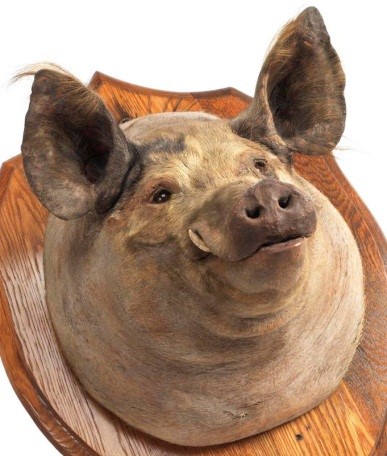
The selection includes items as varied as a mounted German pig’s head and Edith Cavell’s nurse cap. One thing I like about the IWM is that it is very good at driving home individual stories amid the context of immense global suffering and complex geopolitics, meaning you can find numerous, remarkably touching, small personal items in its collections, such as this postcard written on a piece of wood from the Western Front.

Picture 4172

One of the favourite items I came across – or rather, which the incredibly helpful press team at the museum pointed me towards – was this decorated tin, painted by a disabled Belgian soldier in London as part of a fascinating occupational therapy programme.

belgiantin

The fascinating story of California House at 82 Lancaster Gate is recounted here, but in short the hospital was set up in 1914 by an American expat artist and writer called Julie Heyneman, who – like many in London in the early months of the war – was horrified by the casualties caused by the German advance into Belgium. California House became a refuge for injured, displaced Belgian soldiers who were taught languages and sciences.

CH

Those left paralysed or limbless were encouraged to take up activities like painting, book-binding, wood-carving and drawing – anything that required manual dexterity. Objects created, such as the tin above, were then sold to Londoners, with the soldier-creator keeping some of the proceeds. A similar establishment, Kitchener House at Cambridge Gate, Regent’s Park, was set up for British soldiers. California treated around 500 soldiers, some of whom were able to return home after the war and make a living from their new skills. It closed in 1918.

california

Art and protest at the V&A

I’d been looking forward to the Disobedient Objects exhibition at the V&A for quite some time, so perhaps it was inevitable that I’d end up being disappointed. The exhibition looks at the art and design of protest, the way campaigners create new objects to enhance their ability to protest. Most obviously, this involves items like banners or posters, but protesters can be incredibly creative, and the boundaries for this are almost limitless.

The V&A exhibition, though, all felt a little safe. There was very little here that could upset anybody. The protests could all have come from a Guardian-approved list of righteous causes, while the objects were either strung up high out of reach – inflatable cobblestones, old banners – or dwarfed by the surrounding cabinets made of cheap plywood. Not that that there were that many objects: some posters and banners, a decorated car, some bicycle contraption, a phone with a subversive game and a limited selection of T-shirts and button badges. I was particularly disappointed that the Barbie Liberation Organization, a group that placed subversive voiceboxes inside old Barbies, were represented only by a film much like one you can watch on You Tube.

It wasn’t terrible. I liked the shields made to resemble book covers, for instance, and the Suffragette china has historic importance, while the Fuck The Law pendants made by a Black Panther who has spent 35 years in solitary had a rare power. Certainly more so than the rather trite banner, below, that the V&A clearly love so much they’re selling as postcards. I liked the free sheets they were giving away, though, telling people how to make their own disobedient devices.

Bone china with transfers printed in green, bearing the emblem of the Women's Social and Political Union (WSPU)Coral Stoakes, I wish my boyfriend was as dirty as your policies

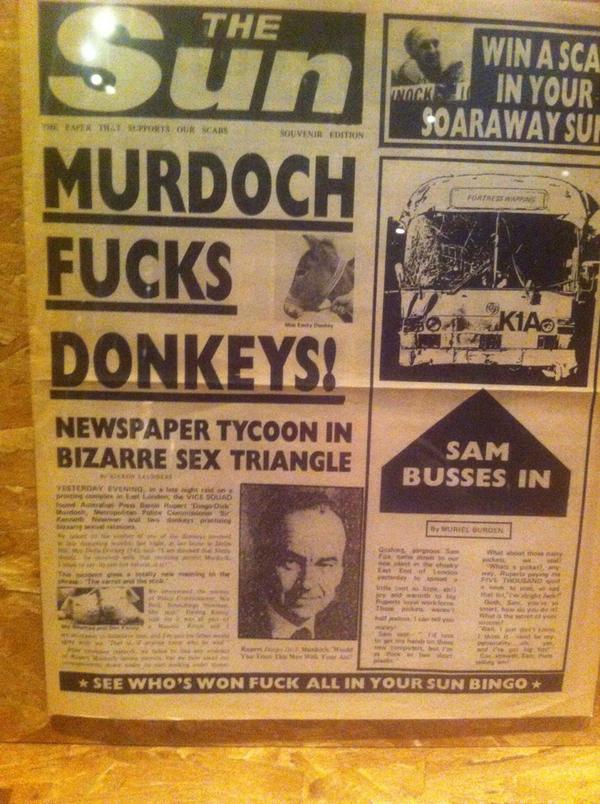
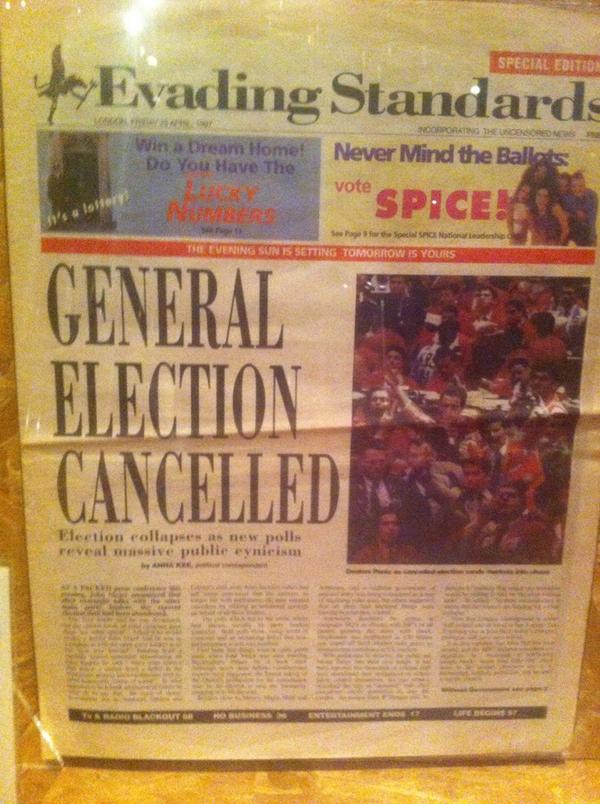
Best of everything, though – and the only stuff that really felt at all dangerous even now – were the mock newspapers created by Reclaim The Streets and Class War. These supported a variety of causes, but were generally just designed to piss off the power of the establishment.

Embedded image permalink

Embedded image permalink

This had a lot in common with the excellent exhibition upstairs in Room 88 called A World To Win: Posters Of Protest And Revolution, where Class War were also represented. This display takes place across two rooms which collectively contained dozens of dramatic posters from more than 100 years of graphic protest across the globe. There are items here from the Weimer Republic, Vietnam, Soviet Russia, Oman, Northern Ireland, Paris 68 and the Iranian Revolution.A lot are designed to shock – dead bodies at My Lai, Fuck The Draft, the incongruity of a poster celebrated the Ayatollah Khomeini placed just across the room from one lauding Angela Davis. The mix worked, and the images were superb.

A few of my favourites are below. but I recommend you check the collection out yourselves. Both this and Disobedient Objects are free.


Poster - So Long as Women are not Free the People are not FreePoster - Never Again! Stop the Nazi NF!

Against Apartheid. Boycott South African Goods (Poster)

Les Beaux-Arts Sont Fermés, Mais L'Art Revolutionaire Est Ne (Poster)

Embedded image permalink

Comics at the British Library

Action 1976-77, by Jack Adrian and Mike White. Action, used with permission from Egmont UK Ltd.

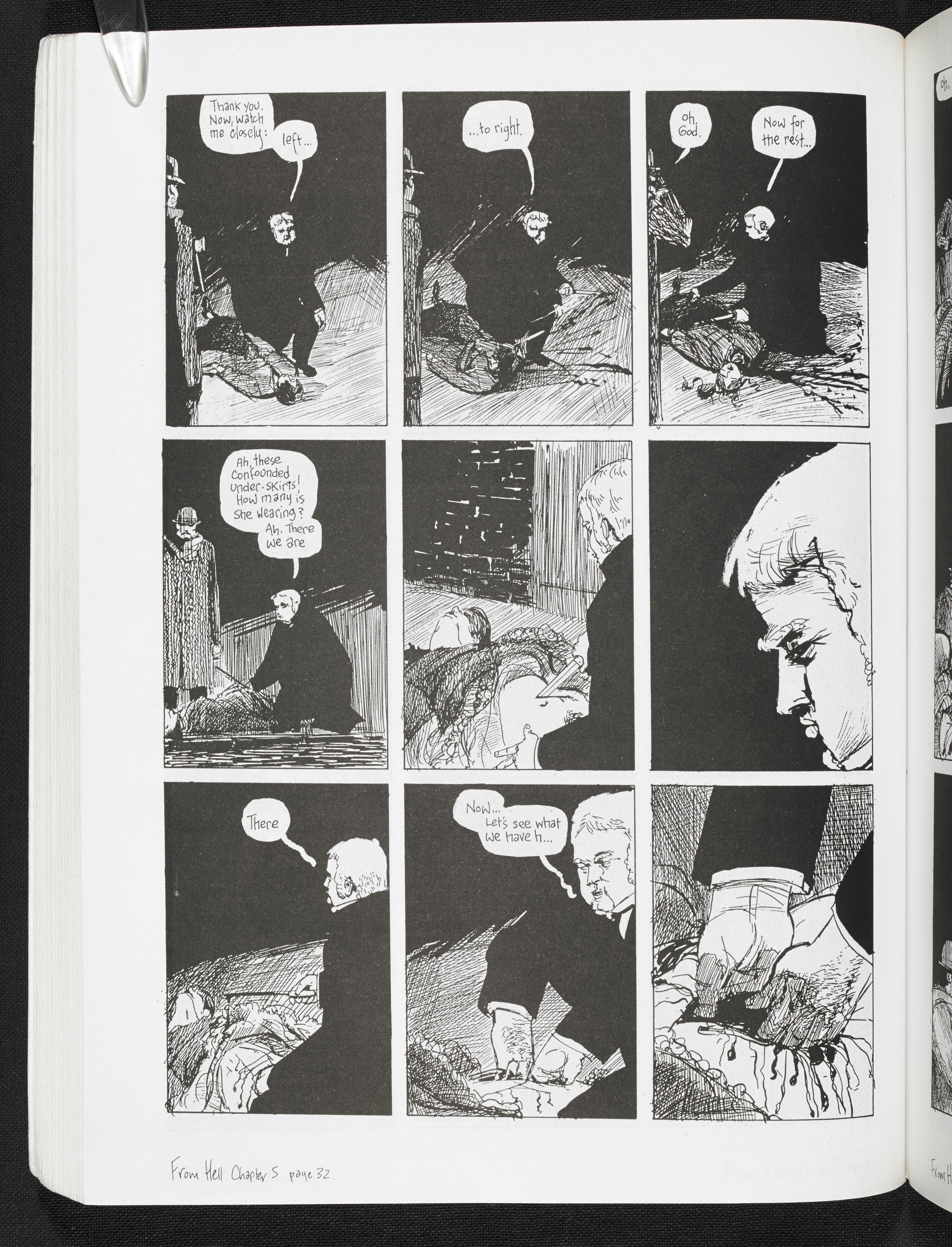
The British Library’s current exhibition, Comics Unmasked: Art And Anarchy In The UK is one of their best for a while. A thematic study of seditious comics in the UK, it covers a lot of ground without over-cramming – a consistent fault of BL exhibitions to date. And while exhibitions devoted to books can get a little frustrating – essentially, you are staring at hundreds of book covers you cannot read – comics work perfectly as you can read a single page and at a glance grasp an awful lot about the concept from the artwork and a couple of panels, such as this from Alan Moore and Eddie Campbell’s London classic From Hell.

From Hell, by Alan Moore & Eddie Campbell published by Knockabout Ltd. 1999 (c) Knockabout

Another plus is that the exhibition never makes excuses for its content matter so we are spared yet another analysis of why comics are for grown-ups. Instead it shows that comics have always been for grown-ups, right back to George Cruikshank (whose work is presented in a tremendous juxtaposition with an OZ strip about Edward Heath). The exhibition also takes a bold step by looking at the historical inspirations for comics writers’ love of magic and fantasy, with exhibits including John Dee’s spell book, the first draft of Crowley’s Diary Of A Drug Fiend and one of his tarot cards. These items are somewhat tenuous, but they are also marvellous and suggest an area a future BL exhibition could explore.

Original painting of Aleister Crowleys tarot card 'The Universe', on loan from The Warburg Institute. Photography (c) Tony Antoniou

There are several items with particular London resonance or import. I was fascinated by Riot, a book written in the immediate aftermath of the 1981 Brixton riot about which I’d love to know more. I also enjoyed the juxtaposition of Batman with Spring-Heeled Jack. There were also several contemporary strips, including Janette Parris’s Arch, about life in Archway, and Katriona Chapman’s contribution to Ink + Paper about renting in modern London. Oh, and there was a comic written by William Burroughs during his London sojourn.

Riot

Riot

Spring-Heeled Jack

Spring-Heeled Jack

IMG_2515

Other countercultural exhibits included a beautifully bound copy of IT, with the cover a reprint of a Situationist comic the publishers had found stuck on their office door (or a lamppost, I forget which) and a comic about the Nasty Tales trial, the IT spin off that was charged with obscenity.

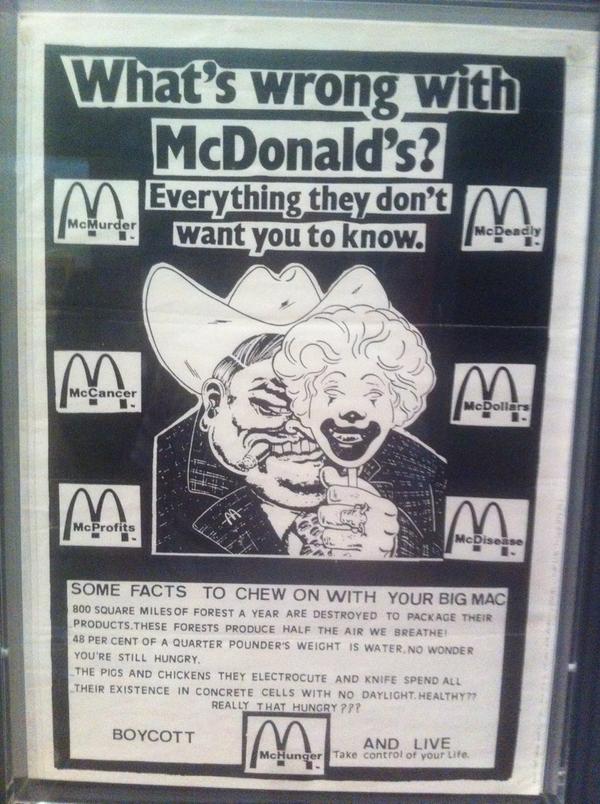
The Trials of Nasty Tales, 1973, cover art (c) Dave Gibbons and Richard AdamsThere’s also loads of stuff on Batman and Superman, with particular reference to the work of Alan Moore and Grant Morrison, while Moore’s Lond0n-set V For Vendetta is a recurring motif. And there’s a decent amount of 2001, including Judge Dredd’s helmet and a never-reprinted Judge Dredd strip about a war between fans of Burger King and fans of McDonald’s – featuring a psychotic Ronald McDonald – that has never been reprinted for fear of a law suit. I also learned that tedious busybody Dan Dare of the Eagle had originally been created as an intergalactic space vicar, which probably explains why I never much liked the man.

Judge Dredd's helmet loaned by DNA Films - producers of 'Dredd'. Photography (c) Tony Antoniou

Now do you want to hear the flaws? There were only three I really noticed. One was the design, which was never quite as weird and psychedelic as I’d have liked (though that may be why I am not an exhibition designer). Another was that there wasn’t enough about the artists, who while by no means neglected were never quite given the attention and praise they deserve. And finally I’d like to have seen more about the development of the grammar and rules of comic book art – how artists have torn up the traditional episodic, thought-and-speech-bubble panel-based framework – which was addressed only superficially towards the end. These though, are little more than quibbles. Go see.

V for Vendetta mask on a manequin in Comics Unmasked. Photography (c) Tony Antoniou