Books and charity in Herne Hill

When I moved to Herne Hill three years ago the one thing I thought it lacked was a bookshop. In Waterloo, we’d had the excellent Crockatt And Powell (now sadly closed) as well as numerous shops selling second-hand and remaindered book. In Herne Hill, all we had was the brilliant but not-for-adults Tales On Moon Lane, a children’s bookshop.

Fast forward a few years and we have not one but two grown-up bookshops. Rejoice! But this bliss for booklovers, has not come without controversy.

The Bookseller has the background, but for those who can’t be bothered to click through, here’s the story. Shortly before Christmas, Herne Hill Books opened near the station. It’s a lovely shop albeit in the smallest space I have ever seen, but with good stock and helpful, friendly stuff – exactly what an independent should be like. It did well before Christmas and was seen as a welcome and overdue addition to the area.

Then, last month, a competitor arrived around the corner on Half Moon Lane. But this was no ordinary competitor, this was a branch of Oxfam Books. I was delighted, the more bookshops the better say I!, but Alastair Kenward at Herne Hill Books was less pleased. I bumped into him last week while he was out walking his dog, and we discussed the problem, which boils down to this.

Oxfam Books are not like any other business. They are a huge company with all the economies of scale that go with that, but they do not pay staff and do not pay for stock, which gives them an even greater advantage over their rivals. And to cap it all, they are a lovely fluffy charity, so you can’t criticise them without being called an evil sod who steals shirts from the backs of starving orphans, as happened to Kenward when he spoke out in The Bookseller.

I have a lot of sympathy with his position, especially given the threats indie booksellers already face from the internet and supermarkets.

So here’s the issue: should Oxfam go about their business like any other company even though we have established they are not actually like any other company?

Should they, as a charity, be beholden to a higher moral principle, one that is perhaps ludicrously idealistic and impractical but which is that they endeavour to only open in areas where there no existing local independent businesses to threaten?

Or does being a charity mean they should exploit every loophole and advantage they can, because at the end of the day all the money they make will theoretically make the world a better place?

I take the middle view, with many caveats, but that won’t stop me using both shops, which in the end do serve slightly different markets- new and second-hand – and together with Tales On Moon Lane make Herne Hill south London’s answer to Hay-on-Wye.

Perhaps all three shops should get together and organise SE24’s first literary festival?
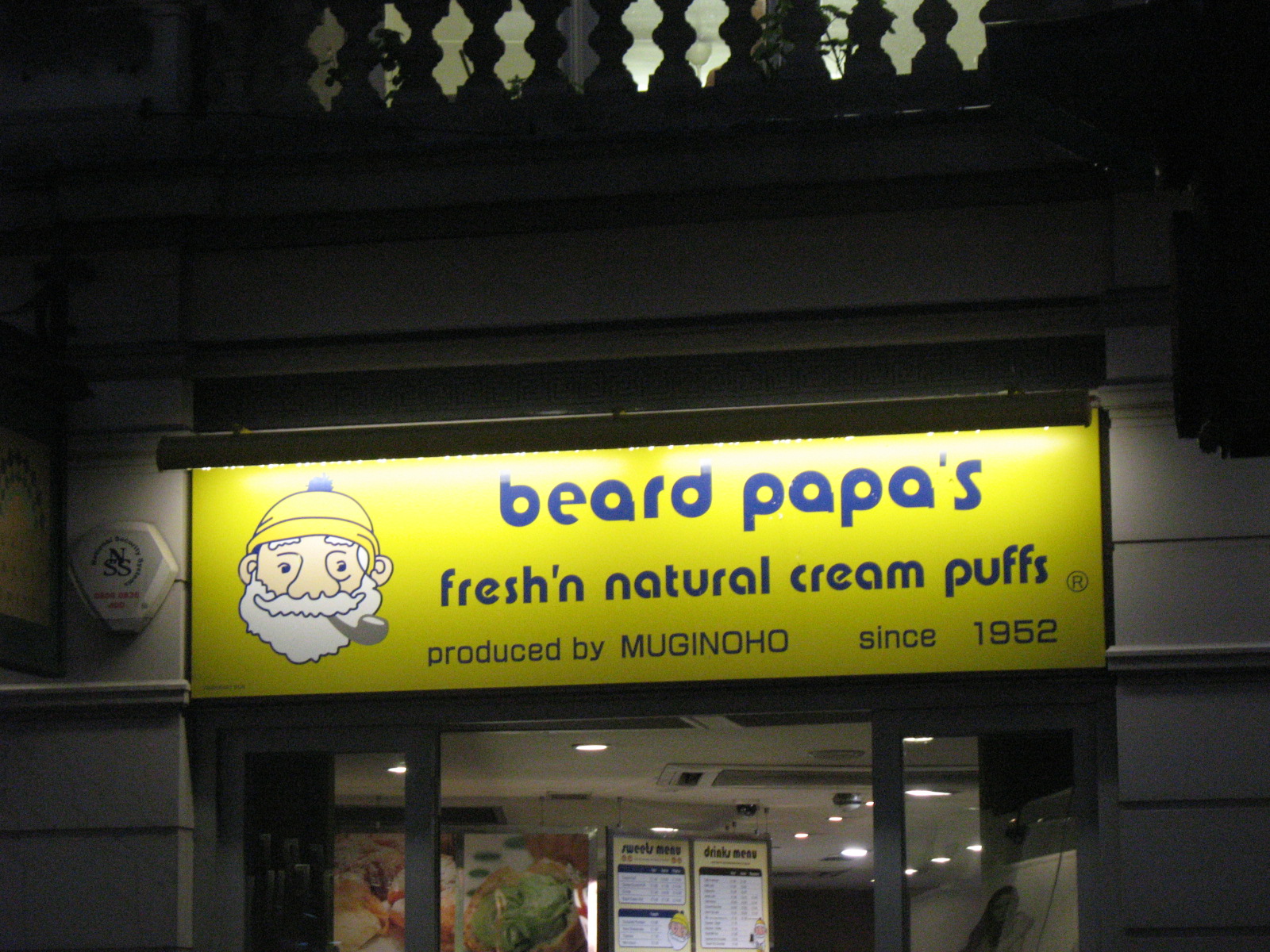
Great Foods of London No 1: Beard Papa’s Cream Puffs

I must have walked past this shop on Oxford Street hundreds if not thousands of times. Yet it’s only now that I ask: who is Beard Papa? What is a cream puff? Why would anybody eat one? Are they really fresh? ‘N natural? Why are they advertised by Ken Bates? How did this shop get here from its original location in a suburban Belgian railway station? Who is Muginoho? And 1952, really?

Passages in books that make reviews unnecessary: No 1

‘Gustav Metzger and John Sharkey were prosecuted under the Obscene Publications Act for organizing Hermann Nitsch’s Abreaktionsspiel No 5 at the St Bride’s Institute in 1966. This consisted of a film showing male genitals controlled by wires and dipped in various liquids projected on an eviscerated lamb carcass used as a screen.’

P154, ‘London Calling: A Countercultural History of London since 1945’ by Barry Miles (Atlantic, £25).

Buy it.

Hare Marsh and Rabbit Marsh: fact and fiction in Bethnal Green, part two

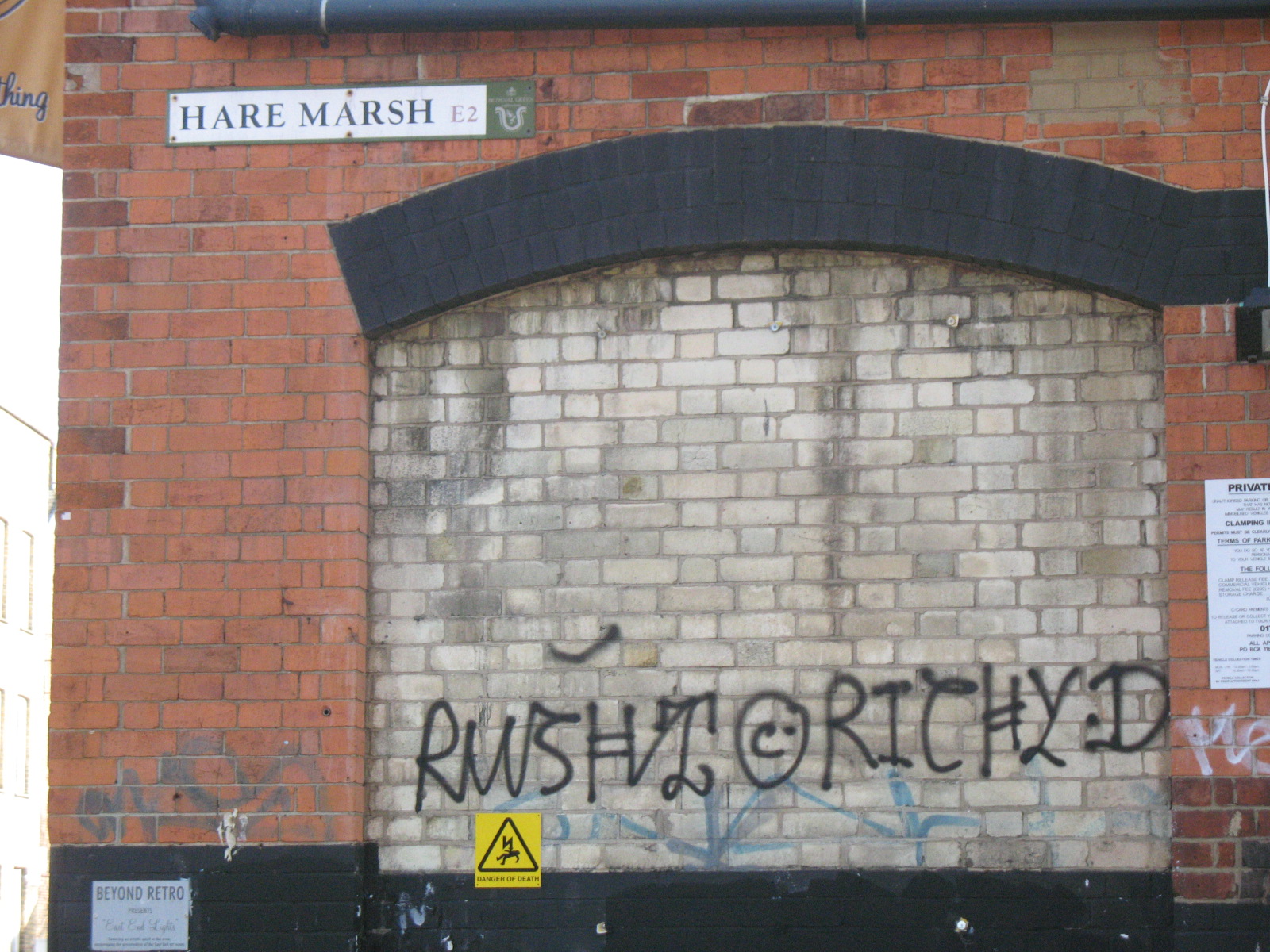
In ‘King Dido’, his 1969 novel about Dido Peach, a docker turned criminal, Alexander Baron set the action in a shabby Bethnal Green alleyway called Rabbit Marsh. This was directly inspired by Baron’s memories of Hare Marsh, a tiny cul-de-sac that still exists near Brick Lane. Here, Baron gives us a careful description of the squalid street.

‘In 1911, although the crowding was less abominable and the old Hogarthian bedlam had vanished, the street was still a slum, the roadway narrow and cobbled, the houses black and decayed, many of the ground floors turned into miserable shops and workshops… the railway lines ran behind high brick walls on an embankment behind Rabbit Marsh.’

It hasn’t changed much, has it?

Although a new block of luxury flats sits on the right-hand side, the left wall is an old workshop, the street is still cobbled and it ends abruptly and noisily at the railway. Dido Peach lived above his mother’s rag shop, so it is perhaps apposite that the building to the left is now a second-hand clothes shop.

Here it is again in 1973, in a brilliant, bleak image by Jonathan Barker on Flickr. Scroll down and Barker also has a great picture of it later that year with Cheshire Street’s atmospheric market in full swing.

Baron writes.

‘Imagine a narrow ravine whose floor consists of worn cobbles running between pavements of uneven flags. Such was Rabbit Marsh. That was all the street was; two narrowly facing rows of such buildings, leaning forward with age, cleft by an alley here or there or pierced at the base by a porch leading into a yard.’

Alexander chose his location carefully – the contrast between the rural idealism of the name and the reality of the space is crucial; the words ‘rabbit’ and ‘marsh’ also have insinuations, of over-breeding and of getting stuck  – but he also cheated a bit. Although we know that Rabbit/Hare Marsh is a short dead-end street in the book it is still large enough to contain several dozen shops and houses (Dido lives at No.34) as well as a pub (the Railway), and we are told it hosts a street market on Sundays. The real Hare Marsh simply isn’t large enough for all of that.

Nowhere in the book does Baron mention Hare Street (as Cheshire Street was then named), the now trendy road that links Hare Marsh to Brick Lane, and my assumption is that the author conflated Hare Marsh and Hare Street to give Rabbit Marsh a little extra space for him to play with than really existed. So Rabbit Marsh is stretched, the residents allowed more room in which to breath.

He did not have to imagine much. Opposite Hare Marsh is a pub that looks a lot like the one described in the book.

This is the Carpenter’s Arms. In another nod to reality, there is real villainy here. Dido Peach ends up becoming a kind of local enforcer, taking protection money from local shopkeepers, and the Carpenter’s was once owned by the Krays. All three Krays – Ron, Reg and Charlie – had their funerals at the nearby St Matthew’s church.

Baron’s descriptions of Hare Marsh are captivating, but they are necessarily evocative. Dido Peach’s universe is tiny, and we have to believe in it. This was true to life. In this era, the average Londoner was born, lived, worked and died within a three-mile circle and Peach’s world is similarly shrivelled. The furthest north he gets is Dalston; south is the impenetrable barrier of the river. His one trip west takes him as far as Liverpool Street station, where he heads for the Tube platform and sits watching the trains coming and going, but never considers getting on board.

In ‘The People Of The Abyss’, Jack London’s 1902 account of the East London poor, he writes of one young soak: ‘From the moment of his birth, all the forces of his environment had tended to harden him, and he viewed his wretched, inevitable future with a callousness and unconcern I could not shake.’

This is also the tragedy of Dido Peach’s life, the limitations of possibility and how poverty destroys self-belief and any means the protagonist has of escape, but it is what makes the book so acute and so realistic. Seek it out, then take the pilgrimage to this tiny and otherwise forgotten dead-end alleyway in E2, where fact and fiction collide in gritty, grotty greatness.

Part one is here.

Hare Marsh and Rabbit Marsh: fact and fiction in Bethnal Green

Last month, a friend bought me ‘King Dido’ by Alexander Baron, a lost London novel written in 1969 that has recently been reprinted. It is set in the East End in 1911 and is about Dido Peach, a taciturn docker who almost against his will and certainly against his intentions becomes a vicious criminal, the boss of his manor. It’s a great book – lively, cynical, witty, violent yet thoughtful; it reminded me of Camus’ ‘The Stranger’, but filtered through a very exacting East End eye.

Off  Cheshire Street, south of where it meets St Matthew’s Road, you will find an easily overlooked dead-end street called Hare Marsh. This is where Baron’s mother grew up and it’s where Baron places Dido’s small and rather pathetic manor, renamed Rabbit Marsh in the book.

Originally, Hare Marsh was the name given to the entire area. It had been built on since before the 1670s, but had long been a slum by the time Baron’s book was set. He writes:

‘Rabbit Marsh acquired its name at the end of the seventeenth century, when it was a green and pleasant country place on the outskirts of London. Artisans came here to picnic, practise their sports and trap the rabbits, which abounded… The industrial revolution had turn the whole eastern quarter into an immense slum which had overrun Bethnal Green. Rabbit Marsh was swallowed up with the rest… ‘

This is why William Cobbett called London ‘the Great Wen’, a monstrous cyst that was consuming the country around it, and you can trace the development and decline of Hare Marsh in maps.

Here you can see it on this enlarged square of John Rocque’s London map of 1746. It’s towards the top of the map in the shape of a little lane coming south off Hare Street, the last turning on the right, and heading into fields. Bucolic, no?

To get some perspective, here’s a link to the whole map; Hare Marsh is in square 1F.

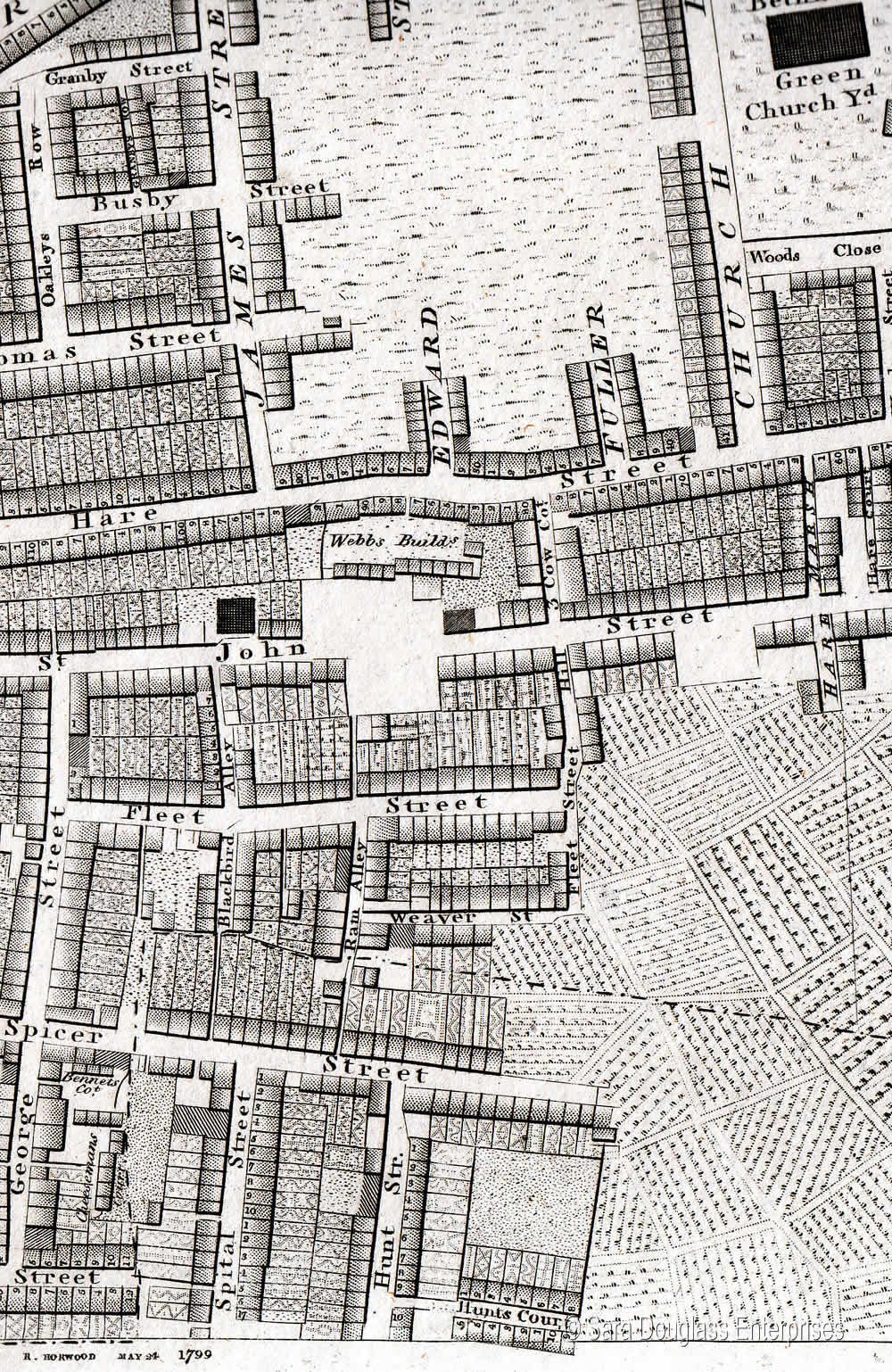
Now, here’s the incredible Horwood map of 1792 – Hare Marsh is on the far right, still an open and pleasant looking space but buildings are starting to encroach.

It hasn’t changed much by the time of the Greenwood map of 1827.

It’s the short street off Hare Street (as Cheshire Street was known until sometime between 1929 and 1945) directly below St Matthew’s Church right next to the big black square.

The square is the workhouse and Hare Marsh also contains almshouses, buildings that show there has been a change in the area’s status. But there’s still no sign of the railway, so even now Hare Marsh opens directly on to fields.

That was soon to change.

Here it is on Booth’s poverty map of 1898, coloured dark and light blue – not quite black (semi-criminal) on Booth’s colour coded scale, but not far off it. Bethnal Green is now entirely built over.

Again it’s the little turning off Hare Street – you can just see it between the ‘r’ and ‘e’ of street. By now, the railway is very much in place, closing in the inhabitants and offering them no escape. This feeling of dead-endness, of a lack of options, of claustrophobia, is central to the atmosphere of Baron’s book and partly explains why he chose this as the location. The railways brought London its greatest devastation since the Great Fire, and this is a great example of the adverse impact it had on individual streets.

Finally, here it is (square aD) in 1922 shortly after the period in which Baron’s book was set (and again in 1952, by which time Hare Street had become Cheshire Street). What had been a quiet lane, open to fields and on the very edge of London, was now a cul-de-sac, hemmed in by a noisy and polluting railway, in the heaving centre of London’s chaotic and overpopulated East End. The perfect location for a novel about poverty and powerlessness.

More on Hare Marsh later.

Many of these maps are available for purchase from the linked websites.

Free London writing talk with Iain Sinclair

Iain Sinclair is one of three writers who will be giving free talks on the subject of ’21st-century London writing’ at the University of Westminster’s Regent Street campus (309 Regent Street, W1B 2UW) starting next month.

Sinclair will be talking on March 4 at 6pm. He will be followed by Toby Litt on March 11 and Rachel Lichtenstein on April 22, both at 6pm. The writers will discuss their work in relation to the city and the opportunities and challenges it offers/poses to contemporary writers.

All talks are free and take place in the Boardroom, but booking is essential. Reserve your seat by emailing Sharon Sinclair at sinclas@wmin.ac.uk to book a place.

Love is…

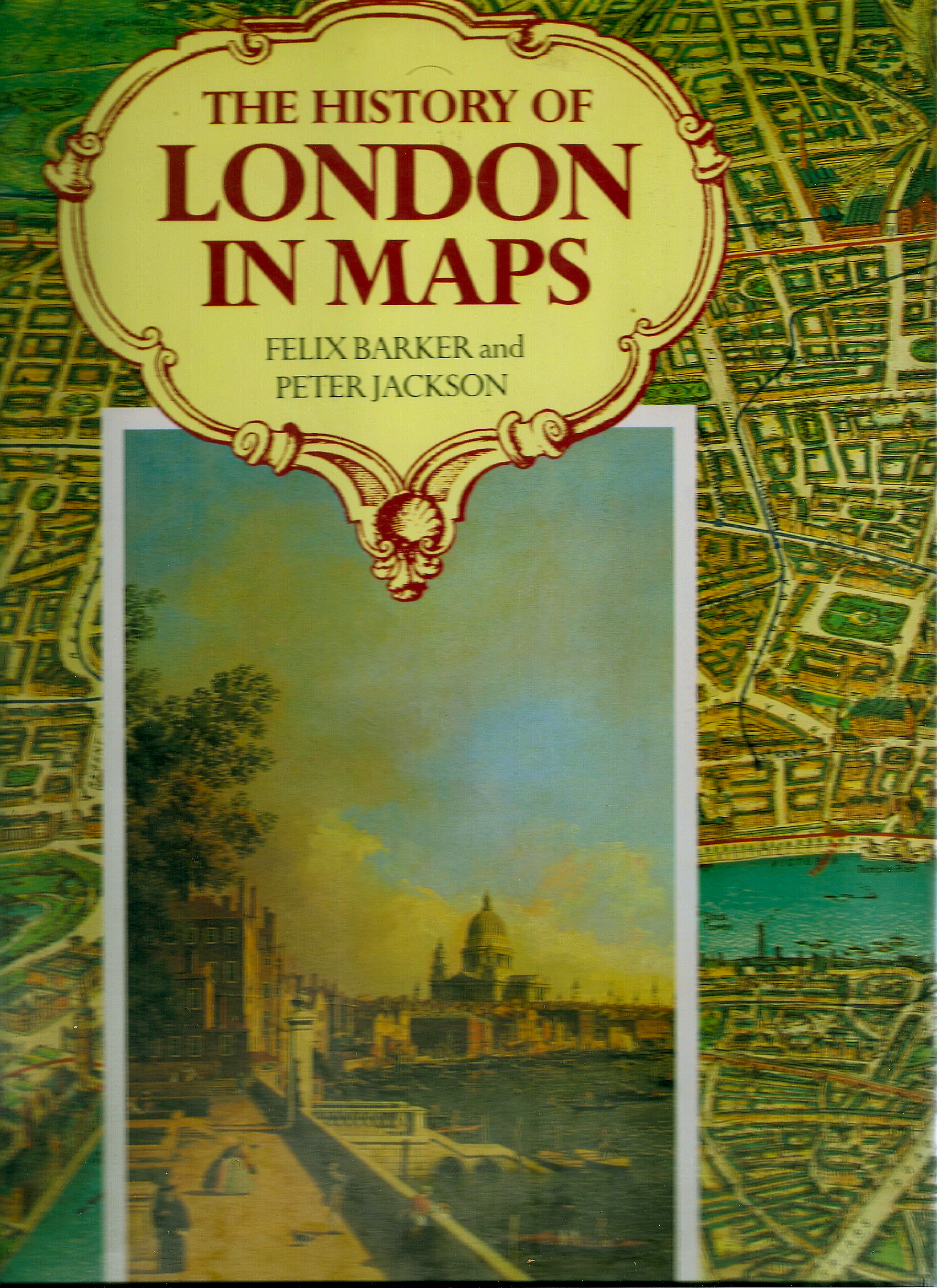
Another book on London maps, for a tenner, from Charing X Road. Yes, I had to get it for myself, but there’s no shame in that. Happy Valentine’s for those so inclined, I’m off to recline with John Rocque

War (museums), what are they good for?

After last week’s trip to the Imperial War Museum North, this week I was at its southern sibling, the original IWM in Lambeth.

I always look forward to a trip to the IWM, not because I have a particular fondness for military memorabilia – although I did have a youthful obsession with the novels of Sven Hassel and still go weak at the knees at any mention of Colditz (it’s not my favourite prisoner of war camp, but I won’t go any further because I’ve probably already put you off with the words ‘favourite prisoner of war camp’) – but because the IWM has a well-deserved reputation, round my house at least, for putting on the best exhibitions in London. Only the Wellcome Collection can compare.

Their latest, opening in time for half-term, is the Ministry of Food about WWII rationing. Not the most promising subject, at least not until placed in the IWM’s capable hands. This, remember, is the museum that managed to make a subject as dull as camouflage not just interesting but fascinating and essential.

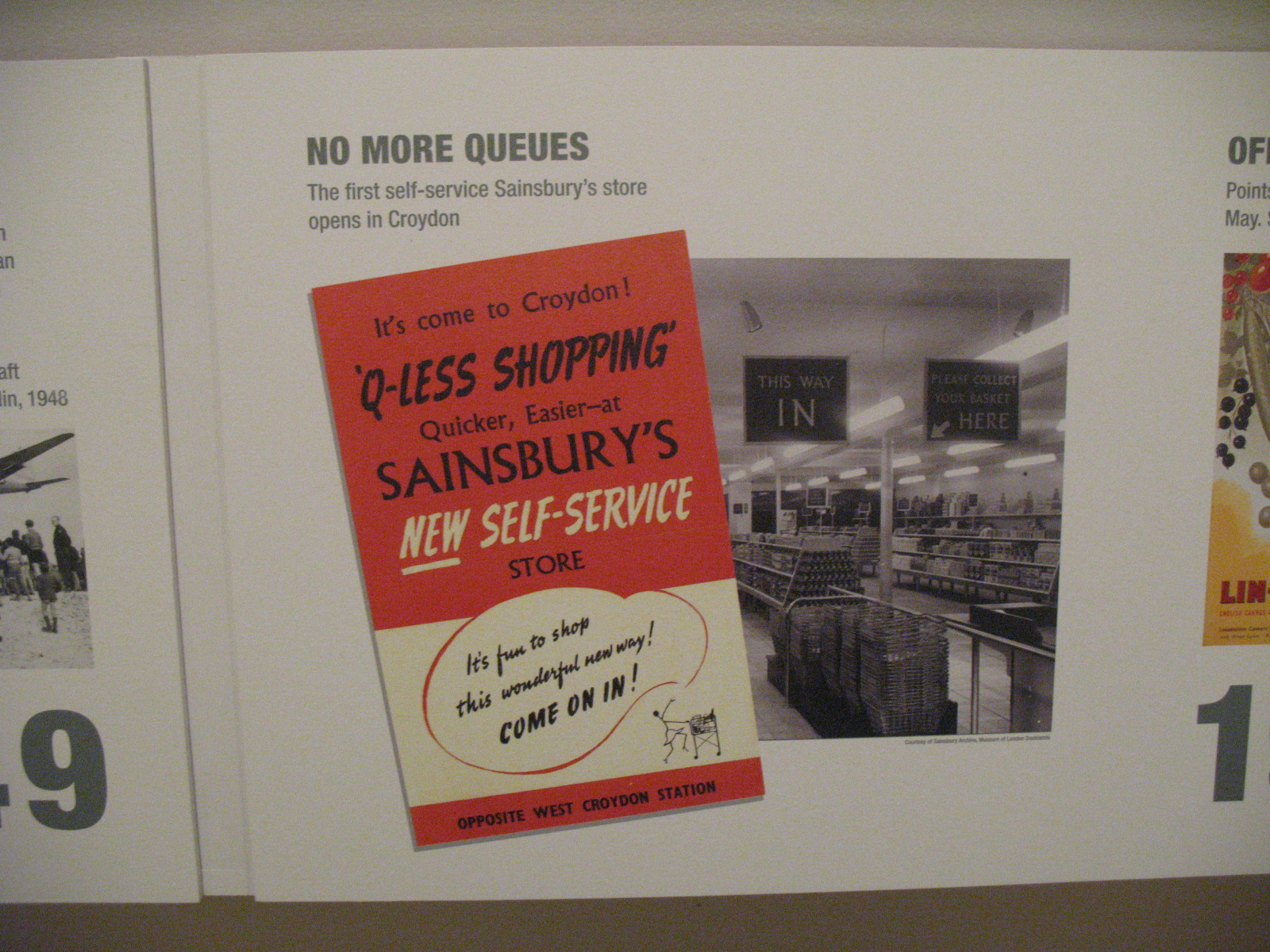
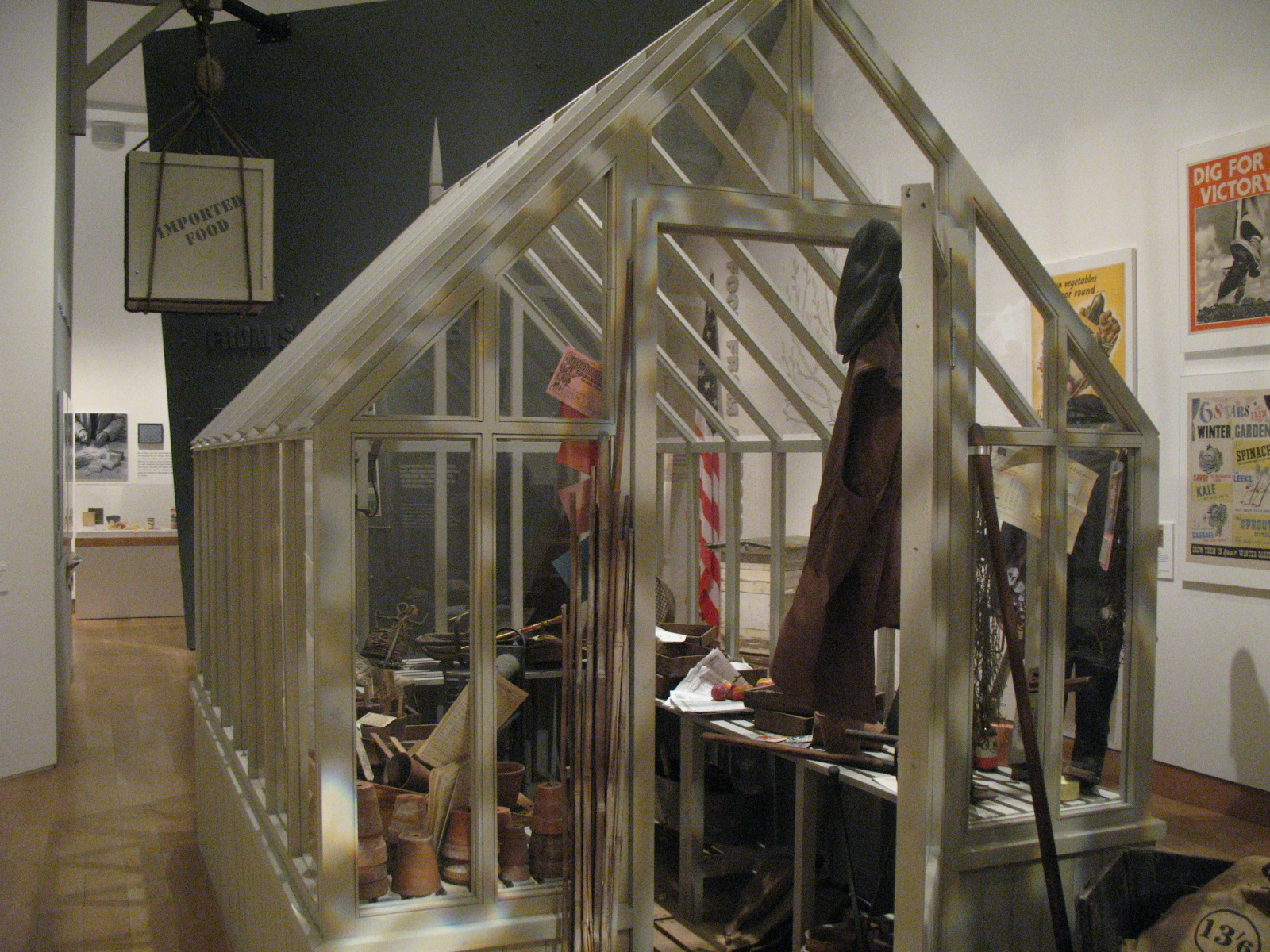
Starting with the land girls and ending with the arrival of Sainsbury’s in Croydon (pictured above), the exhibition looks at just about every aspect of food production during the war. There is a great selection of photos, paintings, posters and props, and also some terrific larger set-pieces such as a full-size greenhouse and a beautifully stocked walk-in wartime shop, a snapshot of which can be seen at the very top. The canteen is also running ration-themed food including mock goose, made with butter and marmite, although there is real food if that sounds a bit much.

It was educational, interesting, accessible, intelligent and fun – all those things an exhibition should be, but so often aren’t. And by that, I include most of those yawnsome chin-stroking ‘blockbuster’ exhibitions at the major museums that always get rave reviews even though everybody you talk to admits they found them a little dull.

No chance of that here. Look, it’s a greenhouse!

London’s museums face a tough time over the next couple of years, with severe budget cuts expected. At more than one museum, staff members have told me that they are expecting to take a hit whoever wins the general election ‘because they aren’t schools or hospitals’. Perhaps that’s as it should be and museums shouldn’t expect to be subsidised, but temporary exhibitions could easily suffer. They are expensive to mount and the bean-counters can be frustratingly short-sighted when it comes to the concept of long-term added value.

So go see Ministry of Food because a) it’s the right thing to do; b) it’s really very good indeed; c) you’ll discover a lovable character called ‘Potato Pete’. I wonder if he likes crisps?

Don McCullin’s London

Actual paid journalism alert, with this review I did for the Independent On Sunday about the Don McCullin exhibition at the Imperial War Museum North. McCullin is probably the world’s greatest photographer.

Although it takes place in Manchester and only comes to the London branch of the IWM next year, Londoners should check it out if they get a chance as there are a number of great London photographs featured. McCullin was born in Finsbury Park and says in the accompanying book, ‘Shaped By War’ ‘like all my generation in London, I am a product of Hitler. I was born in the thirties and bombed in the forties.’ 

McCullin  is an engaging writer. Finsbury Park, we are told, ‘oozed poverty, bigotry and all kinds of hatred and violence. It was preparing me for something I didn’t know was coming.’

His breakthrough photograph was this evocative London image. It shows seven of McCullin’s schoolfriends, moody young thugs from the Seven Sisters Road posing in a bombed-out house opposite the Rainbow in Finsbury Park. One of them later killed a policeman. McCullin sold the snap to the Observer and his career began.

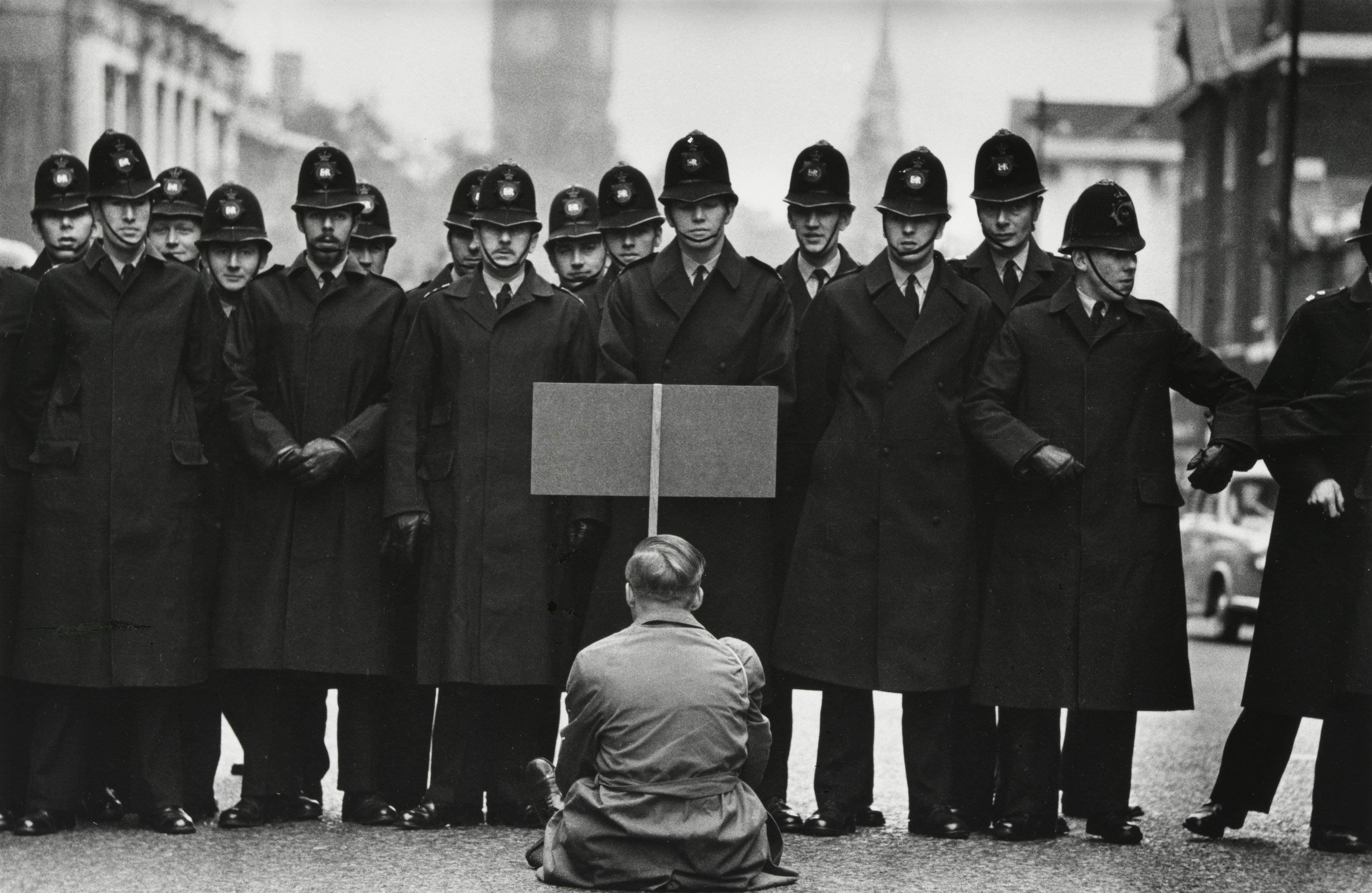
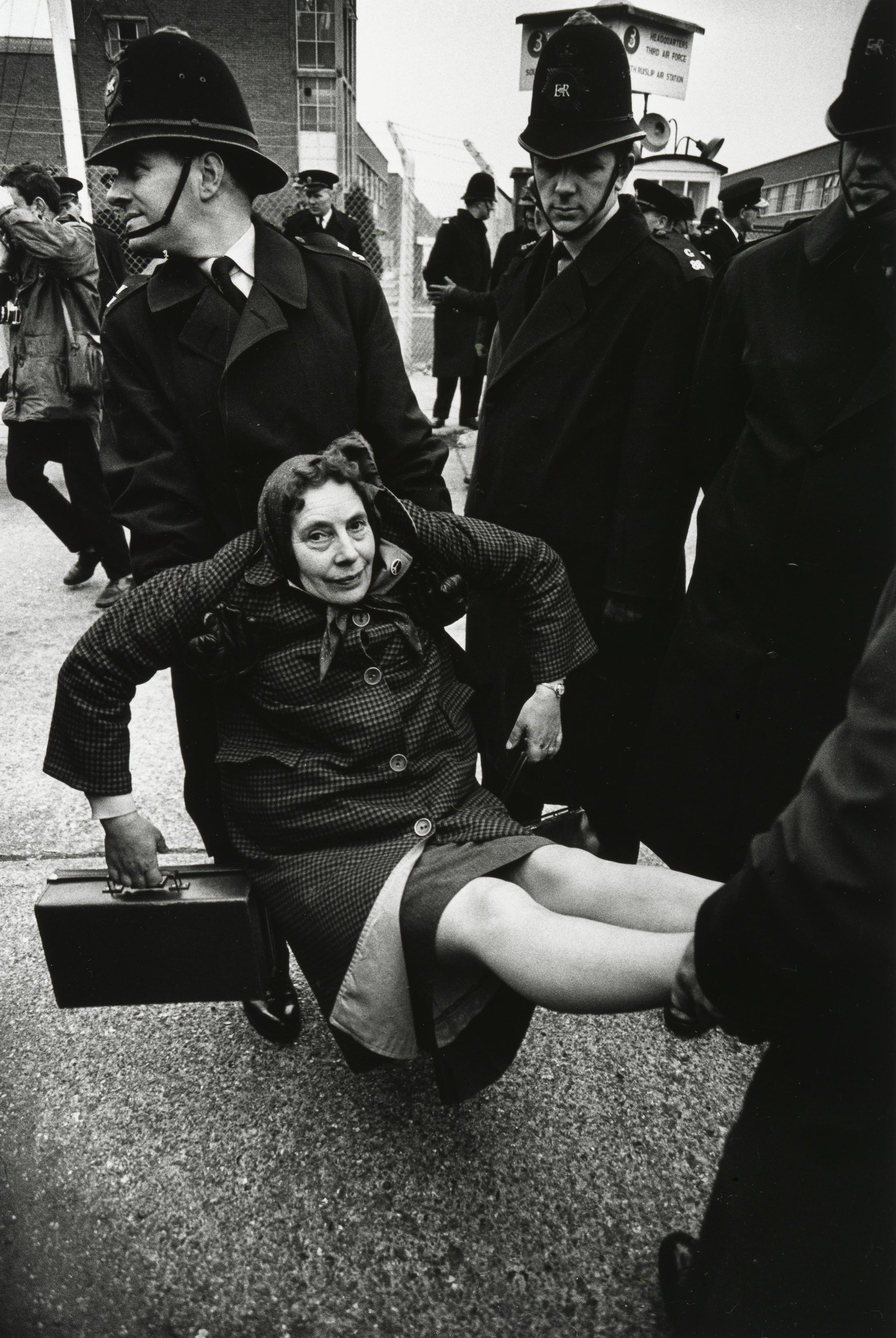
Although war became his arena, McCullin also took extraordinary domestic photographs. Here, those two worlds collide with two photographs of anti-war demonstrations in London from the 1960s.

Also on display is a brilliant photo of a newly arrived West Indian, dapper and outwardly confident, in north London from 1958. At the exhibition, you can compare this with a picture of two assertive young Asian Londoners in Brick Lane taken in 2007. So much change, but so much stays the same.

Understandably, there is nothing in the exhibition about McCullin’s work with the London homeless in 1989. On this subject, there is this remarkable image by McCullin taken in Spitafields in the 1960s. It’s like a still from ‘The London Nobody Knows’ crossed with a painting by Francis Bacon.

Why does everybody hate Tottenham? Understanding London football rivalries

London's football territories as seen by 'The Soccer Tribe'


The short answer is that you can’t . London’s football rivalries are as impenetrable as Jamie Carragher’s accent. They do not obey the strict rules of geography, they shift over time as relegations dent ambition or minor grudges get blown out of shape, and even at the same club, different supporters will have different rivals, some reflecting age, others temperament. 

Take Chelsea. Chelsea are based in south-west London, just a mile away from Fulham – the two clubs share a postcode and after many years apart have now shared a division for the best part of a decade. But while Fulham hate Chelsea, I have never met a Chelsea fan who considers Fulham their rivals. How can they? Fulham are lovely, probably the cutest club in England. Every time I look at Roy Hodgson, I want to tickle him. 

Most Chelsea fans instead plump for Tottenham, who brood far way in north-east London. The reasons for this rivalry are, like William Brown’s feud with Hubert Lane, lost to history but may have something to do with a) Jimmy Greaves; b) the 1967 FA Cup final; c) anti-semitism

It doesn’t end there, though. 

Other Chelsea fans, those with loftier ambitions, choose to hate Arsenal, the biggest and most successful club in London by far. A third batch, the type with scary faces and nicknames like ‘Doom’, go for West Ham, that den of resentment and blown dreams along the District Line, for reasons that have much to do with certain off-pitch incidents that have taken place over the years in pubs and stations all over London. But also because Chelsea and West Ham share certain psychological frailties that bigger clubs like Spurs and Arsenal do not understand. 

Most  London clubs have similarly confused rivalries. Arsenal are the most straightforward – they hate Spurs. And Spurs hate them, although some Spurs fans have a marked dislike for Chelsea, who have all but usurped their place as the second biggest club in London and aren’t shy to remind them of it. 

Rounding off London’s distinctive strain of anti-Spurs feeling, West Ham also hate Tottenham – like Chelsea, they know Arsenal are untouchable at the top of the London pyramid, but feel Spurs are gettable. But West Ham fans also hate Chelsea and Millwall. Now Millwall hate West Ham, but Charlton hate Millwall. Charlton also hate Crystal Palace, who hate Brighton, which really screws things up. Nobody really knows who Leyton Orient hate  – although Wiki says Southend. 

You might think that’s already quite enough hate for one post – in fact, you might even be wondering why we should discuss hate at all – but it gets even more confusing over in West London. Fulham’s Fayed-inspired rise through the divisions has seen them mount a stepladder of hate – first Brentford, then QPR, now Chelsea. QPR have made a similar trip in the opposite direction, but while they refuse to get involved in any sort of rivalry with Brentford, they haven’t got much choice because nobody else will pay them the slightest bit of attention. 

And we haven’t even started on non-league clubs yet. 

It’s a soap opera, isn’t it? 

Why all the hate? Well, most football fans are aware that their chosen club is unlikely to win anything in any given season, so if they ‘unsupport’ (a term conceived by When Saturday Comes many years ago) another club, preferably a local rival, they can take vicarious satisfaction when they lose. It’s a form of hedge betting and means that even though Spurs haven’t won anything substantial for decades and regularly get beaten by Arsenal, they can take tremendous pleasure in each and every defeat experienced by their bigger rivals. 

Personally, I hate hate

And Spurs.