My review of the Wellcome Collection‘s new exhibition Skin is in the New Statesman this week. Read it here.
Cunningly, I snuck the key phrase into the very opening paragraph:
‘Generally, museums put on exhibitions so that people can learn about things they don’t already know. The Wellcome Collection does almost the reverse: it prefers to start with something that is familiar – in this case, skin – and make it unfamiliar.’
Skin is another very good exhibition from the Wellcome, who stand almost unique among British galleries and museums as a body that is so rich they have no requirement to go cap-in-hand to the public purse or to private sponsors, and consequently have no need or desire to dumb down or exhibit tedious ‘blockbusters’ (I’m looking at you, British Museum) in a bid to pull a cash-and-existence-justifying audience through the door.
Few establishments are so fortunate and few curators would know what to do with themselves if given this sort of creative and intellectual freedom.
Arts funding is going to take a proper kicking over the next few years. The Wellcome Collection will provide rare shelter from the storm, and one with free wi-fi, a bookshop and Peyton & Byrne cakes. What more can you ask for?
Freelance journalist Peter Watts is looking for an enthusiastic and motivated intern to assist with finding stories for magazines such as Uncut, Prospect, New Statesman and many – but not that many – more.The position is based in a south London coal cellar and you must be able to commit for six weeks or you can just piss right off you time-wasting loser.
Tasks
Coming up with features ideas: scouring newspapers and online every day for great potential features to steal
Chasing stories, interviewing, transcribing, writing and taking cheques to the bank every week
Sending commissioning editors obsequious emails containing poorly conceived feature pitches and then ranting impotently when they fail to respond
Networking (ie having coffee with John O’Connell, where you will both gossip like old women about other journalists while trying to avoid paying the bill)
Experiencing general low-level resentment every time you see a peer’s byline in a newspaper or magazine
Pretending to be pleased for them
Finally mastering practice/practise and effect/affect
General admin duties (milk no sugar)
Liaising with girlfriend and daughter
Watering the potatoes
Monitoring Twitter, hoping this will be the day when @caitlinmoran finally retweets something of yours that is witty and pithy
Or failing that, @indiaknight
Look, even @gilescoren will do at a pinch
Coming up with witty and pithy Tweets
Taking crap photographs for self-indulgent personal blog
Getting three stars on tricky 5-7 level of Angry Birds
Experience required
Preferably a background in journalism or slavery. Otherwise, anybody lacking self-dignity and imbued with a lacerating self-loathing will do fine. Any applicant related to somebody already working in the media will obviously receive preferential treatment.
You need to have a hunger for wiping other people’s arses. We also need you to be highly organised, motivated, determined and really, really desperate – for you, no boot is too shit-encrusted to lick if there’s half a chance you might get another unpaid intern job in a dying industry at the end of it.
This position may give you herpes. You will leave this role without a soul or pride, making it a great position for anyone wanting to have a successful career as a freelance journalist. Previous experience in real life is probably not ideal.
Please submit an updated CV and a covering letter explaining why you’d be perfect to do my dirty work for me. This is initially a temporary unpaid position although for the right candidate there is the definite potential for it becoming a permanent unpaid position.
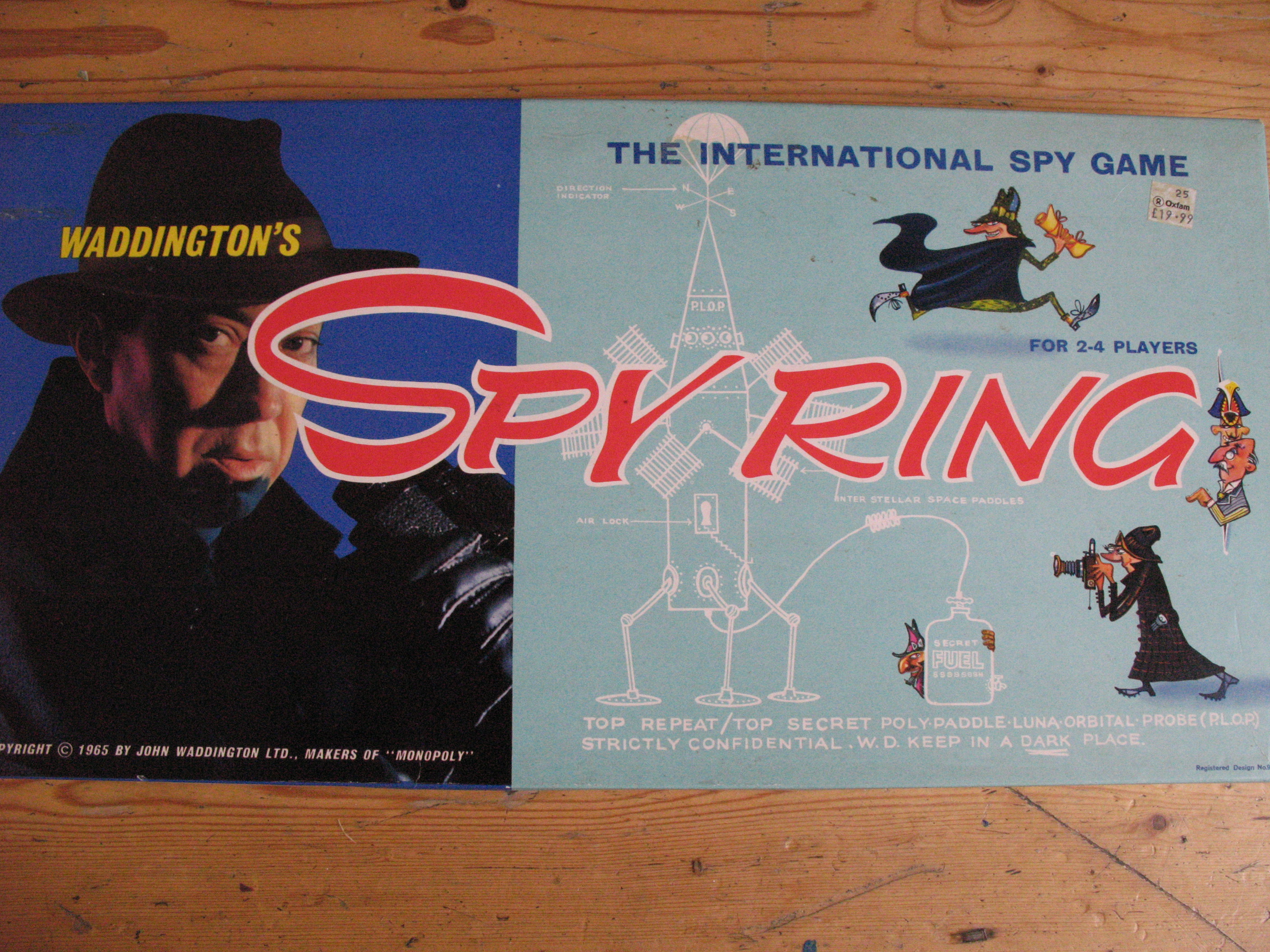
Spies have been in the news recently which got me thinking about my brief dalliance with the half-life of espionage.
I was asked to go undercover by the Sunday Times in the mid-90s. and this assignment opened my eyes as to how journalism really works, for good and ill.
I was 19 and working on the sports desk as a dogsbody, tea-maker, fact-checker and column-writer. The call went up from the sweaty suits in the newsroom – they needed volunteers who were under 25 and hadn’t been to university. My sports editor put me forward, so for the first time since the Lesbian Avengers broke into the building and chained themselves to the desks, I trundled into the office where the serious journalists worked.
The story went thus: the ST editor had been having dinner with an old friend, who told him that some universities – mostly former polys – made it far too easy for students to get their degrees. Some of the tutors practically wrote the essays and answered all the questions in exams. They did this, so I was told, to increase the pass rate, which meant the universities got more funding.
The editor thought it would be a whizzbang idea if he sent a couple of journalists undercover, to enrol as students at former polys and reveal this nefarious business to our readers. And on this flimsy basis, I was to be given a large weekly stipend, leave of absence from the sports desk and an unlimited supply of pink chits – the blank taxi receipts that were the most highly valued currency in the building.
So I did it. I went to the University of North London on Holloway Road and enrolled in the only course they had left: Irish Studies. I was comfortable with this. I had recently left a Catholic school, so I’d been surrounded by plastic paddies for the best part of a decade, drank Guinness and could name the Republic of Ireland first XI without flinching. I came up with a cover story about my dad being from Ballymena but never talking about his Irish heritage, and winged it from there. They probably smelled a rat straight away – nobody was shy of talking about their Irish background in the mid-90s, when the craic and Big Jack were all the rage.
My brief was to get close to the students and ask them leading questions about the nature of the tutoring they received, so I went to lectures and then hung out with my fellow students in pubs, drinking on expenses and getting free cabs home. It was quite the thing. Who wouldn’t relish the chance to get to play at spies?
I quickly discovered three things.
I wasn’t a very good spy. I kept forgetting to record conversations or got drunk and couldn’t remember what had been discussed. I couldn’t think of any leading questions and regularly forgot my cover story.
I wasn’t a very good student. Studying bored me senseless and I couldn’t write the sort of essays required by universities.
This wasn’t a very good story, and even if it had been I didn’t want to write it. My fellow students were all older than me and from a far more disadvantaged background. They were genuinely enthused about this opportunity to receive further education and many of them had left secure jobs so they could do so. I had absolutely no desire to stitch them up at the bequest of the public scho0l and Oxbridge educated bigwigs back in Wapping, not for all the pink chits in London.
Like a double agent, I strung both groups along for a few weeks – the students, cos I it was fun; the journalists, because my access to taxi receipts had made me a minor legend among the peewees in the corridors of Wapping. But the whole thing was making me increasingly uncomfortable – having to lie to everybody – and I was really very bored of studying, so I wrote a heroically non-committal wrap-up memo to the news editor and then got the sports editor to insist I was recalled.
Another journalist had enrolled at a different University and he stuck it out. After he’d done a full year, he ended up writing a SENSATIONAL two page expose that amounted to a whole lot of nothing, as he freely admitted.
And what did I learn from all this? A few things, all chastening. One was that newspapers made decisions about stories based on whims or chance encounters, and would follow these through to the bitter end even when it was clear there was nothing to write about, and that I wasn’t very good at doing this. Even if it had been a good story, I wasn’t tenacious enough to exploit it.
The other was that I would never be a successful spy.
Seeing Mesut Ozil dismantle England so deliciously yesterday reminded me of one of the first times I felt those confusing stirrings of desire towards another man. His name was Georghe Hagi, and after watching this in 1994, I was smitten.
Although I am lucky enough to live just a short belly flop from Brockwell Lido, it will be a cold day in Cairo before you ever see me in the water.
Some people adore swimming. They embrace the invigorating iciness, relish the chance to strip down to their Speedos and take on the chill of the British outdoor pool, defying both cold and dreaded shrinkage (‘like a frightened turtle’) in search of their daily dip.
I am not one of those people.
I have never liked swimming. I don’t like getting wet, I don’t like changing rooms, I don’t like being cold and damp, I don’t like shrinkage. I know that after the initial ice-induced paralysis has worn off the swimming pool can be almost pleasant, but I don’t like the actual mechanics of swimming either, the hard work, the splashing, the water in your mouth, eyes and nose, the getting overtaken by grannies, the knowledge you are wallowing in urine, saliva and chlorine.
Slather me in seal fat and offer me the Queen, and I still won’t go near the shallow end even on the hottest day of the year. What’s the point? You can’t read in a swimming pool.
So, it is perhaps rather ironic that one of my favourite London songs is about a lido. ‘Springboard’ by The Arlenes featured on their 2002 debut album ‘Stuck On Love’. ‘Gospel Oak Lido is the place to be,’ sings Big Steve Arlene in this brisk, wide-eyed ode to swimming and love at a London lido. The sound quality isn’t great, but give it a listen here.
The Arlenes were that rare beast, a decent English country and western band. English artists have always struggled with authentic c&w. There have been some greatalbums and songs, but these are usually pastiches or neo-homages. There have been some interesting reinventions from the likes of the Mekons. But rarely have a British band truly embraced country music in all its authentic glory, creating a noticeably British take on an American art form. (A nod here to The Rockingbirds, who also got it.)
Perhaps that’s because country is too sentimental for British tastes, or maybe it’s because it’s not something we Brits grow up with – how often do you hear a country song on British radio (similarly, how many decent British Westerns have you seen)? But while imported sounds like blues or jazz are swiftly assimilated into the British musical tradition, country has always been the unwanted runt, something to snigger at, an American tradition we don’t understand like eating grits, going to church and being optimistic. Even country artists like Johnny Cash are celebrated for their rock more than their country, while the country influences behind Elvis Presley are rarely grasped on these shores.
The Arlenes, who were a half-English, half-American duo, genuinely adored country, and ‘Springboard’ oozes the sort of sunny outlook that David Hockney had to leave Yorkshire and move to California to find. It is a difficult thing to pull off in London, where the sun doesn’t shine all that often, nobody knows the words to ‘Pancho and Lefty’ and some miserable sods won’t go near a swimming pool, but they managed it.
I’m not sure where they are now. Their second album ‘Going To California’ – lacked the panache of their debut and the band disappeared, but I thank them for ‘Stuck On Love’, which I adore and listen to frequently.
So put together ‘A Bigger Splash’ and ‘Springboard’ and you go some way towards convincing me of the aesthetics merits of the outdoor pool, even if you can be sure I’m not going to dip a toe in the water.
See you at the lido. I’m the one who isn’t getting wet.
At the end of the post I said that this prolific writer of hate mail, who had rather wittily rechristened the magazine Slime Out, had stopped sending his bile-laden missives to Tottenham Court Road.
Not so, it seems. A former colleague recently contacted me to say:
‘I didn’t want to leave a comment because I’m genuinely afraid he might read it and target me. But I can tell you that he didn’t stop writing the postcards. We have received three or four in the last year. They’re not as personally offensive about individual staff any more, but still mental. I imagine him to look like Buffalo Bill from ‘Silence Of The Lambs’.’
So he’s still out there, reading a magazine he despises and making sure they know it. Somehow, I find this reassuring, and I’m sure these days he has plenty to write about.
This might also be a good time to mention the best ‘hate’ letter I received. This was before I was neutered, when I still prided myself on writing vicious, witty, scathing criticism of anything that came into my sights.
It asked simply: ‘Peter Watts. Is he a short man?’
‘Soccer is a sport perfectly designed to reinforce a tragic view of the universe, because basically it is a long series of frustrations leading up to near certain heartbreak.’
I have been in contact with Chambers since 2009, when he first sent me a teasing business card in the post to promote his idea of turning old underground stations into tourist attractions. One thing that has always impressed me about Chambers is his determination to succeed despite the tremendous obstacles in his way (basically, TfL are incredibly reluctant to open old stations to anyone, let alone to give an outsider access to such prime assets).
I interviewed Chambers last month for a feature that runs in the June edition of Metropolitan, the new (excellent) magazine for Eurostar passengers. He told me then that his motto is ‘proving things can work by doing them without asking’ and his decision to bushwhack Boris Johnson and Anthony Browne at a conference for small businesses is a perfect illustration of how he goes about his work. No wonder TfL are ruffled.
Chambers got his idea on Valentine’s Day 2009, when he was looking for something to do with his wife that was ‘more exciting that just sitting in a restaurant with loads of other couples. I wanted an adventure, something like a first date, and I thought there must be loads of secret doors all over London just waiting to be opened. So I started researching and discovered the abandoned stations.’
He has identified 26 sites he wants to pursue with a view to opening each one as a venue with three revenue streams – as a museum, as storage and as a space for entertaining. This is astonishingly ambitious and he is so far being stymied by TfL, so he is trying to circumvent them by purchasing the deep-level shelter at Chancery Lane (pictured above) – which I wrote about after visiting in 2008. This would be a terrific venue, as it has a fascinating back story, is wonderfully evocative and lies at the heart of a network of underground spaces.
I hope he succeeds. Londoners have a tremendous thirst for the mysterious parts of the city that lie beneath their feet – the weekend opening of Brunel’s Thames Tunnel earlier this year proved to be extraordinarily popular – and a dedicated museum to Subterranean London would be possibly the most exciting to happen in this city ever (although I may be biased in this view).
Chambers is determined, as Boris and Browne are soon to discover, and I would never bet against him. ‘I’m not going to give up,’ he told me. ‘There’s no stopping me. And as soon as people realise that they seem to come on board pretty quickly.’
Update There is some discussion about the feasibility of Chambers’s plan at Annie Mole‘s blog.



 The Great Wen