My London Library: No 2 – London’s Bridges

  • Title London’s Bridges by Peter Matthews (2008, Shire).
  • Cost Free.
  • Bought from Author.
  • Genre Straight history.

The endearingly honest opening line says all you need to know about this historical overview of London’s crossing points. ‘In 1938,’ Matthews reports, ‘an article in the Times observed that: ‘The people of London have a reputation for taking no interest in their bridges’.’

I bet the publisher loved reading that.

It’s a lovely book though, wordy but not too long, nicely illustrated and ruthlessly factual. Bonus points for including non-road bridges such as Grosvenor Railway Bridge.

There’s some great trivia to be found: ‘In 1873, the Royal Humane Society set up a 24-hour ‘receiving host’ by the northern end of Waterloo Bridge, manned by a doctor who would attempt to revive any suicide victims brought to him, and in 1875 alone 21 people were saved by this method’.

The author, Peter Matthews is a proper London nerd and runs the bookshop at the Museum of London, so you can be fairly sure you’ll be able to pick up a copy there.

Verdict Solid reference tome.

My London Library: No 1 – Private Eye On London

I own a lot of books about London, so I thought I’d share them with you in no particular order.

  • Title Private Eye On London by Christopher Booker, Willie Rushton and Richard Ingrams (1962, Weidenfeld and Nicolson).
  • Cost £4.
  • Bought from The Cartoon Museum, Bloomsbury.
  • Genre Humour.

One of – if not the – first special annual produced by the Private Eye team followed the adventures of Gnittie, a ‘little man’ with a ‘vague longing to be rich and famous’, who heads to London to fulfill his dreams.

There he discovers that ‘nobody who is rich and powerful and famous lives South of Old Father Thames’, visits Whitehall, Trafalgar Square and Buckingham Palace, discovers the prisons are full of ‘parking offenders and demonstrators’ and tries unsuccessfully to take a No 11 bus to Fleet Street.

Best bit The Estate Agent.

Verdict Even in London, most things never change.

Jimi Hendrix in the suburbs

Jimi Hendrix’s London flat overlooking Mayfair’s Brook Street is opening to the public tomorrow (August 25th) for the Hendrix In Britain exhibition. The exhibition – which is being mounted by the Handel House Museum (Hendrix and Handel were temporally dislocated neighbours) – is a cosy affair, amounting to a costume, a guitar, some great photos, handwritten lyric sheets, posters (‘The Fabulous Walker Brothers/Cat Stevens/Jimi Hendrix/Englebert Humperdinck’), notes, including directions to the Isle of Wight for the famous festival, and his death certificate (’cause of death: vomit’).

Hendrix’s actual flat is now the Handel House Museum offices, but they will be moving out for two weeks in September so the public can have tours of the quite spacious flat Hendrix lived in with his girlfriend Kathy Etchingham. The museum hopes to open this flat to the public permanently when they manage to raise sufficient funding and get all the hash burns out of the carpets.

My favourite part of the exhibition was the giant map of Hendrix’s London that takes up one wall, with stickers donating key venues, hotels and apartments. Opposite is a list of the major concerts Hendrix played during his three years in London before his death. I was pleased to note that alongside the more famous clubs – Scotch of St James, the Marquee, the Astoria and the Royal Albert Hall – Hendrix found time to play the suburbs, including Bromley Court Hotel, Ricky Tick in Hounslow, Upper Cut in Forest Gate, the Ram Jam Club on Brixton Road, Granada Theatre in Tooting, Star Hotel in Croydon, Bluesville ’67 on Green Lanes,  and the Orchid Ballroom, Purley.

Hendrix in Purley, now that’s a side of swinging London you don’t hear much about these days.

Holes

If there’s one thing I can’t resist it’s a hole in the ground.

Whenever I see one – which is often in London – I have to peek inside. What do I hope to see find? Roman coins, a secret pavement, a Victorian sewer, an uncovered river, clay pipes, Tudor jewellery, treasure, booty, anything strange, fascinating and previously buried.

I never have.

Yes, Fabio: the eternal sitcom that is English football

A few years ago, during a BBC attempt to find the nation’s best sitcom, Armando Ianucci was asked to make the case for ‘Yes, Minister’. In the excellent documentary that followed, Ianucci discovered that one of the reasons ‘Yes, Minister’ holds up so well is that the creators went back over the news archives for the past 50 years and analysed what stories recurred, and than based their episodes around these themes – the special relationship, the EU, expenses and honours scandals, arts funding, civil service waste. Hence it still seems fresh and relevent today.

Ianucci went on to nick this idea wholesale for ‘The Thick Of It’.

You can very easily do the same thing when writing about English football. When I was researching a piece on 40 years of London football for Time Out‘s (very fine) ‘London Calling’ book, I discovered familiar arguments being made twenty or thirty years ago.

‘Football has been taken away from its natural community, commercialised and given the worst trappings of Hollywood by the mediam,’ wrote Peter Ball in 1974. What would he make of it now?

The same writer than analysed the national team’s failings in 1980 and surmised that ‘The English game does not enhance the development of technique, nor of flair players, who tend to be regarded with suspicion.’

The more things change, the more they stay the same.

I was reminded of this when I was handed half-a-dozen old newspapers from 1973, covering the aftermath of England’s infamous World Cup failure at the hands of Poland. England had followed up that result with a 1-0 defeat at Wembley against Italy in November, prompting some very familiar comments in the papers.

‘Now England need a substitute for Alf’, said the Daily Mail (and press nerds will be interested to note that the hated ‘Now’ to pad out a headline was already in use at this time).

Alf Ramsey was quoted as saying the result was ‘unbelievable’ and insisting that ‘only the Press asks me if I want to resign. It is none of their business.’

On it goes. He told London’s Evening News that ‘soccer must change at club level if England are to show more skill in internationals’ and pointed out that ‘people say we need more skill, but this has been said for years’. Alan Hardaker, secretary of the Football League, was ready with the platitudes, ‘We must all buckle down to the job in hand. To strengthen our game at domestic level and through that our standing at national level.’

Even the Italian manager, Ferruccio Valcareggio, had a view we can recognise: ‘You must have flair and only Osgood appeared to have this.’

But the press weren’t interested in excuses, they wanted blood. And they got it. Ramsey lasted one more game, a 0-0 draw against Portugal, before he was sacked. Astonishingly, England’s internationals didn’t suddenly develop greater flair and technique as a consequence.

And who scored the crucial goal for Italy that night in November? Do I really need to say? Arrivederci Fabio, it was always going to end this way, eventually.

To the library! For comix!

When I was a kid I used to pretend to be ill so I could bunk off school and go to the library. That’s how square I was. I’d feign illness, then nip down to Cheam Library to choose books, before coming home to eat cheese on toast, lounge on the beanbag and read. Boy, was I a devil.

That’s pretty much my ideal day still, and so it’s no coincidence that since turning freelance – which is basically licenced truancy – I have rediscovered my love for the library. Let’s just take a minute to appreciate what a wonderful concept this is: a huge building where you can borrow thousands of books for free, or just hang around avoiding the tramps and reading periodicals.

It’s particularly useful because I have also rediscovered my love for comics. As a teenager, I subscribed at various times to Transformers, Roy of the Rovers and 2000AD but put these childish things away when I was 16 and thought I should be reading NME and Camus, even though I really preferred Rogue Trooper to The Plague and The Lemonheads.

I’ve often wanted to get back into comics and picked up the odd book from the rejects pile at Time Out, but balked at paying £15 for something that I could get through in a couple of hours – if I want shitty value for my entertainment I’d go to the cinema. 

Which is where the library comes in handy. I can nip down there once a week and pick up five new books without paying a penny. Brixton Library has a pretty decent selection of comics, and I have a lot of catching up to do, so it’ll keep me happy for a few months yet. Although I wish they’d get in a complete set of The Invisibles.

So here’s the best of what I’ve been reading: V for Vendetta, Swamp Thing, Y: The Last Man On Earth, Superman: Red Son, Batman: The Killing Joke, Batman: The Dark Knight, Batman: Face To Face, Slade, JLA: The New Frontier, Tamara Drewe, Gemma Bovery, Greyshirt, Crisis On Infinite Earths and Preacher.

Most of these are great. Gemma Bovery and Tamara Drewe are wonderfully subtle English middlebrow lit classics – and far preferable as such to, say, Ian McEwan.  Greyshirt is a wildly smart genre spoof that reminded me of the best of the Coen brothers. JLA: The New Frontier was wonderful nostalgia. And anything involving Batman is always going to be great. Well, apart from all of the films.

Then there’s Preacher, which is one of the lewdest, sickest, smartest, weirdest, funniest, scariest and most brilliantly written, drawn and dramatised pieces of art I have seen in any form for years.

When one of my friends found out I was reading comics again, she accused me of reading ‘tosh’. I suppose it is, but only to the extent that most fiction – be it radio, cinema, TV and novels – is ‘tosh’. And some of it is very far from tosh indeed. Equally, I’ve been surprised how many people I know have also turned out to be fans of comics, quietly chipping in with recommendations and suggestions when I’ve mentioned my regained love. And it is love. How could it not be with something as beautiful as this?

Connections: Boris bikes, psychedelic rock and Dutch anarchists

This week, I interviewed Top Topham, founder member of the Yardbirds. At one point he told me: ‘I also remember seeing Keith West’s Tomorrow, who had Steve Howe (later with Yes) on guitar. He was brilliant, a completely different style. They were a very interesting experimental band. ‘My White Bicycle’ was quite infectious, very ahead of its time.’

Tomorrow were a fascinating mid-60s band who had close ties with the London counterculture, regularly performing at head venues like the UFO Club and the Roundhouse.

‘My White Bicycle’ was inspired by the Dutch anarchist group the PROVOS. Counterculture writer Stewart Home explains:

‘The PROVOS announced in a leaflet that white bicycles would be left unlocked throughout the city for use by the general population. The prototype of this ‘free communal transport’ was presented to the press and public on 28th July 1965 near the statue of Lieverdja. The plan proved an enormous success as a ‘provocation against capitalist private property’ and ‘the car monster’, but failed as a social experiment. The police, horrified at the implications of communal property being left on the streets, impounded any bicycle that they found left unattended and unlocked.’

You can read more about the PROVOS at the British Library. Here’s a nice picture of them and their bikes from the International Institute of Social History.


I wonder if Boris Johnson knows that his bike scheme is at least indirectly inspired by a bunch of sixties anarchists?

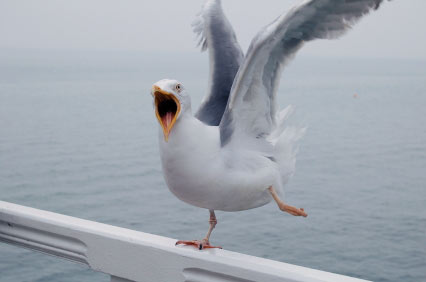
Is it racist to hate seagulls?

Somebody recently arrived at my blog having Googled ‘hating seagulls is like being racist’.

I am unconvinced by this argument. I had never really thought about it before, but I will now say unequivocally that no, hating seagulls is not like being racist.

However, I do think that hating Canada Geese is a bit like being racist, which is a problem because I hate Canada Geese.

Although I don’t actually want to do this to them.

I hope this helps.

Bullshit and journalism

Forget high-minded, rose-tinted commandments like these, journalism isn’t about integrity, objectivity or, lawd preserve us, education.

It’s about bullshit.

And I don’t mean that in a bad way. Necessarily.

A key part of what a journalist does is take a complicated story then condense, distill and edit it, before regurgitating it in a form that is accessible and interesting to the general public. And journalists are regularly asked to do this with subjects they don’t know anything about. They’ll research, of course, conduct interviews, ask experts, analyse and consider, but they’ll also, ultimately, bullshit. Because while journalists are not experts, they will end up having to pose as experts, or at least they will if the piece is going to be any good, because if it’s going to be any good it has to appear authoritative.

In an ideal world, journalists would only write about things they know a lot about, but – to take me for example – there are only so many articles you can write about tunnels, Chelsea Football Club, the 1968 American Presidential election and museum exhibition architecture.

So you have to diversify. In the last month, I’ve written about ballet, poetry and fashion. These are three subjects I know zilch – in fact, less than zilch – about, but that hasn’t stopped me writing about them. Why? Three reasons: because I was asked to, because I thought it might be interesting and because I needed the money.

All journalists do this to some extent, but features writers (such as myself) do it more than most, because we don’t specialise in anything – not in a single sport or art or type of business – and so turn our attention to whatever takes our fancy or whatever pays the bills.

This is both fulfilling and frustrating . Fulfilling because I have an inquisitive mind, so enjoy learning about new things and then translating this new information into a form that hopefully attracts the reader without pissing off the experts by making great clunking errors or hideous simplifications.

But it can also be annoying, especially when you end up writing articles on subjects you’re not really equipped to write about – equipped in the sense of having the knowledge that comes from years of reading and internal debate – simply because that is where your contacts have led you, while you can’t write about what you’re genuinely knowledgeable about because you haven’t made the connections.

On one level, this is a market failure, and comes down to the fact that you can understand the topic inside out, but that doesn’t help if you don’t know the editor or the PR or are beaten to the pitch by a canny competitor. And it works both ways. I bet one or two of my journalist friends are wondering why they hell I’ve been writing about fashion given that until last week I thought Manolo Blahnik was a Mexican superhero.

I think the public accepts this without fully understanding it. On one level, they know journalists have to bullshit – and it must be horribly obvious whenever a journalist covers the area they specialise in professionally – but at the same time, they would be genuinely shocked if they realised exactly how little we really know about some of the things we are entrusted to write about. They’d probably think it’s a bloody stupid way of doing things, unless their business also regularly employs people to work well outside their area of speciality, which might be the case if they are politicians. 

But that’s journalism: bluff and bullshit. And the best bloody profession on earth if you believe in knowing a little about a lot and making up the rest.

The Lambeth Country Show: vegetable sculptures and celebrity scarecrows

My eager anticipation of the annual Lambeth Country Show in  Brockwell Park is frankly ridiculous. But there is something about this festival, combining sheep shearing and donkey rides with jerk chicken and reggae, that really works for me. It is great fun and slightly surreal.

Where else this weekend, for instance, could you have seen the Mayor of Lambeth stroking a duck?

For many people, the best thing about the festival appears to be the lethal Chucklehead Cider, which comes in four pint jugs and, judging by Twitter, will be responsible for several thousand hangovers in South London this weekend.

But I disagree. For me, the annual highlight is the vegetable sculpting competition in which some of the region’s finest artists demonstrate considerable imagination and skill by carving cauliflowers and potatoes so they look like animals.

This competition is fiercely fought. This year’s winner was a pineapple owl, and as ever, its suitability was hotly contested.

Work of art, or waste of a pineapple? Opinion was divided. Others prefered the baby sweetcorn and butternut squash lion.

Then there was this simple yet gorgeous art deco courgette crocodile.

While the carrot and potato python drew some admiring glances.

Congratulation to all who took part. The real winner, I’m sure we will agree, is art itself.

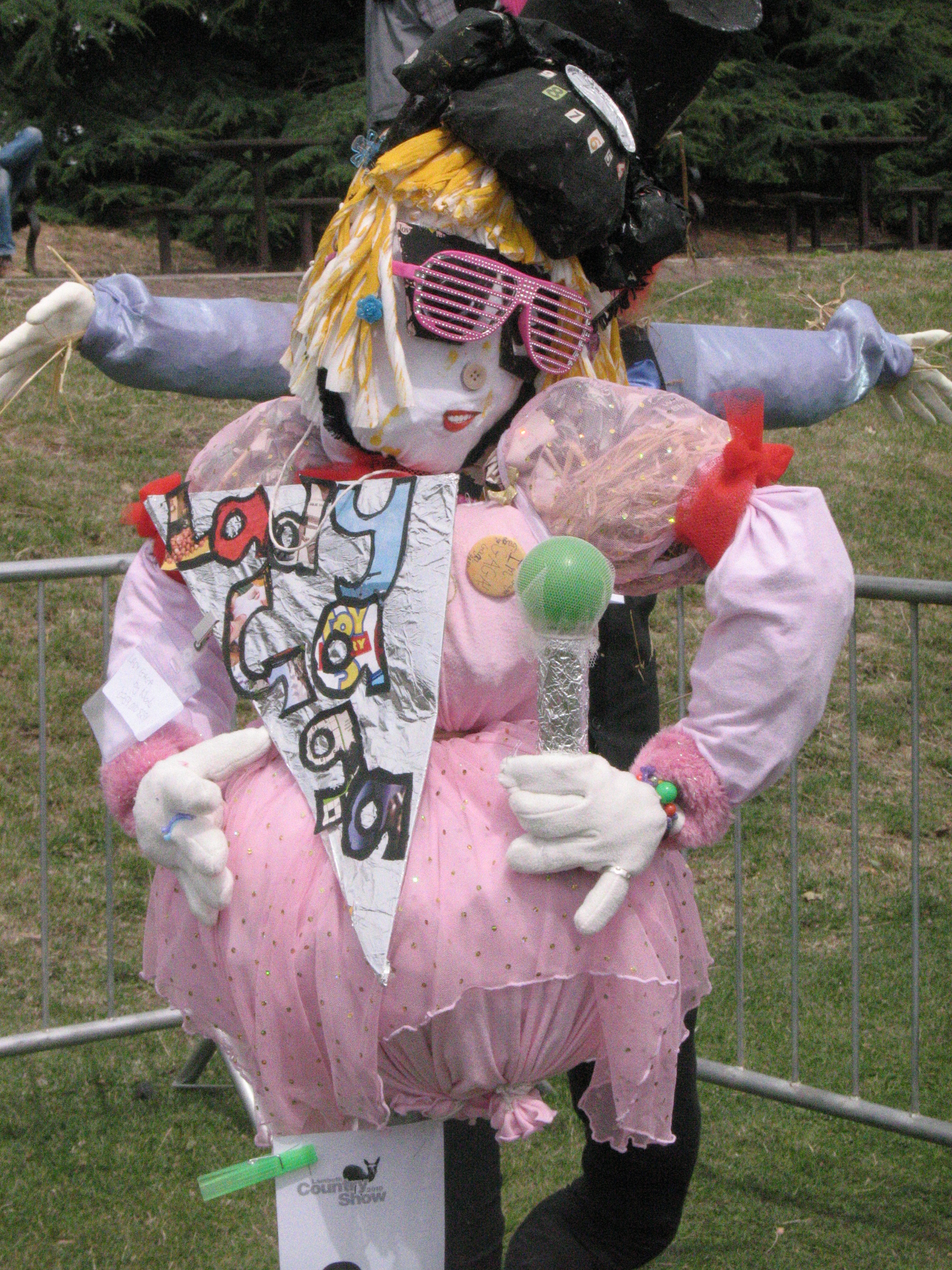
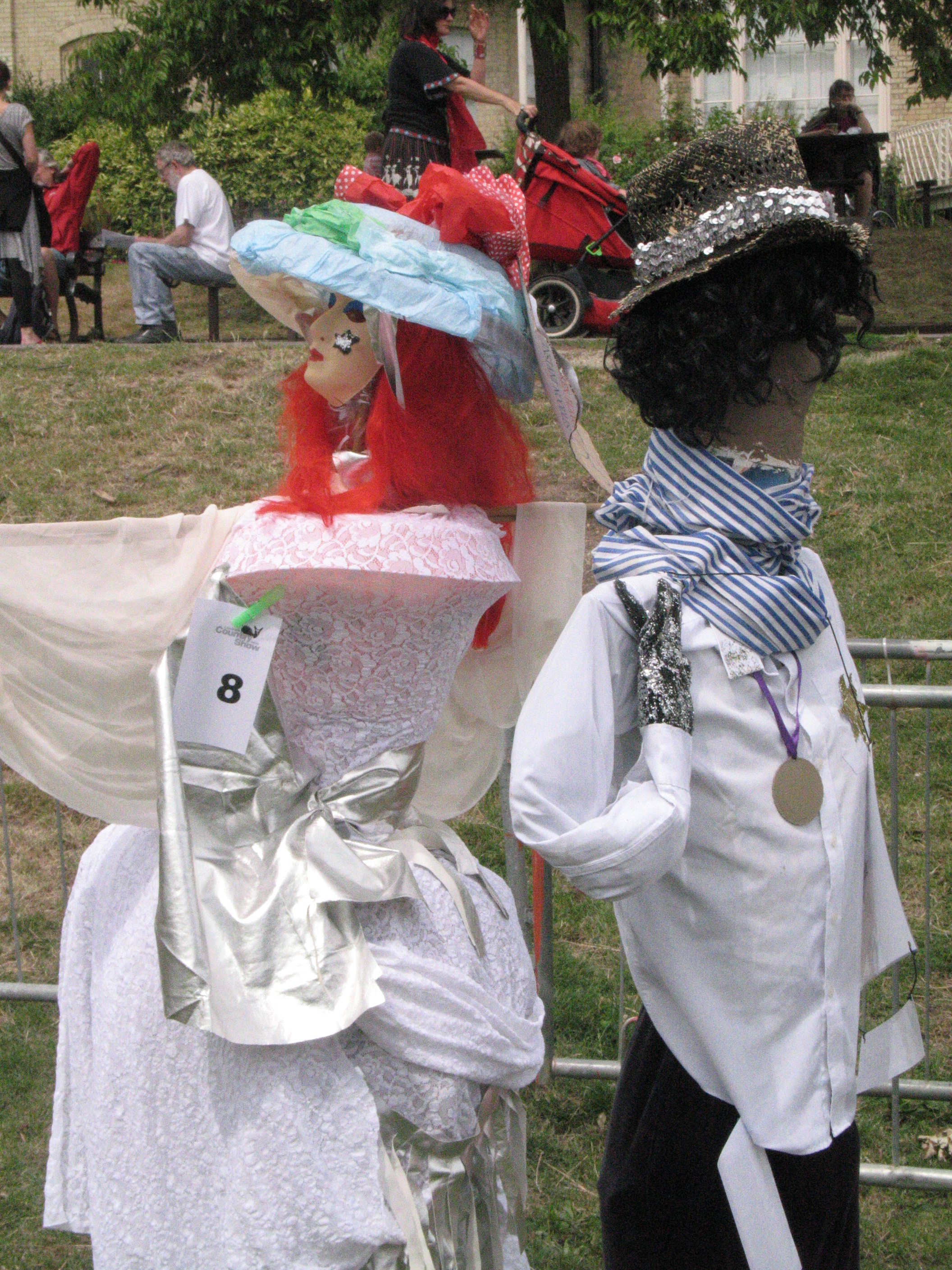
But could the reign of the vegetable sculpture be coming to a close? Many onlookers seemed more impressed with the celebrity scarecrows this year, and who can blame them? Check out these beauties and see what you think.