Waterstones event

I will be giving a talk about Battersea Power Station’s failed dreams on Wednesday May 11 at 7pm at Waterstones in Clapham Junction. Further details here. Please come along and ask questions. It’s free.

A lovely review of Up In Smoke is on Caught By The River and I also wrote a long piece in The i Paper this week, exploring the power station’s history through quotes from those involved in its history. It’s pretty thorough and looks great. You can read that here.

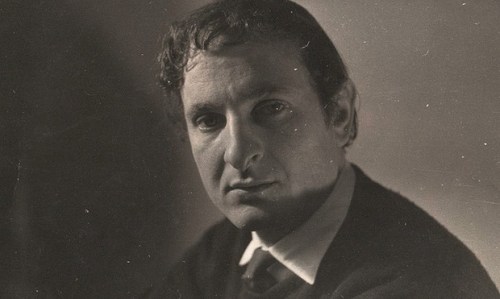
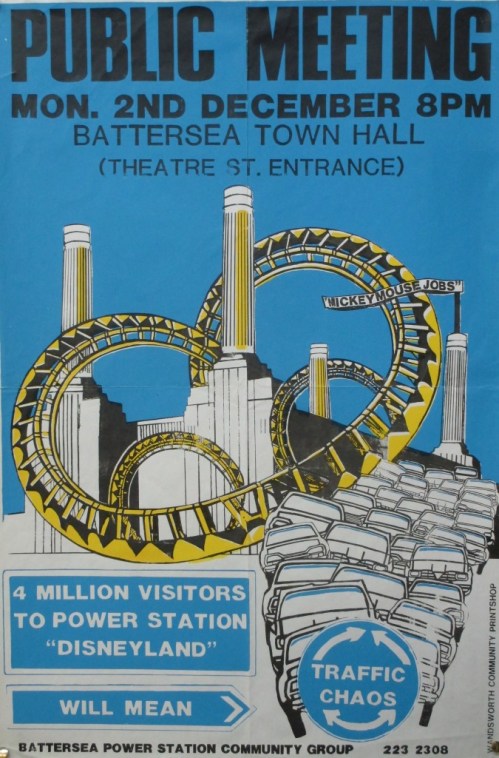
Perhaps I should have asked Brian Barnes to knock up some posters? This is one of us from the 1980s.

BPSCG 1988 from Spectacle blog

Talking power station with Robert Elms

I was invited on Robert Elms’ Radio London show yesterday to talk about Battersea Power Station.

You can hear me here, from around 1 hr 39 minutes. Thanks to Robert’s team for inviting me on, and for Robert asking such excellent questions. I really enjoyed the discussion.

Listening to Robert Elms’s show in the late 1990s was fundamental to developing my fascination with London so this was quite an exciting event for me. In many ways, the nature of my love for London was more influenced by Elms than it was the likes of Sinclair or Ackroyd.

Incidentally, this was also the first time I had visited the BBC at Portland Place since 1999, when I was one of a handful of journalists invited to see a demonstration of TIVO by the BBC’s Head Of Future, who paused and then continued watching a live weather forecast. Many of us believed we had witnessed a form of witchcraft; one reporter even accused him of manipulating a VHS tape.

I also had a piece in Time Out this week, listing ten things you didn’t know about Battersea Power Station. You can read that here.


Getting battered at the Half Moon

With the Half Moon in the news so much these days – and about to feature in its own book – I thought I’d reprint this article I wrote in 2002 for Time Out when I went sparring in the gym above the pub. I’ve included a couple of grainy photographs of me flailing wildly, sweating ringlets asunder, but cannot be responsible for any harm these may cause the viewer.

He comes at you again, all padding and muscle like a Michelin man filled with concrete. The ropes dig into your back as he bellows in your air – “Hit me! Give me what you’ve got!” – but even if you could raise your tortured arms there’s no room to swing a punch. Sweat spills down your face and your longs flip-flop as they grab for air. Then suddenly there’s space. “Jab!” he shouts. And you do, smacking his raised glove at full pelt. “Cross, jab, cross!” One, two, three! Bam, bam, bam! Then he’s down your throat again, pushing you back and forcing a clinch. You can’t see, you can’t move, you can barely breathe. It’s exhausting. It’s exhilarating.

gympigs-ring

The setting is a rough-and-ready gym above a nondescript pub in Herne Hill. This is where Clinton McKenzie, former British and Commonwealth light-welterweight champion, runs a “boxercise” class that he boasts “is the closest thing to getting in the professional ring”. McKenzie, the brother of former world champion Duke and father of footballer Leon, has been here for seven years, ever since he found something that satisfied after the messy couple of years that followed his retirement from the game. The place was derelict when he began. Now, he says, the demand is such that he may need to close the membership for a couple of months.


You can see the appeal. First, the gym is one of the least threatening you’re ever likely to walk into. For a venue in which so much energy is devoted to hitting things, there’s a surprising lack of testosterone in the air. Such is the unintimidating atmosphere that a fair number of women take part, as partial to a workout and punch-up as anybody else. When you’re in the ring, fellow boxercisers yell encouragement. They help tape up your knuckles. They don’t laugh when you trip over the skipping rope.

box

As affable outside the ring as he is dominant inside, McKenzie tailors the sessions to individual needs and interests. Mine went thus: 15 minutes on the exercise bike; 12 minutes on the punchbag; one minute failing to skip; an eternity in the ring; 20 minutes trying not to throw up; 10 minutes warm down. Make no mistake, this is tough work. The punchbag is hard and heavy, and pummelling it for four rounds of three minutes is punishing. Our arms aren’t used to that kind of treatment, the shudder of connection as you wallop and counter-wallop the swaying sack. First time out, boosted by McKenzie’s encouragement and ignoring his warnings, chances are you’ll overdo it and punch yourself out. With the adrenalin pumping, it’s difficult not to.

It’s in the ring that the real stuff happens. You feel like a champ as you tighten your bandages, pull on the gloves and step into the ring. McKenzie waits. He’s in padding that covers his chest and stomach and wears sparring gloves but has not intention of simply making himself a target. For the first minute or so he shouts instructions – jab, cross, work the body, switch stance, put together combinations – but every now and then you get a cuff round the head, a reminder of where you are. Then he starts forcing you back, into corners, against the ropes, using sheer mass and presence to push you into tight spots where you have to gather all your wit and strength to stay mobile. There’s just enough pressure to make you understand what it means to enter a ring for real.

box2


“I like to give people a feel of what it’s like for a pro, the hard work you’ve got to put in to survive,” he says. Trying to punch, move and think at the same time takes considerable effort and – the occasional tap on the top of the head notwithstanding – here you don’t even have to worry about defence. By the end you’re reeling, vision blurred, stomach hollow, knuckles raw, arms leaden. The bell is blessed relief. And that was just one round.

“Most gyms are just machines,” says McKenzie. “Don’t get me wrong, machines are great for exercise. But there’s something special about pitting yourself against somebody else, doing it one-on-one. It makes people try that bit harder. That’s what the regulars love about this place. And the fact they are getting in the ring with a champion gives them a buzz.”

And a buzz there undeniably is. Even those of a non-violent persuasion will relish the safe, healthy environment that offers just enough whiff of danger to get the heart pumping. “If boxing ever goes under, this is what people will be turning to so they can find out what it used to be like,” says McKenzie. Sure, he’s exaggerating, but as you pound the bag or jink through the ropes, you’ll have to bite your lip to stop humming the theme from Rocky. It might not be the real thing but it’ll do champ, it’ll do.

Clinton is still running boxercise classes from a new venue in Tulse Hill. Details here


Top ten: Battersea Power Station in popular culture

While I dedicate a chapter of my book about Battersea Power Station, Up In Smoke (now available to purchase from the publisher), to the chaotic photoshoot for Pink Floyd’s Animals album cover, this was not the only time the building has been used in popular culture. Here I’ve listed some of my favourites, but there are dozens more involving Dr Who, Slade, The Jam, Richard III, The Who and The Quatermass Xperiment. It was also used as otherwise anonymous filming locations for numerous TV shows, pop videos and films, including Superman III, Monty Python’s The Meaning of Life, Texas, Manson and The Dark Knight but I’ve chosen the moments that made the building the star.

1 Sabotage  (1936)

sabotage

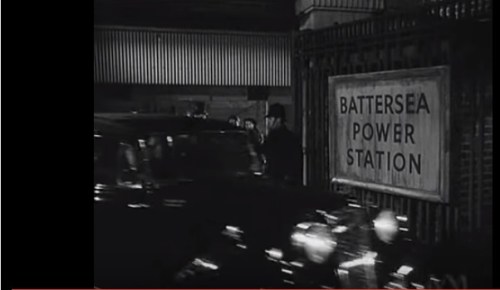
Hitchcock, a Londoner with a sharp eye for locations, was one of the first directors to note the visual potential of the power station, using it in early scenes of his 1936 film Sabotage. Here the power station has only two chimneys, the second half was not started until 1937 and the final chimney not added until 1955.

2. High Treason (1951)

hightreason

This superior Cold War neo-noir b-movie includes a thrilling climactic scene at Battersea Power Station, where there’s a great shoot-out amid the clanging pipes and hissing steam. Worth seeking out.

3. Up The Junction (1963)

junction

Nell Dunn’s non-fiction collection of writing about Battersea woman is set in the shadow of Battersea Power Station. The poetic back cover blurb for one early edition stated, “Innocence in Battersea lasts as long as the flower remains unsooted by the power station.”

4. Help! (1965)

help

In The Beatles’ film, the power station is shown blowing a fuse at a critical juncture, causing a black-out and allowing the Fabs to escape their bolthole in Buckingham Palace (“A Well-Known Palace”).

5. Smashing Time (1967)

smashingtime

This goes a step further, with the restaurant at the top of the Post Office Tower revolving so fast it causes the power station to explode. London’s brash newest icon annihilating a venerable predecessor – a metaphor for the 1960s if ever there was.

6. Quark Strangeness And Charm & Lights Out (1977)

quark

ufo

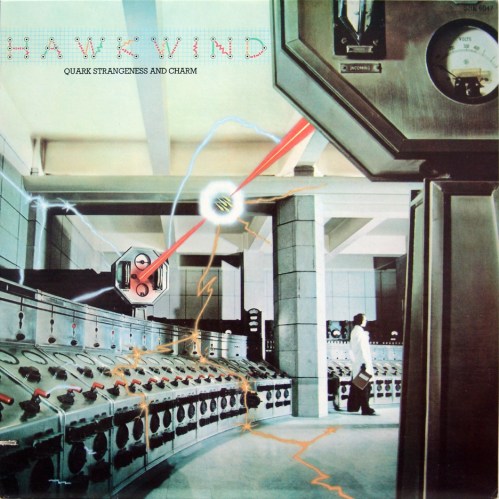
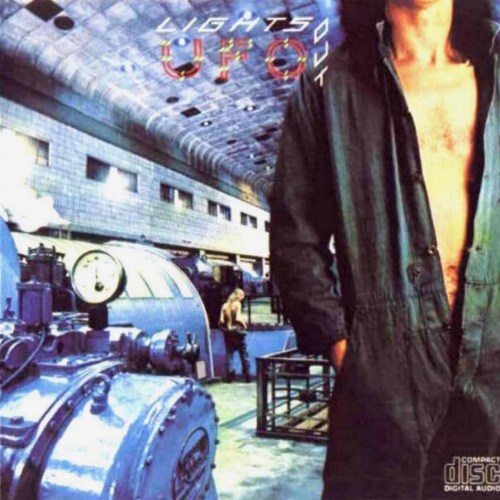
Despite the Animals debacle, album sleeve artists Hipgnosis returned twice more to the power station in 1977, photographing futuristic interior covers for Hawkwind’s Quark, Strangeness And Charm and UFO’s Lights Out.

7. The Borribles (1983)

borribles

A wonderfully feral cover for this brilliant 1983 children’s novel about a group of cockney elven urchins – Borribles – who are at war with the Rumbles, a group of rat-like creatures that are thinly disguised Wombles. The action begins in Battersea, hence the power station backdrop. I loved this book as a child, and the cover was part of that initial attraction.

8. Jet Set Willy (1984)

jet set willy

This level of the classic ZX Spectrum computer game was one of the first products to reference both the power station and Algie the flying pig. I played this game endlessly as a child – though I’m not sure I really got the pop culture or architectural references.

9. “You’re The One For Me, Fatty” (1992)

Moz

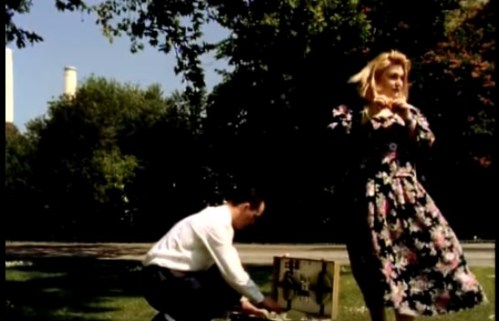
I was obsessed with Morrissey in 1992, and while I didn’t like this song much at the time, I did love the fact the power station featured a couple of times. Now, I think it is one of Morrissey’s finest pop moments, and the shots of the power station still delight me. A couple of years after this, I saw Morrissey play a gig at the power station, although in the dark and funnelled through tunnels, it was impossible to tell that’s where we were. Morrissey was rubbish too.

10. Children of Men (2006)

childrenofmen

A striking scene in Children Of Men takes place at the power station, which has been converted into the Ark Of The Arts, containing the world’s most priceless artefacts in this dystopian future London – Alfonso Cuaron, like several other film directors, saw Battersea as the sort of building only a totalitarian could love. Note the pig, flying between the chimneys. The film’s location manager told me, “We wanted strong images that had to represent London but not cheesy London. Using somewhere like Battersea meant there was no question of where you were, it was London but proper London, authentic London.”

Dream City – London’s unbuilt Edwardian theme park

I have a post on Londonist about Dream City, a theme park concept cooked up in 1907 by an American developer for a disused waterworks, a site that was later occupied by Battersea Power Station.

You can read the full story here.

bl19982.tif

Dream City

The unbuilt Dream City is also the starting point for Alice May Williams’ short film about Battersea Power Station called Dream City: More, Better Sooner produced by the Film And Video Umbrella. The fvu have organised a talk on Friday (April 15) at the Battersea site of the Royal College of Arts by Owen Hatherley called Monetising The Ruin: Batterseas Old And New.

I will be attending the lecture and also selling copies of my book Up In Smoke: The Failed Dreams Of Battersea Power Station.

Up In Smoke

Up In Smoke: The Failed Dreams Of Battersea Power Station has a release date of April 26.

You can find out more at this website, which also tells you how to get in touch if you want me to do any talks or events.

UpInSmoke

Expect me to be writing about this a lot more in the next few weeks.

Secret London: South London’s lost canals

I wrote this piece in 2015 for the first issue of Waterfront magazine.

Some of the best secrets are hidden in plain sight. You don’t find them by exploring scruffy back streets and muddy fields, they are standing right in front of you, requiring only a translator to make sense of them. One sits in Burgess Park in Camberwell, ignored by cyclists, dogwalkers and joggers seeking respite from the Walworth Road, one of South London’s busiest byways. It takes the form of a pretty black-and-red iron footbridge with thick brick stanchions and strong stone steps straddling the path. It doesn’t serve any specific function – there’s nothing that needs to be crossed – so is known locally as the “bridge to nowhere”, but this was once a bridge with a purpose. It was built in 1906 to cross the Grand Surrey Canal, one of south-east London’s two lost canals. The park was once a busy industrial basin of wharves and warehouses but over time, the canal was abandoned, closed, filled in and forgotten. Soon, only the bridge remained, a relic or totem of this land’s previous life.

IMG00120-20120814-1050

Like many canals, the Grand Surrey was opened in the brief period between the onset of urban industrialisation and the arrival of railways. It began at Surrey Commercial Dock (now Surrey Quays), a 300-acre system of nine docks two miles east of London Bridge. The original plan was for the Surrey Canal Company to cut a canal from this starting point at Rotherhithe through the south London suburbs. From the main canal, branches would peel off, feeding significant towns on the way south. The object was to create a fast-moving route that could bring produce from Surrey farms into London. An Act was granted in 1801 to build as far as Mitcham, with branches to Deptford, Peckham, Borough and Vauxhall.

At the same time, permission for a second canal was granted. The Croydon Canal was originally going to be its own entity but the Grand Surrey Canal provided a convenient meeting point, and – after some negotiation – the two navigations joined at New Cross. This canal was intended to reach Epsom, but when it opened in 1809 in a ceremony featuring decorated barges, a 21-gun salute and a special song (“Long down its fair stream may the rich vessel glide; and the Croydon Canal be of England the pride”) it stalled at Croydon, having passed through 28 locks from the junction with the Grand Surrey Canal through Honor Oak, Sydenham and Norwood. Nonetheless, it was described by The Times as “one of the highest and best constructed canals in England” and the owners talked about extending it to Portsmouth. Plans for the Grand Surrey also proved over-ambitious, and when it opened in 1807 it went only as far as the Old Kent Road. It reached Camberwell in 1809 and branched off to Peckham in 1826, but got no further.

dooswharf

There are several bucolic illustrations of both canals, presenting them as splendid streams surrounded by countryside. At the opening of the Croydon Canal, a reporter wrote of “finding themselves gliding through the deepest recesses of the forest, where nothing met the eye but the elegant winding of the clear and still canal, and its border adorned by a profusion of trees, of which the beauty was heightened by the tint of autumn.” In 1811, the Grand Surrey Canal was peaceful enough to be used for bathing, causing one Camberwell resident to write a furious letter to The Times objecting to the “indecency” and “extreme offensiveness to females in so public a situation”. Soon after, ‘bank rangers’ – a sort of private police force – were appointed to keep an eye out for lewd or criminal behaviour.

Quickly, though, the landscape changed. Submitted to parliament alongside the proposals for the two canals, was another for the Surrey Iron Railway, which would become the country’s first public railway in 1803, linking Wandsworth to Croydon via Mitcham. Using carriages pulled by horses over iron tracks, the intention was to create an integrated transport network for the expanding suburbs, but ultimately it put the two technologies in direct competition. At first, they cohabited and connected, and the canal even proved superior, but as steam trains arrived, the canals lost any edge. Croydon Canal’s success was further hindered by its expensive, time-consuming locks and the company could tell where things were headed. The canal was dead by 1836, the first in the country to be closed by parliament. The land was purchased by the London And Croydon Railway, who built their line largely alongside the old canal and turned the basin into West Croydon station.

The Grand Surrey Canal was spared such a fate, even if it was to never fulfil the bravura plans made at the outset. Initially the canal was intended to transport numerous goods – the 1801 Act set out rates for freestone, limestone, chalk, bricks, slates, tiles, corn, hay, straw, faggots, dung, manure, stones, clay, cattle, calves, sheep, swine, lime, timber, hemp, tin, bark, iron-stone, pig-iron, pig-lead, coal, charcoal, coke, culm, flour, wheat, barley, oats, beans, peas, malt, potatoes, hops and fruit – but instead of becoming a vibrant link between garden suburbs and London docks, the canal was more like a gigantic wharf, an extension of the Surrey docks lined by warehouses, factories, yards and depots. The canal nonetheless became a useful part of the industrial infrastructure, drawing cargo from all over the world – including a 4ft snake from South America that was fished out the canal at Peckham in 1932 by an angler who at first believed he’d nabbed a particularly fine eel. The industry was largely dirty and unglamorous with numerous timber yards, but there were also R White’s, manufacturers of lemonade, and Edison-Bell, who made 78rpm records and had a recording studio on the premises.

After the Second World War, decline set in. The increase in road traffic offered tougher competition even than rail, while changes in freight transportation threatened the docks themselves. The canal closed in stages from the 1940s. The basin at Camberwell was first to be abandoned, becoming a playground for children, who went fishing for sticklebacks or tore doors off bombed-out houses to sail down the stagnant canal as rafts. Children determined their local sympathies by which side of the bridge they lived.

The bridge was still surrounded by the straggling detritus of light industry, but fears that children would drown – indeed, The Times reported more than a dozen had met this fate since the war, as several had before it – led to the area being cleared in 1974 and replaced by Burgess Park. The canal’s route was turned into a pathway and the bridge retained as a momento. There are further princely bridges on the Peckham arm of the canal, at Willowbrook Road and Commercial Way, while the Peckham basin is now the site of Peckham library. Nearby, a sliver of park connecting Burgess Park to Peckham High Street is known as the Surrey Linear Canal Park, presumably to confuse new arrivals. Elsewhere, there are further pointers: bits of wall, ghosts of towpaths, mooring rings, milestones, and in a park reclaimed from the old Russia Dock in Surrey Quays, a large amount of quayside.

One of the most interesting survivors is a rusting round bollard under a bridge near the junction of the Surrey Canal Road and Mercury Way in New Cross, once the meeting point of the Grand Surrey and Croydon Canals. Embedded in the grassy embankment, it looks as if it has been dropped from the heavens. Little of the Croydon Canal remains, although diligent historians have traced shadows of its passage in the topology of the land between New Cross and Croydon. Some tiny sections are extant in Dacres Wood, a small nature reserve in Forest Hill, and Betts Park in Anerley. The old reservoir in Norwood has been transformed into South Norwood Lake.

There is a strong sense here of what might have been. The Croydon Canal’s life was too brief, and too quickly swallowed by the dramatic forces leading to the rapid urbanisation of south London, to be saved, but the fate of the Great Surrey Canal is not so easily forgivable. Its potential was not unknown. In the 1960s, trip boats from Little Venice would take extended tours across the Thames into the depths of Peckham and Camberwell, and even in the 1970s, some insisted the canal should be saved. One report in 1971 noted the increasingly popularity of the Regent’s Canal and pondered whether similar could yet happen to “the poor, ugly Surrey Canal… [which] had the misfortune to run south of the river.” The author admitted there was an image problem: “Its waters are polluted and filled with rubbish and hunks of wood. Its banks are closed to the public and lined with disused factories and unkempt grass. To many local people it is just three miles of stinking water, which has to be dredged every time a child goes missing.” But should the drastic solution of eradication proposed by Southwark and the Port Of London Authority go unchallenged? “Suggest any redevelopment of Little Venice and fashionable owner-occupiers besiege the local town hall,” he wrote. “Down south of the river, however, they apparently order matters differently. Two public authorities have quietly decided between them to scrub off the map one of South London’s most precious potential assets.” And so disappeared the Grand Surrey Canal, not so much a lost secret as a missed opportunity.

Further reading: http://www.bridgetonowhere.friendsofburgesspark.org.uk/ and http://www.londoncanals.uk/

Power station problems

While writing my forthcoming book about Battersea Power Station, I often wondered why nobody had done so before.

The reason, I decided, was that as the various redevelopment projects were never completed, it was a very difficult tale to bring to a close. However, with the latest scheme being backed by serious money and as the buildings around the power station started to rise, it seemed as if the end was finally in sight.

I felt safe.

Too safe…

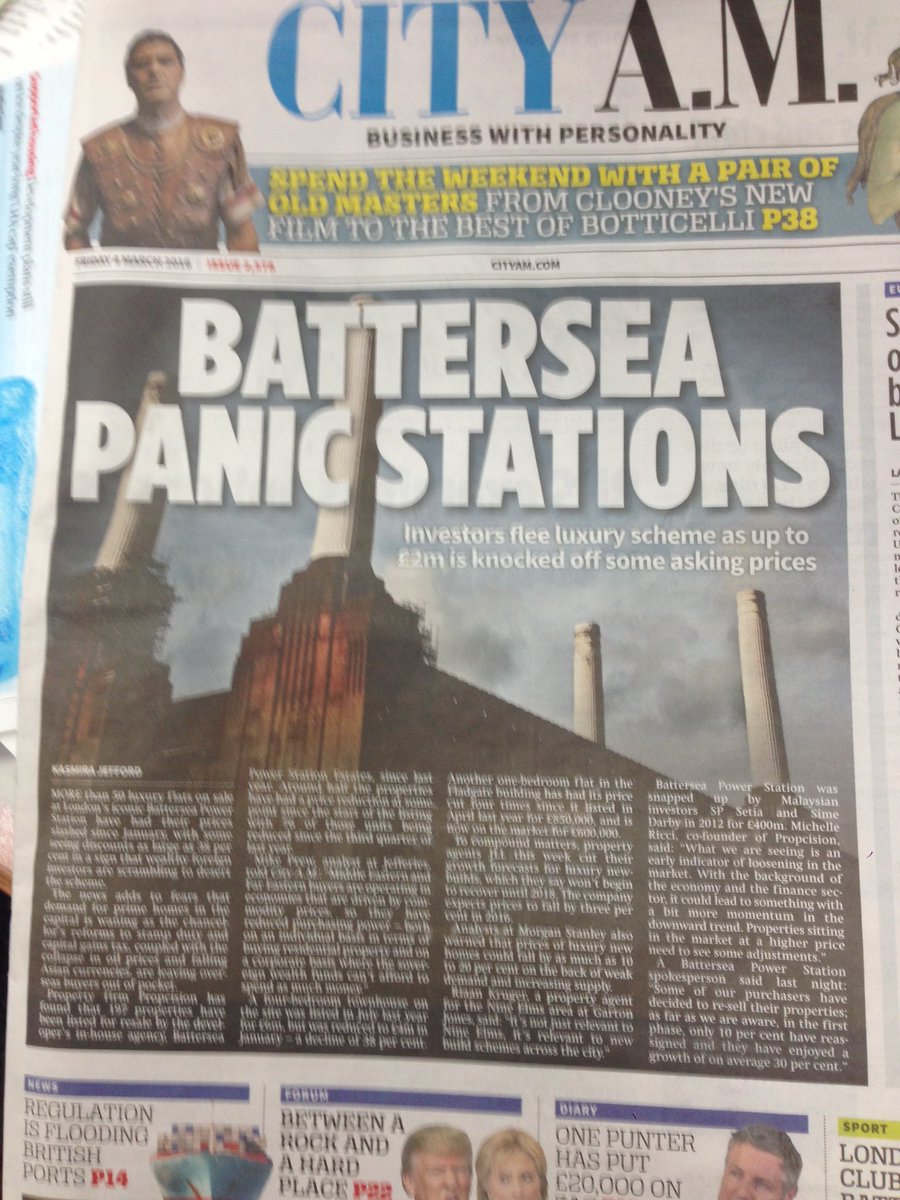
Today a report in City AM confirming what many have been saying for months – that the heat is coming out of the Nine Elms luxury property market, forcing developers to slash prices in a bid to retain the overseas investors on which so many hopes are pinned.

I was told a couple of times that this might happen, most notably when the chief executive of one previous development pointed out that the intensity of development on the Battersea site – not to mention elsewhere in the Nine Elms area, where thousands of similar flats are being built – meant that the Malaysian developers would be effectively competing against themselves on price. Unless it was managed carefully, and if the market ever dipped, there could be problems.

And so it has come to pass.

While those Londoners who decry the over-development of the power station may be excused at being amused by the problems being experienced by the developers, this is bad news for the building itself which is still far from secure: a hollow, roofless shell that is currently lacking three chimneys.

Wandsworth, who have presided over one of the most disastrous redevelopment projects in London for more than 30 years, had allowed the developers to build so many flats in advance of restoration so the developers could flog them to raise capital to pay to fix the power station. If those flats don’t sell, there is a danger that the power station will be left in a worse state than ever.

In these circumstances, demolition would be a serious possibility.

While we should be concerned, I don’t think it’s quite time to panic. The appeal of the Malaysian developers is that they are effectively being bankrolled by the Malaysian state in the shape of the country’s pension fund, which should mean pockets are deep enough to sustain these fluctuations in the property market.

But it does show that nothing is certain when it comes to the story of Battersea Power Station, except uncertainty.

Uncovering a London ghost: the half-life of David Litvinoff

In the current issue of Uncut, I spoke to write Keiron Pim about his excellent book on David Litvinoff, Jumpin’ Jack Flash. Litvinoff is one of those characters that crops up in all sorts of strange places once you first notice him – in the last few years I’ve read books about the Krays, Performance and Operation Julie, and Litvinoff has featured in all of them as a mercurial, menacing muse. He also appears in Iain Sinclair’s books, but Sinclair is most interested in what he can use Litvinoff to represent – in this case a deliberately unknowable, shadowy figure who flits through London’s secret history, connecting the shadowy worlds of counterculture and crimes.

litv

Pim is a journalist, interested in people as people rather than as metaphors, and his book diligently puts flesh on the bones of Litvinoff’s known history, tracing this strange character’s ascent from the Jewish East End and into the worlds of art, crime and music, where he rubbed up against everybody from Lucien Freud to Eric Clapton.  It’s said that Litvinoff reached such elevated company he was even invited to Jimi Hendrix’s funeral – the invitation contained a tab of acid that the recipient was meant to take if they couldn’t physically attend.

Litvinoff was an unpredictable chancer who survived on his wits, making money here and there through schemes both legal and not. He worked for the Krays and Peter Rachman, but his defining role, as seen by Pim, is as consultant for Performance, that heady, troubling film that could be the finest ever made in this city. Litvinoff befriended and advised both Edward Fox and Mick Jagger on the ways of the underworld, and supplied his old Soho pal Donald Cammell with ideas for scenes and dialogue. One of the many memorable moments in the film – the shaving of one victim’s head by gangsters – was based on Litvinoff’s own experiences. This was a man who both delivered and received mob justice – and at times, he is unsympathetic to the point of psychopathy – until he discovered a form of salvation through drugs and the woolly world of hippie idealism.

performance

The story is ultimately a tragic one, as Litvinoff increasingly found himself left behind by friends, who could tolerate his wit and weirdness for only so long. He killed himself in 1975 as punk was breaking, and one sense that this movement of chaotic creativity, violence and contradiction would have suited him fine, although Malcolm McLaren may have baulked at the competition.

Given that Litvinoff didn’t actually leave much behind – no books or diaries, photographs or albums, little that is tangible or concrete – it’s difficult to put a pin in what he actually did. In an age in which we are increasingly defined by our jobs – commit a social media faux pas, and you are immediately reported to your employer – that’s strangely unsettling. The brilliant late artist Martin Sharp, a close friend of Litvinoff, makes a case that this needn’t be the case, that Litvinoff, by simply being himself and acting as muse and creative conspirator, did plenty. “It’s hard to earn a living doing it, but he made an enormous contribution to people’s lives,” says Sharp. “It’s not something you can send someone a bill for.”

Up In Smoke: The Failed Dreams of Battersea Power Station

I’ve written a book about Battersea Power Station.

It’s called Up In Smoke: The Failed Dreams Of Battersea Power Station and is out in the spring via Paradise Road, a new publisher concentrating on London non-fiction.

Battersea Power Station is one of London’s favourite buildings, but nobody before has told its story.

This will be the first book to explore the history of the building, from conception and construction, through use and obsolescence, and then into the long years of post-closure redevelopment.

I wanted to understand why so many people have been fascinated by Battersea over the years. I’ve spoken to former workers and designers of inflatable pigs, location scouts and photographers, politicians, Lords, architects, planners and entrepreneurs.

This is a book that tells us so much about London and the way it changes. It’s a story of power and land, of big ideas and broken dreams. It’s a story that takes in property and politics, architecture and popular culture. It’s a story about our city and our relationship with its most popular building.

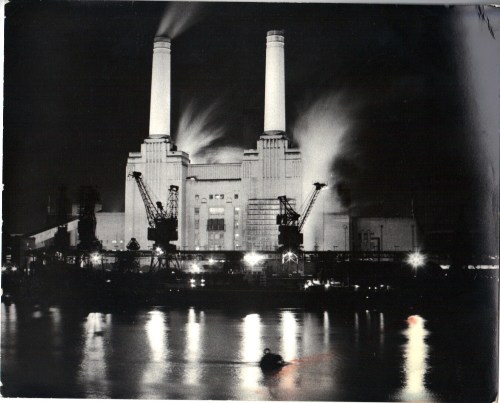
It asks how we went from this…

19-09-2014 104101

Battersea Power Station, 1975.

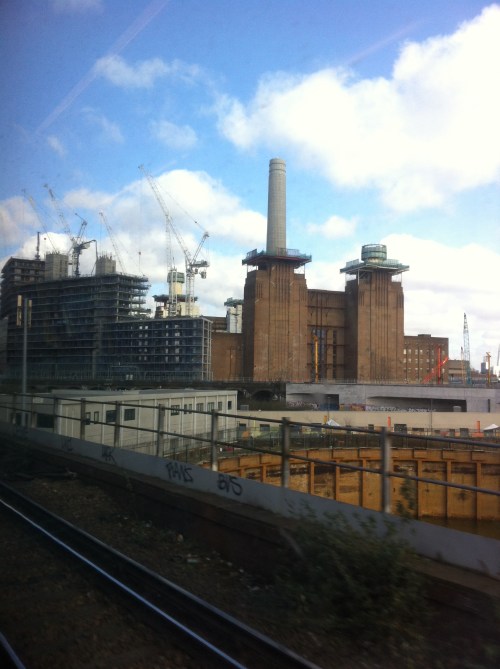
To this…

IMG_5309

Battersea Power Station, 2016