I’ve just come across a treasure trove on You Tube of old Rank Look At Life newsreels, each ten-minutes long and looking at different aspects of London life. There are some real treats to be found, but here are a few I enjoyed when I should have been working, or at least making a cup of tea.
Members only, 1965 – inside London’s private clubs
Coffee bar, 1959 – the new world of Soho’s coffee shops
Goodbye, Piccadilly, 1967 – a portrait of Piccadilly Circus
In Gear, 1967 – an iconoclastic look at Swinging London
Top People, 1960 – the crazy world of highrise living
Shopping By The Ton, 1960 – Covent Garden, Smithfield and Billingsgate markets
Report on a River, 1963 – a love letter to the Thames
Like many adolescent boys who thought they were cleverer than they really were and were scared of girls, I was obsessed with The Smiths and Morrissey.
The Smiths are a Manchester band, but by the time I became a fan, Morrissey had – like so many Northerners – fled the provinces for London where he spent the next few years revelling in the size, confusion and culture of the Big Smoke. Instead of Whalley Range and the Moors Murders, he sang about Earl’s Court and the Krays and as he entered his ‘Glam Nazi’ era he became obsessed with distinctly London aspects of working-class life such as skinheads, West Ham and the Cockney Rejects.
This was Morrissey’s London period; you could argue it began with the Smiths songs London (1987) and Half A Person (1987), and lasted until he was hounded out of the capital for going a bit crap around a decade later. Sure, London still cropped up in later songs – 2004’s Come Back To Camden, for instance – but the love was gone. He would later sound like any other tedious expat whn complaining to the NME that ‘if you walk through Knightsbridge on any bland day of the week you won’t hear an English accent. You’ll hear every accent under the sun apart from the British accent.’ But it was fun while it lasted.
Interesting Drug (1989)
Although Morrissey’s previous solo singles were very London-influenced, this was the first – rather odd – video to be clearly filmed in London. But where? The red bus glimpsed at 1:21 may tell somebody with better eyesight than I. Is it a 34, placing this somewhere between Barnet and Walthamstow? Update: Comments suggest this is Battersea, so not the 34 after all. Maybe the 37?
Our Frank (1991)
A pretty poor song, but the video marks the start of Morrissey’s skinhead obsession – it was not long after this that he took to performing before a skinhead backdrop and brandishing the Union Jack at Finsbury Park. There are lots of buses here, and also a gorgeous ghost sign at 1:47. But where is it shot? Charing Cross Road? The City? Victoria? Anybody? Update: Comments place this definitively as King’s Cross.
We Hate It When Our Friends Become Successful (1992)
I hated this when it came out, but I was wrong because it is brilliant and the video is a treat as Morrissey wanders around a still not-quite-gentrified Wapping with the gang of bequiffed young boys who have put a smile back on his own thin and youthful face. Most Morrissey fans get a kick out of seeing the old boy looking happy, which is why his recent ‘love’ album, Ringleader Of The Tormentors, got such strangely good reviews. The abandoned pub in this video is now the Turk’s Head cafe and you can also catch a glimpse of Oliver’s Wharf, which was one of the first warehouses in the area to be redeveloped into housing.
You’re The One For Me Fatty (1992)
An awful song, but an unmistakable setting as a young skin takes ‘fatty’ on a date, while Moz whines about how ‘all over Battersea’ there’s ‘some hope, and some despair’, over a shot of the power station. Interestingly, a scene from one of Morrissey’s favourite Northern kitchen sink dramas, ‘Saturday Night and Sunday Morning’ was filmed by director Karel Reisz around here, in Culvert Road, Battersea. Of Reisz, we’ll hear more later.
Boxers (1995)
From the start of Morrissey’s decline – and height of his obsession-with-male-physicality – this ho-hum single was filmed at the legendary York Hall, Bethnal Green, as can be seen in the rather elegant closing shots.
Sunny (1996)
Such a terrible song I didn’t know anything about it until now, as I had long lost interest in Morrissey at this point, but it’s filmed in Victoria Park in East London. And the cover featured this iconic Morrissey shot, outside old Kray haunt the Grave Maurice (now, I think a fried chicken shop).
There were many other London influences in Morrissey’s songs at the time, with the Kray-referencing Last Of The Famous International Playboys, the song Spring-Heeled Jim (a reference to the Victorian London monster Spring-Heeled Jack), the song titles Piccadilly Palare and Dagenham Dave, and the album titles Your Arsenal and Vauxhall & I, as Morrissey explored the seamy side of London life. He was also rumoured to be making his first acting appearance at around this time as the South London gangster Charlie Richardson, although sadly that never came to pass.
I’ll leave you with one last example. This clip is of Kennington kids discussing the infamous case of Derek Bentley, who was sentenced to death for his part in the shooting of a policeman in Croydon, and it comes from Karel Reisz’s classic London documentary ‘We Are The Lambeth Boys’. It was sampled by Morrissey for the track Spring-Heeled Jim, which featured on the Vauxhall & I album. How much more London can you get?
I was born in Epsom, one of those places on the fringe of London that mark the very boundary of the city, the point at which tarmac gives way to soil. As the picture below shows, just a few hundred yards from my road, Hookfield, the country begins in all its greenness.
This never much interested me in my youth. I was always more attracted by town than country. Nature passed me by. When I moved into the city proper, I took little notice in the pike or herons I saw from my boat on Regent’s Canal, or the ring-necked parakeets and woodpeckers I later found in Brockwell Park. If somebody told me they saw a badger in Regent’s Park or a cormorant on the Thames, I cared not a jot. And who needed peace and still when you had Hampstead Heath or Richmond Park nearby, even if I rarely actually bothered to go there.
A month in the Scottish Highlands changed that. For the first time I was able to observe hedgehogs, adders, shrews, woodmice, weasels, deer and eagles in the wild, and see traces of badgers, pine martens and wildcats. The sheer scale of the country was extraordinary, from the peaks of the Munros, to the endlessly unfolding glens. It was eye-opening and life-affirming.
Returning to London was difficult. I had previously viewed the city’s numerous parks as pastoral paradises. Now they seemed liked scratty scraps of green, a sad imitation of the real thing. The battering noise, smell and greyness of London was overwhelming.
But nature is still here, if we look for it. It’s there in the foxhole that occasionally appears at the bottom of my garden. It’s there in the resilient, remarkable weeds and visiting birds, as lovingly chronicled in Richard Mabey’s essential London wildlife book ‘The Unofficial Countryside‘. It’s there in Tales Of The City, the blog of Mel Harrison, in which she charts encounters with owls, snowflakes and brambles. It’s there in Herb Lester’s Untamed London map, which records those places ‘where nature still runs wild in the big city.
As I walked home from taking my daughter to nursery this week, along the horrible, traffic-clogged hill that takes cars from Herne Hill to Camberwell, I heard a faint, familiar sound as I passed a bus stop. It was the chirruping of a grasshopper. I stopped and looked and found it on a hedge. It looked at me, quite unmoved, before continuing to sing (or stridulate) defiantly. We gazed at each other for a minute, while commuters bustled past on foot and in car, and then quietly, and more contentedly, I went about my way.
For people like me, there are few things more emotive than an empty football ground, filmed in 1979 in flickery Super-8 and overlayed by a haunting soundtrack. It’s like Simon Inglis’s first volume of ‘Football Grounds Of Great Britain’ come to life.
I remember when I fell in love with Pat Nevin. It was in the playground and somebody was passing round a 1985 Panini sticker album. I turned straight to the Chelsea page to see my heroes.
There was Kerry Dixon, bluffly handsome with golden hair, azure eyes and self-confident grin. There was Colin Pates, a brick-wall centre-back with disco dancer hair. There was Doug Rougvie with a nose that looked like it had lost an argument with a spade.
And there was Pat Nevin. Pasty-faced, greasy-haired, nervous, thin and sullen. He looked like a smackhead. Who wouldn’t fall in love?
I only saw Nevin play once for Chelsea, a 3-0 victory at Watford in 1988 about which I remember little, but his legend loomed large over the following years. By the time I started watching Chelsea regularly the next season, the club were in the Second Division and Nevin was at Everton, but my bible, the Chelsea Independent fanzine, spoke of little else.
They drooled over Nevin’s dribble against Newcastle, when he beat eight players in a slalom run that took him from one end of the pitch to the other. They marvelled at his free kick against Sheffield Wednesday, when he chipped the ball over the defensive wall, ran round the other side and lofted a perfect cross on to David Speedie’s goalscoring noggin. They giggled at his famous penalty miss against Manchester City.
The love seemed mutual. When Nevin was injured playing for Tranmere, he attended a Chelsea-Everton game at Goodison Park and paid to go in the Chelsea end. This was important. Chelsea fans, then as now, were despised, but if somebody like Nevin loved us, maybe there was hope, maybe there was redemption,
And Nevin was the sort of player that fans love – an exciting, creative, unpredictable dribbler, but there was more to it than this. Nevin was smart. Nevin was cool. Nevin was different.
He angrily attacked his own supporters for their racist, violent and anti-semitic predilections – to the delight of the left-wing students at the Chelsea Independent. He read French and Russian literature. His favourite bands were Joy Division, Jesus And Mary Chain and the Cocteau Twins. He once insisted on being substituted at half-time in a friendly so he could attend a gig. He brought Brechtian principles to the club programme when he interviewed himself – yes, himself – for a player profile. He was friends with John Peel. For the teenager who read Camus and listened to Sonic Youth it was a no-brainer: if you could be a footballer, you’d be Pat Nevin.
NME described Nevin as the first post-punk footballer, although it may have been more accurate to say he was the first art school footballer. He was also the last.
When at Everton, Nevin gave a lengthy to the Chelsea Independent, and talked at length about football, music and literature, and what it was like drinking in Soho with George Melly. I’d never heard of Melly, but here I was, learning about jazz and the counterculture from a footballer, in a fanzine. Would that happen now?
When I interviewed Colin Pates – who is not a stupid man, by any means -he still seemed bemused by the fact Nevin would read books on the way to away games rather than play cards. Nevin, though, never seemed to get bullied about his interests. He was clever, but he was also proudly working-class and therefore more acceptable to other footballers and more capable of sticking up for himself than the middle-class Guardian-reading Graeme Le Saux who followed him as Chelsea’s token intellectual.
In the early 1990s, I finally got to see Nevin play at Stamford Bridge. He was wearing an Everton kit, but when he scored the Shed gave him a standing ovation – the only time I have ever seen Chelsea fans applaud an opposition goal. Pat Nevin was a very intelligent footballer and when he was around, fans seemed to use their brains a little bit more as well.
I call it the strawberry ice-cream paradox. I like strawberries, I like ice-cream, therefore I should like strawberry ice-cream. But I don’t, I can’t stand it. Too sweet, too tart, too unchocolate.
It’s the same with football games on the computer. I love computer games and love football, but I hate football games on the computer. I recently picked up FIFA 09 at Oxfam, but even at £3.99 it was against my better judgment. I know I won’t like it. Too difficult, too boring, too realistic. I haven’t even taken it out of the case yet, having been let down by every FIFA and Pro Evo I’ve played since the PS2.
It wasn’t always like this. In 1990, I bought Kick Off 2 on the Amiga and fell in love, despite the Palace away kit on the loading page.
I am not much of a stayer when it comes to games – the only one I’ve completed is Deus Ex – but I came this damn close to mastering Kick Off 2, and was pretty much unbeatable when I stuck R Shaw on the wing in the unfashionable 4-2-4 formation.
The joy of Kick Off 2 – and Sensible Soccer which followed – was that it was very much a game, arcade-style, unrealistic, stupidly fast, a bit daft and a total laugh-riot. It was pretty much instant fun. This was not an attempt to recreate the tactical and technical complexities of football on your computer screen because the only games that embraced reality back then were Flight Simulators, which your dad would buy in the forlorn hope they would turn out to be educational. Yeah, nice try Dad!
Kick Off 2 wasn’t educational and it certainly wasn’t a ‘simulation’. It was a game, thrilling, stupidly fast, end-to-end football with crazy banana shots, mad sliding tackles and a goalkeeper who could always be beaten at his near post. More like air hockey than football.
This is beautiful. I could watch it all day.
The early Pro Evolution and FIFA games on the first-generation consoles understood this, while improving the graphics, changing the camera angle and throwing in some insane ball skills. But as the hardware got better, the games got more complicated, the learning curve steeper and dread realism took over. Now, when you make a sliding tackle you don’t go from one end of the pitch to the other taking out everything in your path in the process, you just get booked. Your strikers are always offside, your wingers fall over when they try to do a trick and your midfield simply doesn’t exist unless you play 4-5-1 and try to squeeze out a tight 1-0 in every game. Ooh, but aren’t those facial expressions so real! And listen to the crowd! This must be good.
Well it’s not, it stinks.
But despite this, the FIFA and Pro Evo get great reviews and sell by the bucketload, presumably to grown men and women who enjoy suffering and teenagers who spend months at a time in front of the screen and are able to beat Brazil 8-0 with AFC Wimbledon and make their players hover in mid-air while preparing epic bicycle kicks like this final scene from Hotshot.
But for me – and sometimes it seems like it’s just me – the modern football simulation is a profoundly unsatisfying and dispiriting experience, tedious, frustrating, blister inducing and a long way from fun.
One of the reasons I like computer games is that they let me do the sort of things I can’t do in real life, in ways that are wholly unbelievable but very enjoyable. I’m rubbish at football in real life, I don’t get a kick out of being rubbish at football in the virtual world as well.
When I was a kid I used to pretend to be ill so I could bunk off school and go to the library. That’s how square I was. I’d feign illness, then nip down to Cheam Library to choose books, before coming home to eat cheese on toast, lounge on the beanbag and read. Boy, was I a devil.
That’s pretty much my ideal day still, and so it’s no coincidence that since turning freelance – which is basically licenced truancy – I have rediscovered my love for the library. Let’s just take a minute to appreciate what a wonderful concept this is: a huge building where you can borrow thousands of books for free, or just hang around avoiding the tramps and reading periodicals.
It’s particularly useful because I have also rediscovered my love for comics. As a teenager, I subscribed at various times to Transformers, Roy of the Rovers and 2000AD but put these childish things away when I was 16 and thought I should be reading NME and Camus, even though I really preferred Rogue Trooper to The Plague and The Lemonheads.
I’ve often wanted to get back into comics and picked up the odd book from the rejects pile at Time Out, but balked at paying £15 for something that I could get through in a couple of hours – if I want shitty value for my entertainment I’d go to the cinema.
Which is where the library comes in handy. I can nip down there once a week and pick up five new books without paying a penny. Brixton Library has a pretty decent selection of comics, and I have a lot of catching up to do, so it’ll keep me happy for a few months yet. Although I wish they’d get in a complete set of The Invisibles.
So here’s the best of what I’ve been reading: V for Vendetta, Swamp Thing, Y: The Last Man On Earth, Superman: Red Son, Batman: The Killing Joke, Batman: The Dark Knight, Batman: Face To Face, Slade, JLA: The New Frontier, Tamara Drewe, Gemma Bovery, Greyshirt, Crisis On Infinite Earths and Preacher.
Most of these are great. Gemma Bovery and Tamara Drewe are wonderfully subtle English middlebrow lit classics – and far preferable as such to, say, Ian McEwan. Greyshirt is a wildly smart genre spoof that reminded me of the best of the Coen brothers. JLA: The New Frontier was wonderful nostalgia. And anything involving Batman is always going to be great. Well, apart from all of the films.
Then there’s Preacher, which is one of the lewdest, sickest, smartest, weirdest, funniest, scariest and most brilliantly written, drawn and dramatised pieces of art I have seen in any form for years.
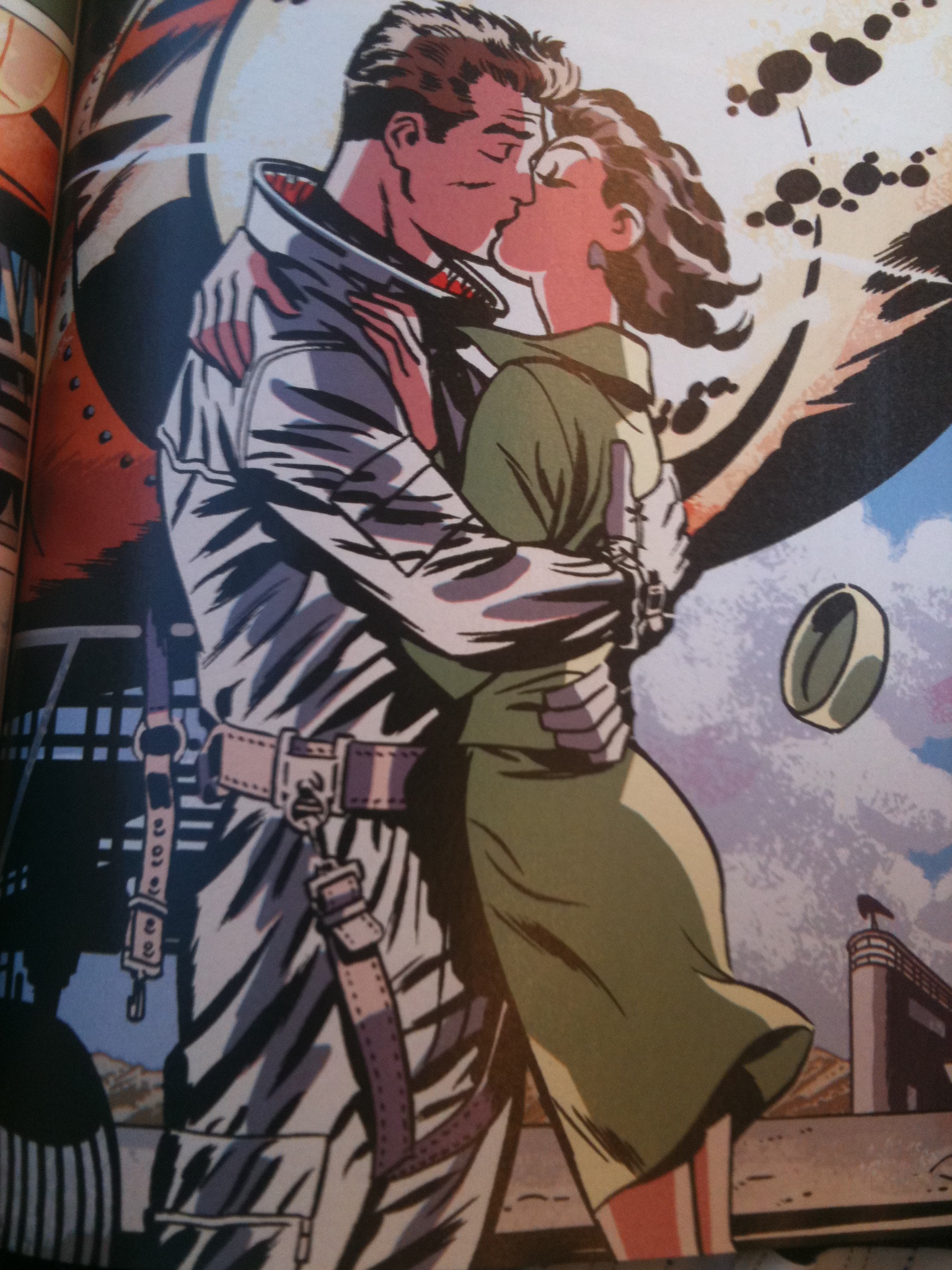
When one of my friends found out I was reading comics again, she accused me of reading ‘tosh’. I suppose it is, but only to the extent that most fiction – be it radio, cinema, TV and novels – is ‘tosh’. And some of it is very far from tosh indeed. Equally, I’ve been surprised how many people I know have also turned out to be fans of comics, quietly chipping in with recommendations and suggestions when I’ve mentioned my regained love. And it is love. How could it not be with something as beautiful as this?
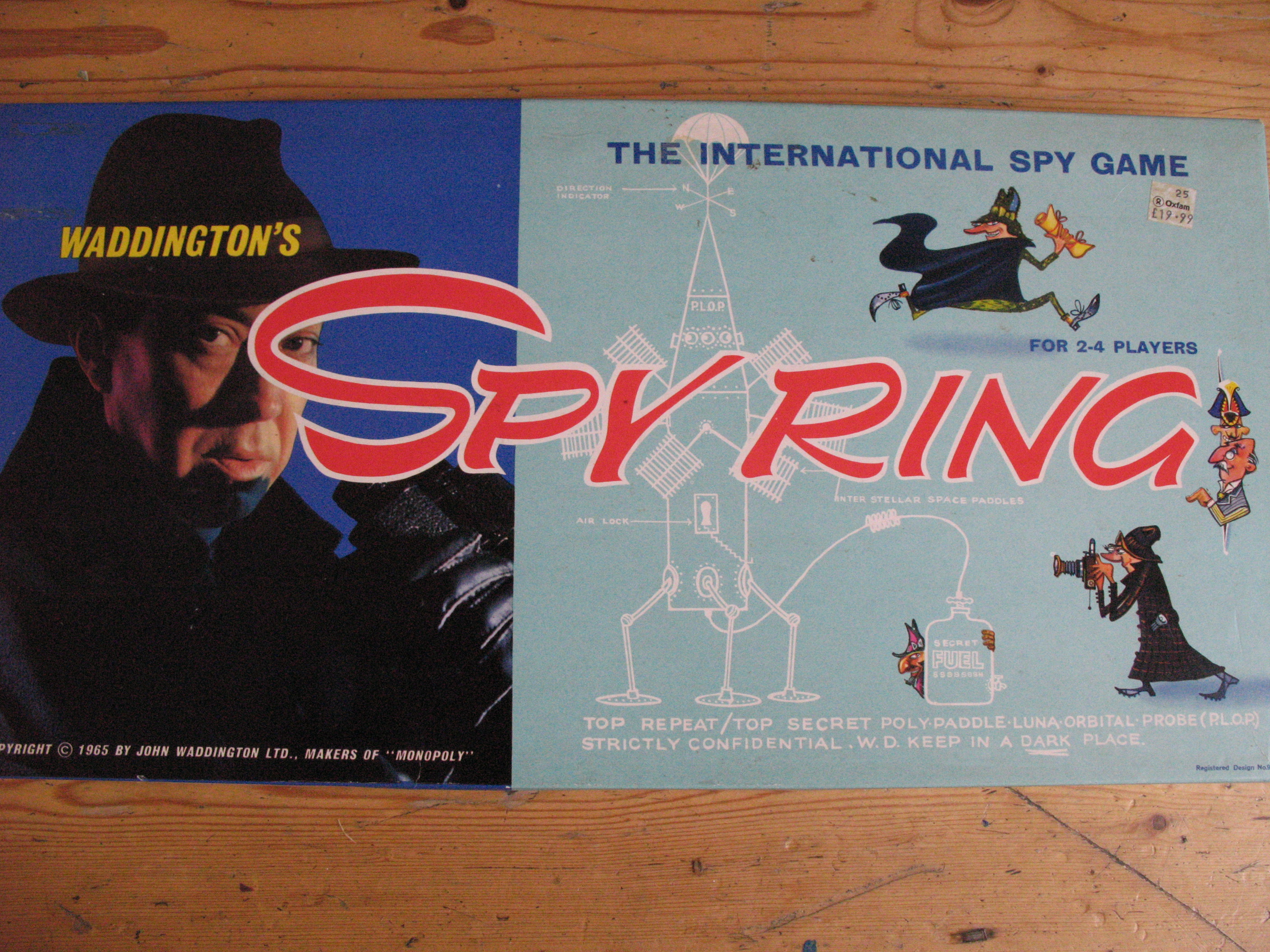
Spies have been in the news recently which got me thinking about my brief dalliance with the half-life of espionage.
I was asked to go undercover by the Sunday Times in the mid-90s. and this assignment opened my eyes as to how journalism really works, for good and ill.
I was 19 and working on the sports desk as a dogsbody, tea-maker, fact-checker and column-writer. The call went up from the sweaty suits in the newsroom – they needed volunteers who were under 25 and hadn’t been to university. My sports editor put me forward, so for the first time since the Lesbian Avengers broke into the building and chained themselves to the desks, I trundled into the office where the serious journalists worked.
The story went thus: the ST editor had been having dinner with an old friend, who told him that some universities – mostly former polys – made it far too easy for students to get their degrees. Some of the tutors practically wrote the essays and answered all the questions in exams. They did this, so I was told, to increase the pass rate, which meant the universities got more funding.
The editor thought it would be a whizzbang idea if he sent a couple of journalists undercover, to enrol as students at former polys and reveal this nefarious business to our readers. And on this flimsy basis, I was to be given a large weekly stipend, leave of absence from the sports desk and an unlimited supply of pink chits – the blank taxi receipts that were the most highly valued currency in the building.
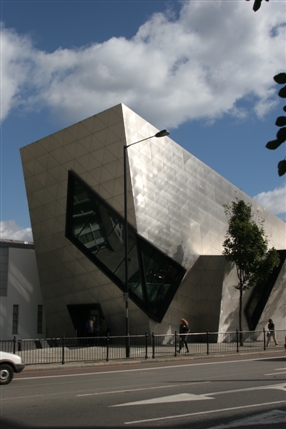
So I did it. I went to the University of North London on Holloway Road and enrolled in the only course they had left: Irish Studies. I was comfortable with this. I had recently left a Catholic school, so I’d been surrounded by plastic paddies for the best part of a decade, drank Guinness and could name the Republic of Ireland first XI without flinching. I came up with a cover story about my dad being from Ballymena but never talking about his Irish heritage, and winged it from there. They probably smelled a rat straight away – nobody was shy of talking about their Irish background in the mid-90s, when the craic and Big Jack were all the rage.
My brief was to get close to the students and ask them leading questions about the nature of the tutoring they received, so I went to lectures and then hung out with my fellow students in pubs, drinking on expenses and getting free cabs home. It was quite the thing. Who wouldn’t relish the chance to get to play at spies?
I quickly discovered three things.
I wasn’t a very good spy. I kept forgetting to record conversations or got drunk and couldn’t remember what had been discussed. I couldn’t think of any leading questions and regularly forgot my cover story.
I wasn’t a very good student. Studying bored me senseless and I couldn’t write the sort of essays required by universities.
This wasn’t a very good story, and even if it had been I didn’t want to write it. My fellow students were all older than me and from a far more disadvantaged background. They were genuinely enthused about this opportunity to receive further education and many of them had left secure jobs so they could do so. I had absolutely no desire to stitch them up at the bequest of the public scho0l and Oxbridge educated bigwigs back in Wapping, not for all the pink chits in London.
Like a double agent, I strung both groups along for a few weeks – the students, cos I it was fun; the journalists, because my access to taxi receipts had made me a minor legend among the peewees in the corridors of Wapping. But the whole thing was making me increasingly uncomfortable – having to lie to everybody – and I was really very bored of studying, so I wrote a heroically non-committal wrap-up memo to the news editor and then got the sports editor to insist I was recalled.
Another journalist had enrolled at a different University and he stuck it out. After he’d done a full year, he ended up writing a SENSATIONAL two page expose that amounted to a whole lot of nothing, as he freely admitted.
And what did I learn from all this? A few things, all chastening. One was that newspapers made decisions about stories based on whims or chance encounters, and would follow these through to the bitter end even when it was clear there was nothing to write about, and that I wasn’t very good at doing this. Even if it had been a good story, I wasn’t tenacious enough to exploit it.
The other was that I would never be a successful spy.
Seeing Mesut Ozil dismantle England so deliciously yesterday reminded me of one of the first times I felt those confusing stirrings of desire towards another man. His name was Georghe Hagi, and after watching this in 1994, I was smitten.
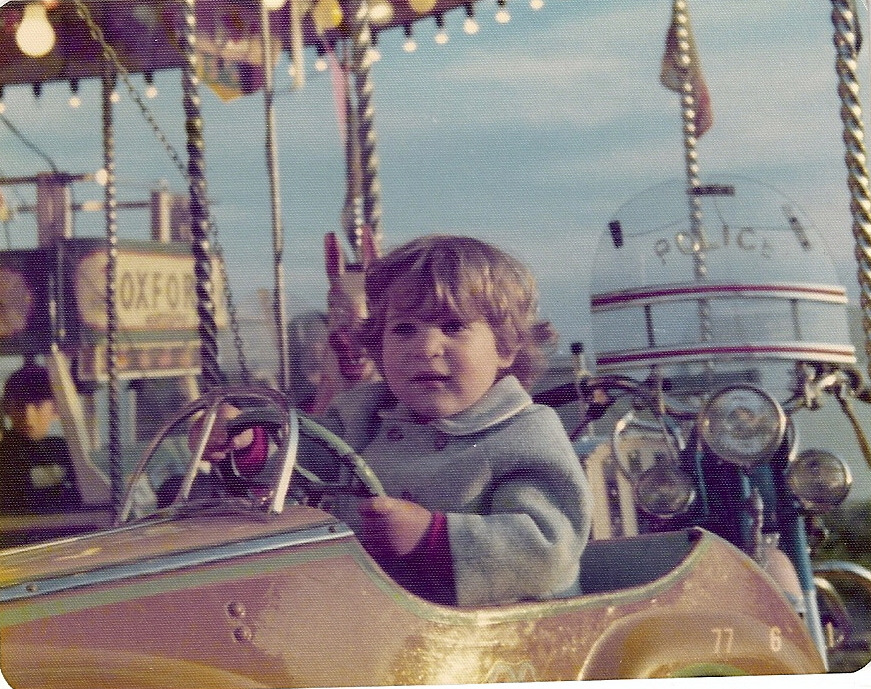
This week, I went to the fair at Brockwell Park. I don’t have a picture of that, but here’s me at another funfair in 1977. I was not a particularly pretty child, nor a thin one, nor one that actually looked all that much like a boy. And what is that coat I’m wearing? But along with a photograph of me and my dad riding the dodgems taken a year later – me marginally cuter, he like the Brummie James Dean – it is one of my favourite images from my youth.
That’s because it was taken at the Epsom Derby funfair, where we went as a family every year. It is almost impossible for an adult to now understand how exciting the funfair is to a small child – the colour and clatter of the rides, the sweet smell of popcorn, onions and candy floss, the sheer thrill of being outside after dark – but this picture brings a lot of that back to me. It’s a pure pleasure, one without any compromises or guilt. By contrast, most grown-up fun tends to come with the feeling that one is doing something one shouldn’t, and will pay for it later, either with a hangover or an empty wallet. Or perhaps that’s just the Catholic in me talking.
When I was a teenager, fairs were still about thrillseeking, just in a different way. There were the rides of course, but now it was more because this was were you went to meet girls (or watch your friends meet girls, or watch your friends talk about how they’d like to meet girls). You also went along in fear/search of some real danger – the possibility of getting chased round the park by the semi-mythical Roundshaw gang, who supposedly spent every evening roaming the borough, looking for people to beat up. Such bifftastic activity has been circumvented by the organisers of the Brockwell Park fair, who have a ‘No Gangs’ notice prominently displayed and a police van on constant vigil. I’m not sure whether this is a good or a bad thing. The parent says ‘good’, the teenager says not.
And it’s as a parent that I take my daughter to the funfair every time it comes to Brockwell Park. That’s partly for her sake, because she loves it so much, but it’s also partly for me, because I want to remember what it’s like to feel this way.
Here she is last week, on a violently orange airplane.
I read an article last week about the dishonesty of most funfairs, how it is impossible to win any prizes and the whole thing is essentially a tiny, tacky, travelling confidence trick. It’s very difficult to visit the fair as an adult and not see the sleaziness. But to a child, unaware that the coconut might be glued to the stand, this is paradise. It is wonderful to witness, but also slightly depressing, because it is impossible to share in the innocence, to see the funfair through an eye unstained by prejudice.
My daughter had more fun at Brockwell Park funfair than I think it is possible for an adult to comprehend, when everything is costed in terms of money and time. I hoped that when I went with her, I’d vicariously absorb some of her glee. And I was happy to see her happy, but I also ended up wallowing in nostalgia and misremembered romance. Is that such a bad thing?
This guy knows what I mean, or at least I used to think he did.



 The Great Wen