Category Archives: Museums

The Pre-Raphaelite Brotherhood in London

Tate Britain’s rather brilliant exhibition on the Pre-Raphaelite Brotherhood opens this week. It cover much the same ground as the recent and slightly more brilliant Cult of Beauty at the V&A, but with  – naturally – greater emphasis on the visual arts over the decorative.

One interesting thread running through the exhibition is the use of London as a landscape. The PRB were all connected to London and liked to paint outdoors so the city naturally appeared in a number of their paintings, often uncredited. This painting by William Holman Hunt – Rienzi, Vowing To Obtain Justice – was painted outdoors in Lambeth and Hampstead Heath, while famous images like Ophelia by John Everett Millais used the countryside of now suburban Ewell as the backdrop.

Another of the most famous PRB paintings is The Death of Chatterton by Henry Wallis, a tragic tableaux in which London’s skyline can be glimpsed through the open window. The vividness of Chatterton’s hair, incidentally, really has to be seen in person if possible.

More obvious London images were to follow. This is Charles Allston Collins’ bucolic take on May, In The Regent’s Park, from his home in Hanover Terrace. Collins was not an official member of the PRB, but his style was sympathetic and this was considered ‘absurd’ when first exhibited, though presumably not because of the sheep seen frolicking in the park in the background.

Also closely affiliated with the PRB was Ford Madox Brown, and his wonderful view of Hampstead from his bedroom window – An English Autumn Afternoon. Again, this was considered ugly by contemporary critics. Kenwood House can be seen top left, but London remains a distant – if rapidly advancing – presence.

Brown offered a very different and more recognisable take on Hampstead in perhaps his greatest painting, Work, which depicted navvies digging up a Hampstead road to lay water pipes. It’s a marvellous evocation of a London street and I’m pretty sure those navvies are still laying water pipes in London to this day. See them all at Tate Britain from Wednesday 12 Sept, 2012.

Londoner Challenge: the beautiful South

We won.

Many thanks to my illustrious team mates, our competitors, the Museum of London and Matt from Londonist for putting on such a fun night.

A sample of the questions are posted below. 

  • What pub name can be found on Newman Street, Berwick Street, Kingly Street, Rupert Street and Bennett Street?
  • What’s the only street name within the City of London that ends in the word ‘Road’?
  • Which current production completes this sequence: The Woman in White, Monty Python’s Spamalot, Priscilla Queen of the Desert and…
  • According to A Day in the Life, by the Beatles, how many holes would it take to fill the Albert Hall, assuming it’s the same as the number of holes in Blackburn, Lancashire?
  • In which London museum might you find a jar full of moles, half a pregnant cat and the penis bone of a walrus, all on prominent display?
  • What gets divided up between the monarch, the Vintners’ company and the Dyers’ company on the Thames each year?
  • Who was the last English monarch to enter the House of Commons?
  • At the 1948 London Olympics, the British amateur football team was managed by the great Matt Busby. What unlikely item did he hand out to his players at half time, in accordance with the sponsors’ wishes?
  • Who are the “Official Supplier of Cereal Bars To The Olympic and Paralympic Games”?
  • What can be found in Earl’s Court and King’s Cross St Pancras Tube stations, but is missing from Barons Court Tube?

Turing at the Science Museum

There’s a rather fine exhibition at the Science Museum at the moment about Alan Turing, the pioneering computer scientist and philosopher who was born 100 years ago. What particularly appeals is that while there is only a limited number of objects, all of them matter.

This is hefty stuff, invaluable weighty objects that demand attention – so it’s blockbuster, but not in the usual way of throwing everything at a room in an attempt to wow the audience into submission at the sheer scale of things. Instead, the museum has cherry picked a dozen important objects that most reflect Turing’s life – the life of one of the most important figures of the 20th century – and let them tell the story. As the curator David Rooney told me, ‘A lot of what Turing did was very abstract. We wanted to show it had a real impact on the world.’

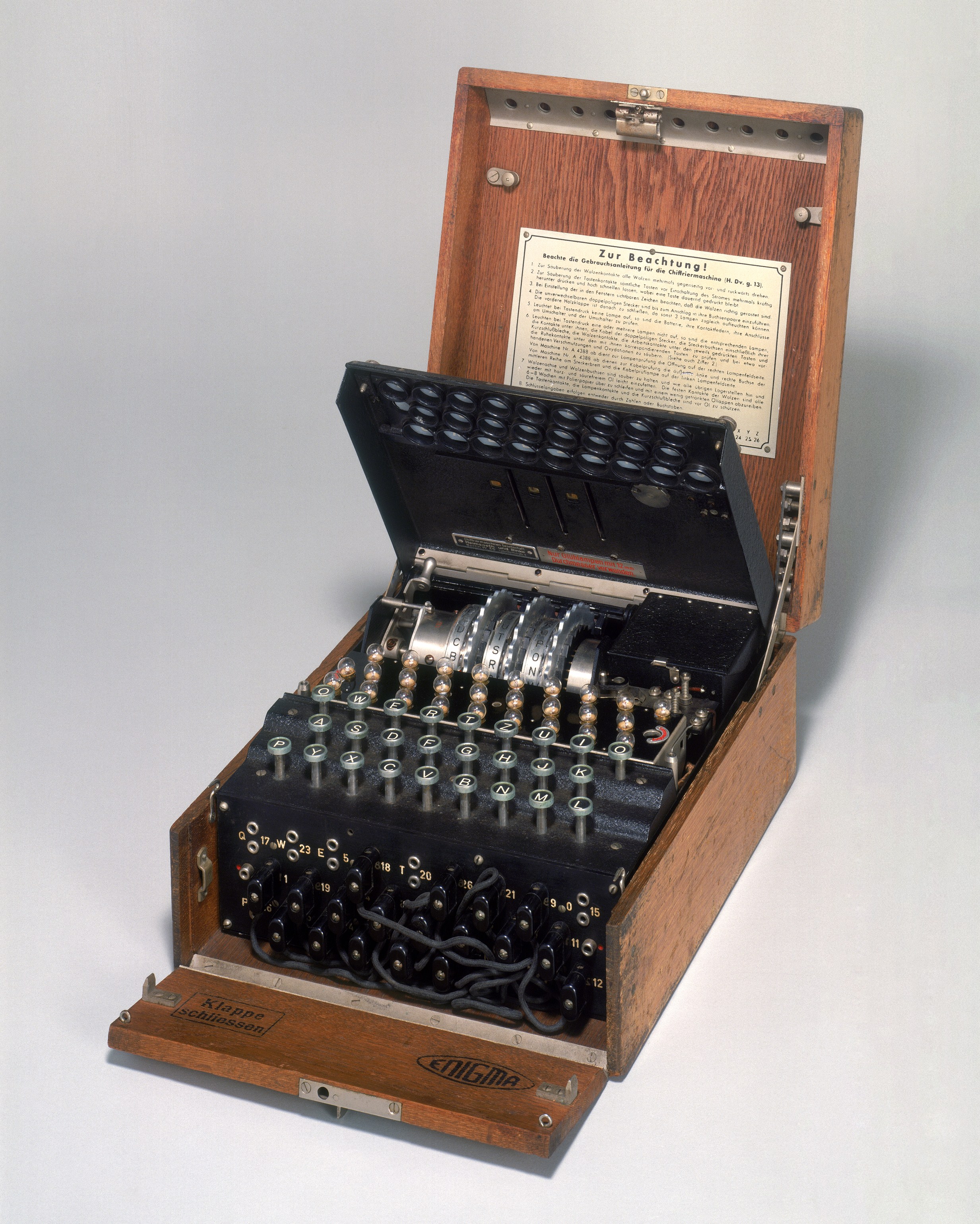
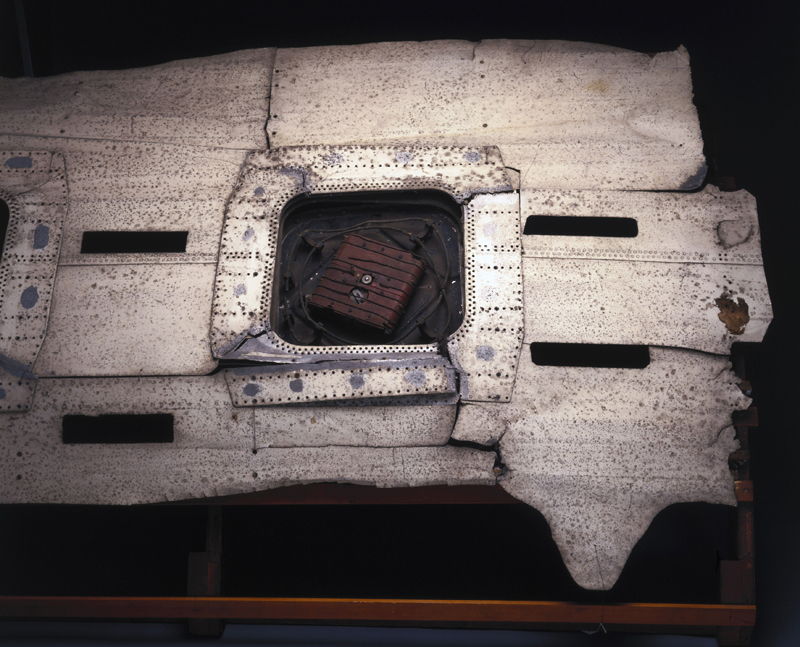
Featured items include an Enigma machine on loan from the secret staff-only museum at GCHQ, the Pilot ACE (one of the world’s first computers), a cybernetic tortoise, a 1930s differential machine made out of Meccano, Turing’s pathology report (which shows he drank a large amount of cyanide, more than you could consume by accident or put in an apple) and a section of a crashed Comet jet, which the Pilot ACE was used to analyse to see why it exploded in mid-air.

Enigma machine

Crashed Comet G-ALYP, 1954.

Pilot ACE

Meccano differential analyser

Here’s a film of the tortoise in action.

My favourite thing in London

The other day, I saw this board outside the Big Red Bus tourist shop near the British Museum and decided straight away that it might be my favourite thing in London. It was so striking, with such a warped sense of perspective and bizarre mishmash of London stereotypes.

I wanted it.

I decided that I would go inside and ask how much it would cost to buy it, but first I stopped and looked at it awhile. Questions entered my head.

What is a Grenadier Guard doing outside Downing Street? If he’s not on duty, why is he wearing his uniform and if he is on duty, which he shouldn’t be, why is he holding the hand of a small foreign bear? What is Paddington Bear doing so far from his comfort zone of Paddington without Mr Brown or any of the Brown family? Why is Paddington Bear standing behind the Grenadier Guard in that curious position? Are Paddington Bear and a Grenadier Guard even particularly relevant symbols of London life in 2012? And is it just me, or does the whole ensemble look rather like a surreal take on something you might see on Crimewatch featuring a stranger caught on CCTV camera leading a small child away from a shopping centre?

I still wanted it though, maybe now more than ever.

While I was plucking up the courage to go inside an ask, two Italian tourists came strolling down the road. They saw the board, giggled, then handed me their camera and asked if I could take their picture. After arguing over who would be the bear and who would be the guard, they poked their heads through the holes. I took a photograph, they thanked my fulsomely and moved on, laughing and chatting, relishing this rare free moment of childish fun in the sterling-sapping city.

I realised then that the need of London’s tourists was greater than mine. I could always come back, but they would only ever have their photographs. I went home, contented.

Dickens And London at the Museum of London

This review was published in the Independent last week but has not surfaced online.

It’s going to be hard to avoid Charles Dickens in the next few months. The writer will be everywhere, as publishers, programmers and producers commemorate the 200th anniversary of his birth on February 7, 2012. The best celebration of Dickens’s legacy could be this illuminating exhibition at the Museum of London. It’s an imaginative look at a familiar subject, and represents the best of what a museum can do.

This is no staid trawl through Dickens’s back catalogue but a vivid evocation of Victorian life based around themes from his books, from poverty to innovation. Sure, the big objects like Dickens’s writing desk or his manuscript for Great Expectations are there to grab the attention, but this drama is complemented by Victorian minutiae, the fascinating bric-a-brac of everyday life, everything from rent arrears books and mourning wands (wooden sticks carried by footmen ahead of funeral processions) to clay pipes, Punch and Judy puppets, model trains and Dickens’s soup ladle.

The exhibition is more than objects. There are mournful photographs of Victorian buildings that Dickens wrote about but have since disappeared, and a short film by William Raban that meanders around modern London while an actor recites Night Walks, Dickens’s essay about the sleeping city, drawing subtle parallels between his time and our own. The film is a rare chance to wallow in Dickens’s own voice, but neither this nor the manuscripts are quite as impressive as Dickens’s reading copy of Oliver Twist. This is the book he used on reading tours towards the end of his life; words and sentences are underlined for emphasis, and melodramatic stage directions (‘Action’, ‘mystery’, ‘terror to the end’) are scrawled in the margins.

The Strand, Looking Eastwards from Exeter Change, London

Most rewarding of all, though, is the art. There’s classically sentimental Victoriana, such as William MacDuff’s Shaftesbury, which shows two urchins looking in a shop window like something by Norman Rockwell. There’s the fascinating documentary sketches of George Scharf’s, who drew the people he saw on streets acting as human advertisements, in colourful costume and carrying eye-catching signs for shows and products. And there are many detailed depictions of Victorian street life, which owe a clear debt to Hogarth. Phoebus Levin’s ‘Covent Garden Market’, Caleb Robert Stanley’s ‘The Strand, Looking Eastwards From Exeter Change’ and especially Edmund John Niemann’s ‘Buckingham Street’ portray a city of energetic bustle, cobbled streets and vicious contrasts of wealth that are the visual embodiment of what we still call Dickensian London.

Museum of London, 150 London Wall, EC2Y 5HN (020 7001 9844). Until June 10, 2012. Admission £8 (£7 advance booking); concs £6 (£5 advance booking).

Buckingham Street, Strand, London

Art of Mapping at Air Gallery

The Art of Mapping at the Air Gallery in Mayfair is the latest exhibition to take mapping as its inspiration. It consists of 34 contemporary works that are based on maps, some more loosely than others.  Among those familiar to map freaks will be Grayson Perry’s Map of Nowhere.

Stephen Walter, who created the magnificent, possibly definitive London map, The Island, also features with two different works, Isle of Dis and Down River.

Maps of cities dominate (perhaps a little too much), and London is heavily featured. Prominent is Simon Patterson’s The Great Bear, perhaps the first map to mash-up Beck’s Tube map and deserving of praising for that, even if I’ve always found the Bear map itself rather dull.

I was, however, fascinated by Jeremy Wood’s My Ghost, which used GPS to map nine years of movement around London, creating a spidery thread that created an approximate outline of the city’s streets.

My Ghost

Jeremy Wood's My Ghost

It reminded me of a similar project undertaken by London cab driver Richard Cudlip. Similarly, I liked Rob Good’s Two Cities, which reproduced a stencil of the south-east of England shorn of anything manmade, and mounted powerfully on stainless steel.

Two Cities

Rob Good's Two Cities

There was something in both these maps about landscape and the way humans interact with it which is best expressed through contemporary art. Many of the maps seemed to promote this similar sense of alienation with the city, making it a stark contrast to the Museum of London’s recent Londonist-inspired exhibition, which emphasised the way areas of a city can become as familiar to us as our own bodies.

Stanley Donwood’s London was a more colourful and less ambitious version of The Island, emphasising that where Patterson’s Great Bear introduced a concept others could better, Walter has created something that will probably never be matched.

Stanley Donwood's London

The last London map was Nigel Peake’s XXXIV Crossings, which was a lovely stylised look at London’s various river crossings, overlapping chaotically. Nigel has created a lovely book on a similar theme, featuring London’s bridges drawn in various ways.

Nigel Peake's XXXIV Crossings

Away from London, I also loved Susan Stockwell’s Jerusalem, which reconstructed a map of the British Isles out of recycled computer components, and Emma Johnson’s Dislocation: Time And Place, for which she had taken a pair of scissors to a map, removing streets and parks and then reconstructed it in  an overlapping 3D effect, like a pop-up plate of paper spaghetti.

The Art of Mapping, curated by TAG Fine Art, is at Air Gallery on Dover Street until Sat November 26.

Secret London: the Temple of Mithras goes back where it came from

The Temple of Mithras is one of London’s most easily viewed and best known Roman sites, but it is also one of its crappest. The temple has been in the wrong place pretty much ever since it was discovered 50 years ago and now sits unimpressively in a bed of a concrete in front of a banal office building in the City (image below from Knowledge Of London).

The Temple of Mithras: ‘crap’

All that is about to change. Next week, Museum of London Archaeology will begin a three year project that will put the Temple back where it belongs, and restore it to something closer to its original form. They will also do a little digging, to see what else they can discover.

The Temple – a shrine to an Iranian god who was said to have killed a mythical bull – was found by archaeologist WF Grimes  in 1952 on Walbrook. The cult was adopted by the Romans in 1 AD and the temple – probably built in around 250 AD – would originally have been a subterranean space where bulls were sacrificed. Archeologists had suspected there was Mithran temple in London since 1889, after the discovery in Walbrook of a relief depicting the god killing a bull but it was only uncovered after the Second World War, when the area suffered heavy bomb damage and became ripe for development.

A statue of Mithras were found buried beneath the temple, and it may well have later been used by followers of Bacchus, as Mithraism went into decline. Mithraism is sometimes seen as a precursor to Christianity, although I don’t know enough about that to possibly comment.

The temple was dismantled shortly after it was discovered so the construction of Bucklersbury House could continue. The material was put into storage and many of the statues loaned to the Museum of London. In 1962, the temple was reconstructed on Queen Victoria Street, 90 metres from its original site at ground level, embedded in the courtyard of a City office block. It was a particularly dismal and unsympathetic treatment of a genuine archaeological curiosity. Most people had no idea what it was, and even if they did, it was very hard to care.

The site is now owned by Bloomberg, and they are about to start dismantling the temple by removing it from the cement that currently encases it, and then reconstructing it on its original site in what they call ‘a purpose-built and publicly accessible interpretation space within their new building’. This will take three years, but many will rejoice that it is happening at all.

This Charming Man: Edward Lovett at the Wellcome Collection

I have a small piece in the Independent about the fascinating  Edward Lovett, whose collection of lucky charms, collated around 100 years ago, has just gone on display at the Wellcome Collection.

Lovett, who lived in Croydon, was a banker and self-taught folklorist who was interested in those items that everyday Londoners kept about their person in aid of good fortune or to ward off bad luck. He would travel to the East End and docks to purchase samples of these lucky charms, which could be anything from a dead mole in a bag to a copy of the Lord’s Prayer written in careful handwriting in a spiral on a tiny scrap of paper dated 1872.

Many of the owners would claim not be superstitious, but then explain in hushed tones how a certain coin or nut or shoe had saved them from disaster; numerous items were from soldiers who had taken them to the Western Front in the First World War.

It is an extraordinary and humble collection, but one that grew so vast that Lovett’s wife eventually left him in despair in 1925. At around this time he wrote a marvellous book – Magic In Modern Love – in which he chronicled some of the items from his collection, but in a delightfully haphazard way, rarely bothering to say exactly where he bought them or when or from whom.

Felicity Powell, the artist who is curating the exhibition for the Wellcome, says, ‘He was not the most diligent of reporters. The labelling is often non-existent, which gives the items real mystery. Sometimes you can’t even be sure what they were for so you have this open space in which to speculate.’

Because Lovett was mainly collecting from the docks around east London, the collection gives a real perspective on London as a trading city that used the river to connect with the wider world. ‘There are objects from all over the world,’ says Powell, ‘There’s even an Inuit paddle.  It all came through London and into the hands of dockers and hawkers. We don’t know if these originally belonged to immigrants or natives. We don’t even know if he was collecting authentic objects. Did the people selling them see him coming?’

Lovett died in 1933 and much of his curious collection was absorbed by the Wellcome and the Pitt-Rivers Museum. It is rarely seen by the public. The exhibition at the Wellcome Collection runs until February 26, 2012.

London’s mapping renaissance

The growth of online mapping – as seen by the excellent London Mapping website, which collects some of the best digital maps around – has not meant the end of paper maps.

Image of Untamed London

I’ve mentioned Herb Lester‘s lovely themed maps before with reference to their 1960s map of London’s West End, Wish You Were There, and they continue to add new maps to their range, branching into different cities and themes while maintaining an impeccable eye for design. Untamed London, for nature-lovers, is their latest offering.

I’ve also finally got my hands on the Museum of London’s Londonium map and it is hugely impressive. This has been produced by MOLAS, the Museum of London Archeological Service, and is a huge map of the City, with the Roman topography superimposed over a plan of the contemporary city – a little like a paper version of the technology used for the Time Travel Explorer app.

Key Roman finds are listed, with an explanation of what they are and how they can be accessed, while the reverse side has a potted history of Roman London, with many illustrations. The map is printed on good thick paper so won’t tear easily (a constant problem for frequently folded paper maps), and works beautifully as both a decorative item and a practical plan for hunting down the existing remains of Londonium.

It costs just £6.25 and should it prove to be a big seller – which I imagine it will – I hope the Museum can persuade their friends at MOLA to produce more maps along the same lines.

One for the Olympic Park at around this time next year, perhaps?

Pirates from outer space

There are a couple of particularly interesting exhibitions open in London at the moment, and I’ve reviewed both of them for the Independent. The first is Out Of This World: Science Fiction But Not As You Know It, a thorough exploration of genre fiction at the British Library that offers much of interest for the careful reader, while the second is the Museum of London Docklands colourful Pirates: The Captain Kidd Story.

There’s plenty of London interest in both, from the apocalyptic and despotic visions of a future London by everybody from HG Wells to Alan Moore at the British Library, to the fascinating relationship between London’s rich and powerful and common pirates that is explored at the Museum of London Docklands.