Category Archives: London

A punch up the bracket: BS Johnson and Anthony Aloysious St John Hancock

In a comment on my previous post about BS Johnson,  BB writes: ‘To issue a threat ending in “up the bracket” is so much of its time it made me laugh out loud. I had a couple of jobs that involved working with men in their late 50s and early 60s, real Londoners,  and they had a particular argot and mode of expression, which was always making me laugh. Enquiring as to whether you wanted a punch up the bracket was a regular occurrence.’

I also love this phrase, and associate it with another of my heroes, Anthony Aloysious St John Hancock, the greatest British comedian of all time. (There’s a great piece about Hancock here, noting the similarities between Hancock and Seinfeld as well as Hancock’s use of ‘punch up the bracket’.)

Hancock and BS Johnson have much in common. Both were aspirational working-class/lower middle-class men defined by the 1950s who spoke in the language of outer-urban post-war London. Both were men of keen wit and sharp intellect who enjoyed – or couldn’t help – skewering their own occasional lapse into pomposity. Both were depressives with a gift for pointed, painful comedy. Both killed themselves. They even looked similar: thick, heavyset men with wounded eyes. And, most importantly, both referenced Chelsea in key texts (Hancock in ‘The Football Pools’ and Johnson in ‘Albert Angelo’)

I once interviewed Tim Lott – or was it Toby Litt? – who suggested that Hancock was London’s answer to the Angry Young Men of 1950s northern working-class fiction, and there’s something this, though I’m not sure Sillitoe or Wain ever came up with anything as dark as Galton and Simpson’s ‘The Poison Pen Letters’, in which Hancock is so consumed by self-loathing he starts sending himself hate mail in his sleep.

But this is something you can imagine BS Johnson writing, another angry, sad, brilliant man who went raging into the tragedy of premature death.

My London Library: No 4 – Street Children

  • Title Street Children by BS Johnson (text) and Julia Trevelyan Oman (photographs) (Hodder & Stoughton, 1964)
  • Cost £120 (yes, £120!)
  • Bought from Maggs Books, Berkeley Square
  • Genre Photographs

I became fascinated by BS Johnson after seeing the under-rated film adaptation of Christy Malry’s Own Double-Entry and then reading Jonathan Coe’s splendid biography, Like A Fiery Elephant.

Johnson was a London novelist and suicidal Chelsea fan who believed all fiction was lies and killed himself in 1973 after producing a number of extraordinary books, such as The Unfortunates (adapted for radio this week), in which all the chapters were individually bound so they could be read in any order, or Albert Angelo, a semi-autobiographical, superbly located, London-set novel in which the narrator declares mid-sentence towards the end ‘OH FUCK ALL THIS LYING’ before launching into an extraordinary stream of consciousness about all the pent-up shit that was swirling around Johson’s head as he was writing it. 

It sounds heavy, but it isn’t. Johnson is funny and smart and his books are short and punchy. Read them all.

In 1964, Johnson was asked to write the captions for a book of photographs of kids at play in the streets of South London. He did so in a typically original way that utterly perplexed the publishers.

Johnson places himself inside the heads of the children and then imagines what they might be thinking, using typographical tricks to get the point across. It’s an extraordinary conceit and one that is typical of Johnson.

  • Best bit It’s all good. The photos of kids playing on carless streets are lovely, and the bizarre captions from Johnson must have given the publisher kittens when he first handed them over. Johnson is an exquisite and brutally honest writer, and the text is strange but very funny.
  • Verdict This was bought for me as a leaving present from Time Out. It is the most expensive book I own, and for both these reasons I treasure it. I also like the fact I found this small card inside that had once been used as a bookmark.

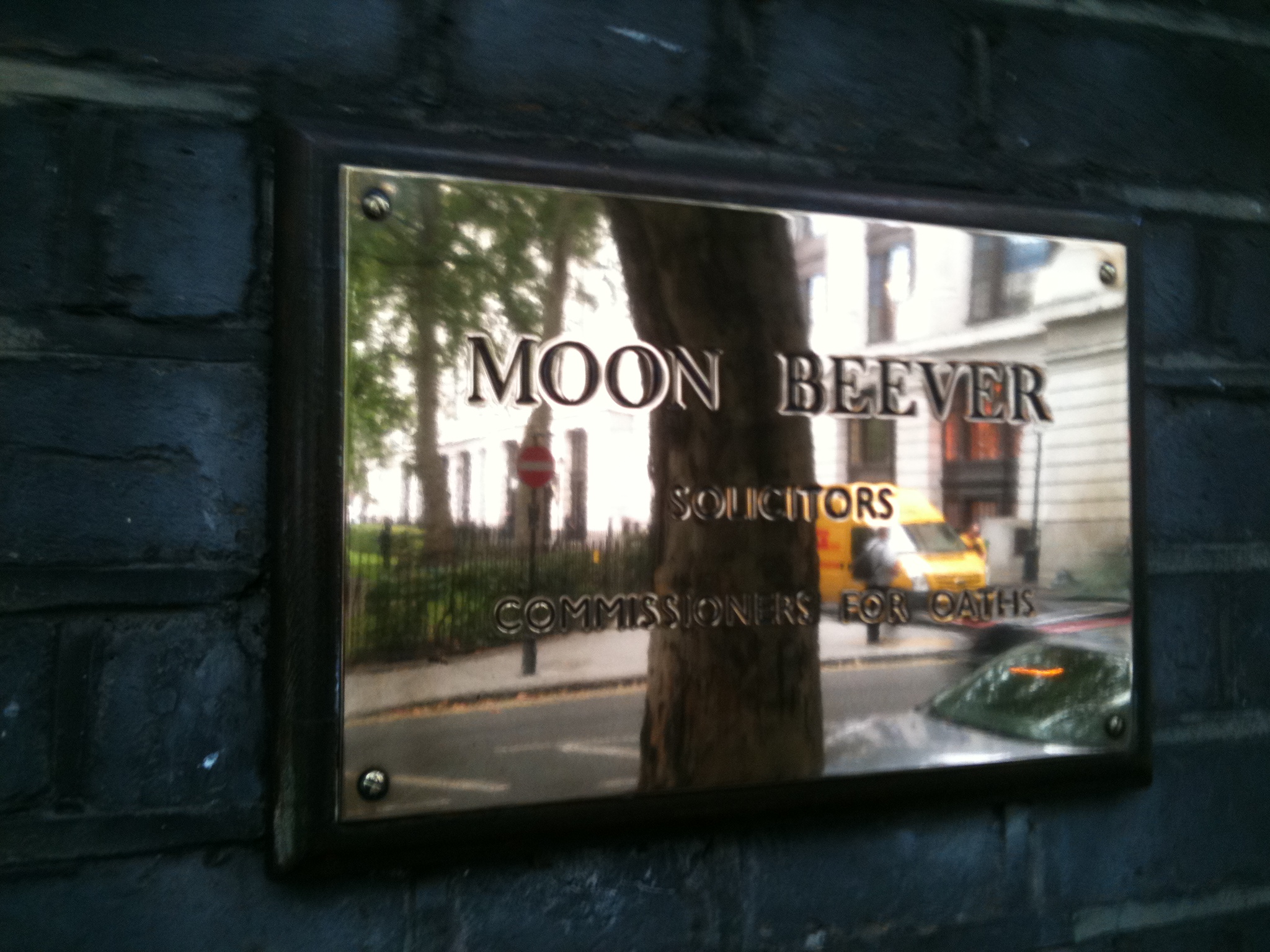
Great nameplates of London

This is probably mine. What’s your favourite? What do you mean, you don’t have one?

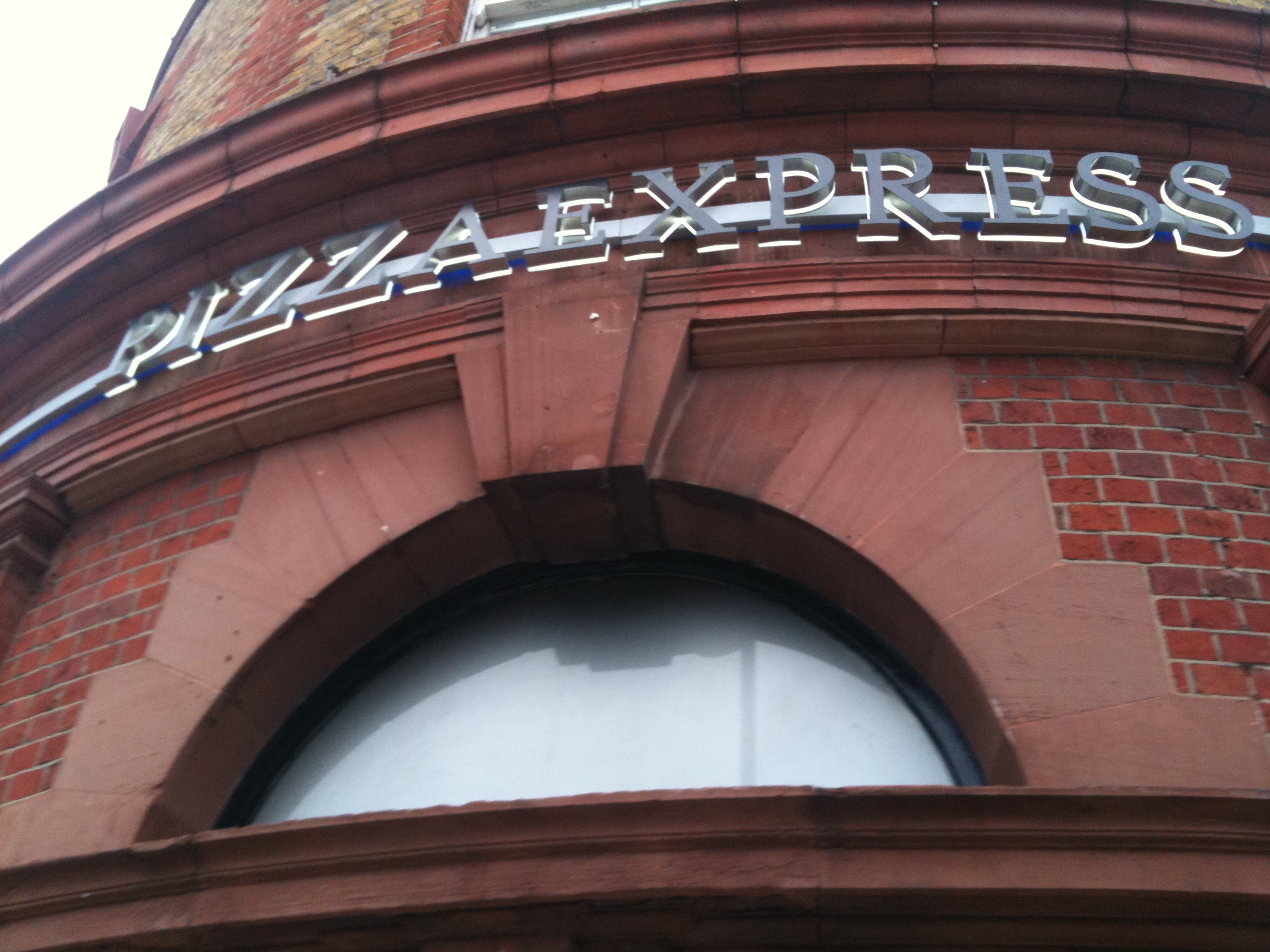
Ain’t it a chain? Pizza Express comes to Herne Hill

One of the great things about Herne Hill is that unlike many parts of London, it has managed to avoid contamination from chain stores, bars and restaurants. We have independent chemists, delis, bakers, florists, a greengrocer, DIY store, bookshop, butcher, restaurants, cafes, clothes and furniture shops. I doubt there is any area of London with as flourishing an independent economy.

It gives the place a distinctive character. You can gossip with the shop owners, get advice in the DIY shop without relinquishing your masculinity, receive and suggest personal recommendations in the bookshop, even get credit in some of the food shops if you’ve been using them long enough. You may pay for these privileges, but it’s worth it.

The only chains are Oxfam and the World’s Worst Sainsbury’s, which is best used as a short-cut between the station and the bus stop and left at that.

Until today that is.

This afternoon, Pizza Express open a branch in Herne Hill.

The site they’ve taken is incredibly awkward. It’s a large wedge, part of which is unusable because it is taken up by a bridge that goes over the top of a large – and hard to fill – lower-ground floor. It’s a space most restaurants would struggle with – indeed two Indian restaurants have failed to make it work – but which Pizza Express can make a virtue of – think of their odd-shaped branches at Charing Cross or Kennington.

The arrival of the Pizza Express behemoth has had a mixed reception in Herne Hill. Some retailers hope it will bring increased footfall into the area, parents are pleased because Pizza Express is excellent for children, but many restaurants and bars are worried it will draw away much-needed custom.

As they should be, because many of the restaurants and bars in Herne Hill – with the honourable exceptions of Number 22 and The Lido Cafe – are shit, serving mediocre food at over-inflated prices and reliant on the fact Herne Hillers have nowhere else to take their custom.

I like independent venues, but I like good shops and restaurants more. If Pizza Express’s decent food, excellent service and good value improves competition, it is doubly welcome.

But there is a fear. Where one chain opens, others follow, chasing the money, extinguishing singularity and turning streets into Clone Towns.  A redevelopment is taking place under the arches by the station. The artist’s impressions says  it will look like this.

But what’s the betting it ends up like this?

Herne Hill could easily go the way of Richmond and other indentikit middle-class outer-urbarn high streets. Be vigilant people, and support what’s best about our local economy.

Jeremy Deller’s Baghdad car at the Imperial War Museum

If the V&A’s latest exhibition demonstrates that big can be beautiful, the new acquisition at the Imperial War Museum shows that small can be profound.

It’s a car, badly damaged and barely recognisable, that was caught in a suicide bomb blast in Baghdad in 2007. The artist Jeremy Deller got hold of it and toured it across America on the back of a truck in the company of a US soldier and an Iraqi citizen for a piece entitled It Is What It Is. Now, shorn of any artistic element, it is on display at the Imperial War Museum. My review in the New Statesman can be read here.

After interviewing Deller, I avoided reading too much about the car before I wrote the piece other than this by Jonathan Jones in the Guardian. Jones, I think, slightly overdoes his praise – is it really true that ‘a dismembered body is what you immediately think of when you come into the museum and see a car’? – while the commentators beneath the line seem obessessed with the pointless and hoary argument about ‘what is art’.

They’ll never be able to answer that question from behind their computer screens because this compelling and thought-provoking piece needs to be seen on location and in context to be fully appreciated. It’s a fine and valuable addition to the IWM’s collection and makes a fascinating footnote in the history of war art.

Oh, and Jeremy Deller is one of the nicest famous people I have ever interviewed, right up there with Graham Taylor, the former England manager, belittled turnip and little appreciated ballet enthusiast.

How to tell the Story of London

The Story of London festival was introduced by Boris Johnson last year and immediately came under a lot of fire. Here’s something from Boris Watch plus stern words from Diamond Geezer.  

The festival is not a bad idea. It’s intended to cover the history of London in a way that includes all boroughs, all ages, all races and all genders – a riposte to Ken Livingstone’s habit of staging festivals for different minority groups at a Balkanised Trafalgar Square.

But it doesn’t work.

Part of the problem is publicity, and this is of the mayor’s own doing. In 2009, there was little or no attempt to promote the nascent festival by the city’s tourist office because their funding had just been slashed by Boris and they pretty much refused to help. 

The organisers then had to take their minute budget to Time Out, where I ended up knocking up a few pages to pull out of the middle of the mag that due to a hilarious production error did not actually pull out. It was nothing like the sort of lavish inserts the company can produce when given some cash and time. 

The other problem is that London already has loads of festivals – Open House, Meltdown, the London Film Festival, London Design Festival, the City of London Festival and dozens more – while institutions such as the Bishopsgate Institute regularly put on fantastic cultural events. And that’s before we even bring in the other museums, universities, galleries and scientific institutions.

 The Story of London simply does not have a distinct identity to compete with these established players.

With barely a niche to be found in London’s crowded cultural calender, Story of London has taken to hijacking and rebranding existing events, which doesn’t impress anybody. And they are so busy doing this they forget to organise any showpiece events that would help to give the festival a character of its own. Plus, they don’t have any money.

The result is a bit of a mess.

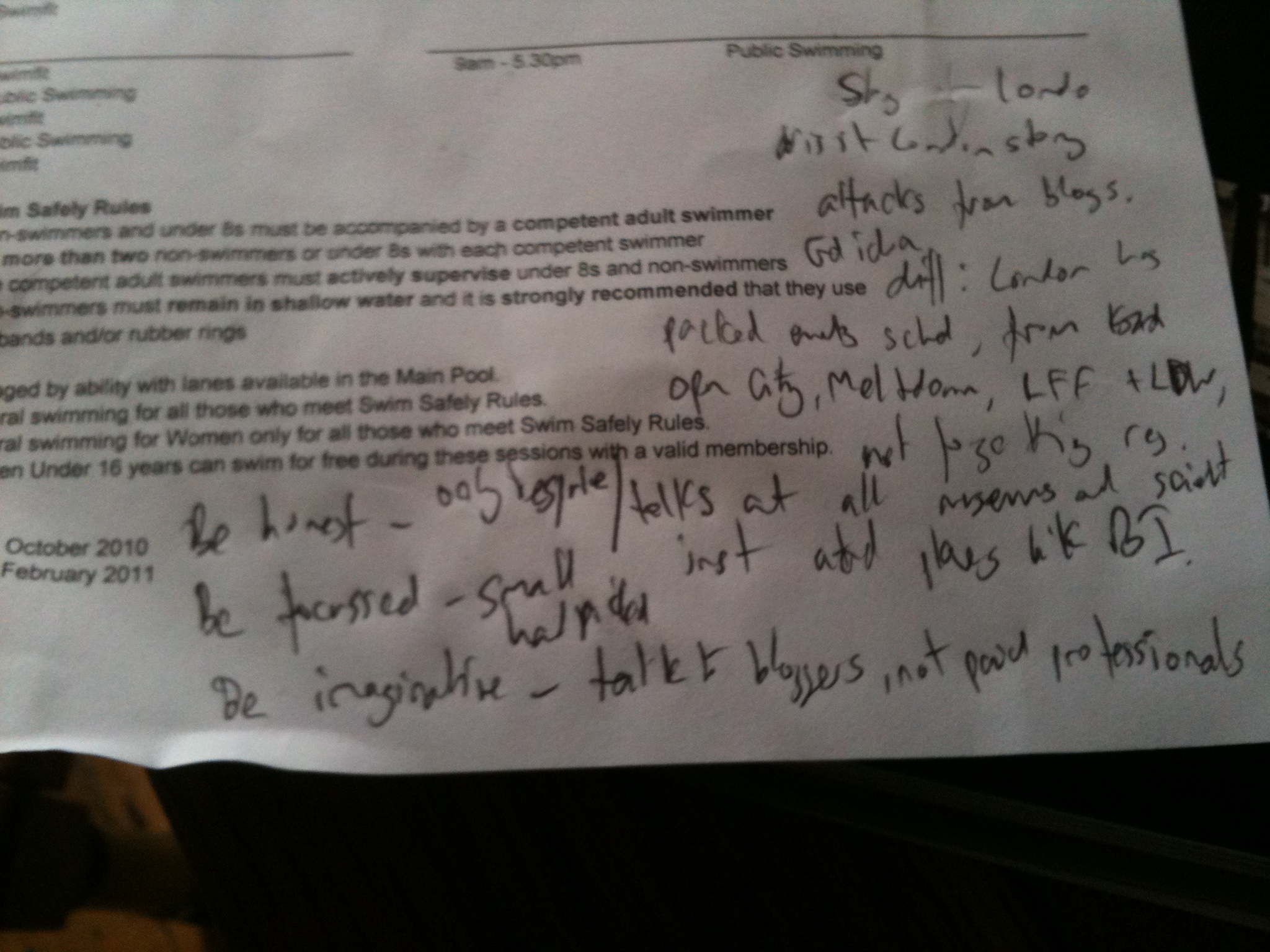
So what could they do? Fortunately for them, I was able to scribble a few suggestions on the back of a press release in between playing Secret of Monkey Island on my phone and wondering why I’ve rarely heard of a single person who appears in the Standard’s Londoner’s Diary.

  • Be honest – don’t hijack events that have nothing to do with you as it just looks cheap. And if you insist on this policy, it means that desperate organisers of terrible events will attempt to smuggle their substandard fare into your festival and you’ll have no way of keeping them out.
  • Bespoke – ensure that anything carrying the Story of London banner is new and brilliant and has genuinely been arranged specifically for the festival. That makes it fresh and makes it exciting and should ensure that you can keep an eye on the quality control.
  • Be focused – find a theme and stick to it. Make it broad and make sure that every borough has at least one institution participating. Narrow the time frame so it all takes place on a single weekend. Keep it tight at first and let it grow organically. At the moment it is a big blancmange of a festival when it should be as tight and pretty as an avocado stone.
  • Be clever – one of the best festivals the mayor currently has at his disposable is the Thames Festival, so hook the whole thing round that. A wee bit of rebranding – and yes, this is hijacking, but it’s hijacking with a point – and you have a ready-made spectacular way to close the weekend with the annual fireworks display.
  • Be imaginative – the guys from the Londonist website are already involved in one small event, but why not ask them to think up something big and crazy? These – and other – bloggers live and breath London in a way few paid professionals can compete with, so talk to them. They may not be interested, they may have terrible ideas, they may have no ideas, but they may just come up with a couple of events that curators and pros can turn into something special. Because at the moment, as Ian Visits says, the Story of London is just ‘a way for a lot of venues who are already planning to do something to get involved in a joint media campaign’.

And that’s as far as I got. LeChuck was causing all sorts of problems and I had to Google Laura Weinstock. But hey, it’s a start.

Underground again at Aldwych


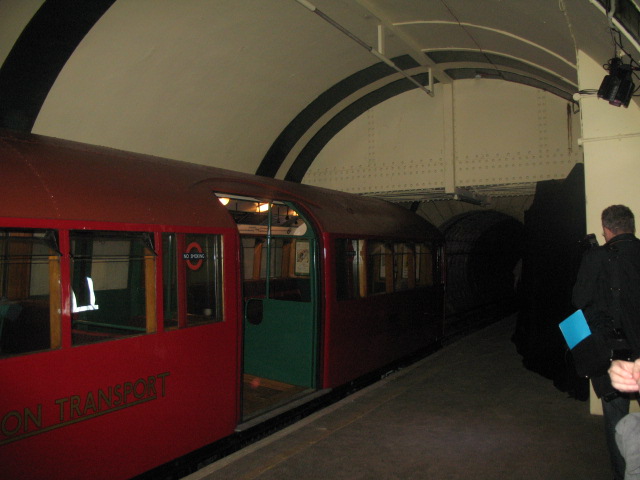
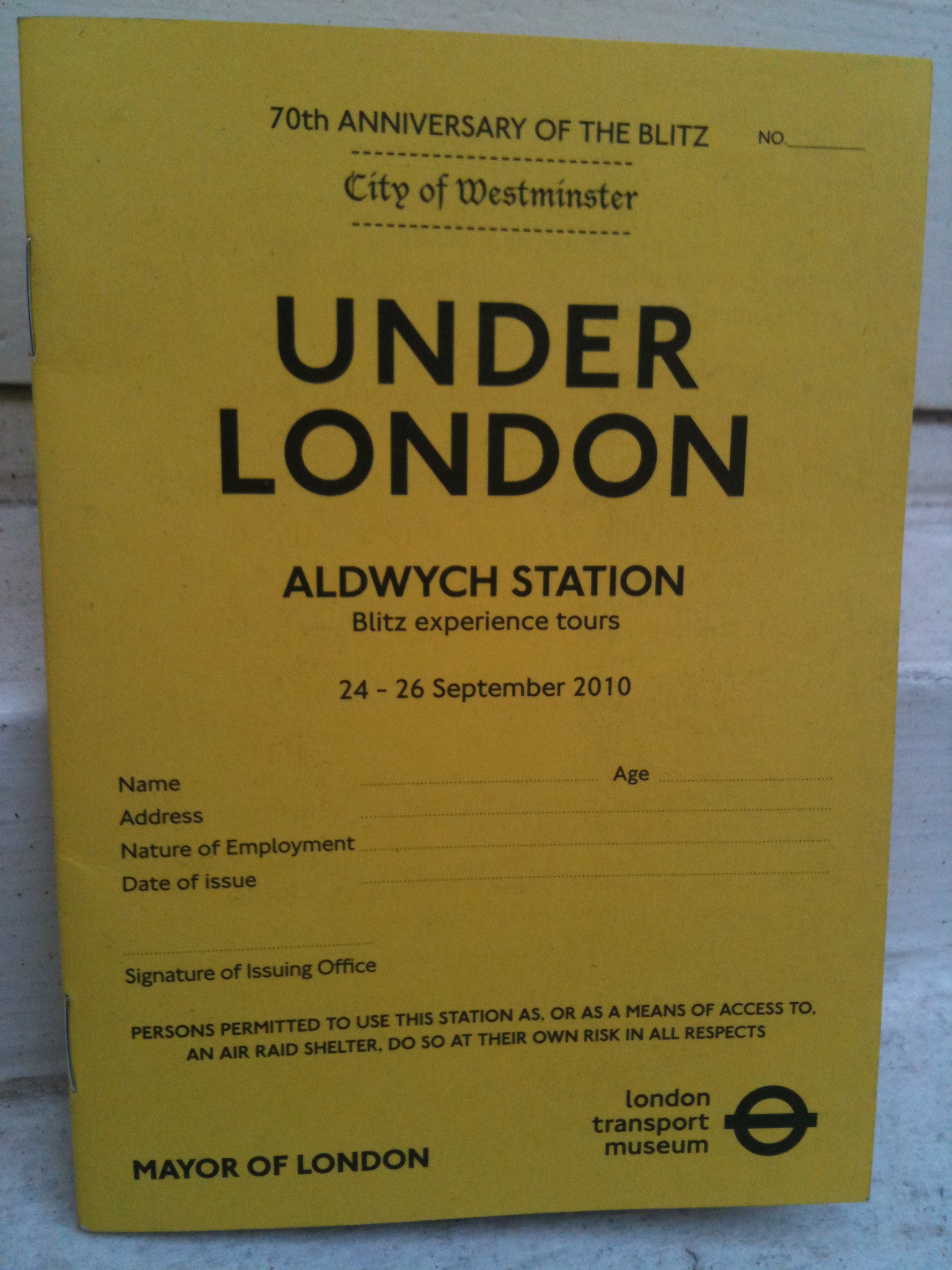
Transport for London allowed Aldwych station one of its periodic reopenings this weekend, with 1940-themed tours of the station and platform to commemorate the 70th anniversary of the Blitz.

The tours – which are completely sold out so don’t even try – were arranged to complement the Under Attack exhibition at the London Transport Museum, as explained by museum director Sam Mullins in this BBC clip.

As a part-time moleman who has never been inside Aldwych, I was down there like a greedy ferret in a goldmine. Aldwych, a pointless spur on the Piccadilly Line, closed in 1994 and its history can be read at the wonderful Subterranea Britannica or Abandoned Stations. Ian Visits and Diamond Geezer also have posts about the station.

I’ve wanted to get inside it for ever such a time.

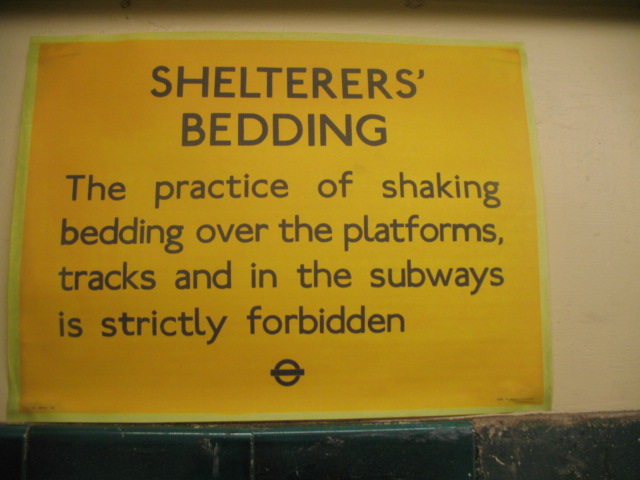
The tours begin in the neat but spartan ticket office, which is decorated with a number of wartime posters giving instruction about shelters and the blackout. You are greeted by an actor playing an Air Raid Precautions officer, whose monologue is interrupted by the forbidding wail of an air raid shelter. You meet three more such actors in the course of the tour, the best being the 1940s housewife who sits in the train down on the platform and can be quite saucy if you ask the right sort of questions.

The chance to poke around the station and listen to actors recreating 1940s stereotypes is all well and good, but the star of the show is undoubtedly the 1938 train that has been brought out of retirement for the occasion.


I’m no train nerd, but this one is a beauty, as I’m sure better photographers than I will record this weekend.

The other highlight is this cracking little souvenir book about Aldwych and the Blitz that is given to everybody who goes on the tour.

The tour ends with a deafening reconstruction of an aerial bombardment, with impressive sound and light, before the all-clear sounds and allows you to climb the steps back to the surface (no lifts or escalators, so prepare for a walk).

A recreation of the ‘Blitz experience’ is an almost impossible thing to pull off for obvious reason and this is neatly done in the circumstances, although it might have been nice to have bunks on the platform to give more of a flavour of what it was like to cower down there for a night.

Interest in the tours have been so great – an estimated 3,000 people will take part this weekend – that the London Transport Museum believe public tours of Aldwych will be reintroduced on an irregular basis in the future.

So that’s one ambition sated, only for another to take its place. Earlier this week I was talking to a curator at the LTM, who told me of his recent tour round Down Street, another abandoned station with wartime connections. It is, he told me, in ‘fabulous condition’. Anybody interested?

Diaghilev at the V&A

Two months ago I knew diddly about Diaghilev. Since then I’ve written two features about him – including this in the Independent On Sunday – and can confidently assert that this Russian-born impressario changed the face of ballet in the early twentieth century when his company, the Ballets Russes, enlisted artists and composers like Picasso, Matisse and Stravinsky to showcase the work of groundbreaking dancers and choreographers like Nijinsky and Massine. Such is the magic of journalism.

The occasion is the V&A’s big autumn exhibition, Diaghilev and the Golden Age of the Ballets Russe, which opens on September 25. It’s an incredibly rich exhibition, crammed with memorabilia and costumes and images and music. Highlights include the astonishing, undanceable costumes from Parade, Picasso and Cocteau’s ‘Cubist ballet’, the monumental back cloth from ‘The Firebird’, and a wonderful bust of Nijinsky that captures his odd features.

I’m not a great fan of the ‘blockbuster’ exhibition as they are rarely as satisfying and intelligent as intimate displays at the more thoughtful museums, but this one is a real cracker, demonstrating decades of learning and showcasing a marvellous collection of costumes bought in auction and secured in the V&A’s vaults for just such an occasion.

(There’s a nice piece here from Diaghilev’s biographer about the Russian’s relationship with London.)

My London Library: No 3 – Cockney Alphabet

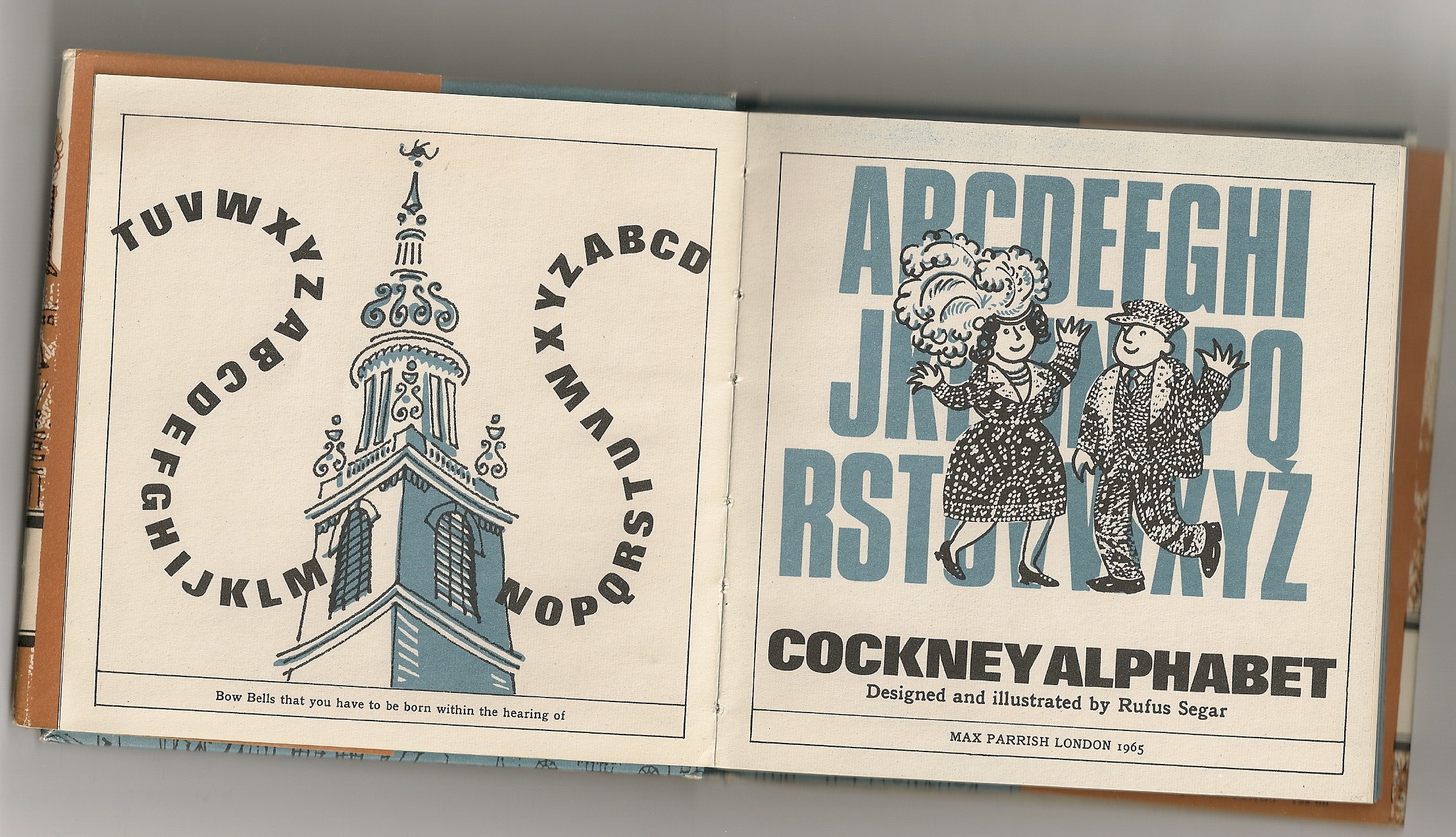
  • Title Cockney Alphabet by Rufus Segar (1965, Parrish)
  • Cost £1.99
  • Bought from Oxfam Books, Herne Hill
  • Genre Humour

The Cockney Alphabet is a humorous alphabet originally devised by music hall duo Clapham & Dwyer in 1929 that rewrites the alphabet with cockney phonetics, starting with A for ‘Orses (Hay for Horses) and ending with Z for Effect (Said for Effect).

There are loads of different versions and this wonderfully illustrated little toilet book from the 1960s has a nice potted history of the form, including a list of four of the most popular alternative versions.

Like rhyming slang, the alphabet can be rewritten to take in topical themes or personalities (this book has U for Fox, or Uffa Fox, a now forgotten British sailor; it also has Q for Beatles over the traditional Q for the Dole).

This version was compiled by Rufus Segar, who says it is by no means definitive, arguing that ‘Letters such as D, G, H and S still remain to be bettered.’ (Although I do like his S for Ixiation over a mountain of Chapman brothers’ skulls.)

Some of the contributions can be hard to comprehend (D for Payment?) but Segar insists that ‘with perseverance and some latitude in pronunciation they will suddenly become meaningful’ (ah, ‘Defer payment’!). And we can’t ask for more than that.

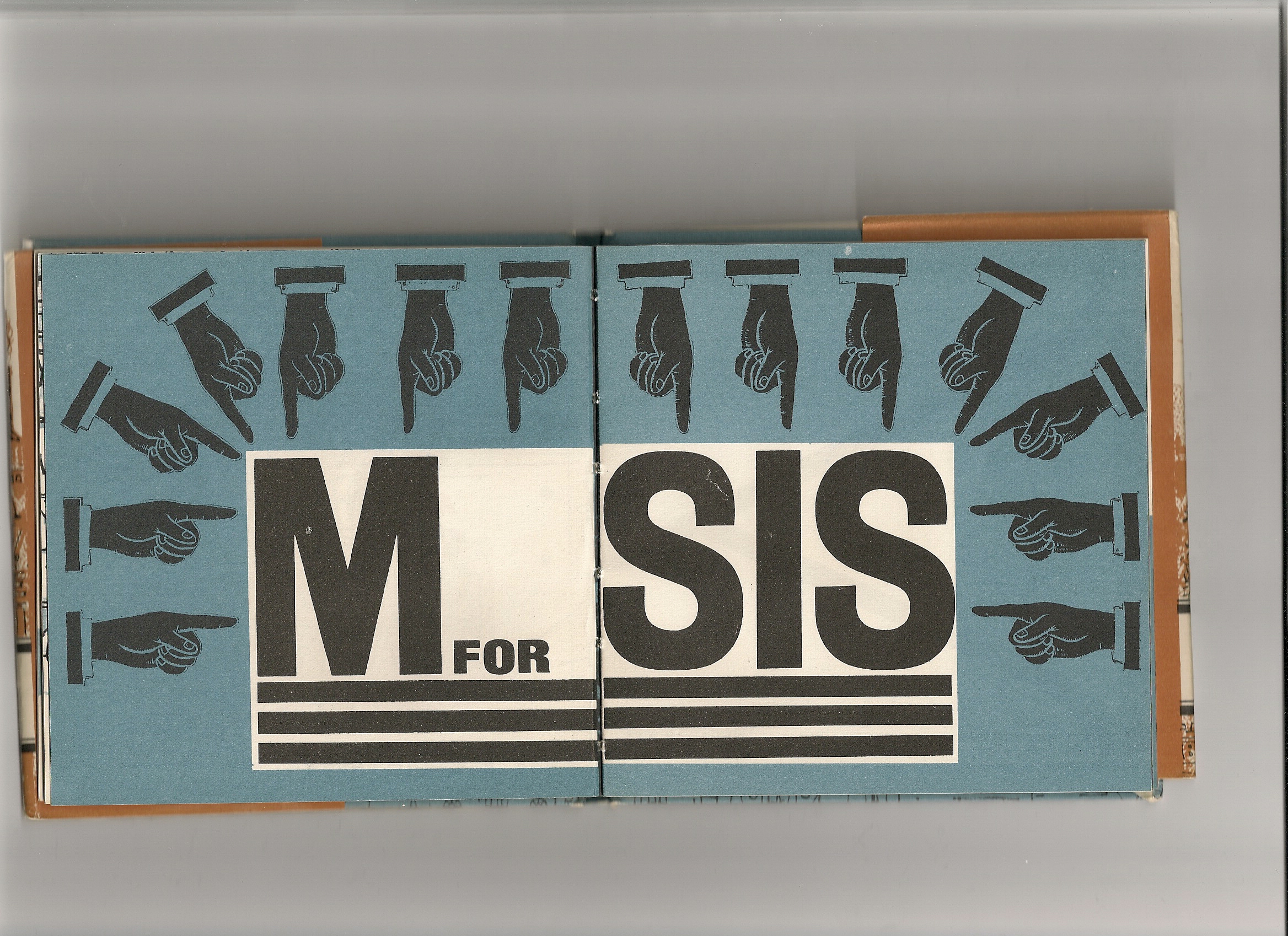
Best bit Illustratively: ‘G for Police’; phonetically, ‘M for Sis’.

Verdict Time for an update?

Maps and apps


Some months ago, I heard about the Time Travel London Explorer app, a nifty iPhone application that allows you to layer different historical maps of London on top of each other, so you can use GPS to see how the street you are standing in has changed (or not) since 1746.

I was so excited I went out and bought an iPhone in anticipation and wasn’t disappointed when the app was finally completed. It features four different maps – Rocque 1746, Horwood 1799, Greenwood 1830 and Stanford 1862 – as well as lots of easily searchable historical information and photographs of London, along with audio guides. You can read a review here.

It’s a bit like the Museum of London’s Street Museum app only better as fading in from one historic map to another is fun and informative.

The Time Travel Explorer website features a blog about mapping and London history written by myself and M@ from Londonist. If this is the kind of thing that gets you going – and really, how could it not? – go check us out.