Category Archives: Journalism

Nostalgia corner: Zola, bitumen, Paolozzi and the great ‘is London shit?’ debate

Because of a frantic start to 2015, I’ve neglected Great Wen recently. Hopefully, I’ll find something to stick up soon but in the meantime here are a few interesting bits and bobs.

First, here’s me, writing for the Canal & River Trust, about the experience of taking a narrowboat into drydock, where you whack it with mallets, coat it in tar and get pleasingly sozzled with strange Irishmen.

Second, I really enjoyed this piece by Callum West on the great Chelsea team of the 1990s, and the extraordinary revival of fortunes that preceded the salad days of Roman Abramovich. This isn’t the side I grew up with, or the one that won the most trophies, but it’s the one that gave me the greatest pleasure to watch.

Finally, the great London debate – is it turning shit or isn’t it? – is gathering pace. The constant stream of negative stories, the latest being Eva Wiseman’s pretty dismal contribution at the weekend, has finally been met by counter-argument in Brockley Central.  Is Nick’s point fatally wounded by the use of Giles Coren as a defense witness? Or is he simply missing the point, which is that the death of fun by over-development in central London is a prevailing trend that is already starting to infect areas far from the West End, and we sit and sneer at those uncomfortable at the increasing inequality, inaccessibility, unaffordability and general dreary Dubainess of it all at our peril? Both, probably.

Professional contrarians like Coren will get in bed with anyone if it gets them attention, but I’m not sure many other Londoners should be siding with the developers and speculators.

By illustration, the latest landmark to get the chop are the great Paolozzi murals at Tottenham Court Road. Still, that’s the price of progress! Yay to cultural vandalism!


“In winter, we hibernated”: Christmas on a London canal

I wrote this piece for the Canals & River Trust about winter when I used to live on a canal boat in London.


Everybody has a dream. For London cabbies, it’s ‘riding the green wave’ – that is, to hit only green lights when driving along the Euston Road, surfing the inner city highway entirely unhindered by reds and ambers. For boat dwellers, the dream was a little different: we wanted to ride the red arc, to light a fire at the start of winter that would keep burning until spring, a constant five-month blaze that required no further feeding from firelighters or matches.

I’m not sure anybody managed it. There were rumours about the more calloused boaters, the ones who could measure out their boat life by the decade and bled pure diesel. I know I didn’t. Far from it. For the first few years I lived on my narrowboat at Lisson Grove, I could barely keep a fire alight for a single night. I blame it on my stove, a gargantuan pot-bellied top-loader that was far too big for my tiny boat and practically impossible to control no matter how diligently I layered firelighters, kindling, newspaper and coal, or fiddled with the grate, trying by fractions of an inch to get the perfect draft. Instead, it would burn ferociously hot, so much so that if I wished to sleep amid the inferno I would have to fling open the back and front doors no matter what the weather outside. Invariably, I’d wake icily at 3am to find the fire burnt out, and bury myself in blankets until dawn. A cold boat was not a pleasant place to spend the morning; often I’d have to break the ice that formed in the sink overnight.

Later, I acquired a more controllable stove and would pride myself on keeping it burning for weeks at a time. This allowed me to appreciate the smothering splendour of boat life in winter. For half the year, living on the canal was an outdoors and sociable affair. This was partly a matter of comfort. Boats are largely made of glass and metal, so get very hot very quickly. It’s like living in a car. To combat this, doors were always open and much time was spent on deck, gossiping with neighbours. This easy familiarity would lead to impromptu barbeques that became boozy weekends, with individuals dropping in and out as the mood struck but the essential body of the party remaining intact from Friday evening to Sunday night.

Then in winter, we hibernated. Returning in the evening gloom, even before you reached the canal, you’d catch the homely smell of smoking coal. The towpath would be still, and on every boat, doors and curtains would be closed against the cold, chimneys puffing cheerily away. While summer was a buzz of conversation, hailed hellos and clinking bottles, the sound of winter was the stolid rattle of a coal scuttle being filled. We still visited each other, enjoying wine and warmth and admiring our neighbours’ stove-lighting technique, perhaps exchanging views on the best type of coal to use. But this was an altogether more internal time, drowsy days spent deep within the boat, and, as winter peaked, in contemplation of the view outside. Almost every year the slow-moving canal would freeze grey-white, startling, beautiful, and so close at hand it felt as if your boat had moved overnight to another planet. This virgin layer of ice would gradually get more battle-scarred as the kids from the local estate attempted to smash the surface with increasingly oversized objects, graduating from stones to bricks, until with inevitable surrealism, you’d wake to find a shopping trolley embedded in the ice.

Although our winters were essentially insular they were not entirely so. Many boaters spent Christmas Day on the canal, staggering sociably from boat to boat, admiring each tiny decorated fir and fairy lights slung along gunwales. And, for the Millennium, we held a party every bit as spectacular as any summer barbeque, watching the Thames fireworks from Primrose Hill and spending four solid days carousing, before, one by one, we slipped away, to see out the rest of winter from the cosy comfort of our floating dens.

Earls Court and the death of fun in London

“In London, it seems everything that’s not a shop, offices or luxury apartments is being demolished,” sighed artist Duggie Fields when I interviewed him last month for a piece in Uncut about the imminent demolition of Earls Court Exhibition Centre. It’s a quote that, in a nutshell, seems to encapsulate all that is going wrong with London right now.

“There is so much damaged being done to London all over, Earl’s Court is just part of it,” says Fields. “London is losing a scale of living that has been very special for a long time. Now we have this mini high rises that could be from anywhere, they are characterless and there are so many of them.”

Earls Court will be pulled down early next year and replaced by houses, ending the area’s 120-year history as a place of fun. This history is well known to London nerds, but is worth repeating. The former cabbage field of Earls Court was transformed into a funzone by Yorkhire entrepreneur John Whitely at the end of the 1880s, when he brought Buffalo Bill’s Wild West Show to the newly transformed exhibition site, hemmed in between railway lines. It featured a miniature Rocky Mountains, Native American village, corrals and a cowboy bunkhouse. “The show was a revelation,” write Felix Barker and Peter Jackson in Pleasures Of London. A few years later, the site attracted London’s first big wheel – a 300ft monster called the Gigantic Wheel.

When that lost its thrill, new entertainments were sought – including plans for a mechanical racecourse. Numerous exhibitions were also held there – including Captain Boynton’s Water Show in 1893, the Greater Britain Exhibition, in 1899 and Shakespeare’s England in 1912. Then in 1937 the Exhibition Centre was built. It opened with a Chocolate and Confectionery Exhibition and went on hold swimming galas, motor shows, the Royal Tournament and events for the 1948 and 2012 Olympics.  It’s a decent looking building, too, well worth saving for its lovely Art Deco curve and revolutionary concrete engineering. So many magnificent buildings from this era are being lost.

Less, pleasantly, in 1939 it hosted a gargantuan meeting of Oswald Mosley’s fascist blackshirts.

From the 1970s, Earls Court also began to host pop shows. David Bowie was first to play there, although Noddy Holder of Slade claims they were the first to book it and then managed to improve the sound after Bowie flopped. Concerts by Bob Dylan, Led Zeppelin, Queen, Rolling Stones and Pink Floyd followed. I saw Oasis there, unfortunately, and also the BRIT awards in 2000, when I threw a champagne cork at Christine Hamilton.

And now it’s to come down, replaced by 8,000 houses and some shops.

He points out that the removal of the Exhibition Centre will, at a stroke, remove any point or purpose to the Earls Court area. “It has nothing for people to come to,” he says. “Just boring anonymous shops and lots of traffic. All we’ll get is more chainstores because there’s no neighbourhood, there’s no locals. You can’t create villages, they grow over a long period of time.” He also fears for the pubs and restaurants that rely on the Exhibition Centre, which has still been functioning almost round the clock despite impending doom, for their custom.

He’s right. Earls Court is, even with the Exhibition Centre, one of the most boring areas of London. Without it, it’s pretty much irrelevant. But there’s a problem here too. London needs housing, desperately. Surely these 8,000 or so units will help?

It seems unlikely. The new apartments will – like those in the big new developments and Nine Elms – be aimed at the pockets of investors and speculators, people with deep pockets who have taken advantage of stagnant interest rates to buy up property and then charge eye-watering rents for them. It’s hard to blame them, as economic policy seems designed purely to over inflate London’s property market, but the damage is considerable. Because not only are they building identikit apartments in areas nobody that actually needs housing can afford, they are in the process annihilating anything that could be seen as fun – pubmusic venues, sports grounds as well as historic structures like Earls Court. It’s a depressing, dismal outcome that offers the worst of all possible worlds.

It’s also entirely typical of the current state of London: could you possibly imagine a scheme as imaginative and as exciting and beneficial for the public as the conversion of Tate Modern happening today? Not a chance. It would be flattened and replaced by luxury glass apartments. What do we get instead? A bloody Garden Bridge, stupid cable car and shopping centres. Thank god at least the Olympic site has been safeguarded – for now.

“There’s nothing to build on the heritage they’re throwing away,” says Fields of Earls Court. “It’s been an exhibition site for over 100 years. London is tossing that out with as many other things as it can toss out under this current administration.”

London curiosities, from Don Saltero to Viktor Wynd

This weekend, the grandly titled Viktor Wynd Museum of Curiosities, Fine Art & Natural History opens at 11 Mare Street, Hackney. You may already know of Wynd’s whims. An intriguing dandy, Wynd is the founder of the Last Tuesday Society – a body that promotes the esoteric in lectures, salons and workshops – which included Wynd’s own huge collection of oddities and curiosities, acquired over a lifetime of inquisitive travelling and impulsive purchasing. Originally, these items were meant to be sold – Wynd is still a dealer in the weird, a middleman in this strange underworld of people that buy and sell the corpses of giant spider crabs and Javanese hen’s teeth –  but he found “it didn’t work as a shop and it isn’t fun selling stuff. I had to keep buying and you can never be sure what will sell, it’s an endless cycle. So I thought it would be more fun to make it into a museum.”

These curiosities are now going on display as the new museum. And curious they certainly are. On the shelves are two-headed lambs, tribal skulls, dodo bones, plastic toys, lion skeletons, radioactive scallops, Victorian dolls, surrealist art, an artificial foreskin, a cassette of a John Major speech on the subject of red tape, a Victorian mermaid, convict Charles Bronson’s sketches, feathers from extinct birds, a giant hairball from a cow’s stomach and jars of celebrity poo [“How did you persuade Kylie Minogue to poo in a jar for you?” I asked, when interviewing him for Eurostar; “I asked her very nicely,” he replied.]

Impeccably arranged cabinets contain delight after horror after delight, some labelled, others entirely mysterious, but all put together in a way that implies the art of the display, the way these things look on the shelves, is every bit as important as the items themselves.

poo

London has always appreciated the chance to gawp at a gruesome gallery like this. Wynd’s endeavor harks beck to the very first public museum to open in London at Don Saltero coffee shop in Cheyne Walk in 1695. Saltero, a barber, had previously been known as James Salter and worked for Hans Sloane, the collector who started what became the British Museum. Sloane reputedly gave some of his cast-offs to Saltero, who used them to attract custom to his coffee shop. In 1713, his catalogue boasted in terrible rhyme: “Monsters of all sorts here are seen, Strange things in nature, as they grew so; some  relics of the Sheba Queen, and fragments of the famed Bob Crusoe.”

Saltero’s collection included such marvels as  a giant’s tooth, a necklace made of Job’s tears and Pontius Pilate’s wife’s chambermaid’s sister’s hat, which had been made in Bedford. It was, nonetheless, hugely popular and by 1760 the collection includes priceless artefacts like the Pope’s candle; a piece of the true Cross; the Four Evangelists’ heads cut on a cherry-stone; the King of Morocco’s tobacco-pipe; Mary Queen of Scots’ pincushion; Queen Elizabeth’s prayer-book; a pair of Nun’s stockings; Job’s ears, which grew on a tree and  a frog in a tobacco-stopper. Moreover, it had inspired other entrepreneurs, eager to educate the public in the wider mysteries of the world, to follow likewise. Among those following in Saltero’s wake was Mr Adams of the Royal Swan in Kingsland Road, not far from Wynd’s palace of the strange. In 1756 Mr Adams was exhibiting”the heart of the famous Bess Adams, that was hanged at Tyburn; Sir Walter Raleigh’s tobacco-pipe; Vicar of Bray’s clogs; teeth that grew in a fish’s belly; the very comb that Abraham combed his son Isaac and Jacob’s head with; Wat Tyler’s spurs and the key of the door of the Garden of Eden.”

Well then!

Wynd is an artist as well as a collector and showman, and his museum will double as a gallery, opening with a show devoted to early British Surrealists and including work by Austin Osman Spare, Leonora Carrington, Grace Pailthorpe and Reuben Mednikoff. His curiosities are also sprinkled with the occasional artistic embellishment, whether its sculptures donated by artist friends, his own drawings, fine work by the likes of Spare or Mervyn Peake, or more occultish fare, like “blood squeezed from a stone” or a box containing “some of the darkness that Moses brought upon the Egyptians”. These latter items are much like the imaginative exotica of Saltero and Adams, and also remind me a little of Yoko Ono, and her attempt to auction in London a ‘Vial of Genuine New York Tears’ and ‘Jar of Captured Cloud Formations over the Bronx’  to subsidise Norman Mailer’s Mayoral candidacy.

Wynd’s collection features a lot of dead things in jars – babies, dissected vaginas, stuffed animals, old bones, beetles, butterflies, intestinal worms – but he rejects the notion that it is simply a celebration of the macabre, a house of horrors designed to shock the straights. “Nobody’s ever been shocked,” he says. “If you are going to a curiosity museum you want to see dead babies, it’s what you expect. That isn’t what’s new, what’s new is the idea that dead babies and Furbies are equally attractive. It’s uncanny rather than macabre, it’s the juxtaposition of items, setting off thought processes.”


“I see putting everything together as an art,” says Wynd. “If you are a collector then the world is your tins of paint and the walls and cabinets are the canvas. Everything has to look right. It’s a way of trying to understand the world, but a world that has no meaning. It’s all the pretty things that show what an amazing place we live in. It’s also an attack on conventional aesthetic values, so we have a Furby, which is seen as completely valueless, sitting next to a rare and valuable skull of an extinct beast, sitting next to Chinese sex toys. I don’t recognise a distinction between high and low, it’s just if I like it. It also makes me laugh. I’m quite miserable and this place cheers me up.”

It’s not entirely clear how much Wynd enjoys his role as a collector. As he points out, most of us collect when we are children, but then grow out of it. The collector is in a state of permanent pre-adolescence, unable to move on, still fixated by those items that first caught his attention many years before. Wynd says that as a child his favourite places were the Natural History Museum and the Pitts-River Museum. In adulthood, he is still trying to locate that childish sense of awe and intellectual awakening.

He recalls being a student in Elephant And Castle and compulsively filling a garage with items he find on the streets – “I couldn’t pass a bin liner without opening it.” Later he moved to Paris and discovered that at the end of the month everybody’s rental contracts ended at the same time, and on these moving days treasures would be left outside every block of flats. “It was heaven.”

The problem, he says, is that a collection is “like a garden. It’s never going to be finished. It’s never done. It’s a psychological condition, it’s stupid, it’s pointless and causes endless worries.” It also gives us the Museum of Curiosities, for which London should be thankful. Go gawp, embrace the uncanny.

In defence of Midtown

I recently wrote a piece for The London Magazine about Midtown.

Midtown is the bastard offspring name for what people traditionally think of Holborn. For some reason, that really pisses people off. Perhaps it’s the very crassness of the name – Midtown – that deliberate literalness with its clear nod to grid-like American cities where entire areas are known by their compass points. In London, of course, we have nothing like that.

Except the West End.

And the East End.

And the South Bank.

Ah, but they are all different, aren’t they?

It is very easy to get annoyed about Midtown – the idea of it, rather than the place itself, which is pretty inoffensive – but what interested me is why. Why take on the challenge of renaming a traditional part of London? What’s the benefit? How do you summon up the gall? And how do you persuade locals it’s a good idea?

To answer those questions, I spoke to Tass Mavrogordato, Chief Executive of InMidtown, a very nice woman who appears to be permanently on her guard against negative attacks on her Midtown baby. She quickly explained to me that Midtown isn’t another name for Holborn at all. “It’s an umbrella term for the entire area between the West End and the City ,” she says. “We didn’t want to take anything away from the historic areas of St Giles, Bloomsbury or Holborn, and in many ways should help them as it helps to locate them in a wider area. We look at places like the South Bank and can see how these names with a geographical sense have been successful.”

Mavrogordato draws a straight comparison with the West End, an umbrella term that people happily use for a wider area that takes in some of London’s most historic and lovable quarters – Mayfair, Soho, Marylebone – without in any way detracting from them. Nobody has a problem with the West End. Why, she wants to know, can’t Midtown do the same thing, just a bit further east?

It all sounds very logical when she puts it like that, but I doubt people will be convinced.

Part of the problem is one of perception. People don’t like being told what to call places by other people with more money than them. InMidtown is a Business Improvement District and uses aggressive branding to push the concept of Midtown in ways that rubs people up the wrong way – even if the term Midtown predates the BID and has been in use by estate agents since the 1990s.

It’s this noxious aroma of branding that really galls, making Midtown appear distinct from the West End and South Bank, even though these are equally artificial constructions, placing rather spurious boundaries on areas that already had well-defined, historic names. But the latter two appeared more organically, or more to the point they appeared so long ago that nobody actually remembers how they came about, so they are accepted simply because they predate people’s perception of what London is, which was generally formed when they first moved to the city.

London, though, evolves far more quickly than people are comfortable with – and most people don’t actually want London to evolve at all, or at least only in ways that benefits them directly, in the form of better coffee shops or making their flat more valuable, but not so valuable that people a lot richer than them might buy it.

And that gets to the crux of people’s problem with Midtown, it’s change that appears to be directed from above, by outside forces, by money. That’s why people delight in using the ridiculous name Fitzrovia, an inter-war construct for an area that was previously considered to be an extension of Soho, but rejected Noho when that was proposed by developers as it just felt too damned American, too damned money, even if it was, in many ways, more appropriate and certainly no less daft. (Imagine trying to name somewhere Fitzrovia now – you would be laughed out of town, and rightly so.)

There is a consistency here, it’s just a very wobbly one.

And so it goes. Londoners will boast long and loud that London is the greatest city in the world, a barrel of fun for all concerned. Other people will come to London, push the property prices out of orbit and rename the streets so they can get from Lincoln’s Inn Fields to Gower Street without looking at their phone.

And suddenly, it doesn’t seem so much fun.

So in Midtown, poor helpless Midtown, they draw the line.

Turkish London and football

I have a post on Four Four Two about how Turkish Londoners square their support for Turkish club sides with their loyalties to London clubs. It was an interesting assignment, and made me wonder whether other incoming communities face similar quandaries.

Presumably they do: the historically large Italian following at Chelsea will have to occasionally decide between Lazio, Roma or Juve and their London club; Arsenal’s new French fans will have to choose between their love Arsene and their support for PSG – but there is something about the very visibly Turkish nature of the Turkish community and, particularly, the drama of Turkish football fans that made this particularly intriguing. I also got to eat some damn fine bread from the excellent Akdeniz Bakery in Stoke Newington, which I heartily recommend to readers.

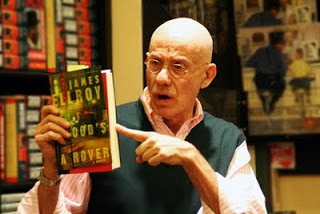
‘I didn’t want to drop a turd on the reader’s lap’: Meeting James Ellroy

James Ellroy has a new book out, so I thought I’d republish my interview with him from 2009 when he was promoting Blood’s A Rover. I was unusually nervous before our meeting as I’d heard Ellroy was a difficult man to talk to and his memoir – My Dark Places – saw him plead a strong case for his own insanity. But all in all, it went pretty well. Ellroy seemed sad rather than difficult, although anybody can seem lonely in a Chelsea Harbour hotel on a Sunday morning. I wish I had kept the full transcription of the interview, as we also discussed, from memory, his research techniques and his plans for a new series of book, the first of which has just been published.  

Smart, stern and ramrod straight, James Ellroy sits in his Chelsea Harbour hotel room and broods about women and words. He is upright. Terse. Correct. He doesn’t quite speak the way he writes – hell, nobody speaks they way he writes, in sentences entirely unadorned with commas, adjectives or conjunctions – but his sentences are short, exact, punchy.

‘I love the English-American idiom,’ he says. ‘I love Yiddish. I love racial invective. I love alliteration. I love slang. I love profanity. And the simpler the language, the more direct, the more blunt, the better. When writers try to imitate me they always put in too many words, and none of it works.’

People try to copy Ellroy because his jazzy, rhythmic, slang-strewn pulp-prose is deceptive in its simplicity and addiction in its execution. The latest fix comes from Blood’s A Rover, the Nixonland masterpiece that completes his Underworld USA trilogy, an alternative history of conspiracy, crime and collusion that includes American Tabloid and the psychotic The Cold Six Thousand. Like its kin, Blood’s A Rover is a bloody collision of Johnny Cash, Raymond Chandler and Sam Peckinpah in which Ellroy uses three fictional male characters to explore factual events – in this case, the ascent of Richard Nixon, who joins J Edgar Hoover and Howard Hughes in the pantheon of American personalities Ellroy has slyly redrawn. ‘You’ve got to like Nixon,’ he says. ‘He;s funny, full of shit, drunk half the time. You’ve got to love a guy like that.’

Where this novel differs is in its bold ancillary characters such as Joan Klein, a femme fatale who embodies Ellroy’s tribute to a life-changing lover. ‘It’s about a boy who finds a matriarch, and that’s my story,’ he says. ‘One of the men is asked why he does what he does and he says, “So women will love me” and that’s why I write. I wrote it to honour Joan. There was a dark romanticism to the relationship, it ended badly and I will never see her again. There’s a line from The Hilliker Curse [Ellroy’s second memoir]: “I left bloodspills wherever we went.” She just cut me open.’

Joan is the book’s hinge. She is pursued by all three male characters – Wayne Tedrow Jr, a tortured ex-racist; Dwight Holly, a CIA fixer with shadowy brief and headful of grief; and Don Crutchfield, a teenage voyeur with the knack of being in the wrong place at the right time. All of them represent a part of Ellroy himself and all of them are looking for ‘salvation, redemption’, reflecting what Ellroy calls his ‘misunderstood Christian morality’. Joan brings female strength and left-wing idealism into their (and Ellroy’s) masculine right-wing world.

‘I wanted to write the story of that woman and me, and I wanted to write about symbiosis and synthesis and how the right and left need each other and how that often leads to catastrophe, because everything Joan and Dwight touch turns to shit,’ explains Ellroy.

There are other changes from past books. The prosy style is turned down a notch, the violence less gut-churning, the noir bleached a little. ‘The Cold Six Thousand was too difficult,’ he admits. ‘My ex-wife said: “Babe, it’s the most ambitious novel I have ever read, it’s 100 pages too long, it’s fucking complex, the style is too difficult and I didn’t know what the fuck was going on.” And she was right. So here you have a range of characters who are much more thoughtful, much more, in their weird way, composed and who think about shit a great deal more, so you need a more explicatory style.’

Ellroy breaks up the pace with journal entries written from less testosterone-soaked perspectives, and softens the mood towards a tentatively upbeat conclusion. ‘I don’t feel bleak,’ he says. ‘It’s very much a book about romance. I didn’t want to drop a turd on the reader’s lap.’

As distinct as Ellroy’s style is his setting, a pre-70s America where powers is held by the Feds and CIA, rogue cops, Hollywood players, bent pols and the Mob. Plots are punctuated by historic events, which he uses and interprets as narrative demands. It’s a world Ellroy has made his own, but didn’t invent.

‘The three Underworld USA book were launched by Libra by Don DeLillo [a fictionalised biography of Lee Harvey Oswald] and his take that JFK was assassinated by renegade CIA guys, crazy Cuban exiles and the Mob,’ he admits. ‘Conspiracy is there, I love writing about it, I love exploring the collusive mindset and I can’t prove any of it. What it comes down to is whether it is dramatically viable and whether the human infrastructure of the big public events is believable. That’s my job. I take the ideas, the characters, the milieu, the real-life history, the real-life situations and the research fills it in. Then I lie in the dark, I think of love stories, and I brood.’

First World War in London

Britain declared war on Germany 100 years ago today on 4th August, 1914, and to mark the centenary of the outbreak of the First World War I was asked to write a piece for Metropolitan magazine looking at some of the most remarkable items from the refurbished Imperial War Museum.

pigEdith

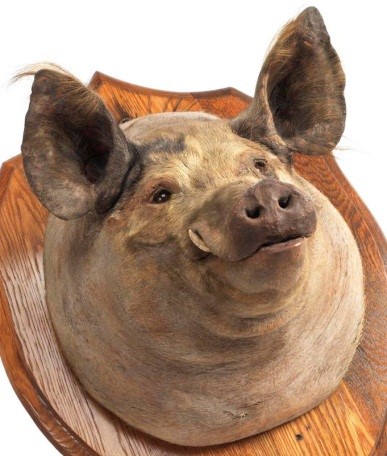
The selection includes items as varied as a mounted German pig’s head and Edith Cavell’s nurse cap. One thing I like about the IWM is that it is very good at driving home individual stories amid the context of immense global suffering and complex geopolitics, meaning you can find numerous, remarkably touching, small personal items in its collections, such as this postcard written on a piece of wood from the Western Front.

Picture 4172

One of the favourite items I came across – or rather, which the incredibly helpful press team at the museum pointed me towards – was this decorated tin, painted by a disabled Belgian soldier in London as part of a fascinating occupational therapy programme.

belgiantin

The fascinating story of California House at 82 Lancaster Gate is recounted here, but in short the hospital was set up in 1914 by an American expat artist and writer called Julie Heyneman, who – like many in London in the early months of the war – was horrified by the casualties caused by the German advance into Belgium. California House became a refuge for injured, displaced Belgian soldiers who were taught languages and sciences.

Those left paralysed or limbless were encouraged to take up activities like painting, book-binding, wood-carving and drawing – anything that required manual dexterity. Objects created, such as the tin above, were then sold to Londoners, with the soldier-creator keeping some of the proceeds. A similar establishment, Kitchener House at Cambridge Gate, Regent’s Park, was set up for British soldiers. California treated around 500 soldiers, some of whom were able to return home after the war and make a living from their new skills. It closed in 1918.

London: a cycling city

I wrote about the challenges facing cycling in London for The London Magazine

Every time I hear that another cyclist has been killed on one of London’s many lethal junctions, I pray to a god I don’t believe in that it isn’t one of my friends. The idea of cycling in London terrifies me. That’s partly because I haven’t ridden a bike more than twice in 20 years, and partly because I have seen so many incidents, altercations and near fatal collisions involving cyclists during my walks around the city.

I’m aware of the figures – the fact that cycling is overall a pretty safe form of transport, even if it could always be better – but it’s hard to shake off that impression that it’s anything but. I’ve seen cyclists get hit by taxi doors and narrowly avoid getting squashed by buses. I’ve seen them shouting with rage and fear at drivers who’ve turned out of a side street in front of them without looking. I’ve seen them cycle headlong into pedestrians who weren’t looking where they were going (and vice versa). I’ve seen them getting into squabbles with bus drivers about ownership of bus/cycle lines that end with blows being traded. I’ve seen them picking themselves and their bent bikes off the pavement after minor crashes. And I’ve seen the blood getting washed off the road after major ones. It looks anything but fun.


So despite the fact I see people cycling quite easily and happily on London streets every day, I still think it’s one of the last things I’d ever want to put myself or my family through on a daily basis.

That is something that needs to change if London is ever going to be a cycling city, which it desperately needs to if it is to remain in any way a human and pleasant place to live in. People like me need to be persuaded that London cycling is safe and that a trip on the bike to the shops won’t result in a serious injury or a shouting match. As Mike Cavenett of the London Cycling Campaign admitted to me “the striking thing is that Dutch cyclists just look like Dutch people”, by which he means you see the elderly and children, men and women, all cycling in their normal clothes – not like London, where cyclists wear tight, bright clothing and manage to look simultaneously over and under dressed.

When London’s cyclists start to look normal, that’s when we know we are heading the right way. And for that to happen, London needs better infrastructure, streets on which cyclists feel safe and are able to relax, making the whole experience better for everybody. Everybody I spoke to – including Andrew Gilligan, the Mayor’s cycling tsar – seemed united on this and agreed on the direction that London needed to go in. Whether it actually happens, whether there is the political will to spend the cash to keep the promises, remains to be seen. But here’s hoping it starts to happen, because a cycling city would be better London for everybody.

London’s Huguenots

I wrote this last year for Metropolitan magazine. The Huguenots of Spitalfields Festival runs from 9-20 July 2014. 

Up to 400,000 French people have settled in London in recent years, but this is not the first time the French have moved to London in great numbers. While today’s arrivals come willingly, with passports, bank accounts and mobile phones, those of 1685 were in reluctant flight, arriving with next to nothing. Calling themselves the réfugiés, these Huguenots – the persecuted French Protestant minority – were the world’s first self-described refugees, coming by the thousand to seek sanctuary in London. An adolescent boy with three siblings, including a baby unable to walk. A teenage girl disguised as a man. Husbands without wives. Children without parents. Houses and jobs left behind. They came hidden in salt barrels, pregnant, shoeless and with diamonds sewn into their cloaks. But like many of their modern counterparts, these French arrivals were young and ambitious, bringing with them a sense of adventure and enterprise, ready to transform the city they now called home.

Hogarth’s Huguenots


‘Britain owes a great but barely acknowledged debt to the Huguenots,’ writes historian Lucy Inglis in Georgian London of the biggest French invasion since 1066. The Huguenots brought with them exotic food like oxtail soup, caraway seeds and pickles, new ideas about industry and banking, brilliance in textiles, watchmaking, horticulture and medicine, and enough numbers – as many as 40,000 – to transform the geography of London, pushing it west into the ‘French Quarter’ of Soho, allowing London to become one of the great multinational capitals of the world. Inglis expands on this in conversation. ‘They were real self-starters, that’s what I admire about them, the way they arrived with nothing and just got on with it. A lot of them were very young. They arrived in London and began to make a splash straight away.’

This was the first serious test of London’s toleration of outsiders, and the city took it well, with just a few grumbles about the whiff from the garlic sausages that the Huguenots hung to dry outside their windows. Otherwise, the Huguenots were a sober presence. For decades, the Huguenots had been tyrannised by France’s Catholic majority until a vague equality was established with the Edict of Nantes in 1598. When this was revoked by Louis XIV in 1685, Protestantism was effectively outlawed. Hundreds of thousands of Huguenots ignored a ban on emigration and fled France in their search for religious freedom.

Many settled in the new district of Soho, where Huguenot craftsmen could be close to the gentry of Westminster. Soho’s French character lingered for centuries – even now you can dine at L’Escargot, get cake from Maison Bertaux or pernod from The French House. In 1720, 40% of Soho’s residents were French speakers and one contemporary noted the area ‘so greatly abounds with French that it is an easy matter for a stranger to imagine himself in France’. French currency was accepted by London Huguenots into the 1720s and as late as 1924 a London guidebook would comment, ‘In Soho you may see Frenchwomen shopping exactly as they do in France, bareheaded, as no Englishwomen would.’ Scandalous!

Just as many of today’s London French work in and around the City, when the Huguenots arrived, most headed to the long-established French Church on Threadneedle Street. London already had a small population of wealthy Huguenots – among them John Houblon, the first Governor of the Bank of England – and they, observing Louis’s despotic behaviour from afar, had been expecting the exiles. A soup kitchen was already established and accommodation secured for pregnant women. New arrivals had often become separated from their spouses so posted their details on a huge board outside the church. ‘It’s a horrible analogy,’ says Inglis. ‘But it was like the aftermath of 9/11.’

The Huguenots descended on a city on the rise. ‘Daniel Defoe wrote about the corruption of luxury, the way people could suddenly afford luxury goods,’ says Inglis. ‘But the Huguenots were plain people, they didn’t wear wigs, perfume or make-up, they had a real dignity and that meant they appeared trustworthy. As a people they were very upright in their business and to a city that was booming, this was quite welcome.’

Not every Englishman responded to this in quite the right way. One was accused of kidnapping an English girl named Christian Streeter, raping her and then having her hair cut ‘in the French way’, such was the appeal of the short-cropped French women on London’s streets. He was eventually acquitted. For the most part, though, the French presence was accepted, even as they set about revolutionising the silk business.

‘The wealthier ones went to Soho and the rest went to Spitalfields and Shoreditch, where they began to set up business as weavers, establishing a factory system and employing a lot of people,’ explains Inglis. ‘They had a massive influence on the earliest part of the Industrial Revolution.’ So many Huguenot weavers left France that the country went from being an exporter of silk to an importer in a few years. Silk was used for clothes, furnishing and wall coverings, and the Huguenots produce huge amounts of the material. The stunning patterns created by one Huguenot designer, James Leman, are now in the V&A Museum. Another weaving family were the Courtaulds, who later founded the Courtauld Insitutute of Art in Somerset House. The weavers, with the fine eye for style of many Huguenots, erected grand-looking houses, most notably along Fournier Street, one of which is now occupied by the artists Gilbert & George.

Another London artist, William Hogarth, was still able to reference the Huguenots as a stylish, sober but alien presence in his 1737 etching Noon, completed more than 50 years after their arrival and Inglis notes that ‘until the 1730s they almost exclusively married within the community.’ By 1780, however, the Huguenots were integrated into the London landscape, even adopting English names – Dubois becoming Wood, Roussel become Russell – the first of many groups of refugees who arrived in London with a bang, and then slowly became absorbed into the city’s heaving, evolving mass having altered it for ever.

Georgian London by Lucy Inglis (Penguin) is out now in paperback.