Category Archives: Journalism

Mick Farren: dead good Deviant

‘Sure the underground was elitist: we were an elite. We were the cutting edge of ongoing bohemianism at that point.’ Mick Farren in Days In The Life by Jonathon Green

The last time I spoke to Mick Farren (May, 2013) he was waiting for the doctor to come round. He was, he told me, in pretty poor shape but welcomed our interview as it gave him something else to think about. Farren’s ill health had been known for some years, but it didn’t stop him going on stage with his old band the Deviants every now and then. It was while performing at the Borderline last night (Saturday, July 27) that he collapsed and died.

It seems crude to say that is how Mick Farren would want to go, but it’s certainly no great surprise that this vivacious ball of hair and action, the closest thing London ever came to producing an Abbie Hoffman,  should die while giving it all to his great love rock and roll. (The following, and all subsequent quotes, are from my interviews with Farren.)

‘Essentially, from when I was in art school through to Joe Strummer the major communication medium of the counterculture certainly in the second half of the 1960s was rock and roll music. You start with that and everything else was peripheral to it.’

Farren’s Deviants were pre-punk noise terrorists whose self-distributed debut album, Ptooff! was one of the first records to come directly out of the London counterculture. When I spoke to Farren for Uncut about the Rolling Stones free gig at Hyde Park in 1969, I asked him whether the Deviants had wanted to play the show. He said,

‘We asked if we could play. We were vetoed, it was probably Jagger. Everybody said I wouldn’t behave myself and start rabble rousing, which was fair enough.’

I put this to Pete Jenner, who co-organised the gig, who responded.

‘Well, there was that and also the fact they were a rotten band. I really like Mick [Farren] but they were a rotten band who smashed instruments on stage. It wasn’t kick out the jams motherfucker, it was let’s have a joint and a buttercup sandwich.’

The Deviants weren’t really a rotten band, but Farren certainly saw them as London’s answer to the MC5. He was heavily active in the political end of the counterculture, forming the London branch of John Sinclair’s White Panther Party and leading the occasional putsch at the International Times when he felt it was getting too bourgeois and boring. Farren was a key figure in so much of what happened in the counterculture, running the door at UFO, writing for and editing alternative newspapers, organising free festivals while playing shows and really meaning it, man. He was fixer and a doer, a wit and sometimes a sage.

‘IT came out of the Beats – poetry, jazz and art with a bit of lefty politics. I told them this was fucked up, they weren’t talking about the weird changes going on with The Who, or where The Beatles were coming from. I’d say that with all respect to John Coltrane there’s this black geezer in the Bag O’ Nails who has long hair and plays guitar with his teeth, what are we going to do about THAT?’

His politics though, always came with a sense of fun – at one anti-war demo the Deviants played he annoyed the po-faced organisers by being more concerned with getting on stage without splitting his trousers than with espousing the cause. He was once described to me by a fellow traveler as being one of the three coolest men in London in 1967, and that made him one of the three coolest men in the entire world.

”We were always condemned as frivolous and philosophically disorganised, and the counter-accusation was they were just boring totalitarians who wanted to sing the Red Flag when we’d rather listen to Voodoo Child and smoke pot.’

When the alternative press disintegrated, Farren – like many from the underground – went on to write great pieces like this for the NME:

The immediate legacy of the underground papers was the NME because we all went there. They had a very profound effect on the visual effect of magazine publishing, but much more important is that the spirit of the thing is now preserved on the internet.  It’s all still there, it’s just become more specialised and you have to go looking for it.’

Farren is one of the dominant figures in Jonathon Green’s essential history of the British underground, Days In The Life, and also wrote brilliantly, if unreliably, about his own activities in Give The Anarchist a Cigarette. What resonates from those books is what an unlikely fit Farren seems in the upper-middle-class world of the counterculture, which was largely run by public schoolboys and Oxbridge graduates imbued with that remarkable confidence that comes with a good education. Farren was different, his confidence was self-generated and less polite, while his art school experiences meant he ‘learned to manage chaos’. Indeed, he relished it. Take a look at the clips below if you don’t believe me.

In his own writings and when interviewed, Farren always came across as funny and incredibly sharp but there was more to it at than that. He was fundamentally, intrinsically, decent. A man without edges. As Jonathon Green told me when hearing the news of his death: ‘Of the underground ‘stars’ he seems, and always did, to have been one of the good guys.’

RIP Mick Farren. He will be missed by many.

Farren invading The Frost Show.

Farren recollecting the Grosvenor Square anti-Vietnam riot of 1968.

Exploring the lost Lea Valley with Saint Etienne

The BFI have just released a fantastic DVD for London fans. A London Trilogy: The Films Of Saint Etienne collects the three documentaries Saint Etienne and director Paul Kelly made between 2003 and 2007. Finisterre, What Have You Done Today Mervyn Day? and This Is Tomorrow are three fine oblique celebrations/meditations of London esoterica, soundtracked by the band and also guided philosophically by band member and London nerd Bob Stanley (who once beat me in a London quiz with his excellently named team of ringers, The London Nobody Knows, the bastard).

As ever with the BFI, the extras are also superb, including a short film about the then little-known Banksy, three eulogies to lost London cafes and a piece about Monty The Lamb, North Hendon FC’s club mascot.

My favourite of the three main features is 2005’s What Have You Done Today Mervyn Day?, which tours the Lower Lea Valley, a then almost abandoned part of London that has since been covered by the Olympic Park. In 2007, I took a tour of the valley with Kieron Tyler, an archaeologist at the Museum of London who also happens to be a regular collaborator with Stanley and Saint Etienne. Here is what we found.

I’ve often wondered where the East End begins, but never realised there was an actual border: one that’s so physical, and so weird. The River Lea (or Lee – both are acceptable) rises in Luton and flows into London at Edmonton and then, via Hackney, Stratford and Bromley-by-Bow, into the Thames. It has been the municipal boundary between Essex and Middlesex since the sixth century. ‘When you’re on the Middlesex side, you’re in the City of London, and when you’re on the Essex side, you’re east of London,’ Kieron Tyler explains helpfully. Tyler is the Museum of London archaeologist responsible for assessing the archaeological potential of the 2012 Olympic site, large swathes of which straddle the Lea Valley. As a committed Londonist, he’s become fascinated by one of the capital’s oddest landscapes.

You see, the Lea is more than just a theoretical dividing line on an administrative map, it’s a deep, wide trench gauging out a huge chunk of prime London land and bordered on either side by reclaimed marsh, Victorian rubbish heaps and industrial wasteland that physically separate the communities on either side. Look at a map if you don’t believe me. The Lea Valley boasts that ‘A-Z’ rarity, actual blank space, spotted with grey squares and circles that are precise in form but vague in utility, listed only as ‘works’, ‘depot’ or ‘warehouse’. All roads over the valley are fast and functional, crossing as quickly as possible, unwelcoming to residents. It’s a no man’s land in which few Londoners live, or ever have.

‘It’s the whole nature and character of the Lea Valley itself,’ says Tyler. ‘The area either side of the banks has acted as a buffer zone, stopping development. Before the ice age, this entire area was a water-filled valley. As the tide level changed the water become marsh with water channels snaking through it. Looking at evidence from between the end of the last ice age to the early medieval era (the eleventh century), we can see the Lea stretching from Stratford Town Centre to Hackney Wick, with marsh all around. Marsh is a problem. You can’t build on marsh. You can graze cows on it, or grow plants, but you can’t build on it. That’s why the Lea Valley itself is a buffer, wider than the river itself.’

97 LV0137.jpg97 LV0115.jpg97 LV0302.jpg

We take the 308 bus from Stratford tube to New Spitalfields Market on the A12, a bleak block of urbanity that makes the North Circular look like the Cotswolds, and stroll down Quarter Mile Lane – a piece of gleaming new roadwork that, like a Sicilian motorway, ends abruptly, having gone nowhere – into Eastway Cycle Circuit. Buried somewhere on this meadow are the remains of Temple Mill, a thirteenth-century mill managed by the Knights Templar. The mill is one of many things lost in the mud, dumped on by successive generations who used the marsh as a rubbish tip (bits of the Euston Arch were chucked in the Lea in the 1960s), which Tyler hopes to uncover when work on the Olympics site begins.

One such buried treasure is the Lea’s first bridge. ‘Nobody knows how the Lea was first crossed,’ says Tyler. ‘The Roman London-Colchester road came up to the edge of the Lea Valley around Wick Lane and picks up on the other side, but we haven’t a clue exactly where and how they crossed.’

We do know that the focus for crossing the Lea moved south, with the construction of Stratford Langthorne Abbey in 1135, now covered by factories, railways and a sewage-pumping station. This bridge was called Queen Matilda’s Crossing after the yarn that it was built at the behest of the wife of Henry I, who almost drowned while trying to cross the old ford. It was the first stone arch bridge in Britain, and was called Bow Bridge because of its shape – a name that later lent itself to the area on the Middlesex side, Stratford-by-Bow, now shortened to Bow.

97 LV0248.jpg97 LV0291.jpg

The Lea isn’t the only river in the valley. Half-a-dozen other ditches, streams and rivulets snake through it. Tyler guides me, via the doomed Eastway Cycle Circuit, to Hennikers Ditch, a medieval drainage ditch that’s little more than a hollowed-out puddle. We cut right, through dense foilage – Japanese knotweed, the most invasive plant around – and join a rarely trod path along the bank of the sluggish Channelsea River, a stream supposedly dug by King Alfred to keep the Danes from sacking London that has been dated to the eleventh century. Within minutes, we’ve gone from the concrete Ballard-scape of the A12 to an otherwordly, overgrown terrain that Tyler suggests lacks only Ray Harryhausen’s jerky dinosaurs to give it that proper prehistoric appearance. Allotments overlook the stream, and Tyler points out one tumbledown shed that his team have identified as a World War II pillbox. The Channelsea is still fulfilling its original function of defending London from invasion.

After peering through a fence that guards the new Eurostar terminal at Stratford, we head back to the A12 and cross the Lea, via torturous means (the Valley is as hard to navigate as it ever was), to wander down the weird Waterden Road, an alienating thoroughfare that features the Kokonut Groove Nite Klub, a demolished greyhound stadium, a bus depot, an ‘International Christian Centre’ and a travellers’ site. There’s no sense of the famed East End community here; indeed, it’s hard to think of a more disconnected environment outside an American strip mall.

At the bottom, Waterden Road meets White Post Lane, crossing the Lee Navigation (spelling decreed by a 1570 Act of Parliament), a canalised section of the river that runs almost parallel to the Lea that was built in stages from the eighteenth century. With its arrival, the Valley became a centre for industry.

As the lost Temple Mill shows, mills have been located here for centuries. There’s Three Mills, recently the location of the ‘Big Brother’ house, and Wright’s flour mill, London’s last working independent mill. Slaughterhouses crossed the Lea after being banished from the City in the fourteenth century, and the remains of animals were used in a variety of Lea-side industries. Walls Matteson churned out sausages by the yard at Abbey Mills until the 1990s and animal bones were used for china, chemicals, candles, soap, glues and fertilisers. Chemicals for tanning skins came from Lea and it’s said the smell was so bad that, in the early seventeenth century, James I asked for work at the mill to stop before he travelled past. Not for nothing was it known as ‘stinky Stratford’. The ‘ready-made kebab’ factory at the bottom of Waterden Road seems aptly placed.

97 LV0172.jpg97 LV0271.jpg

Heavier industry soon moved in, boosted by an 1844 Act of Parliament that ruled that, within London, ‘offensive trades’ could not be located within 50 feet of a house. The Lea’s industrial alumni is formidable. Matchbox cars were made here until the 1980s. The diode valve was invented in Lea by Professor Ambrose Fleming in 1904, which led directly to the invention of the wireless; Britain’s first radio valve factory was established in Lea Valley in 1916, and the first television tube factory followed in 1936. Bryant and May had a match-making factory in Newham, which was the site of the landmark matchgirls strike in 1888. Monorail was invented in Lea in 1821. IPA was first brewed on the Bow riverbanks in the 1780s. The Yardley soap factory was on Carpenter’s Road, and the Lea is where the first British commercially successful porcelain, Bow China, was produced. AV Roe became the first Briton to pilot an entirely British-built aircraft on Walthamstow Marsh in 1909.

The Royal Small Arms Factory in Enfield produced the British Army’s Lee-Enfield rifle by the thousand (though unfortunately the Lee bit comes from its inventor, not the location), and also helped with the development of the bouncing bomb.It’s a rich history that, in a most un-London way, is celebrated by approximately nobody (although Saint Etienne’s film on the Lea Valley, What Have You Done Today, Mervyn Day? captured much of the weirdness). We’re at the junction of White Post Lane, Wallis Road and Hepscott Road, which, Tyler points out, is the location of ‘a conglomeration of late Victorian industrial concerns that either introduced a number of products to this country or were invented here or recast in their modern form’.

He’s talking about plastic, petrol and dry-cleaning, which all came from here. Carless, Capel and Leonard started making a product they named petrol in Hackney Wick in 1892. Before then it was called ‘unrefined petroleum’ and competitors continued to call it ‘motor spirit’ until the 1930s. A few years previously, Alexander Parkes had been manufacturing a celluloid based on nitrocellulose with ethanol solvent that he uneffacingly named Parkesine, but which we now call plastic. And in the 1860s Frenchman Achille Serre introduced dry-cleaning to the UK, setting up a chain that lasted a century until it was bought out by Sketchleys.

It’s only as we reach Hackney Wick station that I realise we’ve not seen the Lea itself, though Tyler points out we crossed it while negotiating the A12. The river is more accessible elsewhere along its long slide through London, but it forms only a tiny part of the appeal of the Lea Valley, a glorious scrap of London that will change forever with the Olympics. With it, one fancies, the barrier between London and the East End may become a little less precise, and a lot less interesting.

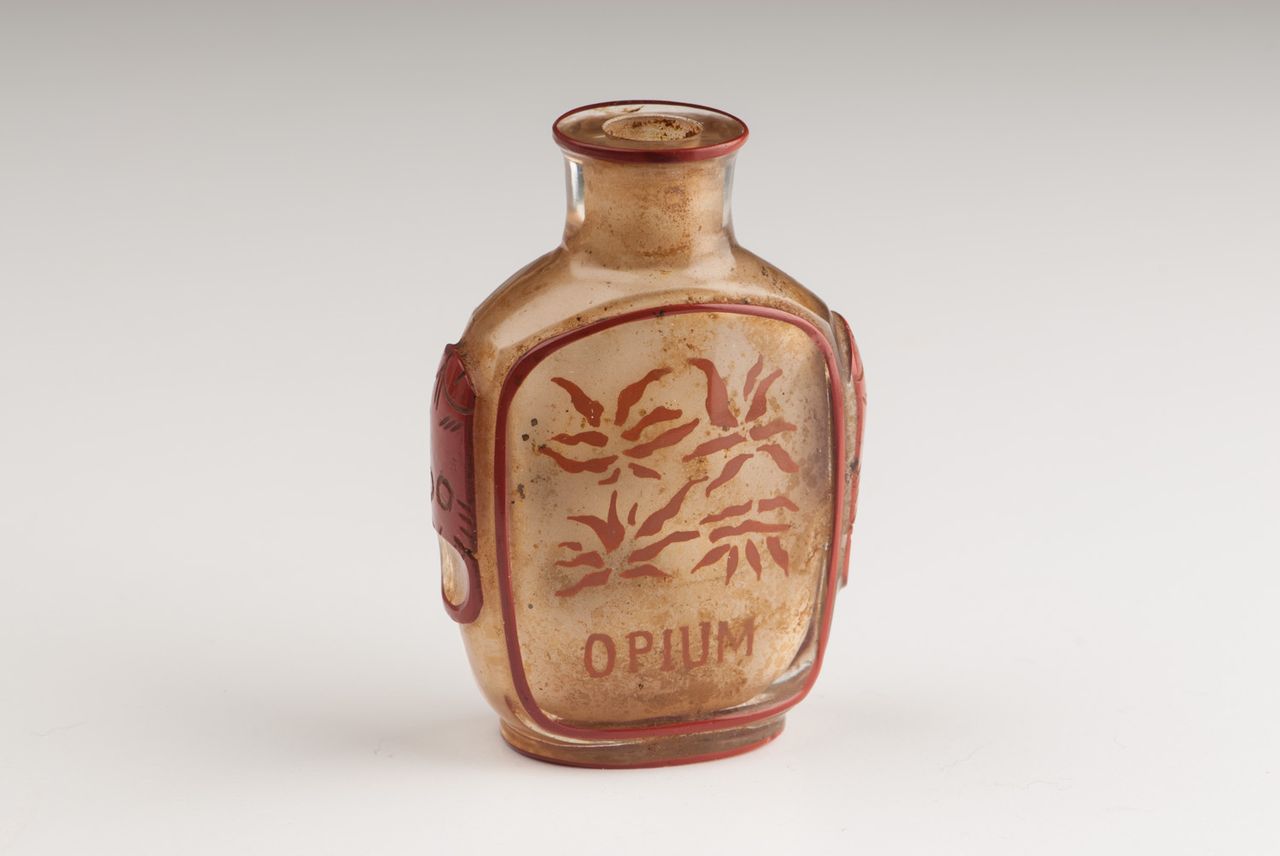
Opium pipes in London

brochure; pamphlet - Opium Smoking Parlour

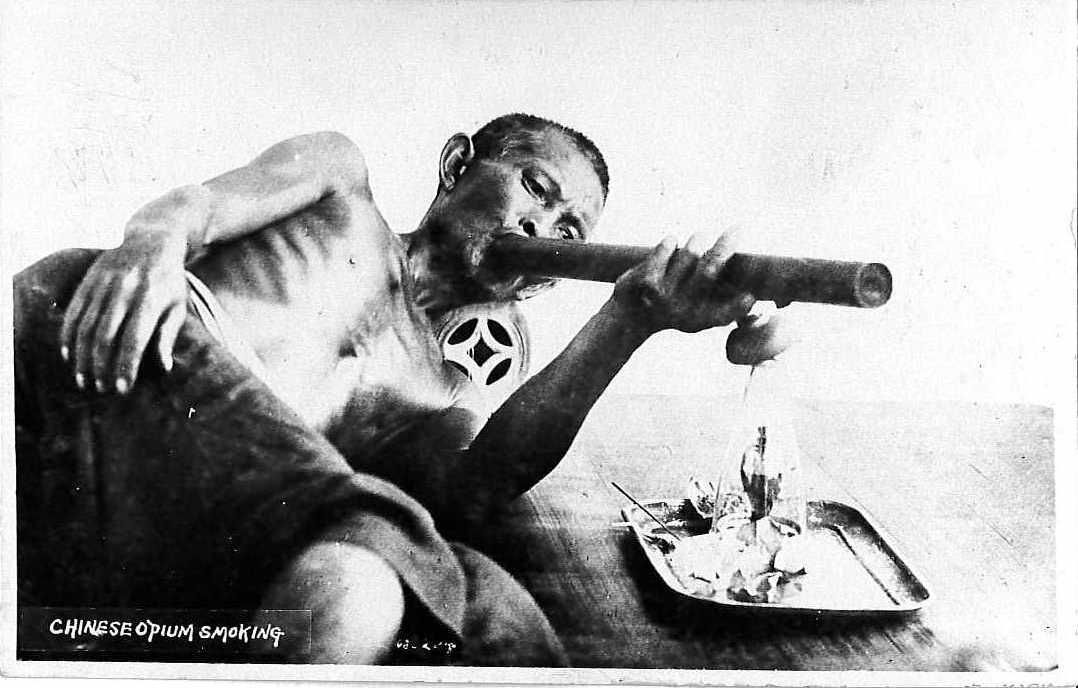
In 1899, Earl’s Court offered interested Londoners the chance to pay 6d to see a Hong Kong ‘opium smoking parlour’, filled with ‘living Chinaman’ and ‘true to every detail’. This reflected an ongoing fascination for the Chinese habit of smoking opium – a habit that had been partly encouraged by the British East India Company and then condemned by British missionaries – and merrily ignored the fact the British themselves had been consuming opium for decades.

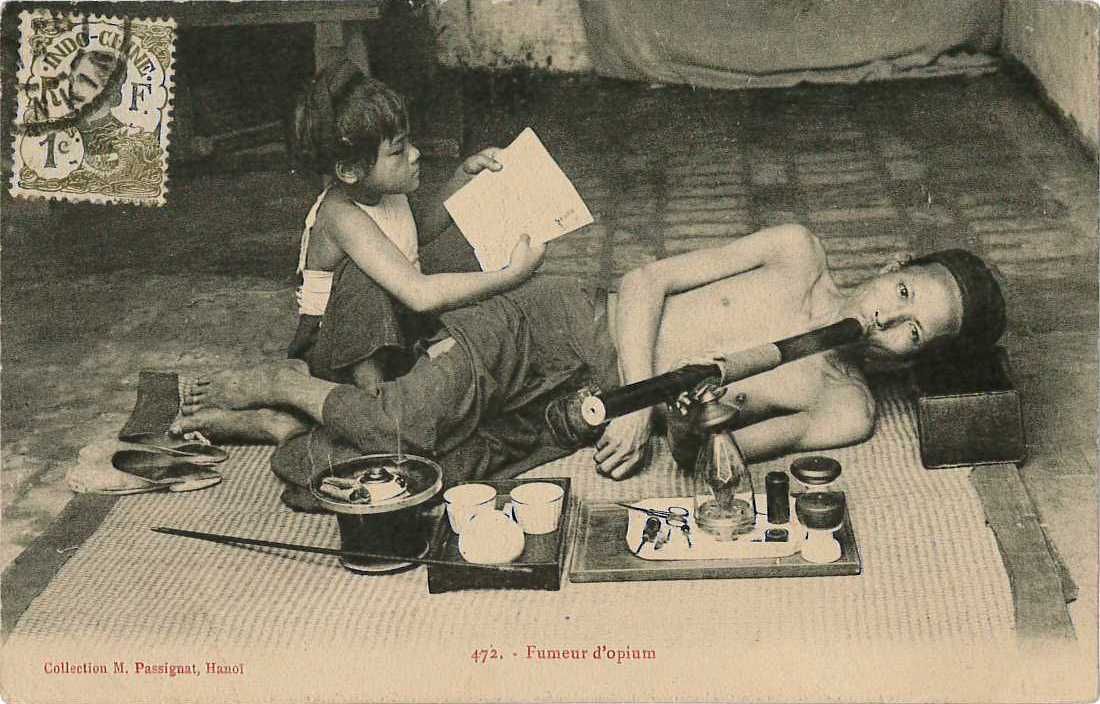
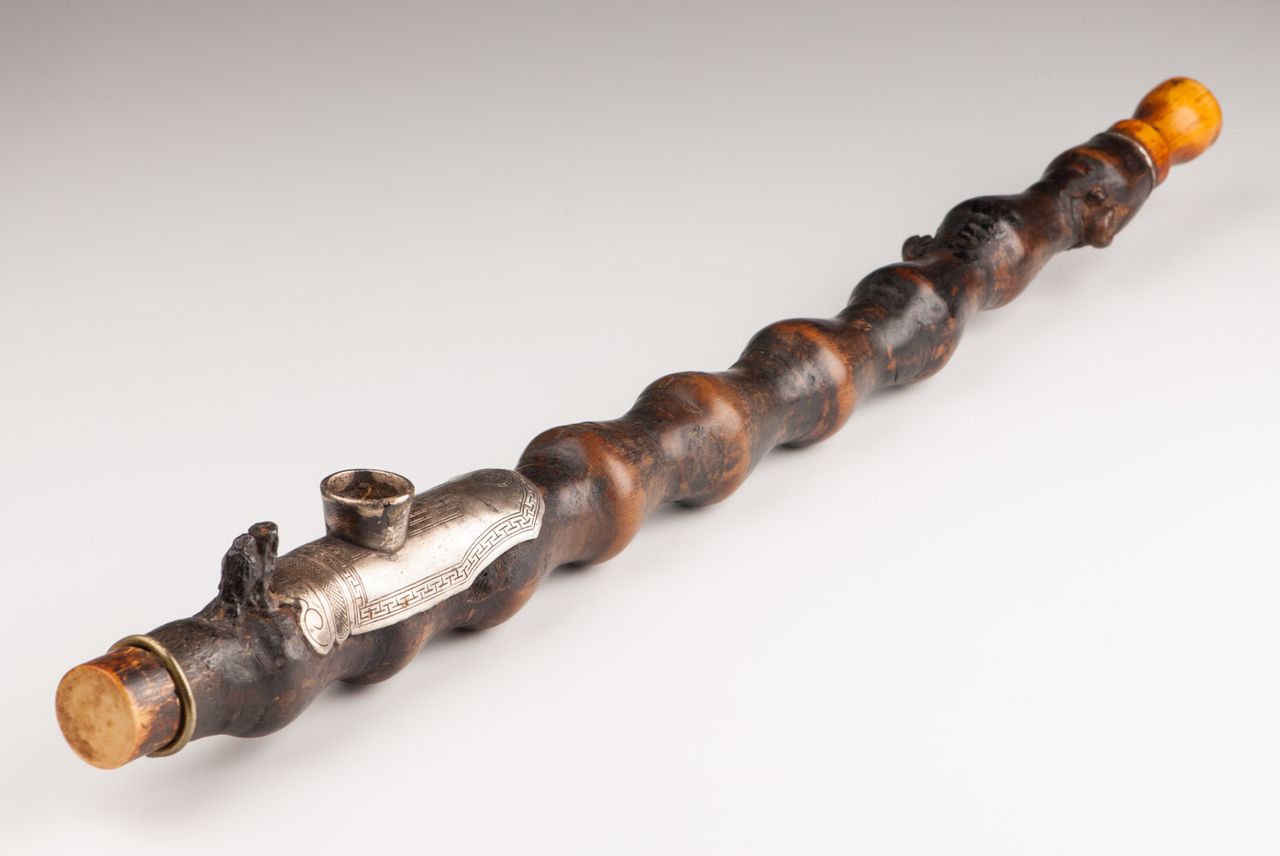
The Chinese tradition of smoking looked and felt very different though, and that’s partly because it was so deeply ingrained into society, a ritual to be enjoyed alongside tea and nicotine with a rich material culture, lavish paraphernalia and its own customs, traditions and symbolic meaning. This is explored in an extraordinary exhibition of Chinese opium pipes at Maggs Bros bookshop in Berkeley Square, which I have written about for the Independent on Sunday.

It features a unique collection of 19th-century Chinese pipes and related material that demonstrate the full complexity of the Chinese relationship with opium, as can be seen in some of the following images – and these barely scratch the surface of the incredible collection that can be seen at Berkeley Square from June 5 to the end of July.

Field of opium poppies

Field of opium poppies

Jar for storing opium

Jar for storing opium

Chinese opium smoker

Chinese opium smoker

Postcard of opium smoker from Vietnam

Postcard of opium smoker from Vietnam

Bowl for smoking opium

Bowl for smoking opium

Opium pipe

Opium pipe

Smoker with pipe and tools Smoker with pipe and tools

Opium pipe

Opium pipe

Opium pipe

Opium pipe

Bowl for opium pipe

Bowl for opium pipe

aAKf2D-cSXQqOe6Mm8b4FjMt6hP1ZcWPJbFN8-TNflk

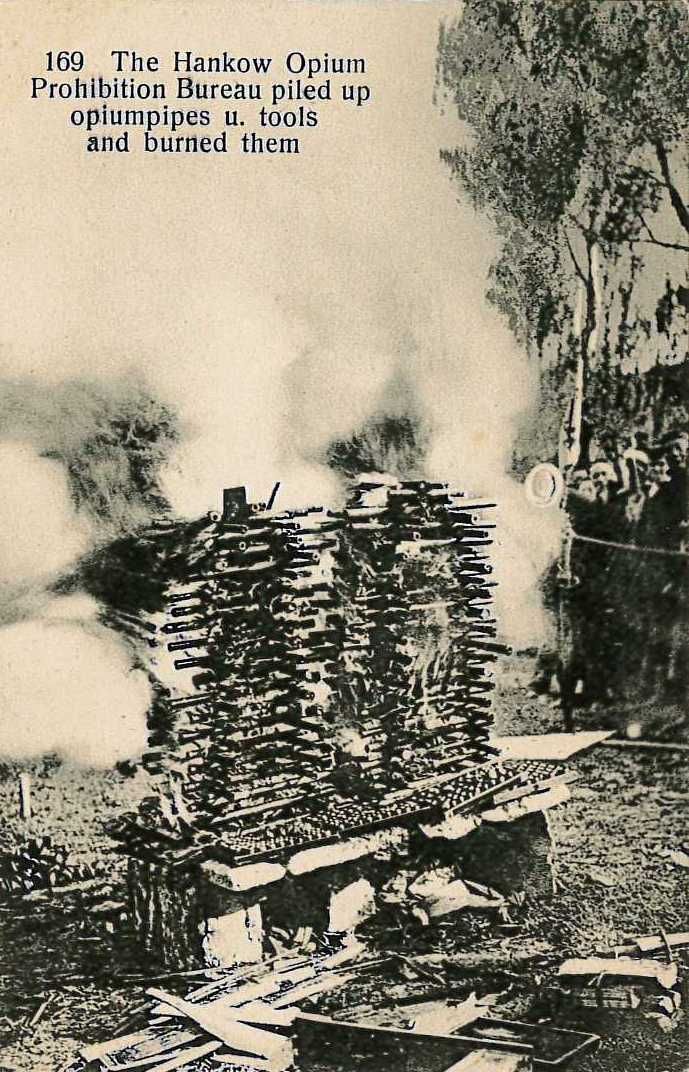
Pipes being burnt by anti-opium reformers

Bowl for opium pipe

Bowl for opium pipe

Lamp used for preparing and smoking opium

Lamp used for preparing and smoking opium

Tray for carrying opium tools

Tray for carrying opium tools

Pink pills for pale people - opium cure

Pink pills for pale people – opium cure

Box for storing opium with erotic carving - opium was seen as an aphrodisiac and was originally smoked in brothels

Box for storing opium with erotic carving – opium was seen as an aphrodisiac and was originally smoked in brothels

Bowl for smoking opium

Bowl for smoking opium

Opium pipe

Opium pipe

Preparing a pipe

Preparing a pipe

Tools for preparing opium

Tools for preparing opium

Opium pipe

Opium pipe


Opium smoker with cat - pets often became addicted to the opium fumes

Opium smoker with cat – pets often became addicted to the opium fumes

Secret London: inside Wapping’s abandoned Tobacco Dock

014

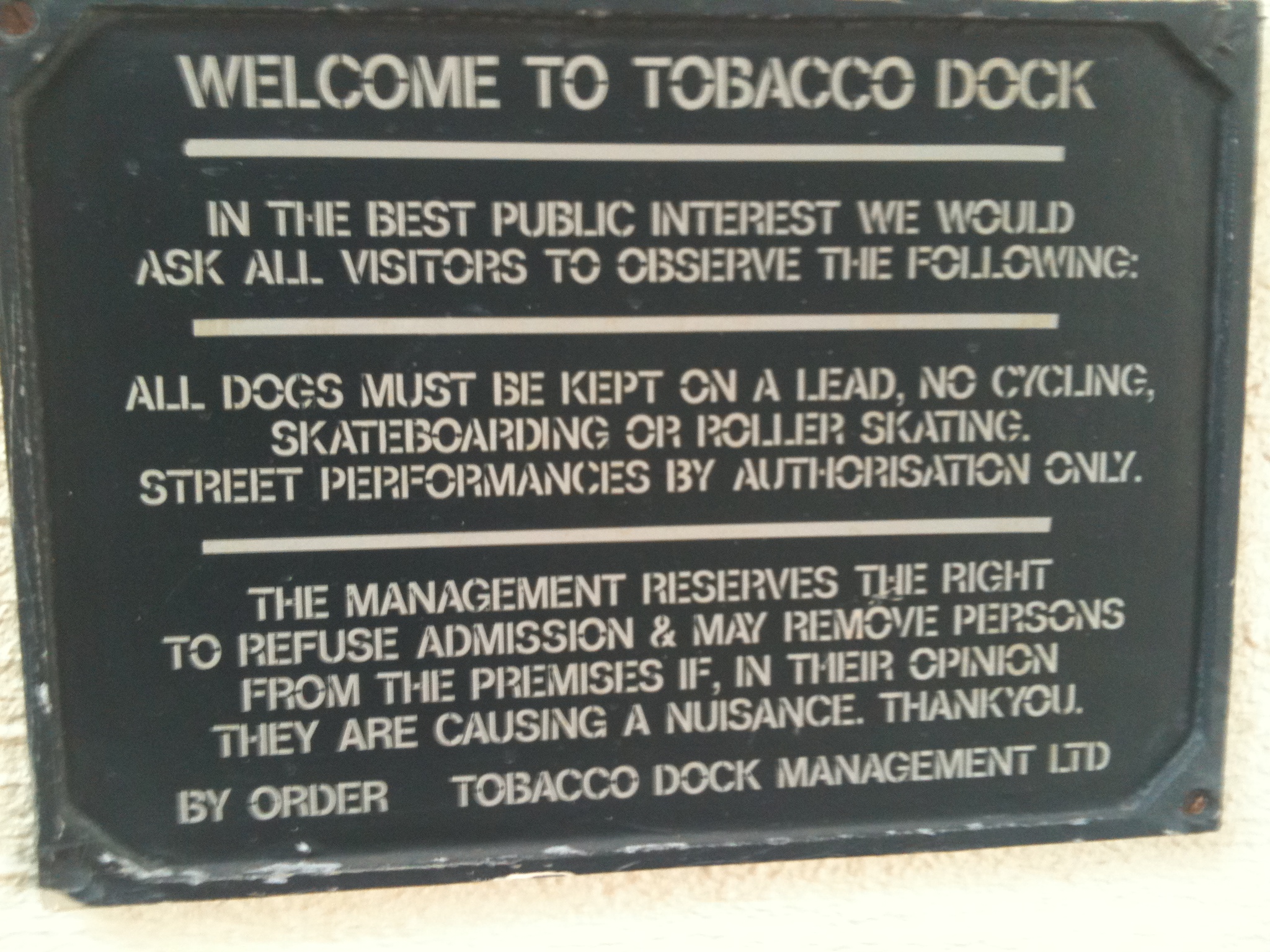
It seemed like a good idea at the time. It was the mid-1980s, the economy was booming and Docklands was on the up. Tobacco Dock, an old Grade I-listed warehouse off East Smithfield in Wapping, seemed ripe for redevelopment. Rupert Murdoch had just moved New International next door from Fleet Street, and other companies were sure to follow. What better place to build the new Covent Garden, a lively hub of shops, bars and restaurants, where City fatcats and Wapping yuppies could mingle and spend?

010

Terry Farrell did the architecture and Tobacco Dock opened in 1989, an elegant conversion that featured two arcades of shops on two floors inside a skilfully modernised structure that retained its Victorian industrial integrity. A canal provided a classy terrace for restaurants and bars, while the shops were the best of the era: Saab City, Next, Body Shop, Cobra and Monsoon as well as Justfacts, a shop selling accessories for your Filofax, and Uneasy, a shop that sold designer chairs. Think Broadgate Circus. Think Leadenhall Market. Think Hay’s Galleria. Here was the future. What could possibly go wrong?

016

Even before Tobacco Dock opened, the UK economy was in recession and one-by-one, the new shops started to disappear. No new companies followed News International, and with poor transport links and a tanking economy, the yuppie money from Wapping’s riverside apartments could not keep the shops alive. By 1995, Tobacco Dock was already a shell, with just two trading outlets, a restaurant called Henry’s and a sandwich bar, both kept afloat by Murdoch’s minions, of which I was one.

Ten years later, just the sandwich bar remained; now that too is gone. Tobacco Dock is completely empty, a ghost shopping centre forever frozen in 1989, when the world was at its feet. Come here, and you can smell the late-80s ambition and the disappointment and failure when it all started to unwind. It’s like the backdrop to a George Romero zombie film, or a metaphor for rampant commercialism wrapped in the setting of a failed shopping centre.

012

Bizarrely, the empty centre remains impeccably maintained and open to the public. I spent happy hours in Henry’s when I worked at The Sunday Times in the 1990s and remember even then how strange it felt to march through the vacant complex, serenaded by mood music piped through the PA. When I returned a couple of years ago in search of nostalgia, there was only silence, broken by the sound of my footsteps echoing round the empty chamber, but the floors were still as clean and the fixtures and fittings as freshly painted as when it first opened.

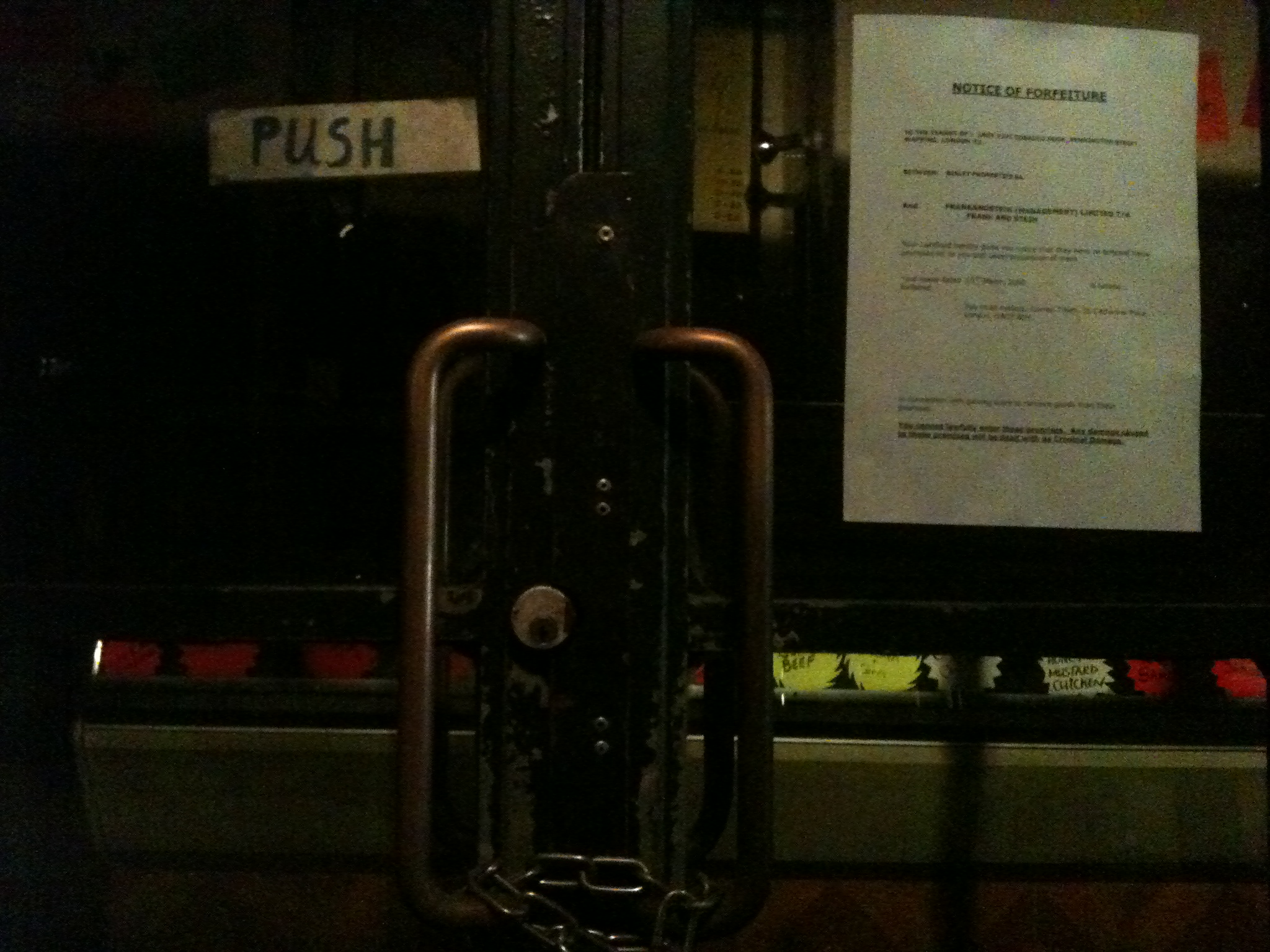
Rows of disused shops lined the central avenue like glass coffins, some still bearing the names of the shops that once operated here. Frank And Stein’s, the sandwich shop that held out longest like a Japanese soldier still fighting the Second World War twenty years after it ended, kept its sign and counter but the door was shackled by a heavy chain. The eviction notice posted in the window a public sign of private tragedy.

011

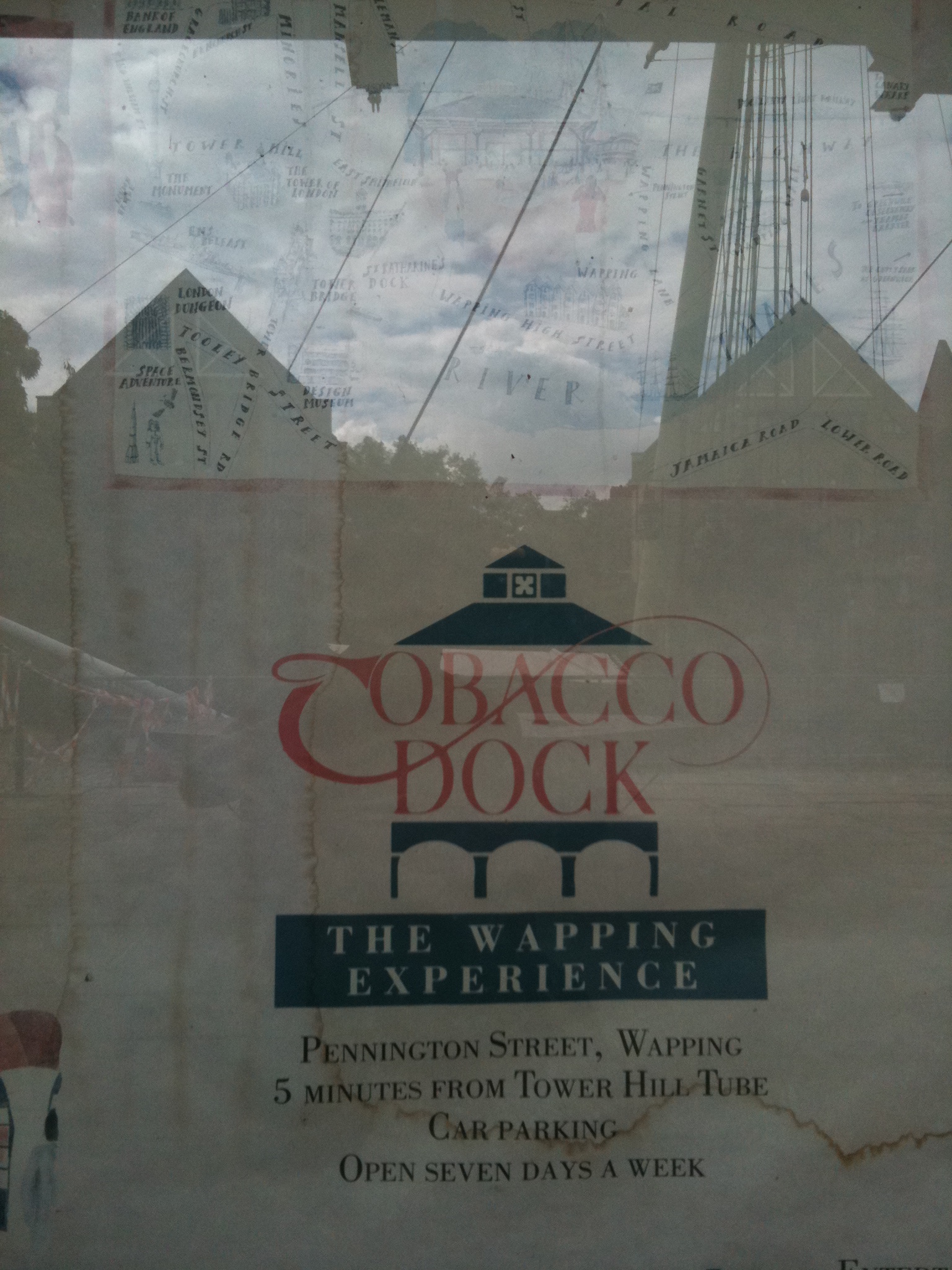
At the back of Tobacco Dock is a pretty canal, featuring a couple of tall ships that were intended for kids to clamber on while their parents ate at nearby restaurants. One such restaurant, an American diner called Peppermint Park, looked recently abandoned but had been empty for years. The week’s specials were still chalked up on the blackboard, but the interior was barren, holes in the wall indicating that these surfaces were once covered by a mass of Americana memorabilia which now probably line the walls of the nearest branch of TGI Fridays. Here too were three faded posters, celebrating ‘Tobacco Dock – The New Heart Of London’, instantly evoking the lost mood of optimism. One of the posters was illustrated by a map, which in a cartographical display of wishful thinking, placed Tobacco Dock squarely in the centre of a buzzing quarter surrounded by the Design Museum, St Katharines Dock, Petticoat Lane and just off-scene, suggested by a tantalising arrow, the myriad delights of Greenwich. Along the bottom of each poster runs a legend, a promise of what lay within: ‘Unique quality shops – Pirate ships – Restaurants – Bars – Entertainments – History’. Well, it’s certainly history. One out of six ain’t bad.

013

Footnote: I wrote this piece in 2010, since which time Tobacco Dock has started to open for occasional private events. 


London’s strangest race: meeting the Tube Challenge

‘s

It’s probably London’s strangest race. The Tube Challenge first took place in 1959 and since then hundreds of people have attempted to visit each of London’s 270 tube stations on the same day – it’s very competitive and they even have their own forum. I recently interviewed Andi James, who currently holds the world record with his running partner, Steve Wilson, to ask him how about being a Tube Challenger.

Andi James, Tube Challenge champion

‘The Tube Challenge is visiting all 270 stations by Tube. If you are on a train, you don’t have to physically step on to the platform just pass through the station, and you can use buses or run between stations if you wish. The first official record was set in 1959. I don’t know anything about the guy who did it first but the master was Bob Robinson who got the record eight times over a period of 21 years.

I heard about it in 2007 and have been doing it ever since. I’ve done it about 46 times now. My winning time [held with Steve Wilson] is 16 hours 29 minutes and 13 seconds and that’s stood since 2011. I do it because I enjoy it. I find it gratifying when you’ve worked it all out on paper and then find it works in reality. I have a route in mind that can knock 40 minutes off my best time, but that would require everything to go perfectly – 20 minutes is certainly possible. Things always go a bit wrong, on my record run there was a 20-minute delay but we got lucky with a few bits here and there. I’m winding down though. I’m getting a little old for it. I’m quite fit and you need to be pretty fit to do some of the runs. I’m 37 and can keep up with 16-year-olds but not for much longer.

If you are going to do it, it needs to be when all the lines are running – that’s Monday to Friday – you need to have a good route and you need there to be no delays. There are some places that are difficult like Kensington Olympia, where there are only nine trains a day, which you have to take into account. You have to be fit as some of the runs are very long so prepare for a lot of pain. Research your door positions because you don’t want to get off at the wrong end and waste five minutes fighting through hundreds of people. I know door positions for every platform in London. There’s also an app for it, created by another Tube Challenger.

The first time I did the challenge, I spent about three weeks calculating all the exchanges and another week physically researching the different runs. The longest is between High Barnet and Cockfosters, 2.4 miles. Some people take the bus, but I know I can run it in 20 minutes. I can definitely improve on my winning route, but so can a lot of other people. There are about 100 people trying each year, and whenever I see people running at Finchley Central to Mill Hill East I know they are either on the Tube Challenge or they are really, really desperate to go to Mill Hill East.’

The cabbies’ capital

This piece is in the 2013 Time Out London Visitor’s Guide. 

Richard Cudlip isn’t one of a kind, he’s one of 22,000 kinds, and London couldn’t function without them. Cudlip is a black cab driver, a licensed taxi driver who spends his days inside one of the world’s most recognisable vehicles and carries in his head the navigational secrets of the city. ‘I put the light on as soon as I leave my road,’ he says. ‘This morning I picked up a job in Balham that took me to Charterhouse Street. That was a nice start to the day.’

By the time we meet for a mid-morning tea in Borough, Cudlip has been to King’s Cross, Soho, Pimlico and Vauxhall, criss-crossing the city in the service of London. ‘Unless you’ve heard through the grapevine about somewhere being busy, you always think about heading for the stations,’ he explains. ‘And now, with Twitter, you have a good idea of where the customers are.’

Twitter hadn’t been invented in 2003 when Cudlip began doing the Knowledge, the gruelling test that every cabbie has to pass before they can drive the black cab. ‘I was working for Ernst & Young and I hated it,’ he explains. ‘My wife suggested I do the Knowledge. I’d wanted to do it in my early 20s, but I wouldn’t have had had the discipline. It’s the last thing you want to do at that age, driving round London on a bike, revising.’

Doing the Knowledge means learning by heart 320 ‘runs’, or trips from one London destination to another, being able to name all the principle roads and landmarks on the way – which amounts to 250,000 streets and 20,000 places of interest. This can easily take four years and sometimes as many as six. ‘The first run is Manor House to Gibson Square, that’s the one you always remember,’ says Cudlip, whose wife is now doing the Knowledge herself.

‘I loved it,’ he says. ‘It was the right kind of challenge. I got to visit all these bits of London I’d never been to. Those 320 runs give you the framework. It covers every postcode in a six-mile radius and gives you a route, in broad terms, around London, from one side to another.’

Cudlip now takes to the streets five days a week. The sort of things that would annoy most people –sitting in London traffic for hours– do not bother him, which is probably why he became a cabbie in the first place. What he enjoys is the freedom and flexibility. If he works a couple of long days, he can take a day off. If things aren’t working out, or he hits his financial target earlier than expected, he can turn off the light and head home. The choice is his.

‘Different drivers work different ways,’ he explains. ‘Some don’t do stations, they’d rather drive around. Others stick to hotels. Some just do airports, which is a very different way of working. You can wait four hours in the feeder park (the holding area for cabs) without knowing what sort of job you will get. You have to pay £6 to work Heathrow, just to cover the cost of the feeder park.’

Cudlip’s perfect day is made up of ‘lots of short journeys. That’s the absolute ideal. If you get a fiver including tip for taking somebody round the corner, it’s perfect. When somebody gets in, I might not know the building they want, but I can work it out close enough so I can make an instant decision about how to get there without having to programme a satnav.’

And even with the Knowledge firmly imprinted in his brain he’s always learning. ‘I love going out every day and seeing a new bit of London,’ says Cudlip. ‘I spent most of my life in London and thought I knew it, but now I know I had no idea.’

Gilbert & George and David Bowie at the Marquee, 1968/9

Should you be fortunate enough to attend the superb David Bowie exhibition at the V&A this spring, one of the first thing you will see is a video of the artists Gilbert & George performing their ‘Singing Sculpture‘. The intention, I think, is to draw a connection between Bowie and conceptual art, but there is another facet of the relationship between David Bowie and Gilbert & George that goes unmentioned: they both played gigs at the Marquee.

I have an article in the current issue of Uncut about the Marquee club. It mainly focuses on The Who, and while asking around about people who may have seen Townshend and Co perform at the Marquee I received an intriguing email from the writer Jonathon Green, who recalled a show at the Marquee in 1968. ‘They were holding auditions and some pals of mine who had a band tried their luck. Unsuccessfully. Naturally we friends tipped up to cheer. But the weird moment of the evening was when this pair of blokes appeared and, saying nothing, sat for some minutes on either side of a table that they placed centre stage. The two blokes, it transpired, though I must admit I can longer recall when I made this discovery, were Gilbert and George.’
Astonishingly, it seems London artists Gilbert & George did play the Marquee at least once – as they mention here – and possibly even twice. Because as well as the evening Green recalls they also played a show there in early 1969, when they were supported by Audience (who later played on the soundtrack to cult suedehead film Bronco Bullfrog).

I asked two members of Audience about their show with Gilbert & George. Sadly, G&G themselves did not respond to repeated queries about their Marquee days.

Trevor Williams: ‘It was an audition night for us, but I’m not sure what they were doing there unless it was to audition an act they were planning to perform later at the Marquee. It was our first live gig but their act basically consisted of them sitting at a table on two chairs facing each other. They were in suits and their faces were painted gold or silver and one told the other stories while the other said nothing. These were very macabre little stories one of which involved a dwarf committing suicide in the bath and the water getting pinker and pinker but never got red because there’s not enough blood in a dwarf.

They were really nice, pleasant, social guys. I don’t remember how they were received but it was an era when anything went and people enjoyed anything off the wall. I’ve no idea how many people were there although somebody once told me that Germaine Greer was in the audience that night.’

Howard Werth: We first encountered Gilbert & George at the back of the Marquee when these two tweed besuited gentlemen with metallic gold heads and hands, in the style of shop window dummies of a gentlemen outfitters, poked their heads into our van politely asking where the entrance to the Marquee was. We were getting ready to audition as were they. Their act consisted of them both seated with one of them (Gilbert I believe) relating a rather strange tale involving dwarves whilst the other one (George) listened intently, chin on fist. I remember Germaine Greer backstage who was trying to get members of another audition band to retrieve some of their equipment they’d left at her flat in the Pheasantry in the Kings road. We shortly after did a gig at the Lyceum with Gilbert & George, I believe they were about to leave Central St Martins art school around that time.’

So there we have it. In an alternative universe perhaps Gilbert & George gave up art and continued their life in music, while David Bowie, fed up of playing bottom of the bill at the Marquee, jacked in the pop trade and threw himself wholeheartedly into the curious world of conceptual art.

Secret London: the Science Museum’s palace of pills

© Science Museum/SSPL

Time Out recently asked me to contribute to a piece on London’s 10 weirdest museum exhibits (something I’ve blogged about previously). My favourite previously overlooked discovery was the above ‘Palace Of Pills’ at the Science Museum.

This extraordinary sculpture, constructed from old pills, medicine bottles and syringes, was made for a campaign run by the East London Health Project between 1978 and 1980. The ELHP was a coalition of health worker unions and local Trades Councils who were campaigning against cuts to the NHS as well as highlighting other healthcare issues facing Londoners in the late-70s. This was the first time the NHS had really come under sustained attack from any political party since it was formed in the aftermath of the Second World War.

The Palace of Pills was created by artists Peter Dunn and Loraine Leeson, who built the sculpture in their studio using old pill bottles that they acquired from the ELHP’s partners working in the health service. They then photographed it for a poster that was displayed in waiting rooms and doctor surgeries.

‘We did eight posters,’ Leeson told me. ‘The Palace of Pills was made for a poster that talked about how the drug companies were dominating what was happening in health, and for reasons of profit not health.’ The model was too big for the studio and already starting to deteriorate when the Science Museum asked if they could have it. ‘They saw it as a curiosity but I’m delighted it still exists,’ she says. Leeson and Dunn took the experience into creating posters for further pioneering campaigns against the redevelopment of Docklands.

Jimmy Page, Aleister Crowley and the curse of Eddie And The Hot Rods


For the full story of the curse of “Do Anything You Wanna Do”, see my interview with the band in this month’s issue of Uncut magazine. 

It’s easy to turn your nose up at any mention of Aleister Crowley, especially if you have little interest in the occult and esoteric world in which he thrived. But to do so means ignoring the man’s often brilliant writing – his Diary of A Drug Fiend is a superior pulp classic, for instance – and also missing out on some of the greatest anecdotes of the 20th century.

For the uninitiated, Crowley (1875–1947) was a British writer who used sex, drugs and magic –often simultaneously – to try to attain altered states of mind and who achieved such a level of notoriety for his activities that he was brandished the ‘wickedest man in the world’. If not wicked, he was certainly a character. As well as signing his letters ‘666’ and conducting numerous affairs with lovers of both sexes, he climbed mountains, wrote pornographic poetry, fraternised with novelists, artists and spies and attempted to write a new American national anthem.

To give a flavour of Crowley’s often bizarre intersections with normal society, in the early days of the Second World War he was tapped up by British intelligence officer Ian Fleming, who asked him to take part in an ‘occult disinformation plot’ against Adolf Hitler’s deputy Rudolf Hess, a fervent believer in astrology and the occult. Crowley was keen, but the plot was ultimately shelved; Fleming, however, later used Crowley as the model for villain Le Chiffre in his first James Bond novel, Casino Royale, in 1953. Another fan of Crowley was Scientology founder L Ron Hubbard. It is claimed Hubbard took part in ‘sexual magick’ (magick was a term favoured by Crowley) with a couple called Jack and Betty Parsons in an attempting to create a magical child, thus fulfilling a prophecy from Crowley’s The Book Of The Law. Crowley was not impressed, writing in one of his typically entertaining letters: ‘Apparently Parsons or Hubbard or somebody is producing a Moonchild. I get fairly frantic when I contemplate the idiocy of these louts.’

Crowley was bisexual and a heavy drug user, eventually becoming addicted to heroin. He also enjoyed peyote, handing it out at parties. On one occasion in New York he gave some to the novelist Theodore Dreiser, who became uncomfortable and asked if there was a doctor in the area. ‘I don’t know about a doctor,’ said Crowley, ‘But there’s a first-class undertaker on the corner of 33rd and 6th.’

This freeness with sex and drugs saw Crowley embraced by the rock and roll generation, particularly after he appeared on the cover of Sgt Pepper. But the story behind another of Crowley’s cover appearances is not so well known. In 1977, Essex rockers Eddie And The Hot Rod wrote a song that was partly inspired by Crowley’s famous motto: ‘Do what thou wilt is the whole of the law’. The band rewrote this as “Do Anything You Wanna Do”, a spirited ode to self-empowerment, and attached the lyrics to a perky pop tune that quickly reached the Top Ten. It was engineered by a young Steve Lillwhite, who recorded it at Island’s studio in Notting Hill.

In recognition of his contribution to the song’s genesis, the band decided to put Crowley on the cover of the single. But they also felt his glowering visage was not really in the spirit of the band, so manager Ed Hollis (brother of Talk Talk’s Mark) attached a slightly comical pair of Mickey Mouse ears to Crowley’s head.

EDDIE_AND_THE_HOT_RODS_DO+ANYTHING+YOU+WANNA+DO+-+PS-447606

Great cover, big mistake. According to rumour, this image soon came to the attention of Jimmy Page, a Crowley apostle who lived in the Crowley’s old house, had a vast collection of Crowley paraphernalia and was fascinated by the occult. Page had orchestrated the Crowley-influenced occult symbolism that adored Led Zeppelin’s fourth album, which incidentally was also record at Island Studios.

The band were told that Page placed a curse upon Eddie And The Hot Rods for their disrespectful treatment of the Great Beast. From that moment, the band were plagued by problems. They were dropped by their label, their manager became hooked on heroin and they never bothered the higher reaches of the chart again. From behind his Mickey Mouse ears and with the help of satanic rock royalty, Crowley had got his revenge. As bassist Paul Gray told me, ‘Weird shit happened after that. A lot of people said we shouldn’t have fucked about with Crowley.’

Inside London’s super-prime houses

I wrote this article in 2011 for Gulf Life about London’s super-prime property market.

They call it super-prime. That’s the end of the London property market that starts at £15 million and goes as high as £150 million. It’s a market that operates in isolation from the rest of London and it’s one that is dominated by an international clientele, with buyers jetting in from the booming economies of the Far East, Russia and the Middle East. So what do they get for their bucks?

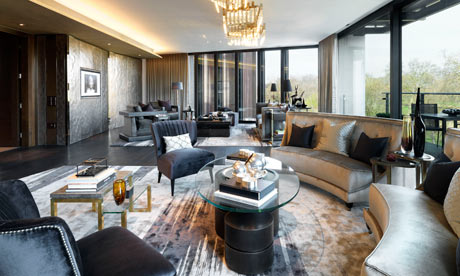
‘Buyers at this end of the market all have five demands,’ says Giles Hannah, who oversees the European operation of Christie’s Great Estates, the property branch of the venerable auction house, ‘security, space, parking, location and luxury features.’ Christie’s is currently selling a mansion on Cornwall Terrace, a dramatic John Nash-designed sweeping terrace overlooking Regent’s Park. It boasts six bedrooms, a home cinema, gym, steam room, study, state-of-the-art kitchen, mews house for staff, garage with blast-proof doors and majestic views of a royal park. Floors are covered by Italian marble, dark oak or silk carpet, there’s a chill room for furs and the walls are covered with paintings by Picasso and Damien Hirst on loan from the auction house. It’s yours for around £30 million.

‘This property was bought and developed in 2008,’ explains Hannah. ‘There are eight on the terrace and they are being released house by house into the market. London remains a key place to buy and although it’s been a difficult market since 2008, there are enough international buyers around. There are 1,100 billionaires in the world, all capable of purchasing a £30m house in any climate.’

The address they all want is Knightsbridge, which partly explains the prices fetched at One Hyde Park, a development by Christian and Nick Candy. One Hyde Park is a gleaming Richard Rogers-designed tower of luxury that sits almost above Knightsbridge tube, with Hyde Park on one side and Harvey Nichols on the other. A penthouse is said to have sold for more than £100 million and, according to Savills, the selling agent, 60 per cent of the 86 apartments have been snapped up.

A five-bedroom apartment costs upwards of £50m and takes up an entire floor – around 10,000 square feet. The hallway stretches the length of the flat from master bedroom to reception room, one end overlooking the park, the other Knightsbridge. To give an idea of the scale, a baby grand piano in the corner of the living room looks like a coffee table. Off the corridor are a further four bedrooms, two reception rooms, a TV room, study, dining room and two kitchens (one for staff). The building contains a squash court, 22-metre pool, games room, party room and meeting room.

‘You don’t need to leave the development,’ says Ned Baring, Associate Director of Savills. ‘You can live, work and play here. What makes this different to other complexes is that we have 50 dedicated staff at the Mandarin Hotel next door who can provide any service you need, from setting up a dinner party to doing your dry-cleaning. It’s like living in the best hotel in the world, but with your own private residences.’

The Candy brothers have invested a fortune in One Hyde Park – how much, nobody will say– banking on continued high demand for super-prime London property. ‘In the morning you can speak to Asia and in the afternoon you can speak to New York,’ says Baring. ‘There aren’t many cities where you can do that. You might not be here 365 days, but you need to be here.’

Hannah says much the same, ‘Your average Christie’s client will be ultra-high worth and may use this property just a couple of times a year. They’ll also have a place in the south of France, one in New York and a chalet in Courchevel.’

If the ostentation of One Hyde Park doesn’t appeal, a short stroll away – but crucially, still in Knightsbridge – you’ll find the discreet charm of Ovington Square, a classic London garden square located between South Kensington, and Chelsea. ‘This part of Knightsbridge is very popular with Middle Eastern buyers, especially from Qatar, Lebanon, Syria and the UAE,’ says Noel De Keyzer of Savills. ‘They like traditional houses, and will come in the summer to avoid the heat at home.’

The house, refurbished in 2008, was recently rented by a Lebanese family (another renter was Bill Gates), but is now on the market for just under £20 million. The selling point is the vast two-floor pre-war extension taking up the entire back garden, itself the size of a normal house. This holds the reception room and master bedroom. The five-bedroom house also has a sub-basement beneath the lower-ground-floor kitchen, containing a gym and steam room.

‘This end of the market stayed very strong in 2008,’ says De Keyzer. ‘But in 2009, it was dead. People weren’t buying. It picked up again in March 2010, helped by weak sterling.’ The problem now is one of supply. ‘There will be an acute shortage of properties in 2011,’ says De Keyzer. ‘A lot of vendors don’t think they’ll realise their expectation because the super-prime market is still 10 per cent below its peak in 2008. You are dealing with very affluent people who have no need to sell in an uncertain market, and if they’re selling to buy somewhere else, they have nowhere to go.’

There are, according to Hannah, only three developments ready for the super-prime market: Cornwall Terrace, One Hyde Park and The Lancasters. The latter is a fascinating project on the north side of Hyde Park in Bayswater. A regal Victorian terrace has been transformed. The old building behind the gorgeous Grade II-listed facade has been knocked down and replaced by an impressive new complex of 77 apartments, retaining the original front with its huge windows and exceptional views of Hyde Park.

‘These buildings were built in the same style and grandeur as Belgravia,’ says Mark Cherry of Minerva, joint developers with Northacre. ‘It was a high-profile wealthy area and is now going through a revival. Some people will only buy Mayfair and Knightsbridge, but others will want better lifestyle and better buildings, so they will come here. We’re offering a high-level of service for people that expect high service, with three concierges on site at all time. I spoke to somebody who was moving from a mansion block and they said they want to be in a building where the pipes don’t rattle and they don’t have to rely on a single elderly grumpy porter. People want classic British houses with American-style service.’

The surprising thing about all four properties is how similar they are. All are decorated in dark masculine colours. All have Gaggenau kitchens and Crestron systems to control sound, security and lighting. None have gardens. All have flat-screen TVs in the walls of every room. The houses have lifts – ‘Middle Eastern clients don’t like using the stairs,’ says Hannah – while the apartments encourage ‘lateral’ living. There are separate bedrooms and entrances for staff–at The Lancasters and One Hyde Park, some clients also purchase a separate apartment for staff. All have serious security, and all have space. Lots of space. The most breathtaking is One Hyde Park, the best views are from The Lancasters and Cornwall Terrace and the most charming is Ovington Square.

The properties can even be sold fully furnished. ‘The keyword is “turnkey”,’ says De Keyzer. ‘International clients are busy and want to move in straightaway with their suitcases.’ That’s not to say they’ll rush to make the purchase. ‘They’ll look at everything available,’ says Hannah. ‘They like to have choice. This isn’t a financial purchase, it’s a personal one.’

The super-prime market is very lucrative for estate agents. ‘It’s competitive, but in the £10 million-plus range Savills and Knight Frank have more than 50 % of the market between us,’ says De Keyzer. ‘That’s because we are international companies with very good contacts. Our fees are 2.5% for sole agency and 3% joint agency but it’s negotiable. We can afford low fees because our values are higher and we have a large turnover of properties. In London the average house is sold every five years, but on the continent people hold on to property for generations.’

That could be about to change. ‘Over the last few years, the lack of property has become apparent,’ says Hannah. ‘The best properties have been bought by international clients and they won’t be traded for many years. People who purchase a premier address will keep it as an asset for a while.’

Because of this, Hannah anticipates good times lie ahead. ‘London is London, arguably the centre of the world and a major financial hub,’ he says. ‘Clients need to be here, they want to be here, they understand the tax implications and they have good accountants. We’re expecting 30% growth over the next three years.’

Cherry agrees. ‘The market at this level is strengthening. Because people want certain key locations, the market can never be saturated, there are listings, conservation areas, it takes ages to get planning permissions and there are strict limits on tall buildings – it’s a very good market to be in.’ If you can afford it, obviously.