Category Archives: Football

‘Blue Is The Colour’: versions from around the world

I dimly recall watching an animated Czech film on Channel 4 many years ago, which featured a version of the Chelsea anthem Blue Is The Colour sung in Czech. (Huw Jones in the comments now reveals this to be ‘Virile Game’, by Czech genius Jan Svankmajer – it appears 1min 45secs into this clip.)

It seems I may not have imagined this. I’ve just found out that the song was indeed recorded by Czech singer Frantisek Ringo Cech as Zelená je tráva (‘Green Is The Grass’) in 1981.

Here are some Czech footballers – including the great Antonin Panenka – singing it in the 1970s.

There’s also a Danish version called Rød-hvide farver (Red and White Colours) recorded by Flemming Anthony in 1984.

And here’s a rather chirpy Finnish version, where it was recorded by Vexi Salmi and called Hoo Ji Koo, although it’s better known as Taas Kansa Täyttää. This is probably my favourite.

Here are The Proclaimers singing a pretty awful recent version, renamed ‘White Is The Colour’ for the Vancouver Whitecaps in Canada.

Also from Canada is this version, a hilarious tribute to American Football team Saskatchewan  Roughriders, in which they try to fit the entire name of the team into a rhyming scheme that was only designed for two syllables.

Away from professional recorded versions, the song has also been adapted by other football fans on the terraces. Here are fans of the Japanese club Montedio Yamagata singing it in English.

And Lazio sing a mightily impressive version of it in Italian. Only they could make such a sweet song sound intimidating. 

Finally, here’s the original being recorded by Ossie and the boys in 1972.

Stamford Bridge in 1979

For people like me, there are few things more emotive than an empty football ground, filmed in 1979 in flickery Super-8 and overlayed by a haunting soundtrack. It’s like Simon Inglis’s first volume of ‘Football Grounds Of Great Britain’ come to life.

Check out loads more here.

Footballers: the new aristocracy

A few years ago, on a train coming back from Wales, I fell into conversation with the chap sitting next to me. He was a former professional footballer who now worked in the strange world of ‘player services’, which meant he was employed by a large London club to hold the hands of footballers. He helped them find a house, pay their utility bills, run the car, deal with cleaners and nannies, liaise with solicitors, represent them in court after unfortunate incidents with air rifles – basically all these annoying bits of life that most of us have to deal with but would probably rather we didn’t.

He told me a story about an African player who moved from London to a smaller club outside the capital. They who did not employ anybody in ‘player services’ but the footballer managed to get himself a new house easily enough. However, some months later he was astonished to discover his electricity and gas had been cut off.

It turned out that he hadn’t paid any of his bills. He thought that once you forked out for a house that was it, everything else – the lighting, heating, phone line etc – was taken care of. He’d stuck all his utilities bills unopened in a drawer and forgotten about them.

I recalled this splendid story recently when reading about the adventures of Jessica Mitford. Jessica was the Communist Mitford, an aristocrat who moved to Rotherhithe in the 1930s so she could live among the proles. Mitford seemed happy, even if she noted that ‘the locals were a shorter and paler race of people than the inhabitants of the West End. In appearance, dress and speech they form so radical a contrast as to give the impression of a different ethnic group.’

Mitford looked forward to a life of May Day parades and pie and mash among ‘the rough children of Rotherhithe’, but sadly it didn’t work out that way. Her daughter died of pneumonia, and the disconsolate parents fled to Corsica for three months.

When they returned, the problems continued to mount. Mitford and her equally posh husband, Esmond Romilly, a nephew of Winston Churchill, had never been told they needed to pay for utilities, and so ‘lights, electric heaters and stoves blazed away day and night’ in their house overlooking the river.

A gargantuan gas bill built up. Soon the gasman began to pay regular visits to try to get it settled, so Romilly took to wearing a false moustache as a disguise. Eventually, though, it all got too tiresome for words, and the couple fled back across the river to the sanctity of Marble Arch, where people were so much more understanding about the foibles of landed gentry.

London in maps

This was a piece I wrote for the January 2011 issue of Metropolitan magazine.

In July, the Mayor of London introduced a scheme that allowed the public to rent bicycles from 300 docking stations in different London. Within days, maps could be found all over the internet showing exactly where each docking stations could be found and which were the most popular. These maps were largely unofficial and all free, created by tech geeks for fun and copied to internet forums for the use of cyclists, tourists and map lovers. It proved once again that Londoners will map anything. There are maps for free wi-fi hotspots, maps that chart where the most Twitter activity comes from and maps that find the nearest toilet. One of my favourite maps is this 1970s version of the knitted football tribes of London.


This love of maps is engrained in London’s psyche, the result of living in a chaotic and unplanned metropolis. Two of the city’s favourite icons are maps: the A-Z, that portable atlas which even seasoned Londoners carry in case they get lost; and the Tube map, a design classic that has been copied by transport networks all over the world and is regularly ‘mashed-up’ by artists, replacing stations with footballers, philosophers, films, authors and anagrams.

In 2006, the British Library organised a ‘London: Life In Maps’ exhibition, curated by Peter Barber, the library’s Head of Maps, who thinks London’s love of maps is far stronger than anything you might find in Paris. ‘The French have a very cool attitude towards maps,’ he says. ‘They don’t, on the whole, use them and there is no comparable market in old maps to the one we have in London. You have to give away old maps of France. Maps in France are associated with authority – they were tools of administration and control. Whereas in England maps were commissioned privately and so are not perceived as being so menacing.’

The Lost Map

Barber names the key maps of London’s past –the Copperplate map of the 1550s, the Morgan map of 1682, the John Rocque map of 1746 and the Horwood map of 1829. Barber makes a distinction between two kinds of maps. There are functional maps for getting you from A to B (or A to Z) and there are maps that work thematically or artistically to present information or ideas over a cartographical plan. The thematic map has been popular in London for centuries – the most famous is Charles Booth’s Poverty Map of 1889, which colour-coded streets according to income. Another is ‘The Modern Plague’ of 1886, produced by the National Temperance League, which showed pubs in central London. These maps are designed to transmit an idea, not aid mobility, and are fascinating to study. One of the first was John Snow’s map, tracking cholera outbreaks in Soho.

Such maps are now getting easier to compile. ‘It’s said that 80 per cent of all knowledge is spatial, and you can geo-reference any phenomenon and plot it on a map,’ says Barber. ‘With digital mapping, the techniques to do this are within the range of everyone. Digital mapping isn’t new, what is new is the ease with which it can be done and the extent of the information that can be plotted.’

Simon Foxall summarised this in his book ‘Mapping London’, writing: ‘Maps have been made to do things they were never expected to tackle and, in doing so, have exposed patterns, connections and ideas that were as interesting as they were unexpected. ‘

Straddling these two types of map is Bill Visick, a former manager at IBM, who has developed the London Time Travel Explorer (TTX) app for the iPhone. This features four maps of London dating from 1746 to 1862 and a contemporary map of the city. Using GPS technology, the user can fade between old and new maps to see how the street on which they stand has changed. It’s virtual time travel.

Visick had been collecting maps of his Kensington home for years, but smart phones allowed him to take this to another level. ‘What sparked it for me was realising that the street I lived on contained the first buildings ever built in Kensington,’ says Visick. ’I was standing outside my door and thinking, “blimey, that was a hedge and that was a field”. So the first thing I did was put this old map on my phone and walk around looking at it – that became the prototype and that’s where the idea of TTX came from. It happened almost as soon as I realised the technology would allow it.’

The novelist and poet Blake Morrison has spoken about ‘our craving for interactivity’, and that is something the artist Stephen Walter is also exploring through maps. In 2008, he created The Island, a vast, exquisitely detailed map of London, crammed with cultural and political references and in-jokes. ‘People have been suggesting I do an app,’ says Walter. ‘The British Library did a brilliant browsing tool for the map and people have suggested I do something for a phone or tablet computer. I’m interested to see if there’s a way people can leave their own tabs on the map, personally configure it with their own information.’

The Island is modern in its outlook, but Walter was following a long tradition. ‘There’s a huge, strong history of map-making in London and we do like to beat our chests about it,’ says Walter. ‘It’s a bragging thing, a celebration of history and size. The Island was a spoof of a medieval map. The twist was that a lot of it was very personal and also a contemporary reaction to the city, whereas at first glance it looks like a pretty conservative world map.’

It has long been understood that the map is subjective, reflecting the views of the maker, although rarely as blatantly as in The Island. In ‘Mapping London’, Foxall writes, ‘The map, as a scaled replica of the entire city, presents a choice to its maker: not what to include, but rather, what to exclude. The mapmaker, like a sculptor, must chip away at the raw block of material that is the city to reveal the shape and representation hidden inside.’

Barber expands this point. ‘Different maps show different things and your judgment of a map depends entirely on what you want from it. In some cases you could draw a direct contrast between the map the man in the street wants and the map the expert says is best. The A-Z is a complete travesty of mapping because the streets are grotesquely enlarged and the open spaces much reduced.’

The irony of the growth of digital mapping is that it comes at the expense of the old-fashioned kind. People no longer need A-Zs, because they can use GPS or SatNav. ‘I spoke to somebody the other day, a businessman in his 60s, who no longer takes directions,’ says Visick, with one example that stands for thousands. ‘He knows he can get anywhere on his phone.’

And into this breach step the digital mappers, who offer information in a manner that all of us can understand. London can be a daunting city to comprehend, so a thematic map that breaks the city down into easily absorbed chunks of information located spatially is very helpful. As Walter muses, ‘It seems the more complicated life gets and the easier it gets to traverse the landscape, the more maps become all about ourselves.’

Fulham – European champions: how the London football map might have looked

The current hoo-hah over the legacy of the Olympic Stadium and the squabbling between West Ham and Spurs offers an interesting reminder of how different the map of London football could have been.

In 1904, when the new owners of the vast Stamford Bridge athletics stadium in Walham Green decided they wanted to find a football club to play there, the first thing they did was ask Fulham.

Fulham were London’s first professional club and one with some potential, but surely not as long as they stayed in their tiny Craven Cottage stadium, cramped between residential streets and the River Thames. Stamford Bridge, a huge and modern ground, should have been a far more attractive proposition, but the Fulham chairman, Henry Norris, said no.

He would never again demonstrate such caution or traditionalist principles.

The stadium owners, the Mears family, eventually – after some prompting from Frederick Parker’s dog –  decided to form their own club. Chelsea appeared in 1905, and thanks to expansive investment, almost immediately became the biggest club in London, drawing huge crowds that totally overshadowed poor Fulham and the rest of London football.

Norris took stock of this and decided the best thing to do was get the hell out of West London. He hopped over to Arsenal, then a struggling club with small crowds in Woolwich, took one look at the unpromising area and after briefly attempting to merge Arsenal and Fulham agitated instead for a move to North London, much to the fury of the existing and suddenly squeezed Tottenham Hotspur, who began to draw more of their support from East London, where West Ham resided. Tottenham’s overlap between East and North London is what makes the Olympic Stadium semi-logical but also vaguely heretical.

Over in South London, the absence of Arsenal allowed Charlton to step into their shoes, turning  professional at almost the same time as Arsenal crossed the river.  (Hat-tip Darryl, in the comments)

Suddenly, the map of London football had completely changed. Chelsea were the undisputed giants in the west, while Spurs and Arsenal shared domination of the north, with everybody else filling in the blanks. 

Here’s a picture of Norris. Doesn’t he look like a nutter?

But has one man had a greater impact on London football?

Without his intervention, Chelsea wouldn’t exist, Arsenal would still be in Plumstead and Charlton would still be amateurs. Spurs and Fulham would almost certainly be the twin giants of London football. Indeed, Fulham, playing at Stamford Bridge and managed by Herbert Chapman (who Norris was later to recruit at Arsenal) could easily have become one of the biggest clubs in Europe. Fulham, champions of Europe – it could have happened.

Why I love Pat Nevin

I remember when I fell in love with Pat Nevin. It was in the playground and somebody was passing round a 1985 Panini sticker album. I turned straight to the Chelsea page to see my heroes.

There was Kerry Dixon, bluffly handsome with golden hair, azure eyes and self-confident grin. There was Colin Pates, a brick-wall centre-back with disco dancer hair. There was Doug Rougvie with a nose that looked like it had lost an argument with a spade.

And there was Pat Nevin. Pasty-faced, greasy-haired, nervous, thin and sullen. He looked like a smackhead. Who wouldn’t fall in love?

I only saw Nevin play once for Chelsea, a 3-0 victory at Watford in 1988 about which I remember little, but his legend loomed large over the following years. By the time I started watching Chelsea regularly the next season, the club were in the Second Division and Nevin was at Everton, but my bible, the Chelsea Independent fanzine, spoke of little else.

They drooled over Nevin’s dribble against Newcastle, when he beat eight players in a slalom run that took him from one end of the pitch to the other. They marvelled at his free kick against Sheffield Wednesday, when he chipped the ball over the defensive wall, ran round the other side and lofted a perfect cross on to David Speedie’s goalscoring noggin. They giggled at his famous penalty miss against Manchester City.

The love seemed mutual. When Nevin was injured playing for Tranmere, he attended a Chelsea-Everton game at Goodison Park and paid to go in the Chelsea end. This was important. Chelsea fans, then as now, were despised, but if somebody like Nevin loved us, maybe there was hope, maybe there was redemption,

And Nevin was the sort of player that fans love – an exciting, creative, unpredictable dribbler, but there was more to it than this. Nevin was smart. Nevin was cool. Nevin was different.

He angrily attacked his own supporters for their racist, violent and anti-semitic predilections – to the delight of the left-wing students at the Chelsea Independent. He read French and Russian literature. His favourite bands were Joy Division, Jesus And Mary Chain and the Cocteau Twins. He once insisted on being substituted at half-time in a friendly so he could attend a gig. He brought Brechtian principles to the club programme when he interviewed himself – yes, himself – for a player profile. He was friends with John Peel. For the teenager who read Camus and listened to Sonic Youth it was a no-brainer: if you could be a footballer, you’d be Pat Nevin.

NME described Nevin as the first post-punk footballer, although it may have been more accurate to say he was the first art school footballer. He was also the last. 

When at Everton, Nevin gave a lengthy to the Chelsea Independent, and talked at length about football, music and literature, and what it was like drinking in Soho with George Melly. I’d never heard of Melly, but here I was, learning about jazz and the counterculture from a footballer, in a fanzine. Would that happen now? 

When I interviewed Colin Pates – who is not a stupid man, by any means -he still seemed bemused by the fact Nevin would read books on the way to away games rather than play cards. Nevin, though, never seemed to get bullied about his interests. He was clever, but he was also proudly working-class and therefore more acceptable to other footballers and more capable of sticking up for himself than the middle-class Guardian-reading Graeme Le Saux who followed him as Chelsea’s token intellectual.

In the early 1990s, I finally got to see Nevin play at Stamford Bridge. He was wearing an Everton kit, but when he scored the Shed gave him a standing ovation – the only time I have ever seen Chelsea fans applaud an opposition goal. Pat Nevin was a very intelligent footballer and when he was around, fans seemed to use their brains a little bit more as well.

Apologies…

For lack of blogging this week, my life is currently taken up with:

and

and

and

and

and

But more to come shortly.

South London and the birth of the educated footballer

This is an edited version of a piece I wrote for 4-4-2 magazine in September 2009

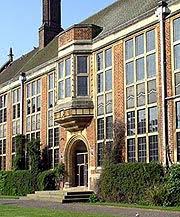
Whitgift School in Croydon is not the sort of place you’d expect to find the future of English football. This breeding ground for bright young talent is as far from the stereotypical back streets of football’s urban north as you can get. Situated in 45 acres of parkland and boasting colonies of albino wallabies, flamingos and red squirrels, Whitgift School is one of the oldest and wealthiest private boys schools in the country. For centuries, it has produced outstanding academics and sportsmen. The latter have usually been rugby players such as England fly-half Danny Cipriani or cricketers (the county-standard pitch is used by Surrey CC), as befits the tradition of the English independent school, which  leaves football to the hoi polloi of the comprehensive sector.

So how have four professional footballers emerged from Whitgift’s ranks in the past few years? Why does the school currently count 13 children from different footballing academies – including Chelsea and Tottenham – among its 1,200 pupils? And how did the school attract three former footballers to work on its coaching staff?

To answer those questions, I entered the headmaster’s study to meet Dr Christopher Barnett, the man who brought soccer to Whitgift. As we talk, exotic peacocks can be seen through the study window, heads bobbing up and down as they wander around on impeccable lawns. It is an extraordinary environment. In these conditions, Dr Barnett’s belief he can ‘change the mould and develop a new breed of middle-class footballer’ seems entirely plausible.

The Australian connection

Dr Barnett’s conversion from rugby to football came in Australia. ‘In 1996 I went out to a school in Parramatta,’ he says. ‘I was walking round the grounds and it was rugby as far as you could see – rugby match after rugby match after rugby match. But then I turned the corner and there was soccer being played. So I thought, if they can do it…’

Convinced that if something is worth doing, it’s worth doing properly, Dr Barnett looked for a coach and found Colin Pates, the Chelsea and Arsenal centre-back, who had retired with a knee injury. A posh school in the suburbs is not where you’d expect to find a hard-bitten former pro, and Pates admits: ‘Whitgift is quite alien to some of us, because we had state school educations. It was intimidating, and not just for the boys.’ But he jumped at the opportunity.

‘The headmaster asked me to take a sixth-form team on Wednesday afternoons,’ he says. ‘I asked if there were any goalposts, pitches, teams or even footballs, and we didn’t have anything. So we had to start from scratch, pretty much teach them the rules. They were rugby boys playing football, so these were quite aggressive games. But after three years we introduced fixtures and we’ve never looked back.’

Introducing football to a rugby school for the first time in 350 years was no easy task and Pates admits that ‘there was always a concept that we’d bring in swearing and fighting, but we’ve had none of that. History told me it was going to be very difficult to change people’s attitudes, but if you know you’ve got the support from the top man, the head, you can slowly change the perception of football.’ And the Headmaster – motivated by ‘old-fashioned esprit de corps’ as well as the desire to have the newly fashionable sport of football on the syllabus – gave it his full support.

As football cascaded through the school, the coaching team expanded to include John Humphrey, a right-back for Charlton and Crystal Palace, and Steve Kember, the former Chelsea and Palace midfielder. ‘It showed that we were engaging with how we would be a football school, but a different kind of football school,’ says Dr Barnett. ‘What I wanted to do was provide discipline and a serious education. We wanted to tell footballers who were coming to Whitgift: “Yes, but…” and the “but” is that you are going to work.’


The coming of Moses

Whitgift began to offer scholarships and bursaries to help parents of talented young players pay the £13,266 annual fee. It also established an informal relationship with Crystal Palace, with some of the club’s outstanding talent getting recommended for places at the school. David Muir, Education and Welfare Officer at Crystal Palace, explains ‘Whitgift is flexible and open-minded,’ he says. ‘Private schools are generally better than state schools at supporting the academies, offering excellent sports training and balancing that with academic work.’

By 2007, two Whitgift pupils (Victor Moses and Lee Hills) were in the Palace first team. But education was still paramount. ‘A lot of these boys are outstanding academically even if some of them can come here with what appears to be a relatively low IQ,’ says Dr Barnett. ‘But if you work with them and give them belief and encouragement, they can soar.’

Moses, now playing in the Premier League with Wigan, arrived at the school as an 11-year-old orphaned asylum seeker from Nigeria predicted to get no GCSEs at A-C and ended it as an England youth international with GCSE results above the national average. Dr Barnett is adamant that a good education and football skills are mutually beneficial. ‘We did a correlation study on pupils’ academic expectation on entry and then factored in how much they participate outside the classroom,’ he says. ‘And those boys that were more heavily involved in sport did far better academically – quite the reverse of what you might expect. Received wisdom is that if you do too much sport, you’ll damage their education, but that wasn’t the case.’

As for what education can do for your football, he cites the words of an FA Cup-winning manager, who watched Whitgift win the Schools Cup in 2005, when they beat Healing School 5-0 (Moses scored all five). ‘Lawrie McMenemy said to me that if he’s got a choice between a footballer without a brain and a footballer with a brain, he’ll always go for the one with a brain, because he knows he’ll follow instructions and understand tactics and you’ll get far more from him.’

Muir says that  ‘previously, you were either seen as a sportsman or an academic, but our best players have always had the potential to be high-achievers academically as well.’ This backs up Dr Barnett’s claim that ‘the managers of the academies want their boys at Whitgift. Because as well as getting good football training and terrific facilities, they’re going to get discipline and they’re going to get structure and they’re going to get their qualifications.’

It is this that will provide the new type of footballer desired by Dr Barnett. ‘You know that if they were in the state sector they would get lost. Football would be all they had and they’d probably end up with nothing, no career and no qualifications; here, they can end up with 10 GCSEs and still make it as a footballer. And that is one of the key differences in how they will conduct themselves on the pitch  and what image they provide for football. If you get enough kids doing this, you could change things.’

The movement is gathering place. Other private schools – including local rival Trinity and Ardingly College in Sussex – have started to follow Whitgift’s lead.

Finding the kids

So how does Whitgift recruit its talent? Muir says that ‘Palace put forward one or two players every year. We have to find kids who are both outstanding footballers and with a potential to do well academically because they have to pass the entrance exam. The parents pay the fees, though they can be helped by scholarships or wealth-related bursary schemes.’

Other relationships are less formal, and sometimes clubs foot the fees. And sometimes, the players are already at Whitgift before the clubs spot them such as Stefan Amokwandoh, a 13-year-old at Charlton.

A close relationship between school and academy is vital. The school’s fixtures are played midweek to avoid clashing with academy games, while academies benefit from the high standard of coaching the players get from the school.

Whitgift insists that all pupils play in school fixtures, compete in all sports and do their homework. ‘I have to work harder than the other boys at Chelsea,’ says Joel Witele, a 14-year-old who also excels at rugby. ‘When I get homework I have to concentrate and make sure I do it.’

For those football academies accused in a recent book (‘Every Boy’s Dream’ by Chris Green) of offering too many boys nothing but disappointment and educational underachievement, you can see why Whitgift is so attractive.
‘Look Sir, no litter!’

The notion of privately educated footballers no longer seems strange to Pates and Humphrey, even if it must to some of the school teams they come up against (‘We played a local state school,’ said Pates, ‘and one kid said: “Look Sir, no litter!’). Humphrey says: ‘We have quite a few guys at Charlton [where he is an academy coach] who go to private schools. If you have two boys of the same ability, you pick the brighter one because they’ll learn quicker, so we’re moving away from state schools monopolising football. There’s a lot of money out there, and parents want to give their kids the best education they can.’

Pates agrees: ‘A lot of footballers are sending their kids to independent schools. Working-class parents are earning money and putting their kids through private school. We’ve had [Brentford manager] Andy Scott’s boy here, Ian Wright’s boy, Steve Coppell’s – there are lots of them and its spreading into football.’

Muir concurs: ‘It’s great to see the kids get an opportunity I never had. It’s not what people might perceive of from an independent school, it’s not a bunch of boys with plums in their mouths, it’s just normal kids whose parents want them to do really well and provide them the best opportunity to do so.’

Another motivation for Pates and Humphrey is the experiences they had as players. ‘A lot of players from our generation had nothing to fall back on when they came out our game,’ says Pates. ‘There was also nothing in place when we were young – if you didn’t make it, that was that. So we ensure that our players have the opportunity to be everything they want to be, even when they leave. Rhys Coleman was released by Charlton, went to Glenn Hoddle’s academy in Spain and didn’t quite make it, so we got him a trial with Palace. It’s like aftercare. We try and help.’ Another former pupil managed to put himself through university with the money he earned from semi-professional football.

It’s all part of a package that Pates and Dr Barnett believe to be unprecedented. ‘You have to be an exceptional footballer to make it these days,’ says Pates. ‘So we want to give them the best opportunity to be a footballer, but also give them a magnificent education so if they don’t sign scholarship forms they have something to fall back on. It works for us, it works for the academies and it works for the families.’

The question now is will it work for football.

A punch up the bracket: BS Johnson and Anthony Aloysious St John Hancock

In a comment on my previous post about BS Johnson,  BB writes: ‘To issue a threat ending in “up the bracket” is so much of its time it made me laugh out loud. I had a couple of jobs that involved working with men in their late 50s and early 60s, real Londoners,  and they had a particular argot and mode of expression, which was always making me laugh. Enquiring as to whether you wanted a punch up the bracket was a regular occurrence.’

I also love this phrase, and associate it with another of my heroes, Anthony Aloysious St John Hancock, the greatest British comedian of all time. (There’s a great piece about Hancock here, noting the similarities between Hancock and Seinfeld as well as Hancock’s use of ‘punch up the bracket’.)

Hancock and BS Johnson have much in common. Both were aspirational working-class/lower middle-class men defined by the 1950s who spoke in the language of outer-urban post-war London. Both were men of keen wit and sharp intellect who enjoyed – or couldn’t help – skewering their own occasional lapse into pomposity. Both were depressives with a gift for pointed, painful comedy. Both killed themselves. They even looked similar: thick, heavyset men with wounded eyes. And, most importantly, both referenced Chelsea in key texts (Hancock in ‘The Football Pools’ and Johnson in ‘Albert Angelo’).


I once interviewed Tim Lott – or was it Toby Litt? – who suggested that Hancock was London’s answer to the Angry Young Men of 1950s northern working-class fiction, and there’s something this, though I’m not sure Sillitoe or Wain ever came up with anything as dark as Galton and Simpson’s ‘The Poison Pen Letters’, in which Hancock is so consumed by self-loathing he starts sending himself hate mail in his sleep.

But this is something you can imagine BS Johnson writing, another angry, sad, brilliant man who went raging into the tragedy of premature death.

Kicking off about FIFA

I call it the strawberry ice-cream paradox. I like strawberries, I like ice-cream, therefore I should like strawberry ice-cream. But I don’t, I can’t stand it. Too sweet, too tart, too unchocolate.

It’s the same with football games on the computer. I love computer games and love football, but I hate football games on the computer. I recently picked up FIFA 09 at Oxfam, but even at £3.99 it was against my better judgment. I know I won’t like it. Too difficult, too boring, too realistic. I haven’t even taken it out of the case yet, having been let down by every FIFA and Pro Evo I’ve played since the PS2.

It wasn’t always like this. In 1990, I bought Kick Off 2 on the Amiga and fell in love, despite the Palace away kit on the loading page.

I am not much of a stayer when it comes to games – the only one I’ve completed is Deus Ex – but I came this damn close to mastering Kick Off 2, and was pretty much unbeatable when I stuck R Shaw on the wing in the unfashionable 4-2-4 formation. 

The joy of Kick Off 2 – and Sensible Soccer which followed – was that it was very much a game, arcade-style, unrealistic, stupidly fast, a bit daft and a total laugh-riot. It was pretty much instant fun. This was not an attempt to recreate the tactical and technical complexities of football on your computer screen because the only games that embraced reality back then were Flight Simulators, which your dad would buy in the forlorn hope they would turn out to be educational. Yeah, nice try Dad! 

Kick Off 2 wasn’t educational and it certainly wasn’t a ‘simulation’. It was a game, thrilling, stupidly fast, end-to-end football with crazy banana shots, mad sliding tackles and a goalkeeper who could always be beaten at his near post. More like air hockey than football.

This is beautiful. I could watch it all day.

The early Pro Evolution and FIFA games on the first-generation consoles understood this, while improving the graphics, changing the camera angle and throwing in some insane ball skills. But as the hardware got better, the games got more complicated, the learning curve steeper and dread realism took over. Now, when you make a sliding tackle you don’t go from one end of the pitch to the other taking out everything in your path in the process, you just get booked. Your strikers are always offside, your wingers fall over when they try to do a trick and your midfield simply doesn’t exist unless you play 4-5-1 and try to squeeze out a tight 1-0 in every game. Ooh, but aren’t those facial expressions so real! And listen to the crowd! This must be good.

Well it’s not, it stinks.

But despite this, the FIFA and Pro Evo get great reviews and sell by the bucketload, presumably to grown men and women who enjoy suffering and teenagers who spend months at a time in front of the screen and are able to beat Brazil 8-0 with AFC Wimbledon and make their players hover in mid-air while preparing epic bicycle kicks like this final scene from Hotshot.

But for me – and sometimes it seems like it’s just me – the modern football simulation is a profoundly unsatisfying and dispiriting experience, tedious, frustrating, blister inducing and a long way from fun. 

One of the reasons I like computer games is that they let me do the sort of things I can’t do in real life, in ways that are wholly unbelievable but very enjoyable. I’m rubbish at football in real life, I don’t get a kick out of being rubbish at football in the virtual world as well.