Category Archives: Books

Time Out and listings

Time Out went free this week. It wasn’t really a shock, the notion had been knocking around when I worked there, particularly when thelondonpaper and London Lite were stinking up the streets. The success of the free Evening Standard probably sealed the deal. The economics are unarguable: drop the cover price and circulation rises, allowing you to charge more for advertising. If you can simultaneously reduce costs – which they have been doing through regular redundancies – you may have a viable magazine once again. The danger, though, is that once the decision to go free has been made, there’s no going back…

What has it meant for Time Out? Well, the new magazine has less pages but still has plenty of previews, lists, bitty features and clunky ads, with just a couple of longer reads thrown in for us old-fashioned types. What it doesn’t have – along with book reviews –  is listings (at least in any meaningful sense), which was the reason Time Out was invented in 1968. (There’s also no letters page, which is a mistake if they still want to establish that vital personal link with readers, and one I think they will quickly rectify.)

This isn’t really a surprise. Successive TO editors have always struggled with the listings part of their brief: listings are ugly, boring and largely resistant to any sexing up, despite the best attempts of periodic and largely futile ‘redesigns’ (has a redesign of any magazine or newspaper EVER raised circulation?). They are also beyond the control of the editor, who has to leave them to section heads. Even editors who came from within the magazine, and therefore understood the centrality of listings to what Time Out did, didn’t actually appear to like them all that much. They take up valuable space from the exciting things an editor likes to do at the front of the mag and telling a section editor you are cutting their pages is a draaaag.

To make matters worse, listings do not do well when it comes to ‘page views’ or ‘unique users’, the trite and often completely useless method by which the value of anything in print is these days judged. And because people don’t click on listings on the website (for reasons that are so obvious I won’t even bother to explain), the logic goes, they don’t read them in print.

Hmmmmmm.

A number of people have noted that without decent browsable printed listings, Time Out has potentially rendered itself useless, but I don’t want to comment on that. What does interest me is that effect a lack of listings will have London’s smaller venues. The joy of TO‘s listings was that it gave the smallest museum or club as much prominence as the biggest and most well-funded, allowing readers to decide which to visit entirely on the merit of their programming. It’s this that made Time Out absolutely central to the rise of fringe theatre, avant-garde art, clubbing, burlesque and alternative comedy – each scene was created by individuals, but a free listing in Time Out coupled with enthusiastic support from in-the-know section editors took things to another level. Even larger venues have told me they noticed the difference in footfall when they were omitted from listings (by accident or for reasons of space).

Time Out obviously doesn’t have the circulation, and therefore the pull,  it once did and there are other specialist resources for those interested in the esoteric fringes of London’s cultural life, but the loss of listings will surely still be felt by venues that aren’t internet savvy or lack a large marketing department. The solution for many will be a prominent place in the preview part of the existing sections. Time Out‘s section heads will never have been in such demand… And PRs can be a dangerously homogenising bunch.

For more on the new Time Out, here’s Diamond Geezer (positive), Christopher Fowler (not) and Londonist (neutral). 

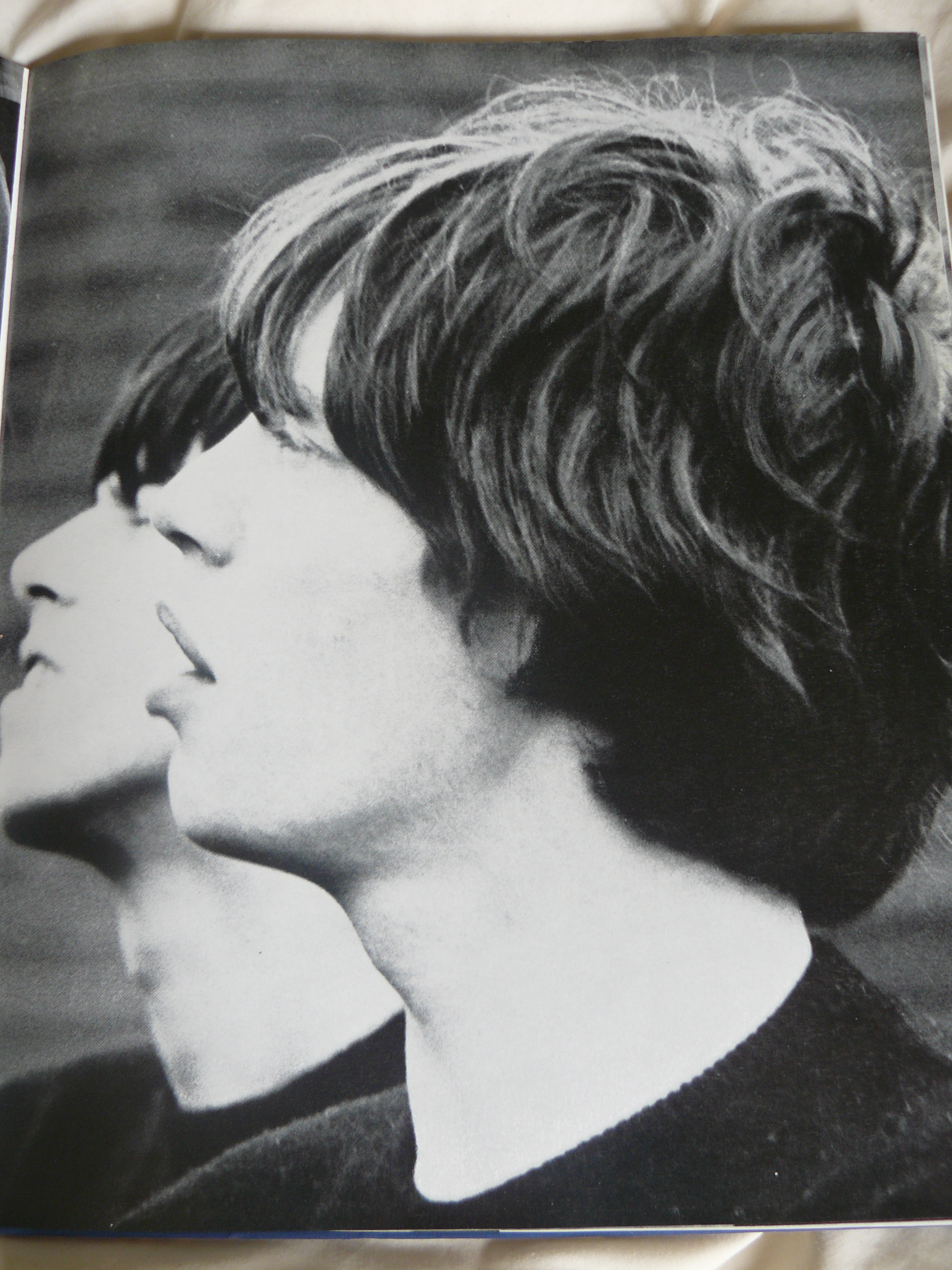
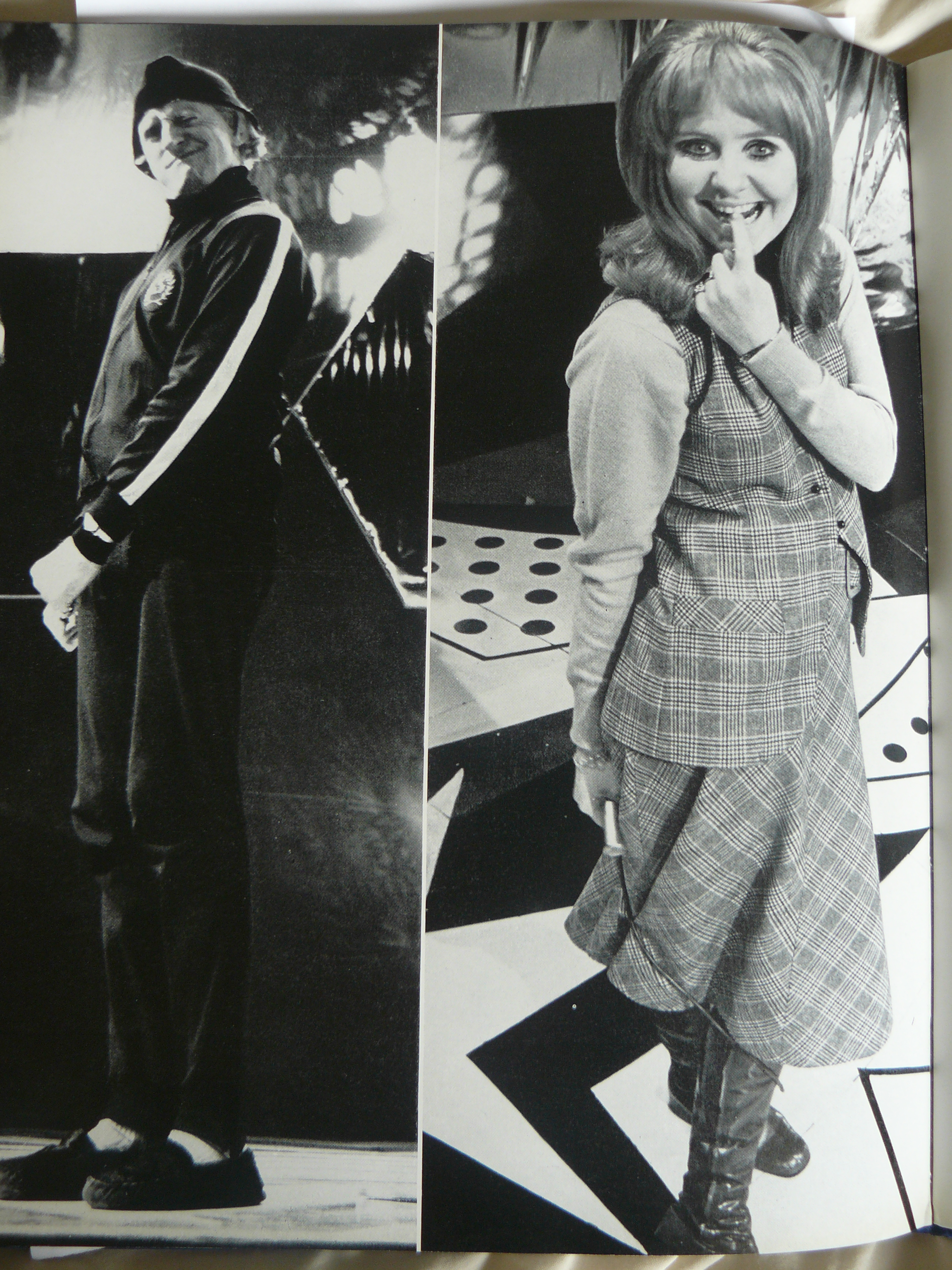
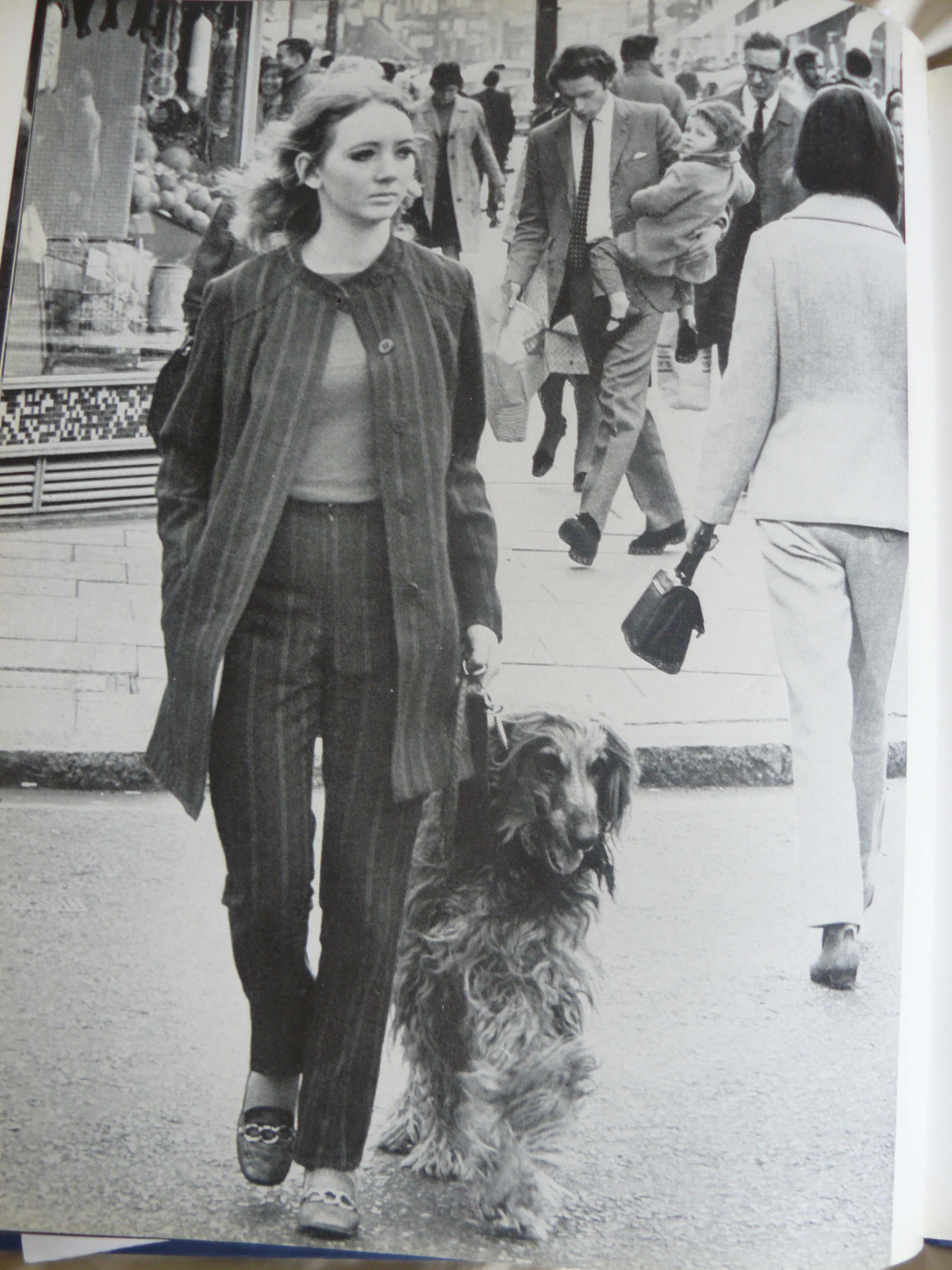
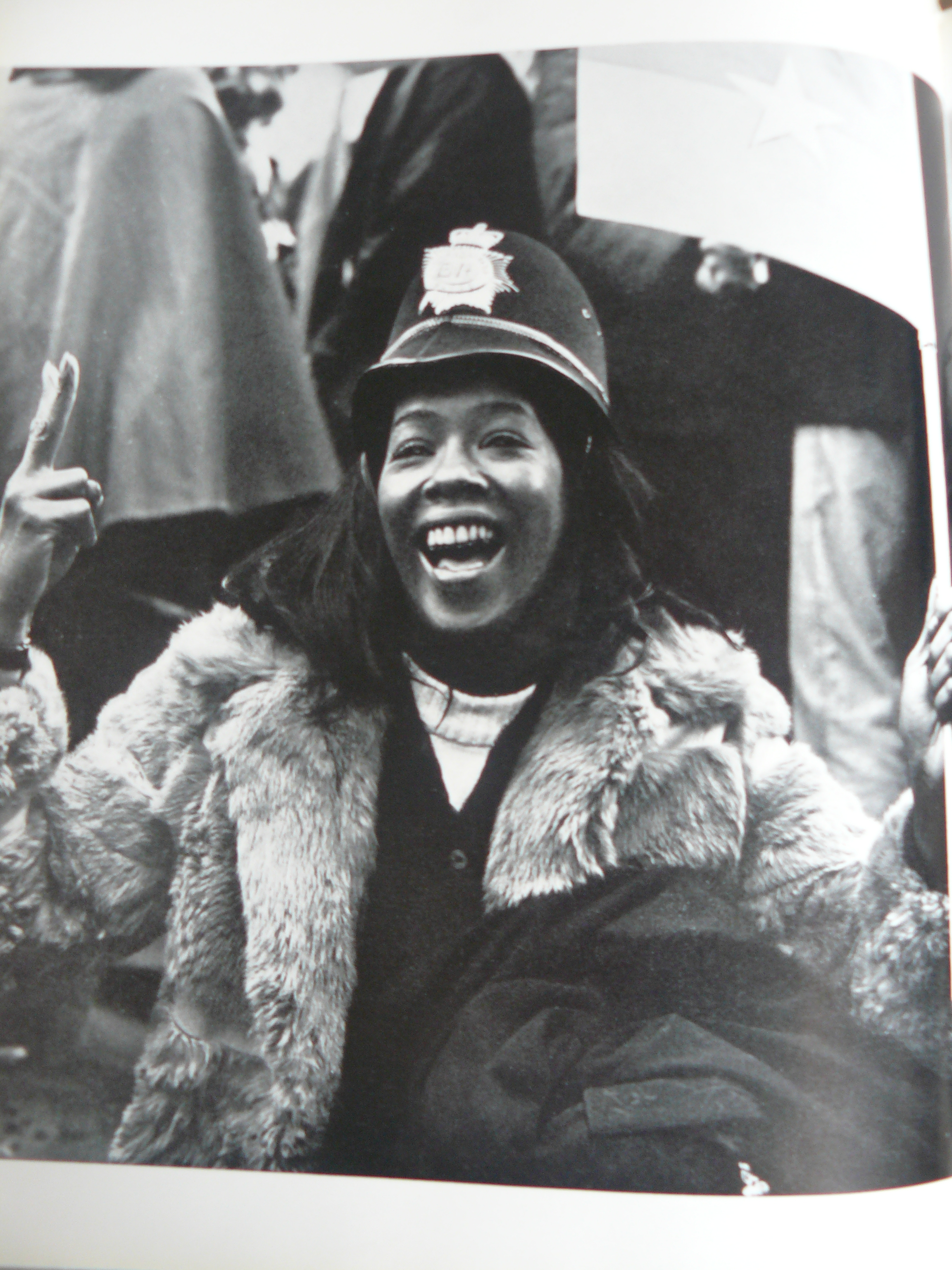
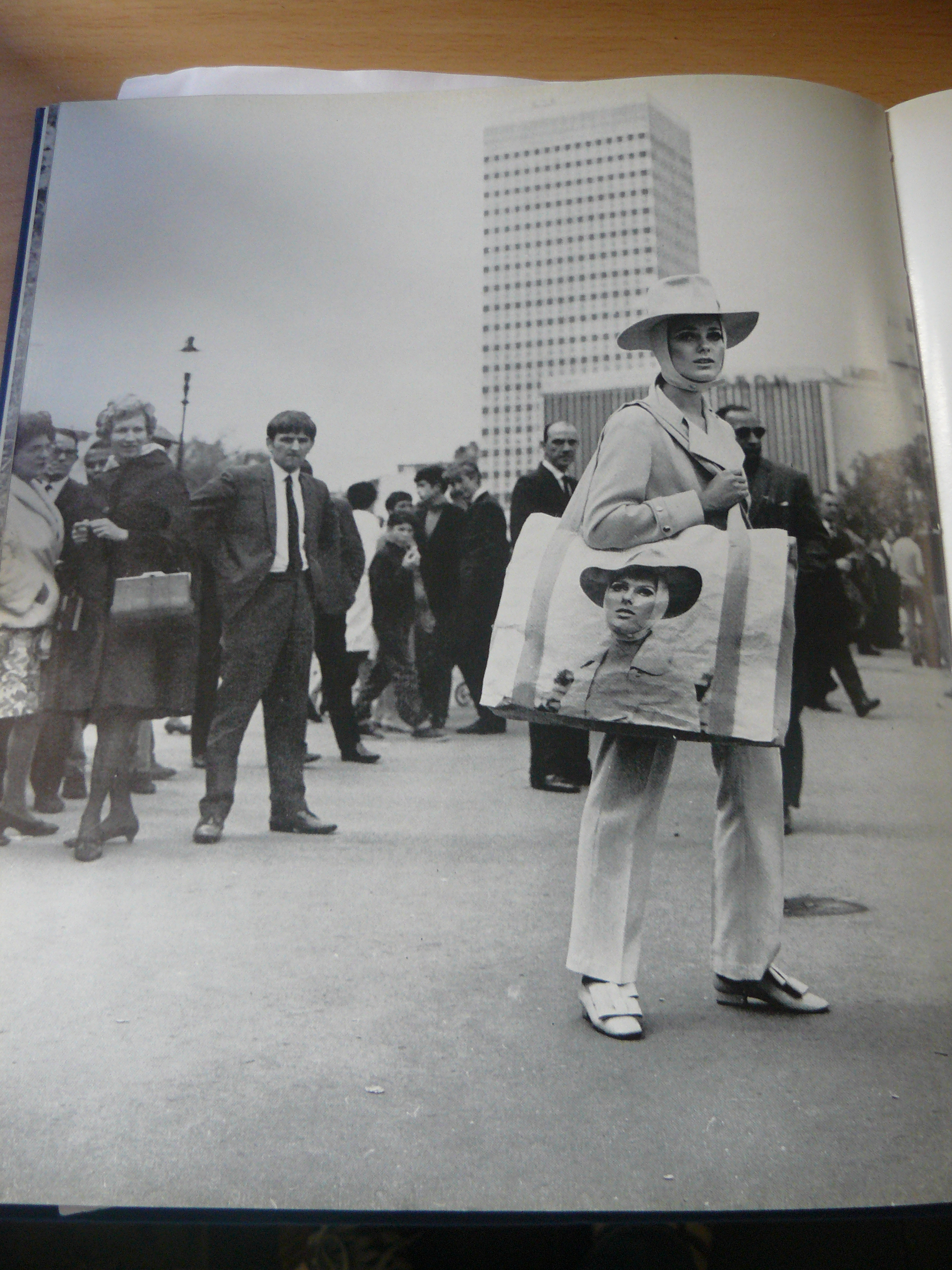
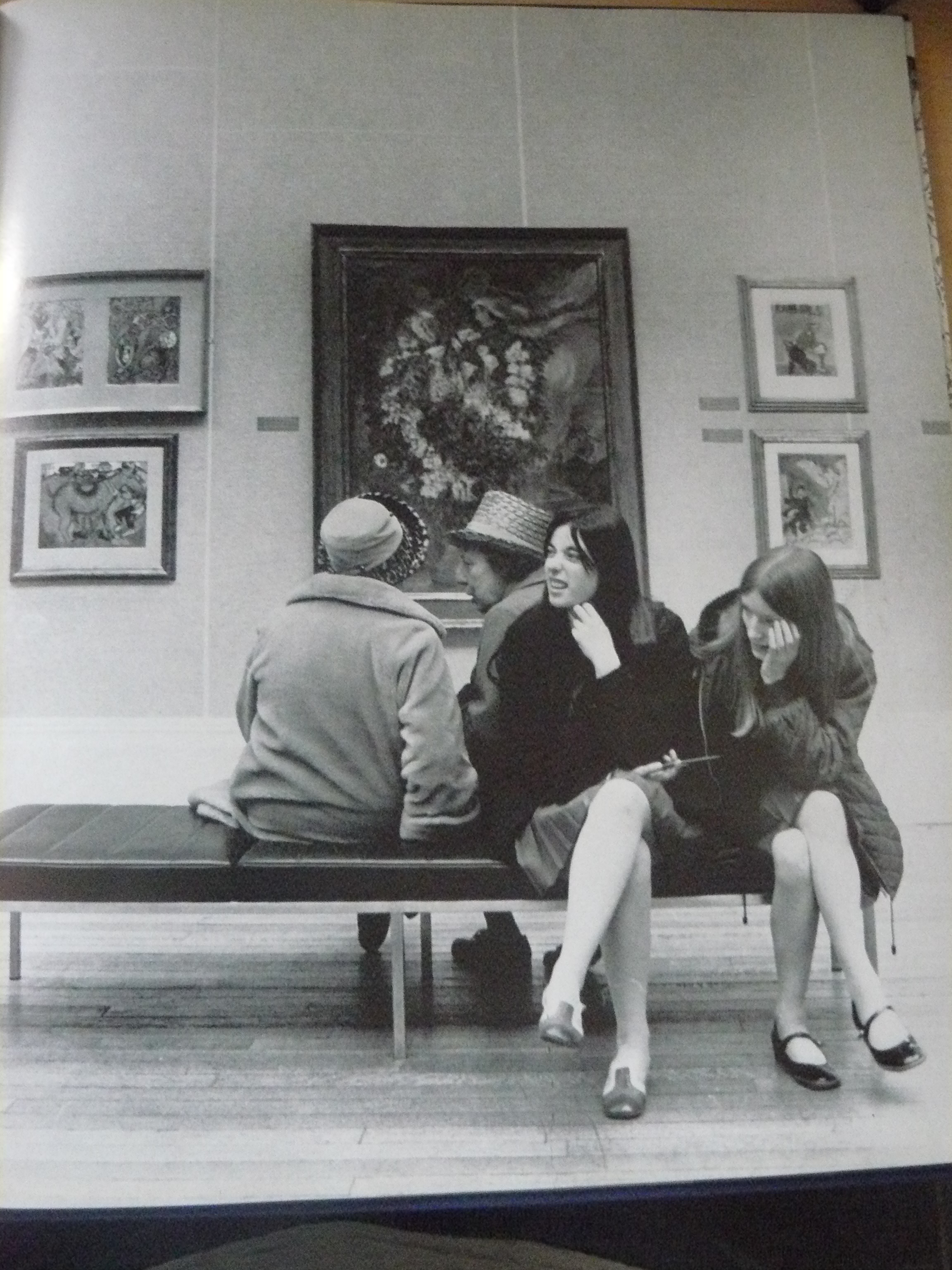
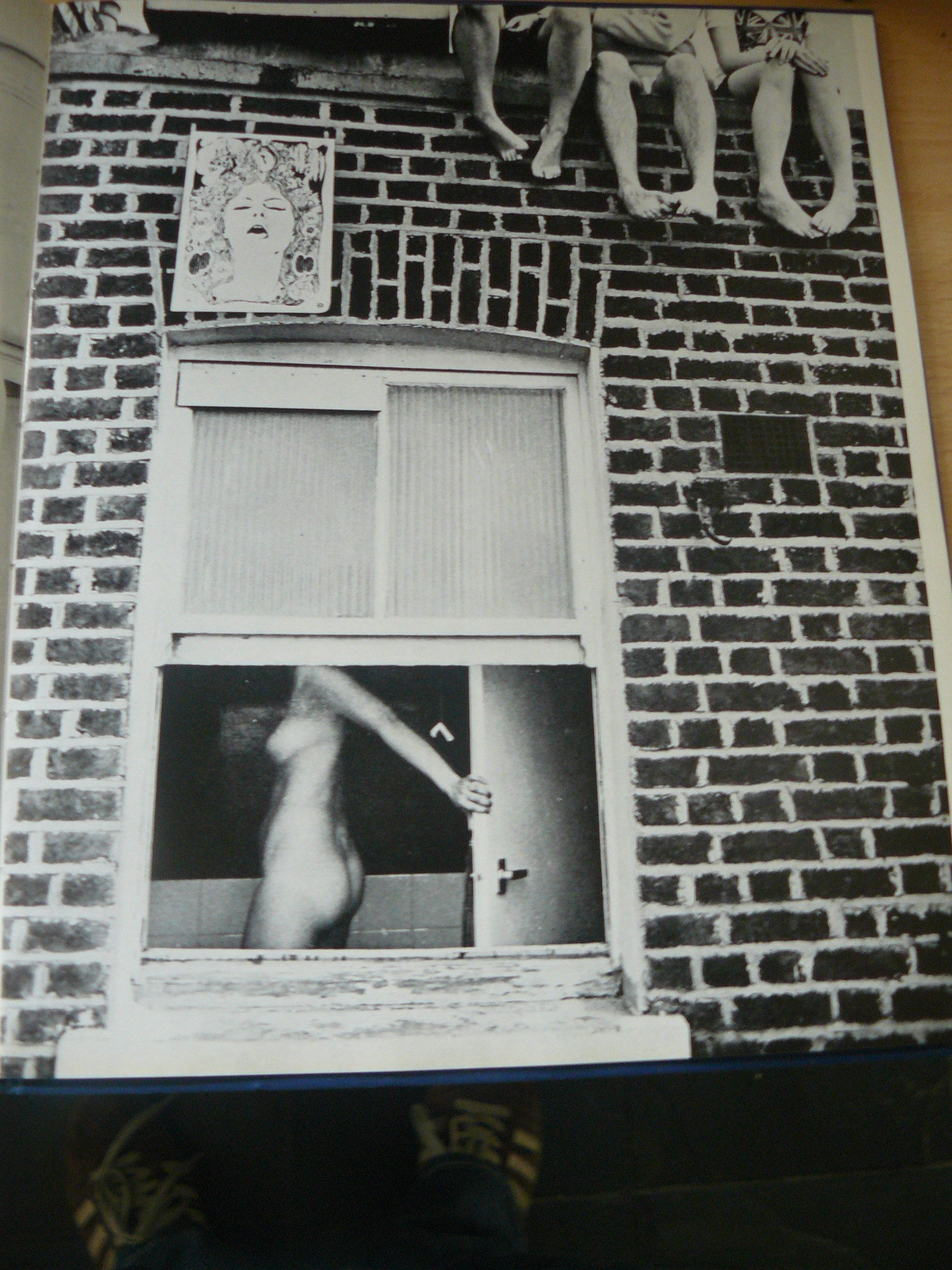
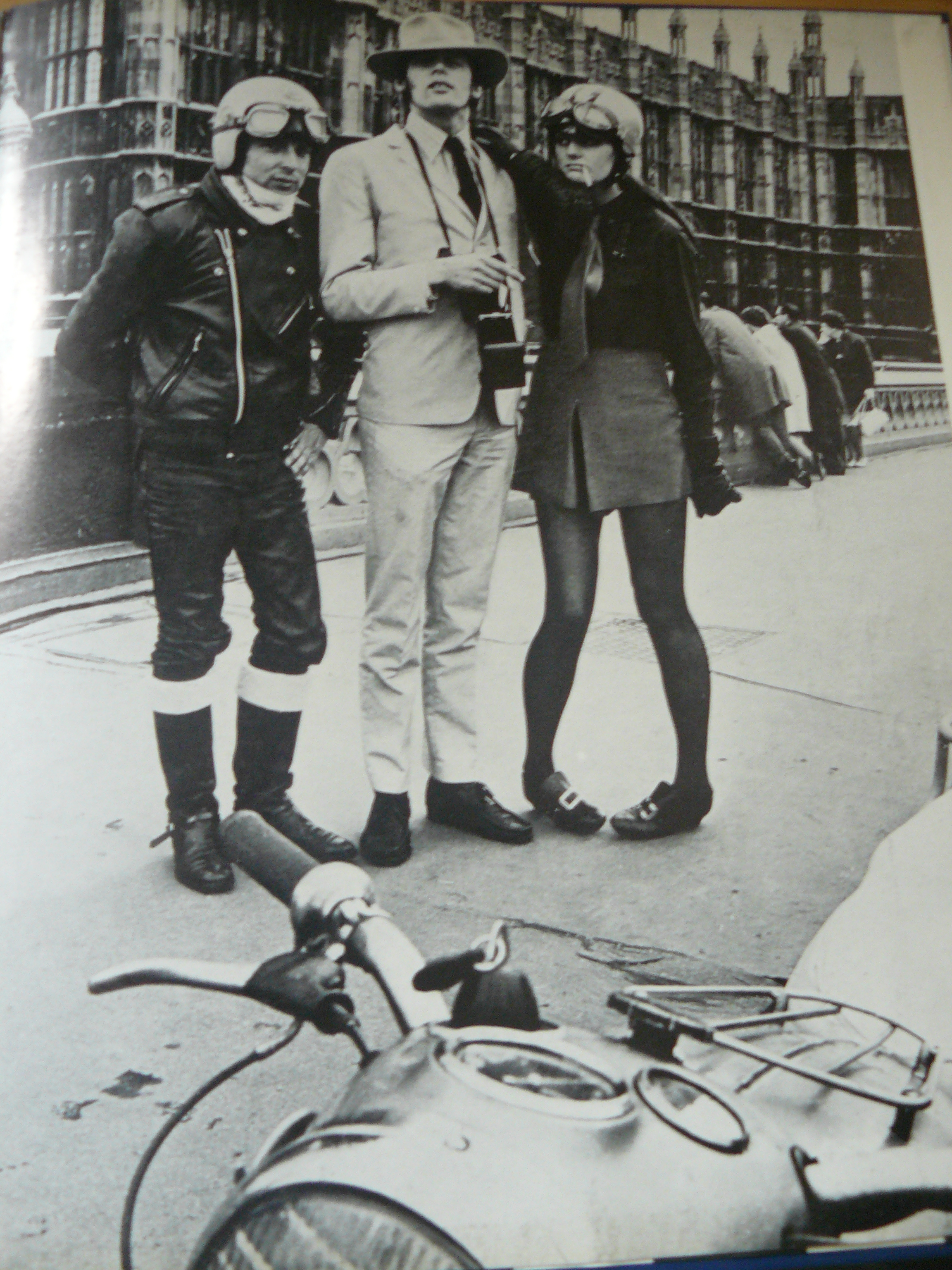
Photos: Young London, Permissive Paradise, 1969

These photographs of London in the late 1960s are a wonderful commentary on the scene of the time. Frank Habicht, who also took some great images of the Rolling Stones, is particularly adept at drawing out the contrasts between the carefree young and the more traditional side of the city. Enjoy.

All photographs are from Frank Habicht’s Young London, Permissive Paradise (1969)

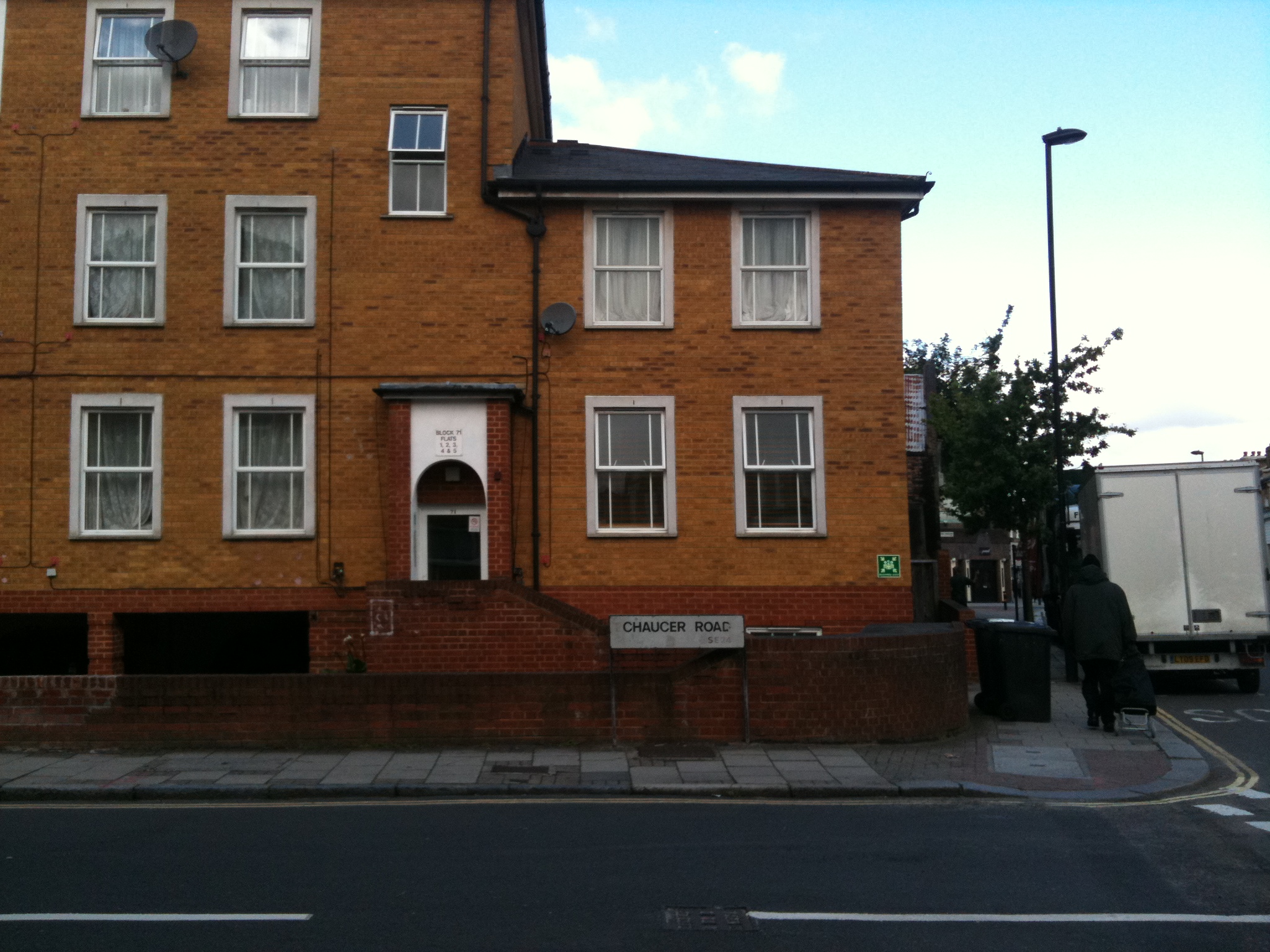
Brixton riots in SE24: then and now

Chaucer Road, SE24 after the 1981 Brixton riots

Chaucer Road, SE24 in 2012

The top picture is taken from Taschen’s superb new book of London photographs, London: Portrait of a City.

Une saison en Camden: Rimbaud and Verlaine in Victorian London

I am an ephemeral and a not too discontented citizen of a metropolis considered modern because all known taste has been avoided in the furnishings and the exterior of the houses as well as in the plan of the city. Here you would fail to detect the least trace of any monument to superstition.

Arthur Rimbaud on London in Illuminations

Getting a face full of wet fish is usually associated with Monty Python at Teddington Lock rather than French poets in North London, but such is the warping power of Camden Town. Arthur Rimbaud and Paul Verlaine were the Gallic rhymers in question. The pair enjoyed a tempestuous relationship in a variety of London addresses, which culminated in the aforementioned fish-slapping incident in Camden.

rimbverl

They had arrived in London in September 1872 after fleeing scandal in Paris. Rimbaud was 17, Verlaine ten years older, married with a child. Verlaine’s brother-in-law described Rimbaud as ‘a vile, vicious, disgusting little schoolboy’, but Verlaine found him an ‘exquisite creature’ probably for much the same reasons. At first they settled in Howland Street in Fitzrovia. They became part of Soho’s expat anarchist dissident set, reportedly attending meetings helmed by Karl Marx in Old Compton Street, drinking heavily, taking hash and opium (Rimbaud advocated ‘derangement of all the senses’) and keeping warm at the British Museum, where Rimbaud’s name  – but not Verlaine’s – was later added to the Reading Room roll of honour. Neither were particularly politically motivated, but the anti-establishment environment would undoubtedly have appealed to the outlaw couple.

Drawing by Verlaine of Rimbaud in Canon Street

They both loved London. Rimbaud felt that by comparison Paris looked like nothing more than a ‘pretty provincial town’ and loved the ‘interminable docks’, while Verlaine was captivated by the ‘incessant railways on splendid cast iron bridges’ and the ‘brutal, loud-mouthed people in the streets’. Together they travelled on the river, visited Hampstead Heath and rode the newly opened underground railway. They visited Hyde Park Corner, Madame Tussaud’s, the National Gallery and the Tower Subway (‘It stinks, it’s hot and it quivers like a suspension bridge, while all the while you hear the sound of the enormous volume of water,’ they reported back).

They wrote as well. Parts of Rimbaud’s Illuminations and Une Saison en Enfer were written in London, and his relationship with Verlaine is recorded in the latter’s lines: ‘On several nights, his demon seized me, we rolled around together, I wrestled with him!—At nights, often, drunk, he lies in wait in the streets or in the houses, to frighten me half to death… In the hovels where we used to get drunk, he would weep at the sight of those around us, miserable beasts…’ Verlaine was also influenced by the hectic modernity of the docks, and wrote a poem about Regent’s Canal.

Their sojourn in Fitzrovia was briefly commemorated with a plaque written in French and erected in 1922, although it only mentioned Verlaine – Rimbaud’s name was omitted on grounds of morality. Unfortunately, the street numbers had changed by this time, so the plaque on No 34 was almost certainly commemorating the wrong house. These defects were solved in 1938 by simple means – the house was demolished. It’s said the plaque was saved from destruction, but if so it has long since been lost.

There is a plaque for their next house however, left by ‘unknown hand’ according to Simon Callow. This is on their residence at 8 Great (now Royal) College Street, which they moved to in May 1873, living in two rooms on the top floor for three months. Here the pair’s self-destructive instincts really blossomed. They argued relentlessly, and often fought physically. This reached its nadir one July morning when Verlaine returned from Camden market carrying fresh fish and olive oil. It was a hot day and Verlaine had a hangover, but Rimbaud, watching from an upstairs window, was unsympathetic. He laughed and bellowed, ‘Ce que tu as l’air con!’ (‘What a cunt you look!’). Verlaine responded with a kipper in the face (hurt, he later wrote to a friend rather pathetically,  ‘I retaliated, because, I can assure you, I definitely did not look ridiculous’), packed his bags and fled to Brussels. Rimbaud eventually followed, only to receive two bullets in his wrist for his troubles.

Verlaine was sentenced to two years in prison, which he spent in part reading Une Saison en Enfer, and that was pretty much the end of that relationship. Rimbaud returned to London in 1874, living at Stamford Street, SE1 with the poet Germain Nouveau and later taking a room at No 12 Argyll Square in 1875. He then disappeared for four months – biographers still speculate about whether he was in Scotland, Scarborough or Reading. He barely wrote another word and died, one-legged, in 1891. Verlaine also returned to England, teaching in Boston and Bournemouth, before returning to Paris where he succumbed to alcoholism and died in 1896. Camden can do that.

Photo by Dornac of Paul Verlaine in the Café François 1er in Paris on May 28, 1892

HG Wells, My White Bicycle and hygienic seats: a brief history of cycling in London

This piece is in the current issue of BMI Voyager. The photo of Herne Hill Velodrome is via Adrian Fitch

It’s unlikely that any of the world’s top cyclists will be thinking about London’s history with the bike when they set off from the Mall for the gruelling 250km Olympic road race on Saturday (July 28th), but if they do pause for thought, they’re starting from the right place. The route will take cyclists through Putney, Richmond and Hampton Court deep into the scenic Surrey countryside of Woking and round Box Hill, but it starts and finishes near Hyde Park, which is where cycling in the UK first really took off.

Cycling had premiered in Battersea Park in the 1880s, but it was in Hyde Park that the great Victorian cycling craze went overground in the 1890s. London was still a horse-happy city at the time, so when 2,000 cyclists – mainly women, dressed demurely with natty bonnets– formed a parade to cycle round the park in the spring of 1896, those on horseback didn’t know quite what to make of it. Bicycles were still a new thing. Penny-Farthings had been around for a while, but were about as common a sight in Victorian London as they are now, and it took the invention of the ‘safety bicycle’ – one with wheels the same size and pneumatic tyres – in the 1880s for that to change. Indeed, such was the enthusiasm with which women took up cycling, that Victorians were torn between trying to find ways to make money out of it, and trying to ensure it was morally appropriate. With typical Victorian ingenuity, they managed to do both – the Chaperon Cyclists’ Association supplied female escorts for solo women cyclists for 3s 6d an hour, while to avoid any dangerous friction you could purchase special ‘hygienic’ bike seats, which had a modest dip in the area where a lady’s genitalia would usually meet the saddle.

Hygienic seat or not, this was, almost without exception, a hobby enjoyed by the upper classes – the Lady Cyclists Association of 1895 was founded by the Countess of Malmesbury – and the Olympic road race aptly passes through some of the poshest areas of London, along the luxury-lined Knightsbridge and down through the smart streets of Chelsea to Putney Bridge. In 1896, the Countess wrote wittily in The Badminton Magazine about the dangers of cycling around these very Belgravia streets thanks toa new sport’ devised by Hansom Cab driver: ‘chasing the lady who rides her bicycle in the streets of the metropolis’ excited by the ‘petticoat which “half conceals, yet half reveals”… I cannot help feeling that cycling in the streets would be nicer, to use a mild expression, if he’d not try to kill me.’

It wasn’t until 1934 that a solution to this perennial problem arrived, when the UK’s first bike lane was opened not far from where the road race course makes its progress through West London. This specialist cycle lane stretched for two-and-a-half miles alongside the Western Avenue and was a belated response to the scarcely believable statistics that recorded 1,324 deaths of cyclists on British roads the previous year. Despite these awful figures, cycling groups opposed the innovation, arguing bikes should not be forced to give up their place on the road to the new-fangled motor car. It’s not an argument they were ever likely to win.

Roads will be close to traffic on July 28, however, and as the Olympic cyclists make their way towards the river, they will pass Kensington Olympia, the huge exhibition hall built in 1883 and used for all manner of spectacular entertainment –promoters would think nothing of flooding the arena to recreate Venice In London, for instance. Anything fashionable was fair game and cycling races were held here during the 1890s. A mixed-tandem race – one male rider and one female – attracted huge crowds in January 1896. Weird events like this were common at the time –the Crystal Palace in Norwood hosted a bicycle polo international in 1901 between Ireland and England (Ireland won 10-5).

After crossing Putney Bridge, the race continues through Putney, where one of London’s many Victorian velodromes was once located, drawing crowds of 10,000. Putney also featured in one of the first cycling novels, The Wheels of Chance, by HG Wells, a writer who always had an eye for a new invention. In it, the hero, Mr Hoopdriver, leaves his dull job in Putney to go on a cycling holiday on the South Coast following a route out of London very similar to the one that will be taken by the Olympic racers. The race later passes through Woking, where Wells lived and set part of War Of The Worlds – Woking has boasted a huge statue of a tripod since 1998.

From Putney, the cyclists whizz through lovely Richmond – mind the deer! – before hitting the river at Twickenham, where they pass Eel Pie Island, nexus of London’s mid-1960s rock ‘n’ roll revolution. Numerous legendary bands played shows at the charismatic old dancehall on this tiny island in the Thames, including the Rolling Stones, the Yardbirds, Eric Clapton, Jeff Beck and Rod Stewart. Among them was Tomorrow, one of England’s first psychedelic bands (featuring Steve Howe, later of prog-monsters Yes), whose 1967 single “My White Bicycle” was a big counterculture hit in 1966. This splendid slice of trippy frippery was written in homage to the pro-cycling scheme launch by Dutch anarchist collective Provo, who left 50 unlocked white bicycles all over their home city of Amsterdam in 1965, inviting the public to enjoy ‘free communal transport’ and rid themselves from the tyranny of the automobile. The Dutch police swiftly impounded the offending bikes, but the idea finally caught on in recent years in the form of the Paris bike-sharing scheme, Vélib. This idea was appropriated by London in 2010 and came to be christened Boris Bikes after London’s mayor, Boris Johnson, who inherited the scheme from his predecessor Ken Livingstone.

Boris Bikes can be hired by anybody with a chip and pin card at around 500 docking stations in central London. The bikes come without helmet or lock and are pretty hefty, but they are a fairly common sight in London. Although there is an ‘access fee’ (£5 for a week), the first 30-minutes of any ride are free, so smart users hop between docking stations and effectively ride around London for next to nothing. It’s all part of a belated attempt to make London a more-bike friendly city – four giant bike lanes, the blue-painted Cycle Superhighways, have alsobeen created in key commuter routes, with four more planned for 2013. If you want to borrow a Boris Bike to follow the 2012 road race route be careful, as there are few docking stations outside central London and costs soon mount if you go over the initial 30 minutes – while the fines for a late return are high.

From Twickenham, the race heads through Bushy Park and passes the Tudor palace of Hampton Court, before disappearing into the Surrey countryside. After a tour of the Surrey hills, the cyclists will then make the return journey, via Kingston, to the Mall. Sadly, then, there is no time to head to south-east London, where there are a couple of other prime London cycling landmarks. The first is the Herne Hill Velodrome, tucked behind suburban houses down a quiet street near Dulwich. This is the last stadia from the 1948 London Olympics still in use today. Built in 1891, the velodrome had all but closed during the Second World War but was brought out of retirement when London was awarded the 1948 games. It’s had a few scares since then – the gorgeous Victorian grandstand has been a no-go area for years – but was recently awarded £400,000 of Olympic legacy money and plans are afoot to construct a new grandstand, cafe and gym. The venue has played its part in nurturing the latest breed of British champion – Tour de France winner Bradley Wiggins raced here.

Herne Hill Velodrome

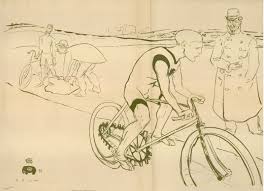
While Herne Hill lives on, the velodrome at Catford was demolished in the 1990s. Like the stadia at Putney and Herne Hill, this was built in the 1890s, when it attracted a very special guest. Absinthe-soaked dwarf artist Henri de Toulouse-Lautrec is usually associated with the Montmartre area of Paris, but in 1896 he turned up in the particularly drab suburb of Catford. Lautrec was a cycling fan, and had been asked by a company called Simpson to design a poster for their bike, which used a new type of chain. Lautrec was taken to the newly built Catford Velodrome to watch the bike in action during special races, set up by Simpson to advertise their product, and he produced a couple of images during his visit. The poster was one of the last he designed before his death in 1901, just as the Victorian bike craze was coming to an end.
Norman Mailer and Christine Keeler’s bra

Jay Landesman was an American writer and eccentric entrepreneur who arrived in London in the mid-1960s and immediately flung himself headfirst into the emerging counterculture scene, largely because the first person he met when he arrived here was Peter Cook. Landesman later became best known as the male half of a famously open marriage, much to the shame of his son Cosmo, who gained revenge by marrying Julie Burchill. (‘She hated hippies, ex-hippies, food freaks, open marriages and old people,’ wrote Jay, ‘The only thing she liked about us, was that we were Jewish.’)

In his entertaining 1992 memoir Jaywalking, Landesman’s non-ideological dalliances on the fringes of the London scene make great reading, with walk-on roles for the likes of John Lennon (‘He was uptight about Wendy Cook’s insistence he sample her salade Nicoise, a dish he was highly suspicious of and couldn’t pronounce’), Tom Driberg (‘He took us to a pub whose entire clientele consisted of lesbians, transvestites, young Danish sailors, ageing pederasts and an assortment of amputees’) and Germaine Greer (‘I watched her challenge Jimi Hendrix to an arm-wrestling match, and win’). Although it’s never entirely clear what he did – bar run the disastrous UFO rip-off the Electric Garden for a couple of minutes – Landesman was clearly good company with a penchant for meeting interesting people, and at some point was asked by The Sunday Times to write about the art of giving a party. His ideal guest list is worth repeating in full:

Minimum of three potential celebrities; at least one real celebrity (any field); a foolish couple; a serious couple (straight feed for comics); an engineer or non-speaking Czech (to point out); six swinging teenagers (girls); a bitchy girl who can generate masochism in men; a gym instructress who drinks too much; an older woman who sits and smiles (who is she?); a rune beauty (who was she?); Christine Keeler; no fat people unless Peter Ustinov; nobody jet or Court Circular; no dogs; no Peter Hall, Jonathan Miller, David Frost (or equivalents); no crew cuts; a swinging accountant; a buff (a jazz-hair or gambling buff); two attractive lesbians (to get wrong); one international drug trafficker (to point out); a beautiful flawed couple; a gay MP; Tariq Ali (not Christopher Logue); an Irish showbusiness GP; a titled person (to show you’re not snobbish); no artists’ agents, editors or publishers; no children or headshrinkers (except RD Laing); an eccentric lawyer or priest (no respecters of confessionals); an articulate tradesman (electrician, cabinet maker, house painter, bank manager); a forgotten culture hero; a reliable loudmouth who’ll come early and leave early; the ex-wife of a world celebrity; a pop singer no one recognises; a girl with buck teeth, a corrective shoe, or both; an established figure who decides that night to drop out…

Landesman was fond of Christine Keeler. He met her soon after arriving in London at the Kismet, a Soho drinking club, and the pair became friends. He also knew Norman Mailer from the mid-1950s, Mailer having interviewed Landesman while researching his pioneering essay on hipsterdom, The White Negro. In London, Landesman had an opportunity to bring the two together.

The cause was Mailer’s decision to challenge for the Democrat candidacy as Mayor of New York under the slogan ‘Vote The Rascals In’. The sizeable US expat community in London – there were frequent baseball games in Hyde Park featuring the likes of Tony Curtis, Marlon Brando, John Cassavetes and Charles Bronson with Phil Silvers as umpire – decided to hold a fundraising event.

The Friends of Norman Mailer Committee was founded by charismatic rogue Harvey Matusow, and he put on a celebrity auction, featuring myriad bizarre offerings from Yoko Ono like ‘Dirt From Central Park’, ‘Air over Greenwich Village’, ‘Vial of Genuine New York Tears’ and ‘Jar of Captured Cloud Formations over the Bronx’ as well as bottles of Robert Lowell’s sweat and a slice of raw liver from Philip Roth’s fridge. The star exhibit, however, was supplied by Landesman: Christine Keeler’s bra.

Bidding began at £100. There were no takers. The auctioneer tried again, at £50. Nobody moved. Next he tried £10 for this ‘psychosexually historical’ item, but the opening bid was a measly 10 shillings. Landesman tried to get the bidding going and raised his own hand, but nobody followed suit and he ended up winning the item back for a mere 10s 6d. Later, he discovered it wasn’t even Keeler’s. ‘Christine doesn’t wear a bra,’ a mutual friend confessed, ‘But the deception was justified in a good cause.’ The mayoral election was just as successful – Mailer came fourth, in a field of five.

On old pubs, and getting older

Last week I went for a stroll around Soho for the first time in a while and spent most of the time in a state of shock and confusion at the lack of familiar landmarks: restaurants and bars had changed name, shops had appeared from nowhere, and everything appeared to have been cleverly redesigned to make me feel old and out-of-it.

Just about the only thing that remained consistent were the pubs: Bradleys, the French House, the Sun and 13 Cantons – venues in which I had spent much of my 20s were still present and correct. Indeed, while we can bemoan the undoubted withering of London’s traditional pub life, it’s still remarkable how many old-timers still cling in. The British Library has just republished The Epicure’s Almanack, an 1815 guidebook to London eating and drinking. Fascinating in its own right – did you know there used to be three inns near Westminster Abbey called Heaven, Hell and Purgatory? – it also has brilliant footnotes by Janet Ing Freeman, who maps and chronicles the history of the 650 establishments reviewed by Ralph Rylance 200 years before. In doing so, she notes those places that still exists: all are pubs rather than restaurants and include the still excellent Seven Stars in Holborn, as well as London legends like Wapping’s Town of Ramsgate, Ye Olde Cheshire Cheese in the City, the Windmill in Clapham and the  Spaniards Inn in Hampstead.

Town of Ramsgate, Wapping

Another London institution, the BFI, have also been looking at pubs. Their brilliant new two-disc DVD, Roll Out The Barrel, rounds up a great bunch of short films and documentaries about British pubs. A highlight for Londoners is Under The Table You Must Go, a 1969 film by Arnold Miller, the gonzo exploitationist behind London In The Raw and West End Jungle. His film visits half-a-dozen London pubs, almost all of which appear to no longer exist. The most intriguing for me is surely The Great Escape, a theme bar for RAF man that is filled with paraphernalia from WWII escape attempts (it’s now Mabel’s Tavern), but I also appreciated the moment when Jon Pertwee inexplicably popped up in a pair of lederhosen to serenade a crowd of pub goers with a burst of the classic Chelsea anthem Zigger Zagger. A trailer for the DVD can be seen here.

Secret London: the London Grill

I was recently asked to answer a few questions about Secret London by the blogging cabbies at Radio Taxis.

If you are interested in my favourite London building, London landmark and favourite London film and book, head here, where you will be rewarded with a mildly disturbing image of my face. 

Mind The Map at the London Transport Museum

Ever since the British Library’s London map exhibition in 2007, London museums have learnt to love cartography. The Museum of London’s Hand-Drawn London was a highlight of 2011, and now the London Transport Museum has joined the cool kids with a brilliant new Mind The Map exhibition.

This traces the relationship between transport and maps over the past 150 years or so and offers a brilliantly edited selection of material from the archives. The exhibition space at the museum isn’t vast, but the way it has been used here is superb. The twin focus is on the work of McDonald Gill and Harry Beck. Gill created the Wonderland map, a gorgeous, highly detailed map of London aimed at transport users. Here’s one of his, for Hyde Park.

The exhibition features a number of maps created by Gill – the brother of sculptor Eric Gill – and also this fascinating unfinished map of Temple, showing his working method. He begins with a serious flat plan of the city, before building up layers of impeccably detailed architectural illustration. Then on top of that go the speech bubbles, puns and references that make his maps so fascinating. Please excuse my poor photography.

In this section there are other decorative maps that were used by LT to promote different areas of London. Here is one featuring Cheam, where I grew up.

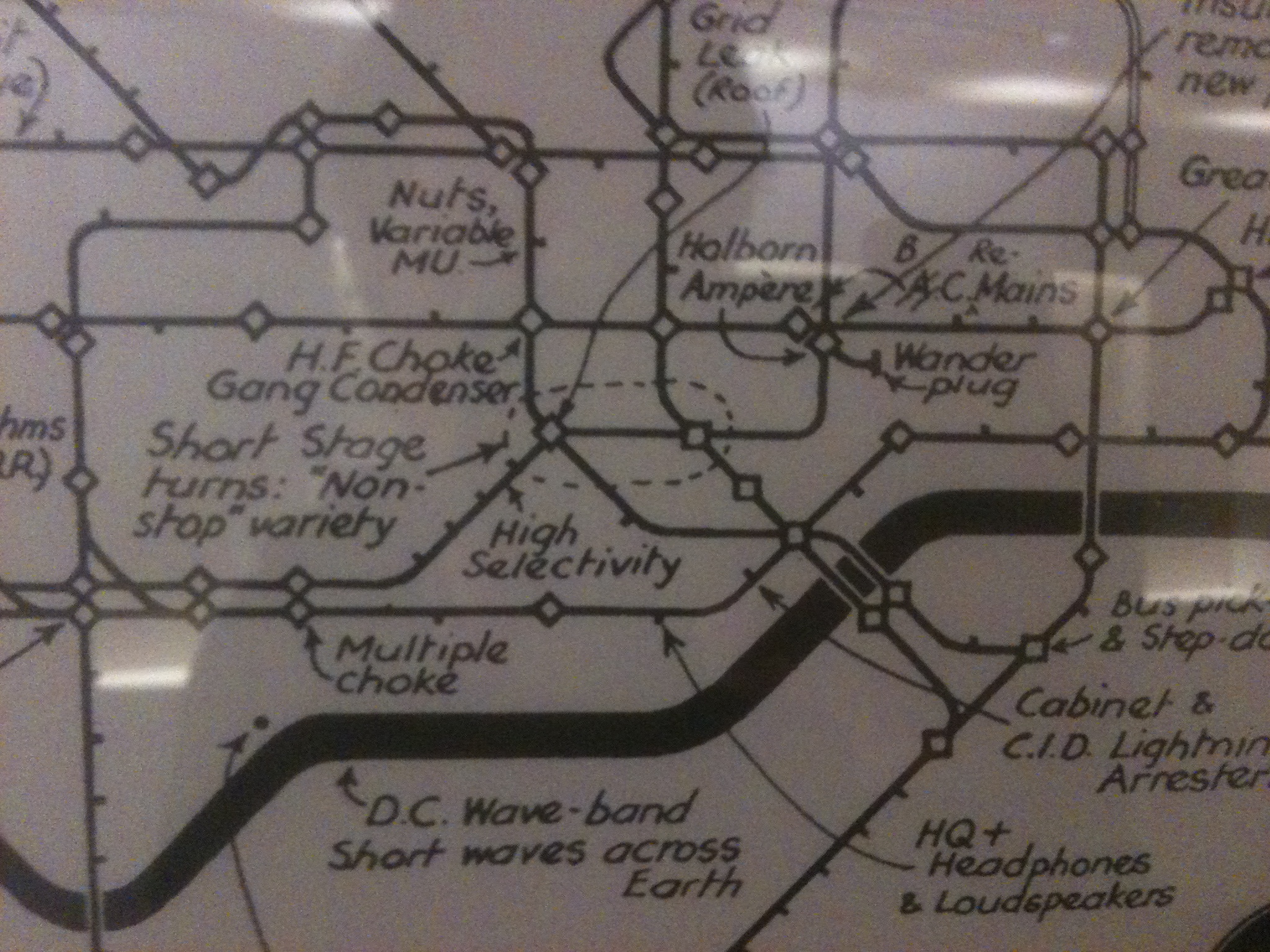
The Beck part of the exhibition is also brilliantly done given how much has already been done on the man who created the modern tube map. A personal highlight was this sketch from the London Transport staff newspaper in 1933, in which Beck gently mocks the popular notion that he got the idea for his diagrammatic map from a circuit board. He has redrawn his tube map as the interior of a transistor radio, thus creating the first mash-up/spoof of his iconic design and pre-dating The Great Bear by several decades.

Speaking of which, the LT Museum have commissioned six new pieces of art for the exhibition, and they are all great, which is quite unusual for these things. Simon Patterson has updated The Great Bear as Saptarishi, Jeremy Wood has created a new ghost map, tracing his movements through GPS and there’s a marvellous ‘Proustian’ map of London by Agnes Poitevin-Navarra.

My Ghost

Most exciting of all is Stephen (The Island) Walter’s new epic undertaking, London Subterranea, a stunningly detailed map of the London beneath our feet, executed in stark black and white and crammed with information and folklore.

When I talked to Walter a few years ago, he expressed a keenness to put The Island behind him despite some interesting related projects that had been suggested to him. I’m delighted that he has since decided to return to London mapping, as he is a master at it. I’m told he’s now working on an A-Z, which will incorporate The Island and London Subterranea.

Other highlights include a copy of the infamous 2009 tube map that omitted the Thames, a gorgeous 1932 enamel map from a station wall and a copy of Finchley Central by The New Vaudeville Band. There’s also a brilliant book by curator Claire Dobbin that accompanies the exhibition. Go see it!

Mind The Map opens 18 May until 28 October 2012. 

Cockney Visions: Writing Britain at the British Library

The British Library’s new exhibition Writing Britain, which runs until 25 September 2012, has big ambitions. It aims to study place and landscape in British literature, looking at how writers and poets have been informed by the land around them, and how their writing has transformed the way we view these spaces.

Phew!

The exhibition is divided into different thematic sections, and includes one on Cockney Visions about London writing, and another on the suburbs, which also has considerable London content.

It’s a remarkably bold concept, but the BL does not shy from a challenge – its exhibition on Liberty a few years ago was one of the most intellectually intense I have ever seen, while the one on Language was similarly involved.

This time, it doesn’t quite pull it off. The problem is the same that blighted last year’s science fiction exhibition – too many books. Entering a BL exhibition is like visiting a first rate antiquarian bookshop, but one were you can’t touch the books and none of them are for sale. It’s great to see these rare and beautiful books, but it’s also incredibly frustrating that you can’t pick them up, feel the pages, smell the history.

Paradoxically perhaps, books are also an insufficient way of examining landscape in the way the exhibition intends. If we can’t actually sit there and read Wuthering Heights, immersing ourself in this extraordinary place the writer has created, we need other ways to make the journey. The most evocative part of the exhibition is the one on the Lake District and Highlands, purely because there are some wonderful paintings on display, which help crystallise our vision of what Wordsworth, Keats and Scott were describing. Conversely, the London section takes in the usual suspects on that well-trod wander from Blake and De Quincey to Alan Moore, Neil Gaiman, Will Self and Iain Sinclair  (and includes a wonderful copy of the London Psychogeographic Society newsletter from the early 90s), but fails to really plunge us into the city of our imagination.

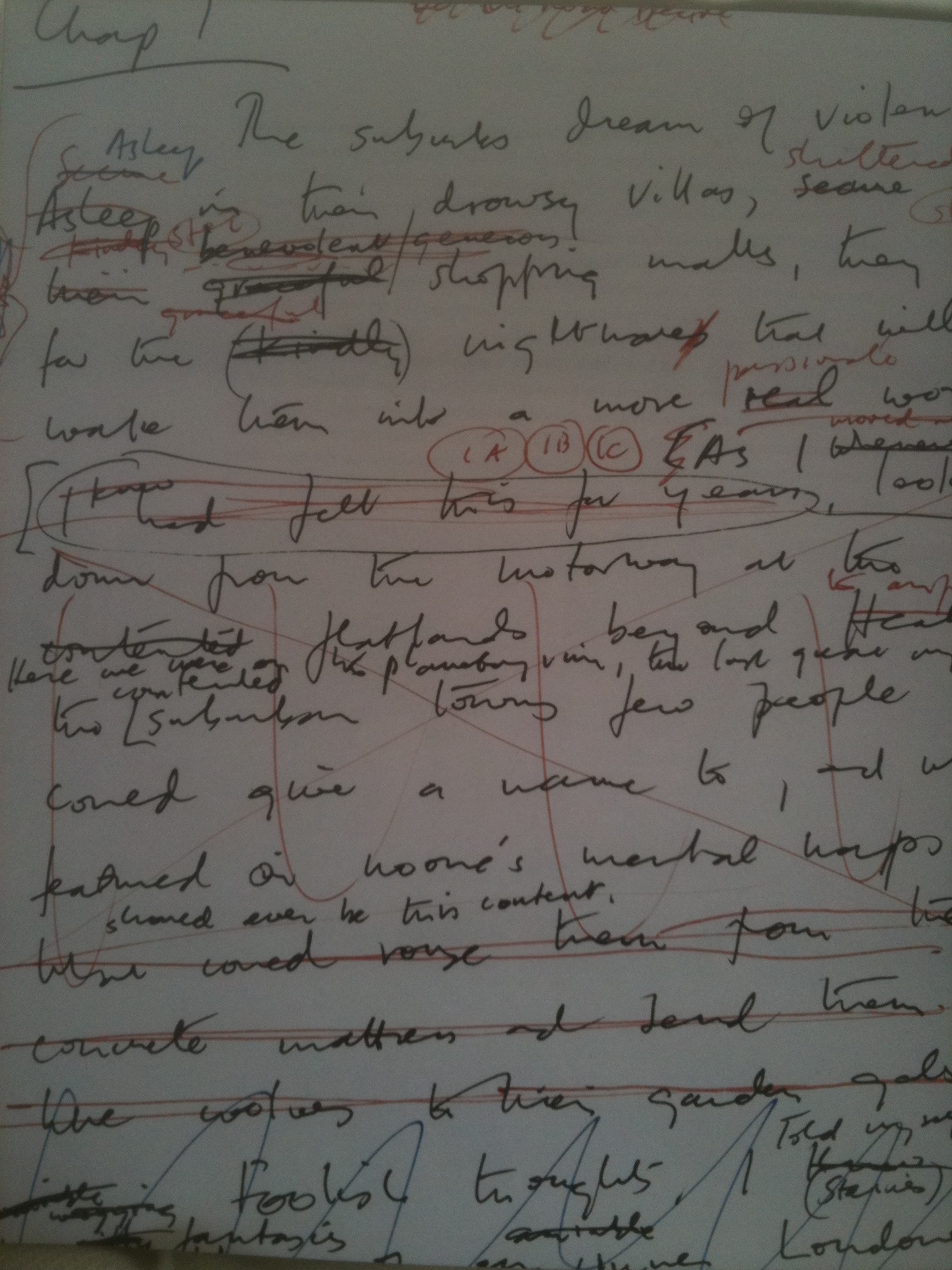
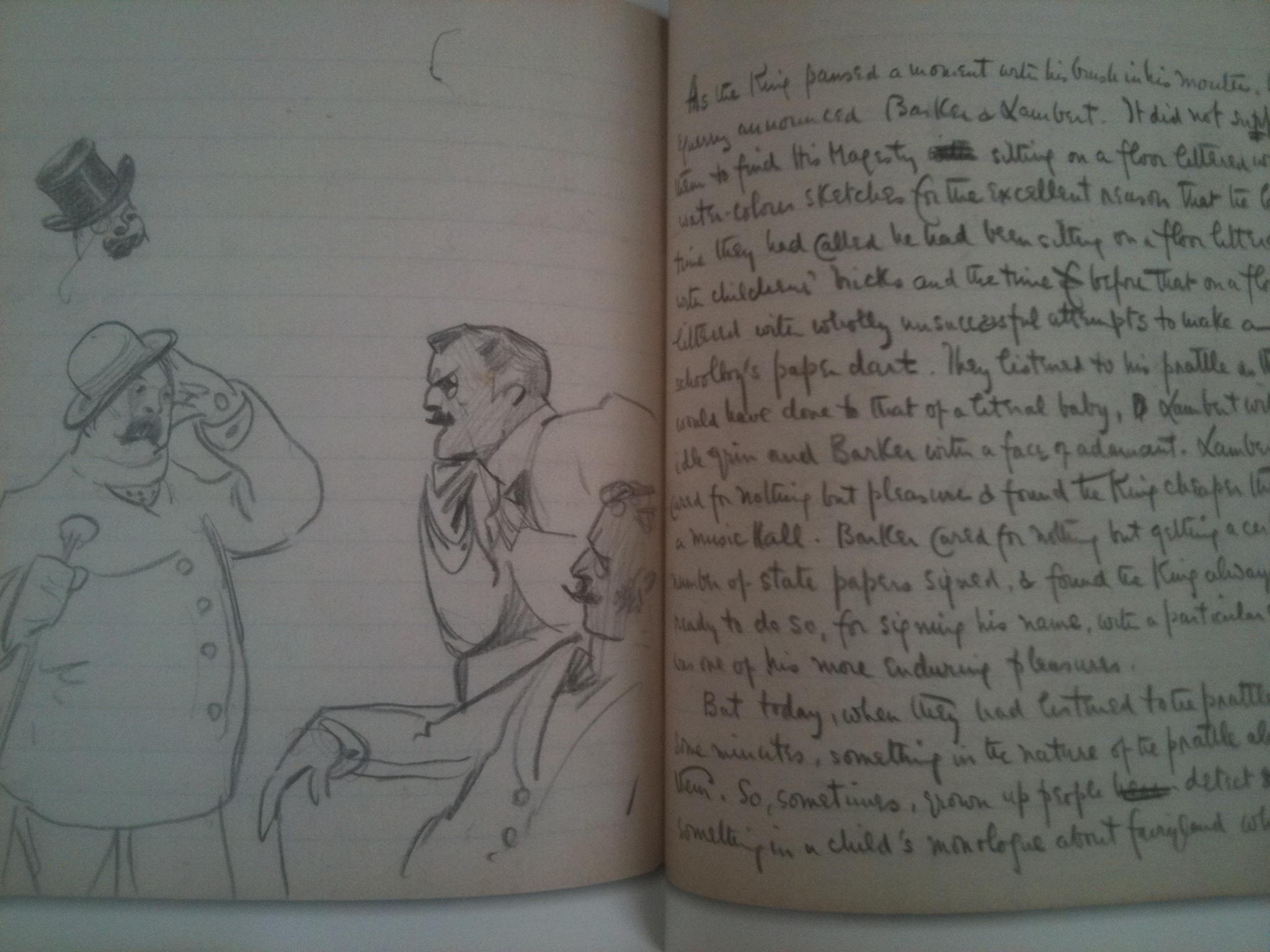
Where the exhibition – and the BL itself – really does excel is when it can produce original manuscripts, diaries and photographs. These messy, scrappy, lovingly flawed items show the writing process in a way a beautifully bound finished book never can. And some of the best of these are to be found in the sections of the exhibition related to London. There’s a sketch by John Betjeman of Dalston Station; an unpublished poem by Evelyn Waugh about the Crystal Palace (complete with Waugh’s drawing of the building); a couple of pages from JG Ballard’s collection, including the heavily amended opening pages to Kingdom Come and Crash; and a lovely drawing by GK Chesterton to accompany his notes for The Napoleon of Notting Hill.

Dalston Station by John Betjeman.

Kingdom Come manuscript

Notes for The Napoleon of Notting Hill by GK Chesterton

I loved also a letter by Conan Doyle sent to his mother from South Norwood, in which he carefully sketched the floorplan of a suburban house he was thinking of buying, and a copy of Pygmalion, which Shaw had phonetically annotated to show how he felt the cockney phrases should be pronounced.

a personal favourite was a draft of Albert Angelo by BS Johnson, showing how Johnson wished a section of one page to be cut out so it would reveal a sentence from later in the book, a brilliant way to create a  flash-forward or pre-cognition.

Best of all, though, was this photograph, which shows JM Barrie, GK Chesterton and George Bernard Shaw dressed as cowboys in 1914. For the full story, read this excellent blog post. It has very little to do with Writing Britain, but it’s bloody marvellous all the same.