Category Archives: Books

Five unknown London pleasures

1 London’s first artificial ice rink
The Glaciarium opened in 1842 at the Baker Street Bazaar near Portman Square. The backdrop was ski chalets and snow-capped mountains, the ‘ice’ was churned-up hogs’ lard and sulphur. On hot days it smelt of cheese. It closed in 1844.

2 The clown and the geese
In 1884, a clown called Barry was watched by a huge crowd as he sailed down the Thames from Vauxhall to Westminster in a washtub pulled by four geese.

3 One-legged cricket
In 1796, Montpelier Gardens in Walworth hosted a cricket match between eleven one-armed Greenwich pensioners and eleven one-legged Greenwich pensioners. Interest was so great that a fence was broken and spectators fell through a stable roof. The match was drawn, but the one-legged team won a replay, earning themselves 1,000 guineas.

4 London’s first public museum
This was opened in a coffee house near Chelsea Old Church in 1695 by James Salter, a former servant of Hans Sloane, the man whose collection later formed the British Museum. Sloane reputedly handed Salter – renamed Don Saltero – some of the less important of his 80,000 objects, including a giant’s tooth,  a necklace made of Job’s tears and a bonnet that belonged to Pontius Pilate’s wife’s chambermaid’s sister (it actually came from Bedford).

5 The Peace of 1814
On Monday August 1, 1814, London celebrated the abdication of Napoleon Bonaparte with a series of festivities. It began with a balloon ascent at Green Park; the balloon was captured by the winds and sent towards the Estuary until the ballooneer cut a hole and landed on Mucking Marshes near Tilbury. Next came a miniature Battle of the Nile on the Serpentine, followed by a firework display in Green Park, for which John Nash had designed a new pagoda. Sadly this caught fire, killing two people. The crowd applauded, assuming it was all part of the fun.

All these came from Pleasures of London, a book available at the Museum of London bookshop for £30. It is my new favourite London book. It should have been published in 1992, but was delayed repeatedly and by the time it was published by the London Topographical Society in 2009 the authors, Felix Barker and Peter Jackson, had both died.

What the pair had created was an endlessly browsable book on all the fads and fancies that have occupied Londoners leisure since the Dark Ages, from Frost Fairs to black-faced minstrels, lidos to the Great Exhibition. There are brilliant throwaways  – such as those mentioned above – as well as short but thorough looks at things like music halls, pleasure gardens (which I still don’t get the point of), museums and the origins of sports like cricket, football and boxing.

Buy it.

Stamford Bridge in 1979

For people like me, there are few things more emotive than an empty football ground, filmed in 1979 in flickery Super-8 and overlayed by a haunting soundtrack. It’s like Simon Inglis’s first volume of ‘Football Grounds Of Great Britain’ come to life.

Check out loads more here.

London in maps

This was a piece I wrote for the January 2011 issue of Metropolitan magazine.

In July, the Mayor of London introduced a scheme that allowed the public to rent bicycles from 300 docking stations in different London. Within days, maps could be found all over the internet showing exactly where each docking stations could be found and which were the most popular. These maps were largely unofficial and all free, created by tech geeks for fun and copied to internet forums for the use of cyclists, tourists and map lovers. It proved once again that Londoners will map anything. There are maps for free wi-fi hotspots, maps that chart where the most Twitter activity comes from and maps that find the nearest toilet. One of my favourite maps is this 1970s version of the knitted football tribes of London.


This love of maps is engrained in London’s psyche, the result of living in a chaotic and unplanned metropolis. Two of the city’s favourite icons are maps: the A-Z, that portable atlas which even seasoned Londoners carry in case they get lost; and the Tube map, a design classic that has been copied by transport networks all over the world and is regularly ‘mashed-up’ by artists, replacing stations with footballers, philosophers, films, authors and anagrams.

In 2006, the British Library organised a ‘London: Life In Maps’ exhibition, curated by Peter Barber, the library’s Head of Maps, who thinks London’s love of maps is far stronger than anything you might find in Paris. ‘The French have a very cool attitude towards maps,’ he says. ‘They don’t, on the whole, use them and there is no comparable market in old maps to the one we have in London. You have to give away old maps of France. Maps in France are associated with authority – they were tools of administration and control. Whereas in England maps were commissioned privately and so are not perceived as being so menacing.’

Barber names the key maps of London’s past –the Copperplate map of the 1550s, the Morgan map of 1682, the John Rocque map of 1746 and the Horwood map of 1829. Barber makes a distinction between two kinds of maps. There are functional maps for getting you from A to B (or A to Z) and there are maps that work thematically or artistically to present information or ideas over a cartographical plan. The thematic map has been popular in London for centuries – the most famous is Charles Booth’s Poverty Map of 1889, which colour-coded streets according to income. Another is ‘The Modern Plague’ of 1886, produced by the National Temperance League, which showed pubs in central London. These maps are designed to transmit an idea, not aid mobility, and are fascinating to study. One of the first was John Snow’s map, tracking cholera outbreaks in Soho.

Such maps are now getting easier to compile. ‘It’s said that 80 per cent of all knowledge is spatial, and you can geo-reference any phenomenon and plot it on a map,’ says Barber. ‘With digital mapping, the techniques to do this are within the range of everyone. Digital mapping isn’t new, what is new is the ease with which it can be done and the extent of the information that can be plotted.’

Simon Foxall summarised this in his book ‘Mapping London’, writing: ‘Maps have been made to do things they were never expected to tackle and, in doing so, have exposed patterns, connections and ideas that were as interesting as they were unexpected. ‘

Straddling these two types of map is Bill Visick, a former manager at IBM, who has developed the London Time Travel Explorer (TTX) app for the iPhone. This features four maps of London dating from 1746 to 1862 and a contemporary map of the city. Using GPS technology, the user can fade between old and new maps to see how the street on which they stand has changed. It’s virtual time travel.

Visick had been collecting maps of his Kensington home for years, but smart phones allowed him to take this to another level. ‘What sparked it for me was realising that the street I lived on contained the first buildings ever built in Kensington,’ says Visick. ’I was standing outside my door and thinking, “blimey, that was a hedge and that was a field”. So the first thing I did was put this old map on my phone and walk around looking at it – that became the prototype and that’s where the idea of TTX came from. It happened almost as soon as I realised the technology would allow it.’

The novelist and poet Blake Morrison has spoken about ‘our craving for interactivity’, and that is something the artist Stephen Walter is also exploring through maps. In 2008, he created The Island, a vast, exquisitely detailed map of London, crammed with cultural and political references and in-jokes. ‘People have been suggesting I do an app,’ says Walter. ‘The British Library did a brilliant browsing tool for the map and people have suggested I do something for a phone or tablet computer. I’m interested to see if there’s a way people can leave their own tabs on the map, personally configure it with their own information.’

The Island is modern in its outlook, but Walter was following a long tradition. ‘There’s a huge, strong history of map-making in London and we do like to beat our chests about it,’ says Walter. ‘It’s a bragging thing, a celebration of history and size. The Island was a spoof of a medieval map. The twist was that a lot of it was very personal and also a contemporary reaction to the city, whereas at first glance it looks like a pretty conservative world map.’

It has long been understood that the map is subjective, reflecting the views of the maker, although rarely as blatantly as in The Island. In ‘Mapping London’, Foxall writes, ‘The map, as a scaled replica of the entire city, presents a choice to its maker: not what to include, but rather, what to exclude. The mapmaker, like a sculptor, must chip away at the raw block of material that is the city to reveal the shape and representation hidden inside.’

Barber expands this point. ‘Different maps show different things and your judgment of a map depends entirely on what you want from it. In some cases you could draw a direct contrast between the map the man in the street wants and the map the expert says is best. The A-Z is a complete travesty of mapping because the streets are grotesquely enlarged and the open spaces much reduced.’

The irony of the growth of digital mapping is that it comes at the expense of the old-fashioned kind. People no longer need A-Zs, because they can use GPS or SatNav. ‘I spoke to somebody the other day, a businessman in his 60s, who no longer takes directions,’ says Visick, with one example that stands for thousands. ‘He knows he can get anywhere on his phone.’

And into this breach step the digital mappers, who offer information in a manner that all of us can understand. London can be a daunting city to comprehend, so a thematic map that breaks the city down into easily absorbed chunks of information located spatially is very helpful. As Walter muses, ‘It seems the more complicated life gets and the easier it gets to traverse the landscape, the more maps become all about ourselves.’

More London books

Continuing a bookish theme, a couple of current and forthcoming releases have caught my eye.

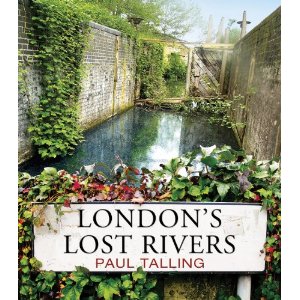
First is ‘London’s Lost Rivers’ by Paul Talling and published by Random House. This is the first serious update of Nicholas Barton’s classic 1950s underground river book and it will be interesting to see what new information about the Fleet, Effra, Westbourne et al that he has uncovered.

Jamrach's Menagerie

The second has been catching my eye in the window of Herne Hill Books every time I walk past it. ‘Jamrach’s Menagerie’ is a novel by Carol Birch published by Canongate.  This is a novelised account of the famous occasion a bengal tiger escaped from London petshop Jamrach’s. It was from this shop that the animal-loving artist Gabriel Dante Rossetti probably purchased the pet wombat, whose death left him so bereft.

Incidentally, if any publishers are reading this and fancy sending me London-themed books to add to my collection, my conscience would have no hesitation in happily accepting them.

Best books about London

Although I’m late to the party as ever, I see via Chris Fowler that Londonist editor M@ has come up with his personal list of the 15 best non-fiction books about London. It’s a good list, as you would expect, and has prompted me to come up with my own favourite 15.

1 ‘The London Encyclopaedia’ by Ben Weinreb and Christopher Hibbert

The definitive A-Z of London history, fascinating and accessible. I much prefer this to narrative histories like Roy Porter and Peter Ackroyd.

2 ‘In Search of London’ by HV Morton

My single favourite piece of narrative London writing, featuring Morton wandering around the bomb-battered city in 1951, describing what he finds and remembering what it once looked like.

3 ‘Shaping London’ by Terry Farrell

A fascinating look at the tangible forces that have shaped the infrastructure of London, and a welcome antidote to the airy tediousness of so much contemporary psychogeography.

4 ‘The History of London In Maps’ by Felix Barker and Peter Jackson

Excellent and accessible cartographical guide from 1993, divided into sensible sections and well illustrated.

5 ‘Curiosities of London’ by John Timbs

Hefty Victorian guidebook that is an intriguing contemporary reference source.

6 ‘London: The Unique City’ by Steen Eiler Rasmussen

A Danish architect analysis in 1937 why London looks like it does.

7 ‘Subterranean Railway’ by Christian Woolmar

Definitive and readable recent history of the London tube.

8 ‘The Lost Rivers of London’ by Nicholas Barton

The classic guide to the old rivers of London, first published in the 1960s and flawed, but still the best.

9 ‘Violent London’ by Clive Bloom

Superb study of the London Mob through history, recently updated.

10 ‘In Camden Town’ by David Thomson

Gloriously whimsical half-finished diary by a BBC producer from the 1980s, which captures Camden on the brink of gentrification. (See also Jonathan Raban’s ‘Soft City’.)

11 ‘London Under London’ by Richard Trench

To be honest, it’s on a par with the many other subterranean London books, but makes my list because it was written by a bloke called Trench.

12 ‘People Of the abyss’ by Jack London

Wonderful late-Victorian journalism from the destitute East End. I should also include Henry Mayhew’s ‘London Labour And The London Poor’ but shamefully I’ve only ever dipped into it. 

13 ‘Night Haunts’ by Sukhdev Sandhu

Following in HV Morton’s footsteps, Sandhu explores the nocturnal economy of 21st century London.

14 ‘London peculiars’ by Peter Ashley

One of many ‘Secret London’-style books I own, but probably the best looking. See also the fine recent ‘Secret London: An Unusual Guide’,  ‘Eccentric London’ by Tom Quinn and ‘Curious London’ by Robin Cross.

15 ‘The Likes Of Us’ by Michael Collins

A biography of working-class South London.

Why I love Pat Nevin

I remember when I fell in love with Pat Nevin. It was in the playground and somebody was passing round a 1985 Panini sticker album. I turned straight to the Chelsea page to see my heroes.

There was Kerry Dixon, bluffly handsome with golden hair, azure eyes and self-confident grin. There was Colin Pates, a brick-wall centre-back with disco dancer hair. There was Doug Rougvie with a nose that looked like it had lost an argument with a spade.

And there was Pat Nevin. Pasty-faced, greasy-haired, nervous, thin and sullen. He looked like a smackhead. Who wouldn’t fall in love?

I only saw Nevin play once for Chelsea, a 3-0 victory at Watford in 1988 about which I remember little, but his legend loomed large over the following years. By the time I started watching Chelsea regularly the next season, the club were in the Second Division and Nevin was at Everton, but my bible, the Chelsea Independent fanzine, spoke of little else.

They drooled over Nevin’s dribble against Newcastle, when he beat eight players in a slalom run that took him from one end of the pitch to the other. They marvelled at his free kick against Sheffield Wednesday, when he chipped the ball over the defensive wall, ran round the other side and lofted a perfect cross on to David Speedie’s goalscoring noggin. They giggled at his famous penalty miss against Manchester City.

The love seemed mutual. When Nevin was injured playing for Tranmere, he attended a Chelsea-Everton game at Goodison Park and paid to go in the Chelsea end. This was important. Chelsea fans, then as now, were despised, but if somebody like Nevin loved us, maybe there was hope, maybe there was redemption,

And Nevin was the sort of player that fans love – an exciting, creative, unpredictable dribbler, but there was more to it than this. Nevin was smart. Nevin was cool. Nevin was different.

He angrily attacked his own supporters for their racist, violent and anti-semitic predilections – to the delight of the left-wing students at the Chelsea Independent. He read French and Russian literature. His favourite bands were Joy Division, Jesus And Mary Chain and the Cocteau Twins. He once insisted on being substituted at half-time in a friendly so he could attend a gig. He brought Brechtian principles to the club programme when he interviewed himself – yes, himself – for a player profile. He was friends with John Peel. For the teenager who read Camus and listened to Sonic Youth it was a no-brainer: if you could be a footballer, you’d be Pat Nevin.

NME described Nevin as the first post-punk footballer, although it may have been more accurate to say he was the first art school footballer. He was also the last.

When at Everton, Nevin gave a lengthy to the Chelsea Independent, and talked at length about football, music and literature, and what it was like drinking in Soho with George Melly. I’d never heard of Melly, but here I was, learning about jazz and the counterculture from a footballer, in a fanzine. Would that happen now?

When I interviewed Colin Pates – who is not a stupid man, by any means -he still seemed bemused by the fact Nevin would read books on the way to away games rather than play cards. Nevin, though, never seemed to get bullied about his interests. He was clever, but he was also proudly working-class and therefore more acceptable to other footballers and more capable of sticking up for himself than the middle-class Guardian-reading Graeme Le Saux who followed him as Chelsea’s token intellectual.

In the early 1990s, I finally got to see Nevin play at Stamford Bridge. He was wearing an Everton kit, but when he scored the Shed gave him a standing ovation – the only time I have ever seen Chelsea fans applaud an opposition goal. Pat Nevin was a very intelligent footballer and when he was around, fans seemed to use their brains a little bit more as well.

The perfect sentence

‘She caught me jacking off on uppers the night RFK got shot.’

While this may not be the perfect sentence, it’s certainly James Ellroy’s, encapsulating all of that writer’s thematic obsessions and stylistic tics – sex, death, drugs, fame and shame – in twelve words and 16 syllables. Just think how good he’d be at Twitter.

It appears in his latest book, ‘The Hilliker Curse’, a flawed but fascinating memoir, and it could stand for every other line written by this flawed but fascinating man.

And it got me thinking. Do other writers have a single sentence that can be used to blithely summarise their entire output?

Perhaps Orwell’s famous, ‘It was a bright cold day in April, and the clocks were striking thirteen’ for the crisp prose and sense of the familiar, subtly wronged.

Or Wodehouse’s, ‘Ice formed on the butler’s upper slopes.’

Or Cormac McCarthy’s, from ‘Blood Meridian’, ‘They crossed before the sun and vanished one by one and reappeared again and they were black in the sun and they rode out of that vanished sea like burnt phantoms with the legs of the animals kicking up the spume that was not real and they were lost in the sun and lost in the lake and they shimmered and slurred together and separated again and they augmented by planes in lurid avatars and began to coalesce and there began to appear above them in the dawn-broached sky a hellish likeness of their ranks riding huge and inverted and the horses’ legs incredibly elongate trampling down the high thin cirrus and the howling antiwarriors pendant from their mounts immense and chimeric and the high wild cries carrying that flat and barren pan like the cries of souls broke through some misweave in the weft of things into the world below.’

Well, nobody said it had to be concise.

The London Anti-University

This newsclip of the London Anti-University from 1968 is wonderfully evocative, not just for the interviewees’ earnest insistence that they could change the world of education, but also through the grim tattiness of late 1960s Shoreditch, reproduced in glorious colour.

The London Anti-University was formed after participants at 1967’s Congress on the Dialectics Of Liberation at the Roundhouse decided they wanted to continue to explore some of the themes and conversations that had started there (sample debates: The Future of Capitalism; Black Power; Imperialism and Revolution in America).

Based at 49 Rivington Street – previously home of the Vietnam Solidarity Campaign – the Anti-University was opened in February 1968 by David Cooper and Alan Krebs, and featured lecturers such as Cornelius Cardew, CLR James, Robin Blackburn, Bob Cobbing, RD Laing, Yoko Ono, Jeff Nuttall, John Latham and Alex Trocchi – all key figures on the intellectual left-wing of the 1960s counterculture.  The Anti-University syllabus covered three main areas: radical politics, existential psychiatry and the artistic avant-garde.

An idea of the direction of the Anti-University can be gleaned by a reported exchange at Joseph Berke’s course on ‘anti-universities, anti-hospitals, anti-theatres and anti-families’.

He asked the class: ‘How can we discuss how we can discuss what we want to discuss?’ After a long silence, somebody answered ‘Maybe we don’t need to discuss it.’ Berke pondered this for a while and then left; the class continued for an hour despite his absence.

The Anti-University lasted almost a year, which isn’t bad by the standards of the time, but it’s premises soon became squatted, and the landlords, the Bertrand Russell Peace Foundation, reclaimed the campus.

But the Anti-University’s most important legacy may have come from a conversation in the classroom of psychoanalyst Juliet Mitchell, who lectured on literature and psychology.

One of Mitchell’s students, Diana Gravill, had inherited some money and was intending here to spend it on a women’s refuge. Mitchell instead persuaded her to put it towards a bookshop. This she did, and the shop, named Compendium, was opened by Gravill and her partner Nicholas Rochford on Camden High Street in August 1968.

Over the next thirty years it became one of the world’s great bookshops, stocking everything from academic studies of the women’s movement to punk fanzines. It was still going strong when I used to go there in the late 1990s, fascinated and intimidated by the content of the bookshelves. It eventually closed in 2000, a sad end to one of London’s greatest counterculture institutions, but a longstanding tribute to the ideas and passions raised by the London Anti-University.

Mapping Sixties London

This exquisite map of the 1960s West End is one of the most interesting ways I’ve seen of making tangible that fascinating era that remains tantalisingly out of reach and hard to comprehend. Produced by Herb Lester Associates, Wish You Were There is a fascinating physical attempt to bridge the gap in time, to fill in some of the blanks.

It is also a beautiful artefact, a fold-up map that offers a ‘retrospective guide to London’s shops, clubs, boutiques and sundry diversions, 1960-66’. Included are such diverse pleasures as Better Books, home of the Beats, the offices of promoter Don Arden and restaurants like Cranks and The Nosh Bar alongside better known clothes shops, bars and venues.

On one side is a map of central London, and on the other a written guide to the 130 locations, padded out with period advertisements.

Wish You Were There can be purchased here for a bargain £4.

Schools Out! The moral contamination of schoolkid strikers

Yesterday’s protests by schoolchildren were by no means the first time London’s schoolkids have chosen to withdraw their labour from the classroom, as Clive Bloom discusses in his recently updated ‘Violent London’.

There were waves of strikes in 1889 and 1911 around issues such as corporal punishment, the length school day, leaving age, holidays and bullying teachers. In 1889 there were strikes in Finsbury Park, Homerton, Woolwich, Plumstead, Kennington, Charlton and Lambeth and in 1911 in Enfield, Islington, Hoxton, Fulham, East Ham and Deptford. Strikes continued until long into the 20th century. I’m pretty sure Grange Hill went on strike a couple of times as well.

These original strikes featured pickets, marches and demos with flags and banners, and often ended with some casual window-breaking, for which the pupils would invariably receive disproportionate punishment such as being birched in front of the whole school or sent to the workhouse.

That was because the authorities were terrified about these strikes, firstly because of the lack of discipline it demonstrated but also because they suggested the children were developing a political consciousness that challenged and threatened the establishment. Kids were learning to think for themselves and were bold enough to shout about it. Some in Bethnal Green even carried red flags.

Newspapers argued that strikes were ‘manifestations of a serious deterioration in the moral fibre of the rising generation’, argued that ringleaders ‘could prove dangerous centres of moral contamination’ and claimed that ‘such movements as this do not spring up spontaneously. They are always evidence of a deep conspiracy against social order… the doom of the Empire must be near at end if the country is honeycombed with Secret Societies of schoolchildren.’

Things never change all that much, do they?