If the V&A’s latest exhibition demonstrates that big can be beautiful, the new acquisition at the Imperial War Museum shows that small can be profound.
It’s a car, badly damaged and barely recognisable, that was caught in a suicide bomb blast in Baghdad in 2007. The artist Jeremy Deller got hold of it and toured it across America on the back of a truck in the company of a US soldier and an Iraqi citizen for a piece entitled It Is What It Is. Now, shorn of any artistic element, it is on display at the Imperial War Museum. My review in the New Statesman can be read here.
After interviewing Deller, I avoided reading too much about the car before I wrote the piece other than this by Jonathan Jones in the Guardian. Jones, I think, slightly overdoes his praise – is it really true that ‘a dismembered body is what you immediately think of when you come into the museum and see a car’? – while the commentators beneath the line seem obessessed with the pointless and hoary argument about ‘what is art’.
They’ll never be able to answer that question from behind their computer screens because this compelling and thought-provoking piece needs to be seen on location and in context to be fully appreciated. It’s a fine and valuable addition to the IWM’s collection and makes a fascinating footnote in the history of war art.
Oh, and Jeremy Deller is one of the nicest famous people I have ever interviewed, right up there with Graham Taylor, the former England manager, belittled turnip and little appreciated ballet enthusiast.
Two months ago I knew diddly about Diaghilev. Since then I’ve written two features about him – including this in the Independent On Sunday – and can confidently assert that this Russian-born impressario changed the face of ballet in the early twentieth century when his company, the Ballets Russes, enlisted artists and composers like Picasso, Matisse and Stravinsky to showcase the work of groundbreaking dancers and choreographers like Nijinsky and Massine. Such is the magic of journalism.
The occasion is the V&A’s big autumn exhibition, Diaghilev and the Golden Age of the Ballets Russe, which opens on September 25. It’s an incredibly rich exhibition, crammed with memorabilia and costumes and images and music. Highlights include the astonishing, undanceable costumes from Parade, Picasso and Cocteau’s ‘Cubist ballet’, the monumental back cloth from ‘The Firebird’, and a wonderful bust of Nijinsky that captures his odd features.
I’m not a great fan of the ‘blockbuster’ exhibition as they are rarely as satisfying and intelligent as intimate displays at the more thoughtful museums, but this one is a real cracker, demonstrating decades of learning and showcasing a marvellous collection of costumes bought in auction and secured in the V&A’s vaults for just such an occasion.
(There’s a nice piece here from Diaghilev’s biographer about the Russian’s relationship with London.)
When I was a kid I used to pretend to be ill so I could bunk off school and go to the library. That’s how square I was. I’d feign illness, then nip down to Cheam Library to choose books, before coming home to eat cheese on toast, lounge on the beanbag and read. Boy, was I a devil.
That’s pretty much my ideal day still, and so it’s no coincidence that since turning freelance – which is basically licenced truancy – I have rediscovered my love for the library. Let’s just take a minute to appreciate what a wonderful concept this is: a huge building where you can borrow thousands of books for free, or just hang around avoiding the tramps and reading periodicals.
It’s particularly useful because I have also rediscovered my love for comics. As a teenager, I subscribed at various times to Transformers, Roy of the Rovers and 2000AD but put these childish things away when I was 16 and thought I should be reading NME and Camus, even though I really preferred Rogue Trooper to The Plague and The Lemonheads.
I’ve often wanted to get back into comics and picked up the odd book from the rejects pile at Time Out, but balked at paying £15 for something that I could get through in a couple of hours – if I want shitty value for my entertainment I’d go to the cinema.
Which is where the library comes in handy. I can nip down there once a week and pick up five new books without paying a penny. Brixton Library has a pretty decent selection of comics, and I have a lot of catching up to do, so it’ll keep me happy for a few months yet. Although I wish they’d get in a complete set of The Invisibles.
So here’s the best of what I’ve been reading: V for Vendetta, Swamp Thing, Y: The Last Man On Earth, Superman: Red Son, Batman: The Killing Joke, Batman: The Dark Knight, Batman: Face To Face, Slade, JLA: The New Frontier, Tamara Drewe, Gemma Bovery, Greyshirt, Crisis On Infinite Earths and Preacher.
Most of these are great. Gemma Bovery and Tamara Drewe are wonderfully subtle English middlebrow lit classics – and far preferable as such to, say, Ian McEwan. Greyshirt is a wildly smart genre spoof that reminded me of the best of the Coen brothers. JLA: The New Frontier was wonderful nostalgia. And anything involving Batman is always going to be great. Well, apart from all of the films.
Then there’s Preacher, which is one of the lewdest, sickest, smartest, weirdest, funniest, scariest and most brilliantly written, drawn and dramatised pieces of art I have seen in any form for years.
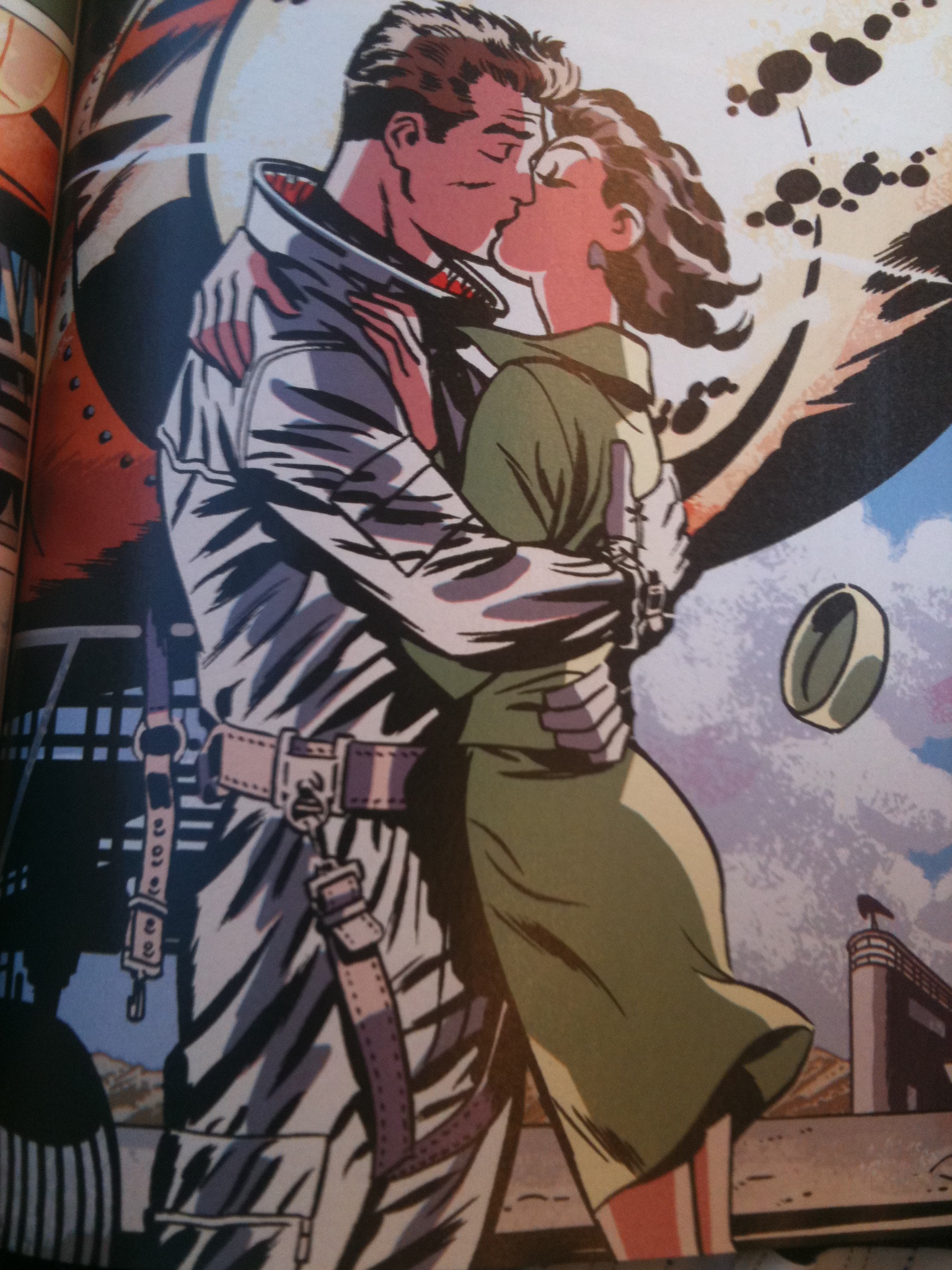
When one of my friends found out I was reading comics again, she accused me of reading ‘tosh’. I suppose it is, but only to the extent that most fiction – be it radio, cinema, TV and novels – is ‘tosh’. And some of it is very far from tosh indeed. Equally, I’ve been surprised how many people I know have also turned out to be fans of comics, quietly chipping in with recommendations and suggestions when I’ve mentioned my regained love. And it is love. How could it not be with something as beautiful as this?
My eager anticipation of the annual Lambeth Country Show in Brockwell Park is frankly ridiculous. But there is something about this festival, combining sheep shearing and donkey rides with jerk chicken and reggae, that really works for me. It is great fun and slightly surreal.
Where else this weekend, for instance, could you have seen the Mayor of Lambeth stroking a duck?
For many people, the best thing about the festival appears to be the lethal Chucklehead Cider, which comes in four pint jugs and, judging by Twitter, will be responsible for several thousand hangovers in South London this weekend.
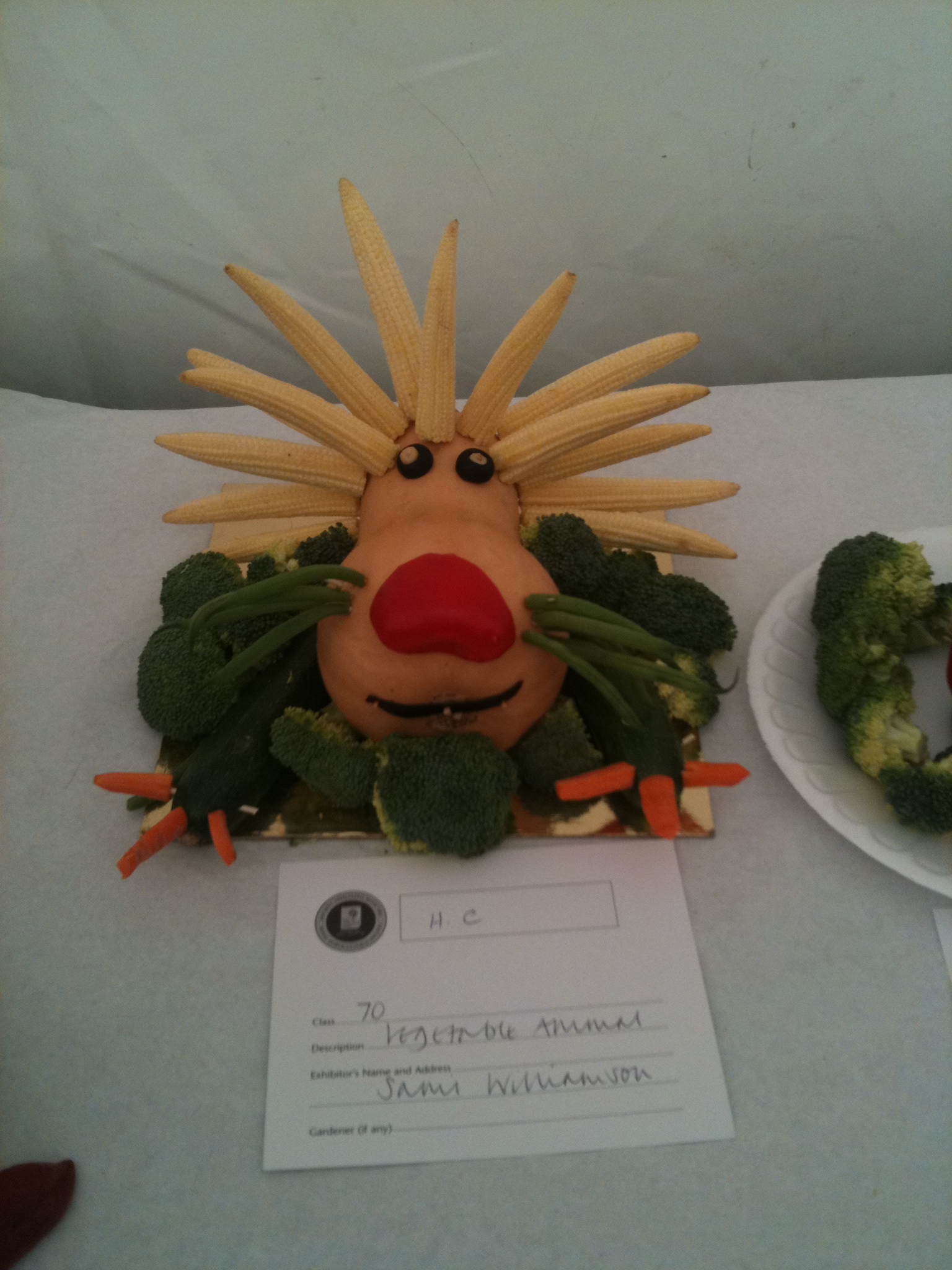
But I disagree. For me, the annual highlight is the vegetable sculpting competition in which some of the region’s finest artists demonstrate considerable imagination and skill by carving cauliflowers and potatoes so they look like animals.
This competition is fiercely fought. This year’s winner was a pineapple owl, and as ever, its suitability was hotly contested.
Work of art, or waste of a pineapple? Opinion was divided. Others prefered the baby sweetcorn and butternut squash lion.
Then there was this simple yet gorgeous art deco courgette crocodile.
While the carrot and potato python drew some admiring glances.
Congratulation to all who took part. The real winner, I’m sure we will agree, is art itself.
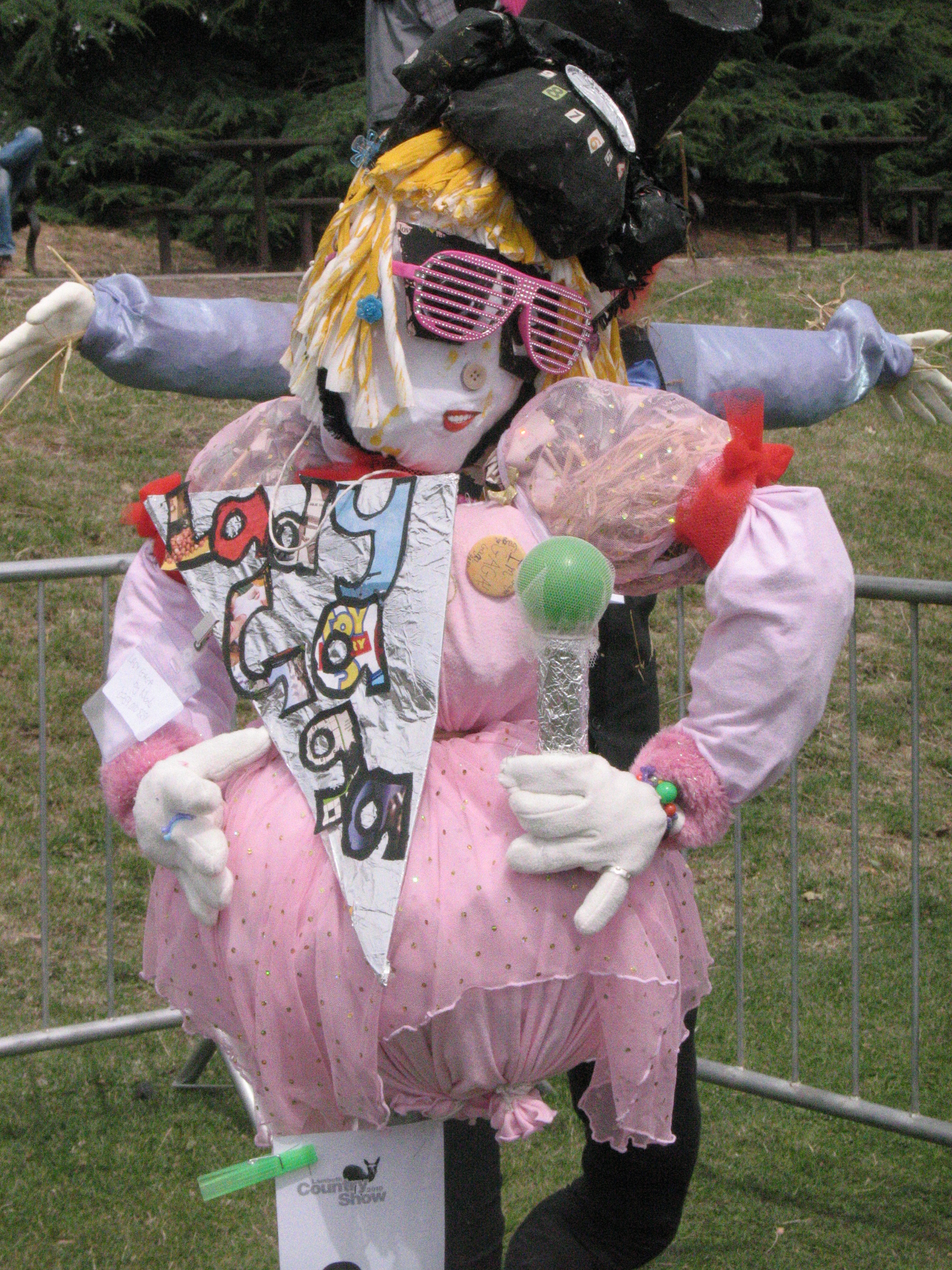
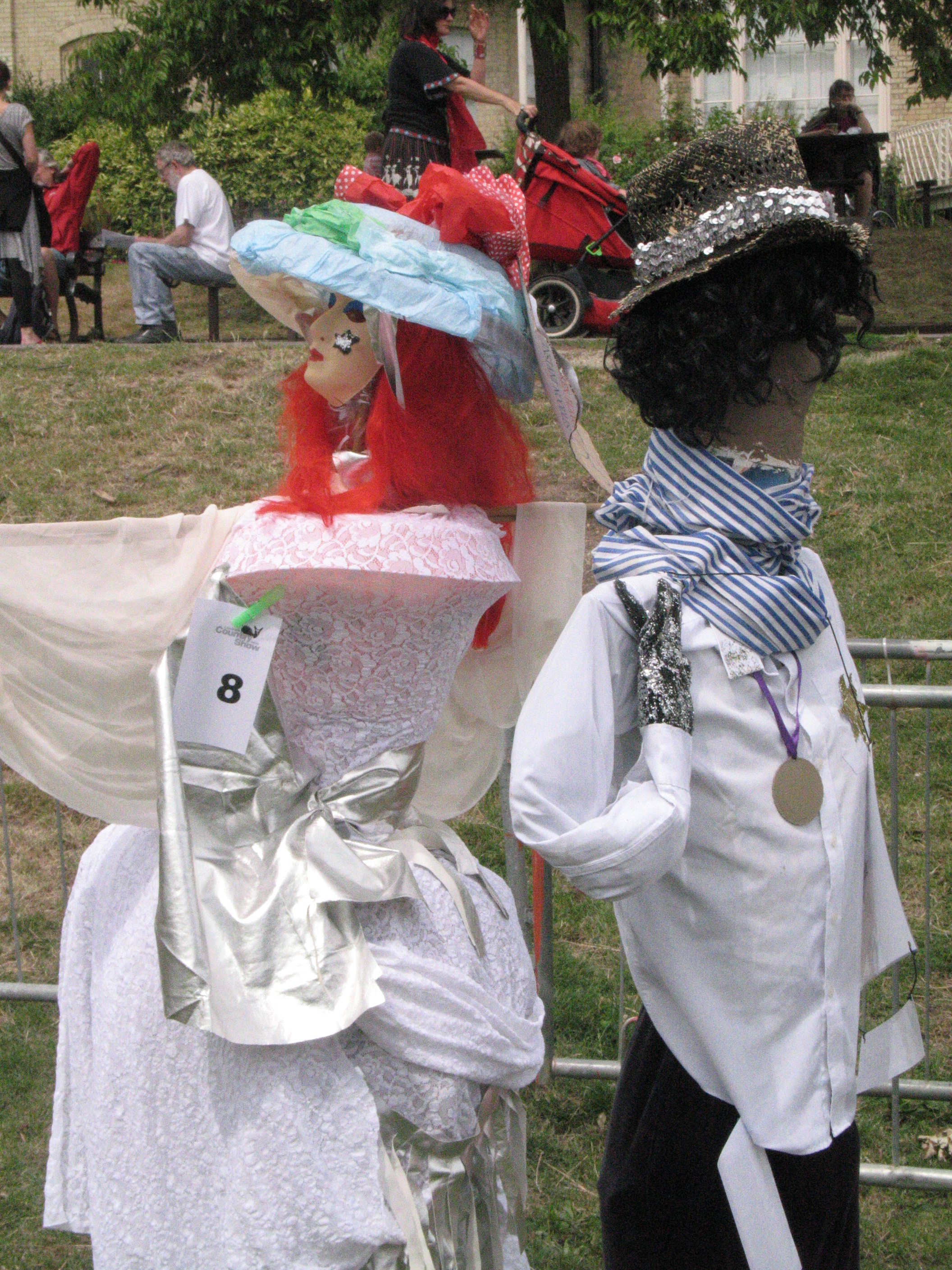
But could the reign of the vegetable sculpture be coming to a close? Many onlookers seemed more impressed with the celebrity scarecrows this year, and who can blame them? Check out these beauties and see what you think.
My review of the Wellcome Collection‘s new exhibition Skin is in the New Statesman this week. Read it here.
Cunningly, I snuck the key phrase into the very opening paragraph:
‘Generally, museums put on exhibitions so that people can learn about things they don’t already know. The Wellcome Collection does almost the reverse: it prefers to start with something that is familiar – in this case, skin – and make it unfamiliar.’
Skin is another very good exhibition from the Wellcome, who stand almost unique among British galleries and museums as a body that is so rich they have no requirement to go cap-in-hand to the public purse or to private sponsors, and consequently have no need or desire to dumb down or exhibit tedious ‘blockbusters’ (I’m looking at you, British Museum) in a bid to pull a cash-and-existence-justifying audience through the door.
Few establishments are so fortunate and few curators would know what to do with themselves if given this sort of creative and intellectual freedom.
Arts funding is going to take a proper kicking over the next few years. The Wellcome Collection will provide rare shelter from the storm, and one with free wi-fi, a bookshop and Peyton & Byrne cakes. What more can you ask for?
Although I am lucky enough to live just a short belly flop from Brockwell Lido, it will be a cold day in Cairo before you ever see me in the water.
Some people adore swimming. They embrace the invigorating iciness, relish the chance to strip down to their Speedos and take on the chill of the British outdoor pool, defying both cold and dreaded shrinkage (‘like a frightened turtle’) in search of their daily dip.
I am not one of those people.
I have never liked swimming. I don’t like getting wet, I don’t like changing rooms, I don’t like being cold and damp, I don’t like shrinkage. I know that after the initial ice-induced paralysis has worn off the swimming pool can be almost pleasant, but I don’t like the actual mechanics of swimming either, the hard work, the splashing, the water in your mouth, eyes and nose, the getting overtaken by grannies, the knowledge you are wallowing in urine, saliva and chlorine.
Slather me in seal fat and offer me the Queen, and I still won’t go near the shallow end even on the hottest day of the year. What’s the point? You can’t read in a swimming pool.
So, it is perhaps rather ironic that one of my favourite London songs is about a lido. ‘Springboard’ by The Arlenes featured on their 2002 debut album ‘Stuck On Love’. ‘Gospel Oak Lido is the place to be,’ sings Big Steve Arlene in this brisk, wide-eyed ode to swimming and love at a London lido. The sound quality isn’t great, but give it a listen here.
The Arlenes were that rare beast, a decent English country and western band. English artists have always struggled with authentic c&w. There have been some greatalbums and songs, but these are usually pastiches or neo-homages. There have been some interesting reinventions from the likes of the Mekons. But rarely have a British band truly embraced country music in all its authentic glory, creating a noticeably British take on an American art form. (A nod here to The Rockingbirds, who also got it.)
Perhaps that’s because country is too sentimental for British tastes, or maybe it’s because it’s not something we Brits grow up with – how often do you hear a country song on British radio (similarly, how many decent British Westerns have you seen)? But while imported sounds like blues or jazz are swiftly assimilated into the British musical tradition, country has always been the unwanted runt, something to snigger at, an American tradition we don’t understand like eating grits, going to church and being optimistic. Even country artists like Johnny Cash are celebrated for their rock more than their country, while the country influences behind Elvis Presley are rarely grasped on these shores.
The Arlenes, who were a half-English, half-American duo, genuinely adored country, and ‘Springboard’ oozes the sort of sunny outlook that David Hockney had to leave Yorkshire and move to California to find. It is a difficult thing to pull off in London, where the sun doesn’t shine all that often, nobody knows the words to ‘Pancho and Lefty’ and some miserable sods won’t go near a swimming pool, but they managed it.
I’m not sure where they are now. Their second album ‘Going To California’ – lacked the panache of their debut and the band disappeared, but I thank them for ‘Stuck On Love’, which I adore and listen to frequently.
So put together ‘A Bigger Splash’ and ‘Springboard’ and you go some way towards convincing me of the aesthetics merits of the outdoor pool, even if you can be sure I’m not going to dip a toe in the water.
See you at the lido. I’m the one who isn’t getting wet.
The British Library currently has an excellent new exhibition about maps called Magnificent Maps. I reviewed it for New Statesman (get me), and tried to focus on the sort of political aspects of the maps on display that would appeal to the generally Labour-supporting readers of the New Statesman, seeking any sort of diversion from the electoral massacre they had recently witnessed.
Diamond Geezer also took inspiration from contemporary politics with his review. He wins, I think.
The highlight of the exhibition for many Londoners will undoubtedly be Stephen Walter’s incredible idiosyncratic The Island, which you can study in detail here. This is a very personal and witty look at London by an artist. I particularly like the rather condescending but still satisfying comment he puts next to Herne Hill – ‘If I lived south of the river it would be here’. What finer praise could a North Londoner offer?
If you like maps a lot, you should also check out the hand-drawn gallery at Londonist. A little bird tells me that these may soon get a museum exhibition of their very own.
My interview with the writer Michael Horovitz appeared in the Times on Saturday. You can read it here.
This piece had a curious gestation. I contacted Michael in December as part of my ongoing attempts to track down a lost London counterculture magazine of the 1970s to which Michael had contributed.
I asked him to help, and he said he would, but only if I first wrote a feature about him based on the many anniversaries he was about to celebrate, including his own 75th birthday. It was blackmail, but of the nicest sort because Horovitz is an extraordinary figure, who I had great fun interviewing and writing about. He also has a fridge packed with some of the most delightful cupcakes I have tasted in years (and I have tasted a lot of cupcakes). The piece then proved to be a surprisingly easy sell to the Times and has directly led to a couple of other pieces that are now in the pipeline. To all of which, I say ‘Hurrah!’
Michael has worked with artists and writers as distinct as William Burroughs, Paul McCartney, Lenny Bruce, Dudley Moore, Spike Milligan, Joe Strummer, David Hockney, Peter Blake, Allen Ginsberg and Patti Smith, and of his many achievements, the one I sadly didn’t get space to write about in the Times was the part he played in the unexpected cultural renaissance of Kylie Minogue.
It was at one of Michael’s Poetry Olympics events at the Royal Albert Hall in 1996 that Kylie first shook off her Stock, Aitken and Waterman pop image when she performed a tongue-in-cheek spoken word version of ‘I Should Be So Lucky’. ‘Indie Kylie’, the NME star, was born.
Michael currently has an exhibition of his paintings on display at Art@42 in Notting Hill Gate until the end of April, and a documentary about his life was broadcast on Sunday on BBC Radio 4, which you can listen to here.
‘Yoko One was one of the most boring artists I came across, but she had the ability to put people into a state of expectancy that didn’t always result in a satisfactory outcome. I went to a happening at Conway Hall. There were rows of seats all occupied with people, and she started at the front on the left and whispered something in somebody’s ear. They whispered the message in the ear of the person next to them and it went on person by person, row by row for 30 minutes, until it reached the last person at the back of the hall. Then that person went over to Yoko and whispered the message in her ear, and Yoko stood up and said “Thank you” and walked out.’
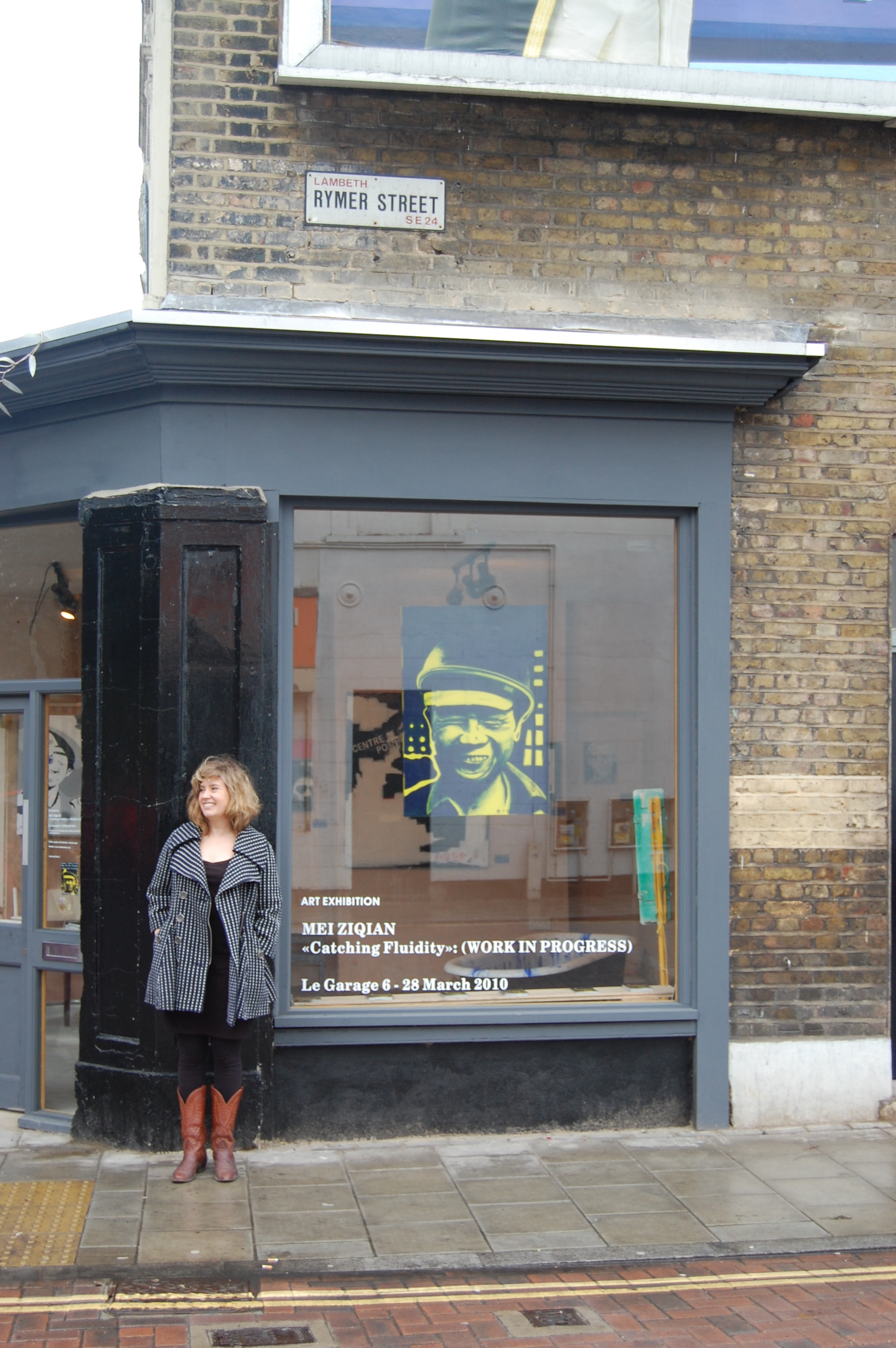
Plonked on a prominent corner site on Dulwich Road, just opposite Brockwell Lido, is La Garage. You can’t miss it. It’s the one with huge floor-to-ceiling windows through which you’ll see an antique bath filled with blue water.
Le Garage is Herne Hill’s newest art gallery. It’s the creation of Alice Bailey, a Canadian who bought the building in auction about three years ago (the name tells you what is used to be) and then started to think about what she was going to do with it. A friend suggested she turn the downstairs space into a gallery, so that’s what she did as soon as she’d finished rebuilding the upstairs and refurbishing it with things she found in junk shops (‘it’s kind of random,’ she says).
‘It was a total accident, I just thought they were great windows and I should put something in them,’ she says, so she did. Currently on display (until March 28) are paintings, photographs and the paint-filled bath by pseudonymous artist Mei Ziqian, and Alice already has three more shows lined up including a photographer, a shadow puppet play and an artist who does embroidered portraits of characters from ‘Coronation Street’. After that, she wants some street art, but is open to any ideas. Drop by if you have something to offer.
‘I want it to be organised but free and organic,’ she says. ‘There are a lot of artists who can’t get shows in London, although I know I’m a bit out of the way here in Herne Hill. A lot of people have already contacted me after seeing this and so far the work I’ve seen has been great. The photographer showing next is quite well-known, but she wants to do something different from what she usually does, and she doesn’t want to do it under her own name.’
The space is still not fully developed, and Alice is wondering how to use the back room and pondering about turning the garden into a cafe – inspired partly by Scootercaffe on Lower Marsh, where she lived previously. ‘It’s so nice living above your business,’ she says. ‘I really want it to be fun, because it’s a fun space, informal and friendly.’









 The Great Wen