Category Archives: Art

My favourite thing in London

The other day, I saw this board outside the Big Red Bus tourist shop near the British Museum and decided straight away that it might be my favourite thing in London. It was so striking, with such a warped sense of perspective and bizarre mishmash of London stereotypes.

I wanted it.

I decided that I would go inside and ask how much it would cost to buy it, but first I stopped and looked at it awhile. Questions entered my head.

What is a Grenadier Guard doing outside Downing Street? If he’s not on duty, why is he wearing his uniform and if he is on duty, which he shouldn’t be, why is he holding the hand of a small foreign bear? What is Paddington Bear doing so far from his comfort zone of Paddington without Mr Brown or any of the Brown family? Why is Paddington Bear standing behind the Grenadier Guard in that curious position? Are Paddington Bear and a Grenadier Guard even particularly relevant symbols of London life in 2012? And is it just me, or does the whole ensemble look rather like a surreal take on something you might see on Crimewatch featuring a stranger caught on CCTV camera leading a small child away from a shopping centre?

I still wanted it though, maybe now more than ever.

While I was plucking up the courage to go inside an ask, two Italian tourists came strolling down the road. They saw the board, giggled, then handed me their camera and asked if I could take their picture. After arguing over who would be the bear and who would be the guard, they poked their heads through the holes. I took a photograph, they thanked my fulsomely and moved on, laughing and chatting, relishing this rare free moment of childish fun in the sterling-sapping city.

I realised then that the need of London’s tourists was greater than mine. I could always come back, but they would only ever have their photographs. I went home, contented.
Secret London: photos of lost rivers and abandoned London

Lovers of London urban landscape, lost rivers, photography and, for want of a better word, psychogeography, should be aware of a forthcoming exhibition, From The Westbourne To The Wandle at Maggs Bros gallery.

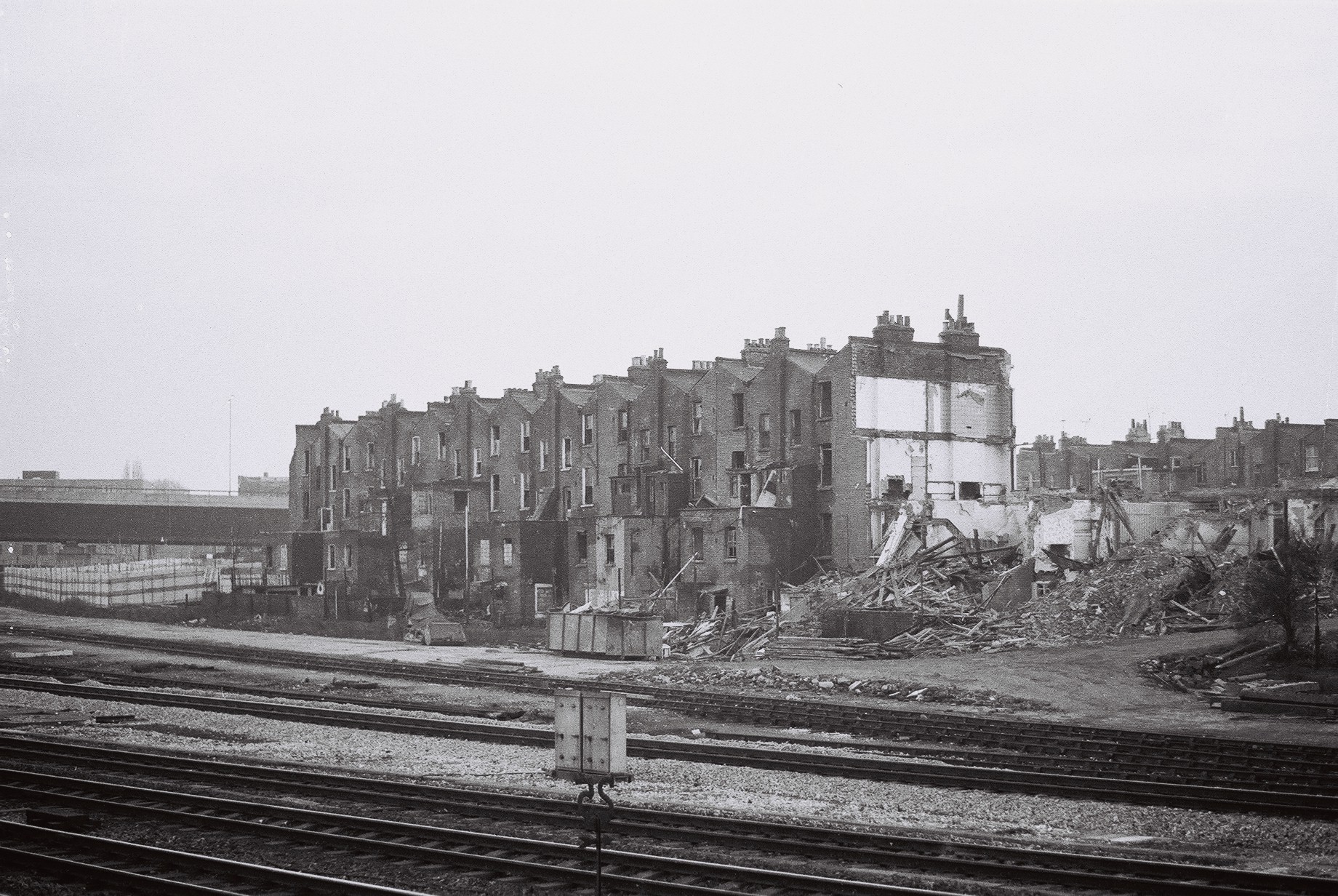
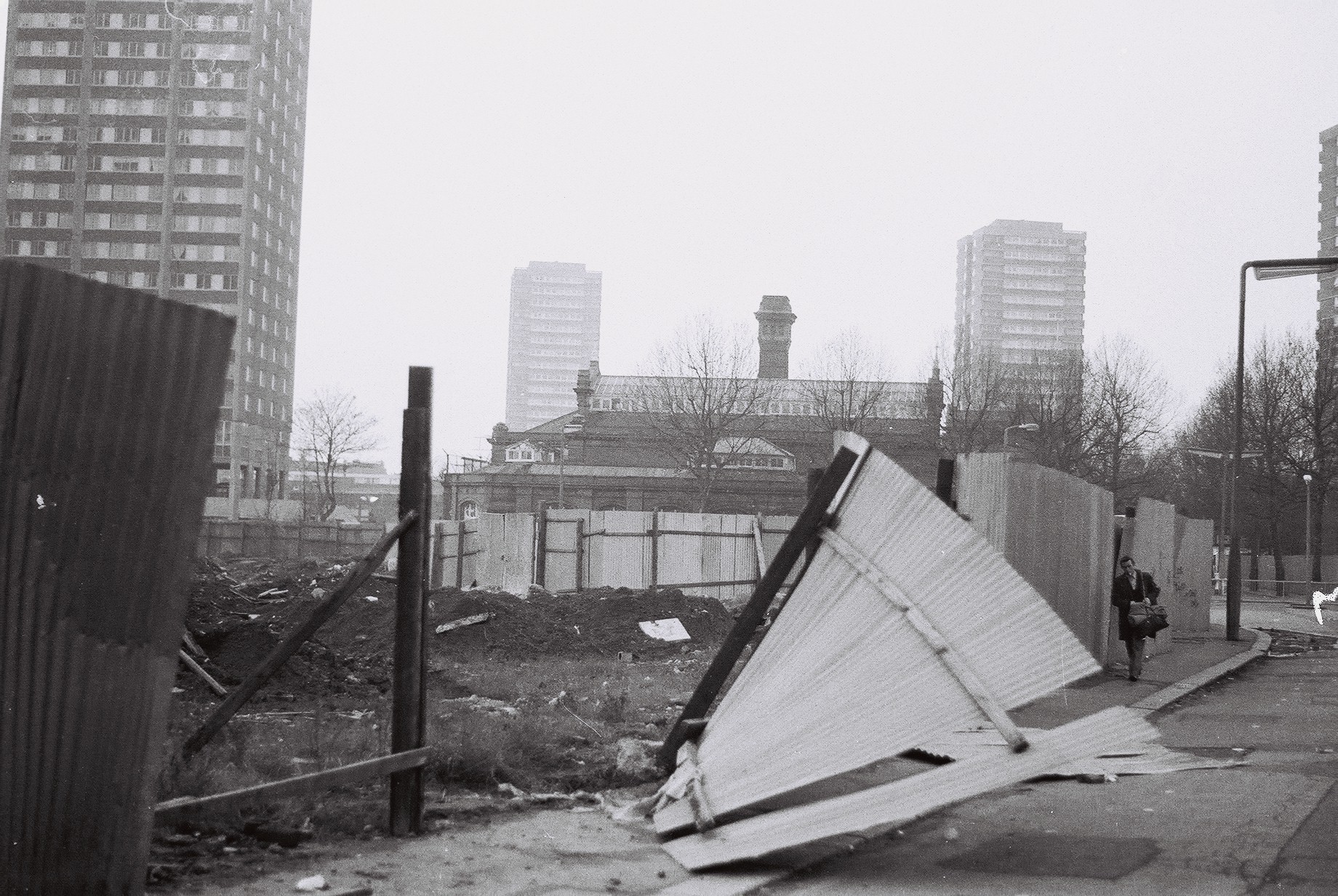
Curated by counterculture bookdealer Carl Williams, this brings together the work of two London photographers and writers, Jon Savage and SF Said. Savage is best known as a music writer, but in 1977, inspired by JG Ballard, he set out to photograph the urban wastelands of West London, taking a sequence of stunning black and white pictures of the lost land beneath the Westway.

He has written, ‘In its emptiness, austerity and gloom, it is an interzone waiting for something to happen, for the beasts to be unleashed. This was how London felt at the time: coming, coming, coming down – like a speed hangover merging into an apocalypse. But in there was also a sense of possibility that new ways of thinking might grow from this emptiness – like the scented buddleia on the bombsites.’

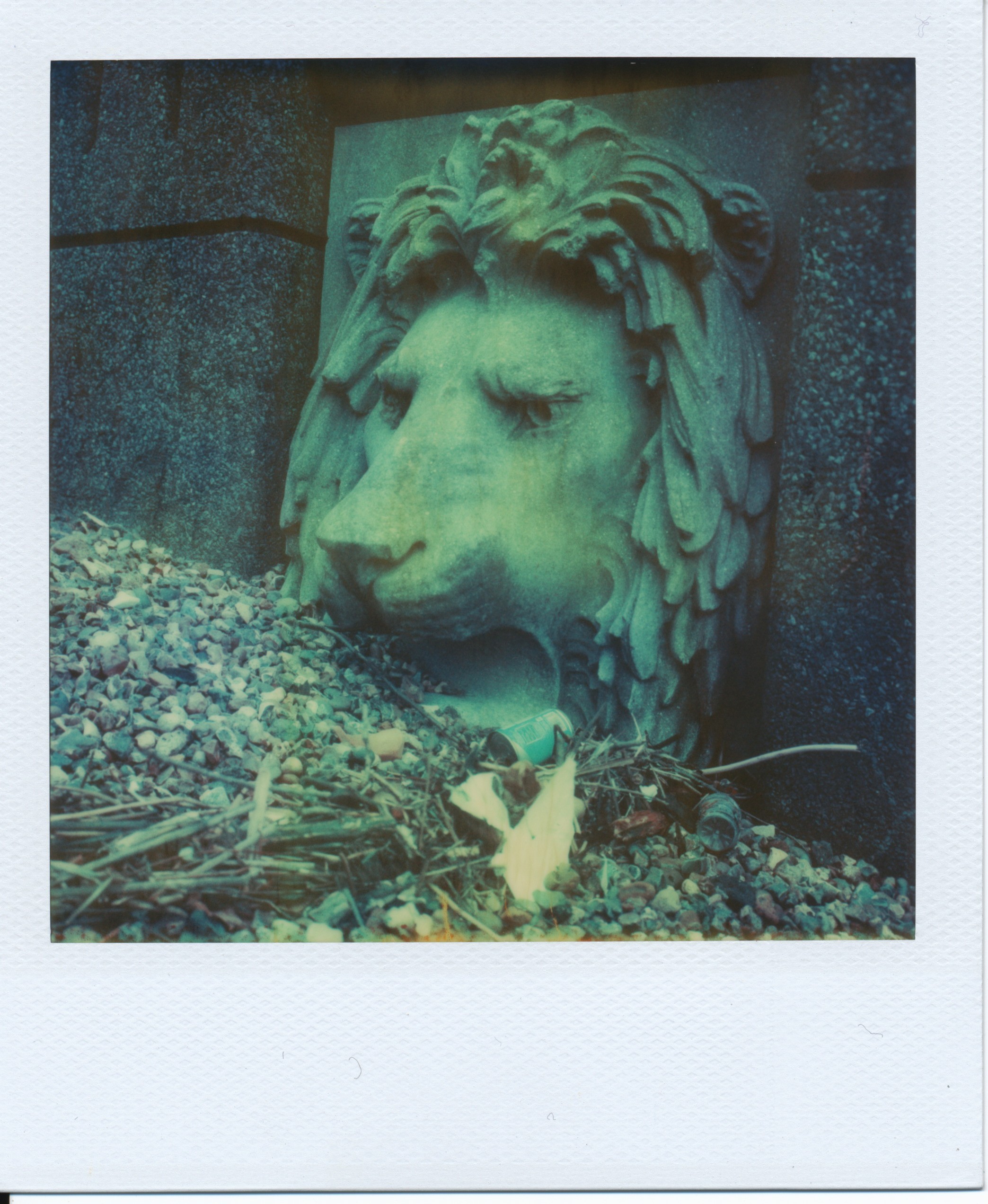
SF Said’s picture were taken for last year’s excellent Lost London Rivers book. Said shoots on Polaroid, which he describes as like a ‘photographic time machine’ and says he wants to ‘capture the dreams that a place might have of itself, or the memories that it stores under layers of time’.

He uses expired film, which can create strange, mesmeric effects and explains ‘as their chemical layers decay, they start to produce strange flame-like swirls and flickering light leaks that go even further into dreamlike realms.  These hallucinatory effects are unpredictable and random; sometimes they ruin a picture.  But when you’re lucky and it all comes together, I think they give you something magical that you could never get any other way.’

The exhibition is at the gallery at Maggs Bros, 50 Hays Mews, W1J 5QJ from March 22 to April 19.

Blank Generation: original punk posters in South London

In 1977, Gary Loveridge spotted a Damned poster that he liked the look of hanging on the wall at his local record shop in Weston Super Mare. He decided to take it. ‘It was on the wall of the listening booth. I took it off the wall, rolled it up and stuck it under my jumper. I walked out, looking very suspicious. They probably knew exactly what was going on.’

And so it began. Loveridge, a landscape gardener, now has around 250 original music posters, and 100 devoted to punk are on display until March 8 at the 198 Gallery  on Railton Road. Not all were collected in quite the clandestine way of the first, but they are all original and numerous bands are featured, including the Sex Pistols, Clash, Ramones, Lurkers, Buzzcocks, TV Personalities, Mekons, Elvis Costello, Ian Dury, PiL and Siouxsie and the Banshees.

The Damned poster that got it all started

‘This is the first time I’ve seen them all on the wall together in one place,’ says Loveridge. ‘At home they are all in tubes, some on the walls but I haven’t enough room to put them all up.’

The posters were largely used to promote LPs and singles in record shops, although there are some from bus stops and concert venues. Most such posters will have been thrown out by the stores, making such a large collection quite unusual. Loveridge collected many on his way from gigs in Bristol, and then later added to his collection at markets and record fairs.

The exhibition takes in two rooms and also features part of Loveridge’s collection of badges, flyers, fanzines and other ephemera, some of which – such as the flyers for the Sex Pistols banned tour – are much sought after. Also on display is a framed advert from 1977, cut out from a local paper, promoting a gig by a mysterious band called The Spots. Now who could they be?

Punk was an incredibly visual movement, as one would expect from something inspired by glam and Situationism and created in art schools and clothes shops, so these posters are eye-catching and iconic.  A small selection are reproduced below, but the real thrill is seeing them collectively and close-up; many have pulled from walls and windows so have an authentically battered look, while the accumulation of colour and striking design is a treat for the eye. But you’ve only got six weeks, so hurry.

Blank Generation: A Collection of Original Punk Posters, 198 Gallery, 198 Railton Road, SE24 0JT. Until March 8, 2012

Spiral Scratch by Buzzcocks

Pretty Vacant by Sex Pistols

The Clash at Brixton Academy

The Mekons at North Staffs Poly

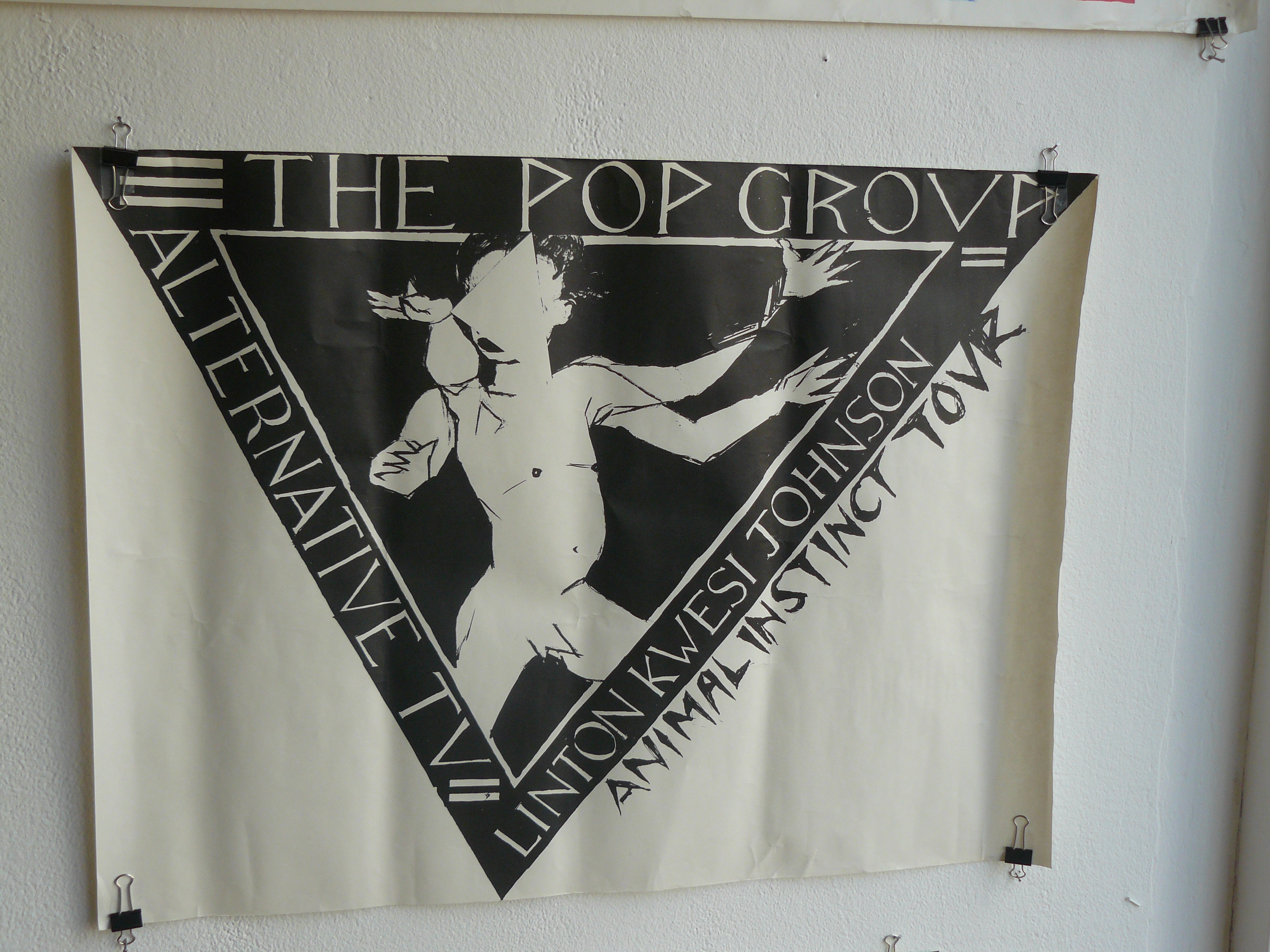
The Pop Group and Alternative TV

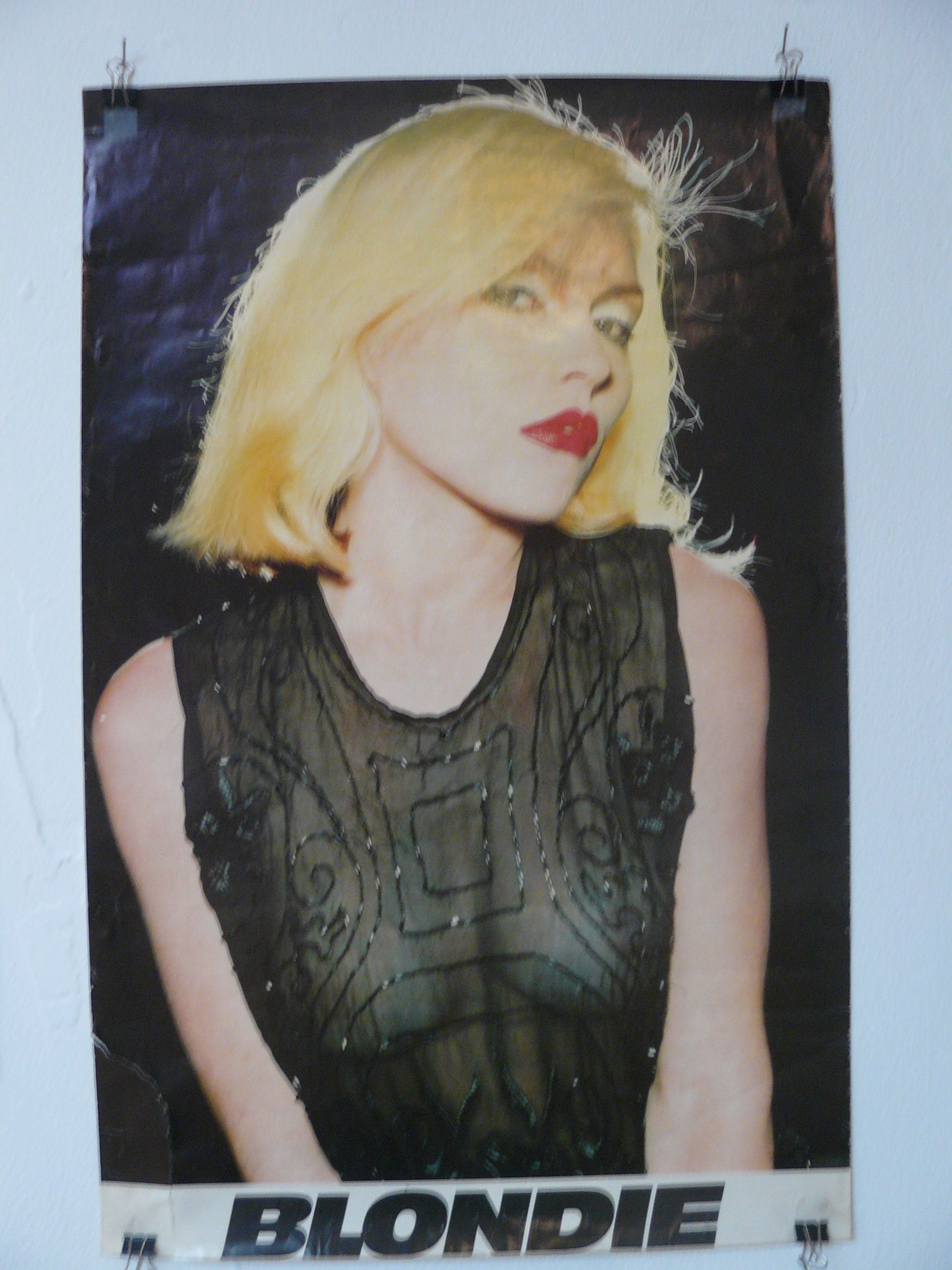
Blondie poster rejected by band as it featured only Debbie Harry

Elvis Costello

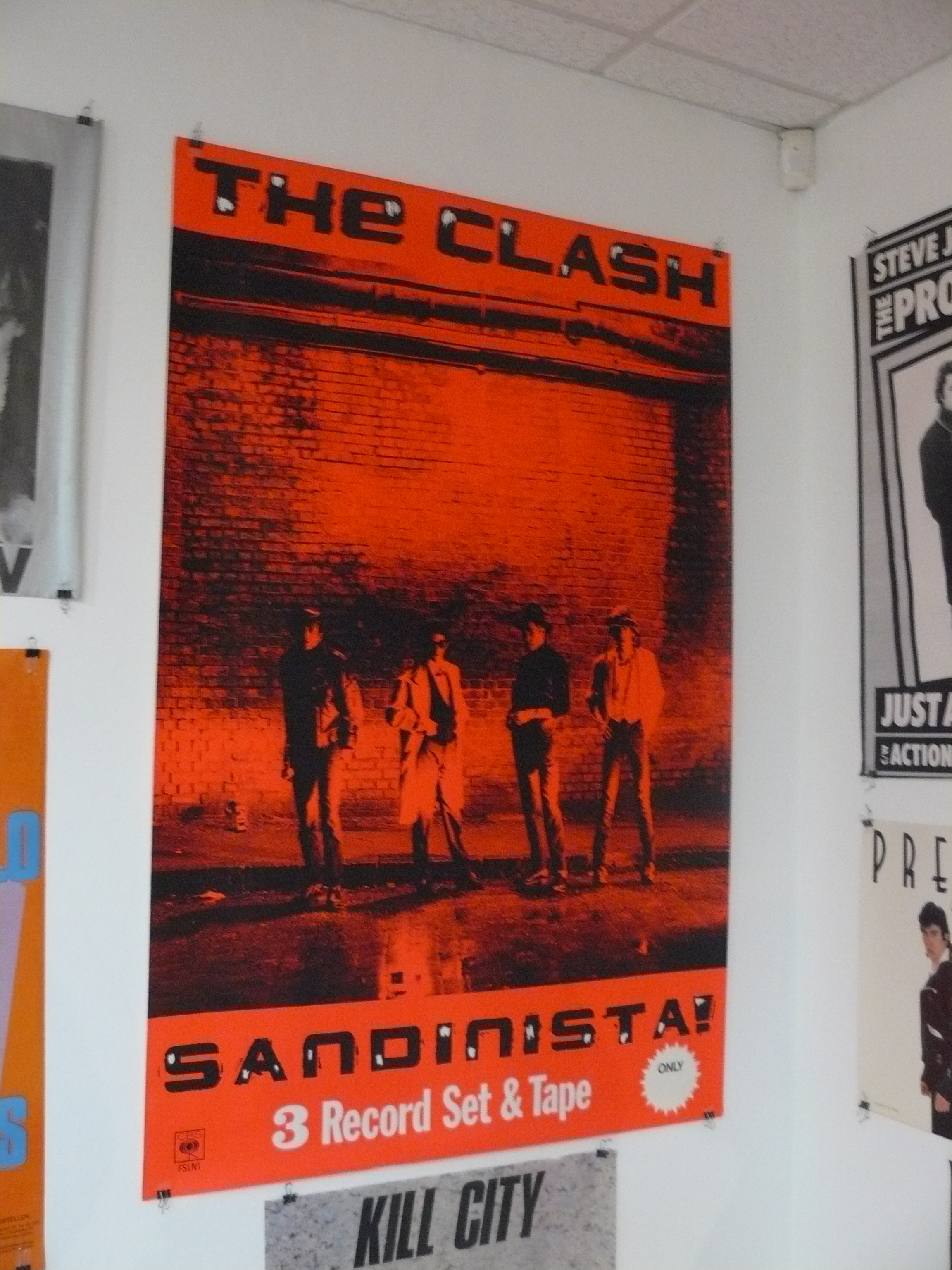
Sandinista by The Clash

The Only Ones

Siouxsie And The Banshees (with Human League third on bill)

London Calling by The Clash ('two for a fiver!')

Sex Pistols - used to introduce the band to the United States

Ian Dury

Sex Pistols

The Jam

Badges and flyers

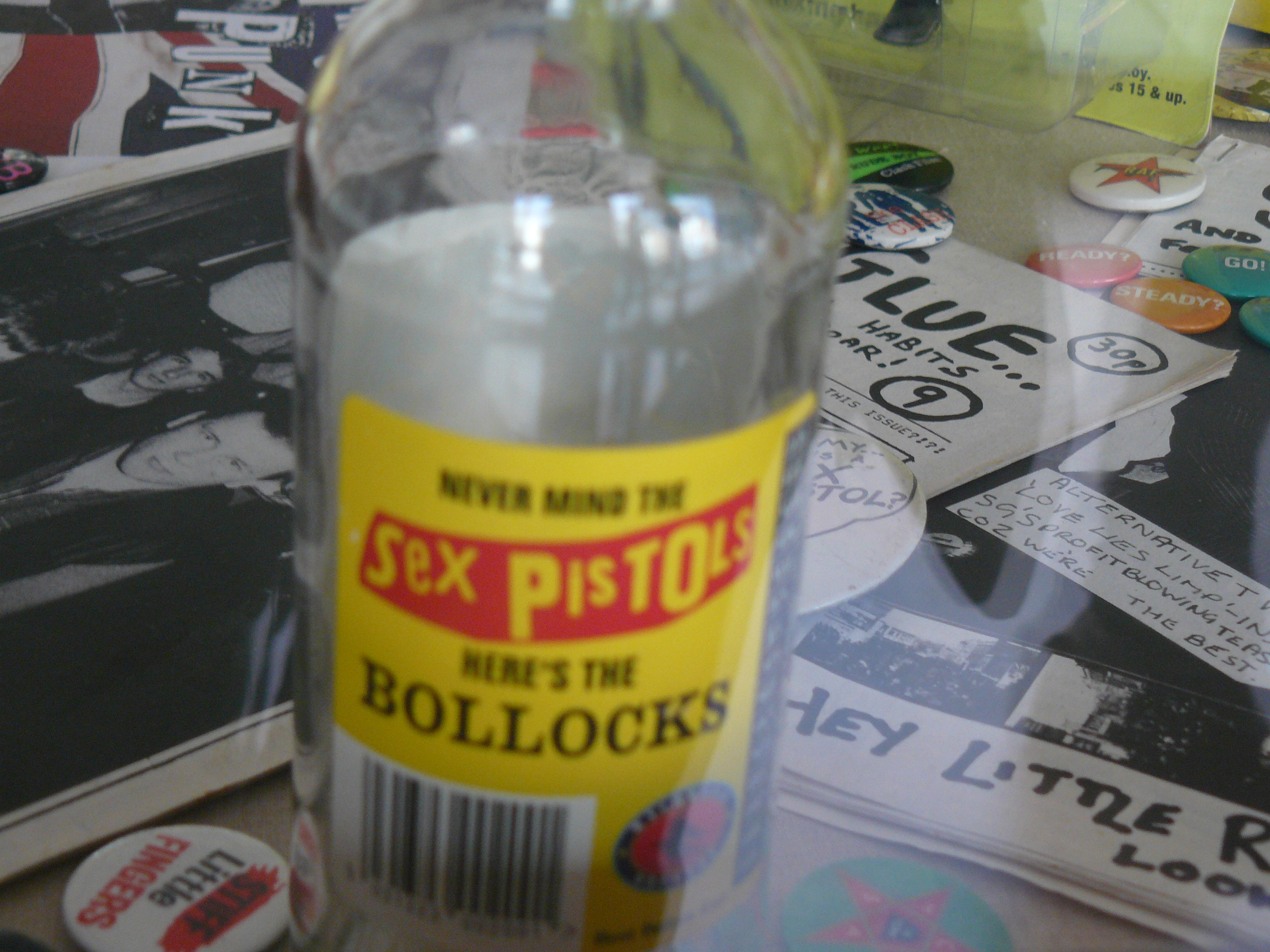
Never Mind The Bollocks beer and fanzines

Sex Pistols flyer from SPOTS tour

Drugs and dead babies at the Queen’s bookshop

Maggs Bros is a posh antiquarian bookseller on Berkeley Square that has a Royal Warrant and is supposed to occupy the site of the most haunted house in Britain, but it is also home to a small contemporary art gallery, located out the back and accessed via 50 Hays Mews.

The latest show is being curated by New Artists and features photographs by Richie Culver taken of London crackhouses. These are loosely based on Gustave Dore’s engravings of Victorian opium dens.

Opium Smoking

The exhibition also features Polaroids by Shorvon & Hunter that explore the demise of the Polaroid and newspapers as forms of media. It’s definitely worth a look if you are in the area before it closes on Monday, December 5.

If you do, you should also pop upstairs to see a selection of some items that Maggs’s counterculture expert Carl Williams is currently selling. These include photographs of William Burroughs taken by Brion Gysin in Paris and an extraordinary mural taken from an American street gang club house. You could also pick up a copy of Carl’s latest catalogue to see if he has anything you fancy, whether it be items to do with Crowley, punk or the Weathermen. Last time I visited, he showed me some pictures he’d just acquired of dead Victorian babies, but don’t let that put you off.

Art of Mapping at Air Gallery

The Art of Mapping at the Air Gallery in Mayfair is the latest exhibition to take mapping as its inspiration. It consists of 34 contemporary works that are based on maps, some more loosely than others.  Among those familiar to map freaks will be Grayson Perry’s Map of Nowhere.

Stephen Walter, who created the magnificent, possibly definitive London map, The Island, also features with two different works, Isle of Dis and Down River.

Maps of cities dominate (perhaps a little too much), and London is heavily featured. Prominent is Simon Patterson’s The Great Bear, perhaps the first map to mash-up Beck’s Tube map and deserving of praising for that, even if I’ve always found the Bear map itself rather dull.

I was, however, fascinated by Jeremy Wood’s My Ghost, which used GPS to map nine years of movement around London, creating a spidery thread that created an approximate outline of the city’s streets.

My Ghost

Jeremy Wood's My Ghost

It reminded me of a similar project undertaken by London cab driver Richard Cudlip. Similarly, I liked Rob Good’s Two Cities, which reproduced a stencil of the south-east of England shorn of anything manmade, and mounted powerfully on stainless steel.

Two Cities

Rob Good's Two Cities

There was something in both these maps about landscape and the way humans interact with it which is best expressed through contemporary art. Many of the maps seemed to promote this similar sense of alienation with the city, making it a stark contrast to the Museum of London’s recent Londonist-inspired exhibition, which emphasised the way areas of a city can become as familiar to us as our own bodies.

Stanley Donwood’s London was a more colourful and less ambitious version of The Island, emphasising that where Patterson’s Great Bear introduced a concept others could better, Walter has created something that will probably never be matched.

Stanley Donwood's London

The last London map was Nigel Peake’s XXXIV Crossings, which was a lovely stylised look at London’s various river crossings, overlapping chaotically. Nigel has created a lovely book on a similar theme, featuring London’s bridges drawn in various ways.

Nigel Peake's XXXIV Crossings

Away from London, I also loved Susan Stockwell’s Jerusalem, which reconstructed a map of the British Isles out of recycled computer components, and Emma Johnson’s Dislocation: Time And Place, for which she had taken a pair of scissors to a map, removing streets and parks and then reconstructed it in  an overlapping 3D effect, like a pop-up plate of paper spaghetti.

The Art of Mapping, curated by TAG Fine Art, is at Air Gallery on Dover Street until Sat November 26.

William Burroughs and the strange demise of London’s first espresso bar

In 1953, a momentous event occurred in Soho. London’s first proper coffee shop – one equipped with a Gaggia coffee machine – opened at 29 Frith Street. This was a place where teenagers too young for pubs could come and gather, and it is said by some that the introduction of this coffee bar prompted the youth culture explosion that soon changed social life in Britain forever.

Inside the Moka Bar

The Moka was an instant success, selling over a thousand cups of coffee a day. The author John Sutherland recalls, ‘the Gaggia machine, a great burbling, wheezing, spluttering monster, would grudgingly excrete some bitter caffeinated essence.  It would be swamped with steamed-milk foam and dusted with chocolate to form its ‘cappuccino’ hood… Glass cups and brown sugar (lots of it) were de rigueur.  Frankly, 50s espresso was no taste thrill.  But it felt smart as hell.’

By 1972, coffee bars where everywhere and the teenage revolution was firmly established. At this time, the author of ‘Naked Lunch’, former junkie and all-round Beat legend William S Burroughs was living in London, quietly going about his business in St James’s. He lived in Dalmeny Court, Duke Street, and loved the plush gentlemen’s shops of the area, not to mention the ‘Dilly Boys‘, young make prostitutes who hustled for clients outside the Regent Palace Hotel.

Although Burroughs was fond of the finer things in life – he got his shoes from John Lobb, hat from Locke’s and bought most of his food in Fortnum and Mason’s – he did at some point stumble into the Moka Bar, and was not impressed by what he found.

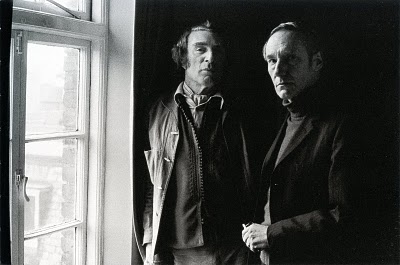
Burroughs and friend Brion Gysin in London

Burroughs at this time was getting sick of London – sick of the licensing laws, sick of the crap food and small drinks, sick of the weather, the terrible service and sexual hypocrisy. He was also sick of the Moka, which he believed responsible for an ‘outrageous and unprovoked discourtesy and poisonous cheesecake’.

The Church of Scientology, Fitzroy Street

Burroughs decided to mount a sound-and-image attack. He had previously launched one of these against the Church of Scientology, of which he had been a member, turning up at their headquarters at 37 Fitzroy Street every day, taking photographs and making sound recordings. He believed that ‘as soon as you start recording a situation and playing them back on the street, you are creating a new reality’ and that repeated exposure to such an attack would lead to ‘accidents, fires and removals’. After a few weeks, the Scientologists did indeed move, round the corner to 68 Tottenham Court Road.

Photo taken by Burroughs during the operation

On August 3, 1972, Burroughs turned his attention to the Moka. He would stand outside every day taking photos and making recordings by tape, and then return the next day to play the previous days recordings. Burroughs was convinced he was winning. ‘They are seething in there,’ he said. ‘I have them and they know it.’

On October 30, 1972, the Moka Bar closed.

London’s mapping renaissance

The growth of online mapping – as seen by the excellent London Mapping website, which collects some of the best digital maps around – has not meant the end of paper maps.

Image of Untamed London

I’ve mentioned Herb Lester‘s lovely themed maps before with reference to their 1960s map of London’s West End, Wish You Were There, and they continue to add new maps to their range, branching into different cities and themes while maintaining an impeccable eye for design. Untamed London, for nature-lovers, is their latest offering.

I’ve also finally got my hands on the Museum of London’s Londonium map and it is hugely impressive. This has been produced by MOLAS, the Museum of London Archeological Service, and is a huge map of the City, with the Roman topography superimposed over a plan of the contemporary city – a little like a paper version of the technology used for the Time Travel Explorer app.

Key Roman finds are listed, with an explanation of what they are and how they can be accessed, while the reverse side has a potted history of Roman London, with many illustrations. The map is printed on good thick paper so won’t tear easily (a constant problem for frequently folded paper maps), and works beautifully as both a decorative item and a practical plan for hunting down the existing remains of Londonium.

It costs just £6.25 and should it prove to be a big seller – which I imagine it will – I hope the Museum can persuade their friends at MOLA to produce more maps along the same lines.

One for the Olympic Park at around this time next year, perhaps?

London accessories

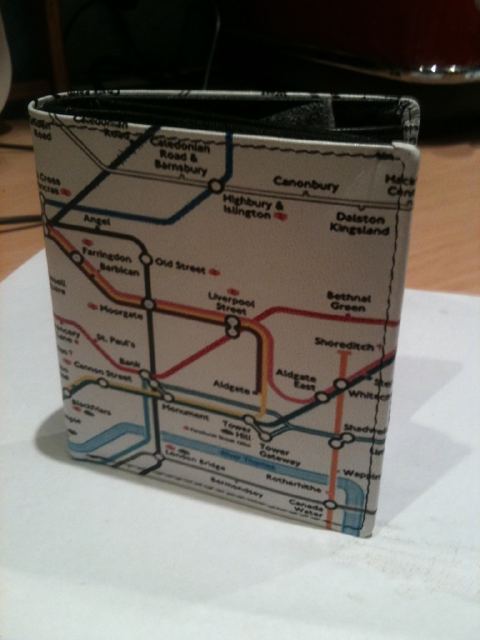
I fear this purchase may mark the moment when future biographers decided I tipped over into self-parody.

Next stop, a manbag version of this. I’m sure it can be done.

District Moquette Handbag

Pirates from outer space

There are a couple of particularly interesting exhibitions open in London at the moment, and I’ve reviewed both of them for the Independent. The first is Out Of This World: Science Fiction But Not As You Know It, a thorough exploration of genre fiction at the British Library that offers much of interest for the careful reader, while the second is the Museum of London Docklands colourful Pirates: The Captain Kidd Story.

There’s plenty of London interest in both, from the apocalyptic and despotic visions of a future London by everybody from HG Wells to Alan Moore at the British Library, to the fascinating relationship between London’s rich and powerful and common pirates that is explored at the Museum of London Docklands.

Secret London: Toulouse-Lautrec in Catford

Say what you like about South London, but it clearly has something about it. Why else would a trinity of the world’s greatest 19th-century artists have come here?

You probably know about Vincent Van Gogh’s time in Brixton because of the play from a few years ago. Van Gogh lodged in Hackford Road, Brixton in 1873 and regularly walked from there to Covent Garden where he worked as an art dealer.

This is the only surviving picture he sketched during this period It’s of the Georgian houses on Hackford Road itself.

Van Gogh also lived in Isleworth in 1876, at 160 Twickenham Road, when he later returned to London as a teacher. Hackford Road now has an English Heritage blue plaque for Van Gogh, and there used to be a Van Gogh Cafe on Brixton Road, but it’s closed down.

Camille Pissarro painted around a dozen pictures of Sydenham and Dulwich during his time in South London in 1870. I particularly like this one, of Lordship Lane Station.

As Michael Glover writes in the Independent: ‘The painting shows us a new kind of modernity. Here is London being mightily transformed by the growth of housing and the ever onward thrust of the railways in the second half of the 19th century.’ Pissarro lived at No 77 Westow Hill and then on Palace Road, and married at Croydon Registry Office. He returned to London a number of times. Lordship Lane station was demolished in 1954. A non-English Heritage blue plaque adorns the site of his house on Westow Hill and a restaurant called Pissarro is in Chiswick, but I’m pretty sure that’s named after his son Lucien.

Best of all, though, is the fact that Henri de Toulouse-Lautrec did time in Catford in 1896. The diminutive brothel-loving soak was a huge fan of cycling and in 1896 was asked by a company called Simpson to work on a poster for their new bike, which used a new type of chain. This, according to Wiki, ‘was composed of linked triangles forming two levels. The inner level was driven by the chainring and the outer drove the rear cog. Instead of teeth, the chainring and cog had grooves into which the rollers of the chain engaged.’

I’m not sure what that means, and probably neither did Lautrec, so he came to the newly built Catford Velodrome to watch the bike in action during special races, set up by Simpson to advertise their product. Lautrec produced a couple of images during his visit. The poster was one of the last he designed before his death in 1901.

The velodrome was knocked down in the 1990s and there is no trace of it left (it’s location was approximately around Sportsbank Road), but there is at least a brasserie in Kennington called Toulouse-Lautrec.

But perhaps Toulouse-Lautrec had more influence on Catford than we may have thought?

Consider this, a famous poster advertising one of Lautrec’s favourite clubs by one of his contemporaries and very much in Lautrec’s style.

And this.

If you do not wish to go all the way to Catford to pay homage, an exhibition of Lautrec’s work goes on display later in June at the Courtauld Gallery at Somerset House, where you can also see Pissarro’s lovely picture of Lordship Lane Station.