Tag Archives: London

Sportscapes of London

oasis

The Oasis swimming pool in Covent Garden in 1946

I’ve spent the past week immersed in Played In London, a book that is about as ambitious as any you are likely to see published about London this year. Written by Simon Inglis (author of the seminal book on British football grounds) for English Heritage, it attempts to tell the story of every sport that has ever been played in any venue in the capital – that’s everything from lost Tudor skittle alleys to skateboard parks, including all the major football and cricket grounds as well as lost lidos and billiards halls, archery grounds and greyhound tracks, relocated diving boards and blue plaques. There’s even space to mention rugby netball, a sport created in 1907 by soldiers on Clapham Common and which is still played there every Tuesday and nowhere else.

It’s a breathtaking accomplishment, full of terrific nuggets of information – did you know there were Eton Fives courts under the Westway, or that the BBC’s Maida Vale studio was built in an old rollerskating rink? – but also attempting to tell the story of how a city and its people indulge in play, how that play is shaped by the culture and topography of the city, and how it develops over time, often wittingly reinventing itself as a ‘heritage’ sport rather than die out.

This is social history as much as anything, but goes much deeper than any other book I’ve seen on the subject, like the marvellous Pleasures Of London. One fascinating section looks at the history of company sports grounds. There were once dozens of these in south-east and south-west London – Catford had several – where civil servants or bankers could take part in regular games of rugby or football, or enjoy the annual sports day. Knowing more about these events, Inglis says, would let us learn so much about the culture of work, belonging and inter-office bonding in 19th and 20th century London.
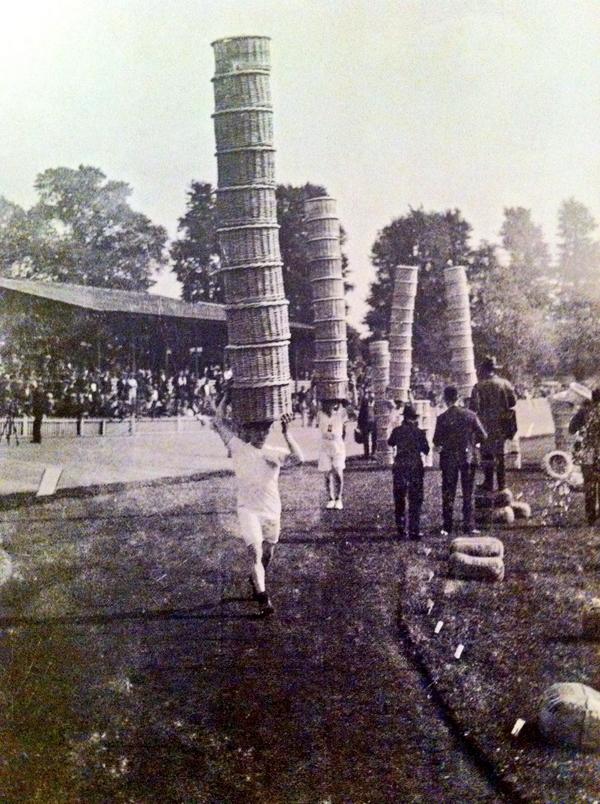
hernehill

Bushel basket race for Borough Market sports day at Herne Hill, 1931

Given the scale of the project, the navigation of the book can be a little complex, but the layout makes sense over time. Inglis begins with an overview of the history of sport in London and of London parks and open spaces, before examining several areas in greater detail to see what they tell us about sport and London, and how certain spaces have been used repeatedly over time. He uses the phrase sportscapes and essentially is intending to show that sport, play and leisure require greater understanding of history than simply observing the architecture and listing club records (although the architectural chapters on Pavilions and Grandstands are genuine delights). It requires a knowledge of how space was utilised and developed, and what accidents of personality, business, culture and geography in the wider world outside sport allowed some sports and grounds to thrive while others died. It also shows how some spaces are defined by sport, but also how sports, clubs and associations are defined by the space they occupy.

The river is an obvious candidate for this treatment (and I never knew there were so many boathouses), but he also looks at length at such intriguing places as Wembley Park, Crystal Palace Park, Lea Valley, Dulwich and the Westway – all of which have long, complex relationships with myriad sports – to uncover stories that may otherwise only be known to local historians, or single-sport specialists. This approach repeats itself throughout the book, allowing ‘found spaces’ such as the South Bank skatepark to be included alongside manicured golf greens and expensive new all-seater stadia.

netball

Office workers play netball in Lincoln’s Inn Field, 1950s.

Oh, and if this isn’t enough the whole thing is illustrated lavishly throughout – indeed, they may have tried to cram in one or two photographs too many – with some spectacular mapping also included.

It makes a fine accompaniment to another book I read recently, on a more modest scale but still of some importance to London’s sporting heritage. Fighting Men Of London by Alex Daley is essentially an oral history – although the author occasionally makes his presence felt – of London’s boxing history between the 1930s and 1960s, told through seven former fighters. It puts some flesh on the bones of Inglis’s research: the boxers describe the lost boxing rings of London such as the shambolic Mile End Arena or the refined Stadium Club in Holborn, where inter-war gentlemen would dine ringside, ignoring the blood that splashed into their supper. They also talk about the old Central London gyms like Bill Klein’s in a basement in Fitzroy Street or Jack Solomon’s near the Windmill Theatre with an eye for detail that makes you think of Gerald Kersh.

The appetite for boxing in this age was vast, and many of the fighters interviewed built up large followings as they fought as frequently as once a month. None of them really made it into the big money though, and it’s notable that upon retiring several became involved in crime – The Krays, former boxers themselves, have walk-on roles in several of the stories. As a history of East End culture, it’s illuminating.

London: a cycling city

I wrote about the challenges facing cycling in London for The London Magazine

Every time I hear that another cyclist has been killed on one of London’s many lethal junctions, I pray to a god I don’t believe in that it isn’t one of my friends. The idea of cycling in London terrifies me. That’s partly because I haven’t ridden a bike more than twice in 20 years, and partly because I have seen so many incidents, altercations and near fatal collisions involving cyclists during my walks around the city.


I’m aware of the figures – the fact that cycling is overall a pretty safe form of transport, even if it could always be better – but it’s hard to shake off that impression that it’s anything but. I’ve seen cyclists get hit by taxi doors and narrowly avoid getting squashed by buses. I’ve seen them shouting with rage and fear at drivers who’ve turned out of a side street in front of them without looking. I’ve seen them cycle headlong into pedestrians who weren’t looking where they were going (and vice versa). I’ve seen them getting into squabbles with bus drivers about ownership of bus/cycle lines that end with blows being traded. I’ve seen them picking themselves and their bent bikes off the pavement after minor crashes. And I’ve seen the blood getting washed off the road after major ones. It looks anything but fun.

So despite the fact I see people cycling quite easily and happily on London streets every day, I still think it’s one of the last things I’d ever want to put myself or my family through on a daily basis.

That is something that needs to change if London is ever going to be a cycling city, which it desperately needs to if it is to remain in any way a human and pleasant place to live in. People like me need to be persuaded that London cycling is safe and that a trip on the bike to the shops won’t result in a serious injury or a shouting match. As Mike Cavenett of the London Cycling Campaign admitted to me “the striking thing is that Dutch cyclists just look like Dutch people”, by which he means you see the elderly and children, men and women, all cycling in their normal clothes – not like London, where cyclists wear tight, bright clothing and manage to look simultaneously over and under dressed.

When London’s cyclists start to look normal, that’s when we know we are heading the right way. And for that to happen, London needs better infrastructure, streets on which cyclists feel safe and are able to relax, making the whole experience better for everybody. Everybody I spoke to – including Andrew Gilligan, the Mayor’s cycling tsar – seemed united on this and agreed on the direction that London needed to go in. Whether it actually happens, whether there is the political will to spend the cash to keep the promises, remains to be seen. But here’s hoping it starts to happen, because a cycling city would be better London for everybody.

Pathe newsreel: London time machine

These are all taken from the recent cache of thousands of Pathe newsreels loaded on to You Tube.

1. A trip to Swinging London in 67. Is that Yoko reading International Times at Trafalgar Square? Surprisingly sympathetic beneath the patronising tone. I love those Bob Dylan paper dresses. And at 4:50 you get to meet Keith Albarn, father of Damon, as he organises a happening. Also features Mary Quant, the Speakeasy, the Scotch of St James and much more.

2. This Is London, with commentary by Rex Harrison. A tour of the capital for the British Travel Association, starting at the Tower of London, into Fleet Street and Temple then into the West End and Westminster. It’s all very quaint and polite, but great for location spotting. The shots from Chelsea at 10:42 are extraordinary.

3. Platform shoes, 1977. A wide range of Londoners discuss platform shoes – “they’re not natural,” says one cockney. I think this was filmed around the King’s Road.

4. Tracking shots of Soho at night, 1968. No sound or context here, just a series of tracking shots around Soho at night. It’s incredibly atmospheric and full of strange glimpses into past lives, especially the laughing man at 3:22, whose companions have slipped off to an upstairs flat.

5. West End, 1977. Similar to the above, this is a series of disconnected, fairly random shot of London and the West End starting in Chinatown. Silent but fascinating as a sort of moving street photography. Note the number of Scotland fans around Piccadilly Circus, the porn shops, and the huge amount of scaffolding that appears to be everywhere.

7. Making a psychedelic light machine, 1968. A sitar plays while Mike Leonard constructs his machine for a light show. For 60s scene nerds, this is pretty fascinating.

8. White Defence League, 1959. Footage from Notting Hill, featuring an interview outside the HQ of the White Defence League (soundtrack starts around 1.20min). Staggering racism, unapologetically voiced.

Mount London – a book about London’s hills

Mount London: Ascents in the Vertical City

I am surrounded by hills. North-east is Denmark Hill, south is Tulse Hill, west is Brixton Hill and beneath my feet is Herne Hill. From the highest point of Brockwell Park, I can see the wooded tip of Sydenham Hill and the Autobot mast of Crystal Palace, which sits on top of a stomach-looping hill at Cystal Palace. And there’s more – Knights Hill, Beulah Hill, Forest Hill, Streatham Hill –  all within a few miles, usually to the south on land that slowly undulates into deep suburbia.

One of the things I like about Herne Hill is that the hill it is named after takes the form of an easily ignored road that snakes up towards Camberwell while the town itself sits in a hollow at the bottom, where it often floods. You don’t usually get a flooded hill, but that’s Herne Hill for you. Maybe that’s in keeping with the contradictory nature of London hills. Elsewhere, a hill lifts you above the fray but London hills tend to accentuate the clutter, confirming the claustrophobia of London life.

Tom Chivers is from Herne Hill, and perhaps that prompted him to commission and edit, along with Martin Kratz, Mount London, a book of essays about London hills and other raised areas. A team of 23 urban topographers study 25 spots: famous viewpoints like Parliament Hill, suburban sprawls like Stamford Hill, lost City of London hillocks like Ludgate Hill, plus the odd, witty, wild card – Battersea Power Station’s chimneys or the emergency stairs at Hampstead Underground Station.

Early on, Sarah Butler captures the curious charm of London’s hills  – ‘I’d stand and look,’ she writes in her chapter on Dartmouth Park Hill, ‘and I would always be struck by the fact that London stretched right out to the horizon and as far left and right as I could see. Do the equivalent in Manchester, and you can see where the city ends, the edges fading out into fields.’ London has no edges.

Contributions are a mix of autobiography, psychogeography and history. One of my favourites was Tim Cresswell’s elegant take on Northala Fields, an artificial hill constructed from the rubble of Wembley Stadium and including the remains of London’s failed attempt at building an Eiffel Tower. Londonist’s Matt Brown demonstrates his usual nose for an oddity with his piece on Windmill Hill, a municipal dump on Moorfields constructed from dung and bones. Submarine author Joe Dunthorne takes on the Shard, astutely noting that ‘since the arrival of the Walkie-Talkie, it may not even be the most evil skyscraper in London.’

Chivers tackles Snow Hill – a place I always associate with terrible London-set computer game Driver – and in doing so manages to capture that strange, uplifting sight: the Fleet Valley from Holborn Viaduct. ‘To stand on the Viaduct and look over Farringdon Road is to experience London’s vertical axis; the city not as streetplan write large but a three dimensional environment with depth as well as spread. And even to the untrained eye, the view from the Viaduct is unmistakably that of a river from a bridge.’ This is a perspective almost impossible to capture in a photograph. I have always thought it had to be experienced in person, but Chivers has it nailed.

Chivers and Kratz are poets, and there is a bias towards a certain tricksy type of inward-looking London writing – the school of Sinclair – with particularly abstract or experimental musings coming from Kratz on Richmond Hill and Tamar Yoseloff on Farringdon shitheap Mount Pleasant. That’s fine, but I would have welcomed a little more variety in styles. Mary Paterson brings the only touch of fiction to her piece on Denmark Hill and while I enjoyed Katy Evans-Bush’s supernatural glimpse of Stamford Hill, even this was intensely personal. Amber Massie-Blomfield’s piece on Gypsy Hill is typical, interweaving 18th-century south London gypsies with musings about her grandfather, who once lived in a caravan in Lossiemouth,

But maybe such naval-gazing is in keeping with the very nature of London hills, and also the introspective activity of solo walking. London is not a city that looks particularly good from the air – notable exceptions being Parliament Hill and Greenwich Hill, neither of which feature here. Instead, elevated views merely reinforce the sense that we are stuck in the middle of an endless mega city. The only respite lies within.

‘Some friends once lived in a double-fronted Georgian on Brixton Water Lane,’ writes Karen McCarthy Woolf of Brixton Hill. ‘Their garden was large and L-shaped and a good proportion of it used to be the car park of the pub now called The Hootenanny. Their garden also had a well in it that sank into the subterranean Effra.’

I know that Georgian, I know that garden, I know that well. In London, no matter how high we climb, we will never escape from each other, and from other hills.

Mount London: Ascents In The Vertical City edited by Tom Chivers and Martin Kratz (Penned In The Margins, £12.99).

Mama Cass in London: drugs, towels, Michael Caine and Charles Manson

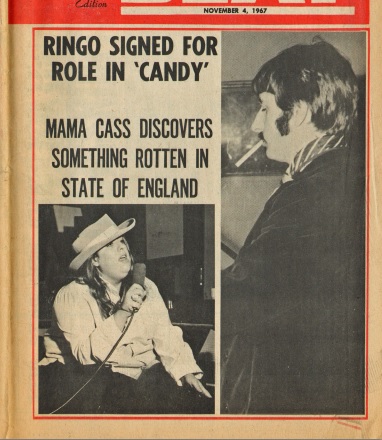
I have a piece about Mama Cass Elliot in the current issue of Uncut. One area I didn’t have space to cover was Cass’s arrest in London in 1967 when The Mamas & The Papas were travelling by boat to England to play a show at the Albert Hall. They had arrived at Southampton when they were told police were waiting with a warrant for Elliot’s arrest. The band frantically tried to destroy their stash of weed and then went on to the dock where they were supposed to meet label boss Lou Adler and his friend Andrew Loog Oldham. They were instead greeted by six of the Met’s finest, who bundled Elliot into a police car and drove her to Scotland Yard.

Cass

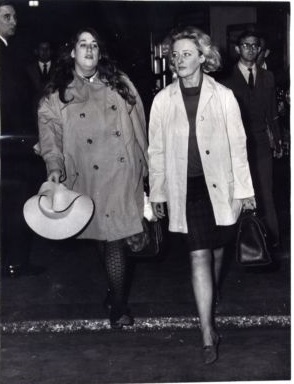
Elliot was stripsearched and questioned, then denied bail and held overnight. The police said the charges related to a stay in London six months previously at Queen’s Gate Terrace, when she had absconded with an unpaid bill and several towels. Outside the police station, The Mamas & The Papas – Denny Doherty, John Phillips and Michelle Phillips – were joined by Scott McKenzie, brandishing FREE MAMA CASS placards while they waited for Elliot’s release. The Albert Hall concert was cancelled.

Elliot escorted to the police station in Waterloo.

Elliot escorted to the police station.

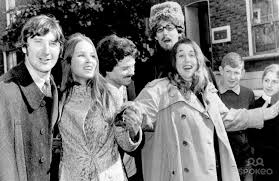
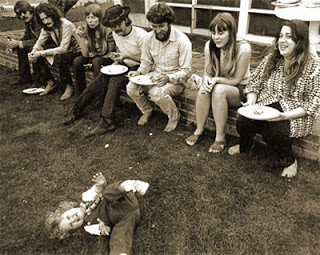
Elliot told the press she had been treated well, but not been given enough blankets. ‘Believe me,’ she said, ‘One blanket doesn’t go far round this chick.’ After a trial at West London Magistrates Court, at which no evidence was offered for the prosecution, she was released without charge and left the courtroom munching on a hash cookie that she found in her handbag. That may account for the big smiles in the photo below, taken shortly after her release.

Elliot on release.

Elliot on release.

The Mamas & The Papas with Scott McKenzie after Elliot's release.

The Mamas & The Papas with Scott McKenzie after Elliot’s release.

The Mamas and the Papas with Scott McKenzie in London.

The Mamas and the Papas with Scott McKenzie in London.

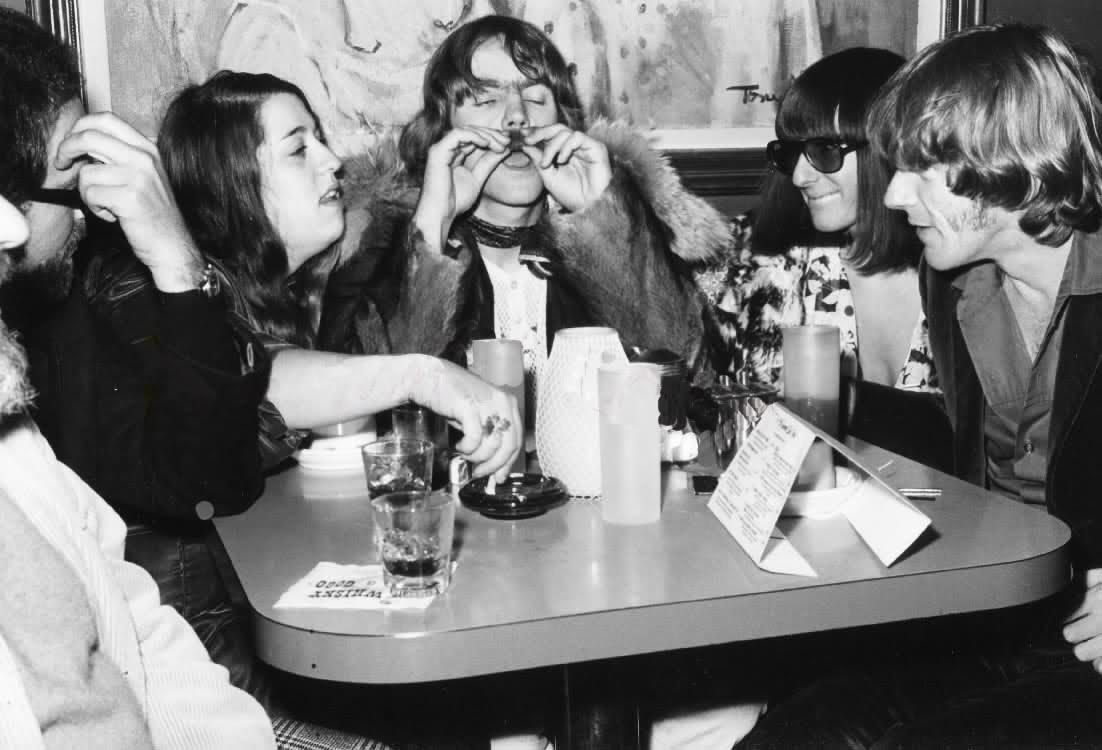
While such heavyhanded treatment by the authorities of rock stars was fairly common at this time, it later emerged that Elliot’s arrest actually had more to do with her occasional boyfriend, Pic Dawson, who the British police believed was involved in a major drug-smuggling operation. According to Michelle Phillips, this was the only subject the police in London were really interested in.

Pic Dawson and Cass Elliot at Whisky A Go Go.

Pic Dawson and Cass Elliot at Whisky A Go Go.

Dawson, who died of a drug overdose in the 1980s, was certainly an interesting figure with connections to the underworld. Numerous rumours circulate about him partly thanks to his peripheral involvement in the Manson Family murders.

Dawson, left, and Elliot, right, at Mama Cass’s house with guests including David Crosby and Eric Clapton

Dawson knew several of the victims – basically, he supplied them drugs – and after the murders John Phillips is said to have told the police that the bloody PIG daubed on Sharon Tate’s wall actually said PIC. The LA police were also informed that Dawson, along with another of Elliot’s drug-dealing boyfriends, Bill Doyle, had been ejected from a party at the Polanski house shortly before the murders. Dawson was subsequently arrested, questioned and cleared, as was Doyle.

These were not Elliot’s only connections with the Manson murders. Dave Mason recalls, “One of the freakiest parts was that at Cass’s I saw a lot of Abbie Folger and Wojciech Frykowski until the Manson crew slaughtered them” and she knew all the victims well. But she also knew the murderers – in his autobiography, Michael Caine of all people recalls attending a party in Hollywood with Jay Sebring and Sharon Tate, where Mama Cass introduced him to a ‘scruffy little man’. His name was Charles Manson.

The Post Office Tower: now you see it…

BNhoD0GCcAAHYli

Now you don’t…

BNhoW08CIAIxidz

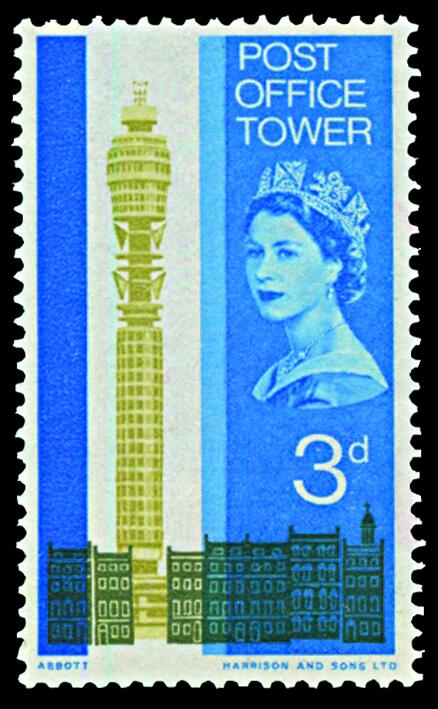
This stamp of the Post Office Tower from 1965 is superb, even if it misses out the Post Office Tower itself due to a printing error (thanks to @stampmagazine for the image).

In fact, that seems kind of appropriate as the Post Office Tower was deliberately left off Ordnance Survey maps for decades because it was deemed to be an official secret and therefore of such great military importance nobody was allowed to know where it was even though it had become one of the most recognisable buildings in Britain pretty much as soon as it was opened by Tony Benn (who narrates this brief history of the tower).

It even appeared in an episode of Dr Who in 1966.

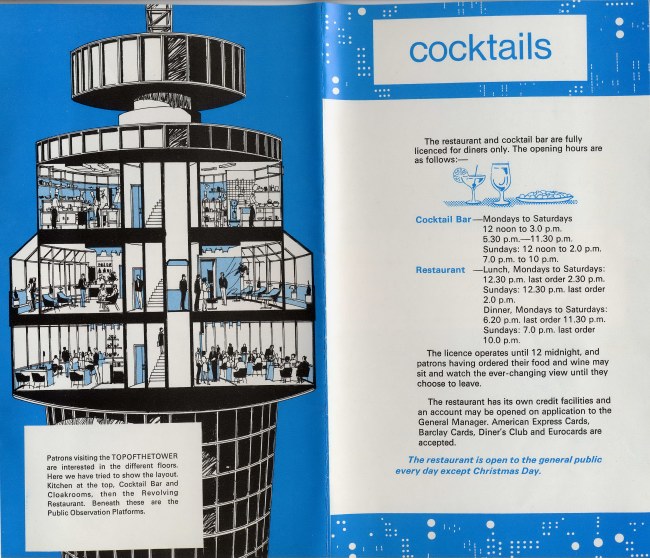
And in 1966, its revolving restaurant featured in one of Look At Life‘s fabulous films. Here are two pages from the menu, taken from the excellent Butlins Memories website.

12ae8a2e0

12b08a250

The Post Office Tower was bombed in 1971 (often attributed to Irish nationalists but more likely the work of the Angry Brigade) and even survived an attack by a giant kitten in the 1970s.

It’s still very popular. Here’s a film by somebody who collects memorabilia about the tower.

Rob Webb has scanned some pages from the original souvenir brochure on his website and James Ward has a nice selection of postcards featuring the Post Office Tower on his blog. I like this one.

post-office-tower_0013

London’s strangest race: meeting the Tube Challenge

‘s

It’s probably London’s strangest race. The Tube Challenge first took place in 1959 and since then hundreds of people have attempted to visit each of London’s 270 tube stations on the same day – it’s very competitive and they even have their own forum. I recently interviewed Andi James, who currently holds the world record with his running partner, Steve Wilson, to ask him how about being a Tube Challenger.

Andi James, Tube Challenge champion

‘The Tube Challenge is visiting all 270 stations by Tube. If you are on a train, you don’t have to physically step on to the platform just pass through the station, and you can use buses or run between stations if you wish. The first official record was set in 1959. I don’t know anything about the guy who did it first but the master was Bob Robinson who got the record eight times over a period of 21 years.

I heard about it in 2007 and have been doing it ever since. I’ve done it about 46 times now. My winning time [held with Steve Wilson] is 16 hours 29 minutes and 13 seconds and that’s stood since 2011. I do it because I enjoy it. I find it gratifying when you’ve worked it all out on paper and then find it works in reality. I have a route in mind that can knock 40 minutes off my best time, but that would require everything to go perfectly – 20 minutes is certainly possible. Things always go a bit wrong, on my record run there was a 20-minute delay but we got lucky with a few bits here and there. I’m winding down though. I’m getting a little old for it. I’m quite fit and you need to be pretty fit to do some of the runs. I’m 37 and can keep up with 16-year-olds but not for much longer.

If you are going to do it, it needs to be when all the lines are running – that’s Monday to Friday – you need to have a good route and you need there to be no delays. There are some places that are difficult like Kensington Olympia, where there are only nine trains a day, which you have to take into account. You have to be fit as some of the runs are very long so prepare for a lot of pain. Research your door positions because you don’t want to get off at the wrong end and waste five minutes fighting through hundreds of people. I know door positions for every platform in London. There’s also an app for it, created by another Tube Challenger.

The first time I did the challenge, I spent about three weeks calculating all the exchanges and another week physically researching the different runs. The longest is between High Barnet and Cockfosters, 2.4 miles. Some people take the bus, but I know I can run it in 20 minutes. I can definitely improve on my winning route, but so can a lot of other people. There are about 100 people trying each year, and whenever I see people running at Finchley Central to Mill Hill East I know they are either on the Tube Challenge or they are really, really desperate to go to Mill Hill East.’

The cabbies’ capital

This piece is in the 2013 Time Out London Visitor’s Guide. 

Richard Cudlip isn’t one of a kind, he’s one of 22,000 kinds, and London couldn’t function without them. Cudlip is a black cab driver, a licensed taxi driver who spends his days inside one of the world’s most recognisable vehicles and carries in his head the navigational secrets of the city. ‘I put the light on as soon as I leave my road,’ he says. ‘This morning I picked up a job in Balham that took me to Charterhouse Street. That was a nice start to the day.’

By the time we meet for a mid-morning tea in Borough, Cudlip has been to King’s Cross, Soho, Pimlico and Vauxhall, criss-crossing the city in the service of London. ‘Unless you’ve heard through the grapevine about somewhere being busy, you always think about heading for the stations,’ he explains. ‘And now, with Twitter, you have a good idea of where the customers are.’

Twitter hadn’t been invented in 2003 when Cudlip began doing the Knowledge, the gruelling test that every cabbie has to pass before they can drive the black cab. ‘I was working for Ernst & Young and I hated it,’ he explains. ‘My wife suggested I do the Knowledge. I’d wanted to do it in my early 20s, but I wouldn’t have had had the discipline. It’s the last thing you want to do at that age, driving round London on a bike, revising.’

Doing the Knowledge means learning by heart 320 ‘runs’, or trips from one London destination to another, being able to name all the principle roads and landmarks on the way – which amounts to 250,000 streets and 20,000 places of interest. This can easily take four years and sometimes as many as six. ‘The first run is Manor House to Gibson Square, that’s the one you always remember,’ says Cudlip, whose wife is now doing the Knowledge herself.

‘I loved it,’ he says. ‘It was the right kind of challenge. I got to visit all these bits of London I’d never been to. Those 320 runs give you the framework. It covers every postcode in a six-mile radius and gives you a route, in broad terms, around London, from one side to another.’

Cudlip now takes to the streets five days a week. The sort of things that would annoy most people –sitting in London traffic for hours– do not bother him, which is probably why he became a cabbie in the first place. What he enjoys is the freedom and flexibility. If he works a couple of long days, he can take a day off. If things aren’t working out, or he hits his financial target earlier than expected, he can turn off the light and head home. The choice is his.

‘Different drivers work different ways,’ he explains. ‘Some don’t do stations, they’d rather drive around. Others stick to hotels. Some just do airports, which is a very different way of working. You can wait four hours in the feeder park (the holding area for cabs) without knowing what sort of job you will get. You have to pay £6 to work Heathrow, just to cover the cost of the feeder park.’

Cudlip’s perfect day is made up of ‘lots of short journeys. That’s the absolute ideal. If you get a fiver including tip for taking somebody round the corner, it’s perfect. When somebody gets in, I might not know the building they want, but I can work it out close enough so I can make an instant decision about how to get there without having to programme a satnav.’

And even with the Knowledge firmly imprinted in his brain he’s always learning. ‘I love going out every day and seeing a new bit of London,’ says Cudlip. ‘I spent most of my life in London and thought I knew it, but now I know I had no idea.’

Inside London’s super-prime houses

I wrote this article in 2011 for Gulf Life about London’s super-prime property market.

They call it super-prime. That’s the end of the London property market that starts at £15 million and goes as high as £150 million. It’s a market that operates in isolation from the rest of London and it’s one that is dominated by an international clientele, with buyers jetting in from the booming economies of the Far East, Russia and the Middle East. So what do they get for their bucks?

‘Buyers at this end of the market all have five demands,’ says Giles Hannah, who oversees the European operation of Christie’s Great Estates, the property branch of the venerable auction house, ‘security, space, parking, location and luxury features.’ Christie’s is currently selling a mansion on Cornwall Terrace, a dramatic John Nash-designed sweeping terrace overlooking Regent’s Park. It boasts six bedrooms, a home cinema, gym, steam room, study, state-of-the-art kitchen, mews house for staff, garage with blast-proof doors and majestic views of a royal park. Floors are covered by Italian marble, dark oak or silk carpet, there’s a chill room for furs and the walls are covered with paintings by Picasso and Damien Hirst on loan from the auction house. It’s yours for around £30 million.

‘This property was bought and developed in 2008,’ explains Hannah. ‘There are eight on the terrace and they are being released house by house into the market. London remains a key place to buy and although it’s been a difficult market since 2008, there are enough international buyers around. There are 1,100 billionaires in the world, all capable of purchasing a £30m house in any climate.’

The address they all want is Knightsbridge, which partly explains the prices fetched at One Hyde Park, a development by Christian and Nick Candy. One Hyde Park is a gleaming Richard Rogers-designed tower of luxury that sits almost above Knightsbridge tube, with Hyde Park on one side and Harvey Nichols on the other. A penthouse is said to have sold for more than £100 million and, according to Savills, the selling agent, 60 per cent of the 86 apartments have been snapped up.

A five-bedroom apartment costs upwards of £50m and takes up an entire floor – around 10,000 square feet. The hallway stretches the length of the flat from master bedroom to reception room, one end overlooking the park, the other Knightsbridge. To give an idea of the scale, a baby grand piano in the corner of the living room looks like a coffee table. Off the corridor are a further four bedrooms, two reception rooms, a TV room, study, dining room and two kitchens (one for staff). The building contains a squash court, 22-metre pool, games room, party room and meeting room.

‘You don’t need to leave the development,’ says Ned Baring, Associate Director of Savills. ‘You can live, work and play here. What makes this different to other complexes is that we have 50 dedicated staff at the Mandarin Hotel next door who can provide any service you need, from setting up a dinner party to doing your dry-cleaning. It’s like living in the best hotel in the world, but with your own private residences.’

The Candy brothers have invested a fortune in One Hyde Park – how much, nobody will say– banking on continued high demand for super-prime London property. ‘In the morning you can speak to Asia and in the afternoon you can speak to New York,’ says Baring. ‘There aren’t many cities where you can do that. You might not be here 365 days, but you need to be here.’

Hannah says much the same, ‘Your average Christie’s client will be ultra-high worth and may use this property just a couple of times a year. They’ll also have a place in the south of France, one in New York and a chalet in Courchevel.’

If the ostentation of One Hyde Park doesn’t appeal, a short stroll away – but crucially, still in Knightsbridge – you’ll find the discreet charm of Ovington Square, a classic London garden square located between South Kensington, and Chelsea. ‘This part of Knightsbridge is very popular with Middle Eastern buyers, especially from Qatar, Lebanon, Syria and the UAE,’ says Noel De Keyzer of Savills. ‘They like traditional houses, and will come in the summer to avoid the heat at home.’

The house, refurbished in 2008, was recently rented by a Lebanese family (another renter was Bill Gates), but is now on the market for just under £20 million. The selling point is the vast two-floor pre-war extension taking up the entire back garden, itself the size of a normal house. This holds the reception room and master bedroom. The five-bedroom house also has a sub-basement beneath the lower-ground-floor kitchen, containing a gym and steam room.

‘This end of the market stayed very strong in 2008,’ says De Keyzer. ‘But in 2009, it was dead. People weren’t buying. It picked up again in March 2010, helped by weak sterling.’ The problem now is one of supply. ‘There will be an acute shortage of properties in 2011,’ says De Keyzer. ‘A lot of vendors don’t think they’ll realise their expectation because the super-prime market is still 10 per cent below its peak in 2008. You are dealing with very affluent people who have no need to sell in an uncertain market, and if they’re selling to buy somewhere else, they have nowhere to go.’

There are, according to Hannah, only three developments ready for the super-prime market: Cornwall Terrace, One Hyde Park and The Lancasters. The latter is a fascinating project on the north side of Hyde Park in Bayswater. A regal Victorian terrace has been transformed. The old building behind the gorgeous Grade II-listed facade has been knocked down and replaced by an impressive new complex of 77 apartments, retaining the original front with its huge windows and exceptional views of Hyde Park.

‘These buildings were built in the same style and grandeur as Belgravia,’ says Mark Cherry of Minerva, joint developers with Northacre. ‘It was a high-profile wealthy area and is now going through a revival. Some people will only buy Mayfair and Knightsbridge, but others will want better lifestyle and better buildings, so they will come here. We’re offering a high-level of service for people that expect high service, with three concierges on site at all time. I spoke to somebody who was moving from a mansion block and they said they want to be in a building where the pipes don’t rattle and they don’t have to rely on a single elderly grumpy porter. People want classic British houses with American-style service.’

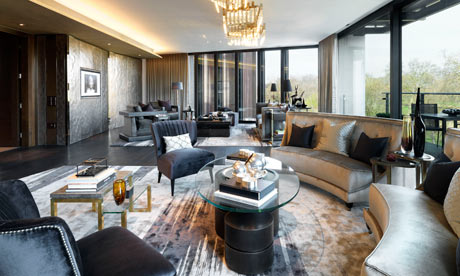
The surprising thing about all four properties is how similar they are. All are decorated in dark masculine colours. All have Gaggenau kitchens and Crestron systems to control sound, security and lighting. None have gardens. All have flat-screen TVs in the walls of every room. The houses have lifts – ‘Middle Eastern clients don’t like using the stairs,’ says Hannah – while the apartments encourage ‘lateral’ living. There are separate bedrooms and entrances for staff–at The Lancasters and One Hyde Park, some clients also purchase a separate apartment for staff. All have serious security, and all have space. Lots of space. The most breathtaking is One Hyde Park, the best views are from The Lancasters and Cornwall Terrace and the most charming is Ovington Square.

The properties can even be sold fully furnished. ‘The keyword is “turnkey”,’ says De Keyzer. ‘International clients are busy and want to move in straightaway with their suitcases.’ That’s not to say they’ll rush to make the purchase. ‘They’ll look at everything available,’ says Hannah. ‘They like to have choice. This isn’t a financial purchase, it’s a personal one.’

The super-prime market is very lucrative for estate agents. ‘It’s competitive, but in the £10 million-plus range Savills and Knight Frank have more than 50 % of the market between us,’ says De Keyzer. ‘That’s because we are international companies with very good contacts. Our fees are 2.5% for sole agency and 3% joint agency but it’s negotiable. We can afford low fees because our values are higher and we have a large turnover of properties. In London the average house is sold every five years, but on the continent people hold on to property for generations.’

That could be about to change. ‘Over the last few years, the lack of property has become apparent,’ says Hannah. ‘The best properties have been bought by international clients and they won’t be traded for many years. People who purchase a premier address will keep it as an asset for a while.’

Because of this, Hannah anticipates good times lie ahead. ‘London is London, arguably the centre of the world and a major financial hub,’ he says. ‘Clients need to be here, they want to be here, they understand the tax implications and they have good accountants. We’re expecting 30% growth over the next three years.’

Cherry agrees. ‘The market at this level is strengthening. Because people want certain key locations, the market can never be saturated, there are listings, conservation areas, it takes ages to get planning permissions and there are strict limits on tall buildings – it’s a very good market to be in.’ If you can afford it, obviously.

The Pre-Raphaelite Brotherhood in London

Tate Britain’s rather brilliant exhibition on the Pre-Raphaelite Brotherhood opens this week. It cover much the same ground as the recent and slightly more brilliant Cult of Beauty at the V&A, but with  – naturally – greater emphasis on the visual arts over the decorative.

One interesting thread running through the exhibition is the use of London as a landscape. The PRB were all connected to London and liked to paint outdoors so the city naturally appeared in a number of their paintings, often uncredited. This painting by William Holman Hunt – Rienzi, Vowing To Obtain Justice – was painted outdoors in Lambeth and Hampstead Heath, while famous images like Ophelia by John Everett Millais used the countryside of now suburban Ewell as the backdrop.

Another of the most famous PRB paintings is The Death of Chatterton by Henry Wallis, a tragic tableaux in which London’s skyline can be glimpsed through the open window. The vividness of Chatterton’s hair, incidentally, really has to be seen in person if possible.

More obvious London images were to follow. This is Charles Allston Collins’ bucolic take on May, In The Regent’s Park, from his home in Hanover Terrace. Collins was not an official member of the PRB, but his style was sympathetic and this was considered ‘absurd’ when first exhibited, though presumably not because of the sheep seen frolicking in the park in the background.

Also closely affiliated with the PRB was Ford Madox Brown, and his wonderful view of Hampstead from his bedroom window – An English Autumn Afternoon. Again, this was considered ugly by contemporary critics. Kenwood House can be seen top left, but London remains a distant – if rapidly advancing – presence.

Brown offered a very different and more recognisable take on Hampstead in perhaps his greatest painting, Work, which depicted navvies digging up a Hampstead road to lay water pipes. It’s a marvellous evocation of a London street and I’m pretty sure those navvies are still laying water pipes in London to this day. See them all at Tate Britain from Wednesday 12 Sept, 2012.