The V&A’s Cult of Beauty exhibition opened over the weeked. You can read my feature on the Aesthetic movement in the Independent on Sunday.
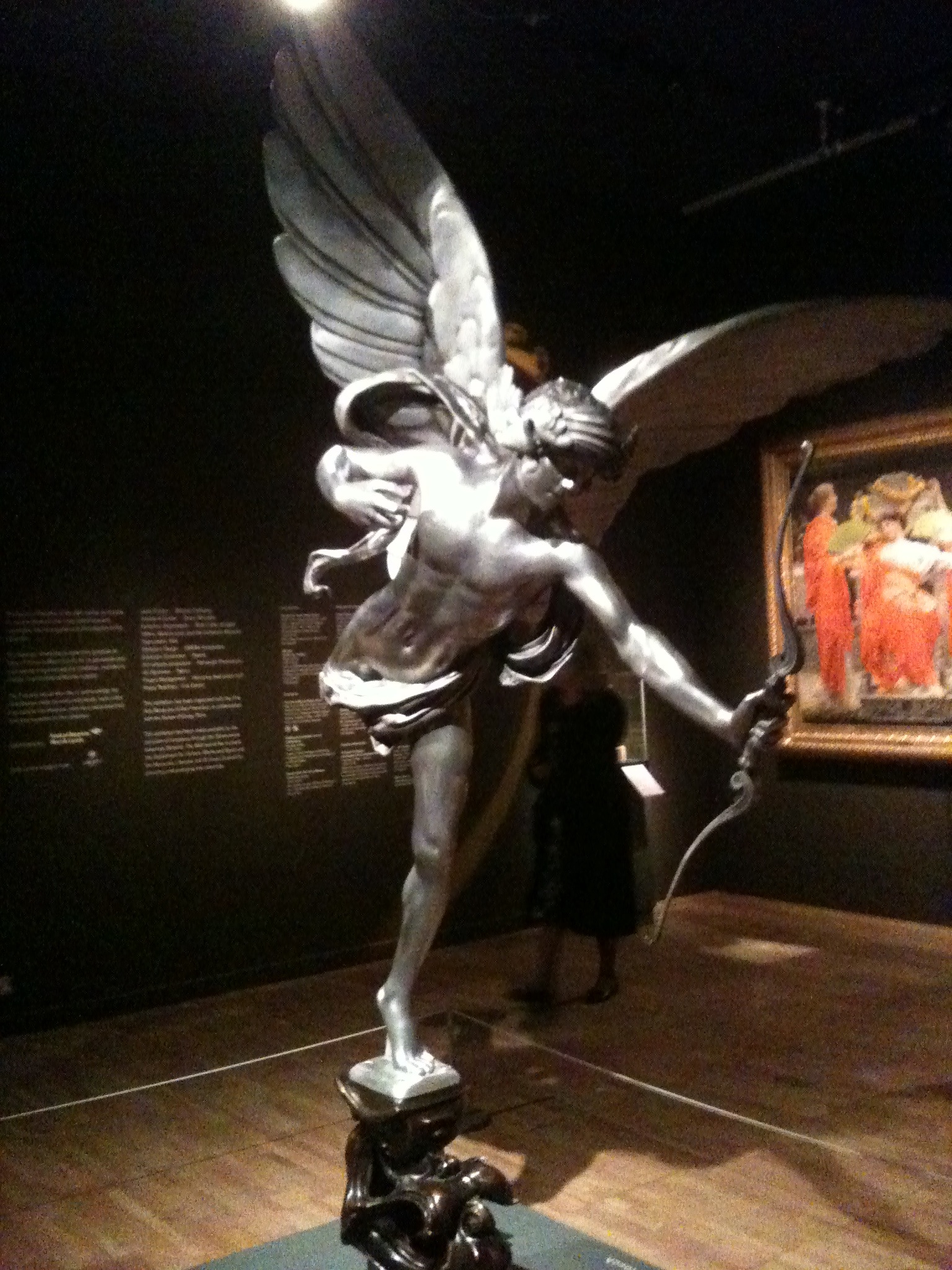
The highlight of the exhibition comes right at the end. Alfred Gilbert’s statue of Eros, or to be more precise Anteros, or to be even more precise, The Angel of Christian Charity, is easily overlooked in its usual home of Piccadilly Circus, located as it is in the second worst place in all of London. But lowered to eye level and removed of surrounding neon, tourists and traffic, it turns out to be a figure of real beauty, simultaneously delicate and robust, and gleaming in its shiny aluminium (this is a recent cast).
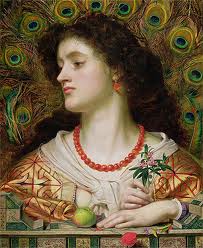
The rest of the exhibition is similarly eye-catching, as you wander round the gallery following what seems to be an endless procession of portraits of dark-haired, brown-eyed women painted between 1860 and 1900 by the Aesthetes. William Brown, the fictitious schoolboy and one of my chief inspirations, always admitted a soft spot for a certain kind of women: dark-haired, brown-eyed and dimpled. He was clearly inspired by the Aesthetes.
The Muppets have a long relationship with London. That’s partly because Jim Henson lived in Camden from 1977 and opened his workshop, the Jim Henson Creature Shop, in the area, filming many of the Henson films in London. A rather fantastic Muppets walk with all locations – including a Muppets bench on Hampstead Heath – can be found on the Camden website here.
Henson’s first workshop was at 1b Downshire Hill, NW3. It was initially used for the production of The Dark Crystal but remained in use from the late 1970s to 1990. It is said it had to be closed after neighbours complained about the strange smells coming from the factory, which reminds me of Charlie and the Chocolate Factory.
You can watch a (rather scratchy) tour of (I think) the second Creature Shop here.
I visited this second Creature Shop in 2000 on the invitation of a model-maker who I met in a Camden pub. There was a definite magical/spooky Roald Dahl quality to the experience. This Creature Shop was located on Oval Road overlooking the canal, and was a huge mysterious building filled with puppets of all sizes. This is where the puppets for Animal Farm, 101 Dalmatians and The Muppet Christmas Carol were made.
The Creature Shop closed in 2005 and the building has since been demolished, but you can see London’s influence on the Muppets in a number of films. Here are five of my favourites.
1 ‘Maybe It’s Because I’m A Londoner’
This is from the time when Chris Langham was writing the Muppets. It’s an early, possibly rather clumsy, stab at celebrating London’s multiculturalism, and thus the sort of thing that would make Rod Liddle cry.
2 Burlington Bertie From Bow A great version of one of the great London Music Hall songs, a repeated inspiration for Muppets songs.
3 The London Fog Kermit reports from ‘London, England’ and interviews a cockney frog and a Beefeater.
4 The Muppets Christmas Carol The superior Dickens adaptation is all London, obviously, but this first meeting with Michael Caine’s Scrooge sets the scene nicely. Plus: singing pigeons.
5 Wotcher (Knocked ‘Em In The Old Kent Road) Another Music Hall classic, with Fozzie Bear dressed as a Pearly King (or possibly as an Old Compton Street stroller).
My short piece about the recently reopened Grant Museum of Zoology appears in today’s Independent.
If you haven’t been to the Grant Museum in either its old or new guises, do go and check it out one lunch break. This is the only museum in the country where you can see 18 baby moles stuffed in a sweet jar.
It also has one of only seven quagga skeletons that are known to exist in the world. The discovery of the quagga says much about the delightful way the Grant goes about its business.
The museum had two zebra skeletons, but curators were convinced that one was actually a quagga, so in the 1970s they got an expert to make the requisite calculations. To their delight it turned out that one of the zebras was indeed a quagga, and this was unveiled to great publicity. However, less happily, it seemed that the other zebra was actually a donkey. Both are now displayed in the new museum, the quagga in pride of place near the entrance, the donkey out of sight on the first-floor balcony. But zebras, there are none.
Grant Museum of Zoology, UCL, Rockefeller Building, 21 University Street, WC1E 6DE. Open Mon-Fri, 1-5pm.
It seems to happen every time a march or protest takes place in London. A much-loved statue or monument is defaced, horrifying the sort of people who are horrified by this sort of thing while the rest of us wonder why nobody’s got round to throwing a bucket of paint at that godawful Animals At War monstrosity on Park Lane.
On Saturday, after the TUC and some kids dressed in black marched through the London to complain about stuff, it was the turn for the Landseer lions at Trafalgar Square to take a pasting.
While the statue of Charles I received a more artful reimagining.
Interestingly, this Charles I statue had already been manhandled by the mob – albeit inadvertently – way back in 1867 when a reporter climbed the statue to get a better view of a passing protest and used the sword to steady himself. The sword promptly fell off and disappeared into the crowd, never to be seen again.
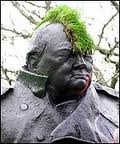
Most people think that this habit of deliberately defacing certain statues is a recent thing, dating back to the inarguably splendid Winston Churchill turf mohican on May Day 2000.
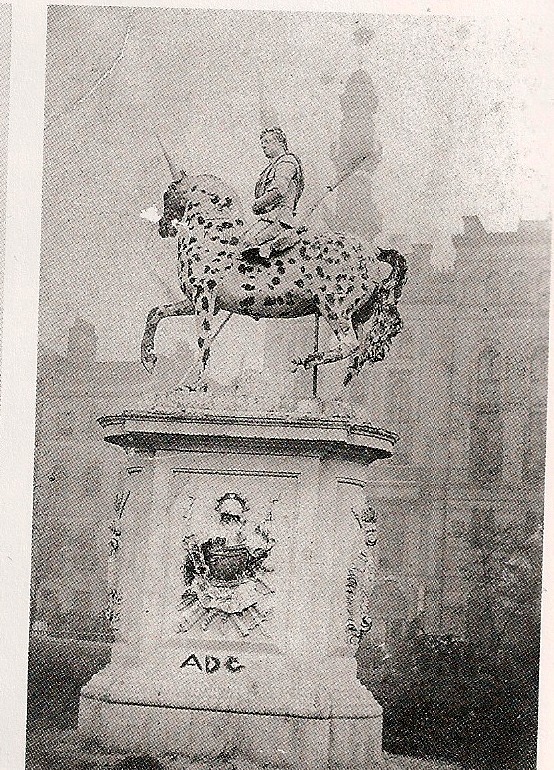
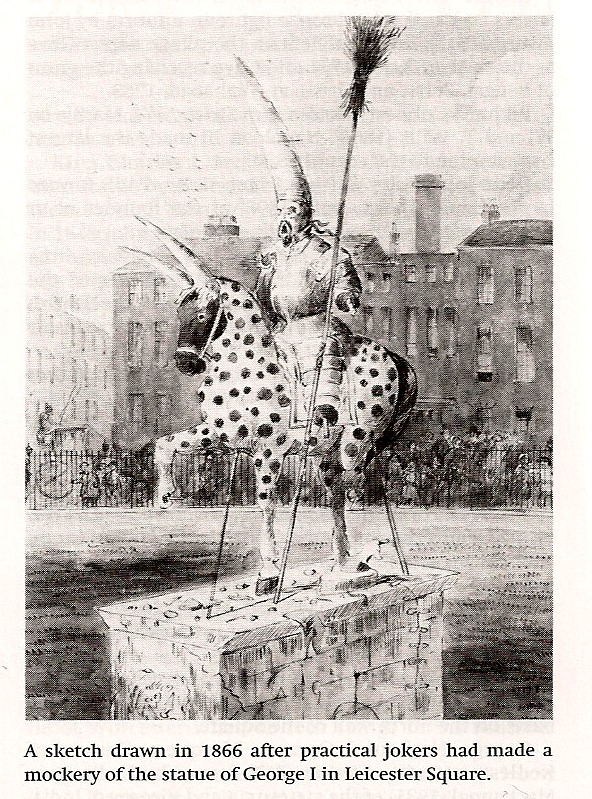
But the London mob has a rich tradition of dressing up (or down, depending on your viewpoint) London statues. My favourite example is the treatment dished out to the statue of a mounted George I, which was cast in 1716 and placed in Leicester Fields in 1784. This received serious punishment over the years as children clambered all over it, so both horse and rider lost bits, and at one point the poor king was without head, legs and arms. But worse was to come.
In October 1866, after the state of the statue had been discussed in the Times, guerilla jokers attacked the statue at night, painting black spots all over the horse, replacing the lance with a broomstick and putting a dunce’s hat from the nearby Alhambra Theatre on George’s bonce. Crowds flocked to see the spectacle. It was cleaned up, but eventually sold for £16 and pulled down in 1872.
As British History online website comments: ‘It would be almost impossible to tell all the pranks that were played upon this ill-starred monument, and how Punch and his comic contemporaries made fun of it, whilst the more serious organs waxed indignant as they dilated on the unmerited insults to which it was subjected.’
1 London’s first artificial ice rink
The Glaciarium opened in 1842 at the Baker Street Bazaar near Portman Square. The backdrop was ski chalets and snow-capped mountains, the ‘ice’ was churned-up hogs’ lard and sulphur. On hot days it smelt of cheese. It closed in 1844.
2 The clown and the geese
In 1884, a clown called Barry was watched by a huge crowd as he sailed down the Thames from Vauxhall to Westminster in a washtub pulled by four geese.
3 One-legged cricket In 1796, Montpelier Gardens in Walworth hosted a cricket match between eleven one-armed Greenwich pensioners and eleven one-legged Greenwich pensioners. Interest was so great that a fence was broken and spectators fell through a stable roof. The match was drawn, but the one-legged team won a replay, earning themselves 1,000 guineas.
4 London’s first public museum This was opened in a coffee house near Chelsea Old Church in 1695 by James Salter, a former servant of Hans Sloane, the man whose collection later formed the British Museum. Sloane reputedly handed Salter – renamed Don Saltero – some of the less important of his 80,000 objects, including a giant’s tooth, a necklace made of Job’s tears and a bonnet that belonged to Pontius Pilate’s wife’s chambermaid’s sister (it actually came from Bedford).
5 The Peace of 1814 On Monday August 1, 1814, London celebrated the abdication of Napoleon Bonaparte with a series of festivities. It began with a balloon ascent at Green Park; the balloon was captured by the winds and sent towards the Estuary until the ballooneer cut a hole and landed on Mucking Marshes near Tilbury. Next came a miniature Battle of the Nile on the Serpentine, followed by a firework display in Green Park, for which John Nash had designed a new pagoda. Sadly this caught fire, killing two people. The crowd applauded, assuming it was all part of the fun.
All these came from Pleasures of London, a book available at the Museum of London bookshop for £30. It is my new favourite London book. It should have been published in 1992, but was delayed repeatedly and by the time it was published by the London Topographical Society in 2009 the authors, Felix Barker and Peter Jackson, had both died.
What the pair had created was an endlessly browsable book on all the fads and fancies that have occupied Londoners leisure since the Dark Ages, from Frost Fairs to black-faced minstrels, lidos to the Great Exhibition. There are brilliant throwaways – such as those mentioned above – as well as short but thorough looks at things like music halls, pleasure gardens (which I still don’t get the point of), museums and the origins of sports like cricket, football and boxing.
My review of the Natural History Museum’s very good exhibition on Sexual Nature, about the mating habits of animals, can be read at the New Statesman. It features slug sex, Guy the Gorilla and Isabella Rossellini.
For more on this sort of thing, you should read Melissa Harrison’s Tales Of The City blog, who writes about blossom, snowdrops, daffodils and foxes from the urban wilderness of sunny Streatham.
For people like me, there are few things more emotive than an empty football ground, filmed in 1979 in flickery Super-8 and overlayed by a haunting soundtrack. It’s like Simon Inglis’s first volume of ‘Football Grounds Of Great Britain’ come to life.
The other day I headed to London Bridge to investigate Winston Churchill’s Britain at War Experience, a peculiar attraction on Tooley Street next to the London Dungeon that opened in 1992.
This strange place attempts to recreate the experience of wartime London feels rather like a private collection of eccentric memorabilia that has been thrown together in a space under a railway arch. There are no shiny monitors and well-lit cases; some of the labels are handwritten.
I quite liked it, although not at the £13 it would have cost if Laura at About London hadn’t got me in for free.
It begins with a film screened in a mocked-up air raid shelter, features various displays about life in London during the war (evacuation, fashion, rationing, entertainment, land girls), has a real Anderson Shelter to sit in and ends with a gloriously dramatic and gruesome life-size reconstruction of a bombed pub, complete with smoke and severed limbs.
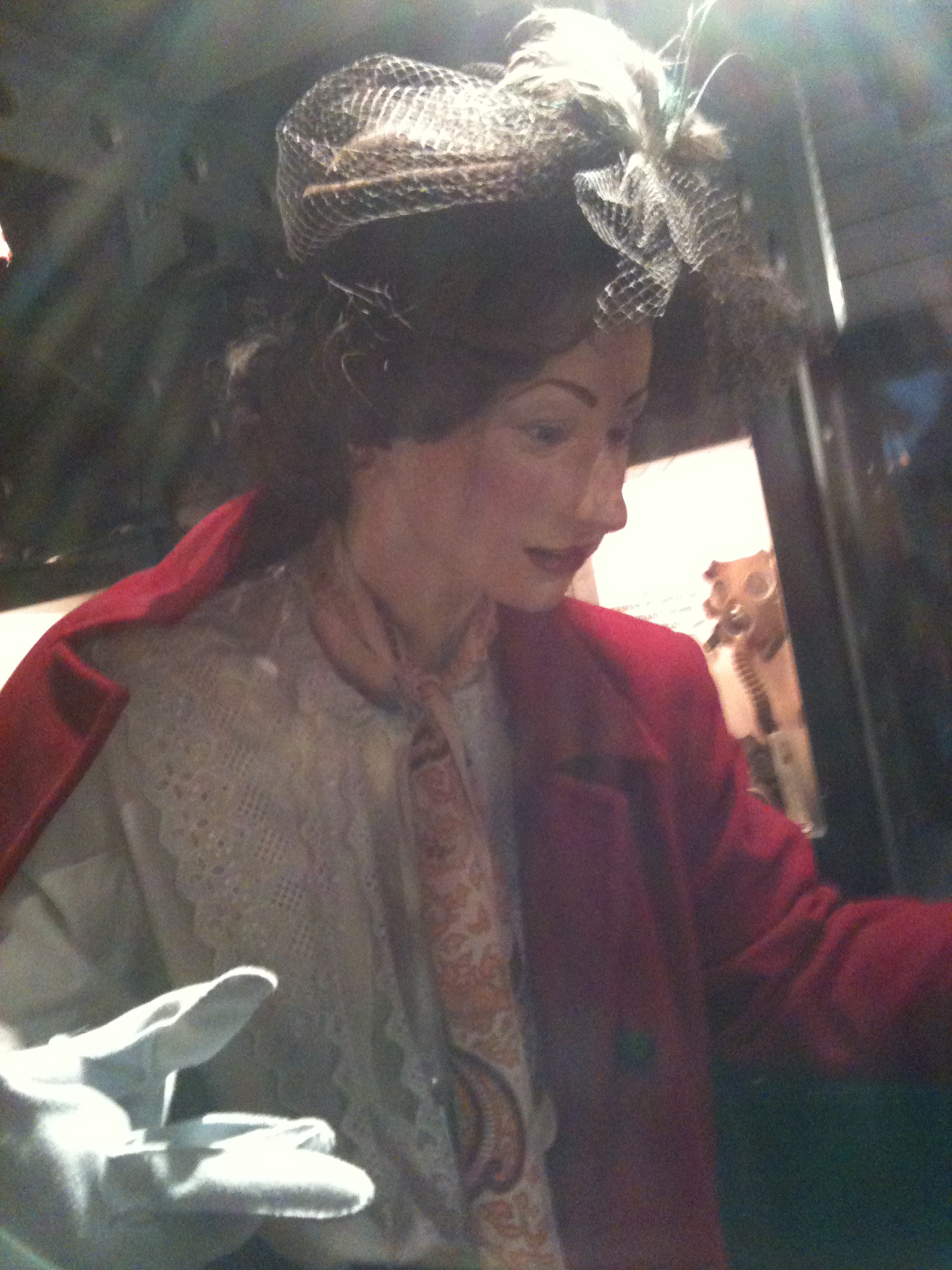
What I liked best, were the waxworks. You don’t get many waxworks in museums these days but there are loads at the Britain At War Experience and they are mostly terrible. Unfortunately, I only managed to photograph a couple, missing out on the frightening one of a small child asleep in an air-raid shelter, looking like a little corpse, and also a brilliant Winston Churchill with a head the size of Gibraltar (this may in fact be physically accurate).
But here are the ones I got.
This one is quite normal. It’s a man using a switchboard. It shows what they can do with waxworks when they put their mind to it.
But then they get progressively weirder. This woman with a massive nose is demonstrating wartime fashion, although I think she is actually a man who dresses like a woman to avoid war service and because he likes the freedom it offers him.
This woman is a fire warden with a bad back.
At the end, in the bombed pub, this woman can be seen bravely selling tea even though she has clearly suffered terrible burns and should be taken to the nearest hospital. This could be to demonstrate the implacability of London spirit during the Blitz, or it could be because they ran out of artificial hair.
So there you go, if you like weird wartime waxworks and have thirteen quid to spare, get down to Tooley Street before they all come alive and take over the London Bridge Quarter.
With the Midland Grand Hotel at St Pancras about to reopen as the St Pancras Renaissance, I thought it worth posting a piece I wrote about the renovation last year for Metropolitan.
Of the six major London stations, strung out like new gates to the old city along the Euston Road, there is none quite like St Pancras, where all Eurostar journeys begin and end. Much is made of the station’s emblematic steel-and-glass roof, but that delight will soon be upstaged by the refurbished wonder that lies outside the station walls. The Midland Grand Hotel – even when sheathed in scaffolding and protective hoardings – is a breathtaking sight. ‘It’s a fantastic building,’ says a besotted Harry Handelsman, the property developer. ‘It’s amazing, such a legacy, such an important structure.’
A vast red-brick neo-Gothic vision of spires, arched windows, clock towers and weathervanes, the Midland Grand looms over the Euston Road more like a Transylvanian castle than a hotel. But guests have not been welcomed since 1935, when the hotel was converted to offices, desecrated internally and left to rot. Renaissance has been a long time coming, but will be confirmed when the hotel reopens after 76 years of neglect and near destruction.
Handelsman is a German-born London-based property developer whose Manhattan Loft Corporation pioneered loft-living in London. ‘In 1997 I was asked if I would be interested in converting 20-odd rooms in St Pancras into flats. That was it, the extent of our involvement. For me the chance to have a small share in such a fantastic building was very exciting.’ Thirteen years later he finds himself financing and organising a project that now includes 68 apartments and a bar, restaurant and health club in the original building, as well as a newly built 250-bed five-star hotel next door. ‘Have I kept an apartment for myself?’ he muses. ‘No, I kept the hotel.’
The Midland Grand Hotel opened on May 5, 1873. It was designed by George Gilbert Scott, the architect who also built the Albert Memorial. In ‘St Pancras Station’, Simon Bradley describes the hotel as ‘the grandest single monument of the Gothic Revival in Britain’ and upon completion, Scott believed the Midland Grand was perhaps ‘too good’ for its intended purpose.
The hotel cost £437,335, making it one of the most expensive buildings in London and one of the most modern hotels in Europe. It had a revolving entrance door, only the second in London and also some of the capital’s first ‘ascending rooms’, or lifts. The central feature was the breathtaking main staircase, which rose grandly from ground floor to fifth. Although the hotel was at the cutting-edge of Victorian technology, it was not an exclusive venue. Victorian hotels were built for everybody, with rooms getting smaller and cheaper the higher you got, so the aristocracy had suites on the first floor and the travelling salesman attic rooms at the top. This floor-by-floor ranking was reflected in the furniture: oak and walnut on the first floor; teak on the second floor; mahogany on the third floor; ash on the fourth floor; softwood on the fifth floor.
Striking, modern and open to all, at first the hotel prospered, but slowly decline set in. The reasons for the hotel’s demise were built into the fabric of its creation: there were around 400 rooms, 250 of them bedrooms, but no central heating and only nine bathrooms.
‘The toilet was invented six years after it was finished, so this place was redundant almost overnight,’ says Geoff Mann, principal director of RHWL, the project architect. As newer hotels with en-suite bathrooms were built, the Midland Grand began to look outdated. And it was a problem that could not be solved. While a hotel like the Savoy could turn balconies into bathrooms, there was no way the Midland could modernise as the fire-proof floors proved resistant to inserting pipes. Further difficulties came with maintaining the exterior of such an elaborate building and the sheer cost of running it – the census of 1881 recorded 115 resident staff to 91 guests. Even the bloke who chalked up the score in the billiard room was on ten shillings a week.
‘It never lost money, but it wasn’t making as much as they’d have wanted it to,’ explains the building’s unofficial historian Royden Stock. ‘So in 1930, they did the group accounts and found this one had made a profit of £2,700 whereas the Midland in Manchester had made £51,000. This was the flagship and today people would have kept it open as a loss-leader, but back then it was about straight profit. It closed five years later.’
Now began the dark days of the hotel’s life. Railway staff moved in and set about trying to turn an ornate Victorian hotel into utilitarian offices. ‘They had no respect for the building whatsoever,’ says Handelsman. ‘It was awful, awful, awful, awful. The destruction. It was almost like they said, “oh, there’s an amazing feature let’s stick a hammer through it”, and they did this with pedestrian efficiency.’ Cheap false ceilings were installed, walls were knocked through and beautiful features painted over in an orgy of philistinism.
It got worse. In 1966, a plot was hatched to demolish St Pancras hotel and station, a fate that had already befallen nearby Euston. Led by Sir John Betjeman, the Poet Laureate, conservationists managed to secure Grade I listed status for St Pancras in November 1967, ensuring it could never be demolished. The hotel was renamed St Pancras Chambers and limped on as offices until it was abandoned completely in 1988. But the chance of a second life came with the proposal of a Paris-London railway in the mid-1990s. Mann explains, ‘With the high speed rail scheme [HS1] came an act of Parliament saying the hotel would be returned to its original purpose. This was an important point – it became a legal requirement of the consortium bidding for HS1 to find somebody who could take on this project. That wasn’t easy. RHWL, the Manhattan Loft Corporation and Whitbread, who owned the Marriott franchise, won the contract.’
Now began more fun and games. RHWL quickly ascertained that there was not enough space in the original building to open a modern, viable five-star hotel. Originally, 20 apartments were intended to underwrite the cost of refurbishing the hotel, but this was upped to 68 apartments, and a new 250-room hotel was built behind St Pancras Chambers, alongside the station, the design of which was vigorously contested by English Heritage and the architects. Then Whitbread pulled out. ‘We had two choices,’ says Handelsman. ‘We could pull out or we could ask Marriott to do a direct deal with us, which they did. So from doing 20 rooms, I suddenly inherited the whole project. The cost went through the roof, but by the same token I became much more personally involved because I saw this was an opportunity to create something. With Eurostar coming here I saw that the only way I could recoup my expenditure was by turning this into a five-star luxury hotel. My ambition is that somebody who is coming to London will want to stay at the Dorchester, Savoy or St Pancras – that’s where I want to be with facilities and aura.’
Renovation has been difficult – ‘It was a monster, there’s not one room the same in the whole building and we’ve discovered rooms we didn’t even know existed,’ says Mann’ – but is now complete. All work has been done under the close supervision of English Heritage, who insisted that six rooms were put back as they were original designed. As Mann points out, ‘this was quite a difficult thing to do as the hotel was in use for sixty years and kept being renovated. We’d scrape off a layer of paint and find six more underneath – so which one counted as original?’
But now it is over. Eurostar passengers arriving at St Pancras will soon be able to step straight off the platform and into the hotel to check in. They’ll be able to eat in a Michelin-starred restaurant, work out in a top-of-the-range health club, drink in a gorgeous Victorian station-bar or network in a state-of-the-art conference room. Or they’ll simply be able to wander around one of the most beautiful buildings in London and rejoice that it has not only survived, but it has prospered.
Street photography – the snatched and unposed glimpse of everyday life – is a fascinating genre even if it is never quite as authentic as it appears. Many of the strongest images in the exhibition reminded me of those Victorian journalists who investigated the slums of working-class London life in the 1880s and 1890s, reporting back in horror on what they found to their middle-class readers.
Thanks to these pioneeers, we now have evocative visual records of London life. My favourite were probably the images Roger Mayne took in the late 1950s to record the streets in West London that were scheduled to be demolished and replaced by Trellick Tower. A book of Mayne’s photographs has just been republished and can be purchased at the Museum of London bookshop, along with the excellent accompanying book for the exhibition.









 The Great Wen