Category Archives: Uncategorized

Denmark Street talk with Andy’s Guitars

I am doing a talk next Thursday (July 11) at the new Meanwhile space, which is just round the corner from Denmark Street, backing on to No 4, where the Rolling Stones recorded their debut album.

I will be talking to Andy Preston, founder of the legendary Andy’s Guitars as well as the 12 Bar.

10 things to come out of Denmark Street

My new book, Denmark Street: London’s Street Of Sound, is out now. But why is Denmark Street so interesting anyway? Here are ten (mostly) music-related things that emerged from Denmark Street since the 1910s.

1 The charts

The first UK singles chart was compiled in 1952 by the NME from their office on Denmark Street. It’s arguably the single greatest innovation to come from the street’s long association with music.

2 The Rolling Stones

The Rolling Stones’ debut album was recorded at a pokey little Denmark Street studio, Regent Sound, in 1964.

3 Northern Songs

The Beatles’ publishing company was formed in 1963 at the office of music publisher Dick James, on the corner of Denmark Street and Charing Cross Road. It was a then revolutionary deal, which recognised that the Beatles were both performers and songwriters.

4 “South Of The Border”

Perhaps the best of the pre-rock ‘n’ roll songs published on Tin Pan Alley, “South Of The Border” was the work of Jimmy Kennedy and Michael Carr, two prolific pre-war Denmark Street songwriters.

5 Dark Side Of The Moon

One of the world’s best known album covers was conceived by designers Hipgnosis at No 6 Denmark Street.

6 Forbidden Planet

Denmark Street wasn’t just about music – the nerd emporium began life on Denmark Street, ensuring the street was briefly a mecca for comic lovers as well as music fans.

7 Live At The 12 Bar

Bert Jansch was one of many great musicians to perform at the tiny 12 Bar – this 1996 concert was officially released in 2015.

8 Cerberus

Cerberus was a pioneering internet-streaming music site that was located at No 21 Denmark Street in 1994 – years ahead of its time.

9 Theme to “News At Ten

One of many famous theme tunes to emerge from the studio on Denmark Street owned by KPM – home to one of the largest music libraries in the world.

10 Spunk

The Sex Pistols had a rehearsal space at No 6 Denmark Street, where they recorded several songs that appeared on this legendary bootleg.

For more, see my new book Denmark Street: London’s Street of Sound (Paradise Road).

The magic, mayhem and mystery of Ziggy’s last show

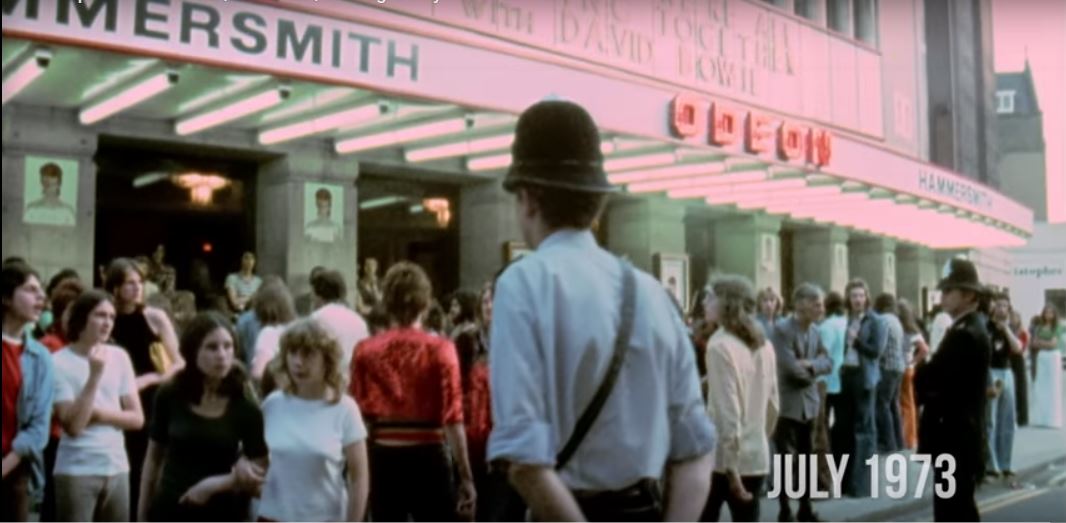
I have a piece in the latest edition of Uncut about the final Ziggy Stardust show at Hammersmith Odeon in July 1973. It’s an oral history, for which I spoke to fans who attended the show as well as the two surviving Spiders, engineer Ken Scott and singer Dana Gillespie. The fans include a largely unimpressed Vic Godard, later to form Subway Sect, an eight-year-old boy from Devon who was smuggled in by his wild-sounding babysitter, a West London tearaway who broke in with his pals through a fire escape, and a teenager from Surrey who is captured on film, open mouthed in shock, after Bowie makes his bombshell “retirement” speech before the final number. “I cried for the rest of the show,” she admitted. “I cried all the way home.”

It was an awful lot of fun chatting to fans about their memories of this momentous show. It was also interesting to speak to Woody Woodmansey and Mike Garson about their very different feelings about the show, Woody having effectively been sacked on stage without knowing anything about it, something Garson clearly has a form of survivors guilt about. Woody never played with Bowie again but he told me they did manage to clear the air later in the decade, and stayed on good terms thereafter.

I also spoke to Lee Grant, a Bowie fan trying to solve a photographic mystery from the evening of the show. That section of the article didn’t make the final cut, so I am including it here.

The after-show party at Café Royale became known as Bowie’s Last Supper and featured a panoply of celebrities, several of whom posed for a famous photograph. This group shot features Mick Ronson, Lulu, Jeff Beck and his girlfriend Celia Hammond, Ringo and Maureen Starr, Edgar Broughton, Bianca Jagger, David Bowie and Angie, plus another individual who has never been identified.

Bowie fan Lee Grant created his Bowie Mystery Guest blog to solve the mystery and has so far discounted Tim Buckley, Elliott Gould, Cat Stephens, Ossie Clark and Bowie’s friend Geoff MacCormack plus several others. He first heard about the mystery guest from a Bowie podcast. “I thought I could solve the problem in about ten minutes and here we are five years later,” he says. “What I tried to do was eliminate some of the main suspects and wait for somebody to come forward.  It’s as simple and pointless that.”

Grant has contacted numerous members of the Bowie circle in his bid to solve the problem – many of whom suggest names he has already been able to eliminate such as MacCormack and Buckley. Having discounted most of the proposed names, Grant’s current theory is that the mystery man is a non-celebrity who happened to be at the Cafe Royale was invited to join the group shot because he was mistaken for MacCormack, who he certainly resembles. That makes identifying him all the harder but not impossible – perhaps with the help of other photographs from the evening which might show who the mystery figure was with.

“I’d love to find out who he was, why he was there and then get on with my life,” he says. “It’s in the back of my head all the time.” If you happen to know the answer, please put Lee out of his misery and let him know at https://bowiesmysteryguest.com.

Hipgnosis by Mark Blake

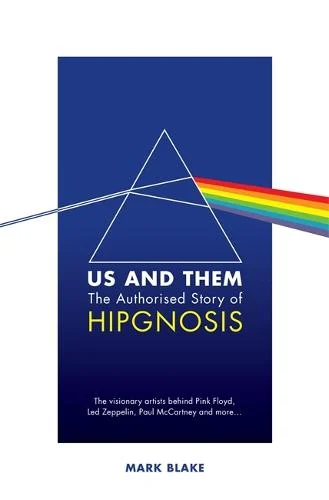
As with the Mona Lisa, I’ve no idea when I first saw the cover of Dark Side Of The Moon, so ubiquitous is its presence in popular culture. The Floyd prism is one of the most recognisable record sleeves in the world and was the work of designers Hipgnosis, who are now the subject of a new book, Us And Them by Mark Blake. I’ve written about Hipgnosis before – in a feature for Uncut, in my book on Battersea Power Station, and in my next book too, a forthcoming musical history of Denmark Street as Hipgnosis’s office was at No 6, a space they shared with the Sex Pistols.

One of the reasons the Hipgnosis story is so interesting is that the company – founded by Floyd associate Storm Thorgersen and Aubrey Powell – came from exactly the same 60s scene as the bands they worked with. They loved rock and roll and Beat poetry, went to the UFO and the Technicolour Dream, watched the Beatles change music and saw first-hand as their friends in Floyd developed from a blues band into a psychedelic all-conquering world-making powerhouse. They were flatmates with Syd Barrett, took drugs, dated models and had huge ambitions – so when Paul McCartney wanted to take a photo of an Egyptian statue on top of a mountain for a Wings compilation, that’s exactly what they did, flying to Switzerland and hiring a helicopter rather than simply mock it all up in the studio – even if the final cover did actually look like a studio mock-up.

You can’t get them all right.

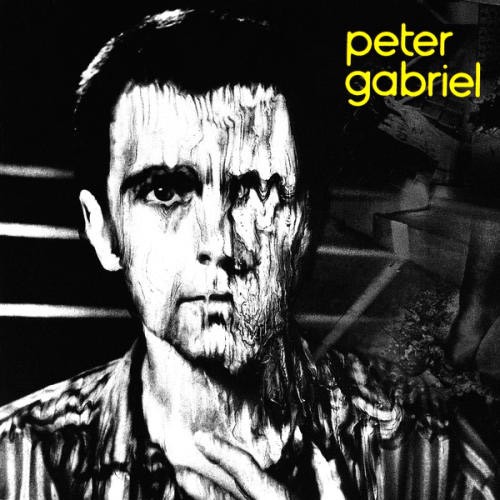
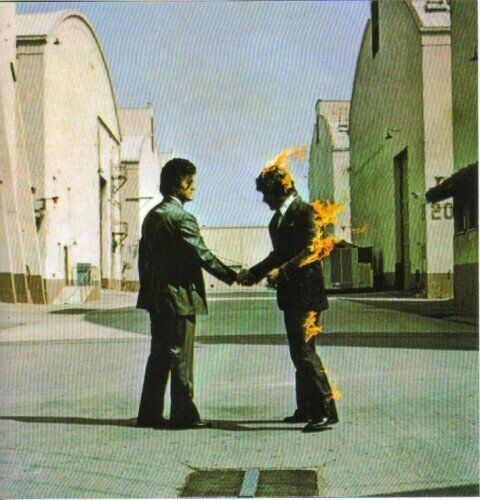
That thinking is what led to so many memorable covers from Presence to Ummagumma, including Led Zeppelin’s Houses Of The Holy – which I write about in more detail in my Led Zeppelin cover story for this month’s Uncut. It also meant rock stars enjoyed the process, particularly the likes of 10cc and Peter Gabriel, who really embraced the debate about art and commerce and meaning and surrealism. Not everybody was happy. Storm was a difficult customer and fell out with several of his clients, including heavy-hitters like the McCartneys, Zep manager Peter Grant and Roger Waters. But all of them kept coming back to Hipgnosis because they knew they had the best ideas and the chutzpah to carry them out.

Like all great bands – Floyd especially – the key figures in this story had an epic falling out. When I interviewed Suede in 2015, Mat Osman took a moment to reflect on his band’s journey: “I always thought we had such an interesting story – what we’d done was so different,” he said. “But then I looked at the shape of the story and it was every band ever: hard work, success, hubris, drugs, fights, coming back together a bit wiser. It’s been done a million times, it’s almost Shakespearean, but every generation has to go through it.”

The Hipgnosis story has exactly this shape, and it is one that naturally lends itself to biography. The 70s yarns are all well told but Blake’s book is particularly helpful in exploring Storm and Po’s origins in the Cambridge/London counterculture, as well as extending the gaze beyond the Hipgnosis era and looking at what happened when they stepped away from cover art and began to make pop videos and adverts in the 1980s. He also diligently explores their eventually falling out and reconciliation. Storm died in 2013 but Powell continues to work with Pink Floyd – he designed the new cover for the remixed Animals – and is surely one of the only human beings who has the confidence of both Roger Waters and Dave Gilmour.

Us And Them: The Authorised Story Of Hipgnosis by Mark Blake.

In praise of scavenging

If there was anything good to come out of lockdown, which there wasn’t, it was the fact that many people took the opportunity to clear out their homes of supposed junk. This meant that during my state-sanctioned daily 60-minute constitutional around SE24, there was nearly always a house somewhere on my route were the owners had left a pile of books on the pavement for passers-by to scavenge through. Now, I cannot walk past a box of books without rifling through it, hoping that amid the crap – so many books about coding and old travel guides – there would be an wanted gem. The tiny victories I had in lockdown were a rare source of pleasure in a miserable time.

I struck lucky time after time. There was that set of National Geographic from the late 1990s, which made excellent bathroom reading for most of 2020. When those were done, I found four months’ worth of The New Yorker from May-August 2020, which took me another 18 months to work through, containing as they did many more reminders than I needed of that awful summer of Coronavirus, George Floyd and Trump. More happily, I had wanted to read Joyce Carol Oates’s Blonde ever since I’d heard it was being adapted for cinema by Andrew Dominik, and there it was one afternoon waiting for me alongside William Maxwell’s marvelous novella So Long, See You Tomorrow.

I’d also long felt I needed to read Infinite Jest by David Foster Wallace and once more, there it was. And thank god I hadn’t had to pay for it because after three months and 150 painful pages I finally gave it up with considerable relief, placing it rather guiltily on my own garden wall for some poor sucker to take home.

Then there were the books I would never otherwise have read, such as The Dog Of The South by Charles Portes. This had a good cover and promising blurb, and I was intrigued to see that Portes had also written High Noon, but all the same it sat unread on my shelf for a year until I attended a birthday party where somebody gave this very same book to the host as a present. That was recommendation enough for me, and I devoured it in a few days. The novelisation of Wargames? A Jack London compendium? An unproofed review copy of Dan Hancox’s excellent history of grime, Inner City Pressure? Each one found a willing home.

I thought such bounties would end with lockdown but this week I had the finest haul of all. Check a load of these goodies below.

Such a haul, and not even a lockdown to suffer for it.

See you on the other side of summer, when I might have made my way through some of the above.

Performance in Powis Square

Performance is probably the greatest London film of all time. When this strange and unsettling fusion of counterculture and crime was finally released in 1970, it was accompanied by a novelisation – a cheap paperback by William Hughes published by Tandem – that I chanced upon last week behind the counter in the fabulous Bookmongers on Coldharbour Lane. I love novelisations, so this was a no brainer.

Although I’ve read a few books about Performance – the best is Paul Buck’s 2012 biography of the film published by Omnibus, which frustratingly lacks an index – I’m not sure I was aware there had been a novelisation. There’s a short review here, but there’s little about William Hughes on the internet, although his name does crop up on Abe Book alongside some other novelisations of the era – 1968’s Secret Ceremony, 1971’s Lust For A Vampire, 1974’s The Marseille Contract, 1976’s Aces High and 1978’s Death Sport among others. A follower on Twitter suggested his real name was Hugh Williams.

UPDATE Head to the comments for a great twist on the “who was William Hughes” question…

It didn’t cost 9p

What particularly appealed was the knowledge that novelisations are often written from early drafts of scripts, which means there are interesting differences between the plots as told in the books and what you get in the finished films. I was very keen to see how Performance the book differed from Cammell and Roeg’s final film, and also curious at how the author would tackle some of the stranger moments from the film, including the famous ending. Incidentally, apparently the film’s dialogue coach and underworld/counterculture figure David Litvinoff wanted to write it, but was declined.

The book is, as you’d probably expect, a lot more conventional than the film – but that isn’t saying a great deal, as most things are more conventional than Performance. William Hughes is a decent writer who has a great sense of pace and solid grasp of genre, so he is pretty assured when dealing with the first half of the story – about the gangster Chas who oversteps the mark and has to do a runner. This all unfolds at great speed, but we are also treated to some insights into Chas’s background, motivations and general sense of unease at his chosen career as a heavy. We learn that Chas lives in a “luxury flat in predominantly working class” Shepherds Bush, and his activities take him to various parts of London including Campden (sic) Town, where he terrorises a mini cab firm, Mayfair, Liecester Square (sic) and the Temple, where a lawyer’s chauffer is shaved while his Rolls-Royce is covered in acid.

In the film, things get much weirder when the action moves to the home of a reclusive rock star in West London – in the film this is located at Powis Square but here it’s named as 22 Melbury Terrace, “behind Notting Hill Tube”. Hughes handles that transition fairly well and there’s a sense of Chas’s discomfort as he encounters Turner and his two female friends, Pherber and Lucy. But while in the film this relationship becomes relationship increasingly complex and sinister, the book – presumably following the initial script – has the two worlds quickly come to an understanding. They develop a sense of mutual respect and it all feels far more comfortable than it does on film. There’s also much less sex. Or as one Twitter user put it..

Concise summary.

What that suggests is how ordinary a film Performance could have been without Cammell’s influence and without the performances of Edward Fox and Mick Jagger, whose uneasy sparring is one of the signature flavours of the film. Plot-wise, the most notable difference is right at the end, but there are other more subtle plot differences that affect the mood – for instance, at one point in the book we go into the garden at Powis Square/Melbury Terrace, while there’s also a pivotal, and topical, drug bust that never made it into the final film. Both these scenes would have diluted the claustrophobic, hallucinogenic nature of the second section of the film, which has one of the most peculiar atmospheres of any film by a major studio thanks, it seems, to the way Cammell and Anita Pallenberg manipulated Fox and Jagger. Oh, and the book also omits one of the greatest lines in the film: “Comical little geezer. You’ll look funny when you’re fifty.”

These aren’t the only differences. Chas runs to Powis Square/Melbury Terrace because he murders a rival, Joey Maddocks, bringing down unwanted heat on the mob led by Harry Flowers. In the film, there are strong suggestions that Chas and Joey were former lovers and that Chas’s repressed homosexuality is part of the “performance” but in the book this relationship is made explicit. By contrast, Flower’s own homosexuality, alluded to on film, makes no appearance in the book.

Being trivial, I also enjoyed some of the moments of trivia. We learn the name of Turner’s band – Turner And The Spinals, or Turner And The Spinal Cords – and the fact they scored seven No 1s and three No 2s. In fact, “not one of his singles ever missed the charts. Up until the end, I mean”, says his still faithful housekeeper. It turns out that Turner was such a star he shook the Queen’s hand at a film premiere. At one point, Chas even hums one of his hits.

“Of all the crap I ever perpetuated, that was the vilest, man,” says Turner.

Crowley’s London

Several years ago, I commissioned a writer at Time Out to go and explore what we then described as one of occultist and writer Aleister Crowley’s few remaining London homes – an apartment at 73 Chancery Lane, that was about to be turned into offices. In these rooms, Crowley had set up a temple for his magical friends, the Order of the Golden Dawn, and our writer made a valiant attempt at conjuring up a spooky atmosphere from what was probably a rather forgettable set of empty rooms. He even quoted a builder working on the site who claimed to have discovered a human skull and pentangle formed from sticks.

Time Out article on Crowley’s temple, Jan 18 2006

This seemed an entertaining and fairly useful thing to do because even though London is replete with memorials and blue plaques to long-forgotten politicians and music hall artists, there are no blue plaques for Aleister Crowley. London has a plaque for the dog that inspired the HMV logo, but even today, the one-time “wickedest man alive” is beyond the pale for the heritage industry despite his decent literary output and outsized influence on popular culture. (I have written about one such story here.)

Phil Baker’s fabulous new book, City Of The Beast, corrects that oversight. This is a biography of Crowley told through London locations – 93 in all, a number with magical significance for Crowley’s Thelamic religion. Baker, whose biography of artist and occultist Austin Osman Spare is a minor classic, began the book as a lockdown project, listing London places associated with Crowley as something to do to pass the time and stop worrying about the end of the world. He’d soon listed dozens of Crowley homes thanks to Crowley’s inability to settle anywhere for long. That residence at Chancery Lane is mentioned, along with numerous apartments around Piccadilly plus others in Chelsea and Fitzrovia. At times, Crowley resided in such unlikely spots as Streatham, Surbiton, Richmond and Paddington, sometimes living for only weeks, fleeing in advance of creditors as his circumstances declined. It’s likely that most of us will have walked past one or two of Crowley’s front doors and certainly visited the same shops or drank in the same pubs. London overlaps – that’s one of the reason we like blue plaques. As Baker notes at one point, Caxton Hall in Westminster, the site of a public performance of a Crowley rite in 1910, was also the location of “Churchill’s election speech; the assassination of Sr Michael O’Dwyer in revenge for the Amritsar Massacre; the founding of the National Front; and the wedding of Ringo Starr”.

This is more social history than psychogeography, thank goodness. Drawing from Crowley’s unpublished personal diaries, Baker presents Crowley’s rather sad progression through homes and temples as well as the museum, shops, restaurants, printers and courtrooms of Edwardian London. We follow Crowley’s dramatic, even thrilling rise and then a rather pathetic long decline, a petering out, as he hops, heroin-addicted, from home to home, desperately trying to maintain his image and reputation. That must have been awful for a man who once supped with giants – Augustus John, Anthony Powell, WB Yeats, Nina Hamnett, W Somerset Maugham, Auguste Rodin – and in the diaries, some of the frustration comes through. We also get to meet many other remarkable figures who are now largely forgotten such as Labour MP and Crowleyite Tom Diberg, Allen Bennett, who lived with Crowley at Chancery Lane and later became a leading proponent of Buddhism in England, and composer and occultist Peter Warlock, father of the great art critic Brian Sewell. A typical entry will introduce a character like JFC Fuller, a successful soldier who loved yoga the occultism and fascism, becoming one of only two Englishmen invited to Hitler’s 50th birthday parade.

Crowley’s magical and philosophical beliefs are explored in outline, as are his literary achievements, his impressive sexual exploits (these were carefully recorded as Crowley practised sex-magic) and, rather wonderfully, his recipes. Crowley loved to cook and enjoyed strong flavours: a Crowley recipe book could surely be created for the niche occult-gastronomic market, although it would take a brave soul to sample some of these recreations.

Baker presents Crowley as a man whose outlook was formed in the decadent 1890s, one who never really adapted to the changing world, his own age or the reduced circumstances that meant a gentleman without money could no longer shop at Fortnums and live on Jermyn Street and would, instead, have to spend some time in a bedsit near Praed Street drinking at the Royal Oak. He quotes Cyril Connolly’s observation that Crowley bridged “the gap between Oscar Wilde and Hitler”, and that’s a neat way of looking at Crowley both in terms of the age he occupied and the principles and philosophy he espoused. That makes this a very rewarding social history – a look at London in the first decades of the 20th century, still clinging to the veneer of Victoria, like Jeeves And Wooster with magic.

It’s ultimately a very human study of the man, stripping him of much of his mystic allure without making him seem ridiculous, which could easily be the case when dealing with figure who did as many ridiculous things as Crowley. It’s hard not to see Crowley as analogous to those pop stars of the 1960s who worshipped Crowley’s libertarianism and whiff of stage-conscious evil who are still living a priapic life with full heads of hair, clinging to those glory days. And frankly, who can blame them?

City Of The Beast by Phil Baker (Strange Attractor).

“The building doesn’t represent or resemble anything other than itself.”

I was delighted to be sent this excellent article about Battersea Power Station by Richard Garvin, who introduces himself as a writer and retired English professor with an interest in architecture. Richard recreates great buildings from Lego and then writes about them on his blog, combining his appreciation of architecture with his deep knowledge of literature. For Battersea Power Station, that means using an absolute ton of Lego red bricks – and then references to Shakespeare, TS Eliot, John Milton and, er, me – Richard drew much of the factual content of his post from Up In Smoke, my book on the power station.

Richard Garvin’s awesome model of Battersea Power Station

This served as a welcome reminder of the ability the power station still has to influence, inform and intrigue upon people’s thinking as well as the value my research has for others. Richard writes wonderfully about how the power station has been used in film and TV, something I explored in Up On Smoke but which he develops more fully. I also particularly enjoyed Richard’s thoughts on the strange, powerful architecture of the power station, which he astutely summarises is completely unlike anything else “other than itself” – which is precisely why it is been used so brilliantly in films and TV programmes such as Richard III, Children Of Men and 1984.

Read it all for yourself here.

The triumph of the Barbican

This is an article I wrote about the Barbican in 2015, which I am posting to mark the 40th anniversary of the Barbican’s completion

“How can anyone reconstruct a town from its cellars?” asked travel writer HV Morton as he surveyed the ruined district of Cripplegate in 1951, 11 years after it had been eviscerated by German bombs. The destruction was so total that many buildings existed only as cellars, and to Morton, the damage seemed irreparable. But in 1965, a new town did indeed rise from these ashes. The Barbican was a masterpiece of urban planning containing more than 2,100 homes in a bewildering array of terraces, towers and crescents, as well as two schools, a church, lakes, gardens, elevated walkways, ancient monuments and a sports centre, all arranged around an international arts centre. There is nowhere quite like it in London.

“It’s the most complete piece of utopian planning in London,” says Jane Alison, head of visual art at the Barbican arts centre and editor of a book about the estate. “It’s extraordinary in its ambition and design rigour, and it is maturing very well. People are really beginning to appreciate it, and it’s increasingly home to artists and architect.”

It’s also home to Jane Smith, chair of the residents’ Barbican Association, who moved into the estate in 1992. “I’d watched it being built and admired the architecture and general attitude to urban planning ever since I moved to London in the early 1970s,” she says. “It’s a very nice place to live. It’s well-designed, the flats are very solidly built of thick concrete so you don’t hear the neighbours, there’s a sense of community, it’s very central, the estate has pleasant gardens and there’s an arts centre on the doorstep.”

Construction of the Barbican’s residential blocks began in 1965 (work on the schools had begun in September 1963), but the first plans were conceived decades before. In 1944, planner Patrick Abercrombie completed the Greater London Plan, which looked at the city’s numerous bombsites. He envisaged Cripplegate, a ward on the northern boundary of the City of London, as being restored to commercial use. For centuries this ramshackle quarter had housed writers, journals and booksellers as well as London’s rag trade – two particularly combustible businesses that were, unsurprisingly, burnt down with monotonous regularity. There had been a major inferno in 1897 when an ostrich feather warehouse caught fire and another in 1902 after a blaze at a hat factory. At this time, the area was known as Cripplegate – the Barbican was a solitary street that took its name from a long-demolished watch tower, originally built by the Romans and attached to the London Wall. On December 29th 1940, Cripplegate was swept from the map following a devastating night of German bombing; when it was reborn, it would be as the Barbican.

A year after Morton’s morbid visit, when London was still a “city of jagged ruins, of hob grates perched in the sunlight in shattered walls, of cellars draped with willow-herb and Canadian fleabane”, the City of London began to consider reconstruction. Initial plans followed Abercrombie’s outline, consisting of warehouses, shops, offices and some housing, but the City had been depopulated by the war and there was a concern this might cost them their ancient status as a unique administrative entity. “That gave them the impetus to build houses rather than just offices,” explains John Grindrod, author of Concretopia, a history of the UK’s post-war redevelopment. ”The first plan was scrapped. At first, the City was not sure they wanted all those people living there but their thinking gradually evolved. And the evolution didn’t stop until it was finished in 1982.”

In 1956, Duncan Sandys, the government’s Minister of Housing proposed “a genuine residential neighbourhood, incorporating schools, shops, open spaces and amenities”, that would put people before profit. The land was compulsory purchased and the project handed to the architectural firm of Peter Chamberlin, Geoffry Powell and Christof Bon, who had created the nearby Golden Lane Estate. “The architects were very radical, inspired by Le Corbusier and modern utopian thinking about the perfect way to live in the city, and they had this wonderful opportunity to make happen,” says Alison, who notes this was a fortuitous relationship between architect and developer. “The City wanted to make a statement about bringing back life into the boundaries of the financial City.”

A basic scheme of three towers and terrace blocks around a modest cultural hub – theatre, schools, concert hall – was agreed. The overall design changed regularly – it eventually incorporated 140 interlocking plans – but this core concept remained. Among the grander unbuilt ideas was one to construct a conservatory inside a huge glass pyramid, and another to use the Barbican as a repository for unwanted London landmarks such as Sir Christopher Wren’s Temple Bar and the London Coal Exchange. Instead, the estate constructed new icons in the form of three 400-foot towers, each with serrated balconies jutting out like concrete mandibles. For decades, these were the tallest residential buildings in the country.

Contractors began clearing the site in 1960, nearly 20 years after the Blitz, demolishing remaining buildings and removing roads, sewers, gas and electricity, while rerouting railway tracks, straightening lines and placing them in tunnels. A survival of this clearance can be found near the corner of Aldersgate and Fann Street, where a frieze from a gold refiners based at 53/54 Barbican has been erected. This survived the Blitz but was pulled down in 1962.

The first residents moved into the estate in 1968, but building didn’t stop until 1982, at which point there were 21 residential blocks covering 35-acres. These were built in a variety of styles and on a number of levels, with blocks linked by elevated walkways that raised pedestrians above street level. This network of “pedways” was intended to spread throughout the City, but was eventually limited to the Barbican, and it is one of the reasons the estate has earned a reputation for being difficult to navigate despite the yellow line painted on the floor to help people get around. Negotiating the Barbican’s maze certainly requires some thought, which is ironic given a frequent complaint about its architectural style. “One of the criticisms of Modernism is that it made things too bland, too similar, and removed complexity,” says Grindrod. “The Barbican is an answer to that by being massively complicated and constantly interesting as a result. It is a bit like a medieval street layout and I think people are annoyed that the Barbican has its cake and eats it – it’s both sleek and modern but also very complicated and idiosyncratic in a traditional way.”

The Barbican takes the City’s ancient complexity and expands it over three dimensions – you can go up and down as well as backwards and forwards. As a result, wondering around the Barbican becomes an adventure. Curves envelope you, towers loom, narrow pedways disappear under pedestals and re-emerge as wide walkways enlivened by beds of wild flowers. Even the yellow line will abruptly disappear, eradicated by recent reconstruction work. There are surprises around every corner such as London’s largest conservatory outside of Kew Gardens, or the aged tree stump named after composer Felix Mandelssohn, who once sat by it in Buckinghamshire contemplating compositions. Across the lake from the arts centre, close to exposed parts of the old Roman London Wall, is the Grade I-listed church of St Giles, where John Milton is buried. One fine spot is the roof of the theatre, framed by the graceful curve of Frobisher Court and overlooked by a giant tower. This space, shaped like an amphitheatre, was initially conceived as a sculpture court.

“There are some interesting quirks in the design,” says Smith. “There’s a thriving launderette because when it was planned, people didn’t have a washing machine. There’s also a sort of heritage salvage store run by a couple of volunteers who assiduously collect original fittings people are chucking out so those who still have the old kitchen and bathrooms can try and match them up.”

This references another charm of the estate. The homes were built to a variety of plans ranging from studios to five-bedroom houses, but every kitchen was fitted with two sinks – one containing a device for removing waste material – and also a shallow sink in the toilet. Other aspects of life on the estate are more fully appreciated by residents, such as getting their rubbish collected five days a week, or having access to three communal gardens, one run by volunteers as a wildlife garden and two impeccably landscaped and maintained by the City.

It’s this careful maintenance that has ensured the Barbican has not aged as badly as London’s other post-war buildings, but that is not the sole reason. The Barbican was constructed with great care, to a high level of detail. Originally, it was to be finished in white marble but the architects settled on tooled concrete. This was an intensive process. The concrete had to dry for 21 days before handheld hammers exposed the coarse granite aggregate. While concrete is the dominant material, there’s also imaginative use of traditional coal-fired London brick, brass and ceramic tiles. “It was intended to be a refined style,” says Alison. “Even the concrete brings a decorative flourish to this robust, muscular, modern building.”

Alison says that one of her favourite spots is on the bridge across the lake from the arts centre. “You are surrounded by these vast piloti columns and when you stand underneath the building and look up you might notice the architects painted the underneath white,” she says. “It reflects the water beautifully. The towers are incredible too, I can’t think of any I like more. They really stand out against the skyline and look so much more interesting than other high rises around London now.”

While the estate contains many treats, most visitors know the Barbican for its arts centre. This has galleries, cinemas, theatres, restaurants and a library, but was originally conceived a small auditorium for the Guildhall School of Music & Drama, one of two schools on the site. “The arts centre only became a bigger entity when the Royal Shakespeare Company and London Symphony Orchestra expressed an interest,” says Alison. As the arts centre grew, the architects had to adapt their plan, eventually scooping a large hole out the ground and plonking the arts centre inside it. It was opened in 1982 and offers an adventurous, mixed programme from music and theatre to art and film. “Some residents are undoubtedly attracted because of the arts centre,” says Smith. “It’s quite an interesting balance having an international cultural attraction in the middle of a residential development and there are tiny bits of friction but we generally have a good relationship. I like being able to walk to the theatre and cinema and probably go to one or two marginal things simply because it’s so close.”

It’s this combination of art, architecture, public space and community adhesive that makes the Barbican such a special place. “What makes it important as a development is the sheer number of different things they managed to do,” says Grindrod. “It embodies more than any other post-war rebuilding scheme a successful way of doing all the things people were talking about after the war, like the separation of pedestrians and cars, the use of tower blocks as landmarks, the joined-up maisonettes. There’s civic functions like the school and arts centre, and great transport links. They combined all those different things into what is a very historic site, which still has Roman walls and medieval churches. They did all this, and they made it work. That’s a real triumph.”

Book review: Raving Upon Thames by Andrew Humphreys

I’ve often wondered why three of the 60s most acclaimed rock guitarists – Eric Clapton, Jeff Beck and Jimmy Page – all came from the same small corner of Surrey. And why a nearby section of suburban south-west London provided an early base for the Rolling Stones and the Yardbirds in the form of the Crawdaddy, as well as several other venues including one of London’s most unusual ones, the glorious, bonkers Eel Pie Island. The Thames Delta around Richmond seemed to constitute a scene and a sound every bit as fascinating and important as what happened with Merseybeat but one that has never been properly chronicled, mythologised, analysed or explained.

Until now. Raving Upon Thames: An Untold Story Of Sixties London by Andrew Humphreys finally fills that gap. When Andrew, a friend and publisher of my history of Battersea Power Station, moved from Soho to Richmond around 12 years ago, he began to realise that Richmond hadn’t always been the sleepy, well-heeled suburban town it was today. There were murders, connections to Aleister Crowley but most of all there was a lot of music.

He was particularly fascinated by the pub opposite the station, which had once been home to the Crawdaddy, where the Stones got their big break. Why Richmond? And what about that weird place just down the road in the middle of the Thames, Eel Pie Island, where jazzers and rockers had spent long summer evenings through the 50s and 60s, smoking pot, listening to music and looking like deadbeats?

The more he dug, the more he found. There was the strange coincidence of Beck, Clapton and Page, all Richmond regulars and born within a few miles of each other. Was it true that Richmond was home to London’s first dedicated Met Police drug squad? That Eel Pie Island’s club was started as a social experiment? That Richmond had a nascent folk scene? That the Eel Pie Island hotel was ultimately taken over by hippes and burnt to the ground by developers? He soon realised there was enough untapped material here to warrant a book and began asking established music writers if they were interested. When none could be persuaded, he did it himself, bringing diligent research, fine writing and, most important of all, a fresh eye to the story.

He spoke to hundreds of those involved in the Richmond scene, from the jazzers that started it to the squatters that where there at the end. In the process, he produces a rich and fascinating tale of how myriad overlapping London countercultures developed, perhaps uniquely, in a single part of London. It’s a glorious celebration of the era, but not one swamped by nostalgia or stale war stories. This is vivid and detailed, particularly rich on the major characters involved – Arthur Chisnall, who founded Eel Pie Island; Giorgio Gomelsky, who managed the Stones – but also on the lesser known aspects of the story, such as the folk clubs and hippie squats.

It is accompanied by stunning photos, many of which I have never seen before, that really help tell the story of what was happening during this youthful awakening that defined the 60s. Yes, it was about music, but at the end of the day, it was really all about the kids.

Picture by Mike Peters

Raving Upon Thames: An Untold Story Of Sixties London by Andrew Humphreys.