Category Archives: Place

A Saturday in London in the early 1990s

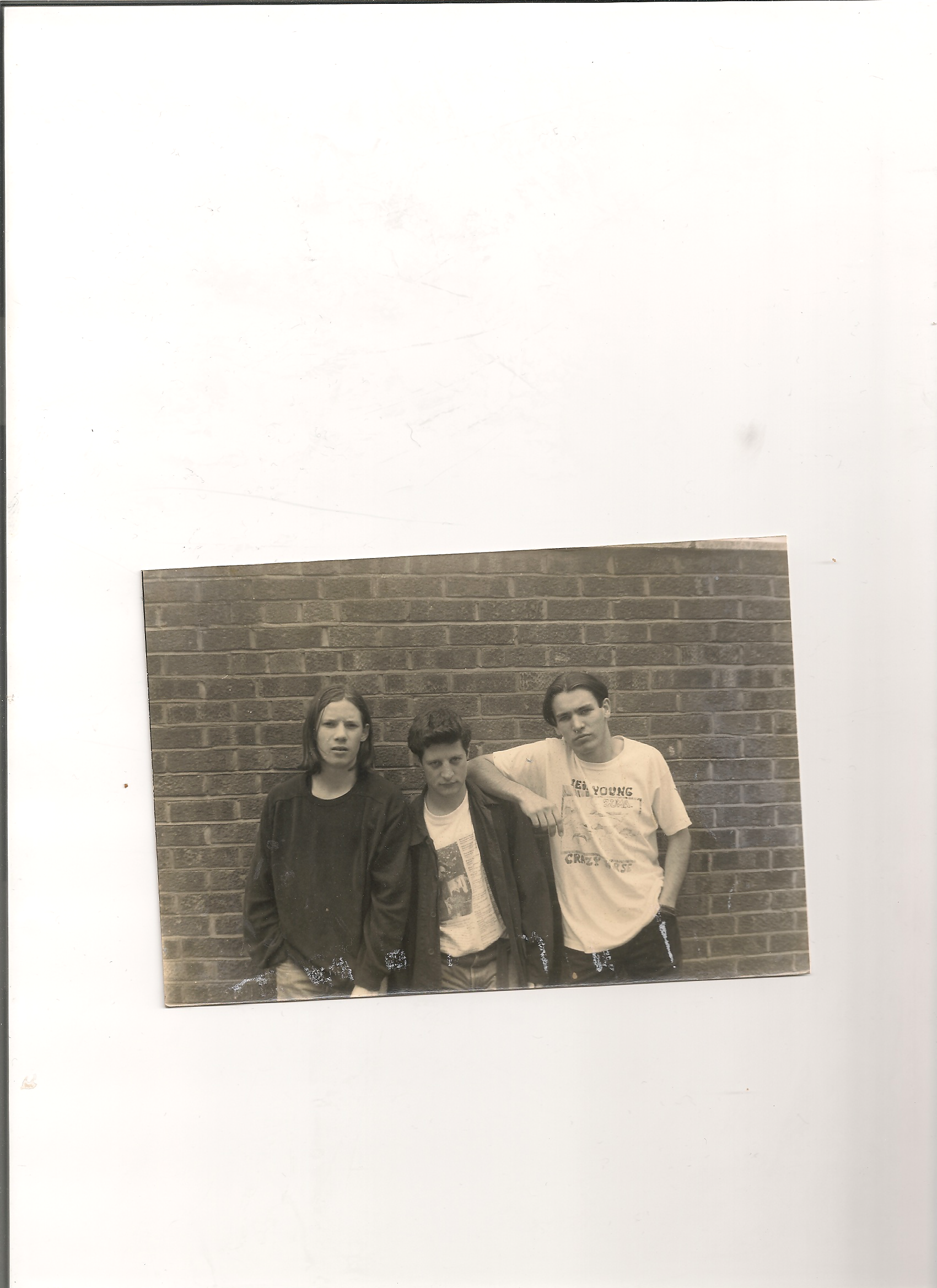
Here are me, Scott and Mike trying to be the Ramones.
Triumvirate

We called ourselves the triumvirate and were inseparable. We were also insufferable poseurs.

Triumvirate2

We spent most Saturdays going up to London. The day usually started here.

Image result for sutton surrey station

The highlight of the train journey came after we passed Clapham Junction and trundled past the hulking mass of Battersea Power Station, which was apparently being turned into a theme park. This classic view of the power station from the railway line is soon to disappear as the building is surrounded by steel and glass boxes for the very rich.

Image result for battersea power station from railway

Crossing the Thames, you could usually make out the floodlights of Craven Cottage and Stamford Bridge if you were quick. There are fewer finer sights in life then the glimpse of far-off floodlight. If all went to plan, we might be getting a closer view before the day was done.

From Victoria, we headed for Covent Garden. Mike was a dresser. He could carry anything off. He still can. Mike had a dapper big brother, Pete, who read The Face and I-D, and so Mike always seemed to know where to go. His keen sense of style didn’t always go down well in the suburbs; when he wore a pair of Adidas shell tops to school, kids in Nike Air and Adidas Torsion laughed at his protestations that he was the trendy one. Still, I was convinced enough to buy a pair of suede Kickers on his say so, and nobody took the piss that much.

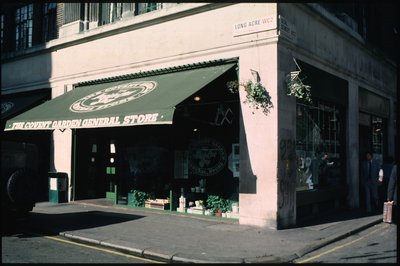
We usually went to a few shops on Floral Street and then  Neal Street, maybe first visiting the Covent Garden General Store, which was full of entertaining tat.
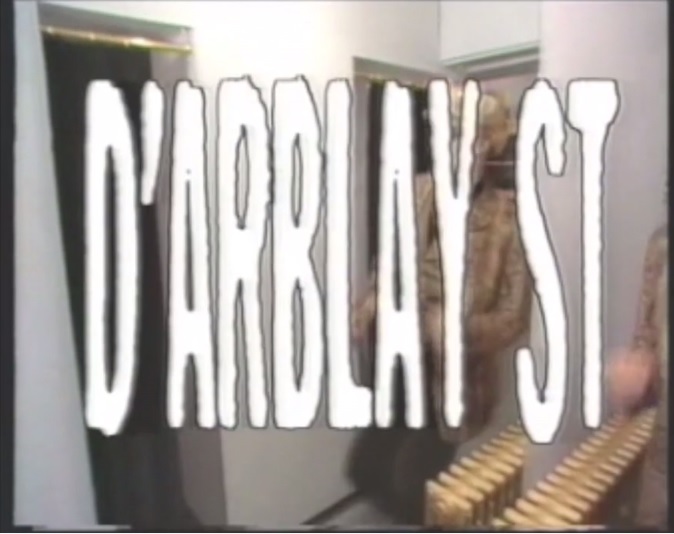
We spent much of this part of the day traipsing after Michael into shops where saleswoman would assure him he looked the ‘dog’s bollocks’ as he pulled on another pair of check flares. If I was feeling bold I’d try on something in Red Or Dead or Duffer of St George on D’Arblay Street. On one treasured occasion, Mike’s brother Pete was so impressed by my red Riot + Lagos t-shirt from Duffer that he borrowed it for a party. This was probably the high point of my life as a style icon.
duffer

https://vimeo.com/110877169

duffer

After watching Michael try on clothes, we’d go to Neal’s Yard, where we breezed past the weirdos in the skate shop on our way to the basement.
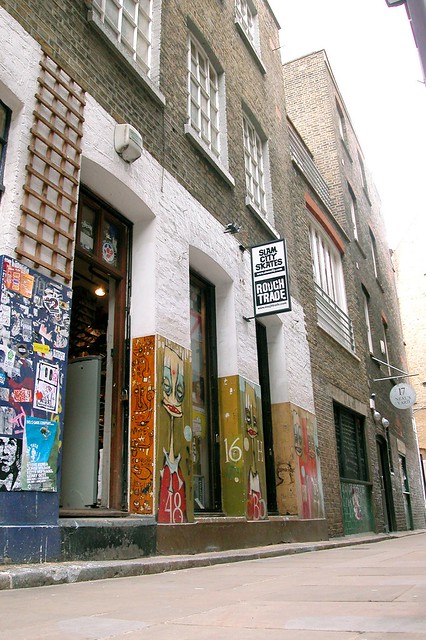
This was the Covent Garden branch of Rough Trade, a pokey den arranged around a metal spiral staircase, with walls covered in graffiti from bands that had played there. We loved it here. Music was one shared passion. Mike had got us into Sonic Youth, Pavement and Teenage Fanclub; Scott’s dad had a great selection of Van Morrison, Leonard Cohen, Jackson Browne and Neil Young. We all read the NME and Melody Maker and Select. This stuff mattered.

After a quick nose, we’d slip on to Shaftesbury Avenue and round to Cambridge Circus. There was a shop south of here on Litchfield Street that sold trendy Brazilian football shirts which we looked at but could never afford. Usually we headed north up Charing Cross Road to Sportspages.

imgresSportspages sold sports books, but we were only interested in the fanzines, which were scattered over the floor in untidy piles. Football was our other passion. I’d try and pick up the hard-to-find Cockney Rebel, a one-man Chelsea fanzine that combined football with an idiosyncratic take on pop and film culture. I went to Sportspages for years but never actually bought a book there.

After that, it was lunchtime.

Image result for bacon double cheeseburger

We lived for bacon double cheeseburgers.

Then we’d head down Hanway Street, past the Blue Posts on the corner, to visit Vinyl Experience, a huge place over a couple of floors which was covered by this fine Beatles mural.

Photo by Ronald Hackston

Photo by Ronald Hackston

At some point earlier, it had this fine sign.

vinylexperience

There were a couple of other record shops here – JBs was a decent one – and we’d often pop into Virgin on Oxford Street to check out the t-shirts.

From there, we strolled down across Oxford Street and cut through Soho down to Berwick Street, where three more record shops awaited – Selectadisc, Sister Ray and Reckless. Selectadisc was my favourite; although the staff were contemptuous, they were marginally friendlier than in Sister Ray and the choice was wider.

Reckless Records Berwick Street

Sometimes we’d see our schoolfriend Martin, who worked the odd Saturday on a fruit and veg stall in Berwick Street market for his uncle. I was always slightly jealous of this; it seemed an impossibly cool, proper London job for suburbanites like us to have.

Football was next. Despite having visited so many shops, we spent more time browsing then buying so rarely had many bags. Most of our serious record shopping was done in Croydon at Beanos.

What game we went to depended on who was playing, how much money we had and whether I could persuade Scott (Wimbledon) and Mike (Celtic) to fork out to watch Chelsea. It usually boiled down to Arsenal in the Clock End, where we could still pay the kids fee, or Chelsea in the Shed. Occasionally we’d duck into the ground at half time, when the exit gates had opened.

If we didn’t fancy Chelsea or Arsenal, or they were away, we’d head over to QPR, Charlton, Millwall and Fulham. Nobody ever sold out.
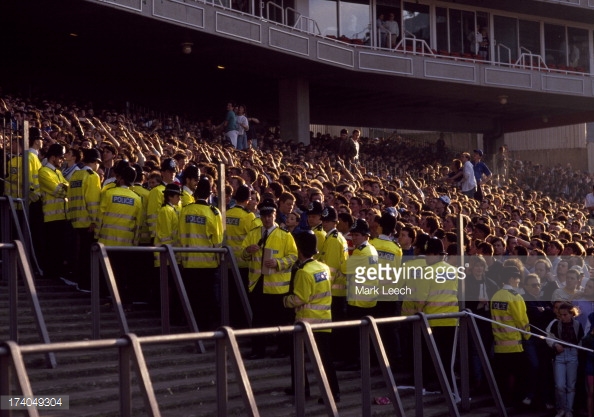
Chelsea at Arsenal, 1990

Chelsea at Arsenal, 1990

After football, dinner.
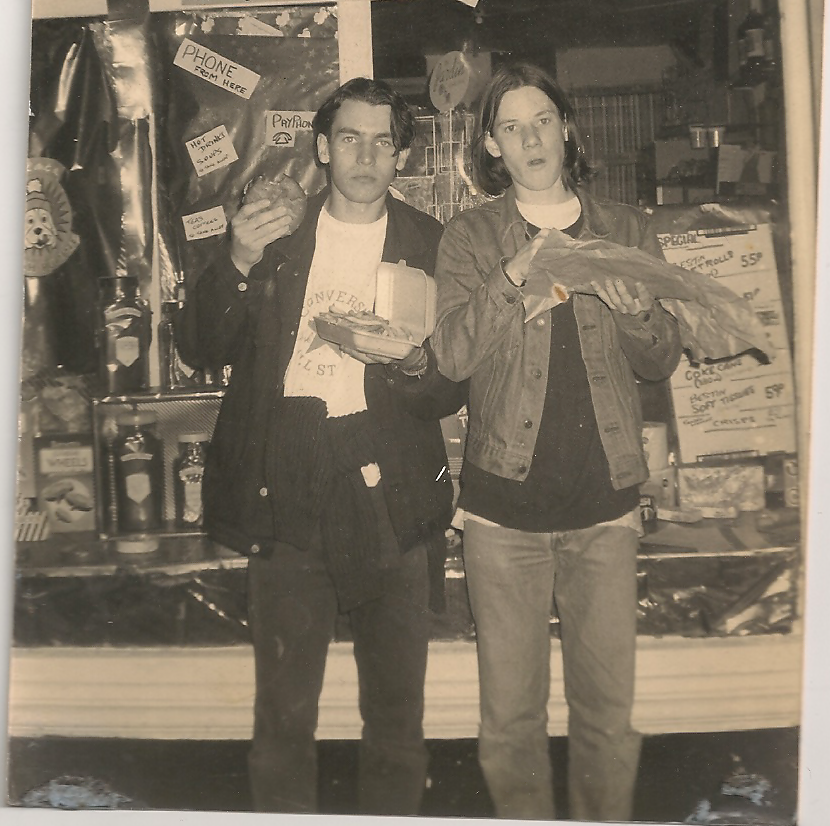
dinner

If we had time, we’d pop into the sweet shop in the Trocedero.

And then maybe a gig: at the Marquee or Astoria.

Or more likely home via Victoria, and then out to the Ship or the Firkin in Croydon.
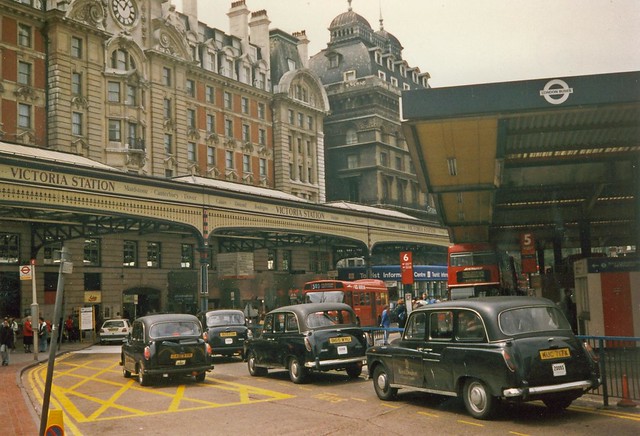
A week or so later, we’d do it all over again.
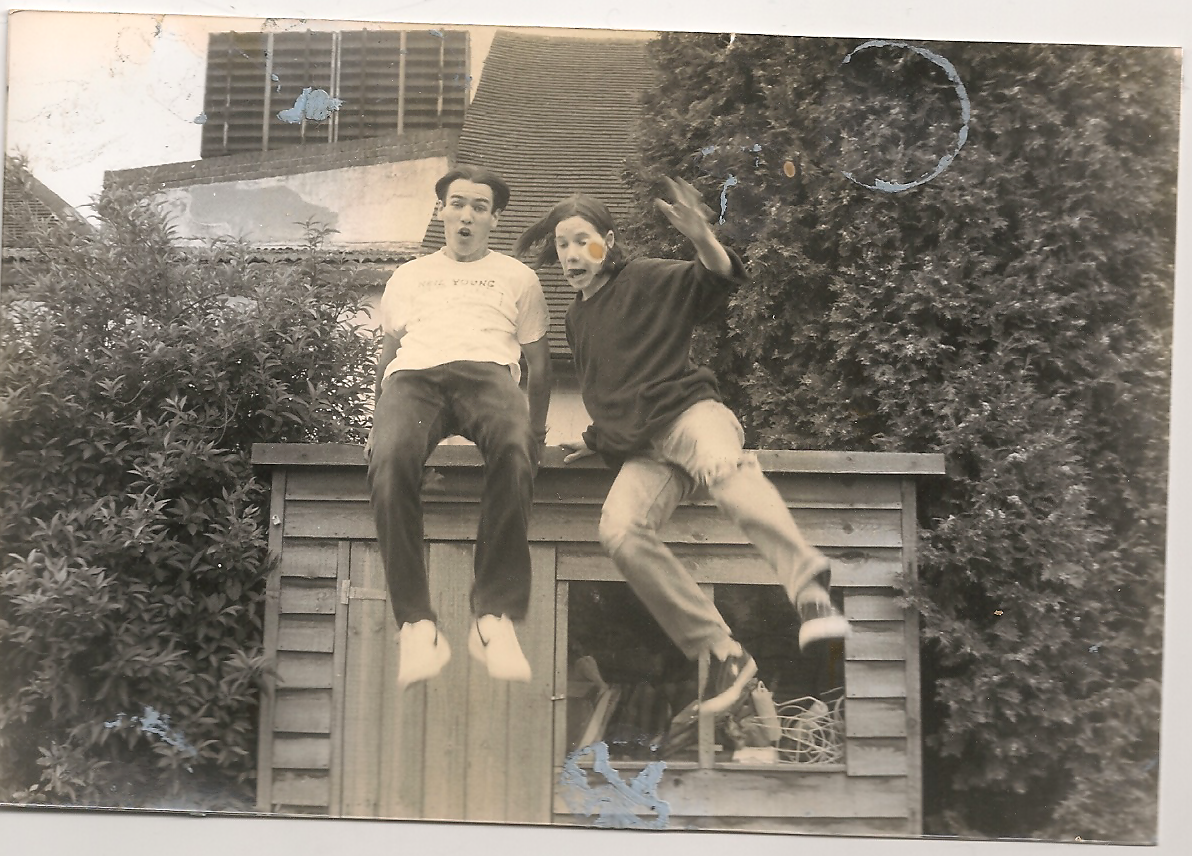
shed

Many of these places no longer exist, and I’m not even that old. Or at least, I didn’t think I was.

London curiosities, from Don Saltero to Viktor Wynd

This weekend, the grandly titled Viktor Wynd Museum of Curiosities, Fine Art & Natural History opens at 11 Mare Street, Hackney. You may already know of Wynd’s whims. An intriguing dandy, Wynd is the founder of the Last Tuesday Society – a body that promotes the esoteric in lectures, salons and workshops – which included Wynd’s own huge collection of oddities and curiosities, acquired over a lifetime of inquisitive travelling and impulsive purchasing. Originally, these items were meant to be sold – Wynd is still a dealer in the weird, a middleman in this strange underworld of people that buy and sell the corpses of giant spider crabs and Javanese hen’s teeth –  but he found “it didn’t work as a shop and it isn’t fun selling stuff. I had to keep buying and you can never be sure what will sell, it’s an endless cycle. So I thought it would be more fun to make it into a museum.”

These curiosities are now going on display as the new museum. And curious they certainly are. On the shelves are two-headed lambs, tribal skulls, dodo bones, plastic toys, lion skeletons, radioactive scallops, Victorian dolls, surrealist art, an artificial foreskin, a cassette of a John Major speech on the subject of red tape, a Victorian mermaid, convict Charles Bronson’s sketches, feathers from extinct birds, a giant hairball from a cow’s stomach and jars of celebrity poo [“How did you persuade Kylie Minogue to poo in a jar for you?” I asked, when interviewing him for Eurostar; “I asked her very nicely,” he replied.]

Impeccably arranged cabinets contain delight after horror after delight, some labelled, others entirely mysterious, but all put together in a way that implies the art of the display, the way these things look on the shelves, is every bit as important as the items themselves.

poo

London has always appreciated the chance to gawp at a gruesome gallery like this. Wynd’s endeavor harks beck to the very first public museum to open in London at Don Saltero coffee shop in Cheyne Walk in 1695. Saltero, a barber, had previously been known as James Salter and worked for Hans Sloane, the collector who started what became the British Museum. Sloane reputedly gave some of his cast-offs to Saltero, who used them to attract custom to his coffee shop. In 1713, his catalogue boasted in terrible rhyme: “Monsters of all sorts here are seen, Strange things in nature, as they grew so; some  relics of the Sheba Queen, and fragments of the famed Bob Crusoe.”


Saltero’s collection included such marvels as  a giant’s tooth, a necklace made of Job’s tears and Pontius Pilate’s wife’s chambermaid’s sister’s hat, which had been made in Bedford. It was, nonetheless, hugely popular and by 1760 the collection includes priceless artefacts like the Pope’s candle; a piece of the true Cross; the Four Evangelists’ heads cut on a cherry-stone; the King of Morocco’s tobacco-pipe; Mary Queen of Scots’ pincushion; Queen Elizabeth’s prayer-book; a pair of Nun’s stockings; Job’s ears, which grew on a tree and  a frog in a tobacco-stopper. Moreover, it had inspired other entrepreneurs, eager to educate the public in the wider mysteries of the world, to follow likewise. Among those following in Saltero’s wake was Mr Adams of the Royal Swan in Kingsland Road, not far from Wynd’s palace of the strange. In 1756 Mr Adams was exhibiting”the heart of the famous Bess Adams, that was hanged at Tyburn; Sir Walter Raleigh’s tobacco-pipe; Vicar of Bray’s clogs; teeth that grew in a fish’s belly; the very comb that Abraham combed his son Isaac and Jacob’s head with; Wat Tyler’s spurs and the key of the door of the Garden of Eden.”

Well then!

Wynd is an artist as well as a collector and showman, and his museum will double as a gallery, opening with a show devoted to early British Surrealists and including work by Austin Osman Spare, Leonora Carrington, Grace Pailthorpe and Reuben Mednikoff. His curiosities are also sprinkled with the occasional artistic embellishment, whether its sculptures donated by artist friends, his own drawings, fine work by the likes of Spare or Mervyn Peake, or more occultish fare, like “blood squeezed from a stone” or a box containing “some of the darkness that Moses brought upon the Egyptians”. These latter items are much like the imaginative exotica of Saltero and Adams, and also remind me a little of Yoko Ono, and her attempt to auction in London a ‘Vial of Genuine New York Tears’ and ‘Jar of Captured Cloud Formations over the Bronx’  to subsidise Norman Mailer’s Mayoral candidacy.

Wynd’s collection features a lot of dead things in jars – babies, dissected vaginas, stuffed animals, old bones, beetles, butterflies, intestinal worms – but he rejects the notion that it is simply a celebration of the macabre, a house of horrors designed to shock the straights. “Nobody’s ever been shocked,” he says. “If you are going to a curiosity museum you want to see dead babies, it’s what you expect. That isn’t what’s new, what’s new is the idea that dead babies and Furbies are equally attractive. It’s uncanny rather than macabre, it’s the juxtaposition of items, setting off thought processes.”

“I see putting everything together as an art,” says Wynd. “If you are a collector then the world is your tins of paint and the walls and cabinets are the canvas. Everything has to look right. It’s a way of trying to understand the world, but a world that has no meaning. It’s all the pretty things that show what an amazing place we live in. It’s also an attack on conventional aesthetic values, so we have a Furby, which is seen as completely valueless, sitting next to a rare and valuable skull of an extinct beast, sitting next to Chinese sex toys. I don’t recognise a distinction between high and low, it’s just if I like it. It also makes me laugh. I’m quite miserable and this place cheers me up.”

It’s not entirely clear how much Wynd enjoys his role as a collector. As he points out, most of us collect when we are children, but then grow out of it. The collector is in a state of permanent pre-adolescence, unable to move on, still fixated by those items that first caught his attention many years before. Wynd says that as a child his favourite places were the Natural History Museum and the Pitts-River Museum. In adulthood, he is still trying to locate that childish sense of awe and intellectual awakening.

He recalls being a student in Elephant And Castle and compulsively filling a garage with items he find on the streets – “I couldn’t pass a bin liner without opening it.” Later he moved to Paris and discovered that at the end of the month everybody’s rental contracts ended at the same time, and on these moving days treasures would be left outside every block of flats. “It was heaven.”

The problem, he says, is that a collection is “like a garden. It’s never going to be finished. It’s never done. It’s a psychological condition, it’s stupid, it’s pointless and causes endless worries.” It also gives us the Museum of Curiosities, for which London should be thankful. Go gawp, embrace the uncanny.

Sportscapes of London

oasis

The Oasis swimming pool in Covent Garden in 1946

I’ve spent the past week immersed in Played In London, a book that is about as ambitious as any you are likely to see published about London this year. Written by Simon Inglis (author of the seminal book on British football grounds) for English Heritage, it attempts to tell the story of every sport that has ever been played in any venue in the capital – that’s everything from lost Tudor skittle alleys to skateboard parks, including all the major football and cricket grounds as well as lost lidos and billiards halls, archery grounds and greyhound tracks, relocated diving boards and blue plaques. There’s even space to mention rugby netball, a sport created in 1907 by soldiers on Clapham Common and which is still played there every Tuesday and nowhere else.

It’s a breathtaking accomplishment, full of terrific nuggets of information – did you know there were Eton Fives courts under the Westway, or that the BBC’s Maida Vale studio was built in an old rollerskating rink? – but also attempting to tell the story of how a city and its people indulge in play, how that play is shaped by the culture and topography of the city, and how it develops over time, often wittingly reinventing itself as a ‘heritage’ sport rather than die out.

This is social history as much as anything, but goes much deeper than any other book I’ve seen on the subject, like the marvellous Pleasures Of London. One fascinating section looks at the history of company sports grounds. There were once dozens of these in south-east and south-west London – Catford had several – where civil servants or bankers could take part in regular games of rugby or football, or enjoy the annual sports day. Knowing more about these events, Inglis says, would let us learn so much about the culture of work, belonging and inter-office bonding in 19th and 20th century London.

hernehill

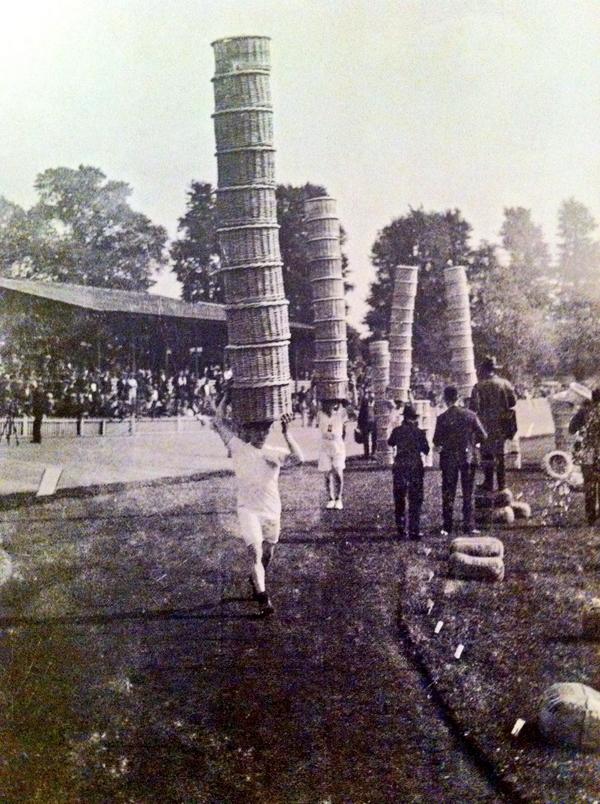
Bushel basket race for Borough Market sports day at Herne Hill, 1931

Given the scale of the project, the navigation of the book can be a little complex, but the layout makes sense over time. Inglis begins with an overview of the history of sport in London and of London parks and open spaces, before examining several areas in greater detail to see what they tell us about sport and London, and how certain spaces have been used repeatedly over time. He uses the phrase sportscapes and essentially is intending to show that sport, play and leisure require greater understanding of history than simply observing the architecture and listing club records (although the architectural chapters on Pavilions and Grandstands are genuine delights). It requires a knowledge of how space was utilised and developed, and what accidents of personality, business, culture and geography in the wider world outside sport allowed some sports and grounds to thrive while others died. It also shows how some spaces are defined by sport, but also how sports, clubs and associations are defined by the space they occupy.

The river is an obvious candidate for this treatment (and I never knew there were so many boathouses), but he also looks at length at such intriguing places as Wembley Park, Crystal Palace Park, Lea Valley, Dulwich and the Westway – all of which have long, complex relationships with myriad sports – to uncover stories that may otherwise only be known to local historians, or single-sport specialists. This approach repeats itself throughout the book, allowing ‘found spaces’ such as the South Bank skatepark to be included alongside manicured golf greens and expensive new all-seater stadia.

netball

Office workers play netball in Lincoln’s Inn Field, 1950s.

Oh, and if this isn’t enough the whole thing is illustrated lavishly throughout – indeed, they may have tried to cram in one or two photographs too many – with some spectacular mapping also included.

It makes a fine accompaniment to another book I read recently, on a more modest scale but still of some importance to London’s sporting heritage. Fighting Men Of London by Alex Daley is essentially an oral history – although the author occasionally makes his presence felt – of London’s boxing history between the 1930s and 1960s, told through seven former fighters. It puts some flesh on the bones of Inglis’s research: the boxers describe the lost boxing rings of London such as the shambolic Mile End Arena or the refined Stadium Club in Holborn, where inter-war gentlemen would dine ringside, ignoring the blood that splashed into their supper. They also talk about the old Central London gyms like Bill Klein’s in a basement in Fitzroy Street or Jack Solomon’s near the Windmill Theatre with an eye for detail that makes you think of Gerald Kersh.

The appetite for boxing in this age was vast, and many of the fighters interviewed built up large followings as they fought as frequently as once a month. None of them really made it into the big money though, and it’s notable that upon retiring several became involved in crime – The Krays, former boxers themselves, have walk-on roles in several of the stories. As a history of East End culture, it’s illuminating.