Category Archives: Nostalgia

Nostalgia corner: Zola, bitumen, Paolozzi and the great ‘is London shit?’ debate

Because of a frantic start to 2015, I’ve neglected Great Wen recently. Hopefully, I’ll find something to stick up soon but in the meantime here are a few interesting bits and bobs.

First, here’s me, writing for the Canal & River Trust, about the experience of taking a narrowboat into drydock, where you whack it with mallets, coat it in tar and get pleasingly sozzled with strange Irishmen.

Second, I really enjoyed this piece by Callum West on the great Chelsea team of the 1990s, and the extraordinary revival of fortunes that preceded the salad days of Roman Abramovich. This isn’t the side I grew up with, or the one that won the most trophies, but it’s the one that gave me the greatest pleasure to watch.

Finally, the great London debate – is it turning shit or isn’t it? – is gathering pace. The constant stream of negative stories, the latest being Eva Wiseman’s pretty dismal contribution at the weekend, has finally been met by counter-argument in Brockley Central.  Is Nick’s point fatally wounded by the use of Giles Coren as a defense witness? Or is he simply missing the point, which is that the death of fun by over-development in central London is a prevailing trend that is already starting to infect areas far from the West End, and we sit and sneer at those uncomfortable at the increasing inequality, inaccessibility, unaffordability and general dreary Dubainess of it all at our peril? Both, probably.

Professional contrarians like Coren will get in bed with anyone if it gets them attention, but I’m not sure many other Londoners should be siding with the developers and speculators.

By illustration, the latest landmark to get the chop are the great Paolozzi murals at Tottenham Court Road. Still, that’s the price of progress! Yay to cultural vandalism!

Pathe newsreel: London time machine

These are all taken from the recent cache of thousands of Pathe newsreels loaded on to You Tube.

1. A trip to Swinging London in 67. Is that Yoko reading International Times at Trafalgar Square? Surprisingly sympathetic beneath the patronising tone. I love those Bob Dylan paper dresses. And at 4:50 you get to meet Keith Albarn, father of Damon, as he organises a happening. Also features Mary Quant, the Speakeasy, the Scotch of St James and much more.

2. This Is London, with commentary by Rex Harrison. A tour of the capital for the British Travel Association, starting at the Tower of London, into Fleet Street and Temple then into the West End and Westminster. It’s all very quaint and polite, but great for location spotting. The shots from Chelsea at 10:42 are extraordinary.

3. Platform shoes, 1977. A wide range of Londoners discuss platform shoes – “they’re not natural,” says one cockney. I think this was filmed around the King’s Road.

4. Tracking shots of Soho at night, 1968. No sound or context here, just a series of tracking shots around Soho at night. It’s incredibly atmospheric and full of strange glimpses into past lives, especially the laughing man at 3:22, whose companions have slipped off to an upstairs flat.

5. West End, 1977. Similar to the above, this is a series of disconnected, fairly random shot of London and the West End starting in Chinatown. Silent but fascinating as a sort of moving street photography. Note the number of Scotland fans around Piccadilly Circus, the porn shops, and the huge amount of scaffolding that appears to be everywhere.

7. Making a psychedelic light machine, 1968. A sitar plays while Mike Leonard constructs his machine for a light show. For 60s scene nerds, this is pretty fascinating.

8. White Defence League, 1959. Footage from Notting Hill, featuring an interview outside the HQ of the White Defence League (soundtrack starts around 1.20min). Staggering racism, unapologetically voiced.

Secret London: streets beneath streets of London

Paul, the librarian at Time Out, first told me about the street beneath Charing Cross Road in around 2005. He promised to show it to me, but never did.

Then, last month, I saw it. I was mooching around Cambridge Circus, noting the loss of London’s best-named book shop, Lovejoys, a landmark from the time I used to be a dedicated fanzine-browser across the road at Sportpages, also since departed. I had always assumed Lovejoys was a wittily named Soho porn shop, but it actually stocked cheap classics and DVDs. The shop taking over the site will be a sex shop it seems, albeit of the modern, seedless, air-brushed, air-conditioned variety rather than Soho’s traditional damp basement. With the erasure of any trace of character at the arse-end of Berwick Street, the old Soho sex shop is nearly gone. Indeed, much of this post is about things that have been removed, including Paul the librarian, who left Time Out shortly before I did.

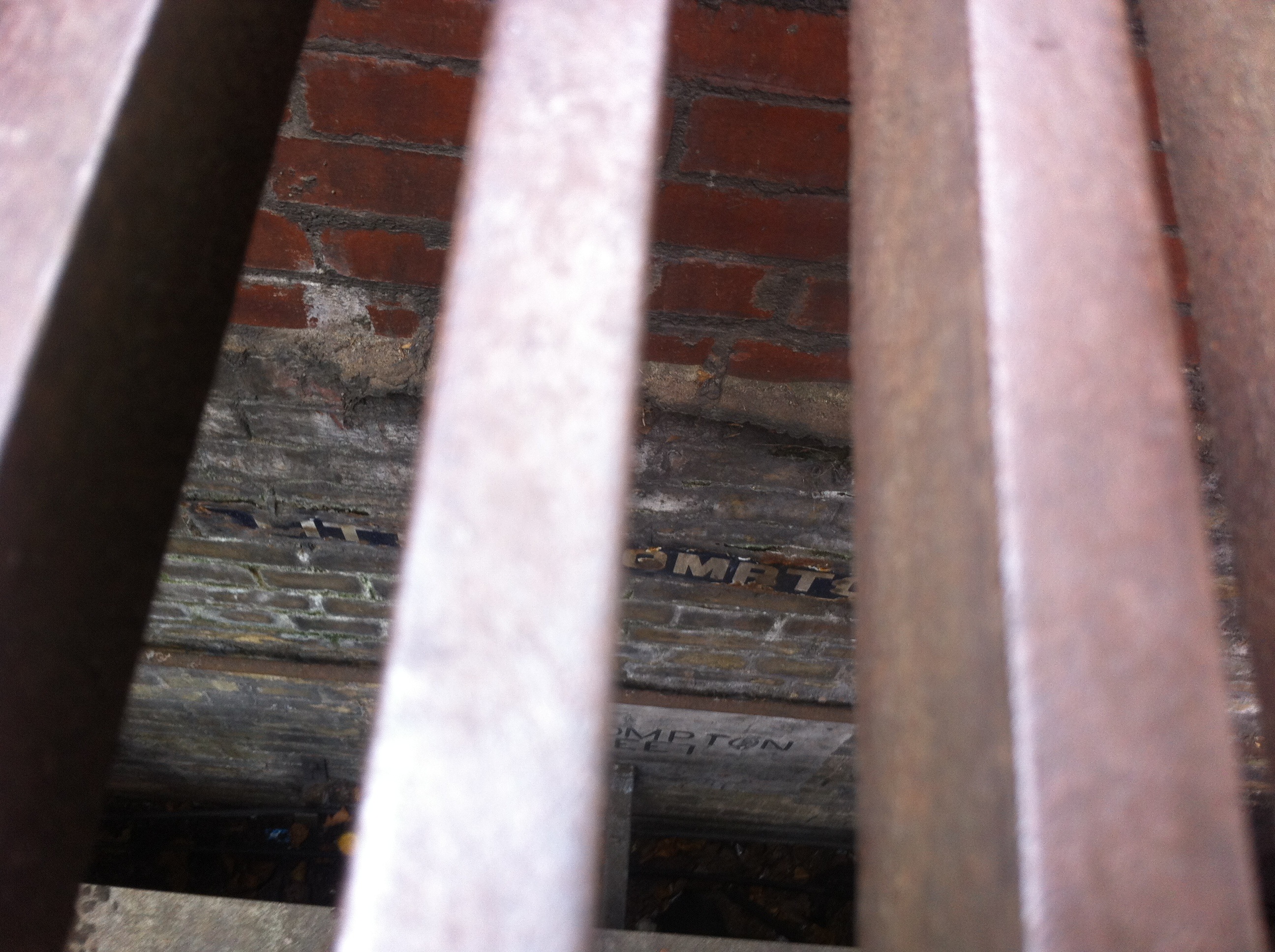
As I crossed Charing Cross Road from Soho and stood on an island in the middle of the road waiting for a No 24 bus to pass, I happened to look into the grille beneath my feet. I have instinctive curiosity when it comes to London holes but this is the first time I’ve really seen anything of interest, as, to my surprise, I could make out what appeared to be a subterranean street sign set into the wall a few feet below the ground.

IMG_1992

I leaned in closer and there they were – not one, but two street signs for Little Compton Street, one blue enamel and the other painted on to brick. Here was London’s buried street.

IMG_1990

Although Little Compton Street has its own Wikipedia page, it is not entirely clear how the signs got here. The street itself was obliterated by the construction of Charing Cross Road – here you can see Little Compton Street on an old map of 1868, intersecting with Crown Street (which is marked by green as Soho’s border, though surely red would be more appropriate) just before Cambridge Circus. Little Compton Street ceased to exist in around 1896 and is now part of the Cambridge Circus utility tunnels, which some urban explorers write about here. (Apparently, Rimbaud and Verlaine used to drink in a pub on Little Compton Street during their dramatic London stay.)

map1868

Were the underground signs accidentally left behind when Charing Cross Road was run roughshod over the top of Crown Street or was it a careful act of preservation by an unnaturally thoughtful council? Or were they removed from a wall by unknown hand and deliberately placed down here, where Little Compton Street has existed ever since, entombed beneath London feet and offering a tantalising glimpse of those fantasy Londons from countless dreams and dramas. There’s an echo of China Mieville, Neil Gaiman and the Borribles, but also of Malcolm McLaren’s mysterious and misremembered subterranean Victorian road (neatly discussed here) that is said to exist intact beneath Selfridges on Oxford Street.

One wonders whether the brutal Crossrail redevelopment of this bedraggled part of the West End will allow any such traces to remain. I hope so. And I hope they also have this last-gasp, accidental feel, of something that London can’t quite let go, like dying fingernails clawing a wall, leaving behind a ghost, a whisper, of one of London’s many pasts.

For some great old images of Charing Cross Road, browse here with leisure and a little sadness.

Pubs

I’ve only ever really had one local, that is a pub I visited at least once a week for a couple of years. But what a local. Crocker’s Folly was one of London’s best pubs, a beautiful old gin palace, with a stunning saloon bar that featured 50 kinds of marble, Romanesque marble columns, Jacobean ceiling, cut glass, chandeliers and carved mahogany.

The pub even had a great back story. It was built by Frank Crocker in 1889, who got wind that a new station was to open at Marylebone and so placed his extravagant new hotel at what he believed was going to be the perfect location to attract the thousands of travellers. Sadly, the station was constructed half-a-mile  to the south and – it’s said – a ruined Crocker leapt to his pavementy death from one of the upstairs window. (In truth, he died in 1904 of natural causes.)

I used Crocker’s when I lived on the nearby canal at Lisson Grove, popping there for a pint after work, for a quick lunch or long dinner, to watch the football, for a sneaky drink between visits to the launderette, to take part in the pub quiz, to meet friends, to be alone. We had a great landlord and the pub was always full of canal folk and locals, a place you felt welcome, where there was always somebody to talk to or enough room for you to settle down on your own, with a packet of cigarettes, a newspaper and a couple of quid for the fruit machine.

Then, pretty abruptly, things changed. A new landlord was brought in by the owners and you couldn’t tell exactly what he was doing wrong, but it was clearly something. Dodgy kids from nearby estates become more prominent. The quality of ale declined. Less events were held. The food menu got worse. Suddenly, Crocker’s became a little rough – it was no longer the sort of place you’d expect to encounter the annual Christmas party held by national newspaper crossword compilers, as had once been the case in the late 1990s – and so we’d walk past it on our way to other, now better, pubs around Warwick Avenue. That’s the problem with pubs. If they aren’t good enough, there’s always a better one around the corner. Until that one closes as well.

I noticed on one of my last visits to Crocker’s that the door policy had changed to an almost unheard of ‘Over-25s only’. In 2002, shortly before I left the canal behind, it closed.

It’s still closed.

Lord know what Crocker’s looks like inside, even though it is a listed building and being carefully watched by CAMRA members. Last time I passed it was as boarded up as ever, but there is planning permission for flats to be installed in the many upstairs rooms. Work has begun, I’ve heard, but CAMRA do not think a pub is part of that plan. What this means for that astounding ground floor, I do not know.

Crocker’s Folly was a beautiful building, open to all Londoners, serving many needs and creating a community around it, and it’s demise is as great a tragedy as that imagined for its creator, more so because it always felt deliberate, as if the company that owned the pub were opting for managed decline, an excuse to close the pub and find a way to sidestep planning permission so they could sell it to developers. That never happened and so the pub was left to rot, like so many others in London.

If you can stand it, scroll through this amazing Flickr archive of London’s lost pubs. I knew some of these, once.

I’ve written about the threats to London pubs and what can be done to save them in this month’s Metropolitan magazine for Eurostar. 

At the Poll Tax Riot

I attended the Poll Tax Riot by accident. I was at the theatre with my family on Charing Cross Road when the lights came up at the end of the performance and the house manager told us there had been a little disturbance outside so we would have to remain in our seats for a short period. As we did so, this was taking place on the street above.

IMG_1644

We’d seen the coaches parked up as we drove into London, but I had little interest in politics. I knew who the Prime Minister and  leader of the opposition were, but that’s about as far as it went. I would have recognised other names – I watched and enjoyed Spitting Image – but none of it really meant very much to me. Perhaps that’s as it should be when you are 14. Questions of policy were largely irrelevant so the anger towards the Poll Tax Riot had passed me – and my Daily Mail-reading parents – almost completely by. And, boy, were people angry.

IMG_1650

When the house manager gave us the all clear, we climbed the stairs – the theatre  was in a little basement – and emerged on to a devastated Charing Cross Road. What I most remember is the stench from all the overturned bins, debris spilling on to the streets, and the complete absence of traffic, people and noise. It was spooky. That smell I can still recall, a horrible, fatty, sweet stink of rot and decay. London then was a dirty city, but this was something else.

My father – surely in a state of some fear – ushered us through back streets towards the car park in Soho but I remember little of this journey, which surely would have taken us past smashed shops, mobs of protesters and riot police desperately trying to get their shit together. Once we reached the car, my father visibly relaxed but one junction, he had to hit the accelerator while we waited at a red light. He later said he’d seen we were about to be sandwiched between a bunch of rioters and some police and decided this was not a time to obey the laws of the road. Once again, I’d missed this sight.

IMG_1646

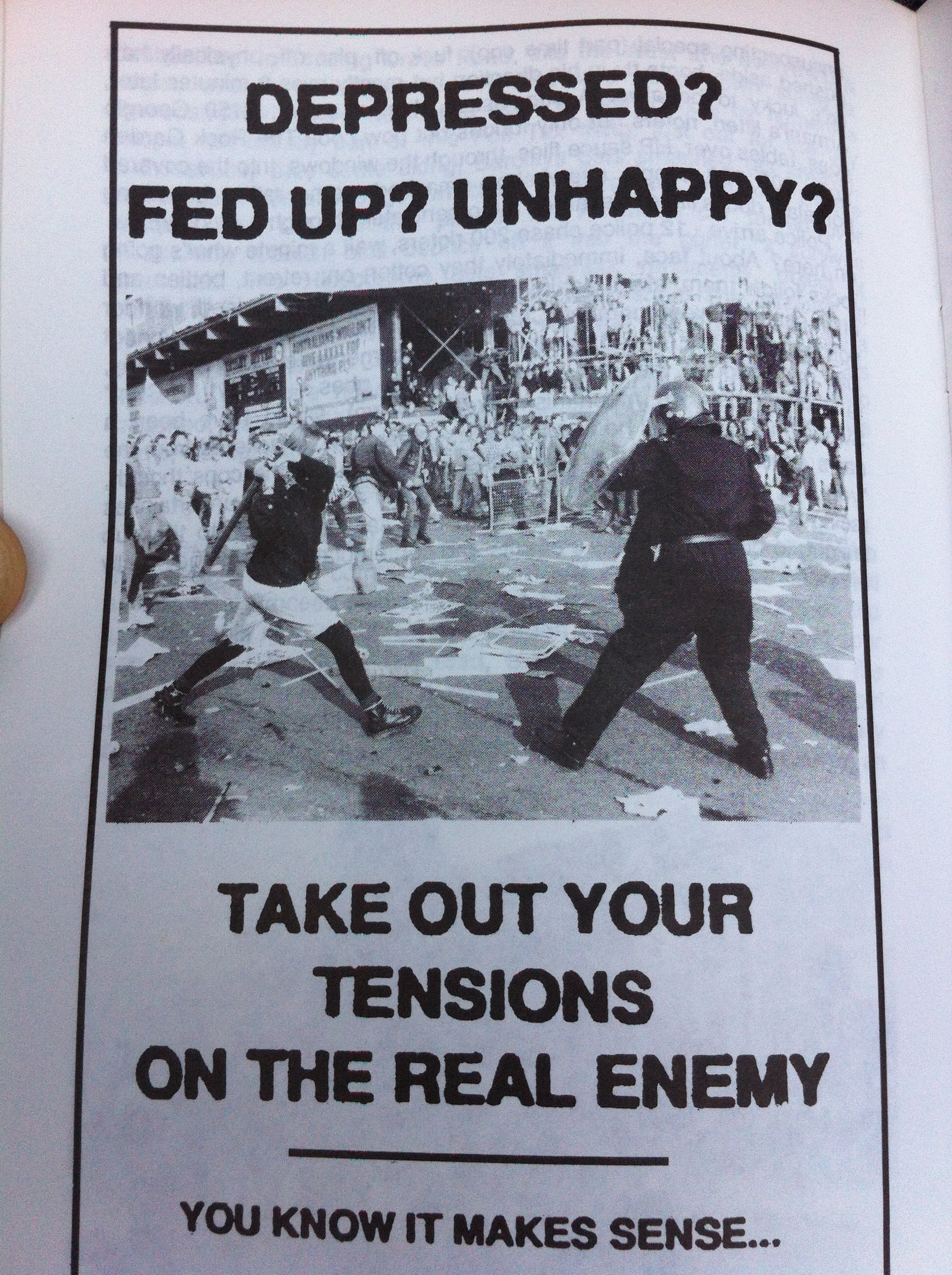
I thought about all this again while reading a pamphlet I picked up recently for £2 in a local bookshop. Produced by ACAB Press (an acronym for All Coppers Are Bastards) and ‘dedicated to all working-class heroes’, Poll Tax Riot: 10 Hours That Shook Trafalgar Square contains 12 eyewitness accounts of the riot. The interviewees all appear to be anarchists, and are as equally contemptuous of the traditional Left – Militant are particularly despised, and there are amusingly barbed references to George Galloway and Tommy Sheridan – as they are the police. Most of them seem to have had a great old time, chucking stuff at coppers, smashing windows and setting fire to South Africa House. This is about revenge.

‘Off we go intent upon destruction, up Charing Cross Road, into the West End, everything a target, everything subject to our rage and deep down surely a demonstration of how hated this world is.’

Cars are turned on their roofs, shops looted, the Hippodrome smashed and the police attacked whenever they are seen. There are no dissenting voices to the general feeling the Met finally got what they had deserved for a decade. One protester who ended up in a cell even claims that his fellow cellmate was a prison officer who joined in the fun because he ‘fucking hates the cops’.

IMG_1647

The pamphlet is so gleefully celebratory of the riot that it has to distance itself from the Trafalgar Square Defendants’ Campaign, set up to help those that had been arrested, even as it promises it will give them all proceeds from its sale. It also announces that ‘this pamphlet is anti-copyright and can be freely reproduced by any revolutionary group. But copyright protects it from being used by journalists, rich bastards, etc.’ I hope they don’t sue.

IMG_1649

Secret London: inside Wapping’s abandoned Tobacco Dock

014

It seemed like a good idea at the time. It was the mid-1980s, the economy was booming and Docklands was on the up. Tobacco Dock, an old Grade I-listed warehouse off East Smithfield in Wapping, seemed ripe for redevelopment. Rupert Murdoch had just moved New International next door from Fleet Street, and other companies were sure to follow. What better place to build the new Covent Garden, a lively hub of shops, bars and restaurants, where City fatcats and Wapping yuppies could mingle and spend?
010

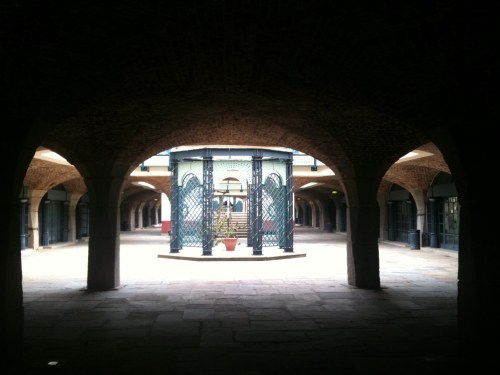
Terry Farrell did the architecture and Tobacco Dock opened in 1989, an elegant conversion that featured two arcades of shops on two floors inside a skilfully modernised structure that retained its Victorian industrial integrity. A canal provided a classy terrace for restaurants and bars, while the shops were the best of the era: Saab City, Next, Body Shop, Cobra and Monsoon as well as Justfacts, a shop selling accessories for your Filofax, and Uneasy, a shop that sold designer chairs. Think Broadgate Circus. Think Leadenhall Market. Think Hay’s Galleria. Here was the future. What could possibly go wrong?

016

Even before Tobacco Dock opened, the UK economy was in recession and one-by-one, the new shops started to disappear. No new companies followed News International, and with poor transport links and a tanking economy, the yuppie money from Wapping’s riverside apartments could not keep the shops alive. By 1995, Tobacco Dock was already a shell, with just two trading outlets, a restaurant called Henry’s and a sandwich bar, both kept afloat by Murdoch’s minions, of which I was one.

Ten years later, just the sandwich bar remained; now that too is gone. Tobacco Dock is completely empty, a ghost shopping centre forever frozen in 1989, when the world was at its feet. Come here, and you can smell the late-80s ambition and the disappointment and failure when it all started to unwind. It’s like the backdrop to a George Romero zombie film, or a metaphor for rampant commercialism wrapped in the setting of a failed shopping centre.
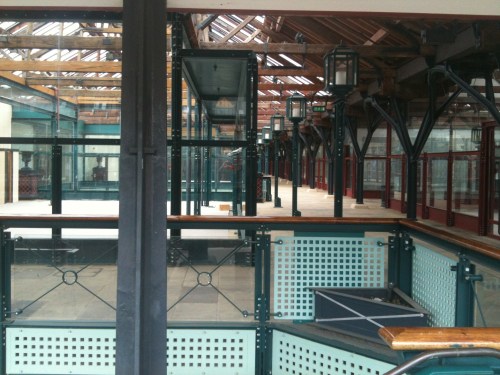
012

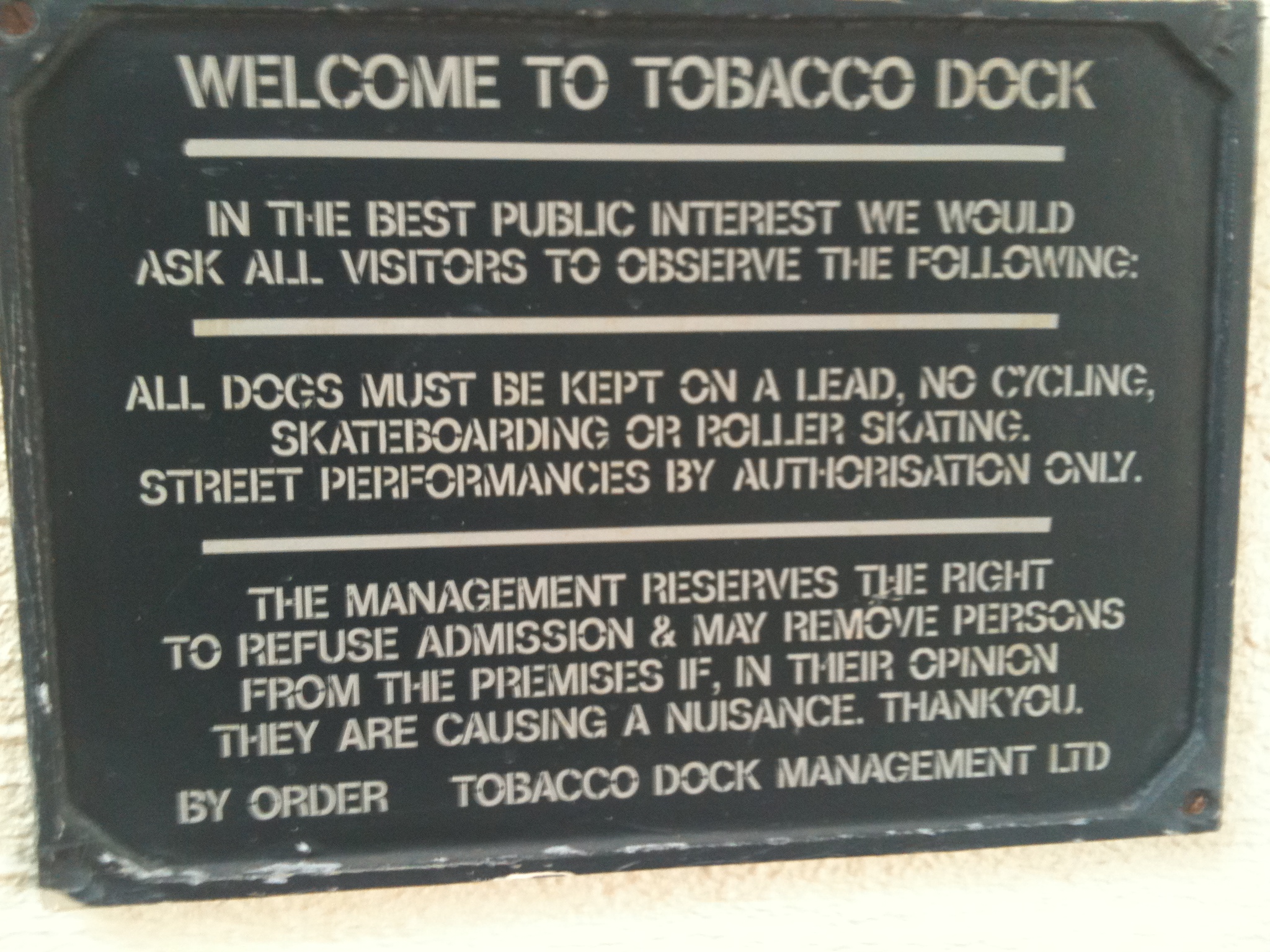
Bizarrely, the empty centre remains impeccably maintained and open to the public. I spent happy hours in Henry’s when I worked at The Sunday Times in the 1990s and remember even then how strange it felt to march through the vacant complex, serenaded by mood music piped through the PA. When I returned a couple of years ago in search of nostalgia, there was only silence, broken by the sound of my footsteps echoing round the empty chamber, but the floors were still as clean and the fixtures and fittings as freshly painted as when it first opened.

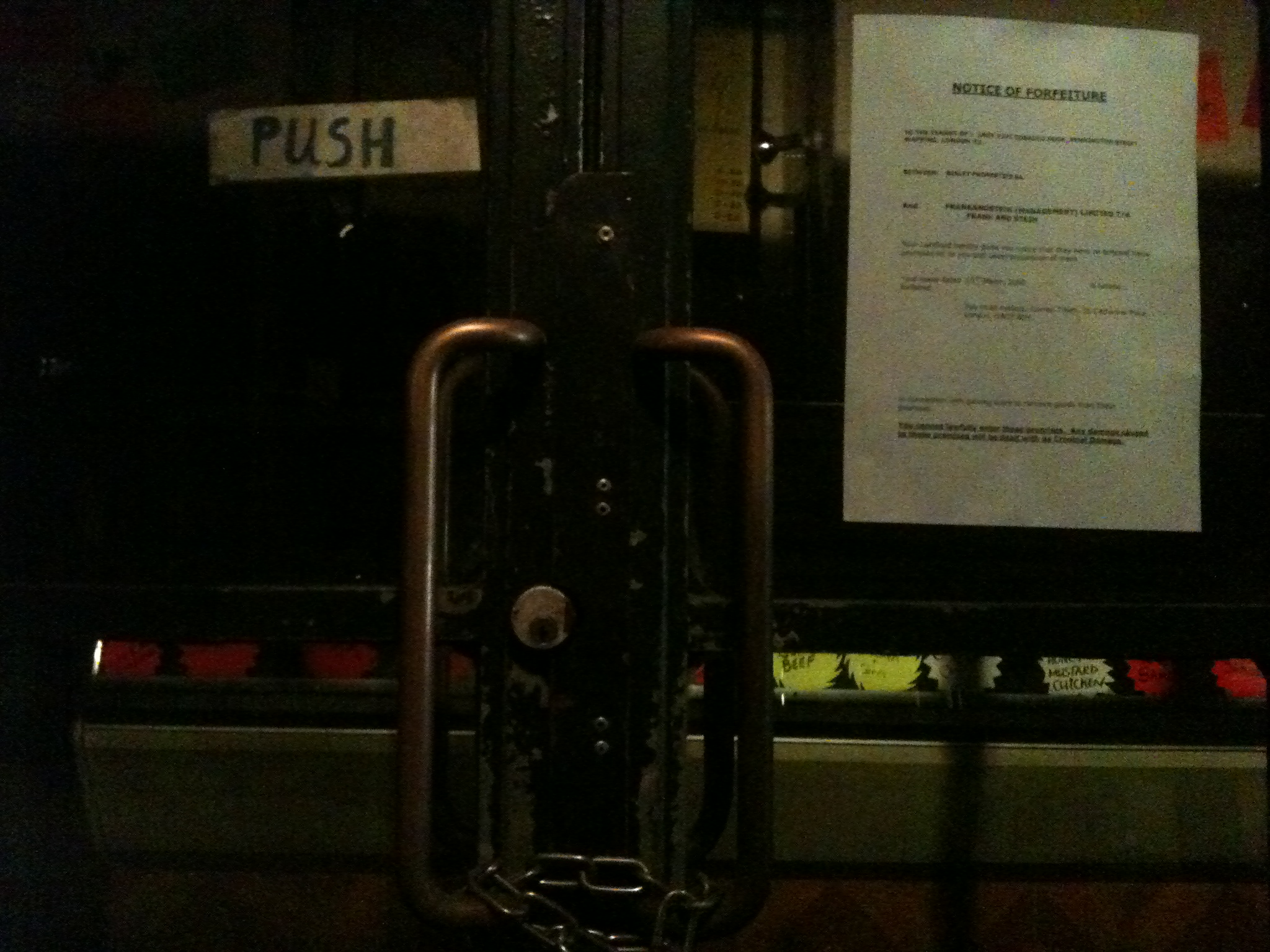
Rows of disused shops lined the central avenue like glass coffins, some still bearing the names of the shops that once operated here. Frank And Stein’s, the sandwich shop that held out longest like a Japanese soldier still fighting the Second World War twenty years after it ended, kept its sign and counter but the door was shackled by a heavy chain. The eviction notice posted in the window a public sign of private tragedy.
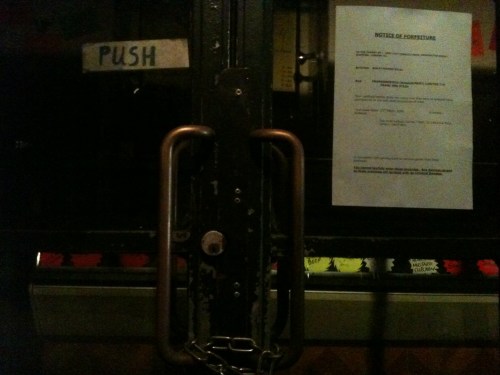
011

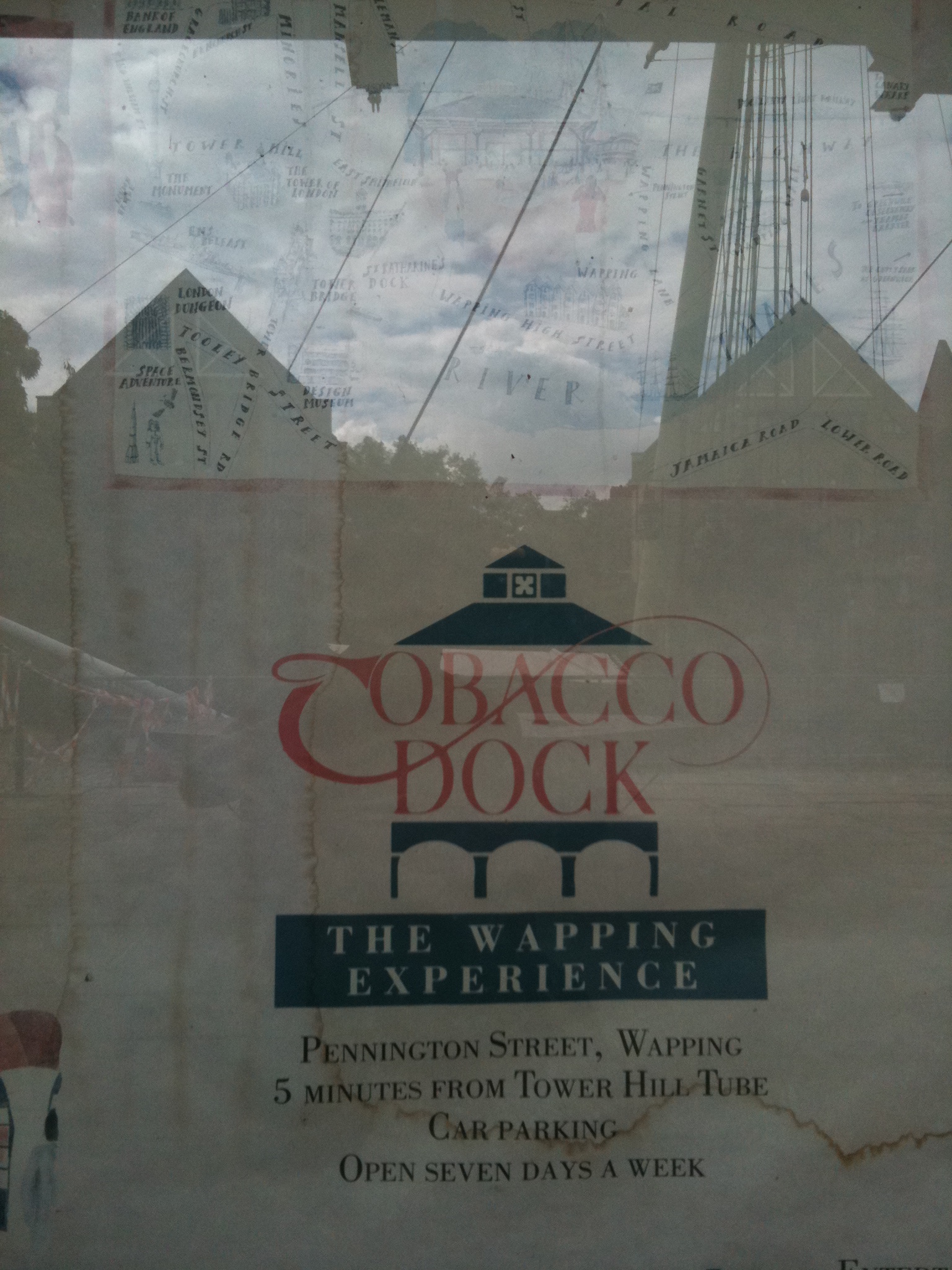
At the back of Tobacco Dock is a pretty canal, featuring a couple of tall ships that were intended for kids to clamber on while their parents ate at nearby restaurants. One such restaurant, an American diner called Peppermint Park, looked recently abandoned but had been empty for years. The week’s specials were still chalked up on the blackboard, but the interior was barren, holes in the wall indicating that these surfaces were once covered by a mass of Americana memorabilia which now probably line the walls of the nearest branch of TGI Fridays. Here too were three faded posters, celebrating ‘Tobacco Dock – The New Heart Of London’, instantly evoking the lost mood of optimism. One of the posters was illustrated by a map, which in a cartographical display of wishful thinking, placed Tobacco Dock squarely in the centre of a buzzing quarter surrounded by the Design Museum, St Katharines Dock, Petticoat Lane and just off-scene, suggested by a tantalising arrow, the myriad delights of Greenwich. Along the bottom of each poster runs a legend, a promise of what lay within: ‘Unique quality shops – Pirate ships – Restaurants – Bars – Entertainments – History’. Well, it’s certainly history. One out of six ain’t bad.

013

Footnote: I wrote this piece in 2010, since which time Tobacco Dock has started to open for occasional private events. 


The last bus to London Bridge

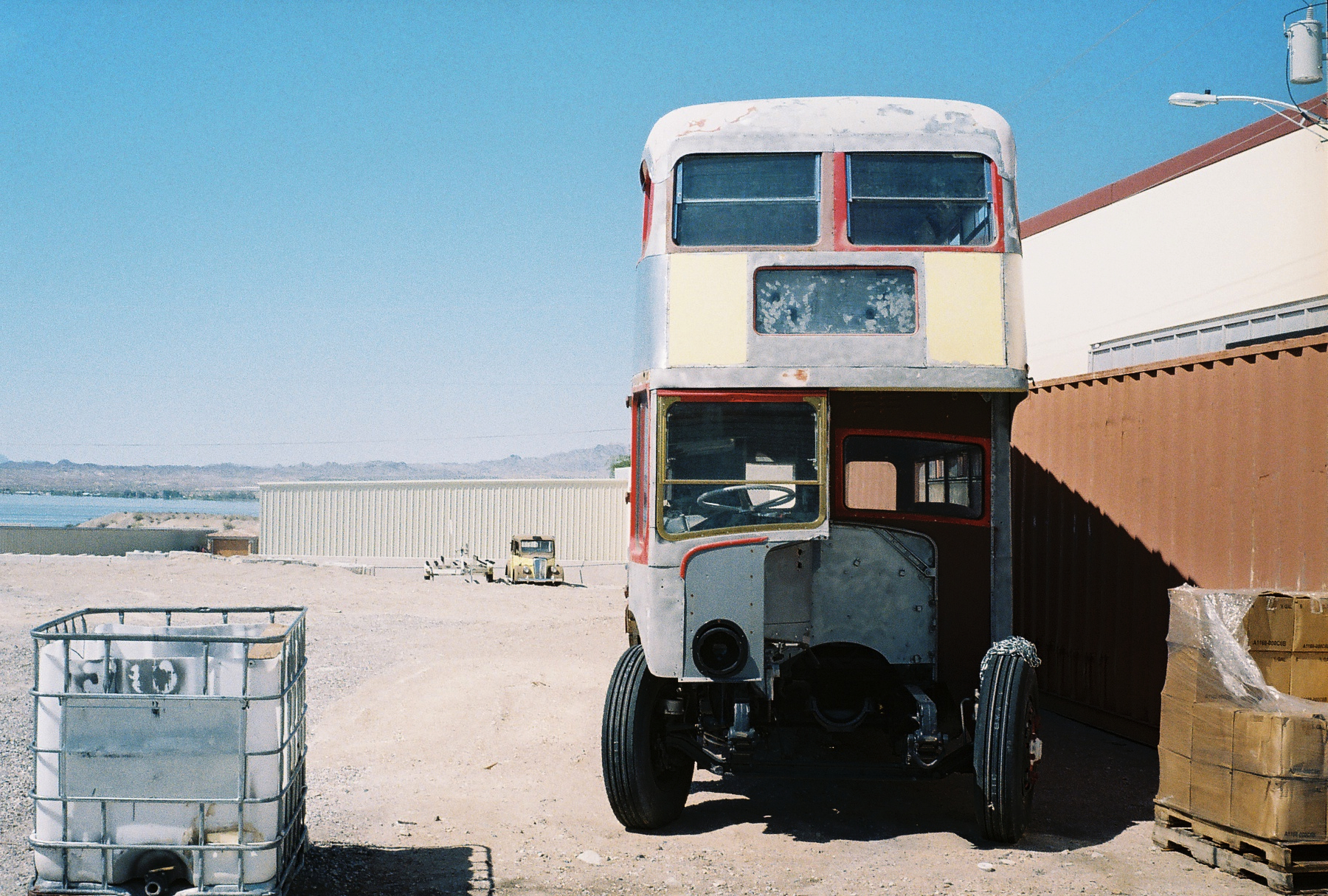
In the previous post, I linked to The Special London Bridge Special from 1972, which features Tom Jones travelling on a No 13 bus to Lake Havasu City, Arizona, where London Bridge had just been sold. Incredibly, that bus is still in Arizona but it isn’t in quite the same condition as the bridge.

BUS-CABINDISTANCE-COLOUR

Thanks to Travis Elborough for the picture. Travis – who has just published London Bridge In America: The Tall Story of A Translantic Crossing – also pointed me in the direction of this marvellous song by Cilla Black, lamenting love and the loss of London Bridge.

The Special London Bridge Special

This sensational slice of ham and song was made in 1972 to celebrate the purchase of London Bridge by an American theme park. It features a bizarre cast that includes Tom Jones, Rudolf Nureyev, The Carpenters, Kirk Douglas, Charlton Heston and Terry-Thomas and is basically the film the Olympic opening ceremony could have been.

It’s all here, but watch the intro especially, featuring Tom Jones singing his way round various London landmarks before engaging in a small slice of double entendre on a No 13 bus.

Secret London: Davenports Magic Shop

It’s a surprise that Davenports has managed to make it on to the Harry Potter tourist trail given the shop is so damned hard to find. You could walk around the dank subways that link Charing Cross and Trafalgar Square for years without stumbling across it, and then one day you’ll turn a corner and whamkazaam, there it is, right in front of you, looking like it’s appeared out of thin air. Well, what do you expect from a magic shop?

Davenports isn’t any old magic shop (if there even is such a thing), it’s the oldest family magic shop in the world, owned and run by a Davenport for four generations and eyeing up a fifth. It began in the East End in 1898 and its heyday was probably the 1950s and 1960s, when it was based first on New Oxford Street and then Great Russell Street opposite the British Museum. The shop, staffed by magicians only too happy to demonstrate their art, became such a draw for tourists they decided to take themselves off the beaten track and into the tunnels around Trafalgar Square. In the move, Davenports took with them much of the stock, some of the fixtures and all of the atmosphere – walk inside and you step back in time, to late Victorian London, when Davenports was founded and magic was experiencing its first golden age, moving from games of find-the-lady on shadowy street corners into the glamorous Music Hall theatres that dominated popular entertainment.

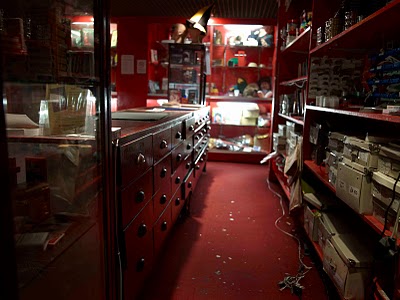
The vast front window is the first sign that you’ve stumbled upon a refugee from the past. It is crowded with wands, juggling balls, posters advertising old magic shows, ventriloquist dummies, ropes, boxes, cards, red Indian headdresses and a giant dog bone. Enticing no? Opening the door triggers a satisfyingly meaty ‘dong’ from a hidden bell and reveals a small red-hued, slightly creepy interior. Most of the stock, old and weird, is kept in wall-mounted cabinets behind glass doors. The wooden shelves behind the counter are covered with fading handwritten signs – ‘Whoopee Cushion, £1’ –in front of which a young clerk demonstrates sleight-of-hand tricks, pausing only to sell invisible thread and a pack of cards. He pauses between tricks, and I jump in to ask if there is anybody I can talk to about the shop’s history. He disappears, not in a puff of smoke, but round the back, and re-emerges with a neat old lady, wearing a clerk’s apron. This is Betty Davenport, granddaughter of founder Lewis Davenport. ‘I started working here in 1948,’ she tells me, ‘when I was 14 and green as grass.’ Betty has run the business since 1960 and still comes in every afternoon to keep an eye on things. She intends to keep it in the family. One son, Bill, already helps run the business while another, Reg, is a performer, and there are three grandchildren being groomed to take over. Betty has high hopes for the youngest, now seven and doing tricks since he was five. ‘Young boys are inclined to be interested in magic anyway,’ she says, ‘it’s just that when they get older, other things can get in the way.’

Unarguable, and with that thought, conversation peters out. I go back to watching the clerk perform, his brow furrowed in concentration, desperate to get things right and show that in his case those mysterious ‘other things’ were firmly pushed to one side. Davenports has a curiously sober air for a room that’s full of rubber chickens and itching powder. This is a place for serious wizardry, where illusion is business. It’s more like a library than a joke shop. Another customer walks in and starts talking about the art, and I can sense my presence as a non-magician has been noticed. Is it just me, or is there a fear in the room I might hear something I shouldn’t, a trick, as it were, of the trade? So I bid farewell to Betty, close the door and retrace my steps back through the underground passages of Charing Cross, wondering all the while whether Davenports will even be there when I return.

Time Out – logo-agogo

As has been reported elsewhere, the big glowing Time Out sign came down this week from the front of the TO office in Tottenham Court Road where it has lived since around 1993. It has gone into storage, ahead of a proposed office move and will at some point, we are promised, be restored to wherever the magazine ends up next. I hope it does. This is, after all, one of London’s few bursts of neon and probably the only one that is halfway decent to look at.

That’s because the logo is a design classic, the work of Pearce Marchbank, an art school student who drifted into the more agitated end of the counterculture after the Grosvenor Square anti-Vietnam demo. ‘The impact on me,’ he said, ‘Was blowing away all that love and peace shit which I thought was bollocks and complete pretence.’

After working on Friends, Marchbank was asked by Time Out founder Tony Elliott to redesign his shambolic magazine. ‘I hated the unadventurous way it looked,’ said Marchbank. The entire magazine was redesigned, with the logo being created at the last minute on a Sunday afternoon in November 1970. ‘It was supposed to look like an out-of-focus neon light,’ Marchbank explained. ‘It was Letraset Franklin Gothic, shot out of focus so it had a glowing fuzziness to it. I put a negative over the positive and the gap between the two made the glowing neon outline, which I shot in line then again out of focus. It was deliberately transparent, so the cover images could read through it, as if it were on the glass of a window.’

This distinctive, blurry effect was intended to be a short-term solution, but Elliott refused to change it. It was a wise decision although not everybody liked the new look. One reader wrote in asking if the magazine could include a pair of glasses with each issue as the typeface was now too small to read.

TOAllNight

Marchbank continued to work for the magazine on-and-off throughout the 1970s creating some of the best covers in the history of publishing. He was back there in 1981 when it imploded in a series of strikes, stand-offs and occupations between staff and management over wages and the historic equal-pay system. As Elliott attempted to regain control he learnt that the logo – which was now being branded all over London and which the strikers were hoping to claim as their own – actually belonged to Marchbank.

Elliott called Marchbank, saying ‘I want you to write me a letter saying you’re giving the logo to me.’ Marchbank figured it was probably worth as much as £100,000 but, strapped for cash and short of time, asked Elliott for a mere £2,000.

‘What? £2,000! How can you do this to me after all the things I’ve done for you?’

The conversation ended. Shortly afterwards, however, Marchbank was offered a job with Richard Branson’s new London magazine, Event. As his parting gift, he presented all rights to the logo to Elliott. To turn into a real piece of neon was both a no-brainer and a stroke of genius. I hope one day the sign will be back above the door in some London street – if not, I’m sure it’ll fetch more than £2,000 on eBay.