Category Archives: History

Uncovering a London ghost: the half-life of David Litvinoff

In the current issue of Uncut, I spoke to write Keiron Pim about his excellent book on David Litvinoff, Jumpin’ Jack Flash. Litvinoff is one of those characters that crops up in all sorts of strange places once you first notice him – in the last few years I’ve read books about the Krays, Performance and Operation Julie, and Litvinoff has featured in all of them as a mercurial, menacing muse. He also appears in Iain Sinclair’s books, but Sinclair is most interested in what he can use Litvinoff to represent – in this case a deliberately unknowable, shadowy figure who flits through London’s secret history, connecting the shadowy worlds of counterculture and crimes.

litv

Pim is a journalist, interested in people as people rather than as metaphors, and his book diligently puts flesh on the bones of Litvinoff’s known history, tracing this strange character’s ascent from the Jewish East End and into the worlds of art, crime and music, where he rubbed up against everybody from Lucien Freud to Eric Clapton.  It’s said that Litvinoff reached such elevated company he was even invited to Jimi Hendrix’s funeral – the invitation contained a tab of acid that the recipient was meant to take if they couldn’t physically attend.

Litvinoff was an unpredictable chancer who survived on his wits, making money here and there through schemes both legal and not. He worked for the Krays and Peter Rachman, but his defining role, as seen by Pim, is as consultant for Performance, that heady, troubling film that could be the finest ever made in this city. Litvinoff befriended and advised both Edward Fox and Mick Jagger on the ways of the underworld, and supplied his old Soho pal Donald Cammell with ideas for scenes and dialogue. One of the many memorable moments in the film – the shaving of one victim’s head by gangsters – was based on Litvinoff’s own experiences. This was a man who both delivered and received mob justice – and at times, he is unsympathetic to the point of psychopathy – until he discovered a form of salvation through drugs and the woolly world of hippie idealism.

performance

The story is ultimately a tragic one, as Litvinoff increasingly found himself left behind by friends, who could tolerate his wit and weirdness for only so long. He killed himself in 1975 as punk was breaking, and one sense that this movement of chaotic creativity, violence and contradiction would have suited him fine, although Malcolm McLaren may have baulked at the competition.

Given that Litvinoff didn’t actually leave much behind – no books or diaries, photographs or albums, little that is tangible or concrete – it’s difficult to put a pin in what he actually did. In an age in which we are increasingly defined by our jobs – commit a social media faux pas, and you are immediately reported to your employer – that’s strangely unsettling. The brilliant late artist Martin Sharp, a close friend of Litvinoff, makes a case that this needn’t be the case, that Litvinoff, by simply being himself and acting as muse and creative conspirator, did plenty. “It’s hard to earn a living doing it, but he made an enormous contribution to people’s lives,” says Sharp. “It’s not something you can send someone a bill for.”

Up In Smoke: The Failed Dreams of Battersea Power Station

I’ve written a book about Battersea Power Station.

It’s called Up In Smoke: The Failed Dreams Of Battersea Power Station and is out in the spring via Paradise Road, a new publisher concentrating on London non-fiction.

Battersea Power Station is one of London’s favourite buildings, but nobody before has told its story.

This will be the first book to explore the history of the building, from conception and construction, through use and obsolescence, and then into the long years of post-closure redevelopment.

I wanted to understand why so many people have been fascinated by Battersea over the years. I’ve spoken to former workers and designers of inflatable pigs, location scouts and photographers, politicians, Lords, architects, planners and entrepreneurs.

This is a book that tells us so much about London and the way it changes. It’s a story of power and land, of big ideas and broken dreams. It’s a story that takes in property and politics, architecture and popular culture. It’s a story about our city and our relationship with its most popular building.

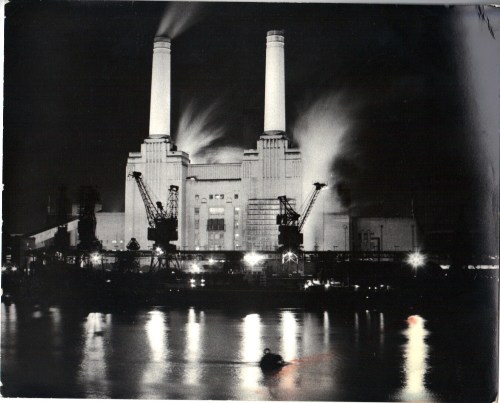
It asks how we went from this…

19-09-2014 104101

Battersea Power Station, 1975.

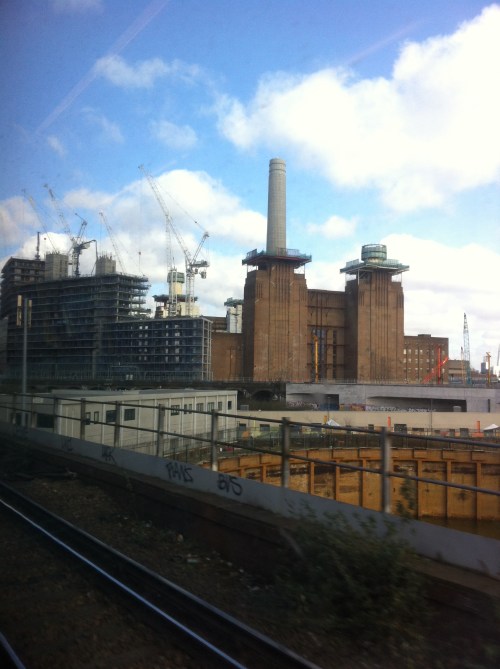
To this…

IMG_5309

Battersea Power Station, 2016

London’s latest museum – Jimi Hendrix’s Mayfair flat

This is a piece I wrote for Eurostar about the conversion of Jimi Hendix’s Mayfair flat into London’s first historic house dedicated to a rock star (a small exhibition was held in the flat in 2010). Interestingly, even before the death of David Bowie, the museum’s curators were concerned the flat would be turned into a shrine by fans.

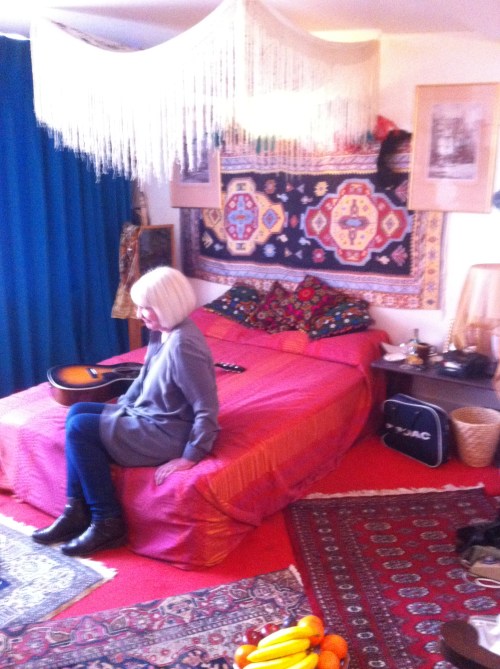
The museum is a strong addition to London’s cultural scene, filling a definite blank space. It begins with an informative timeline of Hendrix’s life focusing on his time in London, and then moves into this charming and evocative recreation of his tiny bedroom, which is both ostentatious yet surprisingly spartan. 

IMG_5296

Hendrix’s reconstructed bedroom, with former girlfriend Kathy Etchingham

When Barrie Wentzell photographed Jimi Hendrix at the rock star’s London flat in 1968, neither of them imagined that the colourful bedroom would one day be transformed into a museum. “I photographed him for Melody Maker,” says Wentzell. “It seemed so small when I went back recently. He’d have found it hilarious that it’s being turned into a museum.” Hendrix moved into 23 Brook Street in January 1968 with his girlfriend Kathy Etchingham, using it as a base to explore London as well as a space to conduct interviews and hang out with fellow musicians – George Harrison was one of those who stayed overnight on a camp bed. Since 2001, the flat was used as offices by the Handel House Museum who are located at the 18th-century composer’s old home next door at No 25. The entire space is now being renamed Hendrix & Handel In London, and Hendrix’s flat will open to the public in February 2016.

Hendrix arrived in London in September 1966 and began playing shows on his first night, immediately attracting the attention of a London music establishment who had seen or heard nothing like him. Incendiary, transformative early gigs in tiny West End clubs were witnessed by the likes of Eric Clapton, Pete Townshend and The Beatles. “All those guys, they played the blues but Hendrix had taken it to a different level,” says Wentzell. “He told me once, ‘Sometimes I play the guitar and sometimes the guitar plays me’. But he was very humble and soft-spoken, he kind of under-rated himself. He would talk about how great Clapton was and Clapton said the same about him. They had real love for each other.”

London boasted a powerful music scene packed into a small corner of the West End, and word about Hendrix soon spread. He became a star and as a result, he loved the city. Although he’d met Etchingham on his first day in London, he spent much of those early months moving between flats and hotels. “He moved around an awful lot and had lots of girlfriends who all thought they were the one,” recalls journalist Chris Welch, who interviewed Hendrix several times. Etchingham and Hendrix eventually moved in together, paying £30 a week for the pokey one-bed Mayfair apartment above a restaurant called Mr Love. Hendrix called it “the first real home of my own” and helped select ostentatious decorations of bright fabrics, peacock feathers, bric-a-brac and a rubber rat. The bedroom, which is where most of the entertaining took place, is being recreated for the museum after curators identified and tracked down around 70 items of furniture and fittings. Other exhibits include clothes, records and guitars as well as a timeline exploring Hendrix’ pivotal London months.

Although Hendrix spent his time in Brook Street enjoying some level of domesticity – he played Risk and watched Coronation Street – he also threw himself into the world of Swinging London, which was right on his doorstep. Promotors, agents, publicists, music papers, clubs, guitar shops, studios and fashion boutiques were all based in Mayfair and Soho. “He was in the best place to be,” says Welch. “Bands from all over the world converged on London and it was still the hippie era so if you were going to be accepted for being unusual anywhere it was the West End. He was adopted by Londoners very quickly.” Wentzell agrees. “There was a lot of love for Jimi,” he says. “He was only around for four years and he changed the world, he really did.”

Hendrix, who died in London in September 1970, always loved the flat’s connection to Handel – indeed, he believed he was living in Handel’s old home as Handel’s blue plaque was on the wall separating the two properties. “I remember him saying that he got this vibe of music from Handel and we joked about how he’d like to have jammed with him,” says Wentzell. “I guess now he is.”

Handel & Hendrix In London, 23-25 Brook Street. Opens on 10 February 2016.

Navvies, landlords and protest

I’ve written three pieces elsewhere recently.

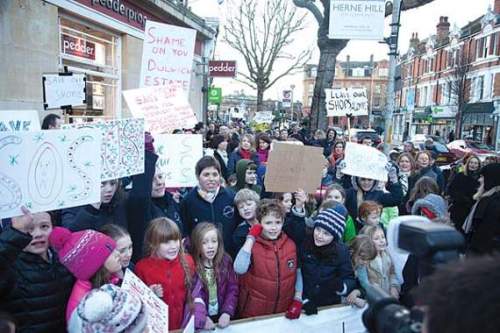
For Londonist, I wrote about the battle in Herne Hill between independent shops and the local landowner, Dulwich Estates, who some feel are taking more away from the community than they put in. A protest last week saw several hundred Herne Hillians march from the station to the local toy ship, which was forced out by a huge increase in rent. Several other tenants told me they feared they’d also be forced to move in the next year.

m5746


For Apollo, I wrote about a new exhibition of posters from Berkeley in 1970, when students protested about the ongoing Vietnam War and also the deaths of four student protesters on a campus in Kent State.


And for Waterfront, I wrote about the life of the navvies in London. I was intrigued by the urban legend that the four pubs in Camden with castle in the title – the Edinboro, Windsor, Dublin and Pembroke – were built for the navvies, to ensure separate nationalities drank apart and didn’t scrap. It quickly became apparent that the story wasn’t true, but as I researched the life of the navvies, I began to understand how the myth was raised and also learnt a lot about this tough breed of migrant worker.

Shrines of London


This is an edited version of a talk I gave last year for the London Fortean Society about London’s shrines. I decided to repost it after visiting the David Bowie shrine in Brixton last week.


To prepare for this speech and in an attempt to get my head around what a shrine was, I began thinking about the simplest shrines you see in London – that’s usually flowers tied to a lamppost after a sudden often violent death or the ghost bikes you see tied to lampposts after crashes.

That got me thinking about the largest shrine I’ve seen in London. This was in those strange weeks after Diana’s death. I was in my 20s and strongly Republican and so had little interest in the public mourning, but an older friend suggested we go and see what was taking place at Kensington Palace as it was something that only happens once in a lifetime. As we walked across Hyde Park this strange smell began to creep across the park – and I can still smell it to this day, the acid sweet stench of rotting flowers. It was indeed an incredible sight. The area in front of Kensington Palace was carpeted with flowers, thousands of bouquets, already turning to compost in the summer heat. People were walking among them, stooping like peasant farmers or bomb disposal experts to read a label. I’d never seen or smelled anything like it. You could not get near the palace gates.

Just look.

What fascinated me also about all this was that it had a seditious, outlaw aspect. There was a lot of noise in the press about whether the Queen was treating Diana’s death with sufficient respect, and this huge impromptu shrine – by the people, against the establishment – was given the atmosphere of an almost revolutionary act. It was a fascinating combination – the privacy of remembrance, carried out on a larger scale with political implications.

So perhaps these are some of the key elements for a memorable shrine: they need to be in memory of a colourful life cut short, possibly violently and unexpectedly, but also be plebeian or proletariat in nature, carrying a sort of unofficial, rebellious, streak, upsetting the forces of the order and establishment.

Unsurprisingly. London is filled with them.
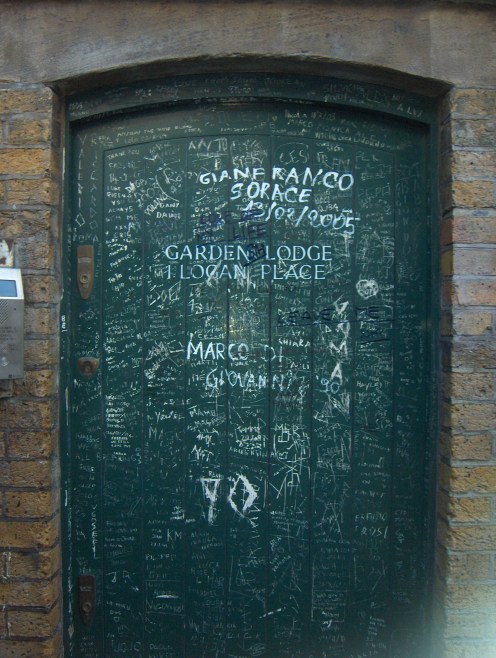
RR-Freddie-Mercurys-door.jpg

A disarming proportion are devoted to rock stars. This is Freddy Mercury’s old front door in West Kensington, featuring primitive scratched messages from fans all over the world.

There’s also a more or less permanent shrine outside Amy Winehouse’s house in Camden Square. It’s interesting to speculate why some musicians get this treatment and others don’t. For instance, why has Abbey Road become a shrine for Beatles fans but there’s nowhere similar for the Rolling Stones? Perhaps a shrine needs a magnetic location, and the Stones have never created that particular relationship with any single space in the city, perhaps we will need Mick or Keith to die before we find out.

I used to live near Abbey Road, and they had to repaint the wall every two weeks or so such was the flood of graffiti, even though you’d never actually catch anybody in the act of doing it.
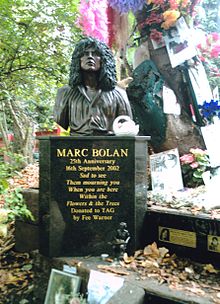
Similarly, I’ve always been slightly puzzled as to why Marc Bolan has attracted a shrine. This is the sycamore tree on Queen’s Drive in Barnes that Bolan’s Mini crashed into in 1977, killing him instantly. People have been leaving notes and flowers ever since, and now there’s a bust. Why Bolan? I like T-Rex but don’t really see him as the sort of shamanic, eternal talent you’d think attracted such a tribute.

Perhaps it’s simply the violent nature of the death that appeals to people. But the way his death tree – his cause of death – is being marked is inescapably macabre. In some ways, it makes me think of the old Bill Hicks line, that the last thing Jesus would want to see if he came back to Earth was another bloody crucifix.

That brings us neatly to the religious aspect of shrines. Even in the secular ones, it’s there under the surface, this primitive, sacred need to mark a spot and remember the dead devotionally. But London also has numerous religious shrines. There are two that particularly interest me. One is on Bayswater Road at Marble Arch, where there’s a small convent for nuns. In the basement is a chapel, with walls covered in ancient relics – skin, bone, bits of fingernails – pulled and plucked from some of the 350 Catholic martyrs who were hanged at Tyburn, the gallows nearby. Behind the altar is a replica of the gallows itself. It’s remarkably medieval and extremely weird, especially when a nice old nun is telling you about their favourite piece of shrivelled skin.

There’s also a really interesting element of the shrine found in the canals of west London. Here you often find coconuts floating in the water, sometimes cut in half and containing candles, sometimes tied with ribbons. I used to live on a narrowboat and would occasionally travel west to Uxbridge – the nearer you got to Southall the more you’d see.

I was told they were placed in the water by London’s Hindus in religious ceremonies, with the canal representing the Ganges. A recent article confirmed this: they are place in the canal as an offering to Maa Ganga who symbolises Mother Earth and also the elixir of life, as water is where all life begins. And why coconuts? A Hindu scholar has explained that “Coconuts are the fruit of the Gods – it’s a pure fruit with remarkable qualities, it takes in salt water and produces sweet fruit and it’s neatly packaged too. Also it’s a symbol of fertility, it reflects the womb, and has human qualities – it has two eyes, a mouth and hair.” It’s fascinating that this symbolism has been transported across hundred of miles and generations.

When I was researching this talk, I began to wonder whether London had any graffiti wall shrines – that’s public spaces that have been adopted by street artists to commemorate specific moments and remember people. I’m sure that these exist, but they are hard to pin down because of the transient nature of the form. London does have lots of murals, huge paintings, often commissioned by the community and with a political angle. There’s the Battle of Cable Street mural in Wapping and the Nuclear Dawn CND mural in Brixton. A lot of these are official, but it was interesting to read about the War Memorial Mural at Stockwell tube. This commemorates various aspects of war, with a section for Violette Szabo, who worked behind German lines in WW2 and lived in south London. More recently, artists decided to include on the memorial an image of Jean Charles De Menezes, who was murdered by the police in 2005. But there were disagreements – people felt he didn’t conform to the spirit of the overall piece. Eventually, he was painted out. But there is a small mosaic and shrine to De Menezes nearby.

Then there’s the really strange shrines. I had no idea until this week that the phone box near St Bart’s hospital had been briefly turned into a shrine to Sherlock Holmes after the TV show had him falling from the hospital roof. I don’t imagine there are that many shrines to fictional characters elsewhere in the world.

London also has a skateboard shrine. If you look over the side of the Jubilee Footbridge, you’ll see dozens of broken skateboards lying on one of those immense concrete feet that anchor the bridge to the Thames. These are boards that have been broken during skating sessions by the nearby skaters on the South Bank in the undercroft, and ceremoniously chucked over the bridge to form this strange graveyard.

Then there’s what for me is the saddest shrine of all, partly because it no longer exists. I used to see this all the time when I walked Farringdon, close to Mount Pleasant sorting office, where there are steps going up the viaduct. High up on the wall of one of these dank stairwells you’d see a dozen or so spoons stuck to the tiles.

I always wondered what this was about – even though I think I also partly knew. One day I asked the collective wisdom of Twitter and somebody told me what I’d always suspected: that these were placed here by heroin users in tribute to their dead comrades, each spoon marking a departed soul.

This summarises the essence of an urban shrine for me – it’s clandestine, it’s seditious, it’s violent, it’s about a form of martyrdom and above all it’s about remembrance. I was extremely sad to see the spoons had been removed when the bridge was recently repainted. It’s like those people, those lives, were erased from the public memory. Even as a shrine, they are not allowed to exist.

It’s all glass here now – the taming of St Giles and death of the West End

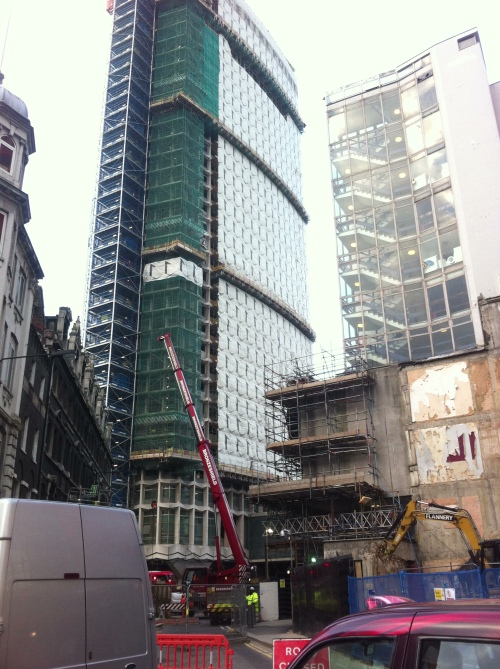
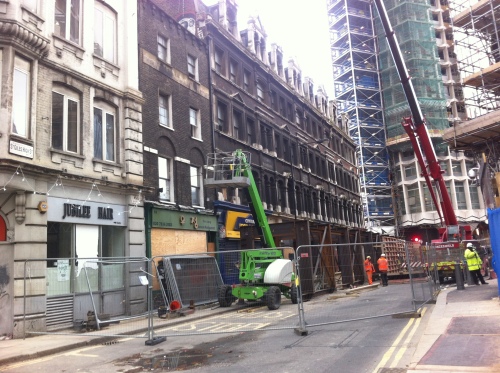
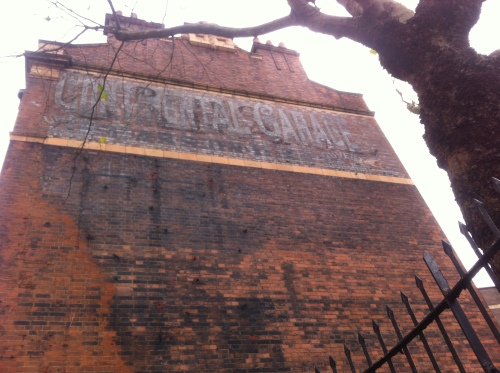
I have a piece in today’s Guardian about the disappearing London district of St Giles, for centuries a hive of villainy and low entertainment but which is now, finally, being aggressively domesticated by developers with no love of vernacular architecture or fun.

Last year, while walking round this junction of Tottenham Court Road, Charing Cross Road and Oxford Street, I was assailed by pneumatic drills, wrecking balls and nostalgia. This used to be my territory, where I’d play after working at Time Out on Tottenham Court Road, and now much of it was unrecognisable. The cafes, bars, restaurants and clubs that I’d known so well were gone. But this wasn’t simply a case of the passage of time and changing fashion causing old haunts close down – that I could accept, more or less. Here the buildings themselves had been pulled apart so nothing new or interesting could take their place.

Even Time Out‘s old office had been demolished, developers deciding that rather do any actual developing and modernise the entirely usable existing structure, it was easier to knock it down and start again. This was happening over and over, wherever I looked. It was like armaggedon, a building site several miles square, pouring concrete over memories and salting fertile ground.

With this wholesale demolition, the character of an entire area was being irrevocably and deliberately erased. People have been saying the West End was dead for decades, but in the borderland of St Giles something of the old  Soho and Covent Garden still lingered. Now, it’s gone. If it’s fun you want, give Zone One a skip. It’s all glass here now.

IMG_4940 IMG_4929 IMG_4932 IMG_4938 IMG_4932 IMG_4927 IMG_4925 IMG_4923


Save the Half Moon in Herne Hill

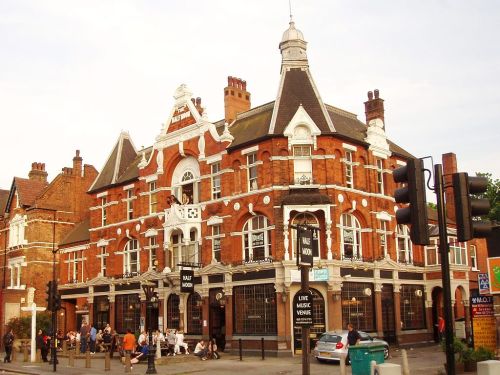
There has been a hole in the centre of Herne Hill since August 2013. That’s when a water main flooded Half Moon Lane closing most of the businesses. All eventually reopened (although some subsequently closed again, defeated by the insurance process) except what’s arguably the most important one: the Half Moon pub, a glorious gargantuan neo-Gothic late Victorian Grade II-listed pub that should be Herne Hill’s crown jewel but has instead been allowed to fester for more than two years, to the lasting shame of landlords Dulwich Estate. This is a fine London pub, which opened in 1896 – a pub has been on the site since the 17th-century – and has featured in graphic novels by Alan Moore, hosted gigs by U2 and Frank Sinatra, comedy shows by Eddie Izzard, and whose former drinkers include Dylan Thomas, who took the name of Under Milk Wood from the nearby Milkwood Road. Now, it’s dead, boarded up, dilapidated and rotting from within.

So how has this come to pass?

half moon

Locally, rumour and counter-rumour have swirled about its fate. The chief sticking point is that there are several floors above the pub – these once contained boxing a gym where I spent an exhausting three minutes being chased round the ring by a former middleweight champion – that represent a huge financial opportunity. Attempts to convert them into residential flats went nowhere and it’s said that Dulwich Estate, who look after the interests of the wealthy nearby private schools as well as a couple of other pubs, wish to turn it into some kind of boutique hotel as they are doing with the Crown and Greyhound in Dulwich Village.

This would almost certainly spell the end of live music at the large function room attached to the pub. This 200-capacity room has a surprisingly rich history as a London venue, as I discovered when talking to Peter Blair, who is leading the Save The Half Moon campaign with the Herne Hill Forum, fed up of the secrecy, silence and endless rumours.

Last week, Blair submitted to Southwark papers that would see the Half Moon listed as an Asset of Community Value that focus on its history as a music venue. He believes that while the pub will eventually reopen – because of the listing status, Dulwich Estate can’t really do anything else with the handsome ground floor bars – the live music component needs to be understood, celebrated and protected. The closure of London’s live venues has reached such epidemic proportions that even the mayor wants to do something about it.

“To have one of south London’s few independent live music venues shut in this way is terrible,” he says. “It’s the flagship of Herne Hill and it just sits there empty on the corner.”

Campaigners have been exploring the pub’s history and have discovered it was a crucible for London’s live blues scenes in the 70s – sessions featured an array of musical talent from the most popular bands of the era including members of the Jeff Beck Band, Rory Gallagher band, Thin Lizzy, and 7th Wave. An account of its history can be seen in this film.

It remained a music venue for the next four decades. In 1980, U2 played an early gig. In the 90s, the house PA was owned by Alabama 3 and gigs included Big Joe Turner and Geno Washington. More recently it hosted Devon Allman from The Allman Brothers and guitarist Albert Lee.

“It’s been a live music venue since the 60s and we can’t lose that live music function,” says Blair. “It has such a great history and was a great venue. Everybody I’ve spoken to says it was such a special place to play. This is a local community pub but it’s also much more than that.”

Damn straight: Leslie Nielsen even filmed a commercial in there.

If the campaigners win their bid to get the pub listed as an Asset Of Community Value, it will mean Dulwich Estate will have to consult the Herne Hill Forum over their plans, finally bringing them out into the open. “Out understanding at this point is that they wish to use the function room as a restaurant,” says Blair. “We want them to explain their plans in full, and to ensure live music is a key component of the new pub, whenever it opens. If it is converted as a hotel, how will that effect the music venue? We have no intention of making it unviable but we want to know what it will be when it opens.” The campaigners have no interest in purchasing the venue, which would cost a fortune but have been in discussion with the nearby Ivy House, who used Asset of Community Value status to purchase their local pub from developers.

There’s also the question of when it reopens. While Dulwich Estate is said to be in negotiations with several pub chains – “everybody you speak to has a different name” – it’s unlikely to open in the next 12 months. Since it closed, no restoration has taken place at all and it’s said the pub, which was at the very centre of the flood and thus under water for some time, is in very poor condition. It seems astonishing that a listed venue can be left to rot by a landlord that is supposed to have local interests at heart, especially when one presumes there is insurance money on hand to fix the damage.

It’s a sad state of affairs for what should be a south London landmark.

To keep up to date with the campaign, see the Facebook group.

The Blitz: missing buildings and false memories

While researching my recent feature on the Blitz and former bombsites in London, I was keen to find a site that had been destroyed and not yet redeveloped.

There were some tantalising leads.

Peter Larkham, professor of planning at Birmingham School of the Built Environment, provided me with an image he’d discovered years before of a derelict building on Lowndes Street, left fallow in memory of the Blitz.

Lowndes Street

“It was in the chartered surveyor professional magazine,” he explained. “The story was that it was owned by a family, bombed, and they never did anything to it in memory of a son that died in the war. Fifty years later, life had moved on, and the property came up for sale.”

It’s a compelling story but one that was difficult to confirm. The Bomb Damage Maps  showed a couple of strikes on Lowndes Street so I sent an email to Dave Walker, librarian at Kensington and Chelsea and writer of the formidable Library Time Machine blog. Dave put the query across to a colleague at Westminster, as Lowndes Street straddles the boundary between the two councils. Between the two of them, they discovered destroyed buildings at No 30 and Nos 11/12 Lowndes Street but both sites were developed by 1963. It would require further research to get to the bottom of the story as outlined by Professor Larkham and as tantalisingly revealed in the above photograph.

There was similar confusion with regard to another site. This was next to the Hat & Feathers pub on Clerkenwell Road.

Clarkenwell Road

Clarkenwell Road

According to local legend, the site had been demolished by a bomb and used as a car park ever since. For years, you could even see scraps of wallpaper from the destroyed building still attached to the neighbouring wall. The only problem was there was no record of a bomb landing anywhere near this property – itself rather extraordinary given how badly the area had been bombed. It appears that this was a false folk memory, but one that was still being shared today. In the end, I included no empty lots in my piece as I couldn’t find any that comfortably fitted the available facts.

After my piece was published, I was contacted by a photographer, Thom Atkinson. He was about to publish a book called Missing Buildings, looking at precisely this area – the missing spaces between London buildings ostensibly created by bombs. They’d even included an image of the Hat & Feathers site I’d been studying. Like me, Atkinson was intrigued with the way folk memory and evidence didn’t always correspond.

hatfeath

Photograph by Thom Atkinson

Thom said, “We came across the same sort of folklore thing a couple of times, and in a way that’s what the book is about. There’s a picture we made on Sclater Street, near Shoreditch Station, and the market traders there were talking about it being a bombsite when they were kids. When we looked at the map it didn’t quite fit their story – but they remembered it so clearly.”

There were several explanations for this, false memory being only one of them. As Thom explained, “Sometimes bombs are recorded and the site itself displays all the signs, but no building damage is shown on the LCC map. And of course the whole thing is complicated because the LCC maps only show damage during wartime – we’ve heard stories of buildings falling down or being demolished later on, because of underlying structural damage caused by the bombing – one of the guys who works in the processing lab (also a bombsite by the way!) has a house in East London with cracked foundations; the surveyor thinks they were caused by a bomb landing at the other end of the street.”

Missing Buildings is a wonderful book, showing the ghosts of London homes, many of which have long disappeared but still leave an imprint on neighbouring buildings in the form of shadows, new brickwork, girders and the spectres of chimney breasts. Others have been filled in with new buildings that stand out ridiculously against their neighbours, awkward and ugly, eternally temporary.

There are more of these spaces than you might imagine in London, but they are vanishing fast and this book is an exquisite record of the spaces that get left behind, often more by accident then design. You can buy it here.


The Black Museum at the Museum Of London

The Museum of London’s new exhibition is undoubtedly something of a coup. Crime Museum Uncovered features around 600 items from the Met Police’s private museum, once known as the Black Museum but now renamed the Crime Museum. I visited the Crime Museum at Room 101 in Scotland Yard several years ago and wrote about the experience here.

What’s fascinating is the differences between the way a public museum like the MoL treats the same objects as the police museum. The shelf above is from Scotland Yard. It is located in an ante room before the museum proper and contains a selection of weapons seized on the streets of London, and above that a dozen or so death masks taken of the heads of executed prisoners. This is pretty much the first thing visitors to the museum will see and the ensemble is like a whack on the head with a cosh. It says London is full of criminals, this is how they will try to kill you and this is what we will do to them when they are caught.

At the MoL, the same material is treated much more sensitively. Only six or so weapons are exhibited, and these are placed neatly in a clean glass box rather than scattered higgledy-piggledy over an old table. The heads are also on exhibition, but some distance removed from the weapons, creating a disconnection between crime and punishment.

That is, perhaps, the only way the MoL could present this exhibition. I’ve said before that the Crime Museum as curated by the police is entirely inappropriate for the public and I’m not entirely sure it’s appropriate for the police as it is deliberately created to cultivate an air of suspicion bordering on the paranoid, a repeated insistence that the streets are not safe for policeman, that anybody could be out to kill you, using anything from an umbrellas to a telephone. It’s an attitude that goes some way towards explaining the deaths of numerous Londoners at the hands of the police.

The MoL also has to fill in some of the blanks at Scotland Yard. The Crime Museum is ostensibly a teaching museum  – it shows coppers the history of crimes and how they have been solved. But the cases at Scotland Yard contain little explanatory detail – that is provided orally by the curator. At the MoL, by contrast, there is a fairly thorough, detached but instructive look at a selection of important crimes, showing what they have revealed about forensics, police procedures, detective work and criminality (many of the cases, too many, concern crimes against women). They also touch on several of the most significant crimes of the era, including the Krays, the Richardson, Derek Bentley, Dr Crippen, Christie and the Acid Bath Murderers. It’s all very carefully selected and brilliantly explained, with items well chosen to both inform and occasionally horrify. This is easily the best part of the exhibition.

Gloves worn by John Haigh to dissolve the body of Mrs Olive Durand-Deacon, 1949 © Museum of London

Gloves worn by John Haigh to dissolve the body of Mrs Olive Durand-Deacon, 1949 © Museum of London

The MoL then breaks away from these individual crimes to look at broader themes, such as concealed weapons, drugs, forgery, armed robbery and espionage. While the focus on individual crimes does not include anything from after 1975 to avoid distress to victims’ relatives – which means the infamous Dennis Nilsen cooking pot isn’t on show thankfully – the exhibits on broader themes go right up to the present day. That is largely so they can show items related to the July 2005 bombings in the form of reconstructions of the homemade rucksack bombs, something I found particularly unnecessary as these weren’t even from the crime scenes, which is a core part of the Crime Museum’s relevance. Authenticity is absolutely vital here – it is the raison d’etre of the entire collection – and if the items are not original, you leave yourself open to accusations of Chamber of Horrors style ghoulishness.

It’s a rare misstep from an otherwise sensitive exhibition, that ends with an excellent film in which policeman, curators, crime victims and professors discuss crime, the museum and its role in police life.

the first criminals to be convicted in Great Britain for murder based on fingerprint evidence, 1905 © David Gill/Museum of London

the first criminals to be convicted in Great Britain for murder based on fingerprint evidence, 1905 © David Gill/Museum of London

So that’s all good, but I still came out of the Museum of London exhibition with mixed feelings.

It goes right back to the start. The exhibition begins with a “reconstruction” of the original Victorian museum. But this is a reconstruction in the very loosest sense – basically, it means the items are old but they are being presented in a very modern way. That is far removed not only from the Victorian museum but also from the contemporary Scotland Yard museum, which does not look, feel or smell modern at all. The Crime Museum is old-fashioned, cluttered, chaotic and deeply depressing, and a genuine piece-by-piece reconstruction, or even a photograph of the current Scotland Yard museum, would have been a real benefit, as otherwise it’s impossible to discern the peculiar atmosphere of the place. Without it, the MoL are sanitising not just the nature of crime – which is excusable – but also the nature of policing, which is not. That after all goes to the heart of what the Crime Museum is about, who it is for and what that means to Londoners, and it’s something that is entirely absent from this exhibition – the one hint comes from the only item relating to the long history of riots in London, which is a police shield from Broadwater Farm that’s been burnt by a petrol bomb. What does that tell you about the way the police regard these inner city riots?

The Museum of London have produced a fascinating, thoughtful and thought-provoking reimagining of the Crime Museum’s contents that explores the nature of crime and law enforcement in London, but it does not tell the full story of the Crime Museum. I imagine Scotland Yard will be very pleased about that indeed.

The Barbican Estate – a town reconstructed from its cellars

In the comments to my Guardian piece on the Blitz (yes, I read them, hungrily seeking affirmation) there were several interesting discussions about the Barbican. In the piece I’d described it as a “successful” example of post-war redevelopment, something others were quick to dispute, arguing that nobody liked the Barbican. I hadn’t considered my view particularly controversial, but then I do spend a lot of time talking to Brutalists and had also just written an article about the history of the Barbican for the excellent n magazine – in-flight magazine for Norwegian airlines.

You can read it here, where there are also some excellent photographs. And here’s a video of Unit 4 + 2 singing “Concrete And Clay” on the unbuilt estate in 1965.

While writing the feature, I spent a couple of hours exploring the Barbican more carefully than ever before. Although I’ve visited the Barbican Centre and the Museum of London on countless occasions, this has rarely led me through or over the estate itself. There’s something about any estate that doesn’t welcome visitors and during my walks around London I usually stick to “normal” streets, but the Barbican is well worth your time.

The Barbican, contrary to public perception, is a wonderfully walkable part of London. Yes, it can be confusing but it was built with the pedestrian in mind so amply rewards the willing walker. As I wrote:

The Barbican takes the City’s ancient complexity and expands it over three dimensions – you can go up and down as well as backwards and forwards, so wandering around the Barbican becomes an adventure. Curves envelope you, towers loom, narrow pedways disappear under pedestals and re-emerge as wide walkways enlivened by beds of wild flowers. Even the yellow line may abruptly disappear, eradicated by recent reconstruction work.

There are surprises around every corner, such as London’s largest conservatory outside of Kew Gardens, or the aged tree stump named after composer Felix Mendelssohn, who once sat by it in Buckinghamshire contemplating compositions. Across the lake from the arts centre is the Grade I-listed church of St Giles, where Oliver Cromwell was married and the poet John Milton is buried.

Another fine spot is the roof of the concert hall, initially conceived as a sculpture court, which is framed by the graceful curve of Frobisher Crescent and overlooked by a giant tower.

The Barbican is often chastised for being confusing and it can be, but this is precisely what many people like about the City, with a medieval street pattern that is often deemed charming. And is there anything wrong with getting lost in London anyway? I’ll report back on that thought in my next blog post.