
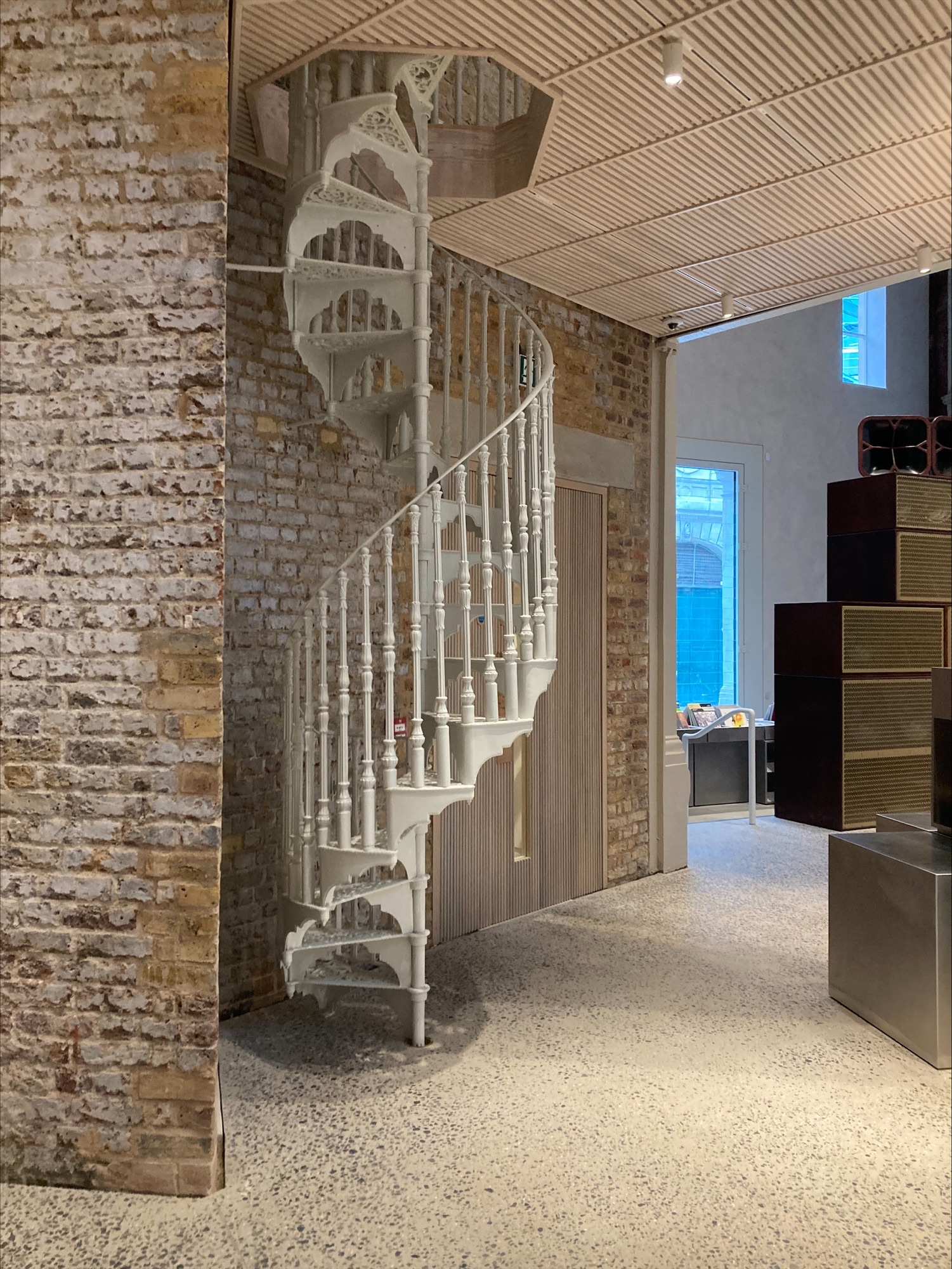
It’s been a long while coming. I first toured the new home of the Museum of London in 2018, when writing a piece for the Telegraph about the battle to save Smithfield Market from demolition. I returned last year to meet some of the craftsmen – stonemasons, ironworkers, coppersmiths – who were working on the building’s restoration ahead of its new future as the Museum of London. Here’s one of many spiral staircases that has been restored. Isn’t it lovely?
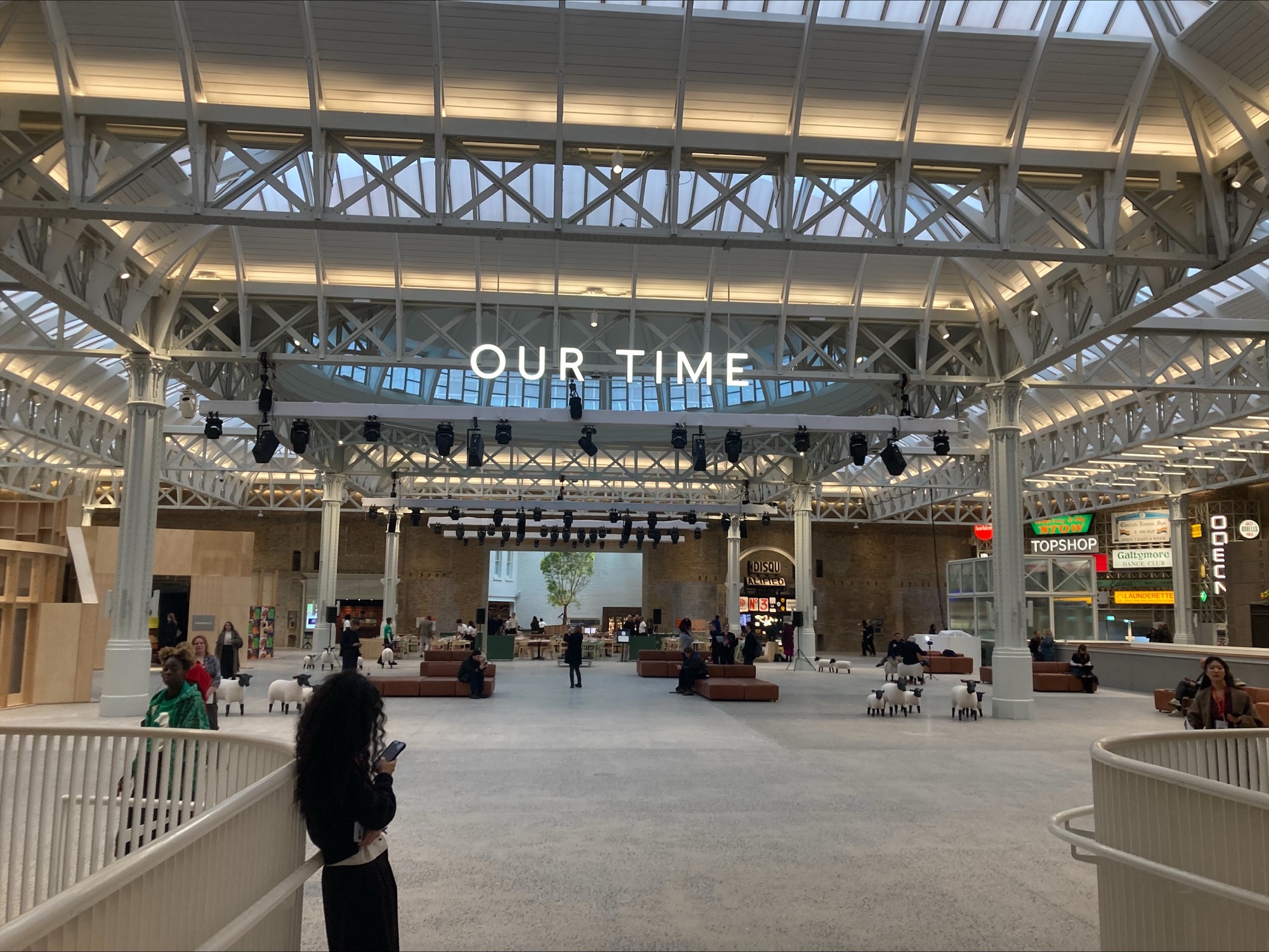
The Museum of London occupies its huge, prominent new Smithfield site in a strangely schizophrenic manner. Upstairs is a massive open space, with objects scattered around the edges, arranged more for photographic opportunities than anything else. This area, loosely described as Our Time, is clearly designed to host events, sit around, shop, sip coffee, queue – all the stuff that young people seem to love. You can get a flavour of it from this photo – it feels a bit like a less cluttered British Museum great court, or a less commercial version of St Pancras and Battersea Power Station, showing off the building while acting as a place to hang.
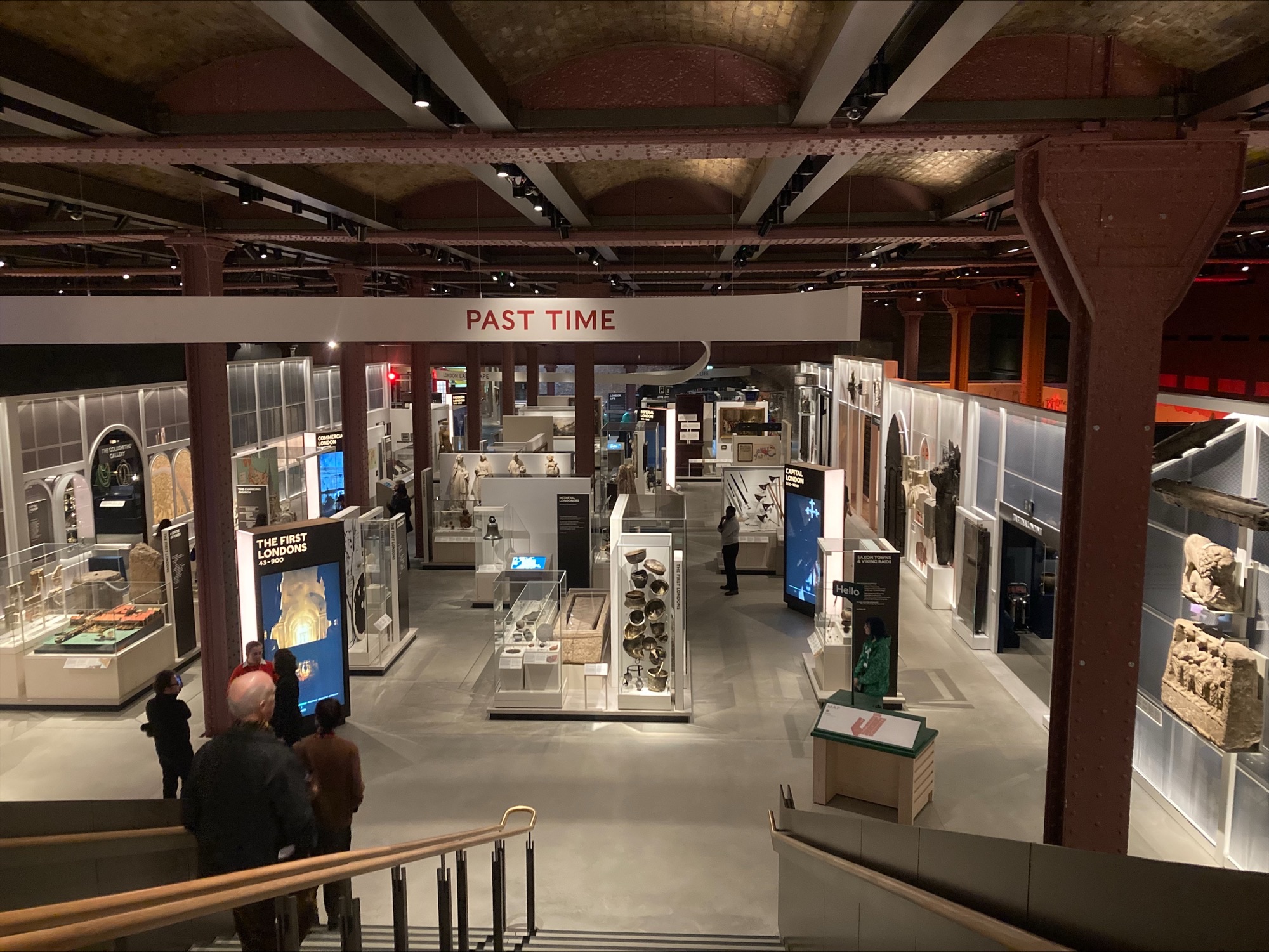
The actual museum stuff – Past Time – is hidden downstairs, arranged in a oddly haphazard manner that is first chronological and then thematic, swerving from side to side like a Soho drunk. There are considerably more items on display than in the old museum space – but it doesn’t really feel that way. The arrangement is strangely sparse. Here’s the view from the staircase.
There’s unquestionably a lot to see here so let’s start by rattling off a few highlights, all found in small galleries that sit just off the main room: the Cheapside Hoard gets its own gallery, very nicely done; there’s good use of the excellent collection of suffragette material; a recreation of a Roman home, although I preferred the goldsmiths workshop; the Great Fire gallery has been reimagined, and effectively so I think. Then from the main gallery floor, we have some old favourites like the wooden model of the old St Paul’s, poverty maps and a diorama of Roman London. There’s a slice of fatberg (pictured below), a cool old car, lots of photos of the Blitz, an interesting section on a homeless shelter in Camberwell and plenty more. A deep dive would doubtless numerous gems, secreted in their spartan cabinets.
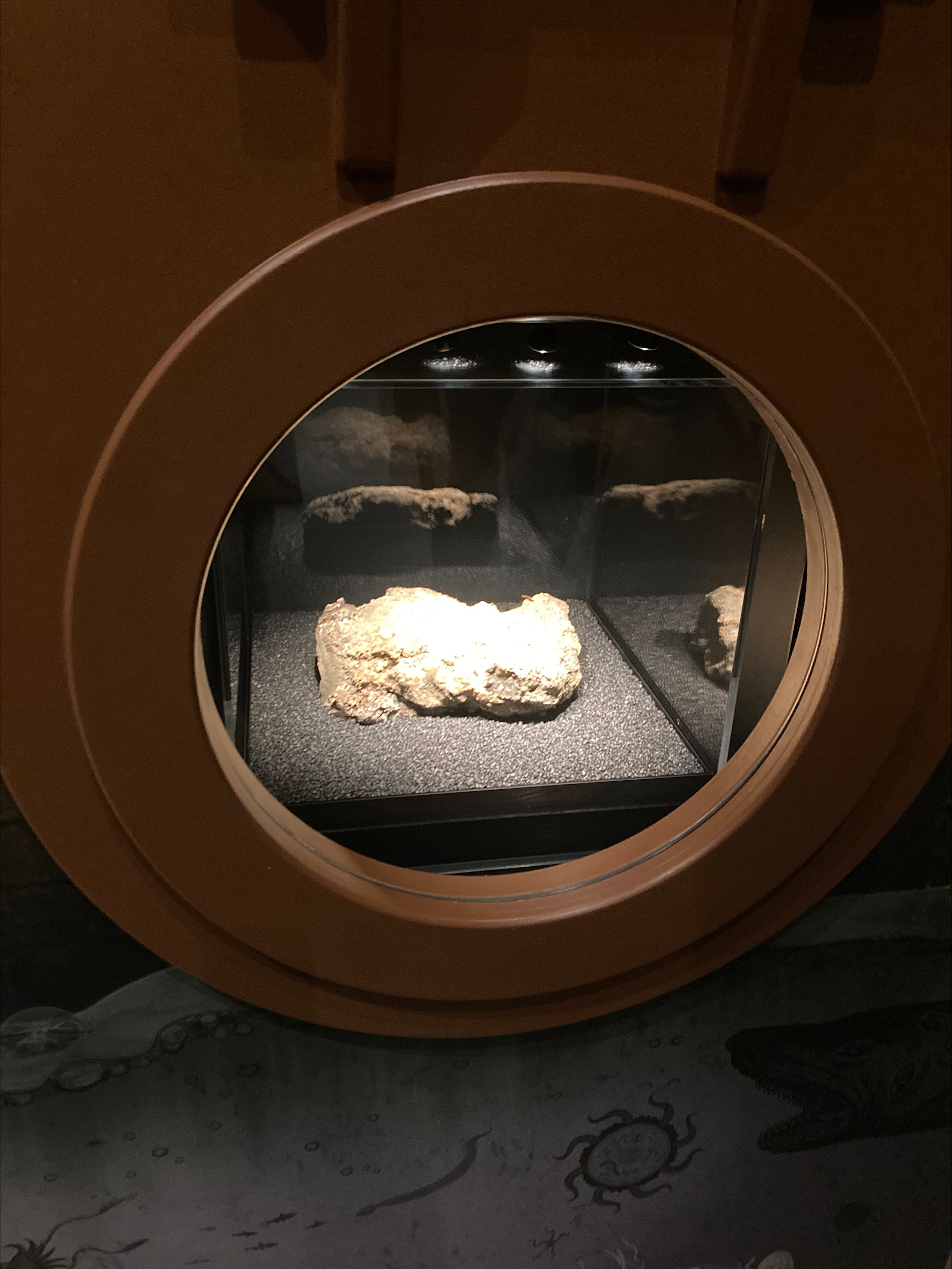
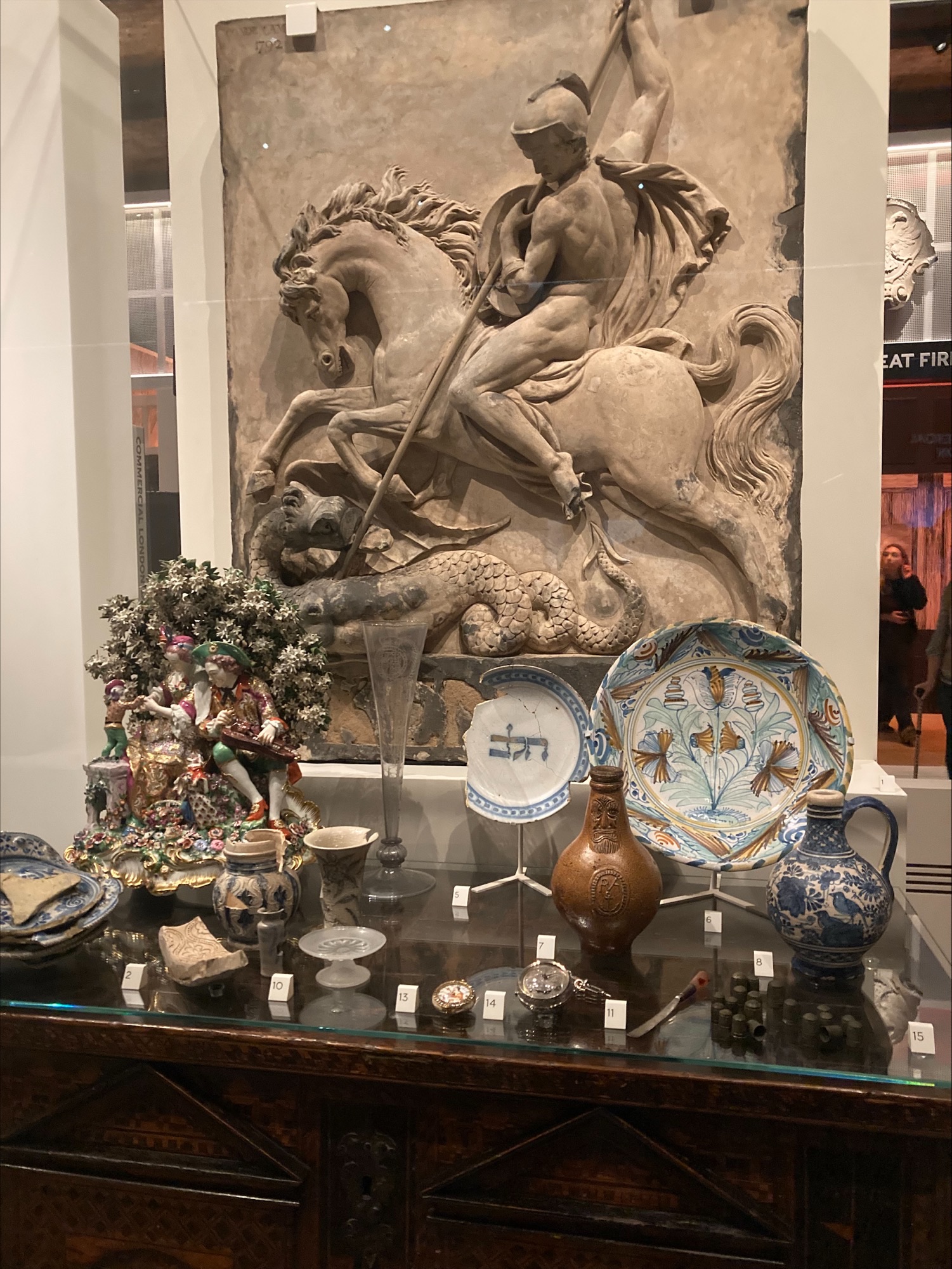
But I could have done with more displays like this, where the curator has just gone for it and shoved a bunch of stuff in a cabinet, like at your grandma’s.
There was a strange absence of personalities: no pop stars, actors, models or footballers. No David Bowie or Thierry Henry or Kate Moss. No David Bailey or Kray Twins or Chloe Kelly. No Poly Styrene or Idris Elba or Ken Livingstone. Given London’s role in developing pop culture since the 1960s, this felt odd. Perhaps the desire is to not look dated.
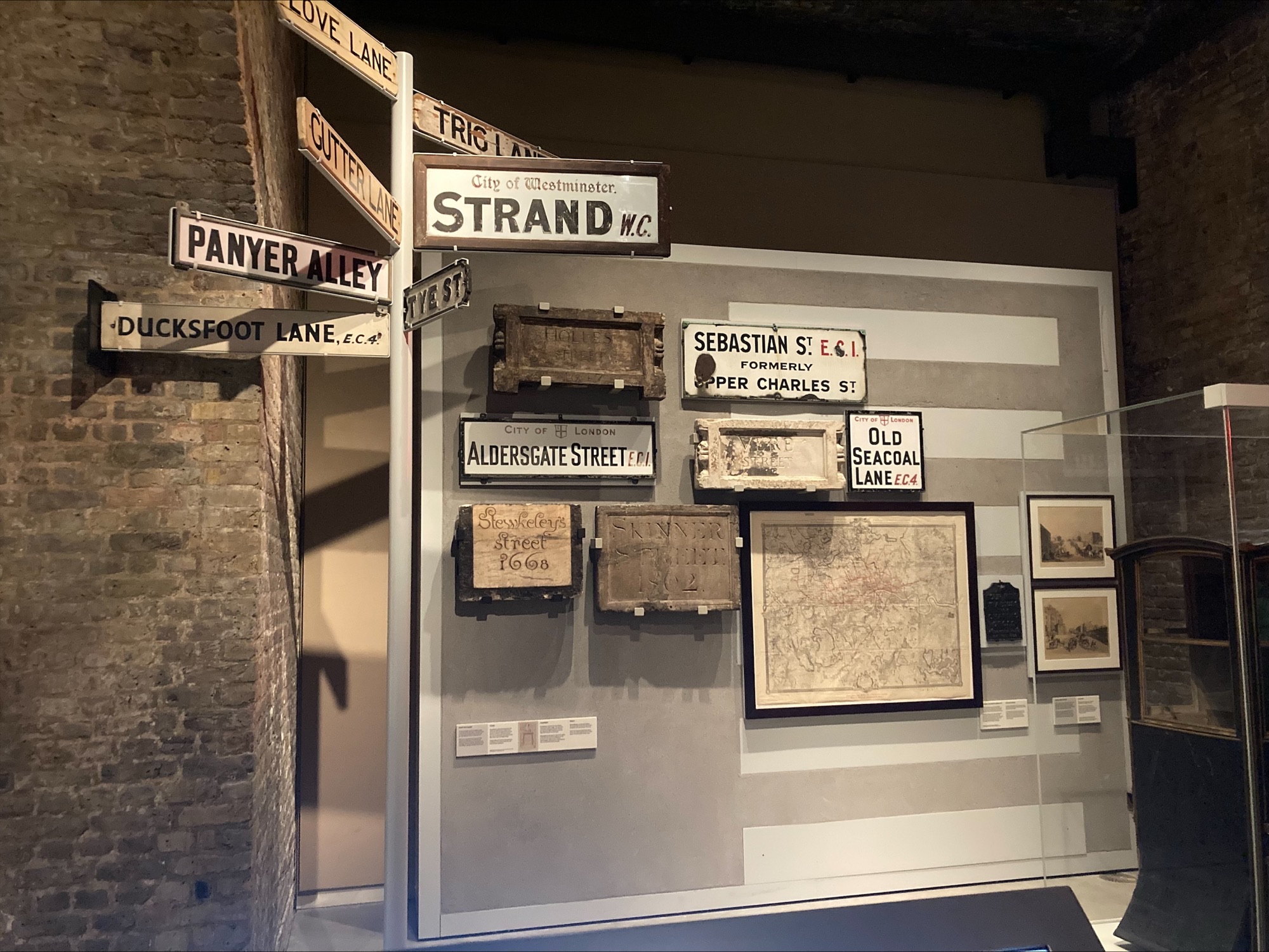
If there is one word I would use to describe the new Museum of London it’s tasteful. Everything is very sleek, almost minimal, like one of the kitchen extensions everybody in Zone Two seems to have. The old museum always got criticised because of its perceived inaccessibility and confusing layout, but it had a charming chaos that developed through force of circumstance and decades of overlapping curatorial tastes. I am sure I will warm to the new museum, but I feel it could have done with more excessive, hyperactive, displays and a couple of really spectacular setpieces, however tacky, like the beloved old Victorian street section from the old site, or the prehistoric hut or the excellent gallery on the Blitz.
Basically, I could have done with much more of this to overwhelm the senses.
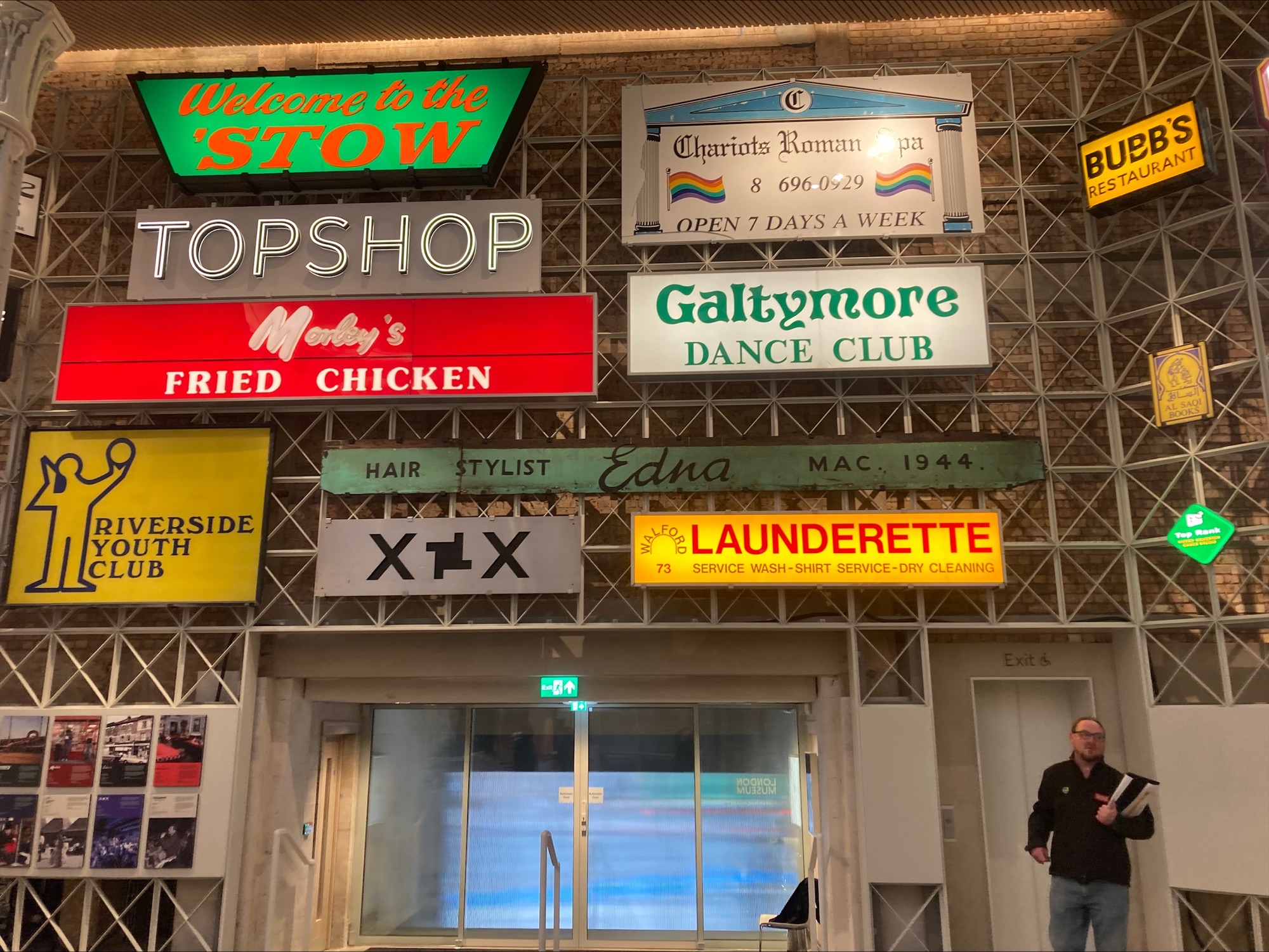
But perhaps a clue to the challenge came in a conversation I overheard regarding the array of illuminated signs above, where a cheerful museum guide was carefully explaining to one confused visitor what Morley’s Fried Chicken was. As Darryl said on Bluesky, there is a tension between London’s history as seen by tourists and the experience of those who have made it their home. The Museum of London is an international museum for an international city; we just happen to live here.

