Tag Archives: exhibition

The Rock and Roll Public Library

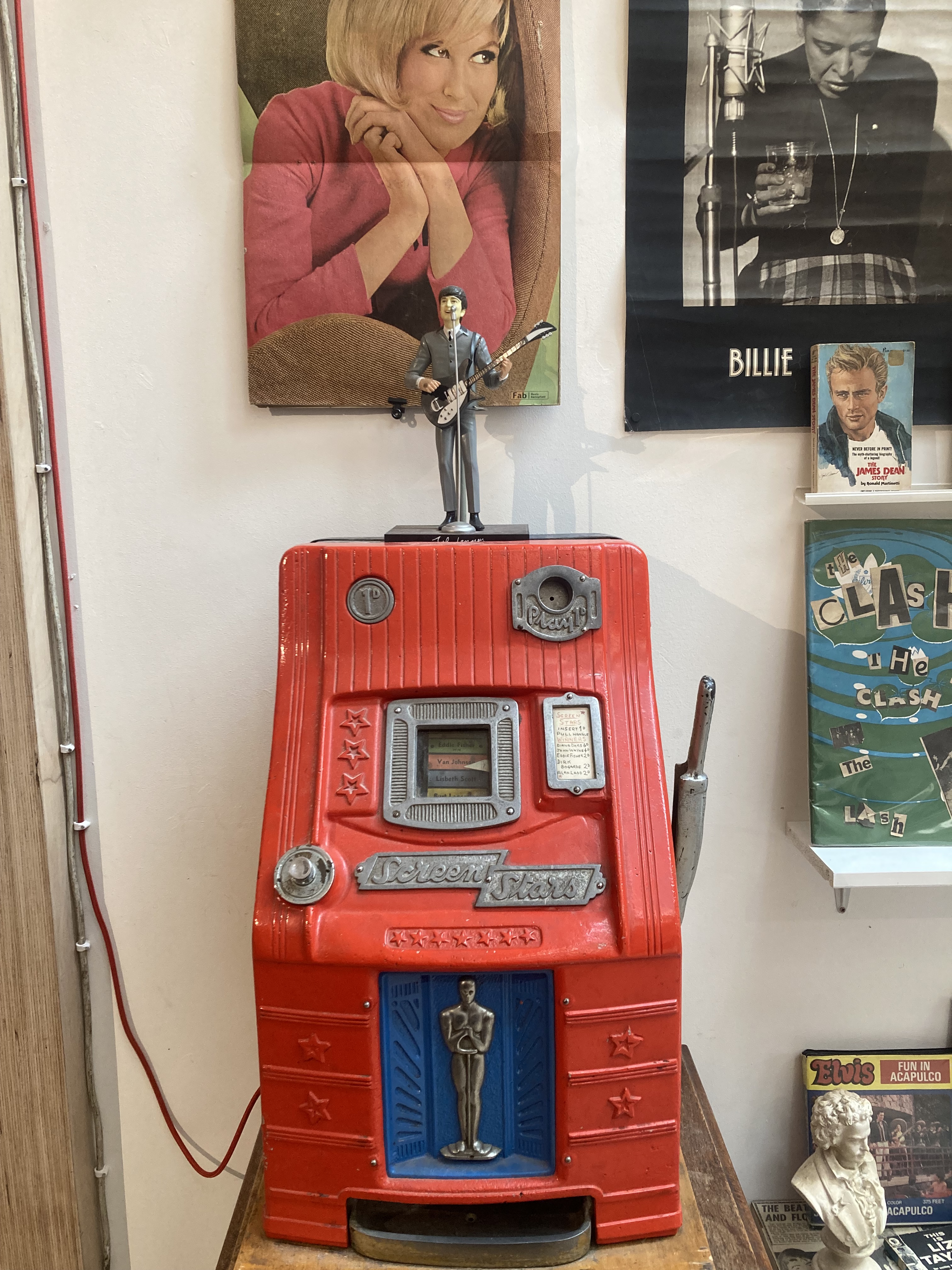
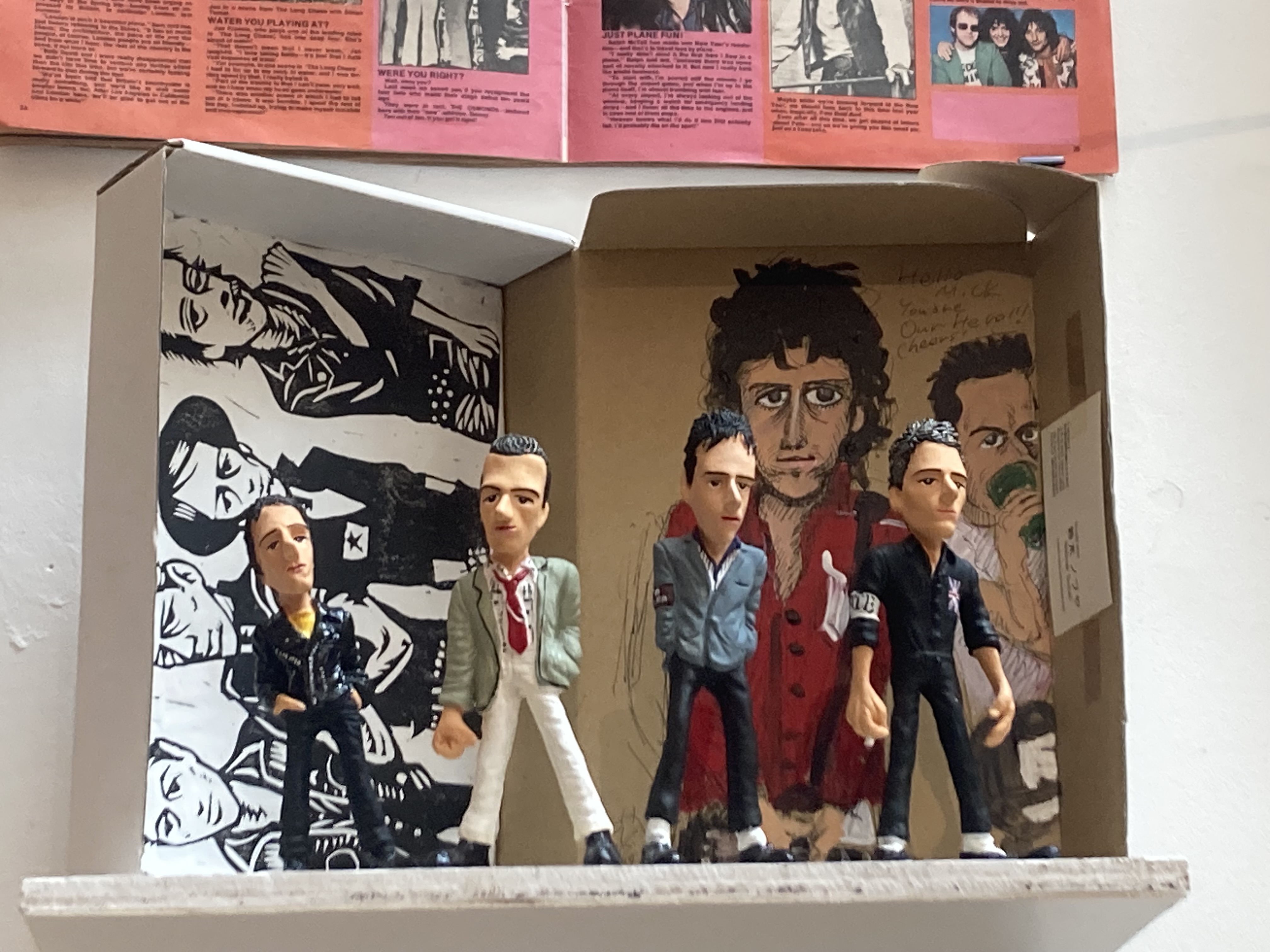
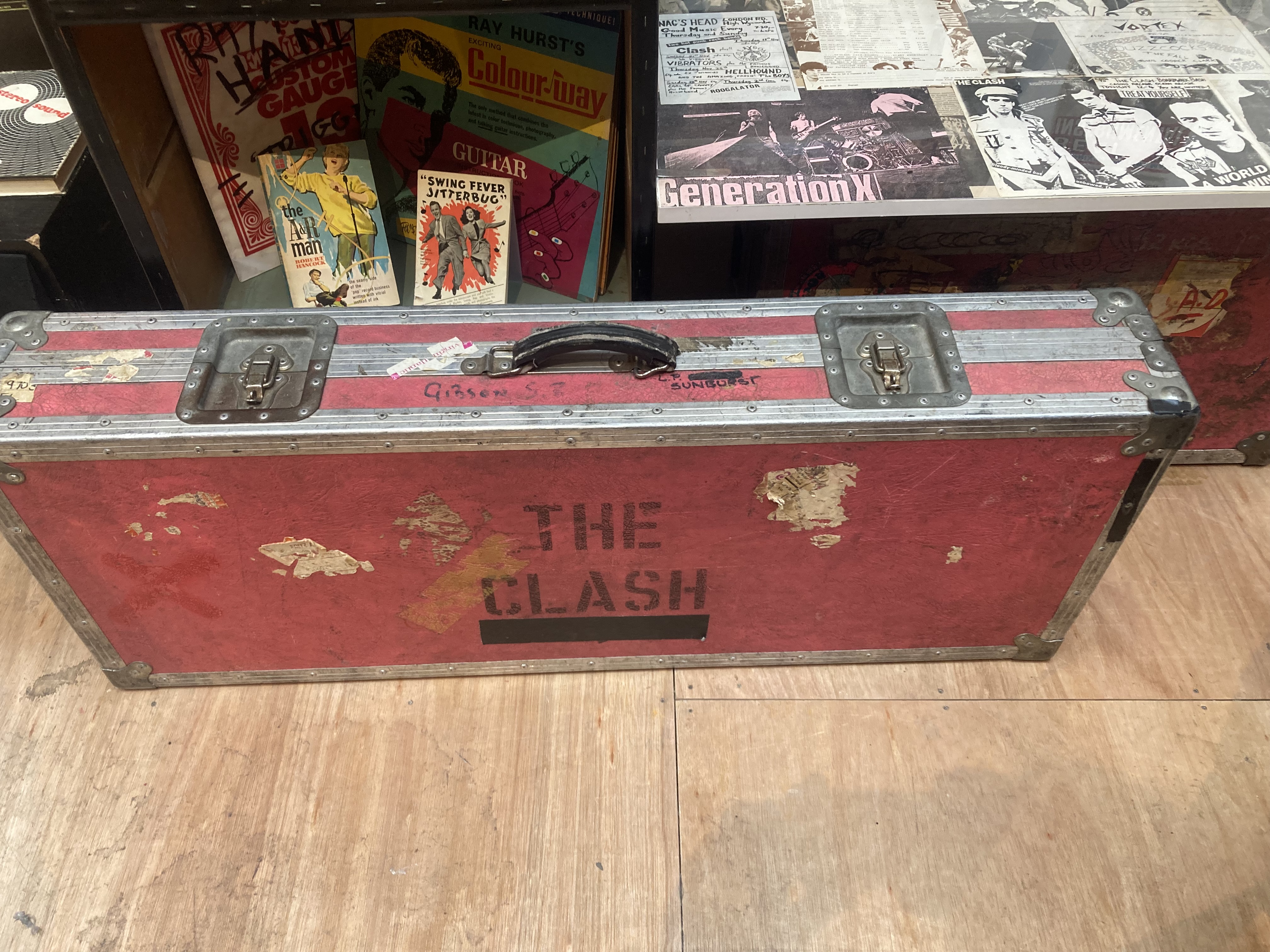
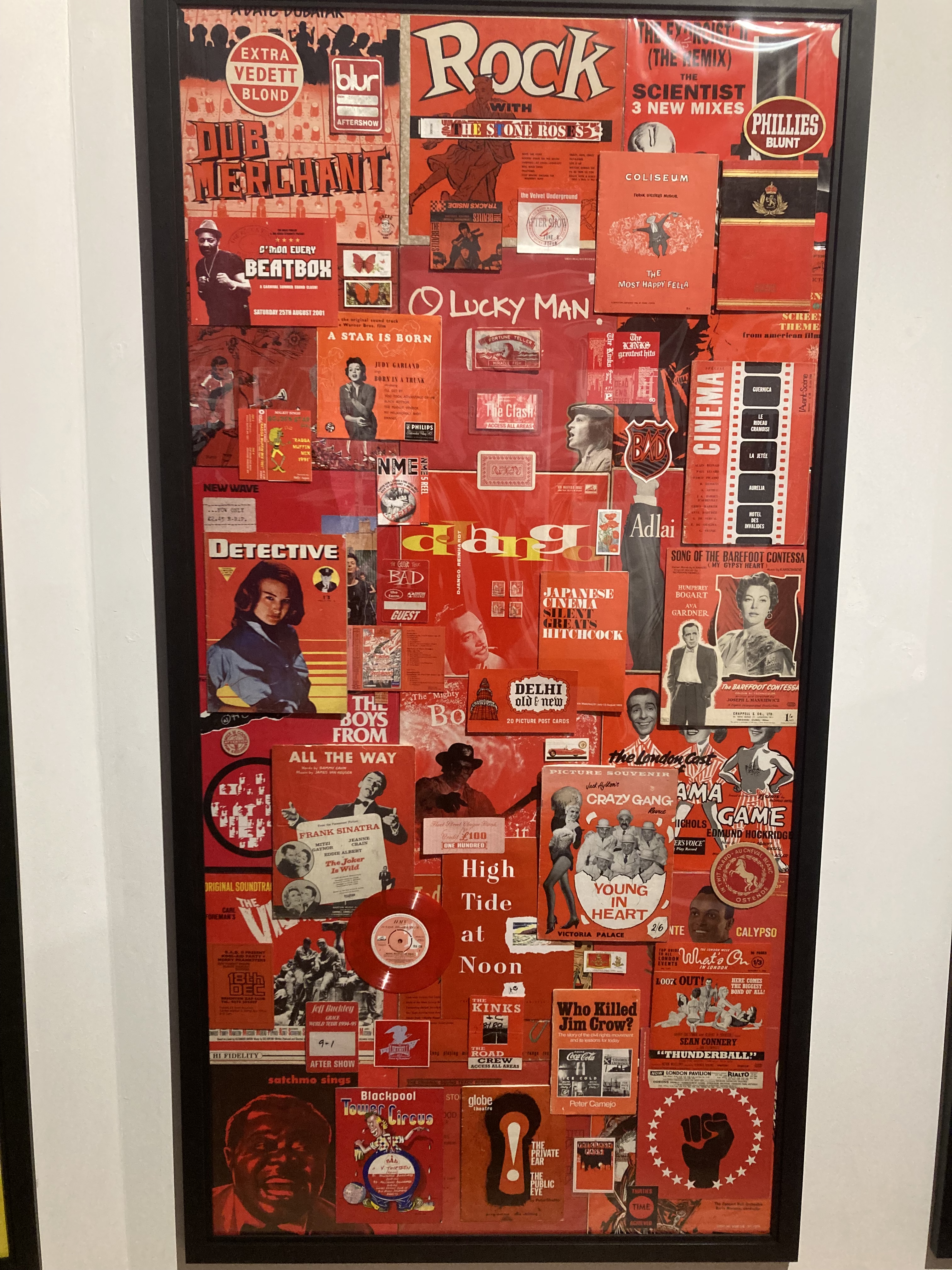
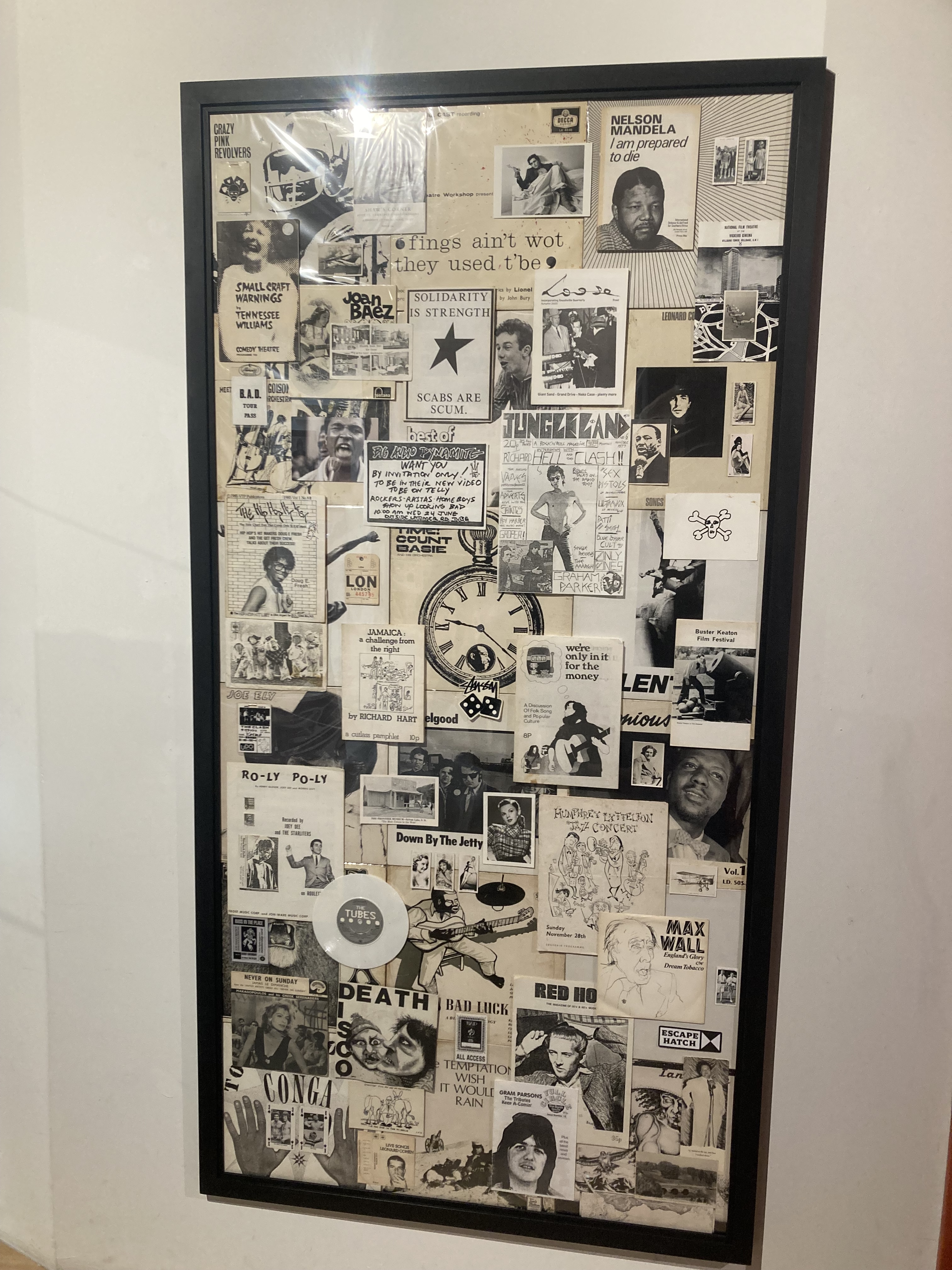
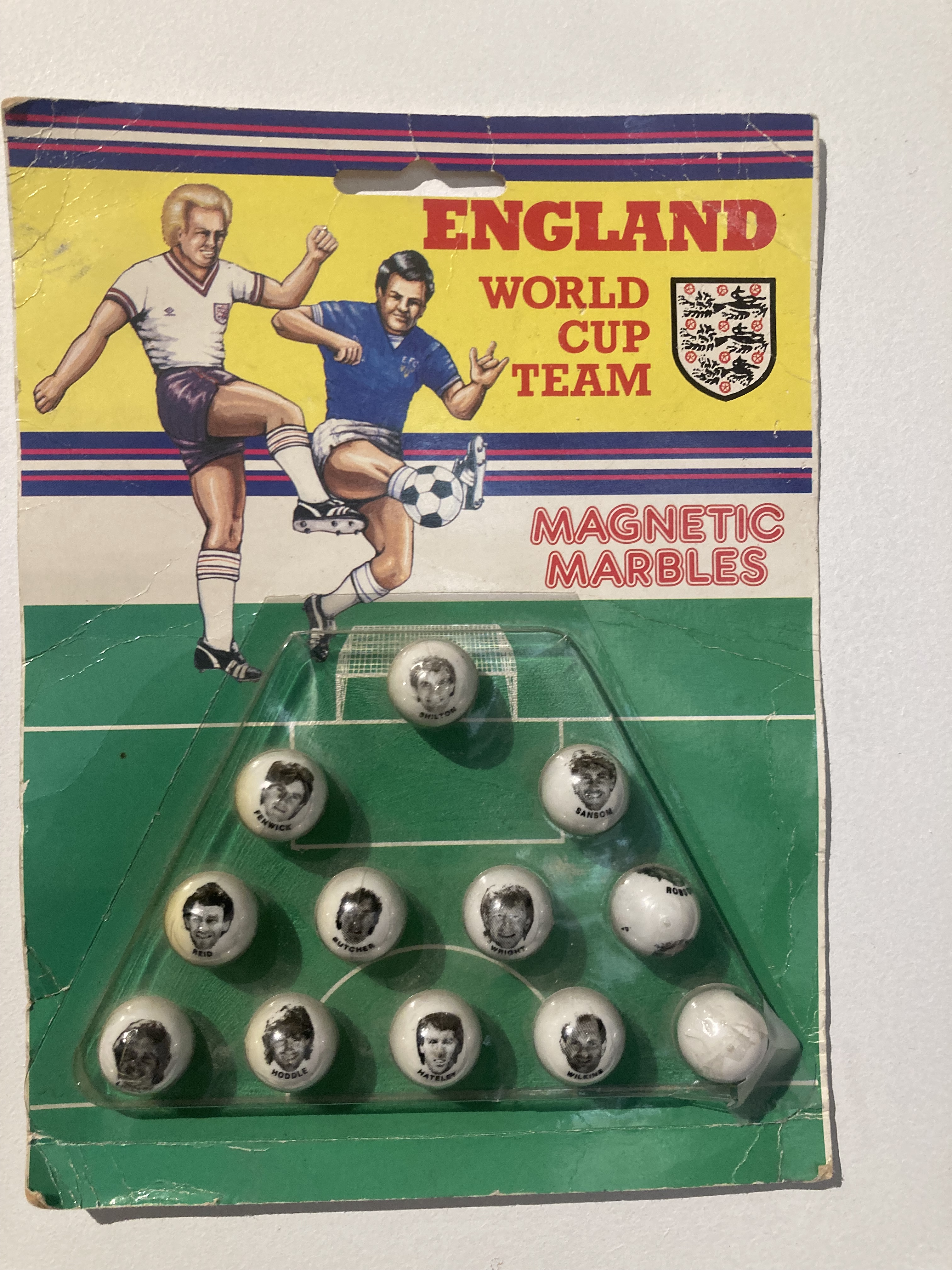
I am not usually the type of person who can summon a quote off the top of their head but one came to mind as I looked around the Rock And Roll Public Library in St Giles. This is a collection of pop culture and ephemera accumulated by Mick Jones – of The Clash and Big Audio Dynamite – and it’s gloriously random nature reminds me of something I once read about collecting: “The most important item in any collection is always the next one”.

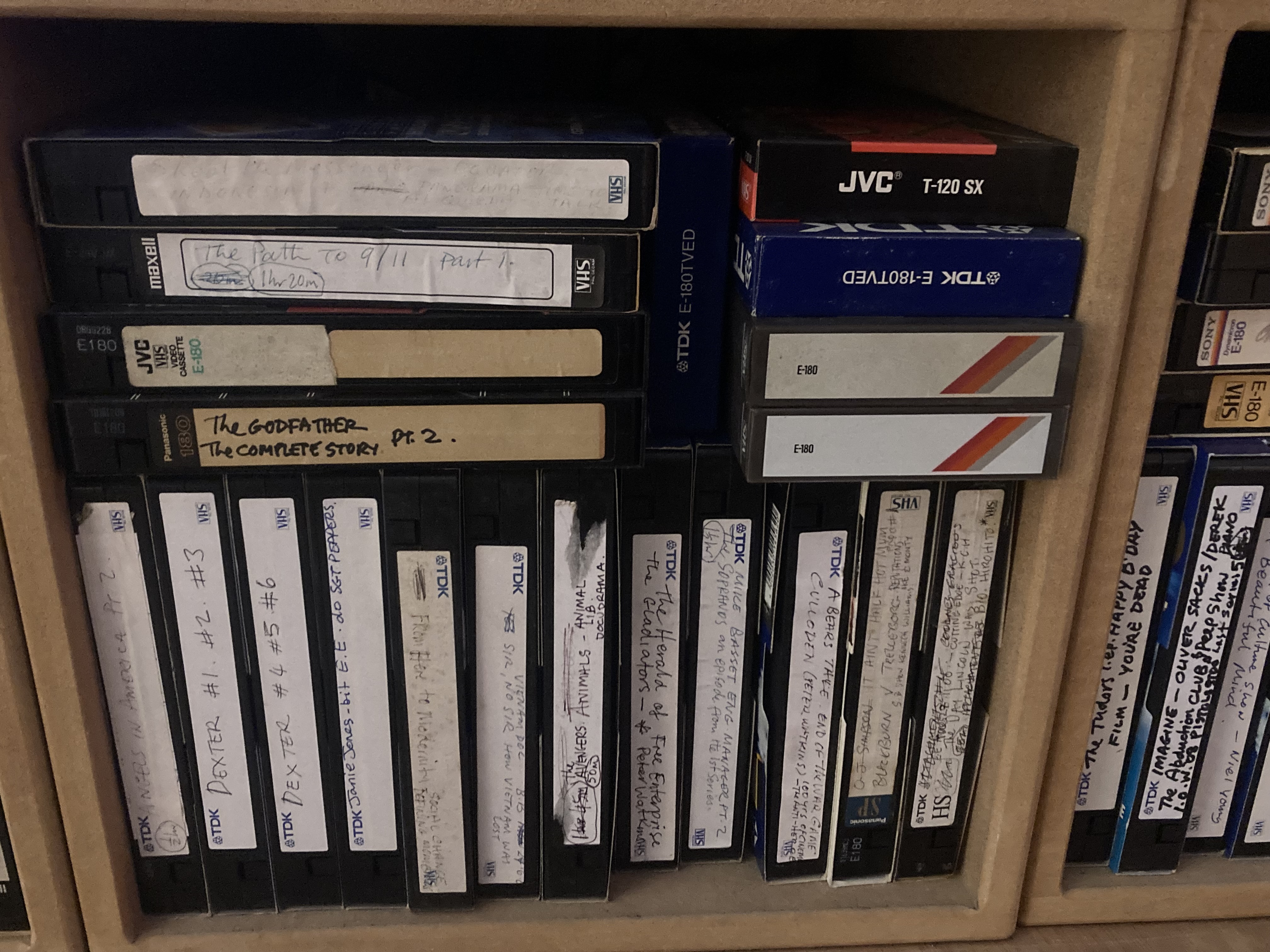
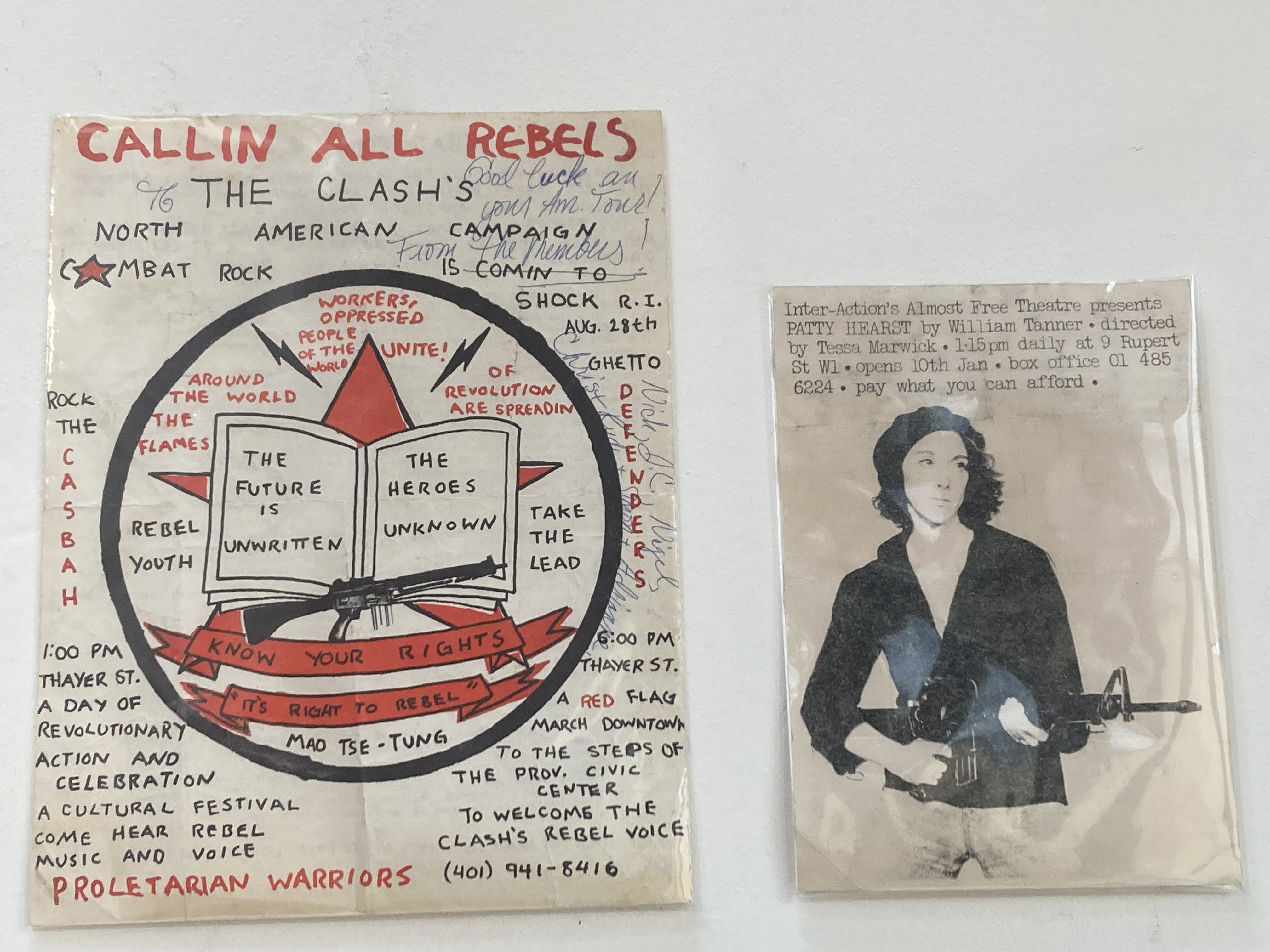
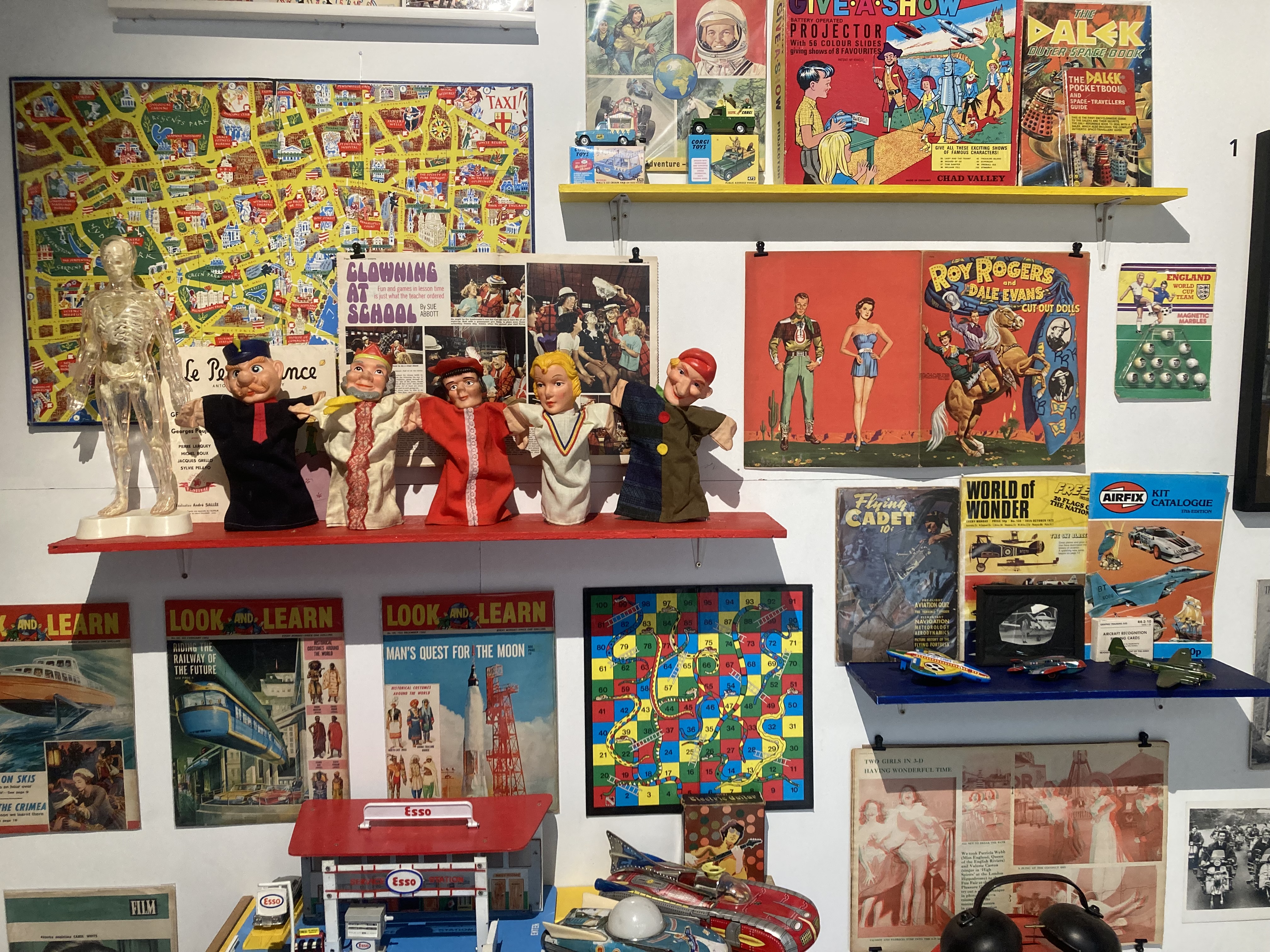
The Rock And Roll Public Library includes all manner of Clash and BAD-related material: lyrics, tapes, costumes, instruments, props etc. But it also includes loads of stuff. Comics, VHS tapes, posters, flyers, toys, board games – the sort of ephemera that collectively explains how we become ourselves, how we develop our areas of interest and points of references, our personal passions or things that, for some reason, struck a chord at a particular moment in our lives.

I particularly liked the colour-coordinated montages of otherwise unconnected items. There were also areas set up to look like Jones’s childhood home, and areas that focused on specific themes – Americana, Elvis and WWII for instances – showing how these influenced his musical approach both in the Clash and BAD.
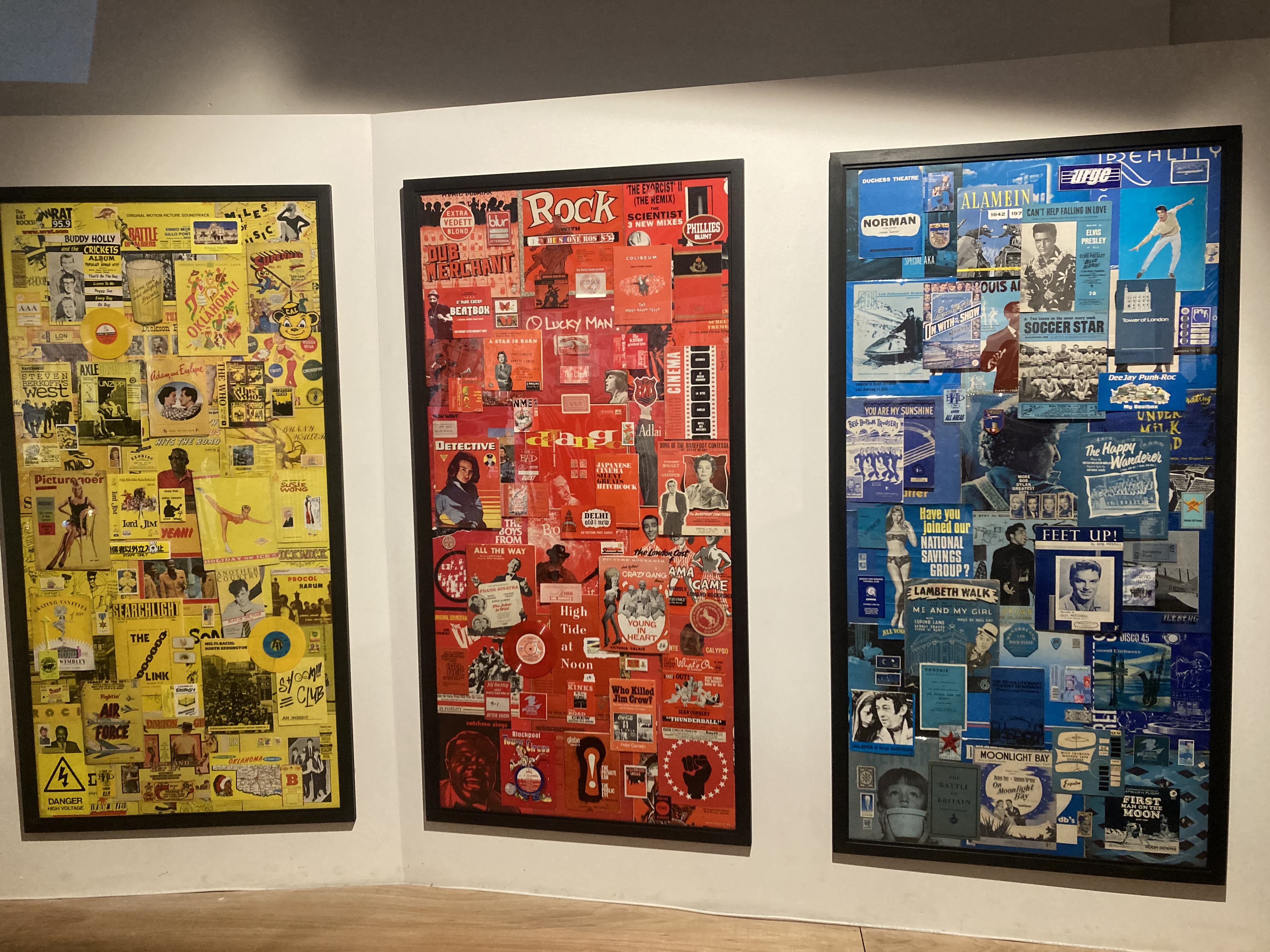
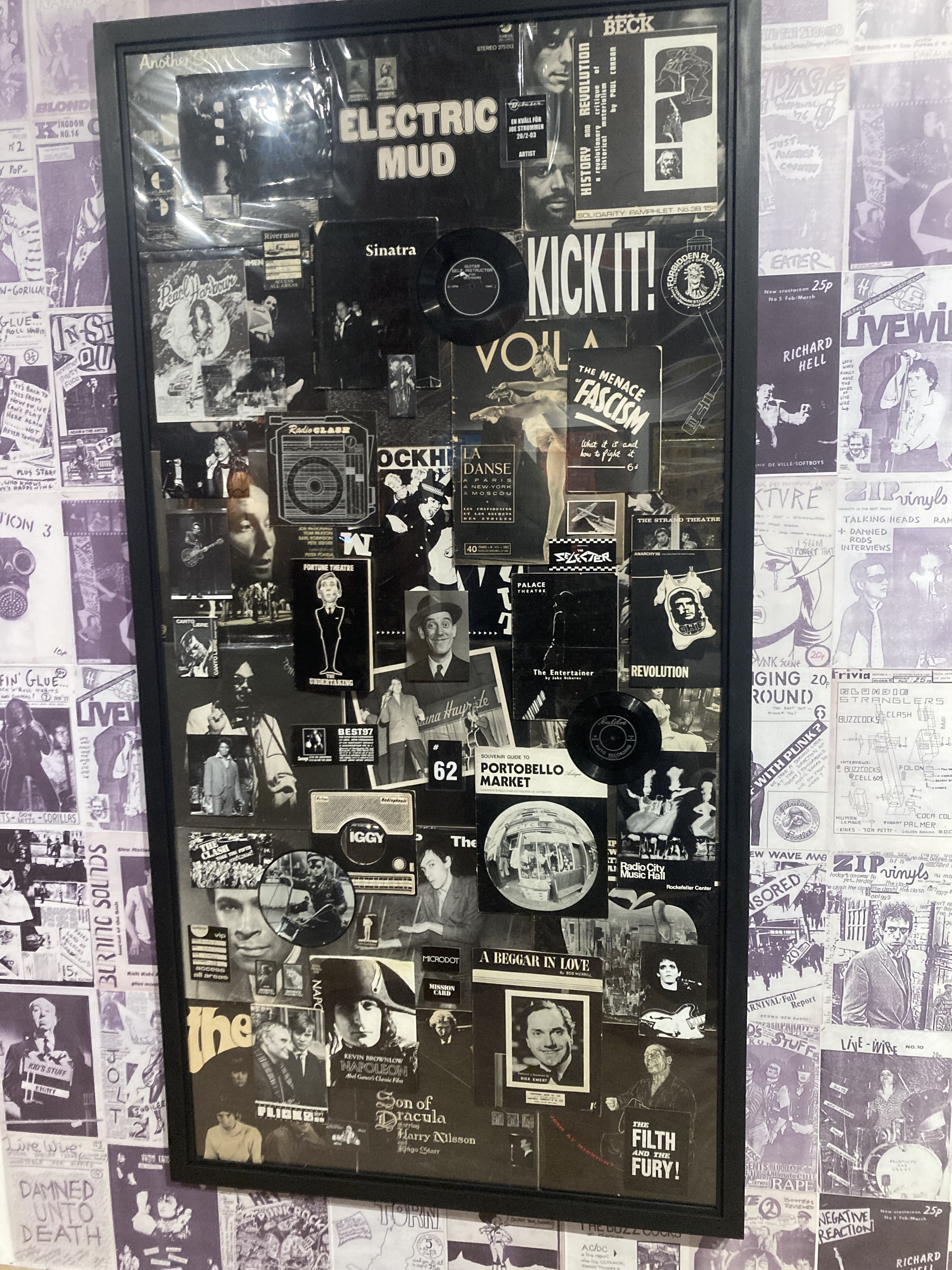
I’m told that this this exhibition constitutes less than half-a-percent of the objects that Jones has collected – and continues to collect. The exhibition at the Farsight Gallery on Flitcroft Street – comes with a fantastic hardback magazine about the collection, the first of three planned issues that will come out during the year.

It’s open daily 12-7pm and entry is free. Get there before it closes on March 16 – although there are rumours of an extension.

https://www.rocknrollpl.com/

https://farsightcollective.com/

Meanwhile… On Denmark Street

Flitcroft Street is the short street at the east end of Denmark Street. You might know it from its most famous building – the one with the huge door (theatre backdrops were painted here – hence the big door to get them out on to the street).

Flitcroft Street used to be known as Little Denmark Street. Readers of my book, Denmark Street: London’s Street Of Sound, might recall it was the location of Billie’s, a legendary London gay club populated by musicians in the 1930s that was the subject of a homophobic police raid.

Flitcroft Street is now home to Meanwhile, a gallery run by the Farsight Collective. Walk down Denmark Street, turn right and it’s right there. The Farsight Collective have huge plans for this site. The gallery will be on the ground floor. A couple of floors below, almost directly below Regent Sounds at No 4, that will be a cabaret bar – modeled partly on Billie’s. In the floor between there is space for a live music venue that will hold around 300 people. The Farsight Collective have considerable experience running both clubs and galleries in London so they know their stuff.

This is, in my view, the most exciting thing to happen in the West End for decades. It has the potential of confirming Denmark Street as an essential location for live music, particularly if it encourages the Lower Third (once the 12 Bar) and Here to up their game. Other new arrivals for the street – as yet unconfirmed – will add to this experience by filling in other gaps that are currently lacking in the street’s offering.

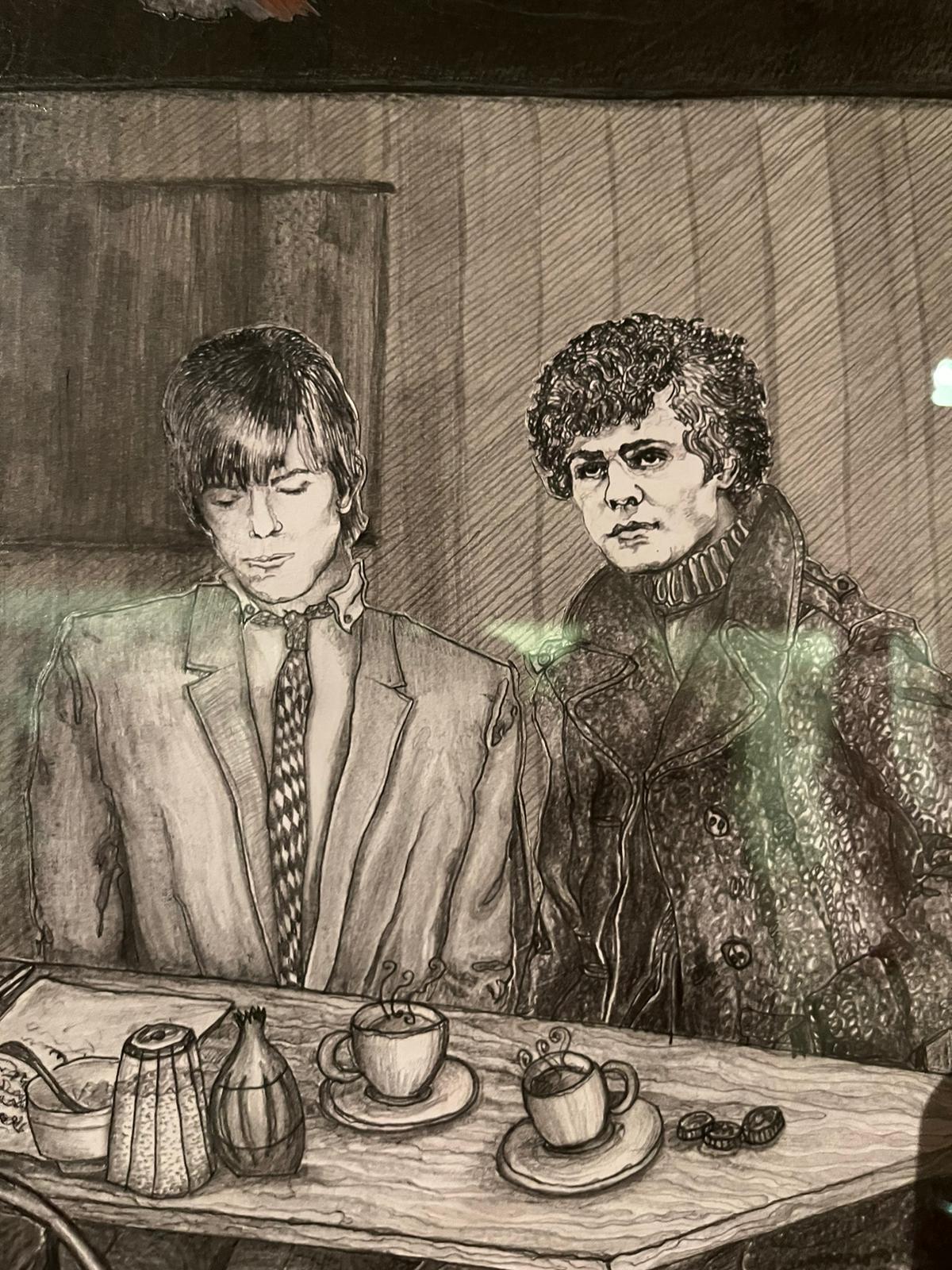
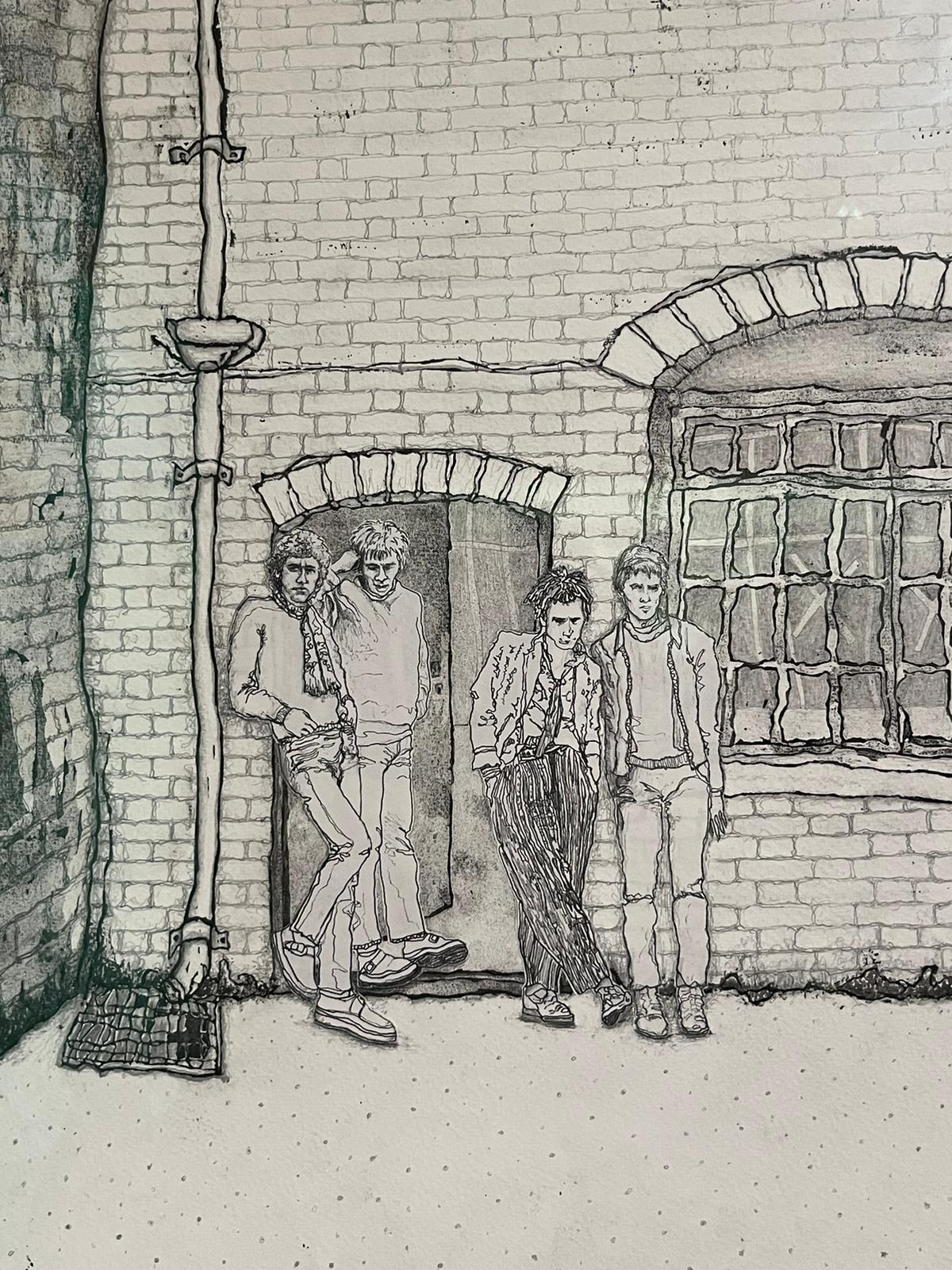
Meanwhile is open weekdays 12-6pm. It is currently hosting an exhibition that celebrates the musical history of Denmark Street and Soho. This includes photographs of great London nightspots from the past, covering everything from jazz to Trash. There’s a video timeline showing London clubs from 1900 to today – apparently there were more nightspots open in Soho during the Blitz than there are today – and some drawings of famous Denmark Street locations including Lawrence Wright House at No 19, Bowie and Bolan at La Gioconda and The Sex Pistols outside their outhouse at No 6.

‘Paintings from Regeneration City Blues exhibition © Jane Palm-Gold/DACS 2015

There is also a short history of every building on Denmark Street using text taken from Denmark Street: London’s Street of Sound.

Other displays discuss the plans for the location and how you can support their license application.

Highly recommended.

Meanwhile, Flitcroft Street, weekdays 12pm-6pm.

Blank Generation: original punk posters in South London

In 1977, Gary Loveridge spotted a Damned poster that he liked the look of hanging on the wall at his local record shop in Weston Super Mare. He decided to take it. ‘It was on the wall of the listening booth. I took it off the wall, rolled it up and stuck it under my jumper. I walked out, looking very suspicious. They probably knew exactly what was going on.’

And so it began. Loveridge, a landscape gardener, now has around 250 original music posters, and 100 devoted to punk are on display until March 8 at the 198 Gallery  on Railton Road. Not all were collected in quite the clandestine way of the first, but they are all original and numerous bands are featured, including the Sex Pistols, Clash, Ramones, Lurkers, Buzzcocks, TV Personalities, Mekons, Elvis Costello, Ian Dury, PiL and Siouxsie and the Banshees.

The Damned poster that got it all started

‘This is the first time I’ve seen them all on the wall together in one place,’ says Loveridge. ‘At home they are all in tubes, some on the walls but I haven’t enough room to put them all up.’

The posters were largely used to promote LPs and singles in record shops, although there are some from bus stops and concert venues. Most such posters will have been thrown out by the stores, making such a large collection quite unusual. Loveridge collected many on his way from gigs in Bristol, and then later added to his collection at markets and record fairs.

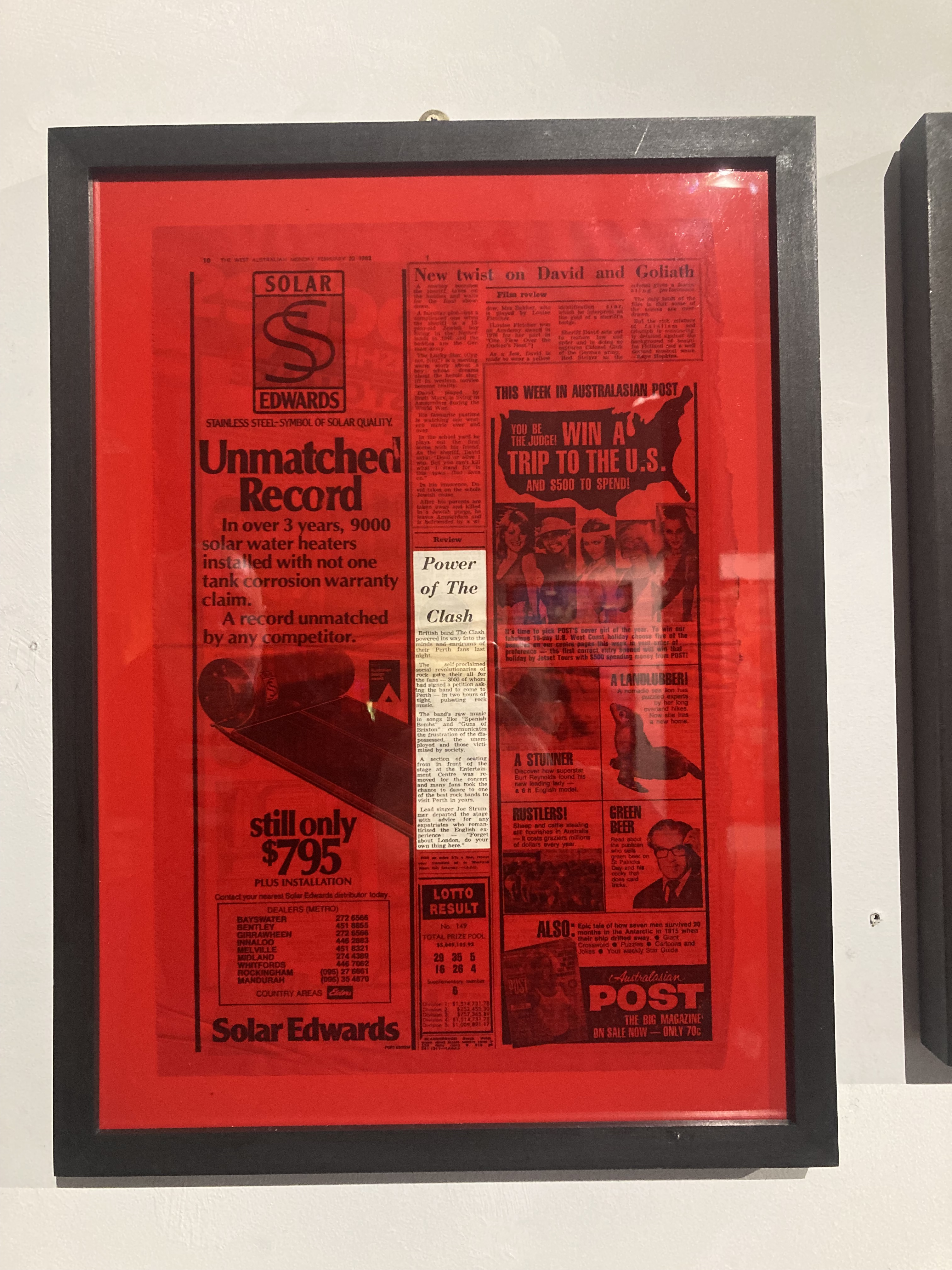
The exhibition takes in two rooms and also features part of Loveridge’s collection of badges, flyers, fanzines and other ephemera, some of which – such as the flyers for the Sex Pistols banned tour – are much sought after. Also on display is a framed advert from 1977, cut out from a local paper, promoting a gig by a mysterious band called The Spots. Now who could they be?

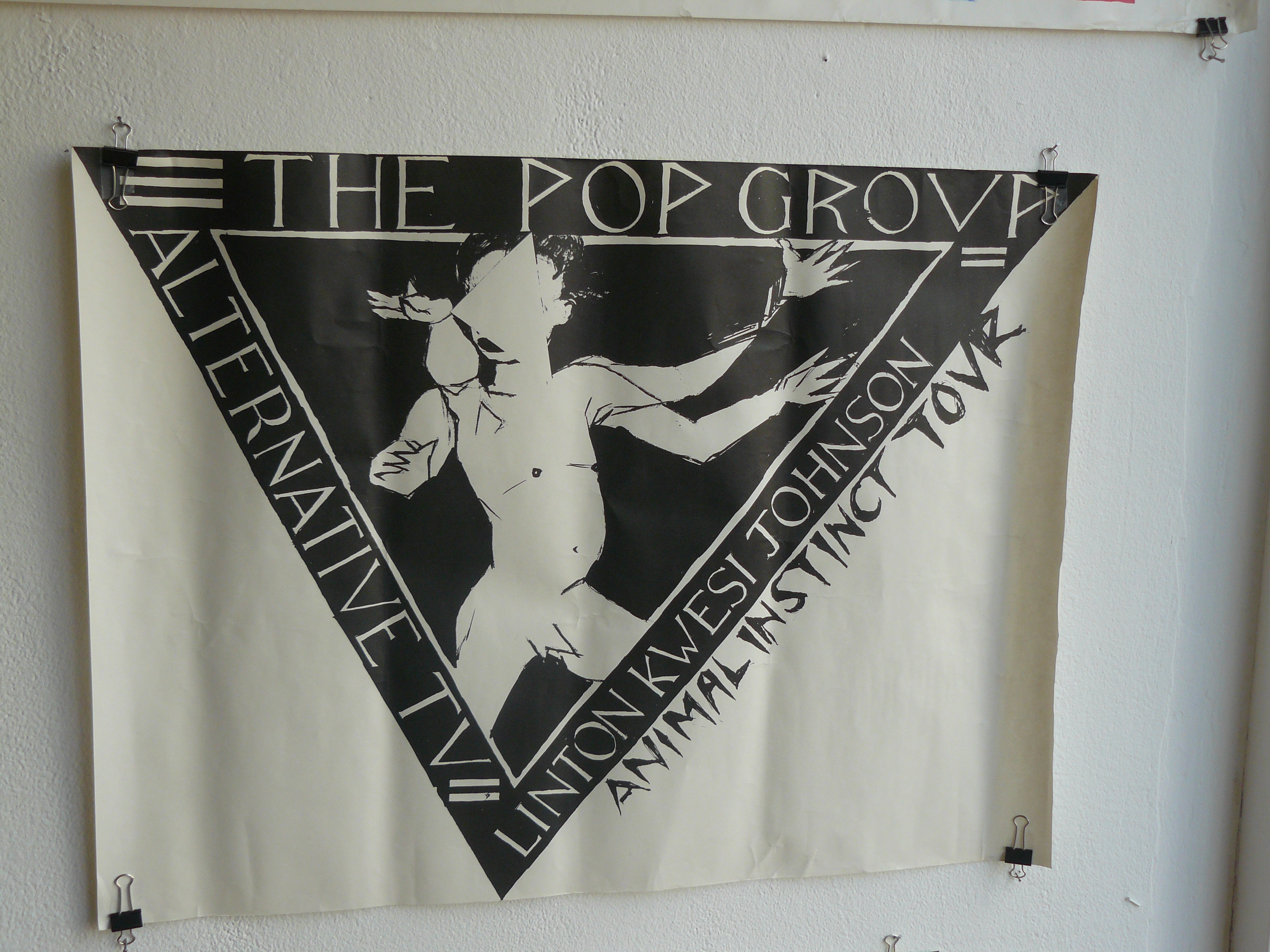
Punk was an incredibly visual movement, as one would expect from something inspired by glam and Situationism and created in art schools and clothes shops, so these posters are eye-catching and iconic.  A small selection are reproduced below, but the real thrill is seeing them collectively and close-up; many have pulled from walls and windows so have an authentically battered look, while the accumulation of colour and striking design is a treat for the eye. But you’ve only got six weeks, so hurry.

Blank Generation: A Collection of Original Punk Posters, 198 Gallery, 198 Railton Road, SE24 0JT. Until March 8, 2012

Spiral Scratch by Buzzcocks

Pretty Vacant by Sex Pistols

The Clash at Brixton Academy

The Mekons at North Staffs Poly

The Pop Group and Alternative TV

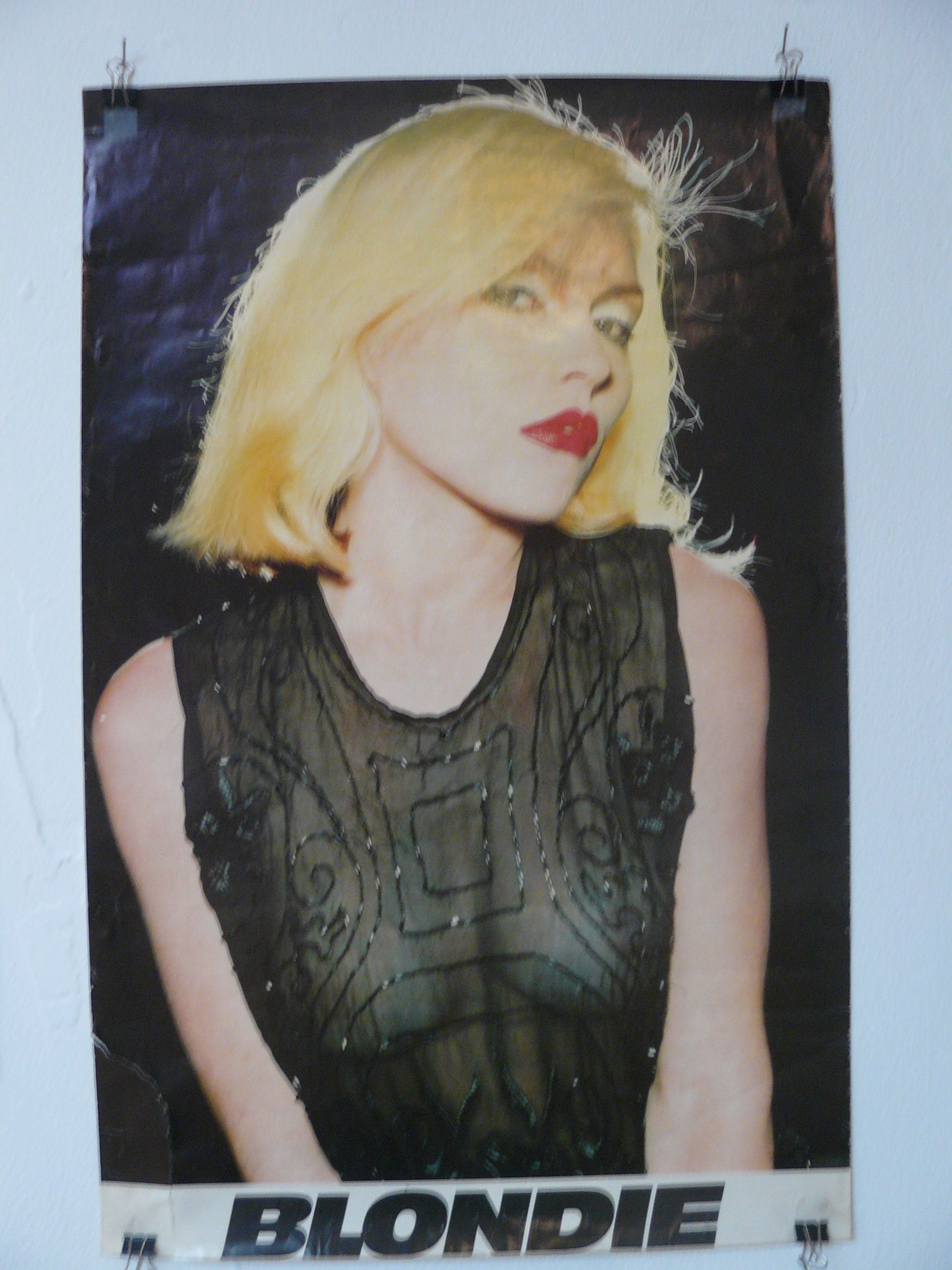
Blondie poster rejected by band as it featured only Debbie Harry

Elvis Costello

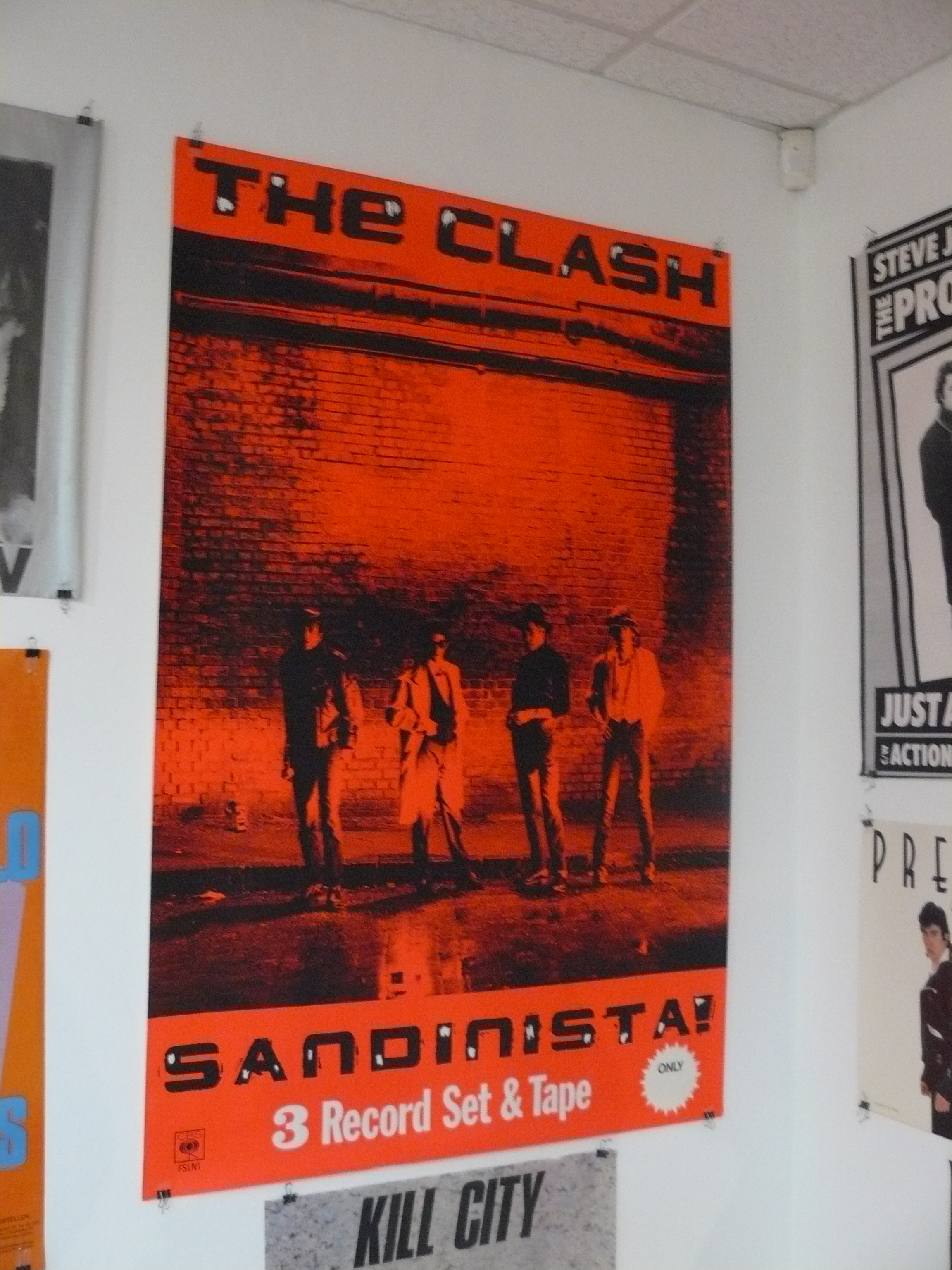
Sandinista by The Clash

The Only Ones

Siouxsie And The Banshees (with Human League third on bill)

London Calling by The Clash ('two for a fiver!')

Sex Pistols - used to introduce the band to the United States

Ian Dury

Sex Pistols

The Jam

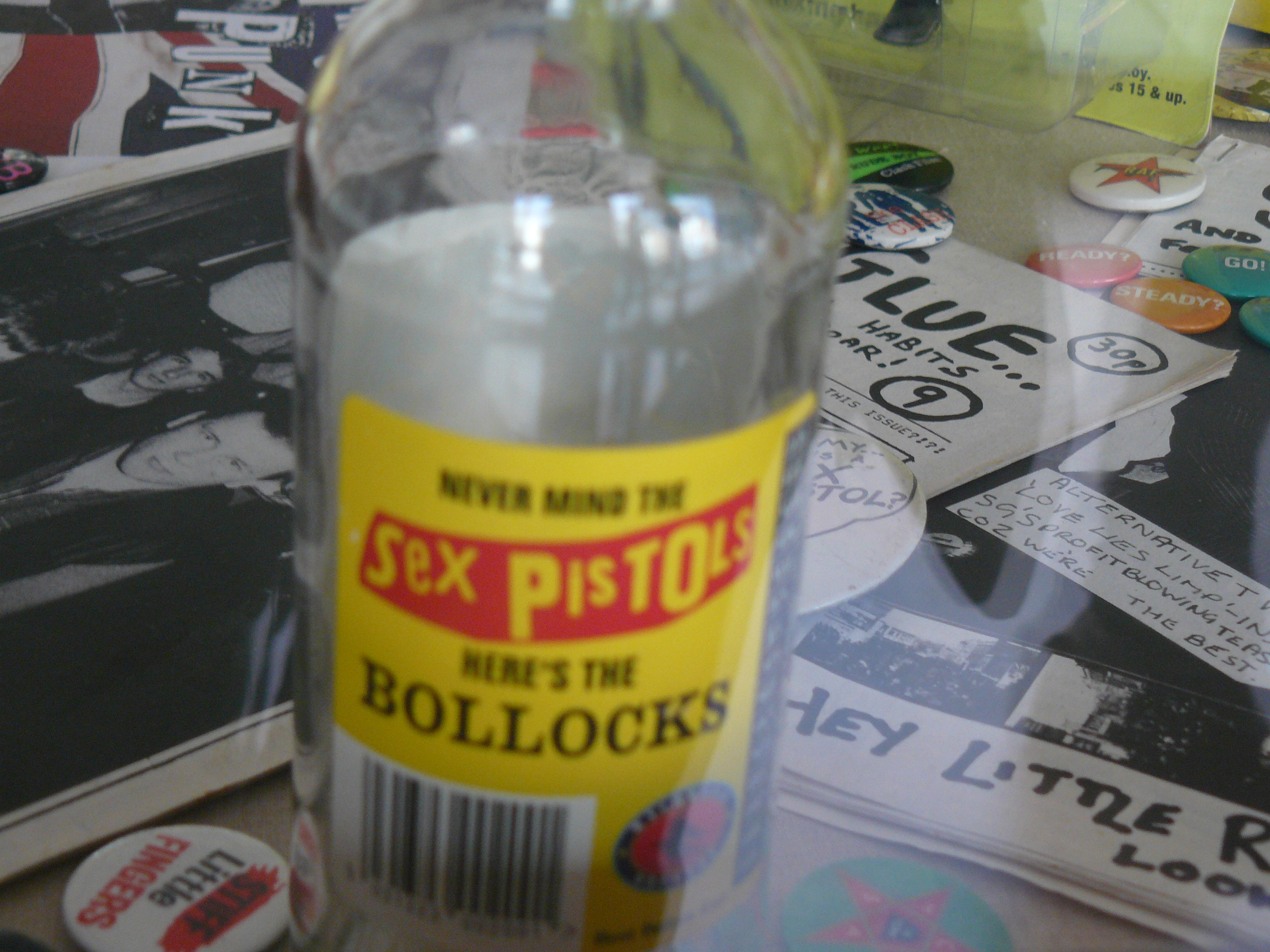
Badges and flyers

Never Mind The Bollocks beer and fanzines

Sex Pistols flyer from SPOTS tour

Drugs and dead babies at the Queen’s bookshop

Maggs Bros is a posh antiquarian bookseller on Berkeley Square that has a Royal Warrant and is supposed to occupy the site of the most haunted house in Britain, but it is also home to a small contemporary art gallery, located out the back and accessed via 50 Hays Mews.

The latest show is being curated by New Artists and features photographs by Richie Culver taken of London crackhouses. These are loosely based on Gustave Dore’s engravings of Victorian opium dens.

Opium Smoking

The exhibition also features Polaroids by Shorvon & Hunter that explore the demise of the Polaroid and newspapers as forms of media. It’s definitely worth a look if you are in the area before it closes on Monday, December 5.

If you do, you should also pop upstairs to see a selection of some items that Maggs’s counterculture expert Carl Williams is currently selling. These include photographs of William Burroughs taken by Brion Gysin in Paris and an extraordinary mural taken from an American street gang club house. You could also pick up a copy of Carl’s latest catalogue to see if he has anything you fancy, whether it be items to do with Crowley, punk or the Weathermen. Last time I visited, he showed me some pictures he’d just acquired of dead Victorian babies, but don’t let that put you off.

Book of the dead dull: against blockbuster exhibitions

A new British Museum exhibition opens this week and it’s already a guaranteed success. But that doesn’t mean it’s any good.

I went to the press view of the Egyptian Book Of The Dead and afterwards felt much the same as I do after every British Museum exhibition: overwhelmed and underimpressed. But I knew that all the big reviewers would give it a knee-jerk five stars – and sure, enough, before I’d even got home, the first suitably awestruck review was in. Meh.

So why was I so bored, and am I on my own with this? Well, the exhibits are undoubtedly important and fascinating – papyrus and artefacts taken from Egyptian tombs, many dating back more than 3,000 years, which together tell the story of the Egyptian belief in the afterlife. But, gawd, ain’t there a lot of it? And why does the exhibition space look so bloody boring?


The British Museum has an incredible talent at taking something potentially fascinating and kicking all the life out of it through stuffy, unimaginative presentation and a conviction that more is better – and getting away with it every time. 

At Book Of The Dead we get acres – and I really mean acres – of stuffy captions and endless cases containing aged papyrus covered in hieroglyphs, with only the odd gaudy mummy case by way of variation. After seeing the first room, I felt I’d seen it all and would have had a more enjoyable experience sitting down with a cup of a tea and reading a good book on the subject. But I still had another dozen rooms to trudge round. Exhibitions are meant to bring a topic to life, but this was deadening. And I was lucky enough to be there when it was relatively empty – for the average punter, it must be chaos.

I’m not sure I’m entirely out on my own here – on my way into the exhibition I bumped into a friend coming out, and he said much the same thing, as did Time Out Art on Twitter. But the British Museum’s methods clearly convince most of the reviewers and they certainly draw the crowds; these are, after all, two of the constituents museums most need to impress. 

As a lover of museums, though, I cannot help feel that the BM is doing the art of exhibitions a disservice. There is none of the thoughtful wit of the Imperial War Museum, or the layered smarts of the Wellcome Collection, or the sheer intellectual depth of the British Library, all three of whom have new exhibitions opening next week that will not get anything like the attention of the BM.

The British Museum make museum-going into something worthy rather than fun. My fear is that thousands of people will push through heaving crowds to see this exhibition drawn by fawning publicity and out of a sense of duty, before emerging battered and bored, vowing to never visit another museum until the next blockbuster rolls into town. That really would be a shame.