Why I love Pat Nevin

I remember when I fell in love with Pat Nevin. It was in the playground and somebody was passing round a 1985 Panini sticker album. I turned straight to the Chelsea page to see my heroes.

There was Kerry Dixon, bluffly handsome with golden hair, azure eyes and self-confident grin. There was Colin Pates, a brick-wall centre-back with disco dancer hair. There was Doug Rougvie with a nose that looked like it had lost an argument with a spade.

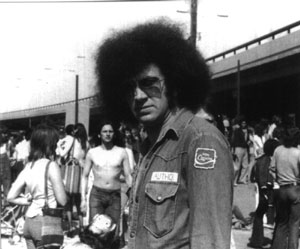
And there was Pat Nevin. Pasty-faced, greasy-haired, nervous, thin and sullen. He looked like a smackhead. Who wouldn’t fall in love?

I only saw Nevin play once for Chelsea, a 3-0 victory at Watford in 1988 about which I remember little, but his legend loomed large over the following years. By the time I started watching Chelsea regularly the next season, the club were in the Second Division and Nevin was at Everton, but my bible, the Chelsea Independent fanzine, spoke of little else.

They drooled over Nevin’s dribble against Newcastle, when he beat eight players in a slalom run that took him from one end of the pitch to the other. They marvelled at his free kick against Sheffield Wednesday, when he chipped the ball over the defensive wall, ran round the other side and lofted a perfect cross on to David Speedie’s goalscoring noggin. They giggled at his famous penalty miss against Manchester City.

The love seemed mutual. When Nevin was injured playing for Tranmere, he attended a Chelsea-Everton game at Goodison Park and paid to go in the Chelsea end. This was important. Chelsea fans, then as now, were despised, but if somebody like Nevin loved us, maybe there was hope, maybe there was redemption,

And Nevin was the sort of player that fans love – an exciting, creative, unpredictable dribbler, but there was more to it than this. Nevin was smart. Nevin was cool. Nevin was different.

He angrily attacked his own supporters for their racist, violent and anti-semitic predilections – to the delight of the left-wing students at the Chelsea Independent. He read French and Russian literature. His favourite bands were Joy Division, Jesus And Mary Chain and the Cocteau Twins. He once insisted on being substituted at half-time in a friendly so he could attend a gig. He brought Brechtian principles to the club programme when he interviewed himself – yes, himself – for a player profile. He was friends with John Peel. For the teenager who read Camus and listened to Sonic Youth it was a no-brainer: if you could be a footballer, you’d be Pat Nevin.

NME described Nevin as the first post-punk footballer, although it may have been more accurate to say he was the first art school footballer. He was also the last. 

When at Everton, Nevin gave a lengthy to the Chelsea Independent, and talked at length about football, music and literature, and what it was like drinking in Soho with George Melly. I’d never heard of Melly, but here I was, learning about jazz and the counterculture from a footballer, in a fanzine. Would that happen now? 

When I interviewed Colin Pates – who is not a stupid man, by any means -he still seemed bemused by the fact Nevin would read books on the way to away games rather than play cards. Nevin, though, never seemed to get bullied about his interests. He was clever, but he was also proudly working-class and therefore more acceptable to other footballers and more capable of sticking up for himself than the middle-class Guardian-reading Graeme Le Saux who followed him as Chelsea’s token intellectual.

In the early 1990s, I finally got to see Nevin play at Stamford Bridge. He was wearing an Everton kit, but when he scored the Shed gave him a standing ovation – the only time I have ever seen Chelsea fans applaud an opposition goal. Pat Nevin was a very intelligent footballer and when he was around, fans seemed to use their brains a little bit more as well.

The perfect sentence

‘She caught me jacking off on uppers the night RFK got shot.’

While this may not be the perfect sentence, it’s certainly James Ellroy’s, encapsulating all of that writer’s thematic obsessions and stylistic tics – sex, death, drugs, fame and shame – in twelve words and 16 syllables. Just think how good he’d be at Twitter.

It appears in his latest book, ‘The Hilliker Curse’, a flawed but fascinating memoir, and it could stand for every other line written by this flawed but fascinating man.

And it got me thinking. Do other writers have a single sentence that can be used to blithely summarise their entire output?

Perhaps Orwell’s famous, ‘It was a bright cold day in April, and the clocks were striking thirteen’ for the crisp prose and sense of the familiar, subtly wronged.

Or Wodehouse’s, ‘Ice formed on the butler’s upper slopes.’

Or Cormac McCarthy’s, from ‘Blood Meridian’, ‘They crossed before the sun and vanished one by one and reappeared again and they were black in the sun and they rode out of that vanished sea like burnt phantoms with the legs of the animals kicking up the spume that was not real and they were lost in the sun and lost in the lake and they shimmered and slurred together and separated again and they augmented by planes in lurid avatars and began to coalesce and there began to appear above them in the dawn-broached sky a hellish likeness of their ranks riding huge and inverted and the horses’ legs incredibly elongate trampling down the high thin cirrus and the howling antiwarriors pendant from their mounts immense and chimeric and the high wild cries carrying that flat and barren pan like the cries of souls broke through some misweave in the weft of things into the world below.’

Well, nobody said it had to be concise.

Secret London: inside the Black Museum

I first read about the Black Museum when I was a boy, a macabre museum run by the police filled with artefacts taken from their most gruesome cases. I always wanted to visit, but the museum was out of bounds to the public. When I was at Time Out, I asked the Met to let me write about the museum and after some badgering – and to my great surprise – they finally agreed. The result was not quite what I expected. There is an interesting coda to this piece. Upon publication, the press officer phoned me to say how disappointed they were with the tone of the article; at exactly the same time, the Curator sent me an email saying the piece was the best description of the museum he had read. Make of that what you will…

The Curator pulls open a drawer full of shotguns. ‘Which of these are real and which are replicas?’ he asks. I nervously peer inside.
‘Too late,’ he says. ‘You’re dead.’

Welcome to the Black Museum, the Met Police’s private memorial to  London’s worst crimes. The public isn’t allowed inside, and after a half-hour tour, I wish I hadn’t been either.

Death masks and weapons from the Black Museum

The Black Museum (renamed the Crime Museum after complaints from officers in areas with large ethnic minority populations) has been one of the world’s most macabre and inaccessible museums for over a century, acquiring a certain infamy among hardcore Londonphiles and the sort of people who spend their spare time reading ‘The World’s Greatest Serial Killers’.

The museum is closed to the public but, after repeated requests, The Curator has allowed Time Out inside, albeit under duress that he makes no attempt to disguise. From his office in Scotland Yard’s Room 101 (and who says the police have no sense of humour?), where the walls are covered in police badges from forces around the world and shelves stuffed with books such as, er, ‘The World’s Greatest Serial Killers’, The Curator – two parts John Thaw to one part librarian – lays down the law. He doesn’t want to be named or photographed, and if the piece results in people phoning him up to try to get access to the museum, well, he’ll hold me responsible.

Ground rules established, The Curator unlocks the door, and the tour begins. The Crime Museum has been at Scotland Yard since 1874, moving with the Met from Whitehall to Victoria Embankment in 1890 and then Victoria Street in 1967. It was set up by Inspector Neame after an 1869 law allowed the police to retain prisoners’ property for ‘instructional purposes’. Neame felt it was important that police officers could see the tools of the criminals’ trade – a function the museum still fulfils today – and gradually built up the museum’s collection.

In 1877, a reporter from the Observer was refused entry and wrote about Scotland Yard’s ‘black museum’. The name stuck, and the museum became a popular destination for Victorian celebs: Gilbert and Sullivan, Sir Arthur Conan Doyle, Harry Houdini and Laurel and Hardy all had a ghoulish gander.

The room we enter has been mocked up to resemble the original Whitehall museum, with a false fireplace and sash window. The first thing you see is a hangman’s noose, followed by a desk covered with knives and guns, and a chest of drawers topped with a glass case containing submachine guns. An opening leads from this ante-chamber into the museum proper.

We start at the gun drawer. As well as rifles and replica rifles, it contains walking sticks, umbrellas, flick knives and other random bits of metal. The Curator asks me to guess which of these items are guns, pauses for a heartbeat, before stabbing with his finger: shotgun, shotgun, pistol, shotgun, pistol. They’re all guns, the walking stick and umbrella, even the flick knife. And all have been used on London streets. He takes out a walking stick, demonstrates how quickly and easily it converts into a gun and back again, and shuts the drawer firmly.

The Curator is enjoying himself, less begrudging by the minute. He picks up a sword and hands it to me. As I take it by the scabbard, he pulls off the hilt, which is a short, detachable, vicious blade, and imitates gutting me with it, which, he says, is exactly what happened to the police officer who first encountered this duplicitous double-weapon. It’s called the Cop Killer, he says. And, just like that, any lingering sense of fun wafts out the window.

The point of this drawer, The Curator explains, is to show new coppers the dangers they face from disguised weapons (the walking-stick gun et al were legal until 1959).  The inference is clear: anything is a potential weapon.

The Curator is passionate about the museum’s purpose and happiest when discussing the history of crime. Everything that comes into the museum, he emphasises, is for teaching purposes, and not just for cadets. Senior officers come here for briefings and lectures to discover historical parallels of contemporary cases.

We move into a large room with the fusty atmosphere of a regional museum. Display cases that mark out a mazy circuit of London’s criminal history. One of the first is on serial killer Dennis Nilsen, who boiled the flesh of his victims on his stove before poured their fat down his drains. I look at the Nilsen display. It’s a badly stained cooker topped by a battered aluminium cooking pot. I feel sick.

Nilsen’s cooking pot

The rest of the tour passes in a blur. There’s a display on officers killed in the line of duty; the protective apron used by John Haigh, the Acid Bath Murderer; vials of poison; forensic photographs; blood-stained weapons; a crossbow used by the Krays; a ketchup bottle from the Great Train Robbery (‘I can’t talk about that,’ says The Curator cryptically); evidence related to Crippen, Christie and cannibalism; explosives used by Fenian terrorists; the IRA rocket launcher that fired at the MI6 building in 2000; and the tiny ricin-loaded pellet pulled out of Georgi Markov’s leg, where it had been inserted with an umbrella.

It’s a tough tour, not because of any individual items (Nilsen’s cooking pot excepted) but through the accumulated weight of otherwise anodyne objects that collectively represent the many horrible things people have done to each other. It’s a chilling, unsettling experience that sits somewhere between the self-chosen prurience of reading a book about Fred West and the necessary horror of the Imperial War Museum’s Holocaust gallery.

The Curator reassures me that visitors, police officers included, regularly faint during tours, but this is clearly a museum that has been designed by the police, for the police. That point is underlined by one of the last displays, a huge pile of weapons taken from demonstrators at an anti-Vietnam War march in 1968, a so-called peace march comments The Curator, as well as riot shields from Brixton, melted by petrol bombs, and Broadwater Farm, peppered by bulletholes. This is what you are up against, the display says. Trust nobody.

Police at Broadwater Farm

The result is a museum that works on two levels: one is the straightforward practical side that allows policemen to see and handle real evidence and learn how it was used to solve cases, while the other, possibly more important, is psychological, showing the police what the people out there will do to them, and each other, given half a chance. In so doing, it validates the Met’s instinctive suspicion – as embodied by The Curator – of outsiders, the public, the people they protect and serve.

I leave the Crime Museum in a sober mood, sure of only one thing: having tried so hard to get inside, I’m in no hurry to return.

Pussyfoot Johnson and the London mob

My review of Ink And The Bottle, an exhibition about cartoons and alcohol, appears in the Independent.

One of the cartoons at the gallery is based on the story of William ‘Pussyfoot’ Johnson, an American who was active in the temperance movement and came to London on Nov 13, 1919 to give a talk.

Johnson was leader of the Anti-Saloon League and after success in America, he headed to the Old World to spread the anti-drinking word. He argued, ‘There is more bootlegging and more moonshining in Europe than in the whole United States.’

He may have been right. This temperance movement map from 1886 attempted to show the scale of the problem by depicting all of London’s pubs in its ‘Modern Plague of London’ map.

Modern Plague, London

Pussyfoot earned his nickname for his habit of amending laws by stealth, and this did not go down well with the London mob. As one anti-temperance advocate told the New York Times, ‘You know how the majority of Englishmen look upon prohibition and Mr Johnson’s activities? The thought of not being able to have the well-known pint of bitter fills them with horror. The war was terrible enough but it was something that happened before. There have always been wars. Taking away the drinks is attacking the divine rights of the Britisher. I can tell you they don’t like it!’

They certainly didn’t, and decided to do something about it. While Johnson was speaking at Essex Hall, he was captured by medical students from nearby King’s College who dragged him out the buildin, poured a bottle of beer over his head and marched him around the West End chanting ribald songs. It was noted that the police ‘seemed lacking in sympathy with the missionary’.

Johnson was hauled hatless on a stretcher around Regent’s Street, Leicester Square and Oxford Street while the students chanted ‘What won the war? Rum!’ and ‘We’ve got Pussyfoot meow, send him back to America’.

Such larks, what fun and games! 

And so what if Johnson lost his right eye in the incident? The lesson was learnt. Not many people have tried to take the Britisher’s beer away from him since.

We need to talk about Martin Brennan

Every fortnight, at the back of Private Eye, there’s a big advert for the Brennan JB7 and an introduction to its founder Martin Brennan, ‘the man who re-invented the hi-fi’.

The advert is invariably accompanied by a photograph of Martin Brennan.

See.

I worry about Martin. For a man who has re-invented the hi-fi, he doesn’t look very happy.

Then again, what do I know? Maybe this is what men who re-invent stuff look like. Perhaps he’s too busy to smile because he’s thinking about how he’s going to re-invent the video recorder. Or maybe he’s genuinely sad because he’s realised that Sony have seen his idea and will make far more money out of it than he will.

Or perhaps the pic is meant to guilt-trip us into buying the Brennan JB7. Martin is re-inventing the advert. Instead of TV commercials of Jamie Oliver and all his friends running around looking happy, implying that if we shop at Sainsbury’s we will also be able to run around looking happy with friends, Sainsbury’s will just use a picture of Jamie looking sad or pensive, implying that if we don’t shop there an ennui-overcome Jamie will top himself.

Actually, that would probably backfire, wouldn’t it?

Whatever the reason, I’m tempted to buy a Brennan JB7 if only to see if in the advert for the next issue Martin is smiling a little bit, with his eyes if not his actual mouth. But instead I stick Private Eye in the recycling and start thinking about ways to re-invent the sandwich maker.

Magic mushrooms in Georgian London

I have always considered Green Park to be the dullest of all central London parks. Look. There’s really nothing there. It’s just a very big lawn.

But twas not always this way. High Society, the Wellcome Collection’s superb new exhibition on drugs in culture – which I recently reviewed in New Statesman – includes a great story from 1799 concerning a doctor, Everard Brande, who was called to the London house of a family suffering from some form of poisoning.

Concerned for his sick family, the father had gone out to seek help but was soon found in a confused state, unable to remember where he was going or why. He was rescued by neighbours and eventually the doctor pieced the story together.

The family had been out gathering mushrooms in Green Park, which they had cooked into a broth, and this had upon the parents and four children an extraordinary effect. All were giddy – with high pulse rates and intense breathing – and all were seeing things. While the adults seemed struck by a morbid fear of death, eight-year-old Edward ‘was attacked by fits of immoderate laughter’ and his staring pupils were massively dilated.

After treatment from Dr Brande, the family recovered (aka came down). I’ll never see Green Park in quite the same way again. I’m sure they didn’t. 

For more, see Michael Jay‘s excellent accompanying book.

The London Anti-University

This newsclip of the London Anti-University from 1968 is wonderfully evocative, not just for the interviewees’ earnest insistence that they could change the world of education, but also through the grim tattiness of late 1960s Shoreditch, reproduced in glorious colour.

The London Anti-University was formed after participants at 1967’s Congress on the Dialectics Of Liberation at the Roundhouse decided they wanted to continue to explore some of the themes and conversations that had started there (sample debates: The Future of Capitalism; Black Power; Imperialism and Revolution in America).

Based at 49 Rivington Street – previously home of the Vietnam Solidarity Campaign – the Anti-University was opened in February 1968 by David Cooper and Alan Krebs, and featured lecturers such as Cornelius Cardew, CLR James, Robin Blackburn, Bob Cobbing, RD Laing, Yoko Ono, Jeff Nuttall, John Latham and Alex Trocchi – all key figures on the intellectual left-wing of the 1960s counterculture.  The Anti-University syllabus covered three main areas: radical politics, existential psychiatry and the artistic avant-garde. 

 Poster announcing the opening of the Antiuniversity of London (1968)

An idea of the direction of the Anti-University can be gleaned by a reported exchange at Joseph Berke’s course on ‘anti-universities, anti-hospitals, anti-theatres and anti-families’.

He asked the class: ‘How can we discuss how we can discuss what we want to discuss?’ After a long silence, somebody answered ‘Maybe we don’t need to discuss it.’ Berke pondered this for a while and then left; the class continued for an hour despite his absence.

The Anti-University lasted almost a year, which isn’t bad by the standards of the time, but it’s premises soon became squatted, and the landlords, the Bertrand Russell Peace Foundation, reclaimed the campus.

But the Anti-University’s most important legacy may have come from a conversation in the classroom of psychoanalyst Juliet Mitchell, who lectured on literature and psychology.

One of Mitchell’s students, Diana Gravill, had inherited some money and was intending here to spend it on a women’s refuge. Mitchell instead persuaded her to put it towards a bookshop. This she did, and the shop, named Compendium, was opened by Gravill and her partner Nicholas Rochford on Camden High Street in August 1968.

Over the next thirty years it became one of the world’s great bookshops, stocking everything from academic studies of the women’s movement to punk fanzines. It was still going strong when I used to go there in the late 1990s, fascinated and intimidated by the content of the bookshelves. It eventually closed in 2000, a sad end to one of London’s greatest counterculture institutions, but a longstanding tribute to the ideas and passions raised by the London Anti-University.

Mapping Sixties London

This exquisite map of the 1960s West End is one of the most interesting ways I’ve seen of making tangible that fascinating era that remains tantalisingly out of reach and hard to comprehend. Produced by Herb Lester Associates, Wish You Were There is a fascinating physical attempt to bridge the gap in time, to fill in some of the blanks.

It is also a beautiful artefact, a fold-up map that offers a ‘retrospective guide to London’s shops, clubs, boutiques and sundry diversions, 1960-66’. Included are such diverse pleasures as Better Books, home of the Beats, the offices of promoter Don Arden and restaurants like Cranks and The Nosh Bar alongside better known clothes shops, bars and venues.

On one side is a map of central London, and on the other a written guide to the 130 locations, padded out with period advertisements.

Wish You Were There can be purchased here for a bargain £4.

Apologies…

For lack of blogging this week, my life is currently taken up with:

and

and

and

and

and

But more to come shortly.

Eel Pie Island

ImageShack, share photos of eel pie island, eel pie island fire, trevor bayliss house eel pie island, share pictures of eel pie island, eel pie island fire, trevor bayliss house eel pie island, share video of eel pie island, eel pie island fire, trevor bayliss house eel pie island, free image hosting, free video hosting, image hosting, video hosting.

My feature on the birth of British R&B at Eel Pie Island is in this month’s issue of Uncut.

It includes interviews with Pete Townshend, Ron Wood, Kenny Ball, Top Topham and the inventor Trevor Baylis, who still lives on the island and told me.

 ‘I moved to the island in the 1970s when I’d made enough money as an underwater escape artist in Berlin to buy a plot of land, but I went there regularly from 1957. They were wild times. If you wanted to get your leg over, that’s where you went. It was notorious. There was no bridge, the only way to get there was on a chain ferry. On the island, a little old lady sat in a tollbooth and stamped the back of your hand. The hotel was very Dickensian, a bit of a tramshed just about hanging together, but it had a dance floor that was like a trampoline so if you couldn’t dance when you went in you certainly could when you came out.’

South-west London was a fertile territory for music in the early 1960s, and the likes of Keith Richards, Eric Clapton, Jeff Beck, Rod Stewart and Jimmy Page all learnt their craft in the venues of Richmond and on Eel Pie Island.

As Ian McLagan of the Small Faces explained: ‘The audience was full of musicians. Loads of them. You’d see them all in the front row – “Do you see that?”, “Yeah”, “Well I can do that too”. We were all kids, but when you saw the Stones it was “Fuck me, it’s possible…” ’

Diamond Geezer visited Eel Pie Island recently and writes about it here.