Category Archives: Secret London

Thomas Paine’s London bridge

Thomas Paine was many things. A writer, revolutionary and political philosopher, Paine was also an inventor and engineer, who made the world’s first smokeless candle. He was also an occasional Londoner, most notably when he stayed at the Angel Inn, Islington, around the time he began writing Rights Of Man in 1791. This monument celebrates that fact.

Considerably more interesting than this, though, is the rarely discussed fact that Tom Paine built bridges. Iron bridges. And he built one of them in London.

Paine was fascinated by bridges, admiring them for their architecture as much as their metaphorical meaning. John Keane, Paine’s biographer, writes that he ‘was stuck by their double meaning. Bridges were for him combinations of architectural beauty and practicality, works of genius that could be breathtaking in their simplicity… the rising spirit of an epoch translated into space.’

Paine first tried to raise the funds to build an iron bridge over the Harlem River in New York in 1785 and then another over the Seine in Paris in 1786, but without success. Bridges of this era were still largely constructed in stone and wood, making Paine’s ideas rather unusual. Plus, he had no real background in engineering or architecture.

But he persevered. In 1788-89, he attempted to build an iron bridge over the River Don in South Yorkshire and although the project was never completed it did secure him a patent for his bridge-building scheme. Paine now decided that he needed to build his prototype bridge in London, where potential investors could see for themselves the sort of brilliant bridge he was going  to make. He told Thomas Jefferson – who himself had many ideas about how the bridge should be built – that a London bridge would soon pay for itself in tolls. Jefferson was impressed, writing to a friend: ‘Mr Paine, the author of Common Sense, has invented an iron bridge, which promises to be cheaper by a great deal than stone, and to admit of a much greater arch. He supposes it may be ventured for an arch of five hundred feet. He has obtained a patent for it in England, and is now executing the first experiment with an arch of between ninety and one hundred feet.’

Paine had originally hoped to build this experimental bridge to nowhere in Soho Square, but when he wrote to George Washington on May 1, 1790 describing his single-arch bridge of 110 feet, he still hadn’t found an appropriate location. By the end of May he could tell the no doubt anxious Washington that a site had been found – a field next to a famous tavern called the Yorkshire Stingo, on the Marylebone Road near what is now Lisson Grove. This was at least partly appropriate, given that the bridge was being constructed by a Rotherham-based ironworker called Thomas Walker.

Paine moved into the Yorkshire Stingo and began erecting his 110-foot bridge on the neighbouring bowling green. By September it was finished. Jefferson wrote to him a very nice letter saying: ‘I congratulate you sincerely on the success of your bridge. I was sure of it before from theory: yet one likes to be assured from practice also.’

However, although there were many interested visitors, none of them were impressed enough to offer to invest in Paine’s scheme to build a bridge over the Thames. By October 1791, Paine’s bridge had been started to rust and Paine had lost interest, so it was dismantled and the iron returned to Yorkshire, where some was used in a bridge built over the River Wear in Sunderland in 1796, which at the time was the longest iron bridge at the world at 240 feet.

Nature: an apology

I was born in Epsom, one of those places on the fringe of London that mark the very boundary of the city, the point at which tarmac gives way to soil. As the picture below shows, just a few hundred yards from my road, Hookfield, the country begins in all its greenness.

This never much interested me in my youth. I was always more attracted by town than country. Nature passed me by. When I moved into the city proper, I took little notice in the pike or herons I saw from my boat on Regent’s Canal, or the ring-necked parakeets and woodpeckers I later found in Brockwell Park. If somebody told me they saw a badger in Regent’s Park or a cormorant on the Thames, I cared not a jot. And who needed peace and still when you had Hampstead Heath or Richmond Park nearby, even if I rarely actually bothered to go there.

A month in the Scottish Highlands changed that. For the first time I was able to observe hedgehogs, adders, shrews, woodmice, weasels, deer and eagles in the wild, and see traces of badgers, pine martens and wildcats. The sheer scale of the country was extraordinary, from the peaks of the Munros, to the endlessly unfolding glens. It was eye-opening and life-affirming.

Returning to London was difficult. I had previously viewed the city’s numerous parks as pastoral paradises. Now they seemed liked scratty scraps of green, a sad imitation of the real thing. The battering noise, smell and greyness of London was overwhelming.

But nature is still here, if we look for it. It’s there in the foxhole that occasionally appears at the bottom of my garden. It’s there in the resilient, remarkable weeds and visiting birds, as lovingly chronicled in Richard Mabey’s essential London wildlife book ‘The Unofficial Countryside‘. It’s there in Tales Of The City, the blog of Mel Harrison, in which she charts encounters with owls, snowflakes and brambles. It’s there in Herb Lester’s Untamed London map, which records those places ‘where nature still runs wild in the big city.

As I walked home from taking my daughter to nursery this week, along the horrible, traffic-clogged hill that takes cars from Herne Hill to Camberwell, I heard a faint, familiar sound as I passed a bus stop. It was the chirruping of a grasshopper. I stopped and looked and found it on a hedge. It looked at me, quite unmoved, before continuing to sing (or stridulate) defiantly. We gazed at each other for a minute, while commuters bustled past on foot and in car, and then quietly, and more contentedly, I went about my way.

Secret London: Toulouse-Lautrec in Catford

Say what you like about South London, but it clearly has something about it. Why else would a trinity of the world’s greatest 19th-century artists have come here?

You probably know about Vincent Van Gogh’s time in Brixton because of the play from a few years ago. Van Gogh lodged in Hackford Road, Brixton in 1873 and regularly walked from there to Covent Garden where he worked as an art dealer.

This is the only surviving picture he sketched during this period It’s of the Georgian houses on Hackford Road itself.

Van Gogh also lived in Isleworth in 1876, at 160 Twickenham Road, when he later returned to London as a teacher. Hackford Road now has an English Heritage blue plaque for Van Gogh, and there used to be a Van Gogh Cafe on Brixton Road, but it’s closed down.

Camille Pissarro painted around a dozen pictures of Sydenham and Dulwich during his time in South London in 1870. I particularly like this one, of Lordship Lane Station.

As Michael Glover writes in the Independent: ‘The painting shows us a new kind of modernity. Here is London being mightily transformed by the growth of housing and the ever onward thrust of the railways in the second half of the 19th century.’ Pissarro lived at No 77 Westow Hill and then on Palace Road, and married at Croydon Registry Office. He returned to London a number of times. Lordship Lane station was demolished in 1954. A non-English Heritage blue plaque adorns the site of his house on Westow Hill and a restaurant called Pissarro is in Chiswick, but I’m pretty sure that’s named after his son Lucien.

Best of all, though, is the fact that Henri de Toulouse-Lautrec did time in Catford in 1896. The diminutive brothel-loving soak was a huge fan of cycling and in 1896 was asked by a company called Simpson to work on a poster for their new bike, which used a new type of chain. This, according to Wiki, ‘was composed of linked triangles forming two levels. The inner level was driven by the chainring and the outer drove the rear cog. Instead of teeth, the chainring and cog had grooves into which the rollers of the chain engaged.’

I’m not sure what that means, and probably neither did Lautrec, so he came to the newly built Catford Velodrome to watch the bike in action during special races, set up by Simpson to advertise their product. Lautrec produced a couple of images during his visit. The poster was one of the last he designed before his death in 1901.

The velodrome was knocked down in the 1990s and there is no trace of it left (it’s location was approximately around Sportsbank Road), but there is at least a brasserie in Kennington called Toulouse-Lautrec.

But perhaps Toulouse-Lautrec had more influence on Catford than we may have thought?

Consider this, a famous poster advertising one of Lautrec’s favourite clubs by one of his contemporaries and very much in Lautrec’s style.

And this.

If you do not wish to go all the way to Catford to pay homage, an exhibition of Lautrec’s work goes on display later in June at the Courtauld Gallery at Somerset House, where you can also see Pissarro’s lovely picture of Lordship Lane Station.

Secret London: The London Thirteen Club

The London Thirteen Club was set up as an ‘antidote to superstition’ by Camberwell historian William Harnett Blanch in the 1890s.

It met on the 13th of every month in Holborn. There were thirteen dinner tables each with thirteen settings and diners wore green ties with toy skeletons in their buttonholes. Meals were served by two cross-eyed waiters, who announced dinner was to start by smashing two mirrors.

To get to the dining room, guests had to follow an undertaker underneath a ladder and then sit at tables decorated with a centrepiece featuring a black cat, peackcock feather and witch’s cauldrons. They were asked to spill salt before they could begin eating.

The club had numerous members, including leading journalists and politicans, and their membership fees were distributed to the poor of Southwark. Oscar Wilde, however, refused to join saying that ‘I love superstitions. They are the opponent of common sense.’

Despite this public flouting of superstitions, the London Thirteen Club had a very low mortality rate – only one member died, and he’d failed to pay his fees. As it was pointed out by some, ‘It is actually rather lucky to belong the Club.’ Read more here.

Happy Friday 13th, readers.

The City of London’s secret zoo

My piece on the extraordinary Animal Reception Centre (ARC) at Heathrow – where all animals entering the UK have their passports stamped – appeared in last week’s Independent on Sunday.

One of the great things about the ARC is that by a quirk of administration it is run from Guildhall by the City of London Corporation. As Rob Quest, the facility’s manager, told me, ‘The City is responsible for the import of all animals in Greater London. That’s because in 1965 when the LCC broke up, the City still had a veterinary department because of Smithfield Market so they were deemed the best people to run the border control. They built this place after there was a rabies outbreak in Camberley in 1969 (Fritz, a black-and-white terrier, was released from quarantine early and bit two people) and it was decided we needed somewhere secure for animals to be checked.’

The City still runs the centre today, one of a number of non-Square Mile outposts that includes Epping Forest and Hampstead Heath. For more on the City’s more traditional oddities, check out David Long’s new book Hidden City.

London’s lost rivers

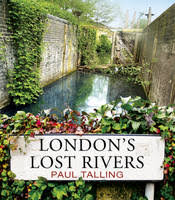
There is almost endless fascination with London’s lost rivers, as can be seen with the publication of Paul Talling‘s fine – if brief – new book on the subject. I have written about them a number of times and this article first appeared in Time Out in 2008.
Londoners love what they cannot see. Take the excitement that is generated by ‘ghost tube stations’ such as Museum and Aldwych that sit unused beneath our feet and can occasionally be glimpsed from trains. Yet people rarely blink when they descend escalators into the remarkable interiors of busy, living stations. Concealment and abandonment excited the mind more than the here and now.

So it is with London’s lost rivers. Anybody can check out the quirky Lea or watch the Wandle weave serenely past Merton Savacentre, but mention Brixton’s Effra or the City’s Walbrook rivers and the eyes of a certain sort of Londoner will light up, and a torrent of trivia about lost rivers will gush forth. This is an interest that can take us to unusual places. When Design for London recently mounted London Open City, an exhibition about creating new spaces in the capital, the idea of restoring buried rivers got people talking. The Sunday Times claimed Boris Johnson was going to greenlight the scheme and Peter Bishop, then director of Design for London, said: ‘When these rivers are opened up, Londoners will be absolutely amazed.’

Which was great news for James Bowdidge, a property developer with a yen for the Tyburn. ‘As soon as I learnt about it, I became fascinated with the old river and the way you could see it in street patterns,’ says Bowdidge, who channelled his enthusiasm into a curious project – ‘an angling society for a river that didn’t exist’. The Tyburn Angling Society, an irregular supper club, was born – Ken Livingstone attended their 600th anniversary dinner, 600 being a number they plucked out of thin air.

So far, so whimsical.

However, Bowdidge – a London buff with half an eye on property prices – has also looked into raising the Tyburn, which was covered in 1750 but still meanders underground from Hampstead to Westminster. ‘I asked an architect to draw up plans of the building that would have to go. We write to Westminster City Council about it every now and then. But they are sceptical because this particular plan requires the demolition of their headquarters.’

Now Bowdidge’s hope is renewed. ‘If you look at the planning statement the Mayor brought out, you can see a degree of support for this sort of project. And now the subject is live it’s worth thinking about seriously – what could you do? There’s no reason why you couldn’t reinstate the river through Regent’s Park. You don’t have to demolish billions of pounds of property, there are places where you could really bring it back if you looked at it pragmatically.’

Well, perhaps. The notion that Boris has gleefully embraced the scheme is not supported by the raised-eyebrows reaction of a GLA spokesperson, who told me: ‘Opening up parts of London’s subterranean river networks is one of many ideas proposed at the exhibition… As with all the ideas designed to stimulate thinking, a full study would need to be undertaken before any could be taken forward.’

In other words: Never. Gonna. Happen.

At least, not with the Mayor’s money. But there are always other pockets to pick. In 2003, the Environment Agency rescued the Quaggy, a tributary of the Ravensbourne, from an underground culvert in Kidbooke’s Sutcliffe Park, and there are plans to restore the Ravensbourne itself in Lewisham town centre, paid for by a regeneration group called Urban Renaissance in Lewisham (which includes the Quaggy Waterways Action Group). Architect Will Alsop has floated a similar scheme for Croydon, where a branch of the Wandle is interred. He says, ‘The buried river thing Boris is banging on about is a really good idea. In Croydon, the Wandle was only buried in 1967 so you can easily bring it back in patches: ponds or lakes or some elements of river. And you don’t even have to bring them back; you can leave some underground and go and see them there.’
Which brings us neatly to the most interesting scheme, that of Nick Robertson, a designer and London obsessive who once walked the Thames from source to sea with Peter Ackroyd (‘every Saturday for a year’) and harbours a fascination for the Fleet. Bowdidge refers to the infamously filthy Fleet as ‘the ditch’, and Robertson does not disagree. ‘There’s nothing artistic about the Fleet,’ he says. ‘It was bricked up for good reason. He’s right to call it a ditch. But some ditches are worth celebrating.’

Robertson’s plan was ‘the confluence of several ideas’. One was a walk he completed along the course of the Fleet – ‘it was a river route, you could see it in street names, and in the topography and geology; a river that wasn’t there, but was.’ A second influence was an exhibition at the Royal Academy in 1996 called ‘Living Bridges’, which author Stephen Bayley has said marked the ‘moment when bridges have become showpieces of architects rather than engineers’. And the third was a visit to the Monument, the column raised by Wren and Hooke in 1677 to commemorate the Great Fire.

Robertson explains: ‘What interested me about the Monument was that it wasn’t representational. You climbed this big Doric column and saw what you saw, which was the extent of the destroyed city. The Monument is not the monument – what you see, the rebuilt city, is the monument. Stylistically, it’s of its time but conceptually, it’s way ahead.’

Robertson and an architect friend Iain Johnston explored options. ‘We discussed whether it was a good idea to open up the river and very quickly dismissed it because most plans to open up the hidden river are missing the point. The point is this river is covered. That’s what is interesting. To open it up is to ignore the historical process. And it’s ignoring the mystery, the charm. If you opened up the Fleet, it would regress to what it was, an urban river: charmless, shit-filled.’

Instead, Robertson ‘thought it would be interesting to have a bridge that went underground and the obvious site was Ludgate Circus because that was the site of the Fleet Bridge and Wren’s bridge when he tried to turn the Fleet into a canal.’ They designed a subterranean chamber that went under the road and had a glass floor through which visitors could observe the still-living Fleet. ‘A warped bridge over a warped bridge’.

He sent his proposal to the head of Thames Water where, as far as he knows, it still resides. The Fleet and the Tyburn were incorporated into Joseph Bazalgette’s sewer system in the 1860s and both Bowdidge and Robertson have blagged trips underground with Thames Water sewer workers. Says Robertson: ‘One of the things I found most interesting was the amount of decoration. The designers stopped and thought what they were doing even though nobody was going to see it – it’s effectively dressing up shit.’

It’s true. London river-sewers are artfully constructed, beautiful things that deserve celebration, both for what they are now and what they used to be. The Guardian’s Ian Jack disagrees. When confronted with Bowdidge’s cheerful scheme of tree-lined tributaries, he wrote that the Tyburn was a ‘sewer owned by Thames Water and more remotely by pension funds in Canada and Australia. It has been a sewer for hundreds of years as part of a combined system, far too expensive to separate, that carries rainwater and human waste.’

And that’s that. Robertson at least sees a way past this brutal approach, and while his Fleet Bridge is the sort of imaginative scheme destined to go nowhere, he also believes the Fleet should be remembered in simpler ways, such as surface markers along its course of which there are none. It seems London is ashamed of its lost rivers, or at least of its treatment of them.

‘The Fleet is something London has buried,’ says Robertson. ‘So it appeals to people who feel strongly about the occluded side of London history.’ The best way to deal with it, he thinks, is to go down and confront this ‘trapped nerve’.

‘It was once a bubbling brook of bucolic bliss, then it turned into an open sewer, then it was bricked up,’ he says. ‘Now it needs to recreate itself in a different way. To open it up is to miss the point, pandering to a nostalgic view of London. London should never be nostalgic.’

Spoken like a true Ballardian (and Ian Jack would surely approve), but everybody, even a ruthless modernist, is allowed to look back every now and then and wonder. So Robertson tells me to head up Farringdon Road and down Ray Street towards Back Hill. There, in the road outside The Coach & Horses, is a grill, and ‘when you stand over it,’ says Robertson, ‘you can hear the Fleet belting beneath your feet.’

So it does, the magnificent sound of a torrent of water battering its way downhill directly beneath London streets. Sewer or river, call it what you will, but the Fleet lives on. Deep waters run still.

Secret London: more bits of lost London Bridge + Lorne Greene

Last week, I looked at where parts of Old London Bridge had ended up after the medieval bridge was demolished in the 1830s. But the story does not end there.

The new London Bridge, built by John Rennie, only lasted 140 years before it too was replaced, rendered obselete by the invention of the motor car. Rennie’s bridge was, famously and rather brilliantly, sold to Americans and moved to Lake Havasu City, Arizona, where it has become a tourist attraction.

The story that the Americans thought they were really buying Tower Bridge is almost certainly apocryphal. The bridge in Arizona was opened by the Lord Mayor of London at a banquet at which the master of ceremonies was Bonanza’s Lorne Greene.

Then they made a film about the bridge starring Greene, Tom Jones, Kirk Douglas, The Carpenters, Charlton Heston, Rudolf Nureyev, Terry-Thomas and Engelbert Humperdink. It was called The Special London Bridge Special and here it is in full.

But although the Americans paid £1 million for the bridge, they didn’t get the lot and a small selection of bits and bobs were left behind.

Some of the oddest remnants of the bridge can be found in Kew Gardens, where four granite blocks from the bridge are used as a feeding platform for waterfowl. Further granite blocks can be seen outside the Mudlark pub on Montigue Close, SE1, where they were placed to mark the Silver Jubilee in 1977, and there are two more on the pavement nearby, at the southern end of the Rennie bridge.

And there’s more. On the previous post, London Remembers reports ‘there’s a piece of granite behind the Duke of Wellington statue at Bank, commemorating his involvement with the London Bridge Approaches Act 1827.’

Other remaining bits of bridge are an abutment and arch at Tooley Street and the outer wall of the river steps up to the old bridge on the north bank. Finally, under the first arch of the new bridge on the north side hang four City of London lamps, which are also believed to have originally come from the Rennie bridge.

Just nobody tell Lorne Greene, okay?

Secret London: the Mail Rail

A group of Urban Explorers have managed to get inside what some people consider the holy grail of subterranean London – the Mail Rail. This is the mini-underground railway that used to take letters along tracks to different station/sorting offices located deep beneath London streets.

The Mail Rail stretches from Paddington to Whitechapel and is still more or less intact, despite having been mothballed nearly a decade ago in 2002. Silent UK managed to gain access and then explored the full length from the track, investigating and photographing nine stations along six miles of track.

Read the lot here – it’s an extraordinary story.

You can watch a film about Mail Rail here.

Secret London: finding bits of lost London Bridge

When Old London Bridge was demolished in 1831, it was decided with typical Victorian frugality to sell off some of the old bits and bobs of stonework. Although they were ostensibly part of the medieval bridge, they had largely been added during an 18th-century reconstruction. The best surviving examples are the old stone alcoves.

There were originally 14 of these covered domes at the end of the piers. They looked rather like curved stone bus shelters and were so sturdy and useful that four still survive.

Two now stand in Victoria Park, having arrived here some time in the 1860s and offering a pleasant seat from which to view passing parklife or shelter from London rain.

One other stands in isolation in a courtyard in the grounds of Guy’s Hospital (now with a statue of John Keats as the London Historians blog explains), while the fourth, somewhat bizarrely, has ended up in the garden of a block of flats in East Sheen. This is the Courtlands Estate, and there were originally two alcoves, or ‘porter’s rests’, but one ‘disappeared’ during renovation in the 1930s, as did some balustrading from the Bridge that was used as a wall. Further balustrading was taken to Herne Bay, but this was lost in the storm of 1951.

An arch from the bridge was discovered in 1921 during the rebuilding of Adelaide House, but this was deemed too expensive to preserve and was destroyed. One stone, though, survived, and is now preserved in the churchyard of St Magnus the Martyr

One final bit of the bridge that survives can be seen above the door of the King’s Arms on Newcomen Street in Borough. This was the coat of arms that had been added to Stonegate – the bridge tollgate – during rebuilding in 1728 but was demolished in 1760.

Update Since writing this I have learnt of more rescued balustrades from Old London Bridge. These sit in Myddleton House Gardens in Enfield alongside a piece of the original St Paul’s Cathedral, which burnt down in 1085.

The Muppets in London

The Muppets have a long relationship with London. That’s partly because Jim Henson lived in Camden from 1977 and opened his workshop, the Jim Henson Creature Shop, in the area, filming many of the Henson films in London. A rather fantastic Muppets walk with all locations – including a Muppets bench on Hampstead Heath – can be found on the Camden website here.

Henson’s first workshop was at 1b Downshire Hill, NW3. It was initially used for the production of The Dark Crystal but remained in use from the late 1970s to 1990. It is said it had to be closed after neighbours complained about the strange smells coming from the factory, which reminds me of Charlie and the Chocolate Factory.

You can watch a (rather scratchy) tour of (I think) the second Creature Shop here.

I visited this second Creature  Shop in 2000 on the invitation of a model-maker who I met in a Camden pub. There was a definite magical/spooky Roald Dahl quality to the experience. This Creature Shop was located on Oval Road overlooking the canal, and was a huge mysterious building filled with puppets of all sizes. This is where the puppets for Animal Farm, 101 Dalmatians and The Muppet Christmas Carol were made.


The Creature Shop closed in 2005 and the building has since been demolished, but you can see London’s influence on the Muppets in a number of films. Here are five of my favourites.

1 ‘Maybe It’s Because I’m A Londoner’
This is from the time when Chris Langham was writing the Muppets. It’s an early, possibly rather clumsy, stab at celebrating London’s multiculturalism, and thus the sort of thing that would make Rod Liddle cry.

2 Burlington Bertie From Bow
A great version of one of the great London Music Hall songs, a repeated inspiration for Muppets songs.

3 The London Fog
Kermit reports from ‘London, England’ and interviews a cockney frog and a Beefeater.

4 The Muppets Christmas Carol
The superior Dickens adaptation is all London, obviously, but this first meeting with Michael Caine’s Scrooge sets the scene nicely. Plus: singing pigeons.

5 Wotcher (Knocked ‘Em In The Old Kent Road)
Another Music Hall classic, with Fozzie Bear dressed as a Pearly King (or possibly as an Old Compton Street stroller).