Category Archives: Politics

Pathe newsreel: London time machine

These are all taken from the recent cache of thousands of Pathe newsreels loaded on to You Tube.

1. A trip to Swinging London in 67. Is that Yoko reading International Times at Trafalgar Square? Surprisingly sympathetic beneath the patronising tone. I love those Bob Dylan paper dresses. And at 4:50 you get to meet Keith Albarn, father of Damon, as he organises a happening. Also features Mary Quant, the Speakeasy, the Scotch of St James and much more.

2. This Is London, with commentary by Rex Harrison. A tour of the capital for the British Travel Association, starting at the Tower of London, into Fleet Street and Temple then into the West End and Westminster. It’s all very quaint and polite, but great for location spotting. The shots from Chelsea at 10:42 are extraordinary.

3. Platform shoes, 1977. A wide range of Londoners discuss platform shoes – “they’re not natural,” says one cockney. I think this was filmed around the King’s Road.

4. Tracking shots of Soho at night, 1968. No sound or context here, just a series of tracking shots around Soho at night. It’s incredibly atmospheric and full of strange glimpses into past lives, especially the laughing man at 3:22, whose companions have slipped off to an upstairs flat.

5. West End, 1977. Similar to the above, this is a series of disconnected, fairly random shot of London and the West End starting in Chinatown. Silent but fascinating as a sort of moving street photography. Note the number of Scotland fans around Piccadilly Circus, the porn shops, and the huge amount of scaffolding that appears to be everywhere.

7. Making a psychedelic light machine, 1968. A sitar plays while Mike Leonard constructs his machine for a light show. For 60s scene nerds, this is pretty fascinating.

8. White Defence League, 1959. Footage from Notting Hill, featuring an interview outside the HQ of the White Defence League (soundtrack starts around 1.20min). Staggering racism, unapologetically voiced.

Comics at the British Library

Action 1976-77, by Jack Adrian and Mike White. Action, used with permission from Egmont UK Ltd.

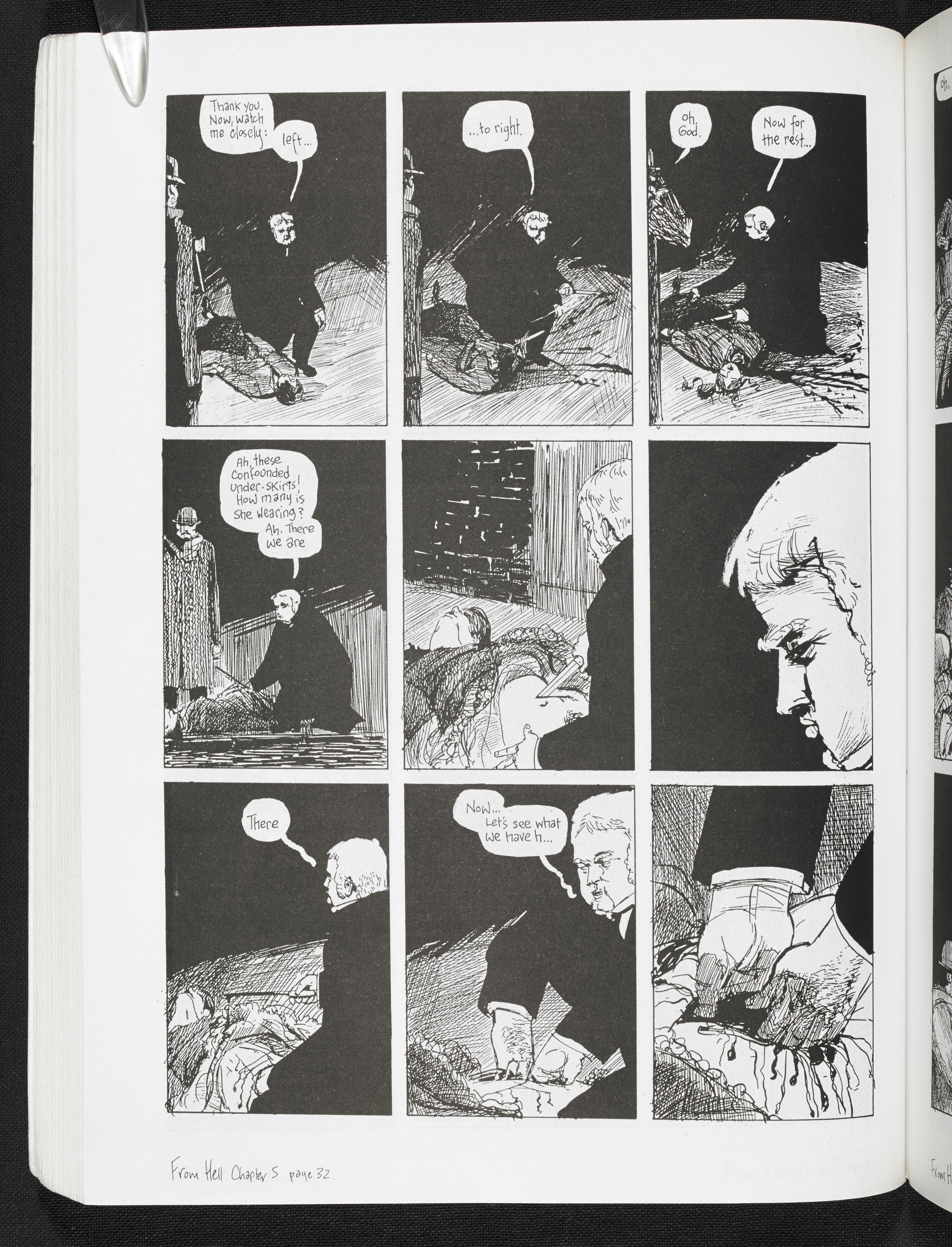
The British Library’s current exhibition, Comics Unmasked: Art And Anarchy In The UK is one of their best for a while. A thematic study of seditious comics in the UK, it covers a lot of ground without over-cramming – a consistent fault of BL exhibitions to date. And while exhibitions devoted to books can get a little frustrating – essentially, you are staring at hundreds of book covers you cannot read – comics work perfectly as you can read a single page and at a glance grasp an awful lot about the concept from the artwork and a couple of panels, such as this from Alan Moore and Eddie Campbell’s London classic From Hell.

From Hell, by Alan Moore & Eddie Campbell published by Knockabout Ltd. 1999 (c) Knockabout

Another plus is that the exhibition never makes excuses for its content matter so we are spared yet another analysis of why comics are for grown-ups. Instead it shows that comics have always been for grown-ups, right back to George Cruikshank (whose work is presented in a tremendous juxtaposition with an OZ strip about Edward Heath). The exhibition also takes a bold step by looking at the historical inspirations for comics writers’ love of magic and fantasy, with exhibits including John Dee’s spell book, the first draft of Crowley’s Diary Of A Drug Fiend and one of his tarot cards. These items are somewhat tenuous, but they are also marvellous and suggest an area a future BL exhibition could explore.

Original painting of Aleister Crowleys tarot card 'The Universe', on loan from The Warburg Institute. Photography (c) Tony Antoniou

There are several items with particular London resonance or import. I was fascinated by Riot, a book written in the immediate aftermath of the 1981 Brixton riot about which I’d love to know more. I also enjoyed the juxtaposition of Batman with Spring-Heeled Jack. There were also several contemporary strips, including Janette Parris’s Arch, about life in Archway, and Katriona Chapman’s contribution to Ink + Paper about renting in modern London. Oh, and there was a comic written by William Burroughs during his London sojourn.

Riot

Riot

Spring-Heeled Jack

Spring-Heeled Jack

IMG_2515

Other countercultural exhibits included a beautifully bound copy of IT, with the cover a reprint of a Situationist comic the publishers had found stuck on their office door (or a lamppost, I forget which) and a comic about the Nasty Tales trial, the IT spin off that was charged with obscenity.

The Trials of Nasty Tales, 1973, cover art (c) Dave Gibbons and Richard AdamsThere’s also loads of stuff on Batman and Superman, with particular reference to the work of Alan Moore and Grant Morrison, while Moore’s Lond0n-set V For Vendetta is a recurring motif. And there’s a decent amount of 2001, including Judge Dredd’s helmet and a never-reprinted Judge Dredd strip about a war between fans of Burger King and fans of McDonald’s – featuring a psychotic Ronald McDonald – that has never been reprinted for fear of a law suit. I also learned that tedious busybody Dan Dare of the Eagle had originally been created as an intergalactic space vicar, which probably explains why I never much liked the man.

Judge Dredd's helmet loaned by DNA Films - producers of 'Dredd'. Photography (c) Tony Antoniou

Now do you want to hear the flaws? There were only three I really noticed. One was the design, which was never quite as weird and psychedelic as I’d have liked (though that may be why I am not an exhibition designer). Another was that there wasn’t enough about the artists, who while by no means neglected were never quite given the attention and praise they deserve. And finally I’d like to have seen more about the development of the grammar and rules of comic book art – how artists have torn up the traditional episodic, thought-and-speech-bubble panel-based framework – which was addressed only superficially towards the end. These though, are little more than quibbles. Go see.

V for Vendetta mask on a manequin in Comics Unmasked. Photography (c) Tony Antoniou


Syd, psychedelia, If…. and the Olympics: an interview with Kevin Whitney

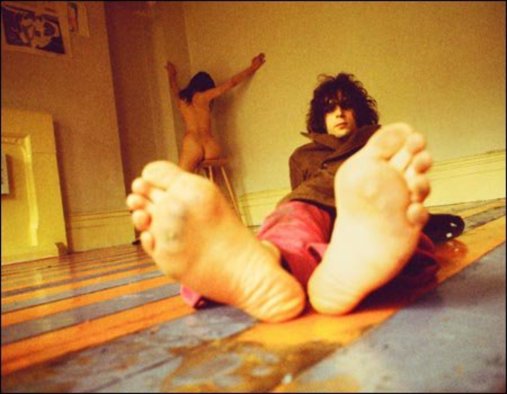
I have a piece in the current issue of Uncut about Psychedelia,  a film made in 1969 and featuring Syd Barrett. The film has been sitting underneath Kevin Whitney’s bed for 40 years, but will be shown in June 2014 at the ICA ahead of its sale. Whitney was on the fringes of the psychedelic movement in the late-1960s and later became the first official artist of the Olympic movement. ‘In my work there are still hints of psychedelic imagery,’ he tells me. ‘But using beautiful athletes instead of mad freaks.’ 

Psychedelia can be seen at Room&Book: ICA Art Book Fair, ICA, 6-8 June. 

——-

‘I was at art school until 1970 and during I was making the film. I was inspired by psychedelic light shows, which I’d screen on the front of Chelsea Art School  at underground pop shows at the Roundhouse. Chelsea Art School was a modern building off the Kings Road. It was the only building built in the 20th century to be used as an art school. It’s now a hotel. It was very anarchic. Art is now geared towards corporate success and Saatchi but then that sort of thing was frowned upon, you weren’t supposed to make any money out of it. You did conceptual things, it was against the system. Now it’s the opposite and has no balls. We were very privileged to be around then. We took art into the streets.

Chelsea Art School on Manresa Road, built in 1963

Previously, I’d been at art school in Ipswich with Brian Eno. We smoked our first joint together at Christchurch Park in Ipswich. We did a thing where about 12 of us would get on a bus and we’d have these sheets of Perspex the size of a newspaper. We cut out the title of the paper and glued it to the Perspex and then sit next to people on the bus pretending to read the stories from this empty sheet of Perspex. Everybody thought we were bonkers.

UFO Club flyer

I never did light shows at the UFO Club. I went there but they had some Americans, Joe’s Lights, who got the contract and nobody else could do it. I knew them and admit I was influenced by their ideas but I also showed them some of my tricks. One was fabulous. You’d get two pieces of Perspex and put in some olive or vegetable oil, then drop some vegetable dye – bright blue, red or yellow – and then close the Perspex together. You’d put that in the projector, which had a very powerful light and would heat up the dye and send it shooting to the edges of the Perspex. It was like going through a timewarp. Joe’s Lights liked this and used it at the Roundhouse for the big Jefferson Airplane/Door show in 1968. [Editor note: I think that while Joe’s Lights did the Roundhouse gig, the Boyle Family did projections at UFO.]

In 1968, I began making my film, Psychedelia. Syd was part of the scenario. Well, he was the scenario. Anybody that would agree I got to appear in the film, which was done at this basement on Old Church Street in Chelsea in a house owned by Antonia Chetwynd [regular visitors included Donald Cammell, David Bowie, Marc Bolan and Anita Pallenberg]. One day I went to Wetherby Mansions to pick up Syd. I was going to take him to the art school to this red and green painted studio I had in the annexe where I was making the film.

Syd Barrett in Wetherby Mansions

On the way, Syd offered me half a Mandrax. It’s like a sleeping pill that makes you very randy. We took half each. Then we got to the art school and I realised my camera didn’t have a cassette in it and all the shops were closed. So I said we’d do it tomorrow in Old Church Street. In the evening I called Duggie Fields [Syd’s flatmate, still resident at Wetherby Mansions] to check Syd had got back okay and Duggie told me he’d gone to Ibiza. He had a passport with him and he’d just gone to the airport and taken a flight to Ibiza.

When he got back we went to the basement and did the filming. I just had the camera with this psychedelic lighting. It was very amateur and everyone was very stoned. I’d sit people down and tell them to do whatever they wanted. Some took their tops off, some stared at the camera, talked, had a cup of tea… and I just filmed it because they were fabulous people. I filmed so many. In the scene I shot with Syd was Geoffrey Cleghorn, who was a friend of the Who and the Stones. I’d met him at art school in Ipswich and he’d followed when I moved to London and got involved in the whole scene. He’s an amazing guy. There was another chap called David Crowland. There’s a chap called Rupert [Webster], who was the very pretty boy in “If….”.


I screened it while playing Velvet Underground’s Sister Ray. I also use them on the other film I made Red And Green, when they are actually on the soundtrack, the Syd film was silent though I would have been playing Velvet Underground in the basement when making it. I was obsessed with them. It was all very Warholesque.


I gave my camera to Derek Jarman, I was living with the artist Luciana Martinez and she said, ‘You’ve finished with films and Derek’s a lousy painter, so why not give him your camera.’ He’d just finished making The Devils with Ken Russell, doing the sets. I did that and the rest is history. I then got totally into paining, film was an art student fling. In 1982 I got involved with the Olympis and been there ever since.

“Female gymnast”, 1984

I knew Syd as well as anybody could know Syd. He definitely wasn’t on this planet but he was lovely, very charming, and he seemed to like my paintings. He liked to paint himself and because I was pretty good he warmed to me. Also, I don’t hold him in awe, I was the same with Bowie, they were friends and I’d talk to them like that. I’d ask to draw them but treat them as I would anybody. People can treat pop stars in a different way and they can get very isolated. Most people were too much in awe of Syd to ask to film him and I think that comes across in the film. He was a very troubled mind and this wasn’t a great time. He’d been eased out of the Floyd and Dave Gilmour had taken over. But people who knew him said he looks so happy.’


Mama Cass in London: drugs, towels, Michael Caine and Charles Manson

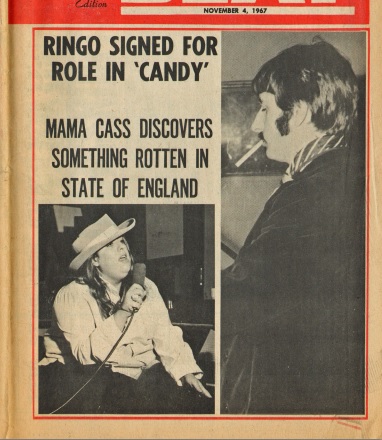
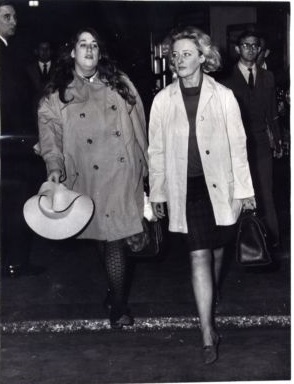
I have a piece about Mama Cass Elliot in the current issue of Uncut. One area I didn’t have space to cover was Cass’s arrest in London in 1967 when The Mamas & The Papas were travelling by boat to England to play a show at the Albert Hall. They had arrived at Southampton when they were told police were waiting with a warrant for Elliot’s arrest. The band frantically tried to destroy their stash of weed and then went on to the dock where they were supposed to meet label boss Lou Adler and his friend Andrew Loog Oldham. They were instead greeted by six of the Met’s finest, who bundled Elliot into a police car and drove her to Scotland Yard.

Cass

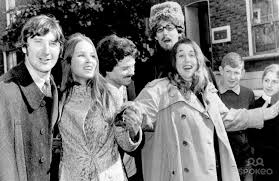
Elliot was stripsearched and questioned, then denied bail and held overnight. The police said the charges related to a stay in London six months previously at Queen’s Gate Terrace, when she had absconded with an unpaid bill and several towels. Outside the police station, The Mamas & The Papas – Denny Doherty, John Phillips and Michelle Phillips – were joined by Scott McKenzie, brandishing FREE MAMA CASS placards while they waited for Elliot’s release. The Albert Hall concert was cancelled.

Elliot escorted to the police station in Waterloo.

Elliot escorted to the police station.

Elliot told the press she had been treated well, but not been given enough blankets. ‘Believe me,’ she said, ‘One blanket doesn’t go far round this chick.’ After a trial at West London Magistrates Court, at which no evidence was offered for the prosecution, she was released without charge and left the courtroom munching on a hash cookie that she found in her handbag. That may account for the big smiles in the photo below, taken shortly after her release.

Elliot on release.

Elliot on release.

The Mamas & The Papas with Scott McKenzie after Elliot's release.

The Mamas & The Papas with Scott McKenzie after Elliot’s release.

The Mamas and the Papas with Scott McKenzie in London.

The Mamas and the Papas with Scott McKenzie in London.

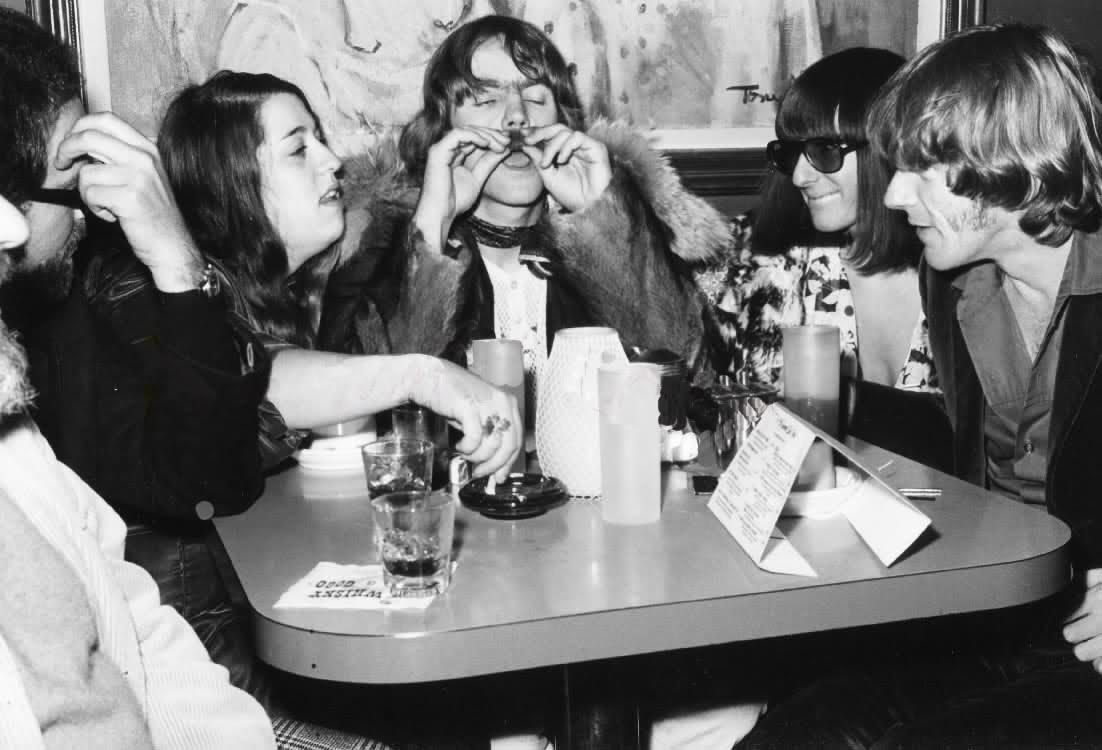
While such heavyhanded treatment by the authorities of rock stars was fairly common at this time, it later emerged that Elliot’s arrest actually had more to do with her occasional boyfriend, Pic Dawson, who the British police believed was involved in a major drug-smuggling operation. According to Michelle Phillips, this was the only subject the police in London were really interested in.

Pic Dawson and Cass Elliot at Whisky A Go Go.

Pic Dawson and Cass Elliot at Whisky A Go Go.

Dawson, who died of a drug overdose in the 1980s, was certainly an interesting figure with connections to the underworld. Numerous rumours circulate about him partly thanks to his peripheral involvement in the Manson Family murders.

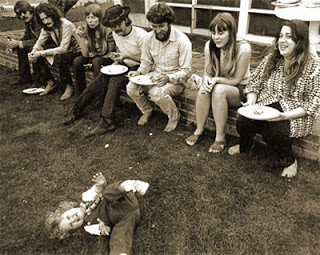
Dawson, left, and Elliot, right, at Mama Cass’s house with guests including David Crosby and Eric Clapton

Dawson knew several of the victims – basically, he supplied them drugs – and after the murders John Phillips is said to have told the police that the bloody PIG daubed on Sharon Tate’s wall actually said PIC. The LA police were also informed that Dawson, along with another of Elliot’s drug-dealing boyfriends, Bill Doyle, had been ejected from a party at the Polanski house shortly before the murders. Dawson was subsequently arrested, questioned and cleared, as was Doyle.

These were not Elliot’s only connections with the Manson murders. Dave Mason recalls, “One of the freakiest parts was that at Cass’s I saw a lot of Abbie Folger and Wojciech Frykowski until the Manson crew slaughtered them” and she knew all the victims well. But she also knew the murderers – in his autobiography, Michael Caine of all people recalls attending a party in Hollywood with Jay Sebring and Sharon Tate, where Mama Cass introduced him to a ‘scruffy little man’. His name was Charles Manson.

Homeless in London

This is a rewritten version of a piece I wrote on London’s homeless tours in 2011. 

No amount of playful London nerdery can prepare you for the emotional thump that is an Unseen Tour. These walks are organised by Sock Mob, an informal group of volunteers who work with London’s homeless – and it’s the homeless, or former homeless, who take you on the tour. In their company, you’ll learn things about London you probably didn’t know, like where to find the Second World War shrapnel on the side of St Clement’s Dane church on the Strand, and you’ll learn things you definitely didn’t know, like which Covent Garden cafe gives food on credit to the homeless when they are short of cash.

We meet at Temple, that aged hive of streets dominated by the vast grey Victorian Gothic splendour of the Royal Courts of Justice. Mark and Viv, the tour guides, have spent long periods sleeping rough and few people can have as strong a relationship with the streets of London as those who used to sleep on them. The next hour-and-a-half is a powerful mix of autobiography and ancient history. One minute Viv is talking about the Knights Templers, who lent their name to the area after building a circular stone church here in 1185, the next she’s telling you about the night she got chased from her ‘bash’ (a makeshift shelter constructed every night) under Waterloo Bridge by a gang of ‘rough elements’, a group of homeless women pursuing a petty feud. This truly is another London, and one that most of us will never have to discover. It is a bitterly cold night and as snowflakes fall , the bleak doorways that Mark once called home look especially uninviting. London can look like something from a fairy tale in the snow, but not this night.

As we move into Theatreland, the tour develops the ebb and flow of performance art as comic vignettes – a singalong of ‘The Muffin Man’ on Drury Lane – are mixed with upsetting accounts of the vicious treatment the public can hand out to the homeless. Mark and Viv have harrowing stories of their time on the streets. They talk of rough sleepers who have been spat on, robbed, punched and even set on fire by passers-by. ‘Somebody called me a tramp last week,’ says Mark, more indignant at this verbal slight than with the physical abuse he has received. Despite these dangers, this area between West End and City has always been popular with the homeless: the narrow streets are largely free of cars but receive plenty of pedestrians, often tourists on their way to the theatre, pockets jangling with change. Mark and Viv point out safe alleyways, often frequented by rough sleepers, that have been their former homes; or they take you to areas that the owners have rendered unusable for sleepers through the erection of barriers or removal of anything that may have acted as a shelter.

The walk concludes at Lincoln’s Inn Field, a large green square in Holborn surrounded by imposing terraces. With a fresh fall of snow on the lawn, it’s a majestic sight but this was once a vast homeless campsite called Tent City. In the early 90s, the homeless were noisily evicted, part of an ongoing campaign against rough sleeping that Mark and Viv say is escalating, with long-running soup kitchens being banned by councils and rough sleepers forced to move from favoured spots in the West End out into the suburbs where they can be ignored. There is danger here – previously rough sleepers found safety in numbers, but now the forces of the state, as well as private security firms hired by companies to protect the public appearance of their premises, crack down on large groups of homeless people. The number of homeless on London’s streets is rising, but that is harder to discern than it was in the 1980s, when there were huge homeless camps like Waterloo’s Bull Ring and Holborn’s Tent City. The state has sanitised the streets and tried to tidy the homeless away. They do not fit into the narrative of London as a great city of opportunity, reward and cash. But they still exist. 

The tour finishes on this disconcerting note, and Viv and Mark depart for their hostels in a flurry of kisses, handshakes and farewells and I wander off into the snow, back to my warm home and family. London will never seem quite the same again.

There are Unseen Tours in Camden, London Bridge, Covent Garden, Shoreditch and Brick Lane. For more information and to book tickets, see here

Know London

City-lit London

This is an edited extract of an introduction I wrote for City-Lit London, a superb anthology of London writing, from 2009.

I don’t really know London. This despite having lived and worked within the collar of the M25 for my entire life, something that is simultaneously a source of great pride and creeping shame. I’ve explored it, sure. I’ve gazed down at dawn on drowsy Londoners from atop a thirteenth-century church tower in Hackney. I’ve listened to the hum of traffic passing overhead from deep within the buried Fleet River beneath Holborn Circus. I’ve walked the Thames one Sunday afternoon from St Paul’s to Hampton Court, been to the end of more than half the tube lines, sniffed Billingsgate Market’s early-morning buzz and fed the black-tongued giraffes at London Zoo. I’ve even travelled every bus from 1 to 50 in numerical order, a task that’s taken me to every point of the compass from Debden in the north-east to Fullwell in the south-west (no, I’d never heard of them before I started, either). But I still don’t know London. Not really. There are vast tracts of its urban geography that are a total mystery to me, a no-man’s land, vacant lots, blank space in my internal A-Z.

This is not an unusual condition. Indeed, it might even be a necessity for living a sane, balanced London life because most of the city’s residents seem to suffer from it, some quite contentedly, perfectly happy to stay within the few square miles where they live and the West End where they work. This could be because there is simply too much London to handle ― too many streets, too many people, too much history, too many inconsistencies. The London cabby, scientists say, has developed a larger-than-average hippocampus ― the part of the brain that processes navigation – simply to cope with all the information. One of them, Fred Housego, even won ‘Mastermind’ in 1980.

Most of us don’t even try to deal with all this geographical sludge. In Soft City, Jonathan Raban’s charismatic study of the modern city from 1974, he noted: ‘The Greater London Council is responsible for a sprawl shaped like a rugby ball about twenty-five miles long and twenty miles wide; my London is a concise kidney-shaped patch within that space, in which no point is more than seven miles from any other… I hardly ever trespass beyond those limits, and when I do, I feel I’m in foreign territory, a landscape of hazard and rumour. Like any tribesman hedging himself in behind a stockade of taboos, I mark my boundaries with graveyards, terminal transportation points and wildernesses. Beyond them, nothing is to be trusted and anything might happen.’

This is a common way of behaving, retreating within self-imposed borders and putting up the fences to the darkness on the other side. It’s captured by Tarquin Hall’s passage from Salaam Brick Lane and the stark single-line confession: ‘Most of London, the city of my birth, was as foreign to me as Prague’. The bard of Cricklewood, Alan Coren, explored a related theme in typically whimsical fashion in which he imagined his intended tour of all the London landmarks he has never actually visited – the Tower of London the Monument and the Serpentine — having decided to leave that sort of thing to the tourists.

No wonder and no shame. If you’re born in Harrow, what should you understand of Harlow? If you live near Crystal Palace park, why would you need to know Hampstead Heath? How many Londoners have ever toured the Houses of Parliament or been into the Whispering Gallery of St Paul’s? The greatest area of neglect is the City — if you don’t work within that glorious square mile that contains all history from the Romans to the Credit Crunch why would you ever have a reason to go there? Londoners leave it to tourists and bankers.

And then there are the contradictions. This is the city that features some of the wealthiest real estate within some of the most deprived boroughs in the United Kingdom; the city whose ships helped spread English around the world but is now home to more than 250 different languages and has schools where the native tongue is barely spoken; the city that when called upon to appoint a new mayor, replaced a left-wing, working-class, car-hating socialist with a right-wing, public-school educated, neo-Thatcherite motoring correspondent, two iconoclasts who seemed to have nothing in common bar a quick wit and mutual contempt for orthodoxy. Who can get their head round that?

So, how can you learn to master this metropolis, the first great city of the modern age and still the world leader in art and commerce? Well, you could follow in the footsteps of Phyllis Pearsall, the creator of the single greatest London book – and one that is understandably omitted from this anthology – the A-Z. In the 1930s, Pearsall claimed to have walked every one of London’s 23,000 streets – that’s around 3,000 miles of serious perambulation – in her determination to produce the most comprehensive map of London that is humanly possible. It’s almost certainly an urban myth, but the conceit is admirable.

Alternatively, you could save on leatherwear and consult some of the other classics of London literature, those writers who have made it their business to understand the city, or at least their particular patch of it. After all, will anybody ever show off Soho like Colin McInnes, or capture Camden like David Thomson? Virginia Woolf’s West End is so beautifully developed, so perfectly drawn, so hyper-real, it almost dwarfs the genuine article. And Monica Ali’s Brick Lane places it as firmly on the tourist map as Big Ben and the Wheel, so you can tell yourself that there really isn’t any need to check it out for yourself.

London books allow you to travel in time as well as space. McInnes’s Soho is the good one, the one we’ve all heard about from the 1950s, when it was still raw, neon-lit, jazz-fuelled and edgy rather than a shallow cluster of over-priced restaurants and drunken daytrippers wondering where all the loucheness has gone (it’s still there, just, in secret drinking clubs and members’ bars hidden behind nameless Georgian façades). And Thomson’s Camden is one on the verge of massive change, a working-class district of pubs and markets that is about to experience the first invasion by the middle-classes that will recondition the area beyond all recognition, setting off a chain reaction of gentrification around London’s inner suburbs from Notting Hill to Islington. For those of us who only know these places in their current incarnation, this stuff has an extraordinary archaeological value that their authors could never have intended, like the background of family photographs that show furniture and fittings everybody forgot about long ago because they never bothered to record them.

But that’s not to say things were so much better in the old says. Indeed, one of the most important things about this volume is that it emphasises the current prodigious strength of London writing. Yes, there’s Dickens and Woolf and Conrad and Wilde and Conan Doyle – as there should be – but there’s also Ackroyd and Sinclair and Self, the titanic trinity of contemporary London writing. Since the 1980s they have done more to resurrect the concept of London writing as a standalone genre than anybody since the Victorians, when London, the New Jerusalem, was seen to embody the contradictory values of Empire and became a rich source of fiction and journalism. They have encouraged the rediscovery of some of the lost classics of London literature and fostered the climate in which anthologies like this one can flourish. In their wake, modern classics have followed, from Justin Cartwright’s snappy satirical novel Look At It This Way to Sukhdev Sandhu’s invaluable nocturnal jaunts into the belly of sleeping London in Night Haunts. This regained respect for London writing also allows the voice of the new Londoner to be heard — the 27.1 per cent of the population that the 2001 census considered to be non-native-born ― through authors such as Xiaolu Guo, with her faux-naïve extracts from A Concise Chinese-English Dictionary for Lovers. In Rebecca Taylor’s ‘London Lives’ we even meet one of these recent arrivals in the form of a young brother and sister who travel to London from Poland to begin their new lives, part of the huge wave of Eastern European immigration that has transformed the city in recent years.

It is authors from this final category who could provide some of the finest and boldest London writing of the twenty-first century, because they will come to the city with a fresh mind and open eye, prepared to live and work in those parts of London that are closed by personal choice to most natives. None of them, of course, will ever really get on top of London, even if they choose to stay here for the rest of their lives — but every little bit helps. And if you put all the fragments together, you may one day get something close to the full picture, the London that we all love, even if it’s not the one we know.

Football and anti-Semitism

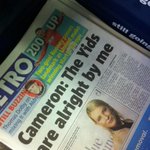
The debate about the use of the word ‘Yid’ in football is all over the papers at the moment, including, with breathtaking insensitivity, this front page. I’m not easily offended, but found this headline is horrendous.

The topic of Jews and English football is the subject of an exhibition, Four Four Jew, opening next month at the Jewish Museum London. I interviewed the curator and we touched on the controversy around the ‘Y word’ , as she phrased it. She said that while the exhibition would look at the use of ‘Yid’ it ‘wouldn’t come down on either side of the argument’.

Ultimately, whether you are comfortable calling somebody a ‘Yid’, either in support or in hate, is a personal decision. I made up my mind where I stand a long time ago and here is an updated version of an article I wrote on the subject in Time Out a few years ago.

———

I’d been calling Spurs ‘the Yids’ for a couple of years before my dad told me it was racist. ‘Don’t you know it’s anti-Semitic?’ he said. I didn’t, nor had I worked it out from one of my favourite Chelsea chants: ‘He’s only a poor little Yiddo/He stands at the back of the Shelf/He goes to the bar/To buy a lager/And only buys one for himself’. Racial stereotypes were clearly not one of my strong points as a 13-year-old.

I’d like to say that I immediately stopped using the word, but I didn’t. Chelsea fans – like those at Arsenal and West Ham – had been calling Tottenham ‘Yids’ for decades. Given that Spurs devotees called themselves the ‘Yid army’ I didn’t see how it caused any harm. I didn’t consider it racist or anti-Semitic, just a near-the-knuckle nickname for a rival football club.

I’ve stopped now. The eureka moment for me came when I was at a game in the mid-90s. Chelsea fan David Baddiel, who is Jewish, was spotted by the crowd after half-time as he returned to his seat with a cup of tea, and several hundred people began chanting ‘Yiddo, Yiddo’ at him, in what I imagine they considered to be an affectionate manner. Baddiel smiled it off – but the penny dropped that this was straightforward racist abuse. Baddiel later wrote:  ‘I told myself that it didn’t matter, that for most of these fans, “Yiddo” simply meant a Tottenham player or fan and that the negativity was about that and not about race.’ However, when Chelsea fans aimed the chant at non-Tottenham Israeli players, Baddiel ‘realised “Yiddo” may mean Tottenham fan but it also means Jew.’ He has since become an outspoken opponent of the use of the word by all supporters, earning him much scorn from Spurs fans. 

It used to be worse. In the 1980s hissing to imitate the release of gas was said to be commonplace, but I have never heard this – or chants about Auschwitz, bar from two drunks on The Shed in a League Cup tie in 1990 –  in more than 25 years of attending Chelsea-Spurs fixtures home and away. By the early 1990s, many fans had realised that was a step too far. I’m sure it still occurs but, in my experience, it’s pretty rare. Although by all accounts, West Ham are still at it. 

The canard that hissing is regularly heard at Chelsea games is often used by Spurs fans, as they attempt to defend their own use of ‘Yid’ but Jeremy Vine, a former Times journalist and another Jewish Chelsea fan, agrees it doesn’t happen often. ‘I’m sure I would notice hissing as it would most likely come from the Matthew Harding Stand, where I sit.’ Vine stopped attending games in the 1980s due to racism and says: ‘Without doubt some of those who chant “Yid” are anti-Semites at heart… but I don’t believe all are.’ The problem is that ‘personal jibes are part of the language of the terraces. Anything goes. And so the boundaries of decency and offensiveness become blurred.’

What muddies the water further is that since the 1970s, Spurs fans have reclaimed what was originally coined as a term of abuse (nobody knows why, Tottenham being no more ‘Jewish’ than Arsenal or Chelsea). Former Chelsea chairman Ken Bates, always torn between defending Chelsea supporters while confronting their excesses, argued that, ‘It is hard to criticise Chelsea fans for calling Tottenham supporters something that they call themselves.’ Chelsea have since rejected this line and now take a zero tolerance approach. It’s worked, to some extent. My old favourite, ‘He’s only a poor little Yiddo’ is rarely heard at Stamford Bridge these days. Spurs still get plenty of abuse, but – within the ground, certainly – the tone of it is much changed. 

A few years ago, Spurs conducted a ‘full consultation exercise’ over the use of ‘Yid Army’ because of fears it led to ‘casual anti-Semitism’, but this was criticised by many of their own supporters who felt the chant united Jewish and non-Jewish Tottenham fans. ‘If you are Tottenham, you are a Yid,’ is the line many take. That is what annoyed them so much about the recent FA instruction that all uses of Yid must cease, an argument that David Cameron has now blundered into. Many argue there’s a distinction between chanting ‘Yiddo’ and singing about concentration camps, which is broadly true – unless you’re racist. I’d even go so far to contend that Spurs have won the argument – they’ve reclaimed a term of abuse. But when it leads to casually racist headlines like that published above – and let’s remember that most Jewish people who see that headline will not support Tottenham –  one wonders quite where this will end.

It is, as Joanne Rosenthal, the Jewish Museum curator, told me ‘very complicated. Even if it appears black and white the two poles are very strongly opposed. Fan culture has this nastier side and we can’t ignore it. It’s now become part of Tottenham’s heritage. It’s difficult to tell people what they can or can’t do.’

Perhaps not, and I’m a huge fan of tribalism at football, but sometimes everybody just needs to grow up and move on. Maybe that Metro headline, as trivial and offensive as it is, will give people pause for thought.


The Clash in Soho

The Clash have opened a, wait for it, pop-up shop in Soho to promote the release of their new box set. It’s only open for a couple of weeks, and I happened to be in the West End yesterday so paid a quick visit, joining a crowd made up entirely, and unsurprisingly, of middle-aged men.

I wasn’t actually expecting a great deal, but was pleasantly surprised by what I found. While the upstairs is essentially a Clash mini-mart, flogging copies of the band’s albums as well as the Sound System box, the downstairs is more like a mini-museum of Clash memorabilia, featuring the iconic alongside pleasing ephemera.

So while the biggest draw was the buggered bass guitar that Paul Simonon is seen smashing on the cover of London Calling

IMG_1934

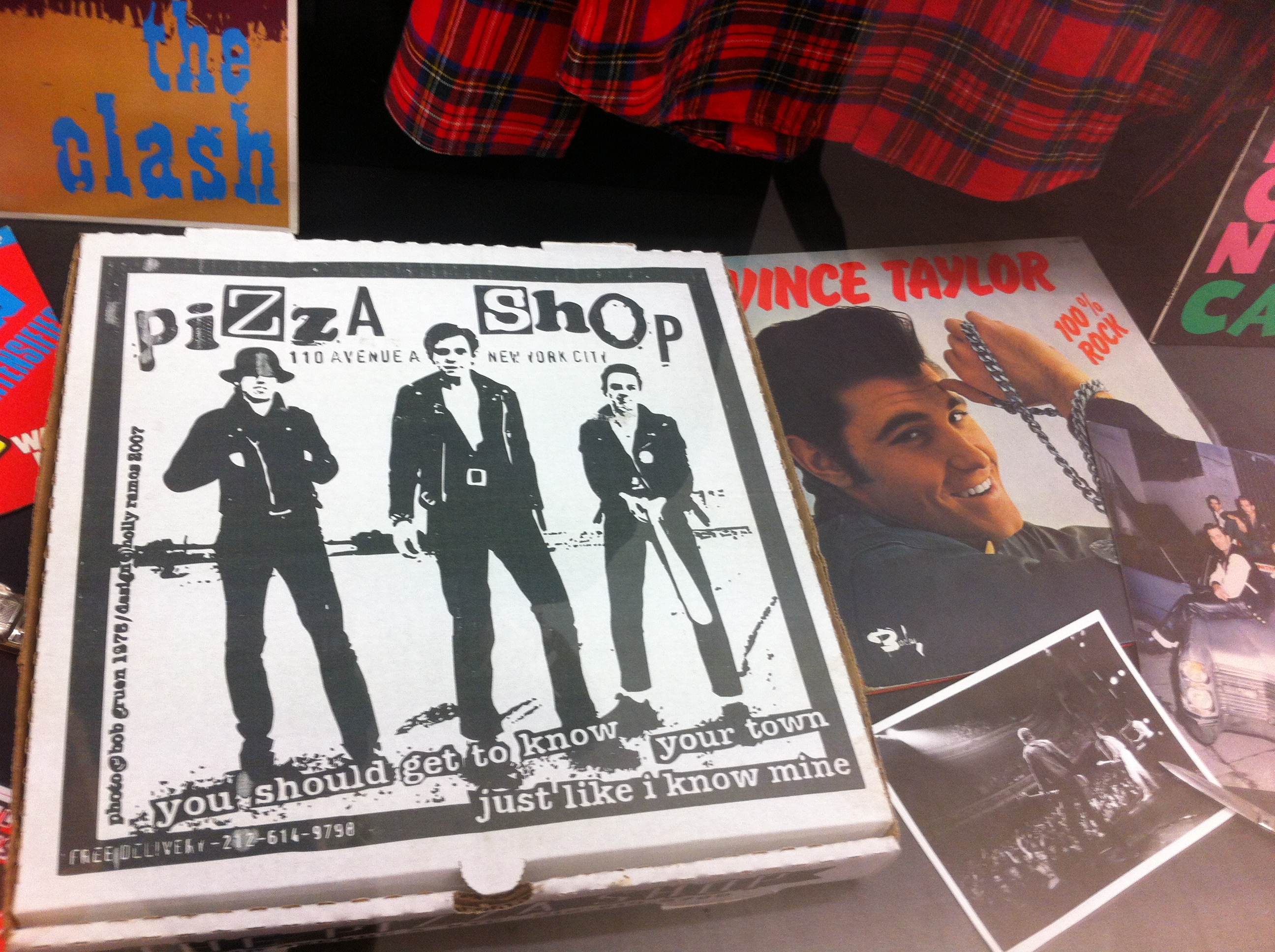
… I rather preferred witty juxtapositions like this, which places a punk-referencing pizza box alongside a Vince Taylor LP.

IMG_1930

A long cabinet acts like a timeline of the band’s history, crammed with ephemera relating to the band personally and politically, but also to the musical and literary influences they were absorbing along the way. So the section around the time of, say, Sandinista!, is full of South American political paraphernalia, lyric sheets and cassettes of the music they were discovering, while further along, at the time of Combat Rock, it’s all about cowboys and indians, and the US military. It was a bit like the Bowie V&A show in miniature with a better developed sense of humour, and ably demonstrated that the three-dimensional, technicolor world of rock and roll offers huge potential for entertaining and informative exhibitions when handled with the right blend of respect and irreverence. One day, one hopes, somebody will do a Beatles exhibition that works along similar lines.

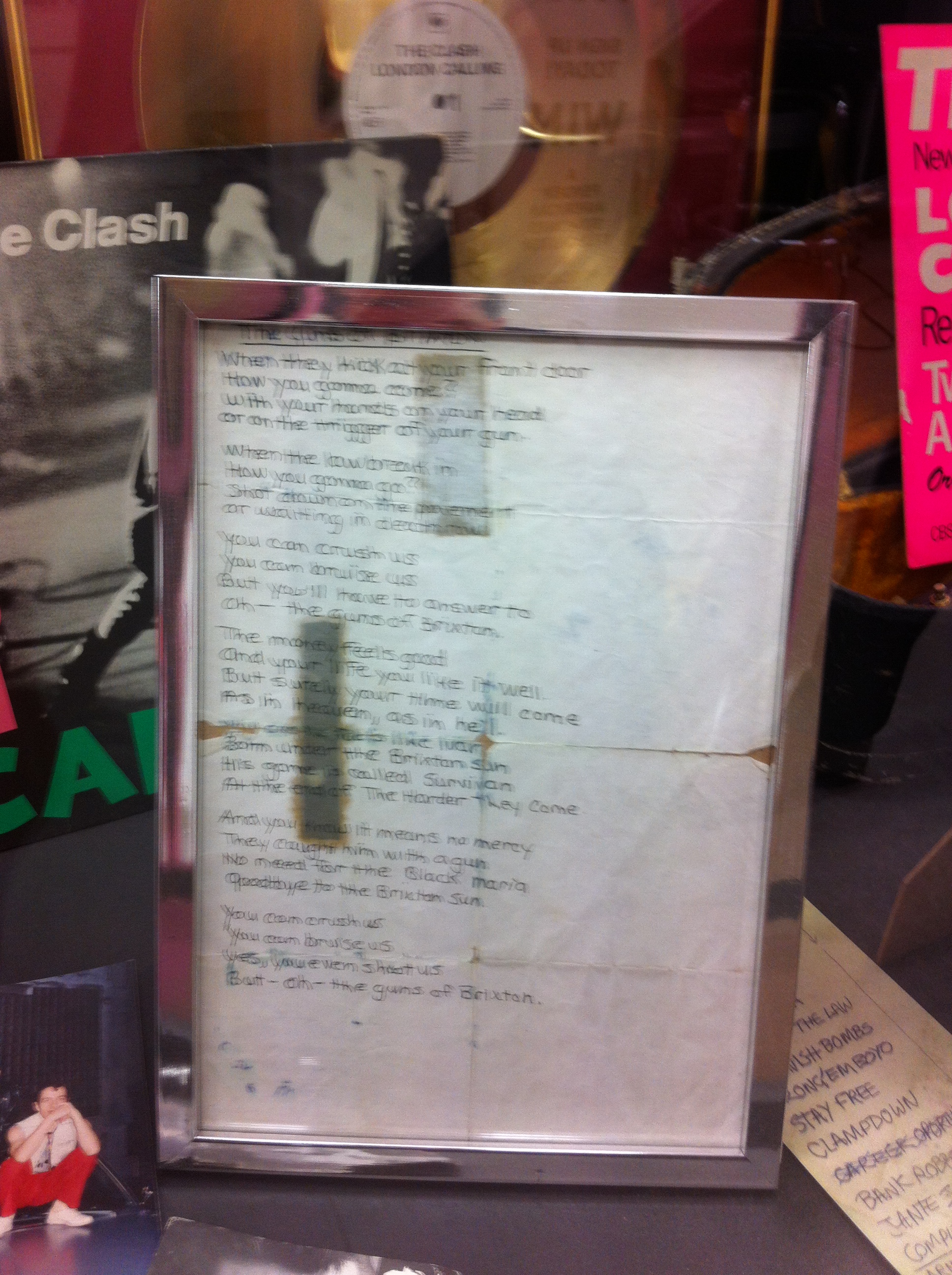
Other items of interest included the Clash’s map of the world, Paul Simonon’s certificate of appreciation from the Guardian Angels, the hand-written lyrics to “Guns Of Brixton” and an old beat box, with rather touching home-made cassettes. Everything is offered entirely without explanation, which is part of the fun. Check it out.

IMG_1933

IMG_1932

IMG_1931

IMG_1935

Black Market Clash, 75 Berwick Street, W1. Open until September 22.

Secret London: torture at the Temple

In some parts of London you can travel in space as well as time. Take the Temple. This characterful cluster of medieval buildings, gardens, courts and alleys wedged between Fleet Street and the Thames seems to have been uprooted from an Oxbridge college and dropped brick-for-brick in central London, just a heartbeat from the Embankment.

The Temple is a maze of cobbled paths and narrow arched doorways leading to small courtyards that have names like Pump Court and King’s Bench Walk. Most of the buildings are offices occupied by lawyers – this is London’s legal quarter, where barristers receive their training – but the area is also popular with tourists, who have found their way into this most secluded spot. They are here to see the Temple Church, one of London’s oldest churches and, with its distinctive circular nave, also one of the most atmospheric. It’s a building that exudes medieval mystery, and rightly so. Temple Church was founded by one of the world’s most intriguing secret societies, and continues to exude a curious, almost sinister vibe, a feeling that there is more to the Temple than meets the eye.

Even those who know the place well can sense the mood. ‘Buildings have memories,’ says Oliver the verger. ‘And this building has seen some turbulent times.’ Oliver is an intense young man who holds the keys to the secret parts of Temple Church. But that must wait. First, he offers a potted history, one that explains why the Temple is off the beaten track but very much on the tourist trail.

The great London writer HV Morton wrote in 1951 that ‘The Temple brings into the heart of a great city the peace of some ancient university town and the dignity of a past age’, and although the Temple area is redolent of Oxbridge its holy centrepiece is actually a stand-in for a more distant city. The Temple Church was built by the Knights Templars in the twelfth century. The Templars were a holy order formed in 1118 to protect European pilgrims visiting the Holy Land. Their base in Jerusalem was supposed to be the site of the Temple of Solomon, so the warrior-monks became known as the Knights Of The Temple of Solomon of Jerusalem, soon shortened to Knights Templars. The Knights Templars had churches and land all over Europe. In London they settled in Holborn but moved nearer the river in 1162, where they built the church. This great round edifice, the New Temple, was consecrated in 1185. Its circular nave paid direct homage to the Church of the Holy Sepulchre in Jerusalem, the idea being that Londoners could visit Jerusalem without leaving the city. Such symbolism was easily grasped by medieval worshippers, who understood how one place could represent another and how the present could fold into the past.

The Knights Templars’ management of the routes in and out of the Middle East soon brought them great wealth, with which came great power, with which came great enemies. Rumours – started by rivals in other religious orders and the nobility – began to spread of their nefarious conduct, and of their sacrilegious and obscene initiation ceremonies, which took place on sacred ground, in London’s case in the crypt beneath the church. It was said that members spat on the cross, worshipped cats and practised ‘unnatural vice’ with each together. As hostility heightened, the end was inevitable and bloody. Phillip IV of France, who, coincidentally no doubt, was heavily in debt to the order, arrested leading French Templars in 1307 and through torture and imprisonment, gained lurid confessions about their immoral conduct. The order was dissolved in 1312.

Although the end for English Templars was not quite so brutal, the abrupt dissolution of the order – and the rumours that surrounded it – has provided fertile ground for conspiracy theorists. Some argue that the Templars were abolished because they knew more about the origins of the organised church than they should, others claimed that the Templars did not disappear, but were merely pushed underground and continue to operate to this day as a clandestine force that shape the world order. Novelist Dan Brown seized on versions of these myths for his blockbuster ‘The Da Vinci Code’, and, having done his research, settled on Temple Church as a suitably spooky location for some key aspects of the action.

52 TEMP 14.jpg

Brown was doubtless drawn by the dominant feature of the church, the ten statues of knights that lie on their backs on the floor in the centre of the circular nave. These stone effigies of dead Templars are frozen in time like Neolithic humans dredged from a peat bog. Despite having lain here since the twelfth century (one, commemorating Geoffrey De Mandeville, is dated 1144 making it older than the church itself; it is said to be here, because no other church would bury him), some have sharp, fine feature, while others have faces melted by German incendiary bombs. All look like they are covering something, perhaps an opening to a secret chamber. They certainly appear to serve some function greater than mere decoration. When you stand in the airless centre of this strange church, looking at this ancient stonework, you can feel the clammy arm of history encircling you. For centuries, Londoners and travellers will have stood at this spot, and bar some cosmetic changes – the church has been refurbished three times, by Christopher Wren, by the ever-busy Victorians and after the Second World War – will have gazed upon the same sight. Nothing has changed.

Oliver the verger interrupts my reverie with some subtle key jangling. We head over to a small door, which he unlocks to reveal a spiral stone staircase. We are seeking the penitential cell. This is where the Master of the Temple – the gloriously authoritarian title given to the church’s head priest – used to punish the unholy. The unfortunate Walter Bachelor was left to starve to death in the penitential cell after disobeying the Master, which is a particularly serious form of penance  as you can’t really repent after you are dead. The cell is halfway up the stairs and now has the appearance of a broom cupboard. It’s tall, but narrow, so a man can stand but not lie flat. Most disturbingly, it has windows overlooking the interior of the church, so those sentenced to starve could look down upon the statues of the crusaders, who would bear silent witness to the suffering taking place above. When we talk of a punishment being medieval, this is what we mean.

Oliver does not enjoy talking about the penitential cell, understandably uncomfortable with such ugly things occurring in the place he has to work every day. He also maintains a theological distance. He says this cruel punishment must have been a Templar thing, nothing to do with the organised church of the time. The Templars, it seems, are destined to play the role of scapegoats for centuries to come.

Oliver and the current Master, though, are happy to play the Templar connection to their advantage when it suits. Dan Brown’s novel brought unprecedented interest in their church, and the Temple suddenly became a hit on the tourist circuit. The Master wrote a book debunking the myths and generally tapped into the new-found interest. Now ‘The Da Vinci Code’ fever has worn off, but the Church has stayed in travel guides on its own merits, remaining a must-see for tourists from all over the world. Here they learn about the Temple Church’s history after the order was dissolved. After passing into the hands of the crown, the surrounding Templar land was given to barristers in 1608. They had begun to locate here from around the fifteenth century. After receiving the land rent-free, the barristers agreed to maintain the church and the Master in perpetuity. The most colourful example of them protecting the church occurred in 1678 during an outbreak of fire. The junior barristers quelled the flames with beer; it took six years for them to settle the brewer’s bill.

In preparation for the arrival of the day’s first tourists – and some are already milling outside waiting for their chance to snoop the ancient masonry – Oliver throws open the vast West Door. This huge arched door opens on to an easily overlooked alleyway, on the opposite side of the church to the large square that fronts the main entrance. It is a magnificent piece, thick regal wood surrounded by an arch of elaborate carved stonework. Nobody knows its age, although Oliver points out that some of the faded figures are wearing buttons, which were supposedly unheard of in Britain before the fourteenth century as they were associated with Muslims, the very foe the Templars were formed to fight.

Standing in this quiet spot round the back of the aged church staring at a door that by implication if not construction dates back to the twelfth century, it is easy to feel that you have slipped through time. One London writer, James Bone, said in 1919 that ‘At Temple, you are as close as an echo to the past’. Here, the echo resounds loudest and longest.

Mick Farren: dead good Deviant

‘Sure the underground was elitist: we were an elite. We were the cutting edge of ongoing bohemianism at that point.’ Mick Farren in Days In The Life by Jonathon Green

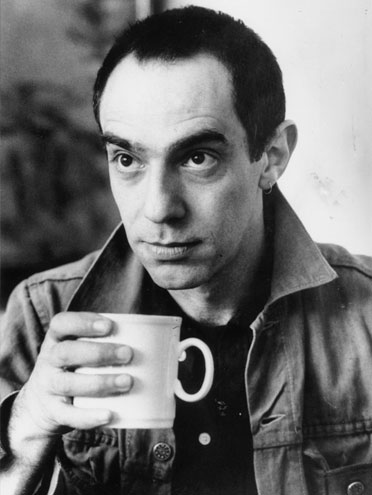
The last time I spoke to Mick Farren (May, 2013) he was waiting for the doctor to come round. He was, he told me, in pretty poor shape but welcomed our interview as it gave him something else to think about. Farren’s ill health had been known for some years, but it didn’t stop him going on stage with his old band the Deviants every now and then. It was while performing at the Borderline last night (Saturday, July 27) that he collapsed and died.

It seems crude to say that is how Mick Farren would want to go, but it’s certainly no great surprise that this vivacious ball of hair and action, the closest thing London ever came to producing an Abbie Hoffman,  should die while giving it all to his great love rock and roll. (The following, and all subsequent quotes, are from my interviews with Farren.)

‘Essentially, from when I was in art school through to Joe Strummer the major communication medium of the counterculture certainly in the second half of the 1960s was rock and roll music. You start with that and everything else was peripheral to it.’

Farren’s Deviants were pre-punk noise terrorists whose self-distributed debut album, Ptooff! was one of the first records to come directly out of the London counterculture. When I spoke to Farren for Uncut about the Rolling Stones free gig at Hyde Park in 1969, I asked him whether the Deviants had wanted to play the show. He said,

‘We asked if we could play. We were vetoed, it was probably Jagger. Everybody said I wouldn’t behave myself and start rabble rousing, which was fair enough.’

I put this to Pete Jenner, who co-organised the gig, who responded.

‘Well, there was that and also the fact they were a rotten band. I really like Mick [Farren] but they were a rotten band who smashed instruments on stage. It wasn’t kick out the jams motherfucker, it was let’s have a joint and a buttercup sandwich.’

The Deviants weren’t really a rotten band, but Farren certainly saw them as London’s answer to the MC5. He was heavily active in the political end of the counterculture, forming the London branch of John Sinclair’s White Panther Party and leading the occasional putsch at the International Times when he felt it was getting too bourgeois and boring. Farren was a key figure in so much of what happened in the counterculture, running the door at UFO, writing for and editing alternative newspapers, organising free festivals while playing shows and really meaning it, man. He was fixer and a doer, a wit and sometimes a sage.

‘IT came out of the Beats – poetry, jazz and art with a bit of lefty politics. I told them this was fucked up, they weren’t talking about the weird changes going on with The Who, or where The Beatles were coming from. I’d say that with all respect to John Coltrane there’s this black geezer in the Bag O’ Nails who has long hair and plays guitar with his teeth, what are we going to do about THAT?’

His politics though, always came with a sense of fun – at one anti-war demo the Deviants played he annoyed the po-faced organisers by being more concerned with getting on stage without splitting his trousers than with espousing the cause. He was once described to me by a fellow traveler as being one of the three coolest men in London in 1967, and that made him one of the three coolest men in the entire world.

”We were always condemned as frivolous and philosophically disorganised, and the counter-accusation was they were just boring totalitarians who wanted to sing the Red Flag when we’d rather listen to Voodoo Child and smoke pot.’

When the alternative press disintegrated, Farren – like many from the underground – went on to write great pieces like this for the NME:

The immediate legacy of the underground papers was the NME because we all went there. They had a very profound effect on the visual effect of magazine publishing, but much more important is that the spirit of the thing is now preserved on the internet.  It’s all still there, it’s just become more specialised and you have to go looking for it.’

Farren is one of the dominant figures in Jonathon Green’s essential history of the British underground, Days In The Life, and also wrote brilliantly, if unreliably, about his own activities in Give The Anarchist a Cigarette. What resonates from those books is what an unlikely fit Farren seems in the upper-middle-class world of the counterculture, which was largely run by public schoolboys and Oxbridge graduates imbued with that remarkable confidence that comes with a good education. Farren was different, his confidence was self-generated and less polite, while his art school experiences meant he ‘learned to manage chaos’. Indeed, he relished it. Take a look at the clips below if you don’t believe me.

In his own writings and when interviewed, Farren always came across as funny and incredibly sharp but there was more to it at than that. He was fundamentally, intrinsically, decent. A man without edges. As Jonathon Green told me when hearing the news of his death: ‘Of the underground ‘stars’ he seems, and always did, to have been one of the good guys.’

RIP Mick Farren. He will be missed by many.

Farren invading The Frost Show.

Farren recollecting the Grosvenor Square anti-Vietnam riot of 1968.