Category Archives: Music

Why I love Pat Nevin

I remember when I fell in love with Pat Nevin. It was in the playground and somebody was passing round a 1985 Panini sticker album. I turned straight to the Chelsea page to see my heroes.

There was Kerry Dixon, bluffly handsome with golden hair, azure eyes and self-confident grin. There was Colin Pates, a brick-wall centre-back with disco dancer hair. There was Doug Rougvie with a nose that looked like it had lost an argument with a spade.

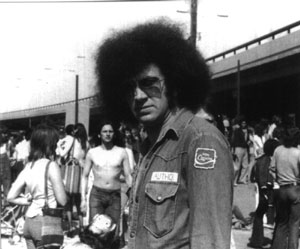
And there was Pat Nevin. Pasty-faced, greasy-haired, nervous, thin and sullen. He looked like a smackhead. Who wouldn’t fall in love?

I only saw Nevin play once for Chelsea, a 3-0 victory at Watford in 1988 about which I remember little, but his legend loomed large over the following years. By the time I started watching Chelsea regularly the next season, the club were in the Second Division and Nevin was at Everton, but my bible, the Chelsea Independent fanzine, spoke of little else.

They drooled over Nevin’s dribble against Newcastle, when he beat eight players in a slalom run that took him from one end of the pitch to the other. They marvelled at his free kick against Sheffield Wednesday, when he chipped the ball over the defensive wall, ran round the other side and lofted a perfect cross on to David Speedie’s goalscoring noggin. They giggled at his famous penalty miss against Manchester City.

The love seemed mutual. When Nevin was injured playing for Tranmere, he attended a Chelsea-Everton game at Goodison Park and paid to go in the Chelsea end. This was important. Chelsea fans, then as now, were despised, but if somebody like Nevin loved us, maybe there was hope, maybe there was redemption,

And Nevin was the sort of player that fans love – an exciting, creative, unpredictable dribbler, but there was more to it than this. Nevin was smart. Nevin was cool. Nevin was different.

He angrily attacked his own supporters for their racist, violent and anti-semitic predilections – to the delight of the left-wing students at the Chelsea Independent. He read French and Russian literature. His favourite bands were Joy Division, Jesus And Mary Chain and the Cocteau Twins. He once insisted on being substituted at half-time in a friendly so he could attend a gig. He brought Brechtian principles to the club programme when he interviewed himself – yes, himself – for a player profile. He was friends with John Peel. For the teenager who read Camus and listened to Sonic Youth it was a no-brainer: if you could be a footballer, you’d be Pat Nevin.

NME described Nevin as the first post-punk footballer, although it may have been more accurate to say he was the first art school footballer. He was also the last. 

When at Everton, Nevin gave a lengthy to the Chelsea Independent, and talked at length about football, music and literature, and what it was like drinking in Soho with George Melly. I’d never heard of Melly, but here I was, learning about jazz and the counterculture from a footballer, in a fanzine. Would that happen now? 

When I interviewed Colin Pates – who is not a stupid man, by any means -he still seemed bemused by the fact Nevin would read books on the way to away games rather than play cards. Nevin, though, never seemed to get bullied about his interests. He was clever, but he was also proudly working-class and therefore more acceptable to other footballers and more capable of sticking up for himself than the middle-class Guardian-reading Graeme Le Saux who followed him as Chelsea’s token intellectual.

In the early 1990s, I finally got to see Nevin play at Stamford Bridge. He was wearing an Everton kit, but when he scored the Shed gave him a standing ovation – the only time I have ever seen Chelsea fans applaud an opposition goal. Pat Nevin was a very intelligent footballer and when he was around, fans seemed to use their brains a little bit more as well.

Apologies…

For lack of blogging this week, my life is currently taken up with:

and

and

and

and

and

But more to come shortly.

Eel Pie Island

ImageShack, share photos of eel pie island, eel pie island fire, trevor bayliss house eel pie island, share pictures of eel pie island, eel pie island fire, trevor bayliss house eel pie island, share video of eel pie island, eel pie island fire, trevor bayliss house eel pie island, free image hosting, free video hosting, image hosting, video hosting.

My feature on the birth of British R&B at Eel Pie Island is in this month’s issue of Uncut.

It includes interviews with Pete Townshend, Ron Wood, Kenny Ball, Top Topham and the inventor Trevor Baylis, who still lives on the island and told me.

 ‘I moved to the island in the 1970s when I’d made enough money as an underwater escape artist in Berlin to buy a plot of land, but I went there regularly from 1957. They were wild times. If you wanted to get your leg over, that’s where you went. It was notorious. There was no bridge, the only way to get there was on a chain ferry. On the island, a little old lady sat in a tollbooth and stamped the back of your hand. The hotel was very Dickensian, a bit of a tramshed just about hanging together, but it had a dance floor that was like a trampoline so if you couldn’t dance when you went in you certainly could when you came out.’

South-west London was a fertile territory for music in the early 1960s, and the likes of Keith Richards, Eric Clapton, Jeff Beck, Rod Stewart and Jimmy Page all learnt their craft in the venues of Richmond and on Eel Pie Island.

As Ian McLagan of the Small Faces explained: ‘The audience was full of musicians. Loads of them. You’d see them all in the front row – “Do you see that?”, “Yeah”, “Well I can do that too”. We were all kids, but when you saw the Stones it was “Fuck me, it’s possible…” ’

Diamond Geezer visited Eel Pie Island recently and writes about it here.

Gertcha to the British Library, for Viz, Austen and Evolving English

I’ve seen three new exhibitions since being bored senseless by the British Museum’s Book of the Dead, and all of them are vastly superior to that banal blockbuster.

While the British Museum takes a complacent Tesco-like approach of pile it high and intimidate people with sheer weight of history, the Imperial War Museum, Wellcome Collection and British Library all have to work a little harder to get any attention and the results are far more satisfying.

Take Evolving English at the British Library, a superb exhibition about the history of the English language that offers both intelligence, insight and, most tellingly, the cheerful sense of humour that is lacking from Great Russell Street.

There are showstopping exhibits here, such as manuscripts of Jane Austen’s ‘Persuasion’ and Joyce’s ‘Finnegans Wake’ and a copy of ‘Beowulf’, while the curators were ecstatic about a cabinet that featured side-by-side four historic bibles – the Wycliffe, Tyndale, Book of Common Prayer and King James.

But there are also wilder treats hidden in the margins.

One section on the differences between spoken and written English was illustrated by letters from schoolchildren to their teacher, my beloved BS Johnson, written in a glorious mixture of slang, formality and stream of consciousness that later found their way verbatim into his novel ‘Albert Angelo’. (‘Mr Johnson has a poor outlook towards us, calling us peasants and other insulting names of which we would like to contradict… Mr Johnson on the whole although he isn’t all there is a rotton teacher but not proffesionally for he teaches well… in school Mr Johnson is an authentic nit.’)


The section on profanity is illustrated with a copy of ‘Lady Chatterley’s Lover’ and a copy of Viz, while you can explore London English by reading extracts from Charles Dickens or you can just listen to ‘Gertcha!’.

London English, we are reminded, adopts words from many different cultures and I was intrigued to learn about the history of the Black London idiom ‘aksed’ for ‘asked’. This apparently originated in south-west England and found its way to the Southern US states and the Caribbean through emigration, before returning to London via the West Indian diaspora. Take it away, Smiley Culture.

Jimi Hendrix in the suburbs

Jimi Hendrix’s London flat overlooking Mayfair’s Brook Street is opening to the public tomorrow (August 25th) for the Hendrix In Britain exhibition. The exhibition – which is being mounted by the Handel House Museum (Hendrix and Handel were temporally dislocated neighbours) – is a cosy affair, amounting to a costume, a guitar, some great photos, handwritten lyric sheets, posters (‘The Fabulous Walker Brothers/Cat Stevens/Jimi Hendrix/Englebert Humperdinck’), notes, including directions to the Isle of Wight for the famous festival, and his death certificate (’cause of death: vomit’).

Hendrix’s actual flat is now the Handel House Museum offices, but they will be moving out for two weeks in September so the public can have tours of the quite spacious flat Hendrix lived in with his girlfriend Kathy Etchingham. The museum hopes to open this flat to the public permanently when they manage to raise sufficient funding and get all the hash burns out of the carpets.

My favourite part of the exhibition was the giant map of Hendrix’s London that takes up one wall, with stickers donating key venues, hotels and apartments. Opposite is a list of the major concerts Hendrix played during his three years in London before his death. I was pleased to note that alongside the more famous clubs – Scotch of St James, the Marquee, the Astoria and the Royal Albert Hall – Hendrix found time to play the suburbs, including Bromley Court Hotel, Ricky Tick in Hounslow, Upper Cut in Forest Gate, the Ram Jam Club on Brixton Road, Granada Theatre in Tooting, Star Hotel in Croydon, Bluesville ’67 on Green Lanes,  and the Orchid Ballroom, Purley.

Hendrix in Purley, now that’s a side of swinging London you don’t hear much about these days.

Connections: Boris bikes, psychedelic rock and Dutch anarchists

This week, I interviewed Top Topham, founder member of the Yardbirds. At one point he told me: ‘I also remember seeing Keith West’s Tomorrow, who had Steve Howe (later with Yes) on guitar. He was brilliant, a completely different style. They were a very interesting experimental band. ‘My White Bicycle’ was quite infectious, very ahead of its time.’

Tomorrow were a fascinating mid-60s band who had close ties with the London counterculture, regularly performing at head venues like the UFO Club and the Roundhouse.

‘My White Bicycle’ was inspired by the Dutch anarchist group the PROVOS. Counterculture writer Stewart Home explains:

‘The PROVOS announced in a leaflet that white bicycles would be left unlocked throughout the city for use by the general population. The prototype of this ‘free communal transport’ was presented to the press and public on 28th July 1965 near the statue of Lieverdja. The plan proved an enormous success as a ‘provocation against capitalist private property’ and ‘the car monster’, but failed as a social experiment. The police, horrified at the implications of communal property being left on the streets, impounded any bicycle that they found left unattended and unlocked.’

You can read more about the PROVOS at the British Library. Here’s a nice picture of them and their bikes from the International Institute of Social History.


I wonder if Boris Johnson knows that his bike scheme is at least indirectly inspired by a bunch of sixties anarchists?

Fancy a dip? Cos I bloody don’t: shrinkage, country music and David Hockney at Brockwell Lido

Although I am lucky enough to live just a short belly flop from Brockwell Lido, it will be a cold day in Cairo before you ever see me in the water.

Some people adore swimming. They embrace the invigorating iciness, relish the chance to strip down to their Speedos and take on the chill of the British outdoor pool, defying both cold and dreaded shrinkage (‘like a frightened turtle’) in search of their daily dip.

I am not one of those people.

I have never liked swimming. I don’t like getting wet, I don’t like changing rooms, I don’t like being cold and damp, I don’t like shrinkage. I know that after the initial ice-induced paralysis has worn off the swimming pool can be almost pleasant, but I don’t like the actual mechanics of swimming either, the hard work, the splashing, the water in your mouth, eyes and nose, the getting overtaken by grannies, the knowledge you are wallowing in urine, saliva and chlorine.

Slather me in seal fat and offer me the Queen, and I still won’t go near the shallow end even on the hottest day of the year. What’s the point? You can’t read in a swimming pool.

So, it is perhaps rather ironic that one of my favourite London songs is about a lido. ‘Springboard’ by The Arlenes featured on their 2002 debut album ‘Stuck On Love’. ‘Gospel Oak Lido is the place to be,’ sings Big Steve Arlene in this brisk, wide-eyed ode to swimming and love at a London lido. The sound quality isn’t great, but give it a listen here.

The Arlenes were that rare beast, a decent English country and western band. English artists have always struggled with authentic c&w. There have been some great albums and songs, but these are usually pastiches or neo-homages. There have been some interesting reinventions from the likes of the Mekons. But rarely have a British band truly embraced country music in all its authentic glory, creating a noticeably British take on an American art form. (A nod here to The Rockingbirds, who also got it.)

Perhaps that’s because country is too sentimental for British tastes, or maybe it’s because it’s not something we Brits grow up with – how often do you hear a country song on British radio (similarly, how many decent British Westerns have you seen)? But while imported sounds like blues or jazz are swiftly assimilated into the British musical tradition, country has always been the unwanted runt, something to snigger at, an American tradition we don’t understand like eating grits, going to church and being optimistic. Even country artists like Johnny Cash are celebrated for their rock more than their country, while the country influences behind Elvis Presley are rarely grasped on these shores.

The Arlenes, who were a half-English, half-American duo, genuinely adored country, and ‘Springboard’ oozes the sort of sunny outlook that David Hockney had to leave Yorkshire and move to California to find. It is a difficult thing to pull off in London, where the sun doesn’t shine all that often, nobody knows the words to ‘Pancho and Lefty’ and some miserable sods won’t go near a swimming pool, but they managed it.

I’m not sure where they are now. Their second album ‘Going To California’ – lacked the panache of their debut and the band disappeared, but I thank them for ‘Stuck On Love’, which I adore and listen to frequently.

So put together ‘A Bigger Splash’ and ‘Springboard’ and you go some way towards convincing me of the aesthetics merits of the outdoor pool, even if you can be sure I’m not going to dip a toe in the water.

See you at the lido. I’m the one who isn’t getting wet.