I recently interviewed the four original – and current – members of Killing Joke for a feature in Uncut. I met them one-by-one in and around Lancaster Gate and we discussed their extraordinary career, from Crowley-inspired magical rituals in Battersea to police raids in Notting Hill squats and recording sessions inside the Great Pyramid.
We also discussed one of their first major gigs, when they headlined a CND show at Trafalgar Square.
As guitarist Kevin “Geordie” Walker recalled: “My favourite gig was the CND rally at Trafalgar Square. 80,000 people and us playing on the steps of the National Gallery in 1980. Jaz told them ‘Margaret Thatcher has bought all these cruise missiles and all you can do is stand there with a fucking placard. You dserve what you are going to get. This one’s called “Wardance”.’ It kicked off. It was killer. We never got invited back and I’ve got my suspicion that’s why we never did Glastonbury cos it’s the same hippie crowd and they remember.”
You can listen to that performance here.
I’ve interviewed several bands over the years for Uncut, from Buzzcocks and Gun Club to Soundgarden and The Damned. I’ve never met any quite like Killing Joke.
I’ve been thinking a lot about radio recently. It’s partly to do with the launch of Apple’s new radio station but really began when I read London’s Pirate Pioneers by Stephen Hebditch, and continued when I started Bob Stanley’s excellent history of pop music, Yeah Yeah Yeah, which has some interesting thoughts on the way Radio One has shaped British music tastes and the roles played in this by different controllers and their chosen DJs. As ever, Stanley talks a lot about John Peel, who for many music fans was a lifeline to new, exciting music. For much of the 1980s, this was the only place you could hear music that other DJs might deem difficult or unpopular. Get a bunch of music fans of a certain age together, and they’ll soon talk about the important of Peel in their musical education.
It’s at this point I usually look at my shoes and hope the discussion moves on. Peel was a hero to most, but he never meant shit to me. That’s because when I was starting to seeking out music – a little later than most, I was in my late-teens before I discovered any music that really spoke to me – Peel was barely to be found on Radio One. He occupied a tea-time shift on Saturday afternoons when I was usually coming back from watching football. I’d listen when I could because the elder guardians of the NME/Melody Maker said I should, and I remember avidly listening to the Festive Fifty at Christmas despite the protestations of my parents. But my heart wasn’t in it no matter how much I adored Strange Fruit’s wonderful budget collection of Peel SessionsLPs.
Instead, I was a devoted listener to Mark Radcliffe, whose show ran from 10pm-midnight four nights a week (and before that, weekly on Radio 5, which I also listened to). Radcliffe was given the sort of freedom that was highly unusual in national radio. He could play pretty much anything he liked, and happily mixed old with new. It was here that I first heard bands like The Leaves, The Sonics and Paul Revere & The Raiders, and discovered I really liked garage rock. He played a fair amount of indie just as the genre went massive, but gave it some context by playing it alongside records from the 1960s and 1970s, largely guitar-based but not entirely.
This was important, there was no streaming then, no internet at all, and oldies stations like Capital Gold generally stuck to the standards, so the only way to hear this kind of marginal music was by tracking it down in record shops and taking the risk of the purchase, or hearing it on the radio.
But the other thing he did was place the music within a wider cultural context. Guests came in to talk at length about films and books. He even did poetry. And the guests were immaculately selected: Will Self did a weekly slot on cult books, his unsettling drone of a voice perfectly suiting portentous, absorbing discussions of Kafka, Hesse, Burroughs and Huxley. In contrast to the regal Self, Mark Kermode would enthuse about cult films like a woolly teenager. He usually manged to slip in a mention of The Exorcist but, like Self, would cover a range of genres and era, showing how the dots connected. He’d also, I think, point out interesting films being screened at 2am on C4 so you could set the video. Every week, this pair gave me suggestions for something new to get from the library, or at least talk about knowledgeably, as if I’d read or watched them myself.
Simon Armitage and John Hegley would recite poems, which even then I didn’t much like but hell, just think about that for a minute, weird northern poets on national radio talking to teenagers. There were other guests too, comedians, journalists, mates of Radcliffe and his sidekick Riley, who joined in with the daft quizzes and silly set-pieces, but it was the mix of old and new music, spiced with literature and cinema that I was listening for.
You see, I loved music, but it wasn’t the centre of my life, which is how John Peel always seemed to present it, with deathless, off-putting, intensity. Radcliffe in contrast used music as a crucial flavouring in a cultural casserole. It felt mind-expanding, and was a massive influence on my education, on how I perceive music even today.
I don’t know if Radcliffe’s show stands up now, I don’t really want to know, but here’s a link to a fan’s website and some clips from one of the shows.
Not coincidentally, I’ve been reading a new book on pirate radio, London’s Pirate Pioneers by Stephen Hebditch, who formerly edited a magazine dedicated to pirate radio. It’s a great book, crammed with detail and utterly absorbing.
My knowledge of pirate radio was restricted to the 1960s offshore stations, and then the 1980s dance stations. I knew about the latter because I sometimes stumbled upon them while retuning from Capital Gold to LBC in search of football results. There would be a javelin of static, a man shouting, booming bass and a general feeling of chaos. I also diligently watched Lenny Henry, so knew all about the illegal broadcasting activities of Delbert Wilkins, who ran the a pirate radio show in Brixton.
Hebditch’s book mentions Henry, who was a supporter of probably London’s most famous pirate, Kiss FM, which like many others broadcast using transmitters stuck above shops on Westow Hill in Crystal Palace. But he also talks in detail about aspects of pirate radio that are much less well known. The book looks at developments in the pirate scene year-by-year from the 1960s, starting with a general overview taking in major shifts in technology, approach, licensing laws and law enforcement, followed by a longer look at a couple of the year’s most important stations, and then a round-up of all the other stations that broadcast that year – some of them only surviving a week.
The detail is astonishing and what really fascinated me was the range of stations that existed. Many were playing jazz, dub, soul, funk and reggae – and the story of the way Black Londoners embraced pirate radio in the 1980s is an important one. Hundreds were later playing dance music, but there was also stations for heavy metal, classic rock, pop, and rock and roll as well as for local community groups: Poles, Greeks and South Indians all had stations. There was even said to be a far-right station, Radio Enoch, broadcasting in the Midlands, which was shut down after members from one London rock station went to pay a visit.
From these stations came numerous DJs we know today – Tim Westwood, Gilles Peterson, Annie Nightingale, Pete Tong, Judge Jules and Steve Lamacq – but also a hint of the variety of music and programming that the radiowaves could support. Many paid their costs by charging advertisers; some even charged the DJs for the right to present.
A station like Phoenix (1981-1985) would play early indie – Ellery Bop, Nightingales, Inflatable Boy Clams – mixed with “dub, jazz, industrial and African”, with guest presenters like Robert Wyatt and The Monochrome Set. Similar was Network 21, that played alternative rock and dance, while also covering news, cinema listings, concerts, plays and exhibitions.
Then there’s Radio Concord, which grew out of the west London squatting scene between 1972 and 1976, sometimes broadcasting from the house in Maida Vale where Joe Strummer lived with the 101ers. This was a politicised counterculture station, and would comment on issues like Northern Ireland and housing rights. “They have even been critical of the Queen,” the Daily Mail reported. One time, they were busted while broadcasting so stuck a mike through the letterbox to try and interview the law live on air.
Then there was Radio Amanda, that lasted from 1982-1984 playing a pre-Resonance diet of space rock and electronic music. At roughly the same time, there was Our Radio, a station started by anarchists that had shows devoted to feminists, gay groups and Brixton-based anarchists. It had few listeners but the police hated it: in one court case it was described as an “anarchist, terrorist, homosexual” radio station.
Radio Wapping broadcasting briefly in 1986 to support the printworkers striking after News International’s move to Wapping. And in 1983, comedian Keith Allen launched Breakfast Pirate Radio, which was broadcast “using helium-filled balloons over Notting Hill” (ahem) and featured “comic-characters, malicious celebrity gossip, radio outtakes and the names of supposedly bent coppers.” Robbie Coltrane also featured and you can listen to it here.
Best of all, though, was a station called The Home Of Good Baking which broadcast for a few weeks in 1989 using a jingle from United Biscuit Network, the 1970s in-house radio station at United Biscuits in Hayes.
I have a peculiar relationship with Croydon, which seems appropriate as Croydon is a curious place. Growing up just outside Sutton, Croydon was Sutton’s scary big brother. The scary big brother everybody laughed at. Croydon had a reputation. It was ridiculous and people mocked it in a way you never seemed top get with nearby towns like Epsom, Sutton, Kingston or Bromley.
Perhaps as a result, I rarely went there, preferring to spend Saturday afternoons in the tedious safety of Sutton and then later in the West End. It was only in my late teens that I really discovered Croydon.
By then, I could drive, and that seems relevant as Croydon was a town built for cars. In the sixth form I’d drive into Croydon with schoolfriends during breaks in the timetable to shop at Beano’s and have lunch – with girls! – at McDonald’s. And at weekends, I’d meet friends in the goth-metal Ship or in the Firkin beer garden.
That drive was thrilling. I’d soundtrack it to Aladdin Sane, which is ironic given David Bowie’s later comments about Croydon. I always entered Croydon from the south, via the flyover and that flyover was extraordinary and intoxicating. It was like nothing else around, certainly not in the dull suburbs of south London.
As I approached Croydon from this elevated position, the 1920s terraces spread out below, I always had a lingering desire to drive straight over the side into oblivion. It wasn’t a suicidal or maudlin, it was more like Butch Cassidy or Thelma And Louise, to exit in triumph.
When I left home, I came to increasingly dislike Sutton for the atmosphere of violence, racism, desperation and small-mindedness that I noticed every time I returned, seemingly growing worse each time. But with the benefit of distance, Croydon seemed far more interesting, an adventure in creating a new kind of suburban living that hadn’t quite worked but still left behind a town centre that was unique.
I recently rediscovered this 2005 interview with Julian Cope from Time Out. It took place over the phone and my main recollection is that Cope went to the toilet halfway through, with the sound of his piss hitting the urinal adding a certain sonic tang to the transcription.
They say that every boy needs a hobby; over the years Julian Cope has had plenty. At first it was taking LSD on ‘Top Of The Tops’ and talking about Scott Walker. Later it was sitting beneath a tortoise shell and listening to krautrock. Now it’s playing monolithic sludge rock riffs and visiting ancient monuments. There’s no pattern, it’s just how things worked out.
But before we get into one of those ‘isn’t Julian Cope crazy?!’ mindsets, let’s clear one thing up: Cope isn’t a whacked-out, moondog, schizoid beam-chaser, or even a ga-ga, freaked-up, attention-seeking acid-eater, he’s just a lot more interesting (and, crucially, interested) than most rock stars. Let the man himself explain, as he prepares for his Friday night gig at the Royal Festival Hall: ‘Playing the role of Julian Cope means I can hide behind what Julian Cope is supposed to be. People always say, “You’re a lot more normal than I thought you would be”, and I say, “Yeah, but if I was as weird as you thought, I wouldn’t be able to achieve fucking anything”. The whole point is that it’s the subject matter that’s weird, not the person behind it.’
These days such achievements are often literary – particularly best-selling books on standing stones (The Modern Antiquarian and The Megalithic European). But Cope continues to record. His latest is Citizen Cain’d, an epic, guitar-shredding study of alienation and monotheism that is heavily informed by travels in Iran and stupidly heavy rock ’n’ roll.
‘We’ve all got an inner moron,’ he explains. ‘And rock ’n’ roll entertains your inner moron, but that doesn’t mean it can’t be smart as well. I thought it would be great to take garage rock and fuse it with genuinely amazing guitar. American punk bands always struck me as being better because they were great musicians playing down. One of the reasons I work with Doggen is that he’s one of the best guitarists I’ve ever heard. He’s amazing. But it’s context, I never put him in a good context. I’m never going to make him look like Eddie Van Halen if he’s got to come out of the swamp.’
Talking of swamp, support on Friday is from San Francisco’s Comets On Fire, quality purveyors of cosmic sludge, who are playing their first UK show. Cope has been a fan for a while. ‘The great thing about Comets is they very much know where they’re coming from. When I first got in touch with Ethan Miller (Comets main guy) I was saying, “Man, you’re totally Roky Erickson meets John Fogerty with Hawkwind backing”, and he said “Shit man, in my dreams that’s where we are”. But it’s not in their dreams, they’re there already.’
As he enthuses about favourite bands like Speed Glue And Shinky (‘I’m a fucking cunt for a singing drummer’) and Monoshock (‘They’re really vile. Like a sewer Stooges’), it’s clear that Cope is totally into this stuff. And when Cope gets into something, it normally gets into print. ‘I’m writing a book that’s just called ‘Rock ‘N’ Roll’, but it has the most portentous subtitle in the world. I can’t even remember it. On the back we’re going to have a massive question mark and underneath say “Who will entertain your moron?”’
Will this be written in his trademark stream-of-consciousness style? ‘Actually, I’m probably no more stream of consciousness than Robert Graves, I’m just fucking great at giving that impression. One thing I do is write what I want to say, then I go into an internet translator and turn it into German, turn the German into French and then the French back into English, and then pick out the nuggets. It ends up sounding like Faust lyrics. I’m happy that secret being leaked: the people who hear it and don’t take it seriously won’t learn anything, and the people that know wisdom is everywhere will take it on board and start doing it. Part of my job is to reveal other ways. I’m trying to be a facilitator rather than somebody who hides behind a cloak of mystery.’
And Friday? ‘Expect generic dark psychedelia. I’m really punishing the cliché. Get there early because we’re going to play two sets, one as people arrive, then after the Comets we’ll come back and do that monolithic sludge. It’s going to be a real vibe. Healthy amounts of mushrooms will be good and women should dress for the occasion.’
I’ve often thought that when William Rees-Mogg wrote his famous editorial in the wake of the Redlands court case, the butterfly was not so much Mick Jagger or Keith Richards but the third party in that sorry affair. Art dealer Robert Fraser was convicted alongside the Rolling Stones for possession, but while Richards and Jagger were spared prison partly thanks to the Times editorial, Fraser pleaded guilt and was sent to Wormwood Scrubs. It’s difficult now to think of Richards and Jagger as butterflies; Fraser was the one that got left behind to get broken.
Some of letters and telegrams Fraser received and sent while during his four months at the Scrubs feature in the Pace Gallery’s superb exhibition, A Strong Sweet Smell Of Incense, which runs until 28th March. The title comes from Richard Hamilton’s collage, created as a response to the Redlands bust.
It is displayed alongside one of Hamilton’s other famous creations in his Swingeing London series, which shows Fraser and Jagger being led away from court.
Hamilton was one of several artists that Fraser promoted at his Duke Street gallery in the 1960s, and many of them feature in the show. Here there are works by Andy Warhol, Jim Dine, Eduardo Paolozzi, Claes Oldenberg, Clive Barker, Gerhard Richter, Bridget Riley and Peter Blake, as well as later pieces by Francis Bacon, Keith Haring and Jean-Michel Basquiat.
Copyright Pace London
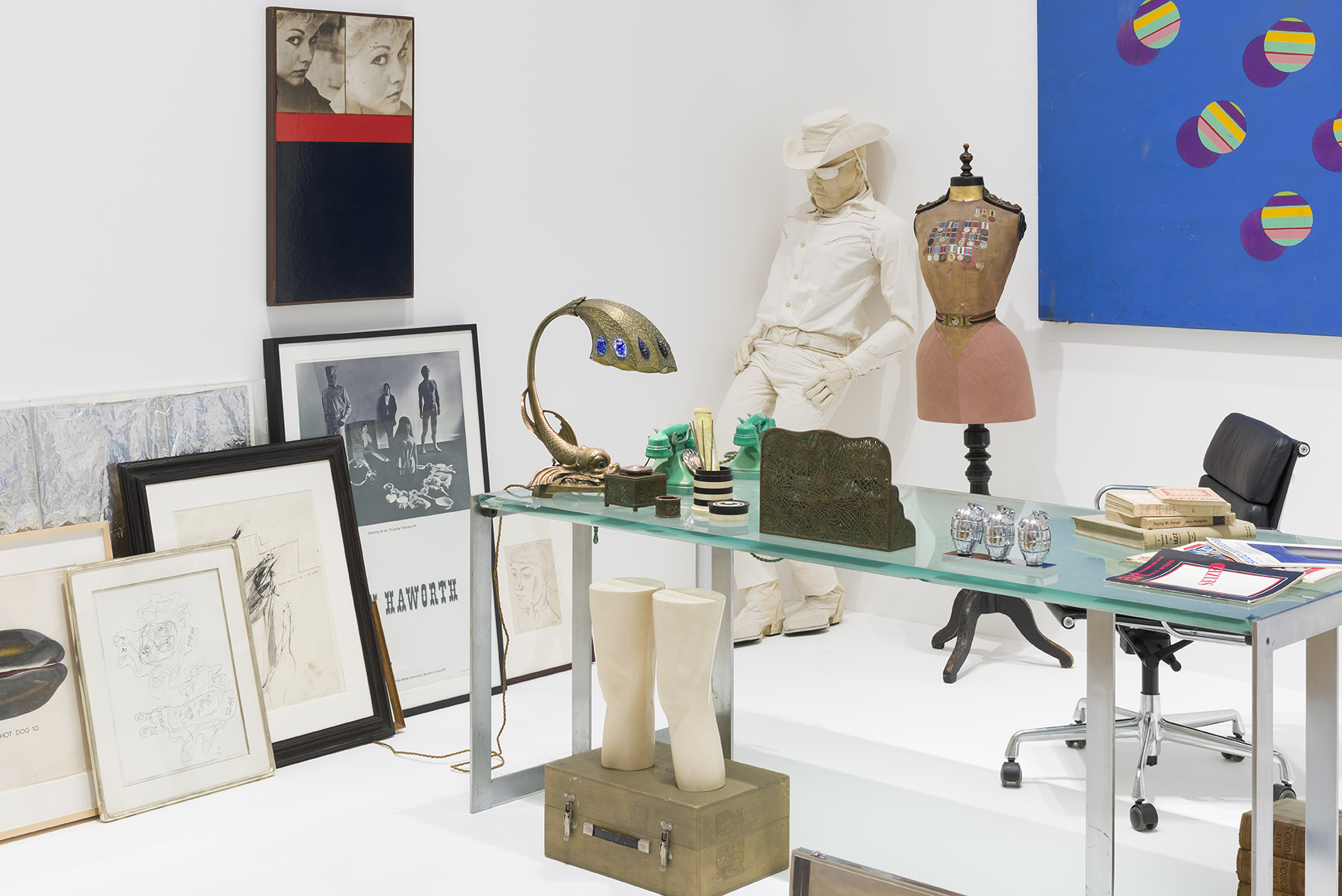
There’s also a nice mock up of Fraser’s office.
Copyright Pace London
Fraser had a great eye and a sense of daring, and that helped attract the stars. Fraser’s gallery became a centre for the cool kids of the counterculture, attracting pop stars, actors and film directors as well as perennially lurking scene figures like Keith Anger. Paul McCartney described Fraser as “one of the most influential people in the London sixties scenes” and The Beatles feature in the exhibition, most wonderfully in the shape of the drumskin from Sgt Pepper’s Lonely Hearts Club Band, which Peter Blake created under Fraser’s direction. Fraser was the catalyst for much that happened in this mid-60s meeting of art and pop.
Copyright Pace London
Fraser was nicknamed Groovy Bob and a sense of the fluid interchange of ideas that resulted from these encounters can be seen in a long display cabinet, arranged with artful haphazardness and crammed with personal letters, memos, books, flyers and photographs. There’s no caption for this wonderful ephemera, but rich pickings for those who take the time to drink it in.
Copyright Pace London
I was fascinated by a 1968 letter Fraser wrote to Richard Lock at Simon & Schuster proposing a biography of the Rolling Stones, which “would be satirical and totally fictional”. It was seen as a suitably Stonesy response to Hunter Davies’s recently published and “totally humourless” Beatles biography. Sadly, this came to nothing.
I also liked a letter written by the producer of Performance, confirming that Anita Pallenberg would be renting Fraser’s flat in Mount Street for the eight-week duration of the shoot, at £30 a week. This was presented alongside a page of the script from Performance. Fraser’s spirit is essential to the milieu and mystery around Performance. He had known Pallenberg since 1961, and his interest in art, drugs and bohemia was infectious. Pallenberg later recalled that around Fraser gathered “a fascinating group of people who were on the cutting edge of what was happening in high society, great cultural evenings, wonderful intellectual talk, plenty of hash and marijuana and speed and LSD.” Marianne Faithfull’s recollection is a more withering English take on the same deal: “Desultory intellectual chit chat, drugs, hip aristocrats, languid dilettantes and high naughtiness.”
The weeks that Pallenberg, with boyfriend Keith Richards, stayed at Fraser’s flat, would be pivotal to the unfolding psychosexual drama surrounding the Stones. Fraser was using heroin (his opium pipe is on display), and soon turned on Keith, who was otherwise writing Let It Bleed and brooding about the shenanigans Pallenberg and Jagger were getting up to while making the film. The ensuing atmosphere of jealousy, betrayal spiced by heavy drug use would hang round the Stones for decades. As Richards spiteful autobiography shows, they still haven’t entirely gone away.
Cecil Beaton photograph from Performance set.
Also floating around the scene was another arch mischief-maker, Kenneth Anger, and a couple of his missives to Fraser can be found in the cabinet. Best of these is probably the telegram requesting £60 which concludes “GROOVING ON MAGIC CURRENT ONE TRILLION VOLTS AFTER AUSPICIOUS LUCIFER HOUSE BOAT LOVE IS THE LAW”. Indeed.
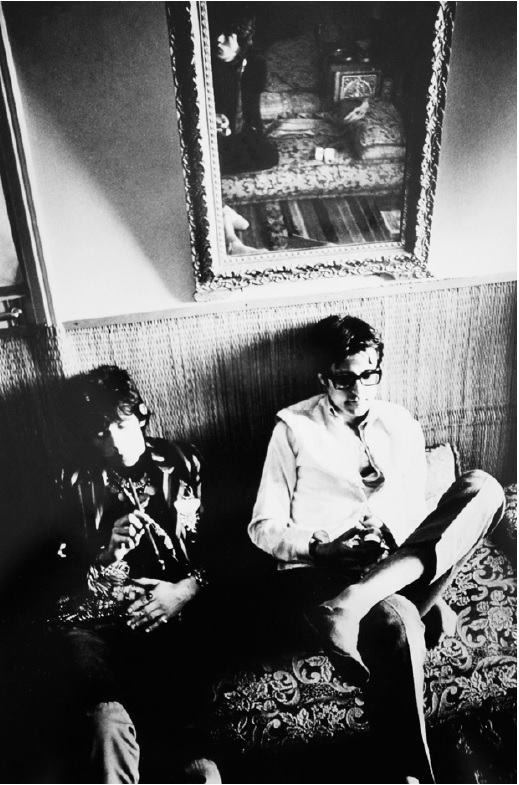
But it’s the Stones with whom Fraser became most closely associated, for better or for worse. No matter how it ended, I’ve always loved a pair of photographs Michael Cooper took of the Stones with Fraser in 1966 and 1967 in Morocco, a location that is almost as emblematic of the 1960s as London itself, lingering even in the set design of that orgiastic lightning rod Performance. Here is the calm before the storm, before the butterfly is broken.
“In London, it seems everything that’s not a shop, offices or luxury apartments is being demolished,” sighed artist Duggie Fields when I interviewed him last month for a piece in Uncutabout the imminent demolition of Earls Court Exhibition Centre. It’s a quote that, in a nutshell, seems to encapsulate all that is going wrong with London right now.
“There is so much damaged being done to London all over, Earl’s Court is just part of it,” says Fields. “London is losing a scale of living that has been very special for a long time. Now we have this mini high rises that could be from anywhere, they are characterless and there are so many of them.”
Earls Court will be pulled down early next year and replaced by houses, ending the area’s 120-year history as a place of fun. This history is well known to London nerds, but is worth repeating. The former cabbage field of Earls Court was transformed into a funzone by Yorkhire entrepreneur John Whitely at the end of the 1880s, when he brought Buffalo Bill’s Wild West Show to the newly transformed exhibition site, hemmed in between railway lines. It featured a miniature Rocky Mountains, Native American village, corrals and a cowboy bunkhouse. “The show was a revelation,” write Felix Barker and Peter Jackson in Pleasures Of London. A few years later, the site attracted London’s first big wheel – a 300ft monster called the Gigantic Wheel.
When that lost its thrill, new entertainments were sought – including plans for a mechanical racecourse. Numerous exhibitions were also held there – including Captain Boynton’s Water Show in 1893, the Greater Britain Exhibition, in 1899 and Shakespeare’s England in 1912. Then in 1937 the Exhibition Centre was built. It opened with a Chocolate and Confectionery Exhibition and went on hold swimming galas, motor shows, the Royal Tournament and events for the 1948 and 2012 Olympics. It’s a decent looking building, too, well worth saving for its lovely Art Deco curve and revolutionary concrete engineering. So many magnificent buildings from this era are being lost.
Less, pleasantly, in 1939 it hosted a gargantuan meeting of Oswald Mosley’s fascist blackshirts.
From the 1970s, Earls Court also began to host pop shows. David Bowie was first to play there, although Noddy Holder of Slade claims they were the first to book it and then managed to improve the sound after Bowie flopped. Concerts by Bob Dylan, Led Zeppelin, Queen, Rolling Stones and Pink Floyd followed. I saw Oasis there, unfortunately, and also the BRIT awards in 2000, when I threw a champagne cork at Christine Hamilton.
Slade fans at Earls Court
And now it’s to come down, replaced by 8,000 houses and some shops.
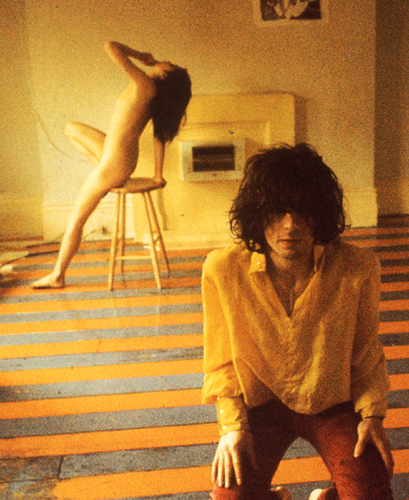
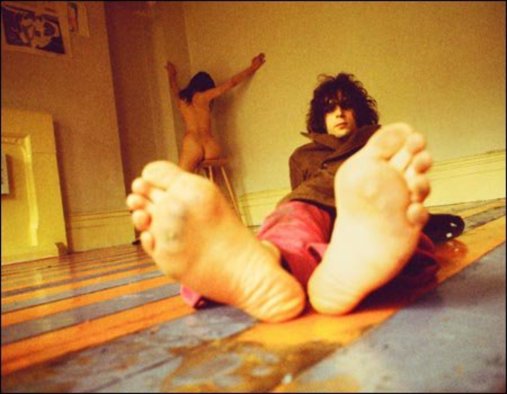
Duggie Fields has lived in Earls Court since the 1960s. You may recognise his flat – and former flatmate.
He points out that the removal of the Exhibition Centre will, at a stroke, remove any point or purpose to the Earls Court area. “It has nothing for people to come to,” he says. “Just boring anonymous shops and lots of traffic. All we’ll get is more chainstores because there’s no neighbourhood, there’s no locals. You can’t create villages, they grow over a long period of time.” He also fears for the pubs and restaurants that rely on the Exhibition Centre, which has still been functioning almost round the clock despite impending doom, for their custom.
He’s right. Earls Court is, even with the Exhibition Centre, one of the most boring areas of London. Without it, it’s pretty much irrelevant. But there’s a problem here too. London needs housing, desperately. Surely these 8,000 or so units will help?
It seems unlikely. The new apartments will – like those in the big new developments and Nine Elms – be aimed at the pockets of investors and speculators, people with deep pockets who have taken advantage of stagnant interest rates to buy up property and then charge eye-watering rents for them. It’s hard to blame them, as economic policy seems designed purely to over inflate London’s property market, but the damage is considerable. Because not only are they building identikit apartments in areas nobody that actually needs housing can afford, they are in the process annihilating anything that could be seen as fun – pub, music venues, sports grounds as well as historic structures like Earls Court. It’s a depressing, dismal outcome that offers the worst of all possible worlds.
It’s also entirely typical of the current state of London: could you possibly imagine a scheme as imaginative and as exciting and beneficial for the public as the conversion of Tate Modern happening today? Not a chance. It would be flattened and replaced by luxury glass apartments. What do we get instead? A bloody Garden Bridge, stupid cable car and shopping centres. Thank god at least the Olympic site has been safeguarded – for now.
“There’s nothing to build on the heritage they’re throwing away,” says Fields of Earls Court. “It’s been an exhibition site for over 100 years. London is tossing that out with as many other things as it can toss out under this current administration.”
I have a piece in the current issue of Uncut about Psychedelia, a film made in 1969 and featuring Syd Barrett. The film has been sitting underneath Kevin Whitney’s bed for 40 years, but will be shown in June 2014 at the ICA ahead of its sale. Whitney was on the fringes of the psychedelic movement in the late-1960s and later became the first official artist of the Olympic movement. ‘In my work there are still hints of psychedelic imagery,’ he tells me. ‘But using beautiful athletes instead of mad freaks.’
‘I was at art school until 1970 and during I was making the film. I was inspired by psychedelic light shows, which I’d screen on the front of Chelsea Art School at underground pop shows at the Roundhouse. Chelsea Art School was a modern building off the Kings Road. It was the only building built in the 20th century to be used as an art school. It’s now a hotel. It was very anarchic. Art is now geared towards corporate success and Saatchi but then that sort of thing was frowned upon, you weren’t supposed to make any money out of it. You did conceptual things, it was against the system. Now it’s the opposite and has no balls. We were very privileged to be around then. We took art into the streets.
Chelsea Art School on Manresa Road, built in 1963
Previously, I’d been at art school in Ipswich with Brian Eno. We smoked our first joint together at Christchurch Park in Ipswich. We did a thing where about 12 of us would get on a bus and we’d have these sheets of Perspex the size of a newspaper. We cut out the title of the paper and glued it to the Perspex and then sit next to people on the bus pretending to read the stories from this empty sheet of Perspex. Everybody thought we were bonkers.
UFO Club flyer
I never did light shows at the UFO Club. I went there but they had some Americans, Joe’s Lights, who got the contract and nobody else could do it. I knew them and admit I was influenced by their ideas but I also showed them some of my tricks. One was fabulous. You’d get two pieces of Perspex and put in some olive or vegetable oil, then drop some vegetable dye – bright blue, red or yellow – and then close the Perspex together. You’d put that in the projector, which had a very powerful light and would heat up the dye and send it shooting to the edges of the Perspex. It was like going through a timewarp. Joe’s Lights liked this and used it at the Roundhouse for the big Jefferson Airplane/Door show in 1968. [Editor note: I think that while Joe’s Lights did the Roundhouse gig, the Boyle Family did projections at UFO.]
In 1968, I began making my film, Psychedelia. Syd was part of the scenario. Well, he was the scenario. Anybody that would agree I got to appear in the film, which was done at this basement on Old Church Street in Chelsea in a house owned by Antonia Chetwynd [regular visitors included Donald Cammell, David Bowie, Marc Bolan and Anita Pallenberg]. One day I went to Wetherby Mansions to pick up Syd. I was going to take him to the art school to this red and green painted studio I had in the annexe where I was making the film.
Syd Barrett in Wetherby Mansions
On the way, Syd offered me half a Mandrax. It’s like a sleeping pill that makes you very randy. We took half each. Then we got to the art school and I realised my camera didn’t have a cassette in it and all the shops were closed. So I said we’d do it tomorrow in Old Church Street. In the evening I called Duggie Fields [Syd’s flatmate, still resident at Wetherby Mansions] to check Syd had got back okay and Duggie told me he’d gone to Ibiza. He had a passport with him and he’d just gone to the airport and taken a flight to Ibiza.
When he got back we went to the basement and did the filming. I just had the camera with this psychedelic lighting. It was very amateur and everyone was very stoned. I’d sit people down and tell them to do whatever they wanted. Some took their tops off, some stared at the camera, talked, had a cup of tea… and I just filmed it because they were fabulous people. I filmed so many. In the scene I shot with Syd was Geoffrey Cleghorn, who was a friend of the Who and the Stones. I’d met him at art school in Ipswich and he’d followed when I moved to London and got involved in the whole scene. He’s an amazing guy. There was another chap called David Crowland. There’s a chap called Rupert [Webster], who was the very pretty boy in “If….”.
I screened it while playing Velvet Underground’s Sister Ray. I also use them on the other film I made Red And Green, when they are actually on the soundtrack, the Syd film was silent though I would have been playing Velvet Underground in the basement when making it. I was obsessed with them. It was all very Warholesque.
I gave my camera to Derek Jarman, I was living with the artist Luciana Martinez and she said, ‘You’ve finished with films and Derek’s a lousy painter, so why not give him your camera.’ He’d just finished making The Devils with Ken Russell, doing the sets. I did that and the rest is history. I then got totally into paining, film was an art student fling. In 1982 I got involved with the Olympis and been there ever since.
“Female gymnast”, 1984
I knew Syd as well as anybody could know Syd. He definitely wasn’t on this planet but he was lovely, very charming, and he seemed to like my paintings. He liked to paint himself and because I was pretty good he warmed to me. Also, I don’t hold him in awe, I was the same with Bowie, they were friends and I’d talk to them like that. I’d ask to draw them but treat them as I would anybody. People can treat pop stars in a different way and they can get very isolated. Most people were too much in awe of Syd to ask to film him and I think that comes across in the film. He was a very troubled mind and this wasn’t a great time. He’d been eased out of the Floyd and Dave Gilmour had taken over. But people who knew him said he looks so happy.’
I have a piece about Mama Cass Elliot in the current issue of Uncut. One area I didn’t have space to cover was Cass’s arrest in London in 1967 when The Mamas & The Papas were travelling by boat to England to play a show at the Albert Hall. They had arrived at Southampton when they were told police were waiting with a warrant for Elliot’s arrest. The band frantically tried to destroy their stash of weed and then went on to the dock where they were supposed to meet label boss Lou Adler and his friend Andrew Loog Oldham. They were instead greeted by six of the Met’s finest, who bundled Elliot into a police car and drove her to Scotland Yard.
Elliot was stripsearched and questioned, then denied bail and held overnight. The police said the charges related to a stay in London six months previously at Queen’s Gate Terrace, when she had absconded with an unpaid bill and several towels. Outside the police station, The Mamas & The Papas – Denny Doherty, John Phillips and Michelle Phillips – were joined by Scott McKenzie, brandishing FREE MAMA CASS placards while they waited for Elliot’s release. The Albert Hall concert was cancelled.
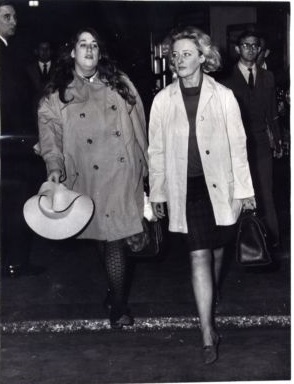
Elliot escorted to the police station.
Elliot told the press she had been treated well, but not been given enough blankets. ‘Believe me,’ she said, ‘One blanket doesn’t go far round this chick.’ After a trial at West London Magistrates Court, at which no evidence was offered for the prosecution, she was released without charge and left the courtroom munching on a hash cookie that she found in her handbag. That may account for the big smiles in the photo below, taken shortly after her release.
Elliot on release.
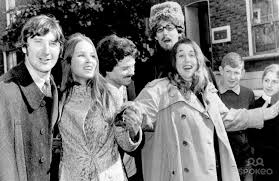
The Mamas & The Papas with Scott McKenzie after Elliot’s release.
The Mamas and the Papas with Scott McKenzie in London.
While such heavyhanded treatment by the authorities of rock stars was fairly common at this time, it later emerged that Elliot’s arrest actually had more to do with her occasional boyfriend, Pic Dawson, who the British police believed was involved in a major drug-smuggling operation. According to Michelle Phillips, this was the only subject the police in London were really interested in.
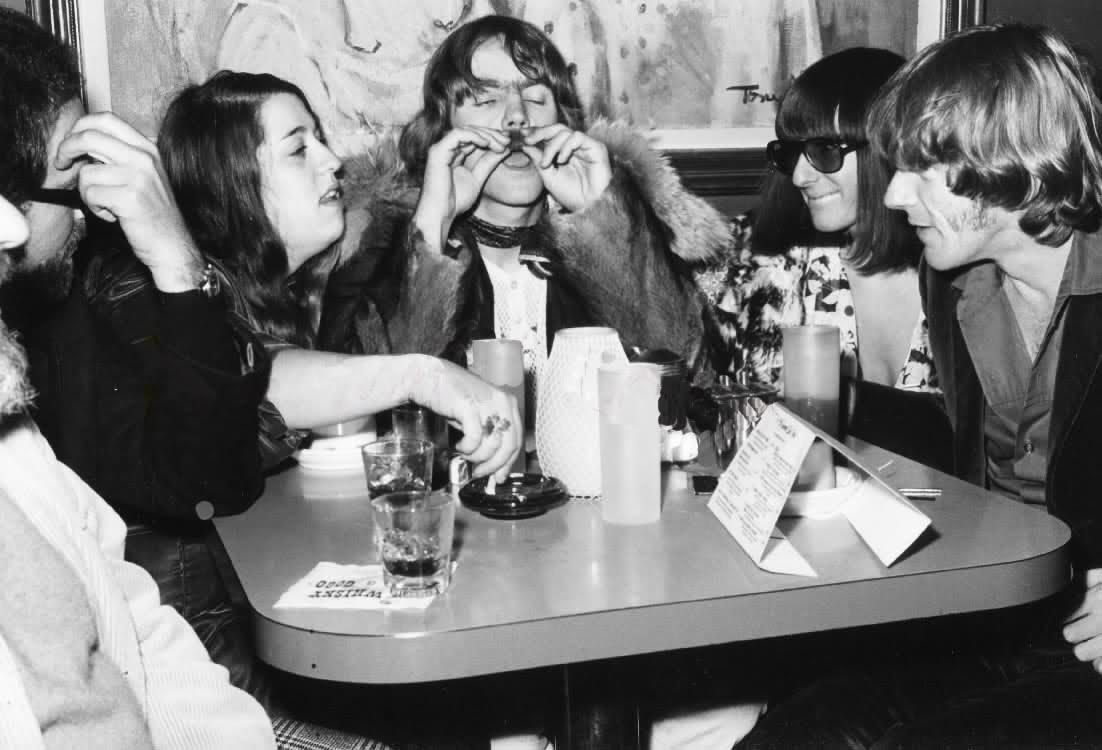
Pic Dawson and Cass Elliot at Whisky A Go Go.
Dawson, who died of a drug overdose in the 1980s, was certainly an interesting figure with connections to the underworld. Numerous rumours circulate about him partly thanks to his peripheral involvement in the Manson Family murders.
Dawson, left, and Elliot, right, at Mama Cass’s house with guests including David Crosby and Eric Clapton
Dawson knew several of the victims – basically, he supplied them drugs – and after the murders John Phillips is said to have told the police that the bloody PIG daubed on Sharon Tate’s wall actually said PIC. The LA police were also informed that Dawson, along with another of Elliot’s drug-dealing boyfriends, Bill Doyle, had been ejected from a party at the Polanski house shortly before the murders. Dawson was subsequently arrested, questioned and cleared, as was Doyle.
These were not Elliot’s only connections with the Manson murders. Dave Mason recalls, “One of the freakiest parts was that at Cass’s I saw a lot of Abbie Folger and Wojciech Frykowski until the Manson crew slaughtered them” and she knew all the victims well. But she also knew the murderers – in his autobiography, Michael Caine of all people recalls attending a party in Hollywood with Jay Sebring and Sharon Tate, where Mama Cass introduced him to a ‘scruffy little man’. His name was Charles Manson.
I have written a cover story about the Ramones in the current issue of Uncut. One element of the Ramones story is their two gigs in London in July 1976, when the band played the Roundhouse and Dingwalls before audiences of around 5,000 at a time they were drawing around 150 back in New York.
These are considered key dates for the punk revolution in the UK, giving a kickstart to the three pioneering London punk bands, the Sex Pistols, Damned and Clash. The truth is a little more complex. One of the reasons the Ramones even got a record deal was because of interest in the New York scene in the UK. As Craig Leon, who produced Ramones for Sire, told me: ‘There had been inklings in the British press that something was happening and Malcolm McLaren had been over for a while managing the New York Dolls and took a lot of the scene – mainly Richard Hell’s dress sense – over to London, where it began developing in its own way. Sire felt that if we could make a cheap album and then get our money back in Europe it wasn’t a risky proposition.’
So even before the Ramones went to London, they knew the city was familiar with the CBGBs scene. For a band that loved English pop, this was quite a thrill. As Tommy Ramone explained, ‘They said the UK was interested and we’d grown up with all our favourite bands coming from the UK [Tommy told me that “Judy Is A Punk” was basically based on “I’m Henry VIII, I Am” by Herman’s Hermits] so we were very excited and we thought it might give us our break. We went over for a few days and played the Roundhouse and Dingwalls. We met a lot of the English bands, who came to the soundcheck at Dingwalls. We knew that we had sold out these place so we had an idea something was going on.” The success of the Camden shows did nothing for the band’s reputation back home, however. When they returned they continued playing in front of small crowds. In fact, as the Pistols gained in notoriety, being associated with English punk acts was more of a hindrance.
Nonetheless, Danny Fields, the band’s manager, felt the Ramones appearance gave London a crucial fillip. ‘To be the toast of London was incredible. There were people line up to meet them, to sleep with them, to sleep with me. All the would-be bands were there to see them. The dressing room was full of people from the Clash, Damned and Sex Pistols. They were amazed that a band could put out a record like this, that they would even be allowed to play. We sat with Paul Simonon before the show and he said to Johnny he was in band but they weren’t good enough. Johnny said, “You’re going to see us for the first time. We suck, we can’t play. But don’t worry about it, just do it.” Johnny Rotten had to climb up knotted sheets. They took inspiration and thought the Ramones were exotic. The inspiration was, “We stink, stop rehearsing, start playing.’”
The only problem with Fields’ narrative is that the Pistols and Clash already were playing. Indeed, both bands actually missed the Ramones show at the Roundhouse because they were playing that same night, at the Black Swan in Sheffield, while the Stranglers were supporting the Ramones. The Damned made their debut a day after the Ramones show at the Dingwalls on July 6. So Rat Scabies, Damned drummer, thinks the influence of those London shows was more subtle. ‘Their influence on British punk rock is negotiable, because the London bands had already started,’ he says. ‘We were rehearsing, the Sex Pistols and Clash were doing the odd gig. But I remember listening to the Ramones debut album with Paul Simonon and we thought it was great as it was exactly what we were all about, three minute pop songs about life. We felt an immediate connection and it was confirmation: we realised we weren’t the only ones doing it. What was important isn’t ‘who came first?’ but the fact the same thing was happening in different parts of the world. It wasn’t just London frustration, it was the next generation getting angry. It made us realise we weren’t alone.’
In that sense, the Ramones shows were more like the International Poetry Incarnation at the Royal Albert Hall in 1965, when the hippies, ex-Beats, freaks and flower kids all turned up at the same place for the first time and realised they had a constituency, that the happenings they were organising in silos could be fed into a collective scene. It’s a glorious movement for any youth movement, the realisation you are part of something bigger than yourself. Even the underground wants to be popular.
The Ramones shows then have passed into punk legend, to be reinterpreted by new generations. ‘There’s a comic book called Gabba Gabba Hey that talks about the Ramones trip to London and how we were so concerned about the economic conditions, the UK depression, unemployment, children out of work,’ says Fields. ‘In truth, we were there for three days and the last thing anybody was thinking about was whether the British state was unfair to unwed mothers. They only thing they were worried about on the flight over is whether we had enough t-shirts to sell and what if nobody speaks English.’
Here’s an excerpt from the Ramones documentary End Of The Century talking about the Ramones in London.













 So even before the Ramones went to London, they knew the city was familiar with the CBGBs scene. For a band that loved English pop, this was quite a thrill. As Tommy Ramone explained, ‘They said the UK was interested and we’d grown up with all our favourite bands coming from the UK [Tommy told me that

 The Great Wen