Category Archives: London

Secret London: deliberate mistakes in the A-Z

IMG_20141107_114231

You can’t trust a map. Not even the A-Z.

A BBC TV programme several years ago first revealed to many people the news that the A-Z contains deliberate mistakes. These ‘trap streets‘ are inserted as a way to protect copyright – if the map is reproduced or copied without permission, the map manufacturers will immediately be able to spot them (see more here).

(A comment at Reddit clarifies this: the map itself cannot have a copyright as it is a “representation of fact… The trap streets and deliberate mistakes change the work from being purely factual into a creative expression and thus able to be protected by copyright.”)

Nobody is quite sure exactly how many mistakes each A-Z contains or where or how long they last for, but the BBC said there were about 100 and named one, Bartlett Place, a real street which was actually called Broadway Walk and renamed thus in future maps.

Another deliberate mistake can be seen on the photo at the top of this page. Can you spot what it is?

See the ‘ski slope’ in the park just next to the city farm? That’s one of the A-Z’s little phantoms. It comes from an old copy of the A-Z (and many thanks to reader Andrew Lyn) for sending the photograph, as the ‘ski slope’  hasn’t been used for about a decade.

If anybody is aware of any other other deliberate mistakes in recent A-Zs, please let us all know.

London curiosities, from Don Saltero to Viktor Wynd

This weekend, the grandly titled Viktor Wynd Museum of Curiosities, Fine Art & Natural History opens at 11 Mare Street, Hackney. You may already know of Wynd’s whims. An intriguing dandy, Wynd is the founder of the Last Tuesday Society – a body that promotes the esoteric in lectures, salons and workshops – which included Wynd’s own huge collection of oddities and curiosities, acquired over a lifetime of inquisitive travelling and impulsive purchasing. Originally, these items were meant to be sold – Wynd is still a dealer in the weird, a middleman in this strange underworld of people that buy and sell the corpses of giant spider crabs and Javanese hen’s teeth –  but he found “it didn’t work as a shop and it isn’t fun selling stuff. I had to keep buying and you can never be sure what will sell, it’s an endless cycle. So I thought it would be more fun to make it into a museum.”

These curiosities are now going on display as the new museum. And curious they certainly are. On the shelves are two-headed lambs, tribal skulls, dodo bones, plastic toys, lion skeletons, radioactive scallops, Victorian dolls, surrealist art, an artificial foreskin, a cassette of a John Major speech on the subject of red tape, a Victorian mermaid, convict Charles Bronson’s sketches, feathers from extinct birds, a giant hairball from a cow’s stomach and jars of celebrity poo [“How did you persuade Kylie Minogue to poo in a jar for you?” I asked, when interviewing him for Eurostar; “I asked her very nicely,” he replied.]

Impeccably arranged cabinets contain delight after horror after delight, some labelled, others entirely mysterious, but all put together in a way that implies the art of the display, the way these things look on the shelves, is every bit as important as the items themselves.

poo

London has always appreciated the chance to gawp at a gruesome gallery like this. Wynd’s endeavor harks beck to the very first public museum to open in London at Don Saltero coffee shop in Cheyne Walk in 1695. Saltero, a barber, had previously been known as James Salter and worked for Hans Sloane, the collector who started what became the British Museum. Sloane reputedly gave some of his cast-offs to Saltero, who used them to attract custom to his coffee shop. In 1713, his catalogue boasted in terrible rhyme: “Monsters of all sorts here are seen, Strange things in nature, as they grew so; some  relics of the Sheba Queen, and fragments of the famed Bob Crusoe.”


Saltero’s collection included such marvels as  a giant’s tooth, a necklace made of Job’s tears and Pontius Pilate’s wife’s chambermaid’s sister’s hat, which had been made in Bedford. It was, nonetheless, hugely popular and by 1760 the collection includes priceless artefacts like the Pope’s candle; a piece of the true Cross; the Four Evangelists’ heads cut on a cherry-stone; the King of Morocco’s tobacco-pipe; Mary Queen of Scots’ pincushion; Queen Elizabeth’s prayer-book; a pair of Nun’s stockings; Job’s ears, which grew on a tree and  a frog in a tobacco-stopper. Moreover, it had inspired other entrepreneurs, eager to educate the public in the wider mysteries of the world, to follow likewise. Among those following in Saltero’s wake was Mr Adams of the Royal Swan in Kingsland Road, not far from Wynd’s palace of the strange. In 1756 Mr Adams was exhibiting”the heart of the famous Bess Adams, that was hanged at Tyburn; Sir Walter Raleigh’s tobacco-pipe; Vicar of Bray’s clogs; teeth that grew in a fish’s belly; the very comb that Abraham combed his son Isaac and Jacob’s head with; Wat Tyler’s spurs and the key of the door of the Garden of Eden.”

Well then!

Wynd is an artist as well as a collector and showman, and his museum will double as a gallery, opening with a show devoted to early British Surrealists and including work by Austin Osman Spare, Leonora Carrington, Grace Pailthorpe and Reuben Mednikoff. His curiosities are also sprinkled with the occasional artistic embellishment, whether its sculptures donated by artist friends, his own drawings, fine work by the likes of Spare or Mervyn Peake, or more occultish fare, like “blood squeezed from a stone” or a box containing “some of the darkness that Moses brought upon the Egyptians”. These latter items are much like the imaginative exotica of Saltero and Adams, and also remind me a little of Yoko Ono, and her attempt to auction in London a ‘Vial of Genuine New York Tears’ and ‘Jar of Captured Cloud Formations over the Bronx’  to subsidise Norman Mailer’s Mayoral candidacy.

Wynd’s collection features a lot of dead things in jars – babies, dissected vaginas, stuffed animals, old bones, beetles, butterflies, intestinal worms – but he rejects the notion that it is simply a celebration of the macabre, a house of horrors designed to shock the straights. “Nobody’s ever been shocked,” he says. “If you are going to a curiosity museum you want to see dead babies, it’s what you expect. That isn’t what’s new, what’s new is the idea that dead babies and Furbies are equally attractive. It’s uncanny rather than macabre, it’s the juxtaposition of items, setting off thought processes.”

“I see putting everything together as an art,” says Wynd. “If you are a collector then the world is your tins of paint and the walls and cabinets are the canvas. Everything has to look right. It’s a way of trying to understand the world, but a world that has no meaning. It’s all the pretty things that show what an amazing place we live in. It’s also an attack on conventional aesthetic values, so we have a Furby, which is seen as completely valueless, sitting next to a rare and valuable skull of an extinct beast, sitting next to Chinese sex toys. I don’t recognise a distinction between high and low, it’s just if I like it. It also makes me laugh. I’m quite miserable and this place cheers me up.”

It’s not entirely clear how much Wynd enjoys his role as a collector. As he points out, most of us collect when we are children, but then grow out of it. The collector is in a state of permanent pre-adolescence, unable to move on, still fixated by those items that first caught his attention many years before. Wynd says that as a child his favourite places were the Natural History Museum and the Pitts-River Museum. In adulthood, he is still trying to locate that childish sense of awe and intellectual awakening.

He recalls being a student in Elephant And Castle and compulsively filling a garage with items he find on the streets – “I couldn’t pass a bin liner without opening it.” Later he moved to Paris and discovered that at the end of the month everybody’s rental contracts ended at the same time, and on these moving days treasures would be left outside every block of flats. “It was heaven.”

The problem, he says, is that a collection is “like a garden. It’s never going to be finished. It’s never done. It’s a psychological condition, it’s stupid, it’s pointless and causes endless worries.” It also gives us the Museum of Curiosities, for which London should be thankful. Go gawp, embrace the uncanny.

Pumpkins of Herne Hill

I’m of the generation that doesn’t really get Hallowe’en. Growing up in the South London suburbs, it wasn’t something that happened much. There were ghost stories, and one Great Aunt, who had lived in America for decades, would give us extra sweets while waiting forlornly for local children to come knocking dressed as Communists, but trick or treaters were rarely sighted.

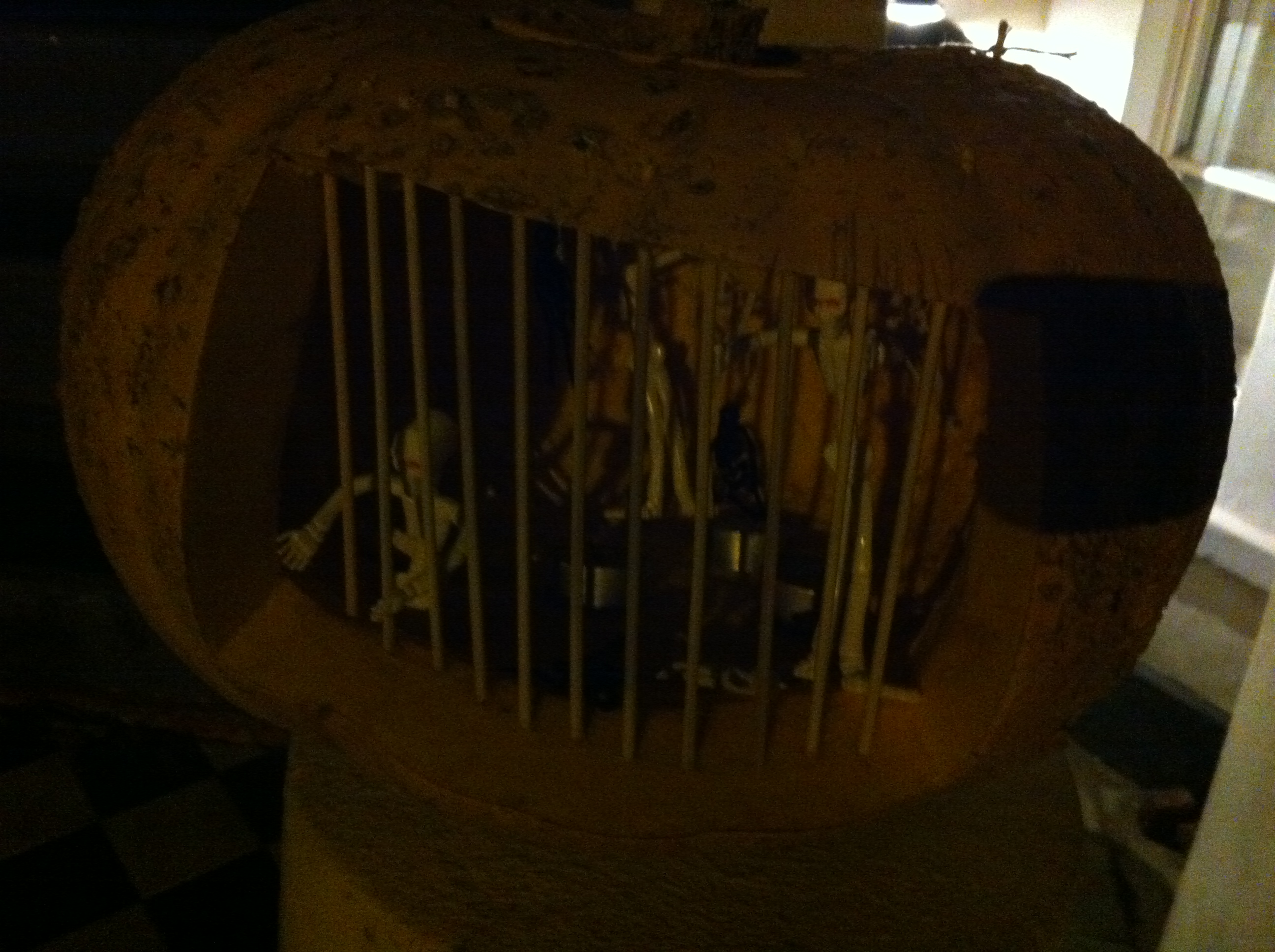
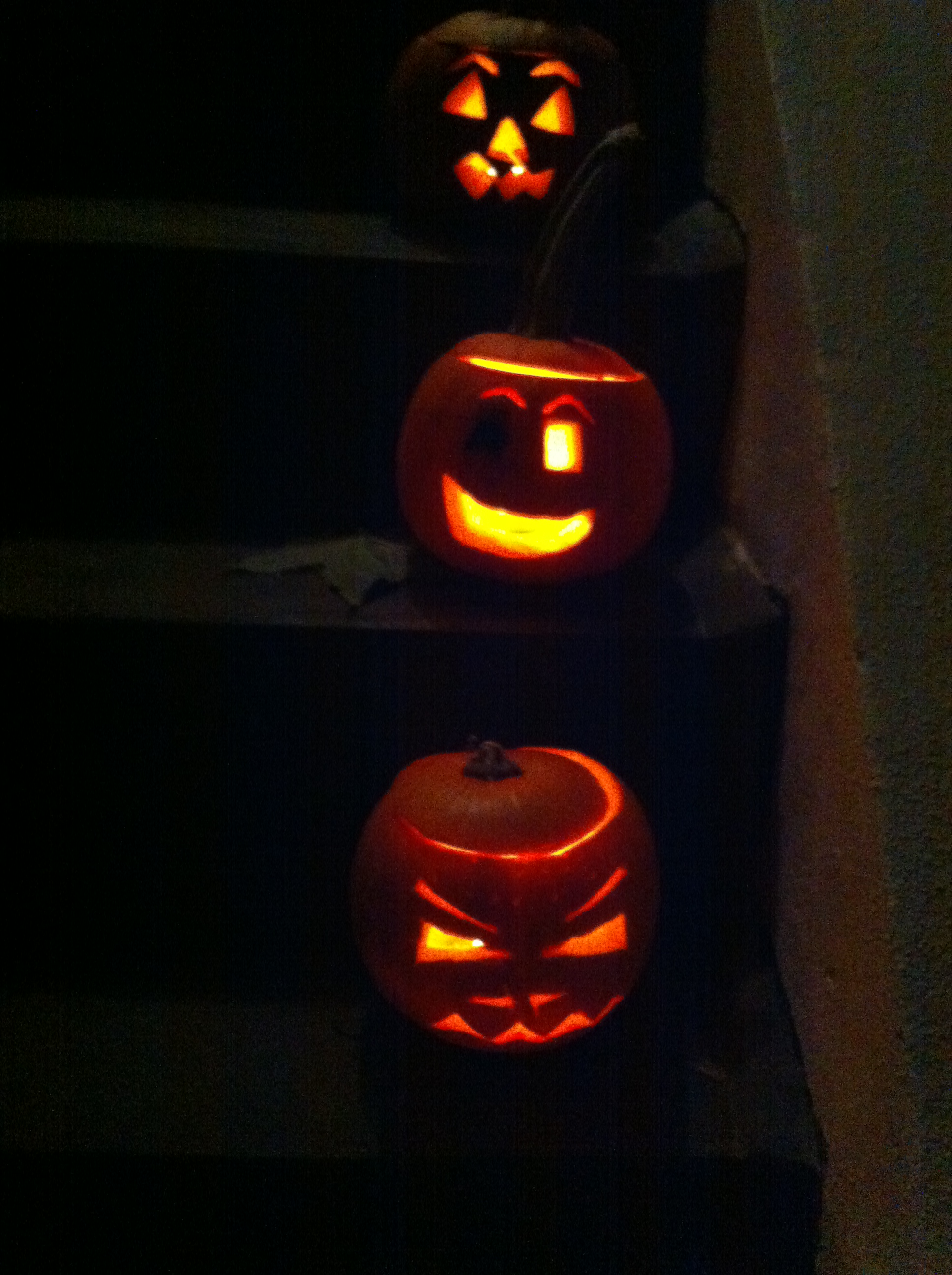
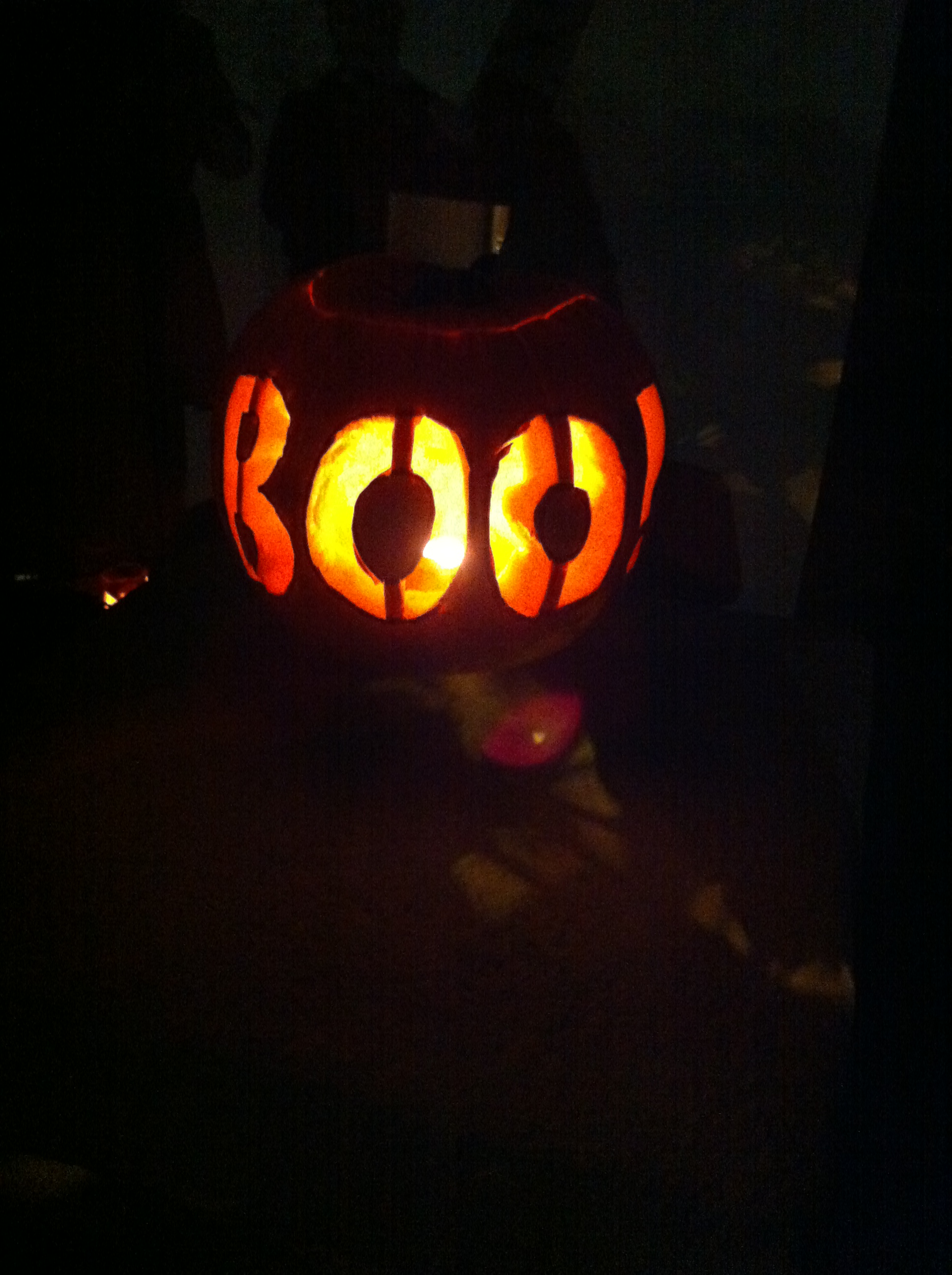
For my kids, though, Hallowe’en is a big deal. And even if the temptation is to dismiss the whole thing as a ghastly imposition from America, you can see the appeal. However, it would be churlish in the extreme not to admire the effort some households go to make it a memorable evening for local children. In Herne Hill, one elderly men had spent hours draping his hedges in cobwebs, while another family had a fake gravestone in their front garden. And then there were the pumpkins. As a Hallowe’en neophyte, many of the presumably age-old American traditions – like leaving lighted pumpkins outside to show you are in on the act – are entirely new to me, which meant I’ve rarely seen anything like the intricate carved pumpkins created by Herne Hillers in a magnificent game of artistic oneupmanship.

A selection follows.

IMG_2883

IMG_2885

IMG_2886

IMG_2889

IMG_2890

IMG_2891

IMG_2892

IMG_2893

IMG_2894

IMG_2895

IMG_2896

IMG_2897IMG_2898

IMG_2899

In defence of Midtown

I recently wrote a piece for The London Magazine about Midtown.

Midtown is the bastard offspring name for what people traditionally think of Holborn. For some reason, that really pisses people off. Perhaps it’s the very crassness of the name – Midtown – that deliberate literalness with its clear nod to grid-like American cities where entire areas are known by their compass points. In London, of course, we have nothing like that.

Except the West End.

And the East End.

And the South Bank.

Ah, but they are all different, aren’t they?

It is very easy to get annoyed about Midtown – the idea of it, rather than the place itself, which is pretty inoffensive – but what interested me is why. Why take on the challenge of renaming a traditional part of London? What’s the benefit? How do you summon up the gall? And how do you persuade locals it’s a good idea?

To answer those questions, I spoke to Tass Mavrogordato, Chief Executive of InMidtown, a very nice woman who appears to be permanently on her guard against negative attacks on her Midtown baby. She quickly explained to me that Midtown isn’t another name for Holborn at all. “It’s an umbrella term for the entire area between the West End and the City ,” she says. “We didn’t want to take anything away from the historic areas of St Giles, Bloomsbury or Holborn, and in many ways should help them as it helps to locate them in a wider area. We look at places like the South Bank and can see how these names with a geographical sense have been successful.”

Mavrogordato draws a straight comparison with the West End, an umbrella term that people happily use for a wider area that takes in some of London’s most historic and lovable quarters – Mayfair, Soho, Marylebone – without in any way detracting from them. Nobody has a problem with the West End. Why, she wants to know, can’t Midtown do the same thing, just a bit further east?

It all sounds very logical when she puts it like that, but I doubt people will be convinced.

Part of the problem is one of perception. People don’t like being told what to call places by other people with more money than them. InMidtown is a Business Improvement District and uses aggressive branding to push the concept of Midtown in ways that rubs people up the wrong way – even if the term Midtown predates the BID and has been in use by estate agents since the 1990s.

It’s this noxious aroma of branding that really galls, making Midtown appear distinct from the West End and South Bank, even though these are equally artificial constructions, placing rather spurious boundaries on areas that already had well-defined, historic names. But the latter two appeared more organically, or more to the point they appeared so long ago that nobody actually remembers how they came about, so they are accepted simply because they predate people’s perception of what London is, which was generally formed when they first moved to the city.

London, though, evolves far more quickly than people are comfortable with – and most people don’t actually want London to evolve at all, or at least only in ways that benefits them directly, in the form of better coffee shops or making their flat more valuable, but not so valuable that people a lot richer than them might buy it.

And that gets to the crux of people’s problem with Midtown, it’s change that appears to be directed from above, by outside forces, by money. That’s why people delight in using the ridiculous name Fitzrovia, an inter-war construct for an area that was previously considered to be an extension of Soho, but rejected Noho when that was proposed by developers as it just felt too damned American, too damned money, even if it was, in many ways, more appropriate and certainly no less daft. (Imagine trying to name somewhere Fitzrovia now – you would be laughed out of town, and rightly so.)

There is a consistency here, it’s just a very wobbly one.

And so it goes. Londoners will boast long and loud that London is the greatest city in the world, a barrel of fun for all concerned. Other people will come to London, push the property prices out of orbit and rename the streets so they can get from Lincoln’s Inn Fields to Gower Street without looking at their phone.

And suddenly, it doesn’t seem so much fun.

So in Midtown, poor helpless Midtown, they draw the line.

Turkish London and football

I have a post on Four Four Two about how Turkish Londoners square their support for Turkish club sides with their loyalties to London clubs. It was an interesting assignment, and made me wonder whether other incoming communities face similar quandaries.

Presumably they do: the historically large Italian following at Chelsea will have to occasionally decide between Lazio, Roma or Juve and their London club; Arsenal’s new French fans will have to choose between their love Arsene and their support for PSG – but there is something about the very visibly Turkish nature of the Turkish community and, particularly, the drama of Turkish football fans that made this particularly intriguing. I also got to eat some damn fine bread from the excellent Akdeniz Bakery in Stoke Newington, which I heartily recommend to readers.

First World War in London

Britain declared war on Germany 100 years ago today on 4th August, 1914, and to mark the centenary of the outbreak of the First World War I was asked to write a piece for Metropolitan magazine looking at some of the most remarkable items from the refurbished Imperial War Museum.

pigEdith

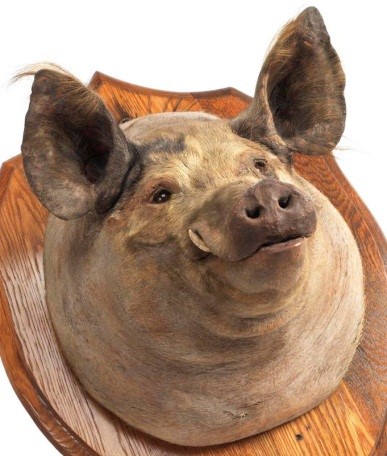
The selection includes items as varied as a mounted German pig’s head and Edith Cavell’s nurse cap. One thing I like about the IWM is that it is very good at driving home individual stories amid the context of immense global suffering and complex geopolitics, meaning you can find numerous, remarkably touching, small personal items in its collections, such as this postcard written on a piece of wood from the Western Front.

Picture 4172

One of the favourite items I came across – or rather, which the incredibly helpful press team at the museum pointed me towards – was this decorated tin, painted by a disabled Belgian soldier in London as part of a fascinating occupational therapy programme.

belgiantin

The fascinating story of California House at 82 Lancaster Gate is recounted here, but in short the hospital was set up in 1914 by an American expat artist and writer called Julie Heyneman, who – like many in London in the early months of the war – was horrified by the casualties caused by the German advance into Belgium. California House became a refuge for injured, displaced Belgian soldiers who were taught languages and sciences.

CH

Those left paralysed or limbless were encouraged to take up activities like painting, book-binding, wood-carving and drawing – anything that required manual dexterity. Objects created, such as the tin above, were then sold to Londoners, with the soldier-creator keeping some of the proceeds. A similar establishment, Kitchener House at Cambridge Gate, Regent’s Park, was set up for British soldiers. California treated around 500 soldiers, some of whom were able to return home after the war and make a living from their new skills. It closed in 1918.

california

London: a cycling city

I wrote about the challenges facing cycling in London for The London Magazine

Every time I hear that another cyclist has been killed on one of London’s many lethal junctions, I pray to a god I don’t believe in that it isn’t one of my friends. The idea of cycling in London terrifies me. That’s partly because I haven’t ridden a bike more than twice in 20 years, and partly because I have seen so many incidents, altercations and near fatal collisions involving cyclists during my walks around the city.


I’m aware of the figures – the fact that cycling is overall a pretty safe form of transport, even if it could always be better – but it’s hard to shake off that impression that it’s anything but. I’ve seen cyclists get hit by taxi doors and narrowly avoid getting squashed by buses. I’ve seen them shouting with rage and fear at drivers who’ve turned out of a side street in front of them without looking. I’ve seen them cycle headlong into pedestrians who weren’t looking where they were going (and vice versa). I’ve seen them getting into squabbles with bus drivers about ownership of bus/cycle lines that end with blows being traded. I’ve seen them picking themselves and their bent bikes off the pavement after minor crashes. And I’ve seen the blood getting washed off the road after major ones. It looks anything but fun.

So despite the fact I see people cycling quite easily and happily on London streets every day, I still think it’s one of the last things I’d ever want to put myself or my family through on a daily basis.

That is something that needs to change if London is ever going to be a cycling city, which it desperately needs to if it is to remain in any way a human and pleasant place to live in. People like me need to be persuaded that London cycling is safe and that a trip on the bike to the shops won’t result in a serious injury or a shouting match. As Mike Cavenett of the London Cycling Campaign admitted to me “the striking thing is that Dutch cyclists just look like Dutch people”, by which he means you see the elderly and children, men and women, all cycling in their normal clothes – not like London, where cyclists wear tight, bright clothing and manage to look simultaneously over and under dressed.

When London’s cyclists start to look normal, that’s when we know we are heading the right way. And for that to happen, London needs better infrastructure, streets on which cyclists feel safe and are able to relax, making the whole experience better for everybody. Everybody I spoke to – including Andrew Gilligan, the Mayor’s cycling tsar – seemed united on this and agreed on the direction that London needed to go in. Whether it actually happens, whether there is the political will to spend the cash to keep the promises, remains to be seen. But here’s hoping it starts to happen, because a cycling city would be better London for everybody.

London’s Huguenots

I wrote this last year for Metropolitan magazine. The Huguenots of Spitalfields Festival runs from 9-20 July 2014. 

Up to 400,000 French people have settled in London in recent years, but this is not the first time the French have moved to London in great numbers. While today’s arrivals come willingly, with passports, bank accounts and mobile phones, those of 1685 were in reluctant flight, arriving with next to nothing. Calling themselves the réfugiés, these Huguenots – the persecuted French Protestant minority – were the world’s first self-described refugees, coming by the thousand to seek sanctuary in London. An adolescent boy with three siblings, including a baby unable to walk. A teenage girl disguised as a man. Husbands without wives. Children without parents. Houses and jobs left behind. They came hidden in salt barrels, pregnant, shoeless and with diamonds sewn into their cloaks. But like many of their modern counterparts, these French arrivals were young and ambitious, bringing with them a sense of adventure and enterprise, ready to transform the city they now called home.

Hogarth’s Huguenots


‘Britain owes a great but barely acknowledged debt to the Huguenots,’ writes historian Lucy Inglis in Georgian London of the biggest French invasion since 1066. The Huguenots brought with them exotic food like oxtail soup, caraway seeds and pickles, new ideas about industry and banking, brilliance in textiles, watchmaking, horticulture and medicine, and enough numbers – as many as 40,000 – to transform the geography of London, pushing it west into the ‘French Quarter’ of Soho, allowing London to become one of the great multinational capitals of the world. Inglis expands on this in conversation. ‘They were real self-starters, that’s what I admire about them, the way they arrived with nothing and just got on with it. A lot of them were very young. They arrived in London and began to make a splash straight away.’

This was the first serious test of London’s toleration of outsiders, and the city took it well, with just a few grumbles about the whiff from the garlic sausages that the Huguenots hung to dry outside their windows. Otherwise, the Huguenots were a sober presence. For decades, the Huguenots had been tyrannised by France’s Catholic majority until a vague equality was established with the Edict of Nantes in 1598. When this was revoked by Louis XIV in 1685, Protestantism was effectively outlawed. Hundreds of thousands of Huguenots ignored a ban on emigration and fled France in their search for religious freedom.

Many settled in the new district of Soho, where Huguenot craftsmen could be close to the gentry of Westminster. Soho’s French character lingered for centuries – even now you can dine at L’Escargot, get cake from Maison Bertaux or pernod from The French House. In 1720, 40% of Soho’s residents were French speakers and one contemporary noted the area ‘so greatly abounds with French that it is an easy matter for a stranger to imagine himself in France’. French currency was accepted by London Huguenots into the 1720s and as late as 1924 a London guidebook would comment, ‘In Soho you may see Frenchwomen shopping exactly as they do in France, bareheaded, as no Englishwomen would.’ Scandalous!

Huguenot church, Soho Square


Just as many of today’s London French work in and around the City, when the Huguenots arrived, most headed to the long-established French Church on Threadneedle Street. London already had a small population of wealthy Huguenots – among them John Houblon, the first Governor of the Bank of England – and they, observing Louis’s despotic behaviour from afar, had been expecting the exiles. A soup kitchen was already established and accommodation secured for pregnant women. New arrivals had often become separated from their spouses so posted their details on a huge board outside the church. ‘It’s a horrible analogy,’ says Inglis. ‘But it was like the aftermath of 9/11.’

The Huguenots descended on a city on the rise. ‘Daniel Defoe wrote about the corruption of luxury, the way people could suddenly afford luxury goods,’ says Inglis. ‘But the Huguenots were plain people, they didn’t wear wigs, perfume or make-up, they had a real dignity and that meant they appeared trustworthy. As a people they were very upright in their business and to a city that was booming, this was quite welcome.’

Not every Englishman responded to this in quite the right way. One was accused of kidnapping an English girl named Christian Streeter, raping her and then having her hair cut ‘in the French way’, such was the appeal of the short-cropped French women on London’s streets. He was eventually acquitted. For the most part, though, the French presence was accepted, even as they set about revolutionising the silk business.

‘The wealthier ones went to Soho and the rest went to Spitalfields and Shoreditch, where they began to set up business as weavers, establishing a factory system and employing a lot of people,’ explains Inglis. ‘They had a massive influence on the earliest part of the Industrial Revolution.’ So many Huguenot weavers left France that the country went from being an exporter of silk to an importer in a few years. Silk was used for clothes, furnishing and wall coverings, and the Huguenots produce huge amounts of the material. The stunning patterns created by one Huguenot designer, James Leman, are now in the V&A Museum. Another weaving family were the Courtaulds, who later founded the Courtauld Insitutute of Art in Somerset House. The weavers, with the fine eye for style of many Huguenots, erected grand-looking houses, most notably along Fournier Street, one of which is now occupied by the artists Gilbert & George.

James Leman textiles


Another London artist, William Hogarth, was still able to reference the Huguenots as a stylish, sober but alien presence in his 1737 etching Noon, completed more than 50 years after their arrival and Inglis notes that ‘until the 1730s they almost exclusively married within the community.’ By 1780, however, the Huguenots were integrated into the London landscape, even adopting English names – Dubois becoming Wood, Roussel become Russell – the first of many groups of refugees who arrived in London with a bang, and then slowly became absorbed into the city’s heaving, evolving mass having altered it for ever.

Georgian London by Lucy Inglis (Penguin) is out now in paperback.

Under London: Crossrail is coming

Like every other journalist in London, I wrote an article about the Crossrail project. It appeared in Eurostar’s Metropolitan magazine in May and is reprinted here.

In a cavern 35 metres underneath Stepney City Farm, London is getting smaller. Not literally of course, that would be terrifying. No, this gigantic space under east London has been excavated for Crossrail, the 42-km high-speed tunnel being built beneath London. When it opens in 2018, Crossrail will carry 200 million passengers every year from east to west (or west to east), cutting the city down to a more manageable size as journey times are greatly reduced. When Mayor Boris Johnson entered a similar Crossrail site in Canary Wharf he gushed it was “like a Neanderthal stumbling into the gloom of Lascaux… akin to a gigantic subterranean cathedral several times the size of Chartres.” In truth, the Stepney cavern is more like a big, bare quarry, shaft open to the sky, lined with concrete and exuding a faint smell of wet earth.

Chartres cathedral

Crossrail hole in the ground

“If Crossrail is a Y, we are standing where it splits,” explains Will Jobling, Crossrail construction manager, pointing at a map that shows Crossrail travelling across London to Stepney, where it divides with one leg heading north-east and the other crossing the Thames to Abbey Wood in the south-east. “Two of the tunnel boring machines (TBM), Victoria and Elizabeth, have passed through here and you can just see the back of one on its way to Farringdon. They should get there by February 2015.”

There are eight TBMs working on Crossrail, giant moles that slowly grind through London clay at the rate of around 150 metres a week. Weighing 1000 tonnes and with rotating, earth-scraping heads, these monsters run 24-hours a day and are like mobile factories, removing dirt and sealing the tunnel with concrete as they move. They even have canteens and toilets as well as a rescue chamber in which workers can take refuge in case of an accident. Around 4.5 million tonnes of earth (which Jobling says has the consistency of “elephant dung”) will be transported by barge to the Thames estuary to create a man-made nature reserve. One machine, Jessica (named after Olympic athlete Jessica Ennis), is being removed at Stepney. It’s taken apart underground, lifted out the shaft then transported to Canning Town, where it will be welded back together and lowered into the ground to continue tunnelling. Parts of Jessica lie strewn across the Stepney site, battleworn, clay-scarred and weary but with more work still to do. They look like ancient artefacts salvaged from the seabed.

The TBMs cost £10million apiece and are fitted with lasers that help engineers plot a course around and under London’s subterranean obstacles – sewers, foundations, plague pits, buried rivers and other tube lines. “At Tottenham Court Road, we come within 80cm of the Northern Line,” says Jobling. “We look at every obstruction we could possibly find. Sometimes we have to back-engineer, look at how high a building is and then work out how deep the piles will go.”

Despite this, the basic principles haven’t changed since Marc Isambard Brunel invented the tunnel shield to dig the Thames Tunnel from Rotherhithe to Wapping between 1825 and 1843. Some methods go back even further. “At Canary Wharf we hit a bunch of old piles that we had to cut through by hand using old mining techniques,” says Jobling. “The older guys loved it.” He’s interrupted as a loco, a miniature train used by workers to travel through completed tunnels, scoots noisily past. It’s like an old mining cart, only it runs on diesel and is deafening. As the TBMs approach Farringdon, workers will have an 8km underground commute on the loco to work every morning. When the screeches have stopped echoing off the cavern walls, Jobling explains how a ceremony was held at the start of operations as priests blessed 38 statues of St Barbara, the patron saint of miners, and placed them at tunnel mouths. “Tunnellers can be a superstitious lot,” he notes.

Saint Barbara

Crossrail will be followed by similar huge projects – the Northern Line extension to Battersea, a gigantic sewer called the Thames Tideway, and possibly a north-south Crossrail Two – and to ensure London retains its tunnelling knowhow, Crossrail opened the Tunnelling And Underground Construction Academy (TUCA) in Ilford in 2011. In a building designed to look like a TBM entering the ground, workers are trained in a specially developed environment that includes a replica of Crossrail tunnel. “We get them used to working in an enclosed space,” says Georgina Bigam, Skills And Training Manager. “Everything can be installed and dismantled. We also do a safety course where they fill the tunnel with smoke, turn off the lights and simulate explosions by chucking firecrackers around for half-an-hour. They have to find their way out.” She pauses. “I usually make the journalists do it,” she says, and giggles.

TUCA trains hundreds of people to work beneath London’s soil. The canteen – complete with mural of UK tunnelling landmarks – is filled with eating, gossiping men (and one woman) of all ethnicities, from Cockney grease monkeys to a middle-aged Sikh with hard hat screwed on top of his turban. Many gain knowledge that is valued all over the world. As Valerie Todd, TUCA’s Talent and Resources Director, explains. “There’s tunnelling happening right across the world as cities everywhere are facing similar pressures, looking to find ways to move a lot of people around very quickly when the surface area is used up.” But Crossrail is the current focus, a £15-billion project that is Europe’s largest infrastructure project and which Boris Johnson has likened to conquering Everest. Onward push the TBMs, while the city sleeps and workmen come and go. Saint Barbara would be proud

London timewarp: James Smith & Sons umbrella shop, Holborn

smith


This article appears in the current issue of Completely London magazine

When you first stumble upon James Smith & Sons, it’s tempting to believe you have slipped through a timewarp in the Holborn pavement and landed in Victorian London or, more prosaically, chanced upon a perfectly realised film set. The plate windows of the New Oxford Street shop are crowded with umbrellas and walking sticks, while the polished frontage of carved mahogany, brass, enamel and engraved glass boasts, in richly painted font, that James Smith & Sons was “Established 1830”. It’s easy to believe it hasn’t changed a jot since then.

The interior is every bit as spectacular as the outside, and English Heritage have listed the whole thing at Grade II*, noting that it is a ‘typical high-class late Victorian or Edwardian shop and as such is a rare survival in London’. The shop has been occupied by James Smith & Sons since 1867 and while there have been some updates – a new till, electric lighting – much of the façade and interior date to then. “There have been some changes but not many,” says Robert Harvey, the owner. “A few years ago we spent a considerable amount refurbishing the shop and on the day we opened a customer came in, looked around and said, “I thought you were having it redecorated?’.”

London_-_James_Smith_and_Sons_-_1819-2.jpg

Fittingly for such a classic-looking shop, James Smith & Sons, which is still owned by descendants of the original James Smith, specialise in the very British trade of umbrellas and walking sticks – as one writer has noted, “the art of applying the shade to the ribs with just the right amount of tension is no small matter”. The umbrella is still seen as a key piece of kit for a well-equipped Londoner looking for protection from the elements in this most rainy of cities, and an umbrella from James Smith & Sons is as desirable as a pair of shoes from John Lobb or suit from Savile Row. The shop is also popular with foreign visitors, who purchase English umbrellas as well as walking sticks and seat sticks (collapsible seats, originally for shooting but now more likely to be found at Glyndebourne). They also once sold items like swordsticks and swagger sticks as well as ceremonial sun shades for African chiefs; according to legend, one American customer asked the company for walking sticks made from every English wood possible and received more than 70. The range of umbrellas stretches into the thousands and about 30% of the stock is unique, existing as just a single item, with its own combination of material, colour, wood and style of handle.

The shop’s appearance is, admits Harvey, an anomaly as well as something of an accident. “Looking through the records, the business survived by a miracle,” he says. “The Smiths never had enough money to refurbish and I’m not sure they were the sort of people who looked long-term – they were never sure how long the business would last.” The appearance eventually became a trademark, and the shop has made regular appearances in London guidebook, even appearing in novels, in one instance when the villain of a thriller purchases a murderous swordstick from a strange old shop “marooned on an island surrounded by traffic”.

But while the appearance is identical to the Victorian shop, the attitude is different. “Unlike the Smiths in the 19th century we see the business as having a future providing a great product,” says Harvey. “But we also try very hard to retain that original character, not as a museum piece but as an example of 19th-century commercialism in the 21st-century.”