I recently interviewed the four original – and current – members of Killing Joke for a feature in Uncut. I met them one-by-one in and around Lancaster Gate and we discussed their extraordinary career, from Crowley-inspired magical rituals in Battersea to police raids in Notting Hill squats and recording sessions inside the Great Pyramid.
We also discussed one of their first major gigs, when they headlined a CND show at Trafalgar Square.
As guitarist Kevin “Geordie” Walker recalled: “My favourite gig was the CND rally at Trafalgar Square. 80,000 people and us playing on the steps of the National Gallery in 1980. Jaz told them ‘Margaret Thatcher has bought all these cruise missiles and all you can do is stand there with a fucking placard. You dserve what you are going to get. This one’s called “Wardance”.’ It kicked off. It was killer. We never got invited back and I’ve got my suspicion that’s why we never did Glastonbury cos it’s the same hippie crowd and they remember.”
You can listen to that performance here.
I’ve interviewed several bands over the years for Uncut, from Buzzcocks and Gun Club to Soundgarden and The Damned. I’ve never met any quite like Killing Joke.
I’ve been thinking a lot about radio recently. It’s partly to do with the launch of Apple’s new radio station but really began when I read London’s Pirate Pioneers by Stephen Hebditch, and continued when I started Bob Stanley’s excellent history of pop music, Yeah Yeah Yeah, which has some interesting thoughts on the way Radio One has shaped British music tastes and the roles played in this by different controllers and their chosen DJs. As ever, Stanley talks a lot about John Peel, who for many music fans was a lifeline to new, exciting music. For much of the 1980s, this was the only place you could hear music that other DJs might deem difficult or unpopular. Get a bunch of music fans of a certain age together, and they’ll soon talk about the important of Peel in their musical education.
It’s at this point I usually look at my shoes and hope the discussion moves on. Peel was a hero to most, but he never meant shit to me. That’s because when I was starting to seeking out music – a little later than most, I was in my late-teens before I discovered any music that really spoke to me – Peel was barely to be found on Radio One. He occupied a tea-time shift on Saturday afternoons when I was usually coming back from watching football. I’d listen when I could because the elder guardians of the NME/Melody Maker said I should, and I remember avidly listening to the Festive Fifty at Christmas despite the protestations of my parents. But my heart wasn’t in it no matter how much I adored Strange Fruit’s wonderful budget collection of Peel SessionsLPs.
Instead, I was a devoted listener to Mark Radcliffe, whose show ran from 10pm-midnight four nights a week (and before that, weekly on Radio 5, which I also listened to). Radcliffe was given the sort of freedom that was highly unusual in national radio. He could play pretty much anything he liked, and happily mixed old with new. It was here that I first heard bands like The Leaves, The Sonics and Paul Revere & The Raiders, and discovered I really liked garage rock. He played a fair amount of indie just as the genre went massive, but gave it some context by playing it alongside records from the 1960s and 1970s, largely guitar-based but not entirely.
This was important, there was no streaming then, no internet at all, and oldies stations like Capital Gold generally stuck to the standards, so the only way to hear this kind of marginal music was by tracking it down in record shops and taking the risk of the purchase, or hearing it on the radio.
But the other thing he did was place the music within a wider cultural context. Guests came in to talk at length about films and books. He even did poetry. And the guests were immaculately selected: Will Self did a weekly slot on cult books, his unsettling drone of a voice perfectly suiting portentous, absorbing discussions of Kafka, Hesse, Burroughs and Huxley. In contrast to the regal Self, Mark Kermode would enthuse about cult films like a woolly teenager. He usually manged to slip in a mention of The Exorcist but, like Self, would cover a range of genres and era, showing how the dots connected. He’d also, I think, point out interesting films being screened at 2am on C4 so you could set the video. Every week, this pair gave me suggestions for something new to get from the library, or at least talk about knowledgeably, as if I’d read or watched them myself.
Simon Armitage and John Hegley would recite poems, which even then I didn’t much like but hell, just think about that for a minute, weird northern poets on national radio talking to teenagers. There were other guests too, comedians, journalists, mates of Radcliffe and his sidekick Riley, who joined in with the daft quizzes and silly set-pieces, but it was the mix of old and new music, spiced with literature and cinema that I was listening for.
You see, I loved music, but it wasn’t the centre of my life, which is how John Peel always seemed to present it, with deathless, off-putting, intensity. Radcliffe in contrast used music as a crucial flavouring in a cultural casserole. It felt mind-expanding, and was a massive influence on my education, on how I perceive music even today.
I don’t know if Radcliffe’s show stands up now, I don’t really want to know, but here’s a link to a fan’s website and some clips from one of the shows.
One of the most enjoyable assignments have had in recent months was getting to spend a sunny late-spring morning on Hackney Marsh with John Cook, a forager who calls himself Jon The Poacher.
We wandered through parks and marshes for a couple of hours, filling a basket with wild plants, flowers, herbs and mushrooms, before sitting at a cafe by the Lea and scoffing it all. John has grown up in Clapton and knows “every milimetre” of the vast east London marshland.
I touched on bits of the marsh when I explored the pre-Olympic Lea Valley with archeologist Kieron Tyler. That tour was all about the human impact on landscape (that, really, is the essence of archeology), so the walk with John made for a completely different experience, one in which we looked only at the natural aspect, the ways in which wild plants will seed in the smallest, most inhospitable space, and how we can harvest them without destroying their habitat. John essentially uses the marsh as a giant allotment, and believes almost anything can be eaten if treated correctly.
The difference between the two views is interesting. While Kieron lamented the Lea Valley’s problem with Japanese knotweed – something the Olympic authorities spent millions on eradicating – John notes that if you cook it with a little sugar, knotweed tastes much like rhubarb.
My article about John appears on the Canal & River Trust’s Waterfront blog.
I have a peculiar relationship with Croydon, which seems appropriate as Croydon is a curious place. Growing up just outside Sutton, Croydon was Sutton’s scary big brother. The scary big brother everybody laughed at. Croydon had a reputation. It was ridiculous and people mocked it in a way you never seemed top get with nearby towns like Epsom, Sutton, Kingston or Bromley.
Perhaps as a result, I rarely went there, preferring to spend Saturday afternoons in the tedious safety of Sutton and then later in the West End. It was only in my late teens that I really discovered Croydon.
By then, I could drive, and that seems relevant as Croydon was a town built for cars. In the sixth form I’d drive into Croydon with schoolfriends during breaks in the timetable to shop at Beano’s and have lunch – with girls! – at McDonald’s. And at weekends, I’d meet friends in the goth-metal Ship or in the Firkin beer garden.
That drive was thrilling. I’d soundtrack it to Aladdin Sane, which is ironic given David Bowie’s later comments about Croydon. I always entered Croydon from the south, via the flyover and that flyover was extraordinary and intoxicating. It was like nothing else around, certainly not in the dull suburbs of south London.
As I approached Croydon from this elevated position, the 1920s terraces spread out below, I always had a lingering desire to drive straight over the side into oblivion. It wasn’t a suicidal or maudlin, it was more like Butch Cassidy or Thelma And Louise, to exit in triumph.
When I left home, I came to increasingly dislike Sutton for the atmosphere of violence, racism, desperation and small-mindedness that I noticed every time I returned, seemingly growing worse each time. But with the benefit of distance, Croydon seemed far more interesting, an adventure in creating a new kind of suburban living that hadn’t quite worked but still left behind a town centre that was unique.
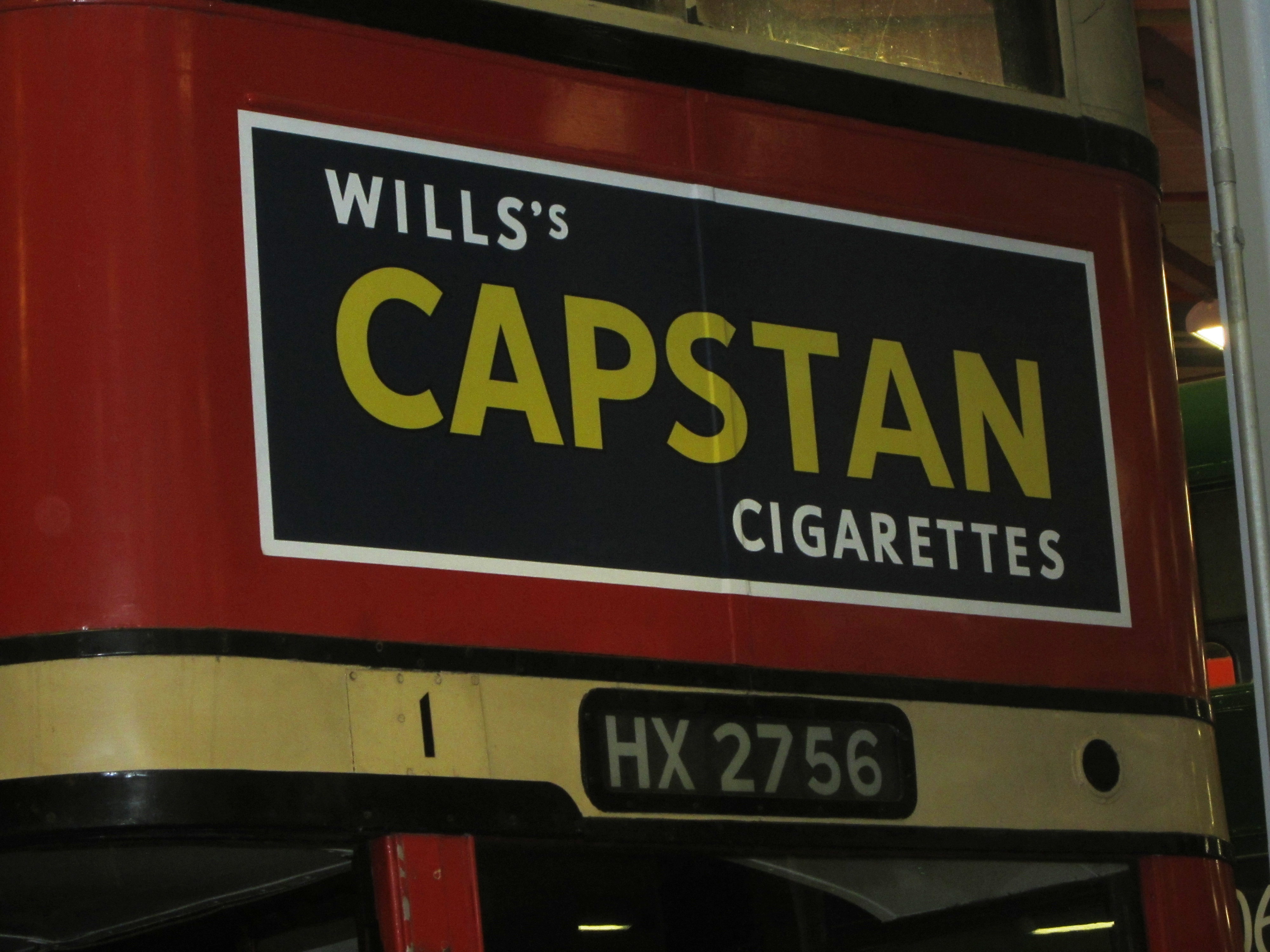
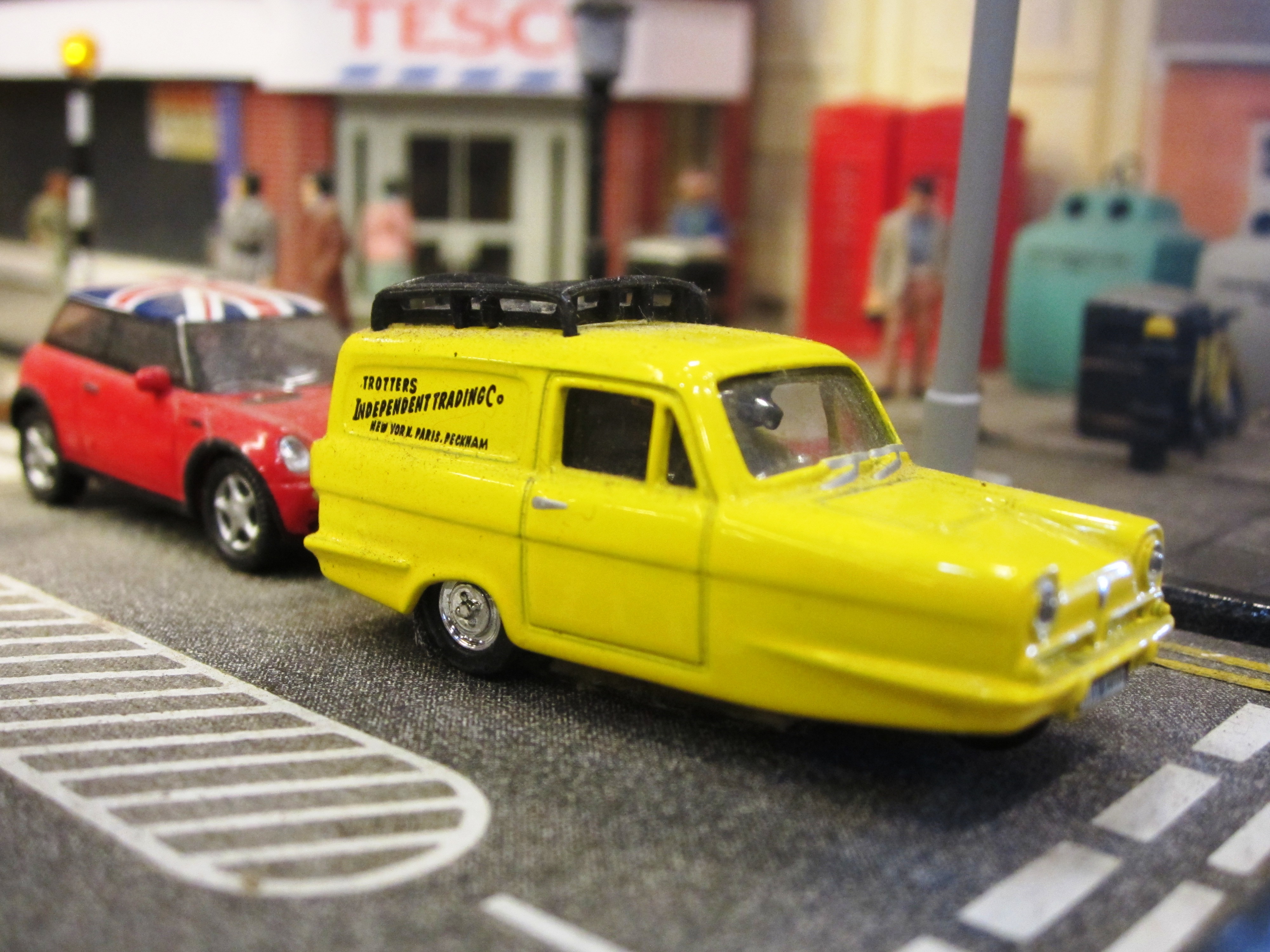
I finally made it to one of the London Transport Museum’s twice-early weekend openings at their Acton depot. where they store the buses, trams and train carriages they can’t exhibit in Covent Garden.
It was brilliant. If you like that kind of thing.
(I wouldn’t like to say the event attracts a certain type, but these were the longest queues for the gents I’ve ever seen outside a football ground.)
I could have spent hours browsing the specialist books for sale, while the kids loved the model railways.
The following pictures are via @callyorange. And go to the next one in September.
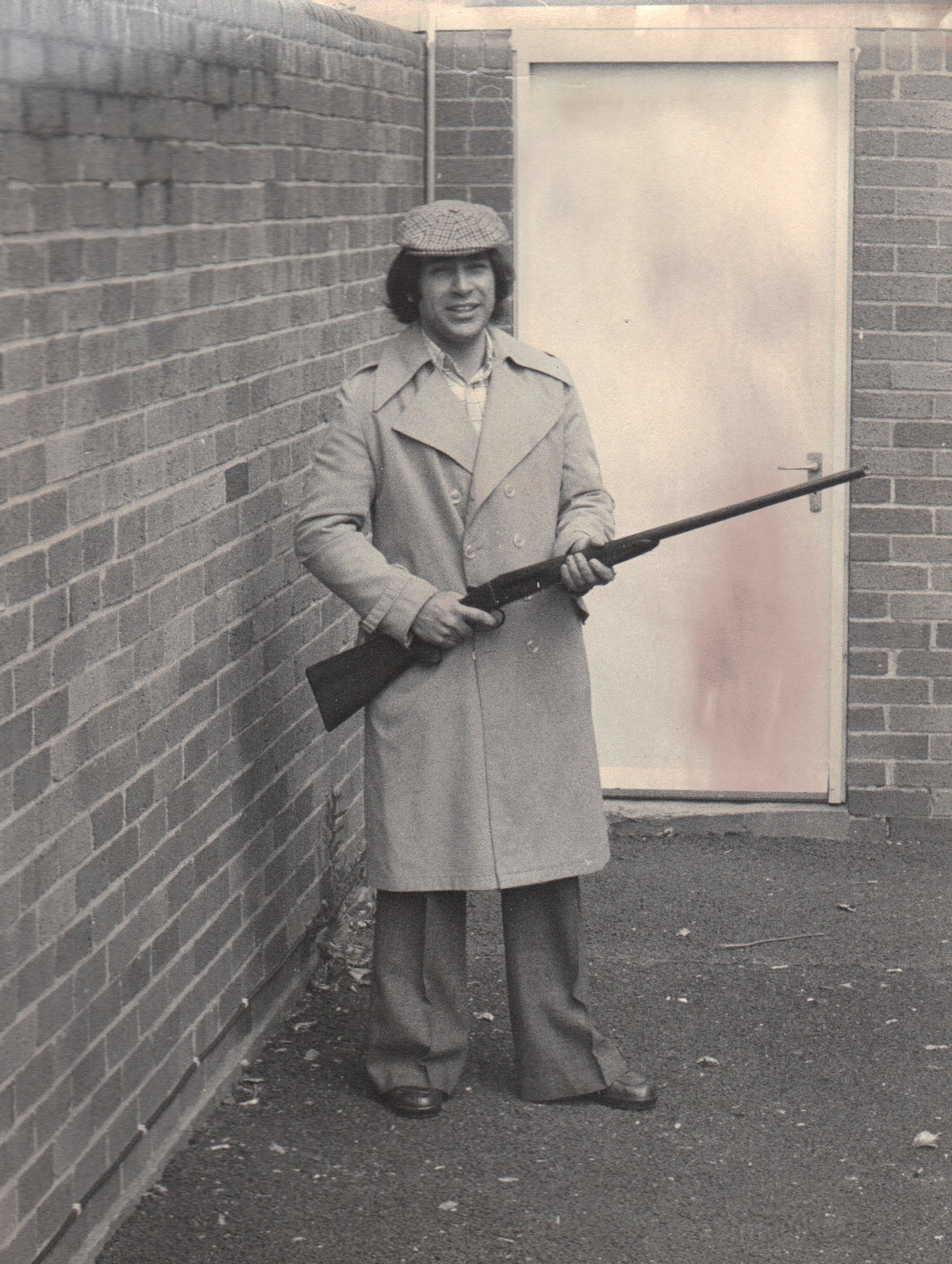
This is my mum’s brother, Wilfred Camenzuli. Born in Alexandria, Egypt and raised in Tooting, south London.
Back then, everybody in south London carried a shooter.
Wilf was always taking pictures. Here’s one of my mum and dad, looking unbearably glamorous.
He once made me and my sister watch a horror film so he could get a photograph of us cowering.
And here’s another of me and my sister, this time feeding pigeons in Trafalgar Square. I wonder how many thousands of similar photographs exist in photo albums around the world?
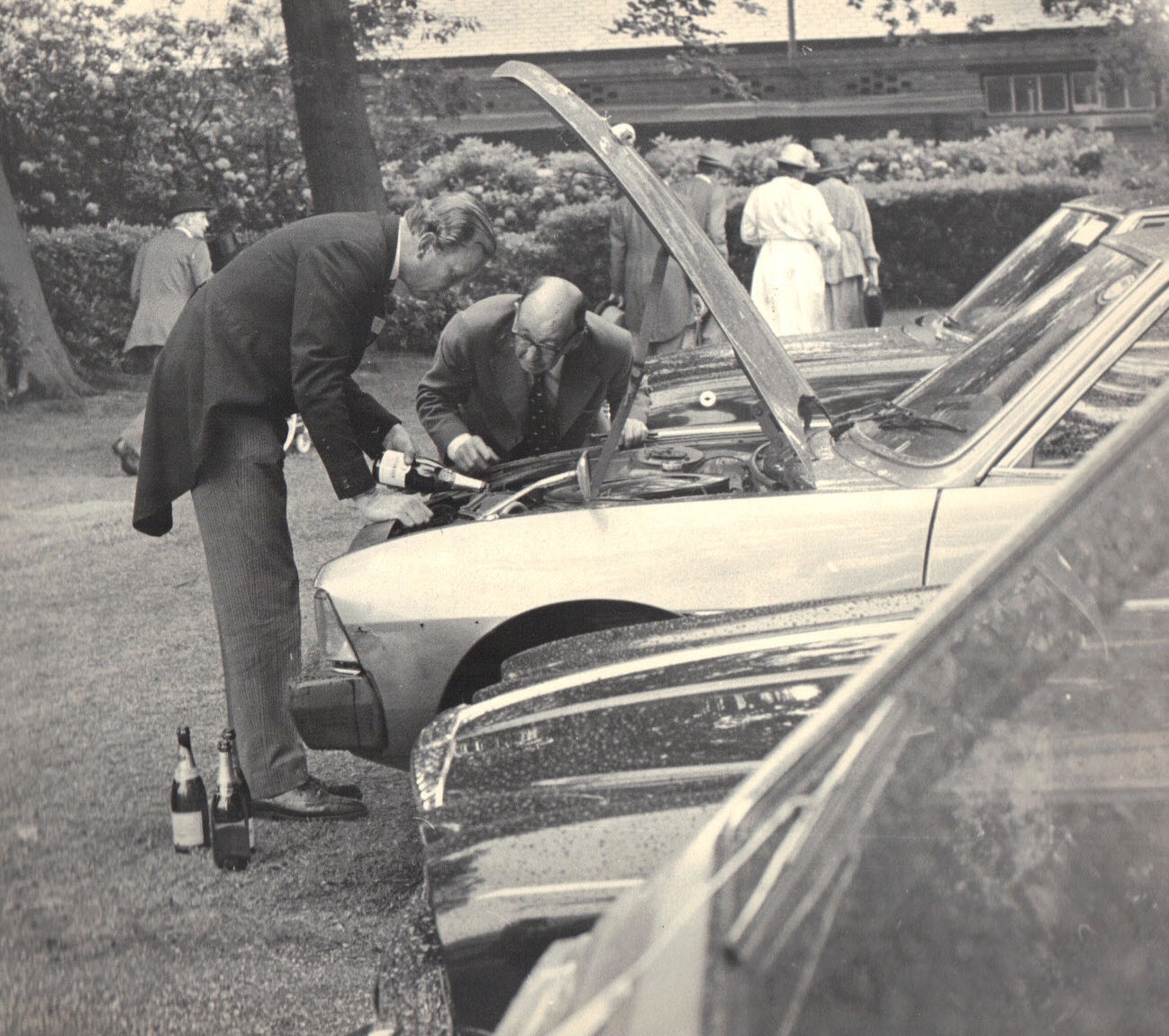
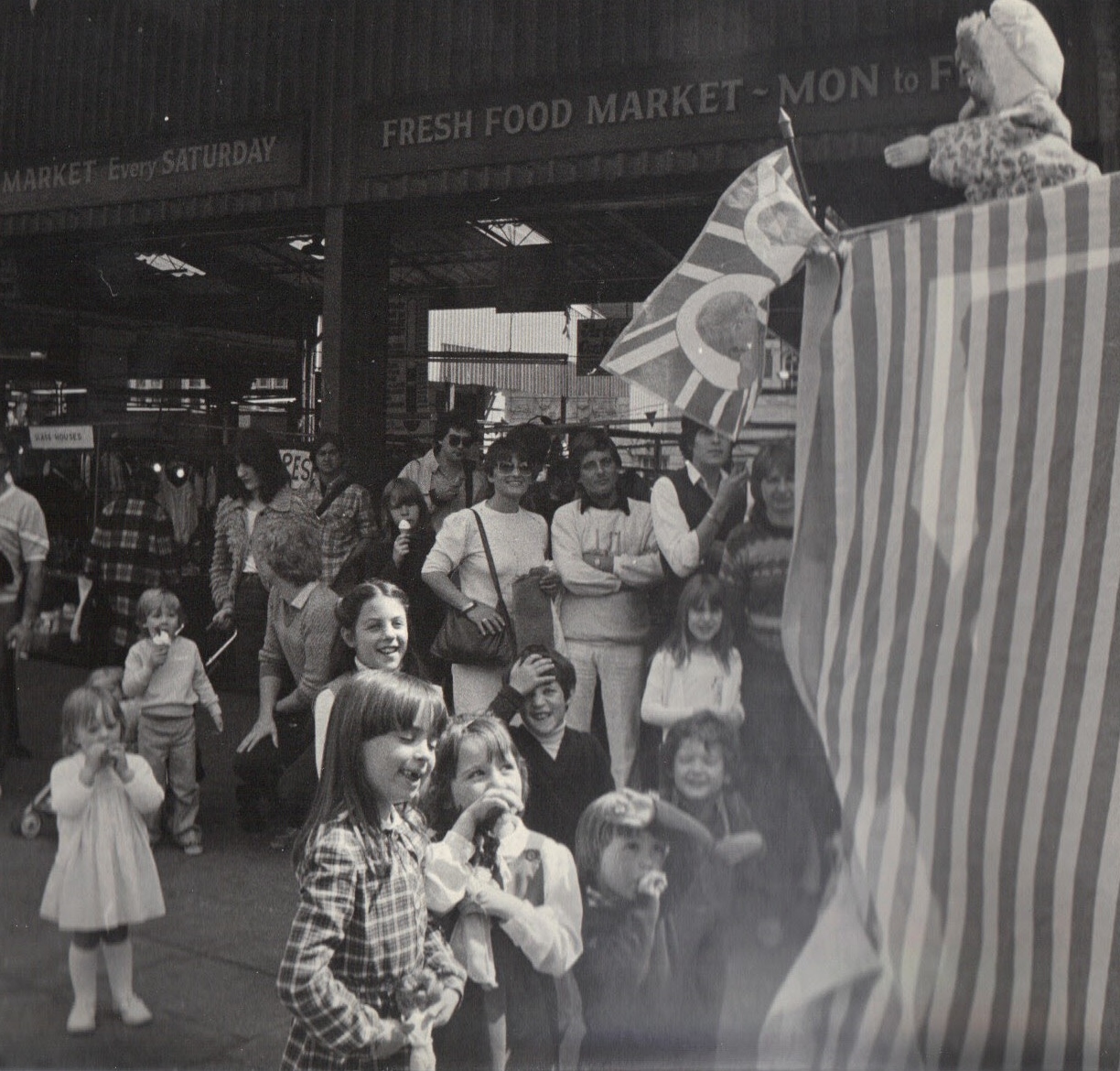
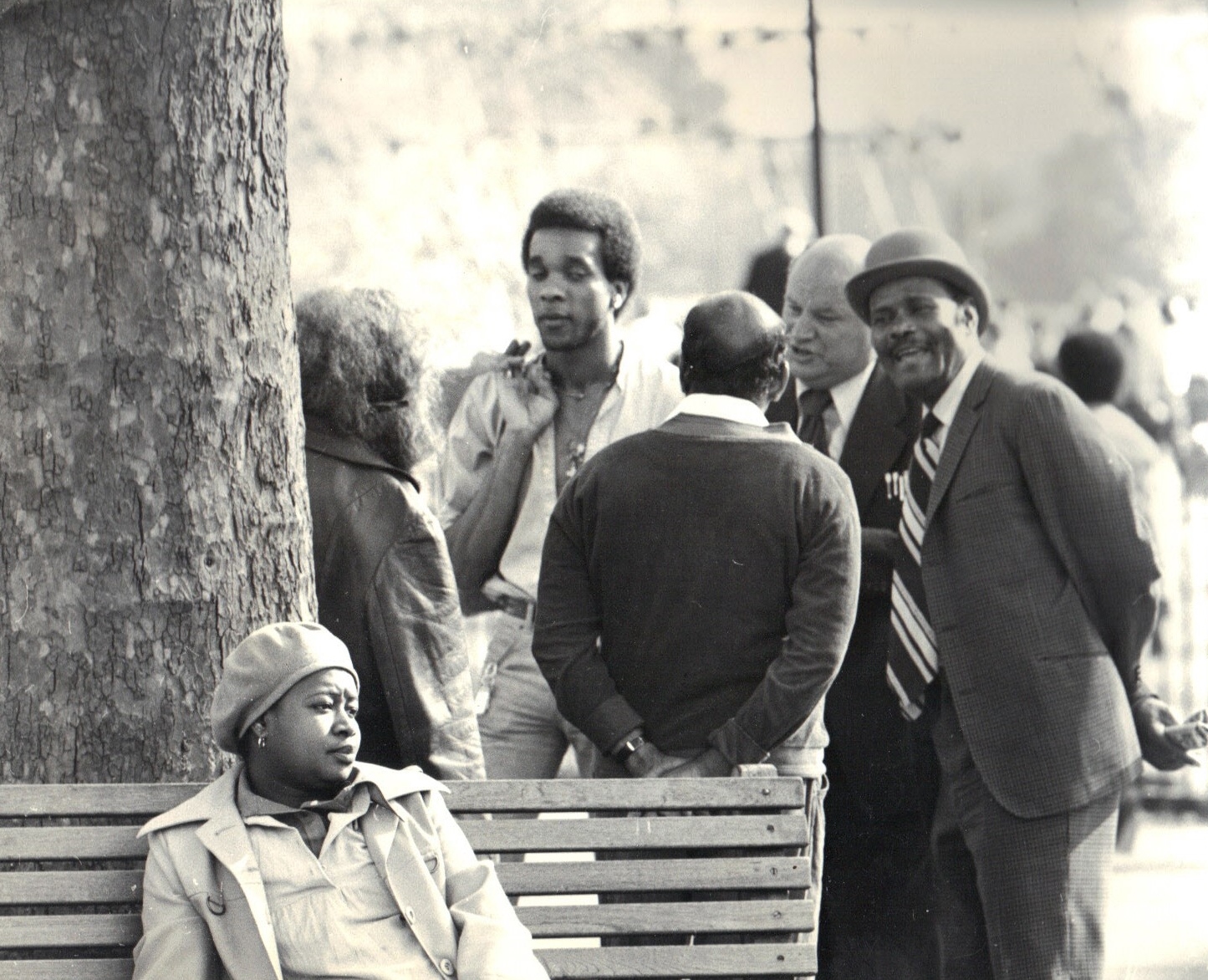
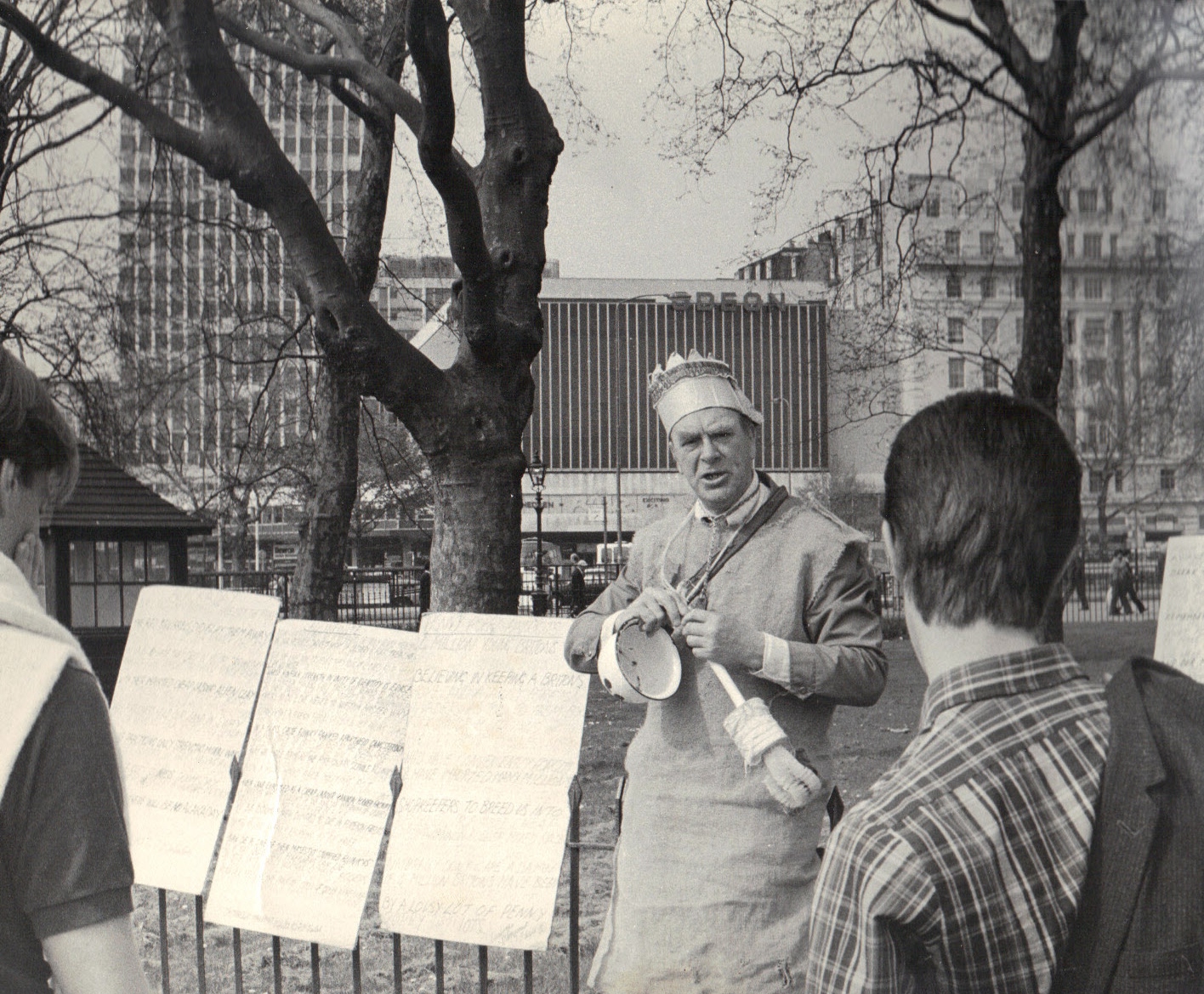
Wilf also took dozens of photographs of London in the 1970s and early 1980s. I always thought he had a great eye. Here are some of the best.
Battersea Power Station, 1975.
Gamblers/businessman, back office, Old Kent Road.
Fixing a car with champagne, Royal Ascot.
The finishing line, Epsom Derby.
Punch & Judy, Covent Garden.
Street performers, Covent Garden.
Street people, Covent Garden.
Speakers Corner.
Speakers Corner.
Speakers Corner.
Speakers Corner.
Speakers Corner.
Speakers Corner.
Anthony Quinn and Jacqueline Bisset filming The Greek Tycoon, Leicester Square.
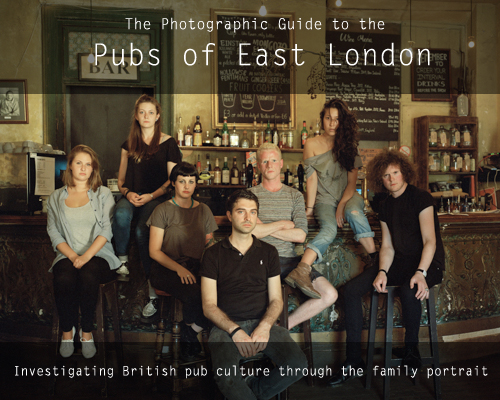
One of my favourite recent commissions was for Norwegian Air’s magazine, N, who asked me to write text accompanying Jan Klos’s terrific photographs of East London pubs that, as he says, “capture a distinctly British culture that is facing extinction.” The article is here.
I visited several pubs, interviewing the landlords about the difficulties of running a pub in London. “London’s pub landlords are tightrope walkers,” I wrote. “Maintaining a delicate balance between tradition and innovation.” What fascinated me about successful pubs was how they balanced their role as “a communal living room” as Pauline Forster, formidable landlord for The George Tavern described it, with their need to draw custom by programming events, from the ubiquitous pub quiz to the more avant-garde offerings at somewhere like the Jamboree on Cable Street. Even that is not always enough, and the George is under threat of development.
“I was looking for a project and I was playing with the idea of examining London’s tourism industry. The idea of photographing pubs was born from (believe it or not) cycling by Parliament Square and Big Ben and watching all the tourists. I really hate crowds and landmarks. There’s much more to London than Big Ben, double decker buses and telephone booths and I wish more tourists would see that.
I thought of all the tourists who come to London following travel guides full of landmarks and return with home with exactly the same boring photographs as everyone who has ever visited. I felt it a duty to show them what they are missing out on. Around the time I started plotting the project, more and more articles started appearing in the press about gentrification, pub closures and the death of East London. I’m a massive fan of East London’s pubs and slowly a way in to my project took shape.
I thought it made perfect sense to combine a “tourist guide” idea with a documentary approach to capture a distinctly British culture that is facing extinction. It gives insight into London’s pubs as a good tourist guide would, but, most importantly, it documents these fantastic institutions and groups of people – “families” – who run them. The family portrait approach I have taken also highlighted how close the teams are and how strongly they feel about their survival: many of the staff I encountered have other jobs but still do an odd day of work in the pub, just because they enjoy being part of a close-knit community.”
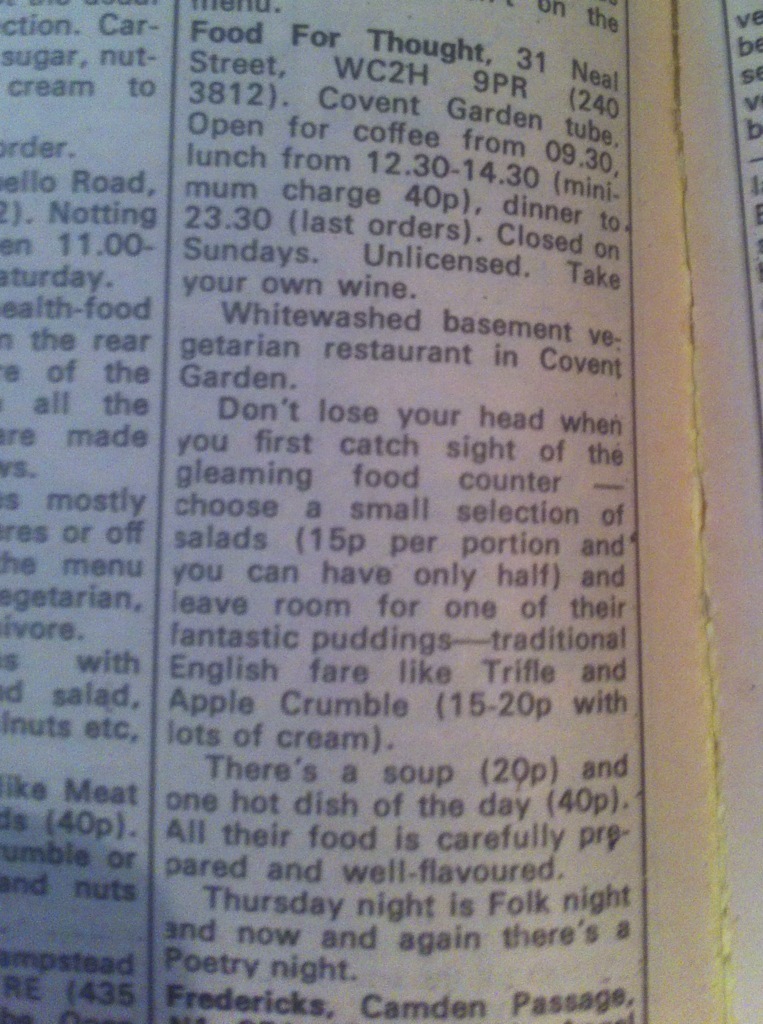
I have a piece in the Guardian about the closure of Food For Thought, one of London’s most charismatic and seemingly nuclear-proof (and I’m not just talking about the consistency of the scones) restaurants. It closes on June 21, rising costs – basically rents and wages to cover staff’s rents – forcing the owner Vanessa Garrett, to shut a business that has been successfully operating since 1971.
Food For Thought is one of those places that’s always been there. It was there when I prowled Neal Street on amateur shopping trips in the early 1990s. I knew, instinctively, that it was some sort of hippie joint, so went elsewhere, a teenage boy in thrall to the twin thrills of the Sex Pistols and bacon double cheeseburgers.
Years later, grown up somewhat, I began to eat there regularly, usually nabbing a takeaway from the ground floor during lunch breaks at Time Out. It always felt more than just a lunch venue. Without wanting to get too Sinclair about it, waiting in line at Food For Thought felt like a visit to polydimensional London, somewhere that had been quietly doing the same thing, for the same people, in the same place, for generations. Close your eyes, and you could be in 1970s London or even London in 2015. For secular souls, there are few areas that carry this atmosphere in quite such an effortless way, not so much a timewarp as timeless. It wasn’t dated, retro or old-fashioned, it just was.
I didn’t realise then quite how entwined Food For Thought was with the counterculture that spawned Time Out. When I tweeted about the closure of Food For Thought, the writer Richard King responded thoughtfully that: “FFT felt like one of the final remaining traces of the original Tony Elliott vision of London for Time Out.”
It was an astute observation. Food For Thought was born in the same spirit as Time Out, a desire to make London new, fresh, exciting, modern and funky, but also to make it, for want of a better word, good: cheap, utilitarian, healthy, an experience to expand the mind and reward the soul. London can still do this, but not in such a distinctive and understated political manner.
It went deeper. One of Food For Thought’s first chefs was Sue Miles, the wife of Barry Miles, founder of International Times, the underground newspaper from which Time Out hatched in 1968. Sue had learnt her trade at the Arts Lab, a counterculture take on the ICA that operated from Drury Street, and she later worked at Time Out, writing its first pair of London guides, which included enthusiastic reviews of Food For Thought.
What’s particularly depressing about the closure of Food For Thought is that it wasn’t doing anything wrong. It was popular, it was serving good food at reasonable prices. They could have expanded, sought outside investment and gone into the franchise business, but they felt that would dilute the experience. Why should they change when they were doing what they wanted and doing it well?
And it was this commitment to offering value for money – that deeply held desire to not rip off the consumer – that led to its demise. That was at the heart of what Food For Thought represented, and it is precisely the sort of thinking that doesn’t wash in rentier London, where even success is punished and landlords feel duty bound to wring more profit out of something they have done nothing to create, like Mafia bosses demanding their cut. People revolt when a government behaves this way, so why is it acceptable for landlords?
I recently dug up an old PC, and found this interview I conducted with former Chelsea and Scotland footballer Charlie Cooke in 2007 for Time Out.
It has become common currency for fans and players of other clubs to decry Chelsea’s lack of history, a revealing attitude that mistakes ‘history’ for ‘success’ and ‘wit’ for ‘arrogance’. Chelsea, of course, have a rich history, albeit one of spectacular underachievement and remarkable foot-shooting, of which the legendary – and much-romanticised – 1960s side is the best example. One of the geniuses of that team was Charlie Cooke, the brilliant Scottish midfielder who replaced Terry Venables in the heart of the Chelsea side and rivalled Peter Osgood for the affections of The Shed. Cooke was a combination of Pat Nevin and Joe Cole – phenomenally gifted, an extraordinary dribbler and visionary passer, but one with a prodigious work ethic. He was Chelsea’s player of the year three times – a record shared with a certain diminutive Sardinian – but only won two major trophies in his two spells at Stamford Bridge.
‘We were underachievers, and that was our own fault,’ says Cooke, on the phone from the United States where he coaches children’s soccer (‘I have to call it that’). ‘We underachieved on the big occasions – we were dreadful in the FA Cup final against Spurs in 1967, and we lost to Stoke in the League Cup final in 1972. We were out of control, wild and crazy, we egged each other on with the drinking culture. I have regrets. From this perspective, it was a lot of nonsense. At the time, you’re having fun, or you think you are, but I’m not one to say that if I had it all to live over I’d do it exactly the same. I’d be a bit smarter, more self-controlled, not so willing.’
It’s telling that Cooke’s autobiography The Bonnie Prince, lacks the drinking stories common to memoirs written by footballers from this period – that’s because Cooke, who doesn’t quite admit he was an alcoholic, can’t remember many of them (although he gets some off-page prompting from his drinking partner, Tommy Baldwin, nicknamed ‘The Sponge’ for his ability to soak up booze). Instead, Cooke gives a thoughtful account of a playing career that took him from Greenock High School to California Surf, via Aberdeen, Dundee, Chelsea and Crystal Palace.
‘I took it as an opportunity to retrace a lot of my life and find out things I’d forgotten,’ he says. ‘One of the strange things was that my sister had been doing some genealogy and the interesting thing to me – although it may be of no interest to anybody else – is that we, the Cookes, came from a long line of circus people. My umpteen great grandfather was the first person to take a big top to America. Another Cooke would ride round the ring on a horse taking off costumes of different Shakespearean characters. I come from a long line of hairy-chested women, Romanian jugglers and fat men. Entertainers, sure, but I’m not sure it’s a rich lineage – maybe a tacky one.’
Cooke also writes about his own failings as a player, showing self-reflection that’s unusual in books of this type. You rarely see footage of Cooke in action – ‘sometimes you’ll see a tiny clip of yourself and think, “that wasn’t me was it? Ach, I thought I was a better player than that!” – and rarer still a Cooke goal: he scored barely 20 in nearly 300 league games for Chelsea. Cooke’s explanation of this is interesting – ‘I allowed the headlines about my being the team schemer and midfield general to get into my head, with the result that I ignored finishing’ – showing that even positive press can have results journalists might not expect, causing players to subconsciously neglect those parts of their game that do not receive the most publicity or overdoing their strengths in the belief that this is what the public demands.
Cooke lives in America (‘I always wanted to be in the States, I married an American girl and I loved Westerns and American detective series and the blue skies of America always seems to be a place I wanted to try’), but returns to Abramovich’s Stamford Bridge more regularly now than he did under the previous regime. ‘One of the wonderful things about the takeover at Chelsea is that they invite all the old farts back, he says. ‘It had been thrown out the door before. I have no gripe about Ken Bates, that’s what he wanted, but it’s wonderful that they invite us back now, it’s lovely for me and all the guys really appreciate it. You feel the love fans still have for you and it’s fantastic.’
I’ve often thought that when William Rees-Mogg wrote his famous editorial in the wake of the Redlands court case, the butterfly was not so much Mick Jagger or Keith Richards but the third party in that sorry affair. Art dealer Robert Fraser was convicted alongside the Rolling Stones for possession, but while Richards and Jagger were spared prison partly thanks to the Times editorial, Fraser pleaded guilt and was sent to Wormwood Scrubs. It’s difficult now to think of Richards and Jagger as butterflies; Fraser was the one that got left behind to get broken.
Some of letters and telegrams Fraser received and sent while during his four months at the Scrubs feature in the Pace Gallery’s superb exhibition, A Strong Sweet Smell Of Incense, which runs until 28th March. The title comes from Richard Hamilton’s collage, created as a response to the Redlands bust.
It is displayed alongside one of Hamilton’s other famous creations in his Swingeing London series, which shows Fraser and Jagger being led away from court.
Hamilton was one of several artists that Fraser promoted at his Duke Street gallery in the 1960s, and many of them feature in the show. Here there are works by Andy Warhol, Jim Dine, Eduardo Paolozzi, Claes Oldenberg, Clive Barker, Gerhard Richter, Bridget Riley and Peter Blake, as well as later pieces by Francis Bacon, Keith Haring and Jean-Michel Basquiat.
Copyright Pace London
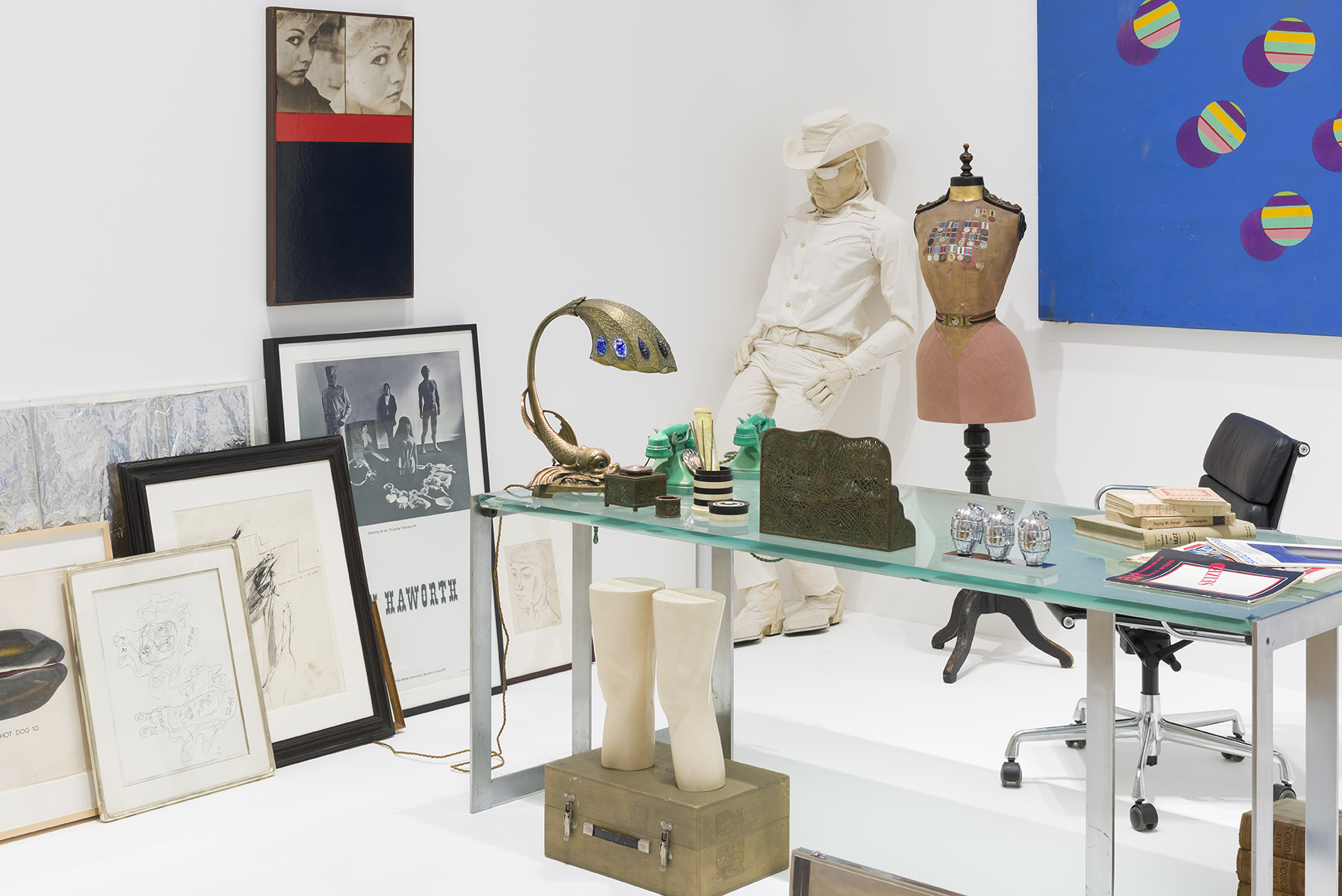
There’s also a nice mock up of Fraser’s office.
Copyright Pace London
Fraser had a great eye and a sense of daring, and that helped attract the stars. Fraser’s gallery became a centre for the cool kids of the counterculture, attracting pop stars, actors and film directors as well as perennially lurking scene figures like Keith Anger. Paul McCartney described Fraser as “one of the most influential people in the London sixties scenes” and The Beatles feature in the exhibition, most wonderfully in the shape of the drumskin from Sgt Pepper’s Lonely Hearts Club Band, which Peter Blake created under Fraser’s direction. Fraser was the catalyst for much that happened in this mid-60s meeting of art and pop.
Copyright Pace London
Fraser was nicknamed Groovy Bob and a sense of the fluid interchange of ideas that resulted from these encounters can be seen in a long display cabinet, arranged with artful haphazardness and crammed with personal letters, memos, books, flyers and photographs. There’s no caption for this wonderful ephemera, but rich pickings for those who take the time to drink it in.
Copyright Pace London
I was fascinated by a 1968 letter Fraser wrote to Richard Lock at Simon & Schuster proposing a biography of the Rolling Stones, which “would be satirical and totally fictional”. It was seen as a suitably Stonesy response to Hunter Davies’s recently published and “totally humourless” Beatles biography. Sadly, this came to nothing.
I also liked a letter written by the producer of Performance, confirming that Anita Pallenberg would be renting Fraser’s flat in Mount Street for the eight-week duration of the shoot, at £30 a week. This was presented alongside a page of the script from Performance. Fraser’s spirit is essential to the milieu and mystery around Performance. He had known Pallenberg since 1961, and his interest in art, drugs and bohemia was infectious. Pallenberg later recalled that around Fraser gathered “a fascinating group of people who were on the cutting edge of what was happening in high society, great cultural evenings, wonderful intellectual talk, plenty of hash and marijuana and speed and LSD.” Marianne Faithfull’s recollection is a more withering English take on the same deal: “Desultory intellectual chit chat, drugs, hip aristocrats, languid dilettantes and high naughtiness.”
The weeks that Pallenberg, with boyfriend Keith Richards, stayed at Fraser’s flat, would be pivotal to the unfolding psychosexual drama surrounding the Stones. Fraser was using heroin (his opium pipe is on display), and soon turned on Keith, who was otherwise writing Let It Bleed and brooding about the shenanigans Pallenberg and Jagger were getting up to while making the film. The ensuing atmosphere of jealousy, betrayal spiced by heavy drug use would hang round the Stones for decades. As Richards spiteful autobiography shows, they still haven’t entirely gone away.
Cecil Beaton photograph from Performance set.
Also floating around the scene was another arch mischief-maker, Kenneth Anger, and a couple of his missives to Fraser can be found in the cabinet. Best of these is probably the telegram requesting £60 which concludes “GROOVING ON MAGIC CURRENT ONE TRILLION VOLTS AFTER AUSPICIOUS LUCIFER HOUSE BOAT LOVE IS THE LAW”. Indeed.
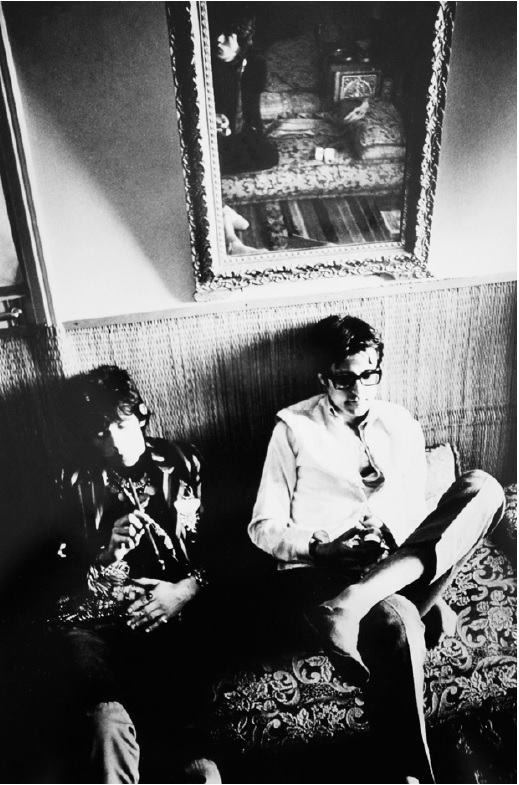
But it’s the Stones with whom Fraser became most closely associated, for better or for worse. No matter how it ended, I’ve always loved a pair of photographs Michael Cooper took of the Stones with Fraser in 1966 and 1967 in Morocco, a location that is almost as emblematic of the 1960s as London itself, lingering even in the set design of that orgiastic lightning rod Performance. Here is the calm before the storm, before the butterfly is broken.



















 The Great Wen