Category Archives: Journalism

Cocking up

I cocked up at work the other day. It wasn’t anything major, but it was enough to reignite that familiar feeling: stomach lurching, chest tightening, face reddening, bottom squeaking. A mix of self-loathing – ‘how could I be so stupid????’ – and indignation – ‘it wasn’t my fault!!!’ Then you start to wonder if you can get away with it, or should fess up forthwith.

In general, the best solution is to find that person who is at a similar or lower level of seniority to yourself, but way more competent and powerful (you know the one), and politely beg them to sort it out. But I work on my own, so had to bluff it out, which I did more or less.

It reminded me of other great cock ups of the past:

  • The time I forgot to include Coronation Street in the TV listings.
  • The time I asked if I could interview somebody who was dead.
  • The time I said on the cover of a magazine that the first phone call had taken place in London when it was really in New York.
  • The time I got the world 100m record wrong in the Guinness Book Of World Records.
  • The time I compiled the squad lists for a Premier League preview and completely forgot about Sheffield Wednesday.
  • The time I left the ‘S’ off Scunthorpe in the fixture list for a national paper (actually, I did this on purpose).

Ah, happy times and no lasting damage done.

The good news is that over the years I’ve witnessed far greater cock ups from people considerably more important than myself, so it’s clearly not a career-breaker in my chosen line of work.

Here’s to journalism, and gleefully calling other people’s cock ups to account while studiously ignoring our own.

i think therefore i am unwanted

You may have noticed a new newspaper on your way to work this morning.

i is billed as a new concept, a snappy summation of the Independent  that offers some of the benefits of a serious newspaper with the attitude of a tabloid, and costs just 20p. It’s the Metro with opinion columns.

And it’s not bad. You can see what they are trying to do and they pretty much pull it off (although as somebody who saw Time Out attempt to revolutionise TV listings about a dozens times every year, I don’t give i‘s more than a month). It’s good to see another publisher trying to do something, anything, to save the printed newspaper. 

But I have one reservation: is what they are trying to do right in the first place?

Increasingly, all newspapers have become obsessed with attracting an audience that doesn’t buy newspapers. The success of the Metro has woken them up to this previously untapped readership of busy 20-30-year-olds who want a basic grasp of what is going on in the world, plus a funny kitten story on page 3, but don’t want to pay for it. The Metro serves this purpose tremendously. Now everybody wants a piece of the pie.

But in chasing this audience – an audience, remember, that has never shown any previous interest in paying for news – publishers are in danger of neglecting those of us who value newspapers for other reasons. Perhaps we like good writing and well-researched articles that tell us things we didn’t already know. This is still out there, but it’s increasingly hard to find.

Instead, we get features written by Wikipedia and opinion masquerading as news. And we get newspapers that are increasingly political in everything they do and say, which means you can’t trust any of them.

Columnists are legion, frantically demonstrating their independence of thought by aggressively agreeing with one another, or desperately trying to say something stupid and controversial in the hope it’ll get them noticed. This bores me silly, unless it is well written or funny or thoughtful, which it rarely is. (And yes, I am fully aware of the irony of saying all this on a blog.)

Am I an elitist? Am I hopelessly naive? Am I an out-of-touch snob?

Perhaps. 

But here’s the thing: the more that newspapers chase this mythical paper-purchasing Metro audience, the worse their sales figures get.

So perhaps it’s not just me that wonders why they should pay £1.20 – or even 20p – to be told things they already know by people they don’t trust or respect?

I am a journalist. I love to write and I love to read. But I no longer buy newspapers and the i is not going to change that.

Update More opinion (chuckle) from 853 and Snipe (whose three conclusions are on the money).

Jeremy Deller’s Baghdad car at the Imperial War Museum

If the V&A’s latest exhibition demonstrates that big can be beautiful, the new acquisition at the Imperial War Museum shows that small can be profound.

It’s a car, badly damaged and barely recognisable, that was caught in a suicide bomb blast in Baghdad in 2007. The artist Jeremy Deller got hold of it and toured it across America on the back of a truck in the company of a US soldier and an Iraqi citizen for a piece entitled It Is What It Is. Now, shorn of any artistic element, it is on display at the Imperial War Museum. My review in the New Statesman can be read here.

After interviewing Deller, I avoided reading too much about the car before I wrote the piece other than this by Jonathan Jones in the Guardian. Jones, I think, slightly overdoes his praise – is it really true that ‘a dismembered body is what you immediately think of when you come into the museum and see a car’? – while the commentators beneath the line seem obessessed with the pointless and hoary argument about ‘what is art’.

They’ll never be able to answer that question from behind their computer screens because this compelling and thought-provoking piece needs to be seen on location and in context to be fully appreciated. It’s a fine and valuable addition to the IWM’s collection and makes a fascinating footnote in the history of war art.

Oh, and Jeremy Deller is one of the nicest famous people I have ever interviewed, right up there with Graham Taylor, the former England manager, belittled turnip and little appreciated ballet enthusiast.

Diaghilev at the V&A

Two months ago I knew diddly about Diaghilev. Since then I’ve written two features about him – including this in the Independent On Sunday – and can confidently assert that this Russian-born impressario changed the face of ballet in the early twentieth century when his company, the Ballets Russes, enlisted artists and composers like Picasso, Matisse and Stravinsky to showcase the work of groundbreaking dancers and choreographers like Nijinsky and Massine. Such is the magic of journalism.

The occasion is the V&A’s big autumn exhibition, Diaghilev and the Golden Age of the Ballets Russe, which opens on September 25. It’s an incredibly rich exhibition, crammed with memorabilia and costumes and images and music. Highlights include the astonishing, undanceable costumes from Parade, Picasso and Cocteau’s ‘Cubist ballet’, the monumental back cloth from ‘The Firebird’, and a wonderful bust of Nijinsky that captures his odd features.

I’m not a great fan of the ‘blockbuster’ exhibition as they are rarely as satisfying and intelligent as intimate displays at the more thoughtful museums, but this one is a real cracker, demonstrating decades of learning and showcasing a marvellous collection of costumes bought in auction and secured in the V&A’s vaults for just such an occasion.

(There’s a nice piece here from Diaghilev’s biographer about the Russian’s relationship with London.)

Yes, Fabio: the eternal sitcom that is English football

A few years ago, during a BBC attempt to find the nation’s best sitcom, Armando Ianucci was asked to make the case for ‘Yes, Minister’. In the excellent documentary that followed, Ianucci discovered that one of the reasons ‘Yes, Minister’ holds up so well is that the creators went back over the news archives for the past 50 years and analysed what stories recurred, and than based their episodes around these themes – the special relationship, the EU, expenses and honours scandals, arts funding, civil service waste. Hence it still seems fresh and relevent today.

Ianucci went on to nick this idea wholesale for ‘The Thick Of It’.

You can very easily do the same thing when writing about English football. When I was researching a piece on 40 years of London football for Time Out‘s (very fine) ‘London Calling’ book, I discovered familiar arguments being made twenty or thirty years ago.

‘Football has been taken away from its natural community, commercialised and given the worst trappings of Hollywood by the mediam,’ wrote Peter Ball in 1974. What would he make of it now?

The same writer than analysed the national team’s failings in 1980 and surmised that ‘The English game does not enhance the development of technique, nor of flair players, who tend to be regarded with suspicion.’

The more things change, the more they stay the same.

I was reminded of this when I was handed half-a-dozen old newspapers from 1973, covering the aftermath of England’s infamous World Cup failure at the hands of Poland. England had followed up that result with a 1-0 defeat at Wembley against Italy in November, prompting some very familiar comments in the papers.

‘Now England need a substitute for Alf’, said the Daily Mail (and press nerds will be interested to note that the hated ‘Now’ to pad out a headline was already in use at this time).

Alf Ramsey was quoted as saying the result was ‘unbelievable’ and insisting that ‘only the Press asks me if I want to resign. It is none of their business.’

On it goes. He told London’s Evening News that ‘soccer must change at club level if England are to show more skill in internationals’ and pointed out that ‘people say we need more skill, but this has been said for years’. Alan Hardaker, secretary of the Football League, was ready with the platitudes, ‘We must all buckle down to the job in hand. To strengthen our game at domestic level and through that our standing at national level.’

Even the Italian manager, Ferruccio Valcareggio, had a view we can recognise: ‘You must have flair and only Osgood appeared to have this.’

But the press weren’t interested in excuses, they wanted blood. And they got it. Ramsey lasted one more game, a 0-0 draw against Portugal, before he was sacked. Astonishingly, England’s internationals didn’t suddenly develop greater flair and technique as a consequence.

And who scored the crucial goal for Italy that night in November? Do I really need to say? Arrivederci Fabio, it was always going to end this way, eventually.

Bullshit and journalism

Forget high-minded, rose-tinted commandments like these, journalism isn’t about integrity, objectivity or, lawd preserve us, education.

It’s about bullshit.

And I don’t mean that in a bad way. Necessarily.

A key part of what a journalist does is take a complicated story then condense, distill and edit it, before regurgitating it in a form that is accessible and interesting to the general public. And journalists are regularly asked to do this with subjects they don’t know anything about. They’ll research, of course, conduct interviews, ask experts, analyse and consider, but they’ll also, ultimately, bullshit. Because while journalists are not experts, they will end up having to pose as experts, or at least they will if the piece is going to be any good, because if it’s going to be any good it has to appear authoritative.

In an ideal world, journalists would only write about things they know a lot about, but – to take me for example – there are only so many articles you can write about tunnels, Chelsea Football Club, the 1968 American Presidential election and museum exhibition architecture.

So you have to diversify. In the last month, I’ve written about ballet, poetry and fashion. These are three subjects I know zilch – in fact, less than zilch – about, but that hasn’t stopped me writing about them. Why? Three reasons: because I was asked to, because I thought it might be interesting and because I needed the money.

All journalists do this to some extent, but features writers (such as myself) do it more than most, because we don’t specialise in anything – not in a single sport or art or type of business – and so turn our attention to whatever takes our fancy or whatever pays the bills.

This is both fulfilling and frustrating . Fulfilling because I have an inquisitive mind, so enjoy learning about new things and then translating this new information into a form that hopefully attracts the reader without pissing off the experts by making great clunking errors or hideous simplifications.

But it can also be annoying, especially when you end up writing articles on subjects you’re not really equipped to write about – equipped in the sense of having the knowledge that comes from years of reading and internal debate – simply because that is where your contacts have led you, while you can’t write about what you’re genuinely knowledgeable about because you haven’t made the connections.

On one level, this is a market failure, and comes down to the fact that you can understand the topic inside out, but that doesn’t help if you don’t know the editor or the PR or are beaten to the pitch by a canny competitor. And it works both ways. I bet one or two of my journalist friends are wondering why they hell I’ve been writing about fashion given that until last week I thought Manolo Blahnik was a Mexican superhero.

I think the public accepts this without fully understanding it. On one level, they know journalists have to bullshit – and it must be horribly obvious whenever a journalist covers the area they specialise in professionally – but at the same time, they would be genuinely shocked if they realised exactly how little we really know about some of the things we are entrusted to write about. They’d probably think it’s a bloody stupid way of doing things, unless their business also regularly employs people to work well outside their area of speciality, which might be the case if they are politicians. 

But that’s journalism: bluff and bullshit. And the best bloody profession on earth if you believe in knowing a little about a lot and making up the rest.

Skin at the Wellcome Collection

My review of the Wellcome Collection‘s new exhibition Skin is in the New Statesman this week. Read it here.

Cunningly, I snuck the key phrase into the very opening paragraph:

‘Generally, museums put on exhibitions so that people can learn about things they don’t already know. The Wellcome Collection does almost the reverse: it prefers to start with something that is familiar – in this case, skin – and make it unfamiliar.’

Skin is another very good exhibition from the Wellcome, who stand almost unique among British galleries and museums as a body that is so rich they have no requirement to go cap-in-hand to the public purse or to private sponsors, and consequently have no need or desire to dumb down or exhibit tedious ‘blockbusters’ (I’m looking at you, British Museum) in a bid to pull a cash-and-existence-justifying audience through the door.

Few establishments are so fortunate and few curators would know what to do with themselves if given this sort of creative and intellectual freedom. 

Arts funding is going to take a proper kicking over the next few years. The Wellcome Collection will provide rare shelter from the storm, and one with free wi-fi, a bookshop and Peyton & Byrne cakes. What more can you ask for?

Do you have what it takes to be my slave?

Description
Magazine and newspaper intern wanted

Freelance journalist Peter Watts is looking for an enthusiastic and motivated intern to assist with finding stories for magazines such as Uncut, Prospect, New Statesman and many – but not that many – more.The position is based in a south London coal cellar and you must be able to commit for six weeks or you can just piss right off you time-wasting loser.

Tasks

  • Coming up with features ideas: scouring newspapers and online every day for great potential features to steal
  • Chasing stories, interviewing, transcribing, writing and taking cheques to the bank every week
  • Sending commissioning editors obsequious emails containing poorly conceived feature pitches and then ranting impotently when they fail to respond
  • Networking (ie having coffee with John O’Connell, where you will both gossip like old women about other journalists while trying to avoid paying the bill)
  • Experiencing general low-level resentment every time you see a peer’s byline in a newspaper or magazine
  • Pretending to be pleased for them
  • Finally mastering practice/practise and effect/affect
  • General admin duties (milk no sugar)
  • Liaising with girlfriend and daughter
  • Watering the potatoes
  • Monitoring Twitter, hoping this will be the day when @caitlinmoran finally retweets something of yours that is witty and pithy
  • Or failing that, @indiaknight
  • Look, even @gilescoren will do at a pinch
  • Coming up with witty and pithy Tweets
  • Taking crap photographs for self-indulgent personal blog
  • Getting three stars on tricky 5-7 level of Angry Birds

Experience required

Preferably a background in journalism or slavery. Otherwise, anybody lacking self-dignity and imbued with a lacerating self-loathing will do fine. Any applicant related to somebody already working in the media will obviously receive preferential treatment.

You need to have a hunger for wiping other people’s arses. We also need you to be highly organised, motivated, determined and really, really desperate – for you, no boot is too shit-encrusted to lick if there’s half a chance you might get another unpaid intern job in a dying industry at the end of it.

This position may give you herpes. You will leave this role without a soul or pride, making it a great position for anyone wanting to have a successful career as a freelance journalist. Previous experience in real life is probably not ideal.

Please submit an updated CV and a covering letter explaining why you’d be perfect to do my dirty work for me. This is initially a temporary unpaid position although for the right candidate there is the definite potential for it becoming a permanent unpaid position.

Based on an original idea by Tiffany ‘Chutzpah!’ Wright.

Update For some serious treatments of this story, see Graduate Fog, London Fashion Intern, Psmith and Siany Land.

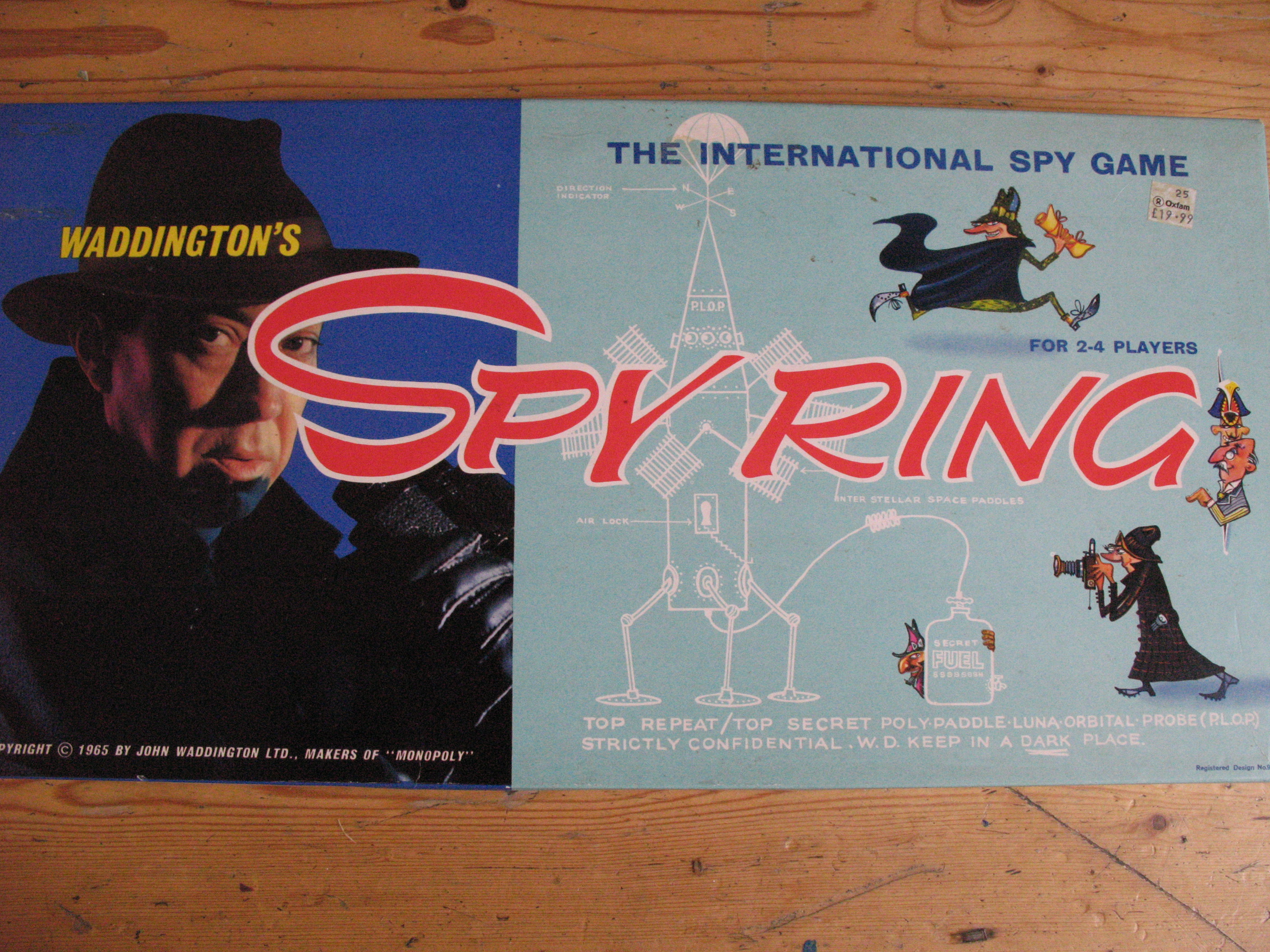
My life as a spy

Spies have been in the news recently which got me thinking about my brief dalliance with the half-life of espionage.

I was asked to go undercover by the Sunday Times in the mid-90s. and this assignment opened my eyes as to how journalism really works, for good and ill.

I was 19 and working on the sports desk as a dogsbody, tea-maker, fact-checker and column-writer. The call went up from the sweaty suits in the newsroom – they needed volunteers who were under 25 and hadn’t been to university. My sports editor put me forward, so for the first time since the Lesbian Avengers broke into the building and chained themselves to the desks, I trundled into the office where the serious journalists worked.

The story went thus: the ST editor had been having dinner with an old friend, who told him that some universities – mostly former polys – made it far too easy for students to get their degrees. Some of the tutors practically wrote the essays and answered all the questions in exams. They did this, so I was told, to increase the pass rate, which meant the universities got more funding.

The editor thought it would be a whizzbang idea if he sent a couple of journalists undercover, to enrol as students at former polys and reveal this nefarious business to our readers. And on this flimsy basis, I was to be given a large weekly stipend, leave of absence from the sports desk and an unlimited supply of pink chits – the blank taxi receipts that were the most highly valued currency in the building.

So I did it. I went to the University of North London on Holloway Road and enrolled in the only course they had left: Irish Studies. I was comfortable with this. I had recently left a Catholic school, so I’d been surrounded by plastic paddies for the best part of a decade, drank Guinness and could name the Republic of Ireland first XI without flinching. I came up with a cover story about my dad being from Ballymena but never talking about his Irish heritage, and winged it from there. They probably smelled a rat straight away – nobody was shy of talking about their Irish background in the mid-90s, when the craic and Big Jack were all the rage.  

My brief was to get close to the students and ask them leading questions about the nature of the tutoring they received, so I went to lectures and then hung out with my fellow students in pubs, drinking on expenses and getting free cabs home. It was quite the thing. Who wouldn’t relish the chance to get to play at spies? 

I quickly discovered three things.

  • I wasn’t a very good spy. I kept forgetting to record conversations or got drunk and couldn’t remember what had been discussed. I couldn’t think of any leading questions and regularly forgot my cover story.
  • I wasn’t a very good student. Studying bored me senseless and I couldn’t write the sort of essays required by universities.
  • This wasn’t a very good story, and even if it had been I didn’t want to write it. My fellow students were all older than me and from a far more disadvantaged background. They were genuinely enthused about this opportunity to receive further education and many of them had left secure jobs so they could do so. I had absolutely no desire to stitch them up at the bequest of the public scho0l and Oxbridge educated bigwigs back in Wapping, not for all the pink chits in London.

Like a double agent, I strung both groups along for a few weeks – the students, cos I it was fun; the journalists, because my access to taxi receipts had made me a minor legend among the peewees in the corridors of Wapping. But the whole thing was making me increasingly uncomfortable – having to lie to everybody – and I was really very bored of studying, so I wrote a heroically non-committal wrap-up memo to the news editor and then got the sports editor to insist I was recalled. 

Another journalist had enrolled at a different University and he stuck it out. After he’d done a full year, he ended up writing a SENSATIONAL two page expose that amounted to a whole lot of nothing, as he freely admitted.

And what did I learn from all this? A few things, all chastening. One was that newspapers made decisions about stories based on whims or chance encounters, and would follow these through to the bitter end even when it was clear there was nothing to write about, and that I wasn’t very good at doing this. Even if it had been a good story, I wasn’t tenacious enough to exploit it.  

The other was that I would never be a successful spy.

Another childhood dream, dashed.

Slime Out: the sequel

I wrote recently about the hate letter I received at Time Out a few years and how it changed my outlook on writing (Like A Demented Seagull: How Hate Mail Changed My Life).

At the end of the post I said that this prolific writer of hate mail, who had rather wittily rechristened the magazine Slime Out, had stopped sending his bile-laden missives to Tottenham Court Road.

Not so, it seems. A former colleague recently contacted me to say:

‘I didn’t want to leave a comment because I’m genuinely afraid he might read it and target me. But I can tell you that he didn’t stop writing the postcards. We have received three or four in the last year. They’re not as personally offensive about individual staff any more, but still mental. I imagine him to look like Buffalo Bill from ‘Silence Of The Lambs’.’

So he’s still out there, reading a magazine he despises and making sure they know it. Somehow, I find this reassuring, and I’m sure these days he has plenty to write about.

This might also be a good time to mention the best ‘hate’ letter I received. This was before I was neutered, when I still prided myself on writing vicious, witty, scathing criticism of anything that came into my sights.

It asked simply: ‘Peter Watts. Is he a short man?’

It still stings.