It’s a fascinating snapshot of London past, from the references to “seedy” King’s Cross and “trendy” Covent Garden to the fact that everybody appears to be smoking, all the time. The broadcast focuses around a couple of interviews with Tony Elliott, the magazine’s handsome founder and proprietor who looks like the lost member of Genesis.
It’s remarkable to think that despite his theoretical control, the magazine’s union was powerful enough to close down publication after Elliott had the temerity of appointing his wife, Janet Street-Porter, as deputy editor. That led to a strike and management climbdown. Another strike took place after the union chapel took offence to the appointment of a new TV editor, John Wyver, as they felt the job should have gone to an internal candidate – one of whom was broadcaster and writer Jonathan Meades.
As this film relates, at this time, almost all Time Out staff – there were a few exceptions – earned the same salary, whether they were editing a section or working as a receptionist. There were also other then groundbreaking initiatives, including mandated sabbaticals and paternity leave (“Do I have to take it?” asked one soon-to-be-father). Many of the staff members featured in this footage, including recently deceased news editor Duncan Campbell, would leave Time Out in 1981 after an extended strike following an ugly dispute regarding this pay arrangement. They went on to form City Limits, while Time Out relaunched and continued to enjoy great success.
Time Out stayed in their Covent Garden office until early 1994. That means that when I first started working there in the summer of 1998 it was still very much the new place, even though it already felt thoroughly lived in. Smoking by then was reserved for the eighth floor, where the entire top floor was given over to a massive smoking area, complete with sofas, daily newspapers and views across the West End. Different times, and great ones.
It doesn’t happen that often, but every now and then I read a description of London that makes me sit up – finally somebody sees London in the same way that I do! The following is from Penelope Lively’s very pleasant 1984 novel According To Mark – and is a perfect study of the overlapping Londons that exist inside my brain, and perhaps some of the other readers of this very occasional (sorry!) but still just about hanging on blog.
“To drive from south-west to north-east London is not just to spend a lot of time sitting in traffic-jams but also, for a certain kind of person, to pass through a system of references and allusions that ought to be more dizzying than it actually is. Mark, during the next hour and a quarter, found himself reflecting – in quick succession – upon Roman Britain, Whistler, Daniel Defoe, Harrison Ainsworth, Virginia Woolf, Isambard Kingdom Brunel and various other matters, all of these prompted by fleeting glimpses of the slivery glitter of the river, the dome of St Paul, a railway station or street name.
The city, indeed, seemed to exist not just on an obvious, physical and visual plane but in a secondary and more mysterious way as a card-index system to an inexhaustible set of topics… And all these references coexist in a landscape even though separated from one another by decades and centuries; the mind has no problem latching onto each one in turn, switching obediently from one level to another, providing without effort the appropriate furnishings by way of costume, language and action.
The head should be spinning, and yet it isn’t; it accepts quite calmly the promptings of what is seen and what is known.”
When I completed Up In Smoke, my history of Battersea Power Station, in early 2016, the power station was still a derelict shell in the centre of a huge building site. Some believed it would always remain so. But in October 2022 the power station finally opened to the public after almost 40 years of failed dreams.
The new paperback edition brings this story up to date. It is still the only complete history of the power station from its inception and decades of electricity generation through the long years of abandon when successive developers tried to remake Battersea for the modern age. It includes interviews with people who worked at the power station in the 50s and 60s, plus the developers, architects and planners who worked on the many schemes that followed closure. There’s also a chapter about Pink Floyd’s flyaway pig.
Revised throughout with a new final chapter containing fresh interviews and insights about the completed development, we felt this needed a new cover and title. It is now called White Elephants And Flying Pigs: The Extraordinary Afterlife Of Battersea Power Station and is available through Paradise Road.
I have a talk coming up with the Sohemian Society on Thursday December 5, where I will be in conversation with writer and musician Max Décharné about Denmark Street: London’s Street Of Sound. The event will be held upstairs at the Wheatsheaf pub on Rathbone Place in Fitzrovia – tickets can be purchased here.
The Sohemian Society was founded in 2003 to celebrate Soho Bohemia and is organised by the cream of London nerdery, with input from the likes of Travis Elborough, John King and Paul Willetts – authors and speakers of great repute in the London-obsessed world.
I am really looking forward to talking to Max, who has written brilliant books about the Kings Road and Teddy Boys. Max is a musician with Gallon Drunk and Flaming Stars, so will have plenty of first-hand memories of Denmark Street from his career. The talk is at the Wheatsheaf, one of the classic London pubs and a short stroll across Oxford Street to Denmark Street itself.
It should be a great evening. Please do come along and say hello.
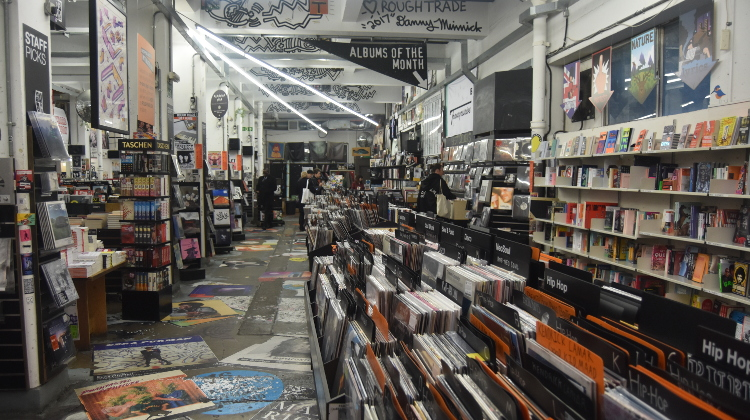
When I wrote my history of Denmark Street – Denmark Street: London’s Street Of Sound – I delivered what some felt was an overly optimistic conclusion. This commercial makeover might not be all bad, I said, citing one example: “Might Denmark Street even finally get a record shop like…. the new Rough Trade hidden inside a clothe’s shop… in west Soho?”
And so it has come to pass with the news that Rough Trade will be taking a lease at No 24, the former HQ of Noel Gay Music. This will be the first record shop for the street, which has been home to every other business related to music over the past 100-plus years but, as far as I could tell, never had a record shop.
While most observers painted the street’s future in apocalyptic terms seeing only a complete obliteration of history and tradition by evil developers, I was cautiously upbeat. Of course, when the scaffolding was removed Denmark Street would not be the same as it had been, but the history of the street had always been one of adaptation, as the shops and businesses that populated Denmark Street moved with the changing rhythms of the music industry. The publishers of the 20s and 30s had given way to the bands and managers of the 60s and 70s, who were then replaced by the guitar-purchasing amateurs of the 80s and 90s. Things change. They have to.
Music today occupies a different, less culturally vital role, but it’s still big business and Rough Trade’s stock of expensive coloured vinyl and related merch will be exactly what a younger audience is looking for. Add the continued survival of the instrument shops and the excellent work being done round the corner at Meanwhile where a new 500-capacity grassroots venue is taking shape, and you have a recipe for something genuinely interesting. The next step is improved programming at the developers own two venues, Here and The Lower Third, neither of which have really managed to take full advantage of their location.
This feels like something close to a homecoming for Rough Trade, whose old Covent Garden store was a favourite haunt of mine in the 1990s – something I wrote about here. But let’s not wallow in nostalgia. This isn’t about me. As I wrote in my book, “Denmark Street’s story is not done yet and there is still the possibility that future generations will visit Tin Pan Alley and leave with treasured memories of their own.”
No 4 Denmark Street could be the most important single address on Tin Pan Alley. It’s housed Regent Sound, the studio where the Rolling Stones recorded their debut album, the Helter Skelter bookshop that specialised in books about music, and is now home to Regent Sounds, London’s best guitar shop. Other residents include Johnny Dankworth and Essex Music, publishers of the Rolling Stones among others. There might even be a connection to the Krays.
I will be giving a talk about the general history of Denmark Street amid the Fenders at No 4 on Friday December 15 at 7.30pm, and then signing copies of the second edition of Denmark Street: London’s Street Sound. Crispin Weir, who owns Regent Sounds, will be talking about the history of No 4 in particular, having done extensive research into the building over the years. It should be a great event for anybody who loves music, books, history and guitars. Hope to see you there.
Denmark Street talk – at No 4 Denmark Street, WC1, on Dec 15, 7.30pm.
This was originally published by the Canal & River Trust’s Waterfront newsletter in 2016.
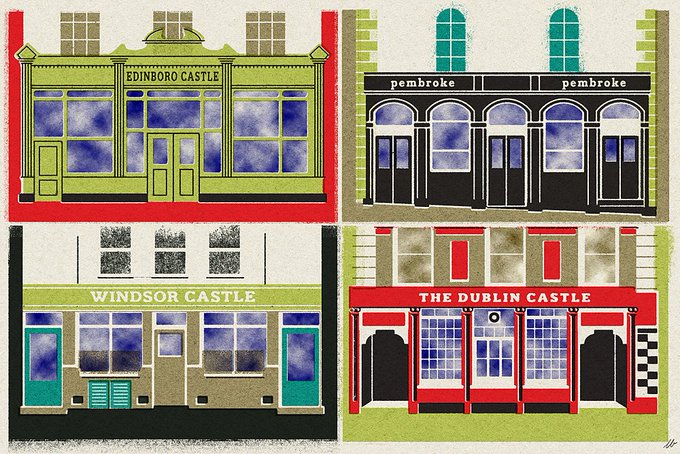
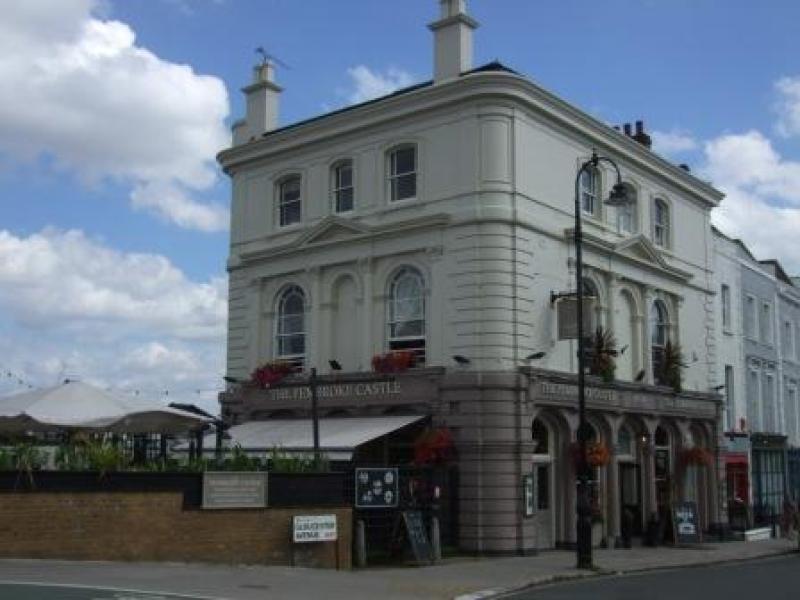
It was while working on Time Out’s annual pub guide in around 2000 that I heard the tale of the Camden castles. A reviewer claimed that there were once four Camden pubs with castle in their name – the Edinboro, Windsor, Dublin and Pembroke – and these had originally been built for navvies digging Regent’s Canal. The gist was that each national group – Scots, English, Irish, Welsh – was assigned a pub to keep them happy, or more precisely to stop them from scrapping with one another. It’s now found all over the internet, with variations. Sometimes, the Caernarvon Castle is included, and often they are said to have been built for the later railway navvies.
Original illustration by Leonie Bos via Paul Pensom.
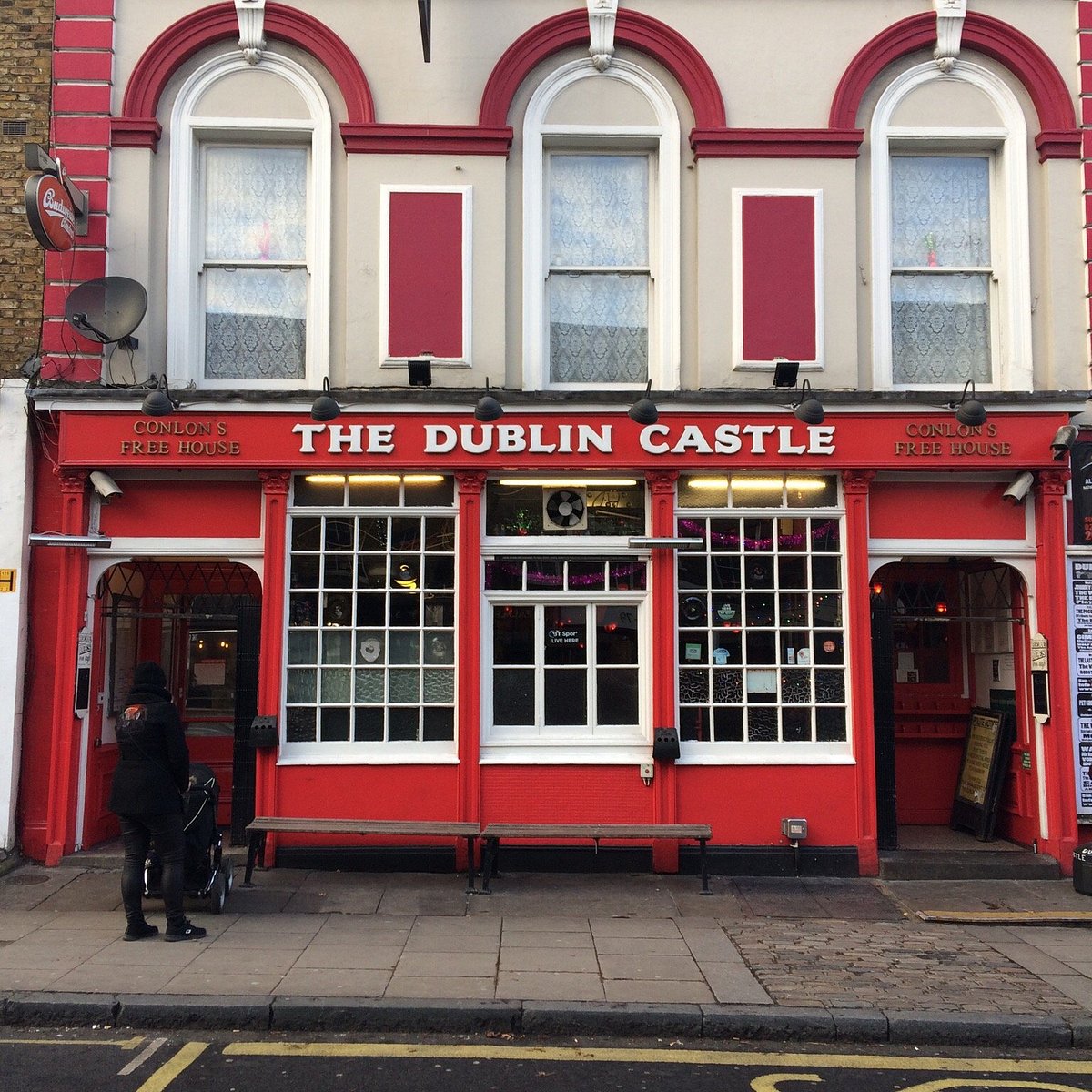
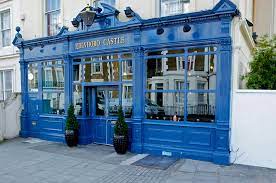
It’s a great yarn, but if it seems too good to be true, it’s because it is. The theory is carefully taken apart in the November 2014 newsletter of the Camden History Society by David Hayes who points out that the pubs weren’t built at the same time but “gradually appeared over a period of 130 years”. The Dublin Castle on Parkway, now a music venue, is the oldest. It featured in rates books in 1821 and may just have been frequented by Irish navvies, as the canal was completed in 1820. But next was the Edinboro Castle on Mornington Terrace, which opened in 1839, two years after the railway line to Euston. Not only did this open too late, it had facilities – a tea garden and library – aimed at an upmarket clientele. The Pembroke Castle in Primrose Hill opened in the late 1860s and was probably named after its address – 1 Pembroke Terrace – while the Windsor Castle on Parkway was an off licence until 1953, when it reopened as a pub. It’s now a restaurant. As for the Caernarvon, this originally opened as the Pickford Arms – named after a nearby depot – changing its name in around 1870, possibly to join the trend, as Camden pubs became synonymous with castles.
Where then did this rumour came from? To seek an answer, I turned to In Camden Town by David Thomson. This is a diary covering a year in Camden in 1980, combining social history and personal reminiscences. Thomson spends much of his time idling with locals in Camden pubs – the Windsor, Edinboro and Dublin Castle all feature – and he also writes about the building of the canals. However, he never brings the two together, either to spread or dispel the rumour, by saying his favourite pubs were built for navvies. That suggests the story had not yet been formulated.
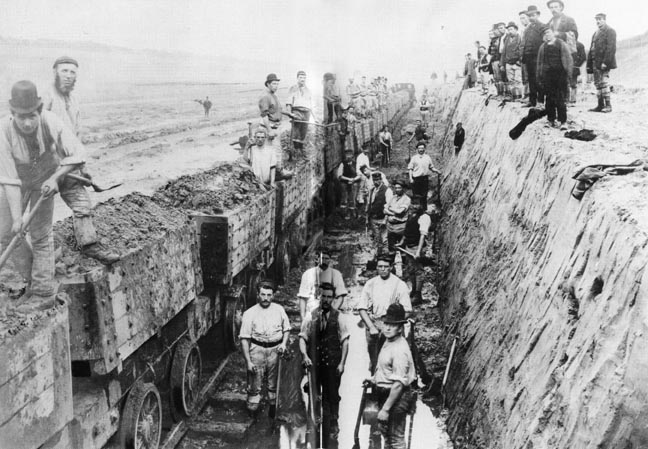
Of the canal navvies, he writes that “it is difficult to find out much about the… homeless thousands of men who carved the channel out by hand”, noting later that “public inquiries… showed their food, shelter and conditions of work were as wretched as those of the railway navvies later.” This was a dangerous and exhausting life. One accident near Camden in August 1813 saw a cutting collapse, burying a dozen men, several of whom died. “A navvy’s life was less valuable than a slave’s”, says Thomson, who says navvies were “like an invading army but without discipline, tents, billeting officer or commissariat.” Many were Irish and spoke no English. “‘They use only their Gaelic tongue,’ wrote one engineer. ‘And it’s by sign we direct them and thus they have little traffic with the English and keep them apart.’”
Of the railway navvies, Thomson writes. “Navvies were reckless in their leisure. They came and went to the next job in hordes, shared hardships and pleasures peculiar to their homeless life, helped each other in adversity, had a strong sense of justice, were loyal to the gang and to fair employers, and fiercely violent against those who cheated them of food or pay.” The navvies had their own traditions, including “broomstick weddings” – a marriage ceremony described thus in 1846: “It consists of the couple jumping over a broomstick in the presence of a room full of men, met to drink upon the occasion, and the couple were put to bed at once in the same room.”
Navvies were perceived to be heavy drinkers and sporadically violent. At a ceremony in Camden’s Cumberland Basin in 1816 to mark the opening of one section of Regent’s Canal, the navvies “were presented with several hogsheads of beer. Plenty of quarts and pint pots were provided, but not finding these large enough, many held out hats for a full up and drank copious draughts from those.” There were occasional fights – most notably between canal workers in Sampford Peverell in 1811 and Barrow-Upon-Soar in 1794 – as there was among railway workers in Camden in 1846 when a riot broke out between English and Irish labourers at the Round House that lasted several hours and left many injured.
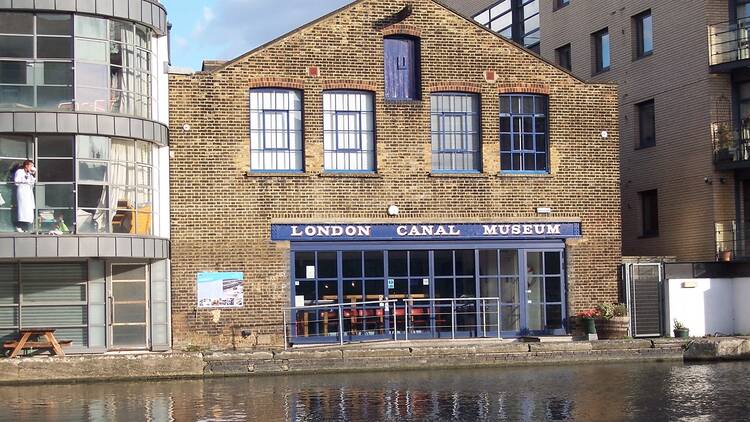
A trip to the Canal Museum in King’s Cross brought more information from The Canal Builders by Anthony Burton. The canal navigators were, he writes, “strangers of uncertain origin” who carved canals the length and breadth of the country using spade and barrow, experience and muscle. Again, he notes how little trace they left on the printed record, as they became “such an accepted part of the landscape that writers and travellers rarely felt it worthy of mention”.
Originally made up of part-time agricultural workers from the English and Welsh farms, by 1795 there were an estimated 50,000 navvies working on the canals, “a mixture of English workers… and a specialised work force from Scotland and Ireland, specifically to work on the canals.” The Irish and Scots were extremely poor and these “roving bands of migrant workers” were much feared, described as “banditti… the terror of the surrounding country” in 1839.
And what of their living conditions? These sound uncannily like that of migrant workers today. Burton says some were encouraged to lodge in the towns in which they worked to defuse some of the fear and friction caused by so many unfamiliar men living close together but most lived in jerry-built temporary accommodation, travelling encampments of 600 or more, with navvies living in “a turf hovel” and subsiding on “dull plain food”. Some canal owners discussed improving conditions, raising places for workers to eat and drink, but only in the form of tents or booths. Many were paid in tokens that could only be redeemed at certain stores, invariably those owned by the canal owners. Would four brick pubs have been constructed for such poorly treated, poorly regarded men who never settled in a single place for long? Not a chance.
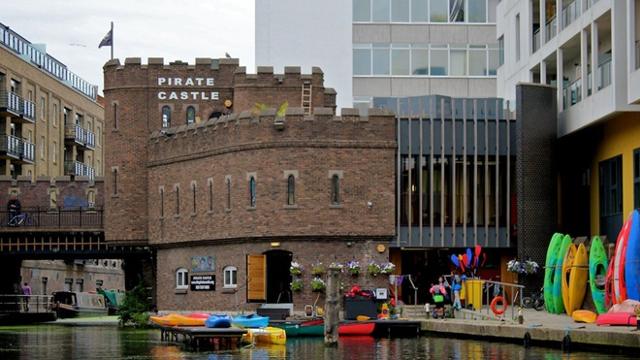
Camden’s Pirate Castle youth club – also not a real castle
A photograph in Michael Ware’s A Canalside Camera shows a group of navvies, dressed in rags, surly and exhausted. The navvies had a terrible reputation, but Burton is sympathetic. “Take thousands of poor, uneducated men, remove them from home and family, send them out to sweat away at hard, dirty and dangerous work, and you cannot be surprised if the end result is a gang of men who frequently find their repose in outbursts of drunkenness and fighting.”
Here it is apparent how – if not when – the story of the Camden castles was formed. Canal navvies would have been prominent in Camden during the first half of the 19th century. They were often drawn from the poorest Irish and Scottish labourers, bolstered by English and Welsh workers. Attempts were made to keep the disparate national groups apart as they were known to fight with each other and the public. They were also famed for consuming heaps of ale, traditions later continued manfully by the railway navvies, who enjoyed a terrific tear up in the centre of Camden in 1846. And so, from these disparate truths, a cohesive myth was born, spun by some enterprising soul with a rich imagination, possibly even a lubricated barfly, enjoying the continuing hospitality of one of Camden’s many, but entirely coincidental, castles.
The Pembroke Castle, Edinboro Castle and Dublin Castle can all be found around Camden Town. The London Canal Museum is at 12-13 New Wharf Road, N1 9RT.
The reopening of Battersea Power Station last week drew a lot of publicity, much of which summarised the contents of Up In Smoke, my book on the power station, while sanitising most of the politics.
The reason I wrote the book was because I felt that much of what has happened to modern London – indeed, modern England – could be located within the bricks of the power station.
Battersea was always a symbol of prevailing trends and it still is today – from industrial powerhouse to decrepit ruin, reimagined as a retail experience for the ultra wealthy. Here is a landmark piece of British architecture on a patch of prime central London once owned by the British state but sold for a pittance to chaotic private enterprise only to end up in the hands of another country’s state pension fund.
If that doesn’t highlight the relationship between the short-sightedness and failure of imagination of privatisation and our current economic situation, where just about every British asset seems to be owned by other countries, I’m not sure what does.
When writing the book, I found one of the most honest interviews to be with Sir David Roche, the power station’s overlooked first developer. Sir David came on the scene in 1983 after a distant relative saw a competition in the Times inviting applicants with ideas to redevelop the power station. Roche’s relative, an architect, wanted to build a science-theme park but Roche went along with it but privately thought that was a daft idea.
“To me,” he said. “It was a shopping centre.”
Roche’s secret plan was to come up with a design that had a few rides in prominent places in and around the power station, while filling most of the space with shops. “We’d win the competition on the basis it was a theme park as that is jolly nice and makes people comfortable and exciting. But to make money it had to be a retail destination.”
As cynical as he was, Roche has proved to be completely correct, it’s just taken 40 years for everybody to admit it. The problem at the time was that Tory-controlled Wandsworth didn’t want to build shops because they didn’t want to threaten Clapham Junction town centre, just as they didn’t want to build houses because they didn’t think people would buy them. The fact there was no other viable use of the power station – an art gallery is a lovely idea but it’s too damn big – meant developers were forced to conceive completely unpractical uses for decades. That only changed when Wandsworth admitted that okay, maybe shops and houses were a good idea after all – but only for really rich people. By then, most of the developers either went bankrupt or sold to people who would eventually go bankrupt.
Roche was one of the latter. To make the theme park idea work he needed somebody with experience and brought on board John Broome, the owner of Alton Towers. Broome was even more cynical than Roche and outmaneuvered his rival to take control of the consortium, paying Roche a tidy sum to walk away – before going bankrupt trying to achieve the impossible.
That made Roche the first of several developers to pocket a tidy profit without have done all that much to earn it.
“It was mega bullshit by lots of people including me,” he admitted quite cheerfully. “But the problem with bullshit is it can sometimes work but when it doesn’t the whole thing falls apart.”
Welcome to Britain 2022. We hope you enjoy your stay.
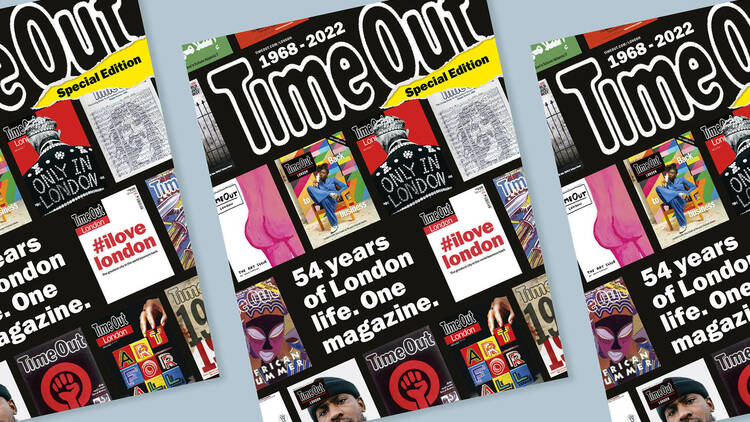
Time Out ceased publication – in physical terms at least – a few weeks ago. However, there is a special one-off final issue on the street today, which looks at the history of London over the past 54 years through the prism of the magazine.
I feel very privileged to have been part of Time Out’s story, so was delighted to be asked to contribute to this issue.
It’s a real souvenir edition, so grab one if you can. You can also access it online here.
The most depressing thing about Paul Talling’s new book, London’s Lost Music Venues, is that this is the second volume. The first volume featured on club-sized venues, including the likes of the Marquee, 12 Bar, Bull & Gate and the Cartoon in Croydon – there’s a full list here – while volume two takes in some of the larger theatres as well as smaller clubs that didn’t feature in the first volume and others that have closed since it was published – the list is here.
Talling is the creator of Derelict London, which was one of the great early London blogs and remains popular today. It features photographs of London buildings that the bulldozers had left behind: abandoned houses and factories, decrepit churches, empty shops and forgotten cinemas. There was something about this skeletal remains – boarded up doors, faded graffiti, floor strewn with rubbish, ivy and buddleia sprouting through the brickwork – that drew people’s attention. A couple of books followed, as did walking tours; Paul writes about the history of the blog here.
It’s always amazing to see how rapidly a building can descend into ruin once it’s left alone. The rot might take a while to set in, but as soon as it does the decline is fast – it literally seems to decompose before your eyes. Most of the venues in London’s Lost Music Venues haven’t quite reached that point however; they have either been demolished outright or given different uses. As well as great London venues such as the Astoria, Earls Court, and Borderline, there are the two big music shops at either end of Oxford Street, HMV and Virgin, both of which hosted in-store performances.
I’ve often pondered the absence of theatre-sized venues in central London since the demise of the Astoria as I knew the likes of the Lyceum and the Saville – although I’d never clocked that the Saville was located in what is now the rather dismal Odeon Covent Garden on the deadest part of Shaftesbury Avenue. But it’s some of the outer London venues that really resonate, such as Hobbit’s Garden, a club located in William Morris House in Wimbledon that hosted Roxy Music and Genesis before switching to hardcore punk in the late 80s, or the Acid Palace in Uxbridge, where Uriah Heep, Wishbone Ash and Audience all played in thee later 60s.
Then there are all the decent-sized venues – the ballrooms, local theatres and cinemas – that hosted live music through much of the 60s and 70s. Think of the Assembly Rooms in Surbiton, which hosted Black Sabbath and The Fall, or the Orchid Ballroom in Purley, where The Who, Small Faces, Jimi Hendrix, Stevie Wonder and Slade all played at some time. Such spaces are now almost impossible to conceive. Sadly, a third volume feels almost inevitable.






 The Great Wen