I’ve written the cover story for the latest issue of Uncut about a couple of days I spent in San Francisco with Paul Weller in October.
I enjoyed the incongruous location – Weller was staying in the Japanese district and played a country music festival at Golden Gate Park and a show at hippie landmark Fillmore West – as well as the chance to spend time backstage with Weller and his band unaccompanied by any label management or press officer.
Weller discussed his forthcoming projects, including an avant-garde film soundtrack he’s composed, and also reminisced about early tours of America with The Jam. On one occasion, he said, the band were asked to celebrate their London credentials by posing outside an English pub in Santa Monica with a double decker bus.
I also got the chance to explore San Francisco – where I discovered ghost signs, parrots, a punk-themed restaurant called The Brixton, coyote warnings and a complete absence of cranes, billboards, pneumatic drills and the general intensive building work that blights daily life for so many Londoners.
There has been a hole in the centre of Herne Hill since August 2013. That’s when a water main flooded Half Moon Lane closing most of the businesses. All eventually reopened (although some subsequently closed again, defeated by the insurance process) except what’s arguably the most important one: the Half Moon pub, a glorious gargantuan neo-Gothic late Victorian Grade II-listed pub that should be Herne Hill’s crown jewel but has instead been allowed to fester for more than two years, to the lasting shame of landlords Dulwich Estate. This is a fine London pub, which opened in 1896 – a pub has been on the site since the 17th-century – and has featured in graphic novels by Alan Moore, hosted gigs by U2 and Frank Sinatra, comedy shows by Eddie Izzard, and whose former drinkers include Dylan Thomas, who took the name of Under Milk Wood from the nearby Milkwood Road. Now, it’s dead, boarded up, dilapidated and rotting from within.
So how has this come to pass?
Locally, rumour and counter-rumour have swirled about its fate. The chief sticking point is that there are several floors above the pub – these once contained boxing a gym where I spent an exhausting three minutes being chased round the ring by a former middleweight champion – that represent a huge financial opportunity. Attempts to convert them into residential flats went nowhere and it’s said that Dulwich Estate, who look after the interests of the wealthy nearby private schools as well as a couple of other pubs, wish to turn it into some kind of boutique hotel as they are doing with the Crown and Greyhound in Dulwich Village.
This would almost certainly spell the end of live music at the large function room attached to the pub. This 200-capacity room has a surprisingly rich history as a London venue, as I discovered when talking to Peter Blair, who is leading the Save The Half Moon campaign with the Herne Hill Forum, fed up of the secrecy, silence and endless rumours.
Last week, Blair submitted to Southwark papers that would see the Half Moon listed as an Asset of Community Value that focus on its history as a music venue. He believes that while the pub will eventually reopen – because of the listing status, Dulwich Estate can’t really do anything else with the handsome ground floor bars – the live music component needs to be understood, celebrated and protected. The closure of London’s live venues has reached such epidemic proportions that even the mayor wants to do something about it.
“To have one of south London’s few independent live music venues shut in this way is terrible,” he says. “It’s the flagship of Herne Hill and it just sits there empty on the corner.”
Campaigners have been exploring the pub’s history and have discovered it was a crucible for London’s live blues scenes in the 70s – sessions featured an array of musical talent from the most popular bands of the era including members of the Jeff Beck Band, Rory Gallagher band, Thin Lizzy, and 7th Wave. An account of its history can be seen in this film.
It remained a music venue for the next four decades. In 1980, U2 played an early gig. In the 90s, the house PA was owned by Alabama 3 and gigs included Big Joe Turner and Geno Washington. More recently it hosted Devon Allman from The Allman Brothers and guitarist Albert Lee.
“It’s been a live music venue since the 60s and we can’t lose that live music function,” says Blair. “It has such a great history and was a great venue. Everybody I’ve spoken to says it was such a special place to play. This is a local community pub but it’s also much more than that.”
Damn straight: Leslie Nielsen even filmed a commercial in there.
If the campaigners win their bid to get the pub listed as an Asset Of Community Value, it will mean Dulwich Estate will have to consult the Herne Hill Forum over their plans, finally bringing them out into the open. “Out understanding at this point is that they wish to use the function room as a restaurant,” says Blair. “We want them to explain their plans in full, and to ensure live music is a key component of the new pub, whenever it opens. If it is converted as a hotel, how will that effect the music venue? We have no intention of making it unviable but we want to know what it will be when it opens.” The campaigners have no interest in purchasing the venue, which would cost a fortune but have been in discussion with the nearby Ivy House, who used Asset of Community Value status to purchase their local pub from developers.
There’s also the question of when it reopens. While Dulwich Estate is said to be in negotiations with several pub chains – “everybody you speak to has a different name” – it’s unlikely to open in the next 12 months. Since it closed, no restoration has taken place at all and it’s said the pub, which was at the very centre of the flood and thus under water for some time, is in very poor condition. It seems astonishing that a listed venue can be left to rot by a landlord that is supposed to have local interests at heart, especially when one presumes there is insurance money on hand to fix the damage.
It’s a sad state of affairs for what should be a south London landmark.
To keep up to date with the campaign, see the Facebook group.
I recently interviewed the four original – and current – members of Killing Joke for a feature in Uncut. I met them one-by-one in and around Lancaster Gate and we discussed their extraordinary career, from Crowley-inspired magical rituals in Battersea to police raids in Notting Hill squats and recording sessions inside the Great Pyramid.
We also discussed one of their first major gigs, when they headlined a CND show at Trafalgar Square.
As guitarist Kevin “Geordie” Walker recalled: “My favourite gig was the CND rally at Trafalgar Square. 80,000 people and us playing on the steps of the National Gallery in 1980. Jaz told them ‘Margaret Thatcher has bought all these cruise missiles and all you can do is stand there with a fucking placard. You dserve what you are going to get. This one’s called “Wardance”.’ It kicked off. It was killer. We never got invited back and I’ve got my suspicion that’s why we never did Glastonbury cos it’s the same hippie crowd and they remember.”
You can listen to that performance here.
I’ve interviewed several bands over the years for Uncut, from Buzzcocks and Gun Club to Soundgarden and The Damned. I’ve never met any quite like Killing Joke.
I recently rediscovered this 2005 interview with Julian Cope from Time Out. It took place over the phone and my main recollection is that Cope went to the toilet halfway through, with the sound of his piss hitting the urinal adding a certain sonic tang to the transcription.
They say that every boy needs a hobby; over the years Julian Cope has had plenty. At first it was taking LSD on ‘Top Of The Tops’ and talking about Scott Walker. Later it was sitting beneath a tortoise shell and listening to krautrock. Now it’s playing monolithic sludge rock riffs and visiting ancient monuments. There’s no pattern, it’s just how things worked out.
But before we get into one of those ‘isn’t Julian Cope crazy?!’ mindsets, let’s clear one thing up: Cope isn’t a whacked-out, moondog, schizoid beam-chaser, or even a ga-ga, freaked-up, attention-seeking acid-eater, he’s just a lot more interesting (and, crucially, interested) than most rock stars. Let the man himself explain, as he prepares for his Friday night gig at the Royal Festival Hall: ‘Playing the role of Julian Cope means I can hide behind what Julian Cope is supposed to be. People always say, “You’re a lot more normal than I thought you would be”, and I say, “Yeah, but if I was as weird as you thought, I wouldn’t be able to achieve fucking anything”. The whole point is that it’s the subject matter that’s weird, not the person behind it.’
These days such achievements are often literary – particularly best-selling books on standing stones (The Modern Antiquarian and The Megalithic European). But Cope continues to record. His latest is Citizen Cain’d, an epic, guitar-shredding study of alienation and monotheism that is heavily informed by travels in Iran and stupidly heavy rock ’n’ roll.
‘We’ve all got an inner moron,’ he explains. ‘And rock ’n’ roll entertains your inner moron, but that doesn’t mean it can’t be smart as well. I thought it would be great to take garage rock and fuse it with genuinely amazing guitar. American punk bands always struck me as being better because they were great musicians playing down. One of the reasons I work with Doggen is that he’s one of the best guitarists I’ve ever heard. He’s amazing. But it’s context, I never put him in a good context. I’m never going to make him look like Eddie Van Halen if he’s got to come out of the swamp.’
Talking of swamp, support on Friday is from San Francisco’s Comets On Fire, quality purveyors of cosmic sludge, who are playing their first UK show. Cope has been a fan for a while. ‘The great thing about Comets is they very much know where they’re coming from. When I first got in touch with Ethan Miller (Comets main guy) I was saying, “Man, you’re totally Roky Erickson meets John Fogerty with Hawkwind backing”, and he said “Shit man, in my dreams that’s where we are”. But it’s not in their dreams, they’re there already.’
As he enthuses about favourite bands like Speed Glue And Shinky (‘I’m a fucking cunt for a singing drummer’) and Monoshock (‘They’re really vile. Like a sewer Stooges’), it’s clear that Cope is totally into this stuff. And when Cope gets into something, it normally gets into print. ‘I’m writing a book that’s just called ‘Rock ‘N’ Roll’, but it has the most portentous subtitle in the world. I can’t even remember it. On the back we’re going to have a massive question mark and underneath say “Who will entertain your moron?”’
Will this be written in his trademark stream-of-consciousness style? ‘Actually, I’m probably no more stream of consciousness than Robert Graves, I’m just fucking great at giving that impression. One thing I do is write what I want to say, then I go into an internet translator and turn it into German, turn the German into French and then the French back into English, and then pick out the nuggets. It ends up sounding like Faust lyrics. I’m happy that secret being leaked: the people who hear it and don’t take it seriously won’t learn anything, and the people that know wisdom is everywhere will take it on board and start doing it. Part of my job is to reveal other ways. I’m trying to be a facilitator rather than somebody who hides behind a cloak of mystery.’
And Friday? ‘Expect generic dark psychedelia. I’m really punishing the cliché. Get there early because we’re going to play two sets, one as people arrive, then after the Comets we’ll come back and do that monolithic sludge. It’s going to be a real vibe. Healthy amounts of mushrooms will be good and women should dress for the occasion.’
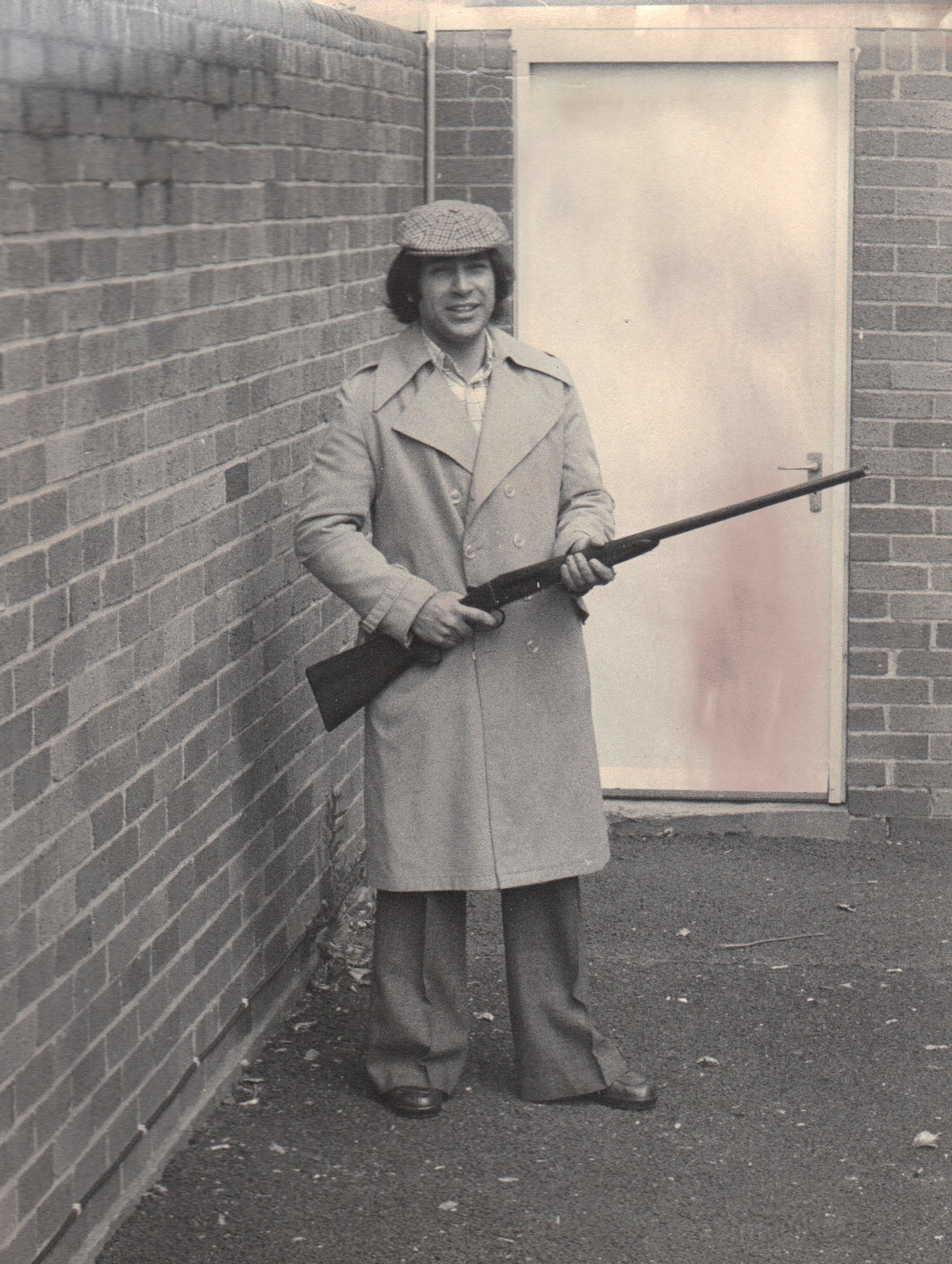
This is my mum’s brother, Wilfred Camenzuli. Born in Alexandria, Egypt and raised in Tooting, south London.
Back then, everybody in south London carried a shooter.
Wilf was always taking pictures. Here’s one of my mum and dad, looking unbearably glamorous.
He once made me and my sister watch a horror film so he could get a photograph of us cowering.
And here’s another of me and my sister, this time feeding pigeons in Trafalgar Square. I wonder how many thousands of similar photographs exist in photo albums around the world?
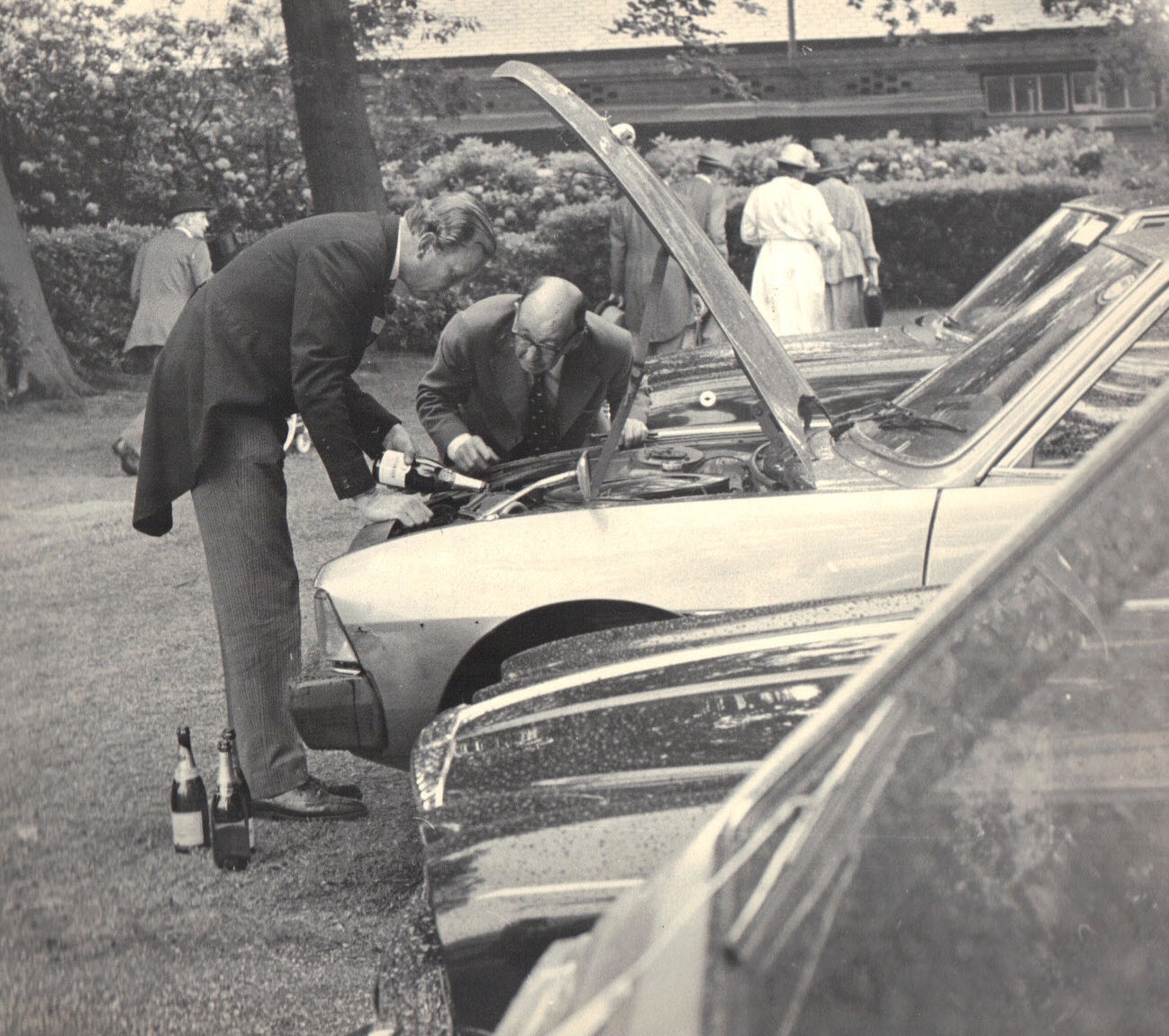
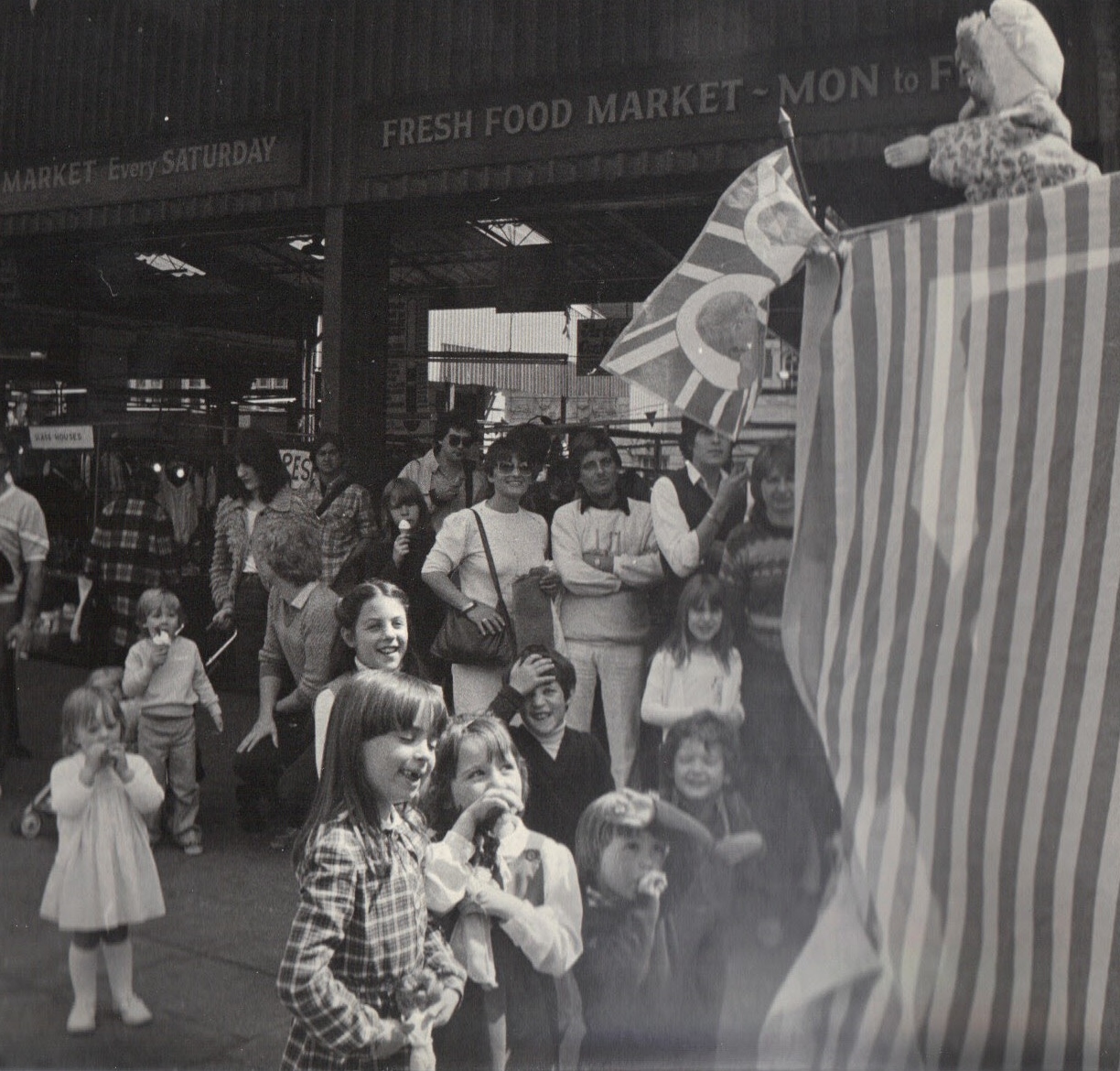
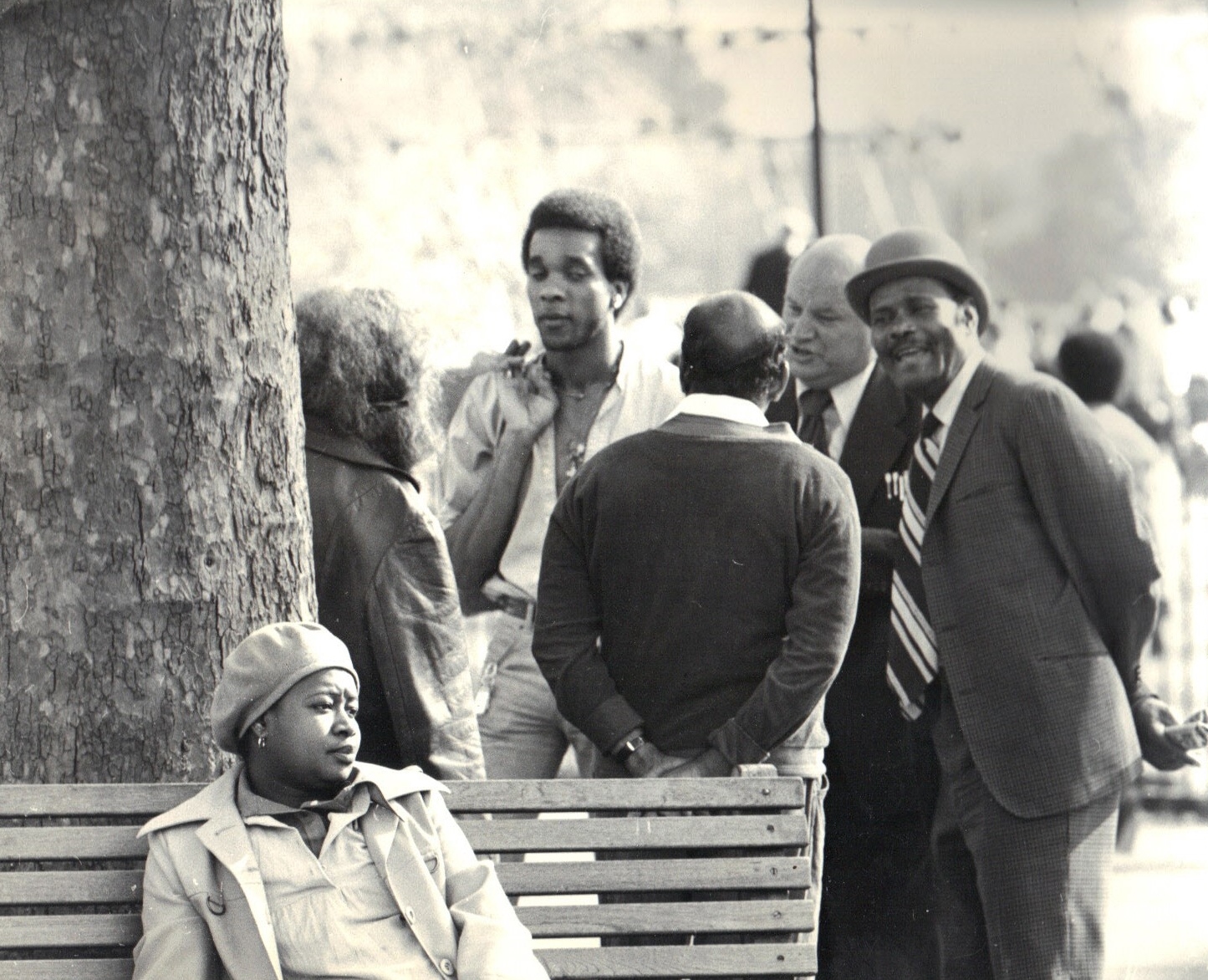
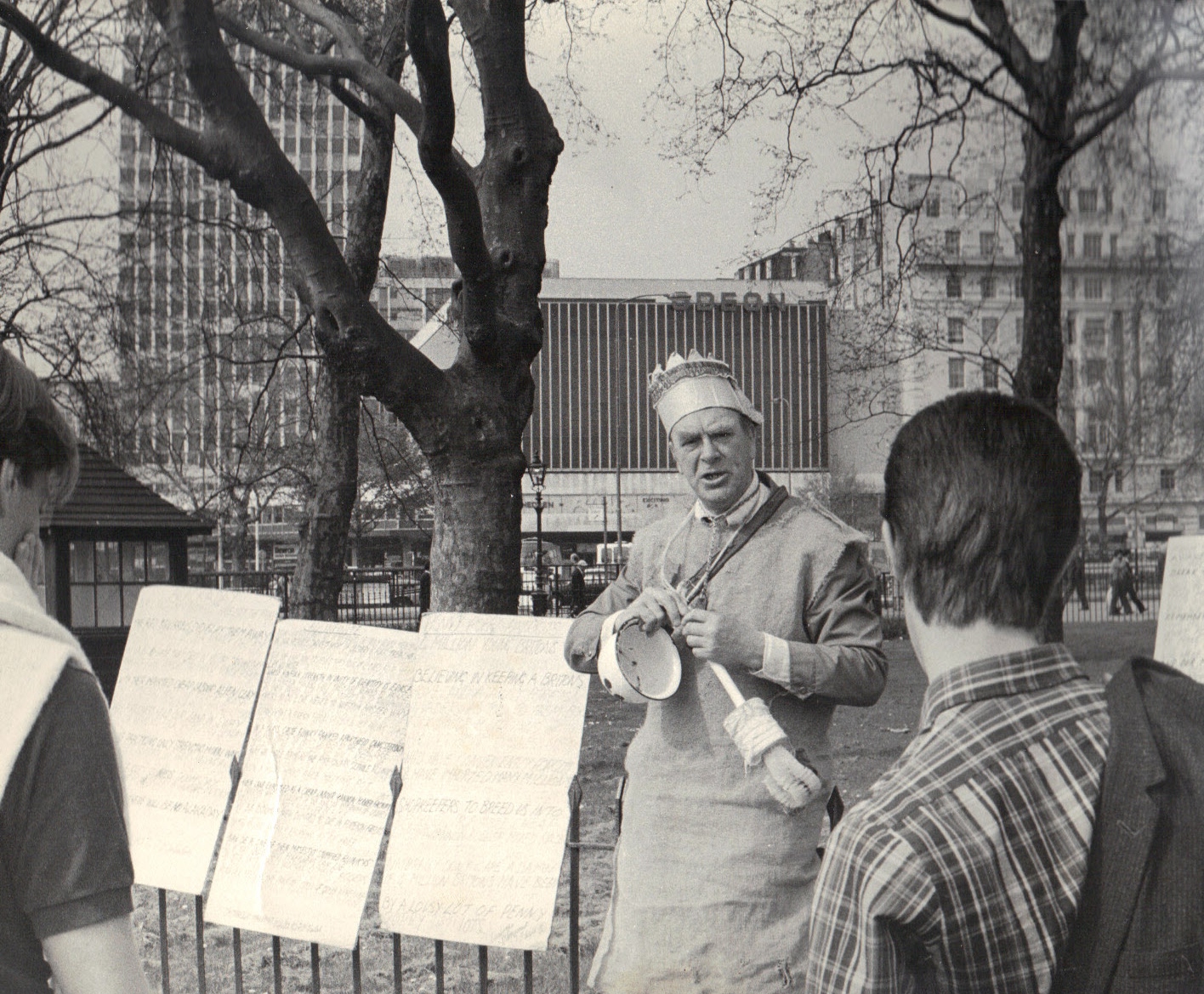
Wilf also took dozens of photographs of London in the 1970s and early 1980s. I always thought he had a great eye. Here are some of the best.
Battersea Power Station, 1975.
Gamblers/businessman, back office, Old Kent Road.
Fixing a car with champagne, Royal Ascot.
The finishing line, Epsom Derby.
Punch & Judy, Covent Garden.
Street performers, Covent Garden.
Street people, Covent Garden.
Speakers Corner.
Speakers Corner.
Speakers Corner.
Speakers Corner.
Speakers Corner.
Speakers Corner.
Anthony Quinn and Jacqueline Bisset filming The Greek Tycoon, Leicester Square.
I’ve often thought that when William Rees-Mogg wrote his famous editorial in the wake of the Redlands court case, the butterfly was not so much Mick Jagger or Keith Richards but the third party in that sorry affair. Art dealer Robert Fraser was convicted alongside the Rolling Stones for possession, but while Richards and Jagger were spared prison partly thanks to the Times editorial, Fraser pleaded guilt and was sent to Wormwood Scrubs. It’s difficult now to think of Richards and Jagger as butterflies; Fraser was the one that got left behind to get broken.
Some of letters and telegrams Fraser received and sent while during his four months at the Scrubs feature in the Pace Gallery’s superb exhibition, A Strong Sweet Smell Of Incense, which runs until 28th March. The title comes from Richard Hamilton’s collage, created as a response to the Redlands bust.
It is displayed alongside one of Hamilton’s other famous creations in his Swingeing London series, which shows Fraser and Jagger being led away from court.
Hamilton was one of several artists that Fraser promoted at his Duke Street gallery in the 1960s, and many of them feature in the show. Here there are works by Andy Warhol, Jim Dine, Eduardo Paolozzi, Claes Oldenberg, Clive Barker, Gerhard Richter, Bridget Riley and Peter Blake, as well as later pieces by Francis Bacon, Keith Haring and Jean-Michel Basquiat.
Fraser had a great eye and a sense of daring, and that helped attract the stars. Fraser’s gallery became a centre for the cool kids of the counterculture, attracting pop stars, actors and film directors as well as perennially lurking scene figures like Keith Anger. Paul McCartney described Fraser as “one of the most influential people in the London sixties scenes” and The Beatles feature in the exhibition, most wonderfully in the shape of the drumskin from Sgt Pepper’s Lonely Hearts Club Band, which Peter Blake created under Fraser’s direction. Fraser was the catalyst for much that happened in this mid-60s meeting of art and pop.
Fraser was nicknamed Groovy Bob and a sense of the fluid interchange of ideas that resulted from these encounters can be seen in a long display cabinet, arranged with artful haphazardness and crammed with personal letters, memos, books, flyers and photographs. There’s no caption for this wonderful ephemera, but rich pickings for those who take the time to drink it in.
I was fascinated by a 1968 letter Fraser wrote to Richard Lock at Simon & Schuster proposing a biography of the Rolling Stones, which “would be satirical and totally fictional”. It was seen as a suitably Stonesy response to Hunter Davies’s recently published and “totally humourless” Beatles biography. Sadly, this came to nothing.I also liked a letter written by the producer of Performance, confirming that Anita Pallenberg would be renting Fraser’s flat in Mount Street for the eight-week duration of the shoot, at £30 a week. This was presented alongside a page of the script from Performance. Fraser’s spirit is essential to the milieu and mystery around Performance. He had known Pallenberg since 1961, and his interest in art, drugs and bohemia was infectious. Pallenberg later recalled that around Fraser gathered “a fascinating group of people who were on the cutting edge of what was happening in high society, great cultural evenings, wonderful intellectual talk, plenty of hash and marijuana and speed and LSD.” Marianne Faithfull’s recollection is a more withering English take on the same deal: “Desultory intellectual chit chat, drugs, hip aristocrats, languid dilettantes and high naughtiness.”
The weeks that Pallenberg, with boyfriend Keith Richards, stayed at Fraser’s flat, would be pivotal to the unfolding psychosexual drama surrounding the Stones. Fraser was using heroin (his opium pipe is on display), and soon turned on Keith, who was otherwise writing Let It Bleed and brooding about the shenanigans Pallenberg and Jagger were getting up to while making the film. The ensuing atmosphere of jealousy, betrayal spiced by heavy drug use would hang round the Stones for decades. As Richards spiteful autobiography shows, they still haven’t entirely gone away.
Also floating around the scene was another arch mischief-maker, Kenneth Anger, and a couple of his missives to Fraser can be found in the cabinet. Best of these is probably the telegram requesting £60 which concludes “GROOVING ON MAGIC CURRENT ONE TRILLION VOLTS AFTER AUSPICIOUS LUCIFER HOUSE BOAT LOVE IS THE LAW”. Indeed.
But it’s the Stones with whom Fraser became most closely associated, for better or for worse. No matter how it ended, I’ve always loved a pair of photographs Michael Cooper took of the Stones with Fraser in 1966 and 1967 in Morocco, a location that is almost as emblematic of the 1960s as London itself, lingering even in the set design of that orgiastic lightning rod Performance. Here is the calm before the storm, before the butterfly is broken.
I have a piece about Mama Cass Elliot in the current issue of Uncut. One area I didn’t have space to cover was Cass’s arrest in London in 1967 when The Mamas & The Papas were travelling by boat to England to play a show at the Albert Hall. They had arrived at Southampton when they were told police were waiting with a warrant for Elliot’s arrest. The band frantically tried to destroy their stash of weed and then went on to the dock where they were supposed to meet label boss Lou Adler and his friend Andrew Loog Oldham. They were instead greeted by six of the Met’s finest, who bundled Elliot into a police car and drove her to Scotland Yard.
Elliot was stripsearched and questioned, then denied bail and held overnight. The police said the charges related to a stay in London six months previously at Queen’s Gate Terrace, when she had absconded with an unpaid bill and several towels. Outside the police station, The Mamas & The Papas – Denny Doherty, John Phillips and Michelle Phillips – were joined by Scott McKenzie, brandishing FREE MAMA CASS placards while they waited for Elliot’s release. The Albert Hall concert was cancelled.
Elliot told the press she had been treated well, but not been given enough blankets. ‘Believe me,’ she said, ‘One blanket doesn’t go far round this chick.’ After a trial at West London Magistrates Court, at which no evidence was offered for the prosecution, she was released without charge and left the courtroom munching on a hash cookie that she found in her handbag. That may account for the big smiles in the photo below, taken shortly after her release.
While such heavyhanded treatment by the authorities of rock stars was fairly common at this time, it later emerged that Elliot’s arrest actually had more to do with her occasional boyfriend, Pic Dawson, who the British police believed was involved in a major drug-smuggling operation. According to Michelle Phillips, this was the only subject the police in London were really interested in.
Pic Dawson and Cass Elliot at Whisky A Go Go.Dawson, who died of a drug overdose in the 1980s, was certainly an interesting figure with connections to the underworld. Numerous rumours circulate about him partly thanks to his peripheral involvement in the Manson Family murders.
Dawson knew several of the victims – basically, he supplied them drugs – and after the murders John Phillips is said to have told the police that the bloody PIG daubed on Sharon Tate’s wall actually said PIC. The LA police were also informed that Dawson, along with another of Elliot’s drug-dealing boyfriends, Bill Doyle, had been ejected from a party at the Polanski house shortly before the murders. Dawson was subsequently arrested, questioned and cleared, as was Doyle.
These were not Elliot’s only connections with the Manson murders. Dave Mason recalls, “One of the freakiest parts was that at Cass’s I saw a lot of Abbie Folger and Wojciech Frykowski until the Manson crew slaughtered them” and she knew all the victims well. But she also knew the murderers – in his autobiography, Michael Caine of all people recalls attending a party in Hollywood with Jay Sebring and Sharon Tate, where Mama Cass introduced him to a ‘scruffy little man’. His name was Charles Manson.
While there’s no such thing as a romantic rock death, there are few as bleakly pathetic as that of Bon Scott, the AC/DC frontman who died drunk in the passenger seat of a Renault 5 outside a friend’s flat in East Dulwich, just a short distance from where I live.
I wrote about Bon Scott’s life in the current issue of Uncut, which allowed me to revisit some of the fabulous archive footage of Scott and AC/DC you can find on You Tube. The band spend much of the late 1970s based in London, where they were able to build up a large fanbase thanks to regular gigs at the Marquee. Here Scott is interviewed by Australian TV while walking through Covent Garden in a pair of the smallest shorts I’ve ever seen. I’m still not entirely sure where he produces that banana from.
A considerable amount of Scott’s charm as well as his brilliance as a vocalist is captured in this coruscating video for “Let There Be Rock”. Just watch it all the way through, and you can see how Scott worked the camera almost as well as he did the stage.
This is the Bon Scott I knew and loved, but researching the article I discovered more about Scott’s Australian life pre-AC/DC when he performed a pair of bands that were radically different from both each other and from AC/DC. Try this out for size, it’s Scott’s Perth-based teenybop 1960s act, The Valentines, singing, er, “Nick Nack Paddy Whack”. The main singer is Vince Lovegrove. Scott stands at the back next to the drummer, you can see his embarrassed grin at around 90 seconds. (The Valentines also recorded a jingle for Coca-Cola, which lifts you up when you are feeling down apparently.)
After The Valentines broke up, Scott did a complete turnabout and joined Fraternity, a bunch of Aussie hippies who lived in a commune in Adelaide and wanted to be The Band. Here he is, bearded and playing recorder, on a profoundly serious cover of “Seasons Of Change”.
No wonder, then, that he leaped at the chance to join AC/DC, and release some of his natural impish spirit. Here he is doing “I’m A Rocker” in London in 1977, the very image of the 1970s hard rock frontman and one of the best of his generation.
Scott’s “It’s A Long Way To The Top” is one of the great songs about being in a band. Scott wrote it from the heart. He knew. And that is why he could sing it like this, from the Marquee in 76.
And this is where it all ended: 67 Overhill Road, East Dulwich. How about a plaque, Southwark? It’s the least the man deserves.
‘Sure the underground was elitist: we were an elite. We were the cutting edge of ongoing bohemianism at that point.’ Mick Farren in Days In The Life by Jonathon Green
The last time I spoke to Mick Farren (May, 2013) he was waiting for the doctor to come round. He was, he told me, in pretty poor shape but welcomed our interview as it gave him something else to think about. Farren’s ill health had been known for some years, but it didn’t stop him going on stage with his old band the Deviants every now and then. It was while performing at the Borderline last night (Saturday, July 27) that he collapsed and died.
It seems crude to say that is how Mick Farren would want to go, but it’s certainly no great surprise that this vivacious ball of hair and action, the closest thing London ever came to producing an Abbie Hoffman, should die while giving it all to his great love rock and roll. (The following, and all subsequent quotes, are from my interviews with Farren.)
‘Essentially, from when I was in art school through to Joe Strummer the major communication medium of the counterculture certainly in the second half of the 1960s was rock and roll music. You start with that and everything else was peripheral to it.’
Farren’s Deviants were pre-punk noise terrorists whose self-distributed debut album, Ptooff! was one of the first records to come directly out of the London counterculture. When I spoke to Farren for Uncut about the Rolling Stones free gig at Hyde Park in 1969, I asked him whether the Deviants had wanted to play the show. He said,
‘We asked if we could play. We were vetoed, it was probably Jagger. Everybody said I wouldn’t behave myself and start rabble rousing, which was fair enough.’
I put this to Pete Jenner, who co-organised the gig, who responded.
‘Well, there was that and also the fact they were a rotten band. I really like Mick [Farren] but they were a rotten band who smashed instruments on stage. It wasn’t kick out the jams motherfucker, it was let’s have a joint and a buttercup sandwich.’
The Deviants weren’t really a rotten band, but Farren certainly saw them as London’s answer to the MC5. He was heavily active in the political end of the counterculture, forming the London branch of John Sinclair’s White Panther Party and leading the occasional putsch at the International Times when he felt it was getting too bourgeois and boring. Farren was a key figure in so much of what happened in the counterculture, running the door at UFO, writing for and editing alternative newspapers, organising free festivals while playing shows and really meaning it, man. He was fixer and a doer, a wit and sometimes a sage.
‘IT came out of the Beats – poetry, jazz and art with a bit of lefty politics. I told them this was fucked up, they weren’t talking about the weird changes going on with The Who, or where The Beatles were coming from. I’d say that with all respect to John Coltrane there’s this black geezer in the Bag O’ Nails who has long hair and plays guitar with his teeth, what are we going to do about THAT?’
His politics though, always came with a sense of fun – at one anti-war demo the Deviants played he annoyed the po-faced organisers by being more concerned with getting on stage without splitting his trousers than with espousing the cause. He was once described to me by a fellow traveler as being one of the three coolest men in London in 1967, and that made him one of the three coolest men in the entire world.
”We were always condemned as frivolous and philosophically disorganised, and the counter-accusation was they were just boring totalitarians who wanted to sing the Red Flag when we’d rather listen to Voodoo Child and smoke pot.’
When the alternative press disintegrated, Farren – like many from the underground – went on to write great pieces like this for the NME:
‘The immediate legacy of the underground papers was the NME because we all went there. They had a very profound effect on the visual effect of magazine publishing, but much more important is that the spirit of the thing is now preserved on the internet. It’s all still there, it’s just become more specialised and you have to go looking for it.’
Farren is one of the dominant figures in Jonathon Green’s essential history of the British underground, Days In The Life, and also wrote brilliantly, if unreliably, about his own activities in Give The Anarchist a Cigarette. What resonates from those books is what an unlikely fit Farren seems in the upper-middle-class world of the counterculture, which was largely run by public schoolboys and Oxbridge graduates imbued with that remarkable confidence that comes with a good education. Farren was different, his confidence was self-generated and less polite, while his art school experiences meant he ‘learned to manage chaos’. Indeed, he relished it. Take a look at the clips below if you don’t believe me.
In his own writings and when interviewed, Farren always came across as funny and incredibly sharp but there was more to it at than that. He was fundamentally, intrinsically, decent. A man without edges. As Jonathon Green told me when hearing the news of his death: ‘Of the underground ‘stars’ he seems, and always did, to have been one of the good guys.’
RIP Mick Farren. He will be missed by many.
Farren invading The Frost Show.
Farren recollecting the Grosvenor Square anti-Vietnam riot of 1968.
The BFI have just released a fantastic DVD for London fans. A London Trilogy: The Films Of Saint Etienne collects the three documentaries Saint Etienne and director Paul Kelly made between 2003 and 2007. Finisterre, What Have You Done Today Mervyn Day? and This Is Tomorrow are three fine oblique celebrations/meditations of London esoterica, soundtracked by the band and also guided philosophically by band member and London nerd Bob Stanley (who once beat me in a London quiz with his excellently named team of ringers, The London Nobody Knows, the bastard).
As ever with the BFI, the extras are also superb, including a short film about the then little-known Banksy, three eulogies to lost London cafes and a piece about Monty The Lamb, North Hendon FC’s club mascot.
My favourite of the three main features is 2005’s What Have You Done Today Mervyn Day?, which tours the Lower Lea Valley, a then almost abandoned part of London that has since been covered by the Olympic Park. In 2007, I took a tour of the valley with Kieron Tyler, an archaeologist at the Museum of London who also happens to be a regular collaborator with Stanley and Saint Etienne. Here is what we found.
I’ve often wondered where the East End begins, but never realised there was an actual border: one that’s so physical, and so weird. The River Lea (or Lee – both are acceptable) rises in Luton and flows into London at Edmonton and then, via Hackney, Stratford and Bromley-by-Bow, into the Thames. It has been the municipal boundary between Essex and Middlesex since the sixth century. ‘When you’re on the Middlesex side, you’re in the City of London, and when you’re on the Essex side, you’re east of London,’ Kieron Tyler explains helpfully. Tyler is the Museum of London archaeologist responsible for assessing the archaeological potential of the 2012 Olympic site, large swathes of which straddle the Lea Valley. As a committed Londonist, he’s become fascinated by one of the capital’s oddest landscapes.
You see, the Lea is more than just a theoretical dividing line on an administrative map, it’s a deep, wide trench gauging out a huge chunk of prime London land and bordered on either side by reclaimed marsh, Victorian rubbish heaps and industrial wasteland that physically separate the communities on either side. Look at a map if you don’t believe me. The Lea Valley boasts that ‘A-Z’ rarity, actual blank space, spotted with grey squares and circles that are precise in form but vague in utility, listed only as ‘works’, ‘depot’ or ‘warehouse’. All roads over the valley are fast and functional, crossing as quickly as possible, unwelcoming to residents. It’s a no man’s land in which few Londoners live, or ever have.
‘It’s the whole nature and character of the Lea Valley itself,’ says Tyler. ‘The area either side of the banks has acted as a buffer zone, stopping development. Before the ice age, this entire area was a water-filled valley. As the tide level changed the water become marsh with water channels snaking through it. Looking at evidence from between the end of the last ice age to the early medieval era (the eleventh century), we can see the Lea stretching from Stratford Town Centre to Hackney Wick, with marsh all around. Marsh is a problem. You can’t build on marsh. You can graze cows on it, or grow plants, but you can’t build on it. That’s why the Lea Valley itself is a buffer, wider than the river itself.’
We take the 308 bus from Stratford tube to New Spitalfields Market on the A12, a bleak block of urbanity that makes the North Circular look like the Cotswolds, and stroll down Quarter Mile Lane – a piece of gleaming new roadwork that, like a Sicilian motorway, ends abruptly, having gone nowhere – into Eastway Cycle Circuit. Buried somewhere on this meadow are the remains of Temple Mill, a thirteenth-century mill managed by the Knights Templar. The mill is one of many things lost in the mud, dumped on by successive generations who used the marsh as a rubbish tip (bits of the Euston Arch were chucked in the Lea in the 1960s), which Tyler hopes to uncover when work on the Olympics site begins.
One such buried treasure is the Lea’s first bridge. ‘Nobody knows how the Lea was first crossed,’ says Tyler. ‘The Roman London-Colchester road came up to the edge of the Lea Valley around Wick Lane and picks up on the other side, but we haven’t a clue exactly where and how they crossed.’
We do know that the focus for crossing the Lea moved south, with the construction of Stratford Langthorne Abbey in 1135, now covered by factories, railways and a sewage-pumping station. This bridge was called Queen Matilda’s Crossing after the yarn that it was built at the behest of the wife of Henry I, who almost drowned while trying to cross the old ford. It was the first stone arch bridge in Britain, and was called Bow Bridge because of its shape – a name that later lent itself to the area on the Middlesex side, Stratford-by-Bow, now shortened to Bow.
The Lea isn’t the only river in the valley. Half-a-dozen other ditches, streams and rivulets snake through it. Tyler guides me, via the doomed Eastway Cycle Circuit, to Hennikers Ditch, a medieval drainage ditch that’s little more than a hollowed-out puddle. We cut right, through dense foilage – Japanese knotweed, the most invasive plant around – and join a rarely trod path along the bank of the sluggish Channelsea River, a stream supposedly dug by King Alfred to keep the Danes from sacking London that has been dated to the eleventh century. Within minutes, we’ve gone from the concrete Ballard-scape of the A12 to an otherwordly, overgrown terrain that Tyler suggests lacks only Ray Harryhausen’s jerky dinosaurs to give it that proper prehistoric appearance. Allotments overlook the stream, and Tyler points out one tumbledown shed that his team have identified as a World War II pillbox. The Channelsea is still fulfilling its original function of defending London from invasion.
After peering through a fence that guards the new Eurostar terminal at Stratford, we head back to the A12 and cross the Lea, via torturous means (the Valley is as hard to navigate as it ever was), to wander down the weird Waterden Road, an alienating thoroughfare that features the Kokonut Groove Nite Klub, a demolished greyhound stadium, a bus depot, an ‘International Christian Centre’ and a travellers’ site. There’s no sense of the famed East End community here; indeed, it’s hard to think of a more disconnected environment outside an American strip mall.
At the bottom, Waterden Road meets White Post Lane, crossing the Lee Navigation (spelling decreed by a 1570 Act of Parliament), a canalised section of the river that runs almost parallel to the Lea that was built in stages from the eighteenth century. With its arrival, the Valley became a centre for industry.
As the lost Temple Mill shows, mills have been located here for centuries. There’s Three Mills, recently the location of the ‘Big Brother’ house, and Wright’s flour mill, London’s last working independent mill. Slaughterhouses crossed the Lea after being banished from the City in the fourteenth century, and the remains of animals were used in a variety of Lea-side industries. Walls Matteson churned out sausages by the yard at Abbey Mills until the 1990s and animal bones were used for china, chemicals, candles, soap, glues and fertilisers. Chemicals for tanning skins came from Lea and it’s said the smell was so bad that, in the early seventeenth century, James I asked for work at the mill to stop before he travelled past. Not for nothing was it known as ‘stinky Stratford’. The ‘ready-made kebab’ factory at the bottom of Waterden Road seems aptly placed.
Heavier industry soon moved in, boosted by an 1844 Act of Parliament that ruled that, within London, ‘offensive trades’ could not be located within 50 feet of a house. The Lea’s industrial alumni is formidable. Matchbox cars were made here until the 1980s. The diode valve was invented in Lea by Professor Ambrose Fleming in 1904, which led directly to the invention of the wireless; Britain’s first radio valve factory was established in Lea Valley in 1916, and the first television tube factory followed in 1936. Bryant and May had a match-making factory in Newham, which was the site of the landmark matchgirls strike in 1888. Monorail was invented in Lea in 1821. IPA was first brewed on the Bow riverbanks in the 1780s. The Yardley soap factory was on Carpenter’s Road, and the Lea is where the first British commercially successful porcelain, Bow China, was produced. AV Roe became the first Briton to pilot an entirely British-built aircraft on Walthamstow Marsh in 1909.
The Royal Small Arms Factory in Enfield produced the British Army’s Lee-Enfield rifle by the thousand (though unfortunately the Lee bit comes from its inventor, not the location), and also helped with the development of the bouncing bomb.It’s a rich history that, in a most un-London way, is celebrated by approximately nobody (although Saint Etienne’s film on the Lea Valley, What Have You Done Today, Mervyn Day? captured much of the weirdness). We’re at the junction of White Post Lane, Wallis Road and Hepscott Road, which, Tyler points out, is the location of ‘a conglomeration of late Victorian industrial concerns that either introduced a number of products to this country or were invented here or recast in their modern form’.
He’s talking about plastic, petrol and dry-cleaning, which all came from here. Carless, Capel and Leonard started making a product they named petrol in Hackney Wick in 1892. Before then it was called ‘unrefined petroleum’ and competitors continued to call it ‘motor spirit’ until the 1930s. A few years previously, Alexander Parkes had been manufacturing a celluloid based on nitrocellulose with ethanol solvent that he uneffacingly named Parkesine, but which we now call plastic. And in the 1860s Frenchman Achille Serre introduced dry-cleaning to the UK, setting up a chain that lasted a century until it was bought out by Sketchleys.
It’s only as we reach Hackney Wick station that I realise we’ve not seen the Lea itself, though Tyler points out we crossed it while negotiating the A12. The river is more accessible elsewhere along its long slide through London, but it forms only a tiny part of the appeal of the Lea Valley, a glorious scrap of London that will change forever with the Olympics. With it, one fancies, the barrier between London and the East End may become a little less precise, and a lot less interesting.