I have three events coming up in the next four weeks.
On Monday October 23, I will be talking to counterculture guru Carl Williams about the LSD Library. This is a free event organised by TANK magazine at their base on Great Portland Street but tickets must be booked. The LSD Library was the incredible collection put together by Julio Santo Domingo that contained thousands of books and items related to drugs, sex, magic, alternative politics and rock n roll. It is the subject of my book, Altered States.
On Thursday November 23, I will be at the Horse Hospital to talk about music in London for the London Salon. I will talk about some of London’s lost venues, focusing on those around Soho and Covent Garden within walking distance of Denmark Street.
On Thursday November 30, I will be at Battersea Bookshop at Battersea Power Station to talk about Denmark Street. Tickets aren’t available for that yet, but should be soon.
Here’s an interview I did with Matt Brown at Londonist that I think gives a good overview of the topics covered in the book. If you’ve bought, read and enjoyed the book, please do consider leaving a review on Amazon as it makes a big difference.
My new book, Denmark Street: London’s Street Of Sound, is out now. But why is Denmark Street so interesting anyway? Here are ten (mostly) music-related things that emerged from Denmark Street since the 1910s.
1 The charts
The first UK singles chart was compiled in 1952 by the NME from their office on Denmark Street. It’s arguably the single greatest innovation to come from the street’s long association with music.
2 The Rolling Stones
The Rolling Stones’ debut album was recorded at a pokey little Denmark Street studio, Regent Sound, in 1964.
3 Northern Songs
The Beatles’ publishing company was formed in 1963 at the office of music publisher Dick James, on the corner of Denmark Street and Charing Cross Road. It was a then revolutionary deal, which recognised that the Beatles were both performers and songwriters.
4 “South Of The Border”
Perhaps the best of the pre-rock ‘n’ roll songs published on Tin Pan Alley, “South Of The Border” was the work of Jimmy Kennedy and Michael Carr, two prolific pre-war Denmark Street songwriters.
5 Dark Side Of The Moon
One of the world’s best known album covers was conceived by designers Hipgnosis at No 6 Denmark Street.
6 Forbidden Planet
Denmark Street wasn’t just about music – the nerd emporium began life on Denmark Street, ensuring the street was briefly a mecca for comic lovers as well as music fans.
7 Live At The 12 Bar
Bert Jansch was one of many great musicians to perform at the tiny 12 Bar – this 1996 concert was officially released in 2015.
8 Cerberus
Cerberus was a pioneering internet-streaming music site that was located at No 21 Denmark Street in 1994 – years ahead of its time.
9 Theme to “News At Ten“
One of many famous theme tunes to emerge from the studio on Denmark Street owned by KPM – home to one of the largest music libraries in the world.
10 Spunk
The Sex Pistols had a rehearsal space at No 6 Denmark Street, where they recorded several songs that appeared on this legendary bootleg.
My new book, Denmark Street: London’s Street Of Sound, is now available for pre-order with publisher Paradise Road – link here. It will be available from the week of September 11.
There is surely no other street in London that can pack so much history into such a small area. There are numerous significant buildings in London – the British Library say, or Abbey Road – but there’s nowhere quite like Denmark Street, which connects musicians such as The Beatles, Rolling Stones, Lionel Bart, Joe Meek, Gracie Fields, The Kinks, The Sex Pistols, Pink Floyd, Bananarama, Elton John, Jimi Hendrix, Jimmy Page, David Bowie and Jeff Buckley in so many different ways.
Some recorded here, some performed, some lived, some worked in office jobs, some scavenged for session work, some bought or sold instruments – and many were ripped off by the managers and booking agents that occupied the offices of Denmark Street before they were told into shops that sold guitars.
I trace the story of this street from the moment the first music publisher arrived on Denmark Street before the First World War, and follow the way it has changed and developed alongside the needs of the music industry itself, right up to the present day. The text is enlivened by Rob Telford’s amazing photographs.
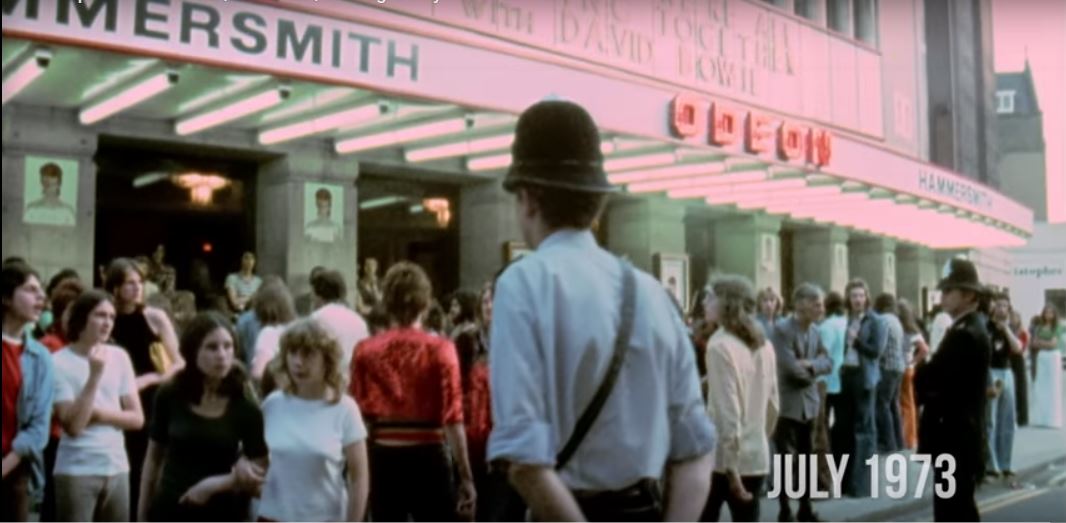
I have a piece in the latest edition of Uncut about the final Ziggy Stardust show at Hammersmith Odeon in July 1973. It’s an oral history, for which I spoke to fans who attended the show as well as the two surviving Spiders, engineer Ken Scott and singer Dana Gillespie. The fans include a largely unimpressed Vic Godard, later to form Subway Sect, an eight-year-old boy from Devon who was smuggled in by his wild-sounding babysitter, a West London tearaway who broke in with his pals through a fire escape, and a teenager from Surrey who is captured on film, open mouthed in shock, after Bowie makes his bombshell “retirement” speech before the final number. “I cried for the rest of the show,” she admitted. “I cried all the way home.”
It was an awful lot of fun chatting to fans about their memories of this momentous show. It was also interesting to speak to Woody Woodmansey and Mike Garson about their very different feelings about the show, Woody having effectively been sacked on stage without knowing anything about it, something Garson clearly has a form of survivors guilt about. Woody never played with Bowie again but he told me they did manage to clear the air later in the decade, and stayed on good terms thereafter.
I also spoke to Lee Grant, a Bowie fan trying to solve a photographic mystery from the evening of the show. That section of the article didn’t make the final cut, so I am including it here.
The after-show party at Café Royale became known as Bowie’s Last Supper and featured a panoply of celebrities, several of whom posed for a famous photograph. This group shot features Mick Ronson, Lulu, Jeff Beck and his girlfriend Celia Hammond, Ringo and Maureen Starr, Edgar Broughton, Bianca Jagger, David Bowie and Angie, plus another individual who has never been identified.
Bowie fan Lee Grant created his Bowie Mystery Guest blog to solve the mystery and has so far discounted Tim Buckley, Elliott Gould, Cat Stephens, Ossie Clark and Bowie’s friend Geoff MacCormack plus several others. He first heard about the mystery guest from a Bowie podcast. “I thought I could solve the problem in about ten minutes and here we are five years later,” he says. “What I tried to do was eliminate some of the main suspects and wait for somebody to come forward. It’s as simple and pointless that.”
Grant has contacted numerous members of the Bowie circle in his bid to solve the problem – many of whom suggest names he has already been able to eliminate such as MacCormack and Buckley. Having discounted most of the proposed names, Grant’s current theory is that the mystery man is a non-celebrity who happened to be at the Cafe Royale was invited to join the group shot because he was mistaken for MacCormack, who he certainly resembles. That makes identifying him all the harder but not impossible – perhaps with the help of other photographs from the evening which might show who the mystery figure was with.
“I’d love to find out who he was, why he was there and then get on with my life,” he says. “It’s in the back of my head all the time.” If you happen to know the answer, please put Lee out of his misery and let him know at https://bowiesmysteryguest.com.
When I started working at Time Out in 1998, I was young but by no means a greenhorn having already done five years at the Sunday Times, where I encountered formidable figures such as Hugh McIlvenny, Steve Jones, Nick Pitt and Chris Lightbown, my own personal mentor. But the journalists at a Time Out where a different breed. They were all very smart, incredibly knowledgeable about their particular field and not shy of letting you know it.
One of the most prominent was Paul Burston, whose desk was just across the aisle from the sports section where I first worked as holiday cover for editor Andrew Shields. For a start, Paul was physically striking. Not quite a gym bunny but certainly more muscular and compact than any of the other scrawny hacks at Time Out who looked as if they barely saw daylight and subsisted entirely on a diet of cigarettes and cheap spirits. Paul spoke in a loud voice with a soft Welsh accent. He would get to his desk some time before midday, and immediately start fielding a seemingly endless torrent of phone calls, exchanging gossip, rumours, ideas and anecdotes with a string of friends.
These conversations were peppered with language that I’d never previously heard outside the playground – queer, dyke, poof. I didn’t know where to look. I soon worked out that Paul edited the Gay section and had been at Time Out for a while, forging a relationship as a journalist who was outspoken against homophobia and fought for gay rights but could be very critical of gay politics and lifestyle if he felt it necessary. I’d never really encountered such an outspoken and confident out gay man before – there were very few gay journalist at the Sunday Times and none, openly at least, in the sports department – nor was I particularly familiar with the gay world of London, despite having gone to Popstarz a few times.
One of my strongest memories of Paul was his sheer fury on the evening of the Admiral Duncan bombing, as he took phone calls about the unfolding horror before going into Soho to see what was going on.
We remained colleagues until I left Time Out in 2010, but I only really got an inkling of Paul’s background when I read an account of his life as an AIDS campaigner that he wrote in Time Out‘s 40th anniversary book, London Calling, in 2008. Now Paul has brought out a memoir – We Can Be Heroes – which covers his life in more detail, which includes striking reminiscences of gay life in London in the 1980s, partying hard while campaigning under the constant shade of AIDS and homophobia. It’s a great book that I recommend heartily for anybody interested in London subcultures and activist politics.
As I read We Can Be Heroes, I realised that while Paul was experiencing the trauma of seeing his friends die of AIDS I was still at secondary school laughing at jokes about the disease. On Facebook, my school’s old boy page was recently hijacked by a number of men recounting the frankly horrific physical abuse they endured at the hands of staff, including pupils from my own time at school who were caned, slapped, strangled and thrown against walls by out-of-control teachers.
I was never physically attacked by teachers but verbal abuse was common. Chief among this was homophobia. There was not a single out gay boy in our school of 800 – because how could any child admit to being gay during the era of Clause 28, when rugby teachers would call anybody who disliked physical violence “a Mary-Anne” and RE teachers told us that homosexuals would go to hell. As a result, in the playground gay insults were the major currency – poof, queer, bum bandit, bender and jokes about AIDS. It’s hard to imagine how this could have been endured by any of the gay boys in the school.
It came as a little surprise when my old school was drawn into controversy recently when the current school chaplain – a man who I realised had been in the same year as me at school and therefore exposed to the same environment of endless, normalised and officially sanctioned homophobia – was accused of banning a gay author from giving a talk to pupils. As Paul’s book shows, we’ve come an awful long way, but there’s still a long way to go.
Last week I was able to visit the reopened Hunterian Museum at the Royal College Of Surgeons on Lincoln’s Inn Field. This is an anatomical, pathology and natural history collection originally started by 18th-century Scottish surgeon John Hunter, who acquired thousands of specimens – human and animal – in his desire to understand the natural world. Here is one of my favourites, a cute little foetus of a sloth.
A sloth foetus
I wrote about the collection and Hunter’s motivations for Apollo and you can read that article here.
It’s easy to cast the Hunterian as a sort of sophisticated freak show – a place where you can see diseased organs, strange animals, skeletons and a large number of dead babies. And to a certain extent – or at least to modern eyes – that is exactly what it is. But it’s important to understand the collection in the context of the time, before X-rays, aspirins, anaesthetic and all the other miracles of modern medicine that we take entirely for granted.
Hunter collected because he wanted to understand and he wanted to understand because he wanted to improve. His curiosity and motivation (and his approach to ethics) is very similar to that of John Soane, whose own vast jumble of artistic and architectural wonders can be viewed on the other side of Lincoln’s Inn Field.
Take just a moment to think about that. Here are the two cultures – art and science – in the form of two collections amassed by obsessed and committed individuals, facing each other across a large garden square in a pair of incredible free museums, either of which would be the envy of most national or city collections. London is by no means perfect, but – much like the scientific improvements that Hunter’s inquisitive mind helped propagate – such marvels should never be overlooked or underestimated.
Like many people, I have a difficult relationship with The Smiths. They were my favourite band for the most formative years of my life, but they also have the most problematic frontman, one in whom I – like many teenagers – invested so much of myself that his increasingly unpleasant behaviour seemed much like a personal betrayal.
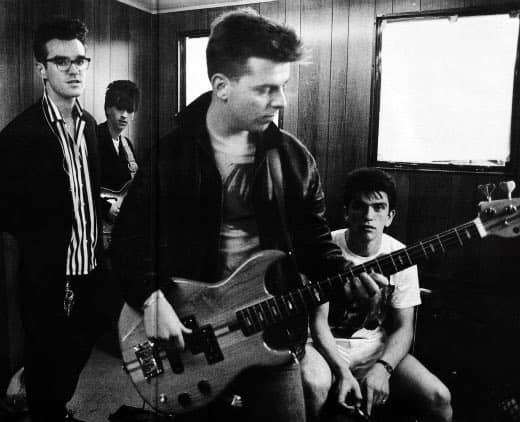
But the death of Andy Rourke has me reaching once more for the comfort of familiar friends. When I think of Andy Rourke, I immediately think of two things: Meat Is Murder and this picture, which I always loved for some reason, partly because it reverses the way we usually see the band – but also because Rourke looks so fucking cool.
Rourke’s brilliant bass playing is all over Meat Is Murder. One of my best friends, a bass player, says he used to argue with me that on songs like “This Charming Man” Rourke was as essential to the Smiths’ sound as Johnny Marr – but as a non-musician who worshipped Morrissey, I often struggled to hear what was actually going on with the music: it just existed. It simply was. But even I couldn’t miss the bass on Meat Is Murder. It’s a prominent feature, holding together and driving forward just about every track from “The Headmaster Ritual” onwards but most memorable of all on the fantastic strut of “Barbarism Begins At Home”.
This may even have been the first time I became conscious of what a bass guitar actually sounded like.
I have a piece about 90s Riot Grrrl band Huggy Bear in the latest Uncut to mark the 30th anniversary of their single, “Her Jazz”. Here’s Huggy Bear performing the song on The Word. Apparently you can see three members of their labelmates Cornershop in the crowd. It’s a thrilling performance and I remember watching it at the time, impressed and slightly scared.
Although I was not a huge Huggy Bear fan – frankly, they intimidated me – I couldn’t miss the fact that in the music press, Huggy Bear got a tough time in a manner that seemed completely out-of-proportion to their actual size. NME and Melody Maker were known for their snark, but the usual targets were the self-important big stars – Bono, Sting, Morrissey – or the current flavour-of-the-month, such as Suede or Manic Street Preachers (a band that have some interesting similarities with Huggy Bear). But for the latter, the nastiness was usually balanced by regular cover features, positive reviews, news pieces and a general boosting of the latest indie hero.
With Huggy Bear – a small band on an indie label whose fan base barely filled a couple of pubs in north London – it seemed like it was all snark. The vitriol was relentless; Huggy Bear were the eternal punchline.
Talking to the band – mostly via email as even after 30 years they were still reluctant to trust a journalist so wanted to retain control of their words – it was clear they’d had experience this as, in one member’s word, “spiteful bullying”. And it wasn’t just the press. Other bands refused to sign to the same label as them, or created such hostility they couldn’t drink in the usual indie haunts in Camden. Some of their peers even went to gigs just to heckle. It was vicious.
What was everybody’s problem? It wasn’t Huggy Bear’s music, it was their politics – and more to the point – the sheer conviction with which they held their views. Huggy Bear believed in the underground community of fanzine culture and DIY gigs, and they believed in – and passionately espoused – gender and sexual equality. They were fierce feminists and that scared the boys. It still does. To care so much was unforgivable in the early 90s, as the affected ennui of Generation X was about to give way to the destructive irony of Britpop and Loaded – an irony, of course, that heavily favoured the views of white men.
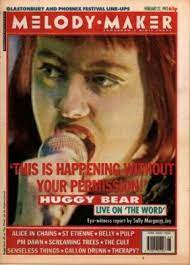
After that performance on The Word, there was an interview with a pair of identical twins who modelled for Playboy and proudly declared they were “bimbos”. Huggy Bear and their friends in the crowd heckled, while guest Henry Rollins and presenter Terry Christian smirked awkwardly. Terry Christian is a good guy with sound views but he couldn’t handle being upstaged – on The Word for chrisake, which was explicitly created to manufacture controversy – and had them all thrown out. That earned Huggy Bear an appearance on the cover of Melody Maker. It was not The Word‘s finest hour.
Back then, Huggy Bear were sneered at for being “right on” and “politically correct”, even in the ostensibly left-leaning NME, which regularly carried a column by comedian Simon Munnery based on his Alan Parker, Urban Warrior character, which targeted this tiny but easy-to-mock demographic. Ironically, this terrible column was far more humourless than Huggy Bear themselves, whose songs brim with wit as well as fire and compassion.
These days, that terrible lazy “W” word would be deployed to diminish their opinions.
It must be annoying for them to know that Huggy Bear were right. About pretty much everything.
This was originally published by the Canal & River Trust’s Waterfront newsletter in 2016.
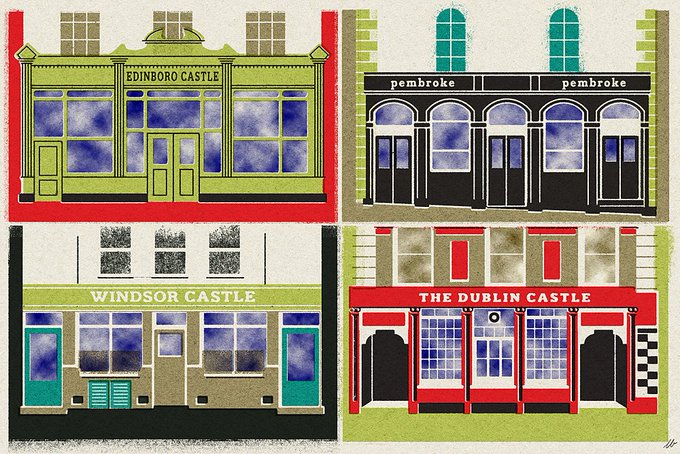
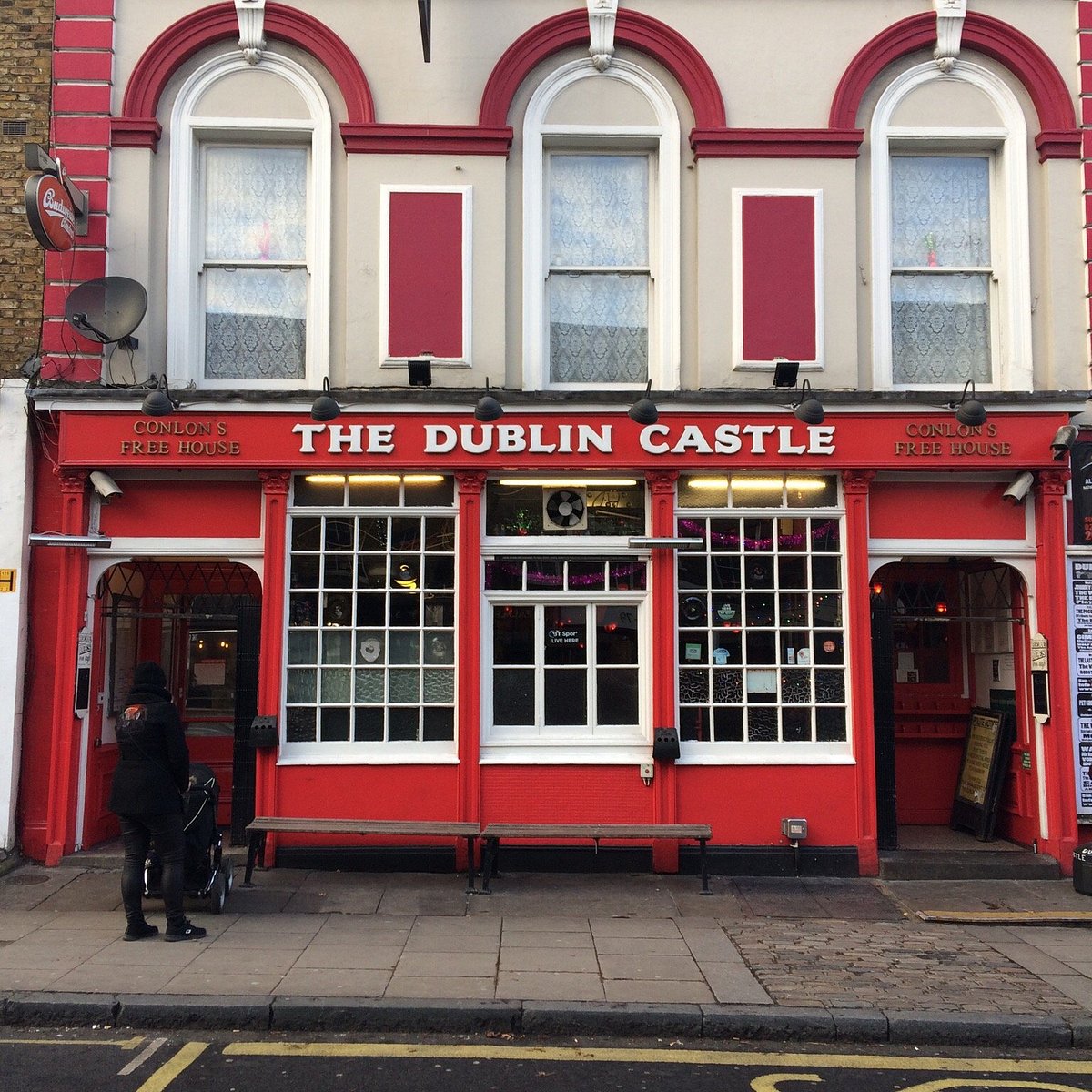
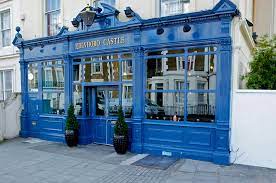
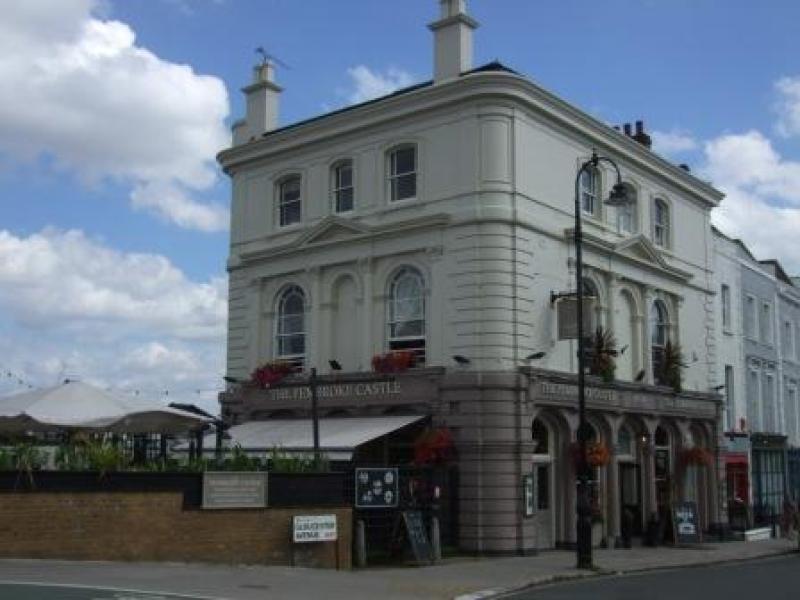
It was while working on Time Out’s annual pub guide in around 2000 that I heard the tale of the Camden castles. A reviewer claimed that there were once four Camden pubs with castle in their name – the Edinboro, Windsor, Dublin and Pembroke – and these had originally been built for navvies digging Regent’s Canal. The gist was that each national group – Scots, English, Irish, Welsh – was assigned a pub to keep them happy, or more precisely to stop them from scrapping with one another. It’s now found all over the internet, with variations. Sometimes, the Caernarvon Castle is included, and often they are said to have been built for the later railway navvies.
Original illustration by Leonie Bos via Paul Pensom.
It’s a great yarn, but if it seems too good to be true, it’s because it is. The theory is carefully taken apart in the November 2014 newsletter of the Camden History Society by David Hayes who points out that the pubs weren’t built at the same time but “gradually appeared over a period of 130 years”. The Dublin Castle on Parkway, now a music venue, is the oldest. It featured in rates books in 1821 and may just have been frequented by Irish navvies, as the canal was completed in 1820. But next was the Edinboro Castle on Mornington Terrace, which opened in 1839, two years after the railway line to Euston. Not only did this open too late, it had facilities – a tea garden and library – aimed at an upmarket clientele. The Pembroke Castle in Primrose Hill opened in the late 1860s and was probably named after its address – 1 Pembroke Terrace – while the Windsor Castle on Parkway was an off licence until 1953, when it reopened as a pub. It’s now a restaurant. As for the Caernarvon, this originally opened as the Pickford Arms – named after a nearby depot – changing its name in around 1870, possibly to join the trend, as Camden pubs became synonymous with castles.
Where then did this rumour came from? To seek an answer, I turned to In Camden Town by David Thomson. This is a diary covering a year in Camden in 1980, combining social history and personal reminiscences. Thomson spends much of his time idling with locals in Camden pubs – the Windsor, Edinboro and Dublin Castle all feature – and he also writes about the building of the canals. However, he never brings the two together, either to spread or dispel the rumour, by saying his favourite pubs were built for navvies. That suggests the story had not yet been formulated.
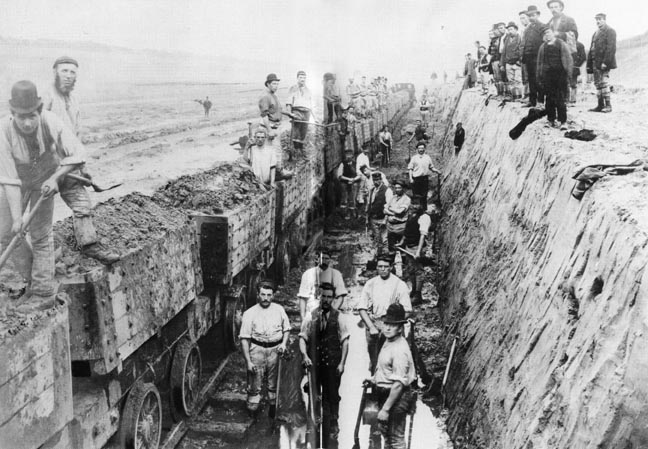
Of the canal navvies, he writes that “it is difficult to find out much about the… homeless thousands of men who carved the channel out by hand”, noting later that “public inquiries… showed their food, shelter and conditions of work were as wretched as those of the railway navvies later.” This was a dangerous and exhausting life. One accident near Camden in August 1813 saw a cutting collapse, burying a dozen men, several of whom died. “A navvy’s life was less valuable than a slave’s”, says Thomson, who says navvies were “like an invading army but without discipline, tents, billeting officer or commissariat.” Many were Irish and spoke no English. “‘They use only their Gaelic tongue,’ wrote one engineer. ‘And it’s by sign we direct them and thus they have little traffic with the English and keep them apart.’”
Of the railway navvies, Thomson writes. “Navvies were reckless in their leisure. They came and went to the next job in hordes, shared hardships and pleasures peculiar to their homeless life, helped each other in adversity, had a strong sense of justice, were loyal to the gang and to fair employers, and fiercely violent against those who cheated them of food or pay.” The navvies had their own traditions, including “broomstick weddings” – a marriage ceremony described thus in 1846: “It consists of the couple jumping over a broomstick in the presence of a room full of men, met to drink upon the occasion, and the couple were put to bed at once in the same room.”
Navvies were perceived to be heavy drinkers and sporadically violent. At a ceremony in Camden’s Cumberland Basin in 1816 to mark the opening of one section of Regent’s Canal, the navvies “were presented with several hogsheads of beer. Plenty of quarts and pint pots were provided, but not finding these large enough, many held out hats for a full up and drank copious draughts from those.” There were occasional fights – most notably between canal workers in Sampford Peverell in 1811 and Barrow-Upon-Soar in 1794 – as there was among railway workers in Camden in 1846 when a riot broke out between English and Irish labourers at the Round House that lasted several hours and left many injured.
A trip to the Canal Museum in King’s Cross brought more information from The Canal Builders by Anthony Burton. The canal navigators were, he writes, “strangers of uncertain origin” who carved canals the length and breadth of the country using spade and barrow, experience and muscle. Again, he notes how little trace they left on the printed record, as they became “such an accepted part of the landscape that writers and travellers rarely felt it worthy of mention”.
Originally made up of part-time agricultural workers from the English and Welsh farms, by 1795 there were an estimated 50,000 navvies working on the canals, “a mixture of English workers… and a specialised work force from Scotland and Ireland, specifically to work on the canals.” The Irish and Scots were extremely poor and these “roving bands of migrant workers” were much feared, described as “banditti… the terror of the surrounding country” in 1839.
And what of their living conditions? These sound uncannily like that of migrant workers today. Burton says some were encouraged to lodge in the towns in which they worked to defuse some of the fear and friction caused by so many unfamiliar men living close together but most lived in jerry-built temporary accommodation, travelling encampments of 600 or more, with navvies living in “a turf hovel” and subsiding on “dull plain food”. Some canal owners discussed improving conditions, raising places for workers to eat and drink, but only in the form of tents or booths. Many were paid in tokens that could only be redeemed at certain stores, invariably those owned by the canal owners. Would four brick pubs have been constructed for such poorly treated, poorly regarded men who never settled in a single place for long? Not a chance.
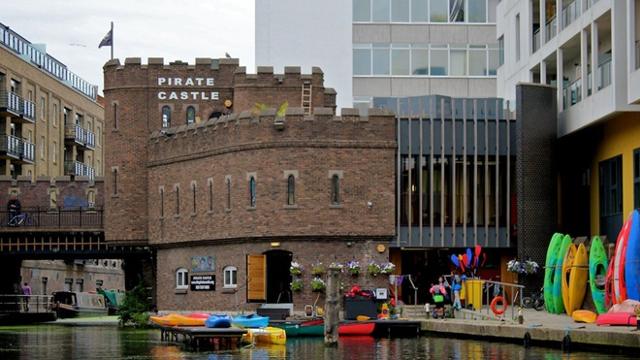
Camden’s Pirate Castle youth club – also not a real castle
A photograph in Michael Ware’s A Canalside Camera shows a group of navvies, dressed in rags, surly and exhausted. The navvies had a terrible reputation, but Burton is sympathetic. “Take thousands of poor, uneducated men, remove them from home and family, send them out to sweat away at hard, dirty and dangerous work, and you cannot be surprised if the end result is a gang of men who frequently find their repose in outbursts of drunkenness and fighting.”
Here it is apparent how – if not when – the story of the Camden castles was formed. Canal navvies would have been prominent in Camden during the first half of the 19th century. They were often drawn from the poorest Irish and Scottish labourers, bolstered by English and Welsh workers. Attempts were made to keep the disparate national groups apart as they were known to fight with each other and the public. They were also famed for consuming heaps of ale, traditions later continued manfully by the railway navvies, who enjoyed a terrific tear up in the centre of Camden in 1846. And so, from these disparate truths, a cohesive myth was born, spun by some enterprising soul with a rich imagination, possibly even a lubricated barfly, enjoying the continuing hospitality of one of Camden’s many, but entirely coincidental, castles.
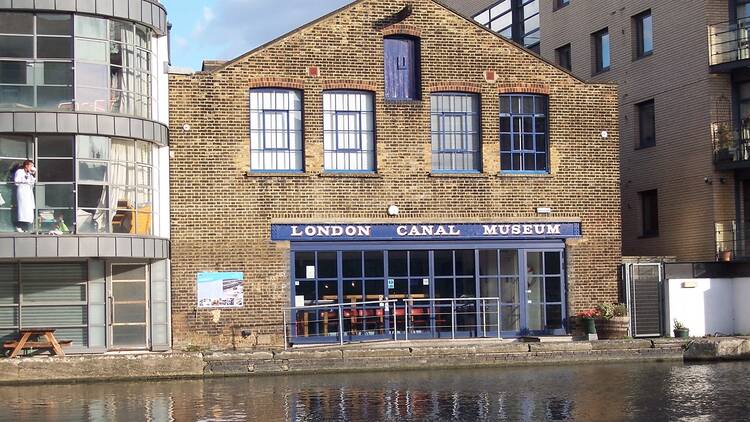
The Pembroke Castle, Edinboro Castle and Dublin Castle can all be found around Camden Town. The London Canal Museum is at 12-13 New Wharf Road, N1 9RT.





 The Great Wen