Category Archives: Talks

Played In London: sport in the city

A series of lectures called Played In London  will take place every Thursday in May on the theme of the history of sport and play in the capital. These will be at The Gallery on Cowcross Street, Smithfield, and promise to take in everything from Tudor tennis to pub darts. They are hosted by the great Simon Inglis, author of the legendary Football Grounds of Great Britain, a candidate for the title of best book ever written.

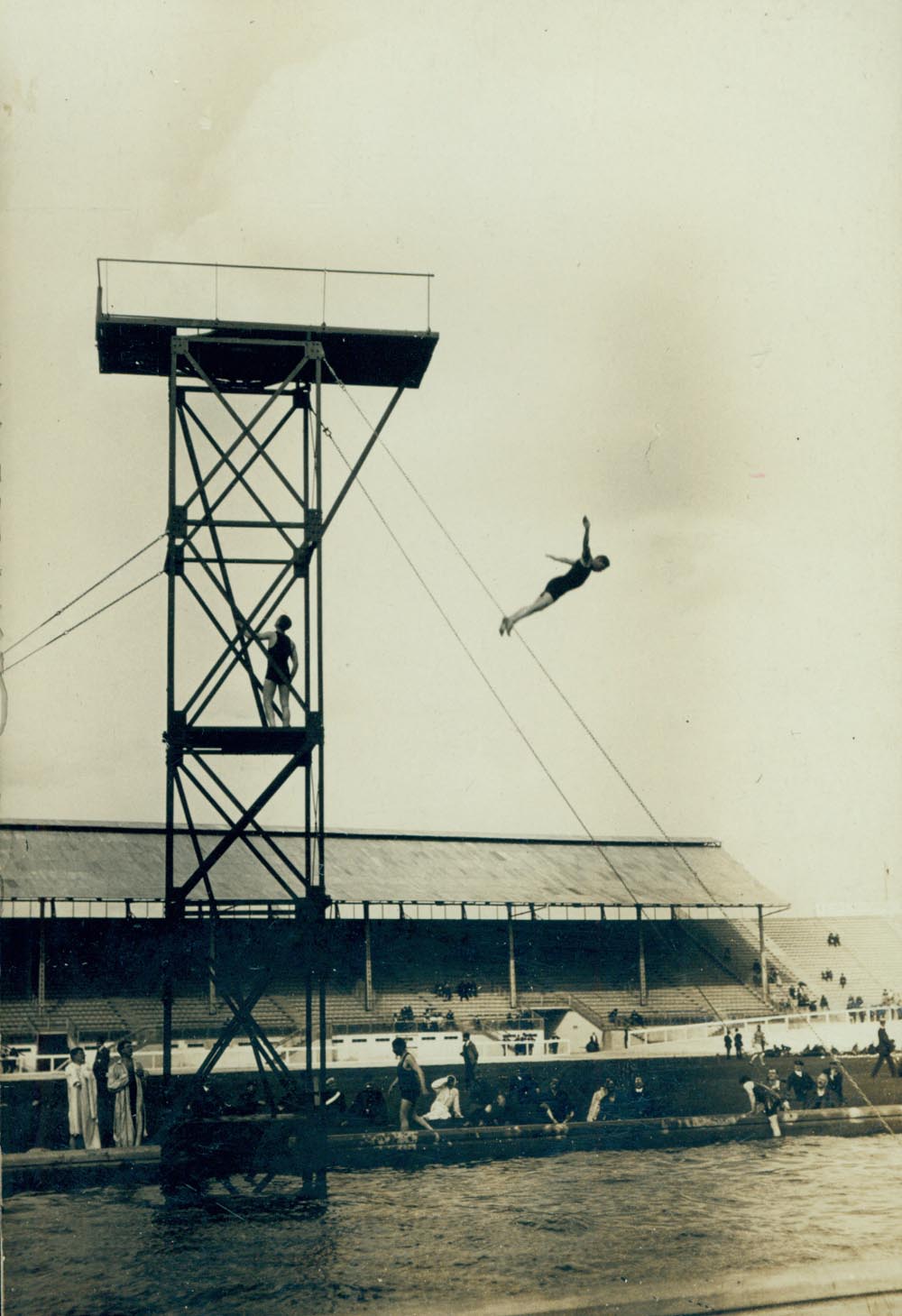
In November, English Heritage will publish a book (Played In London – Charting The Heritage Of A City At Play) on the topic, including lots of brilliant pictures like the one above, featuring the Furnivall Sculling Club, the first rowing club for women on the Thames, or these ones featuring the British swimming team in 1908 and the diving board at White City from that same year.


Pussyfoot Johnson and the London mob

My review of Ink And The Bottle, an exhibition about cartoons and alcohol, appears in the Independent.

One of the cartoons at the gallery is based on the story of William ‘Pussyfoot’ Johnson, an American who was active in the temperance movement and came to London on Nov 13, 1919 to give a talk.

Johnson was leader of the Anti-Saloon League and after success in America, he headed to the Old World to spread the anti-drinking word. He argued, ‘There is more bootlegging and more moonshining in Europe than in the whole United States.’

He may have been right. This temperance movement map from 1886 attempted to show the scale of the problem by depicting all of London’s pubs in its ‘Modern Plague of London’ map.

Modern Plague, London

Pussyfoot earned his nickname for his habit of amending laws by stealth, and this did not go down well with the London mob. As one anti-temperance advocate told the New York Times, ‘You know how the majority of Englishmen look upon prohibition and Mr Johnson’s activities? The thought of not being able to have the well-known pint of bitter fills them with horror. The war was terrible enough but it was something that happened before. There have always been wars. Taking away the drinks is attacking the divine rights of the Britisher. I can tell you they don’t like it!’

They certainly didn’t, and decided to do something about it. While Johnson was speaking at Essex Hall, he was captured by medical students from nearby King’s College who dragged him out the buildin, poured a bottle of beer over his head and marched him around the West End chanting ribald songs. It was noted that the police ‘seemed lacking in sympathy with the missionary’.

Johnson was hauled hatless on a stretcher around Regent’s Street, Leicester Square and Oxford Street while the students chanted ‘What won the war? Rum!’ and ‘We’ve got Pussyfoot meow, send him back to America’.

Such larks, what fun and games! 

And so what if Johnson lost his right eye in the incident? The lesson was learnt. Not many people have tried to take the Britisher’s beer away from him since.

How to tell the Story of London

The Story of London festival was introduced by Boris Johnson last year and immediately came under a lot of fire. Here’s something from Boris Watch plus stern words from Diamond Geezer.  

The festival is not a bad idea. It’s intended to cover the history of London in a way that includes all boroughs, all ages, all races and all genders – a riposte to Ken Livingstone’s habit of staging festivals for different minority groups at a Balkanised Trafalgar Square.

But it doesn’t work.

Part of the problem is publicity, and this is of the mayor’s own doing. In 2009, there was little or no attempt to promote the nascent festival by the city’s tourist office because their funding had just been slashed by Boris and they pretty much refused to help. 

The organisers then had to take their minute budget to Time Out, where I ended up knocking up a few pages to pull out of the middle of the mag that due to a hilarious production error did not actually pull out. It was nothing like the sort of lavish inserts the company can produce when given some cash and time. 

The other problem is that London already has loads of festivals – Open House, Meltdown, the London Film Festival, London Design Festival, the City of London Festival and dozens more – while institutions such as the Bishopsgate Institute regularly put on fantastic cultural events. And that’s before we even bring in the other museums, universities, galleries and scientific institutions.

 The Story of London simply does not have a distinct identity to compete with these established players.

With barely a niche to be found in London’s crowded cultural calender, Story of London has taken to hijacking and rebranding existing events, which doesn’t impress anybody. And they are so busy doing this they forget to organise any showpiece events that would help to give the festival a character of its own. Plus, they don’t have any money.

The result is a bit of a mess.

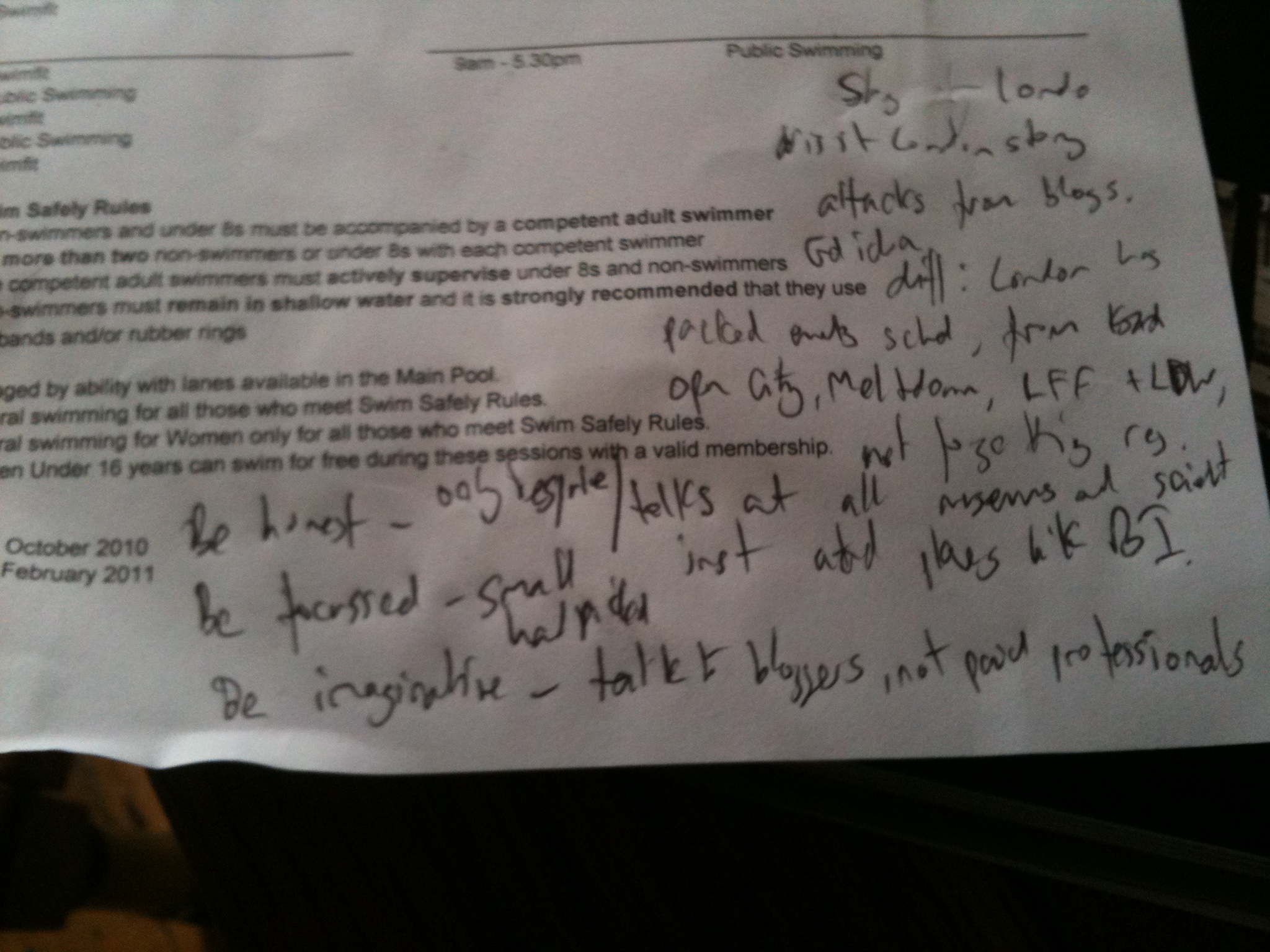
So what could they do? Fortunately for them, I was able to scribble a few suggestions on the back of a press release in between playing Secret of Monkey Island on my phone and wondering why I’ve rarely heard of a single person who appears in the Standard’s Londoner’s Diary.

  • Be honest – don’t hijack events that have nothing to do with you as it just looks cheap. And if you insist on this policy, it means that desperate organisers of terrible events will attempt to smuggle their substandard fare into your festival and you’ll have no way of keeping them out.
  • Bespoke – ensure that anything carrying the Story of London banner is new and brilliant and has genuinely been arranged specifically for the festival. That makes it fresh and makes it exciting and should ensure that you can keep an eye on the quality control.
  • Be focused – find a theme and stick to it. Make it broad and make sure that every borough has at least one institution participating. Narrow the time frame so it all takes place on a single weekend. Keep it tight at first and let it grow organically. At the moment it is a big blancmange of a festival when it should be as tight and pretty as an avocado stone.
  • Be clever – one of the best festivals the mayor currently has at his disposable is the Thames Festival, so hook the whole thing round that. A wee bit of rebranding – and yes, this is hijacking, but it’s hijacking with a point – and you have a ready-made spectacular way to close the weekend with the annual fireworks display.
  • Be imaginative – the guys from the Londonist website are already involved in one small event, but why not ask them to think up something big and crazy? These – and other – bloggers live and breath London in a way few paid professionals can compete with, so talk to them. They may not be interested, they may have terrible ideas, they may have no ideas, but they may just come up with a couple of events that curators and pros can turn into something special. Because at the moment, as Ian Visits says, the Story of London is just ‘a way for a lot of venues who are already planning to do something to get involved in a joint media campaign’.

And that’s as far as I got. LeChuck was causing all sorts of problems and I had to Google Laura Weinstock. But hey, it’s a start.

Gordon Brown, the Prime Minister, who has a glass eye…

Like many people, I will watch the leaders’ TV debate tonight for a mixture of reasons. Guilt that I am otherwise taking so little interest in the election, mild interest in whether they will say anything I really believe, curiosity at what Nick Clegg actually looks like. But I will also watch in the blind anticipation that Gordon Brown finally makes use of his key electoral asset and whips out his glass eye.

It is my belief that future generations will look back in amazement, astonished and perhaps even aghast that we had a Prime Minister with a glass eye and nobody really seemed to know anything about it.

It is not too late for this to change. For starters, every article about the PM should start, ‘Gordon Brown, the Prime Minister, who has a glass eye…’ to really reinforce the point. And in the debate, Brown, the Prime Minister, who has a glass eye, should make a much stronger attempt to use the eye to his advantage.

A few suggestions. He could pop it out and stick it on the lectern looking up at Cameron while the Tory is talking. Or toss it casually from hand to hand while delivering his own speeches. Perhaps he could bounce it against his flexed bicep and into his outstretched hand in a flamboyant gesture that would manage to be both insouciant and intimidating. Watch his poll ratings climb! A namby-pamby nanny-bred nincompoop like Cameron would be terrified.

Better still, Brown could keep the eye in, take a dart to the debate and then just tap it casually against the glass eye whenever Cameron is speaking. How cool would that be?

It would leave Cameron with only one option. Lop off a hand, and replace it with a hook.

Now, I don’t want to suggest our political leaders should get involved in an ever-sicker whirlpool of deliberate self-mutilation in a vain bid to impress the voters… well, actually I do.

Let the freak show commence!

Free London writing talk with Iain Sinclair

Iain Sinclair is one of three writers who will be giving free talks on the subject of ’21st-century London writing’ at the University of Westminster’s Regent Street campus (309 Regent Street, W1B 2UW) starting next month.

Sinclair will be talking on March 4 at 6pm. He will be followed by Toby Litt on March 11 and Rachel Lichtenstein on April 22, both at 6pm. The writers will discuss their work in relation to the city and the opportunities and challenges it offers/poses to contemporary writers.

All talks are free and take place in the Boardroom, but booking is essential. Reserve your seat by emailing Sharon Sinclair at sinclas@wmin.ac.uk to book a place.