Category Archives: Music

HG Wells, My White Bicycle and hygienic seats: a brief history of cycling in London

This piece is in the current issue of BMI Voyager. The photo of Herne Hill Velodrome is via Adrian Fitch

It’s unlikely that any of the world’s top cyclists will be thinking about London’s history with the bike when they set off from the Mall for the gruelling 250km Olympic road race on Saturday (July 28th), but if they do pause for thought, they’re starting from the right place. The route will take cyclists through Putney, Richmond and Hampton Court deep into the scenic Surrey countryside of Woking and round Box Hill, but it starts and finishes near Hyde Park, which is where cycling in the UK first really took off.

Cycling had premiered in Battersea Park in the 1880s, but it was in Hyde Park that the great Victorian cycling craze went overground in the 1890s. London was still a horse-happy city at the time, so when 2,000 cyclists – mainly women, dressed demurely with natty bonnets– formed a parade to cycle round the park in the spring of 1896, those on horseback didn’t know quite what to make of it. Bicycles were still a new thing. Penny-Farthings had been around for a while, but were about as common a sight in Victorian London as they are now, and it took the invention of the ‘safety bicycle’ – one with wheels the same size and pneumatic tyres – in the 1880s for that to change. Indeed, such was the enthusiasm with which women took up cycling, that Victorians were torn between trying to find ways to make money out of it, and trying to ensure it was morally appropriate. With typical Victorian ingenuity, they managed to do both – the Chaperon Cyclists’ Association supplied female escorts for solo women cyclists for 3s 6d an hour, while to avoid any dangerous friction you could purchase special ‘hygienic’ bike seats, which had a modest dip in the area where a lady’s genitalia would usually meet the saddle.

Hygienic seat or not, this was, almost without exception, a hobby enjoyed by the upper classes – the Lady Cyclists Association of 1895 was founded by the Countess of Malmesbury – and the Olympic road race aptly passes through some of the poshest areas of London, along the luxury-lined Knightsbridge and down through the smart streets of Chelsea to Putney Bridge. In 1896, the Countess wrote wittily in The Badminton Magazine about the dangers of cycling around these very Belgravia streets thanks toa new sport’ devised by Hansom Cab driver: ‘chasing the lady who rides her bicycle in the streets of the metropolis’ excited by the ‘petticoat which “half conceals, yet half reveals”… I cannot help feeling that cycling in the streets would be nicer, to use a mild expression, if he’d not try to kill me.’

It wasn’t until 1934 that a solution to this perennial problem arrived, when the UK’s first bike lane was opened not far from where the road race course makes its progress through West London. This specialist cycle lane stretched for two-and-a-half miles alongside the Western Avenue and was a belated response to the scarcely believable statistics that recorded 1,324 deaths of cyclists on British roads the previous year. Despite these awful figures, cycling groups opposed the innovation, arguing bikes should not be forced to give up their place on the road to the new-fangled motor car. It’s not an argument they were ever likely to win.

Roads will be close to traffic on July 28, however, and as the Olympic cyclists make their way towards the river, they will pass Kensington Olympia, the huge exhibition hall built in 1883 and used for all manner of spectacular entertainment –promoters would think nothing of flooding the arena to recreate Venice In London, for instance. Anything fashionable was fair game and cycling races were held here during the 1890s. A mixed-tandem race – one male rider and one female – attracted huge crowds in January 1896. Weird events like this were common at the time –the Crystal Palace in Norwood hosted a bicycle polo international in 1901 between Ireland and England (Ireland won 10-5).

After crossing Putney Bridge, the race continues through Putney, where one of London’s many Victorian velodromes was once located, drawing crowds of 10,000. Putney also featured in one of the first cycling novels, The Wheels of Chance, by HG Wells, a writer who always had an eye for a new invention. In it, the hero, Mr Hoopdriver, leaves his dull job in Putney to go on a cycling holiday on the South Coast following a route out of London very similar to the one that will be taken by the Olympic racers. The race later passes through Woking, where Wells lived and set part of War Of The Worlds – Woking has boasted a huge statue of a tripod since 1998.

From Putney, the cyclists whizz through lovely Richmond – mind the deer! – before hitting the river at Twickenham, where they pass Eel Pie Island, nexus of London’s mid-1960s rock ‘n’ roll revolution. Numerous legendary bands played shows at the charismatic old dancehall on this tiny island in the Thames, including the Rolling Stones, the Yardbirds, Eric Clapton, Jeff Beck and Rod Stewart. Among them was Tomorrow, one of England’s first psychedelic bands (featuring Steve Howe, later of prog-monsters Yes), whose 1967 single “My White Bicycle” was a big counterculture hit in 1966. This splendid slice of trippy frippery was written in homage to the pro-cycling scheme launch by Dutch anarchist collective Provo, who left 50 unlocked white bicycles all over their home city of Amsterdam in 1965, inviting the public to enjoy ‘free communal transport’ and rid themselves from the tyranny of the automobile. The Dutch police swiftly impounded the offending bikes, but the idea finally caught on in recent years in the form of the Paris bike-sharing scheme, Vélib. This idea was appropriated by London in 2010 and came to be christened Boris Bikes after London’s mayor, Boris Johnson, who inherited the scheme from his predecessor Ken Livingstone.

Boris Bikes can be hired by anybody with a chip and pin card at around 500 docking stations in central London. The bikes come without helmet or lock and are pretty hefty, but they are a fairly common sight in London. Although there is an ‘access fee’ (£5 for a week), the first 30-minutes of any ride are free, so smart users hop between docking stations and effectively ride around London for next to nothing. It’s all part of a belated attempt to make London a more-bike friendly city – four giant bike lanes, the blue-painted Cycle Superhighways, have alsobeen created in key commuter routes, with four more planned for 2013. If you want to borrow a Boris Bike to follow the 2012 road race route be careful, as there are few docking stations outside central London and costs soon mount if you go over the initial 30 minutes – while the fines for a late return are high.

From Twickenham, the race heads through Bushy Park and passes the Tudor palace of Hampton Court, before disappearing into the Surrey countryside. After a tour of the Surrey hills, the cyclists will then make the return journey, via Kingston, to the Mall. Sadly, then, there is no time to head to south-east London, where there are a couple of other prime London cycling landmarks. The first is the Herne Hill Velodrome, tucked behind suburban houses down a quiet street near Dulwich. This is the last stadia from the 1948 London Olympics still in use today. Built in 1891, the velodrome had all but closed during the Second World War but was brought out of retirement when London was awarded the 1948 games. It’s had a few scares since then – the gorgeous Victorian grandstand has been a no-go area for years – but was recently awarded £400,000 of Olympic legacy money and plans are afoot to construct a new grandstand, cafe and gym. The venue has played its part in nurturing the latest breed of British champion – Tour de France winner Bradley Wiggins raced here.

Herne Hill Velodrome

While Herne Hill lives on, the velodrome at Catford was demolished in the 1990s. Like the stadia at Putney and Herne Hill, this was built in the 1890s, when it attracted a very special guest. Absinthe-soaked dwarf artist Henri de Toulouse-Lautrec is usually associated with the Montmartre area of Paris, but in 1896 he turned up in the particularly drab suburb of Catford. Lautrec was a cycling fan, and had been asked by a company called Simpson to design a poster for their bike, which used a new type of chain. Lautrec was taken to the newly built Catford Velodrome to watch the bike in action during special races, set up by Simpson to advertise their product, and he produced a couple of images during his visit. The poster was one of the last he designed before his death in 1901, just as the Victorian bike craze was coming to an end.

Five videos of Paul McCartney’s London

Inspired by this marvellous piece of Paul McCartney-related London trivia from Mark Mason, I thought we should look at five classic Macca In London videos on You Tube.

1 Press, 1986
Here’s Macca on the tube in this little known video from 1986. Check out the modestly greying locks, and drink in the 80s atmosphere and the now lost station architecture.

2 Busking, 1984
A dream sequence from Give My Regards To Broad Street features Macca busking outside Leicester Square tube.

3 Give My Regards To Broad Street computer game, 1984
This appalling Commodore 64 game based on the film sees Macca taking a cab around London to a brilliant, blippy 8-bit soundtrack of Band On The Run.

4 London Town, 1978
Paul and Linda take a boat trip down the Thames to promote London Town. Features many bridges and some fish and chips.

5 Oxford Street, 1983
And here’s Macca nipping round the West End in the back of a cab with Lesley Ash.

http://www.youtube.com/watch?v=z6dHRTQH-js


Mind The Map at the London Transport Museum

Ever since the British Library’s London map exhibition in 2007, London museums have learnt to love cartography. The Museum of London’s Hand-Drawn London was a highlight of 2011, and now the London Transport Museum has joined the cool kids with a brilliant new Mind The Map exhibition.

This traces the relationship between transport and maps over the past 150 years or so and offers a brilliantly edited selection of material from the archives. The exhibition space at the museum isn’t vast, but the way it has been used here is superb. The twin focus is on the work of McDonald Gill and Harry Beck. Gill created the Wonderland map, a gorgeous, highly detailed map of London aimed at transport users. Here’s one of his, for Hyde Park.

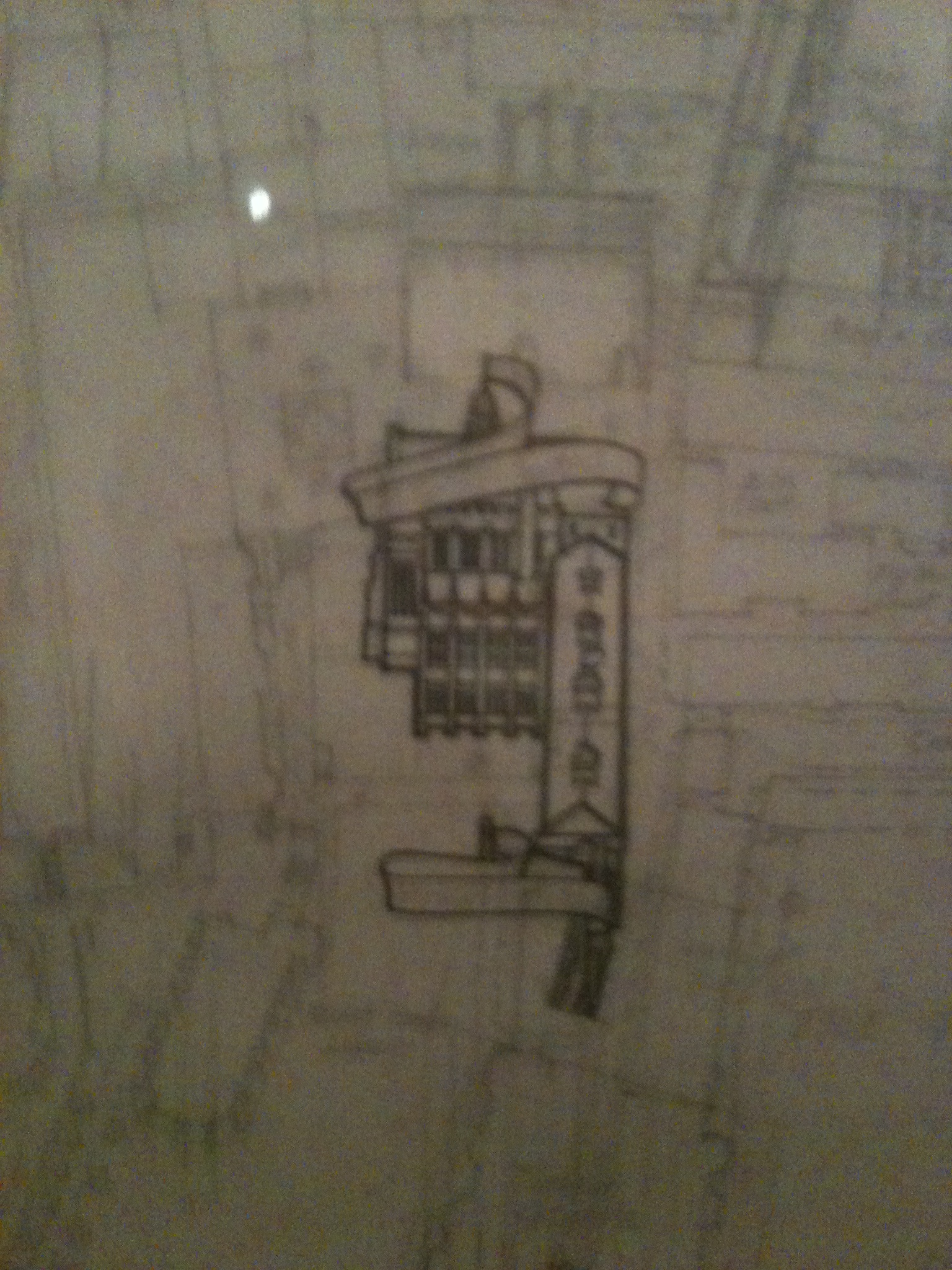
The exhibition features a number of maps created by Gill – the brother of sculptor Eric Gill – and also this fascinating unfinished map of Temple, showing his working method. He begins with a serious flat plan of the city, before building up layers of impeccably detailed architectural illustration. Then on top of that go the speech bubbles, puns and references that make his maps so fascinating. Please excuse my poor photography.

In this section there are other decorative maps that were used by LT to promote different areas of London. Here is one featuring Cheam, where I grew up.

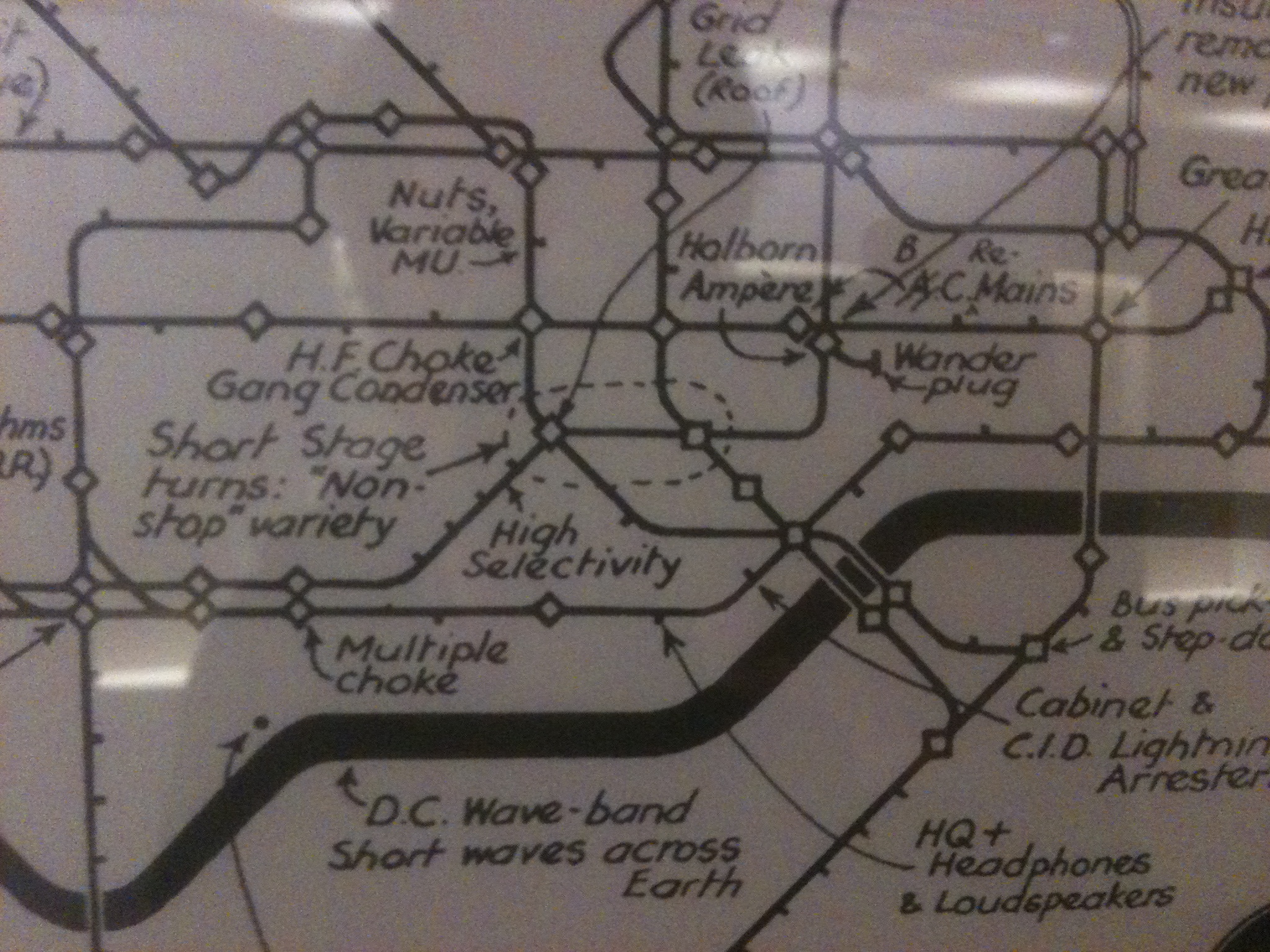
The Beck part of the exhibition is also brilliantly done given how much has already been done on the man who created the modern tube map. A personal highlight was this sketch from the London Transport staff newspaper in 1933, in which Beck gently mocks the popular notion that he got the idea for his diagrammatic map from a circuit board. He has redrawn his tube map as the interior of a transistor radio, thus creating the first mash-up/spoof of his iconic design and pre-dating The Great Bear by several decades.

Speaking of which, the LT Museum have commissioned six new pieces of art for the exhibition, and they are all great, which is quite unusual for these things. Simon Patterson has updated The Great Bear as Saptarishi, Jeremy Wood has created a new ghost map, tracing his movements through GPS and there’s a marvellous ‘Proustian’ map of London by Agnes Poitevin-Navarra.

My Ghost

Most exciting of all is Stephen (The Island) Walter’s new epic undertaking, London Subterranea, a stunningly detailed map of the London beneath our feet, executed in stark black and white and crammed with information and folklore.

When I talked to Walter a few years ago, he expressed a keenness to put The Island behind him despite some interesting related projects that had been suggested to him. I’m delighted that he has since decided to return to London mapping, as he is a master at it. I’m told he’s now working on an A-Z, which will incorporate The Island and London Subterranea.

Other highlights include a copy of the infamous 2009 tube map that omitted the Thames, a gorgeous 1932 enamel map from a station wall and a copy of Finchley Central by The New Vaudeville Band. There’s also a brilliant book by curator Claire Dobbin that accompanies the exhibition. Go see it!

Mind The Map opens 18 May until 28 October 2012. 

Bowie, Burroughs and the stage production of Ziggy Stardust

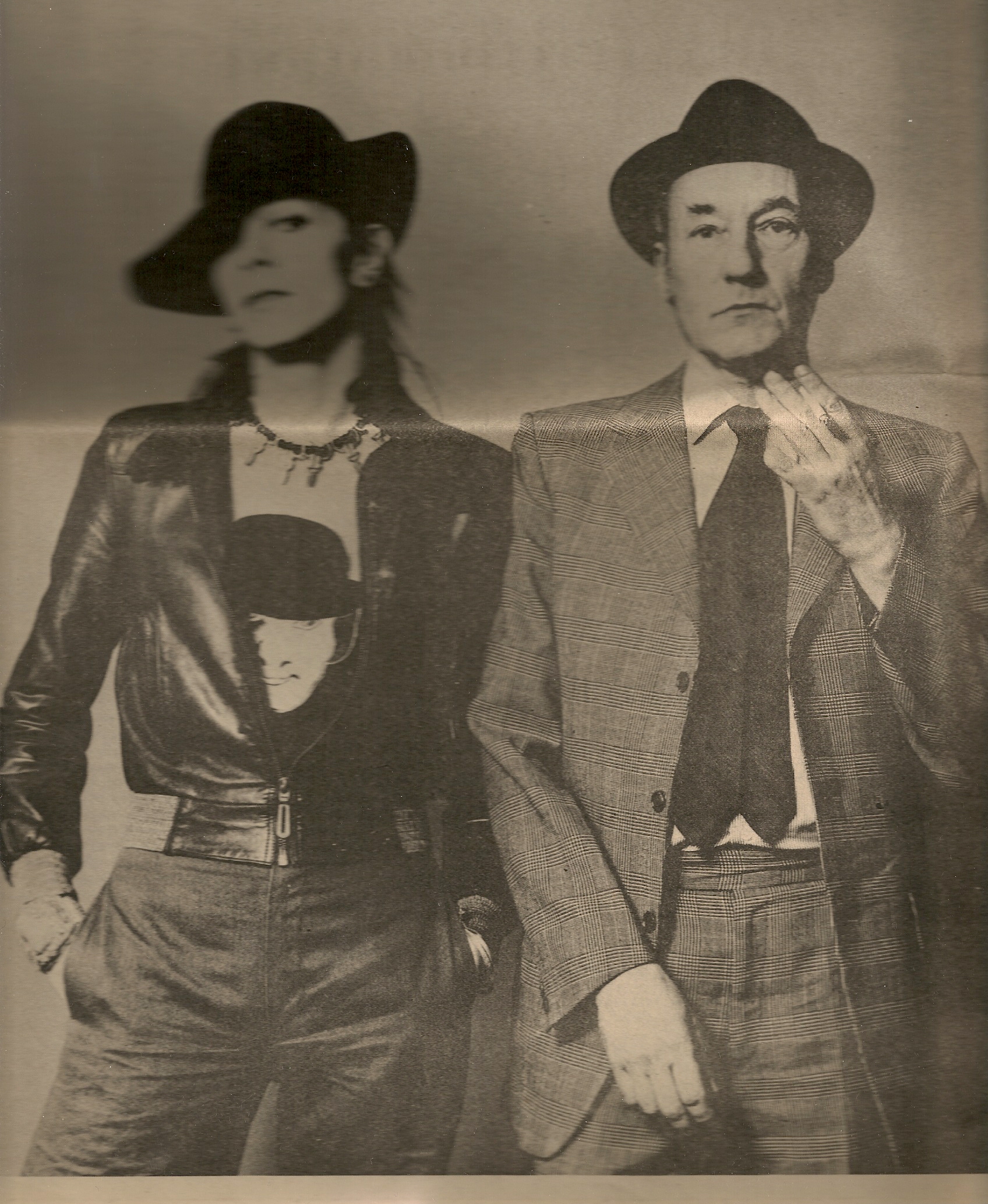
In December 1973, Rolling Stone journalist Craig Copetas brought together David Bowie and William S Burroughs in London for an interview. The piece was published in February 1974, around the time Burroughs returned to America, having finally had enough of the English climate and licensing laws. A wonderful photograph by Terry O’Neill captures the two icons together.

The interview itself isn’t quite as captivating. Bowie had only read one of Burroughs’ books (Nova Express), while Burroughs had only listened to two of Bowie’s songs (“Five Years” and “Starman”). This is my favourite exchange:

Burroughs: What is your inspiration for writing, is it literary?

Bowie: I don’t think so.

Burroughs: Well, I read this “Eight Line Poem” of yours and it is very reminiscent of TS Eliot.

Bowie: Never read him.

During the two-hour conversation in Bowie’s home, Bowie did most of the talking. At one point he discusses in length his plans for a theatrical or television production of Ziggy Stardust, which had been released two years before (and in June 2012 celebrates its 40th anniversary).

It’s worth repeating this section in full, as it is one of the fullest explanations of the story behind the Ziggy concept.

Bowie: Nova Express really reminded me of Ziggy Stardust, which I am going to be putting into a theatrical performance. Forty scenes are in it and it would be nice if the characters and actors learned the scenes and we all shuffled them around in a hat the afternoon of the performance and just performed it as the scenes come out. I got this all from you Bill… so it would change every night.

Burroughs: That’s a very good idea, visual cut-up in a different sequence…. Could you explain this Ziggy Stardust image of yours? From what I can see it has to do with the world being on the eve of destruction within five years.

Bowie: The time is five years to go before the end of the earth. It has been announced that the world will end because of lack of natural resources. Ziggy is in a position where all the kids have access to things that they thought they wanted. The older people have lost all touch with reality and the kids are left on their own to plunder anything. Ziggy was in a rock-and-roll band and the kids no longer want rock-and-roll. There’s no electricity to play it. Ziggy’s adviser tells him to collect news and sing it, ’cause there is no news. So Ziggy does this and there is terrible news. “All The Young Dudes” is a song about this news. It is no hymn to the youth as people thought. It is completely the opposite.

Burroughs: Where did this Ziggy idea come from, and this five-year idea? Of course, exhaustion of natural resources will not develop the end of the world. It will result in the collapse of civilization. And it will cut down the population by about three-quarters.

Bowie: Exactly. This does not cause the end of the world for Ziggy. The end comes when the infinites arrive. They really are a black hole, but I’ve made them people because it would be very hard to explain a black hole on stage.

Burroughs: Yes, a black hole on stage would be an incredible expense. And it would be a continuing performance, first eating up Shaftesbury Avenue.

Bowie: Ziggy is advised in a dream by the infinites to write the coming of a starman, so he writes “Starman”, which is the first news of hope that the people have heard. So they latch on to it immediately. The starmen that he is talking about are called the infinites, and they are black-hole jumpers. Ziggy has been talking about this amazing spaceman who will be coming down to save the earth. They arrive somewhere in Greenwich Village. They don’t have a care in the world and are of no possible use to us. They just happened to stumble into our universe by black-hole jumping. Their whole life is travelling from universe to universe. In the stage show, one of them resembles Brando, another one is a Black New Yorker. I even have one called Queenie the Infinite Fox.

Now Ziggy starts to believe in all this himself and thinks himself a prophet of the future starman. He takes himself up to incredible spiritual heights and is kept alive by his disciples. When the infinites arrive, they take bits of Ziggy to make themselves real because in their original state they are anti-matter and cannot exist in our world. And they tear him to pieces on stage during the song “Rock ‘n’ Roll Suicide”. As soon as Ziggy dies on stage the infinites take his elements and make themselves visible. It is a science fiction fantasy of today and this is what literally blew my head off when I read Nova Express, which was written in 1961. Maybe we are the Rodgers and Hammerstein of the seventies, Bill!

Burroughs: Yes, I can believe that. The parallels are definitely there, and it sounds good.

The Rodgers and Hammerstein of the 1970s never collaborated, unfortunately. You can read a full transcript of the Bowie-Burroughs interview – including discussions of German porn, Lou Reed, Andy Warhol, science fiction and Mick Jagger (‘Jagger is most certainly a mother figure. He’s not a cockadoodledoo; he’s much more like a brothel-keeper or a madame,’ says Bowie) – here.

We Stand Around by I, Ludicrous: the best football song ever?

I, Ludicrous were a two-piece consisting of John Prockter and David Rippingale that came together in South London through a shared love of Crystal Palace and The Fall. Formed in 1985, their greatest moment came on their 1992 album Idiots Savants in the form of a five-minute sinister, synth-led epic about being a football supporter called “We Stand Around”. The song was named Single Of The Week in NME by guest reviewers New Order despite only being available in Germany.

The lyrics are a masterful celebration of the essential pointlessness of terrace culture and football fandom, as this extended excerpt demonstrates:

We stand around in wind and rain, locked in voluntary,
All ages, all male, all swearing, all cold.
We sing and sway we punch the air,
We chant out names, we seek a wave,
In pens we huddle in corners too,
We shout out names we shout abuse.

We travel every Saturday,
We go wherever we play and pay,
spending money we cant afford,
We are the fans we go everywhere.

In groups of two we punch the air,
We sing and sway and dance and swear
We taunt the home fans humorously
The policemen eye us with ill disguised contempt.

We buy the fanzine its a con
Written by some Oxford don
who thinks he knows what’s going on.
But we know everything.
We know how much the players earn
where they live what they drink,
What happened on the Swedish tour
and why the right back was transferred.

We make a scene in every town
Our accents sting our voices loud
Old ladies in shop doors cower
We are the fans we have power?
Some have scars of well aimed boots
Some wear scarves some wear boots
The police escort eyes with ill disguised contempt

The video directed by Prockter that accompanied this minor classic has recently been put on You Tube and, like the song, is a beautiful evocation of football supporting in the late 1980s and early 1990s (the era, incidentally, when I began to attend matches). The opening sequence of floodlights and barbed wire – a typical sight at football grounds of the time – belong firmly to a different era, and here also are the crumbling stadia, the fanzines, the cheap programmes, the train journeys and the aggro. It’s a fine song and a brilliant video: enjoy.

For more on I, Ludicrous and football see this by Educated Left Foot.

The Gun Club

I have a piece in the latest Uncut about the Gun Club, the band fronted by Jeffrey Lee Pierce. The Gun Club trailblazed the kind of killer punk-swamp-country-blues later taken on, more lucratively, by Nick Cave and the White Stripes.

Born in California, Pierce settled in London in 1985. He spent a lot of his time hanging out at the Batcave, the Goth nightclub in Soho’s Dean Street.

Pierce left London in 1995, when he was deported after wielding a samurai sword in a Kensington pub. Which makes this trailer for what appears to be an Italian documentary from 2008 all the more intriguing, as it features Pierce wielding a samurai sword in London in 1992. (I’m not sure if it is the same film as this 2006 documentary, Ghost on the Highway.)

Pierce was a talented enigma, who made some amazing music. They also wrote the best song title ever, in Sex Beat, which pretty much sums up what all rock ‘n’ roll is really about.

o

Blank Generation: original punk posters in South London

In 1977, Gary Loveridge spotted a Damned poster that he liked the look of hanging on the wall at his local record shop in Weston Super Mare. He decided to take it. ‘It was on the wall of the listening booth. I took it off the wall, rolled it up and stuck it under my jumper. I walked out, looking very suspicious. They probably knew exactly what was going on.’

And so it began. Loveridge, a landscape gardener, now has around 250 original music posters, and 100 devoted to punk are on display until March 8 at the 198 Gallery  on Railton Road. Not all were collected in quite the clandestine way of the first, but they are all original and numerous bands are featured, including the Sex Pistols, Clash, Ramones, Lurkers, Buzzcocks, TV Personalities, Mekons, Elvis Costello, Ian Dury, PiL and Siouxsie and the Banshees.

The Damned poster that got it all started

‘This is the first time I’ve seen them all on the wall together in one place,’ says Loveridge. ‘At home they are all in tubes, some on the walls but I haven’t enough room to put them all up.’

The posters were largely used to promote LPs and singles in record shops, although there are some from bus stops and concert venues. Most such posters will have been thrown out by the stores, making such a large collection quite unusual. Loveridge collected many on his way from gigs in Bristol, and then later added to his collection at markets and record fairs.

The exhibition takes in two rooms and also features part of Loveridge’s collection of badges, flyers, fanzines and other ephemera, some of which – such as the flyers for the Sex Pistols banned tour – are much sought after. Also on display is a framed advert from 1977, cut out from a local paper, promoting a gig by a mysterious band called The Spots. Now who could they be?

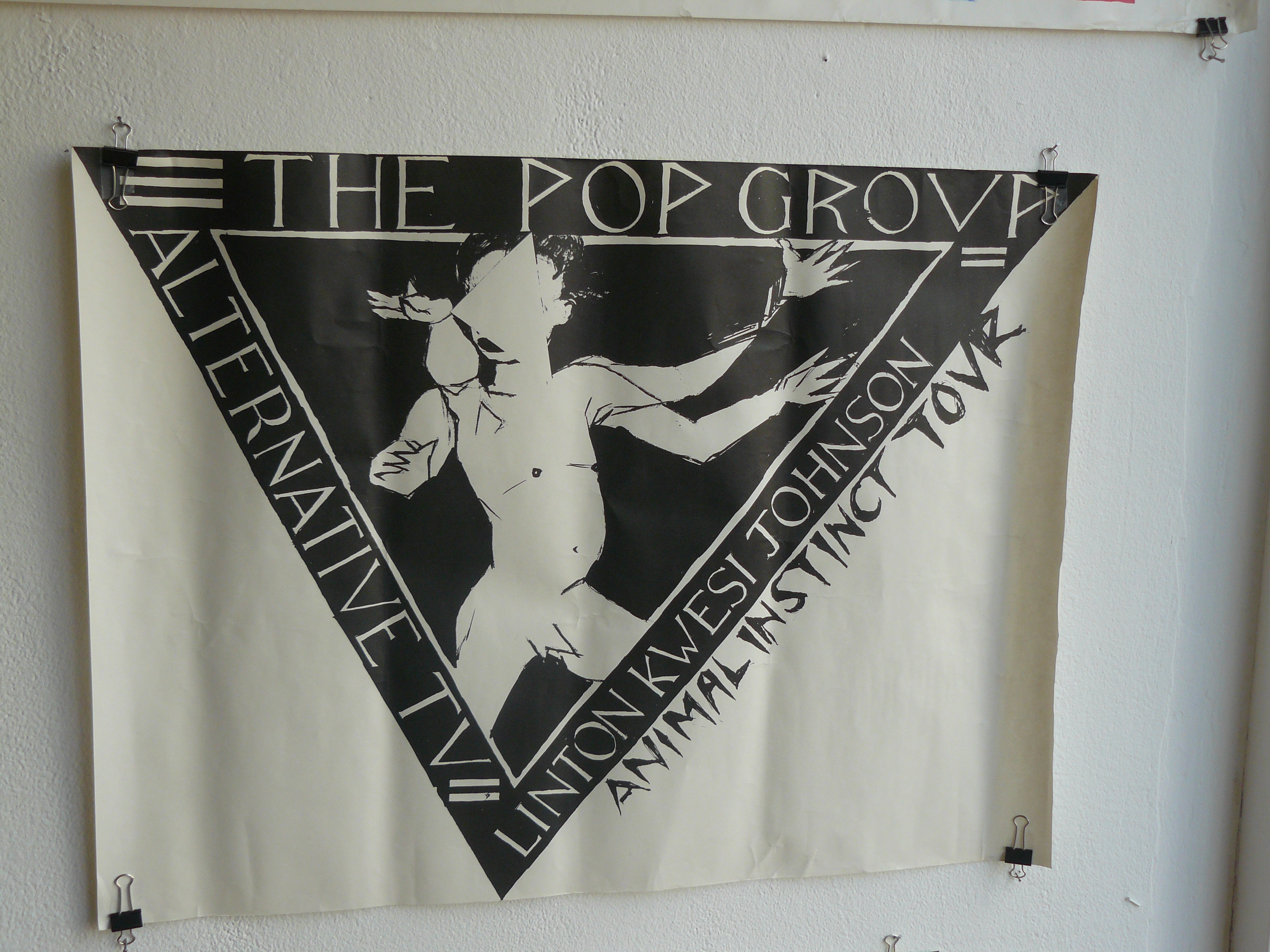
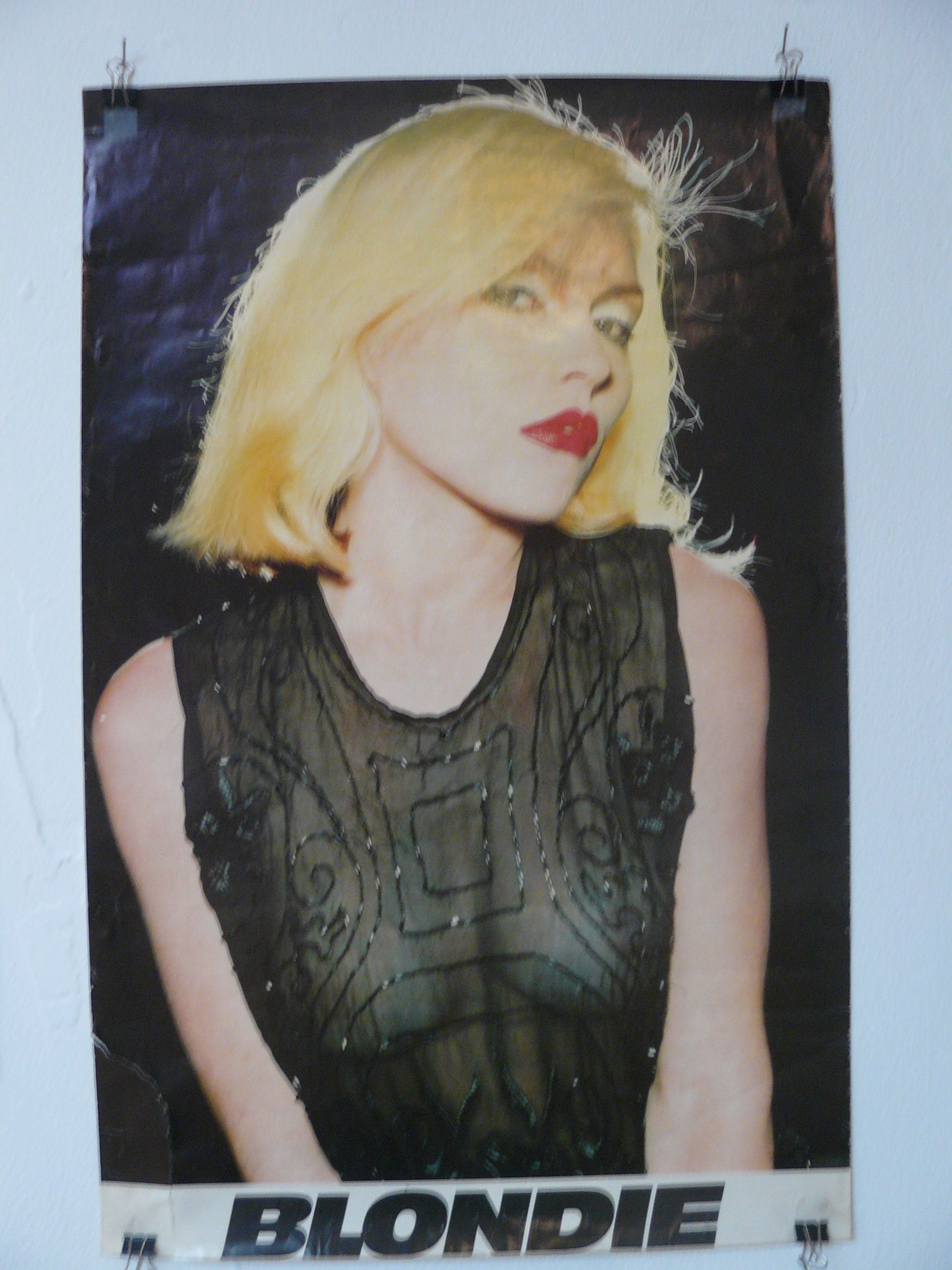
Punk was an incredibly visual movement, as one would expect from something inspired by glam and Situationism and created in art schools and clothes shops, so these posters are eye-catching and iconic.  A small selection are reproduced below, but the real thrill is seeing them collectively and close-up; many have pulled from walls and windows so have an authentically battered look, while the accumulation of colour and striking design is a treat for the eye. But you’ve only got six weeks, so hurry.

Blank Generation: A Collection of Original Punk Posters, 198 Gallery, 198 Railton Road, SE24 0JT. Until March 8, 2012

Spiral Scratch by Buzzcocks

Pretty Vacant by Sex Pistols

The Clash at Brixton Academy

The Mekons at North Staffs Poly

The Pop Group and Alternative TV

Blondie poster rejected by band as it featured only Debbie Harry

Elvis Costello

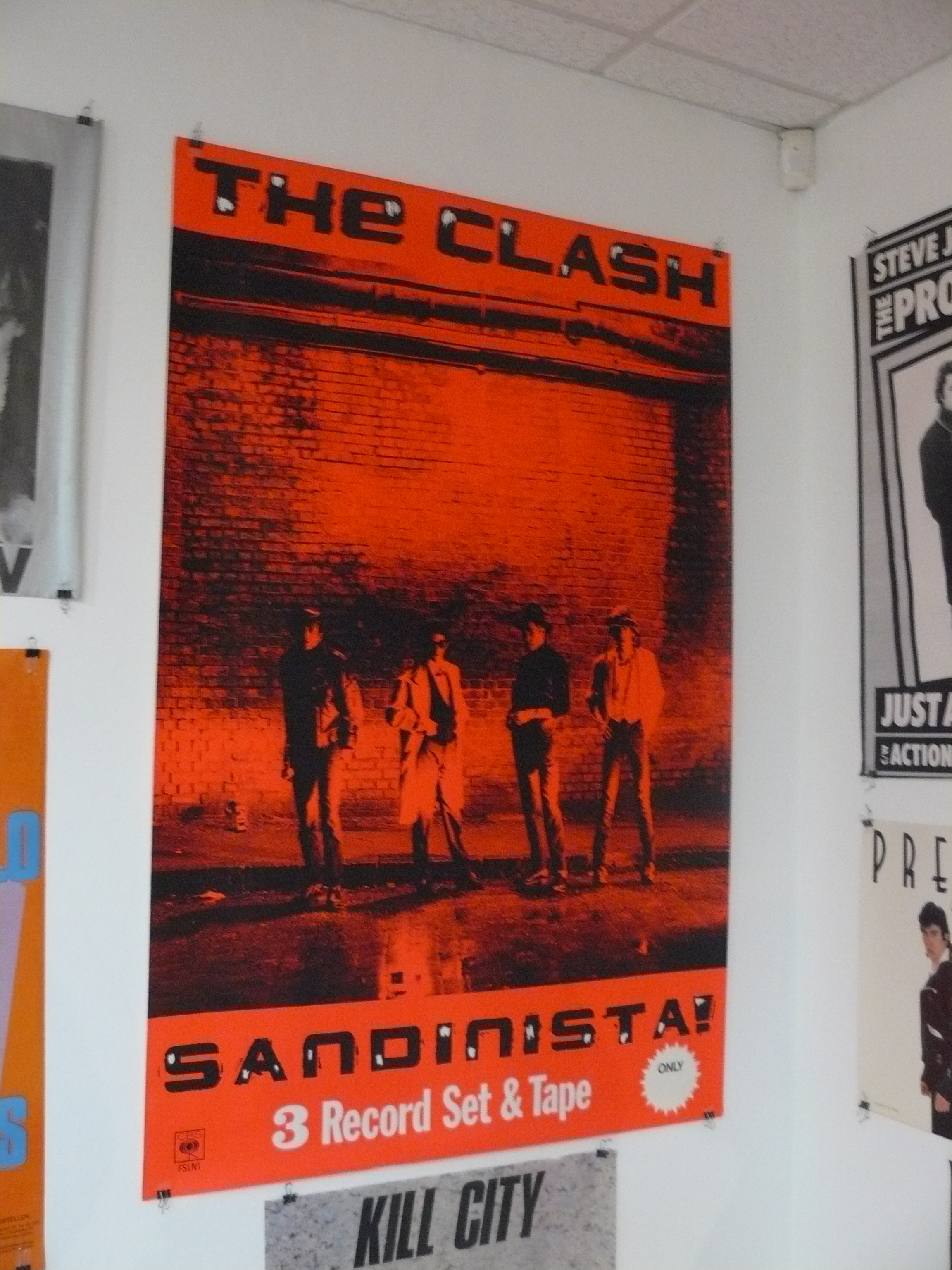
Sandinista by The Clash

The Only Ones

Siouxsie And The Banshees (with Human League third on bill)

London Calling by The Clash ('two for a fiver!')

Sex Pistols - used to introduce the band to the United States

Ian Dury

Sex Pistols

The Jam

Badges and flyers

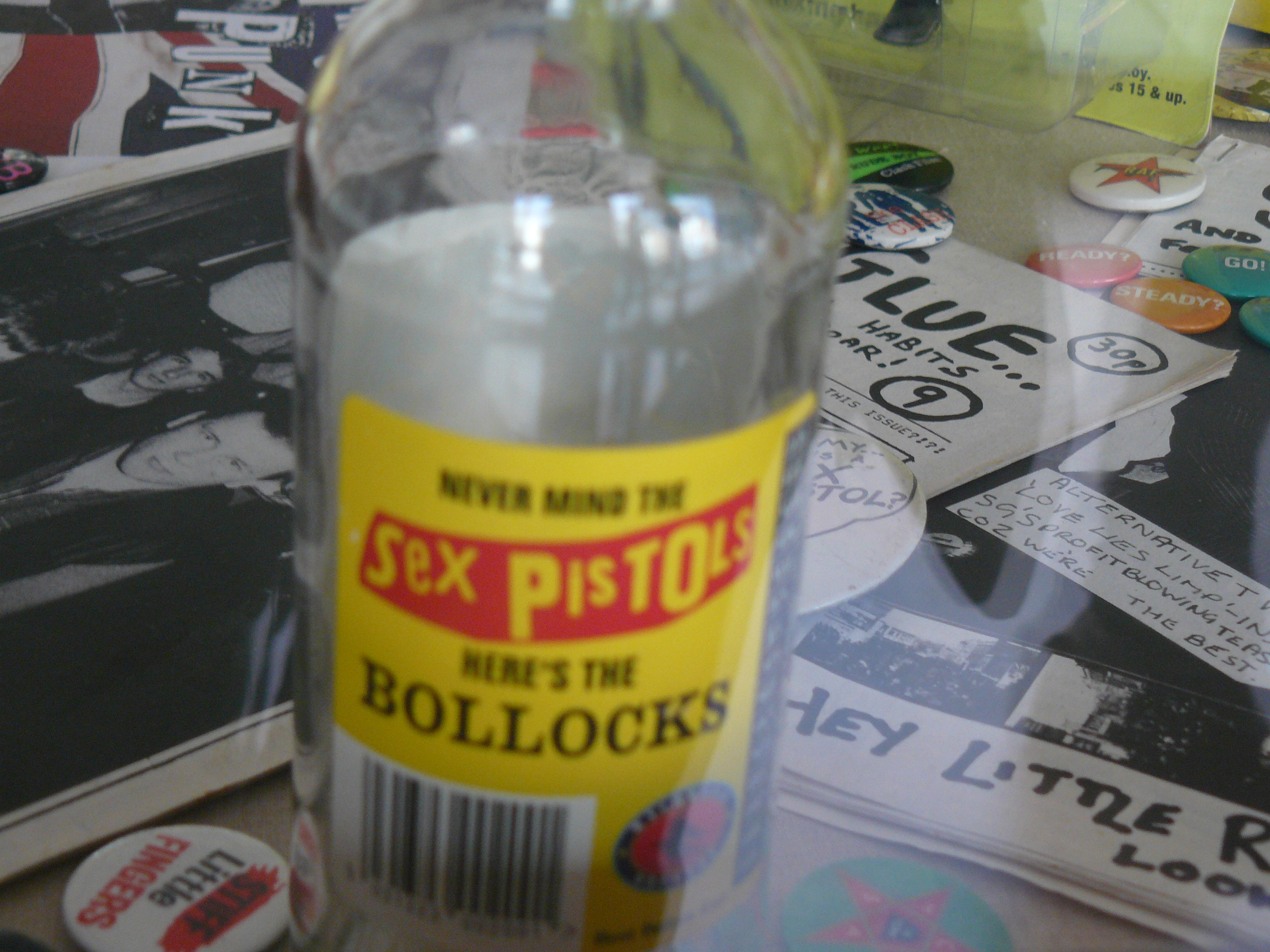
Never Mind The Bollocks beer and fanzines

Sex Pistols flyer from SPOTS tour

Cockney Rebel’s Make Me Smile: exclusive pop trivia included in this post

There are some songs I have listened to all my life, without really stopping to think what they are about.

So it is with Steve Harley and Cockney Rebel’s “Make Me Smile (Come And See Me”), which I’ve spent around 20 years assuming was some sort of love song.

When I wrote about the song in this month’s Uncut, Harley told me the song was actually a rebuke to his old bandmates who asked for more money and then left him – he felt – in the lurch – shortly before he entered the recording studio. Harley’s response was to immediately write the accusatory “Make Me Smile” (‘Blue eyes, blue eyes, why must you tell so many lies?’) and sing it with a Dylanesque sneer, but bury the sentiment beneath a layer of perfect pop production. So a song written in a despondent stew made his fame and fortune and still follows him all round the world.

The favourite thing Harley told me though, was that one of the backing singers for the song’s famous ‘ooooh la la’ chorus was the actor and singer Clarke Peters, now better known as Lester Freamon from The Wire. You won’t find that on Wikipedia. Yet.

https://greatwen.com/2011/12/05/cockney-rebels-make-me-smile-exclusive-pop-trivia-included-in-this-post/

Secret London: LSD experiments at the World Psychedelic Centre

Michael Hollingshead has been described as ‘an English trickster and con man of the first order’ by one commentator, but he described himself as ‘The Man Who Turned on The World‘.

Hollingshead was the British man who introduced LSD to Tim Leary in December 1961 on the recommendation of Aldous Huxley. Hollingshead was working in New York when he came upon a quantity of LSD. Huxley suggested he send it to Leary, who was already experimenting with administering psilocybin to patients during his psychological research at Harvard. Leary loved it. The LSD revolution began.

After working in America with Leary – he even lived in his house – Hollingshead was sent to London in September 1965 with enough Czechoslovakian lysergic acid to produce 5,000 trips, thirteen boxes of psychedelic literature – The Psychedelic Experience, The Psychedelic Review and The Psychedelic Reader – and plans for ‘a psychedelic jamboree’ at the Royal Albert Hall featuring the Stones, the Beatles and Leary himself. Although this is sometimes presented as Hollingshead playing the role of John The Baptist to Leary’s Psychedelic Christ, Barry Miles’s ‘London Calling’ suggests that Leary was just trying to get rid of the increasingly drug-addled Hollingshead and is said to have remarked upon his departure, ‘Well, that writes off the psychedelic revolution in England for at least ten years.’

Hollingshead promptly set up his base at his flat in Belgravia’s Pont Street, which he renamed the World Psychedelic Centre, and redecorated with the key elements needed for a good trip: bowls of fruit, handwoven cloth, open fire,  bread, cheese, wine, candles, incense and goldfish. A chill out space, basically.

This was one of only two reliable sources for LSD in London at the time, so visitors were plentiful and Hollingshead began welcoming key figures from the scene – including Roman Polanski, Alex Trocchi, William Burroughs, Paul McCartney, Eric Clapton, Donovan and the Rolling Stones.

Guests were invited to take part in LSD sessions designed to make the most of the experience, with ‘lots of cushions, some excellent tapes and hi-fi equipment, a slide projector, and several chillums’. The LSD was dispensed after midnight inside grapes impregnated with 300 micrograms of the drug. The atmosphere was key. Hollingshead writes:

Shortly after dropping the acid, I played a tape of Buddhist Cakra music, followed by Concert Percussion by the American composer, John Cage. Next I played some music by Ravi Shankar and some bossanova. Interval of fifteen minutes. Then some music by Scriabin and part of a Bach cello suite. Interval. Some Debussy, and Indian flute music by Ghosh. Interval. Bach organ music and some John Cage ‘space’ music. Interval. The Ali Brothers and Japanese flute music. We also looked at slides projected on to the ceiling Tantric yantras, Vedic Gods, the Buddha, Tibetan mandalas.

There were also regular readings from Leary’s work

While Hollingshead dispensed LSD to his visitors in these carefully controlled conditions, he was soon self-medicating with cannabis, speed and heroin to control the fierce highs he experienced from taking strong doses of acid at least three times a week. The tabloids soon got wind of these experiments with the ‘killer drug’  and after hosting a party of 80 hippies at which two undercover police officers were dosed with acid after sampling the spiked punch, Hollingshead was busted. Naturally, he attended his trial while tripping and was sentenced to 21 months at Wormwood Scrubs. There he met spy George Blake, who promptly took a trip on some of the acid Hollingshead smuggled in to the prison, before escaping and going into exile in the Soviet Union.

Hollingshead didn’t make it quite that far himself, ending up in Cumbrae, a Scottish island, where he settled with a group of believers who treated LSD as a holy sacrament in quasi-religious services. He then went on his world travels.

Hollingshead was undoubtedly a key player in the scene. However, it’s notable that when a copy of his book, The MAn Who Turned on the World was sent to Timothy Leary in prison in the 1970s, Leary underlined only a single sentence – ‘…my taking of methedrine…’ Leary’s acquaintances believe that not everything Hollingshead said about his role in the psychedelic revolution could be trusted because of his addiction to opiates.

Slade in London

I have a piece in the latest Uncut magazine about Slade, the glam rock bovver boys who became the most successful British group of the 1970s.

Slade were proud Black Country band – all raised in and around Wolverhampton and Walsall – and they never really took to life in  London, something that may have explained why it took them so long to break through. As Don Powell, the drummer, told me, ‘We didn’t really feel comfortable in the London scene when we could just be in the pub with our mates in Wolverhampton.’ Even today, all four remain wonderfully faithful to their roots and have the flattest vowels of any band I have ever interviewed.

But London still had an impact on their career. In 1966, beanpole producer Kim Fowley spotted the band – then called the N’Betweens – playing Tiles nightclub in Oxford Street and promptly hustled them into the recording studio. This was the result.

Tiles was a Mod club. John Peel played there once but his hippie tunes didn’t go down too well with the audience and he recalled: ‘It was certainly not the kind of place where they wanted to hear what I was doing. And there were waves of irate customers coming up over the footlights to try and persuade me to play whatever it was they wanted me to play. Which certainly wasn’t the Grateful Dead and Jefferson Airplane and Country Joe and the Fish or whatever I was playing. They didn’t like me at all.’

This terrific Pathe newsreel shows The Animals playing at Tiles, and it was ex-Animal Chas Chandler who gave Slade their next big break after he saw them performing at Rasputins on Bond Street. Noddy Holder told me, ‘Chas wanted to see us live. So we were booked to play a tiny place called Rasputins in Bond Street and we played our usual set there. People stopped dancing to watch us, which didn’t really happen at the time, and as Chas came down the stairs he said we were that good he thought it was a record being played. He thought it was fantastic and signed us the next day, no second thoughts. We started working a lot of London clubs and bigger venues around the country.’

Thereafter, Slade became regulars on the London circuit, and were the first band to book Earl’s Court (Bowie played a show before them, but had booked it after Slade). While Bowie’s show was plagued by sound problems, Slade were able t learn from his mistakes and their concert was deemed a great success.

Their favourite venue was probably the Top of the Pops studio in Elstree, where their rabble-rousing songs and remarkable outfits meant they practically became the house band.

Sadly, though, two of their greatest London moments have been lost forever. As one fan writes here, the band recorded two promo videos for Top of the Pops, one at Chessington Zoo for “Look Wot You Dun” and another at Greenwich Observatory for “Gudbuy T’Jane”. Both films have been wiped and seem to  be lost, among with many other studio Top of the Pops appearances.

Finally, here’s the band just before they made it. Still known as Ambrose Slade, this promo for their first album was filmed in Euston Station. The band had recently come out of their skinhead phase, and are nothing like the colourful eccentrics they would soon become.